Facebook Instagram Youtube Twitter

Aluminum Oxide | High Thermal Stability, Insulator Uses

Learn about aluminum oxide (alumina), a ceramic material known for its high thermal stability, hardness, and electrical insulation properties.
Aluminum Oxide | High Thermal Stability, Insulator Uses

Understanding Aluminum Oxide

Aluminum oxide, also known as alumina, is a widely used ceramic material noted for its excellent thermal stability, hardness, and electrical insulation properties. With the chemical formula Al2O3, this compound plays a critical role in a range of applications from electronics to industrial processes.

High Thermal Stability

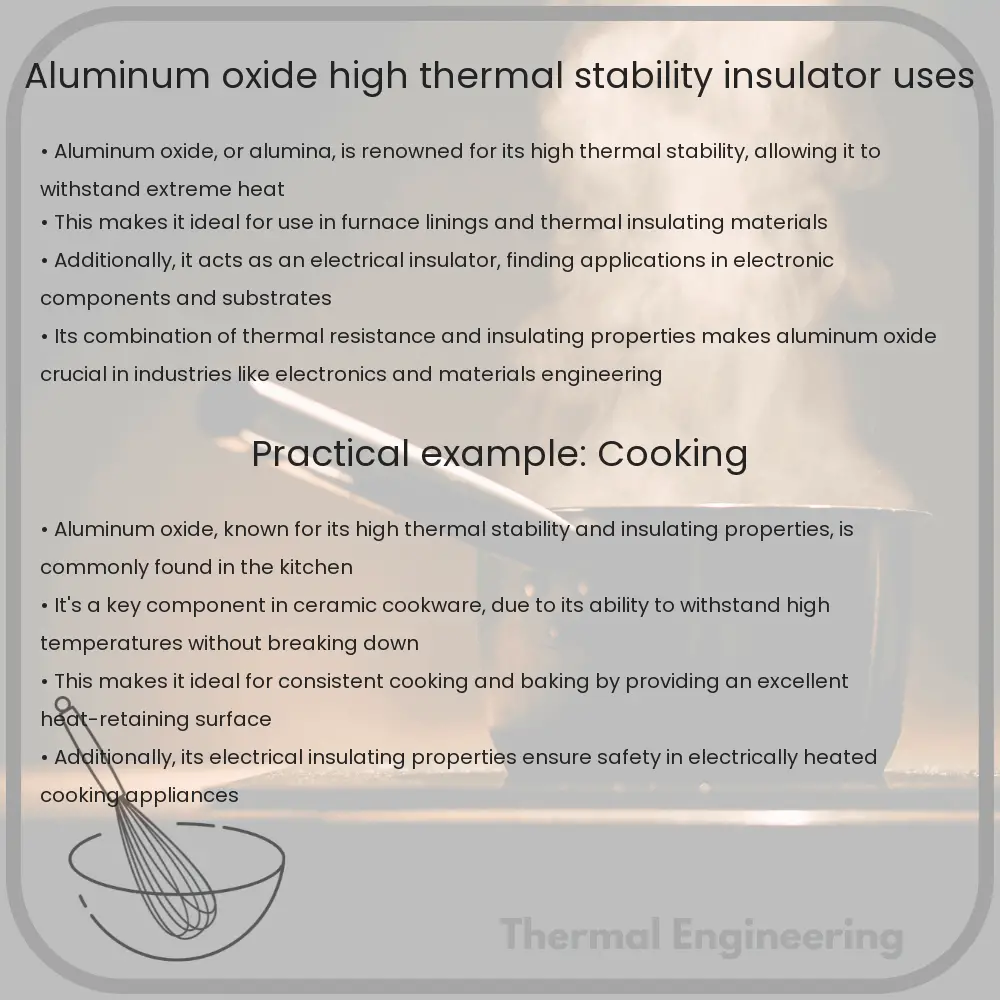
One of the standout characteristics of aluminum oxide is its high thermal stability. Aluminum oxide has a melting point of approximately 2072°C (3762°F) and can maintain its structural integrity under extreme heat. This property makes it an ideal material for use in high-temperature environments such as furnaces and kilns. Its ability to withstand strong thermal shocks without fracturing is invaluable in processes involving sudden temperature changes.

Electrical Insulation Uses

Despite being a good thermal conductor, aluminum oxide is also a very good electrical insulator. It has a high electrical resistivity, which can be maintained up to very high temperatures, often exceeding 1000°C. This makes it an essential material in the production of electrical insulators, particularly those used in high-voltage applications.

  • Insulators in spark plugs
  • Substrates for electronic circuits
  • Protective insulative barrier in capacitators

Other Characteristics and Uses

In addition to its thermal and insulative properties, aluminum oxide is extremely durable and resistant to corrosion. These properties are harnessed in various industrial applications including:

  • Cutting tools: Often used in the form of sapphire which is a single crystal form of Al2O3, owing to its hardness.
  • Abrasives: Due to its hardness and durability, aluminum oxide is commonly used in sandpapers and as a blasting agent for surface preparation.
  • Coatings: It offers excellent protection against wear and corrosion, making it an ideal coating material for metals.
  • Biomedical applications: Since it is bioinert, aluminum oxide is often used in orthopedic and dental implants.

Conclusion

Aluminum oxide’s unique properties such as high thermal stability and excellent electrical insulation capabilities make it a valuable material in a wide range of engineering applications. From electronics to industrial machinery, alumina remains a key component in driving technology forward while enduring the most challenging conditions. Its cross-industry uses underline its versatility and continued importance in modern engineering and technology.
Silicone Thermal Paste | Heat Transfer, Electronics Cooling

Silicone thermal paste, a key material for enhancing heat conductivity between electronics components like CPUs and heat sinks.

Silicone Thermal Paste | Heat Transfer, Electronics Cooling

Understanding Silicone Thermal Paste in Electronics Cooling

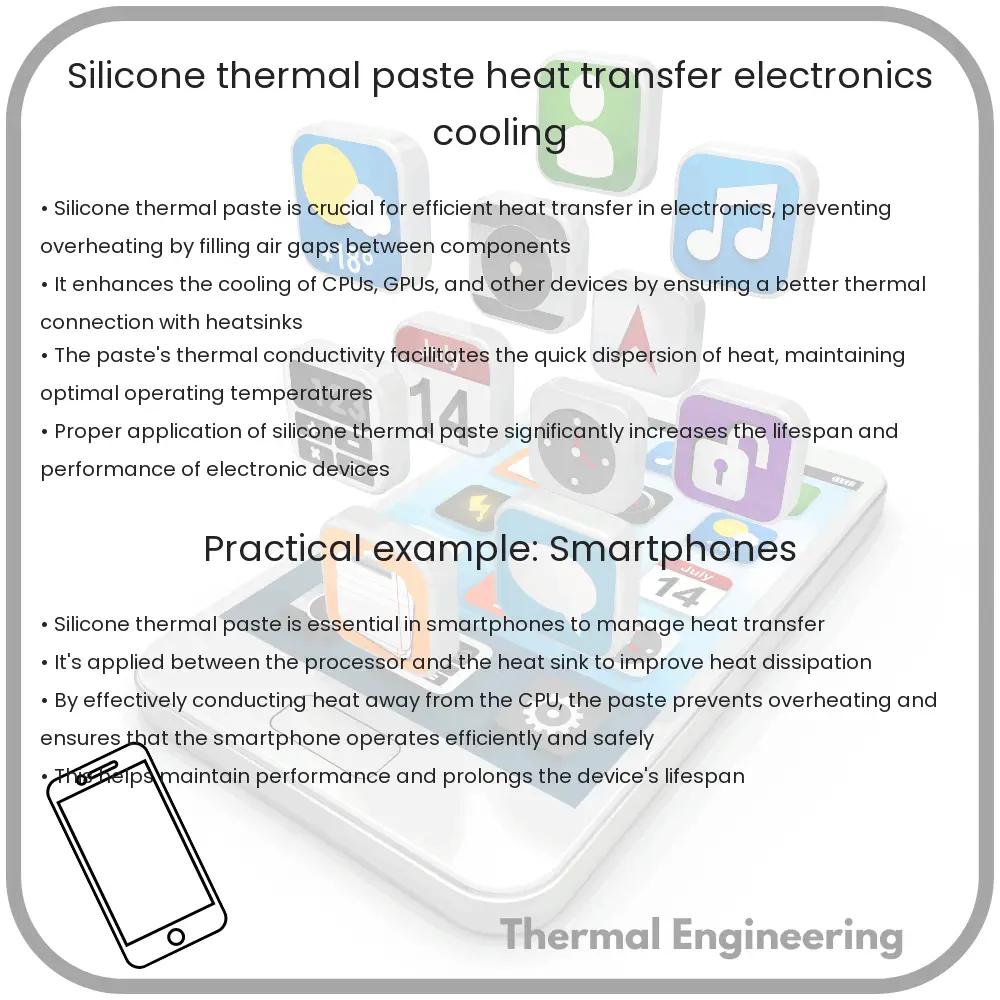
Thermal paste, also known as thermal grease or thermal compound, is a substance used to enhance the heat conductivity between two surfaces, especially in the context of electronics. Silicone thermal paste is one of the most commonly used types in this category. It plays a crucial role in the effective cooling of computer components, such as CPUs (Central Processing Units), GPUs (Graphics Processing Units), and other heat-generating electronic devices.

Composition and Properties of Silicone Thermal Paste

Silicone thermal paste is composed of silicone oil mixed with thermally conductive fillers. The fillers are typically made of metal oxides like zinc oxide or aluminum oxide, but can also include materials like silver, copper, or ceramic particles. These fillers enhance the thermal conductivity of the paste, allowing it to conduct heat more effectively away from the electronic components and into the heat sink.

How Silicone Thermal Paste Works

The primary purpose of thermal paste is to fill microscopic imperfections on the surfaces of the CPU and heat sink. Without thermal paste, these small air gaps act as thermal insulators, hindering the efficient transfer of heat away from the CPU. By filling these gaps, silicone thermal paste forms a continuous conductive path that helps to dissipate the heat more effectively, thereby maintaining the proper operating temperature and improving the performance and lifespan of the electronic device.

Application of Silicone Thermal Paste

Applying silicone thermal paste is a critical step in assembling or maintaining electronic devices that involve substantial heat generation. Here’s a general process:

  1. Clean the surfaces: Ensure that both the CPU and heat sink surfaces are clean from any previous thermal paste or debris.
  2. Apply a small amount: Place a small pea-sized amount of silicone thermal paste on the center of the CPU.
  3. Spread evenly: Carefully attach the heat sink, pressing down slightly to spread the paste evenly across the surface. Some prefer to manually spread the paste using a tool; however, this is optional and depends on personal preference and specific component recommendations.
  4. Secure the heat sink: Fasten the heat sink according to the manufacturer’s instructions to ensure proper contact pressure over the CPU.

Considerations for Using Silicone Thermal Paste

While silicone thermal paste is effective, there are some important considerations to keep in mind:

  • Amount of paste: Too much or too little paste can lead to inefficient heat transfer. A thin layer is often most effective.
  • Type of paste: Depending on the specific application and required thermal conductivity, different pastes might be more suitable. For instance, pastes containing silver or copper might offer better performance than traditional silicone options but can be more expensive.
  • Reapplication: Over time, thermal paste can dry out or degrade, decreasing its effectiveness. It is advisable to replace the paste every few years or as needed, according to the manufacturer’s guidelines or observed performance issues.

Conclusion

Silicone thermal paste is an indispensable component in the field of electronics, especially when it comes to managing heat in high-performance devices. By understanding its properties, how it works, and how to apply it correctly, users can significantly enhance their electronics’ efficiency and lifespan. Known for its straightforward application and effective thermal conductivity, silicone thermal paste remains a top choice for both hobbyists and professionals alike.

Sulfuryl Fluoride | Fumigant, Low Thermal Conductivity

Learn about sulfuryl fluoride (SO2F2), its use as a fumigant in pest control and artifact preservation, and its unique property of low thermal conductivity.

Sulfuryl Fluoride | Fumigant, Low Thermal Conductivity

Understanding Sulfuryl Fluoride: Applications and Properties

Sulfuryl fluoride (chemical formula: SO2F2) is a colorless, odorless gas commonly used as a fumigant in pest control, particularly in the eradication of termites and bed bugs. Developed in the mid-20th century as an alternative to more hazardous fumigants, sulfuryl fluoride has gained prominence due to its effectiveness and relatively lower regulatory restrictions. This article explores the applications of sulfuryl fluoride and elucidates its unique property of low thermal conductivity, which has broader implications in various fields, including engineering.

Applications of Sulfuryl Fluoride

Sulfuryl fluoride is primarily used in the extermination of pests. Its ability to penetrate deep into building materials makes it highly effective in reaching pests that are hidden from view. Unlike many fumigants, sulfuryl fluoride leaves no residue, allowing for a quicker re-entry time into treated buildings. Additionally, it is used in the preservation of museum artifacts, as it effectively controls biological deterioration without damaging precious items.

  • Pest Control: Used extensively to fumigate residential and commercial structures against termites, beetles, and other wood-destroying insects.
  • Artifact Preservation: Helps in the preservation of cultural heritage by eliminating biological infestations in museums and archives.

Low Thermal Conductivity of Sulfuryl Fluoride

One notable physical property of sulfuryl fluoride is its low thermal conductivity. Thermal conductivity is a measure of a material’s ability to conduct heat. Lower thermal conductivity means the material is a poorer conductor of heat. For sulfuryl fluoride, this property implies several practical uses and advantages:

  • Insulation: Materials with low thermal conductivity are good insulators. Sulfuryl fluoride’s ability to resist the flow of heat can be exploited in systems requiring high-efficiency insulation.
  • Temperature Control: In controlled environments like laboratories and industrial processes, maintaining a stable temperature is crucial. Sulfuryl fluoride can be part of systems designed to minimize heat loss or gain.

The thermal conductivity of sulfuryl fluoride is significantly lower than that of many other gases, which makes it an interesting subject for research in thermal management applications. The exact value of its thermal conductivity varies with temperature and pressure but generally remains low compared to other common gases.

Conclusion

Sulfuryl fluoride serves as an effective fumigant with the additional benefit of having low thermal conductivity. While primarily recognized for its role in pest control, this property opens up potential applications in thermal insulation and temperature control in various engineering fields. By exploring and harnessing these properties, engineers can develop more efficient and innovative solutions to everyday problems.

Through continued study and application, the dual utility of sulfuryl fluoride can be better utilized in both industrial and environmental contexts, presenting a fascinating example of how chemical properties can be leveraged for multiple uses.

Graphene | High Conductivity, Heat Dissipation & Uses

Graphene is a remarkable material, consisting of a single layer of carbon atoms arranged in a two-dimensional honeycomb lattice. It is renowned for its exceptional properties, which include high electrical conductivity, superior heat dissipation, and remarkable mechanical strength.

Graphene | High Conductivity, Heat Dissipation & Uses

Introduction to Graphene

Graphene is a remarkable material, consisting of a single layer of carbon atoms arranged in a two-dimensional honeycomb lattice. It is renowned for its exceptional properties, which include high electrical conductivity, superior heat dissipation, and remarkable mechanical strength. Its discovery in 2004 by scientists Andre Geim and Konstantin Novoselov, who later received the Nobel Prize in Physics for this work, has sparked a tremendous amount of research into potential applications across various fields of science and engineering.

High Conductivity of Graphene

Graphene’s high conductivity is one of its most celebrated properties. Electrons in graphene behave as massless particles, a phenomenon that stems from its unique band structure where the conduction and valence bands meet at the Dirac points. This attribute allows electrons to move through graphene at extraordinarily high speeds, behaving almost like photons. This property not only makes graphene a potential replacement for silicon in electronic devices, offering faster speeds, but also enhances its efficiency in electrical applications ranging from batteries to solar cells.

Heat Dissipation Properties

Graphene is also notable for its superior heat dissipation capabilities. It possesses very high thermal conductivity, about four times that of copper, which enables efficient heat spreading across its surface. This makes it an ideal candidate for use in electronics, where managing heat accumulation is critical for maintaining performance and extending the lifespan of devices. Incorporating graphene into electronic components like processors, LEDs, and display panels can significantly enhance their durability and performance by improving heat dissipation.

Applications of Graphene

  • Electronics: Graphene’s high electrical conductivity and ability to dissipate heat effectively make it attractive for use in various electronic components, including transistors, sensors, and flexible displays. Graphene-based transistors, in particular, promise not only higher speed but also reduced power consumption compared to their silicon counterparts.
  • Energy Storage and Generation: Graphene is being explored in the fields of energy generation and storage, particularly in the development of more efficient solar cells and advanced batteries. Its conductive properties improve the efficiency of charge transfer in solar panels and enhance the capacity and rechargeability of lithium-ion batteries.
  • Composite Materials: Due to its tremendous strength and light weight, graphene is an excellent additive for enhancing the properties of composite materials. These graphene-enhanced composites are used in a variety of applications, from sports equipment to aerospace engineering, providing improved durability without significant weight addition.
  • Biomedical Applications: In the biomedical field, graphene shows promise in various applications including drug delivery systems and biosensors. Its high surface area, conductivity, and biocompatibility make it suitable for these uses, potentially revolutionizing treatments and diagnostic processes.

Conclusion

Graphene’s unique properties of high conductivity, exceptional heat dissipation, and versatility in applications make it a revolutionary material in the field of materials science and engineering. Ongoing research and development are likely to unlock even more applications, potentially transforming various industries including electronics, energy, and medicine. As technology advances, the role of graphene in engineering applications continues to grow, promising exciting developments in the years to come.

Aerogel | Low Thermal Conductivity, Insulation Uses

Learn about aerogel, known for its low density and exceptional insulating properties, often referred to as ‘frozen smoke.’

Aerogel | Low Thermal Conductivity, Insulation Uses

Understanding Aerogel: The Substance of Low Thermal Conductivity

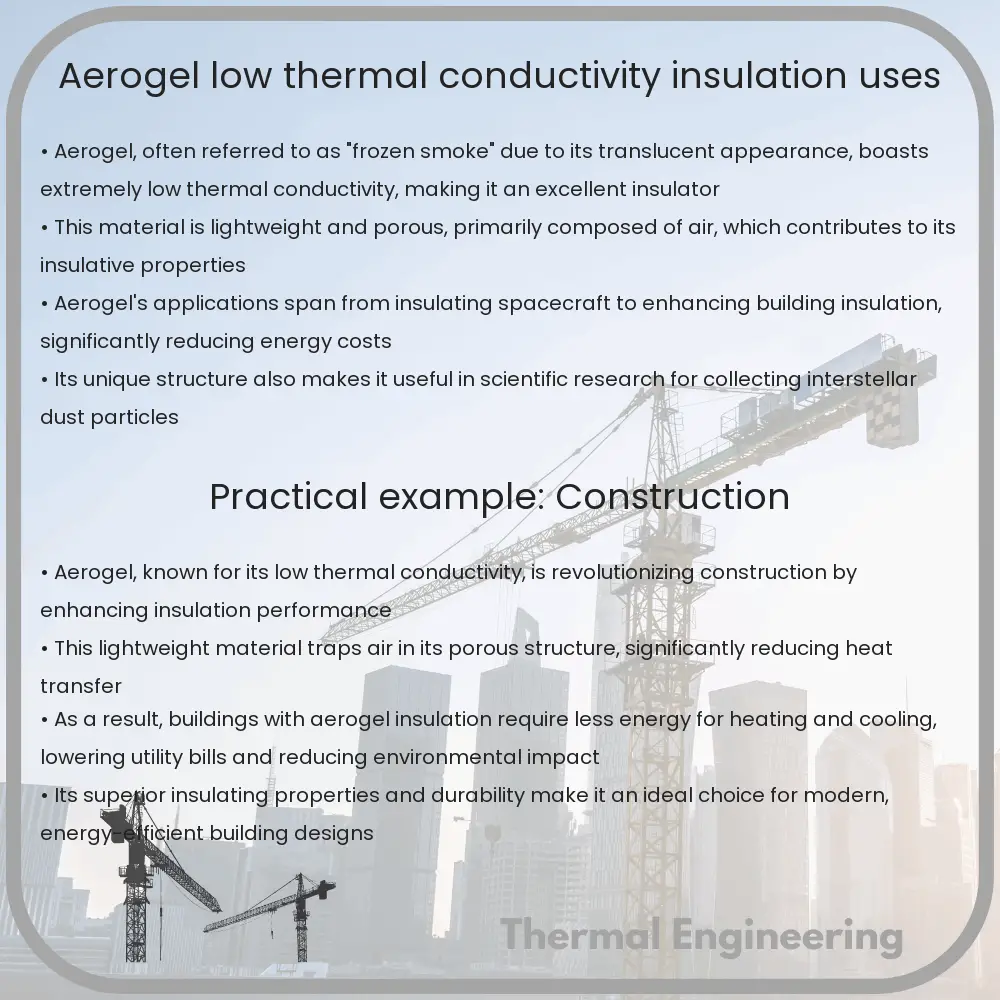
Aerogel, often hailed as a ‘frozen smoke’ or ‘solid cloud’ due to its ethereal appearance, is a remarkable material known for its extreme low density and low thermal conductivity properties. It is derived from a gel in which the liquid component has been replaced with gas. The result is a solid with extremely low density and thermal conductivity, which makes it an excellent insulator.

Composition and Production

Aerogels are usually made from silicon compounds, although they can be prepared from other materials, such as carbon, alumina, and chalcogenides. The most common form of aerogel is silica aerogel which is the product of chemical reactions that involve silicon precursors like tetraethyl orthosilicate (TEOS). The gel that forms subsequently undergoes a process called supercritical drying, which carefully removes the liquid component of the gel and replaces it with gas without allowing the gel structure to collapse.

Properties of Aerogel

The defining characteristic of aerogel is its low thermal conductivity. This property stems from its largely porous structure, with pore sizes typically smaller than the mean free path of air molecules. This inhibits gas phase heat conduction, making it an excellent insulator. To quantify, silica aerogels have a thermal conductivity of about 0.015 W/m*K, which is less than the conductivity of static air.

  • Optical Transparency: In addition to their insulating properties, certain aerogels are also transparent, making them suitable for applications such as insulating windows and skylights.
  • Lightweight: Aerogels are extremely light, with densities as low as 3mg/cm³, which is only three times heavier than air.
  • High surface area: Typically, aerogels have a surface area of 500-1000 m2/g. This extensive surface area can be beneficial for applications involving gas filtration and adsorption.

Applications in Insulation

Due to their low thermal conductivity, aerogels are primarily used for insulation purposes. Some common applications include:

  1. Building insulation: Aerogels can be used in the form of blankets or panels to insulate buildings, significantly reducing energy costs for heating or cooling.
  2. Space exploration: NASA uses aerogel blankets to insulate Mars rovers and space suits. The material’s ability to withstand extreme temperatures makes it ideal for space applications.
  3. Industrial use: Aerogels are used in pipelines and refineries to prevent heat loss and to protect workers from hot surfaces.
  4. Clothing: High-performance outerwear often incorporates aerogel panels for lightweight and effective thermal management.

Challenges and Future Prospects

Despite its attractive properties and diverse applications, aerogel does present challenges. The material can be brittle and difficult to handle, and its production process is complex and costly. However, ongoing research and development are aimed at overcoming these challenges by improving the mechanical strength and reducing costs through more efficient manufacturing processes.

As innovations continue, the scope for aerogel applications is expanding, paving the way for its use in more everyday products and further solidifying its status as a material of the future in insulation technology.

Perfluoromethane | Cooling, Insulating Gas & Thermal

Learn about Perfluoromethane (CF4), its applications in cooling, insulation, and thermal management across various industries.

Perfluoromethane | Cooling, Insulating Gas & Thermal

Understanding Perfluoromethane: Applications in Cooling, Insulation, and Thermal Management

Perfluoromethane, also known as carbon tetrafluoride (CF4), is a colorless, non-flammable gas that belongs to the family of perfluorocarbons (PFC). It possesses unique chemical and thermal properties that make it a valuable gas in various engineering applications, especially in cooling, insulation, and thermal management systems.

Cooling Applications

Perfluoromethane is predominantly utilized in the electronics industry for its excellent cooling properties. As electronic components and systems become smaller and more powerful, thermal management becomes critical. CF4 is employed in cooling systems, particularly in situations where high-performance and reliable cooling is essential. This gas has a low global warming potential, making it a preferable choice in applications striving to minimize environmental impact.

  • Dielectric cooling in transistors and inductors where CF4 can remove excess heat by acting as a coolant circulating through specialized cooling systems.
  • Used in gas mixtures for plasma etching processes, where it also helps in maintaining low temperatures during high-energy operations.

Insulating Properties

With a low thermal conductivity, perfluoromethane is an excellent insulator. In the electrical industry, CF4 is used in gas insulated switchgear and other electrical applications where conventional solid insulation materials might not be effective or feasible.

  • High voltage applications involving switchgear where CF4 acts as an insulating medium to prevent electrical discharges.
  • In particle detectors, perfluoromethane is utilized as part of the quenching gas mixtures to stop particle-induced avalanches, enhancing detector safety and efficacy.

Thermal Management in Spacecraft

One of the critical challenges in space missions is managing extreme temperatures. Perfluoromethane’s capability to operate under a wide range of temperatures and its chemically inert nature make it ideal for thermal control systems in spacecraft. It is useful both in maintaining equipment at operational temperatures and protecting sensitive components from extreme outer space temperatures.

  • CF4 is used in closed-loop cooling systems in spacecraft, where minimal maintenance and reliable performance are critical.
  • Its application in heat exchangers helps in effectively dissipating heat generated by electronic and mechanical equipment in space.

Environmental Considerations and Future Outlook

While perfluoromethane has a relatively low global warming potential compared to other perfluorocarbons, it is still a potent greenhouse gas with a long atmospheric lifetime. This has led to increased scrutiny and regulatory focus on its usage and emissions. Continuous advancements in refrigerant technology are focusing on the development of environmentally friendly alternatives that provide similar benefits without adverse environmental impacts.

In conclusion, the unique properties of perfluoromethane, including its cooling, insulating, and thermal management capabilities, make it a valuable resource in various high-tech applications. However, balancing its applications with environmental considerations is key to ensuring sustainable practices in its use.

Isobutylene | Rubber Manufacturing, Thermal Properties

Learn about isobutylene, its crucial role in synthetic rubber manufacturing, and its applications across various industries.

Isobutylene | Rubber Manufacturing, Thermal Properties

Isobutylene and Its Role in Rubber Manufacturing

Isobutylene, also known as isobutene, is a hydrocarbon of significant industrial importance, particularly in the field of rubber manufacturing. Its chemical formula is C4H8. This compound falls into the category of alkenes and is characterized by its highly reactive double bond, which makes it suitable for various chemical synthesis processes, including polymerization to form synthetic rubbers.

Synthesis of Butyl Rubber from Isobutylene

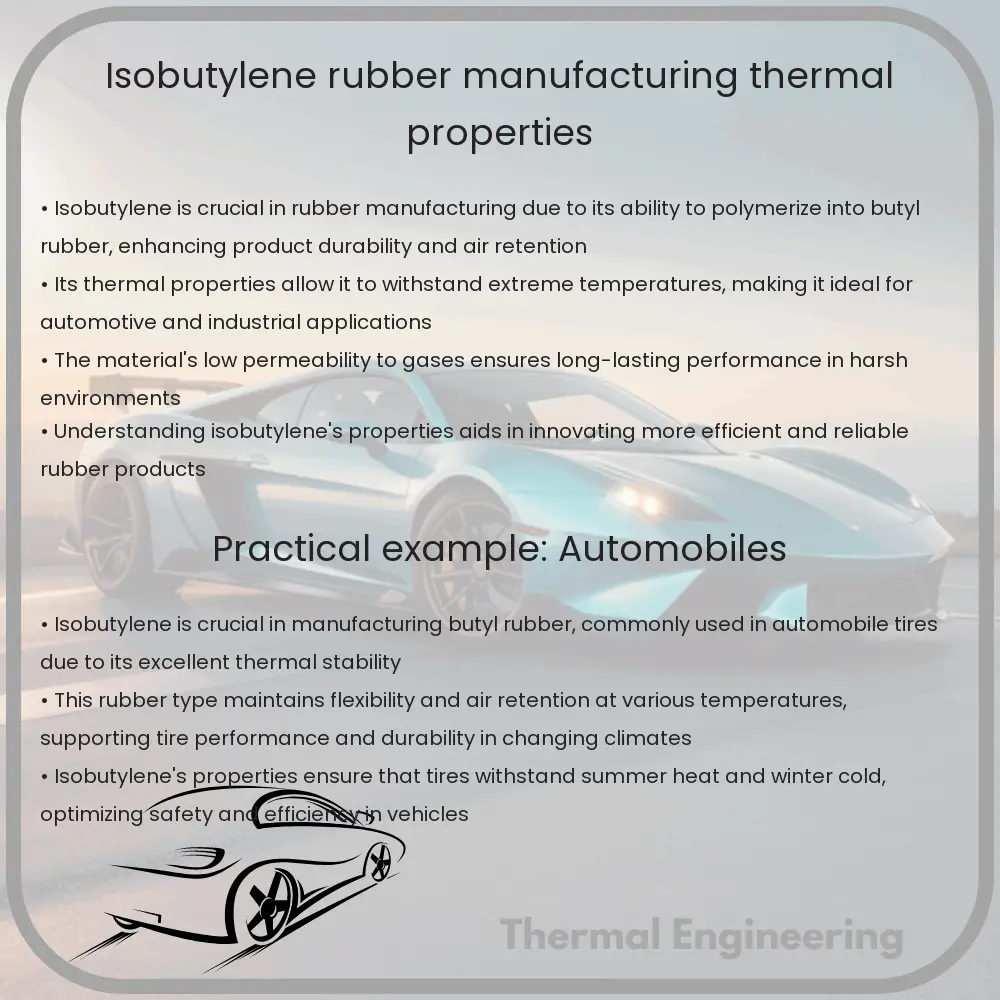
One of the primary uses of isobutylene in engineering is the synthesis of butyl rubber, a type of synthetic rubber. Butyl rubber is produced through the polymerization of isobutylene with a small amount of isoprene. The resulting copolymer possesses unique properties such as impermeability to gases and good resistance to heat, ozone, and weathering. This makes butyl rubber highly valuable in industries where air tight and vibration dampening properties are crucial.

  • Automotive Industry: Used in tire linings, sealants, and adhesives.
  • Pharmaceutical Industry: Serves as a material for stoppers and seals in medication vials and bottles.
  • Construction Industry: Acts as a sealant and protective layer in various construction materials.

Thermal Properties of Isobutylene

Understanding the thermal properties of isobutylene is crucial for its handling and application in industrial processes. Isobutylene, like other alkenes, has a relatively low boiling point of -6.9°C (19.6°F) at atmospheric pressure. This property is beneficial for processes that require liquid phase reactions at lower temperatures.

Despite its vaporous nature at slight elevation above room temperature, isobutylene can be easily liquefied under pressure, facilitating its storage and transportation. It is imperative to control the temperature and pressure conditions accurately during the storage of isobutylene to avoid any chances of polymerization or unwanted reactions.

Environmental and Safety Considerations

Isobutylene, while useful, poses several environmental and safety risks that must be carefully managed. Being highly flammable and a volatile organic compound (VOC), isobutylene can contribute to air pollution and pose hazards such as explosions if not handled under controlled conditions.

  • Regulations: Stringent regulations are in place for the handling and transportation of isobutylene, aiming to minimize its environmental impact and ensure safe operational practices.
  • Safety Measures: Facilities that produce or use isobutylene adopt rigorous safety protocols, including leak detection systems in storage areas, the use of flame arrestors, and detailed operational procedures to prevent accidents.

Conclusion

Isobutylene is a key component in the manufacturing of synthetic rubbers, particularly butyl rubber, and its unique properties make it ideal for a range of industrial applications. Understanding its thermal behavior and managing the associated environmental and safety risks are paramount in leveraging its benefits effectively. As engineering solutions advance, the control and use of compounds like isobutylene continue to evolve, underscoring the importance of chemical engineering in modern industrial applications.

Octafluoropropane | Insulating Gas, Thermal Efficiency

Explore the properties, applications, and environmental impact of octafluoropropane, a powerful insulating and cooling gas used in various industries.

Octafluoropropane | Insulating Gas, Thermal Efficiency

Understanding Octafluoropropane as an Insulating Gas

Octafluoropropane (C3F8) is a gas widely recognized for its application in industrial and electrical sectors due to its excellent insulating properties and thermal efficiency. This article explores the characteristics, uses, and benefits of octafluoropropane, particularly in the context of its role as an insulating gas.

Chemical and Physical Properties of Octafluoropropane

Octafluoropropane, also known as perfluoropropane, is a colorless, odorless gas that is not only non-toxic but also non-flammable, making it highly suitable for use in environments that require rigorous safety standards. Its molecular formula is C3F8, and it belongs to the family of fluorocarbons. The stability and inertness of octafluoropropane make it an excellent insulator in both gaseous and liquid forms.

Applications of Octafluoropropane in Insulation

One of the primary applications of octafluoropropane is in the electrical industry, where it is used as a dielectric medium in gas-insulated switchgear. This equipment is crucial for the effective operation and safety of electrical grids. Octafluoropropane’s ability to prevent electrical discharges makes it invaluable in maintaining the integrity and performance of power systems.

  • Dielectric Medium: Octafluoropropane’s excellent dielectric properties (high dielectric strength and low dielectric constant) make it an effective insulator, helping to prevent unwanted electrical discharges.
  • Thermal Insulation: The compound is also employed in thermal insulative materials, particularly in the soldering of semiconductor devices, because of its capability to withstand and manage high temperatures.
  • Greenhouse Gas: Despite its benefits, it is crucial to note that octafluoropropane is a potent greenhouse gas with a high global warming potential (GWP). Its atmospheric lifetime and GWP of 2600 (over a 100-year period) necessitate careful handling and disposal.

Thermal Efficiency of Octafluoropropane

Thermal efficiency in gases like octafluoropropane is quantified by their ability to resist the free flow of heat. In the case of octafluoropropane, the gas acts as an excellent barrier against heat, making it adept at maintaining desired temperatures in both cooling and heating systems.

Environmental Impact and Safety

Despite its effectiveness as an insulating and cooling agent, the use of octafluoropropane has raised environmental concerns due to its classification as a greenhouse gas. Its contribution to global warming when released into the atmosphere necessitates responsible management under environmental protection guidelines. Therefore, while attractive for its industrial capabilities, the environmental trade-offs associated with its usage must be considered in applications aimed at sustainable practices.

Conclusion

Octafluoropropane serves as a powerful tool in the arsenal of modern engineering and technology, particularly for its properties as an insulating gas with high thermal efficiency. However, its environmental footprint requires that its use be managed carefully, with emphasis on recovery, recycling, and responsible release mechanisms. Research into alternatives with lower environmental impacts is ongoing and critical for achieving a sustainable balance between industrial advantage and environmental protection.

Methylamine | Refrigeration, Thermal Conductivity & Uses

Methylamine is a versatile aliphatic amine used in refrigeration, solvent production, agriculture, pharmaceuticals, and more.

Methylamine | Refrigeration, Thermal Conductivity & Uses

Introduction to Methylamine

Methylamine (CH3NH2) is a simple aliphatic amine that appears as a colorless gas under standard conditions or as a liquid in solutions. It is known for its distinctive, fishy odor, similar to that of other amines. Methylamine is widely used in a variety of industrial applications due to its basicity, solubility, and reactivity features.

Refrigeration Applications

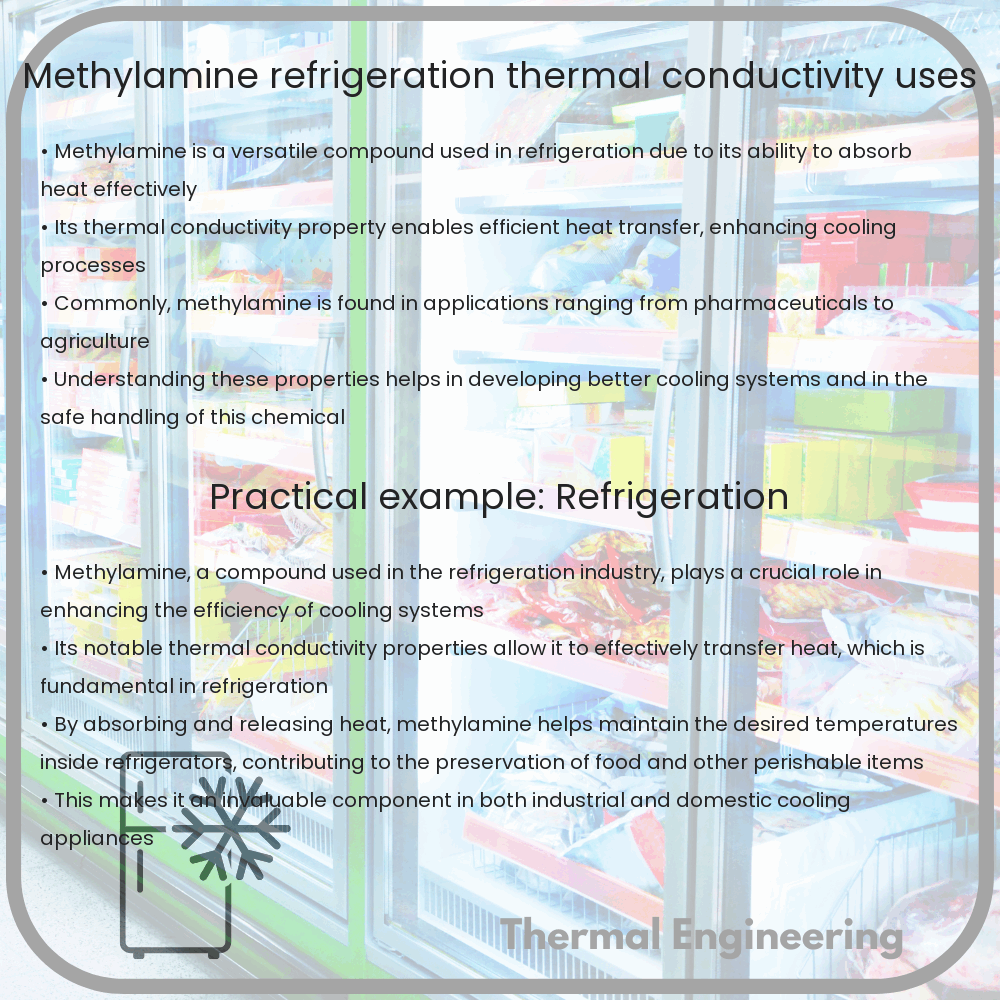
Methylamine is used as a refrigerant in both compression and absorption refrigeration systems. These systems employ methylamine because of its favorable thermodynamic properties. Specifically, in the area of compression refrigeration, methylamine offers efficient phase change characteristics at convenient temperatures for commercial refrigeration.

Thermal Conductivity

The thermal conductivity of methylamine is another essential physical property, particularly in its applications involving heat transfer processes. The thermal conductivity of methylamine allows it to efficiently transfer heat away from surfaces, which is beneficial in systems where temperature control is crucial. Although not as high as some other refrigerants like ammonia, methylamine’s thermal conductivity is sufficiently effective for many moderate cooling applications.

Uses of Methylamine

  • Solvent Production: Methylamine is used in the production of various solvents including dimethylformamide and dimethylacetamide, which are utilized extensively in the pharmaceutical and chemical industries.
  • Agriculture: It serves as a building block in the synthesis of the herbicide alachlor and other similar herbicides, essentially helping in weed control in agriculture.
  • Pharmaceuticals: Methylamine is used in the production of various pharmaceuticals, including theophylline and ephedrine, which are critical for treatments of respiratory diseases.
  • Rubber Processing: As an additive in the rubber industry, methylamine can act as an accelerator in the vulcanization process.
  • Water Treatment: It’s used in water treatment facilities to adjust pH levels and reduce corrosion in steam and water pipes.

Overall, methylamine is a versatile chemical with applications that reach into various vital industries, including refrigeration, pharmaceutical synthesis, and agricultural chemicals. Its combination of favorable physical properties, such as effective thermal conductivity and versatility as a solvent, substantiate its extensive use and importance in both commercial and industrial settings.

Conclusion

The understanding of methylamine’s physical properties like thermal conductivity, alongside its practical applications in refrigeration and various industrial processes, showcases the substantial role such basic compounds play in modern technology and industry. Insight into such compounds not only broadens the perspective on chemical applications but also enhances the capacity for developing innovative solutions to engineering problems.

Hydrogen Bromide | Industrial Bromination, Thermal Use

Hydrogen bromide (HBr) is detailed as a crucial gas in bromination, highlighting its properties, production methods, and industrial applications.

Hydrogen Bromide | Industrial Bromination, Thermal Use

Understanding Hydrogen Bromide in Industrial Bromination

Hydrogen bromide (HBr), a diatomic molecule consisting of one hydrogen atom and one bromine atom, is a colorless, corrosive gas at room temperature. It is widely utilized in the chemical industry, primarily for the production of bromine compounds through a process known as bromination.

Properties and Production of Hydrogen Bromide

Hydrogen bromide is highly soluble in water, forming hydrobromic acid, which is a strong acid similar to hydrochloric acid in terms of its acidic strength and applications. The gas can be produced both synthetically and naturally. The synthetic production typically involves the direct reaction of hydrogen gas (H2) with bromine (Br2), which can be represented by the equation:

H2 + Br2 -> 2HBr

This reaction is exothermic, releasing heat and requiring careful control to prevent excessive temperatures, which can lead to the formation of unwanted byproducts.

Use of Hydrogen Bromide in Industrial Bromination

Bromination is a chemical reaction in which a bromine atom is introduced into another molecule, typically an organic compound. HBr is particularly useful for the bromination of alkenes (unsaturated hydrocarbons) through a mechanism known as electrophilic addition. During this process, the pi bond of the alkene reacts with the hydrogen bromide to form a bromoalkane. The general form of this reaction can be illustrated as follows:

RCH=CH2 + HBr -> RCHBr-CH3

This transformation is significant in the manufacture of various pharmaceuticals, agrochemicals, and other industrial chemicals.

Thermal Applications of Hydrogen Bromide

Apart from its use in chemical synthesis, hydrogen bromide can also play a role in thermal processes. Due to its stability at high temperatures, HBr is used in some types of thermal cleaning processes for removing silicon-based residues from semiconductor surfaces. The gas reacts with silicon deposits, effectively cleaning the surface without damaging the underlying material.

Furthermore, hydrogen bromide is involved in the thermal initiation of some polymerization reactions, where it acts as a catalyst or initiator. Its ability to generate bromine radicals upon heating makes it suitable for initiating radical chain reactions, essential in the manufacture of certain polymers.

Safety and Handling Considerations

Handling hydrogen bromide requires strict safety measures due to its corrosive nature and potential to form dense, toxic fumes, particularly when exposed to moisture. Appropriate safety gear, including gloves, goggles, and protective clothing, is mandatory when dealing with this chemical. Additionally, proper ventilation is crucial to ensure that any released gas does not accumulate, posing health risks to personnel.

Overall, hydrogen bromide is a versatile chemical in the industrial sector, particularly valued for its role in bromination reactions and high-temperature processes. Continued research and development in handling and safety technologies keep broadening the scope of its applications, reinforcing its importance in modern chemical manufacturing.