Facebook Instagram Youtube Twitter

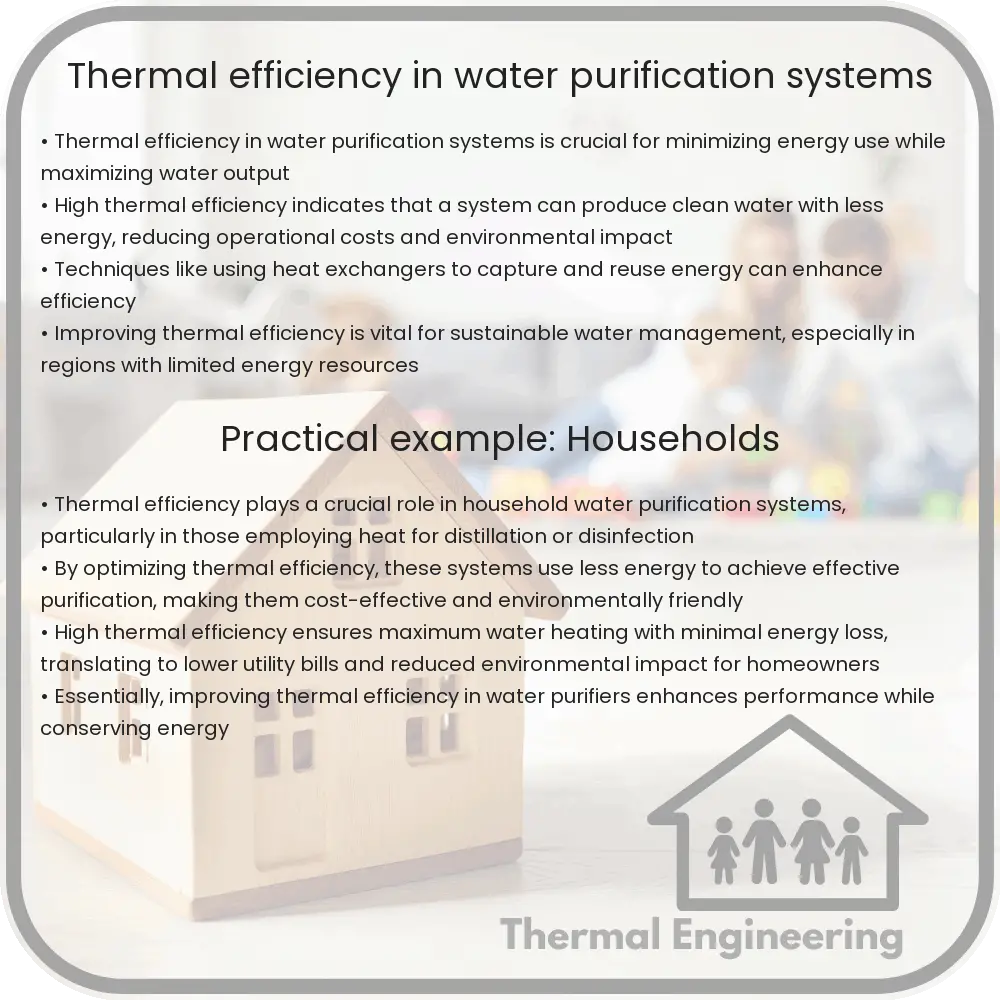
Thermal efficiency in water purification systems

Learn about thermal efficiency in water purification systems, evaluating its influence and methods to improve it for better performance and sustainability.
Thermal efficiency in water purification systems

Understanding Thermal Efficiency in Water Purification Systems

Thermal efficiency is a critical metric in the engineering of water purification systems, particularly those that rely on thermal processes such as distillation and reverse osmosis. It essentially measures how effectively a system can convert heat energy into a desired output—in this case, clean water. This concept is not only pivotal for enhancing the performance of purification systems but also for minimizing energy consumption and environmental impact.

Basics of Thermal Efficiency

Thermal efficiency is defined as the ratio of output energy to input energy, which in the context of water purification, refers to the amount of clean water produced per unit of thermal energy consumed. It is typically expressed as a percentage:

\[
\text{Thermal Efficiency (\%)} = \left(\frac{\text{Useful Output Energy}}{\text{Input Energy}}\right) \times 100
\]

In water purification, the input energy is usually derived from electrical or fuel-based heat sources, while the useful output is the purified water obtained from the process.

Key Factors Influencing Thermal Efficiency in Water Purification

  • Source Water Temperature: The temperature of the water being treated can significantly affect the system’s efficiency. Higher temperatures generally improve efficiency as they reduce the amount of energy required to heat the water to the necessary level for treatment.
  • Technology Used: Different purification technologies have varying levels of thermal efficiency. For example, multi-stage flash distillation is generally more efficient than single-stage methods due to better heat recovery processes.
  • Heat Recovery Systems: Systems equipped with heat recovery technologies can reuse the heat within the system, significantly improving efficiency. Counter-current heat exchange systems are a common method used to achieve this.

Enhancing Thermal Efficiency

Improving the thermal efficiency of water purification systems involves several strategies, focusing primarily on reducing energy loss and enhancing energy recovery. Here are a few methods commonly used:

  • Use of Energy Recovery Devices: Devices like Pressure Exchanger and Turbochargers in reverse osmosis systems can recycle energy from the concentrate stream back into the system, drastically reducing energy consumption.
  • Optimization of Operating Conditions: By fine-tuning the operating temperatures and pressures, systems can operate more closely to their optimal efficiency points.
  • Advanced Materials: Using materials with better heat conductivity and corrosion resistance can help maintain system integrity and enhance heat transfer efficiency.

Environmental Impact and Economic Considerations

Higher thermal efficiency in water purification not only reduces operational costs but also has a significant environmental impact. By using less energy, systems emit fewer greenhouse gases and require less fuel consumption, contributing to a more sustainable future. Hence, investing in technology that improves thermal efficiency can be economically beneficial while also promoting environmental sustainability.

Conclusion

Thermal efficiency plays a crucial role in the effectiveness and sustainability of water purification systems. By understanding and improving the thermal efficiency of these systems, engineers can create more reliable, cost-effective, and environmentally friendly solutions for providing clean water. As technology progresses, the focus on thermal efficiency will continue to bring innovations in water treatment methodologies, benefiting both humanity and the planet.

Sulfur Tetrafluoride | High Density, Thermal Insulation

Learn about the properties and uses of sulfur tetrafluoride (SF4), a high-density gas used for thermal insulation and electrical applications.

Sulfur Tetrafluoride | High Density, Thermal Insulation

Understanding Sulfur Tetrafluoride: Properties and Applications in High Density and Thermal Insulation

Sulfur tetrafluoride (SF4) is a chemical compound known for its unique properties, which include a high density and excellent thermal insulation ability. This article will explore the chemical characteristics of sulfur tetrafluoride, its production process, and its applications, particularly focusing on its role in high-density and thermal insulation contexts.

Chemical and Physical Properties of Sulfur Tetrafluoride

Sulfur tetrafluoride is a colorless, corrosive gas that emits a pungent odor. It is composed of one sulfur atom and four fluorine atoms, represented by the chemical formula SF4. This compound is notable for its relatively high density when compared to air. The molecular mass of SF4 is approximately 108.06 g/mol, contributing to its density, which is about 4.95 g/L at standard temperature and pressure (STP). This makes it heavier than air, which has a density of approximately 1.29 g/L at STP.

The boiling point of sulfur tetrafluoride is about -38 degrees Celsius, indicating that it can exist as a gas at room temperature. It has a melting point of -121 degrees Celsius. One of the key features of SF4 is its ability to act as a dielectric gas, which means it can prevent or rapidly quench electrical discharges, a property utilized in electrical applications.

Production of Sulfur Tetrafluoride

Sulfur tetrafluoride can be produced through several chemical reactions, primarily involving sulfur chlorides and fluorine. One common method is the reaction between sulfur dichloride (SCl2) and fluorine gas (F2), which occurs under specific controlled conditions to prevent the formation of other sulfur fluorides such as sulfur hexafluoride (SF6):

  • SCl2 + 3F2 → SF4 + 2Cl2

This reaction must be conducted with careful handling due to the corrosive nature of the reactants and the toxicity of the products.

Applications of Sulfur Tetrafluoride in High Density and Thermal Insulation

The high density of sulfur tetrafluoride makes it suitable for use in applications where weight and space are critical factors. For instance, in the metal casting industry, SF4 is used as a gaseous blanket in certain precision casting processes to improve the quality of the cast by preventing oxidation.

In terms of thermal insulation, sulfur tetrafluoride’s ability as a gas to provide insulation is exploited in electrical systems. Its excellent dielectric properties mean that it can be used in gas-insulated switchgear (GIS), which requires effective insulation to prevent electrical discharges that could lead to system failures. SF4‘s effectiveness in this role comes from its low thermal conductivity and high dielectric strength, making it an ideal insulator in high-voltage components.

Additionally, SF4 is researched for its potential use in double-glazed windows as an insulating medium between glass panes. This application benefits from both its high density, which imparts sound damping properties, and its low thermal conductivity, which improves heat retention compared to air or other standard fill gases.

Conclusion

Sulfur tetrafluoride is a versatile compound whose properties of high density and excellent thermal insulation capabilities make it suitable for a variety of engineering applications. From improving metal cast quality to enhancing the efficiency of electrical systems and even contributing to energy-efficient building solutions, SF4 plays an important role in modern engineering. Always, caution must be exercised due to its corrosive nature and potential health impacts, underlining the importance of handling SF4 with proper safety measures.

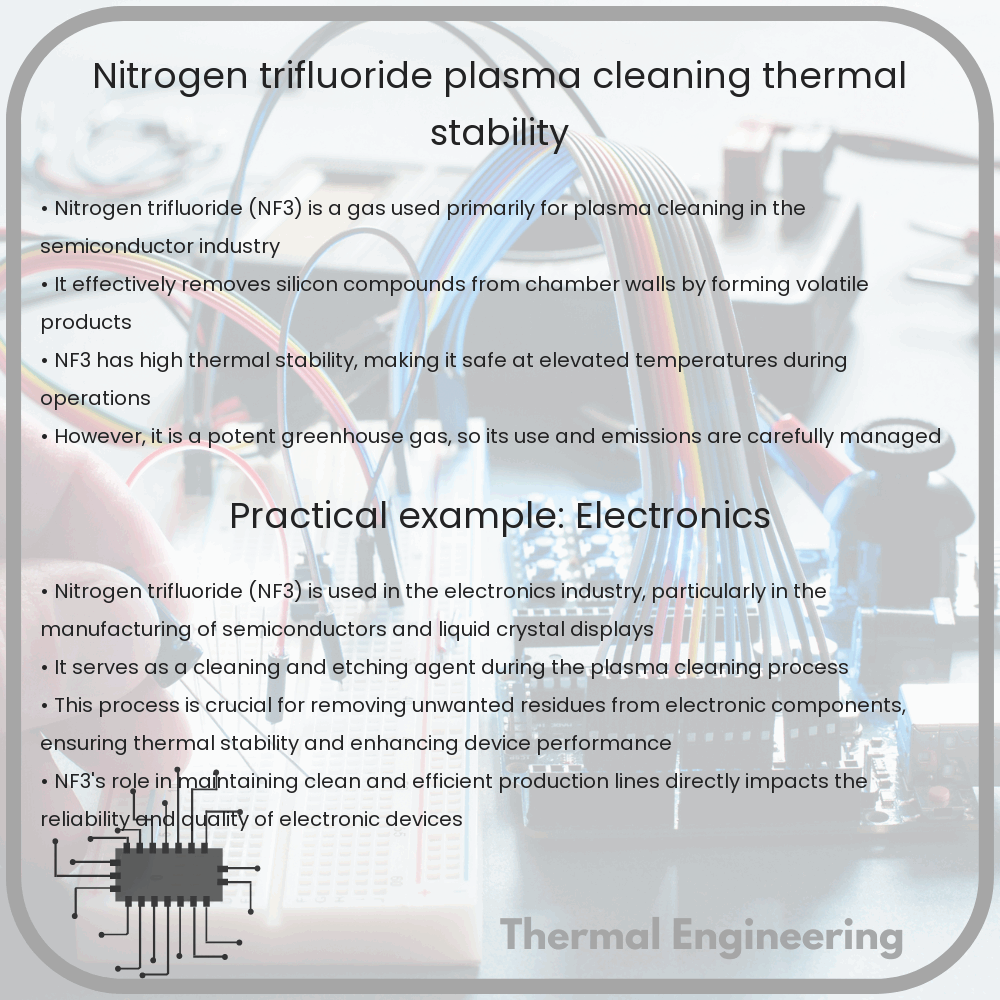
Nitrogen Trifluoride | Plasma Cleaning, Thermal Stability

Explore the role of Nitrogen Trifluoride (NF3) in plasma cleaning and its thermal stability in semiconductor manufacturing.

Nitrogen Trifluoride | Plasma Cleaning, Thermal Stability

Understanding Nitrogen Trifluoride in Plasma Cleaning and Thermal Stability

Nitrogen trifluoride (NF3) is a colorless, nonflammable, toxic gas that plays a critical role in the field of semiconductor manufacturing and electronics. This gaseous compound has properties that make it particularly effective for plasma cleaning, a process crucial for maintaining the precision and efficiency of electronic devices.

Plasma Cleaning with Nitrogen Trifluoride

Plasma cleaning is a process used to remove residual impurities from surfaces, which is essential in semiconductor fabrication. Nitrogen trifluoride is used in this context because it can efficiently remove silicon, silicon oxide, and other unwanted materials from the surfaces of process chambers.

  • Efficiency: NF3 is preferred over other cleaning gases like fluorine due to its high reactivity. When introduced into a plasma environment, NF3 breaks down and forms fluorine radicals. These radicals effectively etch away residues from chamber surfaces.
  • Safety: Although toxic, NF3 is safer to store and handle compared to elemental fluorine, underlining its utility in industrial applications. The gas has a relatively stable molecular structure under normal conditions, reducing the risk of accidental release.

During the plasma cleaning process, NF3 is typically pulsed into the chamber, where it decomposes under the influence of an RF (radio frequency) plasma. This decomposition liberates fluorine atoms which volatilize the contaminants, effectively cleaning the chamber surfaces.

Thermal Stability of Nitrogen Trifluoride

Understanding the thermal stability of NF3 is also crucial because it informs safety protocols and handling procedures in industrial settings. Nitrogen trifluoride is stable under ordinary conditions, but it decomposes when subjected to high temperatures or electric discharges.

  • Decomposition: At high temperatures, NF3 decomposes into nitrogen and fluorine gases. This decomposition can be represented by the equation: NF3 → N2 + 3F2. It begins around 400 degrees Celsius, but significant rates of decomposition occur at higher temperatures.
  • Energy Release: The decomposition process is exothermic, meaning it releases a considerable amount of energy. This needs to be carefully managed to prevent runaway reactions or explosions in industrial applications.

The stability of NF3 is one of the reasons why it is preferred in thermal processes and applications requiring controlled fluorination. Moreover, the byproducts (nitrogen and fluorine) are relatively easier to handle and remove post-process, simplifying the operational requirements of plasma cleaning systems.

Environmental and Safety Considerations

Despite its advantages, the use of nitrogen trifluoride must be carefully managed due to its environmental and safety impacts. NF3 is a potent greenhouse gas, with a global warming potential significantly higher than that of carbon dioxide. Proper containment, recovery, and disposal methods are essential to mitigate its environmental footprint.

  • Regulations: There are strict regulations governing the storage, handling, and disposal of NF3, ensuring safety procedures are adhered to and environmental impacts are minimized.
  • Alternate Methods: Research is ongoing into more sustainable and less environmentally damaging processes for plasma cleaning and other applications of NF3.

In conclusion, nitrogen trifluoride plays a crucial role in semiconductor manufacturing, particularly in the plasma cleaning of process chambers. Its high efficiency, combined with reasonable safety and thermal stability, makes it an indispensable tool in electronics production. However, its environmental impact requires careful consideration and management.

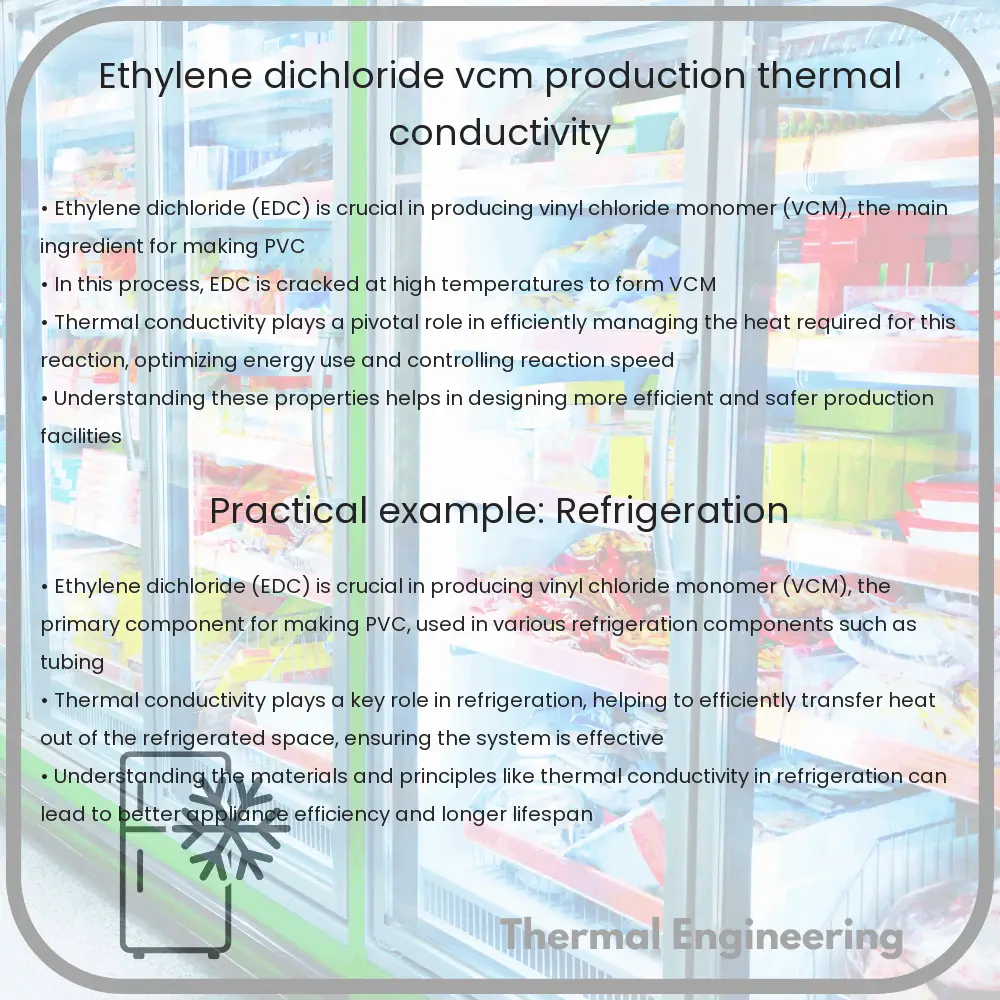
Ethylene Dichloride | VCM Production, Thermal Conductivity

Understand the production process, thermal properties, and safety considerations of Ethylene Dichloride (EDC) in VCM and PVC manufacturing.

Ethylene Dichloride | VCM Production, Thermal Conductivity

Understanding Ethylene Dichloride and VCM Production

Ethylene dichloride (EDC), also known as 1,2-dichloroethane, is a chlorinated hydrocarbon primarily used in the production of vinyl chloride monomer (VCM), the precursor for polyvinyl chloride (PVC) polymer. The production of EDC is critical as PVC is used extensively in construction, healthcare, and various other industries due to its versatility, durability, and cost-effectiveness.

The production of EDC commonly involves the chlorination of ethylene using either direct chlorination or oxychlorination. This process not only yields EDC but also generates various by-products depending on reaction conditions.

Steps in the Production of VCM from EDC

  • Direct Chlorination: Ethylene and chlorine gas react at a elevated temperatures in the presence of a catalyst to produce EDC.
  • Oxychlorination: This method compensates for the expensive chlorine consumption by using hydrogen chloride (HCl) and oxygen alongside ethylene. The reaction also produces water along with EDC.
  • Cracking: EDC is then thermally cracked, in a process known as pyrolysis, to produce VCM and HCl. This step is highly temperature-sensitive.

VCM is then polymerized to produce PVC, which involves the initiation, propagation, and termination processes of the monomer molecules under controlled conditions.

Thermal Conductivity of Ethylene Dichloride

Thermal conductivity is a fundamental property significant in the chemical processing industry, as it affects the heat transfer efficiency during the production process. For substances like EDC, knowing the thermal conductivity helps in designing efficient heat exchangers and reactors.

The thermal conductivity of ethylene dichloride at 20°C is approximately 0.098 W/m·K. This value varies slightly with temperature changes. For effective industrial application, understanding the variation helps in optimizing the production and safety processes.

Environmental and Safety Considerations

Both EDC and VCM are hazardous materials, necessitating stringent handling and disposal measures to protect human health and the environment. EDC is classified as a probable human carcinogen, and VCM is known to cause a rare form of liver cancer. Appropriate safety measures include:

  • Controlled exposure levels within workplace environments.
  • Proper personal protective equipment (PPE) for workers handling these chemicals.
  • Rigorous air and water pollution control measures in plants to prevent environmental contamination.

In conclusion, while the production of EDC and VCM is essential for the manufacture of PVC, careful consideration must be given to their thermal properties and potential health and environmental impacts. Advances in process engineering and material science continuously seek to enhance the efficiency and safety of these processes.

Carbon Tetrachloride | Fire Suppressant, Thermal Inertia

Understanding carbon tetrachloride’s role in fire suppression and its unique thermal properties, along with its environmental impact and health risks.

Carbon Tetrachloride | Fire Suppressant, Thermal Inertia

The Role of Carbon Tetrachloride in Fire Suppression and its Thermal Properties

Carbon tetrachloride, with the chemical formula CCl4, has historically been a significant player in fire suppression due to its ability to extinguish flames. However, its use has drastically declined in recent decades due to environmental and health concerns. In addition to its fire suppression capabilities, carbon tetrachloride exhibits unique thermal inertia properties making it an interesting subject for both scientific study and industrial application.

Fire Suppressant Properties

Carbon tetrachloride was once widely used as a firefighting agent, particularly in portable fire extinguishers and in systems designed for safeguarding valuable equipment such as telephone exchanges and electronic data rooms. The effectiveness of CCl4 in suppressing fire comes from its ability to inhibit the chemical reactions occurring in the combustion process. Upon exposure to high heat, carbon tetrachloride decomposes and forms chlorine as a decomposition product. Chlorine is a non-combustible gas that helps to remove heat and displace oxygen from the vicinity of the fire, thus extinguishing the flames.

  • Interruption of the free radical chain reaction during combustion;
  • Reduction of the flame temperature, making it insufficient for sustaining combustion;
  • Oxygen depletion near the fire, reducing the availability of this essential reactant.

Despite these advantages, the use of carbon tetrachloride as a fire suppressant has been largely discontinued. This change is primarily due to its toxic nature and its contribution to ozone layer depletion. When released into the atmosphere, CCl4 is a potent ozone-depleting substance that contributes to the ozone layer thinning, which is crucial for protecting the earth from harmful ultraviolet (UV) rays.

Thermal Inertia

Thermal inertia is a property that describes the resistance of a material to change in temperature. Materials with high thermal inertia can absorb or release significant amounts of heat without undergoing large temperature changes themselves. Carbon tetrachloride exhibits relatively high thermal inertia, which can be beneficial in applications requiring temperature control and stability.

One application of the unique thermal properties of CCl4 is its use as a calibration fluid in heat capacity measurements. Due to its stable thermal characteristics, carbon tetrachloride can be used to calibrate instruments that measure the specific heat (heat capacity per unit mass) of other substances, ensuring that such measurements are accurate and reliable.

Environmental and Health Concerns

Although carbon tetrachloride has beneficial industrial applications, its environmental and health impacts cannot be overlooked. As mentioned earlier, its role in ozone depletion has curtailed its use significantly. Moreover, CCl4 is toxic when inhaled, ingested, or absorbed through the skin, and it can cause serious health issues including liver and kidney damage, and it has been classified as a possible human carcinogen by the International Agency for Research on Cancer (IARC).

The risks associated with carbon tetrachloride have led to strict regulations on its production and usage globally, with many countries phasing out or restricting its use in various applications.

In conclusion, while carbon tetrachloride has played a pivotal role as a fire suppressant and in applications benefiting from its thermal inertia, its negative impact on health and the environment necessitate caution and restraint in its use. Ongoing research and technological development continue to seek safer alternatives that can match the effectiveness of carbon tetrachloride without its associated risks.

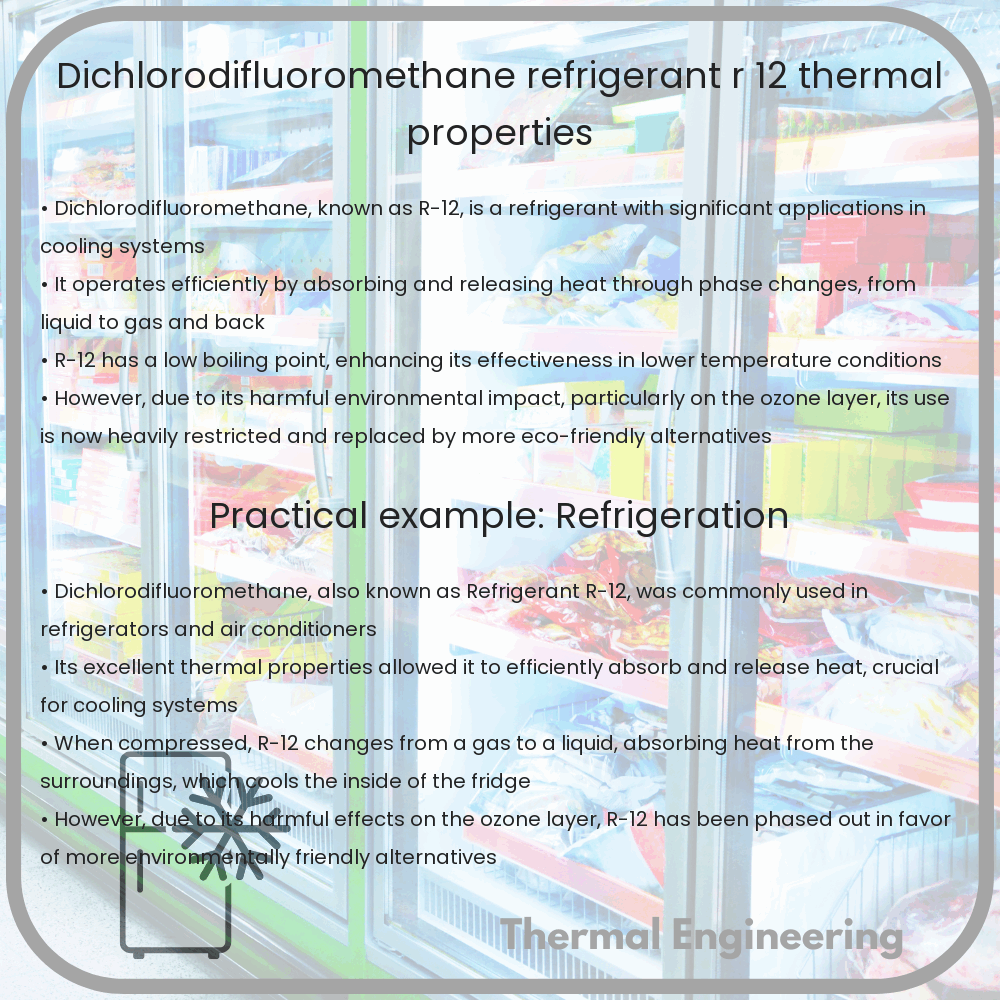
Dichlorodifluoromethane | Refrigerant R-12, Thermal Properties

Learn about Dichlorodifluoromethane (R-12), its thermal properties, and its environmental impact as a widely used refrigerant.

Dichlorodifluoromethane | Refrigerant R-12, Thermal Properties

Understanding Dichlorodifluoromethane: Refrigerant R-12 and Its Thermal Properties

Dichlorodifluoromethane, commonly referred to as R-12, is a chlorofluorocarbon (CFC) that has been widely used as a refrigerant due to its excellent thermodynamic properties, non-flammability, and low toxicity. However, due to its ozone depletion potential, its use is being phased out under the Montreal Protocol. This article explores the thermal properties of R-12, shedding light on why it was a popular choice in refrigeration systems and how it interacts with heat.

Physical and Chemical Properties of R-12

R-12 or CCl2F2 (dichlorodifluoromethane) is a colorless, odorless gas at room temperature. It was primarily used in air conditioning systems for vehicles, refrigerators, and freezers. Being non-flammable and non-toxic, it provided a great advantage over the previously used refrigerants.

Thermal Properties of Dichlorodifluoromethane

The thermal properties of a refrigerant, such as R-12, are critical in its function in refrigeration cycles. These properties include:

  • Boiling Point: R-12 has a boiling point of -29.8°C or -21.6°F. This low boiling point makes it effective in systems that operate at lower temperatures and can facilitate heat absorption from the environment.
  • Heat Capacity: The specific heat capacity of R-12 is approximately 0.21 kJ/kg*K at 30°C in its liquid form. This property influences the amount of heat R-12 can store and release during the refrigeration cycle.
  • Thermal Conductivity: R-12 has lower thermal conductivity compared to newer refrigerants. This affects the efficiency of heat exchange between the refrigerant and its surroundings.

Impact on Ozone Layer and Alternatives

Dichlorodifluoromethane contributes to ozone layer depletion when released into the atmosphere. The chlorine contained in R-12 is free to react with ozone, leading to the breakdown of ozone molecules. Due to these environmental concerns, the use of R-12 is restricted under the Montreal Protocol.

As a result, alternative refrigerants with less environmental impact, such as HFCs (hydrofluorocarbons) and natural refrigerants like propane and isobutane, are now favored in new systems. Alternatives such as R-134a do not deplete the ozone and have similar thermodynamic properties to R-12 but with lower risks to the environment.

Understanding the thermal and environmental characteristics of refrigerants like dichlorodifluoromethane is crucial for both advancing technological applications and mitigating the adverse effects on our planet.

Tetrafluoroethane | Refrigerant R-134a, Heat Transfer

Explore the role, properties, and environmental impact of Tetrafluoroethane (R-134a), a key refrigerant in heat transfer systems.

Tetrafluoroethane | Refrigerant R-134a, Heat Transfer

Understanding Tetrafluoroethane: The Role of Refrigerant R-134a in Heat Transfer

Tetrafluoroethane, chemically represented as C2H2F4 and commonly referred to as R-134a, is a hydrofluorocarbon (HFC) that has played a critical role in refrigeration and air conditioning systems for several decades. As a refrigerant, R-134a is used to absorb and transfer heat, a fundamental process in cooling mechanisms. This article explores the properties of R-134a, its applications, and the basic principles of heat transfer involved in its operation.

Properties of R-134a

Tetrafluoroethane (R-134a) is known for its thermodynamic properties which make it suitable for a variety of cooling applications. Some of the key properties include:

  • Non-toxicity: R-134a is non-toxic, making it a safer choice in both residential and commercial environments.
  • Non-flammability: It is non-flammable at ambient temperatures, which significantly reduces the risk of fires associated with its use.
  • Stability: R-134a is chemically stable, which means it does not decompose even when used under varied environmental conditions.
  • Ozone Depletion Potential (ODP): It has an ODP of zero, indicating it does not contribute directly to ozone layer depletion, unlike its predecessors such as R-12.
  • Global Warming Potential (GWP): However, R-134a does have a relatively high GWP, prompting the search for more environmentally friendly alternatives.

Application in Heat Transfer

R-134a operates in a vapor-compression cycle, which is the core process facilitating heat transfer in refrigeration systems. This cycle involves several key steps:

  1. Evaporation: Inside the evaporator coil, R-134a absorbs heat from the surroundings, causing it to evaporate and transform from a low-pressure liquid into a vapor.
  2. Compression: The vapor is then compressed by the compressor, increasing its pressure and temperature.
  3. Condensation: In the condenser, the high-pressure vapor releases the absorbed heat to the outside environment, condensing back into a high-pressure liquid.
  4. Expansion: The high-pressure liquid passes through an expansion valve where its pressure and temperature drop. It then re-enters the evaporator, completing the cycle.

The efficiency of this cycle relies heavily on the thermodynamic properties of R-134a, particularly its boiling point, pressure, and heat absorption capacity.

Thermodynamics of R-134a

The effectiveness of R-134a in refrigeration systems can be attributed to its favorable thermodynamic characteristics, which allow it to undergo phase changes at convenient temperatures and pressures. The enthalpy of vaporization (the heat required to convert liquid R-134a into vapor without temperature change) is a critical factor in how much heat R-134a can transfer per kilogram of refrigerant.

Environmental Impact and Future Considerations

While R-134a is advantageous in terms of safety and ozone protection, its high Global Warming Potential (GWP) of 1430 stands as a significant environmental concern. This has led to regulatory measures aimed at phasing out substances with high GWP, including R-134a. In response, the industry is moving towards the adoption of refrigerants with lower GWPs, such as R-1234yf and R-1234ze, which are considered more sustainable alternatives.

In conclusion, R-134a has been a pivotal refrigerant in heat transfer applications due to its favorable properties and performance efficiency. However, its environmental impact is driving the shift towards more ecologically sustainable cooling solutions.

Temperature regulation in wearable health monitors

Explore the engineering behind temperature regulation in wearable health monitors, focusing on sensor technology, challenges, and impact on health.

Temperature regulation in wearable health monitors

Understanding Temperature Regulation in Wearable Health Monitors

Wearable health monitors, such as fitness trackers and smartwatches, have become ubiquitous in helping individuals track their personal health metrics like heart rate, activity levels, and even stress. One of the critical aspects of these devices is their ability to monitor body temperature, which can provide valuable insights into a user’s physiological state. In this article, we will explore the engineering principles behind temperature regulation in these wearable devices, ensuring both accuracy and user safety.

Thermal Sensors in Wearables

The core component responsible for temperature measurement in wearable devices is the thermal sensor. These sensors typically operate based on principles like thermistor response or infrared sensing.

  • Thermistors: A thermistor is a type of resistor whose resistance changes significantly with temperature. By measuring this resistance, the device can calculate the temperature. Thermistors are appreciated for their precision and rapid response times.
  • Infrared Sensors: For non-contact temperature measurements, some wearables use infrared sensors. These devices detect the infrared energy emitted by the user’s skin and convert it into a temperature reading.

Challenges in Temperature Measurement

Ensuring accurate temperature measurement in wearable technology faces several challenges:

  1. Environmental Influence: External temperature and humidity can affect the sensor’s readings. Wearable devices must distinguish between body heat and ambient environmental conditions.
  2. Sensor Placement: The location of the sensor on the body significantly influences the accuracy of the readings. Commonly, sensors are placed in areas that can maintain close contact with the body, such as the wrist or chest.
  3. User Variation: Individual variations in body temperature, due to factors such as health conditions or even the time of day, pose a challenge to standardizing temperature measurements.

Technological Solutions for Accurate Temperature Regulation

To overcome these challenges, engineers incorporate multiple design and technological strategies:

  • Calibration Algorithms: Advanced algorithms can differentiate between body and ambient temperatures, adjusting the readings to reflect more accurate body temperature.
  • Integrated Sensors: Combining different types of sensors helps validate the data and improve accuracy. For instance, using both a thermistor and an infrared sensor can provide a more comprehensive temperature analysis.
  • Software Corrections: Software can be used to adjust readings based on known variables such as the time of day and preset physiological parameters, accounting for user variations.

Impact of Accurate Temperature Monitoring

Accurately monitoring body temperature with wearable health devices has significant implications:

  • Health Monitoring: Continuous temperature monitoring can help detect early signs of infection or illness, potentially notifying the user and healthcare providers quicker than traditional methods.
  • Fitness and Performance: Athletes can use temperature data to optimize their training, ensuring that they are not overheating and are performing at peak conditions.
  • Research Applications: Long-term data collected from a broad user base can aid scientific research in understanding patterns of human health and disease.

In conclusion, temperature regulation in wearable health monitors combines advanced sensor technology, innovative engineering solutions, and software enhancements to provide users with accurate and reliable health data. As technology progresses, the precision and utility of these devices are expected to increase, making an even greater impact on personal and public health.

Silicon Tetrafluoride | Semiconductor Cleaning, Thermal

Silicon tetrafluoride (SiF4) is utilized for cleaning and etching in semiconductor manufacturing, essential for device precision.

Silicon Tetrafluoride | Semiconductor Cleaning, Thermal

Understanding Silicon Tetrafluoride in Semiconductor Cleaning Processes

Silicon tetrafluoride (SiF4) is a chemical compound that plays a crucial role in the manufacturing and maintenance of semiconductor devices. This colorless, toxic gas is primarily employed in the cleaning and etching processes within the semiconductor industry, utilizing its reactive properties to achieve precision and efficiency critical in these high-tech environments.

Properties of Silicon Tetrafluoride

Silicon tetrafluoride is a volatile, inorganic compound with a molecular formula of SiF4. It is known for its distinct, sharp smell and high reactivity, particularly with water. When exposed to moisture, SiF4 hydrolyzes to produce silica (SiO2) and hydrofluoric acid (HF), a reaction that is highly exothermic:

SiF4 + 2H2O → SiO2 + 4HF

This reaction with water, including atmospheric moisture, makes SiF4 particularly suitable for etching processes where removal of silicon-based materials is needed.

Application in Semiconductor Cleaning

The primary use of silicon tetrafluoride in semiconductor manufacturing is in the cleaning and etching of silicon wafers. During the production of semiconductors, various contaminants and excess materials need to be meticulously removed to avoid defects in the final product. SiF4 provides an effective mechanism for achieving the required level of cleanliness and precision.

  • Thermal Cleaning: In thermal cleaning processes, SiF4 is used to remove layers of silicon dioxide or other silicon compounds that have been deposited on the semiconductor wafers. The gas, often used in combination with oxygen or nitrogen trifluoride, is introduced into a reaction chamber where it is heated, initiating a reaction that selectively removes unwanted materials without damaging the underlying structures.
  • Etching: SiF4‘s ability to react with silicon to form volatile byproducts is exploited in etching processes. These byproducts can be easily removed by vacuum, leaving a clean and precisely etched surface necessary for further processing of the semiconductor devices.

Safety and Environmental Considerations

While SiF4 is invaluable in semiconductor manufacturing, it poses several safety and environmental risks that must be carefully managed. Its reaction with water to produce hydrofluoric acid, a highly corrosive and toxic substance, requires stringent handling and storage protocols. Workplaces using SiF4 implement extensive safety measures including gas detection systems, proper ventilation, and emergency response plans to mitigate exposure risks.

Moreover, the environmental impact of SiF4, particularly its potential to contribute to atmospheric fluoride levels, necessitates effective waste gas treatment systems to capture and neutralize emissions before release.

Conclusion

Silicon tetrafluoride serves as an indispensable tool in the fabrication and maintenance of semiconductor devices, contributing to the industry’s ability to meet the ever-increasing demands for precision and miniaturization. Its application in thermal cleaning and etching processes highlights the complex balance between leveraging chemical properties for industrial gain and managing the associated risks. Continued advancements in safety and environmental management remain paramount to sustain and expand its use in semiconductor technologies.

Boron Trifluoride | Catalyst, Thermal Stability & Uses

Learn about Boron Trifluoride (BF3), a strong Lewis acid used widely in chemical synthesis and various industrial applications.

Boron Trifluoride | Catalyst, Thermal Stability & Uses

Introduction to Boron Trifluoride (BF3)

Boron trifluoride, commonly represented as BF3, is a colorless gas with a pungent odor. It is a chemical compound made up of one boron (B) atom and three fluorine (F) atoms. This inorganic compound is notable for its role as a strong Lewis acid and is widely used in various chemical reactions and industrial applications.

Chemical and Physical Properties

Boron trifluoride has some distinctive chemical and physical properties:

  • Molecular Weight: Approximately 67.81 g/mol.
  • Boiling Point: -100.3°C.
  • Melting Point: -127.1°C.
  • Density: About 3 kg/m3 (gas at STP).
  • Solubility: Reacts with water, releasing hydrogen fluoride (HF).

Role as a Catalyst

BF3 is extensively utilized as a catalyst in organic synthesis, particularly in reactions such as Friedel-Crafts acylation and alkylation. The ability of BF3 to accept a lone pair of electrons from various lewis bases makes it an efficient Lewis acid, initiating these reactions by forming a complex with the reagent which increases its reactivity.

Thermal Stability

Thermal stability is a critical parameter for compounds used in high-temperature processes. Boron trifluoride is relatively stable but will decompose upon heating to high temperatures, releasing toxic and corrosive fumes of boron oxide and fluorides. This decomposition can occur especially in the presence of water, which accelerates the breakdown process and can lead to violent reactions.

Uses of Boron Trifluoride

The role of boron trifluoride spans several industries owing to its chemical properties:

  • Chemical Manufacturing: Used in the production of resins, pharmaceuticals, and various organic compounds.
  • Petroleum Industry: Acts as a catalyst in isomerization processes.
  • Electronics: Utilized in the manufacture of semiconductors and flat panel displays, due to its part in the deposition of boron-containing films.
  • Analytical Chemistry: Employed in spectrometry as a gas for etching silicon compounds and removing oxides from metal surfaces.

Conclusion

Boron trifluoride is a versatile chemical compound whose unique properties and functionality as a catalyst make it indispensable in both chemical synthesis and various industrial applications. However, due to its highly reactive nature and potential to release harmful substances, handling and usage of boron trifluoride require strict safety precautions and compliance with environmental regulations.