Facebook Instagram Youtube Twitter

Natural Gas | Heating, Power Generation & Fuel Efficiency

Explore the versatility of natural gas in heating, power generation, and as a clean vehicle fuel, highlighting its efficiency and lower emissions.
Natural Gas | Heating, Power Generation & Fuel Efficiency

Natural Gas: A Versatile Energy Source

Natural gas, primarily composed of methane (CH4), is a crucial source of energy used globally for heating, power generation, and as a fuel for vehicles. Its importance lies in its efficiency, relatively low emissions of carbon dioxide compared to coal and oil, and its versatility as an energy source.

Heating Applications

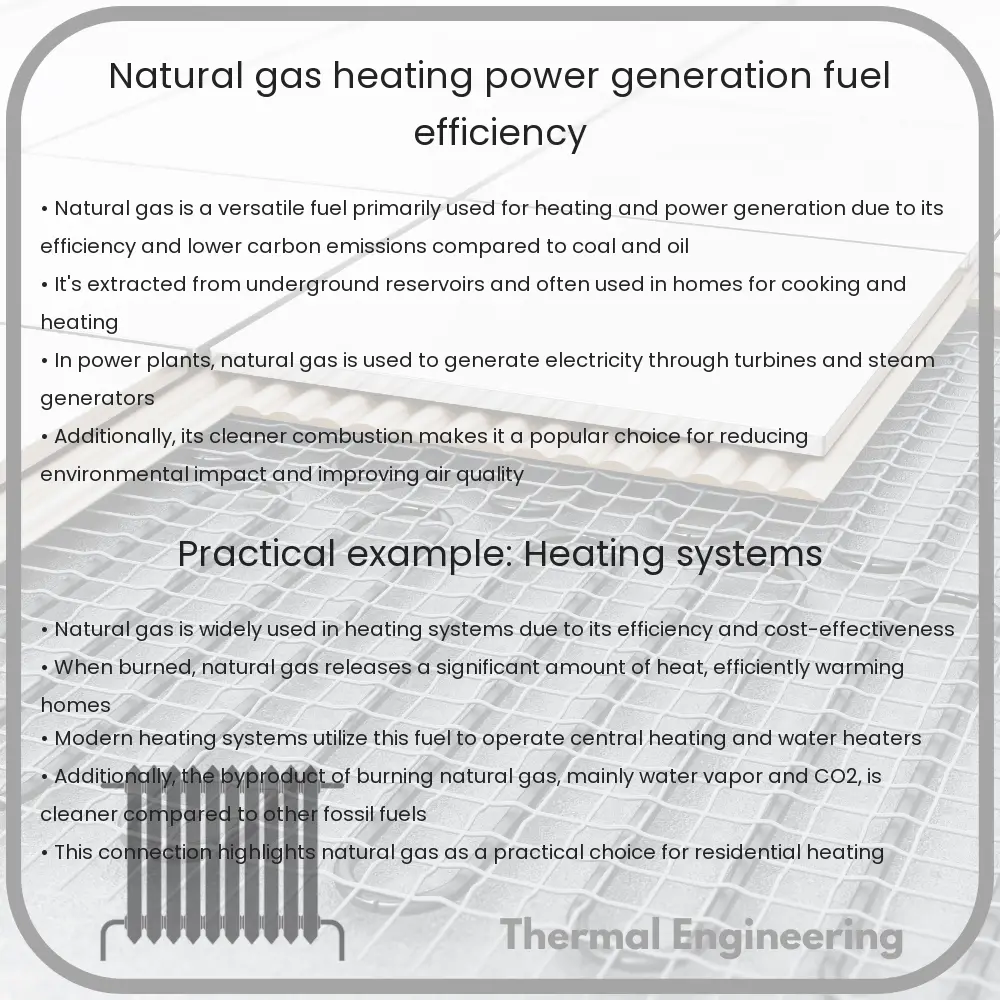
In residential and commercial settings, natural gas is extensively used for heating purposes. It powers boilers to produce steam, furnaces for heating air, and water heaters. The efficiency of natural gas heating systems can significantly reduce energy use and costs. For example, modern high-efficiency heaters can convert up to 98% of the energy in natural gas into heat, making it a more environmentally friendly option compared to other fossil fuels.

Power Generation

Natural gas is a dominant fuel for electricity generation worldwide. Power plants that use natural gas can be classified into two main types:

  • Combined Cycle Plants: These facilities use both a gas and a steam turbine together to produce up to 50% more electricity from the same fuel than a traditional simple-cycle plant. The initial burning of natural gas generates electricity and then the waste heat from the gas turbine is used to create steam to generate additional electricity through a steam turbine.
  • Peaking Power Plants: Primarily used to meet peak demand, these plants typically operate only when there is a high demand for electricity, such as during extreme weather conditions. They can start up quickly and are highly flexible in adjusting their output.

One significant advantage of natural gas in power generation is its lower greenhouse gas emissions relative to coal and oil. When burned, natural gas produces about half as much carbon dioxide as coal, and 30% less than oil, making it a more environmentally favorable option in reducing air pollution and combating climate change.

Fuel Efficiency and Transportation

Natural gas is not only used in stationary applications but is also a clean alternative for vehicles. Compressed Natural Gas (CNG) and Liquefied Natural Gas (LNG) are the two forms used in vehicles:

  • Compressed Natural Gas (CNG): Mostly used in passenger vehicles and trucks, CNG is methane stored at high pressure. It burns cleaner than gasoline and diesel, reducing vehicular emissions of particulate matter and nitrogen oxides. CNG vehicles are also quieter, helping reduce noise pollution.
  • Liquefied Natural Gas (LNG): Used primarily in heavy-duty vehicles and ships, LNG is natural gas cooled to about -162°C, turning it into a liquid and reducing its volume for ease of storage and transport. Like CNG, LNG emits fewer pollutants than traditional diesel and bunker fuels.

The efficiency of natural gas vehicles depends on several factors, including vehicle design and driving habits. However, natural gas vehicles can achieve up to 15% better fuel economy over similar gasoline and diesel models.

Conclusion

Natural gas plays a pivotal role in our energy landscape. Its ability to serve diverse needs—from heating homes to fueling vehicles and generating electricity—makes it a linchpin in efforts towards a more sustainable and efficient energy future. While not a perfect solution, its lower emission profile makes it an essential transition fuel as we move towards renewable energy sources.

Ozone | Oxidizing Properties, Thermal Decomposition

Explore how ozone, a powerful oxidizer, plays a dual role in shielding Earth from UV radiation and enhancing air and water purification processes.

Ozone | Oxidizing Properties, Thermal Decomposition

Ozone: A Powerful Oxidant and Its Thermal Decomposition

Ozone (O3) is a molecule composed of three oxygen atoms, known for its strong oxidizing properties and its role in the Earth’s upper atmosphere as a protective layer, absorbing the majority of the sun’s harmful ultraviolet radiation. However, its effects are not just limited to atmospheric chemistry; ozone is also used extensively in water treatment, sanitation, and chemical processes due to its oxidative capabilities.

Oxidizing Properties of Ozone

Ozone is considered one of the most powerful oxidizers available, particularly effective in breaking down pollutants in air and water. It can react with a wide range of organic compounds and inorganic ions, leading to their detoxification, removal, or transformation into less harmful substances.

  • Reactivity: Ozone reacts with compounds such as hydrocarbons and alkenes via a process called ozonolysis, effectively cleaving double bonds and forming aldehydes, ketones, or carboxylic acids. This makes it a valuable tool for breaking down complex pollutants in the air, including volatile organic compounds (VOCs) and odors.
  • Applications: In water treatment, ozone is used for disinfection and to oxidize inorganic materials like iron and manganese, converting them into insoluble oxides that can be filtered out. Due to its strong oxidizing power, ozone is effective in combating waterborne pathogens, including bacteria and viruses, without leaving harmful residues.

Thermal Decomposition of Ozone

While ozone is stable under normal atmospheric conditions, it decomposes at higher temperatures. This decomposition plays a crucial role in both natural processes and industrial applications.

  • Decomposition Process: The decomposition of ozone begins significantly at temperatures above 200 degrees Celsius. The primary reaction can be represented as:

2 O3 → 3 O2

  • This reaction indicates that two ozone molecules decompose to yield three diatomic oxygen molecules.
  • Kinetics: The rate of decomposition increases with the rise in temperature. In the presence of catalysts like metals and certain metal oxides, the decomposition can occur at lower temperatures.
  • Importance in Atmospheric Chemistry: Ozone’s thermal instability is crucial for maintaining the balance of ozone in the stratosphere. This instability is influenced by the absorption of ultraviolet light, which triggers the photodissociation of ozone back into oxygen molecules and atoms, a key step in the ozone-oxygen cycle that protects Earth from UV radiation.

Ozone’s dual role as a powerful oxidizing agent and a stimulator of chemical reactions in both industrial and natural environments showcases its critical importance in modern science and environmental management. Understanding its properties allows for better implementation in various technologies aimed at improving air and water quality worldwide.

Hydrogen Sulfide | Thermal Conductivity & Industrial Use

Explore the thermal conductivity and industrial applications of hydrogen sulfide (H2S), a key compound in various sectors despite its toxicity.

Hydrogen Sulfide | Thermal Conductivity & Industrial Use

Understanding Hydrogen Sulfide: Thermal Conductivity and Industrial Uses

Hydrogen sulfide (H2S) is a chemical compound that appears as a colorless gas with a distinctive rotten-egg odor. This compound is notorious for its toxicity but also plays a significant role across various industrial processes. This article dives into the thermal conductivity properties of hydrogen sulfide and its applications in industry.

Thermal Conductivity of Hydrogen Sulfide

Thermal conductivity is a material property that measures the ability of a material to conduct heat. For gases like hydrogen sulfide, thermal conductivity is significantly influenced by temperature and pressure. Typically, the thermal conductivity of hydrogen sulfide is relatively low compared to other gases. This property is crucial for understanding how H2S behaves under different operational conditions, particularly in industrial environments where thermal management is essential.

The value of thermal conductivity for hydrogen sulfide at room temperature (around 25 degrees Celsius) is approximately 0.016 W/m*K. It is important to note that thermal conductivity increases with the rise in temperature.

Industrial Uses of Hydrogen Sulfide

  • Sulfur Production: One of the largest uses of hydrogen sulfide is in the production of elemental sulfur. This is primarily done through the Claus process, where H2S is converted into sulfur dioxide (SO2) and then reacted with more H2S to produce water and sulfur.
  • Petroleum Industry: In the petroleum industry, hydrogen sulfide is often encountered as a byproduct of extracting natural gas and crude oil. The presence of H2S in these materials makes its removal necessary, primarily to reduce corrosion in pipelines and facilities, and to meet environmental safety standards.
  • Chemical Production: H2S is also used in the production of various chemicals. It acts as a precursor to both inorganic and organic chemicals including sulfuric acid, methanol, and thiochemicals, which are used in a wide range of applications from pharmaceuticals to agricultural products.
  • Wastewater Treatment: In wastewater treatment, hydrogen sulfide is utilized for its ability to react with heavy metals and help remove them from the effluent. This process involves the precipitation of metals as metal sulfides, which can be more easily handled and disposed of.
  • Gas Analyzers and Safety Equipment: Due to its high toxicity and tendency to accumulate in low-lying areas, sensors and safety equipment designed to detect hydrogen sulfide are crucial in industrial settings, particularly in confined spaces where hazardous gases can pose a serious health risk.

The uses of hydrogen sulfide, despite its dangers, underscore its significance in several critical industrial processes. Handling and safety procedures are paramount when working with H2S, due to its toxicity and flammability. Industries that use this gas must adhere to strict regulatory standards to protect workers and the environment.

In conclusion, the thermal conductivity of hydrogen sulfide and its various industrial applications paint a picture of a compound that is as useful as it is dangerous. By understanding both its physical properties and practical uses, industries can harness its benefits while mitigating its risks.

Chlorine Gas | Disinfection, Thermal Properties & Safety

Learn about the uses, properties, and safety measures of chlorine gas, a crucial disinfectant in water treatment and industrial applications.

Chlorine Gas | Disinfection, Thermal Properties & Safety

Introduction to Chlorine Gas

Chlorine gas (Cl2), a highly reactive halogen, plays a crucial role in various industrial and public health applications. Most notably, it is used extensively for water disinfection processes. The characteristics of chlorine gas, such as its thermal properties and the safety measures required for its handling, are vital for its effective and safe use.

Chlorine Gas as a Disinfectant

Chlorine gas has been used as a disinfectant for water since the late 19th century. It is particularly effective against pathogenic microorganisms, which can cause disease in humans and animals. When chlorine gas is introduced into water, it reacts to form hypochlorous acid (HOCl) and hydrochloric acid (HCl).

  • Hypochlorous acid: Acts as the primary disinfecting agent.
  • Hydrochloric acid: Generally has no disinfecting properties but adjusts the pH of the water.

The reaction can be summed up by the equation:

Cl2 + H2O ⇌ HOCl + HCl

This process, called chlorination, effectively kills bacteria, viruses, and other microbes by disrupting their cellular processes.

Thermal Properties of Chlorine Gas

Understanding the thermal properties of chlorine gas is important for its storage and transportation:

  • Boiling Point: -34.04 °C. This indicates that chlorine gas can liquefy at relatively low temperatures, making it easier to transport and store as a liquid.
  • Melting Point: -101.5 °C, showing that chlorine transitions from a solid to a gas at very low temperatures.
  • Specific Heat Capacity: The specific heat capacity of chlorine gas is 0.479 J/g·K at 25°C. This property is crucial for managing the energy required in processes involving chlorine gas.
  • Thermal Conductivity: About 0.0089 W/m·K at 0 °C. This relatively low thermal conductivity means that chlorine does not transfer heat very efficiently.

Safety Measures for Handling Chlorine Gas

Chlorine gas is highly toxic and can be hazardous to human health and the environment. Proper safety measures are crucial:

  • Storage: Chlorine should be stored in a cool, dry, ventilated area in tightly sealed containers that are clearly labeled and secured against unauthorized access.
  • Protective Equipment: Workers handling chlorine gas should wear appropriate personal protective equipment (PPE), including gas masks, gloves, and protective clothing.
  • Leak Management: Facilities using chlorine gas should have robust systems in place to detect leaks and contain spills. Emergency procedures should be well known and rehearsed by all personnel.
  • First Aid: Clear and accessible first aid procedures and materials should be readily available. Exposure to chlorine gas can cause respiratory distress and other acute symptoms, requiring immediate medical attention.

Conclusion

Chlorine gas is a powerful disinfectant widely used in water treatment. Its effectiveness, coupled with significant risks associated with its use, necessitates a thorough understanding of its chemical properties, thermal behavior, and stringent adherence to safety protocols. By responsibly managing and utilizing chlorine gas, it continues to be an invaluable asset in maintaining public health standards.

Hydrochloric Acid Gas | Industrial Use & Thermal Stability

Learn about Hydrochloric Acid Gas (HCl gas), its properties, industrial applications, and necessary safety measures.

Hydrochloric Acid Gas | Industrial Use & Thermal Stability

Introduction to Hydrochloric Acid Gas

Hydrochloric acid gas (HCl gas) is a colorless, poisonous gas with a pungent odor and is highly corrosive. It is composed of hydrogen and chlorine, both halogens. Hydrochloric acid gas is primarily used in industrial settings where it has a variety of applications ranging from chemical synthesis to pH control and metal treatment processes.

Industrial Uses of Hydrochloric Acid Gas

  • Chemical Synthesis: HCl gas is used in the production of various chemicals. It is a key reagent in the synthesis of chlorides, fertilizers, and dyes. It is also used in the production of polyvinyl chloride (PVC), a common plastic material used in construction, healthcare, and many other industries.
  • Metal Pickling: Hydrochloric acid gas is employed in the process of removing rust and scale from steel before further processing. This process is known as “pickling. It cleans the metal surfaces, making them more suitable for finishing and coating.
  • Ore Reduction: Hydrochloric acid gas plays a crucial role in the leaching of certain ores, particularly in the extraction and purification of metals like magnesium and zinc.
  • Oil Well Acidizing: In the petroleum industry, HCl gas is used for acidizing. This process involves injecting the acid into a well to dissolve rocks and stimulate the flow of crude oil or natural gas.
  • pH Control and Neutralization: HCl gas is used extensively to regulate the pH levels in various industrial processes, including large-scale wastewater treatment, where it helps to neutralize alkaline wastes.

Thermal Stability of Hydrochloric Acid Gas

Thermal stability refers to the capacity of a substance to remain chemically stable when subjected to high temperatures. Hydrochloric acid gas exhibits good thermal stability under ordinary conditions, but it can decompose when exposed to very high temperatures or when in the presence of certain catalysts.

The decomposition of hydrochloric acid gas typically follows this reaction:

\[ 2HCl \rightarrow H_2 + Cl_2 \]

This reaction indicates that upon decomposition, hydrochloric acid breaks down into hydrogen gas and chlorine gas. It is essential to control the environment in which HCl gas is stored and used, particularly regarding temperature and containment materials, to prevent its decomposition and the release of hazardous gases.

Conclusion

Hydrochloric acid gas is an indispensable chemical with various uses across numerous industries including manufacturing, mining, and waste management. Its capability to engage in diverse chemical reactions and processes highlights its versatility. However, its corrosive nature and potential for hazardous decomposition demand careful handling and proper safety precautions in industrial settings. Understanding both the uses and risks associated with hydrochloric acid gas is crucial for optimizing its industrial application while maintaining workplace safety.

Heat transfer in plasma-facing components

Learn about heat transfer in plasma-facing components, crucial for fusion reactor efficiency and safety.

Heat transfer in plasma-facing components

Understanding Heat Transfer in Plasma-Facing Components

Plasma-facing components (PFCs) are crucial in controlling and containing plasma in fusion reactors and other plasma-based systems. These components directly interact with the plasma and are subject to severe thermal loads. Understanding how heat transfer occurs in these components is key to improving their performance and longevity.

The Role of Plasma-Facing Components

Plasma-facing components are designed to withstand extreme temperatures and radiation levels while maintaining structural integrity. They often line the interior surfaces of devices such as tokamaks and stellarators, which are types of nuclear fusion reactors. PFCs usually consist of materials like tungsten or carbon-based composites due to their high melting points and thermal conductivity.

Heat Transfer Mechanisms in PFCs

Heat transfer in plasma-facing components occurs through three primary mechanisms:

  • Conduction: Thermal conduction is the transfer of heat through a material without the material itself moving. In PFCs, heat conducted away from the plasma contact surface must be efficiently dissipated to avoid damage.
  • Convection: This involves the transfer of heat by the movement of fluids (in this case, coolant fluids) over the surface of the PFCs. Efficient cooling systems are crucial to manage the thermal load.
  • Radiation: Heat radiation is the emission of electromagnetic waves that carry energy away from the plasma-facing surface. At high temperatures, radiation becomes a significant mode of heat transfer.

Key Challenges and Solutions in Heat Transfer for PFCs

Maintaining the operational integrity of plasma-facing components in the face of extreme heat is a significant engineering challenge. Here are some key ways this challenge is met:

  • Material Selection: High melting points and excellent thermal conductivity are critical properties for materials used in PFCs. Tungsten and carbon composites are prominent due to their ability to withstand high temperatures and thermal shocks.
  • Coolant Systems: Advanced cooling systems using water or other coolants flow through channels in the PFCs to help manage the extreme heat loads by convective cooling.
  • Geometry Optimization: The design and thickness of PFCs are optimized to maximize heat dissipation while minimizing thermal stresses.

Mathematical Representation of Heat Transfer

The fundamental equation used to calculate the heat transfer rate (Q) in conduction can be expressed as:

Q = -k * A * (dT/dx)

Where:

  • k is the thermal conductivity of the material,
  • A is the area through which the heat is being conducted,
  • dT/dx is the temperature gradient across the material.

In scenarios involving radiation, the heat transfer rate can be calculated by the Stefan-Boltzmann law:

Q = ε * σ * A * T4

Here:

  • ε (epsilon) is the emissivity of the material,
  • σ (sigma) is the Stefan-Boltzmann constant (approximately \(5.67 * 10^{-8} W/m^2K^4\)),
  • T is the absolute temperature of the emitting surface in Kelvin.

For convection, the heat transfer rate depends on the convective heat transfer coefficient (h), the surface area (A), and the temperature difference between the surface and the fluid (∆T):

Q = h * A * ∆T

Conclusion

Understanding heat transfer in plasma-facing components is essential for the development of efficient and sustainable nuclear fusion reactors. By mastering the intricacies of thermal dynamics in these extreme environments, engineers can enhance the performance and safety of plasma-based technologies. Continued advancements in material science and thermal engineering are key to unlocking the potential of nuclear fusion as a powerful and clean energy source.

Hydrofluorocarbons | Refrigerants & Global Warming Potential

A comprehensive exploration of Hydrofluorocarbons (HFCs), focusing on their usage as refrigerants and their significant Global Warming Potential (GWP).

Hydrofluorocarbons | Refrigerants & Global Warming Potential

Understanding Hydrofluorocarbons: Refrigerants and Their Global Warming Potential

Hydrofluorocarbons (HFCs) have become a critical component in modern refrigeration and air conditioning systems. As successors to chlorofluorocarbons (CFCs) and hydrochlorofluorocarbons (HCFCs), HFCs were initially hailed as a safer alternative due to their lower potential to deplete the ozone layer. However, their impact on global warming has become a growing concern due to their high Global Warming Potential (GWP).

What Are Hydrofluorocarbons (HFCs)?

HFCs are a class of synthetic chemicals primarily used as refrigerants. They are composed of hydrogen, fluorine, and carbon atoms. Unlike their predecessors—CFCs and HCFCs—HFCs do not contain chlorine, which is harmful to the ozone layer. Commonly used HFCs in the refrigeration and air conditioning industries include HFC-134a, HFC-143a, and HFC-125.

Global Warming Potential (GWP)

The Global Warming Potential is a measure of how much heat a greenhouse gas traps in the atmosphere compared to the same amount of carbon dioxide (CO2) over a specific period. CO2 is assigned a GWP of 1 as a reference point. HFCs, depending on their specific composition, can have a GWP several thousand times greater than CO2, making even small quantities significant contributors to global warming.

  • HFC-134a: Commonly used in automotive air conditioning, HFC-134a has a GWP of 1,430 over a 100-year period.
  • HFC-143a: Often used in refrigeration blends, this gas has a much higher GWP of 4,470.
  • HFC-125: Also popular in refrigeration applications, HFC-125 has a GWP of 3,500.

Environmental Impact and Regulation

HFCs, due to their high GWP, are potent contributors to the greenhouse effect, which leads to global warming and climate change. This has prompted international actions such as the Kigali Amendment to the Montreal Protocol. The Kigali Amendment, agreed upon in 2016, aims to gradually phase down the production and consumption of HFCs. More than 100 countries committed to reducing 80% of their HFC use by 2045, thereby averting up to 0.4 °C of global warming by the end of the century.

Alternatives to HFCs

With the push to phase out HFCs, the industry is exploring various alternatives that have lower GWPs. Ideal substitutes offer effective cooling properties without contributing significantly to climate change. Some of the promising alternatives include:

  • Hydrofluoroolefins (HFOs): These compounds, such as HFO-1234yf, have significantly lower GWPs (less than 10) compared to HFCs.
  • Natural Refrigerants: Substances like ammonia (NH3), carbon dioxide (CO2), and hydrocarbons (propane, isobutane) are effective refrigerants that often have negligible GWPs.

Transitioning to these alternatives involves considering various factors including safety, cost, availability, and compatibility with existing systems.

Conclusion

While HFCs have played a crucial role in providing efficient refrigeration and air conditioning, their high global warming potential poses a significant environmental threat. The global commitment to phase down the use of HFCs and the search for viable, eco-friendly alternatives reflect the increasing awareness and proactive measures being taken to mitigate climate impact and safeguard the planet for future generations.

The phase-out of HFCs exemplifies how international cooperation and technological innovation can address complex environmental challenges, moving towards a more sustainable and environmentally responsible future.

Neon Gas | Lighting, Thermal Insulation Properties

Learn about the diverse applications of neon gas in engineering, from its iconic use in lighting to its efficiency in thermal insulation.

Neon Gas | Lighting, Thermal Insulation Properties

Exploring the Fascinating Properties of Neon Gas in Engineering Applications

Neon gas is most famously known for its striking glow in neon signs, but its utility extends beyond these colorful displays into more technical realms such as lighting technologies and thermal insulation. This article delves into the properties of neon gas and its applications in both lighting and thermal insulation, providing insights into how this noble gas is utilized in contemporary engineering.

Neon in Lighting

Neon is a noble gas found in the air at very low concentrations. It is colorless, odorless, and inert under most conditions. The most distinctive property of neon is the ability to emit bright light when electrified. This phenomenon occurs because neon is an inert monoatomic gas, and when voltage is applied, it electrifies the atoms and causes them to emit a characteristic red glow.

The lighting industry utilizes neon in several ways:

  • Neon Signs: By putting neon gas in a vacuum tube and applying an electrical voltage, neon emits its signature red glow. This is a staple for eye-catching advertising and art.
  • High-Voltage Indicators: The bright emission from neon can also serve as a practical indicator of high voltage in electrical circuits.
  • Voltage Stabilization: Neon’s electrical characteristics help it absorb and release electrical energy, which makes it useful in protecting circuits against voltage spikes.

Thermal Insulation Properties of Neon

Beyond lighting, neon has notable thermal properties, making it effective for use in thermal insulation. Here’s how neon stands out:

  • Low Thermal Conductivity: Neon has one of the lowest thermal conductivities among gases. This property makes it an excellent insulator, as it does not easily allow heat to pass through.
  • Applications in Cryogenics: The low thermal conductivity and inertness of neon make it ideal for use in cryogenics where it helps maintain extremely low temperatures without reacting chemically.
  • Double-Glazed Windows: Neon is sometimes used in the space between the glass panes in double-glazed windows to enhance their insulating properties compared to regular air.

Conclusion

Neon gas, while popularly recognized for its use in vibrant signage, holds a multitude of applications in engineering due to its distinct properties of light emission and thermal insulation. From illuminating bright signs to enhancing the effectiveness of thermal insulators, neon serves as a silent yet vibrant contributor to modern technology applications. Its use in both decorative and functional capacities exemplifies the broad range of uses for seemingly simple elements in the field of engineering.

This fascinating gas not only lights up our streets with colorful displays but also contributes significantly to energy-efficiency measures, showcasing the synergy between visual appeal and practical engineering solutions.

Radon Gas | Density, Thermal Conductivity & Safety Concerns

Explore the physical properties and safety measures related to radon gas, including its density, thermal conductivity, and health risks.

Radon Gas | Density, Thermal Conductivity & Safety Concerns

Understanding Radon Gas: Density, Thermal Conductivity, & Safety Concerns

Radon gas, a naturally occurring radioactive element, has significant implications for residential and occupational health. Here we will cover the essential physical properties of radon, such as density and thermal conductivity, and we will discuss how these influence its behavior in environments, as well as the critical safety measures that need to be considered concerning its presence.

Density of Radon Gas

Radon has a higher density compared to the air, which is a key factor in understanding its movement and accumulation in low-lying areas such as basements and first floors. Specifically, the density of radon at standard temperature and pressure (STP) is about 9.73 kg/m3. This is much denser than the average dry air density at STP, which is approximately 1.29 kg/m3. The higher density affects how radon gas diffuses from the ground into the atmosphere or through materials, often accumulating at higher concentrations in enclosed areas.

Thermal Conductivity of Radon

The thermal conductivity of radon is another physical property that impacts its interaction with the environment. Radon exhibits a thermal conductivity of 3.61 * 10-3 W/mK. Though this is a relatively low value, it means that radon does not transfer heat as effectively as some other common gases. This property plays a minor role in practical safety concerns but is relevant in the context of understanding radon’s behavior under temperature variations in geological and architectural environments.

Safety Concerns

The safety concerns related to radon primarily stem from its radioactivity. Radon is a “noble gas” that occurs from the radioactive decay of radium, which in turn, comes from the decay of uranium, widely present in the Earth’s crust. Prolonged exposure to radon gas can lead to significant health risks, including lung cancer. The U.S. Environmental Protection Agency (EPA) and the Surgeon General’s Office have estimated that radon is responsible for about 21,000 lung cancer deaths each year in the USA alone, making it the second leading cause of lung cancer after cigarette smoking.

  • Testing: Testing indoor air for radon is essential. It is the only effective way to determine whether you are at risk, as radon is colorless and odorless. A variety of do-it-yourself test kits can be readily purchased from hardware stores or online.
  • Mitigation: If high levels of radon are found (4 picocuries per liter (pCi/L) or higher), steps should be taken to mitigate it. Common methods include sub-slab depressurization, sealing entry points, and increasing ventilation.
  • Public Policy: Awareness and public policy are also critical in radon management. Many countries enforce regulations that require radon mitigation measures in new constructions and radon disclosure during real estate transactions.

Conclusion

Understanding the basic properties of radon, such as its density and thermal conductivity, is important for comprehending its behaviors and impacts. More importantly, recognizing the health risks associated with radon exposure and taking appropriate safety measures can significantly mitigate its dangers. Awareness, testing, and proper mitigation techniques are crucial in preventing the health hazards posed by radon gas.

By integrating knowledge with actionable steps, individuals and communities can effectively manage and reduce the risks posed by prolonged exposure to radon in their environments.

Nitrous Oxide | Oxidizer, Thermal Properties & Uses

Explore the diverse applications and properties of nitrous oxide, from medical anesthesia to its crucial role in automotive and aerospace engineering.

Nitrous Oxide | Oxidizer, Thermal Properties & Uses

Introduction to Nitrous Oxide

Nitrous oxide, commonly known as laughing gas, has significant applications beyond its well-known use in dental anesthesia. Chemically represented as N2O, this colorless and non-flammable gas plays a critical role in both medical fields and various engineering domains, particularly in automotive racing and aerospace engineering.

Chemical and Physical Characteristics of Nitrous Oxide

Nitrous oxide is a potent oxidizer, which means it can enable the combustion of fuel without the need for external oxygen. This property is crucial in applications where oxygen supply is limited or controlled, such as in rocket motors and high-performance engine systems. The molecule comprises two nitrogen atoms and one oxygen atom, and it exists in a gaseous state at room temperature.

With a boiling point of -88.48°C, nitrous oxide becomes liquid under high pressure or at very low temperatures. Its critical temperature, which is the temperature above which it cannot be liquefied regardless of the pressure applied, is 36.4°C. This makes N2O highly versatile in various thermal environments.

Uses of Nitrous Oxide

  • Medical Uses: Nitrous oxide is widely used as an analgesic and anesthetic in medical settings. It helps in pain reduction and sedation during dental procedures and childbirth.
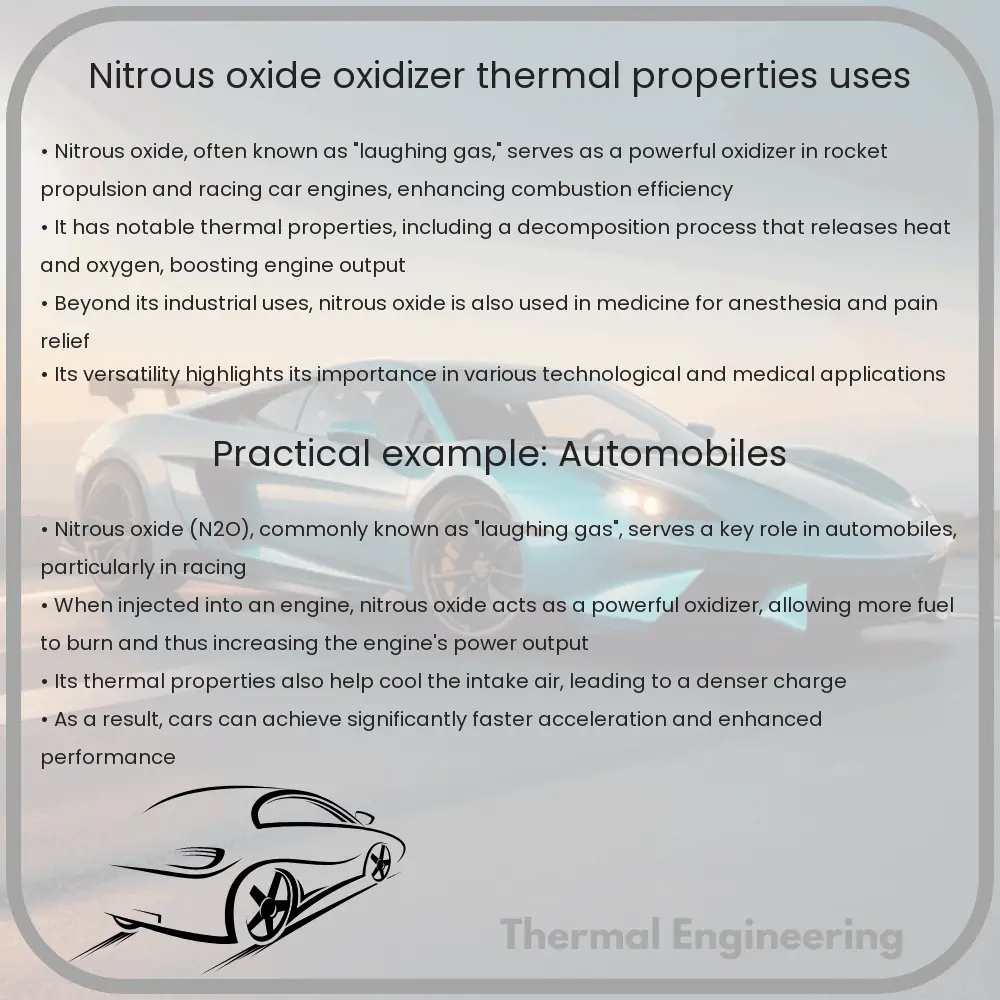
  • Automotive and Aerospace Engineering: In the realm of engineering, N2O is primarily used to enhance the power output of engines. In automotive racing, it is injected into the engine air intake system, where it decompresses and cools the intake air, effectively increasing the air’s density and allowing more oxygen to enter the engine for combustion. This boosts the engine’s power temporarily.
  • Food Industry: Nitrous oxide is also used as a propellant in food packaging and an aerating agent in whipped cream dispensers, owing to its inert properties.
  • Rocket Propulsion: In aerospace, N2O serves as an oxidizer in hybrid rocket engines. It can be stored as a liquid, which simplifies the fuel system compared to gases that need to be stored at higher pressures.

Thermal Properties and Engineering Applications

The specific heat capacity of nitrous oxide contributes to its utility in high-performance applications. It allows engines to perform more efficiently due to its cooling effect during expansion. Moreover, the decomposition of N2O at high temperatures yields additional oxygen, which is extremely beneficial in closed combustion systems, enhancing the overall thrust in aerospace applications.

In summary, nitrous oxide’s role extends beyond the confines of medical use, playing a pivotal part in enhancing performance and efficiency in engineering applications. Its unique properties, such as being a potent oxidizer and having variable physical states under different temperatures and pressures, make it invaluable in diverse fields such as automotive racing and rocket propulsion.