Facebook Instagram Youtube Twitter

Hydrogen Peroxide | Oxidizer, Thermal Decomposition

Learn about hydrogen peroxide’s roles as an effective oxidizer in numerous applications and its dynamic thermal decomposition process.
Hydrogen Peroxide | Oxidizer, Thermal Decomposition

Understanding Hydrogen Peroxide as an Oxidizer and its Thermal Decomposition

Hydrogen peroxide (H2O2) is a clear, colorless liquid commonly used in various concentrations for different applications. In this article, we delve into its role as an oxidizer in chemical reactions and explore the dynamic process of its thermal decomposition.

Hydrogen Peroxide as an Oxidizer

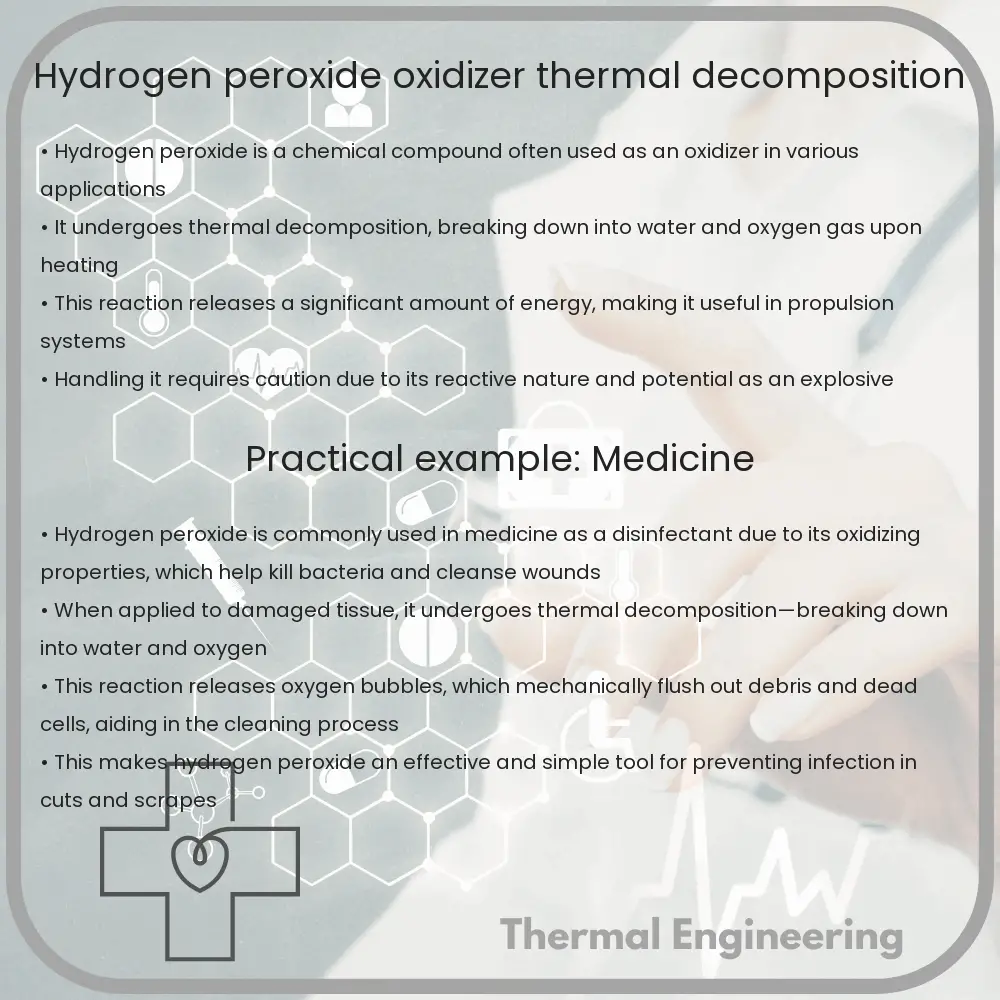
As an oxidizing agent, hydrogen peroxide is capable of accepting electrons from other substances during a chemical reaction. This property makes it extremely useful in both industrial processes and everyday products. The oxidizing ability of hydrogen peroxide makes it effective for applications such as disinfection, bleaching, and even propelling rockets. For instance, in environmental engineering, it is used for pollution control by breaking down contaminants in wastewater.

  • Disinfection: It kills microorganisms by destroying their cell walls through oxidation.
  • Bleaching: Hydrogen peroxide is used in paper and textile industries to bleach materials, removing colors without damaging the fibers.
  • Rocket Propulsion: In rocketry, H2O2 can be decomposed rapidly to produce oxygen and steam, which are expelled to generate thrust.

Thermal Decomposition of Hydrogen Peroxide

Thermal decomposition is a chemical reaction where a substance breaks down into simpler substances when heated. For hydrogen peroxide, this decomposition can be represented by the equation:

2H2O2 → 2H2O + O2

This reaction suggests that when hydrogen peroxide is heated, it decomposes into water (H2O) and oxygen (O2). The reaction is exothermic, releasing heat and potentially causing violent boiling of the solution.

  • Catalysts: The rate of decomposition can be significantly increased by the presence of a catalyst such as manganese dioxide (MnO2) or iron(III) chloride (FeCl3).
  • Uses of Decomposed Products: The oxygen released can be used in medical settings for providing supplemental oxygen or in chemical synthesis. The produced heat and steam can drive turbines or engines in specific applications.
  • Safety Measures: Due to its exothermic nature, handling concentrated hydrogen peroxide requires careful temperature control and protective equipment to prevent hazardous situations.

In conclusion, hydrogen peroxide serves as a versatile substance in various scientific and industrial fields due to its properties as an oxidizer and its capability to decompose under heat. Its efficient conversion into water and oxygen, along with the heat generated during decomposition, makes it valuable for numerous applications ranging from environmental management to energy production.
Phosphine Gas | Fumigant, Thermal Stability & Uses

Learn about phosphine gas (PH3), its uses, risks, and safety measures across various industries.

Phosphine Gas | Fumigant, Thermal Stability & Uses

What is Phosphine Gas?

Phosphine gas (PH3) is a colorless, flammable, and highly toxic gas with a fishy or garlic-like odor. It is a compound composed of phosphorus and hydrogen and is mainly used in the semiconductor industry and as an agricultural fumigant. The gas is denser than air and can accumulate in low-lying areas, posing significant risks if not handled properly.

Thermal Stability of Phosphine Gas

Phosphine is thermally unstable and can decompose into phosphorus and hydrogen gas when exposed to light or heat. This decomposition can be dangerous as it might lead to spontaneous combustion or explosion if the gas is confined. At temperatures above 200 degrees Celsius, the decomposition reaction becomes significantly rapid which illustrates why managing the storage conditions of phosphine is crucial for safety.

Uses of Phosphine Gas

  • Fumigant: Phosphine is extensively used as a fumigant for stored cereal grains, animal feed, and leaf-stored tobacco. It controls pests and rodents that may infest these storages without leaving harmful residues that affect the agricultural product.
  • Semiconductor Industry: In the semiconductor industry, phosphine is utilized in the process of chemical vapor deposition, which helps in creating thin films and structures made of silicon, silicon dioxide, and other materials.
  • Chemical Synthesis: Phosphine plays a role as a reducing agent or a catalyst in certain types of organic synthesis and is involved in several reactions in the pharmaceutical industry to manufacture drugs.

Safety Measures and Precautions

Due to its high toxicity and flammability, phosphine gas requires stringent handling and storage measures. Some safety precautions include:

  1. Ensuring that areas where phosphine gas is stored or used are well-ventilated to prevent the accumulation of gas.
  2. Using proper protective equipment, including gas masks and gloves, while handling phosphine.
  3. Regularly monitoring for the presence of phosphine in the air using appropriate detection systems.
  4. Storing phosphine cylinders in cool, well-ventilated areas away from sources of heat and direct sunlight.

Conclusion

Phosphine gas holds a vital place in industries ranging from agriculture to high-tech electronics. However, the inherent risks associated with its use require careful and informed handling to ensure both efficiency in use and safety in its application. Being aware of its properties, uses, and necessary safety measures is crucial for anyone working with or around this compound.

Thermal analysis of building materials

Learn about thermal analysis of building materials, its key properties like thermal conductivity, and its role in enhancing building design and sustainability.

Thermal analysis of building materials

Understanding Thermal Analysis of Building Materials

Thermal analysis of building materials is an essential aspect of engineering that focuses on how different materials respond to changes in temperature. This understanding is crucial for designing buildings that are energy-efficient, safe, and comfortable. The process involves studying properties such as thermal conductivity, specific heat capacity, and thermal expansion.

Key Properties in Thermal Analysis

  • Thermal Conductivity: This property measures a material’s capability to conduct heat. Materials with high thermal conductivity (like metals) can transfer heat quickly, while those with low thermal conductivity (such as wood or insulation materials) are good insulators.
  • Specific Heat Capacity: This is the amount of heat required to raise the temperature of a unit mass of a substance by one degree Celsius. Materials with a high specific heat capacity can store more heat energy, which is beneficial in temperature regulation.
  • Thermal Expansion: Materials expand when heated and contract when cooled. The rate of this expansion or contraction can affect structural integrity and needs careful consideration in building designs.

Methods of Thermal Analysis

There are several techniques used to analyze the thermal properties of building materials:

  1. Differential Scanning Calorimetry (DSC): This technique measures how much heat a material absorbs or releases, as it is heated or cooled. This is particularly useful for determining specific heat capacity.
  2. Thermogravimetric Analysis (TGA): TGA measures changes in a material’s mass as it is heated, which can indicate moisture content, decomposition temperatures, and other thermal stability properties.
  3. Thermal Mechanical Analysis (TMA): TMA measures changes in the dimensions (length, area, or volume) of a material as a function of temperature, providing data on thermal expansion.

Importance in Building Construction

Choosing the right materials based on thermal analysis ensures structures perform well under varying environmental conditions. Here are a few practical points of significance:

  • Energy Efficiency: Properly selected materials can greatly influence the thermal insulation of a building leading to reduced energy costs.
  • Comfort: Materials affect the indoor temperature stability, important for occupant comfort.
  • Sustainability: Using materials with favorable thermal properties can help in creating buildings that are more sustainable and have lower environmental impacts.

Conclusion

Thermal analysis of building materials is a pivotal part of the construction process that not only impacts the economic and environmental aspects of a building project but also affects its functionality and durability. Understanding and choosing the right thermal properties of materials can lead to better building designs that are adapted to their specific environmental contexts, making them safer, more comfortable, and more energy-efficient. With advancements in material science and thermal analysis techniques, the possibilities for innovation in sustainable construction materials continue to grow.

Thermal control in microscale reactors

Learn about thermal control in microscale reactors, including challenges, techniques, and the role of heat transfer coefficients in optimizing chemical reactions.

Thermal control in microscale reactors

Understanding Thermal Control in Microscale Reactors

In the field of chemical engineering, microscale reactors, also known as microreactors, have become increasingly significant due to their high surface area to volume ratio, enhanced heat transfer, and superior mass transfer capabilities. These advantages make them ideal for conducting chemical reactions efficiently at a small scale. However, managing thermal conditions within such reactors is crucial, as it directly impacts reaction rates, product yield, and safety. This article delves into the basics of thermal control in microscale reactors, exploring key concepts and methods used to maintain optimal reaction environments.

Challenges in Thermal Management of Microscale Reactors

Microscale reactors operate at a scale where heat transfer becomes complex due to factors like laminar flow and reduced Reynold’s numbers. The primary challenges in managing heat within these systems include:

  • Rapid Heat Generation: Exothermic reactions can produce large amounts of heat within a small reactor volume, quickly leading to high temperatures that might degrade sensitive reactants or products.
  • Precise Temperature Control: Maintaining reaction-specific temperatures that optimize yield and prevent side reactions or thermal degradation is crucial.
  • Scaling Effects: As reactor dimensions shrink, surface effects dominate over bulk properties, making conventional heating and cooling methods less effective or predictable.

Techniques for Thermal Control

To overcome these challenges, several strategies are used to manage heat effectively within microscale reactors:

  • Integrated Cooling Channels: Microreactors often incorporate cooling channels within their walls. These channels allow for the circulation of a coolant which can absorb excess heat, maintaining a stable operational temperature.
  • Surface Coatings: Heat-resistant or heat-promoting coatings on reactor walls can help manage the thermal conductivity and emissivity, aiding in better temperature control under different reaction conditions.
  • Material Selection: The choice of materials for constructing microreactors is vital. Materials with higher thermal conductivity, such as silver or copper, enhance heat transfer, preventing hot spots and thermal gradients within the reactor.
  • Advanced Flow Design: Optimizing the flow pattern within the reactor by using mixers or structured packing can enhance heat transfer by disrupting laminar flow and reducing boundary layer thickness.

Evaluating Heat Transfer: The Role of Heat Transfer Coefficients

Understanding the heat transfer coefficient (HTC) is essential for effective thermal control. The HTC is a measure of the heat transfer per unit area per unit temperature difference between the reactor environment and the process fluid. It depends on several factors including:

  1. The nature of the fluid flow (laminar or turbulent).
  2. The properties of the fluid (viscosity, density, thermal conductivity).
  3. The reactor’s material and surface characteristics.

Engineers use the Nusselt number, a dimensionless heat transfer coefficient, to design and analyze the thermal performance of microreactors. It is given by:

Nu = hL * L / k,

where hL is the convective heat transfer coefficient, L is the characteristic length, and k is the thermal conductivity of the fluid. Higher Nusselt numbers indicate more effective heat transfer.

Conclusion

Effective thermal control in microscale reactors is foundational to their performance and safety in chemical processing. By integrating advanced materials, innovative design, and precise control methods, engineers can optimize these systems for a wide range of applications, from pharmaceutical synthesis to microfluidic chip technology. As advancements in microfabrication and computational fluid dynamics continue, the capabilities for thermal control in microscale reactors will only improve, paving the way for more efficient and sustainable chemical processes.

Ethane Gas | Low Temperature, Energy Source & Heating

Learn about ethane gas, its low-temperature properties, uses in energy production, heating applications, and role in the LNG industry.

Ethane Gas | Low Temperature, Energy Source & Heating

Understanding Ethane Gas: Properties and Uses in Energy and Heating

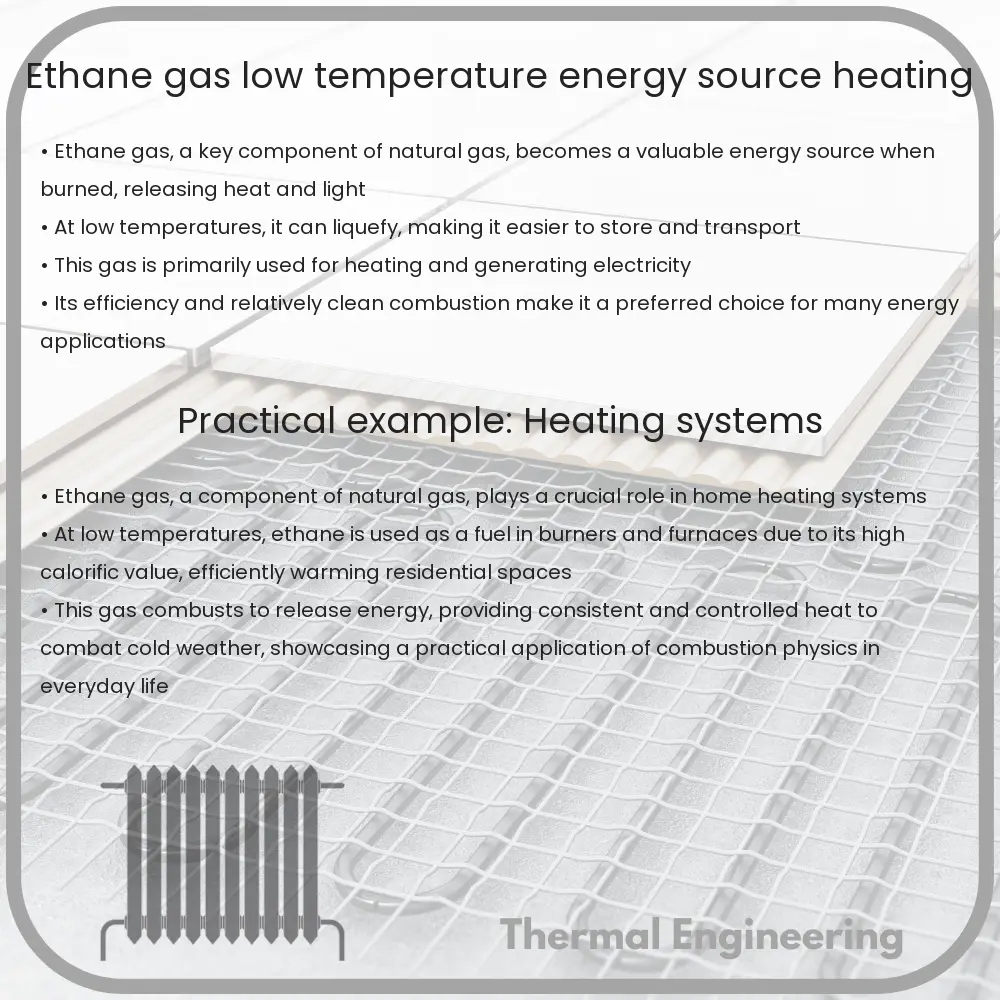
Ethane (C2H6) is a colorless, odorless gas that plays a significant role as a fuel and a petrochemical feedstock. It is the second simplest alkane after methane and is found in natural gas and as a byproduct of petroleum refining. This article explores the low-temperature behavior of ethane, its role as an energy source, and its use in heating applications.

Low Temperature Characteristics of Ethane Gas

At standard pressure, ethane has a boiling point of about -88.6 degrees Celsius, which makes it a gas at room temperature and a liquid when cooled or compressed. This property is particularly important in the liquified natural gas (LNG) industry, where ethane is often a component. In its liquid form, ethane is much denser and easier to store or transport, making it economically viable as an energy carrier.

When subjected to low temperatures, ethane behaves according to the principles of the ideal gas law, where the pressure, volume, and temperature of the gas are closely related. The behavior of ethane can be examined using the equation PV = nRT, where P represents the pressure, V the volume, T the temperature, n the amount of substance in moles, and R is the ideal gas constant. This relationship is vital for designing and operating equipment such as storage tanks and pipelines in the LNG industry.

Ethane as an Energy Source

Ethane is primarily used as a feedstock for the production of ethylene, one of the most important organic chemicals in the petrochemical industry. However, it also holds value as a direct source of energy. When combusted, ethane releases a significant amount of heat energy, characterized by its higher heating value (HHV). The combustion reaction for ethane is represented by:

C2H6 + 3.5O2 → 2CO2 + 3H2O + Energy

This exothermic reaction releases approximately 51.9 MJ/kg of energy, making it a potent source of heat and power. Ethane’s high energy content per unit weight makes it an attractive option for power generation, where it is used in gas turbines and combined cycle plants.

Utilizing Ethane for Heating

In addition to its role in power generation, ethane can be utilized directly for heating purposes. With its robust heating abilities, ethane is used in residential and commercial heating systems, especially in areas where natural gas is rich in ethane. It is also employed in portable heating units and in industrial processes that require high temperatures.

The effective management and utilization of ethane as a heating source require an understanding of its properties under different conditions. This includes adjustments in the air-to-fuel ratio to achieve optimal combustion efficiency and minimize emissions. Advanced burner technologies are often used to handle ethane, ensuring that the combustion process is clean and efficient.

Conclusion

Ethane gas, with its unique low-temperature properties and high energy content, is a versatile component of modern energy systems. Whether it is being transformed into valuable petrochemicals, burned for power, or used for heating, understanding its properties and behavior is key to maximizing its potential while ensuring safety and environmental compliance. As the demand for energy continues to grow, ethane will likely play a crucial role in meeting global energy needs efficiently and sustainably.

Diborane | High Energy Fuel, Thermal Properties

Explore the properties and applications of diborane, a high-energy fuel with significant aerospace potential and handling challenges.

Diborane | High Energy Fuel, Thermal Properties

Understanding Diborane: A High Energy Fuel with Unique Thermal Properties

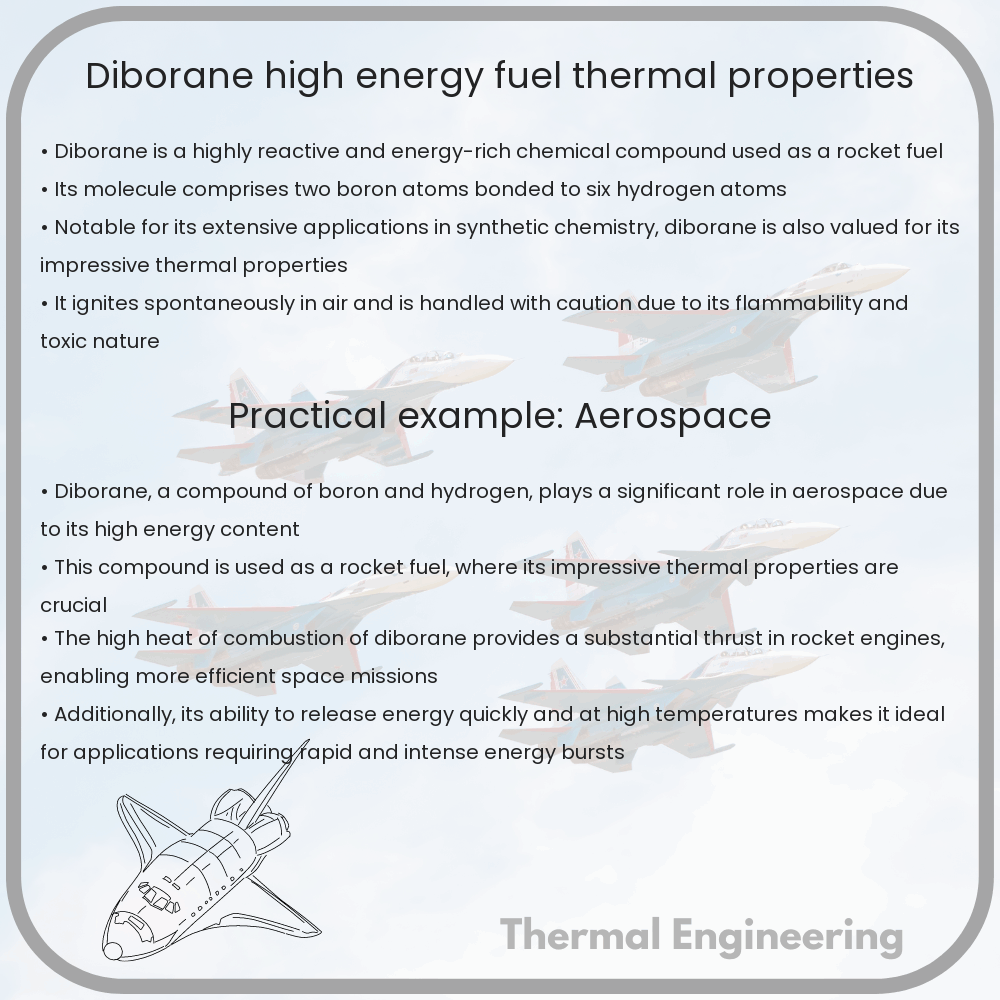
Diborane, with the chemical formula B2H6, is a highly reactive and volatile compound of boron and hydrogen. Known for its potential as a high-energy fuel, diborane offers considerable interest in fields such as rocket propulsion and other aerospace applications. However, its use comes with challenges, primarily due to its physical and chemical properties.

Chemical Composition and Structure

Diborane belongs to the class of boron hydrides. It is composed of two boron atoms bonded together with six hydrogen atoms. What makes diborane stand out is its structure; it features four terminal hydrogen atoms and two bridging hydrogen atoms, creating a three-center two-electron bond which is an interesting phenomenon both structurally and chemically.

Thermal Properties

The thermal properties of diborane contribute significantly to its potential and limitations as a fuel. It has a boiling point of approximately 180 K (-93°C or -136°F) and a melting point around 216 K (-57°C or -70°F), which indicates that diborane is a gas at room temperature and requires careful handling and storage under pressurized or cryogenic conditions.

Energy Content and Reactivity

Diborane is known for its high energy content. It releases a significant amount of energy upon combustion, making it an attractive candidate for applications requiring high-power outputs, such as rockets. The combustion reaction of diborane with oxygen is highly exothermic:

  • 2 B2H6 + 3 O2 → 2 B2O3 + 6 H2O

This reaction not only releases water but also boron trioxide. The heat release from this reaction has been a point of interest for its potential to provide thrust in jet and rocket engines.

Hazards and Handling

Diborane is also notorious for its toxicity and flammability, requiring specialized handling and storage techniques. It ignites spontaneously in air, necessitating an inert or reduced-oxygen environment for safe handling. Additionally, diborane’s exposure risks include potential respiratory tract irritation and neurological effects, making personal protective equipment essential when working with this compound.

Applications and Current Research

The high-energy characteristics of diborane have led to its examination for various military and space-related propulsion systems. Moreover, current research focuses on harnessing its energy more safely and efficiently. This includes developing stable diborane-based fuel blends and advanced storage materials that mitigate its inherent risks.

To conclude, diborane’s remarkable energy release capability makes it a substance of interest for cutting-edge engineering applications, particularly in aerospace. However, the challenges associated with its volatility, reactivity, and toxicity require ongoing research into safer handling and more efficient utilization techniques.

Silane Gas | Semiconductor Manufacturing, Heat Applications

Learn about Silane gas (SiH4), its use in semiconductor manufacturing, and how it impacts the production of electronics and solar panels.

Silane Gas | Semiconductor Manufacturing, Heat Applications

Introduction to Silane Gas in Semiconductor Manufacturing

Silane (SiH4) is a colorless, highly flammable gas that is widely utilized in the semiconductor industry. Its primary role is in the deposition of thin layers of silicon in various manufacturing processes. Understanding how silane gas is used in semiconductor manufacturing and its applications involving heat can help demystify some of the critical steps in creating electronics from microchips to solar panels.

Role of Silane in Semiconductor Manufacturing

Silane gas is essential for depositing silicon-based layers onto substrates, a key step in semiconductor device fabrication. The process primarily involves chemical vapor deposition (CVD), where silane gas is introduced into a reaction chamber. Under controlled conditions of temperature and pressure, silane decomposes and deposits silicon onto the wafer.

  • Amorphous Silicon Deposition: At temperatures ranging from 400 to 500 degrees Celsius, silane decomposes to deposit amorphous silicon (a-Si). This form of silicon is crucial for applications like thin-film transistors used in LCD screens.
  • Polycrystalline Silicon Layers: By increasing the temperature, silane can also be used to deposit polycrystalline silicon layers, which are important for photovoltaic cells in solar panels.

Heat Applications of Silane Gas

The use of heat is vital in manipulating silane for desired outcomes in semiconductor fabrication. The application of heat determines the structural properties of the silicon deposited, which directly affects the performance of the electronic or photovoltaic device being manufactured. This process is generally categorized into two main types:

  1. Low-Pressure Chemical Vapor Deposition (LPCVD): LPCVD involves temperatures between 600 to 700 degrees Celsius to produce high-quality polycrystalline silicon with fewer impurities and defects.
  2. Plasma Enhanced Chemical Vapor Deposition (PECVD): PECVD utilizes lower temperatures and a plasma state to enhance the deposition rate and is particularly useful for depositing silicon nitride and amorphous silicon.

Silane Gas Safety and Handling

Due to its high flammability and potential to form explosive mixtures in air, handling silane requires stringent safety measures. It must be stored in cylinders equipped with pressure-regulating valves and used in well-ventilated systems to prevent accumulation. Strict industrial hygiene and safety protocols are essential to safely handle silane, especially considering its utilization at high temperatures in semiconductor manufacturing.

Conclusion

Silane gas is a cornerstone chemical in the field of semiconductor manufacturing, indispensable for its role in depositing silicon layers on various substrates. Its applications utilizing heat are crucial for defining the structure and characteristics of silicon films, influencing everything from consumer electronics to renewable energy technologies. Understanding these applications not only highlights the importance of silane in modern technology but also underscores the need for careful handling and rigorous safety protocols in its use.

Nitrogen Dioxide | Thermal Properties & Pollution Control

Learn about nitrogen dioxide’s thermal properties and methods for its pollution control to improve air quality and environmental health.

Nitrogen Dioxide | Thermal Properties & Pollution Control

Understanding Nitrogen Dioxide: Its Thermal Properties and Pollution Control

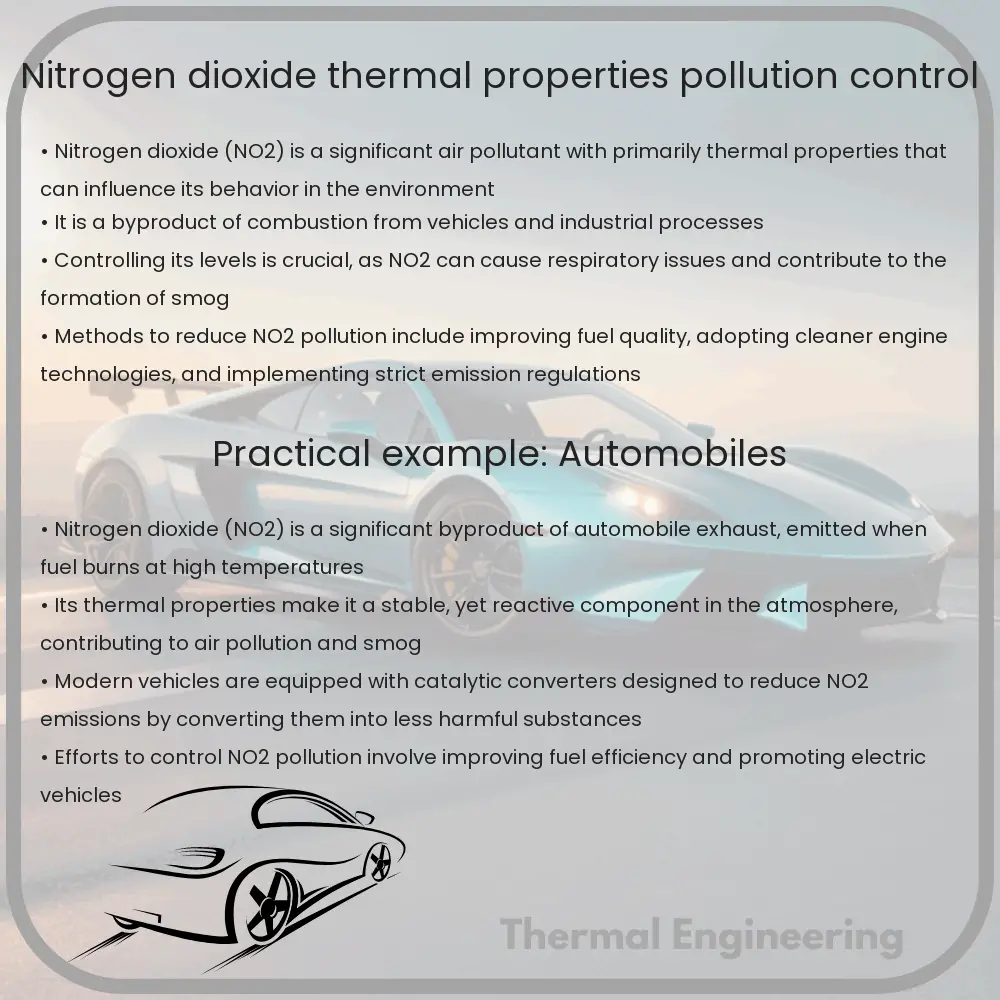
Nitrogen dioxide (NO2) is a significant atmospheric pollutant that plays a crucial role in the chemistry of the atmosphere. Commonly associated with road traffic and fossil fuel combustion, NO2 is a reddish-brown gas with a characteristic sharp, biting odor. This article focuses on the thermal properties of nitrogen dioxide and explores various methods employed to control its pollution.

Thermal Properties of Nitrogen Dioxide

Nitrogen dioxide is a part of the nitrogen oxides (NOx) family, compounds consisting of nitrogen and oxygen in varying ratios. The thermal properties of NO2 are critical for understanding its behavior in different environmental conditions and engineering applications. Some key thermal properties include:

  • Boiling point: NO2 has a boiling point of 21.2°C, which means it exists as a gas at room temperature and can liquefy at higher pressures or lower temperatures.
  • Melting point: The melting point of NO2 is -11.2°C, indicating its state change from a solid to a liquid under standard atmospheric conditions.
  • Specific heat capacity: NO2 has a specific heat capacity of about 0.854 J/gK, which is vital for calculating the energy required to change its temperature.
  • Thermal conductivity: The thermal conductivity of NO2 is relatively low, reflecting its ability to conduct thermal energy.

Pollution Control for Nitrogen Dioxide

The control of nitrogen dioxide emissions is crucial for improving air quality and minimizing impacts on human health and the environment. Various regulatory and technological methods have been developed and implemented to manage NO2 concentrations. Here are some of the most effective approaches:

  • Catalytic converters: Widely used in vehicles, catalytic converters help reduce NOx emissions. They convert NO2 and other NOx gases to nitrogen (N2) and oxygen (O2) through catalytic reactions.
  • Scrubbing: Wet scrubbing techniques involve absorbing NO2 into a liquid solution, typically water or alkaline substances, which successfully remove it from exhaust gases.
  • Selective catalytic reduction (SCR): SCR is a process used to reduce levels of NOx gases emitted from diesel engines and power plants. It involves the injection of a urea-based reagent that reacts with NOx to produce nitrogen and water.
  • Emission standards: Governments worldwide impose emission standards that limit the amount of NO2 and other pollutants that can be legally released into the atmosphere. These regulations necessitate technologies like SCR and catalytic converters.
  • Alternative fuels: Using fuels that produce less NOx during combustion, such as natural gas or renewables, effectively reduces NO2 emissions from power plants and vehicles.

While the challenge of controlling nitrogen dioxide pollution is significant, ongoing technological advancements and stringent environmental policies are making substantial progress in managing and reducing NO2 emissions globally. Understanding both the properties of NO2 and the technologies available to control its emissions is essential for further advancements in environmental protection and air quality improvement.

Conclusion

Nitrogen dioxide’s thermal properties and the effective control strategies are critical areas of study in environmental science and engineering. By continuing to enhance pollution control technologies and implementing rigorous environmental policies, the global community can aspire to achieve cleaner air and a healthier environment.

Sulfur Dioxide | Cooling Agent & Industrial Applications

Uncover the multifaceted role of sulfur dioxide in industrial applications, emphasizing its use as a cooling agent and in various industrial processes.

Sulfur Dioxide | Cooling Agent & Industrial Applications

Understanding Sulfur Dioxide: Uses as a Cooling Agent and in Industrial Applications

Sulfur dioxide (SO2) is a colorless, nonflammable gas with a pungent odor, known primarily for its role in environmental concerns as a pollutant. However, beyond its environmental impacts, sulfur dioxide has significant uses in various industrial processes, particularly as a cooling agent and in refrigeration systems. Here, we explore the properties of sulfur dioxide that make it suitable for these applications and delve into its broader industrial uses.

Properties of Sulfur Dioxide

Sulfur dioxide is a chemical compound consisting of one sulfur atom and two oxygen atoms. It is primarily produced by volcanoes and in industrial processes such as the burning of fossil fuels. The properties that make sulfur dioxide valuable in industrial applications include its high solubility in water, its ability to act as a reducing agent, and its function as a preservative and disinfectant.

Sulfur Dioxide as a Cooling Agent

In the realm of cooling and refrigeration, sulfur dioxide has been utilized as a refrigerant. It is particularly useful in systems where toxicity is less of a concern, such as in large industrial installations. The main advantages of sulfur dioxide in refrigeration include:

  • Effective heat absorption and transfer capabilities
  • Compatibility with many materials, reducing the risk of corrosion
  • Relatively low boiling point (−10°C or 14°F), making it efficient for cooling processes

Despite these benefits, the use of sulfur dioxide as a refrigerant has declined due to its toxic nature and the development of safer alternatives like Freon and, more recently, hydrofluorocarbons (HFCs). However, it is still used in some specialized applications where its properties are particularly beneficial.

Industrial Applications of Sulfur Dioxide

Beyond refrigeration, sulfur dioxide has several other important industrial applications. These include:

  • Sulfuric Acid Production: One of the primary uses of sulfur dioxide is in the production of sulfuric acid (H2SO4), which ranks as one of the most commonly produced chemicals worldwide. Sulfur dioxide is oxidized to sulfur trioxide (SO3), which is then hydrated to produce sulfuric acid.
  • Bleaching Agent: In the paper and textiles industries, sulfur dioxide is used as a bleaching agent to lighten the color of materials.
  • Preservative: Due to its antimicrobial properties, it is used as a preservative in dried fruits and wines to prevent spoilage and oxidation.
  • Water Treatment: It is also employed in water treatment plants to dechlorinate water and as a part of flue-gas desulfurization processes in power plants, which helps reduce the emission of sulfur compounds into the atmosphere.

Environmental and Safety Concerns

Despite its industrial applications, sulfur dioxide is not without its hazards. It is a toxic gas that can cause respiratory problems and irritation of the skin and eyes upon exposure. In the atmosphere, sulfur dioxide can lead to acid rain, which has harmful effects on plants, aquatic animals, and infrastructure. As a result, its use is strictly regulated in many countries, and industries are encouraged to seek safer, more environmentally friendly alternatives wherever possible.

In conclusion, while sulfur dioxide serves as a potent tool in refrigeration and other industrial applications, its environmental and health impacts cannot be overlooked. Continuous innovation and regulation are necessary to balance industrial needs with environmental safety and public health.

Air | Composition, Thermal Conductivity & General Use

Learn about air’s composition, thermal conductivity, and its diverse applications in fields like engineering and technology.

Air | Composition, Thermal Conductivity & General Use

Air: Composition, Thermal Conductivity, and General Uses

Air is a mixture of gases that forms the Earth’s atmosphere and is vital for all known forms of life. Understanding its composition, thermal properties, and various applications can provide insight into many aspects of environmental science, engineering, and technology.

Composition of Air

The air we breathe is mainly composed of:

  • Nitrogen (N2) – approximately 78%
  • Oxygen (O2) – about 21%
  • Argon (Ar) – around 0.9%
  • Carbon dioxide (CO2) and other gases – about 0.1%

Trace amounts of other gases such as neon, helium, methane, krypton, and hydrogen are also present.

Thermal Conductivity of Air

Thermal conductivity is a material’s ability to conduct heat. In the case of air, its thermal conductivity is relatively low compared to other materials like metals, which is why air is considered a good insulator. The thermal conductivity of air at room temperature (25°C) is approximately 0.0257 W/m*K (watts per meter kelvin).

The thermal conductivity of air can vary depending on temperature and humidity. Warm air tends to have higher thermal conductivity than cold air because the faster-moving molecules when heated transfer energy more efficiently.

General Uses of Air

Air has numerous applications across different fields of engineering and technology. Some of the most prevalent uses include:

  • HVAC Systems: Heating, ventilation, and air conditioning (HVAC) systems use air as a transfer medium to regulate and maintain indoor air quality and temperature.
  • Pneumatics: Air is used in pneumatics to transmit energy in industrial machines. Compressed air can power pneumatic tools, actuators, and other devices.
  • Combustion Processes: Oxygen in air is essential for combustion in engines and power plants, providing the necessary oxidizer for fuel combustion.
  • Aerodynamics: The study and design of objects moving through air is crucial in areas such as automotive and aerospace engineering.
  • Weather Forecasting: Understanding air properties like pressure, temperature, and humidity is fundamental for predicting weather conditions.
  • Sound Transmission: Air acts as a medium for the propagation of sound waves, which has implications in acoustics and the design of audio equipment.

The versatility and necessity of air within the natural environment and technological applications make it one of the most crucial components of life on Earth and a continuous area of study within environmental science and engineering fields.