Facebook Instagram Youtube Twitter

Mineral Oil | Lubrication, Safety & Cosmetic Uses

Learn about mineral oil, its uses in lubrication, cosmetics, safety considerations, and environmental impacts.

Mineral Oil | Lubrication, Safety & Cosmetic Uses

Understanding Mineral Oil: Applications and Considerations

Mineral oil is a clear, odorless oil derived from petroleum. It is a byproduct of the distillation of petroleum to produce gasoline and other petroleum-based products. This oil has distinct properties such as being colorless, hydrophobic (water-repelling), and having a high boiling point, which make it useful in a variety of applications ranging from industrial lubricants to cosmetics.

Lubrication Uses of Mineral Oil

One of the primary uses of mineral oil is in lubrication. Mineral oil is an excellent lubricant owing to its ability to reduce friction between mechanical parts. It is commonly used in:

  • Automotive engines: Mineral oil helps in lubricating engine parts, reducing wear and tear, and enhancing efficiency.
  • Industrial machinery: It is used in various machines to ensure smooth operation and to extend the lifespan of mechanical components.
  • Bicycles: Mineral oil is often used in the hydraulic brake systems of bikes for effective performance.

In addition to these uses, mineral oil serves as a hydraulic fluid and a coolant in different industrial processes.

Safety Considerations with Mineral Oil

While mineral oil is widely used, it is crucial to handle it with care to ensure safety and environmental protection:

  • Health Impact: Prolonged exposure to mineral oils can potentially cause skin and respiratory issues. It is advised to use protective gear when handling oils in an industrial setting.
  • Environmental Impact: Being a petroleum product, it is non-biodegradable, which raises concerns about environmental contamination. Spills should be managed promptly and efficiently.
  • Fire Risk: Although mineral oil has a high flash point, it can catch fire under extreme conditions. Proper storage and handling are imperative.

Cosmetic Uses of Mineral Oil

In the cosmetics industry, mineral oil is prized for its moisturizing properties. It is found in a variety of products, such as:

  • Lotions and creams: It helps in moisture retention and forms a barrier on the skin to prevent moisture loss.
  • Lip balms: Mineral oil helps heal chapped lips by sealing in moisture.
  • Baby oils: Known for its gentle effect, it is a common ingredient in baby skincare products.

Due to its inert nature, mineral oil does not typically cause skin irritation, making it suitable for sensitive skin types. However, the quality of mineral oil used in cosmetics is highly refined and is different from the grades used in industrial applications.

Conclusion

Mineral oil is a versatile substance used across various fields—from heavy machinery lubrication to delicate skin products. However, it is important to consider the type and quality of mineral oil being used, as well as the environmental and safety protocols needed for its handling. By understanding these facets, users can effectively and safely utilize mineral oil in its various applications.


Corrosion Inhibitor Fluid | Protection, Types & Uses

Learn about corrosion inhibitor fluids, their types, mechanisms, and applications in protecting metals.

Corrosion Inhibitor Fluid | Protection, Types & Uses

Understanding Corrosion Inhibitor Fluid: Protection, Types, and Uses

Corrosion inhibitor fluids play a crucial role in protecting metal components and infrastructure from the detrimental effects of corrosion. Given the chemical and economic burden caused by corrosion—estimated costs running into billions annually globally—the significance of corrosion inhibitors in extending the lifecycle of materials and structures cannot be overstated. This article delves into the types of corrosion inhibitor fluids, the protective mechanisms they offer, and the diverse applications where they are utilized.

What is a Corrosion Inhibitor?

A corrosion inhibitor is a chemical compound that, when added to a liquid or gas, decreases the rate of metal corrosion. The effectiveness of an inhibitor depends on the fluid composition, quantity of water, and the type of metal. Corrosion inhibitors work by either forming a protective coating on the metal surface or by reacting with the potential corrosive elements in the environment, thus preventing them from interacting with the metal.

Types of Corrosion Inhibitors

Corrosion inhibitors are broadly classified based on their mode of application and the environment in which they are used. Here are the main types:

  1. Volatile Corrosion Inhibitors (VCIs) – Often used where the corrosion protection of internals of tanks, equipment, or closed systems is necessary. VCIs are compounds that volatize and then condense on the metal surfaces forming a protective layer.
  2. Oil-Soluble Corrosion Inhibitors – These are used in environments with oils or hydrocarbons and function by creating a thin film layer that isolates the metal from the corrosive substances.
  3. Water-Soluble Corrosion Inhibitors – Used in aqueous environments, these inhibitors blend with water to form a protective barrier that impedes the electrolytic action responsible for corrosion.

Each type can be further divided into organic and inorganic inhibitors, with specific applications based on their chemical nature and the environment they are best suited for.

Mechanism of Action

The primary mechanism through which corrosion inhibitors protect metals can involve one or multiple of the following:

  • Adsorption – Inhibitor molecules form a thin protective film on the surface of the metal that prevents corrosive substances from reaching the metal.
  • Passivation – These inhibitors cause an increase in the metal’s natural oxide layer, which acts as a barrier to reduce the corrosion rate.
  • Scavenging – Inhibitors might react with dissolved oxygen or other corrosive substances in the environment, reducing their availability to react with the metal.

The choice of inhibitor and its concentration are critical factors in ensuring effective protection and can vary widely depending on specific industrial needs and environmental conditions.

Applications of Corrosion Inhibitors

Corrosion inhibitors find a wide array of applications across different sectors:

  • Oil and Gas Industry – Protect pipelines and storage tanks from corrosion caused by water and acidic components of crude oil and gas.
  • Water Treatment – Inhibitors are added to boilers and cooling towers to protect against scaling and corrosion.
  • Manufacturing Industry – Used in the automotive and electronics industries to prevent rusting and corrosion of metal parts.
  • Construction – Added to concrete to protect embedded steel rebar from chloride-induced corrosion.

In conclusion, corrosion inhibitors are vital components in the management and maintenance of metal equipment and structures across various industries. Their ability to significantly prolong the life of materials while maintaining functionality and safety makes them indispensable in modern industrial operations.

Understanding the types of corrosion inhibitors, how they function, and their applications helps professionals make informed choices in selecting the right products to meet specific protection needs.

Dispersing Agent | Paints, Inks & Industrial Applications

Learn about dispersing agents, chemicals crucial for stabilizing particle suspensions in liquids, used in paints, inks, and industrial applications.

Dispersing Agent | Paints, Inks & Industrial Applications

Understanding Dispersing Agents: Applications in Paints, Inks, and Industry

Dispersing agents play a critical role in the formulation of various composite materials such as paints, inks, and other industrial applications. These substances are essential for improving the properties of mixtures, enhancing their stability, usability, and effectiveness. In this article, we will explore what dispersing agents are, their mechanisms, and their applications across different industries.

What are Dispersing Agents?

Dispersing agents are chemicals used to stabilize suspensions of particles in a liquid medium. They prevent particles from clumping together by reducing the surface tension and repulsing interactions between particles. This effect is essential in ensuring that the particles are evenly distributed throughout the liquid, preventing sedimentation and uneven coloring or properties in the final product.

Mechanism of Action

The effectiveness of dispersing agents is primarily due to their ability to adsorb onto the surface of particles and provide a barrier that prevents agglomeration. These agents typically consist of molecules with two distinct parts: a polar group (hydrophilic) that interacts with the liquid medium and a non-polar group (hydrophobic) that interacts with the particles. This configuration helps to stabilize the dispersion by reducing particle-particle attraction and enhancing the dispersibility of particles in the medium.

Applications in Paints and Coatings

  • Pigment dispersion: In paint formulations, dispersing agents help in breaking down pigment agglomerates into finer particles, thereby enhancing the color, opacity, and texture of the paint.
  • Stability: By preventing pigment settling, dispersing agents aid in maintaining the uniform consistency and stability of paints, ensuring that the paint remains usable over longer periods.
  • Application properties: Improved dispersion leads to better application properties such as ease of spreading, smooth finish, and uniform drying.

Applications in Printing Inks

  • Color strength: Dispersing agents help in maximizing the color strength of inks by ensuring that pigment particles are finely dispersed throughout the ink.
  • Viscosity control: Proper dispersion allows for better control over the viscosity of inks, which is crucial for different printing techniques, whether it be inkjet, offset, or screen printing.
  • Prevent clogging: In inkjet printers, dispersing agents help in preventing the nozzle clogging by stabilizing pigment particles, therefore ensuring consistent printing performance.

Industrial Applications

Aside from paints and inks, dispersing agents are widely used across various other industries, including:

  1. Pharmaceuticals: In the formulation of suspensions and emulsions used in medications, dispersing agents help to maintain a consistent and effective dose in each unit.
  2. Ceramics: Dispersing agents assist in the mixing process of ceramic materials by preventing the agglomeration of particles, which improves the uniformity and quality of the final ceramic products.
  3. Concrete: In concrete and other construction materials, dispersing agents are used to enhance the flow properties and prevent the settling of particles, thereby improving the strength and durability of the structures.

Conclusion

In conclusion, dispersing agents are vital additives across various sectors, providing essential benefits in the preparation and stabilization of composite materials. Whether enhancing the visual appeal and performance of paints and inks or ensuring the quality and consistency of pharmaceuticals and ceramics, dispersing agents contribute significantly to the efficiency and success of countless products and processes.

Cosmetic Fluids | Beauty Products, Types & Benefits

Deep dive into the science, types, and benefits of cosmetic fluids used in beauty products for skin, hair, and makeup care.

Cosmetic Fluids | Beauty Products, Types & Benefits

Understanding Cosmetic Fluids: Composition, Types, and Benefits

Cosmetic fluids are integral to a wide variety of beauty products, playing crucial roles in skincare, makeup, and hair care. These formulations, ranging in consistency from thick creams to light mists, offer diverse benefits and functionalities. This article explores the fundamental aspects of cosmetic fluids, their different types, and the benefits they bring to personal care routines.

What Are Cosmetic Fluids?

At their core, cosmetic fluids are mixtures primarily composed of water and oil, blended with emulsifiers, preservatives, active ingredients, and fragrances. The science of formulating these fluids focuses on achieving desired textures, stability, and efficacy in delivering active ingredients to the skin or hair. Emulsifiers play a pivotal role as these are agents that enable the stable mixing of oil and water, which naturally tend to separate.

Types of Cosmetic Fluids

  • Lotions: These are light fluids typically used in skin moisturizers and body creams. They often contain a higher proportion of water to oil, which makes them less greasy and more easily absorbed.
  • Ointments: Heavier and richer than lotions, ointments contain a greater concentration of oil, making them ideal for deeply moisturizing dry areas.
  • Serums: These are highly concentrated fluids designed for use on the face. They are formulated to deliver a high concentration of active ingredients and are used for specific purposes like anti-aging, brightening, or hydrating.
  • Suspensions: This type involves solid particles suspended in a liquid. Suspensions are common in sunscreen and acne treatment products where active ingredients need to be evenly distributed but not dissolved.
  • Solutions: Comprising a solvent (like water) and a solute (such as salicylic acid), solutions are clear and homogeneous. They are typical in toners and other facial products.
  • Emulsions: These are complex mixtures involving two immiscible substances like oil and water. Depending on the droplet sizes and stabilization, emulsions can be classified into lotions or creams.

Benefits of Cosmetic Fluids

Cosmetic fluids serve multiple functions in personal care. Below are some of the key benefits they offer:

  1. Hydration: Ingredients like hyaluronic acid and glycerin in cosmetic fluids can significantly increase skin’s moisture content, reducing dryness and enhancing skin’s overall health.
  2. Protection: Many fluids incorporate SPF, antioxidants, or other compounds that protect the skin from environmental factors like sun damage, pollution, and free radicals.
  3. Anti-aging: With active ingredients such as retinoids and peptides, certain cosmetic fluids can help reduce the appearance of wrinkles and fine lines, promoting a more youthful complexion.
  4. Treatment of Skin Conditions: Specialized fluids contain therapeutic agents tailored for specific conditions like acne, eczema, or rosacea, helping to manage symptoms effectively.
  5. Enhanced Appearance: Some fluids are designed to improve the appearance of skin instantly, offering brightening or color-correcting effects, while others might provide a matte or dewy finish depending on the user’s needs.

Conclusion

Cosmetic fluids are vital components in the beauty and personal care industry, offering varied formulations to cater to different skin types and concerns. Understanding the types and benefits of these products not only enhances one’s personal care regimen but also helps to make informed decisions about skin health and aesthetic preferences. With ongoing advancements in cosmetic science, the future of cosmetic fluids promises even more innovative and efficacious solutions for users worldwide.

Fuel Additives | Efficiency, Types & Engine Performance

Learn about fuel additives, their types, benefits, and impact on engine performance and efficiency.

Fuel Additives | Efficiency, Types & Engine Performance

Understanding Fuel Additives: Efficiency, Types, and Engine Performance

Fuel additives are chemical compounds added to fuel to enhance its properties and performance in combustion engines. These additives are formulated to increase fuel efficiency, reduce emissions, improve engine performance, and prolong the lifespan of engine components. Understanding how these additives work, the different types available, and their effects on engines can help users make informed decisions about their use.

Types of Fuel Additives

There are several types of fuel additives, each designed for specific functions. Here are a few common types:

  • Detergents: These additives clean critical engine parts, such as fuel injectors and intake valves, by removing deposits that accumulate over time. This cleaning helps maintain the engine’s performance and efficiency.
  • Antioxidants: These help prevent the oxidation of fuel, which can lead to the formation of gums and varnishes harmful to the engine.
  • Corrosion inhibitors: They protect the fuel system components from corrosion caused by moisture and other contaminants found in the fuel.
  • Octane boosters: These are used to increase the octane rating of fuel, which can improve engine performance and prevent knocking—a condition where fuel burns unevenly in the engine cylinders.
  • Cetane improvers: Similar to octane boosters but for diesel engines, these additives improve the cetane number of diesel fuel, which helps in achieving a quicker and more complete burn of the fuel during the combustion phase.

Benefits of Fuel Additives

Fuel additives offer several practical benefits:

  • Enhanced Engine Efficiency: By maintaining clean injectors and other parts, detergents help ensure that fuel is burned more completely, thereby extracting more energy per unit of fuel.
  • Reduced Emission Levels: Cleaner burning of fuel translates into fewer emissions, as there is less unburnt fuel and fewer harmful chemicals released into the atmosphere.
  • Prolonged Engine Lifespan: By preventing corrosion, reducing deposit buildup, and ensuring that fuel does not degrade and form harmful substances, additives can help extend the life of engine components.
  • Improved Engine Performance: Octane boosters and cetane improvers directly enhance the performance of an engine, allowing for smoother operation and better response under various driving conditions.

Evaluating the Effectiveness of Fuel Additives

While fuel additives can offer significant benefits, their effectiveness often depends on the type of engine, the quality of the base fuel, and the specific driving conditions. For instance, engines that operate under high-load or high-temperature conditions may benefit more from specific types of additives. Moreover, vehicles that are regularly maintained may not show as noticeable improvements from some types of additives compared to those that have been neglected.

Consumers are advised to research and use additives that match their vehicle’s specifications and performance requirements. In some cases, using the wrong type of additive or poor-quality additives can lead to detrimental effects on the engine’s performance and lifespan.

Conclusion

Fuel additives play a crucial role in enhancing the efficiency and longevity of engines. By selecting the right type of additive, drivers can maintain their vehicle’s engine in optimal condition, potentially saving on fuel and costly repairs over time. However, it is essential for consumers to approach additives with a discerning eye and to consider their specific vehicle needs and manufacturer recommendations.

Convection Fluid | Heat Transfer, Efficiency & Systems

Learn about convection in fluids, the process of heat transfer via the movement of liquids and gases, crucial in many engineering applications.

Convection Fluid | Heat Transfer, Efficiency & Systems

Understanding Convection in Fluids

Convection in fluids is a primary mechanism of heat transfer where heat is transported by the movement of fluids such as liquids and gases. This process plays a critical role in various engineering applications ranging from the heating and cooling systems in buildings to industrial processes like power generation and electronic device cooling.

How Convection Occurs

Convection heat transfer occurs when a fluid is heated, it expands and its density decreases. The less dense heated fluid rises, and cooler, denser fluid takes its place. This cycle creates a continuous motion in the fluid, known as a convection current. The efficiency of convection depends significantly on the fluid properties, the temperature difference in the fluid, and the shape and orientation of the heated surface.

Types of Convection

  • Natural Convection: This occurs due to natural buoyancy forces that arise from density differences caused by temperature variations in the fluid. No external force (like a pump or fan) is involved.
  • Forced Convection: In this case, external mechanisms such as fans, pumps, or blowers are used to facilitate the movement of the fluid, enhancing the heat transfer process.

Mathematical Description of Convection

The rate of heat transfer by convection can be expressed using Newton’s Law of Cooling:

Q = h * A * (Ts – T∞)

Where:

  • Q is the rate of heat transfer in watts (W).
  • h is the convective heat transfer coefficient in watts per square meter-kelvin (W/m2K).
  • A is the surface area through which heat is being transferred in square meters (m2).
  • Ts is the surface temperature in kelvins (K).
  • T∞ is the surrounding fluid temperature in kelvins (K).

Factors Affecting Convective Heat Transfer

  • Temperature Difference: The greater the temperature difference between the surface and the fluid, the higher the rate of convection heat transfer.
  • Surface Area: Larger surface areas facilitate more heat transfer due to increased contact with the fluid.
  • Fluid Velocity: In forced convection, higher fluid velocities can enhance heat transfer effectiveness by reducing the thickness of the thermal boundary layer.
  • Properties of the Fluid: Fluid viscosity, thermal conductivity, and specific heat capacity all influence how efficiently heat can be transferred by convection.

Applications of Convection

Convection is utilized in a variety of engineering systems to manage thermal energy effectively:

  1. Heating, Ventilation, and Air Conditioning (HVAC): Systems rely on convection to circulate warm or cool air throughout buildings.
  2. Automotive Cooling Systems: Use convection to transfer heat away from the engine, typically through a coolant fluid that cycles through radiators.
  3. Power Plants: Steam generators in power plants use convection to transfer heat from the combustion of fuel to water, generating steam to drive turbines.
  4. Electronic Devices: Many devices incorporate heat sinks and fans to dissipate heat from components, primarily through forced convection.

Understanding the principles of convection and how it can be controlled and enhanced is essential for designing efficient thermal management systems in various engineering applications.

Thermal comfort and energy efficiency in retrofit buildings

Learn about improving thermal comfort and energy efficiency in retrofit buildings, focusing on strategies and challenges.

Thermal comfort and energy efficiency in retrofit buildings

Understanding Thermal Comfort and Energy Efficiency in Retrofit Buildings

When it comes to retrofitting buildings, two key factors often at the forefront are thermal comfort and energy efficiency. Ensuring that occupants are comfortable in their living or working environment without excessive energy consumption presents a unique set of challenges and opportunities. This article explores the fundamental concepts of thermal comfort, the role of energy efficiency, and how they are enhanced in retrofit buildings.

What is Thermal Comfort?

Thermal comfort is the condition of mind that expresses satisfaction with the thermal environment. It is influenced by various factors including air temperature, radiant temperature, air velocity, humidity, clothing insulation, and metabolic heat. The American Society of Heating, Refrigerating and Air-Conditioning Engineers (ASHRAE) Standard 55 provides comprehensive guidance on the conditions that will be thermally comfortable for most occupants.

Importance of Energy Efficiency

Energy efficiency in buildings reduces unnecessary energy consumption, environmental impact, and utility costs. In the context of retrofit buildings, improving energy efficiency involves altering existing structures with new technologies and updates to achieve more resourceful energy use. This not only helps in reducing operational costs but also extends the building’s lifespan and increases property value.

Strategies for Enhancing Thermal Comfort and Energy Efficiency in Retrofits

  1. Insulation Upgrades: Adding or improving insulation in a building’s walls, roofs, and floors helps maintain a steady indoor temperature, reducing the burden on heating and cooling systems.
  2. Window Solutions: Replacing single-pane windows with double glazing or installing shading devices can significantly reduce heat loss in winter and heat gains in summer.
  3. Heating, Ventilation, and Air Conditioning (HVAC) Systems: Upgrading to more efficient HVAC systems can improve indoor air quality and thermal comfort while reducing energy consumption.
  4. Use of Renewable Energy: Integrating solar panels or other renewable energy sources can decrease reliance on non-renewable energy sources and promote sustainability.
  5. Smart Controls: Implementing smart thermostats and energy management systems can optimize heating and cooling schedules based on real-time data and occupancy, enhancing both comfort and efficiency.

Challenges in Retrofitting for Thermal Comfort and Energy Efficiency

Retrofitting buildings presents several challenges. Firstly, there may be structural limitations in older buildings that hamper major upgrades. Additionally, there’s the challenge of achieving the desired comfort and efficiency without compromising the building’s historical integrity or aesthetic value. Budget constraints can also limit the extent of retrofitting measures that can be implemented.

Impact of Effective Retrofitting on Occupants and Environment

Effective retrofitting leads to a significant improvement in thermal comfort, which can enhance occupants’ health, productivity, and overall satisfaction. Energy-efficient buildings contribute to reducing carbon footprint, conserving natural resources, and decreasing greenhouse gas emissions. Thus, retrofitting not only benefits individual buildings but contributes broadly to environmental sustainability.

In conclusion, enhancing thermal comfort and energy efficiency in retrofit buildings is a balance of employing the right technologies and respecting the building’s existing framework. With thoughtful design and implementation, such retrofits can lead to meaningful improvements in both occupant comfort and environmental impact.

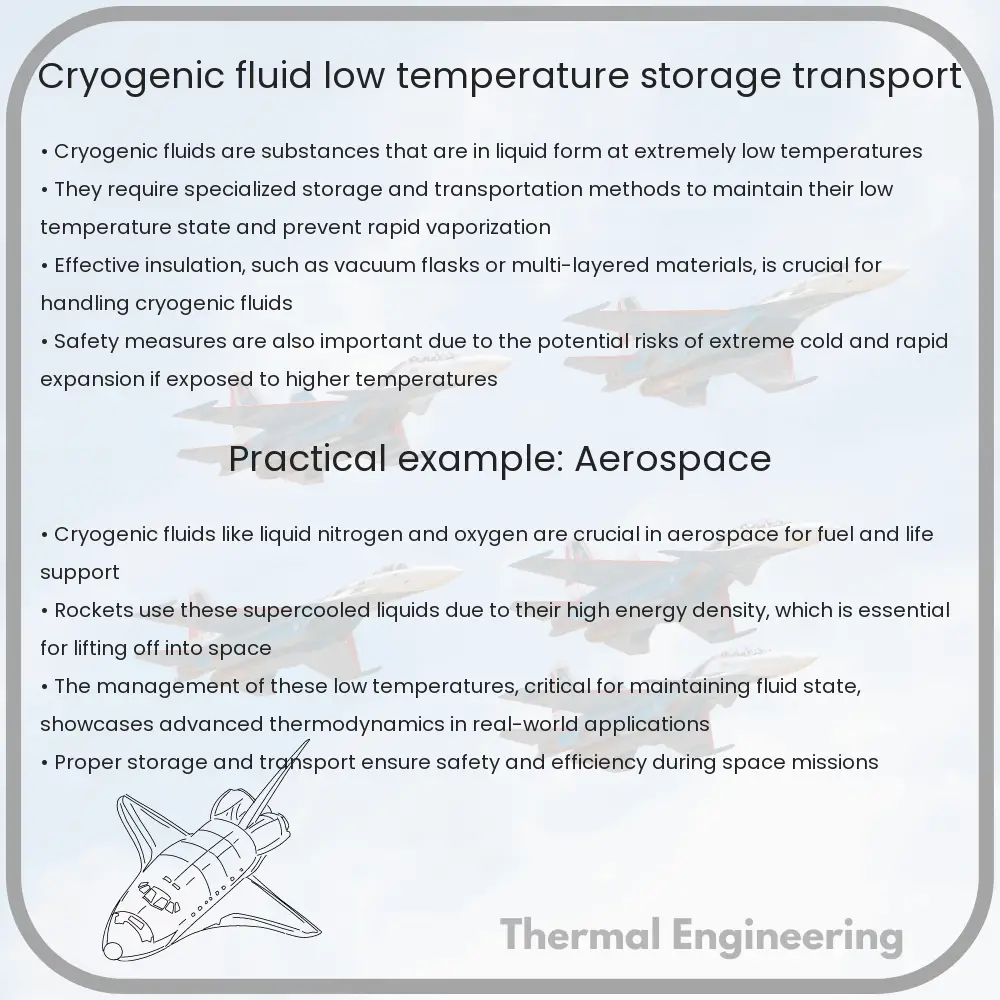
Cryogenic Fluid | Low Temperature, Storage & Transport

Learn about cryogenic fluids, their low temperature storage, and transportation essentials for various applications.

Cryogenic Fluid | Low Temperature, Storage & Transport

Understanding Cryogenic Fluids: Essentials of Low Temperature, Storage, and Transport

Cryogenic fluids are substances that are liquefied and kept at extremely low temperatures; generally, below -150°C (-238°F). Common cryogenic fluids include liquid nitrogen, liquid helium, and liquid oxygen, each utilized extensively in various scientific and industrial applications due to their unique properties. This article provides a concise overview of the underlying principles, storage requirements, and transportation methods associated with cryogenic fluids.

Characteristics of Cryogenic Fluids

Cryogenic fluids are defined not only by their temperature but also by their ability to remain in a liquid state at very low temperatures. This is crucial for applications that require high levels of cooling or where gases must be stored in liquid form to save space and improve transport efficiency. For example, liquid nitrogen boils at -196°C (-321°F), a temperature which requires specific storage solutions to maintain.

Storage of Cryogenic Fluids

Storing cryogenic fluids demands careful consideration to prevent rapid vaporization and to maintain safety. The typical storage methods include:

  • Dewars: A Dewar is a double-walled flask with a vacuum between the walls to provide thermal insulation. It is suitable for small to medium quantities of cryogenic liquids.
  • Cryogenic Liquid Cylinders: For larger quantities, cryogenic fluids are stored in specially designed cylinders that can withstand the low temperatures without becoming brittle.
  • Cryogenic Storage Tanks: For industrial-scale storage, cryogenic storage tanks are used. These tanks feature multiple safety mechanisms to handle the pressures associated with storing large volumes of a cryogenic fluid.

Additionally, all storage containers for cryogenic fluids must be equipped with pressure relief devices to handle the expansion of the liquid into gas, which might lead to dangerous pressure build-up.

Transport of Cryogenic Fluids

Transporting cryogenic fluids requires technologies that minimize heat transfer and manage the rapid changes in pressure and volume that can occur. Common transportation methods include:

  • Road Tankers: Insulated road tankers specifically designed for cryogenic fluids are widely utilized. These tankers maintain low temperatures to reduce evaporation losses.
  • ISO Containers: For sea transport, ISO containers ensuring cryogenic storage measure are adopted. These are built to be both thermally insulated and robust enough to handle large quantities.

During transport, careful routing and handling are critical to prevent rollovers or collisions, which could be disastrous due to the high-pressure and low-temperature contents.

Applications of Cryogenic Fluids

Cryogenic fluids have diverse applications, pivotal in fields ranging from medicine to aerospace. They are used in:

  • Medical Field: For cryopreservation of biological samples such as blood, sperm, eggs, and other tissues.
  • Industrial Applications: In metal processing, cryogenic fluids are employed for hardening and tempering metals.
  • Scientific Research: In physics research, such as superconducting magnets used in magnetic resonance imaging (MRI) and particle accelerators.

Understanding the properties, safe storage, and effective transport of cryogenic fluids is essential for harnessing their full potential in various technological and scientific realms.

Agricultural Sprays | Formulation, Delivery & Efficiency

Explore the science and techniques behind agricultural sprays, focusing on their formulation, delivery systems, and efficiency enhancements for effective farming.

Agricultural Sprays | Formulation, Delivery & Efficiency

Understanding Agricultural Sprays: Formulation, Delivery, and Efficiency

Agricultural sprays play a critical role in modern farming. They are used for the delivery of pesticides, herbicides, and fertilizers to crops, helping control pests, diseases, and nutrient supply. The effectiveness of these sprays depends largely on their formulation, delivery method, and operational efficiency. This article aims to explain the basics of these components and how they impact agricultural productivity.

Formulation of Agricultural Sprays

The formulation of agricultural sprays involves creating a mixture that contains active ingredients in suitable carriers or solvents. These formulations are typically designed to maximize the efficacy of the active ingredients while minimizing environmental impact and toxicity to non-target organisms.

  • Soluble Liquids (SL): These are solutions of the active ingredient in water or oil. They are easy to handle and apply but may require careful management to avoid solubility issues.
  • Emulsifiable Concentrates (EC): These contain oil-soluble pesticide dissolved in an organic solvent, along with an emulsifier. They form a milky emulsion when mixed with water and are widely used because of their stability and ease of use.
  • Suspension Concentrates (SC): These are stable suspensions of solid active ingredients in water, designed to be mixed with water without settling. SCs are popular due to their reduced solvent content and environmental friendliness.
  • Wettable Powders (WP): These are dry, finely ground powders mixed with water before application. They offer stability in storage but can pose inhalation risks during handling.

Each type of formulation is chosen based on the target pest or disease, the environmental conditions, and application technology available.

Delivery Systems for Agricultural Sprays

Delivery systems for agricultural sprays are crucial for ensuring that the formulation reaches its target effectively and efficiently. The most common types include:

  1. Hydraulic Nozzles: These nozzles spray the liquid under pressure, creating droplets of various sizes. The spray quality—ranging from fine to coarse droplets—is selected based on the application needs.
  2. Air-assisted Sprayers: These devices use a stream of air to carry droplets to the target. They are particularly useful for dense foliage or taller crops, as they help improve penetration and coverage.
  3. Electrostatic Sprayers: These sprayers impart an electrical charge to the spray droplets, which are then attracted to the plant surfaces. This enhances deposit efficiency and reduces off-target drift.
  4. Controlled Droplet Applicators (CDA): CDAs generate more uniform droplet sizes, which can help reduce chemical use and drift.

The effectiveness of a delivery system is influenced by factors such as wind, temperature, and humidity, which can affect droplet size and spray distribution.

Improving Efficiency of Agricultural Sprays

Efficiency in agricultural spraying not only affects crop protection but also affects the cost-efficiency and environmental impact of farming practices. Factors critical to improving efficiency include:

  • Droplet Size: Optimizing droplet size helps ensure that the spray reaches the target while minimizing drift. Smaller droplets ensure better coverage but are more susceptible to evaporation and wind displacement.
  • Application Timing: Sprays should be applied when pests or diseases are most vulnerable and under favorable weather conditions to maximize impact and reduce waste.
  • Technological Integration: Using GPS and GIS for precision agriculture can significantly enhance the specificity and efficiency of spray applications.

Moreover, ongoing research and innovation in formulation technology, such as the development of nanoformulations or slow-release encapsulations, continue to enhance the performance and sustainability of agricultural sprays.

In conclusion, the science behind agricultural sprays is complex, involving careful consideration of chemical properties, application technology, and environmental aspects. Through continued improvements in these areas, modern agriculture can achieve higher productivity while also reducing its environmental footprint.

Carbon Dioxide | Supercritical Fluid Extraction & Uses

Learn about Supercritical Carbon Dioxide (CO2), its properties, benefits, and applications in various industries.

Carbon Dioxide | Supercritical Fluid Extraction & Uses

Understanding Supercritical Carbon Dioxide

Supercritical Carbon Dioxide (CO2) is a state of carbon dioxide where it is held at or above its critical temperature and critical pressure. Carbon dioxide transitions into a supercritical fluid at temperatures above 31.1°C (88°F) and pressures above 73 atmospheres (1071 psi). In this state, it exhibits unique properties that are intermediate between a gas and a liquid, allowing it to diffuse through solids like a gas and dissolve materials like a liquid.

Properties and Benefits of Supercritical CO2

Supercritical CO2 is highly efficient as a solvent due to its low viscosity and high diffusivity. These properties make it highly effective for various extraction processes where selective extraction and low temperature operations are crucial. Moreover, CO2 is non-toxic, non-flammable, and environmentally benign, making it a preferred choice in industries seeking green alternatives.

Supercritical Fluid Extraction (SFE)

The process of Supercritical Fluid Extraction using CO2 primarily involves three steps:

  1. Extraction: The supercritical CO2 is passed through raw material to dissolve the substances of interest.
  2. Separation: The solution then passes through a separation unit, where the pressure is reduced or temperature is increased to precipitate the dissolved materials.
  3. Collection: The CO2 and the extract are separated. The CO2 can be recycled back into the system, and the extract is collected.

This method is highly favored for extracting essential oils, flavors, and other compounds from botanical materials and food products without leaving harmful residues.

Applications of Supercritical CO2 Extraction

  • Food Industry: Used to decaffeinate coffee and tea, extract hops for beer flavoring, and obtain spices and flavors.
  • Pharmaceuticals: Employed to extract precise active compounds from plants, and to formulate powders such as in the production of tablets.
  • Cosmetics: Utilized in the extraction of fragrances and oils from flowers and seeds for use in cosmetics and perfumes.
  • Environmental Science: Helps in treating environmental waste, such as removing contaminants from soil and water.

Advantages of Supercritical CO2 Extractions

Supercritical CO2 extractions offer numerous advantages over traditional solvent extraction methods:

  • Eco-Friendly: CO2 is a safe and naturally occurring gas, which reduces the environmental and health risks associated with organic solvents.
  • Efficiency: The ability to precisely control the solvating power through temperature and pressure adjustments allows for high selectivity and yield.
  • No Residue: Unlike organic solvents, CO2 completely evaporates or can be easily removed by depressurization, leaving no toxic residues behind.
  • Reuse of CO2: CO2 used in the extraction can be recycled, which minimizes waste and reduces operation costs.

In conclusion, the use of supercritical CO2 in extraction processes beyond just being a novel technique has established itself as a crucial technology across various sectors. Its implementation not only supports the extraction of high-quality products but also promotes sustainable and green engineering practices.