Facebook Instagram Youtube Twitter

Liquid Acetone | Solvent Properties, Nail Polish Remover Uses

Learn about liquid acetone, its uses as a solvent in industries and nail polish remover, its chemical properties, safety measures, and environmental impact.

Liquid Acetone | Solvent Properties, Nail Polish Remover Uses

Introduction to Liquid Acetone

Acetone is a clear, highly volatile and flammable liquid commonly used across various industries due to its excellent solvent properties. Its chemical formula is C3H6O, and it is also known as propanone. Acetone occurs naturally in the environment through volcanic emissions, forest fires, and as a by-product of the breakdown of body fat. However, it is predominantly produced and used industrially.

Solvent Properties of Acetone

Acetone is valued as a solvent for its ability to dissolve many plastics, synthetic fibers, and other organic compounds. It is miscible with water, which means it can mix with water in all proportions, enhancing its versatility as a solvent. The polarity of acetone, a result of its ketone group (where a carbon atom is double-bonded to an oxygen atom), allows it to dissolve substances that are both hydrophilic (water-attracting) and lipophilic (fat-attracting).

  • Evaporation Rate: Acetone evaporates rapidly, which is a desirable property in quick-drying applications but requires careful handling to avoid excessive exposure.
  • Non-Reactivity: While acetone is highly flammable, it is generally non-reactive with other chemical substances, making it a preferred solvent in chemical reactions.

Uses of Acetone as a Nail Polish Remover

One of the most common uses of acetone is as a nail polish remover. Its solvent properties make it particularly effective in breaking down the film-forming polymers used in nail polish, namely nitrocellulose. When applied to a painted nail, acetone breaks the polymer chains, effectively dissolving the polish and allowing it to be wiped away with ease.

  • Efficiency: Acetone removes nail polish quicker and more thoroughly than non-acetone alternatives.
  • Safety Tips: Though it is safe when used correctly, it is important to use acetone in a well-ventilated area to prevent inhalation of concentrated fumes.
  • Skin Contact: Acetone can cause dryness and irritation of the skin, so minimal contact is recommended.

Industrial and Laboratory Applications

Beyond personal care, acetone’s efficacy as a solvent has several industrial and laboratory applications:

  1. Manufacturing Processes: It is used in the manufacture of plastics and other synthetic materials.
  2. Pharmaceutical Industry: Acetone is employed for the production of drugs and other pharmaceuticals, serving as a solvent or a reactant.
  3. Scientific Research: In chemical laboratories, acetone is used as a solvent for cleaning glassware and other equipment due to its potency and the speed with which it evaporates, leaving minimal residue.

Environmental Impact and Safety

Although acetone is not considered a heavy environmental pollutant, its high volatility means it can contribute to atmospheric concentrations of volatile organic compounds (VOCs), which play a role in the formation of ground-level ozone, a key component of urban smog. Therefore, controlling emissions in industrial environments is necessary.

In terms of safety, acetone is highly flammable and poses a risk of fire and explosion if not handled under appropriate conditions that limit exposure to sparks or open flames. Health-wise, inhaling concentrated acetone vapors can irritate the respiratory tract, eyes, and skin.

Conclusion

As a solvent, acetone is unmatched in many applications due to its effectiveness, cost-efficiency, and the speed at which it acts and evaporates. Its role as a nail polish remover is just one of the many applications that make acetone a crucial chemical in both domestic and industrial settings. Knowledge of how to handle and use it safely can mitigate most of the risks associated with its volatility and flammability.
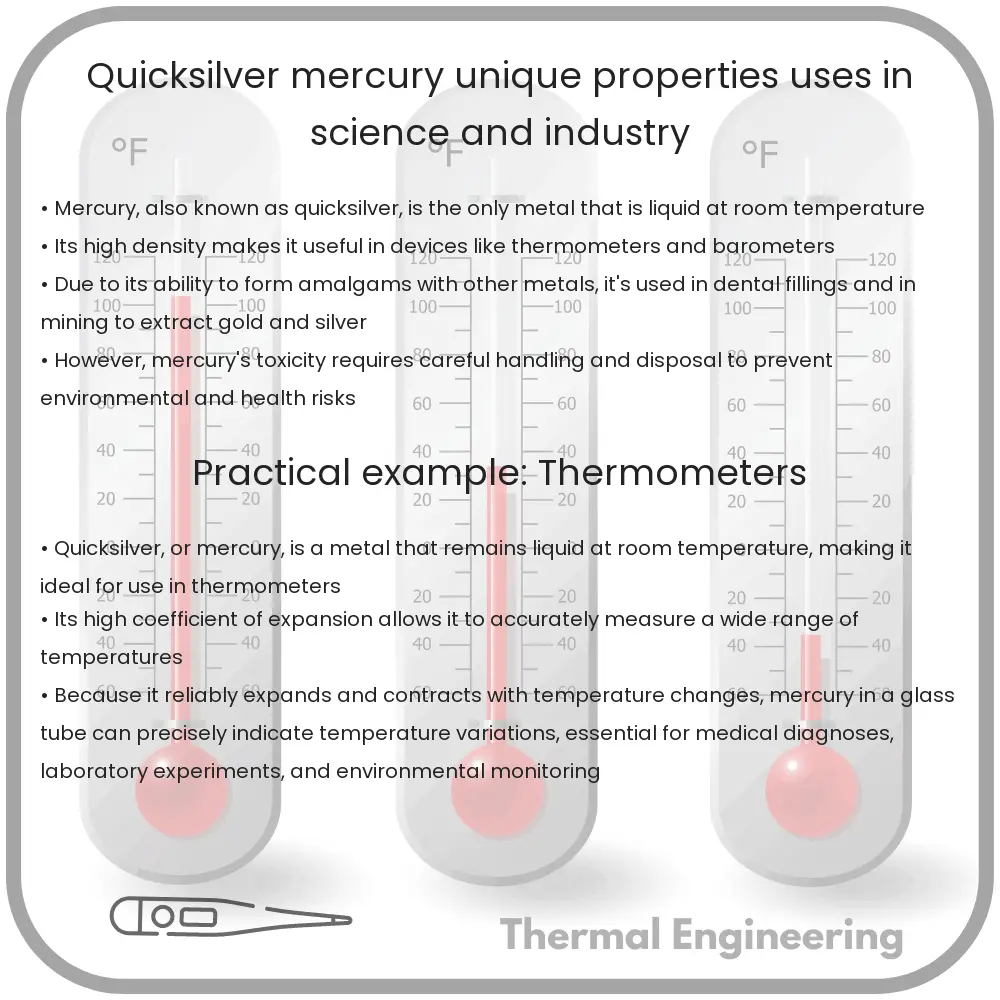

Quicksilver (Mercury) | Unique Properties, Uses in Science and Industry

Exploring Mercury’s unique properties, uses in science and industry, and its environmental and health impacts.

Quicksilver (Mercury) | Unique Properties, Uses in Science and Industry

Quicksilver (Mercury): Unique Properties, Uses in Science and Industry

Mercury, often known by its historic name ‘quicksilver,’ is a remarkable element that has fascinated humanity for centuries. Its chemical symbol, Hg, is derived from the Greek word hydrargyrum, meaning “liquid silver. Mercury is the only metal that is liquid at standard room temperature and pressure, which accounts for many of its unique properties and diverse applications in science and industry.

Unique Properties of Mercury

Mercury distinguishes itself with several unique physical and chemical properties:

  • Liquid Metal: Its melting point is -38.83°C, which allows it to remain liquid at room temperature.
  • Density: Mercury is incredibly dense, about 13.6 times more so than water, making it useful in devices where weight and compactness are crucial.
  • Conductivity: As a metal, mercury is a good conductor of electricity, which makes it suitable for various electrical applications.
  • Thermal Expansion: Mercury exhibits a nearly uniform thermal expansion, beneficial in the precise measurement of temperature in thermometers.

Uses of Mercury in Science

Mercury’s properties make it valuable in multiple scientific applications:

  • Thermometers: The uniform thermal expansion of mercury allows it to provide precise temperature readings in thermometers.
  • Barometers: Mercury is used in barometers to measure atmospheric pressure due to its high density and minimal vapor pressure.
  • Sphygmomanometers: In medicine, mercury sphygmomanometers are used to measure blood pressure accurately.

However, due to mercury’s toxicity, many of these applications are being replaced by safer alternatives.

Uses of Mercury in Industry

Mercury also finds several critical uses in various industries:

  • Chlor-alkali Process: In the chemical industry, mercury is utilized in the chlor-alkali process to produce chlorine and sodium hydroxide. This process involves the electrolysis of saltwater where mercury acts as a cathode.
  • Dentistry: Dental amalgams, used for fillings, contain mercury mixed with other metals, which provides a strong, resilient bonding material.
  • Electrical and Electronics: Due to its conductivity, mercury is used in switches and rectifiers. It was historically used in batteries as well.
  • Preservative: Mercury compounds act as preservatives and antibacterials in many cosmetic products and some vaccines.

Environmental and Health Concerns

Although mercury has many useful applications, it poses significant health and environmental risks. Mercury exposure can lead to serious health issues, including neurological damage and kidney disease. Consequently, efforts are being made to reduce the use of mercury and to find safer alternatives in industrial, scientific, and medical equipment

Moreover, environmental concerns arise due to bioaccumulation of mercury in water bodies, affecting aquatic life and entering the human food chain through fish and other seafood. International conventions like the Minamata Convention aim to decrease and eventually eliminate mercury usage and emissions globally.

Conclusion

Mercury’s fascinating properties make it indispensable in various scientific and industrial applications. Nonetheless, the risks associated with its use are prompting a gradual shift towards safer alternatives. Understanding both the benefits and hazards of mercury is essential for developing responsible science and technology policies.

Liquid Sulfur | Chemical Manufacturing, Fertilizer Production Uses

Explore the use and challenges of liquid sulfur in chemical manufacturing and fertilizer production, detailing its properties, applications, and safety considerations.

Liquid Sulfur | Chemical Manufacturing, Fertilizer Production Uses

Liquid Sulfur in Chemical Manufacturing and Fertilizer Production

Sulfur is a crucial element used in various industrial processes, particularly in chemical manufacturing and fertilizer production. In its liquid form, sulfur presents unique properties and challenges that make it particularly useful for these applications. This article provides a comprehensive overview of how liquid sulfur is used in these two critical sectors.

Properties of Liquid Sulfur

Liquid sulfur occurs when sulfur is heated above its melting point of approximately 115.21°C (239.38°F). It is known for its distinctive bright yellow color and its viscosity, which can vary significantly with temperature. As the temperature increases, liquid sulfur becomes less viscous until it reaches about 160°C, after which it becomes increasingly viscous again due to the formation of long polymeric sulfur chains.

Uses of Liquid Sulfur in Chemical Manufacturing

In chemical manufacturing, liquid sulfur is primarily used as:

  • Sulfuric Acid Production: One of the most significant uses of sulfur is in the production of sulfuric acid (H2SO4), a critical component in various industries. The process begins with the burning of sulfur to produce sulfur dioxide (SO2), which is then oxidized to sulfur trioxide (SO3) in the presence of a catalyst. Sulfur trioxide is subsequently absorbed in water to yield sulfuric acid.
  • Synthetic Rubber Production: Liquid sulfur is used in the vulcanization process to manufacture various types of synthetic rubbers. Vulcanization enhances the elasticity and durability of rubber by forming cross-links between polymer chains through the addition of sulfur.

Uses of Liquid Sulfur in Fertilizer Production

Liquid sulfur also plays a pivotal role in the production of fertilizers, where it is used as:

  • Sulfur-Based Fertilizers: Elemental sulfur and sulfur compounds are essential for plant growth and soil fertility, making them key ingredients in fertilizer compositions. Sulfate forms of sulfur, such as ammonium sulfate ((NH4)2SO4), are particularly effective as plant nutrients.
  • Phosphate Fertilizers: Sulfur is used in the production of phosphoric acid, which is a precursor to many phosphate fertilizers. The typical process involves the reaction of sulfuric acid with phosphate rock to produce phosphoric acid (H3PO4) and calcium sulfate (gypsum).

Challenges with Handling Liquid Sulfur

While liquid sulfur is extremely useful, handling and storing it poses several challenges:

  • High Temperature: Maintaining sulfur in a liquid state requires high temperatures that can pose safety risks such as burns and fire hazards.
  • Corrosiveness: When liquid sulfur comes into contact with certain materials, it can be highly corrosive, requiring specialized containment systems made of materials like stainless steel or certain alloys.
  • Viscosity and Solidification: The varying viscosity of liquid sulfur can complicate pumping and transportation processes. Moreover, improper handling can lead to premature solidification, causing blockages and maintenance issues.

Conclusion

Liquid sulfur is an indispensable resource in the fields of chemical manufacturing and fertilizer production, owing to its roles in producing sulfuric acid, synthetic rubbers, and various fertilizers. However, the handling of liquid sulfur requires careful temperature and material considerations to ensure safe and efficient use. As industries continue to evolve, the demand for efficient and innovative methods to utilize liquid sulfur will likely increase, highlighting its ongoing importance in global manufacturing and agriculture.

Liquid Uranium | Nuclear Fuel, Energy Generation Applications

Liquid uranium is a state of uranium used in molten salt reactors for more efficient and safer nuclear energy generation.

Liquid Uranium | Nuclear Fuel, Energy Generation Applications

Liquid Uranium: Pioneering Nuclear Fuel for Energy Generation

Liquid uranium represents a cutting-edge approach in the field of nuclear energy, especially within the framework of molten salt reactors (MSRs). This innovative methodology leverages the unique properties of uranium when it is in a liquid state, primarily to enhance efficiency and safety in nuclear power generation. Understanding the core aspects of liquid uranium and its application in energy generation can provide insights into the future of nuclear technology.

What is Liquid Uranium?

Liquid uranium refers to uranium that has been heated to a point where it transitions from a solid to a liquid. This typically occurs at very high temperatures — over 1,132 degrees Celsius (the melting point of uranium). In the context of nuclear fuel, liquid uranium is often used in a molten salt mixture, where it acts both as a fuel and a coolant, significantly differing from conventional solid nuclear fuels.

Characteristics and Benefits

  • High Thermal Conductivity: Liquid uranium effectively transfers heat, which is crucial for the efficient operation of a reactor.
  • Lower Melting Point: When mixed with other elements, such as fluorine to form uranium tetrafluoride (UF4), the melting point is reduced, which is advantageous for managing reactor temperatures.
  • Efficient Heat Transfer: The use of liquid uranium can allow for more uniform heat distribution and reduces the risk of hot spots, which can compromise reactor safety.

Application in Molten Salt Reactors (MSRs)

Molten Salt Reactors (MSRs) are a type of nuclear reactor where fuel is dissolved in a molten fluoride or chloride salt, which functions as both the nuclear fuel (carrying the fissile material, like uranium) and coolant. In these reactors, uranium is often used in the form of a salt, such as UF4 or uranium trichloride (UCl3). The core processes of an MSR involve circulating the molten salt through a loop, where it absorbs heat from nuclear fission and transfers this heat to a secondary salt circuit or directly to a steam generator for electricity production.

  1. The molten salt mixture is heated by nuclear reactions.
  2. Heat is transferred from the molten salt to a heat exchanger.
  3. This thermal energy is then used to produce steam, which drives turbines to generate electricity.

Advantages of Liquid Uranium in MSRs

The utilization of liquid uranium in MSRs offers several distinct advantages:

  • Enhanced Safety: MSRs can operate at atmospheric pressure and their molten salts have high boiling points, which significantly reduces the risk of explosions or leaks.
  • Efficient Use of Fuel: The solubility of uranium in molten salts permits better fuel utilization and potentially easier reprocessing and recycling of spent fuels.
  • Reduction in Nuclear Waste: MSRs can potentially reduce the volume of long-lived radioactive waste, as well as the ability to burn existing waste materials.
  • Versatility in Fuel: MSRs can be designed to run on different types of fuel, including thorium or plutonium, providing flexibility depending on resource availability.

Conclusion

The exploration and development of liquid uranium in nuclear reactors, particularly in MSRs, represents a promising advance in nuclear technology. By improving efficiency, safety, and waste management, the implementation of liquid uranium could play a crucial role in shaping the future of sustainable and safe nuclear energy deployment worldwide.

Therefore, continuing research and technological development in this sector are vital for harnessing the full potential of nuclear energy with minimal environmental impact, marking a significant step forward in the pursuit of clean energy solutions.

Thermal imaging for energy efficiency

Learn how thermal imaging technology enhances energy efficiency by detecting heat variations in buildings and machinery.

Thermal imaging for energy efficiency

Understanding Thermal Imaging for Energy Efficiency

Thermal imaging technology has emerged as a powerful tool in the field of energy efficiency. By detecting infrared radiation and converting it into an image, thermal cameras allow us to see heat variations in buildings, machinery, and electrical systems. This capability makes it an invaluable resource for engineers and energy auditors seeking to improve efficiency and reduce energy costs.

How Thermal Imaging Works

Every object emits infrared radiation as a function of its temperature. Thermal imaging cameras detect this radiation in a way similar to how ordinary cameras capture visible light. They use a special sensor called a microbolometer to detect thermal radiation, which creates a temperature map called a thermogram. Advanced algorithms then translate these temperature data into a visual display, highlighting temperature differences with varying colors.

Applications in Building Inspections

  • Identifying Heat Loss: Thermal imaging is extensively used to identify areas where buildings may be losing heat due to insufficient insulation, gaps in windows, or problems in construction materials.
  • Moisture Detection: Since moisture in building materials conducts heat faster than dry materials, thermal images can help detect moisture issues that could lead to mold growth or structural damage.
  • Finding Electrical Faults: Overheating electrical components emit more heat than expected. Thermal cameras can spot these anomalies to prevent potential failures and fire hazards.

Boosting Energy Efficiency in Industrial Settings

In industrial environments, thermal imaging helps monitor and maintain systems to ensure they operate at peak efficiency. Equipment like engines, bearings, and conveyor systems can be scanned for hotspots indicating excessive friction or wear. This information is crucial for scheduling maintenance before a costly breakdown occurs.

Examples of Energy Efficiency Improvements

  1. HVAC Systems: By visualizing airflow and heat leakage, technicians can optimize HVAC system performance, leading to significant energy savings.
  2. Building Envelope Analysis: Comprehensive scans of a building’s exterior can reveal heat leaks and deficiencies in insulation that, when corrected, enhance overall energy efficiency.
  3. Solar Panels: Thermal imaging can identify defective or underperforming cells in solar arrays, enhancing the efficiency of the solar panels.

Advantages of Thermal Imaging

Thermal imaging offers several advantages for energy efficiency purposes:

  • Non-Invasive: Since it’s a non-contact method, it allows assessments to be done without disrupting ongoing operations.
  • Real-Time Diagnostics: Immediate visualization of heat patterns provides instant feedback, which is essential for preventive maintenance.
  • Comprehensive Analysis: The ability to scan large areas quickly and accurately makes thermal imaging an effective tool for comprehensive energy audits.

Conclusion

Thermal imaging is revolutionizing the way we approach energy efficiency. By providing a clear picture of where energy loss occurs, whether in commercial buildings or industrial settings, it enables targeted interventions that can save energy and reduce operational costs. As technology advances, the scope and accuracy of thermal imaging are expected to improve, offering even greater opportunities for energy conservation.

For industries and property owners alike, investing in thermal imaging technology could lead to substantial improvements in energy utilization, aligning operational expenditures with sustainability goals.

Thermal aspects of electric vehicle charging

Explore the thermal challenges and management strategies in electric vehicle charging, focusing on heat generation, its impacts, and future advances.

Thermal aspects of electric vehicle charging

Understanding the Thermal Aspects of Electric Vehicle Charging

Electric vehicles (EVs) have gained popularity as a sustainable alternative to gasoline-powered cars. However, the process of charging an EV involves considerable electrical energy, which converts partially into heat. This article explores the thermal aspects of electric vehicle charging, including the sources of heat, challenges this heat presents, and how it is managed in modern EVs.

Sources of Heat During EV Charging

Heat generation during EV charging primarily originates from two sources:

  • Battery Resistance: When electric current passes through the EV battery, its internal resistance causes some energy loss in the form of heat. This is similar to how a wire heats up if a current runs through it.
  • Charging Circuitry: Components of the charging systems such as converters, inverters, and connectors also generate heat due to electrical resistance and inefficiencies in the electronic circuitry.

The amount of heat generated depends on several factors including the state of the battery, the charging speed (or power level), and ambient temperature conditions.

Thermal Challenges in EV Charging

Excessive heat during charging can lead to multiple issues:

  • Battery Degradation: High temperatures accelerate chemical reactions in the battery cells, which can reduce the battery’s lifespan and efficiency.
  • Safety Risks: Overheating can increase the risk of thermal events such as fires or explosions in extreme cases.
  • Reduced Charging Efficiency: As heat increases, the efficiency of charging decreases, potentially prolonging the charging time and reducing the overall energy efficiency of the vehicle.

Heat Management Strategies

Effective thermal management is crucial for the safe and efficient operation of EVs. Manufacturers employ various strategies to deal with the heat generated during charging:

  • Active Cooling Systems: Many EVs are equipped with liquid cooling systems that circulate a coolant to absorb and dissipate heat from the battery and other components.
  • Advanced Battery Chemistry: Some newer battery technologies are designed to operate efficiently at higher temperatures, thereby reducing the impact of heat on battery performance and lifespan.
  • Optimized Charging Algorithms: Smart charging technologies adjust the charging rate based on real-time thermal data to minimize heat generation and manage temperature rise effectively.

Future Prospects

As EV adoption increases, improving thermal management during charging remains a critical focus for researchers and engineers. Advances in materials science, battery technology, and cooling systems promise to enhance the thermal handling capabilities of future electric vehicles, thereby improving their safety, efficiency, and appeal to consumers.

In summary, understanding and managing the thermal aspects of EV charging is essential for the development of safer, more efficient, and durable electric vehicles. With continuous technological improvements, the future of electric transportation looks both promising and exciting.

Liquid Cadmium | Control Rods in Nuclear Reactors, Battery Uses

Explore the unique roles and benefits of liquid cadmium in engineering, focusing on nuclear reactors and battery technology.

Liquid Cadmium | Control Rods in Nuclear Reactors, Battery Uses

Liquid Cadmium in Engineering Applications

Cadmium, a soft, bluish-white metal commonly found in the earth’s crust, is not only used industrially for its corrosion-resistant properties but also plays crucial roles in the fields of nuclear engineering and battery technology. Particularly, its application in liquid form serves unique and critical functions in these areas.

Control Rods in Nuclear Reactors

In nuclear reactors, control rods are vital components that manage the fission reaction by absorbing neutrons. Cadmium, owing to its high neutron absorption cross-section, is an excellent material for control rods. When in liquid form, cadmium offers additional advantages. Liquid cadmium can be pumped into and out of the reactor core, allowing for more precise control of the reactor compared to solid rods, which move mechanically. This dynamic method of managing the reactor’s reactivity helps in maintaining optimal conditions for nuclear fission, while also enhancing safety by providing a rapid method of shutting down the reactor in case of emergency.

  • Enhanced reactivity control: By adjusting the flow rate of liquid cadmium, engineers can control the reactivity more smoothly and accurately.
  • Improved safety: In emergency scenarios, liquid cadmium can be quickly introduced into or removed from the reactor core to either dampen the nuclear reaction or shut down the reactor swiftly.
  • Reduced wear and tear: Unlike solid rods, which undergo physical wear from mechanical movement, liquid cadmium does not suffer from the same degree of physical degradation.

Battery Uses

Aside from its application in nuclear reactors, cadmium also plays a role in battery technology. Cadmium is used in nickel-cadmium (NiCd) batteries, which are known for their ability to deliver full output capacity under rigorous conditions. These batteries are composed of nickel oxide hydroxide and metallic cadmium as electrodes. While the roles of liquid cadmium in batteries are less prominent than in nuclear reactors, ongoing research investigates its potential benefits and efficiencies in flow battery systems.

  • High durability: NiCd batteries can endure a large number of charge and discharge cycles, making them suitable for applications requiring reliable and durable power sources.
  • Stable output: These batteries maintain a stable voltage level during discharge, which is beneficial for devices that require consistent power for proper operation.
  • Temperature resistance: NiCd batteries perform well under a range of temperature conditions, which makes them particularly useful in outdoor or harsh environments.

Despite its various applications, the use of cadmium is regulated in many countries due to environmental and health concerns. Cadmium is a toxic heavy metal, and its disposal must be handled with care to prevent environmental contamination. As such, engineers and researchers continue to explore safer alternatives and improved containment methods in both nuclear technology and battery manufacturing.

In conclusion, while liquid cadmium presents certain advantages in engineering applications, particularly in nuclear reactors and potentially in battery technology, its environmental and health impacts cannot be overlooked. Ongoing research into alternative materials and technologies aims to provide the benefits of cadmium while mitigating the risks associated with its use.

Aqueous Solutions | Solvent Properties, Chemical Reactions Uses

In-depth exploration of aqueous solutions, emphasizing water’s role as a universal solvent and the resulting chemical reactions and applications.

Aqueous Solutions | Solvent Properties, Chemical Reactions Uses

Introduction to Aqueous Solutions

Aqueous solutions are mixtures where water acts as the solvent. In these solutions, water disperses molecules or ions of the solute, which could be salts, acids, or bases, among other substances. The unique properties of water, which include its polarity, ability to form hydrogen bonds, and capacity to dissolve a wide range of substances, make it a universal solvent. This characteristic plays a crucial role in both biological contexts and numerous industrial applications.

Properties of Water as a Solvent

Water’s effectiveness as a solvent stems from its molecular structure. The molecule is shaped like a V, with two hydrogen atoms joined to an oxygen atom at an angle of about 104.5 degrees. This arrangement leads to a polar molecule with a positive charge on the side of the hydrogen atoms and a negative charge on the side of the oxygen atom. The polarity of water enables it to interact with various ionic and polar compounds, facilitating their dissolution.

  • Dielectric Constant: Water has a high dielectric constant of about 80 at room temperature, which helps weaken the electrostatic forces between charged particles (ions), making it easier for them to dissolve.
  • Cohesion and Adhesion: Water molecules tend to stick together (cohesion) and to other materials (adhesion), properties that help transport dissolved compounds through capillary action.
  • Temperature Stability: Water has high specific heat capacity and boiling point, which are significant in providing stable environments for chemical reactions.

Types of Chemical Reactions in Aqueous Solutions

In aqueous solutions, several types of chemical reactions can occur, depending primarily on the nature of the solute and solvent interaction:

  1. Precipitation Reactions: These occur when two soluble salts react in solution to form an insoluble solid called a precipitate. For example, when a solution of silver nitrate (AgNO3) is mixed with sodium chloride (NaCl), silver chloride (AgCl), a precipitate, is formed.
  2. Acid-Base Reactions: Also known as neutralization reactions, these involve an acid and a base producing water and a salt. For instance, hydrochloric acid (HCl) and sodium hydroxide (NaOH) react to form sodium chloride (NaCl) and water (H2O).
  3. Redox Reactions: These are oxidation-reduction reactions where electrons are transferred from one reactant to another. An example is the reaction between zinc metal and copper sulfate (CuSO4), which results in copper metal and zinc sulfate (ZnSO4).

Uses of Aqueous Solutions

Aqueous solutions are integral to numerous applications across various fields:

  • Biological Systems: Most biochemical reactions, such as enzyme activity and DNA replication, occur within aqueous solutions inside cells.
  • Industrial Processes: Many manufacturing processes, like electroplating and dyeing, use aqueous solutions to facilitate chemical reactions and material transport.
  • Pharmaceuticals: Aqueous solutions are used to formulate many medicines, either as solvents or as a medium for chemical reactions during drug manufacturing.
  • Environmental Science: Water treatment processes, including flocculation and disinfection, rely on chemical reactions in aqueous solutions to remove contaminants from water.

Understanding the properties and behaviors of aqueous solutions allows engineers and scientists to design more effective processes and products in health care, manufacturing, and environmental management. It showcases the profound impact of understanding basic chemical principles in practical applications.

Liquid Iodine | Disinfectant Properties, Uses in Medicine and Nutrition

Learn about liquid iodine’s disinfectant properties, medical uses, and essential role in human nutrition.

Liquid Iodine | Disinfectant Properties, Uses in Medicine and Nutrition

Liquid Iodine: Disinfectant Properties, Uses in Medicine and Nutrition

Liquid iodine is a versatile chemical with powerful disinfectant properties, widely used in medical and nutritional applications. It is well-known for its bactericidal, fungicidal, and virucidal effects, making it an essential component in several industries. This article explores the disinfectant properties of liquid iodine, its uses in medicine, and its role in human nutrition.

Disinfectant Properties

Liquid iodine is primarily used as a disinfectant because of its ability to kill a wide range of harmful microorganisms. It is effective against bacteria, viruses, and fungi, acting through the process of iodination, where it disrupts the structure and function of microbial protein and nucleic acids. This broad-spectrum antimicrobial activity makes liquid iodine a valuable tool in the prevention of infections.

  • Kills bacteria: Liquid iodine is lethal to many pathogenic bacteria, including staphylococcus and streptococcus.
  • Destroys viruses: It is effective against many viruses, such as influenza and herpes simplex.
  • Eliminates fungi: Iodine helps in treating fungal conditions like athlete’s foot and yeast infections.

Uses in Medicine

In the medical field, liquid iodine finds numerous applications due to its antiseptic properties:

  • Wound care: It is commonly used for cleaning wounds, thus preventing infection and promoting faster healing.
  • Surgical prep: Surgeons use iodine solutions to sterilize the skin before incisions to minimize post-surgical infections.
  • Dental care: Iodine is used in various forms to disinfect the oral cavity and manage periodontal disease.
  • Water purification: Liquid iodine can be used to purify water, making it safe for drinking, particularly in emergency situations.

Role in Nutrition

Iodine is an essential trace element required for the synthesis of thyroid hormones, which regulate metabolism. Liquid iodine supplementation can be crucial in preventing iodine deficiency disorders:

  • Thyroid health: Adequate iodine intake ensures the proper functioning of the thyroid gland, affecting energy levels and body temperature regulation.
  • Developmental benefits: Iodine is vital for brain development, particularly during pregnancy and infancy.
  • Prevention of disorders: It helps prevent conditions like goiter, hypothyroidism, and certain types of intellectual disabilities associated with iodine deficiency.

Conclusion

Liquid iodine is a critical compound with significant benefits in disinfection, medical care, and nutrition. Its strong antimicrobial properties make it indispensable in medical sanitation, while its nutritional role is crucial in maintaining thyroid health and proper metabolic functions. The continued study and use of iodine in these fields highlight its vital importance to human health.

Liquid Sodium | Heat Transfer in Nuclear Reactors, Energy Applications

Learn how liquid sodium’s superior thermal properties enhance heat transfer in nuclear reactors, improving energy efficiency and safety.

Liquid Sodium | Heat Transfer in Nuclear Reactors, Energy Applications

The Role of Liquid Sodium in Heat Transfer for Nuclear Reactors and Energy Applications

One of the most critical aspects of nuclear reactor efficiency and safety is the method used for heat transfer. Among the various coolants utilized in the nuclear industry, liquid sodium is notable for its superior thermal properties and efficacy in heat transfer. This article explores how liquid sodium is used in nuclear reactors, particularly focusing on its role in heat transfer and its implications for energy applications.

Properties of Liquid Sodium

Liquid sodium is an attractive coolant choice for several reasons. It possesses excellent thermal conductivity, which is significantly higher than that of water. This property enables liquid sodium to transfer heat more efficiently, allowing nuclear reactors to operate at higher temperatures with improved thermal efficiency. Liquid sodium also has a high boiling point at atmospheric pressure (about 882°C), which reduces the risk of high-pressure scenarios within the reactor.

Heat Transfer in Nuclear Reactors Using Liquid Sodium

In a sodium-cooled fast reactor (SFR), liquid sodium serves as the primary coolant. The primary function of the coolant in such reactors is to transfer heat from the nuclear reactor core to the heat exchangers. The process can be outlined in the following steps:

  • The reactor core generates heat through fission reactions.
  • Liquid sodium, circulating through the core, absorbs this thermal energy, increasing its own temperature.
  • Hot sodium is then pumped out of the reactor core to a heat exchanger.
  • In the heat exchanger, the thermal energy from the sodium is transferred to a secondary water circuit, producing steam.
  • The steam drives turbines, generating electricity.

This cycle highlights the crucial role of liquid sodium in effectively transporting heat from the reaction site to the electricity generation apparatus.

Advantages of Using Liquid Sodium in Energy Applications

The use of liquid sodium in nuclear reactors presents numerous advantages:

  1. High Thermal Efficiency: The exceptional thermal conductivity of liquid sodium leads to higher efficiency in converting heat into electricity.
  2. Safety: Sodium’s high boiling point reduces the likelihood of pressure-related accidents in the reactor.
  3. Neutron Economy: Compared to other moderators and coolants, sodium does not moderate (slow down) neutrons significantly, which is beneficial in fast reactors where fast neutrons sustain the fission chain reaction.

Nevertheless, there are challenges associated with using sodium. It reacts chemically with water and air, which necessitates tight sealing and robust safety systems to manage and contain any leaks. Moreover, sodium fires, should they occur, need specific procedures and extinguishing agents to be safely managed.

Conclusion

Liquid sodium is a powerful coolant in nuclear reactor technology, especially in fast reactors, due to its superior heat transfer capabilities. The continued development and refinement of sodium-cooled reactor technologies highlight the ongoing efforts to harness these beneficial properties while managing the inherent risks. As the demand for efficient and safe nuclear energy grows, the role of liquid sodium as a coolant is likely to become even more pivotal in future reactor designs.