Facebook Instagram Youtube Twitter

Molasses | Sweetener, Baking, and Ethanol Production Uses

Explore the versatility of molasses in culinary, industrial, and biofuel applications, highlighting its role in baking, sweetening, and ethanol production.

Molasses | Sweetener, Baking, and Ethanol Production Uses

Introduction to Molasses

Molasses is a viscous by-product derived from the processing of sugar cane or sugar beets into sugar. Known for its robust flavor, molasses is utilized in various culinary, industrial, and agricultural applications. Its versatility can be attributed to its unique properties and composition, making it a fascinating subject in both engineering and industry.

Uses in Sweetening and Baking

Molasses is a popular ingredient in baking and cooking, providing distinct flavors and colors to various foods. It contributes to the texture and moisture content of recipes, making it indispensable in the creation of gingerbread, cookies, and other desserts. Molasses also acts as a natural sweetener and can be found in sauces, marinades, and even beverages.

  • Baking: Molasses is crucial in recipes for baked goods like gingerbread and molasses cookies where it imparts a soft texture.
  • Sweetener: It serves as a healthier alternative to refined sugar, offering essential minerals not found in white sugar.

Production of Ethanol

Molasses is not only used in food but also in biofuel production, particularly ethanol. Ethanol produced from molasses is considered a renewable biofuel and is used in several countries as an additive to gasoline.

  • Fermentation Process: Molasses is fermented to produce ethanol, using yeasts to convert the sugars into alcohol. The equation for the fermentation of sugar (sucrose) in molasses to ethanol can be expressed as:

C12H22O11 + H2O → 4C2H6O + 4CO2

  • This chemical process is fundamental in biofuel engineering, where molasses serves as a less expensive and abundantly available feedstock compared to others.

Conclusion

The diverse applications of molasses from sweetening foods to fueling vehicles illustrate its versatility and importance in both culinary arts and engineering fields. As an inexpensive by-product, molasses contributes to sustainable practices in agriculture and energy, making it a valuable resource in various sectors. Understanding the scientific and practical applications of molasses can provide insights into its continued relevance in technology and industry.

Molten Glass | Optical Properties, Uses in Manufacturing and Art

Learn about the unique optical properties and versatile applications of molten glass in manufacturing and art.

Molten Glass | Optical Properties, Uses in Manufacturing and Art

Understanding Molten Glass: Optical Properties and Applications

Molten glass is a fascinating material, primarily because of its unique optical properties and versatility in various applications. When glass is heated to a high temperature, it transitions from a solid to a liquid-like state, allowing it to be molded, shaped, and formed into numerous end products ranging from practical to decorative. This article explores the optical properties of molten glass, its uses in manufacturing, and its applications in art.

Optical Properties of Molten Glass

Glass in its molten state has several significant optical properties. One of the most notable is its transparency to various wavelengths of light. This transparency is due to the absence of crystal boundaries which usually scatter light in crystalline materials. Additionally, molten glass has:

  • Refractive Index: The refractive index of glass can vary depending on its composition but typically ranges around 1.5. This property measures how much light is bent, or refracted, as it passes through the material.
  • Dispersion: Glass can disperse light into its constituent spectrums, much like a prism. This property varies with the type of glass and its additives.
  • Transmission: Molten glass can be crafted to various thicknesses, affecting its light transmission capabilities.

Modifying the chemical makeup of glass alters these properties. For instance, adding certain metal oxides can change the color and light absorption characteristics, thereby customizing the glass for different applications.

Uses in Manufacturing

The ability to manipulate the properties of molten glass makes it incredibly useful in a wide array of manufacturing applications:

  • Building and Construction: Windows, facades, and insulation materials are commonly made from specialized glass formulations tailored for strength and energy efficiency.
  • Automotive Industry: Glass is used not just for windows but also in the manufacturing of windshields and headlight covers, which require high durability and clarity.
  • Optical Devices: From eyeglasses to microscopes and lenses used in cameras and smartphones, precision optical components are crafted from high-quality glass with specific refractive properties.
  • Container Glass: Bottles, jars, and other containers are manufactured from molten glass, benefiting from its non-reactive nature, which ensures that it does not alter the taste or composition of stored substances.

Artistic Applications

Artists appreciate molten glass for its flexibility and diversity in making both visual and functional artworks. Techniques such as blowing, casting, and slumping (where glass is formed over molds at high temperatures) allow for incredible creativity. Some artistic applications include:

  • Sculptures: Intricate and colorful glass sculptures are possible with the use of colored molten glass combined with various artistic techniques.
  • Stained Glass: Traditionally used in church windows and artworks, stained glass employs different types and colors of glass to create pictorial or geometric designs.
  • Jewelry: Small-scale, detailed works like beads or pendants showcase the versatility of glass when used for artistic expression.
  • Decorative Items: From vases to chandeliers, the potential for creating dazzling decorative items from glass is nearly limitless.

Molten glass remains one of the most dynamic and adaptable materials used across both industry and art. Its properties provide structural and aesthetic benefits, ensuring its continued popularity in a wide range of fields. Whether in the practical applications of engineering or the expressive arena of art, the properties of molten glass make it indispensable and universally valued.

Temperature management in indoor farming

Explore the critical role of temperature management in enhancing plant health and productivity in indoor farming environments.

Temperature management in indoor farming

Understanding Temperature Management in Indoor Farming

Indoor farming, also known as controlled environment agriculture (CEA), is a technology-driven approach that allows for the precise control of environmental conditions to optimize plant growth and increase productivity. Among the various factors that influence plant health in indoor farming, temperature management is one of the most critical. Effective temperature control can lead not only to higher yields but also to more efficient use of resources.

The Importance of Temperature in Plant Growth

Temperature affects several aspects of plant development including germination, photosynthesis, respiration, and flowering. Each plant species has an optimal temperature range that facilitates maximum growth. If temperatures diverge significantly from this range, it can stress plants, hinder growth, or even lead to plant death. Therefore, maintaining an ideal temperature is crucial for successful indoor farming.

Methods of Temperature Control in Indoor Farms

  • Heating Systems: Various heating systems are used to maintain adequate temperatures, especially in colder climates. Common solutions include direct fired heaters, radiant heaters, and hot water heated floors.
  • Cooling Systems: To prevent overheating, especially in warmer climates or during lights-on periods in grow operations, cooling systems such as evaporative coolers, air conditioners, and fan and pad systems are used.
  • Automated Climate Control Systems: These systems integrate sensors and control mechanisms to continuously monitor and adjust the climate based on real-time data. This automation helps maintain consistent temperatures suited to the specific requirements of the plant species being cultivated.

Challenges in Temperature Management

Despite the availability of advanced technology, several challenges exist in effectively managing temperatures in indoor farms:

  1. Energy Consumption: Heating and cooling systems can be energy-intensive. Optimizing energy use while maintaining ideal growth conditions is a key challenge.
  2. Cost: The initial setup and ongoing operational costs of temperature control systems can be significant, impacting the overall feasibility of indoor farming, especially on a large scale.
  3. Uniformity: Ensuring uniform temperature distribution throughout the growing area requires careful design and constant adjustment of climate control systems.

Technological Innovations

In recent years, advances in technology have led to more efficient solutions for temperature management in indoor farming. Innovations include:

  • Energy-Efficient Heating and Cooling Systems: Developments such as geothermal heating, solar-powered cooling systems, and LED lighting that emits less heat are helping reduce the energy footprint of indoor farms.
  • Smart Sensors and IoT: The integration of Internet of Things (IoT) technology in climate control allows for more precise and automated adjustment of environmental conditions, improving both efficiency and plant productivity.
  • Machine Learning Models: These models can predict and respond to potential fluctuations in temperature based on historical data and real-time analytics, enabling preemptive adjustments.

Conclusion

Temperature management plays a pivotal role in the success of indoor farming. By carefully controlling the temperature, farmers can ensure optimal plant growth and potentially higher yields. However, the choice of technology and methods must align closely with the specific needs of the plants and the local environment. As technology continues to advance, more efficient and cost-effective solutions for temperature management are expected to develop, making indoor farming a more viable option for sustainable agriculture.

Liquid Potassium | Heat Transfer, Fertilizer, and Pharmaceutical Uses

Learn how liquid potassium is utilized in heat transfer systems, fertilizer production, and pharmaceutical applications.

Liquid Potassium | Heat Transfer, Fertilizer, and Pharmaceutical Uses

Understanding Liquid Potassium: Applications in Heat Transfer, Fertilizers, and Pharmaceuticals

Liquid potassium, a versatile and dynamic element in its molten form, finds significant applications across various fields in engineering and science. This article delves into the use of liquid potassium in heat transfer systems, its role in fertilizer production, and its importance in pharmaceutical formulations.

Heat Transfer Applications

Molten salts, including liquid potassium, are acclaimed for their excellent thermal properties. Liquid potassium’s high boiling point and low vapor pressure make it an ideal heat transfer fluid (HTF) in many industrial applications. One common application is found within solar power plants, where heat absorption, retention, and transfer are crucial for efficient energy production.

  • Thermal Stability: Liquid potassium operates effectively at a wide range of temperatures without decomposing, making it suitable for high-temperature applications.
  • Conductive Properties: It offers superior thermal conductivity, enhancing its capacity to absorb and transfer heat efficiently.

Equation for Heat Transfer Coefficiency: Q = m * cp * ΔT, where:

  • Q is the heat transfer,
  • m the mass flow rate,
  • cp the specific heat,
  • ΔT the temperature change.

Fertilizer Production

Potassium is a crucial nutrient in agricultural sciences, vital for plant growth and development. In its liquid form, potassium can be easily applied to crops in a precise and controlled manner. This practice enhances nutrient delivery and absorption efficiency, improving yield and crop quality.

  • Role in Plant Physiology: Potassium regulates various physiological processes in plants including water uptake, enzyme activation, and photosynthesis.
  • Enhanced Absorption: The liquid form ensures that potassium is more readily available to the plant roots compared to solid fertilizers.

Formula for Potassium in Fertilizers: Typically noted as K2O, indicating the presence of potassium oxide, which plants convert into usable potassium.

Pharmaceutical Uses

Liquid potassium is also integral in the pharmaceutical industry, employed both as a medication and a component in the formulation of various drugs.

  1. Potassium Replacement Therapy: It is used to treat and prevent low blood levels of potassium, a condition known as hypokalemia.
  2. Compound Stabilization: In drug formulations, potassium can act as a stabilizer to maintain the efficacy and shelf-life of active pharmaceutical ingredients.

Chemical Property in Pharmaceuticals: K+ ions play a pivotal role in maintaining cellular and electrical functions in the human body, which is essential for carrying signals to and from the brain.

In conclusion, liquid potassium serves as a fundamental component across various engineering and science disciplines. Its adaptable nature in heat transfer, agricultural benefits as a fertilizer, and therapeutic uses in medicine underscore its broad utility and importance.

Vaporized Water | Steam Power, Sterilization, and Humidification Uses

Explore the essential roles of vaporized water, or steam, in steam power generation, sterilization processes, and humidity control across various industries.

Vaporized Water | Steam Power, Sterilization, and Humidification Uses

Vaporized Water: Multifaceted Applications in Steam Power, Sterilization, and Humidification

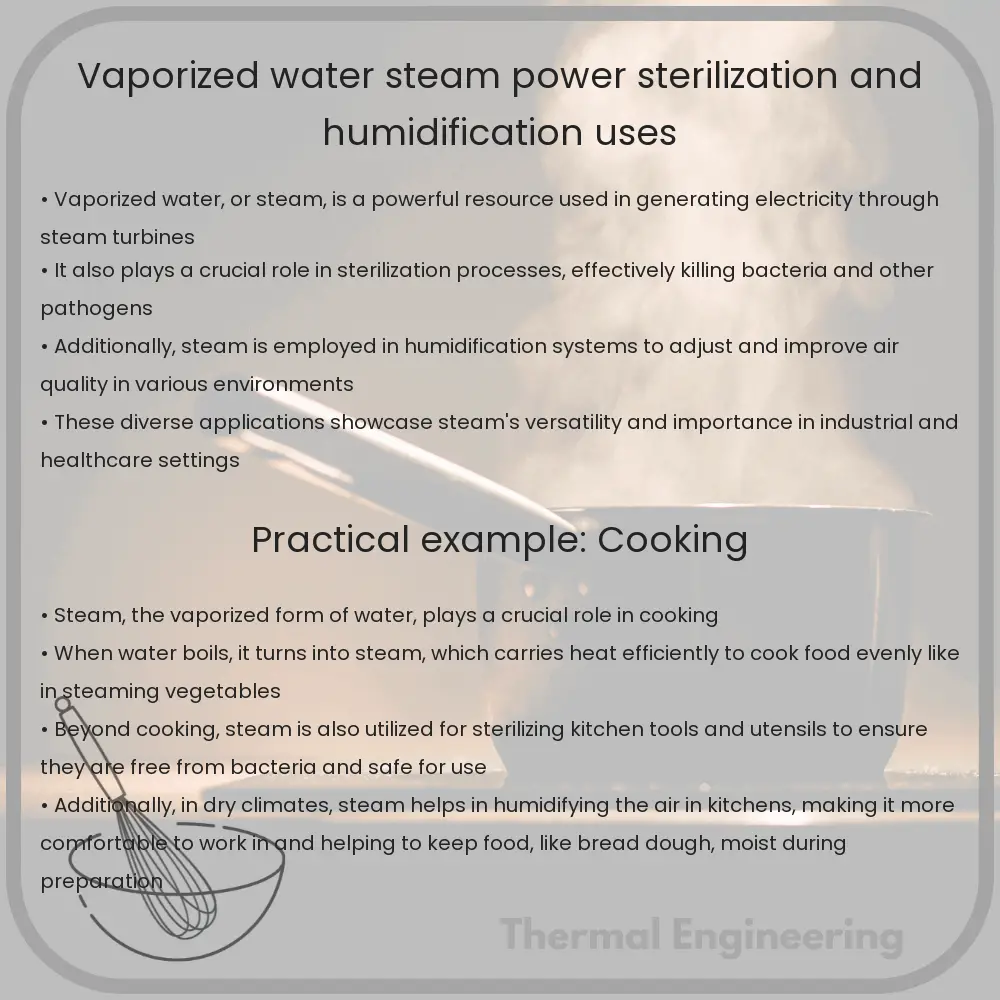
Vaporized water, commonly known as steam, plays a crucial role in various applications across multiple industries. Its uses range from power generation and medical sterilization to climate control. Understanding how steam functions in these settings reveals the broader significance of phase changes in water and thermodynamics in practical engineering solutions.

Steam Power Generation

One of the oldest and most significant uses of steam is in power generation. Steam turbines, which convert steam energy into mechanical energy, fundamentally operate on the principles of thermodynamics. The process involves boiling water to create steam, which then expands and pushes against the blades of a turbine.

  • The Rankine cycle, crucial in power generation, describes the process of heat being converted to mechanical energy through the creation of steam. Hot steam generated in a boiler expands through a turbine, producing mechanical energy that drives an electric generator.
  • The efficiency of steam turbines depends on the steam pressure and temperature. Higher pressures and temperatures generally yield greater efficiency, allowing more energy to be extracted from each unit of water.

Sterilization through Steam

Steam is vigorously used for sterilization, especially in healthcare settings, because of its ability to destroy microorganisms. The combination of heat and moisture makes steam an effective agent for this purpose.

  • Autoclaving is the most common method of steam sterilization. Instruments and supplies are exposed to high-pressure saturated steam at 121°C (250°F) for around 15 to 30 minutes depending on the object’s size and thermal nature.
  • The effectiveness of steam sterilization is attributed to its heat content and moisture, which coalesce to denature proteins in microorganisms, thereby rendering them inactive.

Humidification and Its Purposes

In industrial and residential settings, maintaining proper humidity is essential for comfort, health, and process control. Steam humidifiers inject steam into the air to maintain desired humidity levels, important for:

  • Preserving the integrity of wood in musical instruments and furniture.
  • Maintaining optimal conditions for manufacturing processes like in textile and paper industries.
  • Health benefits in respiratory therapy, where maintaining adequate air moisture can help alleviate symptoms of respiratory conditions.

In conclusion, vaporized water, or steam, plays a diverse role across various fields by exploiting fundamental principles of physics and chemistry. From generating electricity to preventing infections and maintaining comfort and precision in environments, steam power showcases the wide-reaching impacts of this versatile tool in technology and everyday life.

Liquid Cobalt | Magnetic Alloys, Battery, and Catalyst Uses

Learn about the uses and importance of liquid cobalt in magnetic alloys, batteries, and as a catalyst in various technological applications.

Liquid Cobalt | Magnetic Alloys, Battery, and Catalyst Uses

Understanding Liquid Cobalt: Magnetic Alloys, Battery, and Catalyst Uses

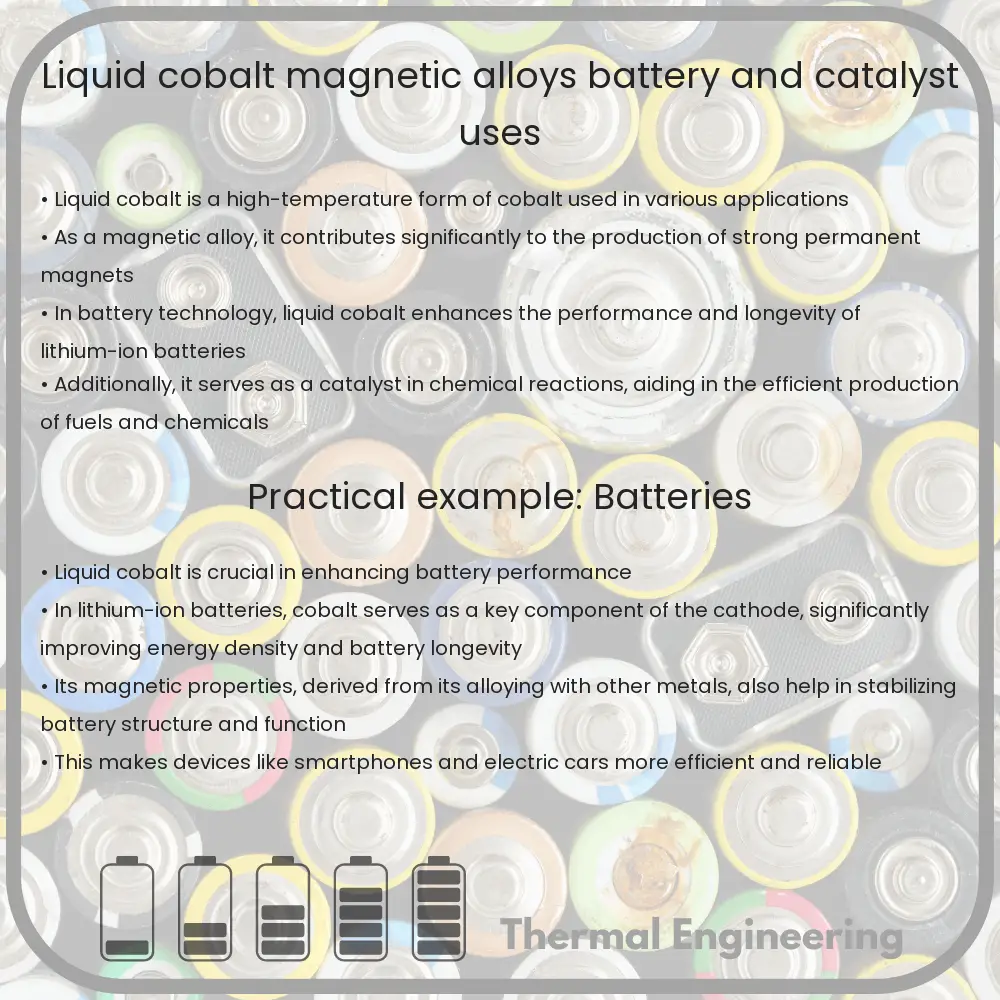
Liquid cobalt, a high-stakes player in various engineering and technological fields, plays a crucial role in the development of magnetic alloys, batteries, and as a catalyst. The unique properties of cobalt, especially in its liquid state, make it invaluable in many modern applications. This article explores the significance of liquid cobalt, focusing on its use in magnetic alloys, batteries, and as a catalyst.

Magnetic Alloys

Magnetic alloys are critical for many technological applications, ranging from electronic devices to magnetic imaging systems. Cobalt, as an element, offers excellent magnetic properties, which become particularly beneficial when alloyed with other metals. When cobalt is included in an alloy, it helps in enhancing the material’s strength, resistance to high temperatures, and magnetic permeability. One of the prominent examples of such an alloy is the cobalt-iron alloy, known for its high magnetic saturation and mechanical durability.

Battery Applications

Cobalt is also a vital component in the battery industry, particularly in lithium-ion batteries, which power everything from mobile devices to electric vehicles. Cobalt in these batteries primarily serves as a part of the cathode. It helps in maintaining battery stability and increases the energy density, which translates to longer-lasting batteries. The role of liquid cobalt here involves ensuring the precise deposition of cobalt in the cathode during manufacturing, which can enhance performance consistency and safety.

Catalyst Uses

As a catalyst, cobalt provides essential reactivity characteristics that are crucial in several chemical reactions and industrial processes. One significant application is in the Fischer-Tropsch process, where cobalt is used to catalyze the conversion of synthetic natural gas into liquid hydrocarbons. This process is pivotal in producing cleaner fuel alternatives. Additionally, cobalt catalysts are used in the production of certain alcohols and in the purification of hydrocarbons.

Environmental and Safety Considerations

While liquid cobalt drives several technological advancements, it also poses environmental and safety challenges. Cobalt mining and processing have raised concerns due to their environmental impact, including pollution and habitat destruction. Moreover, the handling of liquid cobalt demands strict safety protocols to prevent toxic exposure.

Future Prospects and Innovations

Research continues to explore more sustainable and efficient uses of cobalt. Innovations include developing cobalt recycling techniques from used batteries and reducing the cobalt content in lithium-ion batteries while maintaining performance. Additionally, new catalysts that minimize environmental impact yet retain efficiency are under development.

In conclusion, liquid cobalt remains a cornerstone of engineering applications due to its impressive properties in creating magnetic alloys, enhancing battery performance, and acting as a catalyst in chemical reactions. However, balancing its benefits with environmental and health considerations is key to its sustainable use in future technologies.

Liquid Bromine | Flame Retardant, Photo Processing, and Drilling Uses

Explore the extensive uses of liquid bromine in engineering, from flame retardancy and photo processing to drilling and beyond.

Liquid Bromine | Flame Retardant, Photo Processing, and Drilling Uses

Liquid Bromine: A Versatile Element in Engineering

Bromine, symbolized as Br, stands out in the periodic table for its extensive use across various engineering fields. Primarily found in liquid form at room temperature—that makes it one of only two elements in such a state—bromine’s rich red-brown color is as distinctive as its applications. This article explores bromine’s roles in flame retardancy, photographic processing, and oil and gas drilling.

Flame Retardant Applications

Bromine is highly effective as a flame retardant due to its ability to inhibit the combustion process. When incorporated into materials, bromine atoms release hydrogen bromide (HBr) during combustion. This reaction interferes with the free radicals (highly reactive molecules) that propagate flames, thereby helping to stop the spread of fire.

  • Plastics and Electronics: Brominated compounds are widely used in the production of electronic devices and plastics. These compounds enhance the fire resistance of products ranging from small household appliances to critical components in automotive and aerospace industries.
  • Textiles: Bromine-based treatments for fabrics are utilized to enhance fire resistance, an essential safety feature for upholstery, draperies, and children’s clothing.

Photo Processing Uses

In the realm of photography, bromine plays a pivotal role in the creation of high-quality photographic films and papers. Silver bromide (AgBr), a compound formed by reacting silver and bromine, is crucial in the photographic process known as gelatin silver process.

  • Sensitivity to Light: Silver bromide crystals are sensitive to light, which makes them ideal for capturing detailed photographic images. Upon exposure to light, silver bromide decomposes, and the resulting silver atoms help create a latent image that is then developed into a visible photograph.

Drilling Uses

Bromine compounds serve significant functions in the drilling industry, particularly in the formulation of clear-brine fluids used in oil and gas well-drilling operations.

  • Well Stabilization: Brominated salts are used to prepare high-density, clear-brine fluids that are critical during the drilling process. These solutions help stabilize the well by balancing the pressure, preventing the collapse of the borehole walls, and ensuring a safer drilling operation.
  • Non-Damaging to Formations: The non-reactive nature of bromine salts ensures that they do not chemically react with the oil or gas being extracted, thereby preserving the integrity of the geological formations.

Beyond these applications, bromine’s versatility extends into other areas such as water treatment and pharmaceuticals, showcasing its importance across multiple sectors. Understanding the fundamental applications of bromine can offer insights into how everyday products and vital services maintain their quality and safety, underpinned by this remarkable element.

Liquid Chlorine | Disinfection, Water Treatment, and Chemical Uses

Learn about liquid chlorine, its uses in disinfection, water treatment, and safety measures for handling this potent chemical.

Liquid Chlorine | Disinfection, Water Treatment, and Chemical Uses

Understanding Liquid Chlorine: A Versatile Chemical in Disinfection and Water Treatment

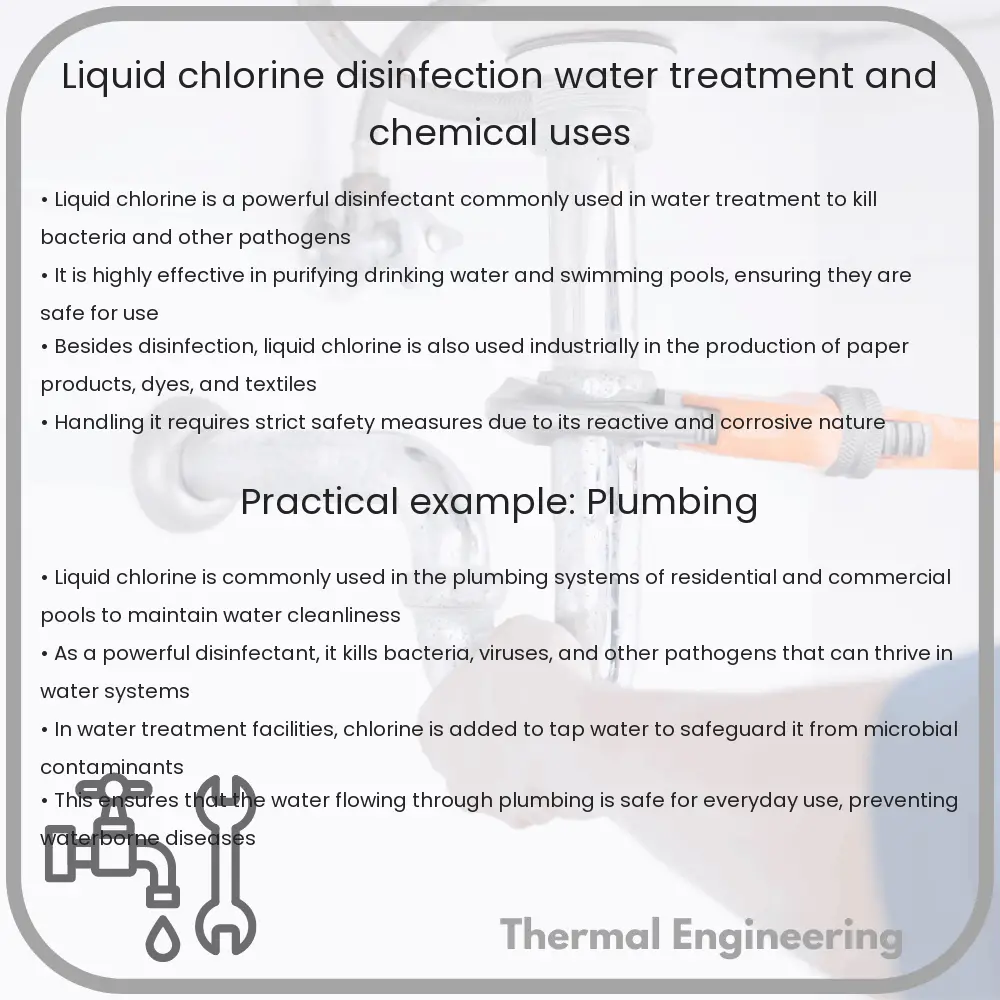
Liquid chlorine, often referred to by its chemical name chlorine (Cl2), is a highly effective disinfectant and sanitizer used across various industries. Its primary use is in water treatment processes to ensure the safety and cleanliness of water for public consumption. Besides its essential role in disinfection, liquid chlorine is also used in numerous chemical processes due to its strong oxidizing properties.

Properties of Liquid Chlorine

Liquid chlorine is a yellow-green gas under atmospheric conditions but can be pressurized and cooled to transform into a liquid. It is highly reactive and particularly effective at killing bacteria, viruses, and other microorganisms. It operates by breaking the chemical bonds within the cell walls of microbes, leading to their destruction.

Disinfection through Liquid Chlorine

In the context of disinfection, liquid chlorine is used to treat drinking water, swimming pools, and wastewater. When added to water, chlorine reacts to form hypochlorous acid (HOCl), a potent disinfectant:

  • Cl2 + H2O → HOCl + HCl

This reaction is crucial for sanitizing water and making it safe for human consumption by eliminating pathogens that can cause diseases like cholera, dysentery, and typhoid. In swimming pools, chlorine ensures hygienic water conditions, mitigating the risk of waterborne illnesses.

Water Treatment Applications

Beyond disinfection, liquid chlorine plays a pivotal role in the broader scope of water treatment, which includes:

  • Algae control: Chlorine helps control algae growth, preventing the clogging of water filters and pipes.
  • Odor and taste improvement: By destroying sulfur compounds and other substances, chlorine improves the taste and smell of water.
  • Chemical residue management: Chlorine neutralizes harmful chemical residues, such as pesticides and industrial waste, that may be present in the water.

Chemical Industry Uses

Liquid chlorine is not limited to disinfection and water treatment; it is also crucial in various chemical production processes:

  • Manufacture of PVC: Chlorine is a key component in the production of polyvinyl chloride, a versatile plastic used globally.
  • Production of solvents and cleaning agents: Many industrial cleaning products contain chlorine due to its strong oxidizing properties.
  • Use in pesticides: Chlorine-based compounds are commonly used in the synthesis of pesticides.

Handling and Safety Considerations

Despite its benefits, liquid chlorine must be handled with care. It is toxic and can cause severe health issues upon exposure. Safety measures in handling liquid chlorine include:

  • Use of protective gear: Workers should wear appropriate safety equipment such as gloves, goggles, and masks.
  • Proper ventilation: Handling of chlorine should occur in well-ventilated areas to prevent the accumulation of gases.
  • Emergency preparedness: Facilities using chlorine should have emergency procedures in place to address potential leaks or spills.

In conclusion, liquid chlorine is a powerful chemical with widespread application in disinfection and water treatment. Its effective use has significantly contributed to public health by providing clean, safe drinking water and hygienic swimming conditions. However, the handling of chlorine requires strict adherence to safety protocols to avoid hazards associated with its use.

Liquid Iron | Steelmaking, Metallurgical Processes Uses

In-depth exploration of liquid iron in steelmaking, emphasizing its production, role in transforming iron to steel, and environmental considerations.

Liquid Iron | Steelmaking, Metallurgical Processes Uses

Liquid Iron in Steelmaking and its Uses

Steelmaking is at the heart of modern industry and engineering, playing a crucial role in building the world as we know it. At the core of this process is liquid iron, an essential intermediate material used to produce steel. Understanding the properties and uses of liquid iron within various metallurgical processes provides insight into the fabrication of stronger, more durable materials.

The Role of Liquid Iron in Steelmaking

Liquid iron, often referred to as “hot metal” or “molten iron,” is primarily produced in blast furnaces from iron ore, coke, and limestone. The basic equation for this chemical transformation is:

  • 2 Fe2O3 + 3 C → 4 Fe + 3 CO2

This reaction, which involves the reduction of iron ore (iron oxide) by carbon monoxide, generates liquid iron at temperatures above 1200°C, along with carbon dioxide as a byproduct. The liquid iron is then tapped from the furnace and typically transported via ladles to the steelmaking furnaces.

Conversion to Steel

Once the liquid iron is produced, it can be converted into steel using two primary methods: the basic oxygen furnace (BOF) and the electric arc furnace (EAF). The choice between these methods largely depends on the scale of production and the desired properties of the final steel product.

  1. Basic Oxygen Furnace (BOF): This method introduces pure oxygen into the molten iron to reduce the carbon content to between 0.04% and 1.5%. The exact carbon content adjusts depending on the type of steel required. Limestone is also added to bind with impurities and form a slag that floats on top of the molten metal and can be removed.
  2. Electric Arc Furnace (EAF): Primarily used for recycling scrap steel, the EAF melts the scrap using high-power electric arcs between carbon electrodes. Liquid iron is often added to adjust the composition and temperature of the molten metal during the recycling process.

Properties and Applications of Steel Made from Liquid Iron

Steel produced from liquid iron has numerous properties and applications, crucially dependent on its carbon content and alloying elements:

  • Construction: Steel’s high tensile strength and durability make it ideal for building infrastructure such as bridges, buildings, and tunnels.
  • Automotive: The automotive industry uses steel in car frames and bodies because of its ability to absorb impact energy in crashes.
  • Tools and Machinery: High-carbon steel, known for its hardness, is commonly used in cutting tools, blades, and machinery parts.
  • Domestic Appliances: Stainless steel, made by adding chromium to the steel, offers corrosion resistance and is a staple material for many household appliances.

Environmental Considerations

The production of liquid iron and steel has significant environmental impacts, primarily through the emission of CO2 and other pollutants. However, advances in metallurgical technology and a greater emphasis on recycling have led to improved energy efficiency and reduced emissions in recent years. Continuous efforts in research, development, and the adoption of green technologies are crucial in making steel production more sustainable.

In summary, the manipulation and transformation of liquid iron into various grades and types of steel underpin an enormous range of industrial applications. Its extensive use in several sectors underscores its importance as a cornerstone material in engineering and construction. As technology progresses, enhancing the properties and production efficiency of steel from liquid iron will continue to be a focal point for innovation in materials science.

Liquid Chromium | Electroplating, Corrosion Resistance Applications

Explore the uses and processes of liquid chromium in engineering, focusing on its role in corrosion resistance and chrome plating.

Liquid Chromium | Electroplating, Corrosion Resistance Applications

Liquid Chromium and Its Engineering Applications

Chromium, a chemical element with the symbol Cr, is highly valued in engineering and manufacturing due to its impressive properties, including hardness, high melting point, and particularly its corrosion resistance. Liquid chromium, often used in chromium plating or chrome electroplating, extends the life and improves the aesthetics of metals by applying a protective and decorative layer of chromium onto their surfaces.

Chromium Electroplating Process

Chromium electroplating involves the use of a chromic acid solution where chromium is suspended. This electrochemical process deposits a thin layer of chromium onto an object’s surface. Typically, the object to be plated serves as the cathode in an electrolytic cell, and chromium acts as the anode. When electricity is applied, chromium ions travel through the solution and adhere to the surface of the object. The general reaction can be represented as follows:

\[ Cr^{6+} + 6e^- \rightarrow Cr \]

This reduction reaction involves chromium in its hexavalent state being reduced to metallic chromium on the object’s surface.

Corrosions Resistance Applications

One of the most significant engineering applications of liquid chromium is in enhancing corrosion resistance. Chromium layers serve as a protective barrier that prevents corrosive materials from damaging the underlying metal. This application is crucial in environments where metal parts are exposed to moisture, salt, and other corrosive substances.

  • Aerospace: Aircraft components are subjected to harsh environmental conditions and must resist corrosion for safety and longevity. Chromium plating is employed on parts such as landing gears, control systems, and turbine blades.
  • Automotive: In the automotive industry, chrome plating is used not just for its aesthetic appearance on trim and wheels, but also for functional parts like pistons and cylinders.
  • Oil and Gas: Drilling and extraction equipment, which are typically exposed to highly corrosive environments, often have critical components that are chrome plated to withstand corrosion.

Environmental and Safety Considerations

While the benefits of liquid chromium in electroplating are vast, it is important to address the environmental and health concerns associated with chromium, especially hexavalent chromium (Cr6+). This form of chromium is toxic and carcinogenic, posing serious environmental and health risks during manufacturing and disposal processes. Modern practices are increasingly geared towards reducing the use of toxic chemicals and implementing safer and more sustainable alternatives.

Advancements and Alternatives

Advancements in plating technology include the development of trivalent chromium plating processes, which use Cr3+ instead of Cr6+. This alternative proves to be less harmful but still provides the desired physical and aesthetic properties. Research continues into completely toxic-free processes that do not compromise the effectiveness and benefits of electroplated chromium.

Conclusion

Liquid chromium continues to play a pivotal role in various engineering applications, primarily due to its capacity to enhance corrosion resistance and extend the life span of metal components across numerous industries. Innovations in chromium electroplating are fostering safer and more environmentally friendly methods, ensuring that the use of chromium remains both effective and responsible going forward.