Facebook Instagram Youtube Twitter

Molten Salt | Heat Transfer Properties, Energy Storage Uses

Molten salt, a transformative material for energy storage, exhibits exceptional heat transfer and storage capabilities.

Molten Salt | Heat Transfer Properties, Energy Storage Uses

Understanding Molten Salt: Properties and Applications in Energy Storage

Molten salt refers to salt which is solid at standard temperature and pressure (STP) but enters a liquid phase at elevated temperatures. This transformation endows molten salts with unique heat transfer properties, making them highly valuable in various engineering and energy applications, particularly in energy storage systems. This article explores the heat transfer characteristics of molten salts, their applications in energy storage, and their role in enhancing the efficiency and sustainability of energy systems.

Heat Transfer Properties of Molten Salts

Molten salts are known for their excellent heat transfer capabilities. They exhibit high thermal conductivity and specific heat capacity, which means they can absorb, store, and transfer large quantities of heat energy efficiently. This makes them particularly useful in applications where thermal energy management is crucial.

  • Thermal Conductivity: Molten salts generally have higher thermal conductivity compared to liquids like water under similar conditions. This property allows for efficient heat transfer, reducing gradients and enhancing system performance.
  • Specific Heat Capacity: The specific heat capacity of molten salts is relatively high, which means they can store substantial amounts of heat energy per unit mass. This feature is invaluable in energy storage applications where maintaining energy in a thermal form is required over time.
  • Viscosity: While somewhat more viscous than water, molten salts still flow easily under heat, which is beneficial for systems needing fluid circulation to transfer heat.

Applications in Energy Storage

One of the most significant applications of molten salts is in thermal energy storage systems, particularly in concentrated solar power (CSP) plants. These facilities use molten salt to store thermal energy collected by solar heat during the day and release it to generate electricity at night or on cloudy days.

  • Solar Power Generation: CSP plants utilize large mirrors or lenses to concentrate sunlight onto a receiver, where molten salt flows through and absorbs heat. The heated salt is then stored in large tanks until electricity is needed, at which point the stored heat is used to produce steam that drives turbines connected to electricity generators.
  • Improved Efficiency: The utilization of molten salts in CSP plants can significantly enhance efficiency by allowing for continuous electricity production, even without direct sunlight, thanks to the efficient storage and retrieval capabilities of molten salts.
  • Load Balancing: By storing excess thermal energy, molten salt systems can help balance load variations in the grid, providing a stable and reliable power supply.

Challenges and Future Prospects

Despite their benefits, there are several challenges associated with the use of molten salts in energy systems. Corrosion of materials in contact with the molten salts, high freezing points that can lead to solidification issues, and the need for maintenance of specific environmental conditions to keep the salts in a liquid state are some examples. Addressing these challenges through materials innovation and advanced engineering solutions is crucial for wider adoption and optimization of molten salt technologies.

Future research is directed towards developing new salt formulations with lower melting points and better corrosive properties, as well as integrating molten salt technology with other forms of renewable energy storage. As advancements continue, molten salts hold the promise of playing a pivotal role in our energy systems, facilitating a shift towards more sustainable and reliable energy sources.

In conclusion, the impressive heat transfer properties and energy storage capacities of molten salts present a compelling case for their use in modern engineering applications, particularly in enhancing the efficiency and sustainability of renewable energy sources. With ongoing research and technological improvements, the potential for molten salts in energy systems is bound to expand significantly in the coming years.

Liquid Oxygen | Industrial Uses, Medical Oxygen Supply

Learn about the industrial and medical applications of liquid oxygen, its role in propulsion, manufacturing, and healthcare, and its storage benefits.

Liquid Oxygen | Industrial Uses, Medical Oxygen Supply

Liquid Oxygen: A Crucial Element in Industry and Healthcare

Liquid oxygen, often abbreviated as LOX, is one of the most important industrial gases used across various sectors due to its unique properties and efficiency in storage and transportation. This article explores the critical applications of liquid oxygen in both industrial settings and medical facilities, shedding light on its significant role in essential processes and life-saving medical treatments.

Industrial Uses of Liquid Oxygen

Liquid oxygen plays a pivotal role in multiple industries, where its use ranges from combustion to chemical synthesis. Here are some of the key industrial applications:

  • Aerospace and Aviation: LOX serves as a potent oxidizer in rocket propulsion systems. It reacts with fuel (like hydrogen or kerosene) to produce the immense thrust needed to lift spacecraft.
  • Steel Manufacturing: Oxygen is crucial in the steelmaking process where it helps to remove impurities from iron. Liquid oxygen is used to provide the large volumes of oxygen required efficiently.
  • Chemical Manufacturing: In chemical synthesis, liquid oxygen is used to oxidize compounds, facilitating the production of essential chemicals like sulfuric acid and ethylene oxide.
  • Welding and Metal Cutting: As an oxidizing agent, LOX is used in oxy-fuel welding and cutting processes, contributing to the high-temperature flame required to melt metals.

Medical Oxygen Supply

In the medical field, oxygen is a critical life-sustaining element used in various treatments and emergency care. Liquid oxygen provides a compact, portable, and efficient solution for medical oxygen supply:

  • Respiratory Therapy: Patients suffering from conditions like chronic obstructive pulmonary disease (COPD), pneumonia, or asthma may require supplemental oxygen. Liquid oxygen can be converted to its gaseous form at the point of use, ensuring a reliable source for inhalation therapy.
  • Hospital Use: Hospitals use large quantities of oxygen for surgeries, intensive care units, and other medical applications. Liquid oxygen systems allow for safe, large-scale storage and piped delivery of oxygen throughout healthcare facilities.
  • Emergency Medical Services (EMS): Portable liquid oxygen tanks are vital for ambulances and emergency response units, allowing them to provide oxygen therapy on the move without relying on heavy compressed gas cylinders.

Transportation and Storage

Liquid oxygen is stored and transported in specialized cryogenic containers that maintain the extremely low temperatures needed to keep oxygen in liquid form (-183°Celsius). The conversion from liquid to gas expands the volume of oxygen significantly (approximately 860 times), making liquid oxygen a highly efficient form for transport and storage.

Conclusion

The applications of liquid oxygen span across significant sectors, contributing essential benefits in both industry and medicine. Its efficiency in storage and transport, coupled with its effectiveness as an oxidizer, make it indispensable in modern society. Whether propelling rockets into space, facilitating the manufacture of steel and chemicals, or saving lives in medical emergencies, liquid oxygen is truly a marvel of industrial and medical science.

Biodiesel | Renewable Energy Source, Properties, and Use

Learn about biodiesel, a sustainable and renewable alternative to fossil fuels, derived from natural sources like vegetable oils and animal fats.

Biodiesel | Renewable Energy Source, Properties, and Use

Understanding Biodiesel: A Renewable Energy Source

Biodiesel represents a sustainable alternative to traditional fossil fuels. As our world seeks more environmentally friendly energy solutions, understanding the properties and uses of biodiesel is increasingly important. Derived from natural sources such as vegetable oils, animal fats, or recycled greases, it offers a way to reduce carbon footprint while harnessing existing resources.

Properties of Biodiesel

Biodiesel shares many characteristics with conventional diesel but has distinct properties that provide environmental benefits:

  • Biodegradability: Biodiesel is significantly more biodegradable than conventional diesel, reducing environmental pollution risks.
  • Non-toxicity: Biodiesel is less toxic than table salt, making it safer for handling and less harmful in cases of accidental spills.
  • Energy Content: Biodiesel contains slightly less energy per gallon than petroleum diesel – about 8-10% less, which can affect fuel economy.
  • Flash Point: With a flash point of over 130°C (approximately 266°F), biodiesel is safer to store and handle than most conventional diesel fuels, which flash at 52°C (125°F).
  • Lubricity: One of the inherent advantages of biodiesel is its high lubricity, which can reduce wear and tear on engine components, potentially prolonging engine life.
  • Emissions: When burned, biodiesel produces fewer pollutants such as carbon monoxide, particulate matter, and unburned hydrocarbons. It effectively reduces greenhouse gas emissions by up to 86% compared to petroleum diesel.

Production of Biodiesel

The production of biodiesel primarily involves a chemical process known as transesterification. This process converts fats and oils into fatty acid methyl esters (FAME) and glycerol, the main components of biodiesel. The equation for transesterification is as follows:

C3H5(OOCR)3 + 3 CH3OH → 3 RCOOCH3 + C3H5(OH)3

This depicts the reaction between triglycerides (fats/oils) and methanol to produce methyl esters (biodiesel) and glycerol. Catalysts such as sodium hydroxide (NaOH) or potassium hydroxide (KOH) are commonly used to accelerate this reaction.

Uses of Biodiesel

Biodiesel serves diverse applications across various sectors:

  • Transportation: Vehicles equipped with diesel engines can use biodiesel with no or only minor modifications, supporting cleaner transport options.
  • Power Generation: Biodiesel can be used in diesel engines that generate electricity for both onsite and remote area applications.
  • Heating: Biodiesel is also used in oil-fired furnaces for central heating, offering a more environmentally friendly alternative to heating oil.
  • Industrial: In industries, biodiesel is used as a solvent and lubricant, among other applications, benefiting from its safer chemical profile.

As global attention increasingly turns towards renewable energy sources, biodiesel remains a crucial player. Its renewable nature, combined with a lower environmental impact, underscores biodiesel’s role in fostering a sustainable energy future. Furthermore, advancements in technology and increased agricultural yields might further enhance the viability and efficiency of biodiesel production, making it a compelling option for energy needs worldwide.

The exploration of biodiesel not only addresses energy sustainability but also opens pathways for economic development in rural areas, promoting crop production and recycling initiatives. As such, biodiesel stands out not just as an alternative fuel but also as a catalyst for broader socio-economic benefits.

Gear Oil | High-Load Protection, Types, Mechanical Uses

Learn about gear oil, its types, and uses in reducing friction and wear in various mechanical systems.

Gear Oil | High-Load Protection, Types, Mechanical Uses

Introduction to Gear Oil

Gear oil is a type of lubricant specifically formulated to meet the rigorous demands of gearboxes and transmissions. The primary function of gear oil is to reduce friction, protect against wear, and extend the life of gear components. It is crucial in applications where high loads and extreme pressure conditions exist.

High-Load Protection of Gear Oil

Gear oils are infused with additives that provide high-load carrying capabilities. These additives react chemically under high pressure and temperature to form a protective film on metal surfaces. This layer drastically reduces metal-to-metal contact, thereby minimizing wear and preventing pitting—a common type of failure in gear teeth. The most common additive used for this purpose is sulfur-phosphorus, which offers excellent extreme pressure (EP) protection.

Types of Gear Oils

  • Mineral Gear Oils: These are derived from refining crude oil and provide adequate protection in general applications. However, they might not perform well at extreme temperatures.
  • Synthetic Gear Oils: These oils are chemically engineered to provide superior performance in extreme conditions. They have better stability, higher load-carrying capacity, and can operate effectively at both high and low temperatures.
  • Semi-Synthetic Gear Oils: This type combines the qualities of mineral and synthetic oils offering a balance between performance and cost-effectiveness.
  • Biodegradable Gear Oils: Made from vegetable oils and other renewable resources, these gear oils provide an eco-friendly option without compromising on performance, particularly suitable for applications in environmentally sensitive areas.

Mechanical Uses of Gear Oil

Gear oil finds its application across various mechanical systems:

  1. Automotive Transmissions: Used in both manual and automatic car transmissions to ensure smooth gear shifts and longevity of gearbox components.
  2. Industrial Gearboxes: Gear oils are essential in heavy-duty industrial machines where they mitigate the effects of heavy loads and shock loading.
  3. Wind Turbines: Specialized gear oils are used in wind turbine gearboxes to handle the variable load and climate conditions.
  4. Marine Transmissions: In the marine sector, gear oil must also resist emulsification with water while protecting against corrosion and wear.
  5. Aviation: High-performance gear oils are used in aircrafts for gearbox systems, ensuring functionality under a range of atmospheric pressures and temperatures.

Conclusion

The selection of the right gear oil is critical for ensuring optimal performance and durability of gear systems. With various types available, understanding the specific requirements of your mechanical system and operating environment is key to choosing the appropriate gear oil. Whether in automotive, industrial, or environmentally sensitive applications, the right gear oil can significantly influence the efficiency and longevity of gearboxes.

Gear oils continue to evolve with advancements in technology and materials science, promising even greater performance and protection for future mechanical enhancements.

Freon | Refrigeration Characteristics, Environmental Impact

Explore the properties and environmental effects of Freon, a key refrigerant in cooling systems, and its impact on ozone depletion and global warming.

Freon | Refrigeration Characteristics, Environmental Impact

Understanding Freon: Refrigeration Characteristics and Environmental Impact

Freon is a term commonly used to refer to certain types of refrigerants, primarily those based on chlorofluorocarbons (CFCs) and, in some cases, related compounds like hydrochlorofluorocarbons (HCFCs) and hydrofluorocarbons (HFCs). These substances have been widely used in air conditioning, refrigeration, and aerosol propellants due to their superior thermal properties and chemical stability.

Refrigeration Characteristics of Freon

Freon refrigerants are chosen for their thermodynamic properties, which make them highly efficient in heat absorption and release. The basic working principle of refrigerants in refrigeration systems involves the repeated transition between liquid and gaseous states, which allows for heat exchange and temperature control in various applications:

  • Phase Transition: In a refrigeration cycle, Freon absorbs heat from the environment as it evaporates (converts from liquid to gas) at low temperatures, and releases heat to the environment as it condenses (converts back from gas to liquid).
  • Non-Corrosive: Freon is generally non-corrosive and chemically stable, which reduces the wear and damage to refrigeration systems—extending their lifetime and reliability.
  • Safety: Most Freons are non-toxic and non-flammable, which contributes to safer operational conditions when properly maintained in systems.

Environmental Impact of Freon

The widespread use of CFCs and HCFCs has had significant environmental implications, particularly their impact on the ozone layer and their role in global warming:

  1. Ozone Depletion: CFCs and HCFCs have been confirmed as major contributors to ozone layer depletion. The chlorine atoms released from CFCs and HCFCs in the atmosphere interact with ozone molecules, leading to the breakdown of the protective ozone layer that shields the Earth from harmful ultraviolet radiation.
  2. Global Warming Potential (GWP): Freons are potent greenhouse gases. For example, R-22 (a common HCFC refrigerant) and R-12 (a CFC refrigerant) have GWPs significantly higher than CO2. This means that these gases can trap heat in the atmosphere much more effectively than carbon dioxide relative to their mass.

Due to these environmental concerns, international agreements such as the Montreal Protocol have mandated the phase-out of many CFCs and HCFCs. As replacements, HFCs and more recently hydrofluoroolefins (HFOs) and natural refrigerants like CO2 and ammonia are being adopted, which have lower impacts on ozone depletion and global warming.

Conclusion

Freon has played a pivotal role in the development of modern refrigeration and air conditioning technologies. However, the environmental consequences associated with some types of Freon have necessitated a shift towards more sustainable alternatives. Understanding both the refrigeration characteristics and environmental impacts of these substances is crucial for making informed decisions concerning their use, regulatory compliance, and the transition to greener technologies.

Liquid Soap | Cleaning Properties, Hygiene Applications

Explore how liquid soap cleans, its chemistry, and its applications in hygiene and environmental sustainability.

Liquid Soap | Cleaning Properties, Hygiene Applications

Understanding the Engineering and Science Behind Liquid Soap

Liquid soap has become a staple in cleanliness and hygiene across the world. Understanding its cleaning properties and its applications in hygiene helps us appreciate the nuanced engineering and scientific principles it embodies.

Cleaning Properties of Liquid Soap

Liquid soap primarily functions by its ability to emulsify oils and suspend dirt, allowing them to be washed away with water. The active component in liquid soap is surfactants, typically detergents that lower the surface tension of water.

Chemistry of Surfactants

Surfactants consist of a hydrophilic (water-attracting) head and a hydrophobic (water-repelling) tail. When mixed with water and applied to dirty surfaces, the hydrophobic tails latch onto oils and dirt. During rinsing, the hydrophilic heads ensure these contaminants are effectively drawn away with water.

Impact on Microorganisms

Liquid soap is also effective against many types of bacteria and viruses. The mechanism involves the disruption of the lipid membranes of microorganisms, leading to their breakdown. This disinfection benefit, while not as potent as specialized disinfectants, is significant for regular handwashing and household cleaning.

Hygiene Applications

Liquid soap’s versatility makes it ideal for a range of hygiene applications:

  • Handwashing: Regular handwashing with liquid soap can prevent the spread of infectious diseases.
  • Household cleaning: Its applications extend to safe, effective cleaning of surfaces in homes, schools, and workplaces.
  • Healthcare settings: In hospitals, liquid soap is used not only for handwashing but also for cleaning and sanitizing equipment.

Technological Enhancements in Liquid Soap

Recent developments in chemical engineering have improved the efficacy and sustainability of liquid soaps:

  • Antibacterial Properties: Additives such as triclosan were once common, though their usage has declined due to health and environmental concerns.
  • Moisturizing Elements: Modern soaps often include glycerin and other moisturizers to prevent skin dryness.
  • Eco-Friendly Formulations: Biodegradable surfactants and natural ingredients are increasingly used to reduce environmental impact.

Conclusion

The science and engineering behind liquid soap encompass a broad range of disciplines from chemistry to environmental science. Its design reflects a balance between effectiveness, consumer safety, and environmental sustainability. As technology advances, future formulations will continue to evolve, enhancing both their cleaning properties and their applications in promoting hygiene.

Seawater | Salinity, Oceanography, and Desalination Uses

Learn about the complexities of seawater, including its salinity, the vital role in oceanography, and its application in desalination processes.

Seawater | Salinity, Oceanography, and Desalination Uses

Understanding Seawater: Salinity, Oceanography, and Desalination

Seawater is a complex mixture, primarily made up of water, but also containing salts and other substances. It serves as a vital component of the Earth’s ecosystem and impacts global climate patterns. This article discusses three core aspects of seawater: salinity, its role in oceanography, and uses in desalination processes.

Salinity of Seawater

Salinity is a measure of the amount of salts dissolved in water, typically quantified as grams of salt per kilogram of water (g/kg) or parts per thousand (ppt). The average salinity of seawater is about 35 ppt. Salinity varies due to factors such as rainfall, river discharge, evaporation, and ice formation. Oceanographers measure salinity to understand ocean circulation, climate change, and marine habitat conditions.

Oceanography and the Study of Seawater

Oceanography encompasses the study of all aspects of the ocean’s environment. Understanding the composition and behavior of seawater plays a crucial role in this scientific field. Oceanographers use various tools and techniques, such as satellites, buoys, and ships, to monitor oceanic conditions, including temperature, salinity, currents, and sea level.

  • Physical Oceanography: Focuses on the movement and physical properties of seawater, including waves, tides, and currents.
  • Chemical Oceanography: Concerns the chemical composition and properties of seawater, studying cycles of chemical substances and their effects on the ocean.
  • Biological Oceanography: Examines the life forms and ecosystems within the ocean, exploring how organisms interact with their environment, including salinity levels.
  • Geological Oceanography: Investigates the ocean floor, studying the shape and structure of the seabed and its processes, such as plate tectonics and sedimentation.

The Role of Desalination

Desalination refers to the process of removing salts and other impurities from seawater to produce fresh water, which is suitable for human consumption and irrigation. With the increasing demand for fresh water resources, desalination provides a vital solution, especially in arid regions.

  1. Reverse Osmosis (RO): This is the most common desalination method, where seawater is forced through a semi-permeable membrane that blocks salts and other impurities, allowing only water to pass through.
  2. Multi-Stage Flash (MSF) Distillation: Water is heated and evaporated in multiple stages at reduced pressures, and the steam is condensed to yield fresh water.
  3. Electrodialysis (ED): This process uses an electric potential to move salt ions through ion-exchange membranes away from the water, making it less salty.

These techniques, among others, have helped advance the science of desalination, making it an increasingly feasible option for supplementing the world’s water supply.

Conclusion

Seawater is a critical component of the Earth’s ecosystem. Through the studies of salinity and oceanography, we gain insights into environmental changes and marine health. Moreover, desalination provides a crucial method for converting seawater into fresh water, addressing global water scarcity issues. By continuing to explore and understand the characteristics and uses of seawater, scientists and engineers can better manage and preserve this vital resource.

Liquid Crystal | Optical Properties, Uses in Displays

Learn about liquid crystals, their unique properties, and key applications in modern display technologies like LCDs.

Liquid Crystal | Optical Properties, Uses in Displays

Introduction to Liquid Crystals

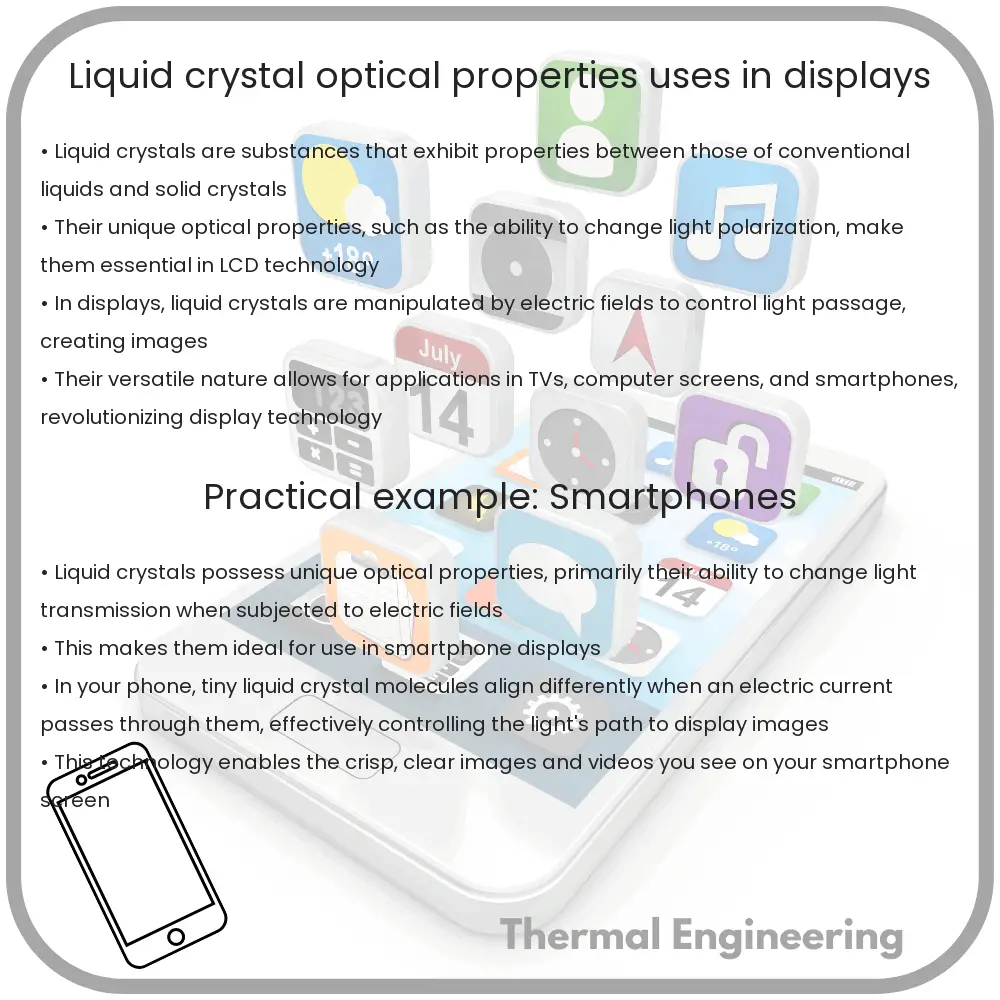
Liquid crystals are substances that exhibit a phase of matter that has properties between those of conventional liquids and solid crystals. For instance, a liquid crystal may flow like a liquid, but its molecules may be oriented in a crystal-like way. These unique properties make liquid crystals extremely useful in various applications, particularly in display technologies.

Optical Properties of Liquid Crystals

The unique optical properties of liquid crystals are primarily due to their ability to change the orientation of their molecules when exposed to electrical fields. This attribute is based on the fact that liquid crystals are anisotropic, meaning that their properties vary depending on the direction along which they are measured. This anisotropy affects how light interacts with the material, leading to phenomena such as birefringence, where a ray of light is split into two rays by the crystal, each traveling at different speeds.

Uses in Displays

Liquid crystal displays (LCDs) are the most common application of liquid crystal technology. The basic operation of an LCD is based on the manipulation of light in order to display images. Here’s a breakdown of how this is achieved:

  • Structure: An LCD consists of several layers. These include two polarized panels with their lines arranged at 90 degrees to each other, a layer of liquid crystal, and electrodes that apply the necessary electrical field to the crystal layer.
  • Operation: When an electric current flows through the liquid crystals, it changes their alignment and alters the way light travels through them. This process is used to increase or decrease light intensity at each pixel on the display.
  • Color Production: To generate different colors, LCDs use a combination of red, green, and blue sub-pixels, which can be independently adjusted to produce a full spectrum of colors.

Advantages of Liquid Crystal Displays

LCDs have several advantages that make them suitable for a wide range of applications, including:

  • Energy Efficiency: They require less power compared to other display technologies like cathode ray tubes (CRTs) and plasma displays, making them suitable for use in battery-powered electronic devices such as laptops and smartphones.
  • Thin Profile: The structure of LCDs allows them to be much thinner than CRTs and other display technologies, which is ideal for portable devices and modern, slim televisions.
  • Image Stability: LCDs do not flicker since each pixel is controlled by its own dedicated transistor, providing a stable image that is easier on the eyes.

Summary

Liquid crystals are fascinating materials characterized by their unique optical properties and practical usability in display technologies. Their ability to modulate light with high precision makes them indispensable in the manufacture of LCDs, which are prevalent in many of our everyday electronic devices. As technology progresses, the use and development of liquid crystals continue to expand, promising even more innovative applications in the future.

Liquid Hydrogen | Fuel Properties, Uses in Space Exploration

Understanding liquid hydrogen’s role in space exploration, its properties, usage as fuel, and the challenges in storing and handling it.

Liquid Hydrogen | Fuel Properties, Uses in Space Exploration

Liquid Hydrogen: Fuel Properties and Its Uses in Space Exploration

Liquid hydrogen (LH2) is a form of hydrogen which is particularly useful in various high energy applications, including space exploration. This article delves into the key properties of liquid hydrogen and its significant role in propelling spacecraft.

Properties of Liquid Hydrogen

Liquid hydrogen is hydrogen in its liquid state, which it maintains at extremely low temperatures. It must be kept below its boiling point of -252.87°C (-423.17°F) under atmospheric pressure. Here are some crucial properties and benefits of liquid hydrogen:

  • High Energy Content: Hydrogen has the highest energy content per mass of any fuel, at about 120-142 MJ/kg (megajoules per kilogram), which makes it extremely efficient compared to other types of fuel.
  • Low Density: It has a low density of about 71 kg/m3, which presents challenges in terms of storage and transport because large volumes are required to store substantial amounts.
  • Cryogenic: As a cryogenic liquid, liquid hydrogen requires specialized insulated containers and pipelines to handle and maintain its extremely cold state.
  • Clean Combustion: When burned, hydrogen produces water vapor as exhaust, making it an environmentally clean option with no direct emissions of pollutants or greenhouse gases.

Uses in Space Exploration

Liquid hydrogen has been an instrumental fuel in the realm of space exploration, particularly as a rocket propellant. Below are its primary applications in this field:

  • Main Propellant: It is commonly used as the main propellant in rocket engines, often combined with an oxidizer such as liquid oxygen (LOX). This combination is used in both the Space Shuttle main engines and the Centaur upper stage engine.
  • High Specific Impulse: Liquid hydrogen offers a high specific impulse, which is an important measure of rocket engine efficiency. This attribute means rockets can achieve higher speeds and carry more payload relative to the amount of fuel carried.
  • Use in Fuel Cells: Beyond its use in rocket engines, liquid hydrogen is also employed in fuel cells to generate electrical power for spacecraft. These fuel cells produce electricity, heat, and water (which can be used by astronauts for drinking).

Challenges and Future Prospects

Despite its usefulness, the utilization of liquid hydrogen in space exploration presents several challenges:

  • Storage Issues: Its low density and cryogenic nature necessitate sophisticated and bulky storage systems to maintain it in liquid form, which can be a constraint in spacecraft design.
  • Volatility: Hydrogen is highly flammable and requires robust safety measures to prevent and control any leakage or accidental ignition.
  • Cost: The production, storage, and transport of liquid hydrogen are costly and energy-intensive processes, although ongoing research aims to make these more efficient and sustainable.

In conclusion, liquid hydrogen remains a cornerstone in the field of space exploration due to its high energy efficiency and clean combustion properties. Ongoing advancements in technology and material science continue to address the existing challenges associated with its use, promising even broader applications in the future of aerospace and beyond.

Ink | Composition, Printing and Writing Uses

Learn about ink’s composition and its diverse applications in printing and writing, highlighting its chemical components and practical uses.

Ink | Composition, Printing and Writing Uses

Understanding Ink: Composition and Its Uses in Printing and Writing

Ink is a common but complex mixture used extensively for writing, printing, and various industrial applications. Understanding the composition of ink and how it functions in different uses can enhance our appreciation for this everyday material.

Composition of Ink

At its core, ink consists of a pigment or dye that provides color and a solvent that carries the pigment. Various additives and resins may also be included to improve performance depending on the specific application.

  • Pigments and Dyes: Pigments are insoluble substances that provide color to ink. They are preferred in applications requiring high color stability and opacity. Dyes, on the other hand, dissolve in the solvent, offering vibrant colors but often with less resistance to fading and water.
  • Solvents: The solvent aids the flow of ink and can vary widely. Water-based solvents are commonly used in inks for writing to ensure safety and ease of use, whereas organic solvents are found in some printing inks due to their quick drying properties.
  • Resins: Resins are added to ink to bind the colorants to the substrate and affect the ink’s durability. They play a crucial role in determining the gloss, adhesion, and abrasion resistance of the final ink film.
  • Additives: Various additives may include surfactants, fungicides, and defoamers. These contribute to the ink’s properties such as viscosity, drying time, and resistance to environmental factors.

Uses of Ink in Printing

Ink used in printing is specifically formulated to work with different types of printing technologies and materials. Each formulation considers factors like adhesion, color quality, and drying speed.

  • Offset Printing: In this common method, the ink is transferred from a plate to a rubber blanket and then to the printing surface. The ink used in offset printing must be able to adhere properly to both the plate and the final material.
  • Digital Printing: Digital inks must be formulated to function correctly with digital print heads, providing precise control over droplet size and placement. These inks often have to rapidly set or cure upon contact with the paper or material.
  • Screen Printing: Screen printing inks are thicker and more viscous to pass through the mesh of the screen. They must also adhere to a variety of substrates, from fabric to plastic and metal.

Uses of Ink in Writing

Writing inks are designed to provide a smooth, controllable experience, whether used in pens, markers, or brushes. Their composition influences not only the writing quality but also aspects like permanence and ease of use.

  • Fountain Pen Inks: These inks are typically water-based with dyes for color, facilitating an easy flow through the pen nib but often at the expense of water resistance.
  • Gel Inks: Gel inks combine the properties of oil-based and water-based inks. They contain pigments suspended in a water-based gel, providing vibrant colors with greater resistance to smearing and fading.
  • Permanent Markers: Permanent marker inks generally include a solvent-based carrier, dye or pigment, and a resin to fix the colorant to the surface permanently, making them suitable for use on various non-porous surfaces.

From preserving historical documents to creating striking visuals in print, inks play a critical role in various aspects of daily life and industry. The development of ink technology continues to evolve, driven by the need for greater ecological safety, enhanced durability, and improved performance.

Conclusion

The complex chemistry of ink is what allows us to leave lasting marks — from the delicate lines of a handwritten letter to the bold graphics of a billboard. By understanding more about ink’s composition and its tailored use in different applications, we can better appreciate and leverage this versatile medium in both artistic and practical contexts.