Facebook Instagram Youtube Twitter

Thermal interface materials for thermal management

Learn about Thermal Interface Materials (TIMs), essential for effective heat management in electronic devices, enhancing performance and longevity.

Thermal interface materials for thermal management

Introduction to Thermal Interface Materials

Thermal interface materials (TIMs) play a crucial role in the field of electronics and engineering, helping to manage the heat generated by electronic devices. These materials are placed between the heat source (such as a processor) and the heat sink to improve heat conduction. Efficient heat management is vital for ensuring the reliability and performance of electronic equipment, as excessive heat can lead to hardware malfunctions and reduced life spans.

Why Thermal Interface Materials are Important

Electronic components generate heat during operation, which must be dissipated to prevent the device from becoming too hot. Without effective thermal management, the elevated temperatures can negatively impact the performance and reliability of electronic devices. TIMs are designed to fill the gaps and micro-asperities between surfaces, reducing thermal resistance and enabling more efficient heat transfer.

Types of Thermal Interface Materials

  • Thermal Grease: A viscous paste that fills the air gaps between the heat source and sink. Although effective, they require careful application to ensure optimal thickness and coverage.
  • Thermal Pads: Pre-cut pads that can be placed between components. Easier to install than thermal grease, thermal pads offer convenience but typically provide slightly worse thermal conductivity.
  • Phase Change Materials: These materials change state from solid to liquid at certain temperatures, which helps to fill in gaps more effectively as they melt. They combine the ease of use of pads with improved heat transfer efficiency at operating temperatures.
  • Thermal Epoxies: Adhesive materials that not only conduct heat but also serve as a mechanical bond between surfaces. However, they are permanent and not suitable for components that require maintenance or replacement.
  • Metal-Based TIMs: These include soft metals like silver, aluminum, or copper that are used in forms such as foils or liquid metal. They offer excellent thermal conductivity but are generally more expensive and harder to handle.

Factors to Consider When Choosing a TIM

  • Thermal Conductivity: A key property of TIMs is their ability to conduct heat. Materials with higher thermal conductivity are generally more effective at transferring heat efficiently.
  • Application: The ease of application and potential need for reapplication should be considered. For instance, thermal grease might need more precise application compared to a thermal pad.
  • Operating Temperature: Different TIMs perform differently at various temperatures. It’s essential to choose a material that can handle the range of temperatures the device will experience.
  • Price: Costs can vary widely based on the type of material and the manufacturer. Balancing cost with performance needs is crucial for effective thermal management.

The Role of TIMs in Device Longevity and Efficiency

By efficiently transferring heat from a device to a heat sink, TIMs play a critical role in controlling the operational temperature of electronic components. This ensures that devices not only continue to operate within safe temperature ranges but also maintain performance levels and reliability over time. Effective thermal management through proper selection and application of TIMs can significantly extend the life of electronic components and prevent performance degradation due to heat-related issues.

Conclusion

Thermal interface materials are essential components in electronic design, crucial for maintaining optimal thermal management in electronic devices. With a variety of materials available, engineers and designers must carefully select the appropriate TIM based on specific requirements and constraints. Understanding the properties and applications of different TIMs helps in optimizing electronic device design for performance, reliability, and longevity.

Transformer Oil | Electrical Insulation, Maintenance Uses

Learn about the crucial roles of transformer oil in insulating and cooling electrical transformers, ensuring their efficient operation.

Transformer Oil | Electrical Insulation, Maintenance Uses

Understanding Transformer Oil: Electrical Insulation and Maintenance Uses

Transformer oil plays a crucial role in the maintenance and performance of transformers, which are vital components in electrical power distribution and transmission systems. This oil is not only used to insulate but also to cool electrical transformers. Understanding the properties, functions, and maintenance of transformer oil is essential for ensuring the reliability and longevity of transformers.

Properties and Functions of Transformer Oil

Transformer oil is a highly refined mineral oil that is stable at high temperatures and has excellent electrical insulating properties. Its primary functions include:

  • Insulation: The oil provides electrical insulation between the internal live parts of the transformer. It prevents electrical faults that could occur due to phase-to-phase and phase-to-ground contacts.
  • Cooling: Transformers generate heat during operation. Transformer oil acts as a coolant, transferring heat from the core and windings to the radiator, where it is dissipated into the environment.
  • Prevention of Oxidation: The oil in a transformer also helps in preventing oxidation of the cellulose-based insulation by sealing out air and moisture.

Types of Transformer Oil

There are primarily two types of transformer oil used in the industry:

  1. Mineral Oil: This is the most commonly used transformer oil, derived from fractional distillation and subsequent treatment of crude petroleum.
  2. Synthetic Oil: Such as silicone-based or fluorinated hydrocarbons, these oils are used in high-performance transformers because of their higher fire resistance and biodegradability.

Testing and Maintenance of Transformer Oil

Regular testing and maintenance are critical to ensure the proper functioning of transformer oil. The following tests are commonly performed:

  • Dissolved Gas Analysis (DGA): This test detects the presence of gases like hydrogen, methane, ethane, and acetylene, which can indicate the decomposition of the oil due to overheating or electrical discharges.
  • Dielectric Breakdown Voltage: This test measures the voltage at which an electrical breakdown occurs in the oil. Higher values indicate better insulating properties.
  • Water Content: Moisture can significantly affect the insulating properties of the oil, and its level needs to be kept minimal.
  • Acidity: Measurement of the acidity level helps in determining the degree of oil degradation. Lower acidity is indicative of healthy oil.
  • Interfacial Tension: This measures the tension at the interface between oil and water, which can indicate the presence of polar contaminants.

Based on these test results, maintenance operations might include filtering, degassing, or complete oil replacement if necessary to ensure the transformer operates efficiently and safely.

Environmental and Safety Considerations

While transformer oil is essential for the operation of electrical transformers, it poses certain environmental and safety risks, primarily due to the possibility of leaks and its flammability. Newer bio-based and synthetic oils provide options with lower environmental impact and higher flash points, reducing the risk of fire.

In conclusion, transformer oil is a key component in the efficient and safe operation of transformers. Understanding its properties, maintenance needs, and the importance of regular testing can help in extending the life of transformers and ensuring uninterrupted power supply.

Brake Fluid | Hydraulic Properties, Types, Automotive Uses

Learn about brake fluid’s role in automotive safety, its properties, types, and essential functions in vehicle braking systems.

Brake Fluid | Hydraulic Properties, Types, Automotive Uses

Understanding Brake Fluid: Essential for Automotive Safety

Brake fluid is a crucial component in the hydraulic braking systems of most vehicles, including cars, motorcycles, and trucks. It works by transferring the force applied on the brake pedal to the brake rotors or drums, slowing or stopping the vehicle. This article delves into the hydraulic properties, types, and automotive uses of brake fluid.

Hydraulic Properties of Brake Fluid

Brake fluid must possess specific properties to function effectively in automotive braking systems:

  • High boiling point: To prevent vaporizing within the brake lines under high temperatures caused by braking friction.
  • Low freezing point: To remain fluid under extremely cold conditions, ensuring reliable brake operation.
  • Non-compressibility: Essential for the efficient transmission of force through the brake system. Brake fluids generally have a high bulk modulus, which significantly reduces their compressibility under pressure.
  • Corrosion resistance: Protects the metal components of the braking system from corrosion.
  • Lubrication: Provides lubrication to the moving components within the brake system, extending their lifespan.
  • Compatibility: Must be compatible with the rubber and plastic materials used in the braking system to prevent degradation and leakage.

Types of Brake Fluid

Brake fluids are categorized based on their chemical composition and temperature resistance. The most common types include:

  • DOT 3: Glycol-based fluid with a lower boiling point. Suitable for lighter vehicles and less strenuous driving conditions.
  • DOT 4: Also glycol-based but contains additives that raise the boiling point, making it better suited for vehicles driven under more demanding conditions.
  • DOT 5: Silicone-based fluid, notable for its high boiling point and non-hygroscopic nature (does not absorb moisture), but not compatible with the anti-lock braking system (ABS).
  • DOT 5.1: Glycol-based like DOT 3 and 4 but with a higher boiling point closer to that of DOT 5, suitable for all types of vehicles including those with ABS.

Automotive Uses of Brake Fluid

Brake fluid is universally used in the hydraulic brake systems of vehicles. The specific roles include:

  • Force Transmission: It transmits the mechanical force from the brake pedal to the brake pads.
  • Maintenance of Brake System Pressure: It maintains pressure within the brake system which is necessary for the consistent operation of brakes.
  • Protection against wear and corrosion: By lubricating and protecting against corrosion, it extends the life of the brake system components.

Conclusion

Brake fluid is a vital safety component in vehicles. Selecting the appropriate type of brake fluid and ensuring it is regularly maintained can significantly affect the performance and reliability of a vehicle’s braking system. Understanding its properties, types, and uses helps drivers ensure their safety on the road while preserving the integrity of the vehicle’s braking mechanism.

Alcohol | Varieties, Solvent Uses, and Antiseptic Properties

Learn about the various types of alcohol, their uses as solvents in different industries, and their effectiveness as antiseptics in medical settings.

Alcohol | Varieties, Solvent Uses, and Antiseptic Properties

Understanding Alcohol: Varieties, Solvent Uses, and Antiseptic Properties

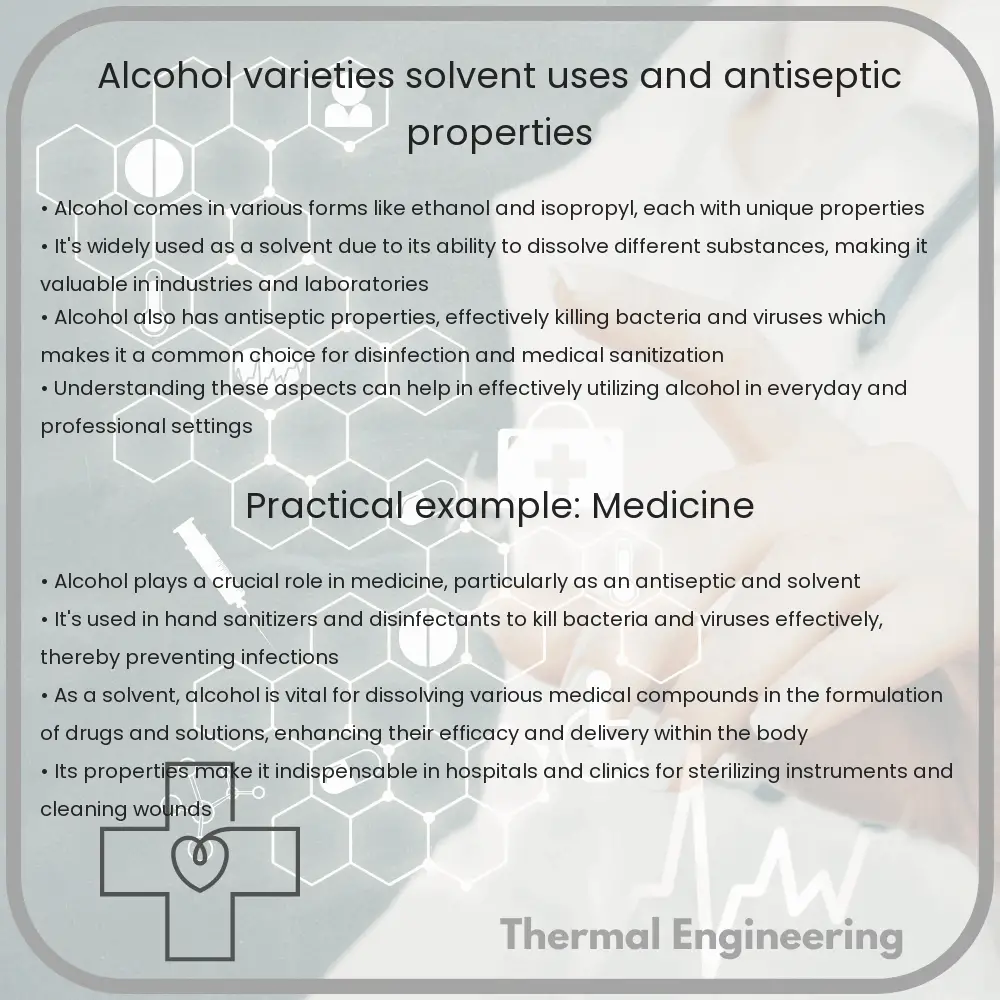
Alcohol is a versatile and widely used chemical compound, known scientifically as ethanol or ethyl alcohol. Its chemical formula is CH3CH2OH. Coming in various forms, it serves numerous applications across different fields such as medicine, industry, and personal care. This article breaks down the types of alcohol, their uses as solvents, and their effectiveness as antiseptics.

Varieties of Alcohol

The term ‘alcohol’ covers a broad spectrum of compounds, but the most common types include:

  • Methanol (CH3OH) – Also known as wood alcohol, it’s the simplest form of alcohol and is used mainly as a solvent or antifreeze.
  • Ethanol (CH3CH2OH) – Commonly used in alcoholic beverages, it is also employed in medical settings and as a solvent due to its non-toxic nature.
  • Isopropanol (C3H8O) – Often used as a disinfectant or a solvent, it’s more commonly known as isopropyl alcohol or rubbing alcohol.
  • Butanol (C4H10O) – Used in the manufacture of varnishes and as a solvent in the pharmaceutical industry.

Solvent Uses of Alcohols

Alcohols are regarded highly for their effectiveness as solvents due to their ability to dissolve both polar and nonpolar substances. This makes them incredibly useful in various applications:

  • Pharmaceuticals: Ethanol and butanol are frequently used to manufacture medicines, helping to dissolve active ingredients for tablet production or liquid medications.
  • Cosmetics: Alcohols like isopropanol are used in the production of lotions, perfumes, and aftershaves where they help mix oily substances and water.
  • Industrial Cleaning: Methanol and isopropanol are powerful agents for cleaning electronic components because of their ability to evaporate quickly without leaving residue.
  • Paint Industry: Butanol is frequently utilized as a solvent in paint thinners and removers, aiding in the application and removal process.

Antiseptic Properties of Alcohols

Alcohol’s antiseptic properties are one of its most valued uses, particularly in medical and personal hygiene contexts:

  • Disinfection: Ethanol and isopropanol are effective in killing microorganisms on skin and surfaces. They are commonly used in hand sanitizers and disinfecting wipes.
  • Sterilization of Tools: Isopropyl alcohol is used to sterilize medical instruments and surfaces in healthcare settings due to its effectiveness against bacteria, viruses, and fungi.

Alcohol functions as an antiseptic by denaturing proteins in microbial cells, effectively destroying them. The optimal concentration for this activity is typically around 70% alcohol in water. Higher concentrations can be less effective as they tend to coagulate the protein surface, protecting the microbe’s inner structure.

Conclusion

Alcohols, in their various forms, serve many essential roles across different industries. Their abilities to act as solvents enhance the production processes in pharmaceuticals, cosmetics, and paint manufacturing. Moreover, their antiseptic properties make them indispensable for maintaining hygiene and preventing the spread of disease in medical and home settings. As common as they are critical, alcohols continue to be a cornerstone in science and daily life alike.

Silicone Oil | Thermal Stability, Uses in Electronics

Explore the composition and thermal stability of silicone oil, its applications in electronics, and its benefits and limitations.

Silicone Oil | Thermal Stability, Uses in Electronics

Understanding Silicone Oil: Composition and Thermal Stability

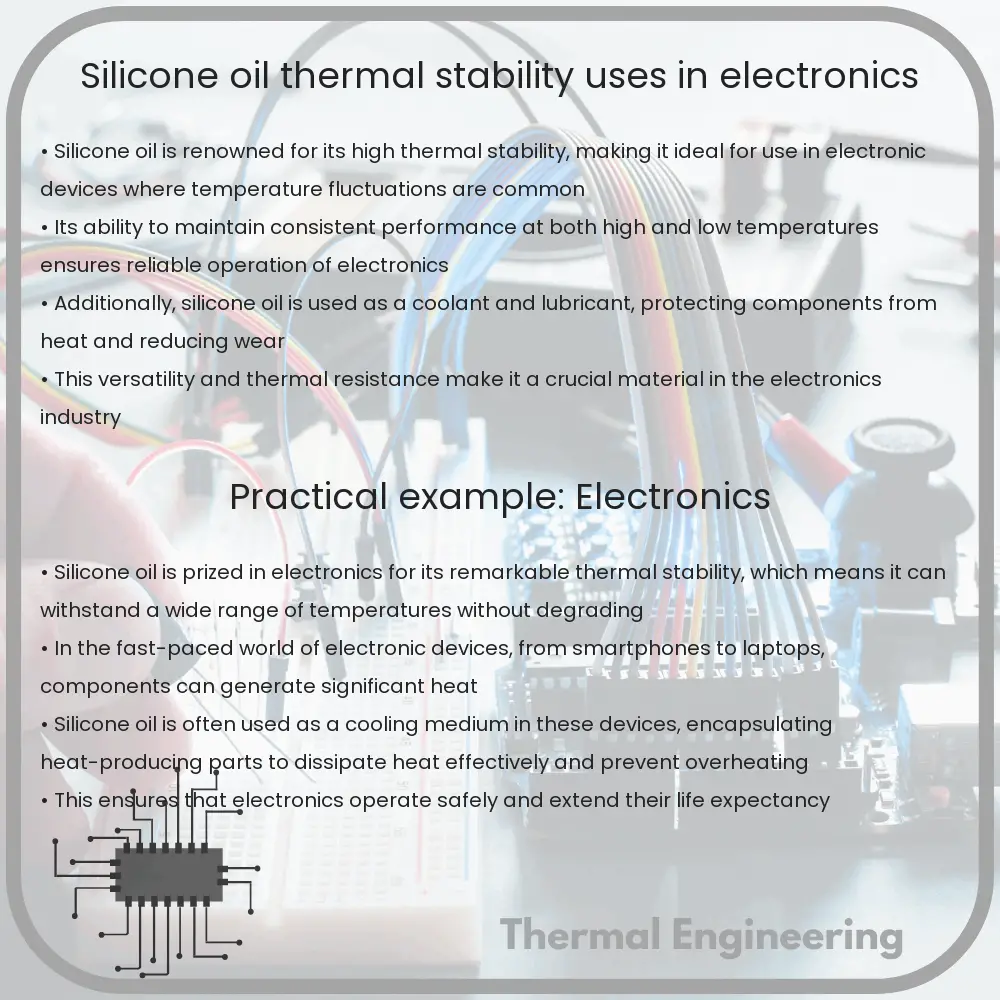
Silicone oil, a polymeric substance primarily made up of silicon-oxygen chains with organic side groups attached to the silicon atoms, boasts remarkable properties that make it suitable for high-temperature applications. These oils are synthetic polymers known as polydimethylsiloxanes (PDMS) and stand out due to their exceptional thermal stability, which allows them to maintain performance in both extremely low and high temperatures, typically ranging from -50°C to 200°C. The key to their thermal resistance lies in their chemical structure—the flexibility and bond strength of the Si-O backbone provides superior stability compared to carbon-based backbones found in standard organic oils.

Applications of Silicone Oil in Electronics

Silicone oil is widely utilized in the electronics industry due to its thermal stability and effective dielectric properties. Below are some crucial uses:

  • Coolant and Insulative Properties: It is used in transformers, capacitors, and other electrical devices as a cooling and insulating medium. Silicone oil doesn’t conduct electricity and can withstand high temperatures without breaking down, making it ideal for these applications.
  • Thermal Management: In sophisticated electronic systems, silicone oil is employed in both liquid and compound form to manage heat accumulation. Its ability to remain stable under thermal stress helps prevent overheating and promotes the longevity of electronic devices.
  • Lubrication: The low viscosity and durable nature of silicone oil also make it perfect as a lubricant for mechanical parts in electronic devices, providing smooth operation and reducing wear and tear even at varying temperatures.

Benefits and Limitations

While silicone oil offers numerous benefits, including its inertness and nontoxicity which make it safe to use in a wide range of environments, it is not without limitations. One of the main drawbacks is its viscosity can be too low for certain mechanical applications, leading to leakage issues. Additionally, over time and with prolonged exposure to very high temperatures, silicone oil can undergo degradation, losing some of its effectiveness as an insulant or lubricant.

In conclusion, the remarkable properties of silicone oil, especially its thermal stability, make it a valuable resource in the electronics industry. Its ability to function effectively across a wide range of temperatures and its electrical insulating properties ensure it plays a critical role in the development and maintenance of electronic devices, despite some limitations.

Glycol | Antifreeze Properties, Applications in HVAC

Learn about glycol and its antifreeze properties, crucial for efficient HVAC system operations and safe handling practices.

Glycol | Antifreeze Properties, Applications in HVAC

Glycol and Its Antifreeze Properties

Glycol, specifically ethylene glycol and propylene glycol, is a chemical compound widely known for its antifreeze properties. These properties make glycol an essential component in various applications, particularly in heating, ventilation, and air conditioning (HVAC) systems. Glycols lower the freezing point of water, preventing the formation of ice and ensuring systems operate efficiently even in cold climates.

Chemical Characteristics of Glycol

Ethylene glycol (C2H6O2) and propylene glycol (C3H8O2) are colorless, viscous liquids with a sweet taste. Both chemicals are highly soluble in water and are hygroscopic, which means they absorb water from their surroundings. This characteristic is crucial for their role in dehumidifying air in HVAC systems.

The main difference between these two glycols is their toxicity. Ethylene glycol is toxic if ingested and requires careful handling and disposal. Propylene glycol, however, is generally recognized as safe for use in food and pharmaceuticals and is preferred in applications where toxicity is a concern.

Antifreeze Properties

Glycols are effective antifreeze agents due to their ability to depress the freezing point of water. For instance, adding ethylene glycol to water forms a eutectic mixture that can lower the freezing point of pure water from 0°C down to about -37°C. This is calculated using the formula:

  • Freezing Point Depression (ΔTf) = Kf * m

where ΔTf is the freezing point depression, Kf is the cryoscopic constant, and m is the molality of the solution.

Applications in HVAC Systems

In HVAC systems, glycol is used primarily as a heat-transfer medium. Thanks to its antifreeze properties, it is ideal for use in:

  • Chillers and refrigeration systems
  • Solar heating systems
  • Ice rinks
  • Data center cooling

By circulating glycol through a closed-loop system, it efficiently transports heat away from or towards an area, depending on the system’s design. This adaptability makes glycol-based coolants essential for efficient thermal management in both industrial and residential settings.

Safety and Environmental Considerations

While propylene glycol is less toxic than ethylene glycol, both compounds need to be handled carefully, particularly in large-scale industrial environments. Spills need to be contained to prevent any potential harm to the environment. Disposal and recycling of glycol solutions should follow local regulations to avoid water contamination.

Furthermore, engineers and technicians handling glycol should use appropriate personal protective equipment (PPE) and ensure that all safety guidelines for handling chemicals are strictly observed. Regular training and adherence to safety protocols are essential to mitigate any health risks associated with exposure to glycol vapors or contact with the skin.

Conclusion

Glycol’s role in antifreeze applications, especially within HVAC systems, is vital for the efficient operation of heating and cooling services worldwide. Its ability to function effectively under varying temperatures and its versatile applications underscore glycol’s importance in modern engineering solutions. However, it is crucial to handle glycol with care, considering its potential environmental and health impacts. With proper management, glycol can continue to be a valuable agent in the industrial and commercial sectors.

Liquid Helium | Superfluidity, Uses in Quantum Computing

Liquid helium is explored as a superfluid with zero viscosity, crucial for quantum computing by providing ultra-cold conditions for qubits.

Liquid Helium | Superfluidity, Uses in Quantum Computing

Liquid Helium and Superfluidity

Liquid helium, a substance that showcases some of the most intriguing behaviors at extremely low temperatures, is a cornerstone in the study of quantum mechanics. Existing in two isotopic forms, helium-3 (^3He) and helium-4 (^4He), its most remarkable property is observed in helium-4 when it transforms into a superfluid state. This transformation occurs at temperatures below 2.17 K (-270.98°C), a phase transition known as the Lambda Point, where the liquid displays zero viscosity and the ability to flow without any energy loss.

Understanding Superfluidity

Superfluidity is a phase of matter where the fluid has no viscosity. In terms of helium-4, this means it can flow endlessly without losing kinetic energy, overcoming gravity and surface tension to climb up and over the walls of a container and siphon out. This phenomenon arises due to Bose-Einstein Condensation (BEC), a state where a large fraction of bosons (particles, like the helium-4 atom, that comply with Bose-Einstein statistics) occupy the lowest quantum state, leading to macroscopic quantum phenomena.

Uses in Quantum Computing

The unique properties of liquid helium are critical in the field of quantum computing. One major application is cooling quantum processors. Quantum bits, or qubits, which are the basic units of quantum computers, require an environment with minimal thermal noise to function properly. Temperatures close to absolute zero minimize this noise, thus enhancing the performance and reliability of qubits. By employing liquid helium, researchers can achieve and maintain the necessary super-cold conditions for superconducting quantum circuits.

  • Cryogenic Environment: Liquid helium provides a stable cryogenic environment necessary for superconducting materials, which are integral to many quantum processors, to work without resistance.
  • Research Tool: The superfluid phase of helium-4 is used in experiments that study quantum turbulence, coherence, and other phenomena that might have analogs in other parts of physics, such as cosmology and condensed matter physics.

Conclusion

Liquid helium is more than just a substance; it is a gateway to understanding the complex world of quantum mechanics and superfluidity. Its application in quantum computing is just one example of how such esoteric phenomena have practical implications that could revolutionize computing technology. As research continues, the integration of liquid helium in technological advancements remains a critical area of focus, potentially leading to breakthroughs in various scientific fields.

Heat flow control in thermal textiles

Learn how thermal textiles manipulate heat flow through materials and design for comfort and protection in extreme temperatures.

Heat flow control in thermal textiles

Understanding Heat Flow Control in Thermal Textiles

Thermal textiles are an essential component of both everyday and specialized clothing, offering control over heat transfer to ensure comfort and protection against extreme temperatures. The engineering of thermal textiles involves manipulating heat flow through the use of advanced materials and design techniques to achieve desired thermal properties.

Basics of Heat Transfer in Textiles

Heat transfer in textiles generally occurs through three main mechanisms: conduction, convection, and radiation.

  • Conduction is the transfer of heat through a material via direct molecular contact. Textile fibers with lower thermal conductivity are better insulators and reduce heat loss.
  • Convection involves the transfer of heat through a fluid medium such as air or water. In textiles, this can be controlled by adjusting the porosity and thickness of the fabric, affecting air flow within the material.
  • Radiation refers to the transfer of heat in the form of electromagnetic waves. Materials can be engineered to reflect or absorb infrared radiation, modifying the heat flow characteristics of a textile.

Materials and Technologies Used in Thermal Textiles

Key advancements in materials science have led to the development of several high-performance materials that enhance the thermal qualities of textiles:

  • Phase Change Materials (PCMs): These materials absorb or release heat as they change between solid and liquid states, helping in maintaining a steady temperature near the wearer’s body.
  • Thermal Insulation Fibers: Fibers like wool and aerogels are designed for high thermal resistance and have a reduced tendency to transfer heat via conduction.
  • Metallic Fibers: Incorporated into textiles, metallic fibers can reflect infrared radiation, thereby influencing the radiant component of heat transfer.
  • Smart Breathable Fabrics: These fabrics are capable of modifying their permeability to air and moisture based on environmental conditions, effectively controlling convective heat loss.

Engineering Approaches for Optimizing Thermal Textiles

Engineering thermal textiles typically involves a comprehensive approach that includes:

  • Fabric Structure Design: The structure and density of the weave or knit can significantly impact heat retention or dissipation.
  • Surface Treatments: Applying reflective coatings or moisture-wicking treatments can alter the heat transfer properties of a fabric surface.
  • Hybrid Material Integration: Combining different materials with complementary thermal properties provides a balance between insulation, breathability, and moisture management.

Applications of Thermal Textiles

Thermal textiles find applications in various fields where temperature regulation is crucial:

  • Protective Clothing: For firefighters and industrial workers, thermal textiles provide protection against extreme heat and flames.
  • Outdoor Sports: Apparel for outdoor sports often features thermal textiles to help athletes maintain optimal body temperatures in various weather conditions.
  • Home and Bedding Products: Thermal curtains and blankets help in maintaining comfortable indoor temperatures while saving on energy costs.

In summary, the control of heat flow in thermal textiles combines advanced material science and ingenious engineering designs. By carefully selecting and combining different materials and structures, manufacturers can create fabrics that protect against extreme temperatures, enhance comfort, and conserve energy in an array of applications.

Mercury | Physical Properties, Industrial and Scientific Uses

Explore the unique properties, industrial applications, and environmental concerns of mercury (Hg), a metallic element that remains liquid at room temperature.

Mercury | Physical Properties, Industrial and Scientific Uses

Physical Properties of Mercury

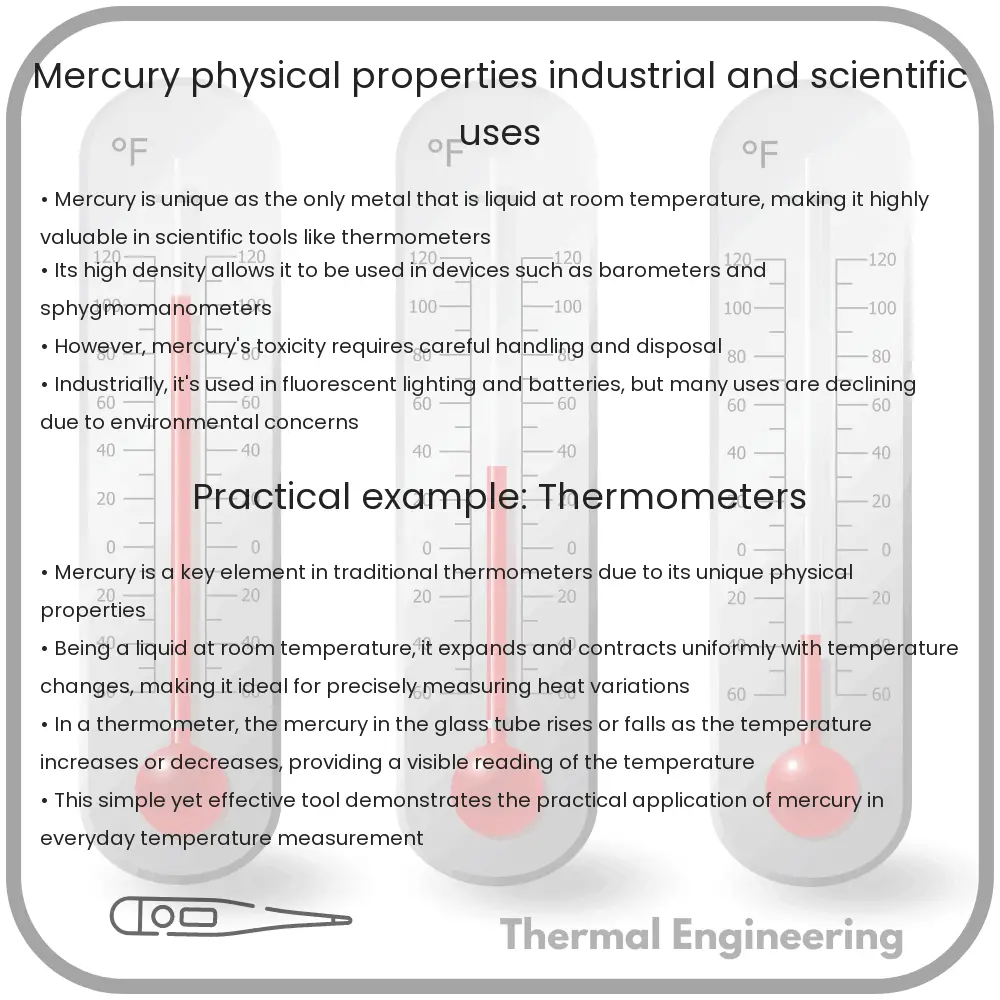
Mercury, also known by its chemical symbol Hg (from the Latin name hydrargyrum meaning “liquid silver”), is a fascinating element with unique physical properties. It is the only metallic element that is liquid at standard temperature and pressure, with a melting point of -38.83°C (-37.89°F) and a boiling point of 356.7°C (673.9°F). Mercury has a high surface tension, which allows it to form rounded beads on surfaces. It also has a high density, about 13.5 times that of water, which means it is very heavy.

Industrial Uses of Mercury

  • Manufacture of Industrial Chemicals: Mercury is used as a catalyst in the production of certain chemicals, such as vinyl chloride and chloralkali products.
  • Electrical and Electronic Applications: Due to its conductive properties, mercury is utilized in electrical switches and rectifiers. It is also used in batteries, particularly mercury cells.
  • Dental Amalgams: Mercury has historically been used in dentistry for amalgam fillings due to its ability to form alloys with other metals.
  • Measurement Instruments: Mercury is a key component in many traditional measuring instruments such as thermometers, barometers, and manometers, due to its thermal expansion properties.

Scientific Uses of Mercury

  1. Research in Physics: The unique properties of mercury make it valuable in scientific research, including experiments involving high-density fluids and high-pressure physics.
  2. Astronomy: Mercury’s reflective surface has been useful in calibrating astronomical instruments.
  3. Radio Isotope Production: Mercury isotopes are used in the production of radioisotopes for medical and industrial applications.

Environmental and Health Concerns

Mercury’s use comes with significant environmental and health risks. It is toxic to humans, affecting the nervous system, immune system, and kidneys. Mercury exposure can occur through inhalation of vapors, ingestion of contaminated food or water, or dermal contact with the substance. Due to these serious health impacts, its use has been increasingly regulated and phased out in several applications, such as thermometers and dental amalgams, in favor of safer alternatives.

Conclusion

While mercury has various industrial and scientific uses, responsible handling and awareness of its potential hazards are crucial. Its unique characteristics continue to make it a subject of interest in scientific research, although its use is constrained by necessary safety precautions to protect both human health and the environment.

Liquid Nitrogen | Characteristics, Safety, and Cryogenic Uses

Explore the properties, uses, and safety measures associated with liquid nitrogen, a vital substance in scientific and industrial applications.

Liquid Nitrogen | Characteristics, Safety, and Cryogenic Uses

Introduction to Liquid Nitrogen

Liquid nitrogen, denoted as LN2, is nitrogen in a liquid state at an extremely low temperature. It is a colorless clear liquid with a density of 0.807 g/ml at its boiling point and a dielectric constant of 1.43. Liquid nitrogen is produced industrially in large quantities by fractional distillation of liquid air.

Characteristics of Liquid Nitrogen

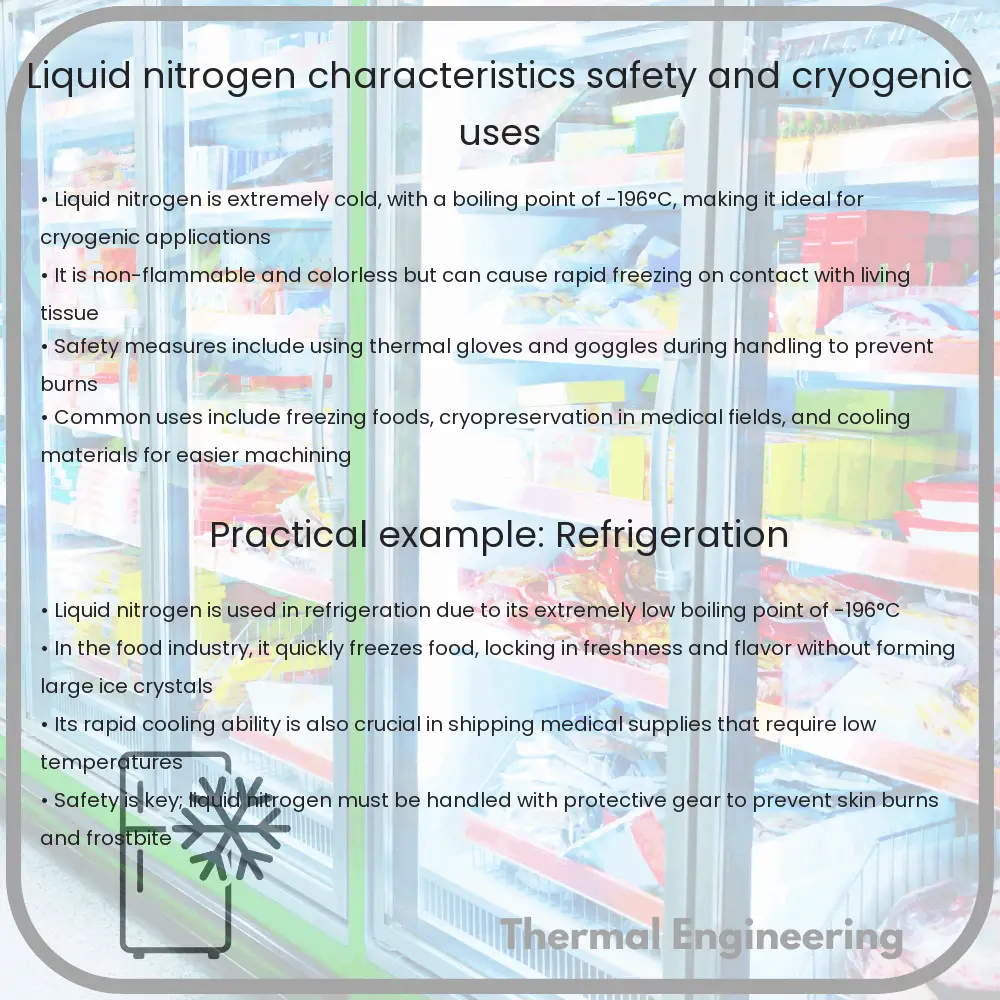
Liquid nitrogen is renowned for its extremely low temperature which stays at about -196°C (-321°F). This characteristic makes it a valuable resource in various scientific and industrial processes, especially those requiring very low temperatures. Additionally, liquid nitrogen is inert, colorless, odorless, non-corrosive, non-flammable, and relatively non-toxic. Because of these properties, it is widely used in environments where reactions with other substances need to be minimized or avoided.

Safety Concerns with Liquid Nitrogen

Despite its utility, liquid nitrogen poses several safety hazards that must be carefully managed:

  • Asphyxiation: When vaporized, liquid nitrogen increases the volume of nitrogen in the air, displacing oxygen and potentially leading to suffocation in confined spaces.
  • Cold Burns and Frostbite: Due to its extremely low temperature, contact with skin can cause severe cold burns or frostbite.
  • Explosion Risk: When contained in sealed containers, the expansion of nitrogen from liquid to gas can cause explosions if the gas is not able to escape.
  • Pressure Build-up and Vessel Failure: The rapid vaporization of liquid nitrogen can also lead to dangerous pressure build-up in containers not designed to handle such pressures.

Accordingly, handling liquid nitrogen requires strict adherence to safety protocols, including wearing protective clothing, using appropriate containers for transport and storage, and ensuring adequate ventilation in work areas.

Uses of Liquid Nitrogen in Cryogenics

Cryogenics involves the study and use of materials at very low temperatures. Liquid nitrogen, due to its low temperature and inert characteristics, is ideal for various applications in this field:

  1. Cryopreservation: Biological samples, such as sperm, eggs, and other genetic material, are preserved using liquid nitrogen to halt all biochemical reactions, maintaining their viability over time.
  2. Cooling of Materials: During scientific experiments, materials need to be cooled rapidly to observe their behavior under different thermal conditions. Liquid nitrogen serves as an excellent coolant in such instances.
  3. Superconductors Testing: Research on superconductors commonly uses liquid nitrogen due to its ability to bring temperatures low enough to achieve superconductivity in some materials.
  4. Shrink Fitting: Liquid nitrogen can be used in mechanical engineering to shrink components, allowing for tight fitting of parts in assemblies. When metals are cooled, they contract, thus fitting into small tolerances and gaps in machinery.

The versatility of liquid nitrogen makes it an essential substance in many sectors, particularly in scientific research, medical preservation, and industrial processes. As with any powerful tool, however, ensuring its safe use is paramount to harnessing its abilities effectively.

Conclusion

Liquid nitrogen represents a critical resource across various fields, especially where extremely low temperatures are necessary. Understanding its physical characteristics, handling it safely, and applying it appropriately, are key to benefiting from its use while minimizing any associated risks. Whether in engineering, biology, or physics, liquid nitrogen continues to be a cornerstone in the advancement of science and technology.