Facebook Instagram Youtube Twitter

Hydraulic Fluid | Functions, Types, and Machinery Applications

Explore the roles, types, and uses of hydraulic fluid in diverse machinery systems.
Hydraulic Fluid | Functions, Types, and Machinery Applications

Understanding Hydraulic Fluid: Functions, Types, and Machinery Applications

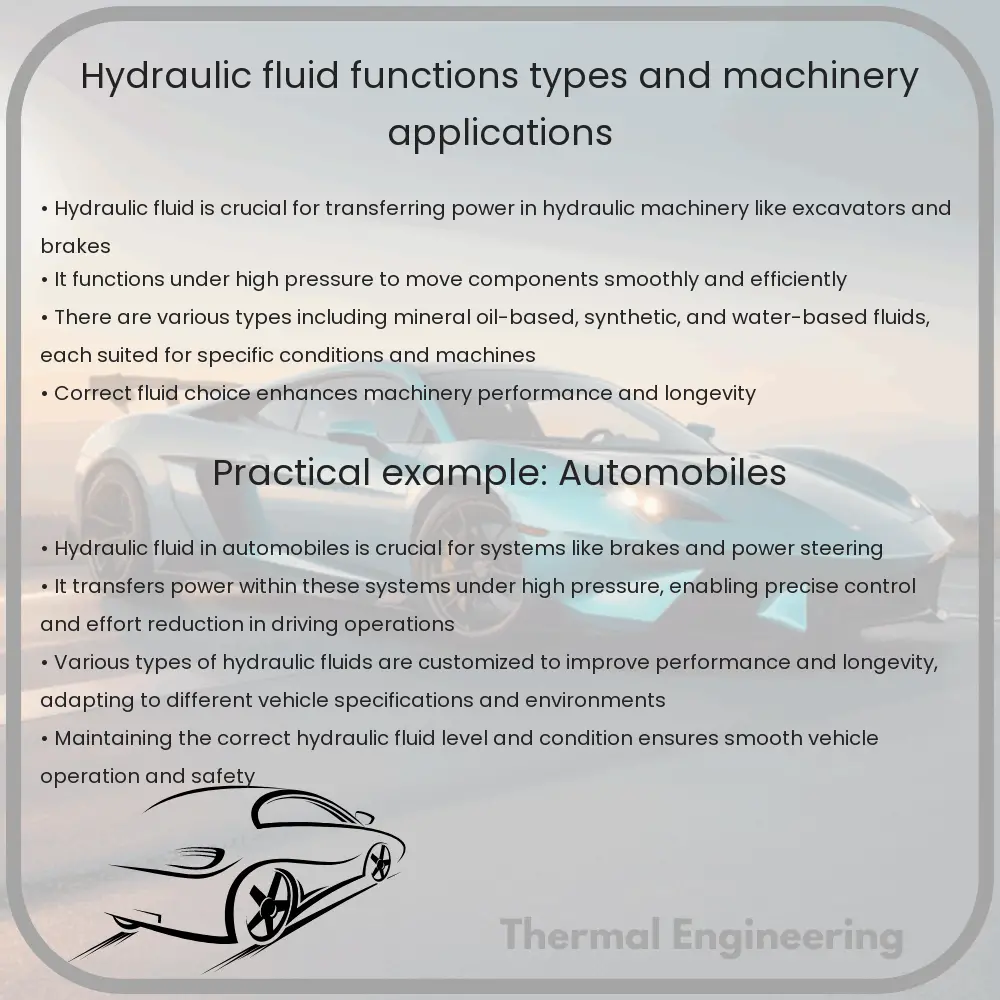
Hydraulic fluid is a crucial component in many mechanical systems, enabling the transfer of power in hydraulic machinery. It is used in a wide range of applications, from automotive braking systems to heavy industrial machinery. In this article, we will explore the functions, types, and applications of hydraulic fluids in different machinery.

Functions of Hydraulic Fluid

Hydraulic fluid serves several important functions in hydraulic systems:

  • Power Transmission: It transfers power from one part of the system to another. This is the primary role of hydraulic fluid, and it is accomplished by the fluid flowing under pressure through the system.
  • Lubrication: It lubricates the components of the hydraulic system, reducing friction and wear, and helping to extend the life of the system.
  • Heat Transfer: Hydraulic fluid helps to remove heat from the system components. As the fluid circulates, it carries heat away, which is then dissipated in the cooler parts of the system or via a heat exchanger.
  • Sealing: It provides a seal in various parts of the hydraulic machinery, improving efficiency and preventing leaks by maintaining a tight fit between components.
  • Contaminant Removal: The fluid carries away contaminants and debris from critical areas of the system, which are then filtered out.

Types of Hydraulic Fluids

There are several types of hydraulic fluids, each designed for specific system requirements and operating environments:

  • Mineral Oil-Based Fluids: These are the most commonly used hydraulic fluids and are made from refining crude oil. They are relatively inexpensive and provide good lubrication.
  • Synthetic Hydraulic Fluids: These are engineered fluids designed to offer superior performance under extreme conditions, such as very high or low temperatures. They typically offer better viscosity control and are less flammable than mineral oils.
  • Water-Based Fluids: These include water-glycol solutions and water-oil emulsions. They are used primarily where fire resistance is a critical need. However, they may provide less lubrication and are more susceptible to freezing and microbial growth.
  • Biodegradable Hydraulic Fluids: These are made from esters either synthetic or derived from vegetable oils. They are used in environmentally sensitive areas, as they break down more quickly and are less harmful to the environment in the event of a spill.

Machinery Applications

Hydraulic fluids are used in a myriad of machinery across various industries:

  • Construction Machinery: Hydraulic excavators, loaders, and bulldozers rely on hydraulic fluid for their digging, lifting, and pushing operations.
  • Agricultural Equipment: Tractors and harvesters use hydraulic systems to operate attachments like plows and combines.
  • Manufacturing Equipment: Hydraulic presses, conveyor systems, and robotic arms in factories utilize hydraulic fluid to ensure precise control and movement.
  • Aerospace: Aircraft use hydraulic systems for braking, controlling wing flaps, and other critical operations.
  • Automotive: Hydraulic systems power steering and brake systems in vehicles, enhancing the safety and functionality of the automotive.

In conclusion, hydraulic fluid is a vital component in various types of machinery, contributing to the functionality and efficiency of systems in multiple sectors. Understanding the different types of hydraulic fluids and their applications helps in selecting the right fluid for specific needs, ensuring system reliability and longevity.

Refrigerant | Cooling Properties, Types, HVAC Uses

Explore the essential role, properties, and types of refrigerants in HVAC systems for cooling and refrigeration applications.

Refrigerant | Cooling Properties, Types, HVAC Uses

Understanding Refrigerants: Cooling Properties, Types, and HVAC Uses

Refrigerants are essential to the functionality of HVAC (Heating, Ventilation, and Air Conditioning) systems, playing a critical role in cooling and refrigeration. These substances absorb heat at low temperatures and pressures, and release it at higher temperatures upon compression. This process is vital in preserving food, providing comfortable indoor environments and in numerous industrial applications. This article will explore the properties of refrigerants, the different types available, and their specific uses in HVAC systems.

Cooling Properties of Refrigerants

Refrigerants work based on a cycle of evaporation and condensation. When a refrigerant evaporates, it absorbs heat from the surroundings, thereby producing a cooling effect. This process is thermodynamically governed by principles such as Boyle’s Law and Charles’s Law, which relate pressure and temperature to the behavior of gases.

  • Thermal Conductivity: Effective refrigerants have high thermal conductivity to efficiently transfer heat.
  • Latent Heat of Vaporization: Refrigerants must also have a high latent heat of vaporization to absorb more heat during the phase change from liquid to gas.
  • Pressure-Temperature Relationship: The ability to easily alter phase with moderate changes in pressure under operational temperatures is critical for energy efficiency.

Types of Refrigerants

Over the years, several types of refrigerants have been developed, each with specific properties and environmental impacts. Here are the main types:

  1. Chlorofluorocarbons (CFCs): Once common, CFCs like R-12 are now largely phased out due to their ozone-depleting effects.
  2. Hydrochlorofluorocarbons (HCFCs): These are transitional refrigerants, such as R-22, less harmful than CFCs but still with ozone depletion potential. They are also being phased out.
  3. Hydrofluorocarbons (HFCs): These include R-134a and R-410A. HFCs do not deplete the ozone layer and are widely used today, though they are potent greenhouse gases.
  4. Natural refrigerants: These include substances like ammonia (R-717), carbon dioxide (R-744), and hydrocarbons such as propane (R-290) and isobutane (R-600a). They offer minimal environmental impact but come with challenges in toxicity, flammability, or operating pressures.

HVAC Uses of Refrigerants

Refrigerants are pivotal in many HVAC systems, including:

  • Air Conditioners: They transfer heat from indoor air to the outside, cooling indoor spaces.
  • Heat Pumps: Functioning either to heat or cool a space, heat pumps move thermal energy opposite to its natural flow by employing refrigerants.
  • Refrigeration Systems: Used in food storage and industrial applications, refrigeration systems help to maintain lower temperatures than the ambient conditions.

Proper choice of refrigerant and its management are essential for the efficiency and environmental impact of an HVAC system. As the industry evolves, so too does the development of more efficient and environmentally friendly refrigerants.

Understanding both the basic principles governing the operation of refrigerants and the specific applications and regulations that drive their use is critical for students, professionals, and enthusiasts in the fields of physics and engineering.

Blood | Biological Functions, Properties, Medical Uses

Learn about the crucial roles and properties of blood, including its composition, functions, and medical applications.

Blood | Biological Functions, Properties, Medical Uses

Introduction to Blood: A Vital Fluid

Blood is a crucial fluid in human and animal bodies that performs vital biological functions. It is composed of plasma, red blood cells, white blood cells, and platelets. This article explores the properties, functions, and medical uses of blood, providing insights into its fundamental role in the maintenance of life.

Biological Functions of Blood

  • Transportation: Blood is the primary medium for transporting essential substances such as oxygen, carbon dioxide, nutrients, and hormones to and from the cells of the body.
  • Regulation: It helps regulate body temperature, pH balance, and the water content of cells.
  • Protection: Blood plays a key role in the immune system. White blood cells in blood defend the body against infection. Furthermore, blood clotting mechanisms help prevent excessive bleeding following injuries.

Properties of Blood

Blood is a specialized bodily fluid with various properties that facilitate its functions:

  • Viscosity: Blood is thicker than water, due to the presence of cells and plasma proteins, which aids its function in transporting substances.
  • Temperature: The average temperature of human blood is about 37 degrees Celsius, slightly higher than the body’s general temperature, which helps in maintaining a consistent body temperature.
  • pH Level: The pH level of blood is typically between 7.35 and 7.45, making it slightly basic. This pH level is crucial for the proper functioning of enzymatic reactions and overall metabolic processes.
  • Osmolarity: Blood has an osmolarity of about 290-300 mOsm/L, which is vital for the regulation of the movement of water between tissues and blood vessels.

Medical Uses of Blood

Blood and its components are used in various medical treatments:

  • Blood Transfusions: Used to replace lost components of the blood following surgery or injury, or to treat conditions like anemia or cancer.
  • Therapeutic Plasma Exchange: Involves removing and replacing plasma to treat autoimmune diseases and other chronic conditions.
  • Platelet-rich Plasma (PRP) Treatments: PRP is used in sports medicine and orthopedics to promote healing of injured tendons, ligaments, muscles, and joints.

In conclusion, blood is not only essential for life due to its complex biological functions and properties, but it also has multiple medical applications that are critical in therapy and healing. Understanding the mechanics of how blood works gives insights into a wide range of medical disciplines and treatments, emphasizing the integration of biology and medical engineering.

Water | Essential Properties, Uses in Daily Life

Explore the unique chemical and physical properties of water, highlighting its polarity, high specific heat capacity, and role in sustaining life and various industries.

Water | Essential Properties, Uses in Daily Life

Essential Properties of Water

Water is perhaps the most crucial compound for all forms of life on Earth, and it possesses unique properties that set it apart from other substances. The molecule H2O, consisting of two hydrogen atoms and one oxygen atom, exhibits a basic yet extraordinary nature due to its chemical and physical properties.

One of the most significant properties of water is its polarity. The water molecule has a bent shape, which results in a partial positive charge near the hydrogen atoms and a partial negative charge near the oxygen atom. This polarity allows water to form hydrogen bonds with other water molecules, making it a terrific solvent for many substances.

Water also has a high specific heat capacity, which means it can absorb a lot of heat before it gets hot. This property plays a critical role in regulating Earth’s climate and also helps organisms regulate their body temperature more effectively.

Furthermore, water is unique in that it expands upon freezing. Ice has a lower density than liquid water, which is why it floats. This property of water is crucial for aquatic life during the winter months as it insulates bodies of water, allowing life to survive underneath the frozen surfaces.

Uses of Water in Daily Life

Water is indispensable in our daily lives, fulfilling numerous vital roles:

  • Drinking and Cooking: Water is essential for both drinking and preparing food, playing a critical role in our nutrition and overall health.
  • Agriculture: Watering crops is fundamental in agriculture. A vast majority of freshwater used globally is for irrigation purposes, ensuring food production to feed the population.
  • Sanitation: Water is key to hygiene, being widely used for washing, cleaning, and the disposal of sewage.
  • Industrial Use: Many industrial processes require water, whether as an ingredient, solvent, coolant, or for cleaning purposes.
  • Energy Production: Water plays a crucial part in energy production, including hydroelectric power, which is generated by the water-driven turbines.

Moreover, the unique properties of water also make it integral in various scientific and technological processes, from cooling systems in power plants to being a moderator in nuclear reactors.

In conclusion, water’s exceptional properties not only make it essential for sustaining life but also underpin a myriad of uses in daily activities and industrial applications. The accessibility and management of this precious resource are critical for the health of our planet and all who live on it.

Air | Composition, Properties, and Applications

Learn about the composition, properties, and diverse engineering applications of air in our detailed guide.

Air | Composition, Properties, and Applications

Air: Composition, Properties, and Applications

Air is a vital component of the Earth’s atmosphere, a clear and odiferous gas that is essential for life on our planet. In this article, we will explore what air is composed of, its properties, and its numerous applications in different fields of engineering.

Composition of Air

The air around us is a complex mixture of several gases. Here are the primary components:

  • Nitrogen (N2) – approximately 78%
  • Oxygen (O2) – about 21%
  • Argon (Ar) – around 0.93%
  • Carbon Dioxide (CO2) – about 0.04%
  • Trace amounts of other gases such as neon, helium, methane, krypton, and hydrogen.

In addition to these gases, air also contains water vapor, whose concentration varies according to the humidity of the environment.

Properties of Air

Air possesses several important physical properties which influence how it interacts with its surroundings:

  • Density: The density of air is about 1.225 kg/m3 at sea level and decreases with altitude.
  • Pressure: Air pressure is the force exerted by air on any surface in contact with it. At sea level, the standard atmospheric pressure is approximately 101.3 kPa.
  • Temperature: The temperature of the air affects its density and pressure. Generally, warmer air is less dense and rises, whereas cooler air is denser and sinks.
  • Humidity: This refers to the amount of water vapor present in the air. Higher humidity decreases air density and can influence weather patterns and human comfort.

Applications of Air in Engineering

Air is used in a wide range of engineering applications, owing to its properties and availability. Here are a few key applications:

  • Aeronautical Engineering: Air’s properties are fundamental in the study of aerodynamics. Engineers design aircraft surfaces to optimize air flow, reducing drag and increasing lift.
  • HVAC Systems: Heating, Ventilation, and Air Conditioning (HVAC) systems use air for regulating indoor temperatures. By understanding the principles of air flow, pressure, and humidity, engineers create more efficient and comfortable environments.
  • Pneumatics: Pneumatics involves using compressed air to do work. Air is compressed in a cylinder and then used to power mechanical movements – a principle used in various tools, from jackhammers to automated machinery in factories.
  • Environmental Engineering: Engineers study the composition of air to monitor and control pollution levels, ensuring cleaner air by designing systems that filter out harmful gases and particulate matter.

In conclusion, air is not only essential for sustaining life, but it also plays a critical role in various engineering disciplines. Understanding its composition and properties helps engineers to innovate and create systems that improve our lives, emphasizing the significant interdisciplinary nature of engineering and sciences.

Engine Oil | Viscosity, Types, and Automotive Use

Learn about engine oil viscosity, types, and their uses in automotive applications to enhance vehicle performance and lifespan.

Engine Oil | Viscosity, Types, and Automotive Use

Understanding Engine Oil: Viscosity, Types, and Automotive Use

Engine oil is a critical component in the automotive industry, serving multiple functions such as lubricating moving parts, protecting against wear and corrosion, and helping to keep the engine cool. By understanding the properties like viscosity, the different types of engine oils, and how they are used in vehicles, car owners and enthusiasts can make informed decisions about the best oil for their vehicle’s performance and longevity.

What is Viscosity?

Viscosity is one of the most crucial properties of engine oil. It refers to the oil’s resistance to flow. In simpler terms, it is a measure of the oil’s thickness and its ability to provide an effective lubrication film between engine parts. Viscosity can be affected by temperature: higher temperatures tend to decrease viscosity (the oil becomes thinner), whereas lower temperatures increase it (the oil becomes thicker).

The Society of Automotive Engineers (SAE) has developed a numerical code system to classify oils by viscosity. This system helps in identifying the right oil for specific operating temperatures. Oils are labeled with numbers like 10W-30. The number before the “W” (which stands for winter) indicates the oil’s viscosity at cold temperatures, while the number after the “W” indicates the viscosity at 100°C.

Types of Engine Oils

There are several types of engine oils, each designed to meet specific requirements and engine specifications:

  • Conventional Mineral Oils: These oils are derived directly from crude oil and have good properties that suffice for standard engines under normal conditions.
  • Synthetic Oils: These are chemically engineered to provide superior properties such as higher viscosity, better chemical stability, and lower volatility. They perform well under extreme temperatures and stress, making them suitable for high-performance engines.
  • Synthetic Blend Oils: These are a mixture of synthetic and conventional mineral oils, offering a balance between performance and cost.
  • High-mileage Oils: Specifically designed for older vehicles or vehicles with high mileage, these oils contain additives that help reduce oil burn-off and leaks.

Automotive Use of Engine Oil

Choosing the right engine oil for your vehicle is crucial for ensuring optimal performance and longevity. Here’s how different types of engine oils are used in automotive applications:

  1. Complete Engine Protection: Engine oil forms a barrier between moving parts, reducing friction and minimizing wear.
  2. Temperature Regulation: By absorbing and dissipating heat from the engine components, engine oils help maintain an optimal operating temperature.
  3. Impurity Removal: Engine oils hold contaminants and debris in suspension, preventing them from settling and causing damage. This makes it essential to change your oil regularly to avoid dirt buildup which can affect engine performance.
  4. Seal Conditioning: Certain additives in engine oils can help maintain the flexibility of seals within the engine, preventing leaks.

To summarize, understanding engine oil viscosity, recognizing the different types, and knowing how they are used can dramatically impact the health and efficiency of your vehicle’s engine. Regularly checking and changing your engine oil according to the manufacturer’s guidelines is fundamental in vehicle maintenance. This not only ensures your car runs smoothly but also extends the life of your engine.

Whether you’re a car enthusiast or just looking to maintain your vehicle properly, understanding these basics about engine oil can help you make the best choices for your car’s engine.

12 Types of Tidal Turbines for Marine Renewable Energy

Understanding the diverse types and functionalities of tidal turbines in marine renewable energy.

12 Types of Tidal Turbines for Marine Renewable Energy

12 Types of Tidal Turbines for Marine Renewable Energy

Tidal turbines are essential components in the field of marine renewable energy, harnessing the energy from tidal flows to generate electricity. Similar in concept to wind turbines, these structures are submerged in water and capture kinetic energy from moving masses of water. Here we explore twelve different types of tidal turbines and their unique characteristics.

1. Horizontal Axis Tidal Turbines

These turbines resemble traditional wind turbines and are the most common type used in tidal energy conversion. They usually feature two or three blades rotating around a horizontal axis.

2. Vertical Axis Tidal Turbines

Vertical axis turbines have the main rotor shaft arranged vertically, an advantage in tidal environments as they can catch the tide from any direction. This type includes the Darrieus and Savonius models, named after their inventors.

3. Ducted Turbines

Ducted turbines feature a shroud or duct surrounding the blades, which helps to increase the velocity of the water flow, thereby enhancing efficiency.

4. Open Hydro Turbines

Designed with an open-center allowing water to flow through the core of the turbine, Open Hydro turbines minimize marine life disruption and are marked by their ring-shaped design.

5. Tidal Kites

Tidal kites are a novel type of underwater turbine that is tethered to the ocean floor and flies through the water in a figure-eight pattern, capturing energy through a turbine in the kite itself.

6. Oscillating Hydrofoil Turbines

This type of turbine utilizes a wing that oscillates in the tidal or ocean current, driving a mechanical system to generate electricity.

7. Archimedes Screw Turbines

Inspired by the ancient Archimedes Screw pump, these turbines consist of a helical screw blade that rotates with the flow of the tide to generate power.

8. Cross Flow Turbines

Also known as orthogonal or transverse turbines, these have a cylindrical rotor with blades rotating perpendicular to the flow of water, featuring a simpler and more robust design suitable for marine conditions.

9. Pontoon-mounted Turbines

These turbines are mounted on floating platforms (pontoons), making them easy to install and remove, and suitable for areas with fluctuating water levels.

10. Subsea Turbines

Located on the seabed, subsea turbines can be beneficial in deep water settings, although they require complicated maintenance and installation procedures.

11. Modular Turbine Arrays

These arrays involve multiple turbines linked together to form a modular unit, optimizing the footprint and energy capture of tidal streams.

12. Gravity-based Structure Turbines

Gravity-based turbines sit on the seabed without the need for drilling, minimizing environmental impact and simplifying installation.

The choice of tidal turbine depends on numerous factors, including water depth, flow velocity, environmental impact, and economic considerations. Ongoing research and development are enhancing the efficiency and viability of these turbines, paving the way for their broader adoption in the quest for renewable energy solutions.

Conclusion

Tidal turbines stand at the forefront of marine renewable energy technology, providing an eco-friendly and efficient method to harness energy from tidal currents. With diverse types of turbines evolving, each adapted to particular marine environments, the potential for expanding this energy source is tremendous. As technology advances, the integration of tidal energy into our energy grid promises a more sustainable and resilient energy future.

7 Types of Progressive Cavity Pumps for Slurry and Sludge

Learn about the various types of progressive cavity pumps used for efficiently handling slurry and sludge in different industrial applications.

7 Types of Progressive Cavity Pumps for Slurry and Sludge

Understanding Progressive Cavity Pumps for Slurry and Sludge Handling

Progressive cavity pumps (PCPs), also known as single screw pumps, are widely used in the handling of fluids with challenging properties, such as slurry and sludge. They operate on a simple yet effective mechanism that allows them to handle thick, abrasive, and solid-filled materials without degradation of the pump or the material. Below, we explore seven common types of progressive cavity pumps designed to effectively manage slurry and sludge in various industrial applications.

1. Standard Progressive Cavity Pumps

Standard PCPs are the most basic form of this pump type, consisting of a single helical rotor that turns inside a double helical stator. They efficiently handle media with varying viscosities and solids content, making them suitable for applications in wastewater treatment, mining, and food processing.

2. Wide Throat Progressive Cavity Pumps

Designed with a wider inlet, wide throat pumps are specifically engineered to handle highly viscous slurry or sludge with a high concentration of solids. The enlarged throat and auger feed in the inlet of the pump efficiently convey the thick media into the pumping elements.

3. Grinder Progressive Cavity Pumps

These pumps incorporate a grinding mechanism at the inlet, which breaks down large particles or fibrous materials before they enter the pumping elements. Grinder PCPs are ideal for applications where downstream equipment may be sensitive to particle size or when processing waste containing large solids or tough materials.

4. Dosing Progressive Cavity Pumps

Dosing pumps are specialized for precise metering and dosing applications. With their tightly controlled flow rates and high precision, these pumps are particularly useful in chemical, pharmaceutical, and scientific research industries where exact volumetric flow control is essential.

5. High-Temperature Progressive Cavity Pumps

These pumps are constructed with materials capable of withstanding elevated temperatures, enabling them to handle hot slurries and sludge from industrial processes such as steel manufacturing or chemical processing. High-temperature PCPs maintain their integrity and performance even in challenging thermal environments.

6. High-Pressure Progressive Cavity Pumps

High-pressure variants are designed to operate under significant hydraulic pressures, suitable for deep-well operations, high-pressure oilfields, or construction sites where lifting fluid from great depths is necessary. Their robust construction ensures efficiency and durability under high-pressure conditions.

7. Sanitary Progressive Cavity Pumps

These pumps are utilized primarily in the food, beverage, and pharmaceutical industries where hygiene standards are stringent. Sanitary PCPs are manufactured with food-grade materials and designed for easy cleaning and maintenance to prevent any risk of contamination.

Choosing the Right Progressive Cavity Pump

When selecting a progressive cavity pump for handling slurry or sludge, factors such as the nature of the material (viscosity, abrasiveness, particle size), the required flow rate, pressure, and the specific industrial environment should be carefully considered. Each type of PCP is tailored to meet different specific needs, ensuring optimal performance and longevity. Proper pump selection not only guarantees efficient handling of challenging materials but also reduces maintenance costs and enhances overall process reliability.

In conclusion, understanding the specific requirements of your application can help in choosing the correct type of progressive cavity pump, thereby ensuring effective and efficient handling of slurry and sludge in various industries.

4 Types of Orbital Engines for Smooth Rotational Power

Learn about orbital engines, a unique type of rotary engine that offers continuous motion and potential efficiency gains in various applications.

4 Types of Orbital Engines for Smooth Rotational Power

Introduction to Orbital Engines

Orbital engines, a fascinating subcategory of rotary engines, stand out due to their unique mechanism that allows for continuous rotational motion. Distinct from the more well-known piston engines, orbital engines deliver power through a circular motion, offering enhanced smoothness and potential efficiency gains. This article explores four distinct types of orbital engines, each characterized by their specific design and application.

1. Wankel Rotary Engine

The Wankel engine is perhaps the most famous type of orbital engine, popularized by its use in automobiles like the Mazda RX series. Unlike conventional piston engines, the Wankel engine uses a rotor that orbits in an epitrochoidal motion inside a roughly oval-shaped housing. The engine’s design allows for three power pulses per rotor revolution, contributing to its compact size and smooth operation.

  • Advantages: Compact, smooth power delivery, and lower number of moving parts.
  • Disadvantages: Fuel efficiency and emissions can be problematic, often due to incomplete combustion.

2. Orbital Piston Engine

In an orbital piston engine, the pistons move in a circular path around a fixed crankshaft. This contrasts with traditional engines where the crankshaft rotates. This design reduces vibrations and tends to have a higher balance due to the circular motion of the pistons.

  • Advantages: Reduced vibration and improved engine balance.
  • Disadvantages: Complex mechanical design can lead to increased manufacturing and maintenance costs.

3. Sarich Orbital Engine

Developed by the Australian inventor Ralph Sarich, the Sarich orbital engine is another innovative variation. It uses an orbital combustion process and introduces a multi-chambered orbital design. The engine is known for its theoretical efficiency and potential to use multiple fuel sources.

  • Advantages: Potential for high efficiency and multi-fuel capability.
  • Disadvantages: Has not been widely adopted, suggesting possible practical or economic limitations.

4. LiquidPiston Engine

The LiquidPiston engine introduces a new approach by reversing the Wankel engine concept – the engine’s housing orbits around a stationary gear, with the shape of the housing being the epitrochoid. This design aims to address some typical drawbacks of the traditional rotary engines, such as sealing and thermal efficiency.

  • Advantages: Improved thermal efficiency and sealing compared to traditional rotary engines.
  • Disadvantages: Still under development, which limits current applications and real-world testing data.

Conclusion

Orbital engines offer an intriguing alternative to traditional piston engines, with various designs that improve on specific aspects of performance and efficiency. From automotive applications to potential uses in aerospace, these engines continue to inspire innovation and hold promise for future applications. While each type has its own set of challenges and benefits, the exploration of orbital engines underscores an ongoing pursuit for engineering solutions that are both effective and sustainable.

6 Types of Screw Engines for Co-Generation Plants

Learn about the role and types of screw engines in co-generation plants, enhancing efficiency in energy production.

6 Types of Screw Engines for Co-Generation Plants

Introduction to Screw Engines in Co-Generation Plants

Co-generation, also known as combined heat and power (CHP), is a highly efficient process that generates electricity and captures usable heat simultaneously. Within co-generation plants, screw engines play a pivotal role by converting thermal energy into mechanical power, which can then be converted into electrical energy. There are several types of screw engines, each with unique features and applications. This article explores six common types of screw engines used in co-generation plants.

1. Single Screw Engines

The single screw engine features one main drive screw or rotor that meshes with a gate rotor. The design is comparatively simple and it typically provides a reliable service with a lower output. This type of screw engine is suited for smaller scale co-generation applications where simplicity and reliability are more critical than high power output.

2. Twin Screw Engines

Twin screw engines consist of two intermeshing screws that compress and transfer the heat energy to generate power. The twin-screw design facilitates better surface contact, increasing the efficiency of energy transfer and output capacity compared to single screw systems. These engines are commonly used in medium-sized co-generation plants.

3. Dry Screw Engines

Dry screw engines operate without the need for an oil seal or lubricant between the screws, which reduces contamination risks and maintenance needs. This type is particularly advantageous in applications where purity of the end product (like in pharmaceuticals or food processing plants) is essential.

4. Wet Screw Engines

Conversely, wet screw engines use oil or another lubricant in the compression process, which improves the seal and reduces wear and tear on the screws. This type is favored for heavy-duty applications where longevity and durability are necessary, although it requires more rigorous maintenance to manage oil levels and cleanliness.

5. Variable Volume Screw Engines

Variable volume screw engines allow for the adjustment of the volume of gas or air being processed. This adjustability makes them highly efficient and adaptable to varying operational demands, making them ideal for co-generation plants with fluctuating power needs.

6. Hermetically Sealed Screw Engines

Hermetically sealed screw engines are designed with a sealed casing that prevents any exchange of gas with the environment. This design minimizes leaks and is particularly valuable in applications requiring high standards of environmental protection and operational safety.

Conclusion

Screw engines are a crucial component in co-generation plants, offering various designs to meet specific needs and enhance efficiency. From single and twin screw configurations to specialized models like dry, wet, variable volume, and hermetically sealed systems, these engines provide flexible solutions to harness thermal energy effectively. Understanding the differences and applications of these screw engines helps in selecting the right type for specific co-generation requirements, optimizing both energy production and usage.