Facebook Instagram Youtube Twitter

11 Types of Sump Pumps for Basement Water Control

Learn about the various types of sump pumps available for effective basement water control and flood prevention.

11 Types of Sump Pumps for Basement Water Control

Understanding the Different Types of Sump Pumps for Basement Water Control

Basements are prone to flooding for various reasons such as heavy rainfall, melting snow, or a high groundwater level. Sump pumps are a critical component in preventing basement flooding and water damage. They are specially designed to remove accumulated water, sending it away from your home to a place where it can drain without causing problems. There are several types of sump pumps each suited to different situations and needs.

Primary Sump Pumps

These pumps are the most common type used in residential homes to handle high volumes of water. They come in two main varieties:

  • Submersible Pumps: These are designed to operate underwater. Submersible pumps are placed directly in the sump pit and can handle both water and small solids without clogging. This type is preferred for its quiet operation and efficiency.
  • Pedestal Pumps: These have a motor mounted above the sump, avoiding direct contact with water. Pedestal pumps are easier to maintain because the motor stays dry, but they are generally noisier than submersible types.

Battery-Operated Backup Sump Pumps

If the power goes out, a battery-operated backup pump can keep your basement dry. This pump type is designed to automatically start working if the primary pump fails due to power outages or other malfunctions.

Water-Powered Sump Pumps

An alternative to battery-operated models, water-powered pumps use the pressure of your home’s incoming water supply to remove water from the sump pit. While these don’t require electricity or batteries to operate, they are not suitable for homes with low water pressure and use a considerable amount of municipal water during operation.

Combination Sump Pumps

These systems combine a primary pump and a battery-operated backup pump in one unit. This setup offers an extra layer of security, ensuring that the basement remains dry even during power outages and primary pump failures.

Smart Sump Pumps

With advancements in home automation, smart sump pumps offer wireless connectivity and can send notifications to your smartphone about the system’s status. This type is excellent for homeowners who are frequently away from home, offering peace of mind by allowing monitoring from remote locations.

Effluent Pumps

While technically designed to pump out gray water from septic tanks or laundry discharge, these pumps are sometimes used as more robust sump pumps. They can handle larger particles and more abrasive materials than standard sump pumps.

Sewage Pumps

Similar to effluent pumps but even more robust, sewage pumps can pass solids up to 2 inches in diameter. These are generally not required unless the sump pit also handles waste water from toilets.

Grinder Pumps

Grinder pumps can also be used in higher demand situations where waste needs to be ground down before being pumped out. This capability prevents clogging and helps in maintaining a clean drainage system.

Floor Sucker Pumps

These are utility pumps designed to remove standing water right off the floor. They can be placed on any flat surface and start pumping water at a depth of 1/8 inch or more.

High-temperature Sump Pumps

Designed for hot water applications, these pumps can handle liquids up to 200 degrees Fahrenheit. They are typically used in applications involving boiler blowdown or hot water sump pits.

Portable Sump Pumps

Portable pumps are useful in situations where flexibility is needed. They can be used in different locations and are easy to move and store when not in use.

Sump pumps are essential for keeping basements dry and preventing mold and foundation damage. Choosing the right sump pump depends largely on your specific needs and the typical water volume your basement encounters. It’s also wise to consider installing a backup system regardless of primary pump type, ensuring complete protection even during power failures or primary pump failures.

3 Types of External Gear Pumps for Precision Fluid Control

Learn about external gear pumps, their types, applications, and advantages for precise fluid control in industries.

3 Types of External Gear Pumps for Precision Fluid Control

Understanding External Gear Pumps for Precision Fluid Control

External gear pumps are a popular choice in various industries for precise control of fluid movement. These pumps function by using two identical gears that rotate against each other, trapping fluid between the teeth and the pump casing, and then transporting it around the casing to the discharge point. This design is valued for its simplicity, efficiency, and ability to maintain a consistent flow rate, making it ideal for applications ranging from chemical processing to hydraulics. Here we explore three prominent types of external gear pumps and their unique characteristics.

1. Standard External Gear Pump

The standard external gear pump features two meshing gears supported by shafts and bearings, housed within a tight-fitting casing. This design is straightforward and robust, making it suitable for a wide range of viscosities and temperatures. The fluid is moved by the spinning gears, creating a vacuum at the pump inlet that draws fluid into the pump. The fluid is then carried around the periphery of the gears to the outlet side, where it is forced out under pressure.

  • Advantages: High efficiency, good for high-viscosity fluids, relatively simple and low cost.
  • Applications: Lubrication oils, fuels, polymers, and other chemical fluid transfers.

2. Lobe Gear Pump

Lobe gear pumps are a variation of the external gear pump, designed with larger, non-intersecting lobed gears. The primary distinction lies in their lobe design, which typically involves two or three large lobes. This pump type offers similar advantages to the standard external gear pump but with the added benefit of handling larger solid particles without damage.

  • Advantages: Capable of handling larger solids, low shear operation, easy to maintain.
  • Applications: Food processing, pharmaceuticals, and industries requiring sanitary operations.

3. Screw Gear Pump

Screw gear pumps use two screws that mesh together to pump the fluid. Unlike traditional gear pumps, the screw gears in these pumps interlink in a helical manner. This pump type is well-suited for transporting fluids with a mixture of air and liquid, making it particularly useful in applications where a smooth, pulse-free flow is required.

  • Advantages: Smooth, pulse-free flow, high suction lift capability, and relatively quiet operation.
  • Applications: Chemical additive and polymer dosing, fuel injection, and other applications needing precise fluid metering.

Conclusion

External gear pumps are versatile tools in precision fluid control, each type offering distinct advantages for different industrial applications. From standard models suitable for a broad range of liquids to specialized lobe and screw gear pumps designed for specific needs, understanding these variations helps in selecting the right pump for efficient and effective fluid management.

9 Types of Vertical Turbines for Deep Well Water Extraction

Learn about vertical turbine pumps, specialized for deep well water extraction across various applications including agricultural and industrial fields.

9 Types of Vertical Turbines for Deep Well Water Extraction

Introduction to Vertical Turbines for Deep Well Water Extraction

Vertical turbine pumps are a specialized type of pump designed for moving water from deep underground sources. Commonly used in agricultural, municipal, and industrial applications, these pumps are essential for extracting water from deep wells. There are several variations of vertical turbines, each suited for different depths, flow rates, and water conditions. This article explores nine types of vertical turbine pumps used for deep well water extraction.

Types of Vertical Turbines

Vertical turbine pumps come in various designs, each with specific features that make them suitable for certain applications and well configurations. Here are nine common types:

  1. Single-Stage Vertical Turbine Pumps: These pumps have a single impeller and are suitable for applications where a moderate lift is required. They are often used in shallow wells or as booster pumps.
  2. Multi-Stage Vertical Turbine Pumps: Ideal for deeper wells, these pumps consist of multiple impellers stacked vertically to increase the pressure and lift capability. They can handle very high head applications and are common in both municipal water supply and irrigation.
  3. Submersible Vertical Turbine Pumps: Unlike the traditional vertical turbine that has its motor above ground, the submersible type places the motor below water level, making it more efficient in deep water wells. They are protected against external elements and require less maintenance.
  4. Mixed-Flow Vertical Turbine Pumps: These pumps are designed to handle high flow rates with a moderate head. They have impellers that combine radial and axial features, which makes them efficient in large-scale irrigation and flood control applications.
  5. Axial-Flow Vertical Turbine Pumps: Best suited for low head and high flow applications, axial-flow pumps use impellers with a propeller-like design. They are typically used for drainage, large volume water transfer, and flood control.
  6. High Pressure Vertical Turbine Pumps: These are designed to handle very high pressure conditions. They are often used in industrial applications where high pressure water streams are required for processes such as jet cutting.
  7. Cryogenic Vertical Turbine Pumps: Used for handling extremely low temperature liquids like liquefied natural gas. These pumps are built with special materials that can withstand the challenges of cryogenic temperatures.
  8. API 610 Vertical Turbine Pumps: These are built to meet the stringent specifications set by the American Petroleum Institute for pumps used in the oil and gas industry. They are robust and designed for heavy-duty applications.
  9. Corrosive Liquid Vertical Turbine Pumps: Specifically designed to handle corrosive liquids, these pumps are made from materials like stainless steel or alloys that resist corrosion, making them ideal for chemical processing industries.

Conclusion

Vertical turbine pumps are versatile and efficient solutions for deep well water extraction. Whether used in agriculture, municipal water systems, or industrial applications, their various designs and configurations make them suitable for a wide range of water extraction needs. Understanding the different types of vertical turbine pumps helps in making informed decisions on the most appropriate pump to use based on the specific requirements of depth, flow rate, and liquid characteristics.

Further Exploration

For those interested in learning more about vertical turbine pumps, a detailed study of their design principles, material compatibility, and maintenance requirements could provide deeper insights into their operational efficiencies and challenges. Additionally, understanding the environmental impact and energy consumption can be crucial for sustainable applications.

Thermal resilience of infrastructure

Learn how thermal resilience helps infrastructure withstand temperature changes and promotes longevity amidst varying climates.

Thermal resilience of infrastructure

Understanding the Thermal Resilience of Infrastructure

Thermal resilience in infrastructure refers to the ability of buildings, roads, bridges, and other structural elements to withstand and adapt to changes in temperature. This property is crucial for maintaining the integrity and longevity of constructions in varying climatic conditions. With climate change leading to more frequent and severe temperature fluctuations, enhancing thermal resilience has become an essential focus in engineering.

Factors Affecting Thermal Resilience

The thermal resilience of infrastructure depends on several factors, including material properties, construction design, environmental conditions, and maintenance regimes. Here’s a look at these key factors:

  • Material Properties: Different materials react differently to temperature changes. For instance, steel expands and contracts significantly with temperature fluctuations, which can lead to structural stress if not properly accounted for. Concrete, on the other hand, can crack under thermal stress, compromising structural integrity.
  • Construction Design: Designing with thermal resilience in mind involves selecting appropriate materials and incorporating features that allow for thermal expansion and contraction. Techniques such as expansion joints in bridges and pavements are critical to accommodate these changes.
  • Environmental Conditions: Climatic factors such as temperature range, sunlight exposure, humidity, and wind significantly influence thermal stress in structures. For example, infrastructure in arid regions faces different thermal challenges compared to those in coastal areas.
  • Maintenance Practices: Regular inspection and maintenance can significantly enhance the thermal resilience of infrastructure. This includes timely repairs of cracks, rust removal, and reinforcement of structural components.

Engineering Approaches to Enhance Thermal Resilience

Engineers adopt various strategies to enhance the thermal resilience of infrastructures:

  • Thermal buffering: Adding insulation layers or reflective coatings to reduce thermal conductivity and protect against extreme temperatures.
  • Stress-relief features: Incorporating features like expansion joints, sliding bearings, and flexible building links help manage the stresses caused by thermal expansion and contraction.
  • Material engineering: Developing and using materials engineered to withstand temperature extremes and thermal cycling with minimal degradation, such as high-performance concrete and thermally stabilized metals.
  • Smart sensing technologies: Implementing sensors to monitor temperature changes and structural responses in real-time, allowing for proactive maintenance and adaptation strategies.

Case Studies

Several real-world applications demonstrate effective thermal resilience in infrastructure:

  1. The Akashi Kaikyō Bridge, Japan: This bridge features flexible hangers and expansion joints that accommodate the thermal expansion of its structure, which is crucial given its length and exposure to solar radiation.
  2. The Burj Khalifa, UAE: The design of the tallest structure in the world incorporates high-performance concrete with a low coefficient of thermal expansion, allowing it to withstand the high temperatures of Dubai.

Conclusion

Thermal resilience is a critical factor that must be considered in the design and maintenance of infrastructure, especially in the context of global warming. By understanding and implementing the best practices in material selection, design, and maintenance, engineers can ensure that infrastructure not only stands the test of time but also adapts to the changing environmental conditions effectively.

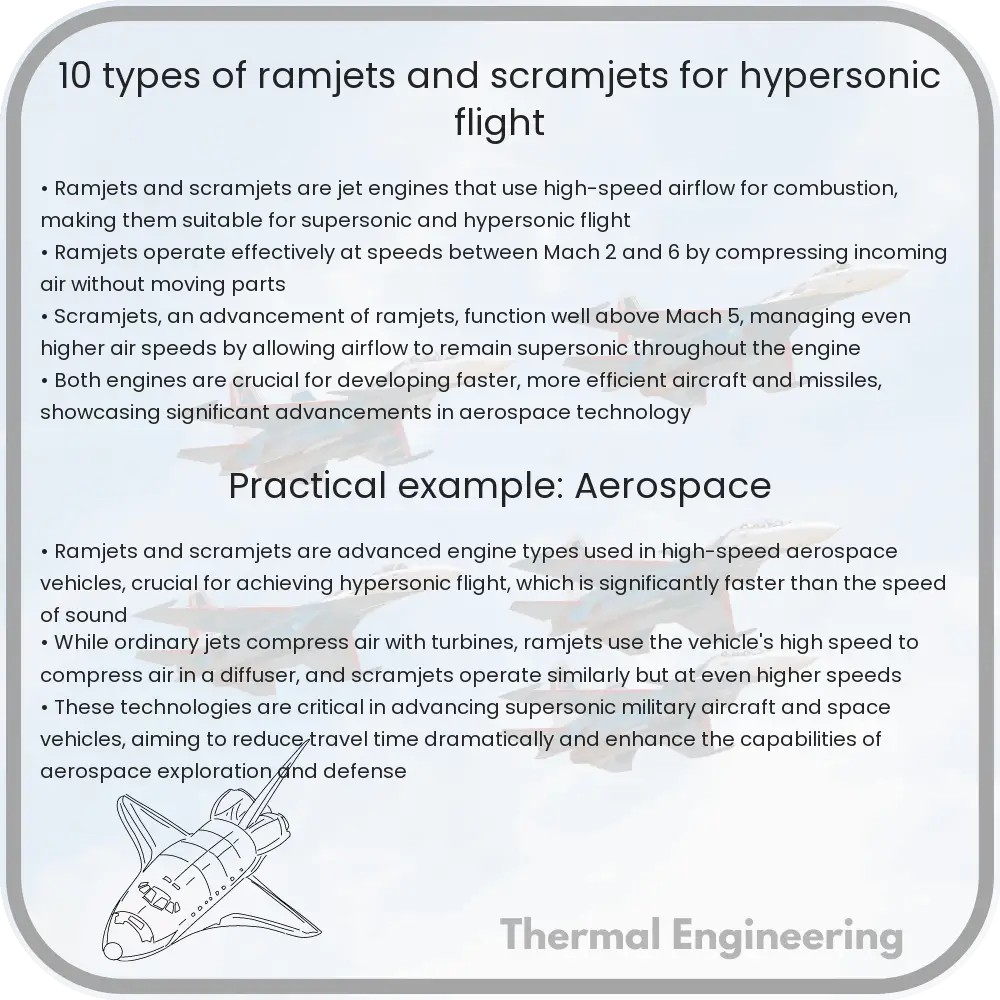
10 Types of Ramjets and Scramjets for Hypersonic Flight

Explore the crucial technologies of ramjets and scramjets enabling hypersonic flight at speeds over Mach 5, with insights into advances and applications.

10 Types of Ramjets and Scramjets for Hypersonic Flight

Understanding Ramjets and Scramjets for Hypersonic Flight

Hypersonic flight, typically defined as speeds exceeding Mach 5 (five times the speed of sound), relies heavily on advanced propulsion technologies. Among these, ramjets and scramjets play pivotal roles. These engine types compress incoming air with high vehicle speed rather than mechanical compressors used in traditional jet engines. This article explores various types and advancements in ramjet and scramjet technology that enable sustained hypersonic flight.

Types of Ramjets

  • Subsonic Combustion Ramjets: These are traditional ramjets designed to operate efficiently at speeds below Mach 3. They compress air in a subsonic diffuser, making them suitable for moderate-speed applications.
  • Supersonic Combustion Ramjets (Scramjets): Extending beyond the capabilities of standard ramjets, scramjets maintain combustion efficiency at higher speeds, from Mach 5 to Mach 15. Unlike ramjets, scramjets allow air to flow through the combustor at supersonic speeds, which is crucial for higher Mach operations.
  • Ducted Rockets: Combining elements of rocket and ramjet technologies, ducted rockets carry their oxidizer for independent operation. They switch to external air sources when available, making them versatile for varying flight conditions.
  • Variable Cycle Ramjets: These engines transition between turbojet and ramjet operational modes. They are capable of handling lower speeds with turbojet functionality and higher speeds using ramjet mechanics.

Advancements in Scramjet Technology

  • Dual-Mode Scramjets: These engines can operate as both ramjets and scramjets, adjusting to different flight phases and speeds. They provide flexibility needed for a broad range of supersonic to hypersonic speeds.
  • Hydrogen-Powered Scramjets: Utilizing hydrogen as fuel, these scramjets offer higher specific impulse and efficiency. Hydrogen’s properties facilitate easier ignition and sustained combustion at hypersonic speeds.
  • WaveRider Technology: This design leverages shock waves generated by the vehicle to enhance lift and thrust, thereby improving overall flight efficiency and stability at hypersonic speeds.
  • Cooled Scramjets: High-speed flight results in intense thermal stresses. Cooled scramjets incorporate active cooling systems to manage and distribute heat, enhancing structural integrity and engine lifespan.
  • Multi-Stage Scramjets: These engines feature stages of compression and combustion to incrementally increase airflow velocity to hypersonic speeds within the engine itself, optimizing the combustion process and improving efficiency.
  • Intake-optimized Scramjets: The design of the air intake is critical for scramjets, affecting air compression and overall engine performance. Intake-optimized scramjets are tailored for specific flight envelopes to maximize atmospheric oxygen utilization and efficiency.

Impact and Applications

Both ramjets and scramjets represent critical steps towards practical hypersonic travel, promising revolutionary changes in aerospace transportation, including rapid transcontinental flights and enhanced access to space. Military applications include faster and more effective missiles. However, the technological challenges such as material science, thermal management, and fuel efficiency remain substantial and are the focus of ongoing research and development.

Conclusion

Ramjets and scramjets are at the frontier of aerospace engineering, pushing the boundaries of speed and efficiency. As research continues to overcome current limitations, these engines may soon power not only advanced aircraft but also offer new possibilities for space exploration and intercontinental travel.

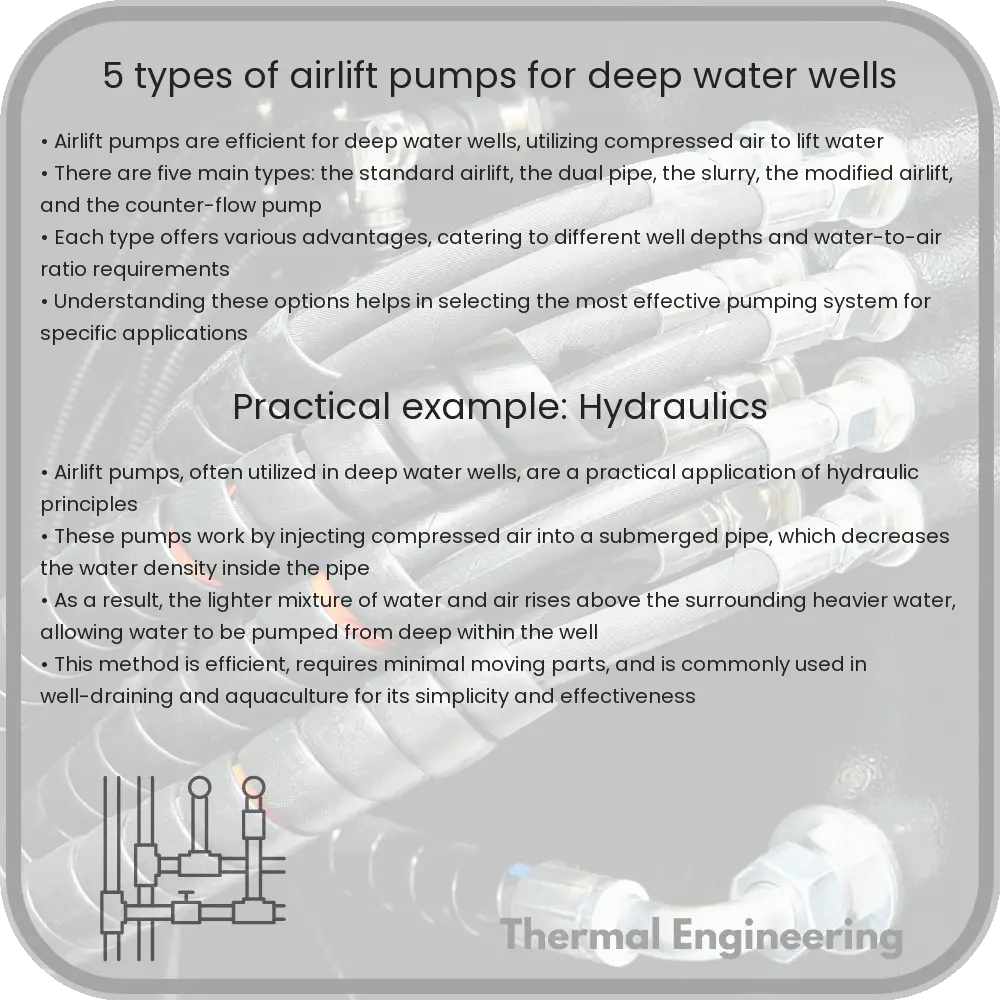
5 Types of Airlift Pumps for Deep Water Wells

Learn about airlift pumps, innovative devices using air to elevate water and fluids in various applications, from deep wells to geothermal extraction.

5 Types of Airlift Pumps for Deep Water Wells

Introduction to Airlift Pumps

An airlift pump is a type of pump that uses air to lift water or other fluids. It consists of a pipe, an air compressor, and sometimes an air release system. Air is injected into the lower end of the pipe submerged in fluid. The air bubbles mix with the fluid, reducing its overall density. As a result, the lighter mixture of air and fluid rises through the pipe to the surface. Airlift pumps are commonly used in deep water wells because they are simple, have no moving parts below the surface, and are resistant to a variety of well conditions.

1. Simple Airlift Pumps

Simple airlift pumps are the most basic form used in deep water wells. They consist of a single, long pipe that extends into the water source, with an air compressor attached to introduce air at the base of the pipe. The setup is straightforward but requires effective depth and air pressure to function correctly. These pumps are particularly suitable for water well applications where electrical energy and maintenance capabilities are limited.

2. Dual-Pipe Airlift Systems

In a dual-pipe airlift system, two concentric pipes are used. Air is injected through the annular space between the smaller inner pipe and the larger outer pipe, and water is drawn up through the inner pipe. This setup typically offers better efficiency than the simple airlift system, particularly in deeper or larger-diameter wells. It provides more control over the air and water flow compared to the single-pipe configuration.

3. Counterflow Airlift Pumps

Counterflow airlift pumps are designed so the flow of air is opposite to the flow of water. This design can enhance the efficiency by improving the air-water contact and ensuring a more homogenous mixture of air and fluid. These pumps often require more precise fabrication and more careful control of air flow, and they are less common than simple or dual-pipe systems.

4. Slimhole Airlift Systems

Slimhole airlift systems are designed for applications involving narrow-bore wells. These systems use smaller pipes that are more delicate and require precise calibration of air volume and pressure. Despite these requirements, slimhole systems are advantageous in environments where larger traditional airlift setups cannot be accommodated or where the aesthetic impact must be minimized.

5. Geothermal Airlift Pumps

Geothermal airlift pumps are specialized for use in geothermal wells, where hot water or steam from below the Earth’s surface needs to be brought to the surface. These pumps must withstand high temperatures and chemically aggressive fluids. Furthermore, the operation of these pumps often needs to accommodate significant variations in fluid consistency and temperature, requiring robust design and frequently advanced materials.

Conclusion

Airlift pumps serve as an effective and often economical choice for deep water well applications due to their simplicity and robustness. Each type of airlift pump is designed to meet specific conditions and challenges, offering flexibility across various applications. Whether for basic water extraction or for specific needs like in geothermal extraction, understanding the types of airlift pumps helps in selecting the most appropriate technology for effective fluid lifting.

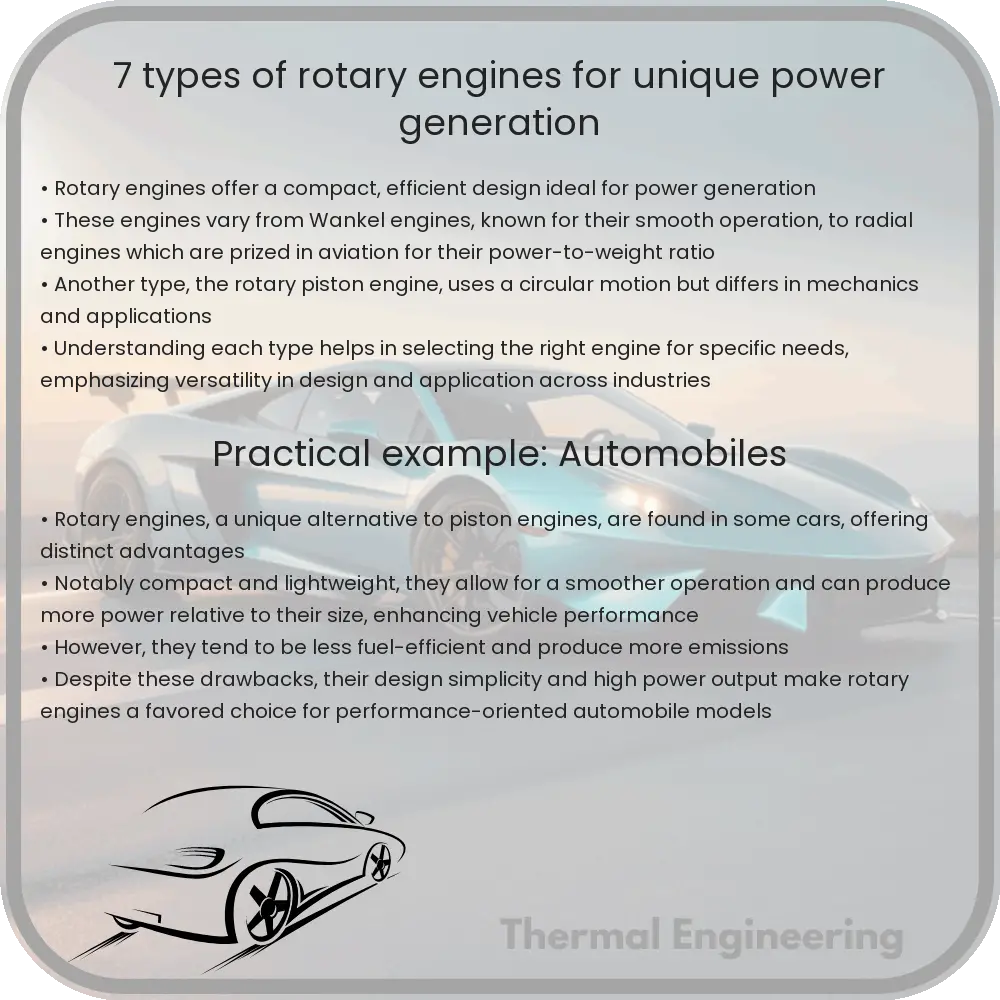
7 Types of Rotary Engines for Unique Power Generation

Explore seven types of rotary engines, each with unique mechanisms and applications in industries like automotive and aerospace.

7 Types of Rotary Engines for Unique Power Generation

Understanding Rotary Engines: 7 Variants for Unique Power Generation

Rotary engines, known for their compact and efficient design, offer unique advantages and are utilized in various applications ranging from automobiles to aircraft. Unlike the traditional reciprocating piston engines, rotary engines employ a different mechanism for converting pressure into rotating motion. This article explores seven types of rotary engines, each with its particular characteristics and applications.

1. Wankel Engine

The Wankel rotary engine is perhaps the most renowned variant, notable for its use in Mazda vehicles like the RX-7 and RX-8. The engine features a triangular rotor that orbits in an epitrochoidal motion within an oval-like chamber. This design allows for smooth operation and fewer moving parts than conventional piston engines. Each side of the rotor covers a specific phase of the four-stroke cycle (intake, compression, combustion, and exhaust), making the engine compact and lightweight.

2. Gas Turbine Engine

Gas turbines are primarily used in aircraft, power plants, and marine applications. These engines operate on the Brayton cycle, drawing in air through a compressor, mixing it with fuel to burn in a combustion chamber, and expelling it through a turbine to produce thrust or mechanical power. Rotary motion is intrinsic to their operation, characterized by high power output and efficiency at high speeds.

3. Rotary Vane Engine

The rotary vane engine uses sliding vanes in a circular rotor, which rotates inside a larger housing. The housing can be circular, elliptical, or a more complex shape, depending on the design. This engine type is typically used in hydraulic pumps and pneumatic motors, where low torque and consistent power are required.

4. LiquidPiston Engine

This is a modern take on the rotary engine, designed to improve the efficiency, reduce the physical footprint, and minimize the vibration. The LiquidPiston engine incorporates a high-efficiency ‘X’ engine configuration that implements a thermodynamic cycle known as the High Efficiency Hybrid Cycle, combining features from Otto, Diesel, and Atkinson cycles. It’s aimed primarily at applications requiring lightweight, compact power sources.

5. Rotary Atkinson Cycle Engine

By applying the Atkinson cycle to a rotary mechanism, this engine variant achieves better fuel efficiency. The Atkinson cycle allows for a different compression and expansion volume, leading to greater thermal efficiency. This technology is particularly valuable in hybrid electric vehicles where efficiency is paramount. These engines maintain a rotary core but alter the way the internal volume changes during operation.

6. Quasiturbine

The Quasiturbine engine is characterized by a rotor housed within a shaped stator. The rotor’s blades slide, rotate, and rock, creating different pressure zones within the engine chamber that are used to produce power. Unlike the Wankel engine, it does not require an oval-like epitrochoidal housing, which results in less friction and higher efficiency. It is suitable for a broad range of fuels, including gasoline, diesel, and hydrogen.

7. Rand Cam Engine

Last in this list but not least innovative, the Rand Cam engine features a cam and follower system that generates direct rotational motion. This design eliminates the need for a dedicated crankshaft, enabling a smoother and more compact engine configuration. The engine is very versatile in the types of fuels it can utilize, ranging from conventional fuels to biofuels, positioning it well for various industrial applications.

Each of these rotary engines contributes uniquely to the landscape of power generation by offering different benefits, such as reduced size, lower emissions, high power density, or improved fuel efficiency. They underscore an essential aspect of engineering: innovation tailored to specific needs and applications, pushing the boundaries of what rotary mechanisms can achieve.

11 Types of Impulse Turbines for High-Speed Fluid Flow

Learn about the different types of impulse turbines, their unique designs, applications, and roles in converting fluid kinetic energy into mechanical energy.

11 Types of Impulse Turbines for High-Speed Fluid Flow

Understanding the 11 Types of Impulse Turbines for High-Speed Fluid Flow

Impulse turbines are a fundamental component of modern engineering, extensively used in generating electricity and in various industrial processes where high-speed fluid flows are harnessed to produce energy. These turbines convert the kinetic energy of a jet of fluid into mechanical energy through the dynamics of rapidly rotating blades. Here, we explore 11 common types of impulse turbines, each suitable for specific applications and operational conditions.

Pelton Wheel

The Pelton wheel is one of the most widely used types of impulse turbines, especially suitable for high-head, low-flow water sources. It features bucket-shaped blades around a circular wheel, where water jets strike the buckets at high speed, turning kinetic energy into mechanical rotation of the wheel.

  • Application: Hydroelectric power generation in mountainous areas.

Turgo Turbine

A variation of the Pelton wheel, the Turgo turbine allows for a greater flow rate and less sensitivity to water speed. Its design features angled blades, which lets it harness more energy from the water jet with a simpler construction.

  • Application: Medium head hydropower installations.

Crossflow Turbine

The crossflow turbine, also known as a Banki-Michell turbine, uses a drum-shaped runner, with water flowing first through the blades from the outside, then inside, and again from the outside, exploiting water energy efficiently in a compact design.

  • Application: Small-scale hydroelectric power plants, suitable for varying water flow conditions.

Francis Turbine

Commonly used in water power applications, Francis turbines are reaction turbines but can operate under impulse conditions at low flow rates. They feature a radial inflow design where water enters radially and exits axially, utilizing both pressure and kinetic energy.

  • Application: Wide range of head and flow conditions in hydroelectric projects.

Kaplan Turbine

Like the Francis turbine, Kaplan turbines are primarily reaction turbines but can be used in impulse mode under certain conditions. Featuring adjustable blades, they are highly efficient in extracting energy from low-head, high-flow water sources.

  • Application: Large-scale hydroelectric power generation with fluctuating river conditions.

Ossberger Turbine

Also known as a Banki turbine or double-regulated turbine, the Ossberger turbine is a variant of the crossflow turbine that allows for better regulation of flow and efficiency, making it ideal for small water courses with variable water flows.

  • Application: Small hydro, remote area power supply systems.

Karman Turbine

A less common type, the Karman turbine uses vertical blades that rotate due to the aerodynamic lift produced by high-speed fluid flow, utilizing principles similar to those in wind turbine designs.

  • Application: Experimental or specialized industrial applications involving unique fluid dynamics.

Jonval Turbine

The Jonval turbine is a type of vertical-axis turbine which was quite popular in the 19th century. Known for its simplicity, it has been mostly replaced by more efficient designs in modern applications.

  • Application: Historical interest, educational models.

Girard Turbine

Designed by Gustave Girard, this turbine type employs partially submerged, curved blades, directing water through a free jet against paddles mounted on a wheel – suitable for moderate heads.

  • Application: Small to medium hydroelectric projects.

Swedish Turbine

The Swedish, or Ljungstrom turbine, features a unique radial design where the fluid enters and exits in a radial direction, making it compact and efficient for certain specific applications.

  • Application: Specialized industrial processes, small power generation systems.

Zuppinger Turbine

A variant of the water wheel, the Zuppinger Turbine enhances the traditional design with improved efficiency and adaptation to low-head environments.

  • Application: Low head micro hydro systems, historical demonstration projects.

Each of these impulse turbines has its unique features and applications, specifically tailored to leverage different aspects of fluid dynamics for energy conversion. Accordingly, selecting the appropriate turbine type depends on various factors, including the head, flow, and specific environmental conditions of the installation site.

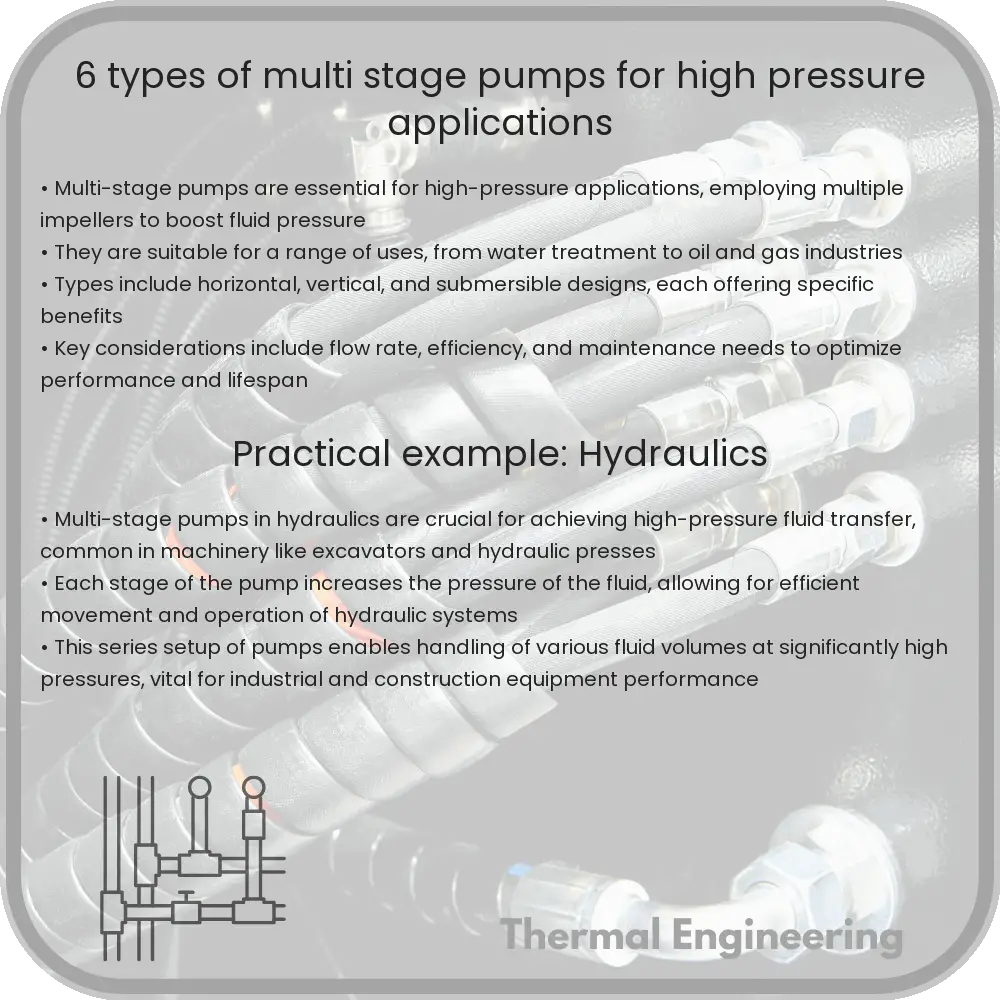
6 Types of Multi-Stage Pumps for High-Pressure Applications

Learn about six common types of multi-stage pumps and their applications in high-pressure scenarios across industries like water treatment and oil and gas.

6 Types of Multi-Stage Pumps for High-Pressure Applications

6 Types of Multi-Stage Pumps for High-Pressure Applications

Multi-stage pumps are crucial in applications that require high pressure. These pumps use multiple impellers, or stages, to generate higher pressures than single-stage pumps. This feature makes them ideal for industries like water treatment, boiler feed water, and oil and gas operations. Below are six common types of multi-stage pumps and their typical uses in high-pressure applications.

1. Horizontal Multi-Stage Centrifugal Pumps

These pumps have a horizontal shaft with multiple impellers arranged along it. Each impeller adds to the pressure head, enabling the pump to achieve considerable pressures. Horizontal multi-stage pumps are widely used for water supply systems and in industries requiring high pressure, such as HVAC systems and municipal water services. Their horizontal layout makes maintenance relatively straightforward compared to vertical configurations.

2. Vertical Multi-Stage Centrifugal Pumps

Vertical multi-stage centrifugal pumps feature a vertical shaft with a series of impellers stacked above each other. This design is particularly beneficial for saving floor space and is often employed in deep well pumping and industrial cooling processes. The vertical configuration also helps in maintaining a consistent pressure head for liquids at great depths.

3. Ring Section Multi-Stage Pumps

Ring section multi-stage pumps consist of several ring-like segments, each housing one or more impellers. These segments are bolted together to form the pump. This modular design is advantageous for handling high-pressure and high-temperature applications, commonly found in boiler feed water and desalination plants.

4. Axial Split Case Multi-Stage Pumps

This type of pump splits horizontally, allowing easier access to the internal components. The design is suitable for handling high flow rates and pressures, and is often used in water supply and irrigation systems. Each stage of the pump can handle a higher flow, making it ideal for applications that require both high pressure and high volume.

5. Radial Split Case Multi-Stage Pumps

Radial split case pumps are designed with a vertical split in their casing. They are used for high-pressure applications such as oil and gas production. The radial design helps these pumps withstand the high pressures found in upstream oil operations, where pumping conditions can be particularly harsh.

6. Submersible Multi-Stage Pumps

These pumps are designed to operate while submerged in the fluid they are pumping. Submersible multi-stage pumps are typically used for deep well pumping, where multiple stages are needed to lift water to the surface. They are also used in offshore drilling operations for their ability to handle high pressure and submerged conditions.

Conclusion

Multi-stage pumps are versatile and efficient solutions for high-pressure applications across various industries. Each type of multi-stage pump offers unique advantages and is suited to particular conditions and requirements. Understanding the differences between these pumps can help in selecting the right type for specific industrial needs. By leveraging the right multi-stage pumps, industries can enhance their operations’ efficiency and reliability, ensuring that high-pressure tasks are managed effectively.

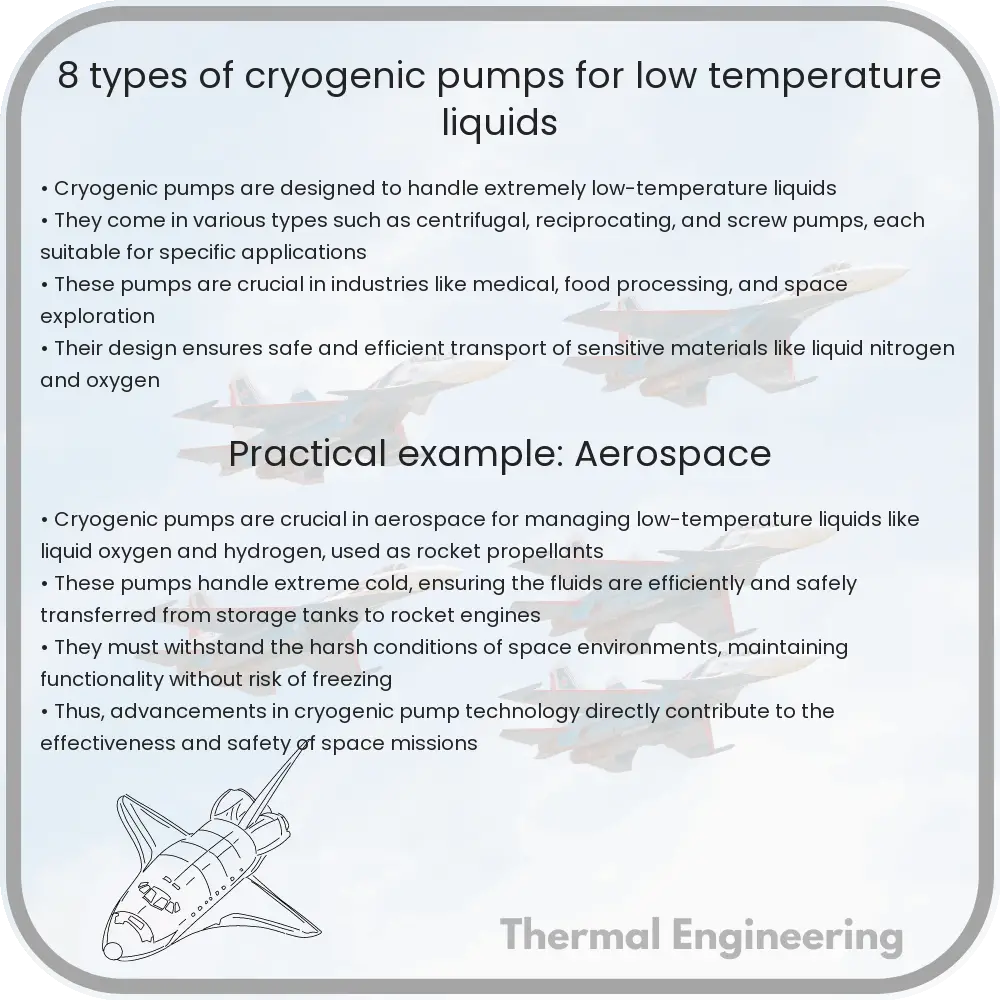
8 Types of Cryogenic Pumps for Low Temperature Liquids

A guide to the various types of cryogenic pumps used in handling extremely low temperature liquids across multiple industrial applications.

8 Types of Cryogenic Pumps for Low Temperature Liquids

Understanding the Types of Cryogenic Pumps for Low Temperature Liquids

Cryogenic pumps are essential components in industries that work with extremely low temperature liquids, such as liquid nitrogen, oxygen, argon, and liquefied natural gas (LNG). These pumps are designed to handle fluids at temperatures typically below -150°C (-238°F). The design and operational features of cryogenic pumps vary depending on their specific applications. Here, we explore eight common types of cryogenic pumps and their primary uses.

1. Centrifugal Cryogenic Pumps

Centrifugal pumps are widely used for cryogenic liquids due to their ability to handle large volumes. The operating principle involves a rotating impeller which imparts kinetic energy to the liquid, converting it to pressure energy as it exits the pump. This type is particularly suitable for transferring liquefied gases like LNG from storage tanks to transport vessels or regasification systems.

2. Positive Displacement Cryogenic Pumps

Positive displacement pumps provide a fixed amount of flow for each cycle of operation, making them ideal for precise dosing applications. These pumps function by trapping a fixed amount of liquid and forcing it into the discharge pipe, which is excellent for high pressure and low flow rate conditions often required in cryogenic applications.

3. Submerged Cryogenic Pumps

Submerged pumps operate while completely submerged in the cryogenic fluid, which helps in maintaining the low temperatures necessary for such liquids. They are typically used in applications involving storage and bulk transfer of cryogens in large tanks.

4. Reciprocating Cryogenic Pumps

Reciprocating pumps operate using a piston or plunger mechanism to push the cryogenic liquid from a cylinder through the pump system. Unlike centrifugal pumps, they are more suited for high-pressure applications and are often used in gas processing and distribution systems.

5. Screw Cryogenic Pumps

Screw pumps use two meshed screws that rotate to push the liquid through the pump. These are particularly effective for dealing with viscous liquids or mixtures, commonly seen in the handling and transfer of cryogenic oils or slurries.

6. Diaphragm Cryogenic Pumps

Diaphragm pumps use a flexible membrane that oscillates to create a variable-sized chamber within the pump. This type of pump is highly effective for applications requiring contamination-free pumping because the diaphragm can completely isolate the cryogenic fluid from the atmosphere or pump machinery.

7. Jet Pumps

Jet pumps, or ejectors, have no moving parts and use a high-speed jet of fluid to entrain and transport the cryogenic liquid. They are simple in design and maintenance, often used for applications such as draining tanks or circulating fluids in closed systems.

8. Booster Cryogenic Pumps

Booster pumps are used to increase the pressure of cryogens, particularly in LNG applications, to meet the requirements of high-pressure storage or gasification processes. They generally operate in conjunction with other cryogenic pumps to enhance system efficiency.

Cryogenic pumps are critical components in various industrial applications, where handling low-temperature fluids with precision and efficiency is paramount. The selection of an appropriate cryogenic pump depends on factors such as the type of liquid, flow rate, pressure requirements, and specific application needs. Understanding the different types of cryogenic pumps helps in making informed decisions for effective and safe handling of cryogenic liquids in various engineering contexts.