Facebook Instagram Youtube Twitter

3 Types of Thermocouples for Temperature Measurement

Learn about thermocouples, essential temperature-sensing devices used in various industries, functioning on the thermoelectric effect to measure diverse temperature ranges accurately.

3 Types of Thermocouples for Temperature Measurement

Introduction to Thermocouples

Thermocouples are widely used temperature-sensing devices that can measure a wide range of temperatures with varying degrees of accuracy and reliability. They function based on the thermoelectric effect, in which a voltage is generated at the junction of two different metals that varies with temperature. This voltage can be measured and converted into a temperature reading. They are essential tools in industries like aerospace, automotive, and manufacturing due to their simplicity, robust response, and broad temperature ranges.

Types of Thermocouples

There are several types of thermocouples, each made from different metallic elements and having distinctive characteristics and uses. The three most commonly used types are Type K, Type J, and Type T.

Type K Thermocouple

The Type K thermocouple, also known as Chromel-Alumel, is made from nickel-chromium and nickel-aluminum alloys. It is the most common general-purpose thermocouple due to its low cost and robust nature. Operating over a temperature range of -200°C to +1350°C, it is well-suited for applications in environments with vast temperature fluctuations. Type K is commonly found in applications involving furnaces, gas turbine exhausts, and other high-temperature industrial processes.

Type J Thermocouple

Type J thermocouples consist of an iron wire paired with a wire of constantan (copper-nickel alloy). They are used in vacuum, oxidizing, reducing, and inert atmospheres, although they have a more limited temperature range compared to Type K. The operating range for Type J thermocouples is typically -40°C to +750°C. They are often employed in the plastics industry and for metal processing, especially when high sensitivity is required at lower temperatures.

Type T Thermocouple

Type T thermocouples are made from copper and constantan, making them highly stable and suitable for measurements in moist environments. They are particularly useful for measurements in the range of -200°C to +350°C. Due to their good resistance to corrosion in wet environments, Type T thermocouples are commonly used in applications involving food processing and storage, pharmaceuticals, and other chemical experiments.

Choosing the Right Thermocouple

Selecting the correct thermocouple for a specific application depends on several factors including temperature range, environmental conditions, required durability, and accuracy. Type K is preferred for high temperatures and where cost is a concern. Type J is chosen for high sensitivity at lower temperatures, and Type T is optimal for stable readings in lower temperatures and moist conditions.

Understanding the distinct attributes of different thermocouples aids in optimizing performance and accuracy in various industrial and scientific applications. Each type ensures that users can find an appropriate solution tailored to their specific measurement needs.

Conclusion

Thermocouples are essential tools for reliable and accurate temperature measurement. Whether monitoring temperatures in harsh industrial environments or in delicate laboratory settings, understanding the differences between Type K, Type J, and Type T thermocouples helps select the best-suited device for the task. This knowledge guarantees efficient and effective temperature management across a variety of disciplines.

4 Types of Underfloor Heating Systems

Learn about underfloor heating systems, including electric and hydronic options, and their benefits for home and commercial use.

4 Types of Underfloor Heating Systems

Introduction to Underfloor Heating Systems

Underfloor heating systems are a form of central heating which achieves indoor climate control primarily for thermal comfort using conduction, radiation, and convection. The systems are broadly classified into two categories: electric underfloor heating and hydronic underfloor heating. Each type offers unique benefits and is suitable for different scenarios depending on factors like installation costs, heat distribution, and energy efficiency.

Types of Underfloor Heating Systems

Here, we explore four main types of underfloor heating systems that you might consider for residential or commercial buildings.

1. Electric Cable Systems

Electric cable heating systems, also known as electric wire heating, involve the installation of a series of wires beneath the floor surface. These systems convert electric energy into heat, which is then radiated upwards into the room. The main components include:

  • Heating cables or wires
  • Thermostat
  • Insulation board (optional but recommended)

This type is particularly suitable for installation in renovations where raising the floor level slightly does not pose a major issue. It provides rapid heating response times and is easier to install compared to hydronic systems.

2. Electric Mat Systems

Electric mat systems function similarly to electric cable systems but consist of a pre-spaced cable that is attached to a mesh or a mat. This setup allows for easier and quicker installation. Key features include:

  • Uniform heating
  • Easy roll-out installation
  • Minimal adjustments required on-site

These are ideal for larger areas and can be used under various types of floorings such as tile, stone, and laminate. They are also thin, which minimizes the increase in floor height.

3. Hydronic Systems (Wet Systems)

In hydronic underfloor heating systems, warm water is circulated through a series of pipes installed under the floor. This type of heating uses water heated by a boiler or a solar water heating system. The system includes:

  • Pipes or tubing (typically made from polypropylene)
  • Manifold
  • Boiler or water heater
  • Pump

Hydronic systems are more cost-effective to operate on a daily basis and are suitable for heating larger areas. They are often installed during the construction phase as they require a significant amount of space for the pipework.

4. In-Screed Cable Systems

In-screed cable systems involve embedding electric cables in a layer of screed (concrete, cement, or similar material). This type:

  • Offers robust heating suitable for all floor finishes
  • Provides storage heating capabilities
  • Delivers a slow response time but has a lengthy warm retention

These systems are typically installed when the flooring itself is being laid and are especially suited for new constructions. The thick layer of screed provides excellent heating retention, making the system efficient and uniform in heat distribution throughout the area.

Conclusion

Choosing the right type of underfloor heating system depends largely on the specific needs of a project, including factors like budget, installation feasibility, and desired heating efficiency. Each system offers unique advantages and limitations, making it crucial to assess the requirements thoroughly before making a decision.

Thermal effects in high-speed trains

Learn about the crucial role of thermal management in ensuring the safety, efficiency, and comfort of high-speed trains.

Thermal effects in high-speed trains

Understanding Thermal Effects in High-Speed Trains

High-speed trains are marvels of modern engineering, designed to transport passengers at speeds exceeding 250 kilometers per hour (155 miles per hour). While the primary focus may often be on their speed and efficiency, managing thermal effects is crucial for their safety, performance, and passenger comfort. Understanding these thermal effects can help us appreciate the sophisticated engineering behind these transportation giants.

Sources of Heat in High-Speed Trains

Heat generation in high-speed trains comes from several sources, which include:

  • Aerodynamic Heating: As the train moves at high speeds, friction with the air causes the external surfaces to heat up. This heating is more pronounced at higher speeds.
  • Mechanical Heating: The moving parts of the train, especially the wheels and axles, generate heat due to friction.
  • Braking Systems: High-speed trains often use regenerative braking systems, which convert some of the train’s kinetic energy into electrical energy. However, this process also generates heat.
  • Electrical Equipment: High-speed trains are packed with electrical systems that contribute to heat generation, including motors, transformers, and air conditioning systems.

Thermal Management Technologies

To deal with the heat generated, high-speed trains employ various thermal management technologies. Key solutions include:

  • Thermal Insulation: Using materials with low thermal conductivity helps in minimizing the heat transfer from the exterior to the interior, keeping the passenger area comfortable.
  • Advanced Cooling Systems: These systems are designed to dissipate heat efficiently from the train’s mechanical and electrical systems. Typical systems include air-water heat exchangers and advanced air conditioning systems.
  • Heat-Resistant Materials: Components that are exposed to high temperatures, such as brakes, are made from materials that can withstand and perform under these conditions.
  • Aerodynamic Design: The shape of the train is designed not only for speed but also to minimize resistance and hence reduce the heating effect caused by air friction.

Impact of Thermal Effects on Performance and Safety

Managing the thermal effects is crucial for several reasons:

  • Safety: Excessive heat can lead to the failure of critical components, such as brakes and electrical devices, potentially leading to accidents.
  • Efficiency: Overheating can reduce the efficiency of the electrical systems, including motors and batteries, impacting the overall performance of the train.
  • Comfort: Passenger comfort is directly affected by the internal temperature of the train. Efficient thermal management ensures that the internal environment remains pleasant, even during long journeys or extreme weather conditions.
  • Durability: Continuous exposure to high temperatures can degrade various materials over time, affecting the train’s durability and increasing maintenance costs.

Future Enhancements in Thermal Management

As technology advances, the development of new materials and cooling technologies continues to evolve. Innovations such as phase change materials (PCMs) for better heat absorption and release, and more efficient thermoelectric cooling systems, are among the promising areas. Additionally, improvements in computational fluid dynamics (CFD) allow engineers to better simulate and improve train designs to manage thermal effects more effectively.

Understanding thermal effects in high-speed trains highlights the complexity and necessity of thermal management in modern transportation engineering. With ongoing advancements, these systems are set to become even more effective, ensuring that high-speed trains remain a safe and comfortable mode of transport well into the future.

8 Types of Thermal Cameras for Surveillance

Understand the diverse types of thermal cameras used in surveillance, including cooled, uncooled, and various infrared spectral bands.

8 Types of Thermal Cameras for Surveillance

8 Types of Thermal Cameras for Surveillance

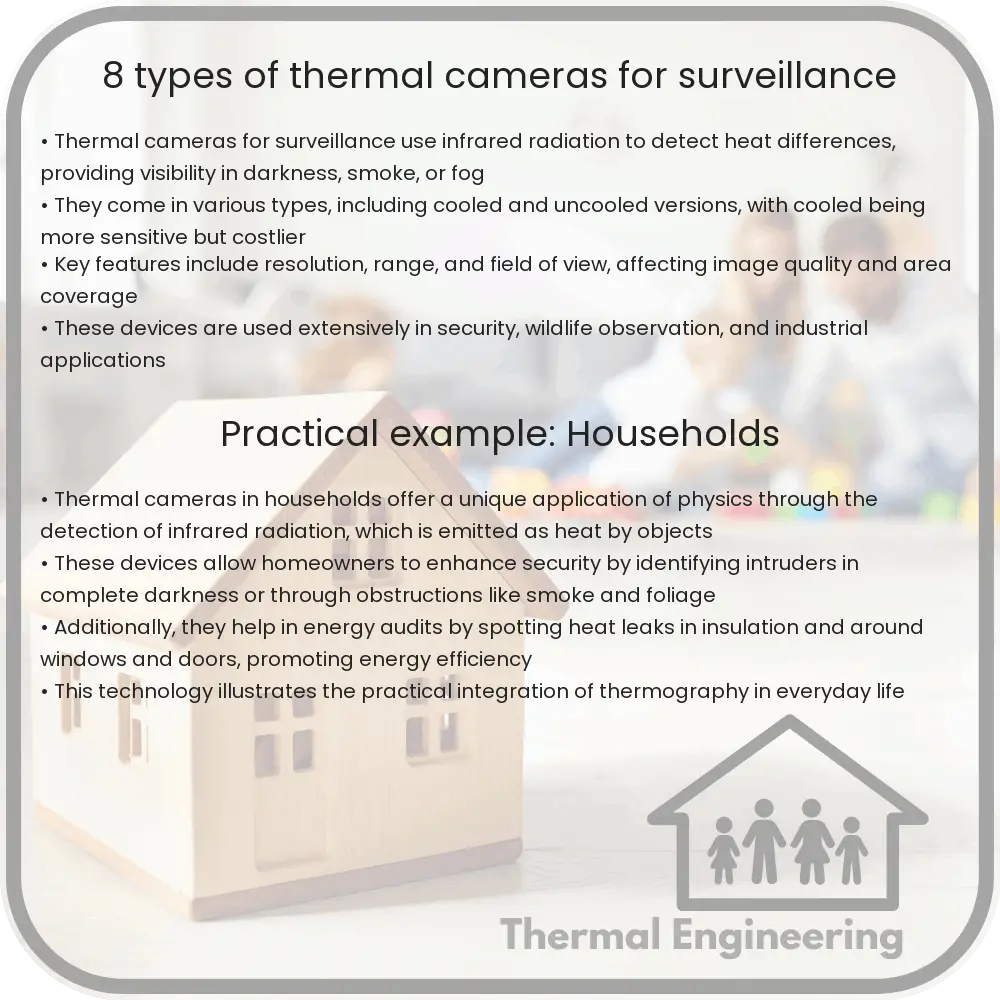
Thermal cameras, also known as infrared cameras, are pivotal in the realm of surveillance, offering the capability to see and record images based on the infrared radiation emitted by objects. These devices are invaluable for security, especially in environments with poor visibility or at night. Below, we explore eight different types of thermal cameras used in surveillance, each catering to specific needs and applications.

1. Cooled Infrared Cameras

Cooled infrared cameras are equipped with a cryogenic cooler that cools the sensor to below 0°C. This drastically enhances their sensitivity to small differences in temperature. They are capable of detecting minute temperature variations as slight as 0.01°C. These cameras are particularly useful in border security and maritime surveillance where high detail is necessary.

2. Uncooled Infrared Cameras

Uncooled infrared cameras operate without specialized cooling mechanisms, making them more compact, less expensive, and easier to maintain compared to cooled infrared cameras. They function at ambient temperature and are ideal for general surveillance, law enforcement, and firefighting operations.

3. Long-Wave Infrared (LWIR) Cameras

LWIR cameras detect radiation in the long-wave spectral band of the infrared light (between 8 to 14 microns). These cameras perform well under atmospheric conditions that are typically challenging for other spectral bands, providing reliable images in fog, dust, and smoke.

4. Mid-Wave Infrared (MWIR) Cameras

MWIR cameras operate in the 3 to 5 microns range and are exceptionally sensitive to temperature differences. Often used in scientific and industrial settings, these cameras are also great for high-security installations where precision is crucial.

5. Short-Wave Infrared (SWIR) Cameras

SWIR cameras capture images in the 0.9 to 1.7 microns range. Unique among thermal cameras, SWIR can penetrate through glass and are useful in covert surveillance situations. Additionally, they offer the capability to capture images in varied lighting conditions, including at twilight or in the presence of flare-ups.

6. Dual-Band Infrared Cameras

These cameras combine features from two different infrared spectra, typically MWIR and LWIR, offering the benefits of both types in a single device. Dual-band thermal cameras are advantageous in complex surveillance scenarios where environmental conditions can change rapidly.

7. Infrared Thermal Network Cameras

These cameras are designed to be integrated into existing network infrastructures, allowing for remote monitoring over the internet. Infrared thermal network cameras are ideal for perimeter security and protecting high-value infrastructure.

8. Handheld Infrared Cameras

Handheld infrared cameras are portable and offer flexibility in operation, which is crucial in mobile surveillance, search and rescue missions, and even routine patrols. Their ease of use and portability make them a popular choice among security personnel and first responders.

Choosing the right type of thermal camera for surveillance depends on specific requirements such as the environmental conditions, the desired imaging range and detail, portability, and integration capabilities. By understanding the different types and their specific applications, users can significantly enhance their surveillance systems’ efficacy and reliability.

5 Types of Thermal Insulation for Pipelines

Learn about the importance and types of thermal insulation for pipelines, ensuring energy efficiency and system durability.

5 Types of Thermal Insulation for Pipelines

Introduction to Thermal Insulation for Pipelines

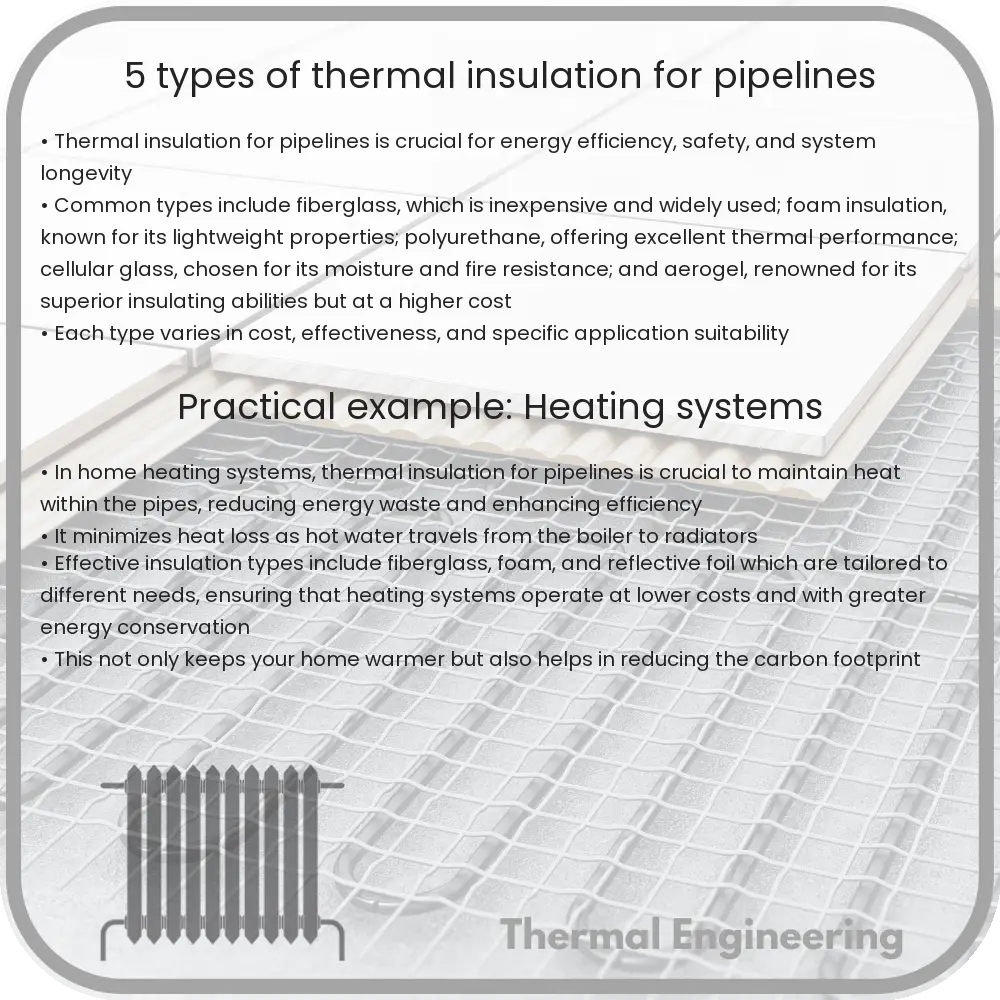
Thermal insulation is crucial in various industries to ensure process efficiency and safety. Pipelines, which carry fluids at temperatures different from the ambient temperature, require insulation to minimize heat loss or gain, prevent freezing, and control condensation. Below, we explore five common types of thermal insulation used in pipeline systems, each serving specific industrial needs.

1. Fiberglass Insulation

Fiberglass, made from fine fibers of glass, is one of the most common insulating materials. Due to its low thermal conductivity, it is highly effective in reducing heat transfer. Fiberglass insulation for pipelines is often supplied in rolls or as pre-formed pipe sections, making it easy to install. It is suitable for a wide range of temperatures, making it a versatile choice for different pipeline applications.

2. Polyurethane Foam

Polyurethane foam (PUF) is a lightweight, rigid foam commonly used for its excellent insulation properties. This type of insulation is sprayed or injected around pipelines, creating a seamless layer of insulation. PUF has a high R-value, which measures an insulation material’s ability to resist heat flow. It is ideal for both hot and cold pipelines and provides added structural support to the insulated pipes.

3. Mineral Wool

Mineral wool, also known as rock wool or slag wool, is made from molten basalt or slag that is spun into fine fibers. This material has high thermal resistance and also provides excellent sound insulation and fire resistance. Mineral wool can withstand high temperatures, making it suitable for high-temperature steam and process pipelines. It comes in blankets or rigid boards that can easily be fitted around pipelines.

4. Cellular Glass

Cellular glass insulation, known for its durability and moisture resistance, is made by heating crushed glass to a high temperature and then adding a blowing agent to create a uniform cellular structure. It is impermeable to water and vapor, which makes it ideal for underground pipes and pipelines exposed to moisture. This characteristic prevents corrosion under insulation, a common issue in pipeline systems.

5. Elastomeric Foam

Elastomeric foam is a flexible rubber material that provides excellent thermal insulation properties and moisture resistance. This type of insulation is easy to install because of its flexibility and ability to conform to irregular shapes and curves of piping systems. It is particularly effective for preventing condensation on cold pipes and is widely used in HVAC systems and refrigeration.

Conclusion

Selecting the right type of thermal insulation for pipelines depends on several factors, including the temperature of the fluid being transported, environmental conditions, and economic considerations. Each type of insulation material offers unique benefits, and understanding these can help in making an informed decision that ensures safety, efficiency, and durability of the pipeline system. Investing in proper insulation not only optimizes energy costs but also enhances the lifespan of the pipeline infrastructure.

9 Types of HVAC Ductwork for Efficient Airflow

Learn about the nine types of HVAC ductwork essential for optimizing airflow and system efficiency in various environments.

9 Types of HVAC Ductwork for Efficient Airflow

9 Types of HVAC Ductwork for Efficient Airflow

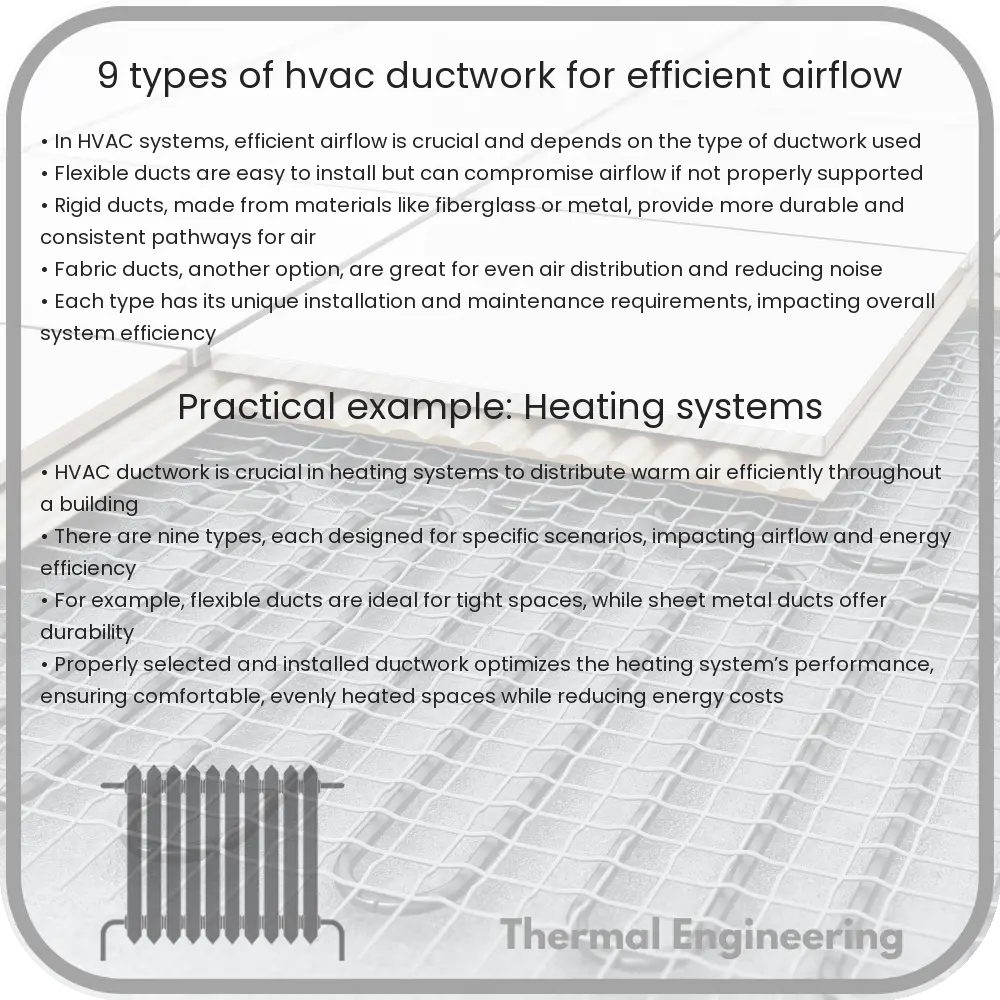
HVAC (Heating, Ventilation, and Air Conditioning) systems are crucial in maintaining indoor comfort by regulating airflow, temperature, and humidity. An essential component of any HVAC system is its ductwork—the network of tubes responsible for distributing air throughout a building. Different types of ducts are suited to different environments and needs. Here, we explore nine common types of HVAC ductwork that contribute to efficient airflow and enhance system performance.

1. Sheet Metal Ducts

Sheet metal ducts are perhaps the most common type of HVAC ductwork. These ducts are made from galvanized steel or aluminum. They are durable, non-porous, and less likely to have mold growth because they have smooth surfaces. However, they can be noisy due to metal’s natural properties and might require more insulation to prevent heat loss.

2. Flexible Ductwork

This type of ductwork is built from a wire coil covered with a flexible, durable plastic, and surrounded by insulation. Flexible ducts are easy to install, especially in tight spaces where traditional rigid ducts might not fit. While installation ease is a significant advantage, they can be less efficient if not installed correctly, as bends and kinks can restrict airflow.

3. Fiberglass Lined Ducts

Fiberglass lined ducts are usually sheet metal ducts that have an inner lining of fiberglass. This lining serves to insulate the duct and absorb sound, making the ductwork quieter. One downside is the potential for fiberglass particles to enter the air stream if the lining begins to degrade.

4. Fiberboard Ducts

These are made from compressed resin bonded fiberglass fibers. The exterior is coated with a foil that acts as an air barrier as well as a water vapor barrier. Fiberboard ducts offer good thermal insulation and sound-absorption properties. They are, however, susceptible to mold growth if exposed to moisture, due to their porous nature.

5. Plastic Ductwork

Increasingly popular due to its corrosion resistance and lightweight properties, plastic ductwork is often used in applications where moisture or chemical exposure is significant. Plastic ducts are also integral in cleanroom services and laboratories thanks to their ability to resist contamination.

6. Fabric Ductwork

Also known as duct socks, these are typically made from a special polyester material. Fabric ducts are best suited for even air distribution without creating drafts. They are used in industrial applications, gyms, and swimming pools. The fabric is designed to be breathable, preventing condensation and resisting mold growth.

7. Spiral Ducts

Spiral ducts are typically made from sheet metal but are more visually appealing, often leaving them exposed in modern architecture. The construction of spiral ducts provides a high level of strength and rigidity, ensuring longevity and reduced air leakage compared to rectangular ductwork.

8. Phenolic Ductwork

Made from phenolic insulation panels which are covered on both sides with aluminum, this type of ductwork combines the strength of sheet metal ducts with the insulation properties of fiberboard. These ducts are light, easy to install, and offer superior thermal insulation.

9. HVAC Ductwork Caps

Not a type of ductwork per se, but an essential component, ductwork caps are used to seal off the ends of ducts, preventing leakage and promoting proper airflow within the system. They are typically used during HVAC system tests or before the system sections are connected permanently.

Choosing the right type of ductwork can significantly impact energy efficiency, air quality, and comfort in residential or commercial buildings. Each type has its advantages and specific uses, making it crucial for HVAC professionals to consider the specific requirements of each building and system configuration when planning and installing ductwork.

6 Types of Combustion Chambers in Thermal Engines

Learn about the different types of combustion chambers in thermal engines, their designs, and how they impact engine performance and efficiency.

6 Types of Combustion Chambers in Thermal Engines

Understanding the Types of Combustion Chambers in Thermal Engines

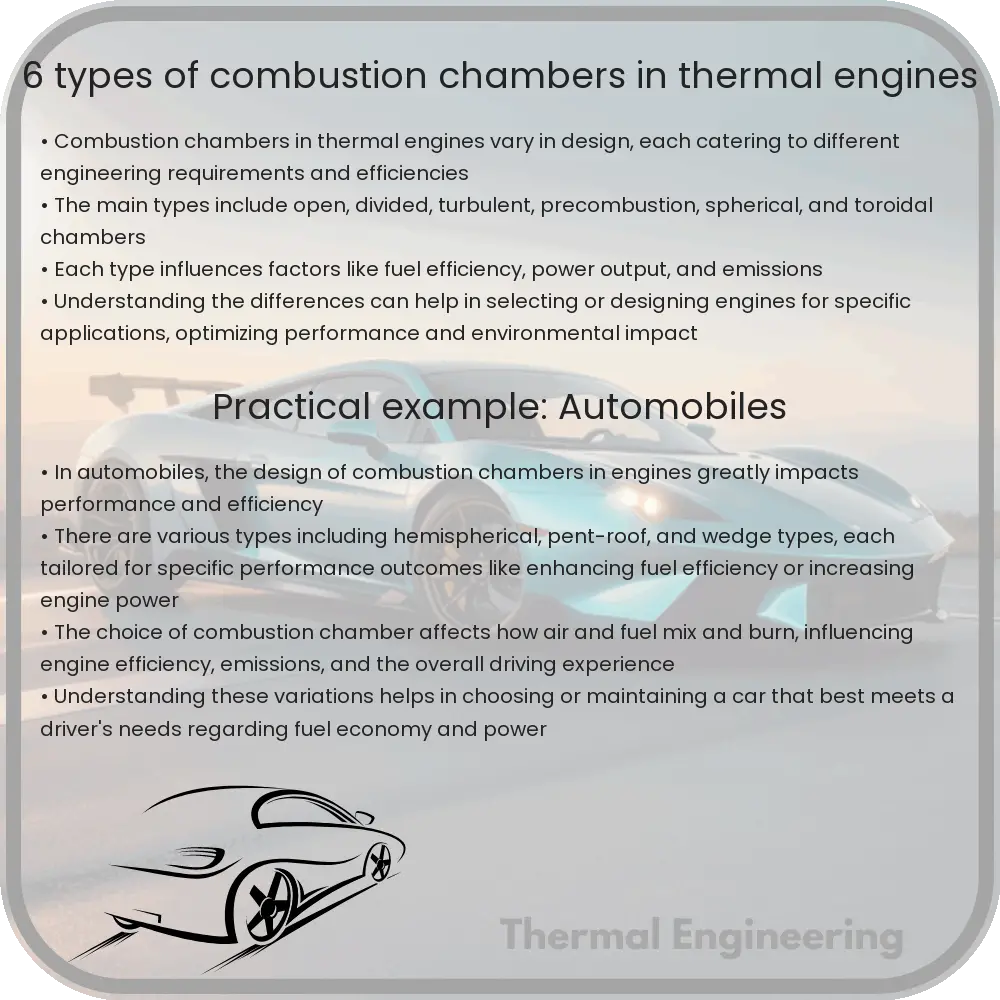
The combustion chamber is a critical component of any thermal engine, where the fuel-air mixture burns to produce the energy needed to drive the engine. The design and type of combustion chamber can greatly influence the efficiency, performance, and emissions of an engine. Here are six types of combustion chambers commonly found in various thermal engines:

1. Piston or Cylinder Combustion Chamber

Commonly used in reciprocating engines like those in cars and motorcycles, this type of chamber is formed by the space between the top of the piston and the cylinder head at the top of its stroke. The shape and volume of these chambers can vary significantly, affecting the engine’s compression ratio and turbulence, thus influencing efficiency and emissions.

  • Hemispherical Chamber: Features a dome-shaped head which allows for large valves and efficient airflow, boosting engine performance.
  • Wedge Chamber: Utilizes a simple, flat or slightly inclined design that allows for compact engine design.
  • Bathtub Chamber: Combines elements of both hemispherical and wedge designs, offering a balance between efficiency and manufacturing simplicity.

2. Annular Combustion Chamber

Often found in gas turbines, these chambers encircle the turbine’s shaft with a series of flame tubes where combustion occurs in an annular space. This design helps achieve a high power-to-weight ratio and is well-suited for continuous high-speed operation in aircraft jet engines and power plants.

3. Can-Type Combustion Chamber

Also known as canular or cannular chambers, these are used mainly in older jet engines. Multiple individual cylindrical combustion chambers are arranged around the engine’s central shaft. This modular approach allows each “can” to operate somewhat independently, aiding in maintenance and durability.

4. Tubo-Annular Combustion Chamber

This design combines elements of both the annular and can-type layouts. It uses smaller can-like chambers within an annular arrangement, aiming to improve combustion efficiency while maintaining ease of maintenance.

5. Silo Combustion Chamber

Silo or barrel combustion chambers are primarily used in stationary power plants, particularly in large industrial gas turbines. They feature a vertical cylindrical design that supports higher pressure ratios, enhancing combustion efficiency and output while reducing nitrogen oxide emissions.

6. Opposed-Piston Engine Chamber

In this layout, two pistons per cylinder work against each other, compressing and igniting fuel in the middle. This design eliminates the need for cylinder heads, reducing engine weight and complexity. Opposed-piston engines can be highly efficient and are used in some specialized applications like submarines and some heavy vehicles.

Each type of combustion chamber offers distinct advantages and challenges, influencing factors like fuel efficiency, emissions, responsiveness, and manufacturing costs. Engineers must carefully consider these attributes when designing engines for specific applications to optimize performance and compliance with environmental regulations.

In summary, understanding the various types of combustion chambers and their operational principles is vital for anyone involved in the engineering, maintenance, or use of thermal engines. This knowledge not only aids in selecting the right engine type but also enhances the ability to troubleshoot and improve engine performance.

8 Types of Refrigeration Techniques for Food Preservation

Learn about eight essential refrigeration techniques for food preservation, from mechanical systems to innovative magnetic and cryogenic methods.

8 Types of Refrigeration Techniques for Food Preservation

8 Types of Refrigeration Techniques for Food Preservation

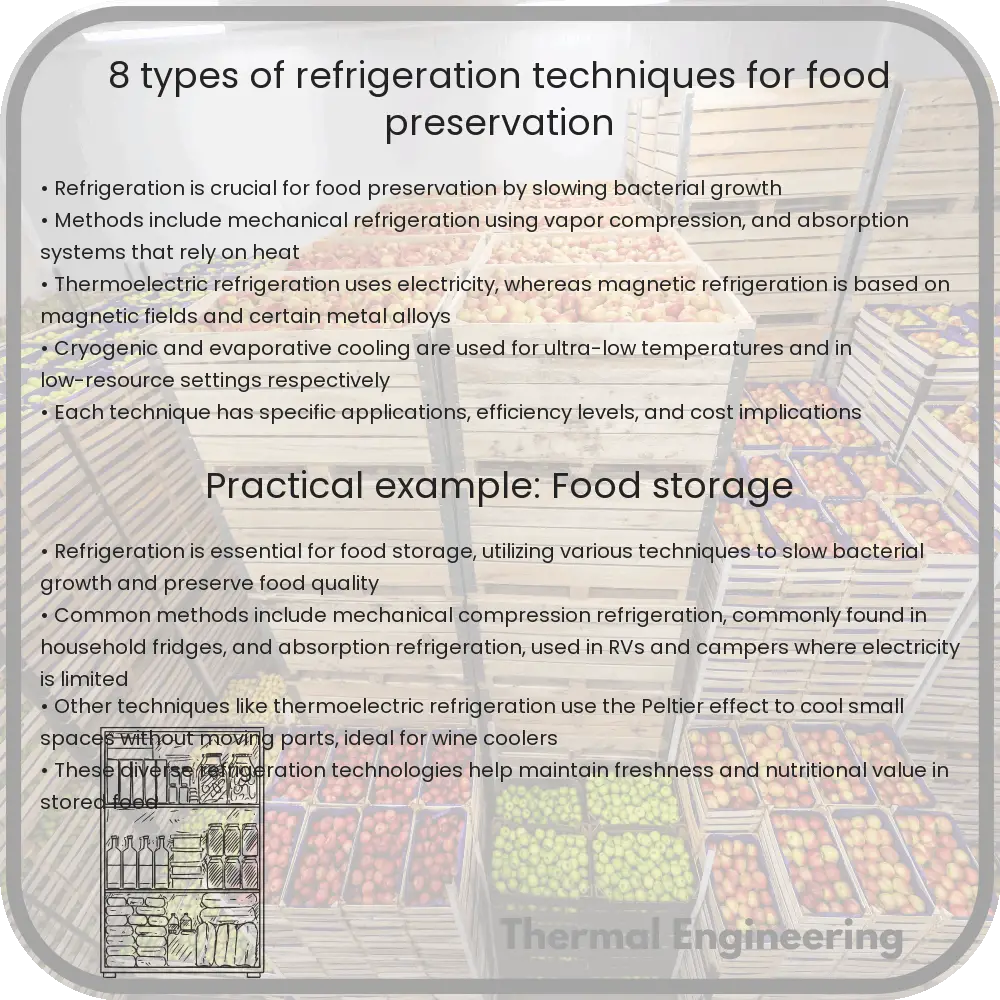
Refrigeration is a critical process in food preservation, helping to keep perishables like fruits, vegetables, dairy products, and meats fresh for longer periods. This technology slows down the activity of bacteria, thus delaying spoilage and maintaining nutritional value and flavor. Here, we explore eight fundamental refrigeration techniques used in food preservation.

1. Mechanical Compression Refrigeration

The most common form of refrigeration, mechanical compression refrigeration systems work by compressing a refrigerant, then allowing it to expand, which cools it. The cycle involves evaporation, compression, condensation, and expansion of the refrigerant in a closed system. Typically used in household refrigerators and air conditioning units, this technique is effective for controlling the temperature with high precision.

2. Absorption Refrigeration

Absorption refrigeration uses a heat source to provide the energy needed to drive the cooling process. This system utilizes a refrigerant, which is absorbed by a secondary fluid called an absorbent. Heat is applied, causing the refrigerant to evaporate from the absorbent, and then it is condensed and evaporated in a cycle, producing a cooling effect. This type is most often used in industrial applications and refrigerators powered by gas, such as those in RVs.

3. Thermoelectric Refrigeration

This form of refrigeration uses the Peltier effect, which occurs when electricity is passed through a circuit of two different materials, creating a temperature difference. The heat is absorbed from one side of the device (cooling the interior) and transferred to the other side. Thermoelectric refrigerators are popular for portable cooler applications and small cooling systems.

4. Evaporative Cooling

Evaporative cooling is based on the principle that water requires heat to evaporate. In this system, air passes through a moistened pad, and as the water evaporates, it draws heat from the air, cooling it. This type of cooling is especially effective in dry climates and is used in cooling towers and some types of air conditioners.

5. Magnetic Refrigeration

Magnetic refrigeration is an innovative technology that cools materials through the magnetocaloric effect. When a magnetic material is placed in a magnetic field, it heats up. Removing the field causes it to cool down. Reciprocating this process can produce a refrigeration cycle that is highly efficient and environmentally friendly. It’s currently under development and research for practical applications.

6. Vapour Injection Refrigeration

Enhancing the efficiency of traditional heat pump and refrigeration cycles, vapor injection involves injecting refrigerant vapor into the compression cycle, reducing compressor work and improving efficiency. This technique is mostly seen in advanced commercial refrigeration systems.

7. Jet Refrigeration

Jet refrigeration, also known as ejector refrigeration, uses a high-speed jet of fluid to cool an area. This technique can employ various fluids but is often based on water or air and does not involve moving parts, making it less susceptible to mechanical failure. It’s particularly used in circumstances requiring the cooling of large volumes, like industrial facilities.

8. Cryogenic or Low-Temperature Refrigeration

Cryogenic refrigeration involves extreme cold temperatures, often below -150 degrees Celsius (-238 degrees Fahrenheit). It uses substances like liquid nitrogen or solid carbon dioxide (dry ice) to achieve these temperatures, primarily in the transport and preservation of medical supplies or highly perishable goods.

Each of these refrigeration techniques has specific applications, advantages, and limitations. The choice of which to use typically depends on factors like the intended application, efficiency, cost, and environmental impact. Understanding these various methods helps in selecting the right refrigeration technology for food preservation and other needs.

7 Types of Heat Transfer in Ocean Thermal Energy

Learn about the seven heat transfer mechanisms essential for the efficiency of Ocean Thermal Energy Conversion (OTEC) systems.

7 Types of Heat Transfer in Ocean Thermal Energy

Understanding Heat Transfer in Ocean Thermal Energy Conversion Systems

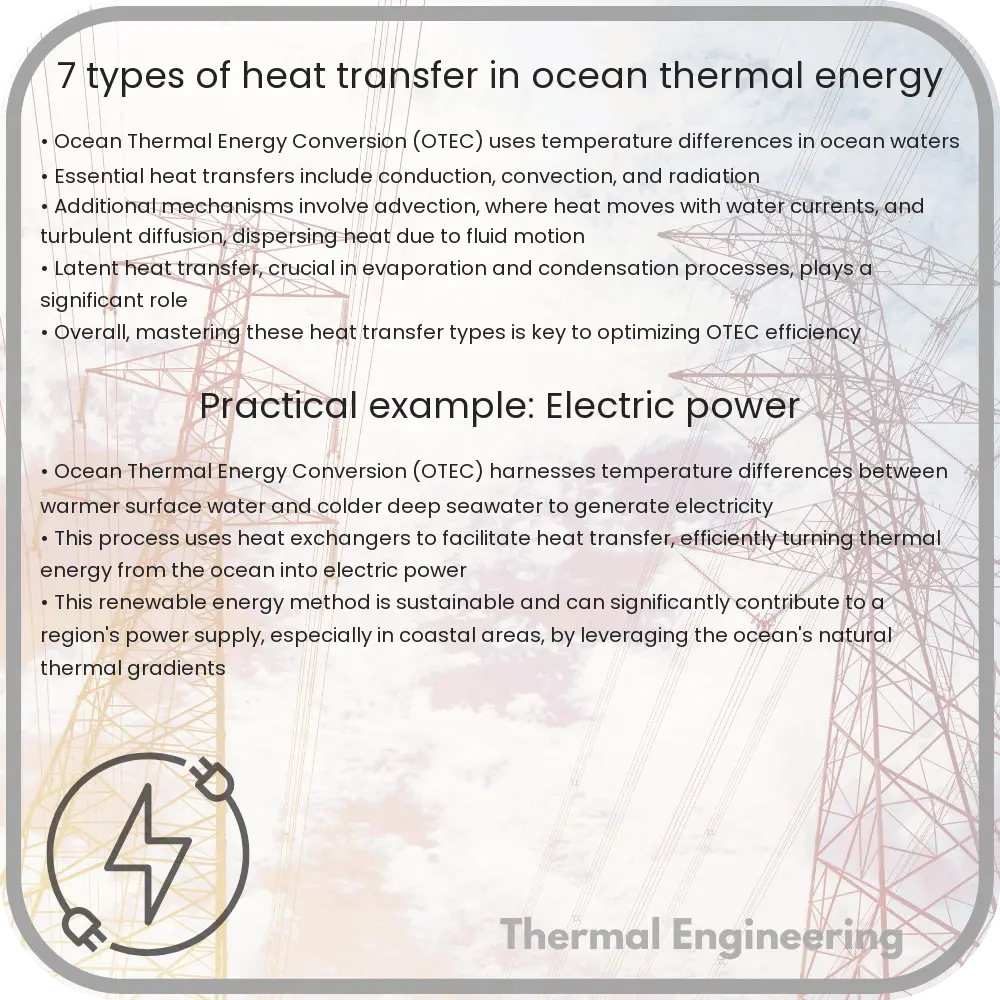
Ocean Thermal Energy Conversion (OTEC) is an innovative method of renewable energy generation that harnesses the temperature differential between the warmer surface waters of the ocean and the much colder deep sea water. This process relies heavily on the principles of heat transfer, employing various mechanisms to effectively convert thermal energy into useful mechanical or electrical energy. Here, we explore seven types of heat transfer mechanisms that play vital roles in the functionality of OTEC systems.

1. Conduction

Conduction is the transfer of heat through a material without the material itself moving. In OTEC, this occurs in the heat exchangers where the wall separating the warm surface water from the working fluid conducts heat, causing the fluid to vaporize.

2. Convection

Convection is the heat transfer due to the bulk movement of molecules within fluids (gases and liquids), carrying heat along with them. In OTEC systems, convection occurs when warm surface seawater is pumped into the evaporator, transferring its heat to the working fluid, which is usually a low-boiling-point organic fluid.

3. Radiation

Radiation is the transfer of energy by electromagnetic waves. In the context of OTEC, while radiation is not a primary method of energy transfer within the system, thermal radiation losses from pipes and equipment can affect the overall efficiency of the system. Insulating materials are used to minimize these losses.

4. Evaporation

Evaporation plays a crucial role in OTEC systems. When the warm sea water is introduced to the low-pressure environment of the evaporator, the heat transfer to the working fluid increases the fluid’s temperature and pressure, causing it to vaporize. This vaporization process captures thermal energy in the form of latent heat.

5. Condensation

Condensation is the reverse of evaporation and is equally critical in OTEC systems. After the working fluid vapor drives the turbine, it passes into the condenser where cold deep seawater is used to cool the vapor. The release of latent heat occurs as the vapor condenses back to a liquid state, transferring heat to the cold water.

6. Advection

Advection refers to the transfer of heat or matter by the flow of a fluid, particularly in a large scale. In OTEC, advection occurs as large volumes of warm surface water and cold deep water are continuously moved through the system, affecting the temperature and dynamics of the immediate marine environment.

7. Phase Change material (PCM) Integration

In advanced OTEC designs, phase change materials (PCMs) are utilized to store and release heat depending on the state of the working fluid. PCMs absorb heat when changing from solid to liquid and release heat when changing back from liquid to solid. This helps in stabilizing the delivery of thermal energy and increasing the overall efficiency of the system.

Each type of heat transfer mechanism in an OTEC system has its own specific role that contributes to the efficient conversion of thermal gradients in the ocean into usable energy. The interplay between these different types of heat transfers ensures the optimal operation of OTEC plants, making it a promising sustainable energy technology for tropical regions with large oceanic temperature differences.

10 Types of Fluid Dynamics Tools for Engineers

Explore essential fluid dynamics tools used by engineers in various fields to analyze and solve fluid-related problems efficiently.

10 Types of Fluid Dynamics Tools for Engineers

10 Types of Fluid Dynamics Tools for Engineers

Fluid dynamics plays a critical role in engineering, influencing fields such as aerospace, automotive, civil, and chemical engineering. This branch of physics deals with the study of fluids (liquids, gases, and plasmas) and the forces acting on them. Engineers use a variety of tools to analyze and solve fluid dynamics problems. Here’s a list of 10 essential types of fluid dynamics tools that engineers commonly utilize:

1. Computational Fluid Dynamics (CFD) Software

CFD software is used to simulate fluid motion and heat transfer. This tool uses numerical methods and algorithms to solve and analyze problems that involve fluid flows. Examples of popular CFD software include ANSYS Fluent, COMSOL Multiphysics, and OpenFOAM.

2. Wind Tunnels

Wind tunnels are used to test the aerodynamics of objects. By moving air past an object fixed in the tunnel, engineers can study the flow of air and its effects, which is crucial in the design of aircraft, automobiles, and buildings.

3. Particle Image Velocimetry (PIV)

PIV is an optical measurement technique to visualize and analyze fluid flow. It uses laser light to illuminate particles seeded in the fluid and captures their movement over time with cameras, which helps to map velocity fields.

4. Laser Doppler Anemometry (LDA)

LDA is a technique used to measure the velocity of a fluid at a specific point. It works by detecting frequency shifts from laser light scattered by particles moving with the fluid, providing accurate, non-intrusive velocity data.

5. Hot-Wire Anemometers

Often used in wind tunnel testing and HVAC applications, hot-wire anemometers measure fluid velocity based on heat loss from a wire heated up to a constant temperature, which is proportional to the speed of the airflow.

6. Pitot Tubes

Pitot tubes are simple devices used to measure fluid flow velocity. The device is inserted into the flow and uses the difference in pressure from moving fluid to calculate the velocity based on Bernoulli’s principle.

7. Flow Visualization Techniques

Flow visualization includes methods like smoke or dye streams, which help engineers qualitatively understand fluid flow patterns. These techniques are especially useful in complex flows where detailed visual observations are necessary.

8. Pressure Transducers

Pressure transducers are used to measure fluid pressure within a system. They convert pressure into an electrical signal and are essential for monitoring and controlling fluid systems in industries.

9. Rheometers

Rheometers are instruments used to measure the properties of fluids that have complex flow characteristics, like non-Newtonian fluids. They are crucial in industries where understanding the fluid’s viscosity is essential for processing and quality control.

10. Flow Meters

Flow meters are used to measure the flow rate or quantity of a gas or liquid moving through a pipe. There are many types of flow meters, including volumetric flow meters and mass flow meters, each suitable for different applications.

Understanding and utilizing these tools allows engineers to innovate and optimize designs across various fields, ensuring efficiency, safety, and performance in fluid-related technologies.