Facebook Instagram Youtube Twitter

How does thermal monitoring protect equipment

Learn how thermal monitoring is utilized to safeguard equipment, enhance safety, and improve efficiency across various industries.

How does thermal monitoring protect equipment

Understanding Thermal Monitoring in Equipment Protection

Thermal monitoring is a crucial technique employed in various industries to ensure the longevity and safety of equipment. High temperatures can cause severe damage to machinery, including overheating, system failure, and safety hazards. This article explains how thermal monitoring works and why it is an essential aspect of equipment maintenance and protection.

The Basics of Thermal Monitoring

Thermal monitoring involves tracking the temperature of equipment during operation. Sensors placed at critical points on the machine detect and monitor temperatures continuously. The data collected by these sensors is sent to a control system, where it is analyzed in real-time. This allows engineers to keep an eye on the operational heat of the equipment and act swiftly to make adjustments if temperatures exceed safe thresholds.

Key Components of Thermal Monitoring Systems

  • Temperature Sensors: Devices such as thermocouples, resistance temperature detectors (RTDs), and infrared sensors are commonly used. Each type has benefits and applications where it is most effective.
  • Data Acquisition System: This system collects data from the sensors and conveys it to the monitoring software or control center.
  • Control Software: Software that analyses data, displays temperature readings, and triggers alerts or automatic shutdowns if temperatures exceed preset limits.

Benefits of Implementing Thermal Monitoring

  • Prevent Overheating: By keeping an eye on temperature increases, thermal monitoring can trigger alarms or even shutdown mechanisms to prevent overheating, protecting equipment from damage.
  • Energy Efficiency: Proper temperature management can lead to more efficient operation of equipment, reducing energy consumption and costs.
  • Maintenance and Downtime Reduction: Regular thermal monitoring can help detect potential issues before they lead to failure, thereby reducing maintenance needs and avoiding unplanned downtimes.
  • Safety: High temperatures can pose safety risks, including the risk of fires. Monitoring systems help maintain safe operating conditions for both machinery and personnel.

Real-world Applications

Thermal monitoring is applied in a variety of settings spanning multiple industries. For instance:

  • Manufacturing: In machining operations, thermal monitoring ensures tools do not overheat, compromising product quality.
  • Electrical Engineering: In power plants and substations, it is crucial to monitor transformers and generators to prevent overheating that can lead to power failures.
  • Computing: Servers and data centers use thermal monitoring extensively to avoid overheating in dense computing environments which could lead to massive data losses.
  • Automotive: In vehicles, thermal monitoring ensures engines and brake systems operate within safe temperature ranges, enhancing both performance and safety.

Conclusion

Thermal monitoring is an essential aspect of modern engineering, playing a pivotal role in equipment safety and efficiency. By incorporating advanced sensors and sophisticated control systems, industries can safeguard their operations against the risks associated with excessive heat. As technology advances, the implementation of effective thermal monitoring systems continues to evolve, enhancing their capabilities and the level of protection they offer to both equipment and personnel.

How does thermal optimization improve computer performance

Learn how thermal optimization improves computer performance, efficiency, and lifespan by effectively managing heat generation and dissipation.

How does thermal optimization improve computer performance

Understanding Thermal Optimization in Computers

Thermal optimization is a crucial aspect of computer engineering that significantly impacts the performance and longevity of computing systems. As electronic devices operate, they generate heat. If this heat is not properly managed, it can lead to higher power consumption, reduced performance, and even permanent damage to components. Here’s how proper thermal management can lead not only to a cooler system but also a more efficient and faster one.

Basics of Heat Generation in Computers

The primary source of heat in a computer is its central processing unit (CPU), although other components like the graphics processing unit (GPU), power supply, and even the motherboard contribute to the overall heat generation. The heat production in a CPU or GPU is mainly due to electrical resistance and the switching of millions of transistors within these components. According to Joule’s law, the power of heat generated can be expressed as P = I2R, where P is the power, I is the current, and R is the resistance.

Effects of Excessive Heat on Computer Performance

Excessive heat affects computer systems in several detrimental ways including:

  • Throttling: To prevent overheating, CPUs and GPUs reduce their clock speed which significantly lowers performance.
  • Instability: High temperatures can lead to unexpected system behaviors and crashes.
  • Reduced lifespan of components: Persistent high temperatures can shorten the life of almost all electronic components.

Strategies for Thermal Optimization

Enhancing a computer’s thermal performance involves various strategies focusing on efficient heat dissipation and management:

  • Improved Cooling Solutions: This involves using more efficient heatsinks, fans, and even liquid cooling systems to help disperse heat more effectively.
  • Thermal Interface Materials (TIMs): Applying high-quality thermal paste or pads between the CPU and its cooler to improve heat transfer.
  • Optimizing Airflow: Designing the computer’s case layout and fan setup to maximize airflow can significantly reduce hotspots within the enclosure.
  • Component Selection: Choosing components that balance performance with thermal efficiency can reduce overall heat generation.

Technological Advances in Thermal Optimization

Recent advances in technology have led to smarter thermal management solutions, such as:

  • Dynamic Frequency Scaling: Also known as “speed-step” technology, this allows a processor to adjust its speed (and thus heat output) based on the actual workload.
  • Heat Sensors and Algorithmic Cooling: Modern CPUs and GPUs are equipped with multiple heat sensors. These sensors allow the system to adjust fan speeds and core frequencies dynamically in response to temperature changes.
  • Phase-Change Materials (PCMs): These materials absorb heat when they melt and release heat when they solidify, helping to stabilize component temperatures.

Conclusion

Thermal optimization in computers is not just about preventing overheating; it’s about enhancing overall system performance and efficiency. By managing and dissipating heat effectively, computers can run faster, perform better, and last longer. With the ongoing advancements in computing technology, thermal management continues to play a pivotal role in the design and operation of modern computing systems.

How does thermal jet machining cut materials

Learn about thermal jet machining, a precise cutting technique using high-speed water and abrasives, ideal for materials sensitive to heat.

How does thermal jet machining cut materials

Understanding Thermal Jet Machining

Thermal jet machining, also known as abrasive waterjet cutting, is a fascinating engineering technique used to cut a variety of materials with high precision. This process utilizes a combination of water and abrasive materials accelerated by thermal energy to slice through substances effectively. Let’s delve into the fundamental principles that allow thermal jet machining to perform its tasks with such efficiency.

How Thermal Jet Machining Works

The core principle behind thermal jet machining lies in the conversion of thermal energy into mechanical energy. The process begins with the generation of a fine, high-speed stream of water. To this stream, an abrasive material, usually garnet, is added. The mixture is then propelled through a precision nozzle at speeds upward of 800 meters per second.

The primary steps involved in the process are:

  • Generating High-Pressure Water: Water is pressurized to extremely high levels, typically between 20,000 to 60,000 psi. This pressurization is crucial because the water velocity needs to be sufficient to carry the abrasive particles and erode the material being cut.
  • Mixing With Abrasive: The high-pressure water is mixed with an abrasive substance. The choice of abrasive depends on the material being cut. Garnet is commonly used due to its sharpness and hardness.
  • Jet Formation: The mixture is then directed through a small-diameter nozzle. This nozzle focuses the water-abrasive mixture into a coherent jet with very high kinetic energy, capable of cutting through materials by erosion.

The effectiveness of thermal jet machining can be attributed to the high kinetic energy of the abrasive particles, which are capable of micro-erosion. This method allows for precise cuts without imparting thermal stress to the material, a common issue with techniques like laser or plasma cutting.

Materials Suitable for Thermal Jet Machining

Thermal jet machining is versatile and can be used on a wide range of materials, including:

  • Metal
  • Stone
  • Ceramic
  • Glass
  • Composite materials

Its capacity to cut complex shapes and intricate patterns in materials that are sensitive to high temperatures makes it particularly valuable in industries requiring precise dimension control and fine finishes, such as aerospace, automotive, and art restoration.

Advantages of Thermal Jet Machining

  • No Thermal Deformation: Since the process does not generate significant heat, the structural integrity and physical properties of the material being cut remain unaltered.
  • High Precision: The accuracy and precision of cuts achievable with thermal jet machining are comparable to those obtained through more traditional machining processes.
  • Versatility: Able to cut a variety of materials and thicknesses with the same setup.
  • Environmentally Friendly: Produces no hazardous waste and typically uses recyclable abrasives and biodegradable water additives.

In conclusion, thermal jet machining stands out as a powerful, versatile, and precise cutting method used across various industries. This technique leverages the kinetic energy of water and abrasive particles to cut materials without thermal distortions, ensuring high-quality finishes and maintaining the integrity of the materials.

How does thermal management affect battery life

Learn how thermal management influences battery life and performance in devices like smartphones and electric vehicles.

How does thermal management affect battery life

Understanding the Impact of Thermal Management on Battery Life

Thermal management plays a critical role in the performance and longevity of batteries, particularly in devices ranging from smartphones to electric vehicles. Managing the temperature of a battery is essential because both excessively high and low temperatures can significantly impact its life and functionality.

Why is Thermal Management Important?

Batteries are designed to operate within a specific temperature range. Deviating from this range can lead to various problems, greatly affecting the efficiency, safety, and durability of the battery. Proper thermal management helps in maintaining this range, thus optimizing battery performance and extending its lifespan.

Effects of Temperature on Battery Life

  • High Temperatures: When a battery operates in high temperatures, it can cause accelerated chemical reactions within the battery. This can lead to faster degradation of the materials inside the battery, reducing its overall capacity and lifespan. Specifically, the decomposition of the electrolyte and the breakdown of the electrode materials occur much faster.
  • Low Temperatures: At low temperatures, the internal resistance of the battery increases, which makes it harder for the battery to deliver the required power. Chemical reactions slow down, reducing the efficiency of the battery. This often results in a noticeable drop in performance, particularly in terms of power output and recharging rates.

Thermal Management Techniques

Various techniques are employed in different devices and systems to manage battery temperature effectively:

  1. Air Cooling: This is one of the simplest methods, using natural or forced air flow to regulate the temperature. While cost-effective, it might not be sufficient for high-density power applications like electric vehicles.
  2. Liquid Cooling: More efficient than air cooling, this method involves circulating a coolant around the battery to absorb and dissipate heat. Liquid cooling is particularly useful in high-performance applications where precise temperature control is crucial.
  3. Phase Change Materials (PCMs): PCMs absorb and release thermal energy during the process of melting and solidifying at specific temperatures, providing a self-regulating cooling effect. They are increasingly used in portable electronics and electric vehicles.
  4. Thermal Insulation: Used to shield batteries from extreme temperatures, thermal insulation is critical in environments where external temperature conditions can adversely affect the battery.
  5. Advanced Battery Management Systems (BMS): Modern BMS not only monitor the battery’s state of charge (SOC) and state of health (SOH), but also actively manage its temperature through sensors and algorithms designed to optimize thermal conditions.

Conclusion

Effective thermal management is crucial for the longevity and efficiency of batteries. By understanding and implementing various thermal management strategies, manufacturers can enhance the performance of their batteries and, consequently, of their electronic devices or electric vehicles. For users, recognizing the importance of thermal conditions can help in maintaining optimal battery health and operation.

Ultimately, while the technology behind batteries and their management systems continues to advance, the principles of good thermal management remain essential to maximizing battery life and functionality.

How does thermal mapping guide energy efficiency

Explore how thermal mapping, also known as thermal imaging or thermography, enhances energy efficiency by identifying areas of energy waste in buildings and industrial processes.

How does thermal mapping guide energy efficiency

Understanding Thermal Mapping and Its Role in Enhancing Energy Efficiency

Thermal mapping, also known as thermal imaging or thermography, is a vital tool in understanding and improving the energy efficiency of buildings and industrial processes. By providing a visual representation of temperature variations, thermal mapping allows engineers and energy auditors to identify and address areas of energy waste.

How Thermal Mapping Works

Thermal mapping utilizes infrared cameras to detect infrared radiation emitted by objects. The amount of radiation emitted by an object increases with its temperature, allowing these cameras to create images or maps that show temperature variations across surfaces. This technology can be used both indoors and outdoors to find issues that might not be visible to the naked eye.

Applications of Thermal Mapping in Energy Efficiency

  • Identifying Heat Loss in Buildings: In the context of buildings, thermal maps can identify areas where heat is leaking due to inadequate insulation, gaps in construction, or failing seals. By addressing these issues, buildings can maintain internal temperatures more effectively, reducing the load on heating and cooling systems.
  • Assessing HVAC Systems: Thermal images can reveal problems in heating, ventilation, and air conditioning (HVAC) systems, including blockages, leaks, or uneven distribution of air. Proper maintenance guided by thermal mapping can make these systems operate more efficiently, saving energy and reducing costs.
  • Improving Industrial Processes: In industrial settings, thermal mapping helps monitor and optimize the operation of machinery. Overheated parts can be early indicators of failure, and addressing these hotspots can prevent downtime and improve energy consumption. Additionally, thermal imaging can help in the design of energy-efficient industrial plants by mapping thermal processes.

Benefits of Thermal Mapping

Thermal mapping provides several benefits that directly contribute to energy efficiency:

  1. Cost Reduction: By pinpointing areas where energy is wasted, businesses and homeowners can take targeted actions to reduce their energy bills.
  2. Enhanced Comfort: For residential and commercial buildings, addressing thermal inconsistencies can create a more comfortable living and working environment.
  3. Environmental Impact: Reducing energy consumption also lowers greenhouse gas emissions, contributing to environmental conservation efforts.
  4. Increase in Property Value: Buildings with proven energy efficiency measures, including those identified through thermal mapping, often enjoy higher market values.

Conclusion

Thermal mapping is a powerful tool that plays a crucial role in the drive towards energy efficiency. Whether it’s used in building construction, HVAC maintenance, or industrial processes, the insights provided by thermal imaging can lead to significant energy savings and environmental benefits. As technology advances, the adoption of thermal mapping techniques in energy audits and regular maintenance schedules is likely to become more common, further aiding the global push for sustainability.

How does thermal fogging control pests

Learn about thermal fogging, an effective pest control method that uses heat to vaporize insecticides into a fog, reaching difficult areas and controlling pest populations efficiently.

How does thermal fogging control pests

Understanding Thermal Fogging for Pest Control

Thermal fogging is a pest control method that uses heat to disperse chemical fog or mist into an area to eliminate insects and other pests. This technique is particularly effective in large open spaces or complex environments where pests hide and breed. In this article, we’ll explore how thermal fogging works, its applications, and its advantages and disadvantages.

How Does Thermal Fogging Work?

Thermal fogging involves three key components: the fogging unit, the carrier solution, and the active ingredient (typically an insecticide). The process begins when the fogging machine heats a carrier solution mixed with insecticides until it turns into a fog or smoke. This transformation occurs in the machine’s heating chamber where temperatures can reach up to 500°C. At this high temperature, the solution is vaporized into fine droplets, which then condense when they contact the cooler outside air, forming a dense and visible fog.

The size of the droplets is crucial for the effectiveness of fogging. Most thermal foggers produce droplets that are between 0.5 to 50 micrometers in diameter. This small size allows the fog to travel and penetrate deep into spaces where pests live, such as crevices, under foliage, and other hard-to-reach areas.

Applications of Thermal Fogging

  • Public Health: Used extensively to control mosquito populations to combat diseases like dengue fever, Zika virus, and malaria.
  • Agriculture: Helps in the protection of crops by controlling pest populations in large farming areas.
  • Urban Areas: Effective in managing pests in parks, sewage systems, and residential areas.
  • Warehouses and Factories: Used to treat large buildings and storage facilities where goods are vulnerable to pest infestations.

Advantages of Thermal Fogging

  • Efficient Coverage: Can quickly cover large areas with minimal effort, reaching pests hidden from view or located in difficult terrain.
  • Speed: The process is quick, allowing areas to be treated in a short period, which is crucial in emergency pest outbreaks.
  • Penetration: The fine droplet size enables the fog to deeply penetrate potential breeding sites, ensuring a more thorough pest control.

Disadvantages of Thermal Fogging

  • Chemical Exposure: Raising safety and health concerns, especially regarding the inhalation of chemical residues.
  • Environmental Impact: Potential impacts on non-target species and the surroundings if not correctly managed.
  • Resistance: Overuse can lead to resistance in pest populations, diminishing the long-term effectiveness of the treatment.

Conclusion

Thermal fogging is a potent tool for pest control, particularly when dealing with large-scale infestations or in areas where pests are difficult to reach with traditional spraying techniques. While it offers significant advantages in terms of efficiency and coverage, careful consideration must be given to the formulation and application of the chemicals used to minimize negative effects on health and the environment. The key to effective thermal fogging is a balanced approach that considers both immediate pest control needs and long-term sustainability and safety.

How does thermal grouting stabilize structures

Learn about thermal grouting, an engineering technique that enhances structural stability by improving foundation quality and thermal properties.

How does thermal grouting stabilize structures

Understanding the Role of Thermal Grouting in Stabilizing Structures

Thermal grouting is a sophisticated engineering technique used to enhance the stability and durability of structures by improving their foundation. But what exactly is thermal grouting, and how does it help in stabilizing structures? This article demystifies the concept and explains its significance in modern engineering.

What Is Thermal Grouting?

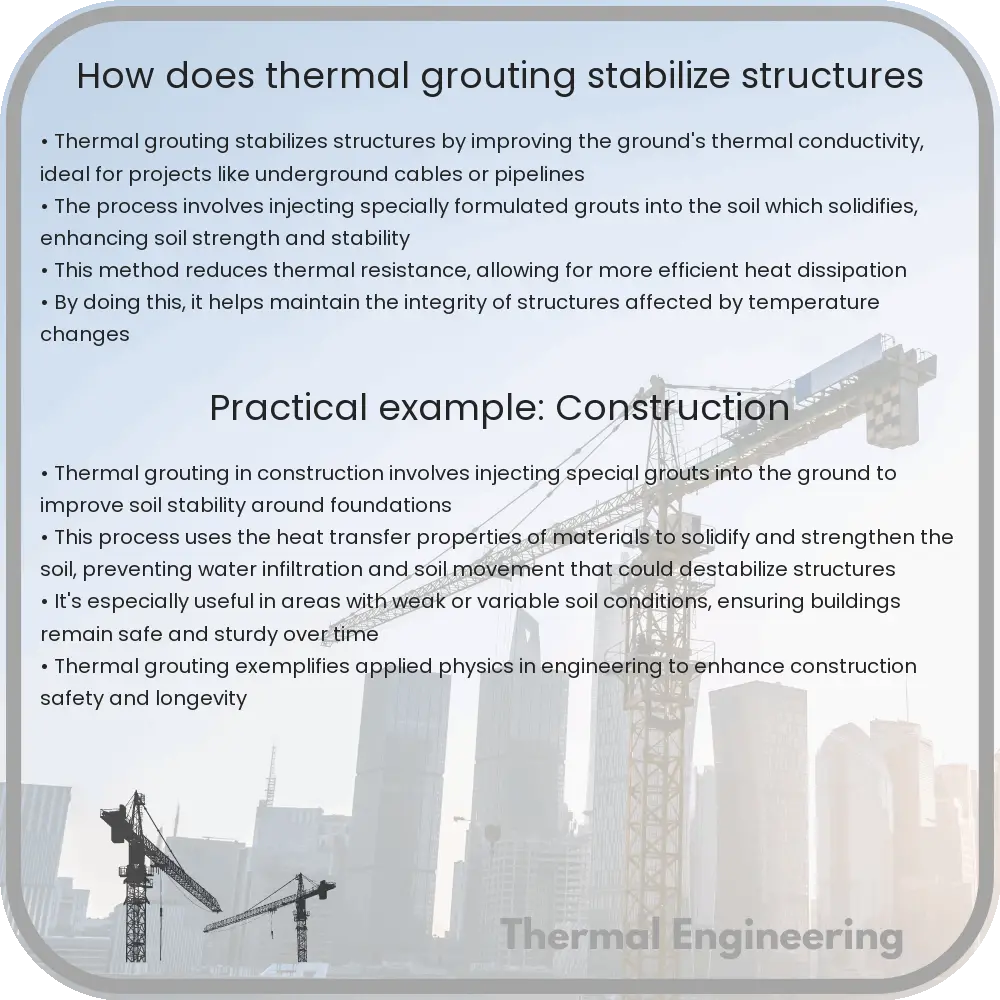
Thermal grouting is a method that involves injecting specially designed grouts into the ground, around or under a structure, to strengthen its foundation or to modify the thermal properties of the substrate. This injected material can be a form of cementitious or chemical mixture depending on the ground condition and the intended outcome. The primary purpose of thermal grouting is to address issues related to ground stability, soil permeability, and thermal conductivity.

Key Applications of Thermal Grouting

  • Stabilization: Thermal grouting helps in stabilizing loose or weak soils, which are incapable of supporting structures adequately. By filling voids and consolidating the soil, grouting increases the ground’s load-bearing capacity.
  • Sealing: It also acts as a sealant to prevent water ingress, which can lead to soil erosion or freeze-thaw damage in colder climates.
  • Thermal Enhancement: In projects requiring temperature control, such as underground cables or pipelines, thermal grouting improves the soil’s ability to conduct heat, thereby maintaining optimal temperature ranges.

How Does Thermal Grouting Work?

The process of thermal grouting involves several steps. First, assessment of the site and soil properties is conducted to determine the appropriate grout formulation and injection strategy. Following this, grout is pumped into pre-drilled holes at determined depths and spreads through the soil or rock layers. As the grout cures, it forms a solid mass, altering the physical and thermal characteristics of the foundation material.

  1. Site Assessment: Evaluating the geotechnical properties of the site to tailor the grouting composition and procedure.
  2. Grout Preparation: Mixing grout in accordance to the specific requirements of the project for optimum performance.
  3. Injection: Carefully pumping the grout into the ground through drilled holes at strategic locations and depths.
  4. Curing: Allowing time for the grout to harden, thereby integrating with the surrounding material to form an improved, unified ground structure.

Benefits of Thermal Grouting

Implementing thermal grouting offers numerous benefits:

  • Increased Stability: By reinforcing soil particles and filling voids, thermal grouting significantly enhances the stability of the structure.
  • Longevity: It helps in prolonging the life of a structure by mitigating issues like water damage and soil shifting, common causes of structural failures.
  • Cost-effectiveness: Compared to more extensive foundation repairs or replacements, grouting is often a more economical choice.
  • Environment-friendly: Modern grout materials are designed to be less invasive and more environmentally friendly compared to traditional methods.

Conclusion

Thermal grouting is an essential technique in the field of engineering, particularly when it comes to improving the stability and durability of structures. Utilizing specialized grout to reinforce soil or modify its properties ensures buildings, roads, and other infrastructures remain safe and functional over their expected lifespans. By understanding and applying these principles, engineers can effectively tackle challenges associated with unstable or inadequate ground conditions.

How does thermal insulation paint work

Learn about thermal insulation paint, a coating designed to reduce heat transfer and enhance building energy efficiency.

How does thermal insulation paint work

Understanding Thermal Insulation Paint

Thermal insulation paint, often referred to as insulating paint, is a type of coating designed to reduce heat transfer through surfaces on which it is applied. It has become a popular solution in both residential and commercial settings for enhancing a building’s energy efficiency. This article explores the science behind how thermal insulation paint works and its effectiveness in heat management.

What is Thermal Insulation Paint?

Thermal insulation paint is made from a variety of materials which can reflect heat and lower thermal conductivity. Some common ingredients include ceramic or glass microspheres which are hollow and vacuum-sealed. These microspheres act as barriers to heat flow, significantly reducing thermal energy transfer through the paint layer.

How Does It Work?

The primary mechanism through which thermal insulation paint operates is by reflecting radiant heat. This is achieved through the reflective properties of the materials used in the paint. When sunlight or other sources of heat hit the painted surface, rather than absorbing the heat, the paint reflects it away, keeping the underlying material and the internal environment cooler.

The effectiveness of the paint can often depend on the thickness of the application and the specific materials used. The ceramic or glass microspheres play a crucial role. Each microsphere is a tiny barrier that disrupts and reduces the flow of heat, thanks to its structure and the vacuum inside which minimizes heat transfer by conduction.

Application and Effectiveness

Thermal insulation paint can be applied like any other paint, using a brush, roller, or sprayer. For maximum effectiveness, surfaces should be clean and dry before application. While the insulating properties of the paint increase with thickness, too many layers can lead to other issues like cracking or flaking, so it is important to follow the manufacturer’s recommendations.

The effectiveness of thermal insulation paint in terms of energy savings can vary. Factors such as the climate, the type of structure, and how the building is used can all influence the results. Generally, thermal insulation paint is more effective in warmer climates where the primary concern is reflecting sunlight and reducing cooling costs.

Benefits and Limitations

  • Energy Efficiency: By reflecting heat, insulating paint can help reduce energy costs associated with air conditioning, making buildings more energy-efficient.
  • Easy to Apply: Similar to regular paint, thermal insulation paint is relatively easy to apply, making it a convenient option for many homeowners and builders.
  • Versatility: It can be used on a variety of surfaces including walls, roofs, and around windows to enhance overall thermal insulation.

However, there are some limitations:

  • Insulation Limit: While effective at reflecting heat, thermal insulation paint does not replace traditional insulation methods such as foam or fiberglass. Its insulation capability is limited compared to these materials.
  • Longevity: The lifespan of thermal insulation paint can be shorter than traditional insulation materials, requiring reapplication over time.
  • Cost: Initial costs may be higher than expected, particularly if multiple layers are needed to achieve desired energy efficiency levels.

Conclusion

Thermal insulation paint offers a novel approach to reducing heat transfer and enhancing the energy efficiency of buildings. While it is not a substitute for more traditional forms of insulation, it can be an effective complement, especially in scenarios where structural modifications are limited or impractical. As with any building improvement, evaluating the specific needs and conditions of your property will help determine the most effective use of thermal insulation paint.

How does thermal equilibrium establish in a system

Learn about thermal equilibrium, a fundamental concept in thermodynamics where objects or systems reach equal temperatures with no net heat flow.

How does thermal equilibrium establish in a system

Understanding Thermal Equilibrium

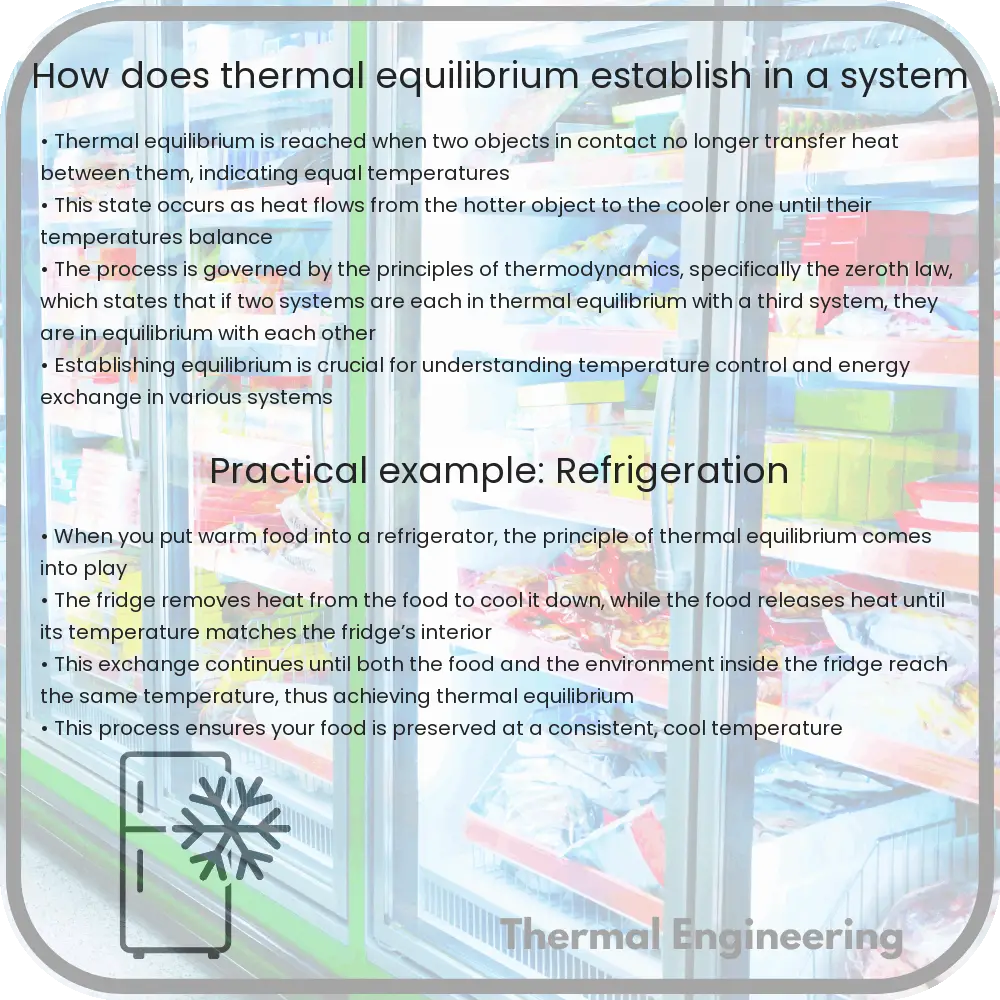
Thermal equilibrium is a key concept in thermodynamics, dealing with the distribution and balance of temperature in different objects or systems. When two objects or systems come into contact, they exchange energy until they reach a state where their temperatures are equal, and no net heat flow occurs between them. This state is known as thermal equilibrium. In this article, we will explore the process through which thermal equilibrium is established.

How Thermal Equilibrium is Achieved

When discussing thermal equilibrium, it’s important to understand heat transfer and the laws of thermodynamics that govern it. Heat transfer can occur in three primary ways: conduction, convection, and radiation. Each plays a role in achieving thermal equilibrium depending on the conditions and materials involved.

  • Conduction: This is the transfer of heat through a solid material when there is a temperature gradient. Heat flows from the warmer to the cooler area until temperatures equalize.
  • Convection: This method involves the movement of heat by the physical movement of fluids (liquids or gases). Warmer parts of a fluid rise, while cooler parts sink, creating a heat transfer cycle until equilibrium.
  • Radiation: Heat transfer occurs through electromagnetic waves and doesn’t require a medium (like air or water). Any object with a temperature above absolute zero emits radiation.

The Zeroth Law of Thermodynamics

The concept of thermal equilibrium is fundamentally rooted in the Zeroth Law of Thermodynamics, which states:

“If two systems are in thermal equilibrium separately with a third system, then they must be in thermal equilibrium with each other.

This law implies that thermal equilibrium is transitive and helps define temperature as a fundamental and measurable property of matter.

Quantitative Aspects of Thermal Equilibrium

At the microscopic level, thermal equilibrium involves a balance in the distribution of the kinetic energies of particles within systems. According to the kinetic theory of gases, temperature is a measure of the average kinetic energy of the particles in a substance. When two bodies are at different temperatures and are brought into contact, the kinetic energies of the particles are redistributed through collisions until equilibrium is reached.

The mathematical representation of heat transfer, particularly in conduction, can be expressed using Fourier’s Law:

Q = -k * A * (dT/dx)

Where:

  • Q is the heat transfer rate,
  • k is the thermal conductivity of the material,
  • A is the cross-sectional area through which heat is transferred,
  • dT/dx is the temperature gradient.

Applications and Importance

Achieving thermal equilibrium is crucial in a variety of engineering applications, including:

  • Thermal management in electronics: where devices are designed to reach equilibrium swiftly to prevent overheating.
  • HVAC systems: which maintain environmental conditions at equilibrium for comfort and safety.
  • Material processing: such as annealing, where controlled heating and cooling cycles bring materials to thermal equilibrium to improve their properties.

Understanding and controlling thermal equilibrium is not only fundamental for maintaining the efficiency and longevity of equipment but also for enhancing the comfort and safety of living environments.

Conclusion

Thermal equilibrium plays a pivotal role in everyday phenomena and technologies, from the simple act of ice melting in a drink to sophisticated thermal management systems in spacecraft. By studying how equilibrium is established, we gain insights into managing and optimizing various systems for better performance and sustainability.

Solar thermal power generation

Learn about solar thermal power generation, a technology that utilizes sunlight to produce electricity through heat conversion and steam-driven turbines.

Solar thermal power generation

Understanding Solar Thermal Power Generation

Solar thermal power generation is a technology that harnesses the sun’s energy to produce electricity. Unlike photovoltaic (PV) systems, which convert sunlight directly into electricity, solar thermal plants convert sunlight to heat using various mirror configurations. This heat is then used to produce steam that drives turbines connected to electricity generators.

How Solar Thermal Power Plants Work

The core element of solar thermal power plants is the solar field, which consists of various mirrors positioned to focus sunlight on a receiver. This collected heat is typically transferred to a fluid that transports the heat to either a storage system or directly to a heat engine, such as a steam turbine. The basic steps in the process include:

  • Collection of Sunlight: Large mirrors called heliostats track the sun and focus sunlight onto a specific target, increasing the energy intensity by concentrating the sunlight.
  • Heat Transfer: The focused sunlight heats a fluid (often molten salt, oil, or water) that flows through the receiver at high temperatures, sometimes up to 1000°F (538°C) or higher.
  • Steam Generation: The heat from the hot fluid is used to produce steam in a heat exchanger known as the steam generator.
  • Electricity Generation: The high-pressure steam then drives a turbine, which is connected to a generator. As the turbine blades turn, they spin the generator, creating electricity.
  • Condensation and Recirculation: After the steam passes through the turbine, it is cooled in a condenser, converts back to water, and is recirculated back into the system.

Types of Solar Thermal Power Systems

There are several types of solar thermal power systems, each with different designs to capture and convert the sun’s energy most efficiently:

  1. Parabolic Trough System: Uses parabolic-shaped mirrors to focus sunlight on a receiver tube positioned along the focal line of the mirror. The concentrated light heats the fluid within the tube as it passes through.
  2. Power Tower System: Employs many large mirrors (heliostats) that track the sun and focus light on a central receiver at the top of a tower. This system can achieve higher temperatures and efficiencies than parabolic troughs.
  3. Dish/Engine System: Uses a mirrored dish (similar to a satellite dish) to direct and concentrate sunlight onto a thermal receiver. The receiver transfers the heat to an engine generator.

Advantages of Solar Thermal Power

Solar thermal power generation offers several significant benefits:

  • Sustainability: It is a green technology that produces electricity without emitting greenhouse gases during operation.
  • Storage Capability: Unlike photovoltaic systems, solar thermal systems can incorporate thermal storage systems, allowing them to store energy and produce electricity even when the sun is not shining.
  • Scalability: Large-scale deployment can generate substantial amounts of electricity, suitable for helping to meet the energy needs of urban centers.

Challenges and Future Direction

Despite the advantages, solar thermal energy faces challenges such as high initial capital costs, water usage (in cooling systems), and land requirements. Advanced technologies, including improved thermal storage materials and more efficient heat exchangers, are being developed to address these issues. Moreover, combining solar thermal systems with other renewable sources or hybrid systems that use both solar PV and solar thermal technologies could enhance efficiency and reliability.

In conclusion, solar thermal power generation is a promising technology with the potential to play a crucial role in the global transition to renewable energy. By overcoming current challenges, it can significantly contribute to sustainable and reliable energy production.