Facebook Instagram Youtube Twitter

How does a thermal carafe retain heat

Learn how thermal carafes retain heat using design elements and thermodynamics to combat conduction, convection, and radiation.

How does a thermal carafe retain heat

How Does a Thermal Carafe Retain Heat?

Many of us have used a thermal carafe at some point, perhaps to keep coffee hot without the need for reheating. But how does this seemingly simple container manage to retain heat for hours? The secret lies in its design and the principles of thermodynamics it employs. Let’s take a deeper look at the engineering behind thermal carafes.

The Design of a Thermal Carafe

A thermal carafe is designed to slow down the rate of heat loss. It typically consists of a double-walled container with a vacuum between the two walls. Here are the key components:

  • Outer Shell: Usually made from materials like plastic or metal, the outer shell protects the carafe and provides an aesthetic appeal.
  • Inner Liner: The inner liner, often made of stainless steel or glass, is where the liquid is stored.
  • Vacuum Seal: The space between the inner liner and the outer shell is evacuated to create a vacuum.
  • Reflective Coating: The inner side of the outer shell and the outer side of the inner liner may be coated with a reflective material to reduce radiant heat transfer.
  • Lid: The lid is designed to be airtight to prevent heat loss due to convection and also often includes insulation materials.

Principles of Heat Retention

Understanding how heat is transferred will help us appreciate how thermal carafes are designed to minimize this transfer. Heat can be lost through conduction, convection, or radiation:

  1. Conduction: Heat moves through materials from warmer to cooler areas. In thermal carafes, conduction is minimized by the vacuum between the inner and outer walls. Without material in the vacuum to conduct heat, the transfer of heat is significantly reduced.
  2. Convection: Heat can also be transferred through the movement of fluids, such as air. The airtight lid of a thermal carafe helps prevent heat loss by stopping air currents from moving in and out of the carafe.
  3. Radiation: Heat in the form of infrared radiation can escape from warmer surfaces. The reflective coatings on the inner sides of the carafe walls help reflect this radiant heat back inside, keeping the contents warmer for longer.

Performance Factors

The efficiency of a thermal carafe can depend on several factors:

  • Quality of Vacuum: A perfect vacuum would provide the best insulation, but in practice, some gas molecules will always remain, which can carry heat across the vacuum gap by conduction. The fewer the molecules, the better the insulation.
  • Material Quality: High-quality stainless steel or specialized glass can improve the carafe’s ability to retain heat. These materials can withstand high temperatures and provide good reflectivity with appropriate coatings.
  • Seal Integrity: The tightness of the lid plays a vital role in preventing convective heat loss. Any gap allows heat to escape.

In conclusion, thermal carafes use engineering principles to address and minimize various modes of heat transfer. By effectively using materials and design strategies to combat conduction, convection, and radiation, these carafes can keep liquids hot for extended periods, making them a staple in homes and offices alike.

How do phase transitions affect material properties

Learn about phase transitions in materials, their types like first and second-order, and their effects on mechanical, electrical, and thermal properties.

How do phase transitions affect material properties

Understanding Phase Transitions and Their Impact on Material Properties

Materials exist in various states, primarily classified as solid, liquid, gas, or plasma. The transformation from one state to another through processes such as melting, freezing, vaporization, or condensation is known as a phase transition. During these transitions, materials undergo significant changes in their properties. This discussion focuses on how phase transitions affect the physical and chemical properties of materials, impacting their engineering applications.

Types of Phase Transitions

Phase transitions are generally categorized into first-order and second-order transitions:

  • First-order transitions involve a discontinuous change in entropy and enthalpy. Examples include melting, freezing, and vaporization. During these transitions, properties such as density and volume undergo abrupt changes.
  • Second-order transitions, such as the magnetic transition in ferromagnetic materials when heated above the Curie temperature, do not involve latent heat. These transitions typically manifest as continuous changes in properties like electrical conductivity and refractive index.

Effects of Phase Transitions on Material Properties

Phase transitions significantly impact material properties, including mechanical, electrical, thermal, and optical characteristics. Here are some typical changes:

  • Mechanical Properties: The strength and hardness of a material can vary dramatically between phases. For example, the brittle nature of ice changes to the fluidity of water when heated past its melting point.
  • Electrical Properties: Conductivity can alter significantly during a phase shift. Metals, for instance, lose their electrical conductivity when they transition from solid to liquid or gaseous states.
  • Thermal Properties: Heat capacity and thermal expansion coefficients can vary. For example, the specific heat of water increases when ice melts into liquid water.
  • Optical Properties: Transparency and refractive index can change. Many materials change from translucent or opaque in one phase to transparent in another.

Practical Engineering Applications

Understanding and controlling phase transitions is crucial in various engineering fields:

  • Material Science: Enhancing the performance and durability of materials depending on their operating environment requires knowledge of the effects of phase transitions.
  • Electronics: Semiconductors rely on precise control of material properties, influenced by phase changes at different temperatures.
  • Aerospace: Materials used in aerospace must withstand extreme temperature changes that occur during flights, requiring materials that maintain integrity across different phases.
  • Construction: The choice of building materials considers the expansion and contraction due to phase changes to prevent structural damage.

Conclusion

The study of phase transitions is vital in engineering to optimize the use and durability of materials in diverse environments. By understanding how the properties of materials change during different phase transitions, engineers can design more efficient, practical, and innovative solutions across a variety of applications.

How do heat pipes cool electronics

Learn how heat pipes efficiently cool electronic devices by transferring heat through evaporation and condensation, essential for device longevity.

How do heat pipes cool electronics

Understanding How Heat Pipes Cool Electronics

Heat pipes are a vital component in modern electronic devices, known for their remarkable ability to manage heat efficiently. They help prolong the life of electronic components by preventing overheating, which can lead to hardware malfunctions and failures. This article explores the principles behind heat pipes and their function in cooling electronics.

What is a Heat Pipe?

A heat pipe is a sealed tube designed to efficiently transfer heat from one point to another. It utilizes the principles of evaporation and condensation to shuttle heat with minimal temperature difference between the hot and cold interfaces. Although they’re physically simple, heat pipes are based on complex thermophysical principles.

The Components of a Heat Pipe

  • The Container: The outer shell of the tube, usually made of copper or aluminum, which holds the other components and ensures good thermal contact with the heat source and sink.
  • The Working Fluid: A liquid that absorbs heat and then vaporizes. Common choices for electronic cooling applications include water, ammonia, or acetone, depending on the required operating temperature range.
  • The Wick or Capillary Structure: This internal structure lines the inner walls of the pipe and acts as a medium to transport the liquid back to the heat source by capillary action, facilitating continuous heat transfer.

Operation of a Heat Pipe

Heat pipes operate in four primary steps:

  1. Evaporation: At the heat source end (often near a processor or heat sink in electronics), the working fluid absorbs heat and changes phase from a liquid to a vapor.
  2. Vapor flow: The vapor pressure increases as the fluid heats up, causing it to move towards the cooler end of the pipe.
  3. Condensation: Upon reaching the cooler end of the pipe, the vapor releases its heat and transforms back into a liquid. The heat released during condensation is usually transferred to a heat sink or the ambient.
  4. Liquid return: The wick or other capillary structure then draws the liquid back to the heat source by capillary action, where it can again absorb heat. This cycle repeats continually to keep the device cool.

Advantages of Using Heat Pipes

Heat pipes offer significant advantages over other cooling mechanisms:

  • Efficient Thermal Conductivity: Heat pipes can transfer heat over larger distances with minimal thermal resistance, making them highly efficient compared to solid heat conductors like copper rods.
  • Isotropy: Their ability to transport heat equally in all directions allows for more uniform cooling of electronic components.
  • Versatility: Heat pipes can be manufactured in various shapes and sizes, which allows them to be used in a variety of electronic devices, from laptops to large servers.
  • Reliability: With no mechanical moving parts, heat pipes operate quietly and have a long lifespan with virtually no maintenance requirements.

Applications in Electronics Cooling

Heat pipes are used in a multitude of electronic applications to enhance thermal performance. Some common examples include:

  • Laptop Computers: They are used to transfer heat from the CPU and GPU to heat sinks or cooling fins outside the chassis.
  • Servers and Workstations: High-performance servers utilize heat pipes for efficient thermal management to maintain optimum operating temperatures under high load conditions.
  • Power Electronics: Devices that handle significant electrical power can generate a lot of heat and benefit greatly from the effective, passive cooling provided by heat pipes.

In summary, heat pipes are a critical technology in electronics cooling solutions. They leverage the natural processes of evaporation and condensation to transfer heat efficiently, maintaining the functionality and prolonging the lifespan of electronic components. Understanding how heat pipes function can provide insights into more advanced cooling strategies necessary for future technological developments.

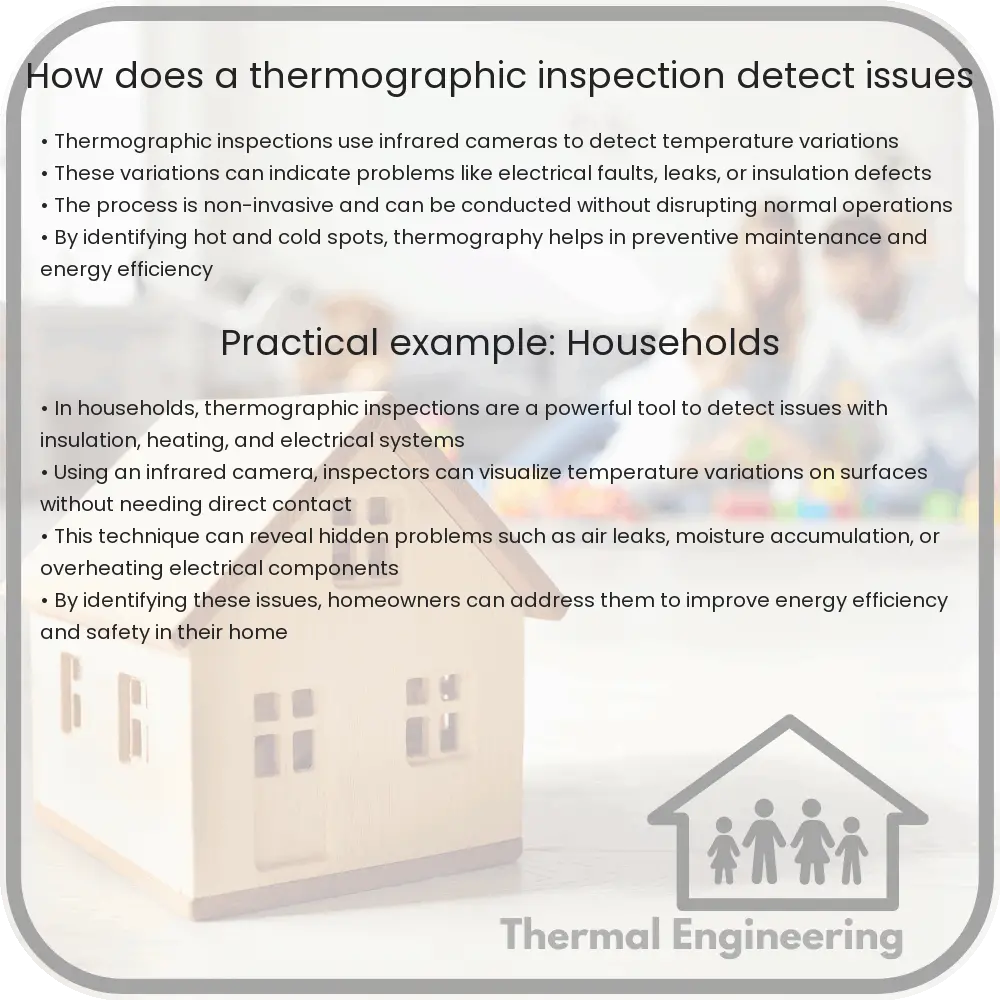
How does a thermographic inspection detect issues

Learn how thermographic inspections use infrared technology to identify issues in electrical systems, mechanical components, and building structures.

How does a thermographic inspection detect issues

Understanding Thermographic Inspections

Thermographic inspections, also known as infrared inspections, are a powerful diagnostic tool in various engineering fields ranging from electrical maintenance to building construction. The technique hinges on detecting and measuring the infrared radiation emitted from an object’s surface to visualize the thermal performance and identify potential issues.

How Thermographic Inspections Work

The basic principle behind thermography is that every object at temperatures above absolute zero emits infrared radiation as a function of its temperature. This form of radiation, invisible to the human eye, can be detected and measured by infrared cameras. These cameras convert the radiated energy into a visible heat map called a thermogram, which depicts the temperature variations across the surface of the object.

Key Components of a Thermographic Camera

  • Infrared Detector: Sensitive to infrared radiation, the detector captures the radiated energy from the target object.
  • Optics: Focuses the incoming infrared radiation onto the detector.
  • Display: Converts the data from the detector into a digital image that colors different temperatures in varying colors, often ranging from white for hot areas to black for cooler areas.

Applications of Thermographic Inspections

Thermographic inspections are widely used across numerous engineering disciplines:

  1. Electrical Systems: Locating overheating joints and parts of electrical circuits which may indicate potential failure points.
  2. Mechanical Systems: Identifying overheated motors or other components which could fail and cause operational disruptions.
  3. Building Envelopes: Detecting thermal inefficiencies such as heat leaks in doors, windows, or other structural components.
  4. Fluid Systems: Visualizing blockages or leaks by noting areas where the temperature abruptly changes.

Benefits of Thermographic Inspections

Thermographic inspections offer several fundamental advantages:

  • Non-contact and Non-destructive: The method does not require physical contact with the object, thus there is no risk of damaging it during inspection.
  • Identify problems early: Allows for early detection of abnormalities before they can evolve into serious faults, thus preventing costly repairs and downtime.
  • Comprehensive overview: Provides a comprehensive overview of an object or area, making it easier to pinpoint exactly where problems are located.

Limitations of Thermographic Inspections

While highly effective, thermography has some limitations:

  • Surface Emissivity: Accuracy depends on an object’s surface emissivity; very shiny surfaces can reflect ambient radiation, distorting the temperatures seen by the camera.
  • Requires Expert Analysis: The interpretation of thermograms requires skilled technicians trained in thermography to avoid false readings or missed data.
  • Environmental Conditions: External conditions like sunlight, wind, or rain can impact the accuracy of thermal images.

Despite these limitations, thermographic inspection remains a vital tool in preventive maintenance and quality assurance practices in many fields of engineering. The ability to preemptively address potential issues before they lead to system failures is invaluable, underscoring thermography’s integral role in modern engineering diagnostics.

How do thermal switches automate controls

Learn how thermal switches, key to automation, monitor and regulate temperature for safety and efficiency in appliances and industrial systems.

How do thermal switches automate controls

Understanding Thermal Switches and Their Role in Automation

Thermal switches, also known as thermal cutouts or temperature switches, play a crucial role in various industries by automating control processes that depend on temperature changes. These simple but effective devices can be found in everyday appliances like coffee makers and water heaters, as well as in industrial systems. The fundamental role of a thermal switch is to turn a device or system on or off by detecting temperature changes, thereby ensuring operational safety and efficiency.

How Do Thermal Switches Work?

Thermal switches operate based on the principle of thermal expansion, which is the tendency of materials to change in dimension and volume in response to a change in temperature. The two main types of thermal switches are bimetallic strip switches and fluid expansion switches.

  • Bimetallic Strip Switches: These switches consist of two metals with different thermal expansion coefficients bonded together. As temperature changes, the differential expansion of these metals causes the strip to bend one way or the other. This bending action is used to either make or break an electrical contact, thus opening or closing a circuit.
  • Fluid Expansion Switches: These use a sealed capsule filled with a fluid that expands significantly with heat. The expansion of the fluid applies pressure to a piston or diaphragm, which in turn activates a switch mechanism, altering the state of an electric circuit.

Applications of Thermal Switches in Control Automation

Thermal switches automate controls in various applications to ensure safety, enhance performance, and conserve energy. Some typical applications include:

  • Overheat Protection: In electrical appliances and motors, thermal switches monitor the temperature and automatically shut off the power if an overheating condition arises. This prevents damage to components and reduce the risk of fire.
  • Temperature Regulation: In heating and cooling systems, such as HVAC units, thermal switches control the activation and deactivation of the system to maintain the desired temperature set by the thermostat.
  • Industrial Safety: In machinery where maintaining a specific temperature is critical, like in chemical processing or metal fabrication, thermal switches can automatically control cooling or heating processes to prevent unsafe operating conditions.

Advantages of Using Thermal Switches

The integration of thermal switches into control systems offers several benefits:

  • Simple Design: The mechanical nature of thermal switches makes them reliable and easy to maintain. They do not require external power sources or complex circuitry, which minimizes potential failure points.
  • Cost-Effective: Thermal switches are generally inexpensive compared to more complex sensor and automation technology, making them a cost-effective choice for temperature regulation and safety measures.
  • Durability: Built to last, thermal switches are designed to withstand harsh conditions and extreme temperatures, ensuring longevity in tough industrial environments.

Conclusion

Thermal switches are essential devices in the automation of temperature control and safety mechanisms across various sectors. By effectively detecting and responding to temperature changes, these switches help in maintaining system performance and preventing equipment failure. Additionally, their simple design and cost-effectiveness make thermal switches a preferred choice in both domestic and industrial settings. Understanding the functioning and applications of thermal switches can help in optimizing their benefits for thermal management and safety purposes.

Cooling technologies for 5G infrastructure

Explore the latest in cooling technologies crucial for efficient and sustainable 5G infrastructure, including air cooling, liquid cooling, PCM, and AI-driven thermal management.

Cooling technologies for 5G infrastructure

Cooling Technologies for 5G Infrastructure

As the world transitions from 4G to 5G cellular networks, the demand for more robust and efficient infrastructure continues to grow. One of the pivotal challenges in deploying 5G technology involves managing the increased heat generated by 5G equipment. Efficient cooling solutions are essential to ensure reliability, performance, and longevity of the hardware. This article explores the innovative cooling technologies being utilized in 5G infrastructure.

Why is Cooling Important for 5G?

5G technology requires a higher density of antennas and more computational power than its predecessors, leading to greater heat production. Excessive heat can impair system performance, cause hardware degradation, and lead to system failures. Proper cooling technologies ensure that the equipment operates within the optimal temperature range, thus maintaining the integrity and efficiency of the 5G network.

Types of Cooling Technologies

  • Air Cooling: The most common method of cooling involves using air to remove heat from equipment. Air cooling systems can be passive, relying on natural airflow, or active, using fans to enhance airflow. Enhancements such as heat sinks are often added to critical components to improve heat dissipation.
  • Liquid Cooling: More efficient than air cooling, liquid cooling uses a liquid coolant to absorb and transfer heat away from the equipment. This technology is especially useful in dense urban settings or in environments where natural airflow is insufficient. Liquid cooling systems can vary from simple liquid heat exchangers to more complex systems involving chilled water circuits.
  • Phase Change Materials (PCMs): PCMs absorb heat by changing from solid to liquid at specific temperatures. When integrated into 5G hardware, they help maintain temperature by absorbing excess heat during peak loads and releasing it when the load decreases.
  • Advanced Materials: Research is ongoing into novel materials like graphene, which has outstanding thermal conductivity properties. Such materials can enhance the effectiveness of both air and liquid cooling systems.

Emerging Trends in Cooling for 5G

Emerging trends in cooling technologies for 5G focus on sustainability and energy efficiency. As the environmental impact of technology becomes a greater concern, cooling solutions that reduce power consumption and minimize environmental impact are increasingly vital.

  • Hybrid Cooling Systems: Combining air and liquid cooling to optimize efficiency and minimize energy usage is becoming more common. These systems adjust dynamically based on the thermal load, reducing power consumption without compromising on performance.
  • AI-driven Thermal Management: Artificial Intelligence (AI) is being employed to monitor and control cooling systems more efficiently. AI algorithms can predict thermal load based on data usage patterns and adjust cooling systems in real-time, ensuring optimal performance while minimizing energy use.
  • Eco-friendly Coolants: There is a shift towards using coolants that are less harmful to the environment. Newer coolants with lower global warming potential (GWP) and ozone depletion potential (ODP) are being developed and implemented.

Conclusion

Cooling technologies play a critical role in the successful deployment and operation of 5G networks. As the 5G infrastructure continues to expand, innovative cooling solutions are essential to address the increased thermal management needs. By integrating advanced materials, adopting hybrid cooling systems, and utilizing AI for thermal management, the 5G network can achieve higher performance and sustainability. The evolution of these technologies will continue to be a key area of research and development in the field of telecommunications engineering.

How do ice storage systems work

Learn about ice storage systems, a smart cooling method that cuts energy costs by making ice at off-peak times for use in peak demand hours.

How do ice storage systems work

Understanding Ice Storage Systems

Ice storage systems are an innovative cooling solution that leverage the process of making and storing ice during periods when electricity is less expensive, typically at night, and then using the ice to cool buildings during peak hours. This approach not only reduces energy costs but also helps in managing peak loads on the electrical grid. Here’s a detailed look at how these systems operate.

The Basic Components

At the core of an ice storage system are three main components:

  • Ice-Making System: This includes the chiller or refrigeration unit that forms the ice. It operates primarily at night, taking advantage of off-peak electricity rates.
  • Energy Storage Medium: Usually large tanks filled with water. Throughout the night, the chiller cools this water to form ice.
  • Heat exchange system: During the day, building cooling systems circulate a coolant through coils embedded in the ice storage tanks. The coolant absorbs the cold from the ice and carries it into the building.

Operational Modes

Ice storage systems can work in one of two modes:

  1. Full Storage Mode: The system produces enough ice during off-peak hours to meet all the cooling needs of the building during the day. This mode maximizes the cost savings and peak demand reduction.
  2. Partial Storage Mode: The system only produces part of the required ice, with the rest of the cooling provided directly by the chillers during the day. This mode still offers cost savings and reduces the peak load on the grid but to a lesser extent.

Benefits of Ice Storage Systems

Ice storage systems offer several key benefits:

  • Cost Efficiency: By utilizing off-peak electricity rates, these systems can significantly reduce the operational costs associated with air conditioning.
  • Reduced Peak Load: By shifting the energy usage from peak to off-peak hours, ice storage systems help to balance the load on the power grid, which can prevent outages and reduce the need for additional power plants.
  • Environmental Impact: These systems can reduce carbon emissions by optimizing the time of electricity usage and reducing the dependence on fossil-fuel-powered peak power plants.

Challenges in Implementation

Despite their benefits, there are several challenges to the widespread adoption of ice storage systems:

  • Initial Investment: The upfront cost for installing an ice storage system can be significant, although this is often recouped over time through energy savings.
  • Space Requirements: Large tanks for storing the ice require considerable space, which may not be available in all buildings.
  • Complexity: The design, installation, and maintenance of these systems require skilled professionals which can add to the costs.

In conclusion, ice storage systems provide an effective method to reduce cooling costs and decrease peak electricity demand. While they come with certain challenges, the long-term benefits can outweigh these, especially in commercial and industrial settings where cooling demands are high.

How does thermal drilling enhance material join

Explore the benefits and applications of thermal drilling, a technique for creating strong joins in thin metals, offering efficiency and cost savings.

How does thermal drilling enhance material join

Understanding Thermal Drilling: Enhancing Material Joining Techniques

Thermal drilling, also known as friction drilling or flow drilling, is an innovative non-traditional machining process that is primarily used to create strong joints in thin metal sheets. This technique offers significant advantages over traditional methods such as welding, riveting, or bolting, particularly in terms of efficiency, strength, and cost effectiveness.

How Thermal Drilling Works

Thermal drilling utilizes the heat generated from friction between a rotating tool and the workpiece to form holes. The process involves a specially designed conical or cylindrical tool that is spun at high speeds and pressed against the target metal sheet. As the tool exerts pressure and rotates, heat is generated due to friction, causing the localised area of the metal to become plasticized (softened without melting). The tool then penetrates the workpiece, displacing the softened metal around the hole rather than removing it, which creates a bushing or collar around the penetration area.

Benefits of Thermal Drilling

  • Improved Joint Strength: Thermal drilling strengthens the area around the hole by creating a thickened collar. This provides a larger surface area and increased material thickness for screw threads to engage, resulting in stronger joints.
  • No Need for Additional Components: Unlike other fastening methods, thermal drilling does not require nuts, inserts, or rivets, which reduces the complexity and the overall weight of the assembly.
  • Better Material Utilization: Since the material is displaced rather than removed, there is no waste. This feature makes thermal drilling an environmentally friendly option.
  • Reduction in Processing Time: Thermal drilling is a rapid process that eliminates the need for pre-drilling and thread tapping, thus speeding up the entire fabrication procedure.
  • Cost Efficiency: Reduction in material usage, elimination of additional components, and decreased labor efforts contribute to significant cost savings over other joining techniques.
  • Versatility: This process can be applied to various metals, including steel, stainless steel, aluminum, and copper.

Applications of Thermal Drilling

Thermal drilling is widely used in industries that require the joining of thin sheets or profiles, such as automotive, aerospace, construction, and HVAC (Heating, Ventilation, and Air Conditioning). It is particularly useful for creating robust joints in applications like frame structures, brackets, and various mounts and clamps.

Challenges and Limitations

Despite its many benefits, thermal drilling does have limitations. It is generally restricted to thin and medium thickness materials. Additionally, the quality of the hole can be affected by factors such as tool wear and inappropriate tool speeds and feeds, requiring careful control and regular maintenance. Moreover, high initial setup costs for equipment can be a barrier for smaller operations.

Conclusion

Thermal drilling provides a powerful alternative to traditional metal joining techniques by offering a combination of strength, efficiency, and cost-effectiveness. By understanding and leveraging this process, engineers and manufacturers can significantly enhance the quality and durability of their metal assemblies, paving the way for more innovative construction and design methodologies.

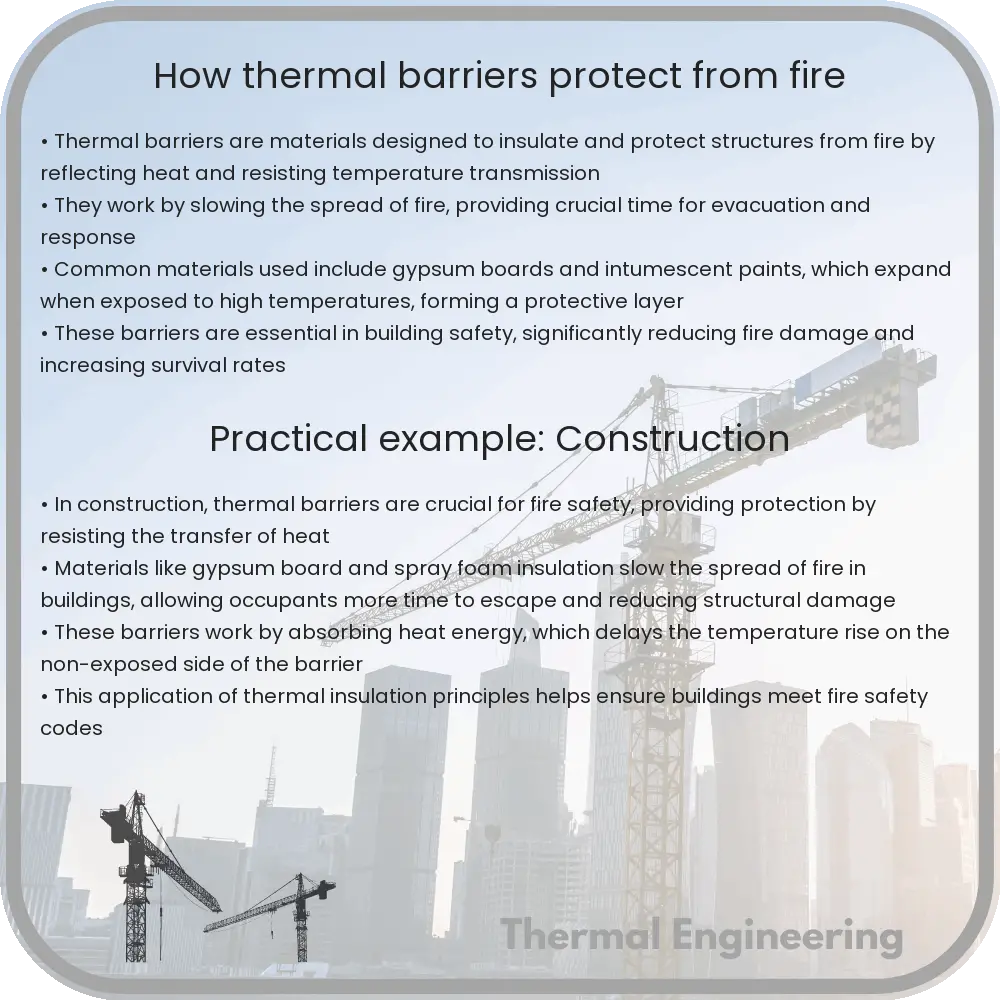
How thermal barriers protect from fire

Learn about thermal barriers, essential materials and systems that protect structures from fire and heat, enhancing safety and fire compliance.

How thermal barriers protect from fire

Understanding How Thermal Barriers Protect From Fire

In the world of engineering, protecting structures and people from the dangers of fire is a critical concern. One of the key strategies employed is the use of thermal barriers. These materials or systems are designed to prevent or slow the spread of fire and heat, increasing safety and providing valuable time for evacuation and response. This article explores the function, types, and applications of thermal barriers in fire protection.

What Are Thermal Barriers?

A thermal barrier is a layer of material applied to structures or used in the construction of certain products to inhibit the transfer of high temperatures, flames, or smoke. The primary function of these barriers is to provide insulation from heat and to delay structural collapse or damage during a fire. They are a critical aspect of fire safety engineering, designed to meet specific fire codes and safety standards.

Types of Thermal Barriers

  • Intumescent Coatings: These are paint-like substances applied to steel and other structural materials. Upon exposure to high heat, intumescent coatings swell up, forming a char that insulates the material beneath, effectively increasing the time it takes for the structure to reach critical failure temperatures.
  • Fire Resistant Boards: These are rigid panels made from materials such as gypsum, calcium silicate, or perlite. They are used in walls, floors, and ceilings to prevent the spread of fire and heat between compartments of a building.
  • Firestop Materials: Used to seal joints and openings in fire-resistant walls and floors, these materials prevent the spread of flames and smoke. Examples include silicone, intumescent strips, or expanding foam products.

How Thermal Barriers Work

Thermal barriers function by providing a physical obstruction that reduces heat flux and delays the onset of critical temperatures within protected areas. The effectiveness of a thermal barrier is largely determined by its thermal inertia, which is a measure of a material’s ability to absorb and retain heat. Materials with high thermal inertia are slow to heat up and slow to cool down, which can be crucial in fire situations.

Applications of Thermal Barriers

  • Building Construction: In buildings, thermal barriers are used in walls, roofs, and floors to compartmentalize fire, preventing it from spreading and allowing occupants more time to escape. They are also used in the protection of structural elements like beams and columns to maintain the structural integrity of the building during a fire.
  • Aerospace Industry: Thermal barriers are critical in the aerospace industry to protect sensitive components and passengers from the extreme temperatures generated both by normal operations and in emergency scenarios, such as a fire.
  • Automotive Industry: In cars, thermal barriers are used in components like firewalls and exhaust systems to protect occupants from heat and to prevent the spread of fire within the vehicle.

The Importance of Fire Safety Compliance

Ensuring that thermal barriers meet local fire safety standards and codes is crucial for legal compliance and safety. These standards dictate the minimum performance characteristics of thermal barrier systems, including their resistance to fire and heat. Compliance not only helps in protecting lives and property but also reduces legal risks associated with fire incidents.

In conclusion, thermal barriers play an indispensable role in modern safety engineering. By understanding and implementing these systems, engineers and architects can significantly enhance the fire resilience of structures, contributing to safer environments for everyone.

How heat affects tire performance

Learn how temperature influences tire pressure, tread life, and safety, and get tips for managing tire performance in extreme heat.

How heat affects tire performance

Understanding How Heat Affects Tire Performance

Heat plays a significant role in tire performance, affecting everything from tire pressure to tread life and overall vehicle safety. In this article, we will explore the mechanisms by which temperature influences tire function and why it’s crucial for drivers to be aware of these effects.

Thermal Expansion and Tire Pressure

One of the key ways in which heat affects tire performance is through thermal expansion. Tires are filled with air, which expands when heated and contracts when cooled. According to the ideal gas law (PV=nRT), where P is pressure, V is volume, n is the amount of substance, R is the gas constant, and T is temperature, an increase in temperature will lead to an increase in pressure if the volume of the tire remains constant.

  • Increased Pressure: As the temperature rises, typically during long drives on hot days or due to the friction of the tire against the road, the air inside the tire expands leading to increased pressure. This can affect the tire’s contact with the road and potentially lead to overinflation.
  • Decreased Pressure: In colder conditions, the decrease in temperature can cause the air inside the tires to contract, leading to underinflation. This often results in increased tire wear and reduced fuel efficiency.

Impact on Tread and Overall Tire Life

Heat can also accelerate the wear and tear on tire treads. As the rubber in tires heats up, it can become more pliable and wear down more quickly than usual. Over time, this can lead to the following issues:

  • Reduced Tread Life: High temperatures cause the rubber to degrade faster, reducing the lifespan of the tire.
  • Loss of Traction: As the tread wears down, the tire’s ability to grip the road effectively diminishes, especially in wet conditions.

Material Fatigue and Failure

Extreme temperatures can lead not only to everyday wear and tear but also to sudden tire failure. This arises from the cumulative effect of cyclic thermal loading – where repeated heating and cooling cycles cause the material to undergo fatigue.

  • Blowouts: Extreme heat can weaken the structural integrity of a tire, leading to blowouts. Heat can exacerbate any pre-existing damage to a tire’s structure or compound.

Managing Tire Performance in Varying Temperatures

It is essential for drivers to maintain their tires properly to counteract the negative effects of temperature. Here are some tips:

  1. Regular Pressure Checks: To account for the increase in internal pressure with rising temperatures, it’s wise to check tire pressure regularly and adjust it according to the manufacturer’s specifications.
  2. Avoid Overloading: Heavier loads increase tire temperature and pressure, so it’s important to avoid overloading your vehicle.
  3. Regular Inspections: Regularly inspect the tires for signs of wear, tear, and other damage. Early detection can prevent further exacerbation by high temperatures.

In conclusion, understanding how heat affects tire performance helps drivers maintain their vehicles more effectively, ensuring safety and efficiency on the road. As simple as these measures seem, they play a critical role in vehicle upkeep and performance.