Facebook Instagram Youtube Twitter

How do solar thermal power plants generate electricity

Learn how solar thermal power plants harness the sun’s energy to generate electricity using thermal energy conversion, mirrors, and turbines.

How do solar thermal power plants generate electricity

Understanding How Solar Thermal Power Plants Generate Electricity

Solar thermal power plants are a fascinating application of solar energy. Unlike photovoltaic solar panels that convert sunlight directly into electricity, solar thermal plants convert sunlight into heat that is then used to generate electricity. This process involves multiple components and systems to harness, convert, and utilize the thermal energy efficiently. Here, we explore how these plants operate and the various technologies involved.

The Components of a Solar Thermal Power Plant

  • Solar Collectors: These are the primary components that capture and concentrate sunlight. The most common types include parabolic troughs, parabolic dishes, and solar power towers.
  • Heat Transfer Fluid (HTF): This fluid absorbs the heat from the solar collectors. Typical fluids include synthetic oil, molten salts, or even water.
  • Heat Exchanger/Steam Generator: The heated HTF passes through a heat exchanger to produce steam, effectively transferring the thermal energy to a working fluid.
  • Turbine and Generator: The high-pressure steam spins a turbine, which is connected to a generator. The mechanical motion of the turbine is converted into electricity by the generator.
  • Cooling System: This component condenses the steam back into water, which is recycled back into the system.

How Solar Thermal Energy is Captured and Converted

Solar thermal power plants start by capturing sunlight. Mirrors or lenses are used to concentrate sunlight onto a receiver, where the heat transfer fluid is heated to high temperatures, often between 400°C to 1000°C (752°F to 1832°F). The choice of the solar collector is based on the setup and desired concentration ratio, with parabolic troughs being the most common due to their cost-effectiveness and scalability.

Thermal Storage and Electricity Generation

One of the significant advantages of solar thermal power plants is the ability to store heat before converting it into electricity. This is typically done using molten salts, which have high specific heat capacities. This capability allows for electricity generation even during cloudy intervals or at nighttime, enhancing the reliability and stability of the power output.

The next phase involves converting the stored heat into electricity. The heated HTF is piped through a heat exchanger to turn water into steam. This steam is then directed at high pressure to drive turbines. Turbines are connected to generators; as they rotate, they generate electricity. The steam’s heat energy thus gets converted into mechanical energy in the turbine, which is finally transformed into electrical energy in the generator.

The efficiency of converting thermal energy to electrical power can be expressed through an understanding of thermodynamics, particularly the Carnot efficiency, a theoretical maximum defined by: η = 1 – (Tcold/Thot), where Tcold and Thot are the temperatures of the cold and hot reservoirs respectively (T must be in Kelvin).

Conclusion

Solar thermal power plants represent an effective and increasingly popular way of generating electricity without carbon emissions from conventional fossil fuels. By combining the natural power of the sun with innovative engineering techniques, these plants play a crucial role in tapping renewable energy resources, highlighting a sustainable path forward in energy generation.

Understanding these systems not only informs us about the ongoing advancements in solar technologies but also underscores the potential for renewable energy to significantly impact how we produce and consume energy globally.

How does thermal energy storage benefit industries

Explore the benefits of Thermal Energy Storage (TES) as a solution for enhanced energy management, cost savings, and sustainability in various industries.

How does thermal energy storage benefit industries

Understanding Thermal Energy Storage and Its Industrial Benefits

Thermal energy storage (TES) is a technology that stores thermal energy by heating or cooling a storage medium so that the stored energy can be used at a later time for heating, cooling, or power generation. This technology plays a crucial role in enhancing energy management strategies across various industries. By understanding the basic functioning and applications of TES, industries can optimize energy usage, reduce costs, and increase operational efficiency.

How Thermal Energy Storage Works

TES systems typically involve three primary processes: charging, storing, and discharging the thermal energy. During the charging phase, energy is absorbed from a source and used to heat or cool a storage medium. The storage phase then retains this energy over a period, which could range from a few hours to several months, depending on the system design and the medium used. Finally, during the discharging phase, the stored energy is released to meet energy demands, such as space heating, cooling, or driving industrial processes.

Common mediums used in TES include water, molten salts, and phase change materials (PCMs), each suitable for different temperature ranges and applications.

Benefits of Thermal Energy Storage in Industries

  1. Cost Efficiency: By using TES systems, industries can take advantage of lower electricity prices during off-peak hours. Energy can be stored when it is cheapest and used during peak demand times when prices are higher, leading to significant cost savings.
  2. Enhanced Energy Management: TES allows for better control over energy supply, helping to stabilize the grid and balance loads more effectively. It enables industries to manage their energy consumption more strategically, reducing the impact of energy use fluctuations.
  3. Reduced Environmental Impact: With improved energy management capabilities, industries can decrease their carbon footprints by optimizing the use of renewable energy sources. Since TES can store excess energy produced from renewables, it reduces dependency on fossil fuels and limits greenhouse gas emissions.
  4. Increased Operational Reliability: TES systems provide a more consistent energy supply, which can be crucial for industries requiring uninterrupted power for sensitive processes. This can enhance overall operational reliability and productivity.
  5. Flexibility: A wide range of TES technologies are available, each adaptable to specific industrial needs based on temperature requirements, duration of storage, and integration capabilities. This flexibility allows for tailor-made solutions that fit distinct operational demands.

Applications of Thermal Energy Storage

  • Power Generation: TES can be integrated with renewable energy sources like solar or wind to store excess energy during peak production times. Later, this energy can be used to generate power when solar or wind is not available, thus ensuring a consistent energy supply.
  • Heating and Cooling: In industries where heating or cooling is required, TES can significantly optimize these systems. For example, in food processing or chemical industries, stored cold energy can be used for refrigeration or stored heat can be used for process heating.
  • Load Shifting: Shift energy usage from peak to off-peak hours to reduce demand charges and stress on the grid during high-use periods.

Challenges and Future Outlook

Despite its benefits, TES also presents certain challenges such as high initial costs, space requirements, and technical complexity. However, ongoing research and innovations in material science and system designs are expected to overcome these challenges gradually. As energy needs become increasingly complex and demanding, the role of TES in industrial and commercial sectors is poised to become more significant, propelling these systems towards wider adoption and optimized energy solutions.

In conclusion, Thermal Energy Storage stands out as a key technology for improving energy efficiency and sustainability in industries. By enabling effective energy management, reducing costs, and supporting environmental goals, TES has the potential to revolutionize how industries handle and utilize energy.

How do thermal overload relays protect motors

Learn about thermal overload relays, their protective role in electric motor safety, functions, key components, settings, and diverse industry applications.

How do thermal overload relays protect motors

Understanding Thermal Overload Relays and Their Role in Motor Protection

Thermal overload relays are crucial components in the protection of electric motors. They ensure that motors operate within safe thermal limits, preventing damage due to overheating caused by excessive current. This article will explain how thermal overload relays function, why they are necessary, and their applications in safeguarding motors.

What is a Thermal Overload Relay?

A thermal overload relay is an electromechanical protection device for electric motors. It is designed to monitor and respond to the heat generated by excessive current flowing through the motor. The primary purpose of a thermal overload relay is to prevent thermal damage to the motor that can occur from operations such as overloads, stall, or phase failure.

How Do Thermal Overload Relays Work?

The operation of a thermal overload relay is based on the principle of thermal effect produced by electric current. The device typically contains a bimetallic strip that heats up and bends when exposed to high current for an extended period. The bending of the strip eventually leads to the triggering of a tripping mechanism, which interrupts the power supply to the motor, thereby providing protection against overheating and potential damage.

  • Bimetallic Strip: Composed of two different metals with different coefficients of thermal expansion bonded together. As current passes through the relay, the heat generated causes the metals to expand at different rates, resulting in bending.
  • Tripping Mechanism: When the bending reaches a critical level, it activates the tripping mechanism which opens the electrical circuit and stops the current flow to the motor.
  • Automatic or Manual Reset: Some thermal overload relays offer an automatic reset function, while others require a manual reset after tripping. The choice depends on the specific application and safety concerns.

Why Are Thermal Overload Relays Important?

Protection against overheating is not just a matter of extending the lifespan of a motor. Overheating can lead to insulation damage, which increases the risk of electrical fires. Furthermore, a motor experiencing thermal overload is likely to operate inefficiently, increasing energy consumption and operating costs. Therefore, thermal overload relays are essential for both safety and efficiency in industrial and commercial motor applications.

Settings and Adjustments

For effective protection, thermal overload relays must be properly configured. This configuration involves setting the relay to the motor’s expected current level:

  • Current Setting: This setting should match or be slightly above the motor’s normal operating current. It ensures that the relay allows normal operation but trips under abnormal conditions.
  • Time Setting: Since some applications may result in temporary peaks in current, time delays can be set to avoid unnecessary tripping. These settings ensure that only sustained overcurrent conditions will lead to tripping.

Applications of Thermal Overload Relays

Thermal overload relays are widely used in various industries wherever electric motors are employed. They are found in:

  • Manufacturing equipment
  • HVAC systems
  • Pumping systems
  • Agricultural machinery
  • Material handling systems

In conclusion, thermal overload relays are vital components in motor control systems, providing essential protection against potential damage from overheating. By understanding how these devices operate and ensuring they are correctly configured, businesses can improve the safety, efficiency, and reliability of their motor-driven applications.

How does thermal expansion affect engines

Learn how thermal expansion affects engine components and the engineering solutions used to mitigate its impact for reliable performance.

How does thermal expansion affect engines

Understanding Thermal Expansion in Engines

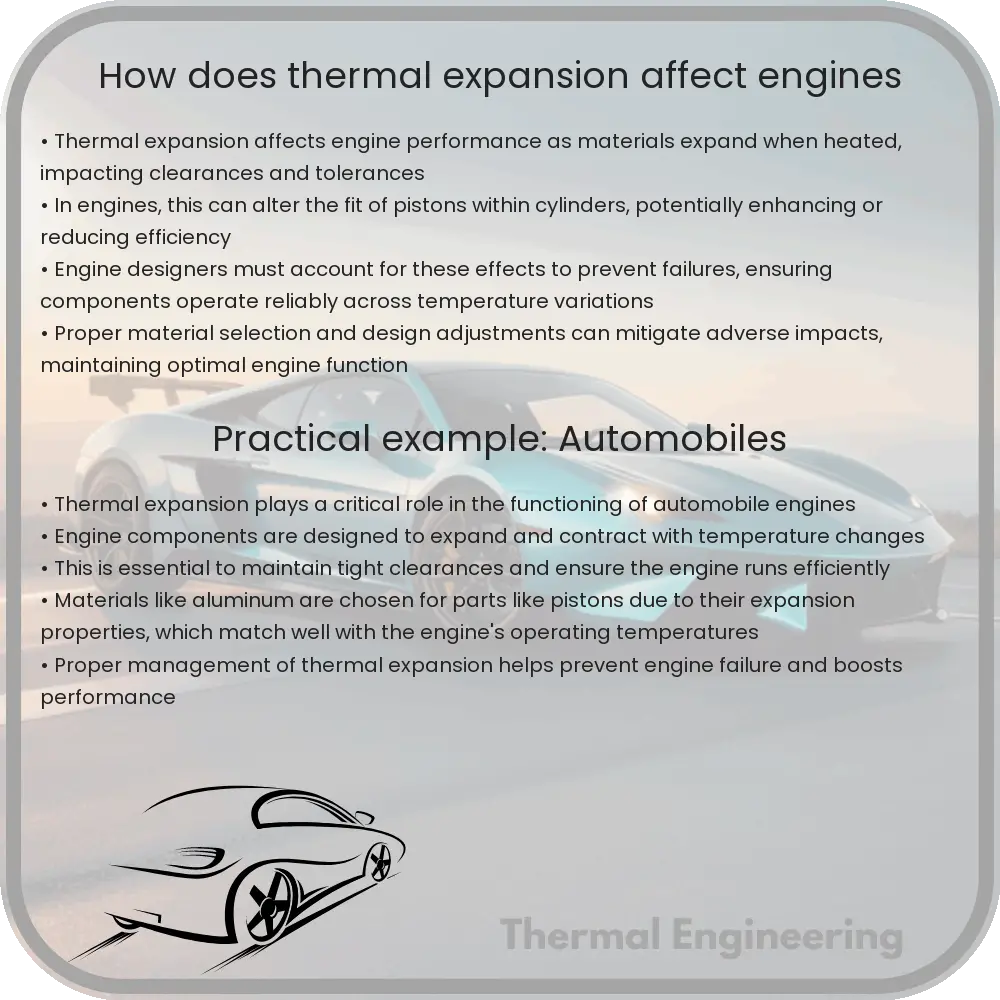
Thermal expansion is the tendency of matter to change in shape, area, and volume in response to a change in temperature. This physical principle has significant implications for various mechanical systems, including engines. Engines, whether they are in cars, airplanes, or industrial machines, generate a lot of heat through combustion and friction processes. As such, understanding how thermal expansion affects engines is crucial for their design, operation, and maintenance.

Basics of Thermal Expansion in Solids

In solid materials, thermal expansion occurs because heat increases the vibrations of the atoms in the material. As temperature rises, the atoms vibrate more vigorously and move slightly further apart. The degree to which a material expands is characterized by its coefficient of thermal expansion, which varies depending on the material’s composition. This coefficient gives the change in length per degree change in temperature.

The general formula for linear thermal expansion is:

ΔL = α * L0 * ΔT

  • ΔL is the change in length.
  • α is the linear coefficient of thermal expansion.
  • L0 is the original length of the material.
  • ΔT is the change in temperature.

Effects of Thermal Expansion in Engine Components

Several components of an engine are affected by thermal expansion:

  1. Pistons: Pistons must fit snugly within the cylinder bore, but if they expand too much due to heat, they can seize within the cylinder. To prevent this, pistons are often made from materials with a lower coefficient of thermal expansion than the cylinder, or are engineered to have clearances that account for the expansion when at operating temperatures.
  2. Cylinder Heads: The cylinder head houses critical components such as the valves and spark plugs. Uneven thermal expansion in the cylinder head can lead to warping, which in turn can cause head gasket failures and lead to engine malfunctions or breakdowns.
  3. Exhaust System: The rapid heating and cooling of the exhaust system can lead to thermal stress. Materials and design structures that can tolerate high temperature changes are crucial for the durability and functionality of these components.
  4. Engine Block: The block, being a large mass, heats up and expands more slowly than other smaller parts. Different expansion rates can strain connections with other components, potentially leading to cracks or misalignments.

Engineering Solutions to Thermal Expansion Challenges

Engineers employ various strategies to mitigate the negative effects of thermal expansion in engines:

  • Material Selection: Choosing materials with appropriate thermal expansion coefficients is fundamental. For example, using alloys like aluminum-silicon in pistons which expand less than the iron cylinder liner.
  • Thermal Barriers: Coatings and other barrier materials can be used to reduce the rate of heat transfer into certain engine parts, thereby controlling the expansion rates.
  • Design Techniques: Incorporating expansion joints, slots, or flexible mounts in the design allows components room to expand without causing damage or loss of function.
  • Active Cooling Systems: Efficient cooling systems are essential to keep the engine at a manageable temperature, minimizing extreme fluctuations that cause detrimental expansion.

Understanding and managing thermal expansion is critical for the reliable function and longevity of engines. By considering thermal expansion in the design phase, engineers can create resilient and efficient engines capable of handling the stresses of operation across a wide range of temperatures.

How do thermal barriers enhance engine performance

Learn how thermal barriers in engines enhance performance, efficiency, and component longevity by managing heat transfer in high-temperature areas.

How do thermal barriers enhance engine performance

How Do Thermal Barriers Enhance Engine Performance?

Thermal barriers, commonly used in engineering, are materials or coatings designed to prevent the transfer of heat. In the context of engines, these barriers are crucial for enhancing performance, increasing efficiency, and extending the lifespan of the engine components. Let’s explore how thermal barriers work and their benefits in engine technology.

The Role of Thermal Barriers in Engine Performance

Thermal barriers are typically applied in areas of the engine that are exposed to extreme heat, such as the piston tops, cylinder heads, and exhaust manifolds. By doing so, they serve several key functions:

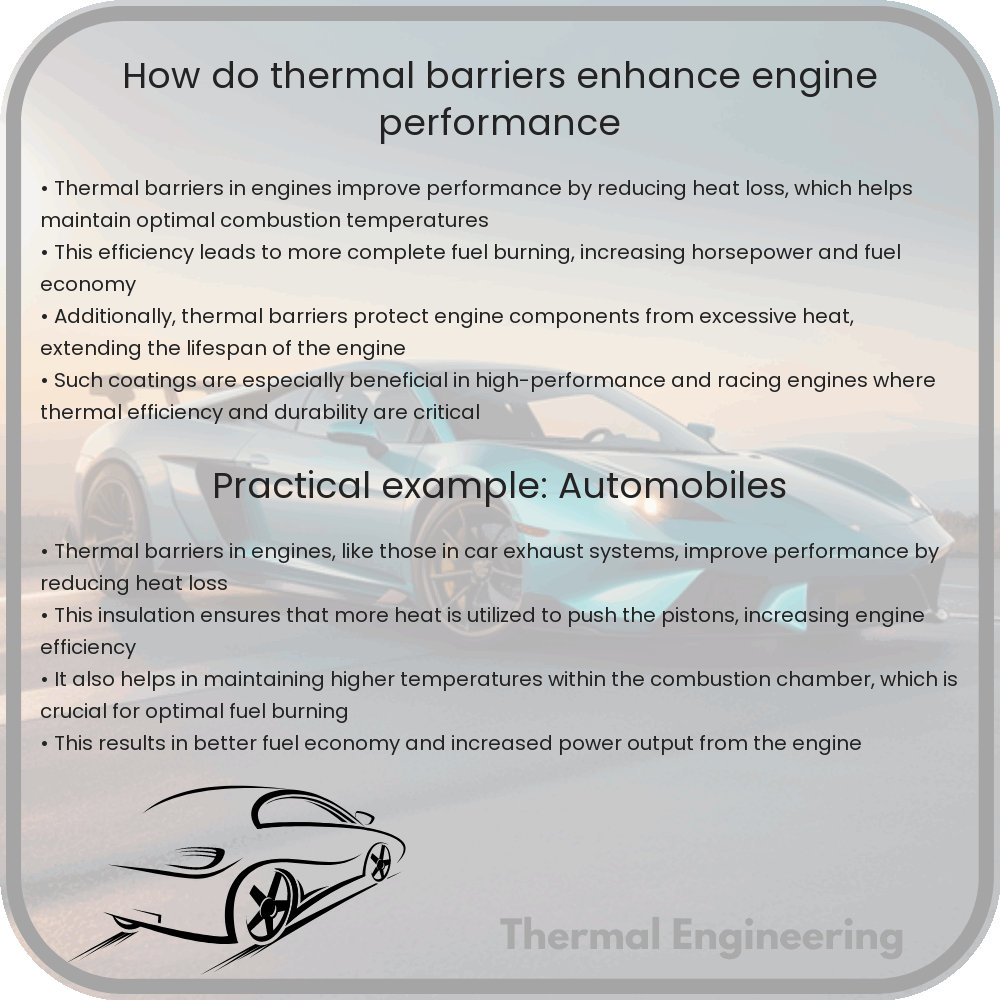
  • Reducing Heat Transfer: By limiting the heat escape from the combustion chamber, these coatings ensure that more of the generated heat is used effectively for powering the engine rather than being wasted.
  • Protecting Engine Components: High temperatures can degrade metal and other materials over time. Thermal barriers protect these components from thermal fatigue and oxidation, thus enhancing their durability.
  • Improving Combustion Efficiency: Maintaining higher temperatures within the combustion chamber can help in achieving a more complete combustion of fuel, thus increasing the engine’s power output and efficiency.

Materials Used as Thermal Barriers

The effectiveness of a thermal barrier is largely dependent on the material used. Some common materials include:

  • Ceramic Coatings: Ceramics are excellent at resisting high temperatures and are often used as coatings on engine parts. They reduce the heat transfer by reflecting heat back into the combustion chamber.
  • Metallic Coatings: Certain metals that can withstand high temperatures and have low thermal conductivity are also used as barrier coatings.
  • Composite Materials: Composites, which can be a combination of ceramic and metal materials, offer the benefits of both, including durability and heat resistance.

Benefits of Using Thermal Barriers in Engines

Integrating thermal barriers into engine design leads to several notable benefits:

  • Increased Thermal Efficiency: By keeping the heat within the combustion chamber, thermal barriers enhance the engine’s efficiency, as more energy from the fuel is converted into mechanical work.
  • Reduced Thermal Strain: Components are protected from the stress of thermal expansion and contraction, which reduces the risk of mechanical failures.
  • Enhanced Performance: Engines with thermal barriers often experience an increase in horsepower and torque due to improved combustion efficiency.
  • Longer Lifespan: The overall durability of engine parts is improved, leading to reduced maintenance costs and longer service intervals.

Conclusion

In conclusion, thermal barriers play a crucial role in enhancing engine performance. By effectively managing the thermal environment within an engine, these barriers contribute to more efficient fuel combustion, protection of engine components, and overall performance improvements. Whether in everyday vehicle engines or in high-performance race cars, the use of thermal barriers is a proven strategy for optimizing engine function and longevity.

This understanding not only underlines the importance of thermal management in engine design but also encourages further innovations in thermal barrier technologies for even greater advances in automotive engineering.

How does a heat meter measure energy consumption

Learn how heat meters function, their components, and the important role they play in measuring energy consumption for efficient heating and fair billing.

How does a heat meter measure energy consumption

Understanding How a Heat Meter Measures Energy Consumption

Heat meters are crucial devices in the measurement of heat energy provided by a heat source or delivered to a heating system, such as in residential or commercial buildings. They play an essential role in district heating systems and heating, ventilation, and air conditioning (HVAC) systems by helping to calculate the energy consumption accurately, ensuring efficient energy use and aiding in cost calculations. This guide simplifies how heat meters function and measure energy consumption.

Components of a Heat Meter

A typical heat meter has three main components:

  • Flow Sensor: This measures the rate of fluid flow within the heat system.
  • Temperature Sensors: These are typically two sensors that measure the temperature of the fluid at the supply and return lines of the heating system.
  • Calculator: Also known as the integrator, it processes the data from the flow and temperature sensors to calculate the heat energy usage.

Principle of Operation

The fundamental principle behind heat meter operation is based on the thermodynamic calculation of heat energy transfer, which is primarily determined using the formula:

Q = V * ρ * cp * (T1 – T2)

Where:

  • Q is the heat energy transferred,
  • V is the volume of fluid that passes through the system,
  • ρ (rho) is the density of the fluid,
  • cp is the specific heat capacity of the fluid, and
  • T1 and T2 are the temperatures of the fluid at the flow and return lines, respectively.

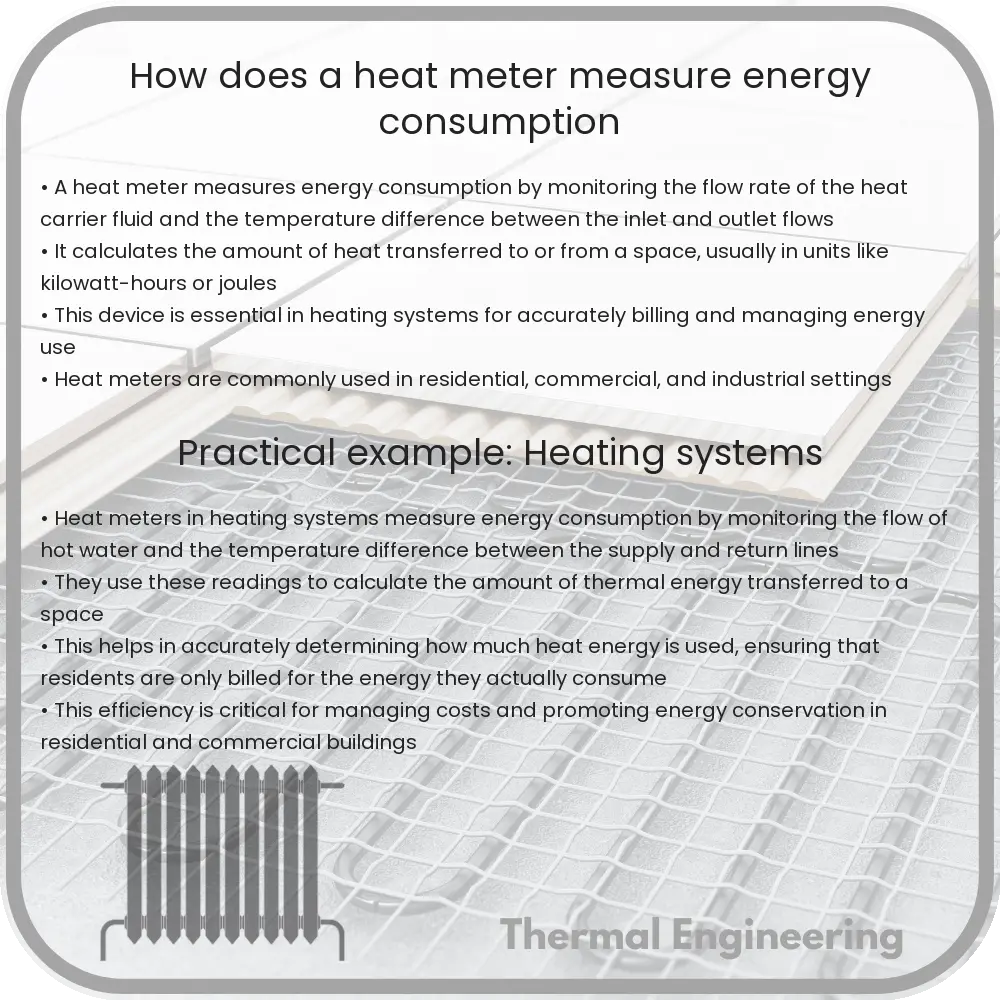
As the fluid moves throughout the heating system, its temperature changes, reflecting the energy absorbed or released. The flow sensor records the volume of fluid passing through the system, while the two temperature sensors measure the temperature difference between the introduction point and return point of the system.

How Energy Consumption Is Measured

To measure energy consumption accurately, the heat meter’s calculator uses the data from the flow and temperature sensors. By continuously monitoring these parameters, the calculator computes the real-time heat energy transfer using the aforementioned formula. This information is vital in systems where heating costs are allocated based on actual consumption, promoting energy conservation and fairness in billing.

Applications and Benefits

Heat meters are extensively used in district heating systems where heat generated in a central location is distributed to multiple buildings. They are also used in individual residential or commercial buildings equipped with central heating systems. Key benefits include:

  • Accurate Billing: Ensuring users pay only for the heat energy they consume.
  • Energy Efficiency: Encouraging users to save energy by showing real-time heat consumption.
  • Fault Detection: Helping to identify operational issues in the heating system by monitoring the flow and temperature data.

By understanding and using heat meters, users and utilities can ensure optimal energy usage, leading to cost effectiveness and energy conservation in heating applications.

In conclusion, heat meters are indispensable tools in modern heating systems. By measuring the amount of heat energy utilized, they help maintain system efficiency, reduce wastage, and facilitate fair energy billing. As technology advances, the accuracy and capabilities of heat meters continue to improve, playing a crucial role in energy management systems worldwide.

How does thermal printing technology work

Learn about thermal printing technology, the digital process using heat on thermal paper to create images for receipts, labels, and tickets.

How does thermal printing technology work

Understanding Thermal Printing Technology

Thermal printing technology is a digital printing process which produces a printed image by selectively heating coated thermochromic paper, commonly known as thermal paper, when the paper passes over the thermal print head. This technology is widely used in lightweight, portable devices such as receipt printers, and has become a staple in various industries such as retail and healthcare.

Components of a Thermal Printer

The basic components of a thermal printer include:

  • Thermal Head: The main printing component that generates heat to create images on paper.
  • Platen: A rubber roller that feeds paper to the printer.
  • Spring: Applies pressure to the thermal head, ensuring it contacts the paper correctly.
  • Controller Boards: Manages the overall printing process by sending the correct electrical signals to the thermal head.
  • Thermal Paper: Specially coated paper that changes color when heated.

How It Works

Thermal printing operates based on two key principles: heat generation and chemical reaction in the thermal paper. The process involves the following steps:

  1. Thermal Head Heating: The controller receives a digital image and instructs the thermal head to heat up in specific patterns. The thermal head is made up of tiny heating elements that can quickly become hot.
  2. Heat Application: As the thermal paper passes under the thermal head, the areas where the head heats up change color in response to the temperature.
  3. Creating an Image: The heat from the thermal head induces a chemical reaction in the coating of the thermal paper, turning it from clear to black (or other colors if specially coated paper is used). This results in the desired image or text appearing on the paper.
  4. Cooling Down: After the paper passes the thermal head, it starts to cool down, which stops the reaction and stabilizes the image.

Advantages of Thermal Printing

  • Speed: Compared to many types of printing, thermal printers operate at higher speeds.
  • Quiet Operation: Thermal printers are quieter than impact dot matrix printers, which makes them ideal for environments like retail spaces.
  • Low Maintenance: With fewer moving parts and no need for ink or toner replacements, thermal printers require less maintenance.
  • Durability: Produces prints that are generally more resistant to fading and water damage than ink-based prints.

Applications of Thermal Printing

Thermal printing technology sees applicability across a variety of fields:

  • Retail: Used for generating receipts, labels, and coupons in point of sale systems.
  • Healthcare: Printing of patient identification tags and prescription labels.
  • Transportation: Printing of tickets and boarding passes.
  • Gaming and Lotteries: Used in gaming kiosks for printing betting slips and lottery tickets.

Despite the shift towards digital and paperless solutions, thermal printing remains a crucial technology in various sectors due to its reliability, efficiency, and cost-effectiveness. Understanding how it works enhances our appreciation of the everyday technologies that facilitate numerous aspects of modern life.

How do thermoelectric modules cool and heat

Learn about thermoelectric modules (TECs), their cooling and heating mechanisms via the Peltier effect, applications, and their pros and cons.

How do thermoelectric modules cool and heat

Understanding Thermoelectric Modules: How They Cool and Heat

Thermoelectric modules, also known as thermoelectric coolers (TECs) or Peltier devices, are solid-state devices that function as heat pumps. Named after Jean Charles Athanase Peltier, who discovered the Peltier effect in 1834, these modules have the unique ability to cool and heat an environment by simply adjusting the direction of the electrical current that runs through them. In this article, we will explore the principles behind thermoelectric modules and understand how they are used to control temperature.

The Peltier Effect: The Underlying Principle

At the heart of every thermoelectric module is the Peltier effect. This phenomenon occurs when an electric current is passed through two dissimilar conductors or semiconductors that are joined at their ends. As the current flows from one material to another, heat is absorbed at one junction (the cold side) and released at the other junction (the hot side). This creates a temperature difference between the two sides, enabling the module to act as a cooler or a heater depending on the direction of the current flow.

Composition of Thermoelectric Modules

A typical thermoelectric module is composed of multiple thermocouples, which are pairs of n-type and p-type semiconductors connected in series. These thermocouples are sandwiched between two ceramic plates, which provide structural support and electrical insulation. The choice of semiconductor material greatly impacts the efficiency and effectiveness of the module. Common materials used include bismuth telluride (Bi2Te3), lead telluride (PbTe), and silicon germanium (SiGe).

Cooling and Heating Process

  • Cooling: To cool an area, the current is driven through the module in such a way that it causes heat to be absorbed from the environment into the cold junction and expelled at the hot junction.
  • Heating: Conversely, by reversing the direction of the current, the module can be used to heat an area. This reversal causes heat to be absorbed at what was previously the hot junction and released at what was previously the cold junction.

Applications of Thermoelectric Modules

Due to their versatility, thermoelectric modules find applications in a variety of fields:

  • Consumer Electronics: They are used in portable coolers and wine coolers, as well as to cool electronic components such as computer CPUs.
  • Medical Devices: They provide precise temperature control in medical applications like DNA synthesis and blood sample analysis.
  • Automotive: Thermoelectric devices are used in automotive applications to cool or heat seats and manage battery temperatures in electric vehicles.

Advantages and Disadvantages

Thermoelectric modules offer several advantages over traditional cooling and heating methods, including:

  • No Moving Parts: This results in less wear and tear, lower maintenance requirements, and quieter operation.
  • Compact and Lightweight: Makes them ideal for applications where space and weight are critical factors.
  • Fast Response Time and Precise Temperature Control: Allows for immediate cooling or heating and maintains a stable temperature.

However, thermoelectric modules also face some limitations:

  • Lower Efficiency: Compared to conventional cooling methods like compression cycles, thermoelectric modules generally have lower energy efficiency.
  • Cost: The cost of high-performance materials like bismuth telluride can be a barrier to widespread adoption.

In conclusion, thermoelectric modules provide a versatile and reliable method for precise temperature control in a wide range of applications. Despite their lower efficiency, advancements in materials science may lead to more efficient and cost-effective thermoelectric devices in the future.

Thermal insulation in aerospace applications

Learn about the importance of thermal insulation in aerospace, its vital role in protecting spacecraft and aircraft from extreme temperatures and the latest materials used.

Thermal insulation in aerospace applications

Understanding Thermal Insulation in Aerospace Applications

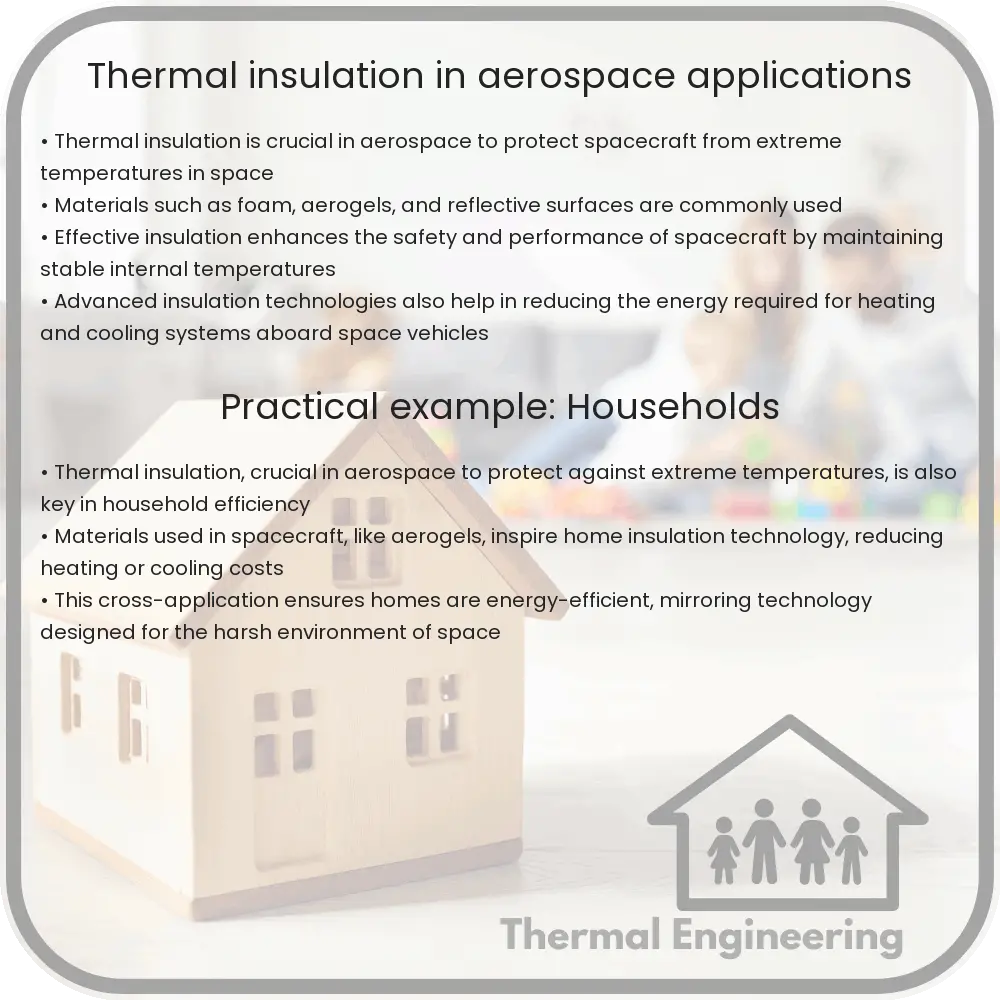
Thermal insulation is a critical aspect of aerospace engineering, crucial for maintaining the structural integrity and operational efficiency of spacecraft and aircraft. The extreme temperatures encountered during missions, ranging from the intense cold of outer space to the searing heat of re-entry atmospheres, make thermal management systems essential for safety and functionality. This article explores the basics of thermal insulation, materials used, and the importance of thermal management in aerospace applications.

Why is Thermal Insulation Important in Aerospace?

In aerospace engineering, thermal insulation serves multiple functions. It helps maintain the temperature within a spacecraft or aircraft, protecting electronic equipment and crew from extreme environmental temperatures. Additionally, insulation minimizes energy consumption for onboard climate control systems, which is crucial due to limited power availability, especially in space missions.

The most challenging aspect for thermal insulation in aerospace includes handling the drastic fluctuations in temperature. For instance, temperatures in space can plummet to -270 degrees Celsius near absolute zero, when in the Earth’s shadow, and can climb to over 1,000 degrees Celsius when exposed to the Sun or during atmospheric re-entry.

Common Materials Used for Thermal Insulation

Several materials are particularly suited to the demands of aerospace thermal insulation:

  • Aerogels: Known for their low thermal conductivity and light weight, silica aerogels are used in various spacecraft parts, including Mars Rovers, to insulate against extreme Martian temperatures.
  • Multilayer Insulation (MLI) Blankets: These blankets consist of multiple layers of heat-reflective films (usually made of aluminum) and spacer materials, commonly used to protect spacecraft from thermal radiation. Each layer in an MLI blanket reflects some of the thermal radiation, significantly reducing heat transfer.
  • Refractory Materials: Used in high-temperature areas such as rocket nozzles and airframes during re-entry. These materials must withstand very high temperatures and erosive conditions of high-speed atmospheric entry.
  • Phase Change Materials (PCMs): These materials absorb or release heat when they change phases (e.g., from solid to liquid), helping to manage energy storage and temperature regulation onboard spacecrafts.

Case Studies in Aerospace Thermal Insulation

Understanding thermal insulation through real-world applications can help illustrate its significance:

  • The International Space Station (ISS): The ISS uses high-efficiency insulation materials, including MLI blankets and aerogel-based composites, to protect it from the extreme temperatures of space and to minimize heat losses during orbit transitions.
  • Space Shuttle Thermal Protection System: The Space Shuttle used a complex thermal protection system consisting of silica tiles and reinforced carbon-carbon panels that protected it during the high thermal stress of re-entry. These materials needed to withstand not just extreme temperatures, but also atmospheric friction and mechanical stresses.

Future of Thermal Insulation in Aerospace

The continuous evolution of materials technology promises more efficient thermal insulation solutions in the future. The development of materials with higher melting points, better thermal resistance, and lower weight is imperative for advancing the safety and efficiency of future aerospace missions. Innovations such as hybrid insulating materials that combine different mechanisms of heat resistance are areas of keen interest and research in aerospace engineering.

In conclusion, thermal insulation plays a pivotal role in the design and functioning of aerospace vehicles. As we push the boundaries of human presence further into space and demand more from our aerial and space technologies, improving thermal insulation will remain a key engineering challenge and necessity.

How do pyroelectric materials generate voltage

Unlock the potential of pyroelectric materials and their ability to generate voltage from temperature changes, crucial for infrared sensors and energy harvesting.

How do pyroelectric materials generate voltage

Understanding Pyroelectric Materials and Voltage Generation

Pyroelectric materials are a fascinating category of materials that have the ability to generate an electric voltage when they experience a temperature change. This unique property makes them applicable in various technological devices, including infrared sensors, energy harvesters, and novel electronic applications.

What are Pyroelectric Materials?

Pyroelectric materials are a type of dielectric material, typically crystalline, that exhibit the pyroelectric effect. The term “pyroelectric” stems from the Greek words ‘pyr’ (fire) and ‘electric,’ indicating the relationship between heat and electricity inherent to these materials.

The Pyroelectric Effect

The pyroelectric effect occurs when a material with a permanent electric polarization changes its temperature, leading to a change in polarization and the generation of a temporary voltage across the material. This effect is closely related to, but different from, the piezoelectric effect, where voltage is generated by mechanical stress rather than thermal changes.

Mechanism of Voltage Generation

The sequence of events for voltage generation in pyroelectric materials is as follows:

  1. Temperature Change: When the temperature of a pyroelectric material changes, the material’s crystal structure responds by altering its dimensions slightly because different parts of the crystal expand or contract at different rates.
  2. Change in Polarization: These dimensional changes lead to a shift in the distribution of positive and negative charges within the material, which alters the electric dipole moment. A change in dipole moment directly equates to a change in polarization.
  3. Electric Displacement: This change in polarization results in an electric field across the material, creating a displacement of charges that generates a voltage.

The circuit to which the pyroelectric material is connected can then capture this voltage for further use, whether for sensing, power generation, or other purposes.

Applications of Pyroelectric Materials

Due to their unique properties, pyroelectric materials are used in various applications:

  • Infrared Sensors: The most common use of pyroelectric materials is in passive infrared sensors, where they detect changes in infrared radiation — effectively sensing heat emitted by objects.
  • Energy Harvesting: These materials can also be used for thermal energy harvesting by capturing naturally occurring or waste heat changes and converting them into electrical energy.
  • Environmental Monitoring: Pyroelectric sensors are useful in environmental monitoring equipment to detect temperature fluctuations in the environment.

Conclusion

Pyroelectric materials offer a unique approach for generating voltage from temperature changes. This property has practical implications in a variety of fields, especially in developing technologies that are geared towards sustainability and efficient energy use. The continued study and development of these materials promises to enhance their adaptability and efficiency in future applications.

For students, hobbyists, and professionals alike, understanding the fundamentals of pyroelectric materials and their behavior under varying temperatures can open doors to innovating new devices and improving existing technologies.