Facebook Instagram Youtube Twitter

How do thermal springs provide heat

Delve into the science of thermal springs, natural geothermal energy sources heating water through Earth’s crust anomalies.

How do thermal springs provide heat

Understanding How Thermal Springs Provide Heat

Thermal springs, also known as hot springs, are natural sources of geothermal energy that have fascinated humans for millennia. These springs are not only spectacular natural features but also provide insights into the geothermal processes occurring deep within the Earth. This article explores the mechanics behind thermal springs and how they generate the heat that makes them so uniquely warm and beneficial.

Origin of Thermal Springs

At its core, the heat from thermal springs originates from the Earth’s interior. The temperature inside the Earth increases with depth, a phenomenon known as the geothermal gradient. This gradient varies but typically rises about 25°C to 30°C per kilometer in the Earth’s crust. This means that rocks deep underground can reach very high temperatures.

Heat Transfer to Water

Thermal springs occur when water percolates deep into the Earth through cracks and porous rocks, reaching depths where the temperatures are significantly higher. There are three primary mechanisms by which this heat transfer occurs:

  • Conduction: Heat is transferred directly through materials, from the hot rocks to the cooler water circulating past them.
  • Convection: This process involves the movement of heated water and steam upwards towards the Earth’s surface, driven by the lower density of the heated water.
  • Radiation: Although less significant in the context of thermal springs, radiant heat transfer can occur, where heat energy is emitted from the hot rock directly to the water.

The heated water then tends to rise back towards the surface due to its lower density compared to the surrounding cooler water, a process assisted by the buoyancy effect. As it ascends, it can pick up additional minerals from the surrounding rocks, which is why many thermal springs are high in mineral content.

The Role of Geothermal Anomalies

Not all areas have the geological conditions that favor the formation of thermal springs. Certain geothermal anomalies, such as volcanic activity or the presence of magma chambers near the Earth’s crust, can significantly enhance local geothermal gradients. These anomalies can heat underground water to temperatures far exceeding the typical geothermal gradient. When this superheated water finds a pathway to the surface, through cracks and faults, it emerges as a thermal spring.

Examples and Uses of Thermal Springs

Thermal springs are found all over the world and have been used throughout history for bathing, heating, and medicinal purposes. Examples include the famous Hot Springs in Arkansas, USA, and the Blue Lagoon in Iceland, both of which are renowned for their warm waters rich in minerals and their health benefits.

Environmental and Economic Impact

Thermal springs can also be tapped for geothermal energy, which is a sustainable and clean source of power. Plants set up near these hotspots can convert the steam and hot water into electricity without emitting greenhouse gases. This makes thermal springs not only fascinating natural wonders but also vital resources in the pursuit of renewable energy solutions.

In conclusion, thermal springs provide heat due to the geothermal activity beneath the Earth’s surface, where water absorbs heat from hot rocks and rises back to the surface. Studying these natural phenomena not only helps us understand geological processes but also underscores the potential of geothermal energy as a key player in global energy sustainability.


How thermosetting plastics are cured

Learn about the curing process of thermosetting plastics, their chemical transformations, stages, factors influencing curing, and their industrial applications.

How thermosetting plastics are cured

Understanding the Curing Process of Thermosetting Plastics

Thermosetting plastics, unlike their thermoplastic counterparts, undergo a chemical transformation when heated, leading to a hardened, infusible state. This process, known as curing, is crucial for the material’s application in various industries, including automotive, electronics, and aerospace. This article explores the curing process of thermosetting plastics, elucidating the chemical mechanisms and practical implications involved.

What are Thermosetting Plastics?

Thermosetting plastics are polymer materials that irreversibly cure. The curing process involves a chemical reaction usually induced by heat, although catalysts and ultraviolet light can also be used. Once cured, these plastics become rigid and resist melting upon subsequent heating. Common examples include epoxy, phenolic, and polyester resins.

The Curing Process

The curing of thermosetting plastics can be visualized in several stages:

  • Initial Mixing: Initially, the polymer is in a soft and malleable form, mixed with a hardening agent or catalyst.
  • Chemical Reaction Initiation: Upon application of heat or addition of a catalyst, cross-linking reactions begin within the material’s structure.
  • Cross-linking: The chemical bonds start forming cross-links between different polymer chains. This stage is crucial as it transforms the material from a pliable state to a rigid structure.
  • Heat Application and Control: Controlled heat is applied to accelerate the cross-linking process. The temperature and duration of heating are critical parameters that influence the properties of the final product.
  • Cooling and Final Setting: After sufficient cross-linking, the material is cooled down, solidifying into its final, cured form.

The detailed chemistry involved in the cross-linking process varies among different types of thermosetting plastics. For instance, epoxy resins often use hardeners like amines, while polyester resins might utilize peroxides as catalysts.

Factors Influencing the Curing Process

Several factors affect the efficiency and outcome of the curing process for thermosetting plastics:

  • Temperature: Higher temperatures generally increase the rate of the chemical reactions, reducing the time needed for curing. However, excessively high temperatures can damage the polymer structure.
  • Catalyst or Hardener: The type of catalyst or hardener used can significantly impact the rate and effectiveness of cross-linking.
  • Mixing Ratio: The proportions of polymer and catalyst/hardener need to be precisely controlled to achieve desirable mechanical properties and stability.
  • Environmental Conditions: Humidity and exposure to air can impact the curing process, especially for materials sensitive to moisture, such as certain epoxy formulations.

Applications of Cured Thermosetting Plastics

Cured thermosetting plastics have a wide range of applications due to their thermal stability and mechanical strength. They are extensively used in:

  • Electronics: For encapsulating and protecting electronic components due to their electrical insulating properties.
  • Automotive: In manufacturing of lightweight, heat-resistant components like engine parts and electrical fixtures.
  • Aerospace: In components that require material integrity under extreme conditions, such as heat shields and structural parts.
  • Construction: In adhesives, coatings, and composites due to their durability and resistance to environmental factors.

Conclusion

The curing process of thermosetting plastics is a complex chemical journey from a pliable substance to a robust, durable material. Understanding this process is key for optimizing production techniques and enhancing the performance of the final products in their respective applications. As technology advances, so too does the potential for new and improved thermosetting compounds, broadening the horizons for future innovations in material science.

How does a thermal mass flow meter work

Learn the functions and principles of thermal mass flow meters used for precise gas flow measurements in various industrial applications.

How does a thermal mass flow meter work

Understanding Thermal Mass Flow Meters

Thermal mass flow meters are devices used in various industries to measure the flow rate of gases. Unlike other flow measurement technologies, thermal mass flow meters measure the mass flow rate directly, without needing separate temperature or pressure measurements. This article will explain how these devices operate and their applications.

Working Principle

The principle behind thermal mass flow meters is relatively simple and revolves around heat transfer. Essentially, the flow meter introduces a known amount of heat into the flowing stream and measures how this heat is dissipated by the flow of the gas. This measurement allows the meter to calculate the mass flow rate of the gas.

There are two common designs of thermal mass flow meters:

  • Constant Temperature Anemometers: These meters maintain a constant temperature difference between two sensors. The electrical power needed to maintain the temperature difference is measured. As the flow increases, more power is needed to maintain the constant temperature which directly relates to the mass flow rate of the gas.
  • Constant Current Anemometers: This design maintains a constant current or heat input to one sensor. The temperature difference between this heated sensor and a reference sensor is measured. The higher the flow rate, the more cooling occurs on the heated sensor, and the greater the temperature difference between the two sensors. This difference can then be related back to the gas flow rate.

Key Components

Typically, a thermal mass flow meter consists of the following main components:

  • Flow Body: The physical chamber or pipe through which the gas flows.
  • Sensors: Usually two sensors are used; one is heated (flow sensor) and the other serves as a reference.
  • Heating Element: Used to heat the flow sensor.
  • Electronic Circuitry: Processes the signals from the sensors and converts them into output that reflects the flow rate.

Equations and Measurement

At the heart of the thermal mass flow meter’s measurement technique is the heat transfer equation, given by:

q = mcΔT

Where:

  • q is the heat added to the sensor,
  • m is the mass flow rate of the gas,
  • c is the specific heat capacity of the gas, and
  • ΔT is the change in temperature between the heated and reference sensors.

By controlling either q (in constant current meters) or ΔT (in constant temperature meters) and measuring the other variables, the mass flow rate, m, can be accurately determined.

Applications and Advantages

Thermal mass flow meters are widely used in industries such as chemical processing, pharmaceuticals, biotechnology, and environmental monitoring. Their ability to measure low flow rates and their direct mass flow measurement capability make them particularly useful where precise regulation of gas flow is critical. Advantages include:

  • Direct measurement of mass flow without needing for additional temperature and pressure compensation.
  • High accuracy and repeatability.
  • Low maintenance and no moving parts, leading to less wear and tear.

Understanding thermal mass flow meters provides valuable insights into their critical role in modern industrial applications, highlighting the importance of accurate flow measurements in maintaining process efficiency and safety.

How heat affects alloy strength

Learn how temperature influences alloy strength through thermal expansion, phase transformations, and affects dislocation density and grain growth.

How heat affects alloy strength

Understanding How Heat Affects Alloy Strength

Alloys are combinations of two or more metals, or of metals with certain non-metals, like carbon, designed to enhance specific properties such as strength, ductility, and corrosion resistance. A critical aspect of engineering alloys involves understanding how their properties change with temperature. This knowledge is crucial in applications ranging from automotive engine parts to aerospace components where operating conditions may involve extreme temperatures.

Thermal Expansion and Phase Transformations

When an alloy is subjected to heat, it undergoes several changes that can affect its strength. The initial effect of heating is thermal expansion, where the atoms in the metal vibrate more vigorously and occupy more space. Although this does not inherently weaken the metal, it changes dimensions and can affect structural integrity if not properly accounted for.

More critically, heat can lead to phase transformations. These are changes in the microscopic structure of an alloy, as different phases of the material become stable at different temperatures. For instance:

  • Austenite to Martensite Transformation in steel: Many steels are subjected to a heat treatment process called quenching, where high temperatures form austenite, a face-centered cubic structure, which transforms into martensite, a body-centered tetragonal structure, when rapidly cooled. This transformation greatly increases the hardness and strength of the steel.
  • Precipitation Hardening: Some alloys, like certain grades of aluminum and stainless steel, increase in strength through a process known as precipitation hardening or age hardening. This involves heating the alloy to a temperature that allows certain elements to dissolve and then cooling it at a rate that allows the dissolved elements to precipitate out, forming new phases within the metal that hinder dislocation movement, thereby increasing strength.

Effects of High Temperatures

At high temperatures, most alloys begin to lose strength. Two key mechanisms responsible for this are:

  1. Reduction in Dislocation Density: Heat provides energy for dislocations (defects in the crystal lattice of metals essential for plastic deformation) to move and rearrange, leading to a material with fewer dislocations, which decreases its ability to harden under stress.
  2. Grain Growth: Prolonged exposure to high temperatures can cause the small grains in the metal to combine into larger grains. Larger grains generally mean weaker metal because grain boundaries are areas where dislocations can be halted, and fewer grain boundaries mean fewer barriers to dislocation movement.

Understanding how heat affects alloy strength is not only important for the development of new materials but also for predicting and improving the performance of existing materials under varying temperature conditions. Engineers must consider these factors when designing and selecting materials for use in high-temperature environments.

Conclusion

The relationship between heat and alloy strength is a fundamental consideration in materials science and engineering. By manipulating heat treatment conditions, engineers can tailor the properties of an alloy to meet specific needs. Advances in this field continue to push the boundaries of what is possible, leading to more efficient, reliable, and durable materials in industries across the globe.

How heat affects crop germination

Explore the influence of heat on seed germination, emphasizing the importance of optimal temperature for various crops and the effects of extreme heat.

How heat affects crop germination

Understanding the Impact of Heat on Crop Germination

Germination is the process through which a seed develops into a new plant. This crucial phase in a plant’s lifecycle is significantly influenced by various environmental factors, with temperature being one of the most critical. Heat, in particular, plays a pivotal role in either facilitating or hindering the germination of seeds. Here we explore how temperature affects seed germination, focusing on the optimal conditions required and the risks associated with temperatures that are too high or too low.

Optimal Temperature for Seed Germination

Each plant species has a specific temperature range that promotes optimal seed germination. This range is typically between 20°C to 30°C for most crops, although it varies depending on the crop type. For instance:

  • Wheat and barley exhibit optimal germination at about 20°C to 25°C.
  • Corn and rice prefer slightly warmer conditions, generally 25°C to 30°C.
  • Vegetables like tomatoes and peppers germinate best around 25°C to 30°C.

Temperature affects the biological processes within the seed, including the activity of enzymes that are crucial for breaking down food stores within the seed, providing the necessary energy for growth. A temperature within the ideal range stimulates enzymatic activity, thus facilitating a quicker and more uniform germination.

How Heat Affects Enzymatic Activity in Seeds

Enzymes in seeds are sensitive to temperature. Each enzyme has a temperature range where it functions optimally, and exceeding this range can either slow down its activity or denature it, which is a form of structural damage that renders the enzyme nonfunctional. The relationship between enzyme activity and temperature is often described by the Q10 coefficient, which predicts how the rate of an enzyme-catalyzed reaction changes with a 10°C increase in temperature, usually doubling or tripling the rate within its optimal range. However, beyond a certain threshold, further increases in temperature lead to a rapid decline in reaction rates, negatively affecting germination.

Effects of Excessive Heat on Germination

When temperatures soar beyond a seed’s thermal tolerance, several detrimental effects can occur:

  • Reduced Germination Rate: High temperatures can inhibit the absorption of water, a critical process in germination. It can also damage or inactivate key enzymes.
  • Structural Damage: Proteins and cellular structures within the seed can be damaged by excessive heat, leading to a reduction in viability.
  • Increased Respiration: Elevations in temperature increase the rate of respiration, which can deplete the energy reserves necessary for the seedling to break through the soil surface and begin photosynthesis.

Adaptations and Agricultural Implications

To counteract the negative effects of high temperatures on germination, agricultural scientists and farmers use several strategies:

  1. Planting at depths where soil temperatures are more stable.
  2. Using seeds selectively bred for higher temperature resilience.
  3. Adjusting planting schedules to avoid peak temperature periods.

Understanding the dynamics of heat and its impact on crop germination is vital for improving agricultural productivity, especially in the context of global warming, where temperature fluctuations are becoming more extreme. Through targeted practices and innovative breeding programs, it is possible to mitigate some of the adverse effects that heat can have on the success of crop germination.

How thermal lance cuts through metal

Unlock the secrets of cutting through metal with a thermal lance, an engineering marvel that uses oxidation to generate extreme heat for slicing materials.

How thermal lance cuts through metal

Understanding How a Thermal Lance Cuts Through Metal

A thermal lance, also known as an oxygen lance or burning bar, is an intriguing engineering tool that effortlessly slices through thick, robust materials such as metal, concrete, and ceramics. This article explores the fundamental principles behind the operation of a thermal lance, how it is used, and the types of applications it is suited for.

What is a Thermal Lance?

A thermal lance is a device that burns iron in the presence of pressurized oxygen to create very high temperatures. It is typically constructed from a bundle of steel pipes or rods filled with alloy wires such as aluminum or magnesium, which facilitate the burning process. When ignited in an oxygen-rich environment, these materials burn at temperatures exceeding 4000°C (7232°F), allowing the lance to melt through almost any material.

The Science Behind the Cutting Process

The effectiveness of a thermal lance in cutting through metal is primarily due to the intense heat generated by the oxidation of iron in the presence of oxygen. The basic reaction can be described by the following exothermic reaction:

3Fe + 2O2 -> Fe3O4 + Heat

This reaction generates a significant amount of heat, enough to melt the iron and any surrounding materials. The rapid oxidation of iron not only produces heat but also results in a small, localized explosion which helps to push molten material out of the way, thereby aiding the piercing process.

Components of a Thermal Lance

  • Tubes: Steel tubes that hold the fuel (typically consisting of wires made of iron and other alloys).
  • Oxygen Source: A pressurized tank of oxygen connected to the lance, necessary to maintain the combustion process.
  • Ignition Source: Often a high temperature source like a spark or flame is required to start the reaction.

Applications of a Thermal Lance

Thermal lances have a wide range of applications in fields where conventional cutting tools might not be effective. Some of these include:

  1. Demolition: Used to cut through reinforced concrete, heavy steel beams, and other robust structures during demolition procedures.
  2. Salvage Operations: In shipyards or scrapyards, thermal lances are employed to dismantle massive metal structures.
  3. Emergency Rescue Operations: They can be used to cut through debris in collapsed structures to rescue trapped individuals.
  4. Mining: Used to break through rock or machinery that has become stuck or too difficult to remove by other means.

Safety Considerations

Despite its powerful capabilities, using a thermal lance requires strict safety measures due to the high temperatures and potential for explosive reactions. Proper protective gear, such as heat-resistant gloves, face shields, and overalls, should always be worn. Additionally, a controlled environment and skilled operation are crucial to prevent accidents and ensure the tool’s effective use.

Conclusion

The thermal lance is a remarkable example of applying basic principles of oxidation and combustion to solve real-world problems in engineering. By effectively harnessing the energy released from chemical reactions, this tool allows professionals across multiple industries to manage tasks that involve cutting through tough materials quickly and efficiently. As such, the thermal lance not only exemplifies ingenuity in engineering but also underscores the importance of understanding fundamental science in devising practical solutions.

How heat affects sound transmission

Learn how temperature affects sound wave properties and speed, impacting weather, engineering, and musical instruments.

How heat affects sound transmission

Understanding How Heat Affects Sound Transmission

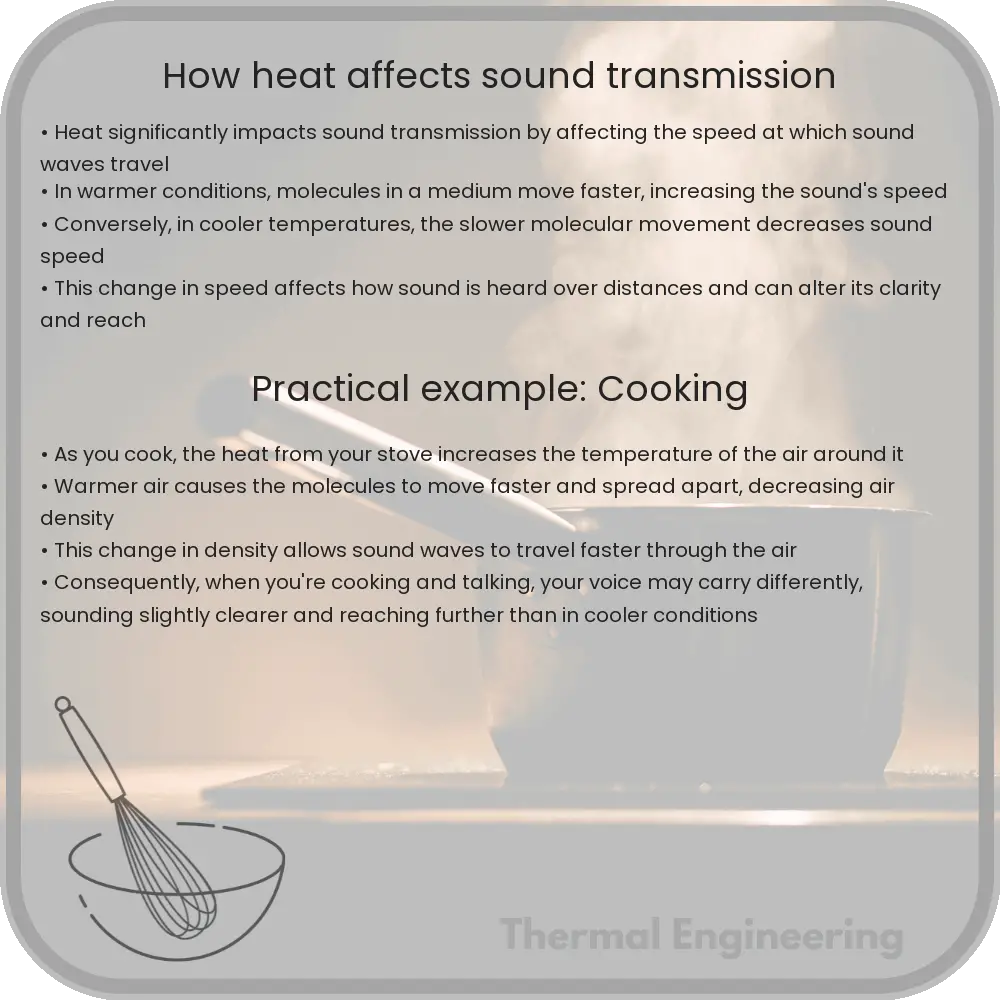
Sound, a form of energy that we recognize primarily through hearing, is transmitted through different mediums such as gases, liquids, and solids via waves. The behavior of these sound waves can be significantly affected by temperature changes in the medium through which they are passing. This article explores how heat influences sound transmission and what implications this has in practical applications.

Basics of Sound Transmission

Sound waves are longitudinal waves consisting of compressions and rarefactions of particles in the medium they travel through. The speed of sound in a material is influenced by the material’s physical properties such as density and elasticity. However, temperature plays a critical role in affecting these properties and thus the speed of sound.

The Effect of Heat on Sound Speed

The speed of sound in gases is given by the formula:

c = sqrt(γ * R * T / M)

  • c – speed of sound in meters per second (m/s)
  • γ (gamma) – adiabatic index (ratio of specific heats at constant pressure and volume)
  • R – universal gas constant (approximately 8.314 J/(mol*K))
  • T – temperature in kelvin (K)
  • M – molar mass of the gas (in kilograms per mole (kg/mol))

This equation clearly shows that the speed of sound in a gas increases with the square root of the temperature of the gas. Physically, this occurs because higher temperatures decrease the density of the gas (particles move faster and spread out more) while the energy provided by heat increases the particles’ velocity.

Practical Implications

  1. Climate and Weather: Sound travels faster in warm air than in cold air. Thus, on a hot day, sounds may be heard more clearly and from further away than on a cold day.
  2. Engineering Applications: Understanding how heat affects sound transmission is crucial in many domains, including architectural acoustics where building materials expand and contract differently with temperature changes, affecting sound insulation properties.
  3. Acoustic Instruments: Many musical instruments, like wind instruments, rely on air columns whose sound speed varies with temperature. Musicians often have to adjust their tuning based on temperature changes.

Conclusion

Heat can significantly affect how sound is transmitted through different mediums, primarily by influencing the speed at which sound waves travel. This interplay between heat and sound has a wide range of practical applications, from weather forecasting to the design of musical instruments and soundproofing in buildings. Understanding these effects allows engineers and scientists to make better predictions and improvements in various technological fields.

By appreciating these basic physics principles in engineering, we can better understand and utilize the nature of sound in our everyday and professional lives.

How does a heat detector work

Learn about heat detectors, their role in fire safety, types including fixed temperature and rate-of-rise, how they work, and their applications.

How does a heat detector work

Understanding Heat Detectors: A Key Component in Fire Safety

Heat detectors are integral to the safety systems in residential, commercial, and industrial buildings, providing early warning of potentially life-threatening fires. These devices are designed to respond when the temperature of an area reaches a preset threshold, or when a rapid temperature increase is detected. By understanding how they work, we can appreciate their role in fire safety measures.

Types of Heat Detectors

There are primarily two types of heat detectors:

  • Fixed Temperature Heat Detectors: These devices are triggered when the ambient temperature exceeds a predefined limit. Commonly set thresholds are around 135 to 165 degrees Fahrenheit. They utilize a heat-sensitive eutectic alloy which melts at a specific temperature, completing an electrical circuit to trigger an alarm.
  • Rate-of-Rise Heat Detectors: These detectors monitor the rate at which the ambient temperature increases. Typically, an alarm is triggered if the temperature rises by 15 degrees Fahrenheit or more per minute. Rate-of-rise detectors contain a pair of thermocouples or thermistors that sense the temperature difference; a rapid increase in temperature difference causes the alarm to sound.

Some modern systems include a combination of both types of detectors, offering more reliable and sensitive fire detection.

How a Fixed Temperature Heat Detector Works

Fixed temperature heat detectors commonly use a bi-metallic strip or a fusible alloy as the trigger mechanism:

  1. Bi-metallic Strip: This configuration employs two metals with different coefficients of expansion bonded together. As the temperature rises, the differing expansion rates of the metals cause the strip to bend. At a certain curvature, which corresponds to a specific temperature, it contacts a switch to activate the alarm.
  2. Fusible Alloy: In this mechanism, a low melting point alloy holds a spring-loaded contact in place. When the ambient temperature reaches the detector’s threshold, the alloy melts and releases the spring, thus closing the electrical circuit and activating the alarm.

How a Rate-of-Rise Heat Detector Works

Rate-of-rise detectors function based on the speed of temperature increase. They typically use one of the following mechanisms:

  1. Diaphragm Mechanism: A small, air-filled chamber sealed by a diaphragm experiences expansion due to rapid temperature increases. If the air expands quickly enough, the resulting pressure causes the diaphragm to actuate a switch, thus triggering the alarm.
  2. Thermocouple/Thermistor Method: This approach pairs two sensors with different thermal characteristics. Under normal conditions, they are in equilibrium, but a quick rise in temperature disturbs this balance. The result is a voltage generated between the two, which is used to trigger the alarm when it exceeds a preset threshold.

Applications and Considerations

Heat detectors are crucial components in areas where smoke detectors may cause false alarms, such as kitchens and garages, or in environments with high amounts of dust and fumes. While they are less sensitive to smaller, smoldering fires, their high threshold for false alarms and immunity to environmental factors make them ideal for specific applications.

It’s important to choose the right type of heat detector based on the environment and the nature of potential fire hazards present. Regular maintenance and testing are crucial to ensure that these devices function correctly when needed most.

Understanding the operation and application of heat detectors helps in designing safer fire detection systems and enhances overall fire safety. By employing these devices strategically alongside other fire detection technologies, it is possible to provide comprehensive coverage that addresses various types of fire risks effectively.

Thermal control in vertical farming

Learn about thermal control in vertical farming, a critical factor for growth, efficiency, and sustainability in this innovative agriculture method.

Thermal control in vertical farming

Understanding Thermal Control in Vertical Farming

Vertical farming is an innovative approach to agriculture, where crops are grown in vertically stacked layers, often incorporating controlled environment agriculture technology. This method optimizes plant growth, and stacking systems can significantly reduce the space required for farming. However, managing the temperature in these controlled environments is crucial for maximizing crop yield and resource efficiency. Here, we explore the principles and techniques of thermal control in vertical farming.

Why is Thermal Control Important in Vertical Farming?

Plants have specific thermal requirements for optimal growth, which vary across different species and stages of growth. Temperature affects photosynthesis, respiration, germination, and flowering. In vertical farming, the close proximity of plants and their exposure to artificial lighting can lead to higher heat generation and require careful thermal management to maintain optimal conditions.

Thermal Management Techniques

  • Climate Control Systems: Most vertical farms use HVAC systems (Heating, Ventilation, and Air Conditioning) to control the temperature. These systems are designed to maintain a constant temperature and humidity level, suited for plant growth.
  • LED Lighting: Light-emitting diode (LED) lights are commonly used in vertical farming because they emit less heat and are energy-efficient compared to traditional lighting systems. The specific wavelengths of light can be customized to the needs of the plant, which also helps in managing heat levels.
  • Water Cooling Systems: Some vertical farms incorporate hydroponic systems, where water is used as a medium to grow plants. These systems can also be used to manage temperature by circulating water to remove excess heat from the plant environment.
  • Thermal Insulation: Proper insulation helps in maintaining the desired temperature levels within the farming structure, preventing external weather conditions from affecting the internal climate.
  • Automated Sensors and Controls: Smart farming solutions include sensors to continuously monitor temperature, humidity, light levels, and CO2 concentrations. Automated systems can adjust the climate controls based on the sensor inputs, ensuring optimal growth conditions.

Challenges in Thermal Control

Despite the availability of advanced technologies, there are several challenges in thermal management in vertical farming:

  • Energy Consumption: Maintaining thermal controls, especially in adverse external conditions, can be highly energy-intensive. Finding energy-efficient solutions remains a significant challenge for sustainable vertical farming.
  • System Complexity: The integration of various systems for temperature control, lighting, and humidity can become complex and require sophisticated management tools and expertise.
  • Cost: The initial setup cost for advanced thermal control systems can be high, potentially making it less feasible for small-scale operations.
  • Maintenance: Regular maintenance of HVAC systems, sensors, and other components is essential for their efficient operation but can be costly and technically demanding.

Future Prospects

As technology advances, there are continuous improvements in thermal management systems making them more efficient and cost-effective. Ongoing research in crop-specific needs and the development of AI-driven climate control solutions could further enhance the precision in thermal management in vertical farming. This progress is crucial for making vertical farming a viable and sustainable solution to meet the increasing food demands of the global population.

Thermal control in vertical farming not only ensures the health and productivity of plants but also contributes to the sustainability of agriculture by minimizing waste and optimizing resource use. Understanding and implementing efficient thermal management techniques is therefore essential for the success of vertical farms around the world.

How thermal diffusion separates molecules

Learn about thermal diffusion, a critical phenomenon for molecular separation in various scientific and industrial processes, influenced by temperature gradients.

How thermal diffusion separates molecules

Understanding Thermal Diffusion and Its Role in Separating Molecules

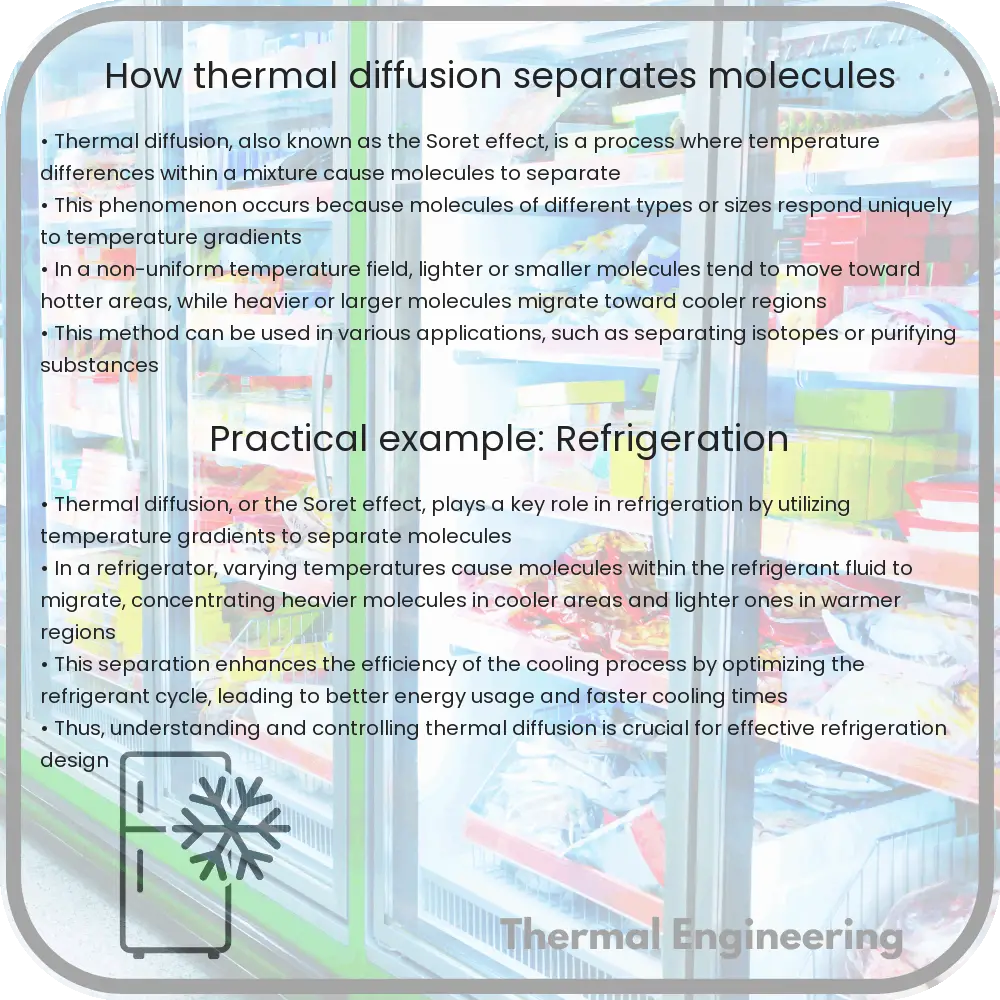
Thermal diffusion, also known as the Soret effect, is a phenomenon where molecular species in a mixture respond differently to a temperature gradient, leading to the separation of these molecules. It plays a crucial role in many scientific and industrial processes, including material synthesis, environmental science, and chemical engineering. This article explores how thermal diffusion works and how it is applied to separate molecules.

How Thermal Diffusion Works

When a temperature gradient is applied to a mixture of different types of molecules, each species may diffuse at different rates depending on their individual thermal properties. This differential movement is caused by the variance in kinetic energy distributed among the molecules. Higher temperature increases the kinetic energy of molecules, causing them to move more vigorously.

In the context of a mixture subjected to a thermal gradient (a temperature difference across a certain distance), molecules of different masses and heat capacities respond uniquely. Lighter molecules, or those with higher thermal diffusion coefficients, tend to move towards the cooler region, while heavier molecules move towards the warmer region.

The Mathematical Representation of Thermal Diffusion

The behavior of molecules under thermal diffusion can be described by the thermal diffusion ratio, \( k_T \), which is a dimensionless number defining the extent to which a species in a mixture migrates toward or away from heat sources. The general equation accounting for this movement is derived from Fick’s Law of Diffusion and Fourier’s Law of Heat Conduction, integrated into the continuity equation for a binary mixture:

  • \( J_A = -D \frac{dC_A}{dx} – C_A C_B k_T \frac{dT}{dx} \)

Here, \( J_A \) represents the molar flux of species A, \( D \) is the mutual diffusion coefficient, \( C_A \) and \( C_B \) are the concentrations of species A and B, respectively, \( k_T \) is the thermal diffusion ratio, and \( \frac{dT}{dx} \) is the temperature gradient. This shows how the thermal diffusion contributes alongside ordinary diffusion to the mass transport of species.

Applications of Thermal Diffusion

Thermal diffusion is instrumental in various applications due to its ability to separate molecules based on their physical properties:

  • Chemical Separation Processes: It’s used in processes like isotope separation and the removal of impurities from materials where differences in molecular thermal properties are essential.
  • Environmental Engineering: Thermal diffusion aids in the study of pollutant distribution in natural waters, where temperature gradients can influence the dispersion of various chemical species.
  • Material Science: In the production of alloys and composite materials, controlling the distribution of different molecules through thermal diffusion can lead to materials with improved properties.

The utility of thermal diffusion in molecular separation not only highlights its importance in research and industrial applications but also underlines the intricate interplay between temperature and molecular movement. Understanding this process deepens our comprehension of material behaviors under varying thermal conditions, paving the way for innovations in material design and system efficiency enhancements.

Conclusion

Thermal diffusion is a critical phenomenon in the field of engineering and science, facilitating the understanding and application of molecular separation under temperature gradients. By leveraging the unique responses of molecules to heat, engineers and scientists can design more effective separation processes and develop new materials with tailored properties. Thus, the study of thermal diffusion is not only about observing an interesting physical effect but also about harnessing it for practical advancements in technology and industry.