Facebook Instagram Youtube Twitter

How heat maps visualize data

Learn how heat maps provide intuitive data visualization by representing values through color gradients, aiding in pattern recognition and decision-making.
How heat maps visualize data

Understanding Heat Maps for Data Visualization

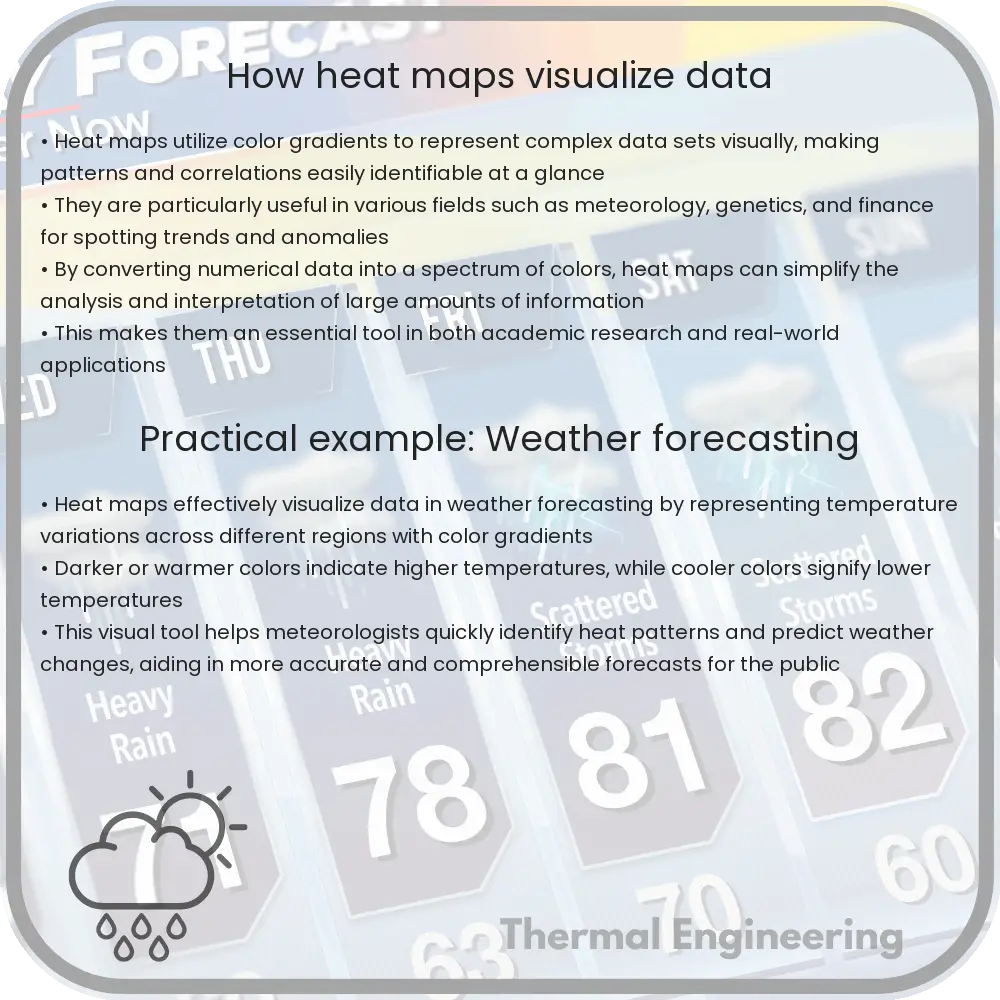
Heat maps are a powerful tool used in various fields such as engineering, meteorology, and data science to visualize complex data sets in an intuitive way. These graphical representations use color to communicate relationships between data values that might be difficult to understand in non-visual formats like spreadsheets or text descriptions.

What is a Heat Map?

A heat map is a type of data visualization that uses varying shades of colors to represent the magnitude of information. Essentially, they are matrices where the individual values contained in a matrix are represented as colors. The “heat” analogy comes from the fact that these maps typically use colors on a spectrum from cool (representing lower values) to warm (representing higher values).

How are Heat Maps Used?

  • Data Analysis: Analysts use heat maps to spot correlations, trends, and outliers within large sets of data. By quickly seeing which areas are “hot” or “cold,” it becomes easier to focus on potential areas of concern or interest.
  • User Behavior Tracking: In web design and development, heat maps are utilized to analyze user behavior on webpages, indicating where users most frequently click or how far they scroll.
  • Geographical Data Representation: Heat maps are also commonly generated in geographic information systems (GIS), where they help in the visualization of data points distributed across different geographic locations.

Creating a Heat Map

To create a basic heat map, the following steps are typically involved:

  1. Data Collection: Gather the data you wish to visualize. This could be anything from website visitor locations to sales data over different regions.
  2. Choose a Mapping Tool: Select software or a tool that supports heat map creation, such as Python’s Seaborn library, R’s ggplot2, or online tools like Google Sheets.
  3. Prepare Data: Organize your data typically in a matrix form where rows and columns correspond to categories and sub-categories with respective values.
  4. Apply Color Gradient: Assign a color gradient that will aid in differentiating the range of values. Color intensities vary typically from low (cold) to high (hot).
  5. Analyze and Interpret: Once your heat map is generated, analyze it to identify patterns, trends, or anomalies that arise from the visualization.

Challenges and Considerations

While heat maps are extremely useful, they have certain limitations and considerations:

  • Colorblind Accessibility: Care must be taken in choosing color palettes that are distinguishable by people with color vision deficiencies.
  • Overlapping Data Points: Especially in geographical heat maps, high-density areas can overlap and obscure information unless properly managed.
  • Interpretation Bias: The choice of color gradients can influence how data interpretations are made, potentially leading to biased conclusions unless colors are chosen carefully.

Conclusion

Heat maps offer a visually engaging way to represent complex data and make digestible insights accessible to a wide range of audiences. By understanding how to create and interpret heat maps, individuals and organizations can enhance their data analysis capabilities and make more informed decisions.

How does a thermal blanket retain heat

Learn the science behind thermal blankets’ heat retention through reflection, reduced convection, and conduction control; a real-world thermodynamics application.

How does a thermal blanket retain heat

Understanding How a Thermal Blanket Retains Heat

Thermal blankets, also known as space blankets, are not just essential during camping trips or in emergency kits; they also serve as a fascinating example of engineering applied for heat retention. This article explores the mechanisms through which thermal blankets keep individuals warm by reflecting body heat and reducing heat loss.

The Material of a Thermal Blanket

Thermal blankets are typically made from a plastic substrate coated with a metallic reflecting agent like aluminum. The thickness of the film is usually only a few microns, akin to lightweight plastic wraps. This design is intentional to reflect back heat radiation while being extremely lightweight and portable.

How Heat is Retained

  • Radiation Reflection: One of the primary mechanisms by which thermal blankets retain heat is by reflecting infrared radiation. Human bodies naturally emit heat in the form of infrared radiation. The metallic surface of the blanket reflects this radiation back towards the body, thereby reducing heat loss.
  • Reducing Convection: By wrapping a thermal blanket around the body, the movement of air (and thus heat carried by the air) around the body is minimized. This reduction in air movement (convection) helps in keeping the body warmer for a longer period.
  • Conduction Limitation: While the thin material might not seem robust, it effectively reduces the heat lost through conduction due to its low thermal conductivity. The thin layers of metal and plastic provide a barrier that slows down the rate at which body heat escapes into the colder external environment.

The Science Behind It

The principle underlying thermal blankets is primarily based on the laws of thermodynamics, specifically the principles of heat transfer. Heat can be transferred in three ways: conduction, convection, and radiation. Conduction involves direct contact, convection involves fluid or air, and radiation occurs through electromagnetic waves.

Since radiation is a key route through which body heat is lost, a thermal blanket’s ability to reflect infrared radiation is crucial. This functionality hinges on the properties of the metal coating. Metals are excellent reflectors of infrared radiation due to their free electrons that scatter radiative energy.

Real-world Applications

While commonly seen in survival kits or used after marathons, the technology behind thermal blankets is also utilized in other domains:

  • Aerospace: Thermal blankets are used to protect spacecraft from extreme temperatures in space, where temperature differentials can be extreme.
  • Building Insulation: Reflective thermal insulation in buildings operates on the same principle by keeping indoor environments warm in winter and cool in summer.
  • Medical Field: Used to prevent hypothermia in patients post-surgery or in those who have suffered severe trauma.

In conclusion, the efficiency of a thermal blanket in retaining heat is primarily attributed to its material properties and design, which reflect back body heat while minimizing heat loss through convection and conduction. This simple yet effective solution showcases a practical application of thermodynamic principles, proffering lessons on how understanding basic science can lead to significant real-world applications.

How thermoelectric coolers manage heat

Delve into the workings of thermoelectric coolers, their heat management, applications, and the pros and cons of using Peltier effect-based technology.

How thermoelectric coolers manage heat

Understanding Thermoelectric Coolers

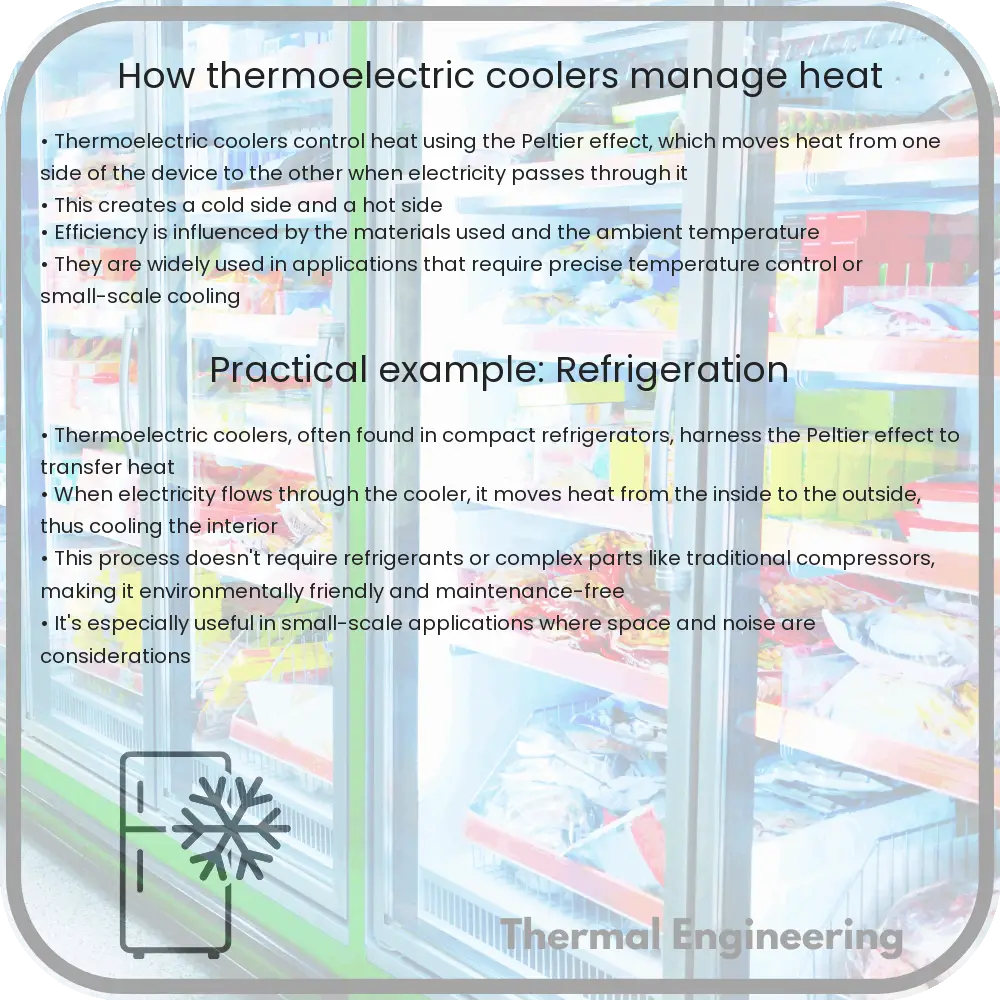
Thermoelectric coolers (TECs), often referred to as Peltier coolers, are fascinating devices that facilitate heat transfer through electrical energy, relying on the Peltier effect. This solid-state method of cooling and heating has applications ranging from electronic devices to portable coolers. In this article, we’ll delve into the physics behind thermoelectric coolers, how they manage heat, and their advantages and limitations in practical applications.

The Principle of the Peltier Effect

The operation of thermoelectric coolers is based on the Peltier effect, which was discovered by French physicist Jean Charles Athanase Peltier in 1834. When electric current flows through a circuit of two different conductors, heating or cooling occurs at the junctions of the conductors. Specifically, heat is absorbed at one junction (cooling effect) and released at another junction (heating effect). This phenomenon is reversible by simply reversing the direction of the electrical current.

Composition of a Thermoelectric Cooler

A typical TEC consists of two ceramic plates with multiple p-type and n-type semiconductor elements between them. These semiconductors are usually made of bismuth telluride. The arrangement forms a series of thermocouples, which are connected electrically in series and thermally in parallel. When a DC voltage is applied, it drives a current through the thermocouples, creating a temperature difference between the two ceramic plates.

How TECs Manage Heat

Managing heat efficiently is critical for the effective operation of thermoelectric coolers. The process can be outlined in several key steps:

  • Cooling Process: When DC power is applied, electrons and holes in the semiconductor material move from one side to the other. This movement of charge carriers carries heat from one side of the cooler to the other, thus cooling one ceramic plate while heating the other.
  • Heat Absorption: The cold side of the TEC absorbs heat from the environment or an object that needs to be cooled. This heat absorption continues as long as there is current flow and sufficient thermal insulation.
  • Heat Dissipation: The hot side of the TEC dissipates heat into the environment. Typically, a heat sink is attached to the hot side to manage and disperse this heat efficiently, maintaining the performance of the cooler.

Applications of Thermoelectric Coolers

Thermoelectric coolers are used in a variety of applications, benefiting from their compact size and lack of moving parts. Some common applications include:

  • Electronic components cooling
  • Food and beverage refrigerators
  • Temperature control in optical equipment
  • Portable cooling systems for medical and scientific instruments

Advantages and Limitations

While TECs offer several advantages such as compactness, reliability due to the lack of moving parts, and precision in temperature control, they also have limitations:

  • Efficiency: TECs generally have lower energy efficiency compared to traditional refrigeration methods, especially at larger scales.
  • Heat Dissipation Needs: Effective heat dissipation systems are crucial, as the performance of a thermoelectric cooler depends heavily on its ability to expel excess heat.
  • Cost: The cost of materials for high-efficiency thermoelectric materials can be high, impacting the overall cost-effectiveness of these systems.

In conclusion, thermoelectric coolers provide a unique and versatile method for controlling temperature in various applications. Understanding how they manage heat highlights both their capabilities and their limits, essential knowledge for anyone utilizing or designing systems based on this technology.

Nano-enhanced thermal fluids

Dive into nano-enhanced thermal fluids, the heat transfer innovators bolstering efficiency in electronics, automotive, and industrial sectors.

Nano-enhanced thermal fluids

Understanding Nano-Enhanced Thermal Fluids

As we delve deeper into the world of engineering innovations, nano-enhanced thermal fluids (NETFs) represent a fascinating development in the field of heat transfer technology. These fluids, infused with nanoparticles, improve the thermal conductivity of base fluids such as water, oil, or ethylene glycol. The result is a high-performance coolant that can effectively transfer heat in various industrial, automotive, and electronic applications.

Composition and Types

Nano-enhanced thermal fluids consist of a base fluid and nanoparticles typically made from metals, metal oxides, carbon nanotubes, or other conductive materials. Common nanoparticles used include aluminum oxide (Al2O3), copper oxide (CuO), and silver (Ag). These particles, generally ranging between 1 nm and 100 nm in size, are dispersed within the fluid, enhancing its overall ability to conduct heat.

Improvement in Thermal Conductivity

The primary advantage of NETFs lies in their significantly enhanced thermal conductivity compared to conventional fluids. Nanoparticles have a high surface area-to-volume ratio, which facilitates a better and more efficient heat transfer mechanism. Studies have shown that even a small concentration of nanoparticles (about 1% by volume) can enhance the thermal conductivity of a base fluid by up to 20-40%.

Applications of Nano-Enhanced Thermal Fluids

  • Electronics Cooling: In high-performance computing and electronic devices, managing heat is crucial. NETFs can be used in cooling systems to effectively remove excess heat, thus enhancing device performance and longevity.
  • Automotive: Improved heat transfer fluids are beneficial in automotive cooling systems, where maintaining optimal engine temperatures is essential for performance and efficiency.
  • Renewable Energy Systems: Solar thermal power plants and other renewable energy systems can benefit from the higher thermal efficiency of NETFs, leading to better system performance and higher energy output.
  • Industrial Systems: Any process that requires heating or cooling can benefit from NETFs due to their improved heat transfer capabilities, which can lead to energy savings and improved process stability.

Challenges and Future Prospects

While NETFs offer significant benefits, they also come with challenges. The stability of nanoparticle dispersion, potential clogging of channels, abrasion of surfaces, and cost of nanoparticle production are critical issues that need addressing. Ongoing research is focused on developing more stable, cost-effective, and environmentally friendly nano-enhanced thermal fluids.

As research progresses, the continued innovation in nanotechnology and thermal management could see nano-enhanced thermal fluids becoming a standard in numerous applications where efficient cooling is paramount. Their ability to improve energy efficiency and reduce operational costs makes them an attractive option for future thermal management solutions.

Conclusion

Nano-enhanced thermal fluids are at the forefront of thermal management technology. By enhancing the thermal conductivity of conventional fluids, they open up new avenues for efficiency and performance in a variety of fields. With continued research and development, NETFs hold the potential to revolutionize how we manage heat in various technological and industrial applications.

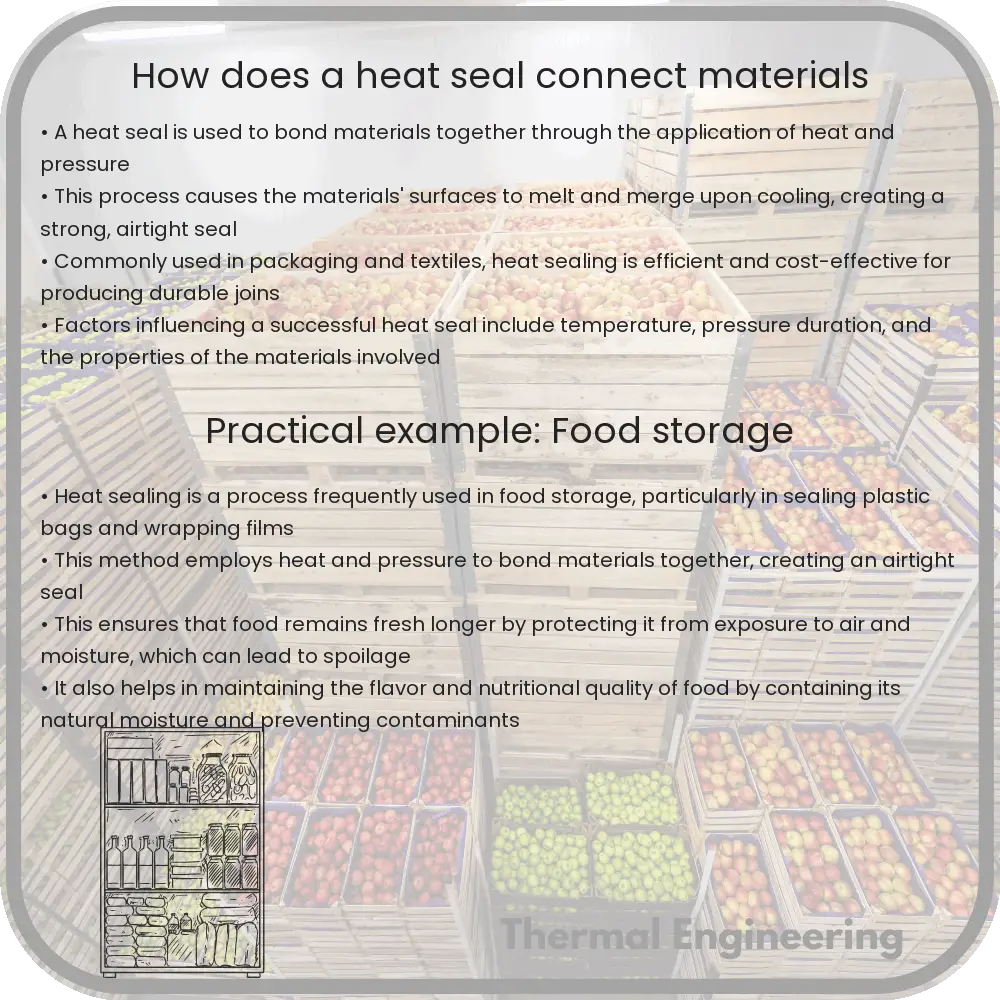
How does a heat seal connect materials

Learn about heat sealing, a process used to join materials by applying heat and pressure in industries such as packaging and textiles for reliable seals.

How does a heat seal connect materials

Understanding Heat Sealing in Material Connection

Heat sealing is a fundamental process used in various industries to join materials together by applying heat and pressure. This method is particularly prevalent in packaging, textiles, and thermoplastics industries, where it provides a reliable and efficient means of creating airtight and watertight seals.

Basic Principle of Heat Sealing

The basic principle of heat sealing involves the application of heat to the surfaces of materials to be joined, melting the interfacing layers. Once melted, pressure is then applied, causing the materials to fuse as the layers cool and solidify. This process can be tailored to the specific properties of the materials being sealed, including their thermal and viscous behavior under heat.

Types of Heat Sealing

  • Hot Bar Sealing: Involves a heated bar that is applied to the material for a predetermined time and pressure.
  • Impulse Sealing: Utilizes a heated wire that quickly heats up for a short interval, melting the material only during the time of impulse application.
  • Ultrasonic Sealing: Employs high-frequency ultrasonic acoustic vibrations to melt the material and form a bond.

Factors Affecting Heat Sealing

Several factors can influence the effectiveness and quality of a heat seal:

  1. Temperature: The temperature needs to be high enough to melt the material but not so high as to degrade it.
  2. Pressure: Sufficient pressure must be applied to unite the molten surfaces but must be balanced to avoid excessive thinning of the material.
  3. Dwell Time: This is the duration for which heat and pressure are applied. It must be optimized to allow for adequate melting and fusion of the material.

Applications of Heat Sealing

Heat sealing is employed in various applications, reiterating its versatility:

  • Packaging: Used for sealing food packaging and pharmaceuticals to ensure product integrity and shelf life.
  • Manufacturing: In assembling parts that require strong, leak-proof joints.
  • Textile: Applied in processing garments, especially in attaching logos, labels, and hem seams in a way that is durable yet comfortable.

Conclusion

Heat sealing is a critical process in engineering that offers a durable and efficient method for joining materials. By understanding the essential parameters of temperature, pressure, and dwell time, industries can optimize this process to achieve high-quality seals that meet specific needs. Whether in packaging, textiles, or automotive manufacturing, the proper application of heat sealing technology is vital for achieving desirable product quality and functionality.

How thermal desorption purifies samples

Learn how thermal desorption purifies samples for analysis by heating to volatilize compounds, useful in environmental and material sciences.

How thermal desorption purifies samples

Understanding Thermal Desorption for Sample Purification

Thermal desorption is a technique commonly used in the field of analytical chemistry for purifying samples. This method involves the heating of a sample to volatilize impurities or the sample components, which are then collected separately for analysis. This process is particularly effective for the preparation of samples that are to be analyzed by gas chromatography (GC).

Principles of Thermal Desorption

The fundamental principle behind thermal desorption is the use of heat to increase the volatility of compounds contained within a sample. Compounds in complex mixtures have varying volatilities and will vaporize at different temperatures. By carefully controlling the temperature, scientists can selectively desorb components at specific times, effectively separating them from the sample matrix.

Process of Thermal Desorption

The process of thermal desorption can be divided into several key steps:

  1. Sample Loading: The sample is loaded onto a sorbent tube or packed into a desorption chamber. The choice of sorbent material depends on the type of analytes present and the specifics of the sample composition.
  2. Desorption Phase: The sample is gradually heated to desorb the volatile compounds. The temperature is carefully controlled to ensure that different compounds are released in a controlled manner.
  3. Transfer of Vaporized Compounds: Once the compounds are vaporized, they are carried by an inert carrier gas, typically helium or nitrogen, into an analytical instrument such as a gas chromatograph.
  4. Analysis: Following transfer, the separated compounds are analyzed using a detector connected to the gas chromatograph, typically a mass spectrometer or a flame ionization detector.
  5. Results Interpretation: The data generated by the detector are interpreted to determine the composition of the original sample or to quantify specific analytes.

Applications of Thermal Desorption

Thermal desorption is widely used in environmental testing, particularly for analyzing volatile organic compounds (VOCs) in air, soil, and water samples. It is crucial for monitoring pollution, researching atmospheric chemistry, and ensuring compliance with environmental regulations. Additionally, it is also applied in the fields of material science and food safety, where understanding volatile profiles is necessary.

Advantages of Thermal Desorption

  • Sensitivity: Thermal desorption allows for the detection of very low concentrations of volatile compounds.
  • Efficiency: It enables rapid processing of samples and does not usually require extensive sample preparation.
  • Automation: Much of the thermal desorption process can be automated, thereby reducing the potential for human error and increasing throughput.
  • Reusability: In many cases, sorbent materials can be reused after regeneration, making this method cost-effective for large-scale surveys.

Challenges and Considerations in Thermal Desorption

While thermal desorption is a highly effective technique for purifying and analyzing samples, it also comes with challenges. Temperature control must be precise, as incorrect temperatures can lead to incomplete desorption or degradation of sensitive compounds. Additionally, choosing the correct sorbent and carrier gas, as well as the potential for cross-contamination between samples, are important factors that need meticulous attention.

In summary, thermal desorption is a valuable technique in analytical chemistry, providing a delicate balance between sensitivity and specificity for sample analysis. It has wide applications and, when correctly applied, can yield detailed insights into the composition of complex mixtures.

How exergy analysis optimizes thermal systems

Learn about exergy analysis, a technique for optimizing thermal systems by assessing energy quality and minimizing waste for improved efficiency.

How exergy analysis optimizes thermal systems

Understanding Exergy Analysis in Thermal Systems Optimization

Exergy analysis is a powerful tool used in engineering to assess the performance and efficiency of thermal systems. By focusing on the concept of ‘exergy’, which represents the maximum useful work possible during a process that brings the system into equilibrium with a heat reservoir, engineers can identify and minimize energy wastage, thereby optimizing system performance.

What is Exergy?

Exergy is a measure of the quality of different forms of energy. It is defined as the maximum useful work achievable from a system at a given state in a specified environment. Unlike energy, which is conserved, exergy is destroyed due to irreversibilities in real processes, such as friction, mixing, chemical reactions, and heat transfer. The analysis based on exergy considerations helps identify where and how improvements in a thermal system can be made.

Exergy Analysis of Thermal Systems

Exergy analysis involves several steps tailored to investigate where and how losses occur in thermal systems. The basic steps include:

  1. System Boundary and Environment Definition: Clearly defining the system under study and its boundaries, alongside environmental conditions, sets the base for analysis.
  2. Determination of State Properties: Calculation of thermodynamic properties at various states within the system through methods like equations of state or steam tables.
  3. Exergy Balance: Similar to an energy balance, an exergy balance is formulated, but it takes into account the quality of energy flows and losses. The general exergy balance can be written as ΔEx = Exin – Exout + Exdestroyed, where Exin is the exergy entering the system, Exout is the exergy leaving the system, and Exdestroyed is the exergy destroyed due to irreversibilities.
  4. Identification of Irreversibilities: Areas where exergy is destroyed (due to factors like heat loss, friction, or inefficient conversion processes) are identified. This step is central to suggesting improvements.

Case Studies and Applications

Exergy analysis has been applied in various thermal systems to enhance their efficiency. Common applications include:

  • Power plants, where exergy analysis helps reduce wasted work and improves the conversion efficiency of heat into electrical energy.
  • Refrigeration systems, where it is used to analyze and improve the efficiency of the cycle by reducing irreversibilities in various components like compressors and expanders.
  • Heating and cooling systems in buildings, particularly for optimizing the performance of heat exchangers and thermal storage systems.

Advantages of Exergy Analysis

Exergy analysis comes with several benefits, making it crucial for the design and evaluation of thermal systems:

  • Comprehensive Efficiency Assessment: Unlike traditional energy analysis, exergy analysis provides a measure that combines both quantity and quality aspects of energy.
  • Identification of Potential Improvements: It pinpoints where inefficiencies occur and quantifies the potential improvements, therefore guiding more effective design and operational decisions.
  • Environmental Impact: By improving the efficiency of systems and reducing energy wastage, exergy analysis contributes indirectly to lowering the environmental impact of energy use.

In conclusion, exergy analysis is an essential method in the toolkit of an engineer working with thermal systems. By understanding the nature of energy waste and seeking to minimize it, engineers can design more efficient, less environmentally harmful systems that perform closer to their theoretical potential.

How thermochromic materials change color

Learn about thermochromic materials, their types, color-changing mechanisms, and diverse applications in everyday products.

How thermochromic materials change color

Understanding Thermochromic Materials and Color Change

Thermochromic materials are fascinating substances that change color in response to temperature fluctuations. This unique trait is utilized in a variety of applications, from mood rings to battery testers, and even in smart textiles that adjust their color to environmental conditions. How these materials work, and the science behind their color-changing properties, involves a blend of chemistry and physics principles.

The Basics of Thermochromic Materials

Thermochromic materials can be primarily categorized into two types: liquid crystals and leuco dyes. Each of these materials reacts differently to temperature changes, thus serving diverse functions across various industries.

  • Liquid Crystals: When subjected to temperature alterations, liquid crystals can change their color. Their molecules are sensitive to temperature changes and they reorient at specific temperatures, which affects their ability to reflect light and thus changes their color.
  • Leuco Dyes: These are microencapsulated substances which can undergo reversible changes in color. When incorporated with a suitable developer and solvent, these dyes can transition between two chemical forms, causing a color change as a response to temperature adjustments.

How Thermochromic Materials Change Color

The color change in thermochromic materials occurs due to a process known as thermochromism. This involves transforming one chemical structure to another by the input or release of heat. Below, we delve deeper into the mechanisms for both types of thermochromic materials:

  • Liquid Crystals: The structure of liquid crystals is highly responsive to temperature changes. At specific temperatures, the spacing between the layers of molecules alters, thus changing the wavelength of light that these molecules reflect. Essentially, as the temperature increases or decreases, the liquid crystals absorb and reflect different wavelengths of light, thereby changing color.
  • Leuco Dyes: In the case of leuco dyes, the process involves a reversible chemical reaction. Typically, a leuco dye molecule becomes colorless when dissolved in a particular acid or solvent at a low temperature. As the temperature rises, the solvent’s hold on the dye molecules weakens, enabling these molecules to revert to their colored form.

Applications of Thermochromic Materials

Thermochromic technologies find applications in various sectors due to their ability to inform or warn by means of visible changes in color.

  • Mood Rings: A popular novelty item from the 1970s, mood rings contain liquid crystals that change color supposedly indicative of the wearer’s mood, based on body temperature changes.
  • Thermometers: Thermochromic liquid crystals are used in strip thermometers that can be placed on the forehead to indicate body temperature.
  • Baby Products: Thermochromic dyes are applied to items such as baby spoons that change color when food is too hot.
  • Beverage Containers: Some beverage cans use thermochromic ink to show when the content is at an ideal drinking temperature.
  • Textiles: Smart textiles incorporate thermochromic materials to change color with the external environment or body temperature, adding aesthetic or functional value to the fabric.

The innovative use of thermochromic materials demonstrates the intricate connection between materials science and practical applications. By harnessing the properties of these materials, engineers and designers can create products that are not only functional but also interactive and responsive to the environment.

Conclusion

Thermochromic materials provide a vivid example of how basic principles from chemistry and physics can be applied to engineer smart, dynamic materials. These materials offer insights into materials science developments and continue to inspire new technologies that respond to our changing needs and environmental conditions.

How does a thermal relay work

Learn how thermal relays function to protect electrical devices from overloads by monitoring and responding to excessive heat due to current flow.

How does a thermal relay work

Understanding How a Thermal Relay Works

A thermal relay is an essential component in electrical engineering, designed to protect electric motors and other electrical devices from overloads that might cause damage due to excessive current flow. Also known as a thermal overload relay, it operates on the principle of heat generated by electrical current. This guide explains the functional mechanism, components, and typical applications of thermal relays.

Basic Principle

The basic working principle of a thermal relay is to monitor the heat produced by the current passing through an electrical circuit. Excessive current can lead to overheating, which, in turn, can damage the electrical components. A thermal relay aims to prevent this by breaking the circuit when a predefined temperature or current limit is exceeded.

Key Components

  • Bimetallic Strip: This is the core component of a thermal relay. It is made up of two metals with different coefficients of thermal expansion welded together. When heated (due to electrical current), this strip bends due to the different expansion rates of the two metals. This bending motion is used to trigger a switch that opens the circuit, thus stopping the current flow and protecting the equipment.
  • Heating Element: A resistive wire that heats up as current passes through it. It is usually placed close to or wrapped around the bimetallic strip, providing the necessary heat to activate the strip.
  • Contact System: This includes a set of electrical contacts that open when the bimetallic strip bends sufficiently. When these contacts open, the electrical circuit is broken, stopping the current and consequently, the heat generation.
  • Calibration Mechanism: This allows the relay to be set or calibrated for different current levels, adjusting the sensitivity of the bimetallic strip to heat. It is vital for ensuring that the relay functions accurately according to the specific requirements of the circuit or device being protected.

How It Works

When an electrical device or circuit is in operation, current flows through the thermal relay. If the current is within safe limits, nothing happens, and the circuit works as usual. However, if the current exceeds the predefined safe limit, it causes the heating element to generate more heat. This additional heat causes the bimetallic strip to bend. Once the strip bends to a critical point, it mechanically drives the contact system to break the circuit. This interruption stops further current flow, allowing the circuit and the connected device to cool down, thus preventing damage due to overheating.

Applications of Thermal Relays

  • Motor Protection: Motors are susceptible to damage from overcurrents due to sudden load changes or mechanical failures. Thermal relays are widely used to protect motors by ensuring that they operate within safe thermal conditions.
  • Heating Systems: In systems such as electric heaters, thermal relays prevent overheating by monitoring and controlling the heat output of the elements.
  • Industrial Equipment: Various types of industrial machinery that are prone to overheating due to heavy or prolonged use typically incorporate thermal relays for safety.

Conclusion

Thermal relays are indispensable in safeguarding electrical and mechanical equipment from damage due to excessive heat generation caused by current overload. By understanding how a thermal relay works, engineers and technicians can better design, implement, and maintain systems that ensure operational safety and efficiency. Furthermore, understanding this principle empowers users and service personnel to perform troubleshooting and maintenance with greater efficacy.

How thermal impedance affects electronic cooling

Learn how thermal impedance is essential in electronic cooling, affecting device performance and reliability by shaping heat dissipation in electronics engineering.

How thermal impedance affects electronic cooling

Understanding Thermal Impedance in Electronic Cooling

Thermal impedance is a critical concept in the field of electronics engineering, particularly concerning the cooling and proper functioning of electronic devices. When devices operate, they generate heat, which, if not effectively dissipated, can degrade performance, reliability, and lifespan. Here, we explore what thermal impedance is, how it affects electronic cooling, and its significance in electronics design.

What is Thermal Impedance?

Thermal impedance can be thought of as the opposition to the flow of heat from the heat source (such as a CPU or GPU) to its surroundings. It is generally expressed in units of degrees Celsius per watt (°C/W). This metric is akin to electrical impedance in circuits, which measures the opposition to the flow of electrical current. Thermal impedance consists of several components including conduction, convection, and radiation elements, which all play a role in determining how efficiently heat can be moved away from an electronic component.

Components of Thermal Impedance

  • Thermal Resistance: The most dominant component in thermal impedance, thermal resistance quantifies the difficulty in transferring heat through materials. It is influenced by material properties, geometry, and the nature of the heat transfer—whether by conduction, convection, or radiation.
  • Contact Resistance: This occurs at the interfaces between different materials in the heat transfer path, including any thermal interface materials (TIM) applied to enhance conductivity. Imperfections at these interfaces can significantly increase thermal resistance.
  • Thermal Capacitance: This aspect of impedance tells how much heat can be stored within a material. Higher thermal capacitance means the material can store more heat before its temperature rises considerably.
  • Radiation and Convection Elements: These factors relate to how effectively a device can dissipate heat into the surrounding environment through radiation (heat radiating off the surface) and convection (heat transfer to the surrounding air).

Impact of Thermal Impedance on Electronic Cooling

Understanding thermal impedance is crucial for effective cooling solutions in electronics. High thermal impedance implies a poor pathway for heat flow, which leads to higher operating temperatures of electronic components under load. This heat buildup can result in thermal throttling, where devices reduce performance to control temperature, or in severe cases, can cause component failure.

To manage thermal impedance, engineers use materials with low thermal resistance for heat sinks and components. They often incorporate fans or liquid cooling systems to enhance convection and use thermal interface materials (TIMs) that allow for better heat conduction across interfaces.

Design Considerations

Minimizing thermal impedance is a primary consideration in electronic device design, particularly for high-performance computing applications. Engineers must consider:

  • Material Selection: Choosing materials with high thermal conductivity for heat sinks (like copper and aluminum).
  • Geometry Design: Designing components and heat sinks with geometries that maximize surface area for heat dissipation.
  • Proper Placement of Cooling Systems: Ensuring that fans, heat sinks, and cooling ducts are strategically positioned to maximize air flow and heat transfer away from critical components.

Conclusion

Thermal impedance plays a fundamental role in electronic cooling. By understanding and managing this property, engineers can enhance the performance, reliability, and operational life of electronic devices. As technology continues to advance, developing innovative solutions to manage thermal impedance remains a top priority in the electronics industry.