Facebook Instagram Youtube Twitter

Thermal conductivity of aerogels

Dive into the world of aerogels, their structure, and their exceptionally low thermal conductivity, which is key for applications in insulation and space exploration.

Thermal conductivity of aerogels

Understanding the Thermal Conductivity of Aerogels

Aerogels are fascinating materials known for their extreme lightness and impressive thermal insulation properties. These materials, often called “frozen smoke” due to their translucent appearance, are derived from a gel in which the liquid component of the gel has been replaced with gas. The result is a solid with extremely low density and low thermal conductivity, making aerogels highly effective insulators.

Composition and Structure

Aerogels can be made from a variety of materials, but silica aerogels are the most common. These are composed primarily of silicon dioxide, similar to ordinary glass, and are synthesized by removing the liquid component of a silica gel through a process called supercritical drying. This method avoids the high surface tension normally associated with liquid-gas phase transitions, preserving the delicate three-dimensional network of the gel.

Thermal Conductivity Explained

Thermal conductivity is a measure of a material’s ability to conduct heat. It is numerically defined as the amount of heat that passes through a unit area of a substance in a unit of time for a unit temperature gradient. In simpler terms, it tells us how good a material is at transporting thermal energy.

Aerogels are notable for their incredibly low thermal conductivity values, which typically range from 0.01 to 0.02 W/m*K, depending on the density and composition of the aerogel. This property makes aerogels excellent materials for applications where thermal insulation is crucial, such as in building insulation, spacecraft, and high-performance clothing.

Factors Affecting Thermal Conductivity

  • Density: Generally, the lower the density of an aerogel, the lower its thermal conductivity. This is due to the reduced number of solid pathways for heat transfer.
  • Pore Size: Aerogels have a network of open pores that contain air or another gas. Smaller pore sizes can reduce the movement of air molecules, thereby reducing convective heat transfer.
  • Composition: The material of which the aerogel is made will also influence its thermal properties. For example, carbon aerogels are typically more conductive than silica ones.

Applications of Aerogels

Due to their low thermal conductivity, coupled with their light weight and low density, aerogels have a wide range of practical applications:

  1. Building Insulation: Aerogels can be used in walls, roofs, and floors where traditional insulation might be too bulky or heavy.
  2. Space Exploration: NASA uses aerogel materials to trap space dust particles without damaging them, as well as for insulating rovers and spacecraft.
  3. Protective Clothing: High-performance insulating garments, particularly for extreme environments, often incorporate aerogel materials to provide superior insulation while maintaining lightness.

In essence, the remarkable properties of aerogels, particularly their low thermal conductivity, make them an area of ongoing interest and innovation in both materials science and engineering application domains. Their unique characteristics continue to open new possibilities in insulation technology and energy efficiency strategies.

How waste heat recovery boosts efficiency

Learn how waste heat recovery enhances efficiency and sustainability by capturing unused thermal energy from industrial processes, power plants, and more.

How waste heat recovery boosts efficiency

Understanding Waste Heat Recovery and Its Impact on Efficiency

Waste heat recovery is a technology used in various engineering processes to capture and reuse heat that would otherwise be lost. This technology plays a significant role in enhancing the energy efficiency of systems, such as power plants, factories, and even vehicles, contributing to reduced energy consumption and lower environmental impacts.

What is Waste Heat Recovery?

Waste heat recovery refers to the process of capturing excess heat that is produced by machinery, equipment, or industrial processes, which would typically be dispersed into the environment. Instead of wasting this heat, recovery systems convert it into electricity, steam, hot water, or other forms of useful energy. This process not only adds to the energy efficiency of a system but also helps in reducing operational costs and carbon dioxide emissions.

Key Components of a Waste Heat Recovery System

  • Heat Exchanger: A critical component that transfers heat from waste streams (e.g., exhaust gases) to a working fluid or to the air.
  • Turbine or Generator: Used to convert the recovered thermal energy into electrical power.
  • Cooling System: Helps in maintaining the optimum temperature of the system to ensure efficient functionality.
  • Pump or Compressor: Facilitates the movement of the working fluid through the system.

Applications of Waste Heat Recovery

  1. Industrial Processes: High-temperature processes in manufacturing generate significant amounts of heat, which can be captured and reused for preheating, steam generation, or electricity.
  2. Power Plants: Traditional power plants can significantly increase their efficiency by recovering waste heat from exhaust gases to produce additional power without extra fuel consumption.
  3. Automotive: Modern vehicles, especially hybrid and electric, utilize waste heat recovery systems to improve overall energy utilization.
  4. Commercial Buildings: Use of waste heat from air conditioning systems or appliances to heat water or spaces, reducing the energy footprint of buildings.

Benefits of Waste Heat Recovery

Integrating waste heat recovery into existing systems offers multiple benefits:

  • Improved Energy Efficiency: By using the otherwise wasted heat, the total efficiency of the system can be increased, often significantly.
  • Cost Savings: Reductions in energy consumption result in lowered operational costs over time.
  • Environmental Impact: Minimizing the release of excess heat and reducing fossil fuel usage contribute to lowering greenhouse gas emissions.
  • Enhanced System Lifespan: Lower operating temperatures can lead to reduced wear and tear on system components.

Challenges and Considerations

While waste heat recovery has substantial benefits, there are challenges to consider:

  • Initial Investment: High upfront costs for the installation of recovery systems can be a barrier.
  • System Complexity: Integrating a new subsystem can increase the complexity of the existing setup, potentially requiring more maintenance and oversight.
  • Scale and Suitability: Not all processes produce enough waste heat to justify the cost of recovery, making it suitable primarily for industries or operations where large amounts of heat are regularly produced.

Conclusion

Waste heat recovery represents a compelling opportunity to boost the efficiency of a wide array of systems, from massive industrial operations to everyday residential use. Although it requires an upfront investment and careful integration, the long-term benefits of saved energy costs and reduced environmental impacts make waste heat recovery an attractive proposition for a sustainable future. Encouraging wider adoption and implementation of waste heat recovery technologies is essential for achieving greater energy efficiency and sustainability in various sectors around the world.

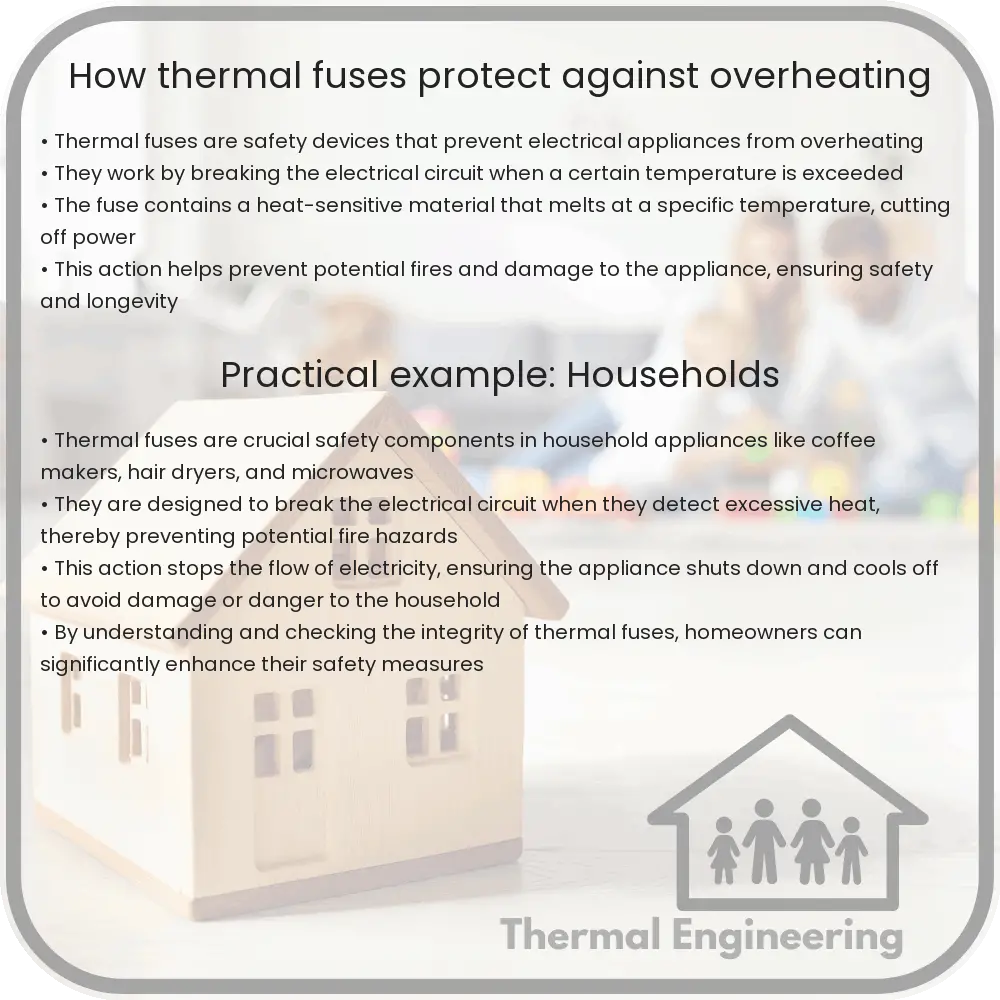
How thermal fuses protect against overheating

Learn about thermal fuses, their crucial role in preventing appliance overheating, how they function, and their importance in electrical safety.

How thermal fuses protect against overheating

How Thermal Fuses Protect Against Overheating

Thermal fuses are a critical component in the safety mechanisms of many electrical appliances. Acting as a fail-safe, these devices are designed to prevent fires and other types of damage caused by excessive heat. Understanding how thermal fuses work and their role in maintaining safe operation of electrical devices is essential for both engineers and consumers alike.

What is a Thermal Fuse?

A thermal fuse is a single-use, safety device used in electrical appliances to prevent overheating. It is designed to interrupt electrical power when excessive temperatures are detected, effectively stopping the current to prevent further heat generation. Unlike regular fuses which respond to a surge in electrical current, thermal fuses are triggered solely by high temperature.

Design and Functionality

Thermal fuses consist of a metal alloy strip that melts at a specific temperature, which is often encased in a non-conductive, heat-resistant housing. The melt alloy strip is connected to an electrical circuit. When the surrounding temperature reaches the alloy’s melting point, the metal melts, breaking the circuit and stopping the flow of current.

The key to the functionality of thermal fuses lies in the selection of the alloy. Different alloys melt at different temperatures, so manufacturers select an alloy based on the maximum safe operating temperature of the device. For example, a coffee maker might use a thermal fuse designed to melt at 240 degrees Fahrenheit, providing a safety cutoff before temperatures reach a point where the appliance might start a fire or get damaged.

Applications of Thermal Fuses

Thermal fuses are used in a wide range of applications, reflecting their importance in both large-scale industrial settings and everyday household appliances. Some common examples include:

  • Hair Dryers: To prevent overheating that could lead to fires.
  • Coffee Makers: To avoid overheating which can damage the heating elements or the plastic components.
  • Air Conditioners: To stop operation if the motor or compressor overheats.
  • Dishwashers: To prevent heating elements from causing internal or external damage due to excessive temperature.

Advantages of Thermal Fuses

Thermal fuses offer several advantages that make them ideal for temperature control and safety:

  • Cost-effective: They are relatively inexpensive to manufacture and easy to implement within electrical circuit designs.
  • Reliable: Provides a fail-safe mechanism that operates consistently under predetermined conditions.
  • Simple operation: No moving parts involved, which minimizes the risk of malfunction due to mechanical failure.

Considerations for Engineers

When designing products that incorporate thermal fuses, engineers must consider several factors:

  • Selection of temperature rating: The melting point of the thermal fuse’s alloy should be slightly above the maximum operating temperature of the device but below the temperature that could cause damage or fire.
  • Placement: Proper placement is crucial to ensure that the thermal fuse can accurately detect the temperature where potential overheating might occur.
  • Replacement: Since thermal fuses are designed to work once, replacement after triggering is necessary to ensure continued protection.

In conclusion, thermal fuses are a vital safety feature in many electrical devices, protecting them from potential damage or fires caused by overheating. By understanding how these components work and considering their applications and limitations, engineers can better design safer and more reliable products.

How thermal expansion valves regulate flow

Learn about thermal expansion valves (TXVs), their function in regulating refrigerant flow in cooling systems, and their impact on energy efficiency and performance.

How thermal expansion valves regulate flow

Understanding Thermal Expansion Valves and Their Role in Flow Regulation

Thermal expansion valves (TXVs) are essential components in refrigeration and air conditioning systems. They play a critical role in adjusting the flow of refrigerant into the evaporator while responding to the cooling demand. Their primary goal is to manage the rate of refrigerant flow to achieve optimal system efficiency and performance.

What are Thermal Expansion Valves?

Thermal expansion valves are a type of metering device. They precisely control the amount of refrigerant released into the evaporator based on the current cooling needs. This regulation is crucial not only for increasing efficiency but also for extending the life of the system and maintaining consistent comfort levels.

How Do Thermal Expansion Valves Work?

TXVs function by balancing the refrigerant flow into the evaporator coils with the rate of heat absorbed from the conditioned environment. The valve adjusts itself automatically by sensing changes in temperature and pressure, which can vary according to different cooling demands.

Components and Mechanism

  • Sensing bulb: Attached to the evaporator’s outlet, it contains a fluid that reacts to temperature changes in the evaporator coil.
  • Diaphragm: Separates the valve into two chambers; the pressure above the diaphragm controls the valve’s opening.
  • Spring: Positioned on one side of the diaphragm, it applies a force opposing the force exerted by the pressure sensed by the bulb.
  • Needle and Seat: These constitute the actual opening through which the refrigerant flows; adjustments in their position determine the rate of flow.

As the temperature in the evaporator coil drops, the fluid in the sensing bulb contracts. This contraction reduces the pressure transmitted through a capillary tube to the top of the diaphragm in the TXV. Lower pressure above the diaphragm compared to the pressure below (controlled by the evaporator and compressor suction) causes the valve to open wider, allowing more refrigerant to flow. Conversely, if the coil temperature increases, the fluid in the sensing bulb expands, increasing the pressure on the diaphragm, which results in the valve opening decreasing to reduce refrigerant flow.

Advantages of Using Thermal Expansion Valves

  • Energy Efficiency: By optimizing the amount of refrigerant flow based on actual needs, TXVs conserve energy and reduce operational costs.
  • Enhanced System Performance: TXVs help maintain a more constant evaporator pressure and temperature, which improves the efficiency and capacity of the cooling system.
  • Protection: They prevent the evaporator from flooding with refrigerant, which can cause damage to the compressor by liquid slugging.
  • Versatility: TXVs can adapt to different load conditions, making them suitable for a range of applications and operational circumstances.

In conclusion, thermal expansion valves are crucial for ensuring efficient and reliable performance in refrigeration and air conditioning systems. By understanding the basics of how TXVs work and their benefits, both users and technicians can appreciate the sophistication of modern HVAC technology and ensure their systems operate optimally.

How heat affects semiconductor performance

Learn about the effects of heat on semiconductor performance, including its impact on conductivity, leakage current, and electron mobility, and the importance of thermal management.

How heat affects semiconductor performance

How Heat Affects Semiconductor Performance

Semiconductors are materials that have a conductivity between conductors (generally metals) and nonconductors or insulators (such as most ceramics). They are fundamental to the operation of a wide array of electronics, powering everything from smartphones to advanced computer systems. A key factor that influences the performance and reliability of semiconductor devices is temperature. Understanding how heat impacts these devices is crucial for their design and application.

Temperature Dependence of Semiconductor Properties

At the core of semiconductor functionality is the ability of the material to conduct electricity. This ability is highly sensitive to temperature. Generally, as the temperature increases, the semiconductor’s conductivity also increases. This relationship can be explained through the behavior of electrons within the semiconductor material.

In semiconductors, electrical conduction is facilitated by the movement of electrons from the valence band to the conduction band. The energy gap between these bands, called the bandgap, is a critical factor that determines a material’s semiconductor properties. At higher temperatures, more electrons gain sufficient thermal energy to overcome the bandgap and participate in conduction. This process effectively increases the conductivity of the material.

Impact on Device Performance

  • Increased Leakage Current: Higher temperatures lead to increased carrier concentrations which can heighten the leakage current in devices such as transistors and diodes. This leakage can hamper the device’s performance and lead to higher power consumption and reduced efficiency.
  • Decreased Mobility: While electron numbers increase with temperature, the mobility (ease with which electrons can move through the material) generally decreases. This contradictory effect is due to increased phonon (vibration of the crystal lattice) activity at higher temperatures, which scatters electrons.
  • Thermal Noise: Increased temperatures can also lead to higher levels of thermal noise or Johnson-Nyquist noise. This noise can interfere with the device’s ability to accurately detect and process low-level signals.

Thermal Management in Semiconductor Devices

Due to the negative impacts of increased temperature, effective thermal management is crucial in semiconductor devices. Techniques used in managing temperature include:

  • Heat sinks: These are external devices attached to semiconductor components to help dissipate heat away from the component, thereby lowering its operating temperature.
  • Cooling Systems: In more extreme scenarios, active cooling solutions such as fans and liquid cooling systems are employed to keep the semiconductor devices within safe operating temperatures.
  • Improved Material Design: Designing semiconductor devices with materials that have better high-temperature performance characteristics or adjusting device architecture to mitigate heat generation.

Conclusion

The performance of semiconductor devices is significantly affected by temperature, influencing factors such as conductivity, leakage current, and electron mobility. Effective thermal management can mitigate negative effects and is a critical component of electronic system design. Understanding and implementing strategies to control temperature can lead to more reliable and efficient semiconductors, which are essential for the advancement of modern technology.

How cooling towers enhance heat rejection

Explore the function and types of cooling towers, their essential components, and thermal performance measures in industrial and HVAC systems.

How cooling towers enhance heat rejection

Understanding Cooling Towers and Their Role in Heat Rejection

Cooling towers are a specialized type of heat exchanger where air and water are brought into direct contact to reduce the water’s temperature. Widely used in industrial and HVAC (heating, ventilating, and air conditioning) applications, these towers provide an efficient way to remove process heat into the atmosphere. This article explores the fundamentals of how cooling towers function and the principles behind their operation.

Basic Principle of Cooling Towers

The primary function of a cooling tower is to reject heat from a system to the environment. This is typically achieved through the process of evaporative cooling. Under this principle, a small portion of water is evaporated, cooling the remaining water. This operation exploits the heat of vaporization, which is the energy required to convert water from a liquid to a vapor state. In essence, as water evaporates, it absorbs significant amounts of thermal energy from the water remaining, thereby lowering the water’s temperature.

Types of Cooling Towers

There are several types of cooling towers, but they each serve the same fundamental purpose. The choice of tower can vary depending on the scale of operation, climatic conditions, and specific industry requirements. The most common types include:

  • Natural Draft: Utilizes the natural upward flow of air to facilitate cooling and ventilation. It is typically very large and used for water flow rates of 200,000 gallons per minute or greater.
  • Mechanical Draft: Uses fans to force or draw air through circulated water. The sub-types include induced draft, where air is drawn through the tower, and forced draft, where air is blown through the tower.
  • Evaporative Cooling Tower: A more specialized type of mechanical draft towers where water is cooled purely by evaporation.

Key Components and Their Functions

Standard cooling towers contain several critical components that enable their operation:

  • Fill Material: Increases the contact surface area and contact time between air and water, promoting efficient heat transfer.
  • Water Basins: Collect the cooled water for recirculation into the plant or facility.
  • Fans: In mechanical draft towers, these are used to move the air through the tower.
  • Drift Eliminators: Prevent water entrained in the air from escaping the tower.

Thermal Performance of Cooling Towers

The performance of cooling towers is measured by their ability to lower the temperature of the water. Essentially, the effectiveness of a cooling tower depends on the temperature of the air and the humidity. These towers are most effective when the air is hot and dry. The key performance parameters include the range and the approach:

  • Range (R): Difference between the water temperature at the tower inlet (Tin) and outlet (Tout).
  • Approach (A): Difference between the outlet water temperature and the wet-bulb temperature of the air (Twb).

The relationship can be summarized as:

R = Tin – Tout

A = Tout – Twb

Conclusion

Cooling towers play a crucial role in industrial and HVAC systems by providing an energy-efficient solution to heat rejection through evaporative cooling. Understanding the types of towers, their components, and their operation helps in selecting the right cooling tower for specific industrial needs, ensuring optimal performance and energy efficiency. As industries continue to grow, so too will the importance of effective cooling systems in managing thermal outputs.

How evaporative cooling lowers air temperature

Dive into the workings of evaporative cooling, an eco-friendly method that lowers air temperature efficiently using the principles of water evaporation.

How evaporative cooling lowers air temperature

Understanding Evaporative Cooling: How It Lowers Air Temperature

Evaporative cooling is a simple, yet effective, process commonly used to lower air temperature through the evaporation of water. This natural phenomenon is also the basis for engineering systems like cooling towers, evaporative coolers (also known as swamp coolers), and even has applications in modern air conditioning technologies. Let’s dive into the science behind this cooling method and how it’s applied in everyday engineering solutions.

The Science Behind Evaporative Cooling

The fundamental principle behind evaporative cooling is that water requires heat energy to evaporate. This energy is drawn from the surrounding environment, which decreases the temperature of the air—a process known as adiabatic cooling. The effectiveness of evaporative cooling depends on several factors, primarily the humidity of the air and the ambient temperature.

  • Temperature: Warmer air can hold more moisture, which helps in increasing the rate of evaporation.
  • Humidity: Lower humidity aids the evaporation process, making evaporative cooling more effective in arid climates.
  • Air Flow: Increased air movement can enhance evaporative cooling by moving the more humid air away from the cooling area and bringing in drier air, which enhances further evaporation.

How Evaporative Cooling Systems Work

Evaporative cooling systems use a fan to draw hot, dry air through a water-soaked pad. As the air passes through the pad, water evaporates, absorbing heat from the air, and thereby cooling it. The cooled, more humid air is then circulated into the space that needs cooling.

  1. Intake of Hot Air: The system pulls in hot, dry external air into the unit.
  2. Water Evaporation: The hot air passes through moist pads where it absorbs moisture. This process requires heat from the air, which drops the temperature significantly.
  3. Release of Cooled Air: The cooled air is then pushed into the target environment, reducing the overall temperature.

Applications of Evaporative Cooling

Evaporative cooling is not only a feature of modern air conditioners but is also critical in industrial applications such as:

  • Cooling Towers: Used in many industrial processes, particularly in power plants and large-scale cooling facilities.
  • Evaporative Coolers: Common in residential and commercial buildings in dry climates, offering a more energy-efficient option to traditional air conditioning.
  • Data Centers: Used to manage the climate, keeping computer systems at optimal operating temperatures while minimizing energy consumption.

The Efficiency of Evaporative Cooling

Evaporative cooling is generally more energy-efficient compared to traditional air conditioning systems, especially in hot, dry climates. The efficiency comes from the fact that this process uses significantly less electricity, mainly for running the fans and water pumps as opposed to the compressors and refrigerants used in conventional air conditioning systems.

Nevertheless, the efficiency and suitability of evaporative cooling systems depend heavily on the local climate—particularly humidity levels. In humid regions, the additional moisture added to the air by the evaporative process can make the environment uncomfortably muggy, rather than cool.

Understanding the principles of evaporative cooling and its applications allows us to appreciate how ancient principles continue to influence modern technological solutions. Through the principles of physics and innovative engineering, evaporative cooling remains a cornerstone in the quest for energy-efficient climate control solutions.

Conclusion

Evaporative cooling offers a fascinating glimpse into the practical application of basic physical principles. By harnessing the latent heat of vaporization, engineers can design systems that cool environments effectively while minimizing energy use. As our need for sustainable solutions grows, the role of evaporative cooling in providing eco-friendly alternatives becomes increasingly important.

How thermal cyclers aid DNA replication

Learn about thermal cyclers, crucial lab equipment for DNA replication via PCR, enabling precise temperature control for genetic analysis and diagnostics.

How thermal cyclers aid DNA replication

Understanding Thermal Cyclers in DNA Replication

DNA replication is a complex biochemical process essential for life, where DNA makes copies of itself. This process is crucial for cellular division and inheritance. In scientific research and medical diagnostics, replicating DNA in a controlled manner is often required to study genetic material in detail. Here, thermal cyclers play an indispensable role.

What is a Thermal Cycler?

A thermal cycler, also known as a PCR (Polymerase Chain Reaction) machine, is a device used to amplify segments of DNA via the PCR method. It precisely raises and lowers the temperature in a predetermined sequence, which is crucial for DNA denaturation, annealing of primers, and extension of the new DNA strands.

The Process of DNA Replication in a Thermal Cycler

The primary function of a thermal cycler in DNA replication involves facilitating the PCR steps. These include:

  1. Denaturation: The double-stranded DNA melts at high temperatures (typically around 95°C) to separate into two single strands, thus preparing them for the next step.
  2. Annealing: The temperature is lowered (usually between 50°C to 65°C) to enable the DNA primers to attach to a specific sequence on the single-stranded DNA.
  3. Extension: The temperature is raised again (around 72°C), allowing the Taq polymerase enzyme to synthesize new strands of DNA by adding nucleotides to the primed sequences.

This cycle is typically repeated between 25 to 40 times to produce millions of copies of the target DNA segment, which can then be used for further analysis.

Key Components and Features

Thermal cyclers are equipped with various technological advancements to optimize PCR efficiency and accuracy. Key features include:

  • Block Format: Most thermal cyclers have a thermal block with holes to hold tubes containing the PCR mixture. These blocks can sometimes accommodate different tube sizes or a microplate.
  • Temperature Control: Precision in controlling temperature is vital. Advanced models use Peltier elements that can quickly and precisely adjust the temperature.
  • Heated Lid: A heated lid prevents condensation on the inside of the tube lids, ensuring consistent volume and concentration of samples throughout the PCR process.
  • Programming and Usability: Modern thermal cyclers feature user-friendly interfaces with programmable settings, which help in setting up different PCR protocols easily.

Applications of Thermal Cyclers

Thermal cyclers are used extensively in molecular biology labs for various applications:

  • Genetic Research: They aid researchers in cloning, genotyping, mutation analysis, and other genetic studies.
  • Medical Diagnostics: Used in diagnosing genetic diseases, identifying pathogens in infectious diseases, and developing precision medicine.
  • Forensic Science: Crucial for DNA fingerprinting and solving crimes.
  • Food Safety: Helps in detecting genetically modified organisms (GMOs) and pathogens in food products.

In conclusion, thermal cyclers have revolutionized the field of genetics by allowing rapid, accurate, and repetitive DNA replication. This device is fundamental in various scientific and medical fields, enabling advancements in genetic understanding and health diagnostics.

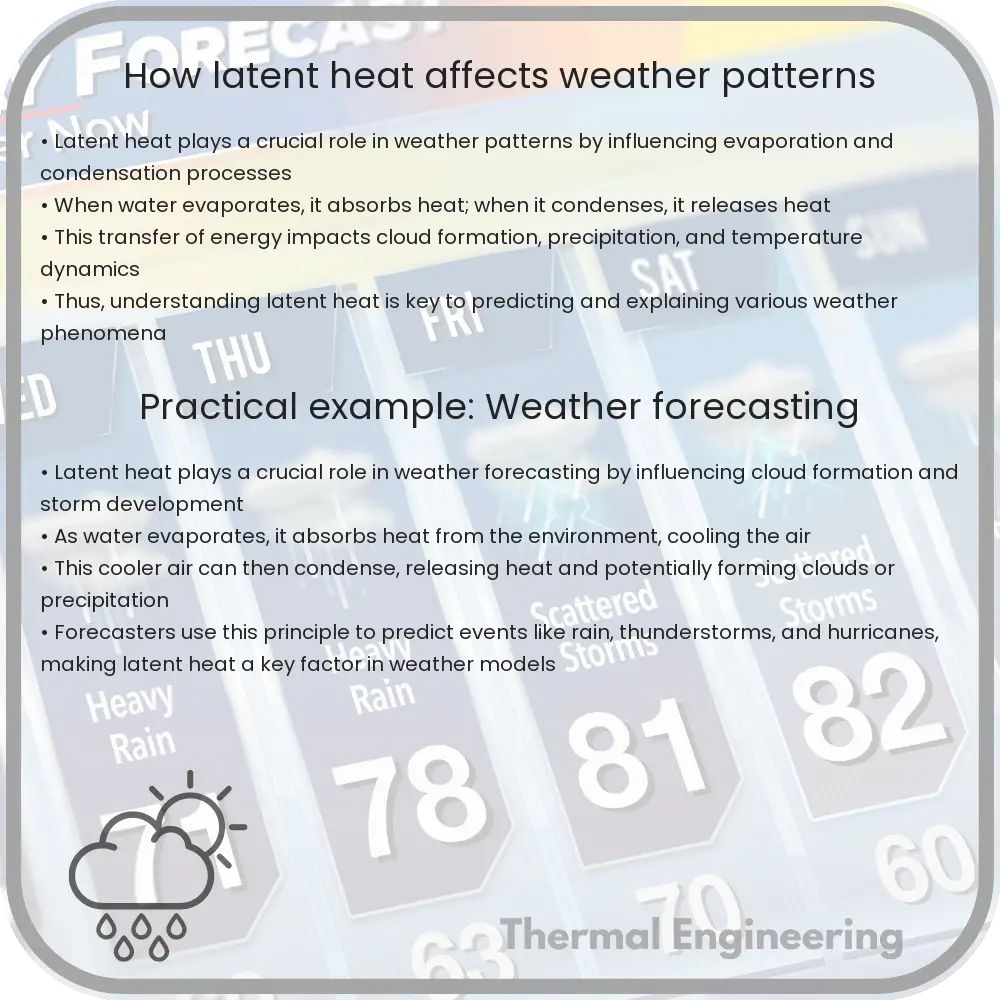
How latent heat affects weather patterns

Learn about latent heat and its critical role in shaping weather patterns, cloud formation, and global climate systems.

How latent heat affects weather patterns

Understanding How Latent Heat Affects Weather Patterns

Latent heat is a fundamental concept in both physics and meteorology, playing a crucial role in the formation and evolution of weather patterns around the globe. This type of heat is involved in processes of phase changes of water – namely melting, freezing, evaporation, and condensation. The impact of latent heat on weather is profound, influencing everything from temperature distribution to the development of clouds and storm systems.

What is Latent Heat?

Latent heat is the energy absorbed or released by a substance during a phase change without a change in temperature. It is categorized into two types:

  • Latent heat of fusion – energy absorbed or released during melting or freezing.
  • Latent heat of vaporization – energy absorbed or released during evaporation or condensation.

These processes are crucial in the atmospheric context, especially the latent heat of vaporization, which has significant effects on weather and climate.

Latent Heat in Atmospheric Processes

When water evaporates, it absorbs heat from its surroundings, effectively cooling the environment. This absorbed energy, carried by water vapor, is termed the latent heat of vaporization. Conversely, when water vapor condenses into liquid water, it releases the stored energy as heat, thereby warming the surrounding air. This interplay of energy absorption and release has vital implications for weather patterns:

  1. Temperature Regulation: Evaporation consumes a considerable amount of heat, thereby controlling the temperature and thermal comfort in various regions.
  2. Cloud Formation: As warm, moist air rises and cools, the water vapor condenses to form clouds. The release of latent heat during condensation warms the air, causing it to rise further and potentially develop into larger cloud systems or storm structures.
  3. Storm Development: In storm systems, such as hurricanes and thunderstorms, the release of latent heat through condensation is pivotal. It enhances atmospheric instability, which can intensify the storm.

Latent Heat and Climate Dynamics

The redistribution of latent heat across different parts of the earth plays a crucial role in driving large-scale atmospheric circulation patterns, such as trade winds and monsoons. These patterns are essential for transferring heat from the tropics to the poles, thereby regulating global climate systems.

Furthermore, changes in surface temperature due to latent heat flux influence sea and air currents, which can affect weather conditions over vast areas. For instance, the El Niño Southern Oscillation (ENSO) phenomenon alters the patterns of precipitation and temperature across the globe, largely due to changes in oceanic and atmospheric heat distribution influenced by latent heat.

Conclusion

Latent heat is a key player in the dynamics of the atmosphere, central to understanding how local weather conditions converge into global climate systems. By studying the movement and effects of latent heat, meteorologists can better predict weather patterns, enhancing both our understanding and preparedness for weather-related natural events.

Thus, latent heat not only contributes to daily weather fluctuations but also impacts broader climatic changes, illustrating the intrinsic link between physical principles and real-world phenomena.

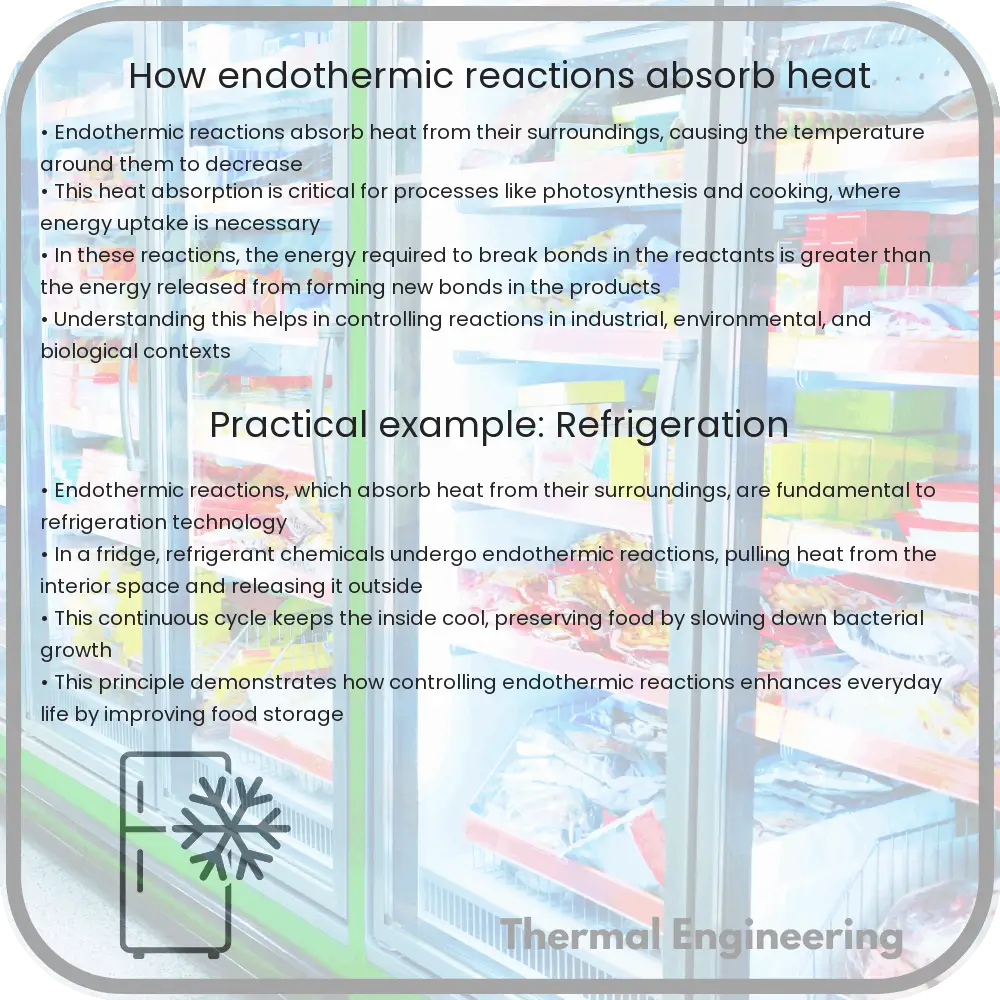
How endothermic reactions absorb heat

Gain insight into endothermic reactions, their role in heat absorption, and their significant in chemistry and engineering applications.

How endothermic reactions absorb heat

Understanding Endothermic Reactions: How They Absorb Heat

Endothermic reactions are fundamental processes in chemistry and engineering, characterized by their absorption of heat from the surroundings. This phenomenon is not just a staple of academic textbooks but also a crucial component in various industrial processes and everyday phenomena.

What is an Endothermic Reaction?

An endothermic reaction is a chemical reaction that requires energy to proceed. Unlike exothermic reactions, which release energy, endothermic reactions absorb heat, resulting in a temperature decrease in their environment. This absorption of heat can be critical for various applications, such as thermal management, manufacturing, and even in culinary practices.

The Chemical Basis of Endothermic Reactions

Energy in a chemical reaction primarily involves breaking and forming bonds. Breaking chemical bonds requires an input of energy, whereas forming new bonds releases energy. In an endothermic reaction, the energy needed to break the bonds in the reactants is greater than the energy released from forming new bonds in the products. This imbalance results in the overall absorption of energy.

Common Examples of Endothermic Reactions

  • Photosynthesis: Perhaps the most famous example of an endothermic process is photosynthesis. Plants absorb solar energy to convert carbon dioxide and water into glucose and oxygen. The general reaction can be represented as:

    6CO2 + 6H2O + sunlight → C6H12O6 + 6O2
  • Evaporation: The process of evaporation where liquid water absorbs heat and transforms into vapor is an everyday example of an endothermic reaction.
  • Endothermic Decompositions: Certain compounds absorb energy to decompose into simpler molecules. For instance, potassium chlorate decomposes upon heating to form potassium chloride and oxygen, a reaction used in safety matches and fireworks.

Thermodynamics of Endothermic Reactions

In thermodynamic terms, the heat absorption in endothermic reactions is indicated by a positive change in enthalpy (∆H > 0). Enthalpy is a measurement of energy in a thermodynamic system. The positive ∆H value signifies that the products of the reaction have higher enthalpy than the reactants, indicating the requirement of heat input for the reaction to occur.

Applications of Endothermic Reactions

  • Cooling Systems: Endothermic reactions are utilized in refrigeration and air conditioning systems, where they absorb heat from the environment, thereby cooling it down.
  • Thermochemical Energy Storage: Endothermic reactions play a role in energy storage systems where they store heat energy, which can later be released as electrical or mechanical energy.

Conclusion

Endothermic reactions are not just theoretical concepts but have practical implications in daily life and various industrial processes. Understanding how these reactions absorb heat can help in developing more efficient energy, cooling, and heating systems. By examining and harnessing the properties of endothermic reactions, engineers and scientists continue to innovate in ways that improve technology and sustainability.