Facebook Instagram Youtube Twitter

Ultralow Freezer | Biomedical Cooling Use

Ultralow freezers are essential biomedical devices for preserving biological samples at extremely low temperatures for research and medical therapies.
Ultralow Freezer | Biomedical Cooling Use

Understanding Ultralow Freezers in Biomedical Applications

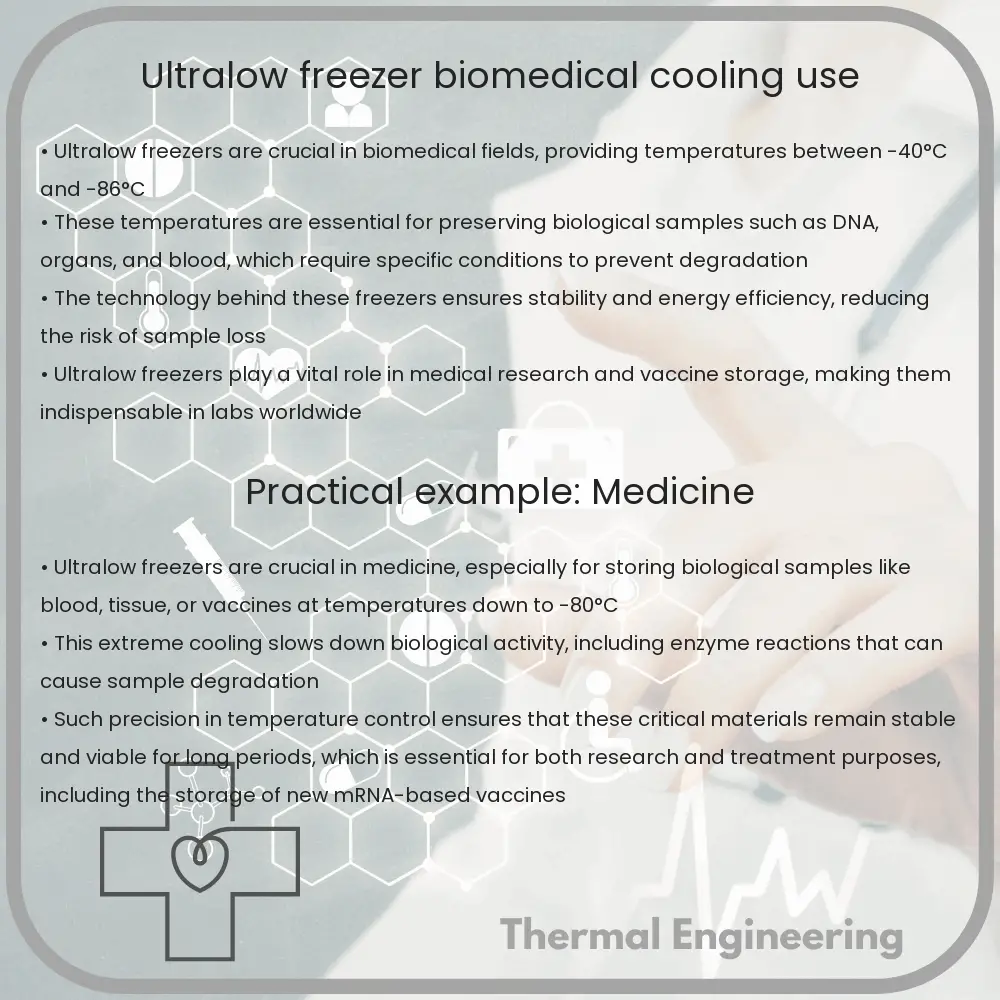
Ultralow freezers (ULFs) are crucial devices in the biomedical field, designed to store biological samples such as DNA, RNA, proteins, and cellular structures at extremely low temperatures. Typically, these freezers maintain temperatures from -40°C to -86°C. This ability to keep samples at stable, ultralow temperatures is vital for preserving the integrity and longevity of biological materials, which can be critical for research and medical therapy.

Design and Functionality of Ultralow Freezers

The design of ultralow freezers maximizes temperature uniformity, minimizes temperature recovery time after door openings, and ensures long-term reliability under various operational conditions. They are generally divided into two main types based on their cooling technology:

  • Cascade Freezers: These use two compressors in series to achieve lower temperatures. The first compressor cools the condenser for the second, allowing for a more significant temperature drop.
  • Auto-cascade Freezers: These feature a single compressor system designed with a complex arrangement of capillary tubing and multiple refrigerants optimized for varying stages of cooling.

Key Components

Several critical components ensure the functionality of ultralow freezers:

  1. Compressor: The heart of the freezer, responsible for the refrigeration cycle.
  2. Heat Exchanger: Facilitates heat removal from inside the freezer.
  3. Insulation: Typically made from vacuum insulated panels to reduce heat gain and improve temperature stability.
  4. Controller: Monitors internal conditions and maintains set temperature levels.

Applications of Ultralow Freezers in Biomedicine

Ultralow freezers are integral in various biomedical applications:

  • Pharmaceuticals: Storage of drugs, especially those that require stability at very low temperatures.
  • Biobanking: Preserve and store biological specimens like blood, saliva, plasma, and purified DNA.
  • Medical Research: Facilitate studies on enzymes, microbes, and other cell types under controlled conditions.
  • Vaccine Storage: Critical for the long-term storage of vaccines that need to be maintained at specific temperatures to remain effective.

Challenges and Future Directions

While ultralow freezers are essential in biomedicine, they pose certain challenges:

  • Energy Consumption: ULFs are energy-intensive, leading to high operational costs and environmental concerns.
  • Maintenance: They require regular maintenance to ensure efficiency and reliability, involving periodic validation and calibration.

Advancements are continually being made to address these challenges. Innovations include the development of freezers with natural refrigerants that minimize environmental impact, as well as enhancements in insulation materials and compressor efficiency to reduce energy use. Moreover, smart features like automated inventory management and fault diagnosis via AI are being integrated to improve usability and functionality.

Ultimately, ultralow freezers continue to play a pivotal role in the advancement of biomedical research and healthcare by preserving critical biological samples for extended periods, enabling their use in groundbreaking research and therapies.

Thermal Interface Material | Electronics Application

Learn about Thermal Interface Materials (TIMs), essential for heat management in electronics to enhance device performance and lifespan.

Thermal Interface Material | Electronics Application

Understanding Thermal Interface Materials in Electronics

Thermal Interface Materials (TIMs) are crucial in the engineering and maintenance of electronic systems. They play a vital role in managing heat, which is a byproduct of electrical operations within devices such as computers, gaming consoles, and telecommunications equipment. Effective heat management ensures that these devices perform optimally and have a longer lifespan.

Why Thermal Management is Critical

Electronic components generate heat during operation due to electrical resistance and other inefficiencies. If this heat is not properly dissipated, it can lead to increased device temperature, which can degrade performance, result in thermal shutdown, or even damage components permanently. This is where TIMs come into play, as they provide a medium for efficient heat transfer from the heat source (usually a semiconductor) to a heat sink.

Types of Thermal Interface Materials

  • Greases and Pastes: These are among the most commonly used TIMs due to their ease of application and effectiveness. They typically consist of a polymer matrix with thermally conductive fillers such as metal oxides or ceramics.
  • Pads and Sheets: These are pre-cut pieces of thermally conductive material, often used for larger or uneven surfaces where pastes may not be practical. They can be made of various materials including graphite or silicone composites.
  • Phase Change Materials: These materials change state from solid to liquid at a certain temperature, absorbing a large amount of heat in the process. This property allows them to manage thermal peaks very efficiently.
  • Metal-based TIMs: These include soft metals like indium or various alloys that have excellent thermal conductivity. They are often used in applications requiring extremely efficient heat transfer.

Key Properties of TIMs

The effectiveness of a TIM is measured by its thermal conductivity, typically expressed in watts per meter-kelvin (W/m-K). This property indicates the material’s ability to conduct heat. Higher values suggest better thermal conductivity. Other important properties include:

  • Thermal impedance: A measure of resistance to heat flow, given in degrees Celsius per watt (°C/W).
  • Viscosity: Relevant for pastes and greases, affecting the ease of application.
  • Adhesion: Particularly important for pads and adhesive-based TIMs, determining how well the material will stick to surfaces over time.
  • Durability: The ability of the TIM to maintain its performance over the life of the device.

Application Considerations

Choosing the right TIM involves considering several factors specific to the application:

  • Operational Temperature Range: The TIM must be able to perform under the expected temperature conditions.
  • Surface Roughness: The roughness of the surfaces being joined will affect the choice of TIM, as some materials are better suited to filling gaps and imperfections than others.
  • Electrical Conductivity: Some TIMs are electrically conductive, which might be undesirable in certain applications.
  • Cost and Ease of Application: These practical considerations can influence the choice, especially in large-scale manufacturing.

In conclusion, TIMs are a small but essential component in the design and functioning of electronic devices, helping to manage and dissipate heat effectively. They ensure reliability and performance, factors critical in today’s high-demand electronics. With advancements in electronics pushing components to produce more power and hence heat, the role of TIMs is more critical than ever.

Solar Oven | Sustainable Cooking Design

Learn how solar ovens use reflection, concentration, and insulation to cook food sustainably using only sunlight.

Solar Oven | Sustainable Cooking Design

Introduction to Solar Ovens

Solar ovens are a sustainable cooking solution that harness the power of the sun to cook food or sterilize water. They use the basic principles of solar energy capture, concentration, and conversion to generate heat without the need for conventional fuel sources like electricity or firewood.

How Solar Ovens Work

Solar ovens function by employing three main scientific principles: reflection, concentration, and insulation.

  • Reflection: Reflective surfaces, typically mirrors or shiny metal, direct solar radiation towards a focal point.
  • Concentration: The oven’s design often includes a parabolic shape or multiple reflective panels to concentrate sunlight into a small cooking area, greatly increasing the heat intensity.
  • Insulation: To keep the generated heat from escaping, solar ovens are equipped with insulating materials which help in maintaining the temperature necessary for cooking.

Design and Components of a Solar Oven

The typical solar oven might appear simple at first glance, but its efficient design is key to its functionality. Here are the main components:

  • Reflective Surface: This surface is crucial in capturing and redirecting the sun’s rays into the oven’s interior. Materials often used include aluminum foil or reflective mirrors.
  • Insulating Materials: These can range from simple styrofoam to more advanced polyurethane panels, aiding in heat retention.
  • Transparent Top: Made of glass or a durable, heat-resistant plastic, this cover allows sunlight to enter while preventing heat from escaping.
  • Cooking Pot or Tray: Typically painted black to increase heat absorption, this is where the food is placed for cooking.

Benefits of Solar Ovens

Solar ovens offer numerous advantages, particularly in terms of sustainability and environmental impact:

  • No need for fuel: By relying solely on sunlight, these ovens eliminate the need for electricity or biomass fuels.
  • Reduction in emissions: Solar cooking translates to fewer greenhouse gases and pollutants since there’s no combustion of fuels.
  • Cost-effective: After the initial investment, the operating cost is virtually zero as it doesn’t require ongoing expenses for conventional energy sources.
  • Low-maintenance: Solar ovens have fewer moving parts and do not require as much maintenance as traditional cooking appliances.

Limitations and Considerations

While solar ovens are innovative, there are some limitations and practical considerations to keep in mind:

  • Weather dependence: Their efficiency greatly depends on the availability of sunlight. Overcast conditions can significantly lengthen cooking times or render the oven unusable.
  • Longer cooking times: Generally, solar ovens take longer to heat up and cook food, which can be a drawback for users accustomed to more immediate cooking methods.
  • Geographical limitations: Their performance is best in regions with high solar insolation, like tropical or dessert climates.

Conclusion

Solar ovens exemplify how engineering principles can be applied to create solutions that are both environmentally sustainable and practical. As technology progresses, the efficiency and usability of solar ovens will continue to improve, making them a viable option for more people worldwide. By harnessing the power of the sun, these ovens offer a promising pathway towards reducing our environmental footprint and promoting sustainable living practices.

Vacuum Insulation Panel | Super Insulation Efficiency

Unveiling the superior insulation capabilities of Vacuum Insulation Panels (VIPs), crucial in high-performance, space-efficient applications.

Vacuum Insulation Panel | Super Insulation Efficiency

Vacuum Insulation Panels: Super Insulation Efficiency Explored

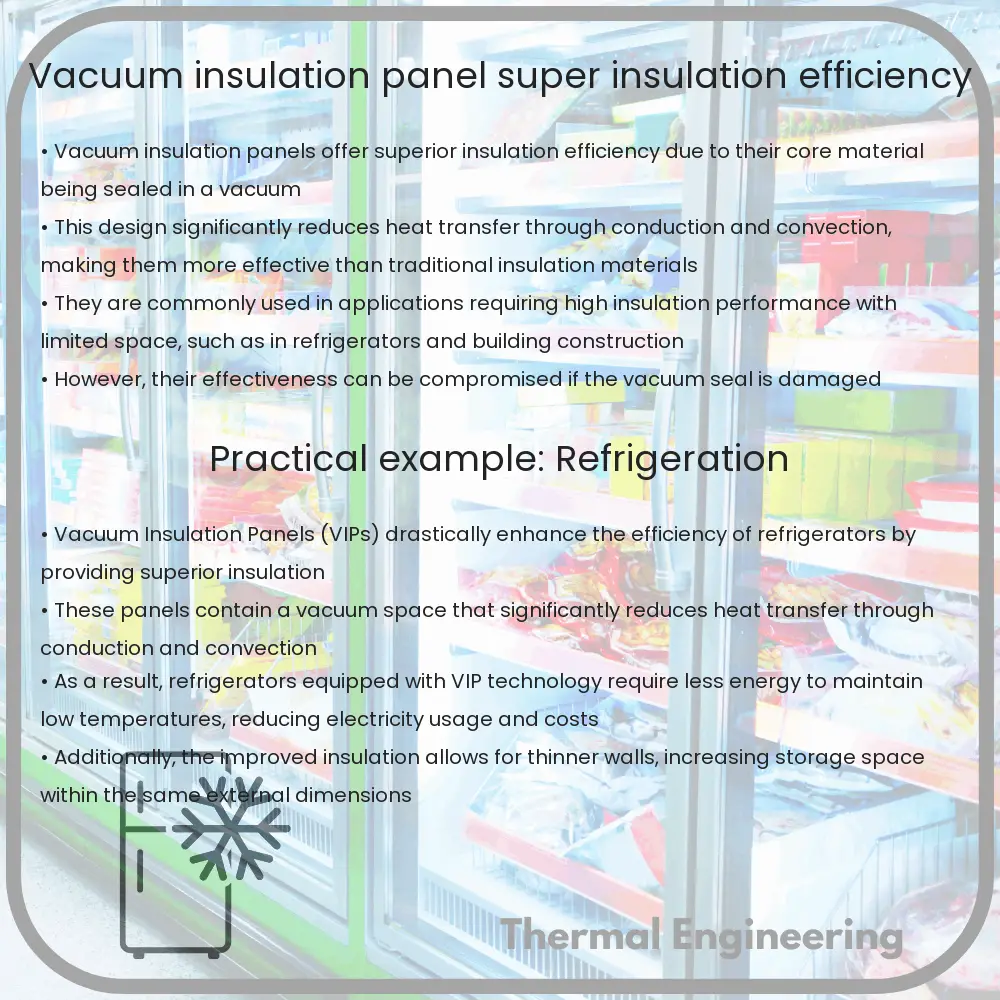
When it comes to insulation technology, Vacuum Insulation Panels (VIPs) represent a breakthrough with their superior insulation efficiency. These panels utilize a core material, which is usually a compressed fumed silica or foam, and a gas-tight envelope to encase it. The envelope is crucial as it serves to maintain a high vacuum inside the panel which significantly reduces heat transmission through air convection and conduction.

Principles and Construction of VIPs

The core concept behind the operation of Vacuum Insulation Panels is indeed their vacuum environment, where almost all the air inside the panel is removed. This dramatically lowers the thermal conductivity within the panel — generally between 0.001 and 0.005 W/(m*K), a fraction of traditional insulating materials. To maintain structural integrity and to prevent external atmospheric pressure from collapsing the panel, the core must be highly porous and strong.

Key Components

  1. Core Material: Often silica or polyurethane foam, providing the necessary structure and reducing heat conduction.
  2. Barrier Films: These films are crucial for creating and maintaining the vacuum. They are generally multi-layered, including aluminium layers to act as a gas barrier.
  3. Sealants and Edge Sealing: Used around the edges of the panel to ensure the vacuum is effectively sealed and maintained.

Applications

Given their excellent insulating properties, VIPs find usage in various applications where high thermal resistance is required within a slim profile. Typical applications include:

  • Refrigeration systems and cold chains.
  • Construction materials for energy-efficient buildings.
  • Temperature-controlled packaging used in medical and pharmaceutical transport.

Advantages of Vacuum Insulation Panels

The most significant benefit of using VIPs is their high insulation efficiency, which allows for thinner walls in appliances like refrigerators and also results in better energy efficiency in buildings. Their effectiveness can lead to greater interior space utilization and reduce operational costs over time due to decreased energy consumption.

Challenges and Limitations

Despite their advantages, there are several challenges associated with VIPs:

  • Sensitivity to Puncture: Even a small puncture can degrade the vacuum and significantly reduce the panel’s insulative performance.
  • Higher Cost: The materials and manufacturing process for VIPs are more costly compared to traditional insulation materials.
  • Difficulties in Handling and Installation: Due to their rigid and fragile nature, careful handling and installation are imperative.

In conclusion, Vacuum Insulation Panels offer a highly efficient solution for thermal insulation, ideal for applications where space is at a premium and energy efficiency is prioritized. As technology progresses, overcoming current limitations and reducing costs may make VIPs more accessible, potentially transforming areas from building construction to logistics.

Pellet Stove | Eco-Friendly Combustion Types

Learn how eco-friendly pellet stoves use biomass pellets for sustainable and efficient home heating.

Pellet Stove | Eco-Friendly Combustion Types

Understanding Pellet Stoves: Eco-Friendly Combustion for Sustainable Heating

Pellet stoves represent a significant advancement in the quest for sustainable and eco-friendly heating solutions. These appliances burn small, compressed pellets made from recycled biomass materials, such as sawdust, corn, or wood chips. The design and operational mode of pellet stoves make them an increasingly popular choice among those seeking efficient, cost-effective, and environmentally friendly alternatives to traditional heating systems.

How Pellet Stoves Work

A pellet stove operates through a mechanized process. It begins with the automatic feeding of biomass pellets from a storage hopper into a burn pot. These pellets are then ignited, usually electrically, which starts the combustion process. The stove includes an inbuilt blower that pulls in air from the room and forces it outwards, ensuring optimal combustion and distributing the generated heat efficiently.

The efficiency of a pellet stove is significantly higher compared to traditional wood stoves or fireplaces. They are engineered to produce very low levels of emissions due to their precise control of air intake and the high temperatures at which the pellets are burnt. This efficiency not only allows for better heat output but also results in fewer harmful emissions.

Types of Pellet Stove Combustion Systems

  • Bottom-Fed Combustion Systems: In these systems, pellets are fed into the bottom of the combustion chamber. The ash and clinkers are pushed upwards as more pellets are fed, which then have to be manually or mechanically removed.
  • Top-Fed Combustion Systems: Top-fed systems introduce pellets at the top of the combustion chamber. This design helps reduce the risk of fire back into the hopper but can lead to a higher amount of ash accumulation, possibly affecting combustion efficiency.

Both systems utilize electronic monitoring systems to maintain the correct air-to-fuel ratio and optimal combustion conditions, thereby maximizing heat output and minimizing pollutants.

Eco-friendly Aspects of Pellet Stoves

Pellet stoves stand out as an eco-friendly heating solution due to several key features:

  1. Carbon Neutral: Pellets are made from biomass, which is considered carbon-neutral. The carbon dioxide released during their combustion is approximately equal to the amount absorbed by the plants used to make them.
  2. High Efficiency: Pellet stoves are often more than 80% efficient, a significant improvement over other combustion heating systems.
  3. Low Emissions: These stoves produce exceptionally low levels of smoke and other pollutants compared to traditional wood stoves and fireplaces.
  4. Reduced Waste: Pellets are made from recycled materials, reducing waste and making efficient use of resources.

In conclusion, pellet stoves offer a highly efficient, sustainable, and eco-friendly heating option thanks to their innovative combustion technology and the use of biomass fuels. Their ability to provide cost-effective heating while maintaining low environmental impact makes them an excellent choice for modern sustainable living.

Understanding the technology behind pellet stoves and their benefits can help in making informed decisions about home heating solutions that align with environmental sustainability goals.

Refrigerant Leak Detector | HVAC Maintenance Types

Learn about refrigerant leak detectors, key in maintaining HVAC efficiency, spotting leaks, and ensuring system health and compliance.

Refrigerant Leak Detector | HVAC Maintenance Types

Understanding Refrigerant Leak Detectors in HVAC Maintenance

Maintaining an efficient HVAC (Heating, Ventilation, and Air Conditioning) system involves various tasks, among which detecting and repairing refrigerant leaks plays a crucial role. Refrigerant leaks not only affect the performance of HVAC systems but also pose environmental hazards and potentially increase energy costs. This is where refrigerant leak detectors become essential tools for HVAC technicians.

Types of Refrigerant Leak Detectors

Several technologies are used in refrigerant leak detectors, each with its own advantages and specific use cases. Here are the most common types:

  • Electronic Detectors: These are the most widely used detectors. They work on the principle of measuring changes in conductivity that occur when halogen gases come in contact with an electrically charged sensor.
  • Infrared (IR) Detectors: They detect leaks by absorbing infrared radiation. Refrigerants have unique absorption properties in the infrared spectrum, making IR detectors highly effective and sensitive.
  • Ultrasonic Detectors: These units detect the sound of gas escaping from the system at frequencies beyond human hearing. They are highly useful in noisy environments where other types of detectors might fail.
  • Dye Injection Kits: A fluorescent dye is injected into the refrigerant system, which escapes with the refrigerant at leak points. Using UV lamps, technicians can spot the leaks highlighted by the dye.

Signs of Refrigerant Leaks

Identifying refrigerant leaks early can save significant maintenance costs and prevent system inefficiency. Signs that indicate a potential leak include:

  • Increased energy bills due to the HVAC system working harder to achieve desired temperatures.
  • Inconsistent temperatures or reduced cooling capacity.
  • Hissing or bubbling noises emanating from the HVAC unit, indicative of gas escaping.
  • The presence of ice on the compressor, signifying irregular pressures and temperatures in the system.

The Importance of Timely Detection and Repair

The timely detection and repair of refrigerant leaks are vital for several reasons:

  1. Environmental Protection: Many refrigerants are potent greenhouse gases. Their release into the atmosphere contributes to global warming.
  2. Regulatory Compliance: Various international protocols and national regulations mandate the proper handling and containment of refrigerants to prevent emissions.
  3. Cost Efficiency: Operating an HVAC system with the correct amount of refrigerant optimizes its efficiency and reduces energy costs.
  4. System Longevity: Leaks can cause the compressor and other system components to work harder, leading to premature wear and failure.

Regular checks using appropriate refrigerant leak detectors not only comply with environmental guidelines but also ensure the efficient operation of the HVAC systems, contributing to overall energy management and system longevity.

Conclusion

Refrigerant leak detectors are indispensable tools in the arsenal of HVAC maintenance professionals. With various types available, choosing the right detector depends on the specific needs and conditions of the HVAC system. Regular maintenance using these tools not only fulfills legal obligations but also secures the sustainability and efficiency of the air conditioning units.

For those managing HVAC systems, understanding the function and importance of refrigerant leak detectors and the signs of refrigerant leaks could significantly enhance the performance and longevity of these critical systems.

Blast Furnace | Iron Production Design

Learn about the engineering and operational principles of blast furnaces used in iron production, focusing on design, components, and efficiency improvements.

Blast Furnace | Iron Production Design

Understanding the Engineering of Blast Furnaces for Iron Production

A blast furnace is a critical installation used for the production of iron. It is designed to withstand high temperatures and chemical reactions, making it integral to the steel-making industry. This article will delve into the design elements and operational principles of a blast furnace that enable it to efficiently produce iron from iron ore.

Core Components of a Blast Furnace

The design of a blast furnace is optimized to convert iron ore into iron effectively. Key components include:

  • The Throat: This is the top section where raw materials (iron ore, coke, and limestone) are introduced.
  • The Stack: Tall cylindrical structure where the raw materials descend by gravity.
  • The Belly: Wider section of the furnace where a reduction of the iron ore occurs.
  • The Bosh: Located below the belly, it is the widest part of the furnace and subjected to the hottest temperatures.
  • The Hearth: The bottom part where molten iron and slag accumulate before being tapped out.
  • Tuyeres: These are nozzles around the lower part of the furnace through which hot air (blast) is injected.
  • The Off-gas Stack: This is used to expel gases and dust emitted from the furnace.

Operational Principles of a Blast Furnace

The operation of a blast furnace involves several key stages:

  1. Charging: Iron ore, along with coke (as a source of carbon and heat) and limestone (acting as a flux), are added from the top.
  2. Descending Materials: As they move downwards, the high temperatures cause the coke to burn, releasing heat and carbon monoxide.
  3. Reduction: The carbon monoxide reduces the iron(III) oxide in the ore to iron, particularly as the materials pass through the hotter regions of the furnace.
  4. Melting: The now freed iron melts and collects along with slag in the hearth.
  5. Slag Formation: Limestone reacts with impurities to form slag, which, being less dense, floats on top of the molten iron.
  6. Tapping: Both the slag and the molten iron are periodically drained from the furnace.
  7. Off-gas Treatment: The gases escaping through the off-gas stack are treated to remove dust and toxic elements before being released into the atmosphere.

Material and Heat Balance in a Blast Furnace

Efficient operation of a blast furnace requires careful control of material and heat balance. The chemical reactions mainly involve:

The primary chemical reaction for reducing iron ore to iron is represented by:

Fe2O3 + 3CO → 2Fe + 3CO2

This reaction illustrates how carbon monoxide acts as a reducing agent, converting the iron(III) oxide (rust) to metallic iron, whilst itself turning into carbon dioxide in the process.

Impact of Design Advances on Efficiency

Modern advances in blast furnace design have focused on improving efficiency and reducing environmental impact:

  • Heat Recovery Systems: These systems capture and reuse the heat from the off-gases, improving energy efficiency.
  • Pulverized Coal Injection (PCI): Injecting pulverized coal directly into the furnace reduces the need for coke, lowering costs and emissions.
  • Automation: Automated systems enhance the precision in material handling and process control, leading to more consistent product quality and reduced wastage.

Understanding these foundational principles of blast furnace operation and the technological innovations employed provides valuable insights into the complexities of iron production. The balance of chemical, thermal, and mechanical engineering in a blast furnace showcases the multidisciplinary nature of modern industrial engineering challenges.

Catalytic Heater | Safe Heating Uses

Learn about catalytic heaters, their efficient, flameless heating process using chemical catalysis, and their applications in safe environments.

Catalytic Heater | Safe Heating Uses

Understanding Catalytic Heaters and Their Safe Heating Uses

Catalytic heaters are a specialized type of heater used in a variety of applications where safe and efficient heating is necessary. They convert chemical energy into heat through a process called catalysis, which involves accelerating a chemical reaction without being consumed in the process. This article explores the design, functioning, and safe uses of catalytic heaters.

How Catalytic Heaters Work

The core component of a catalytic heater is the catalyst, typically made from materials like platinum or palladium. These metals are excellent at aiding the oxidation of flammable gases without requiring an external flame. The basic reaction facilitated by the catalyst is the oxidation of a fuel, commonly propane or natural gas, into carbon dioxide and water, releasing heat in the process.

The general reaction can be represented as:

C3H8 + 5O2 → 3CO2 + 4H2O + Heat

Here, propane (C3H8) reacts with oxygen (O2) to produce carbon dioxide (CO2), water (H2O), and heat. The catalyst allows this reaction to occur at a much lower temperature than would be needed for a flame, making it safer and more controlled.

Advantages of Catalytic Heating

  • Flameless Operation: Since the reaction does not produce an open flame, catalytic heaters are ideal for use in hazardous environments where flames can pose a risk of fire or explosion.
  • Energy Efficient: Catalytic heaters transfer almost all the energy content of the fuel directly into heat, making them more efficient than traditional heating methods.
  • Low Emissions: The combustion process in a catalytic heater produces fewer pollutants compared to standard combustion, thanks to the more complete oxidation of the fuel.
  • Portable and Versatile: Their compact design and absence of a required external power source make them suitable for a variety of portable applications.

Safe Uses of Catalytic Heaters

Catalytic heaters are used across various industries for their safety and efficiency. Some common applications include:

  1. Space Heating: Often used in residential and commercial buildings, especially in areas where electrical heating is impractical or too expensive.
  2. Industrial Applications: Used in the oil and gas industry for preventing the freezing of equipment and for heating large storage tanks.
  3. Outdoor Activities: Portable catalytic heaters are used in camping, hunting, and outdoor catering to provide heat without the danger of an open flame.
  4. Agricultural Use: Employed in greenhouses and barns to maintain a constant temperature crucial for plant growth and livestock health.

Key Safety Tips

  • Proper Ventilation: Ensure adequate ventilation to prevent the buildup of carbon monoxide and other combustion byproducts.
  • Regular Maintenance: Regular checking and replacement of the catalytic element and gas connections to prevent leaks and ensure efficient operation.
  • Use as Directed: Always use the heater according to the manufacturer’s guidelines, and never leave it unattended while in operation.

In conclusion, catalytic heaters offer a safe and efficient alternative to traditional heating methods, particularly in environments where an open flame poses a significant risk. Understanding how they operate and adhering to safety guidelines can maximize their benefits while minimizing risks.

Heat transfer optimization in industrial processes

Learn about heat transfer optimization strategies to enhance efficiency and reduce costs in industrial processes.

Heat transfer optimization in industrial processes

Understanding Heat Transfer Optimization in Industrial Processes

Heat transfer is a fundamental aspect of many industrial processes, playing a crucial role in sectors like manufacturing, power generation, and chemical processing. Effective management of heat transfer can enhance efficiency, reduce energy consumption, and lower operational costs. This article explores the key strategies for optimizing heat transfer in industrial environments.

Basics of Heat Transfer

Heat transfer involves the movement of heat from one place to another and can occur through conduction, convection, and radiation:

  • Conduction is the transfer of heat through a solid material.
  • Convection occurs when heat is carried away by moving fluids, which can be gases or liquids.
  • Radiation involves heat transfer through electromagnetic waves without involving particles directly.

Understanding these mechanisms is crucial for identifying which approach will be most effective in a given industrial process.

Strategies for Heat Transfer Optimization

To optimize heat transfer, several strategies can be employed:

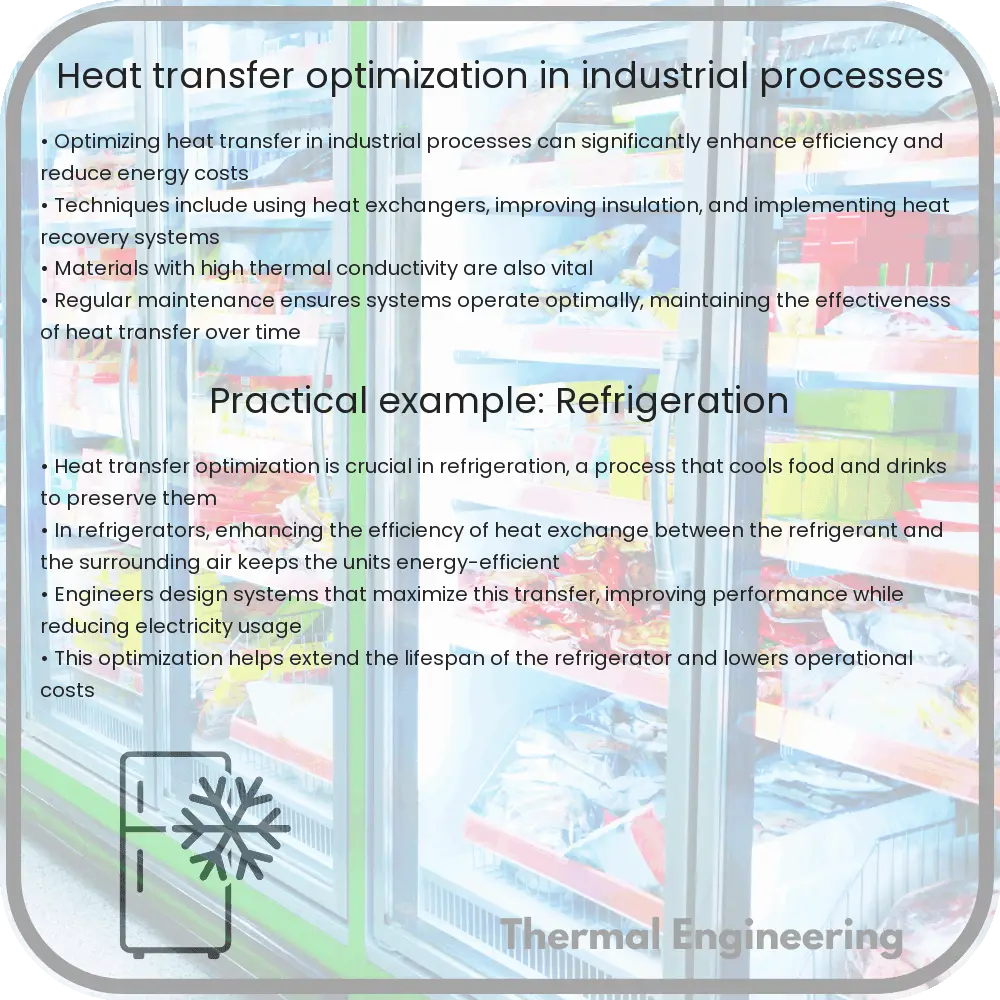
  1. Enhancement of Heat Transfer Surfaces: By increasing the surface area that participates in heat transfer, more efficient heat exchange can be achieved. This can be done by adding fins or corrugations to heat exchangers, tubes, or any surface involved in the process.
  2. Improvement of Fluid Dynamics: Optimizing the flow of fluids helps enhance the convection mechanism of heat transfer. Techniques such as turbulence promoters are used to disrupt laminar flow and increase thermal mixing.
  3. Use of Advanced Materials: Implementing materials with higher thermal conductivity such as copper or aluminum enhances conduction. For high-temperature applications, materials that can withstand thermal stresses while maintaining their properties are preferred.
  4. Thermal Insulation: To prevent undesired heat loss, effective insulation techniques must be applied. This not only helps in conserving energy but also improves the overall efficiency of the process.
  5. Temperature Control Systems: Precise control over the temperature conditions in process equipment ensures that heat transfer is maintained within optimal limits, thus conserving energy and preventing material degradation.

Mathematical Representation of Heat Transfer Optimization

The effectiveness of heat transfer can often be described by equations that highlight the relationship between flow properties and thermal properties. One commonly used equation in heat exchanger design is given by:

Q = U * A * ΔT

Where:

  • Q is the rate of heat transfer (Watts)
  • U is the overall heat transfer coefficient (W/m2K)
  • A is the heat transfer surface area (m2)
  • ΔT is the temperature difference across the heat exchanger (K)

Optimizing each of these variables (U, A, and ΔT) can significantly affect the efficiency of a process, reducing energy costs and environmental impact.

Applications in Industry

Effective heat transfer optimization finds applications across various industries:

  • In the chemical industry, reactions are often exothermic or endothermic, requiring efficient heat management to maintain safety and reaction efficiency.
  • The automotive industry uses optimized heat transfer mechanisms in engine and exhaust design to improve fuel efficiency and reduce emissions.
  • In power plants, optimizing heat transfer is essential for maximizing energy production and minimizing loss, particularly in cooling cycles.

By applying these principles effectively, industries can achieve significant gains in performance and efficiency, underlining the importance of heat transfer optimization in contemporary engineering challenges.

Thermal Fogger | Pest Control Fogging Types

Explore the functionality and applications of thermal foggers in pest control, highlighting their types, fuel usage, and safety measures.

Thermal Fogger | Pest Control Fogging Types

Understanding Thermal Foggers: A Key Tool in Pest Control

Thermal foggers play a crucial role in the effective dispersal of pesticides and insecticides, making them essential tools in pest control management. These devices utilize heat to vaporize a liquid insecticide into a fine mist or fog, which can penetrate hard-to-reach areas where pests thrive.

How Do Thermal Foggers Work?

Thermal foggers primarily operate using a heating coil. The basic mechanism involves drawing pesticide solution from a storage tank and pumping it into a heat chamber. There, the liquid solution is exposed to high temperatures, causing it to vaporize and exit the fogger as a thick cloud of fog. This heat-based conversion ensures the pesticide is distributed in fine particles, which improves its coverage and penetration, making it highly effective against airborne and surface-based pests.

Types of Thermal Foggers

There are generally two types of thermal foggers:

  • Portable Foggers: These are hand-held devices and are ideal for treating smaller areas or locations that are difficult to access. Their mobility allows operators to directly target specific locations.
  • Truck-Mounted Foggers: Larger in scale, these foggers are attached to vehicles like trucks and are used for large-scale pest control operations across vast areas such as agricultural fields and urban neighborhoods.

Fuel Used in Thermal Foggers

Thermal foggers are powered by various types of fuels to generate the necessary heat for vaporization. Common fuels include:

  • Propane: Widely used due to its portability and efficiency in heating.
  • Diesel: Often preferred for heavier, truck-mounted foggers due to its energy density and availability.
  • Electricity: Some newer models utilize electricity to heat the coil, though these are less common due to the high power requirements needed to generate effective temperatures.

Broad Applications of Thermal Foggers in Pest Control

Thermal foggers are not only used for controlling insects but also serve in a variety of environments and situations:

  1. Public Health: Used to control mosquito populations to prevent the spread of diseases like malaria and dengue fever.
  2. Agriculture: Helps protect crops by effectively controlling pest populations that can cause significant agricultural damage.
  3. Residential Areas: Employed in residential areas to manage pests in gardens and indoor environments, ensuring a safe and comfortable living space.
  4. Warehouses and Storage Facilities: Used to manage pests that could damage stored goods and materials.

Safety Precautions and Environmental Impact

While thermal foggers are effective, they require careful handling to avoid potential health risks from inhaling chemicals or incidents linked to the handling of high-temperature devices. It’s essential to follow manufacturer guidelines and safety procedures, including wearing protective gear and ensuring adequate ventilation during application.

The environmental impact of fogging is also a consideration. Operators must choose ecologically friendly and approved pesticides, and take precautions to minimize exposure to non-target species and water sources.

Understanding thermal foggers and their applications in pest control helps professionals and concerned parties to effectively tackle pest-related problems while ensuring safety and environmental sustainability.