Facebook Instagram Youtube Twitter

Calcium Silicate | High Temp Insulation, Fire Protection

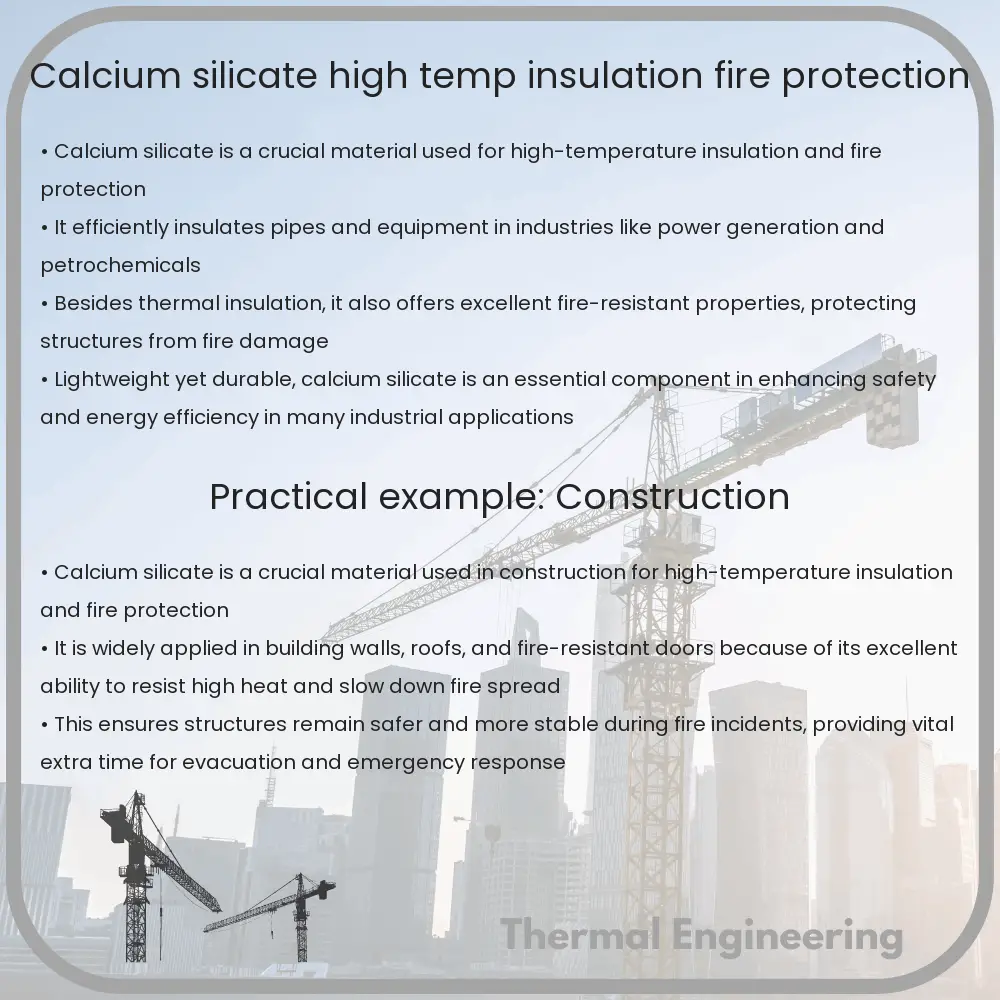
Calcium silicate (CalSil) is a versatile material used for high-temperature insulation and fire protection, featuring low thermal conductivity and high fire resistance.
Calcium Silicate | High Temp Insulation, Fire Protection

Understanding Calcium Silicate: Applications in High-Temperature Insulation and Fire Protection

Calcium silicate, often referred to simply as CalSil, is a versatile material commonly used in a range of applications, including high-temperature insulation and fire protection in industrial settings. Composed primarily of silica (SiO2) and lime (CaO), calcium silicate provides key benefits due to its thermal properties, durability, and safety features.

Composition and Properties

Calcium silicate is manufactured through a reaction between a silica source, like diatomaceous earth or sand, and a form of lime, typically calcium oxide or calcium hydroxide. The material is then processed under high heat and pressure to form a solid board or block. The typical chemical formula for calcium silicate is Ca2SiO4, though compositions can vary based on the specific product and manufacturing process.

Key properties of calcium silicate include:

  • Low Thermal Conductivity: Calcium silicate effectively reduces heat transfer, making it an excellent insulator at temperatures up to 1200 degrees Celsius (2192 degrees Fahrenheit).
  • High Compressive Strength: It can withstand physical stress and high loads, which is critical for structural applications.
  • Fire Resistance: Calcium silicate is non-combustible, with a high melting point, making it ideal for fireproofing applications.
  • Moisture Resistance: It can also resist moisture absorption, thus preventing the degradation of its insulative properties and structural integrity.

Applications in High-Temperature Insulation

Calcium silicate’s ability to handle extreme heat without degrading makes it an ideal choice for high-temperature insulation applications. It is widely used in:

  • Industrial furnaces and kilns
  • Steam piping and turbines
  • Exhaust systems
  • Boilers

By encapsulating these high-temperature systems with calcium silicate insulation, companies can improve energy efficiency and safety, reducing heat loss and protecting employees from potential burns.

Applications in Fire Protection

In the context of fire protection, calcium silicate serves a critical role in safeguarding both structures and personnel. Common fire protection applications include:

  • Fire-rated doors
  • Fireproofing structural steel and other building elements
  • Marine fire protection
  • Electrical and fire barriers

Its non-combustible nature allows it to contain and prevent the spread of fire, adding crucial minutes to evacuation and response times during emergencies.

Environmental and Health Considerations

Calcium silicate is favored not only for its performance but also for its environmental and health benefits. Being made from naturally occurring minerals, it is non-toxic and free from asbestos and other harmful substances. It does not emit significant volatile organic compounds (VOCs) or other toxic gases when exposed to fire. However, precautions during handling and cutting, such as using appropriate dust control measures and personal protective equipment, are advised to avoid inhalation of dust particles.

In conclusion, calcium silicate’s unique qualities make it a valuable material for both high-temperature insulation and fire protection across various industries. Its adaptability, combined with environmental safety, underscores its importance in modern industrial applications.
Aspen Aerogels | Superior Thermal Insulation, Lightweight

Learn about Aspen Aerogels’ revolutionary use in thermal insulation, offering superior performance with low thermal conductivity and high temperature stability.

Aspen Aerogels | Superior Thermal Insulation, Lightweight

Understanding the Superiority of Aspen Aerogels in Thermal Insulation

Aspen Aerogels stands out in the field of advanced materials, particularly known for its innovative use in thermal insulation. An aerogel is a synthetic porous ultralight material derived from a gel, where the liquid component of the gel has been replaced with a gas. The end result is an extremely low density solid that excels in thermal insulation.

What are Aerogels?

Aerogels are often dubbed “frozen smoke” because of their translucent, ethereal appearance. They hold records in material science for being the lightest solids and some of the best thermal insulators. Made primarily from silica, carbon, or metal oxides, Aspen Aerogels primarily focuses on silica-based aerogels.

Key Properties of Aspen Aerogels

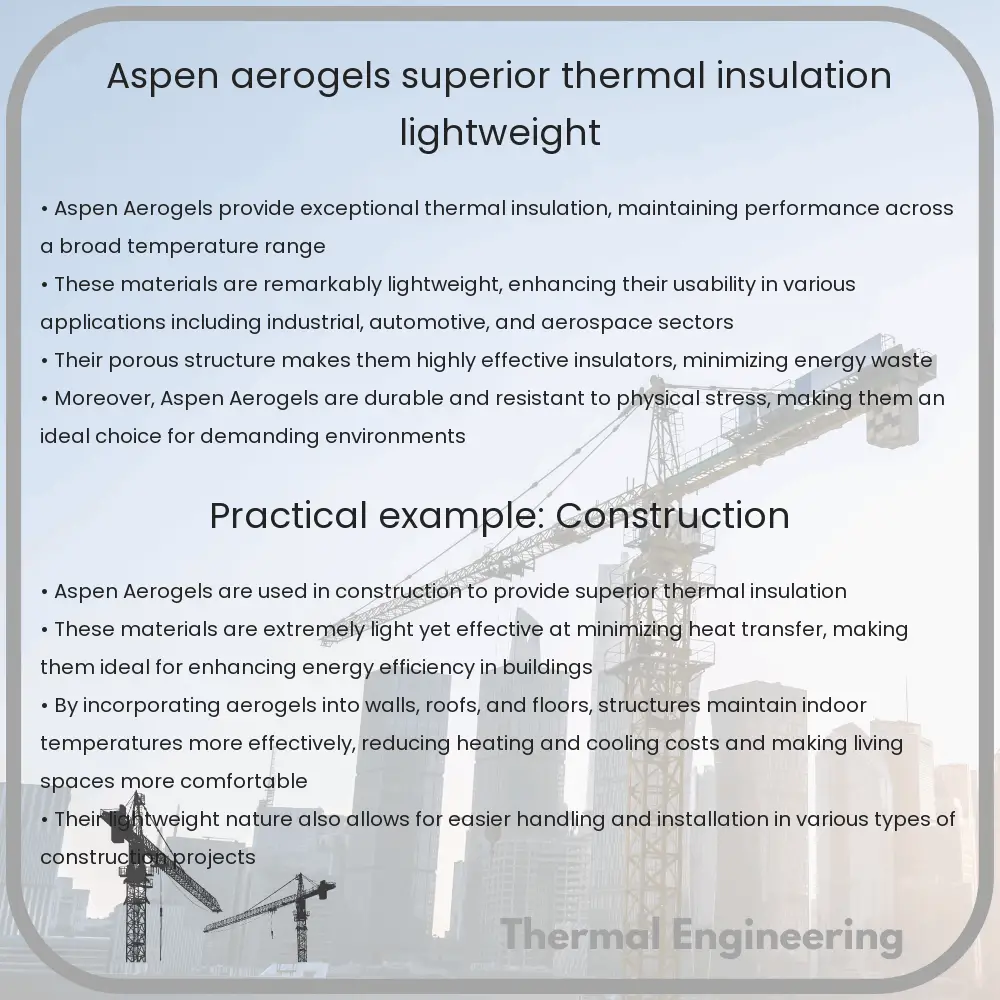
  • Low Thermal Conductivity: One of the most defining characteristics of Aspen Aerogels is their low thermal conductivity. Typically, thermal conductivity values for Aspen Aerogels range between 0.012 and 0.020 W/m*K, much lower than those of traditional fiberglass or foam insulation materials.
  • High Porosity: Aerogels are composed of over 90% air because of their porous structure, making them extremely effective as insulators.
  • Lightweight: Because they are mostly composed of air, aerogels are incredibly lightweight. This property is essential in applications where mass is critical, such as in aerospace, automotive, and construction.
  • Temperature Stability: Aspen Aerogels maintain their properties over a wide range of temperatures, typically from -200°C to 650°C, making them suitable for extreme temperature applications.

Applications of Aspen Aerogels in Engineering

Due to their superior insulation properties and lightweight nature, Aspen Aerogels find ubiquitous usage across several engineering domains:

  1. Building and Construction: In the construction industry, they are used for insulating buildings, significantly reducing energy costs while providing thin, effective insulation.
  2. Oil and Gas Industry: Aerogels are used in pipelines where controlling the temperature of the substances being transported is crucial.
  3. Aerospace: The aerospace industry utilizes aerogel insulation for spacecraft and aeronautical engineering, where their lightweight characteristics contribute to overall weight reduction and fuel efficiency.
  4. Protective Clothing: Aerogels are incorporated into the fabric of firefighter suits and other types of protective clothing, providing insulation against extreme temperatures without adding bulk.

Concluding Thoughts

Aspen Aerogels not only enhance the efficiency and performance of insulation across different sectors but also contribute to sustainable practices by reducing overall energy consumption. Their applications extend far into future possibilities, heralding a new era of insulation technology that aligns with the lightweight and effective needs of modern engineering solutions.

Thermoplastic Elastomers | Flexible, Heat Resistant

Explore the unique properties and versatile applications of Thermoplastic Elastomers (TPEs), materials that combine the benefits of plastics and rubbers.

Thermoplastic Elastomers | Flexible, Heat Resistant

Understanding Thermoplastic Elastomers: Properties and Applications

Thermoplastic elastomers (TPEs), often referred to as thermoplastic rubbers, are a class of copolymers or a physical mix of polymers (usually a plastic and a rubber) that consist of materials with both thermoplastic and elastomeric properties. While most elastomers are thermosets, thermoplastic elastomers are remarkably easy to use in manufacturing, primarily because they can be stretched to moderate elongations and return to nearly their original shape creating a longer life and better physical range than other materials.

Characteristics of Thermoplastic Elastomers

Thermoplastic elastomers show advantages typical of both rubbery materials and plastic materials. The principal characteristics of these materials are:

  • Flexibility: TPEs can perform like rubber but are processed like plastic. They are flexible at room temperature and can be stretched with minimal force applied.
  • Heat Resistance: TPEs have excellent heat resistance, maintaining their properties across a wide range of temperatures, depending on their chemical composition. Most of these materials can withstand temperatures as high as 150°C without deforming.
  • Chemical Resistance: These materials are generally resistant to common chemicals, making them suitable for various sealing and packaging applications.

In addition, TPEs are also known for being:

  • Recyclable: Unlike most traditional rubbers, TPEs can be recycled and reprocessed multiple times without significant degradation of their properties.
  • Colorable: They can be easily colored through standard dyeing processes, which makes them versatile for design and aesthetics.

Types of Thermoplastic Elastomers

There are several different types of TPEs, each with unique properties that make them suitable for specific applications:

  1. Styrenic Block Copolymers (TPE-S or TPS): Commonly used for their strength, flexibility, and clarity. Suitable for applications from medical devices to footwear and automotive components.
  2. Thermoplastic Polyurethane (TPE-U or TPU): Known for excellent abrasion resistance and mechanical properties, used in automotive instrument panels, caster wheels, and power tools.
  3. Thermoplastic Olefins (TPE-O or TPO): Characterized by their impact resistance and weatherability, these are frequently used in automotive exteriors and roofing membranes.
  4. Thermoplastic Vulcanizates (TPE-V or TPV): Recognized for their high-temperature resistance and compression set properties, ideal for seals, gaskets, and hoses in automotive and industrial applications.
  5. Thermoplastic Polyester (TPE-E or TPC): Offers high chemical resistance and strength, commonly used in mechanical parts and high-performance applications.

Applications of Thermoplastic Elastomers

Due to their versatile properties, TPEs find widespread use across different industries:

  • Automotive: Applications include bumpers, dashboards, door panels, and airbag covers.
  • Building and Construction: Used in window seals, pipe gaskets, and roofing sheets.
  • Medical Devices: Ideal for catheters, tubes, and mask seals due to their flexibility and compliance with medical standards.
  • Consumer Products: Commonly seen in toothbrush grips, toys, and mobile phone cases.

In conclusion, thermoplastic elastomers represent a critical development in the field of material sciences, combining the physical advantages of rubber with the processing capabilities of plastics. Their capacity to be molded repeatedly makes them highly desirable for a wide range of applications, contributing globally to more sustainable manufacturing practices.

Reflective Insulation | Radiant Barrier, Energy Efficiency

Learn about reflective insulation and radiant barriers, key in enhancing building energy efficiency by reducing heat transfer.

Reflective Insulation | Radiant Barrier, Energy Efficiency

Understanding Reflective Insulation and Radiant Barriers

Reflective insulation and radiant barriers are essential components in modern energy-efficient building designs. These materials work by reducing the heat transfer primarily through thermal radiation, but also partly through conduction and convection. Let’s explore how reflective insulation and radiant barriers achieve this, their applications, and ultimately how they contribute to energy efficiency.

How Reflective Insulation and Radiant Barriers Work

Unlike traditional insulation that reduces heat flow by trapping air or other gases, reflective insulation reflects radiant heat away from the living spaces, keeping interiors cooler in the summer and warmer in the winter. This is achieved through materials that have a high reflectivity (typically shiny metallic surfaces like aluminum foil) combined with a substrate material like plastic film, cardboard, or other types of paper which provide structural integrity and reduce conductive heat transfer.

Radiant barriers, on the other hand, are installed primarily to reduce summer heat gain. They are usually placed in attics, where they reflect the heat radiated by the sun away from the living spaces below. Radiant barriers are effective because they directly address the radiant transfer of heat, which is one of the major modes of heat transfer in hot climates.

Components of Reflective Insulation and Radiant Barriers

  • Reflective Layer: Generally made of aluminum foil, this layer provides the high reflectivity necessary to reflect radiant heat.
  • Substrate Layer: Supports the reflective layer and reduces conductive heat transfer. This can be made from a variety of materials including kraft paper, plastic films, polyethylene bubbles, or cardboard.
  • Spacer Layer: Some systems might include a spacer layer, designed to provide an air gap that enhances the overall heat resistance (R-value) of the barrier.

Installation Considerations

Proper installation is crucial for the effectiveness of reflective insulation and radiant barriers. Some key considerations include:

  1. Orientation: Radiant barriers should be installed perpendicular to the radiant energy source (e.g., the sun).
  2. Air Gap: Ensuring there is an air gap next to the reflective layer is crucial, as it prevents conductive heat transfer and boosts the insulation’s effectiveness.
  3. Location: Installing radiant barriers in the attic is most common, but they can be used in walls and floors where appropriate.
  4. Ventilation: Adequate ventilation should be maintained, especially in attic installations, to prevent moisture buildup which can degrade both the barrier’s effectiveness and the building materials.

Benefits of Reflective Insulation and Radiant Barriers

The use of these materials in construction provides numerous benefits:

  • Energy Efficiency: By reducing the heat transfer, there is less reliance on air conditioning systems, resulting in lower energy costs.
  • Comfort: Helps maintain a more uniform temperature throughout the building, enhancing overall comfort.
  • Environmentally Friendly: Reduces the carbon footprint of buildings by decreasing energy consumption used for cooling and heating.
  • Cost-Effective: They are generally affordable and when installed correctly, the cost savings on energy bills can be significant over time.

In conclusion, reflective insulation and radiant barriers represent an effective way to improve a building’s energy efficiency. By reflecting radiant heat and minimizing conductive heat transfer, these materials play a crucial role in modern energy-saving building strategies. Whether retrofitting older structures or integrating into new designs, they offer a practical solution to heat gain and loss issues commonly encountered in various climates.

Thermal performance assessment of insulation materials

Learn about evaluating the thermal performance of insulation materials, including key parameters like thermal conductivity and R-value.

Thermal performance assessment of insulation materials

Understanding the Thermal Performance of Insulation Materials

Thermal insulation is essential for reducing energy consumption in buildings and improving occupant comfort. Insulation materials prevent the loss or gain of heat by resisting heat transfer. Assessing the thermal performance of these materials is crucial for selecting the right insulation for various applications. This article explains the basics of how the thermal performance of insulation materials is evaluated and what factors are considered during this assessment.

Key Parameters in Thermal Performance Assessment

The effectiveness of an insulation material depends primarily on its thermal conductivity, thickness, and density. But to understand how these factors interplay to determine a material’s overall effectiveness, several key parameters are measured:

  • Thermal Conductivity (k): This is the measure of a material’s ability to conduct heat. It is usually expressed in watts per meter-kelvin (W/m·K). Lower thermal conductivity values indicate better insulative properties.
  • Thermal Resistance (R-value): This measure indicates the resistance a material offers to heat flow. The higher the R-value, the better the insulation effectiveness. R-value is calculated using the formula R = d/k where d represents the thickness of the material and k is the thermal conductivity.
  • Thermal Transmittance (U-value): This is the overall rate of heat transfer through a specific material or construction, expressed in watts per square meter-kelvin (W/m2·K). Unlike R-value, for U-value, lower numbers indicate better insulation as they mean less heat is lost.

Methods of Assessing Thermal Performance

The assessment of insulation materials can be conducted through several standardized testing methods. These tests simulate various environmental conditions to understand how an insulation material will perform in real-world scenarios.

  1. Steady-State Methods: These involve measuring the thermal conductivity in a controlled environment where temperatures are kept constant. Methods such as the guarded hot plate and heat flow meter are commonly used in these assessments.
  2. Transient Methods: These are used to determine thermal properties when the conditions are changing over time, such as in changing climatic conditions. Techniques like the Hot Disk method and the Transient Plane Source method fall into this category.
  3. In-Situ Methods: These methods assess the performance of insulation materials in their final place of application rather than under laboratory conditions. This approach helps in understanding the realistic performance of the insulation considering all practical influences and installation factors.

Factors Affecting Thermal Performance

Several external and internal factors can influence the insulation’s thermal performance:

  • Moisture Content: Water has higher thermal conductivity than most insulating materials. Accessibility of moisture into insulation can significantly reduce its thermal resistance.
  • Temperature: The performance of some insulation materials can vary depending on the temperature. For instance, some materials perform better at lower temperatures.
  • Aging: Over time, materials can settle or degrade, which may affect their insulative properties.
  • Installation Quality: Improper installation can result in gaps or compression, which decreases the overall effectiveness of the insulation.

Conclusion

Assessing the thermal performance of insulation materials is a technical process involving the understanding of material properties, environmental conditions, and installation factors. With the right assessment techniques, it is possible to select the most appropriate insulation material for any given application, ensuring energy efficiency and comfort. This analysis plays a vital role in the design of buildings, vehicles, and other systems where thermal regulation is crucial.

Understanding these principles not only assists engineers and architects but also helps homeowners and policy makers in making informed decisions related to energy efficiency and sustainable living practices.

Basalt Fiber | Thermal Insulation, High Strength

Learn about basalt fiber, a high-strength, thermally resistant material derived from volcanic rock, used widely in industrial applications.

Basalt Fiber | Thermal Insulation, High Strength

Introduction to Basalt Fiber

Basalt fiber is an innovative material made from extremely fine fibers of basalt, which is a volcanic rock composed primarily of plagioclase, pyroxene, and olivine. This material is known for its impressive mechanical properties and thermal resistance, making it a valuable resource in various industrial applications.

Production of Basalt Fiber

The production of basalt fibers involves the melting of crushed basalt rock at temperatures around 1500°C (2732°F), followed by extrusion through small nozzles to produce fibers. This process results in continuous fibers that can be further processed into various forms, such as roving, chopped strands, mats, and fabric.

Thermal Insulation Properties

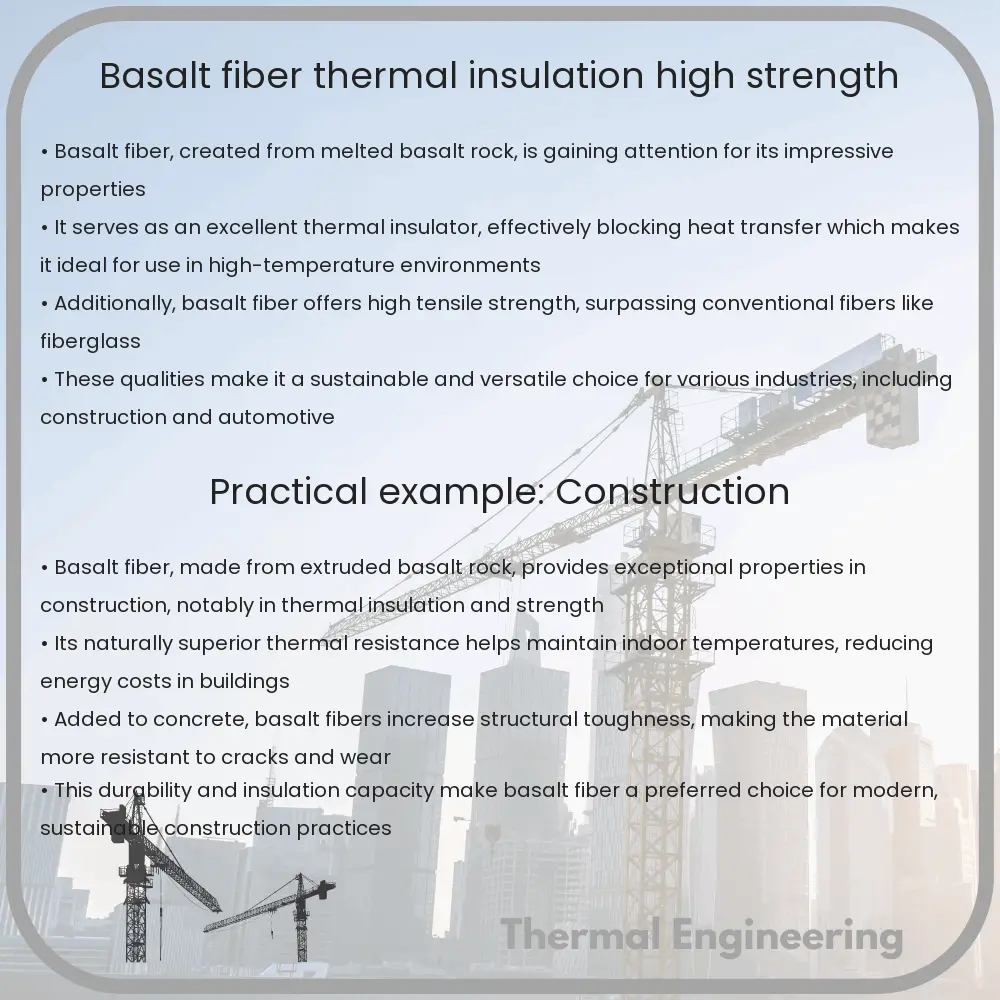
One of the key attributes of basalt fiber is its excellent thermal insulation capabilities. This material has a low thermal conductivity, which typically ranges from 0.03 to 0.038 W/mK. This property makes basalt fibers an ideal choice for applications requiring heat retention or protection against heat.

  • Fire Resistance: Basalt fiber is highly fire resistant and can withstand temperatures of up to 1000°C (1832°F) without significant loss of structural integrity.
  • Chemical Stability: It is resistant to acids, alkalis, and salts, making it suitable for environments where chemical corrosion would degrade other materials.

High Strength-to-Weight Ratio

Beyond its thermal properties, basalt fiber exhibits a high strength-to-weight ratio, which stands competitive among other conventional fibers like glass or steel. The tensile strength of basalt fibers can reach up to 4840 MPa, making it robust for reinforcing materials.

  • High Durability: Basalt fibers maintain their performance over a broad range of temperatures and do not suffer from significant degradation even in harsh environmental conditions.
  • Environmental Impact: Compared to many other fibers, basalt fibers produce less environmental waste both in terms of raw material extraction and in the manufacturing process.

Applications in Engineering

The special properties of basalt fibers extend their usability to a diverse range of engineering applications. Here are some common uses:

  1. Construction: As reinforcement in concrete, basalt fiber can increase the material’s strength and crack resistance, which is crucial for seismic upgrading.
  2. Automotive Industry: Used in the manufacture of automobile components due to its strength and resistance to environmental factors, it helps decrease vehicle weight and fuel consumption.
  3. Insulation: Because of its excellent thermal properties, basalt fiber is used in the production of insulation products, including residential and industrial insulating solutions.

Conclusion

Basalt fiber is a material that combines high thermal resistance, strength, and environmental benefits, making it an increasingly popular choice in various engineering fields. Its durability and resistance to environmental factors ensure its place in future technologies where these properties are prioritized.

Insulating Concrete Forms | Thermal Efficiency, Building

Learn about Insulating Concrete Forms (ICFs), a building technology enhancing thermal efficiency and sustainability in constructions.

Insulating Concrete Forms | Thermal Efficiency, Building

Understanding Insulating Concrete Forms and Their Impact on Thermal Efficiency in Buildings

Insulating concrete forms (ICFs) have revolutionized the building industry, merging structural strength with high thermal resistance. This modern building system integrates reinforced concrete with thermal insulation, yielding energy-efficient and durable structures. By examining the makeup and benefits of ICFs, we can appreciate their role in promoting sustainable construction practices.

What are Insulating Concrete Forms?

Insulating Concrete Forms are prefabricated forms for poured concrete walls, which remain in place as a permanent part of the wall assembly. Each form unit consists of two layers of expanded polystyrene (EPS) foam connected with plastic or metal ties. The EPS layers act as a continuous insulation on both the interior and exterior of the wall, while the concrete provides strength and thermal mass.

Components of ICFs

  • EPS Foam Panels: These are the primary component providing insulation. The panels are typically around 2.5 inches thick on each side of the concrete.
  • Concrete: The thermal mass of the poured concrete absorbs and retains heat, stabilizing the indoor temperature.
  • Form Ties: These hold the foam layers together and provide spacing for the structural concrete.

Thermal Efficiency of ICFs

The thermal efficiency of ICF walls is one of their most appealing features. ICFs provide continuous insulation by reducing thermal bridges, which are common in traditional building methods. Enhanced thermal insulation is quantified using two key metrics:

  • Thermal Resistance (R-value): ICF walls typically have R-values ranging from R-17 to R-26, significantly higher than those of traditional wood-framed walls.
  • Air Tightness: The airtight construction of ICF walls minimizes unwanted air leakage, reducing HVAC loads and improving overall energy efficiency.

Environmental Impact and Sustainability

ICF systems contribute to sustainable building practices in several ways:

  • Reduced Energy Consumption: The high R-value and air tightness lead to lower energy costs for heating and cooling, decreasing the carbon footprint associated with energy use.
  • Material Efficiency: The concrete in ICFs has longevity and does not require frequent replacement. Additionally, EPS is inert and non-toxic, producing minimal off-gassing.
  • Disaster Resilience: Buildings constructed with ICF are more resistant to natural disasters like hurricanes and tornadoes, reducing the need for repairs and reconstruction.

Applications and Adaptability

Insulating concrete forms are highly versatile and can be used in both residential and commercial constructions. From single-family homes to schools and commercial spaces, the application of ICFs is broad. The adaptability of ICF construction allows it to be used for both low-rise buildings and also in creating sound barriers or even landscaping features due to its excellent noise reduction properties.

Conclusion

The use of Insulating Concrete Forms represents a significant shift towards sustainable and energy-efficient building practices. By enhancing thermal efficiency and reducing environmental impact, ICF construction not only saves costs over time but also contributes positively to environmental sustainability. With their versatility and durability, ICFs offer a compelling solution for a wide range of construction needs.

Rigid Polyurethane Panels | Thermal Insulation, Durability

Learn about the benefits and uses of rigid polyurethane panels for superior thermal insulation and durability in construction and engineering.

Rigid Polyurethane Panels | Thermal Insulation, Durability

Understanding Rigid Polyurethane Panels: Thermal Insulation and Durability

Rigid polyurethane panels are increasingly popular in construction and manufacturing due to their excellent insulation properties and durability. This article explores why these panels are considered superior for thermal insulation, their durability characteristics, and typical applications in modern engineering.

What are Rigid Polyurethane Panels?

Rigid polyurethane foam (PUF) is made by mixing a polyol and an isocyanate, both of which react to form a hard, dense material with a closed-cell structure. This structure is key to the foam’s thermal insulating properties, as the closed cells contain gases that resist the flow of heat. The density of these panels typically ranges from 32 to 64 kg/m3, although it can be higher for specific applications.

Thermal Insulation Properties

One of the primary reasons for using rigid polyurethane panels is their excellent thermal insulation capability. Thermal conductivity (λ) is a crucial measure here, indicating the material’s ability to conduct heat. For rigid polyurethane panels, the thermal conductivity is usually between 0.020 and 0.025 W/m·K. This low thermal conductivity is a result of the panel’s cellular structure, which minimizes heat transfer.

This effective insulation can significantly reduce energy costs associated with heating and cooling, making rigid polyurethane panels a sustainable option for green building practices.

Durability of Rigid Polyurethane Panels

Rigid polyurethane panels are not only known for their insulation properties but also for their strength and durability. They have a high strength-to-weight ratio, which makes them lightweight yet strong enough to withstand mechanical stresses and strains during construction and use.

Additionally, polyurethane is moisture-resistant, which prevents the degradation of the panel’s insulation capability due to moisture ingress. Chemical resilience against various solvents, acids, and bases is also a key feature, increasing the material’s longevity and versatility in harsh environments.

Applications of Rigid Polyurethane Panels

  • Building and Construction: Used in walls, roofs, and floors for residential and commercial buildings to enhance energy efficiency.
  • Refrigeration: Essential for cold storage warehouses, refrigerated transport vehicles, and industrial freezers to maintain low temperatures efficiently.
  • Industrial Applications: Used in pipelines and tanks for maintaining temperature and protecting the contents from external temperature variations.

Conclusion

Rigid polyurethane panels are a cornerstone in modern thermal insulation technology with robust applications across diverse sectors. Their ability to combine low thermal conductivity with high durability makes them an ideal choice for a wide range of engineering applications. As energy efficiency becomes more critical in construction and industrial practices, these panels are likely to play an even more significant role in future developments.

Whether you’re involved in the design of energy-efficient homes, the construction of temperature-sensitive transportation, or industrial manufacturing, understanding the benefits and applications of rigid polyurethane panels is crucial for optimizing performance and sustainability in your projects.

Thermal Curtains | Energy Saving, Heat Loss Reduction

Learn about thermal curtains, their energy-saving benefits, and how they enhance indoor comfort by reducing heat loss and gain.

Thermal Curtains | Energy Saving, Heat Loss Reduction

Understanding Thermal Curtains: An Effective Energy-Saving Solution

In the quest to reduce energy consumption and enhance indoor comfort, thermal curtains emerge as a practical and efficient solution. These specially designed curtains play a crucial role in minimizing heat loss from homes and buildings, thus promoting better energy management and reduced heating bills during colder months. Here, we will explore how thermal curtains work, their benefits, and some considerations for their effective use.

How Thermal Curtains Work

Thermal curtains, also known as insulated curtains, are made from multiple layers of fabrics with varying functions. The key components of these curtains include a decorative outer layer, a high-density foam core that acts as an insulator, and a reflective vapor barrier that reflects heat back into the room. Some versions also incorporate a protective polyester film to enhance their thermal properties. These layers work together to achieve two primary goals:

  • Insulation: The foam core provides substantial resistance to heat transfer. This resistance slows down the rate at which heat escapes through windows during winter and keeps outdoor heat from entering during summer.
  • Reflection: The reflective layer directs heat back into the room, minimizing the heat lost through the window. This is particularly useful during cold months.

Benefits of Thermal Curtains

  • Energy Savings: By reducing heat loss in winter and heat gain in summer, thermal curtains help maintain a stable indoor temperature, leading to lower use of heating and cooling systems and, consequently, reduced energy bills.
  • Improved Comfort: Thermal curtains help eliminate drafts and reduce the chill often felt near windows, enhancing overall comfort within the living spaces.
  • Noise Reduction: The thick materials used in thermal curtains can also help dampen outdoor noise, providing a quieter and more peaceful indoor environment.
  • UV Protection: Many thermal curtains also block harmful UV rays, which helps prevent fading of furniture, carpets, and artworks.

Considerations for Effective Use of Thermal Curtains

To maximize the effectiveness of thermal curtains, consider the following tips:

  • Proper Installation: Ensure the curtains fit tightly against the window frames to prevent air leaks. They should be installed close to the window and extend to the floor to cover the entire window area.
  • Use during Appropriate Times: During winter, close the curtains at night to keep the heat in and open them during the day to let the sunlight naturally warm the room. In summer, keep the curtains closed during the day to block out the heat.
  • Maintenance: Regular cleaning and maintenance of the curtains are essential to maintain their thermal efficiency. Follow the manufacturer’s instructions for cleaning to avoid damaging the insulating layers.

Thermal curtains are an accessible and cost-effective way to enhance energy efficiency and comfort in both residential and commercial settings. By understanding and utilizing these curtains effectively, users can enjoy substantial benefits in terms of energy savings, comfort, and environmental impact.

Conclusion

As we seek more sustainable living practices, simple yet effective technologies like thermal curtains play a pivotal role. They not only guard against energy loss but also contribute to a more sustainable future by reducing the demand on heating and cooling systems. Whether you are a homeowner looking to cut utility costs or a business aiming to improve workplace comfort, thermal curtains provide a significant step toward achieving these goals.

Thermally Conductive Plastics | Heat Management, Lightweight

Learn about thermally conductive plastics, innovative materials designed for efficient heat management in technology and manufacturing.

Thermally Conductive Plastics | Heat Management, Lightweight

Understanding Thermally Conductive Plastics

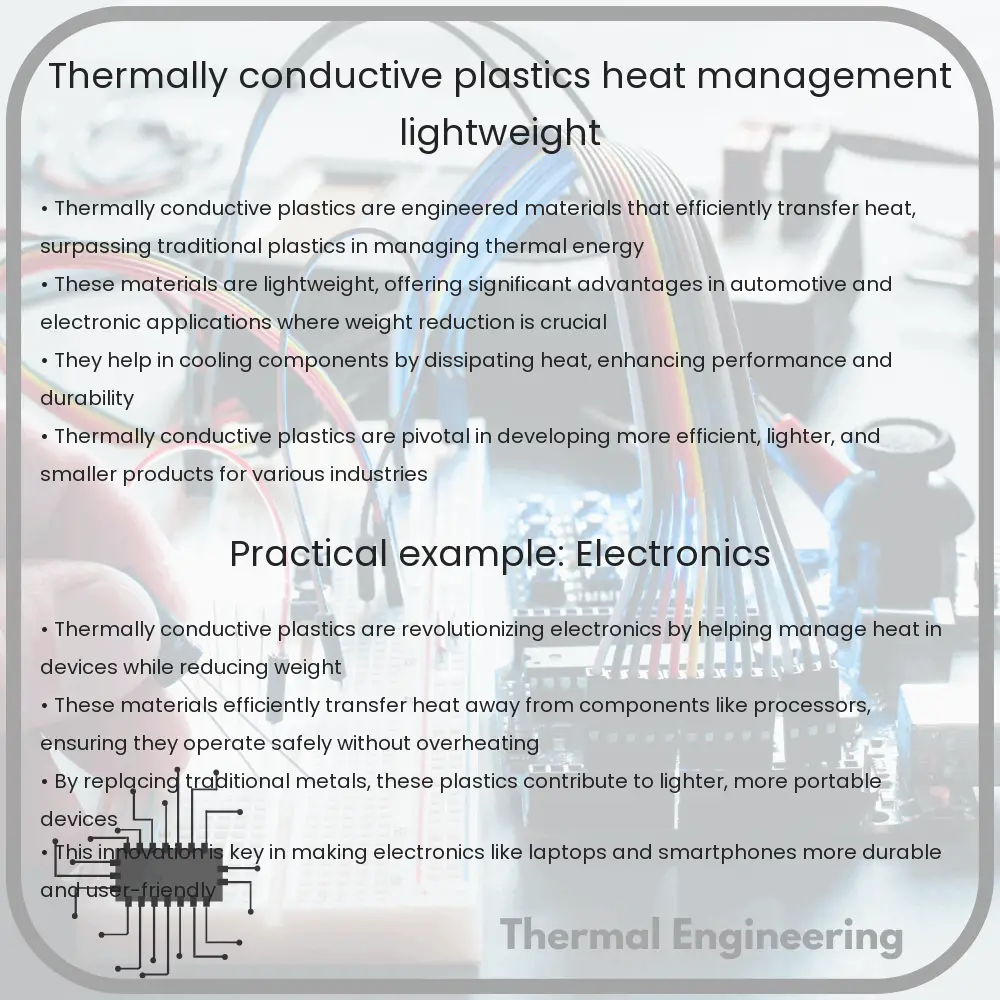
In the realm of material engineering, the development of thermally conductive plastics represents a significant innovation, especially in applications where heat management is crucial yet traditional metals are too heavy or inflexible. These specialized plastics are engineered to conduct heat away from heat-sensitive components, aiding in cooler operations and increased efficiency.

What are Thermally Conductive Plastics?

Thermally conductive plastics are a category of polymer materials enhanced to improve their ability to conduct heat. Unlike traditional plastics, which are typically insulators with low thermal conductivity, these materials are modified using fillers that increase their thermal conductivity. These fillers can include carbon fibers, graphite, aluminum oxide, boron nitride, or metallic additives, which provide a path for thermal energy to escape more readily than in conventional plastics.

Applications of Thermally Conductive Plastics

  • Electronics: Used in components like LED mounts, heat sinks, enclosures, and connectors, where they help manage heat without adding significant weight.
  • Automotive: Utilized for parts like battery housings and thermal management systems in electric vehicles, aiding in lighter designs that maintain efficient operation.
  • Telecommunications: Applied in equipment housings that require heat dissipation to prevent overheating and ensure sustained performance.
  • Consumer Goods: Found in kitchen appliances, lighting systems, and other household items that generate heat during use.

Advantages of Thermally Conductive Plastics

Thermally conductive plastics possess several advantages over conventional materials:

  1. Lightweight: They are significantly lighter than metals, which is critical in automotive and aerospace applications where weight reduction is necessary for fuel efficiency and performance.
  2. Corrosion Resistance: Unlike metals, thermally conductive plastics are naturally corrosion-resistant, which makes them suitable for harsh environments.
  3. Design Flexibility: Plastics can be molded into complex shapes more easily than metals, providing greater design flexibility in manufacturing processes.
  4. Thermal Efficiency: While not as conductive as metals, the thermal conductivity of these plastics is much higher than that of regular plastics, making them suitable for moderate heat management tasks.

Thermal Conductivity and Its Measurement

The thermal conductivity of a material is a measure of its ability to conduct heat and is typically denoted by the symbol “k”. For thermally conductive plastics, “k” values are generally in the range of 1 to 20 W/m*K, compared to less than 0.5 W/m*K for conventional plastics and up to 400 W/m*K for metals like aluminum.

To measure the thermal conductivity of plastics, methods such as the laser flash analysis (LFA) or the guarded hot plate technique are commonly used. These methods help manufacturers determine the efficiency of heat transfer through the plastic material, guiding them in material selection and component design.

The Future of Thermally Conductive Plastics

As technology advances and demands for lightweight, efficient materials continue to rise, the importance of thermally conductive plastics is likely to grow. Innovations in filler materials and composite engineering could lead to even higher thermal conductivities and broader applications. These advancements make thermally conductive plastics a key material in the drive toward lighter, more efficient, and sustainable technology solutions.

In conclusion, thermally conductive plastics bring together the benefits of plastic materials with enhanced heat management capabilities, presenting a valuable alternative to traditional materials in many tech-driven sectors.