Facebook Instagram Youtube Twitter

Silicon Carbide | High Temperature Strength, Thermal Conductivity

Silicon Carbide (SiC) features high-temperature strength and superior thermal conductivity, ideal for aerospace, automotive, and electronics.

Silicon Carbide | High Temperature Strength, Thermal Conductivity

Understanding Silicon Carbide: High Temperature Strength and Thermal Conductivity

Silicon carbide (SiC) is a remarkable ceramic material known for its excellent mechanical properties, which make it highly suitable for applications that operate under extreme conditions. Two standout features of silicon carbide are its high-temperature strength and superior thermal conductivity, aspects that are crucial for performance in demanding engineering roles. In this article, we will explore these properties and discuss why SiC is a choice material in fields such as aerospace, automotive, and power electronics.

High-Temperature Strength

One of the most notable characteristics of silicon carbide is its high-temperature strength. Unlike some other materials, SiC maintains its mechanical strength at temperatures that would cause metals and polymers to weaken. This thermal stability stems from the strong covalent bonding between silicon and carbon atoms, as well as its crystal structure.

  • High Melting Point: SiC has a melting point of about 2,730°C (4,946°F), which is considerably higher than that of metals like steel or aluminum.
  • Mechanical Strength: Even at elevated temperatures, SiC retains a significant portion of its room-temperature tensile strength. This capability is essential for high-performance power applications in harsh environments.
  • Chemical Stability: SiC exhibits excellent resistance to oxidation and corrosion due to its robust molecular structure. This chemical inertness becomes particularly valuable in environments where exposure to corrosive substances occurs.

Thermal Conductivity

In addition to its strength, silicon carbide is also distinguished by its high thermal conductivity, which is significantly higher than that of most metals and ceramics. This property is crucial in applications that generate high amounts of heat, requiring efficient heat dissipation.

  • Superior Heat Dissipation: SiC’s thermal conductivity ranges from around 120 W/(mK) to 200 W/(mK), depending on specific compositions and purity levels. This attribute helps in managing thermal stresses and improves the longevity of components.
  • Electrical Applications: In electronic components, such as semiconductors, better thermal conductivity means more efficient cooling and higher performance at increased power densities. Silicon carbide is increasingly used in high-power applications like electric vehicles and power grids due to this property.

Applications of Silicon Carbide

The combination of high-temperature strength and thermal conductivity makes SiC an ideal material for various challenging applications:

  1. Aerospace: SiC is used in components like turbine blades, seals, and heat exchangers due to its ability to withstand high temperatures and oxidative environments.
  2. Automotive: In the automotive industry, SiC enables the production of reliable and efficient electric vehicle components, such as power inverters and battery chargers.
  3. Power Electronics: SiC is becoming a popular choice for power electronic devices like MOSFETs and diodes due to its higher efficiency and thermal characteristics.

In conclusion, silicon carbide stands out as a superior engineering material due to its mechanical strength at high temperatures and excellent thermal conductivity. These properties, along with its chemical stability, make it a first-rate choice for use in extreme environments where performance, efficiency, and durability are critical. As technology progresses, the potential applications of silicon carbide are set to expand, further embedding its pivotal role in advanced engineering solutions.
Alumina Silicate Wool | High Temp Insulation, Refractory

Learn about alumina silicate wool, its properties, applications, and safety concerns in high-temperature insulation and industrial uses.

Alumina Silicate Wool | High Temp Insulation, Refractory

Understanding Alumina Silicate Wool

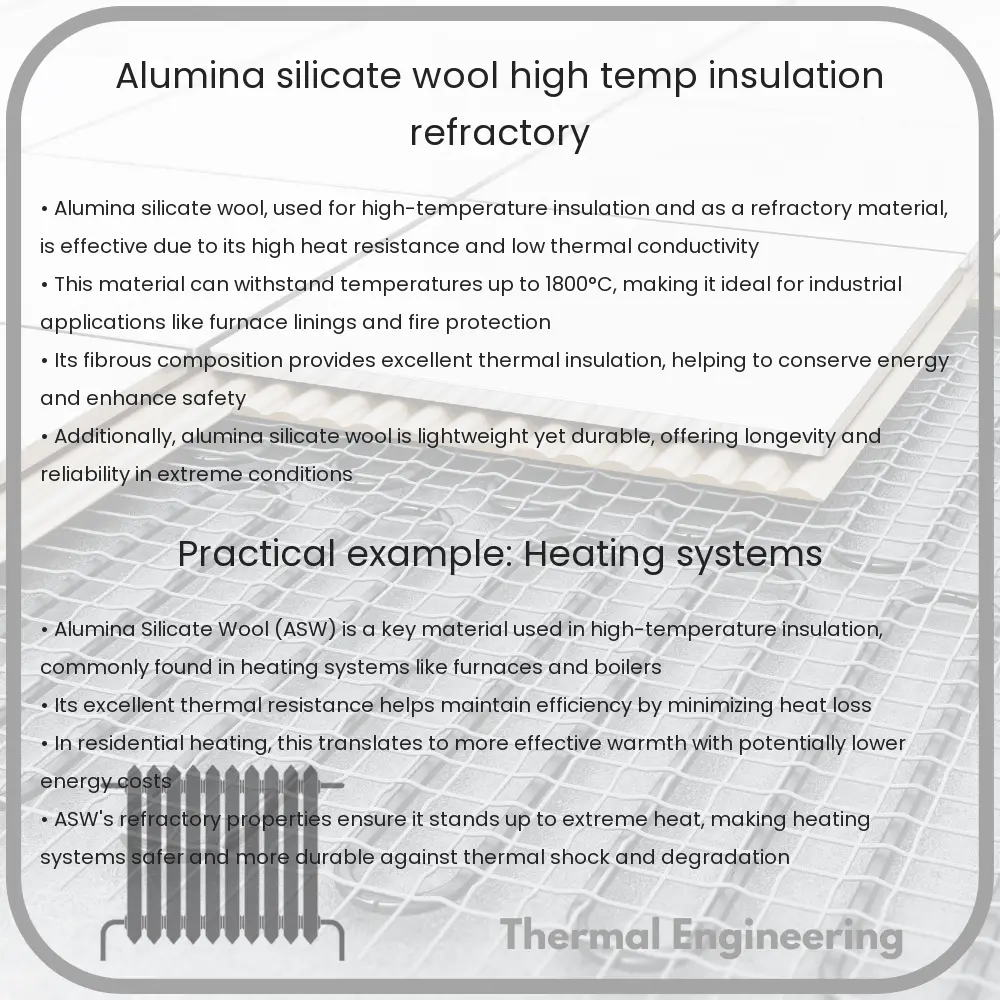
Alumina silicate wool, commonly known as ceramic fiber wool, is a type of high-temperature insulation material made from alumina (Al2O3) and silica (SiO2). This material is renowned for its excellent thermal insulation properties and resistance to thermal shock, making it highly effective in industrial applications such as furnaces, kilns, and other high-temperature processes.

Properties of Alumina Silicate Wool

Alumina silicate wool is notable for its low thermal conductivity, which makes it an excellent insulator capable of withstanding temperatures up to 1400°C (2552°F). It is also lightweight, which helps in reducing the overall weight of the thermal insulation system. Additionally, it has good chemical stability and resistance to most corrosive agents, although it can be affected by strong alkalis and phosphoric acid.

The material’s fibrous nature allows it to be formed into various shapes and sizes, including blankets, boards, papers, and modules, thereby providing flexibility in application across different industrial setups.

Applications of Alumina Silicate Wool

  • Refractory Linings: It is commonly used in the linings of furnaces and kilns to maintain high temperatures while preventing heat loss.
  • Thermal Barriers: Used as a barrier to protect equipment and personnel from extreme heat.
  • Fire Protection: Its high-temperature resistance makes it suitable for fireproofing applications.
  • High-temperature Filtration: It can be used in filtering hot gases or liquids, as it retains its structural integrity and filtration properties even at high temperatures.

Health and Safety Concerns

Though highly effective as an insulator, alumina silicate wool poses certain health risks if not handled properly. Inhalation of ceramic fibers can lead to respiratory issues as the small fibers can easily be inhaled and embed themselves in the respiratory tract. Protective equipment such as masks, gloves, and safety goggles are essential when handling this material. Most industries now adhere to strict guidelines on its usage, handling, and disposal to mitigate these health risks.

Environmental Impact

Environmental concerns related to alumina silicate wool are primarily focused on the disposal of the material. It is not biodegradable, and care must be taken to dispose of it in a manner that does not harm the environment. Recycling and reuse options are being explored and developed to minimize the environmental footprint of this essential industrial material.

Conclusion

Alumina silicate wool’s outstanding thermal stability and insulating properties make it indispensable in high-temperature industrial applications. However, careful consideration of the health risks and environmental impact associated with its use is crucial. As technologies advance, continuing development in the handling and recycling methods of this material will play a key role in maintaining its prominence as a refractory material while reducing its environmental impact.

Glass Wool | Insulator, Thermal and Acoustic Properties

Learn about glass wool, a superior insulator known for its thermal and acoustic properties, widely used in residential and industrial settings.

Glass Wool | Insulator, Thermal and Acoustic Properties

Understanding Glass Wool: A Superior Insulator

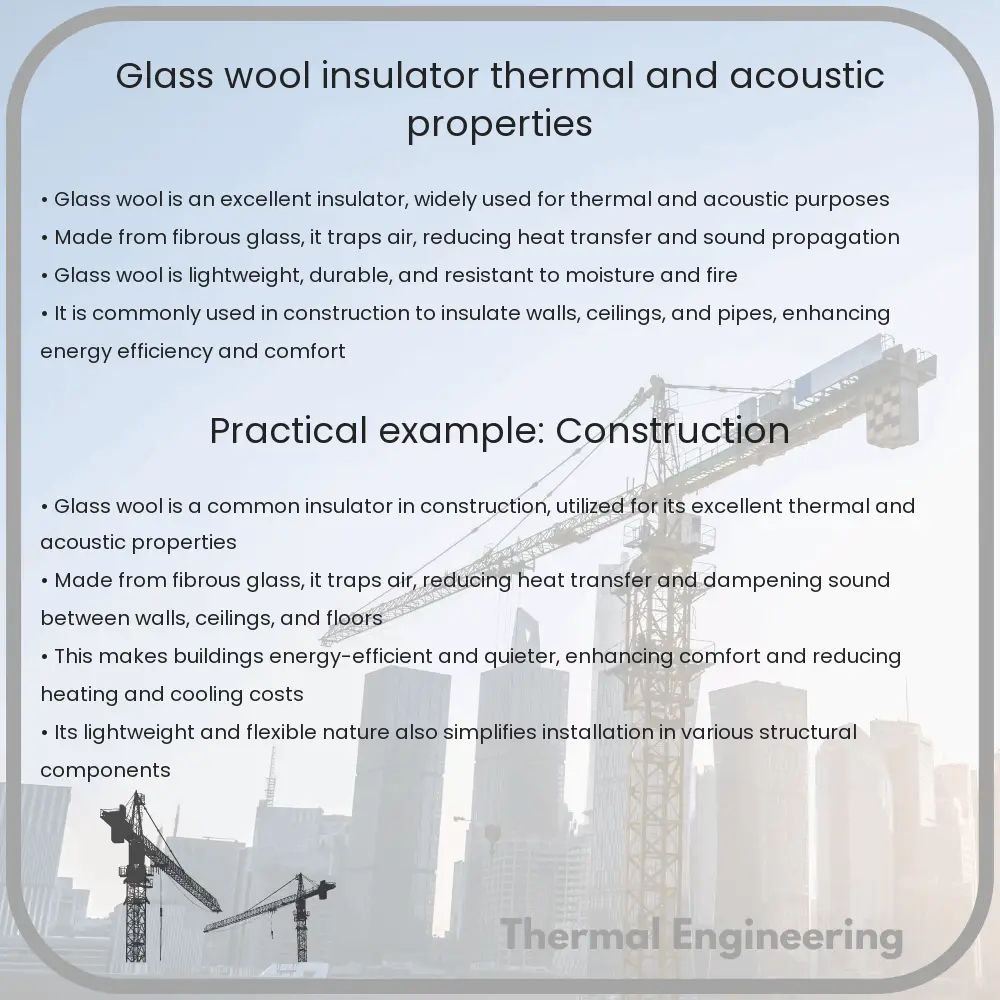
Glass wool, often referred to as fiberglass insulation, is a type of fibrous material made from finely spun strands of glass. This material is renowned for its excellent insulation properties, making it a popular choice in both residential and industrial applications. In this article, we explore the thermal and acoustic properties of glass wool and why it acts as such an effective insulator.

Composition and Manufacture

Glass wool is produced by binding together strands of glass that are formed by blowing a molten mixture of sand, soda ash, and recycled glass through fine nozzles. The fibers produced are extremely thin, almost microscopic, and are coated with a resin binder which allows them to be pressed into rolls and sheets. This process results in a material structure that traps air in countless tiny pockets, contributing significantly to its insulation capabilities.

Thermal Insulation Properties

The primary use of glass wool is for thermal insulation. Its effectiveness in this regard is due to its large number of tiny air pockets. Air, being a poor conductor of heat, greatly reduces the overall heat transfer through the glass wool. This is quantified by a material’s thermal conductivity or “k-value”. The k-value of glass wool typically ranges between 0.030 and 0.040 W/mK, making it highly resistant to heat flow.

Thermal resistance, or “R-value”, is another important measure of insulation effectiveness. It is calculated by dividing the thickness of the insulating layer by its thermal conductivity. The higher the R-value, the better the material’s insulating properties. Glass wool offers an R-value ranging from 2.5 to 3.7 per inch of thickness, which varies depending on its density and the specific product design.

Acoustic Properties

Aside from its thermal characteristics, glass wool is also an effective acoustic insulator. Its fibrous and porous structure absorbs and dissipates sound waves, reducing the intensity of sound transmission. This makes it ideal for use in environments where sound insulation is crucial, such as recording studios, homes, office buildings, and industrial sites.

Other Benefits

  • Fire Resistance: Glass wool is non-combustible and capable of withstanding high temperatures. This makes it a safe insulation material that does not contribute to the spread of flames in case of a fire.
  • Eco-Friendliness: Often made with up to 80% recycled glass, glass wool is a sustainable choice that contributes to the reduction of industrial waste.
  • Moisture Resistance: While glass wool itself is moisture resistant, proper installation and encapsulation are needed to prevent water vapor from degrading its insulating properties.
  • Cost-Effectiveness: Compared to other insulation materials, glass wool offers a balance between cost and performance, making it a popular choice in a variety of applications.

Applications

Glass wool is versatile and can be used in various applications, including attic and loft insulation, cavity wall insulation, ductwork, and soundproofing panels. Its flexibility allows it to be easily installed between studs, rafters, and joists without leaving gaps, which could otherwise diminish its insulative effectiveness.

Conclusion

The distinct properties of glass wool, from its low thermal conductivity to its sound dampening capabilities, make it an excellent insulator in a myriad of applications. Its fire resistance and environmental benefits further add to its appeal, marking it as a choice material for effective insulation. By understanding these properties, end-users and manufacturers can better harness the benefits of glass wool, enhancing building comfort and efficiency.

Polyethylene Foam | Insulation, Moisture Resistance

Learn about Polyethylene Foam’s insulation properties and moisture resistance, ideal for various engineering applications.

Polyethylene Foam | Insulation, Moisture Resistance

Understanding Polyethylene Foam: Insulation and Moisture Resistance Properties

Polyethylene foam, often referred to as PE foam, is a durable, lightweight, and resilient material widely used for its excellent insulation and moisture resistance capabilities. This type of foam is derived from the polymerization of ethylene, forming a thermoplastic that can be expanded into foam with various densities and properties. In this article, we’ll explore the properties of polyethylene foam that make it an ideal choice for insulation and moisture resistance applications.

Key Characteristics of Polyethylene Foam

Polyethylene foam is celebrated for its numerous beneficial properties which include:

  • Thermal Insulation: PE foam is an effective insulator because it has a low thermal conductivity. This property is pivotal in preventing heat transfer, making polyethylene foam suitable for applications ranging from building insulation to portable cooler bags.
  • Moisture Resistance: Polyethylene foam is non-porous, which means it does not absorb water. This is crucial for preventing mold and mildew growth and makes it ideal for use in damp environments.
  • Lightweight: The foam’s structure consists mainly of air, making it very light. This characteristic is beneficial for various applications in automotive and packaging industries, where weight reduction is a priority.
  • Impact Resistance: The resilience and flexibility of polyethylene foam allow it to absorb impacts efficiently, protecting goods during transportation and shielding equipment from damage.
  • Chemical Resistance: PE foam stands up well against most oils, greases, and solvents, enhancing its suitability for industrial applications.

Applications in Insulation and Moisture Resistance

Polyethylene foam serves a dual role in many applications, both as an insulator and a moisture barrier. Here are some common applications:

  1. Building Insulation: Used in walls, roofs, and foundations, polyethylene foam helps in maintaining temperature, reducing energy costs, and enhancing building comfort.
  2. Packaging: Safeguards electronic goods and delicate instruments against moisture damage and thermal variations during shipping.
  3. Medical Supplies: Used in the packaging of sensitive medical equipment and devices, ensuring they remain sterile and free from moisture.
  4. Sports Equipment: Incorporated into camping mats and exercise mats due to its insulating properties, comfort, and moisture resistance.
  5. Automotive Uses: Applied in car seats, gaskets, and seals, where it contributes to comfort and prevents water ingress.

Advantages and Disadvantages of Polyethylene Foam

While polyethylene foam offers several advantages, there are also some limitations to consider:

  • Advantages: Its lightweight nature, combined with insulation and water resistance, makes it extraordinarily versatile and suitable for a wide range of applications.
  • Disadvantages: Although it is chemical resistant, polyethylene foam can be susceptible to ultraviolet (UV) light damage and may degrade if exposed to harsh outdoor environments without proper UV stabilizers or protective coverings.

Conclusion

Polyethylene foam’s unique properties of insulation and moisture resistance render it an indispensable material in many engineering and commercial applications. Despite some limitations, its benefits often outweigh the disadvantages, particularly when correctly applied and maintained. Understanding these fundamental properties allows engineers and designers to better harness the potential of polyethylene foam in their projects, leading to more innovative and effective solutions.

Cellulose Insulation | Eco-Friendly, Thermal Barrier

Learn about cellulose insulation, an eco-friendly option providing thermal and acoustic benefits for sustainable building practices.

Cellulose Insulation | Eco-Friendly, Thermal Barrier

Understanding Cellulose Insulation: An Eco-Friendly, Thermal Barrier

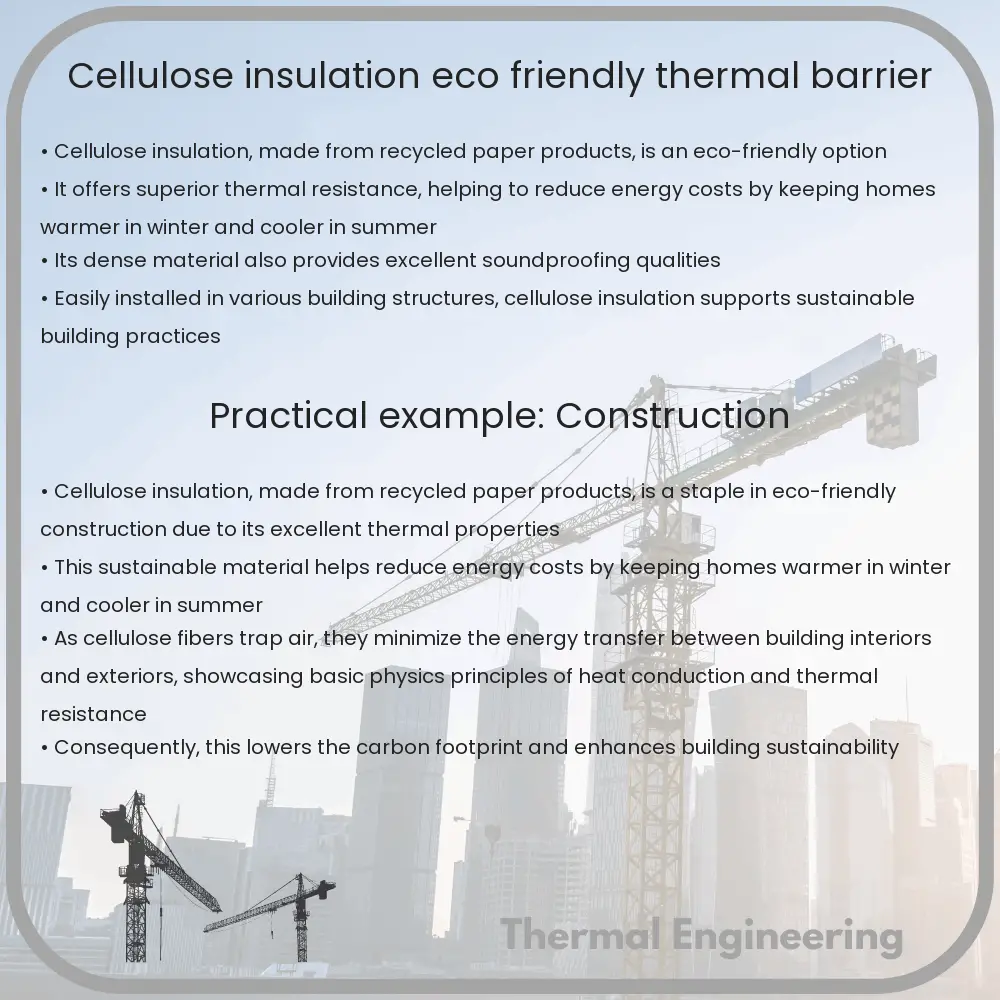
Cellulose insulation represents a significant step forward in both sustainable building materials and energy-efficient home design. It is primarily made from recycled paper, such as newspapers, and other cellulose fibers, making it an environmentally preferable option in building insulation. Beyond its green credentials, cellulose insulation provides effective heat retention and helps reduce heating and cooling costs. This article explores the properties, benefits, and applications of cellulose insulation.

The Eco-Friendly Nature of Cellulose Insulation

Cellulose insulation is typically composed of up to 85% recycled paper fiber. The remaining 15% consists of a fire retardant such as boric acid or ammonium sulphate. This high recycled content contributes positively to its environmental profile by diverting waste from landfills and reducing the need for virgin materials. The process of producing cellulose insulation also requires less energy compared to fiberglass insulation, another common form of building insulation.

Thermal Performance and Energy Efficiency

The primary function of any insulation material is to resist the flow of heat. Cellulose insulation achieves this effectively with its density and compact fiber structure, which traps air and reduces the movement of heat through walls, ceilings, and floors. The thermal resistance of insulation is measured in R-values—the higher the R-value, the better the insulation’s effectiveness. Average R-values for cellulose insulation generally range between R-3.2 and R-3.8 per inch.

Cellulose insulation not only reduces energy costs by improving a building’s thermal envelope but also provides better soundproofing compared to many other insulation materials, adding a layer of acoustic comfort to its benefits.

Installation and Application

Installing cellulose insulation can be done in various ways, including:

  • Loose-fill: Often used in attics, it’s blown into place using special equipment.
  • Dense-packed: Ideal for walls and closed cavities, cellulose is densely packed to prevent settling and decrease air infiltration.
  • Sprayed or damp-spray: In this method cellulose is mixed with a small amount of water and sprayed, this helps the insulation adhere to surfaces and fill crevices more effectively.

Regardless of the method, installation should always be carried out by professionals to ensure maximum effectiveness and adherence to local building codes.

Sustainability Benefits Beyond Insulation

One of the standout features of cellulose insulation is its low environmental impact, not only in terms of raw materials usage but also in its lifecycle impact. Its production emits less greenhouse gases compared to most other insulation types. Furthermore, the borate treatment given to cellulose provides resistance against pests, fungi, and fire, enhancing the durability and safety of the insulation without significant ecological compromises.

Conclusion

Cellulose insulation offers a multitude of benefits making it an attractive choice for new constructions and retrofitting projects alike. Its impressive thermal properties, sound dampening capabilities, and high recycled content make it a standout in the world of sustainable building materials. By choosing cellulose insulation, property owners can reduce energy costs, contribute to environmental conservation, and enjoy a comfortable internal environment. The installation of this material not only preserves natural resources but also supports the recycling industry, featuring a compounding effect on its ecological benefits.

As the world moves towards more sustainable building practices, the role of materials like cellulose insulation becomes ever more crucial. It exemplifies how engineered solutions can bridge the gap between environmental stewardship and economic performance.

Melamine Foam | Thermal Insulation, Sound Absorption

Melamine foam is a lightweight, open-celled material renowned for its thermal insulation and sound absorption properties.

Melamine Foam | Thermal Insulation, Sound Absorption

Introduction to Melamine Foam

Melamine foam is a versatile material known for its unique properties of thermal insulation and sound absorption. Originally developed in the late 20th century, it is composed primarily of melamine resin, a thermosetting plastic derived from melamine and formaldehyde. Lightweight and open-celled, this foam has found a wide array of applications in industries ranging from construction to automotive.

Thermal Insulation Properties

Melamine foam performs excellently as a thermal insulator due to its structure and material composition. The open cell structure contains a high volume of air, making it difficult for heat to pass through. This characteristic makes it an optimal choice for insulation in buildings, helping to reduce energy costs and increase comfort.

  • Low Thermal Conductivity: Melamine foam has a thermal conductivity range of approximately 0.035 to 0.040 W/m*K, which is comparably lower than many other insulation materials. This property significantly hinders heat transfer, enhancing its effectiveness as an insulator.
  • High-Temperature Resistance: It can withstand temperatures up to about 240 degrees Celsius (464 degrees Fahrenheit), making it suitable for high-temperature environments.
  • Fire Resistance: Melamine foam is classified as a Class B fire-resistant material. It chars but does not burn, adding a layer of safety in fire-prone scenarios.

Sound Absorption Capabilities

The open-celled structure of melamine foam not only contributes to its thermal insulation properties but also to its ability to absorb sound. This makes it an effective acoustical treatment for reducing noise pollution in various settings.

  • High Sound Absorption Coefficient: Melamine foam typically achieves a Noise Reduction Coefficient (NRC) rating from 0.7 to 0.95, meaning it can absorb 70% to 95% of the sound that contacts its surface.
  • Frequency Range: It is particularly efficient at absorbing mid to high-frequency sound waves, making it ideal for applications in studios, automotive, and industrial machinery insulation.
  • Lightweight: The lightweight nature of the foam does not add significant mass to structures, which is a critical consideration in transport and construction applications.

Applications of Melamine Foam

Due to its insulative and acoustic properties, melamine foam is employed in a variety of fields:

  1. Building Insulation: Used in walls, ceilings, and floors to enhance energy efficiency and acoustic comfort.
  2. Transportation: Applied in cars, buses, trains, and airplanes to reduce heat and noise for increased passenger comfort.
  3. Industrial: Utilized in machinery and equipment for noise reduction and temperature control.
  4. Consumer Products: Marketed as “magic erasers” for household cleaning, utilizing the micro-abrasive properties of the foam for removing stains.

Environmental Impact and Sustainability

The manufacturing process of melamine foam involves the use of substances like formaldehyde, which raises concerns regarding environmental and health safety. However, once cured, the product itself is considered to be largely inert and safe for most applications. Companies continue to seek advancements in manufacturing techniques to reduce these impacts and improve the sustainability of melamine foam production.

Conclusion

Melamine foam stands out as an excellent material for both thermal insulation and sound absorption. Its unique cellular structure and low density make it environmentally conducive for various applications while providing effective insulation and noise reduction capabilities. As research continues and technology advances, the applications and efficacy of melamine foam are expected to expand, further solidifying its role in modern engineering and design.

Thermal Insulation Paint | Reflective, Energy Saving

Learn about thermal insulation paint, a type of paint enhancing energy efficiency by reflecting heat and insulating buildings.

Thermal Insulation Paint | Reflective, Energy Saving

Understanding Thermal Insulation Paint

Thermal insulation paint refers to a specialized type of paint that contributes significantly to energy saving by reflecting heat and providing insulation. It is commonly used on building exteriors, roofs, and walls to enhance energy efficiency by reducing the need for heating and cooling systems.

How Does Thermal Insulation Paint Work?

The effectiveness of thermal insulation paint primarily relies on its ability to reflect infrared radiation. Standard paints absorb most of the sunlight, converting it into heat that raises the temperature of a building. In contrast, thermal insulation paints are designed with specific pigments that reflect solar radiation away, thereby keeping the interiors cooler.

These paints also act as a barrier to heat flow, which contributes to insulation properties. They contain tiny ceramic or glass microspheres that create a reflective layer over the surface. This layer minimizes the heat conduction between the exterior and interior of a building, helping to maintain a consistent indoor temperature.

The Benefits of Using Thermal Insulation Paint

  • Energy Efficiency: By reducing the amount of heat entering or escaping from a building, thermal insulation paint directly reduces the energy consumed by HVAC systems (Heating, Ventilation, and Air Conditioning).
  • Cost Savings: Lower energy consumption translates into significant cost savings in utility bills over time.
  • Sustainability: Using less energy contributes to a lower carbon footprint, making thermal insulation paint a choice that supports environmentally friendly initiatives.
  • Comfort: Maintaining a stable indoor temperature enhances comfort for the occupants of the building.
  • Protection: Reflecting harsh UV rays also serves to protect the structural integrity of the building materials, prolonging their lifespan.

Application Considerations

When choosing and applying thermal insulation paint, there are several factors to consider to maximize its benefits:

  • Type of Surface: The paint can be applied on a variety of surfaces including metal, concrete, and wood. However, the surface needs to be properly prepared to ensure good adhesion.
  • Environmental Conditions: Thermal paint is especially beneficial in regions with high temperatures and strong sunlight, but it can also be effective in colder climates by reducing heat loss.
  • Quality of Paint: As with any paint, quality varies significantly between products. Higher quality options generally offer better reflectivity and insulation properties.

Conclusion

Thermal insulation paint represents a smart choice for those looking to improve energy efficiency, reduce energy costs, and increase comfort levels within a building. Its simple application process and immediate effects make it an appealing option for both new constructions and renovations. As environmental awareness and energy conservation continue to gain importance, thermal insulation paint is likely to become a standard in building treatments.

Exploring these advanced materials not only contributes to a more sustainable future but also harnesses the power of science and innovation in everyday life applications, making it a fascinating subject of both engineering and environmental science.

Cooling systems in high-speed computing

Detailed exploration of cooling systems used in high-speed computing to enhance system performance and longevity.

Cooling systems in high-speed computing

Cooling Systems in High-Speed Computing

High-speed computing systems, such as those used in data centers, supercomputers, and advanced gaming setups, produce a significant amount of heat due to the intense processing power required by their CPUs, GPUs, and other components. Efficient cooling systems are critical to maintain performance, reliability, and the longevity of the equipment. In this article, we will explore the various types of cooling systems used in high-speed computing and their underlying principles.

Why Cooling is Crucial

Excess heat in electronic devices can lead to decreased efficiency, hardware degradation, and even complete system failures. High temperatures can reduce the lifespan of components like processors and memory chips by accelerating wear and increasing the likelihood of thermal runaway, where an increase in temperature causes a further increase in temperature, potentially leading to catastrophic failure.

Types of Cooling Systems

  • Air Cooling: The most common method of cooling in computers, air cooling, employs fans and heat sinks. A heat sink is typically made of metal with a high thermal conductivity, such as aluminum or copper, featuring fins or pins that enhance the heat transfer to the air blown through it by fans.
  • Liquid Cooling: More effective than air cooling, liquid cooling uses a liquid coolant to absorb heat from components before cycling it away to a radiator to be cooled. This method is often used in situations where air cooling is insufficient, such as in densely packed data centers or high-performance gaming systems.
  • Phase Change Cooling: Similar to the principle behind refrigeration, phase change cooling involves vaporizing a liquid into a gas to absorb heat and then condensing it back into a liquid. This system is used in extremely high-performance computing environments where conventional cooling techniques are inadequate.
  • Immersion Cooling: An emerging technology, immersion cooling involves submerging the entire system or certain components in a thermally conductive, but electrically insulating, liquid. Heat is directly transferred from the components to the liquid without the need for heat sinks or fans.

Thermal Management Technologies

Aside from the direct cooling technologies, managing a computing system’s thermal environment involves several supporting technologies:

  • Thermal Interface Materials (TIMs): These materials, such as thermal pastes, pads, and adhesives, are used to improve the heat conduction between a heat source and a sink.
  • Heat Pipes: Often used in conjunction with other cooling methods, heat pipes enhance heat transfer from the heat source to a cooler part of the device using the principle of phase transition.
  • Dynamic Software Management: Software can play a role in thermal management by adjusting the performance of hardware based on thermal data, thereby preventing overheating and balancing performance with temperature.

Future Trends in Cooling Technology

As computational demands and component densities increase, the need for innovative cooling solutions grows. Future developments might include advances in nano-scale materials to improve heat dissipation, machine learning algorithms to optimally control cooling systems dynamically, and integration of cooling solutions into the design of microchips themselves, possibly using microfluidic technologies.

Efficient cooling systems are integral to the operation of high-speed computing systems, protecting delicate components and ensuring system stability and performance. As technology evolves, so too will the methods by which we manage the heat it produces.

Fiberglass | Thermal Insulation, Corrosion Resistance

Learn about the properties and applications of fiberglass, focusing on its thermal insulation and corrosion resistance in engineering.

Fiberglass | Thermal Insulation, Corrosion Resistance

Understanding Fiberglass: Thermal Insulation and Corrosion Resistance

Fiberglass, a composite material composed of glass fibers embedded in a resin matrix, is widely used in various engineering applications due to its remarkable properties. Two of the most significant characteristics of fiberglass are its thermal insulation and corrosion resistance, making it a preferred choice in both construction and industrial sectors.

Thermal Insulation Properties

Fiberglass is an excellent thermal insulator because of its high resistance to heat transfer. The mechanism behind this insulation ability is primarily due to the structure of the fiberglass itself. The material consists of numerous tiny glass fibers that are randomly arranged and held together by a binder. This structure creates countless small pockets of air within the material, drastically reducing the heat conduction.

  • R-value: Fiberglass insulation materials are rated with an R-value, which measures the material’s ability to resist heat flow. The higher the R-value, the better the insulation provided by the material. Typical R-values for fiberglass insulation range from R-2.9 to R-3.8 per inch of thickness.
  • Usage: Due to its excellent insulative properties, fiberglass is commonly used in both residential and commercial construction, especially in the insulation of walls, roofs, and floors.

Corrosion Resistance

Another significant advantage of fiberglass is its inherent resistance to corrosion. Corrosion is a common problem in materials exposed to harsh environments, including chemicals, moisture, and various other corrosive agents.

  • Chemical Stability: Fiberglass is non-reactive with many chemicals, owing to the non-metallic nature of glass fibers and the plastic matrix in which they are embedded. This makes it suitable for use in harsh chemical environments where other materials might degrade.
  • Applications: Its resistance to degradation in aggressive environments makes fiberglass an ideal choice for pipes, tanks, and other equipment used in chemical processing industries. It is also commonly used in marine environments for boat hulls and other structures exposed to saltwater, which can severely damage other materials like steel and wood.

Applications in Engineering

Fiberglass is not only praised for its insulation and corrosion resistance but also for its lightweight and strength properties. In engineering, these properties allow for innovative designs and solutions in various fields:

  • Construction: Besides its use as insulation, fiberglass is used in the manufacture of roofing sheets, window frames, and door frames due to its durability and weather resistance.
  • Automotive: In automotive engineering, fiberglass is used in making body kits and components for vehicles. Its lightweight nature contributes to fuel efficiency and enhanced performance.
  • Electrical insulation: Fiberglass is also an excellent electrical insulator. It is used in making printed circuit boards and other insulating materials within electronic devices.

In conclusion, fiberglass stands out in engineering due to its unique properties of thermal insulation, corrosion resistance, and structural strength. Its versatile applications underscore its importance across various industries, highlighting its role in modern engineering solutions.

PVC Foam | Heat Insulation, Lightweight Construction

PVC foam is a versatile material known for its thermal insulation, lightweight nature, and broad usage in various industries like construction and automotive.

PVC Foam | Heat Insulation, Lightweight Construction

Understanding PVC Foam: Applications in Heat Insulation and Lightweight Construction

PVC foam, or Polyvinyl Chloride foam, is a versatile material widely used across various industries due to its outstanding properties such as thermal insulation, light weight, and ease of use. This article explores the composition, benefits, and applications of PVC foam, particularly focusing on its role in heat insulation and lightweight construction.

Composition of PVC Foam

PVC foam is made by combining polyvinyl chloride with special additives and blowing agents that help create a closed-cell structure during the foaming process. This structure is crucial as it contributes to the material’s thermal and acoustic insulation properties as well as its strength and durability.

Heat Insulation Properties

One of the standout features of PVC foam is its excellent heat insulation. The closed-cell structure minimizes heat transfer through the material by trapping air, an effective insulator, within these cells. This characteristic makes PVC foam an ideal material for use in:

  • Building construction, particularly in walls, roofs, and floors where effective insulation is necessary.
  • The automotive industry, for insulating vehicles against external heat and noise.
  • Industrial applications, such as in process insulation to maintain temperatures and improve energy efficiency.

Due to these properties, PVC foam contributes significantly to energy savings and can enhance the environmental sustainability of the projects it’s used in.

Lightweight Construction

Another significant advantage of PVC foam is its weight. Being extremely lightweight, PVC foam is easy to handle, cut, and install, which reduces overall construction costs and time. It offers a high strength-to-weight ratio that is particularly beneficial in applications such as:

  • Aerospace, where every kilogram saved can reduce fuel consumption and increase efficiency.
  • Marine construction, including the building of boats and other watercraft where buoyancy and durability are required.
  • Transportation, where reducing the weight of vehicles leads to better fuel efficiency and lower emissions.

Despite its light weight, PVC foam remains rugged and is not prone to deformation under load, maintaining its shape and integrity under various conditions.

Environmental Considerations

When considering PVC foam for construction or industrial applications, it’s essential to weigh its environmental impact. PVC material can release hazardous substances if not properly manufactured, disposed of, or recycled. However, ongoing developments in PVC technology have aimed at reducing these impacts through better production processes and recycling methods.

In conclusion, PVC foam stands out as a highly effective material for heat insulation and lightweight construction due to its insulating capabilities, light weight, and strength. It is used in a wide range of applications from building and automotive to aerospace and marine industries. As technology progresses, the future of PVC foam seems promising with potential improvements in environmental impact and efficiency.