Facebook Instagram Youtube Twitter

Graphite Foam | Lightweight, High Thermal Conductivity

Unveiling graphite foam, a cutting-edge material known for its high thermal conductivity and lightweight properties, ideal for cooling systems and energy storage.

Graphite Foam | Lightweight, High Thermal Conductivity

Graphite Foam: A Revolution in Material Science

Graphite foam is an innovative engineering material that combines the natural properties of graphite with a unique cellular structure. Developed initially by researchers at the Oak Ridge National Laboratory, graphite foam is known for its exceptional thermal conductivity and low density, making it an excellent candidate for various high-performance cooling applications.

Properties of Graphite Foam

Graphite foam exhibits several distinctive properties:

  • High Thermal Conductivity: Graphite itself is inherently a good conductor of heat. When expanded into a foam structure, it maintains high levels of thermal conductivity in comparison to other foam materials. This property allows efficient heat dissipation.
  • Low Density: The foam structure significantly reduces the material’s density, making graphite foam exceptionally lightweight. This low density coupled with high strength is advantageous in applications where weight reduction is crucial.
  • High Porosity: The porosity of graphite foam is adjustable, which can be tailored during the manufacturing process to suit specific applications. This customizability influences both the thermal conductivity and mechanical strength of the foam.
  • Corrosion Resistance: Like the parent material graphite, graphite foam is resistant to most chemicals and corrosive environments, which enhances its durability in harsh working conditions.

Applications of Graphite Foam

Due to its remarkable properties, graphite foam is used in a variety of applications:

  1. Thermal Management Systems: In electronics, aerospace, and automotive industries, graphite foam is used for cooling components like computer CPUs, LED lights, and battery systems. Its high thermal conductivity ensures rapid heat dissipation, thus protecting sensitive parts from overheating.
  2. Energy Storage: Graphite foam can be employed in batteries and supercapacitors. Its porous structure provides a larger surface area, enhancing the rate of electron flow and thus the efficiency of the storage devices.
  3. Heat Exchangers: The material’s ability to conduct heat effectively and withstand high temperatures makes it suitable for heat exchangers in industrial processes that require active cooling.
  4. Lightweight Structures: In aerospace and automotive engineering, the lightweight nature of graphite foam is utilized to reduce overall vehicle weight which contributes to improved fuel efficiency and performance.

Challenges and Future Prospects

Despite its advantages, there are several challenges in the widespread adoption of graphite foam. The primary issue is cost; the production process of graphite foam is complex and requires further refinement to become cost-effective for large-scale use. Additionally, integrating graphite foam into existing manufacturing processes and material systems poses engineering and compatibility challenges.

However, ongoing research aims to overcome these barriers. Improvements in production techniques and a deeper understanding of the material’s properties could lead to broader applications and more cost-effective solutions. As industries continue to seek lightweight materials with high thermal conductivity, graphite foam stands out as a promising candidate with a potentially significant impact on material science and engineering.

In conclusion, graphite foam’s unique combination of lightweight, high thermal conductivity, and chemical resistance positions it as a valuable material in fields requiring efficient heat management and weight reduction. The ongoing developments and future accomplishments in this material could revolutionize the way we design and manage heat in various applications.
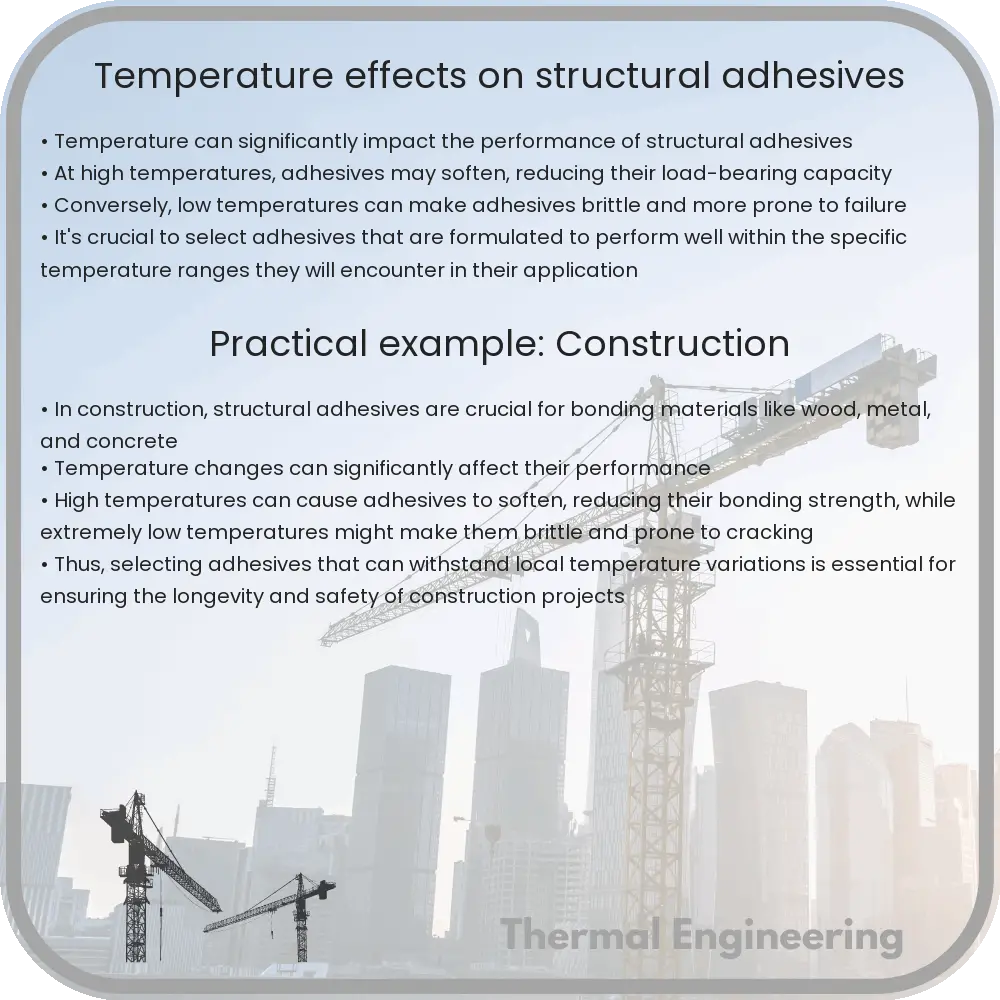
Temperature effects on structural adhesives

Explore how temperature influences the curing, performance, and durability of structural adhesives in various engineering applications.

Temperature effects on structural adhesives

Understanding the Impact of Temperature on Structural Adhesives

Structural adhesives are critical components used in a variety of engineering applications, from building construction to automotive assembly. These adhesives are designed to bond materials and bear loads, thus playing a crucial role in the integrity and performance of structures. One of the key factors influencing the effectiveness and durability of these adhesives is temperature. In this article, we will explore how temperature affects the properties and performance of structural adhesives.

Temperature Effects on Curing Process

The curing process of adhesives is inherently sensitive to temperature. Generally, structural adhesives require a specific range of temperatures to cure properly. This process involves the transformation of the adhesive from a liquid or pliable state into a solid state, achieving the desired mechanical properties such as strength and elasticity.

  • Low Temperatures: At low temperatures, the curing process can be significantly slowed down or even halted. This is because the chemical reactions that facilitate curing are less active at lower temperatures.
  • High Temperatures: Conversely, high temperatures can accelerate the curing process. However, excessively high temperatures can cause premature curing and reduce the working time, potentially leading to weaker bonds or defects in the bonded joint.

Thermal Expansion and Contraction

Materials typically expand when heated and contract when cooled, a behavior known as thermal expansion and contraction. This phenomenon can pose challenges for structural adhesives, particularly when bonding materials with different coefficients of thermal expansion (CTE).

  • Mismatched CTEs: When two materials with different CTEs are bonded together, temperature changes can induce stress at the adhesive joint due to differential expansion and contraction. This stress can weaken the bond or even cause debonding.
  • Adhesive Selection: To mitigate these effects, selecting an adhesive with an appropriate elongation and flexibility that can accommodate the CTE mismatches is crucial.

Long-Term Durability and Aging

Temperature not only affects the curing and immediate performance of adhesives but also influences their long-term durability. Continual exposure to varying or extreme temperatures can accelerate the aging process of structural adhesives, leading to degradation of mechanical properties over time.

  • Thermal Aging: This refers to the deterioration in properties of adhesives caused by long-term exposure to high temperatures. It can result in reduced toughness, brittleness, and loss of adhesive strength.
  • Low-Temperature Brittleness: At very low temperatures, some adhesives can become brittle, making them more susceptible to cracking under mechanical stress.

Practical Considerations and Selection Criteria

Considering the effects of temperature is essential when selecting a structural adhesive for any engineering application. Engineers must evaluate the thermal environment to which the adhesive will be exposed throughout its operational life. This includes not only ambient temperatures but also any potential heat sources or cooling factors present in the specific application.

  • Temperature Range: Determine the minimum and maximum temperatures that the adhesive needs to withstand.
  • Cure Schedule: Consider the practical curing conditions and ensure the selected adhesive can cure adequately within the available timeline and environment.
  • Material Compatibility: Check the adhesive’s compatibility with other material properties, including CTEs, to ensure a robust and reliable bond.

In conclusion, understanding and accounting for the temperature effects on structural adhesives is pivotal in ensuring the longevity and reliability of engineered structures. Through careful selection and application, engineers can effectively use adhesives to create bonds that meet both the mechanical and thermal demands of their projects.

Extruded Polystyrene | Moisture Resistant, Thermal Insulation

Learn about Extruded Polystyrene (XPS), a moisture-resistant and thermally insulating foam used in various engineering and construction applications.

Extruded Polystyrene | Moisture Resistant, Thermal Insulation

Understanding Extruded Polystyrene: Moisture Resistance and Thermal Insulation Properties

Extruded polystyrene (XPS) is a type of rigid foam insulation known for its high resistance to moisture as well as its excellent thermal insulation properties. It is widely used in a variety of construction and engineering applications, from building walls and roofing systems to the insulation of pipes and flooring. In this article, we will explore how extruded polystyrene achieves these characteristics and why it is a preferred material in certain engineering scenarios.

What is Extruded Polystyrene?

XPS is manufactured through a process where polystyrene, a synthetic aromatic polymer made from the monomer styrene, is melted and then extruded through a die, expanding in the process to form a dense, uniform closed-cell foam. This structure is integral to the material’s thermal and moisture resisting properties.

Moisture Resistance of XPS

One of the standout attributes of extruded polystyrene is its ability to resist moisture absorption. Unlike other forms of insulation, such as expanded polystyrene (EPS), the closed-cell structure of XPS does not allow water or vapor to penetrate easily. Here’s how XPS benefits from this property:

  • Durability: By resisting moisture, XPS avoids the degradation that can occur with other materials when they absorb water.
  • Mold Resistance: Moisture resistance inhibits the growth of mold and mildew, which can compromise the structural integrity and indoor air quality of buildings.
  • Stable Thermal Resistance: The thermal resistance (R-value) of XPS remains stable over time because it isn’t significantly affected by moisture, unlike materials that degrade and lose insulating properties when wet.

Thermal Insulation Properties of XPS

The thermal insulation properties of extruded polystyrene are primarily determined by its R-value, which is a measure of thermal resistance. The R-value of XPS is typically between R-5 to R-6 per inch of thickness, making it one of the more efficient insulation materials on the market. Several factors contribute to the high R-value of XPS:

  • Closed-cell Structure: The closed cells contain low-conductivity gases, which minimize the heat flow through the material.
  • Density: XPS has a higher density than other foam insulations, which contributes to its higher R-value and improved strength.
  • Thickness: XPS can be produced in various thicknesses according to the insulation requirements, directly impacting its ability to reduce heat flow.

Applications of Extruded Polystyrene

Due to its properties, XPS is utilized in several critical applications. Some common uses include:

  • Building Insulation: It is used in the insulation of roofs, walls, and foundations where high moisture resistance is necessary.
  • Transport of Temperature-Sensitive Goods: Extruded polystyrene is ideal for coolers and refrigerated transport containers.
  • Geotechnical Projects: XPS is often applied in below-grade applications such as roadways, runways, and beneath railway tracks where its compression resistance and insulation properties are critical.

Final Thoughts

XPS’s superior moisture resistance and excellent thermal insulation efficiency make it a valuable material in both everyday and specialized engineering applications. By understanding the properties and appropriate uses of extruded polystyrene, engineers and architects can effectively apply this material to enhance durability and energy efficiency in their projects.

Whether in constructing a new home, upgrading insulation, or designing sophisticated transport systems, XPS presents an effective solution to many engineering challenges, combining durability with efficiency.

Wool Insulation | Natural, Thermal Efficiency, Breathable

Understand wool insulation, its natural thermal properties, moisture control, and environmental benefits for sustainable building solutions.

Wool Insulation | Natural, Thermal Efficiency, Breathable

Wool Insulation: A Natural and Efficient Thermal Solution

Wool insulation represents a sustainable and efficient approach to building climate control. Extracted from sheep and other animals, this type of insulation harnesses wool’s natural properties to offer exceptional thermal efficiency, moisture management, and breathability. In this article, we will explore the characteristics of wool insulation, its benefits, and its applications in modern engineering.

Natural Properties of Wool

Wool is renowned for its natural crimp, which gives it a high loft and enables it to trap air effectively. This inherent structure makes wool an excellent insulator, helping to keep buildings warm during colder months and cool in the summer. Moreover, wool fibers are hygroscopic; they can absorb and release moisture without compromising their thermal insulation properties. This ability helps in regulating indoor humidity levels and can enhance the comfort of a building’s occupants.

Thermal Efficiency

The thermal efficiency of wool insulation is measured by its R-value, which indicates the material’s resistance to heat flow. Wool typically has an R-value of around 3.5 to 3.8 per inch, making it competitive with more conventional forms of insulation like fiberglass or foam. One of the key benefits of wool is that it maintains its insulative properties over time, unlike some synthetic materials that can degrade or settle.

Breathability and Moisture Control

One of wool’s unique advantages is its breathability. Wool fibers can absorb and release moisture up to 35% of their own weight without feeling wet. This moisture is then evaporated into the environment, which can help maintain a dry and stable temperature within a building. This capability reduces the risk of mold and mildew growth, contributing to healthier indoor air quality.

Environmental Impact

Wool insulation is a sustainable choice. It is a natural, renewable resource, as sheep produce a new fleece each year. Moreover, wool is biodegradable and can decompose in soil, releasing valuable nutrients back into the earth. The energy required to manufacture wool insulation is typically lower than that needed for synthetic products, further reducing its environmental footprint.

Applications in Engineering

Wool insulation can be used in various engineering applications, including residential and commercial buildings, as well as specialty projects like acoustic panels. It is particularly valued in sustainable building projects and green architectures, such as those seeking LEED certification or Passive House standards. Wool’s flexibility and ease of installation also make it an attractive choice for retrofitting older buildings with improved insulation.

Conclusion

Wool insulation offers a combination of high thermal efficiency, effective moisture regulation, and significant environmental benefits. Its natural properties make it a smart choice for sustainable building and engineering projects seeking to optimize energy efficiency and indoor air quality. As the construction industry continues to focus on green and sustainable materials, wool insulation is positioned to play a pivotal role in the future of thermal management solutions.

Magnesium Oxide Board | Fireproof, Thermal Insulation

Learn about Magnesium Oxide Board (MgO board), a fire-resistant, durable building material ideal for various construction applications.

Magnesium Oxide Board | Fireproof, Thermal Insulation

Introduction to Magnesium Oxide Board

Magnesium oxide board, commonly referred to as MgO board, is a type of sheathing material used in construction. It is prized for its fire-resistant properties, durability, and versatility, making it an excellent choice for a variety of building applications. Composed primarily of magnesium oxide and magnesium chloride, this board is often bolstered with substances like perlite, wood fiber, or fiberglass to enhance its structural integrity and performance characteristics.

Fireproof Qualities of Magnesium Oxide Board

One of the standout features of magnesium oxide board is its exceptional fire resistance. MgO board is non-combustible and can withstand high temperatures for prolonged periods without burning or producing toxic fumes. This makes it an ideal choice for firewalls, fireproofing panels in construction, and other applications where fire resistance is crucial.

  • Fire Rating: Magnesium oxide boards can have fire ratings up to several hours, providing essential time for evacuation and firefighting efforts during emergencies.
  • Non-Toxic: In the event of a fire, MgO board does not emit harmful fumes, unlike some other building materials that can release noxious gases when exposed to flame.

Thermal Insulation Properties

In addition to its resistance to fire, magnesium oxide board also offers good thermal insulation properties. It helps in maintaining consistent indoor temperatures in both hot and cold climates, contributing to overall energy efficiency of buildings. The natural composition of MgO board helps in resisting thermal transfer, thus protecting interior spaces from external temperature fluctuations.

  • Energy Efficiency: By improving thermal insulation, MgO board can reduce the need for constant heating and cooling, leading to decreased energy consumption and lower utility bills.
  • Sound Insulation: Aside from thermal qualities, magnesium oxide board also provides moderate sound insulation, helping to reduce noise pollution.

Uses and Applications

MgO board is incredibly versatile and can be used in a variety of building applications including:

  • Interior and exterior wall sheathing
  • Underlayment for flooring
  • Firewalls and fire protection panels
  • Tile backing (backer board) for wet areas like kitchens and bathrooms

Environmental Impact and Sustainability

Magnesium oxide board is considered a more environmentally friendly alternative to traditional construction materials like gypsum and plywood. It is made from naturally occurring minerals, which are abundant and easily sourced. Additionally, its production process typically generates fewer carbon emissions. MgO board is also fully recyclable, reducing its overall environmental footprint.

  • High Durability: MgO board is resistant to mold, mildew, and rot, contributing to the longevity of structures and reducing the need for frequent replacements.
  • Moisture Resistance: It effectively repels water, making it particularly useful in humid conditions or in buildings exposed to moisture.

Conclusion

Magnesium oxide board offers a combination of fire resistance, thermal insulation, and environmental sustainability, making it a superb choice for modern construction needs. Its versatility allows it to be adapted for a wide range of applications, ensuring safety, efficiency, and durability in building projects. As the construction industry continues to evolve towards more sustainable practices, MgO board stands out as a forward-thinking solution for contemporary building challenges.

Vermiculite | Lightweight, Thermal Insulation, Fireproof

Learn about vermiculite, a natural mineral prized for its lightweight, insulating, and fire-resistant properties, widely used in construction and horticulture.

Vermiculite | Lightweight, Thermal Insulation, Fireproof

Introduction to Vermiculite

Vermiculite is a natural mineral that undergoes significant expansion when heated. This expansion results in a lightweight and voluminous material, which is primarily utilized for its excellent insulation properties. Often compared to its geological cousin, mica, vermiculite exhibits a property known as exfoliation which is key to its commercial use in various industries, ranging from construction to horticulture.

Properties of Vermiculite

  • Lightweight: The exfoliation process vermiculite undergoes results in a highly lightweight material, making it easy to handle and apply in various uses.
  • Thermal Insulation: Vermiculite’s laminar structure which contains trapped air not only makes it light but also an excellent insulator. It effectively blocks heat transfer, making it ideal for insulation in buildings, attics, and between construction materials.
  • Fireproof: Vermiculite is naturally fire-resistant, which allows it to enhance building safety by reducing fire risks when used in fireproofing applications.
  • Chemically Inert: It does not decompose or emit significant gases or odors, which makes it safe to use in a variety of environments.

Processing of Vermiculite

The key to unlocking the valuable properties of vermiculite lies in its processing. When raw vermiculite is mined, it appears as a compact mineral. It is then subjected to a heating process that typically reaches 870°C to 1100°C. During this process, the water molecules trapped within the mineral structure turn into steam, forcing the layers apart in a reaction akin to popping popcorn. This expansion, which can increase the bulk volume of the mineral by up to 20 times, creates the lightweight and fire-resistant characteristics that make vermiculite so useful.

Applications of Vermiculite

  • Construction Materials: One of the most widespread uses of vermiculite is in the construction industry. Due to its insulative and fire-resistant properties, it is used in cement mixtures, plasters, and for insulating floors and roofs.
  • Fireproofing: Due to its inherent fire resistance, vermiculite is often applied as a coating on structural steel beams for fire protection, boosting the fire resistance of buildings and their structural components.
  • Horticulture: In the realm of gardening and agriculture, vermiculite is valued for its ability to aerate the soil and retain water, fostering plant growth by creating a more hospitable soil environment.
  • Packaging Material: Its cushioning properties and inertness make it perfect for packaging sensitive and potentially hazardous materials, including chemicals and electronics.

Conclusion

Vermiculite with its versatile attributes such as being lightweight, thermally insulating, and fireproof offers significant benefits across diverse fields. The engineering applications particularly in construction and fireproofing utilize this mineral to create safer, more efficient, and sustainable solutions. This mineral remains an outstanding example of how natural resources, when processed and applied correctly, can greatly enhance modern engineering practices and progress.

Perlite Insulation | Lightweight, Thermal Barrier, Eco-Friendly

Learn about perlite insulation, its properties, applications, and benefits in enhancing energy efficiency and sustainability in construction.

Perlite Insulation | Lightweight, Thermal Barrier, Eco-Friendly

Introduction to Perlite Insulation

Perlite insulation refers to the use of expanded perlite, a form of natural volcanic glass, in the insulation sector of construction and industry. Due to its low density and excellent insulating properties, perlite is a preferred choice for a variety of applications, promising energy efficiency and environmental benefits.

What is Perlite?

Perlite is a type of volcanic glass that is rich in water content. It is originally formed from the hydration of obsidian. When heated to high temperatures (about 800 to 950 degrees Celsius), perlite expands up to 20 times its original volume, a phenomenon known as ‘popping’. This expanded form is lightweight, white, and porous, making it ideal for use as an insulating material.

Properties of Perlite Insulation

  • Lightweight: Expanded perlite is exceptionally light, making it easy to handle and install. This lightweight property also contributes to reducing the overall load on structures, a particularly beneficial aspect in construction.
  • Thermal Insulation: Perlite’s air-filled cellular structure provides low thermal conductivity, which means it effectively reduces heat transfer. This helps maintain desired temperatures in buildings, reducing heating and cooling costs.
  • Fire Resistance: Perlite is naturally fire-resistant, making it a safe insulation choice. It can withstand extreme temperatures and does not burn, helping to prevent the spread of fire.
  • Eco-Friendly: As a naturally occurring material, perlite is an environmentally friendly choice. It is non-toxic, chemically inert, and can be reused or recycled, thus contributing to sustainable building practices.

Applications of Perlite Insulation

The lightweight and insulating properties of perlite make it versatile for use in various applications. These include:

  1. Building insulation: It is used in the walls, roofs, and floors of residential and commercial buildings to enhance energy efficiency.
  2. Industrial insulation: Perlite is applied in high-temperature settings such as in foundries and steam pipes due to its excellent thermal properties and resistance to thermal shock.
  3. Cryogenic insulation: Its low thermal conductivity makes it suitable for insulating storage tanks that hold liquified gases like nitrogen and oxygen at extremely low temperatures.
  4. Horticultural applications: Beyond insulation, its ability to retain water and provide aeration makes it useful in horticulture for root growth promotion in plants.

Environmental Impact and Sustainability

The eco-friendly nature of perlite contributes significantly to its popularity. Extracted from the earth and simply heated to expand, perlite embodies a minimal ecological footprint. It involves no harmful byproducts or significant chemical modifications in its production process. Additionally, perlite’s durability and ability to be recycled at the end of its use period further diminishes its environmental impact, aligning well with sustainable building and manufacturing practices.

Conclusion

Perlite insulation stands out as a sustainable, efficient, and versatile material. Its unique properties such as lightness, low thermal conductivity, and fire resistance, not only make it practical in a wide range of applications but also contribute to eco-friendly building solutions. By choosing perlite, industries and consumers can significantly boost the energy efficiency of structures and contribute to environmental preservation.

Rock Wool | Fire Resistant Insulation, Thermal Efficiency

Learn about rock wool insulation, its superior fire-resistance, thermal properties, and applications in various engineering fields.

Rock Wool | Fire Resistant Insulation, Thermal Efficiency

Understanding Rock Wool: A Comprehensive Guide to Fire Resistant and Thermally Efficient Insulation

Rock wool, sometimes referred to as mineral wool, is a type of insulation material that has gained popularity in various engineering applications due to its superior fire-resistance and thermal efficiency. This article delves into the composition, benefits, and common uses of rock wool insulation, providing essential insights into why it remains a preferred choice in building construction and industrial applications.

What is Rock Wool?

Rock wool is a fibrous material formed by spinning or drawing molten mineral or rock materials such as basalt and slag, which are by-products of steel and copper. This process results in a lightweight, porous material that excels in both thermal insulation and sound absorption. Rock wool can come in various forms, including batts, rolls, and loose-fill, which are suitable for different applications.

Key Properties of Rock Wool

  • Fire Resistance: Rock wool is naturally non-combustible and can withstand temperatures above 1,000 degrees Celsius without melting. This makes it an excellent material for fire safety, preventing the spread of flames and limiting smoke development.
  • Thermal Efficiency: The fibrous structure of rock wool traps air, reducing heat flow and significantly improving energy efficiency in buildings. This characteristic helps in maintaining a consistent indoor temperature and reducing heating and cooling costs.
  • Sound Absorption: Due to its dense fibrous composition, rock wool also excels in reducing noise pollution. It is effective in absorbing sound, making it ideal for use in high-noise environments such as industrial settings or urban areas.
  • Moisture Resistance: Unlike some insulation materials, rock wool does not absorb water, which helps in preventing mold and fungal growth. This property ensures a healthier indoor environment and prolongs the material’s life by reducing the risk of degradation.

Applications of Rock Wool

Given its properties, rock wool finds application in several fields:

  1. Building Insulation: It is extensively used in residential and commercial construction for insulating walls, roofs, and floors. Rock wool helps in achieving better energy efficiency ratings and enhances building safety.
  2. Industrial Applications: In industries, rock wool serves as an effective insulation for high-temperature processes, including boilers and pipes. It ensures energy conservation and worker safety by controlling surface temperatures and reducing heat exposure.
  3. Fireproofing: Due to its ability to withstand high temperatures, rock wool is often used in fire-stopping applications in buildings, including fire doors and fire barriers. This minimizes fire hazards and provides occupants more time to evacuate in the event of a fire.
  4. Acoustic Panels: The sound-absorbing qualities of rock wool make it suitable for use in acoustic panels, which help in controlling noise in theaters, recording studios, and conference rooms.

Conclusion

Rock wool is a versatile and durable insulation material that offers exceptional fire resistance, thermal efficiency, and sound absorption. Its resistance to high temperatures and non-combustible nature makes it an integral material in enhancing building safety and energy efficiency. Whether used in homes, commercial buildings, or industries, rock wool provides a cost-effective solution to many of the challenges faced by engineers and architects today.

Incorporating rock wool into modern engineering practices not only contributes to building performance but also promotes environmental sustainability by reducing energy consumption. As the world moves towards more energy-efficient and safer building practices, rock wool stands out as a material that can meet these demands effectively.

Polyisocyanurate Foam | High R-value, Thermal Insulation

Polyisocyanurate foam, or PIR, is a high R-value plastic foam used as thermal insulation in construction.

Polyisocyanurate Foam | High R-value, Thermal Insulation

Understanding Polyisocyanurate Foam: A Superior Insulation Material

Polyisocyanurate, often referred to as polyiso or PIR, is a type of plastic typically produced as a foam and used as rigid thermal insulation. Its high R-value, which measures an insulation material’s ability to resist heat flow, makes it a popular choice in construction, particularly in roofing and wall systems. This article explores the properties of polyisocyanurate foam, its applications, and why it stands out as a superior insulation material.

Chemical Composition and Manufacturing

Polyisocyanurate is similar to polyurethane, with the main difference being the catalysts used, which result in stronger linkage – an isocyanurate ring, a more thermally stable chemical structure. This structure is primarily responsible for its higher thermal resistance compared to many other insulation materials. Manufactured through a reaction between a polyol and an isocyanate, polyisocyanurate foam is typically produced with catalysts, blowing agents, flame retardants, and surface-active agents to enhance its properties.

Exceptional Thermal Performance

The R-value of insulation measures its thermal resistance, essentially its effectiveness as an insulator. The higher the R-value, the better the insulation’s effectiveness. Polyisocyanurate foam typically has an R-value between 5.6 to 8 per inch of thickness, which is among the highest of current mass-market insulation options. This high R-value can be attributed to the gas trapped within the foam’s cells, which lowers thermal conductivity.

Advantages of Polyisocyanurate Foam

  • High R-value: As previously mentioned, the high R-value of polyisocyanurate foam makes it exceptionally good at reducing energy costs for heating or cooling by providing better insulation compared to other materials.
  • Moisture Resistance: This material also displays a significant resistance to moisture absorption, which helps in preventing dampness and associated problems like mold growth within buildings.
  • Fire Performance: Polyisocyanurate foam is often equipped with fire-retardant properties that make it suitable for a variety of applications where safety standards are strict.
  • Stability: Its chemical structure gives it excellent dimensional and thermal stability, meaning it maintains its shape and insulating ability under a range of temperatures.

Applications in Construction

Polyisocyanurate foam is predominantly used in the building industry for roofing and wall insulation. It is favored not only for its high R-value but also for its ease of installation and durability. In roofing, it can be used beneath membrane systems or as cover boards in diverse roofing systems owing to its physical properties that strengthen the roof structure. Its lightweight nature also makes it desirable for use in walls, floors, and ceilings without adding much weight to the structure.

Environmental Considerations

Modern polyisocyanurate products often use eco-friendly hydrofluoroolefin (HFO) blowing agents, which have significantly lower Global Warming Potential (GWP) than the previously used hydrochlorofluorocarbons (HCFCs) or hydrofluorocarbons (HFCs). These advances reflect the industry’s shift towards more sustainable construction materials in response to climate change concerns.

Conclusion

With its high R-value, robust physical properties, and applications in crucial areas in construction, polyisocyanurate foam is a standout choice for modern thermal insulation. Whether for lowering energy costs or enhancing building safety against fire and moisture, polyisocyanurate provides a practical and efficient solution that meets a broad range of insulation requirements. As the industry continues to evolve, the material’s properties and ecological impacts are likely to improve, reinforcing its status as a key material in sustainable construction.

Thermal Break Materials | Reduce Heat Transfer, Energy Save

Explore the role and types of thermal break materials in enhancing energy efficiency in construction and engineering projects.

Thermal Break Materials | Reduce Heat Transfer, Energy Save

Understanding Thermal Break Materials: Essentials for Energy Saving

Thermal break materials are crucial components in the construction and design of modern buildings and various engineering applications. They are used to prevent the flow of thermal energy between conductive materials, helping to reduce heat transfer and significantly enhance energy efficiency. This article explores the purposes, types, and applications of thermal break materials in engineering.

What Are Thermal Break Materials?

Thermal break materials are insulating components that interrupt or “break” the path of heat transfer between materials that conduct heat. They act as a barrier that minimizes the energy flow—typically heat—between two objects under differing temperatures. The inclusion of thermal breaks in construction and engineering design is a critical strategy for controlling heat loss and gain, thereby improving the overall thermal insulation of a system.

How Do Thermal Breaks Work?

The principle of thermal break materials is based on reducing thermal bridging. A thermal bridge occurs when materials that are poor insulators come into contact, allowing heat to flow easily through them. By inserting a material with low thermal conductivity in between these conductive materials, the heat transfer is significantly reduced. This interruption of the heat flow is quantified by the thermal transmittance, or U-value, which measures how well a component conducts heat.

Types of Thermal Break Materials

  • Plastics: Plastics such as polyamide or reinforced polyamide are common in applications like aluminum window, door frames, and curtain wall systems.
  • Rubber: Rubber materials are used for their flexibility and ability to adhere to various designs while providing thermal insulation.
  • Foams: Insulating foams, which can include materials like expanded polystyrene or polyurethane, offer lightweight and effective solutions for thermal breaks.
  • Wood: Being a natural insulator, wood is often used in scenarios where structural support and aesthetic are also considered alongside insulation needs.

Applications of Thermal Break Materials in Engineering

  • Building Construction: Used in walls, roofs, floors, and fenestrations (windows and doors) to ensure that homes and buildings are energy efficient.
  • Refrigeration: In industrial refrigeration, thermal breaks are used to reduce heat gain, maintaining the efficiency of the system by preventing the external heat from affecting the interior temperature.
  • Transportation: Vehicles such as cars and trains use thermal break materials in their design to both insulate against exterior temperature fluctuations and to reduce energy costs of heating and cooling systems.

Benefits of Using Thermal Break Materials

Implementing thermal break materials brings several advantages, including:

  • Improved Energy Efficiency: By reducing heat transfer, thermal breaks help maintain the desired internal climate, cutting down the energy required for heating or cooling systems.
  • Enhanced Comfort: Thermal breaks help stabilize interior temperatures by defending against external temperature variations, contributing to a more comfortable living or working environment.
  • Condensation Reduction: They help minimize the risk of condensation, which can lead to mold growth and structural damage within buildings.
  • Long-term Cost Savings: Although the initial cost might be higher, the reduction in energy bills due to improved insulation results in significant savings over time.

Conclusion

Thermal break materials are essential for modern engineering and construction, providing the benefits of reduced heat transfer, improved energy efficiency, and enhanced occupant comfort. By selecting the appropriate type of thermal break material and incorporating it into building designs and industrial applications, engineers can contribute effectively to creating sustainable and energy-efficient environments.