Facebook Instagram Youtube Twitter

Thermal Barrier Coatings | Heat Resistant, Engine Efficiency

Learn about Thermal Barrier Coatings (TBCs), designed to enhance heat resistance and boost engine efficiency in high-temperature systems.
Thermal Barrier Coatings | Heat Resistant, Engine Efficiency

Understanding Thermal Barrier Coatings: Enhancing Heat Resistance and Engine Efficiency

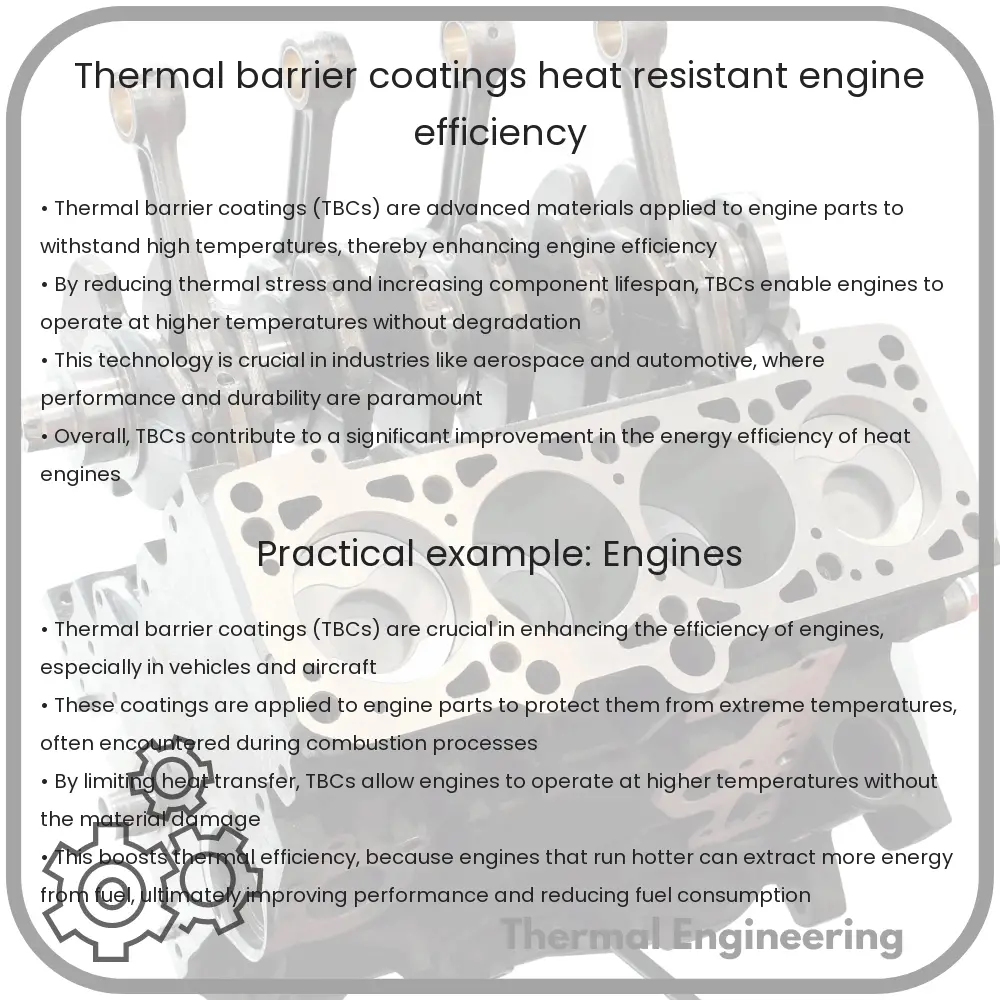
Thermal Barrier Coatings (TBCs) play a pivotal role in the field of engineering, especially in enhancing the efficiency and performance of high-temperature systems such as gas turbines, aero-engines, and automotive engines. These advanced coating systems are specifically designed to protect components from excessive heat by providing a thermally resistant layer. This not only extends the lifespan of the components but also improves the overall efficiency of the engine by allowing for higher operating temperatures.

Composition and Functionality of Thermal Barrier Coatings

TBCs are generally composed of materials that have low thermal conductivity, high stability at elevated temperatures, and good thermal shock resistance. The most commonly used material for TBCs is yttria-stabilized zirconia (YSZ). YSZ is effective because it maintains its stability and insulating properties at very high temperatures, up to 1200°C or more.

The structure of a typical TBC system includes a bond coat and a ceramic top coat. The bond coat, often made of metallic alloys, serves to improve the adhesion of the ceramic layer to the substrate and to protect the underlying metal from oxidation and corrosion. The ceramic layer, which is the actual thermal barrier, drastically reduces the heat transfer to the metal component.

Impact on Engine Efficiency

By insulating the metal components of an engine from extreme heat, TBCs allow the engine to operate at higher temperatures. This is crucial because the efficiency of a thermal engine is related to the temperature difference between the hot and cold parts of the system. According to the thermodynamic principle known as the Carnot efficiency, the efficiency (\(\eta\)) of a thermal engine is given by:

\[\eta = 1 – \frac{T_c}{T_h}\]

where \(T_c\) is the temperature of the cold reservoir and \(T_h\) is the temperature of the hot reservoir. By using TBCs to increase \(T_h\), the efficiency of the engine can be significantly improved without the risk of heat-induced damage.

Applications of Thermal Barrier Coatings

  • Gaseous Turbines: In turbines, TBCs reduce the temperature of the metallic parts, enhancing the durability and efficiency of the engine.
  • Aero-Engines: Similar to gaseous turbines, TBCs in aero-engines enable higher operating temperatures, which improves fuel efficiency and performance.
  • Automotive: TBCs are used in piston tops, cylinder heads, and exhaust systems in the automotive industry to improve engine efficiency and durability while reducing emissions.

Challenges and Future Perspectives

Despite their numerous benefits, the application of TBCs faces certain challenges. The principal issue is the durability of the coatings under extreme operating conditions. Over time, the thermal cycles can cause cracks and delamination of the ceramic layer, leading to failure of the barrier. Advances in materials science are focused on improving the toughness and adherence of these coatings to extend their life and reliability further.

Furthermore, research continues to explore alternative materials such as new ceramics and composites that can withstand higher temperatures and offer better performance. These developments promise to push the boundaries of existing engine designs toward higher efficiency and lower environmental impact.

In conclusion, Thermal Barrier Coatings represent a critical technology in high-temperature engineering applications. By allowing engines to operate at higher temperatures without compromising the structural integrity of metal components, TBCs significantly enhance the efficiency and longevity of engines. With ongoing research and technological advancements, the scope and efficacy of these coatings are only expected to improve, paving the way for more sustainable and efficient thermal systems.
Polyurethane Foam | Insulation, Thermal Stability

Learn about polyurethane foam’s insulation properties, thermal stability, and versatile applications in construction and manufacturing.

Polyurethane Foam | Insulation, Thermal Stability

Understanding Polyurethane Foam: Insulation and Thermal Stability

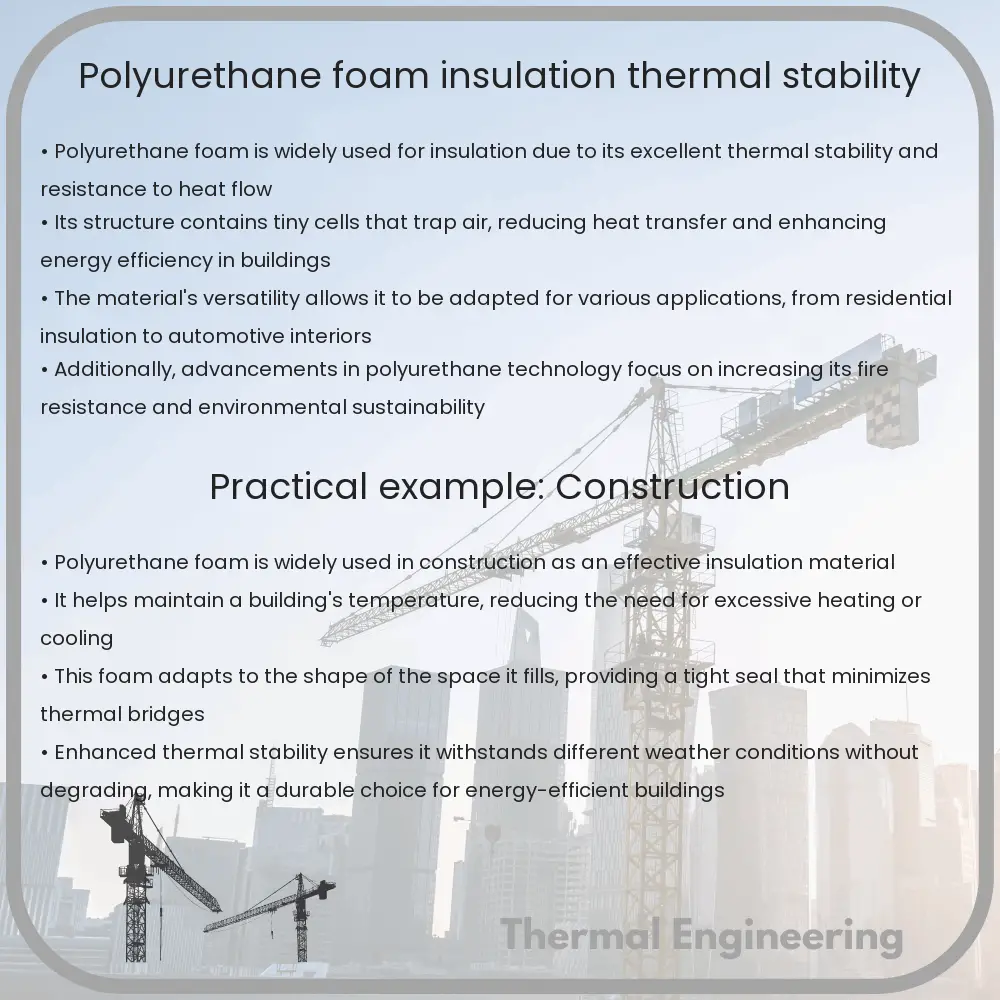
Polyurethane foam is a versatile material widely used in the construction and manufacturing industries due to its excellent insulation properties and thermal stability. This material is a polymer composed of organic units joined by carbamate (urethane) links, and it can be flexible or rigid, making it suitable for a wide range of applications. In this article, we will explore the properties of polyurethane foam that make it an exceptional insulator and its behavior under various temperature conditions.

Insulation Properties of Polyurethane Foam

Polyurethane foam is highly valued for its insulation capabilities. It works by trapping gas in its cellular structure, which reduces the amount of heat transfer between materials or environments. Here are some key points regarding its insulation properties:

  • High R-value: Polyurethane foam has a high thermal resistance (R-value), which measures an insulation material’s ability to resist heat flow. The higher the R-value, the better the insulation performance. Polyurethane foam often exhibits R-values ranging from 5.5 to 6.5 per inch of thickness.
  • Air sealing: Due to its expansive nature, polyurethane foam effectively seals gaps and cracks in building envelopes, minimizing air leaks and improving overall energy efficiency.
  • Moisture resistance: Closed-cell polyurethane foam provides excellent moisture resistance, thereby reducing the risk of mold growth and water damage within insulated spaces.

Thermal Stability of Polyurethane Foam

The thermal stability of a material refers to its ability to maintain its properties at high or low temperatures. Polyurethane foam exhibits good thermal stability within a specific temperature range, which is crucial for many applications, particularly in building and construction. Below are important aspects of its thermal behavior:

  • Temperature range: Typically, polyurethane foam can withstand temperatures from -60°C to about 100°C. However, variations exist depending on the formulation and the presence of flame retardants or other additives.
  • Thermal degradation: When exposed to temperatures above its stability range, polyurethane foam may degrade, leading to a loss of mechanical properties and structural integrity. This degradation often releases gases and can contribute to the material’s flammability.
  • Flammability: Polyurethane foam is generally flammable unless treated with fire retardants. In the presence of fire, it can release toxic gases, making fire safety a crucial consideration in applications involving polyurethane foam.

Applications of Polyurethane Foam

Thanks to its insulating properties and thermal stability, polyurethane foam is used in various applications:

  1. Building insulation: Used for insulating walls, roofs, and floors, polyurethane foam helps reduce energy consumption in heating and cooling systems, leading to enhanced comfort and lower utility bills.
  2. Refrigeration: Polyurethane foam is critical in the insulation of refrigerators and freezers, helping to maintain the necessary low temperatures while minimizing energy use.
  3. Automotive: In vehicles, polyurethane foam contributes to thermal and acoustic insulation, improving passenger comfort and reducing external noise.

In conclusion, polyurethane foam is a highly effective insulation material with substantial benefits in thermal management and energy efficiency. Its versatile properties allow for widespread use across various industries, making it a key component in modern manufacturing and construction processes. Understanding the material’s insulation ability and thermal limits helps in optimizing its application and enhancing safety measures where needed.

Silica Aerogel | Low Density, Superior Thermal Insulation

Explore the unique properties and diverse applications of silica aerogel, a lightweight, highly insulating material known as “frozen smoke.

Silica Aerogel | Low Density, Superior Thermal Insulation

Introduction to Silica Aerogel

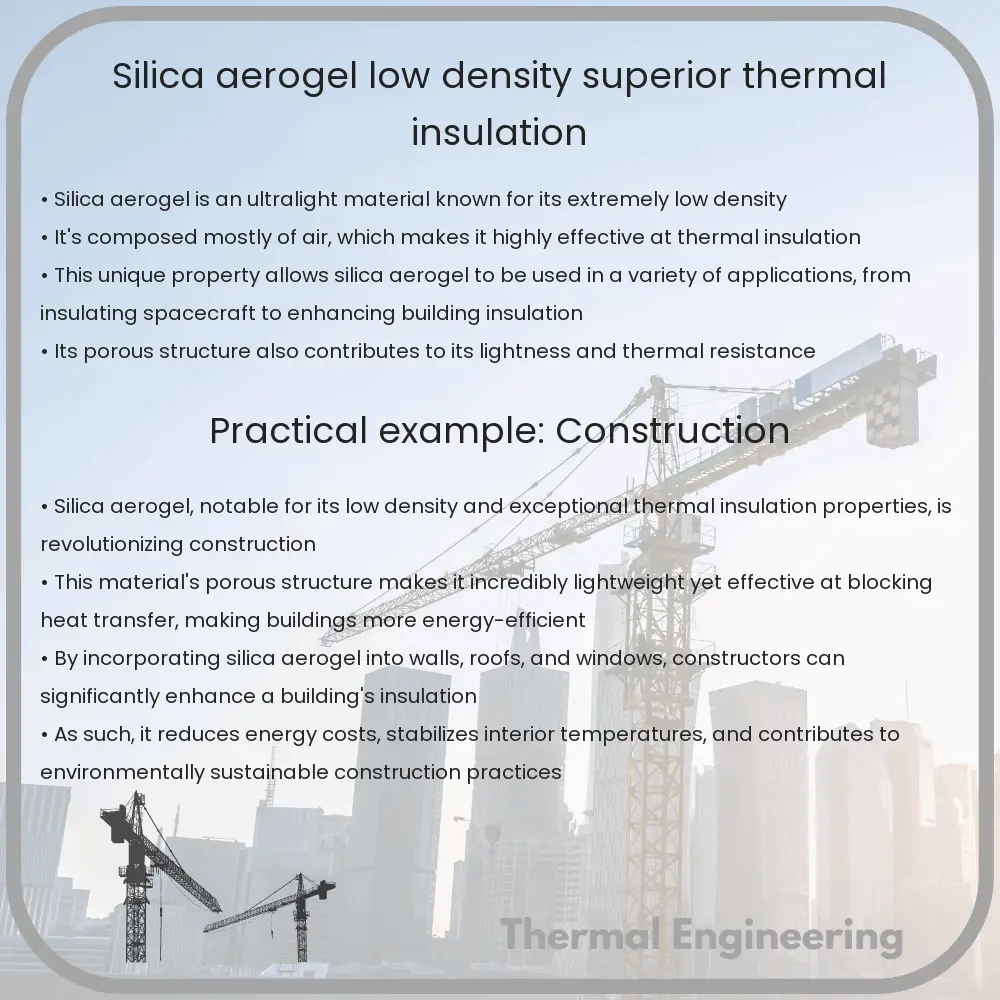
Silica aerogel is a remarkable material known for its extremely low density and superior thermal insulating properties. Often referred to as “frozen smoke” due to its translucent appearance, silica aerogel is composed of over 95% air, making it one of the lightest solid materials available. Its structure is primarily made up of silicon dioxide, similar to ordinary glass, but it is organized in a highly porous, lattice-like manner.

Properties and Manufacturing

One of the most outstanding features of silica aerogel is its low density, which typically ranges from 0.005 g/cm3 to about 0.020 g/cm3. This property results from its 90 to 99.8 percent porosity. The manufacturing of silica aerogel involves the process of sol-gel chemistry followed by supercritical drying. This allows the liquid in the gel to be removed without causing the structure to collapse under surface tension, as opposed to what happens with ordinary evaporation.

Applications of Silica Aerogel

  • Thermal Insulation: The most celebrated property of silica aerogel is its ability to insulate. With thermal conductivity values ranging from 0.012 to 0.020 W/m*K, it is extensively used in high-performance insulation, from advanced buildings to aerospace engineering.
  • Aerospace Engineering: Due to its light weight and insulating properties, it’s used in the Mars Rover and space suits. The material’s protective attributes are essential in extreme environments.
  • Day-Lighting: Translucent aerogel panels can allow for natural lighting while providing insulation, useful in architectural applications to enhance energy efficiency.
  • Oil Spill Cleanup: The hydrophobic nature of some aerogels makes them suitable for absorbing oil spills while repelling water.

Challenges and Limitations

Despite its useful properties, silica aerogel also faces some challenges in broader application. Its manufacture is expensive and complex, limiting its accessibility and widespread use. Furthermore, silica aerogels are brittle and can easily shatter under pressure, a trait which requires consideration in applications where material integrity is critical. However, ongoing research is directed towards enhancing the mechanical properties and reducing production costs of silica aerogels.

The Future of Silica Aerogel

The future of silica aerogel looks promising as advancements in technology may allow for more cost-effective production and enhanced durability. More widespread use in everyday applications like home insulation and clothing could be on the horizon, transforming the way we utilize this extraordinary material. Researchers are continuously exploring novel methods to improve and capitalize on the unique properties of silica aerogel, indicating a bright outlook for its applications across various sectors.

Silica aerogel remains one of the most fascinating materials in the field of materials science and engineering, combining remarkable properties with potential for significant impact in a variety of fields.

Epoxy Resins | Thermal Stability, Electrical Insulation

Explore the key properties of epoxy resins, focusing on their thermal stability and electrical insulation for various industrial applications.

Epoxy Resins | Thermal Stability, Electrical Insulation

Understanding Epoxy Resins: Thermal Stability and Electrical Insulation Properties

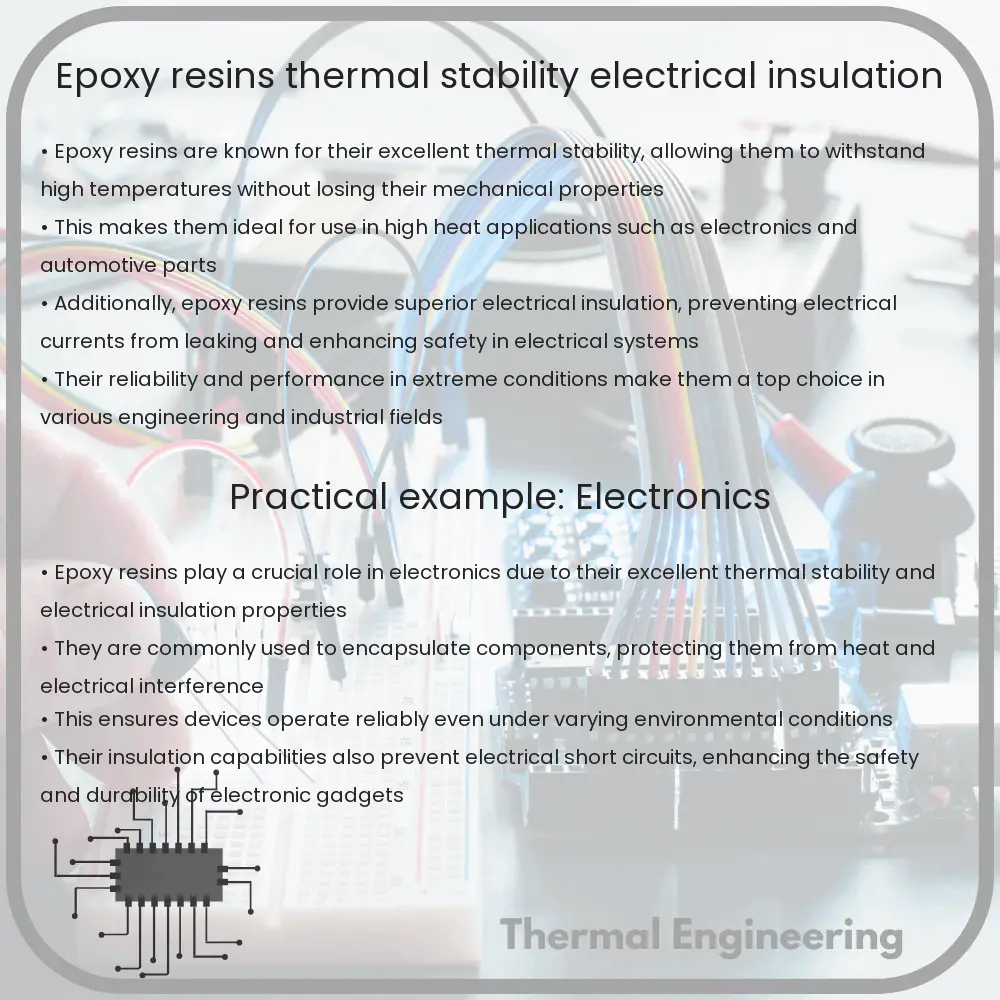
Epoxy resins are a class of synthetic thermosetting polymers, often recognized for their outstanding mechanical properties, strong adhesion, and high thermal and chemical resistance. Central to their utility in various industrial applications are their thermal stability and electrical insulation characteristics. This article delves into these specific properties, explaining their significance and applications.

Thermal Stability of Epoxy Resins

Thermal stability is a measure of a material’s ability to retain its physical and chemical properties at elevated temperatures. Epoxy resins are known for high thermal stability, which makes them suitable for applications involving prolonged exposure to heat.

The thermal stability of epoxy resins is influenced by several factors, including their chemical structure and the curing agents used. Epoxy resins are made by reacting epoxide monomers with a curing agent, each of which can affect the thermal properties. For example, the use of aromatic amine curing agents often enhances the thermal stability compared to aliphatic amines.

The glass transition temperature (Tg) is a critical parameter in defining the thermal stability of epoxy resins. Tg is the temperature at which the polymer transitions from a hard, glassy material to a more rubbery, flexible form. Epoxy resins typically have a high Tg, which permits their use in environments subjected to high thermal loads. Above the Tg, the mechanical properties of the epoxy system decline significantly; hence, knowing the Tg is essential for ensuring that the material performs reliably under operating conditions.

Electrical Insulation Properties of Epoxy Resins

Epoxy resins are also valued for their excellent electrical insulation properties. These features make them ideal for a wide range of electrical and electronic applications, including insulators, encapsulants, and conformal coatings.

The dielectric constant and dielectric strength are two critical parameters that define the electrical insulating quality of a material. Epoxy resins typically have a low dielectric constant (ranging between 3 and 4) and high dielectric strength. These properties are vital in preventing electrical breakdowns, even at high voltages and under intense electrical fields.

Additionally, epoxy resins do not readily absorb moisture, which can significantly degrade electrical properties. This makes them especially useful in humid or wet environments, where other materials might fail to provide reliable insulation.

Applications

  • Electronic Components: Epoxy resins are used as the primary insulating material in transformers, motors, and capacitors. They help prevent electrical failures, thereby enhancing the durability and safety of electronic components.
  • Composite Materials: In aerospace and automotive sectors, epoxy resins are used to manufacture composite materials. Their thermal stability allows them to withstand the high temperatures often encountered in these environments.
  • Protective Coatings: Epoxy coatings are applied to protect metal parts from corrosion and wear, especially those that are exposed to harsh chemical environments or extreme temperatures.

Conclusion

Epoxy resins are indispensable in various industrial applications due to their excellent thermal stability and superior electrical insulating properties. Understanding these properties helps in selecting the right type of epoxy resin for specific applications, ensuring safety, reliability, and performance. As materials technology continues to advance, the role of epoxy resins is set to become even more critical across a broad spectrum of engineering fields.

Thermal characteristics of biodegradable materials

Explore the thermal characteristics of biodegradable materials, including conductivity, stability, and heat capacity, crucial for sustainable applications.

Thermal characteristics of biodegradable materials

Understanding the Thermal Characteristics of Biodegradable Materials

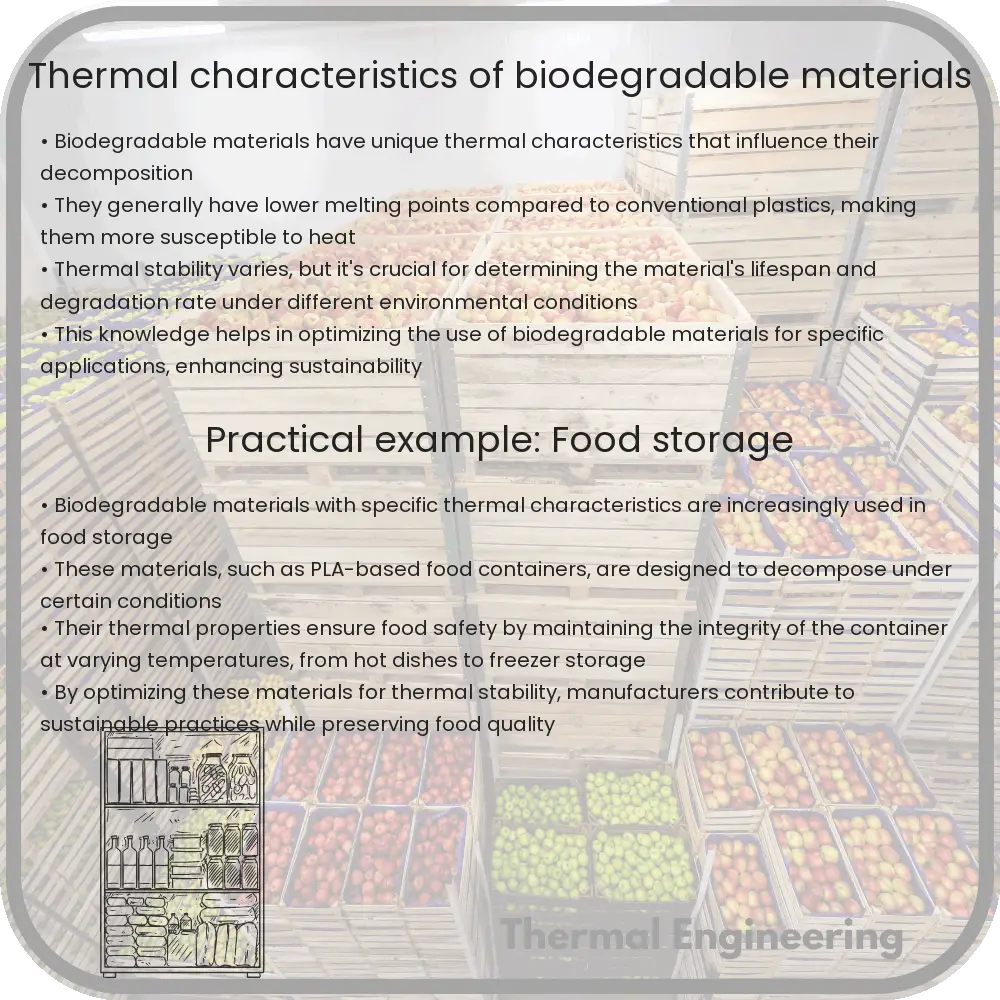
Biodegradable materials are increasingly touted as sustainable alternatives to conventional non-degradable materials due to their ability to break down naturally and reduce waste. However, their thermal characteristics are crucial in determining their viability and performance in various applications. This article explores how biodegradable materials interact with heat and what this means for their use in products and packaging.

Thermal Conductivity

Thermal conductivity is a measure of a material’s ability to conduct heat. It is crucial in determining how a material behaves in applications where heat transfer is involved. For biodegradable materials, thermal conductivity varies significantly depending on the base biological resources used (such as plant fibers, starch, or proteins). Typically, these materials have lower thermal conductivity compared to synthetic polymers, which can be an advantage in applications requiring insulation.

Thermal Stability

Thermal stability refers to a material’s ability to maintain its structure and properties when exposed to heat. Biodegradable materials often have lower thermal stability than their synthetic counterparts. This characteristic limits their use in high-temperature applications but makes them suitable for products where lower temperature conditions prevail, such as disposable food containers and short-use packaging.

The degradation temperature of common biodegradable materials like polylactic acid (PLA) and starch-based polymers typically ranges from 150°C to 400°C. This property is essential for processing and recycling purposes where controlled thermal decomposition is used to reclaim the constituent biochemicals or for energy recovery.

Specific Heat Capacity

The specific heat capacity is the amount of heat required to change a unit mass of a material’s temperature by one degree Celsius. Generally, biodegradable materials have a comparable specific heat capacity to traditional materials, allowing them to absorb heat energy effectively. This property is particularly important in consumer applications such as biodegradable pots for plants, which can withstand fluctuations in environmental temperatures.

Factors Influencing Thermal Properties

  • Composition: The thermal properties of biodegradable materials can be significantly altered by their chemical and physical composition. For example, the inclusion of natural fiber reinforcements in biodegradable plastics can enhance their thermal stability and conductivity.
  • Processing Techniques: The methods used to process biodegradable materials, such as extrusion or injection molding, can affect their thermal characteristics. Process optimization is often necessary to enhance the thermal properties and overall performance of the final product.
  • Additives: The use of additives is a common approach to modify the thermal characteristics of biodegradable materials. Plasticizers, fillers, and other additives can help improve the thermal stability, conductivity, and resistance to degradation at specific temperatures.

Applications and Future Trends

With growing environmental awareness, the applications of biodegradable materials are expanding. Their unique thermal properties facilitate their use in sectors like packaging, agriculture, and textiles. However, continuous research is needed to improve their thermal characteristics, making them more versatile and suitable for a broader range of applications. Advances in biochemical technologies and composite material design are likely to further enhance the thermal performance and applicability of biodegradable materials in the future.

In conclusion, while the thermal characteristics of biodegradable materials currently pose some limitations, ongoing research and technological advancements are expected to widen their applicability, promoting wider adoption in sustainable manufacturing practices.

Expanded Polystyrene | Thermal Insulation, Packaging

Learn about Expanded Polystyrene (EPS), its uses in insulation and packaging, and its environmental impacts.

Expanded Polystyrene | Thermal Insulation, Packaging

Understanding Expanded Polystyrene (EPS)

Expanded Polystyrene, commonly referred to as EPS, is a lightweight, rigid plastic foam insulation material produced from solid beads of polystyrene. The process of manufacturing EPS involves the expansion of these beads under heat, using steam, which ultimately molds them into blocks or custom shapes suited to specific applications. EPS is particularly noted for its thermal insulation properties, shock absorption, and durability, making it a widely used material in various industries such as construction and packaging.

Thermal Insulation Properties of EPS

EPS is an excellent insulator, which is why it is often used in building construction, notably for insulation of walls, floors, and roofs. The insulating property of EPS stems from its structure, composed mostly of air trapped within the polystyrene matrix (approximately 98% air). This high air content is what effectively reduces heat transfer, helping maintain temperature stability inside buildings and reducing energy consumption for heating or cooling.

  • Resistance to Heat Flow: The thermal resistance, or R-value, measures an insulating material’s capacity to resist heat flow. The higher the R-value, the greater the insulation effectiveness. EPS typically has an R-value of around 3.6 to 4.0 per inch of thickness, although this can vary based on the density of the material.
  • Moisture Resistance: Unlike some insulating materials, EPS does not absorb water, which helps retain its thermal efficiency even in damp conditions.
  • Durability: EPS insulation is stable and durable, maintaining its performance characteristics over long periods, making it a cost-effective insulation solution.

Uses of EPS in Packaging

EPS is also widely used in the packaging industry owing to its lightweight, cushioning characteristics that provide high-impact resistance which helps protect products during shipping and handling. Its attributes make it ideal for the packaging of items ranging from electronics to perishable goods.

  1. Protective Packaging: EPS can be molded into virtually any shape or size and adjusts to the form of the product it protects, providing a custom fit that enhances shock absorption and protection.
  2. Thermal Packaging: For goods that require temperature control, such as foods or pharmaceuticals, EPS is an effective insulator that helps maintain the temperature integrity, ensuring products remain fresh during transit.
  3. Cost-Effectiveness: It is economical to produce and lighter than many alternative materials, potentially reducing shipping costs.

Environmental Considerations

Despite its benefits, the use of EPS has raised environmental concerns, primarily related to its disposal and non-biodegradable nature. EPS can take many years to decompose, and it is traditionally not as straightforward to recycle as other materials. However, strides are being made in the recycling processes for EPS, and many industries are exploring alternatives for improved sustainability.

In conclusion, expanded polystyrene (EPS) is a versatile material that plays a critical role in thermal insulation in the construction industry and as protective packaging in the shipping industry. While it offers numerous benefits including cost efficiency, insulation performance, and product protection, addressing its environmental impact continues to be a priority.

Mineral Wool | Thermal & Acoustic Insulation, Fire Resistant

Learn about mineral wool, a versatile insulation material known for its thermal and acoustic properties and fire resistance.

Mineral Wool | Thermal & Acoustic Insulation, Fire Resistant

Understanding Mineral Wool: A Versatile Insulation Material

Mineral wool is a widely used insulation material that offers an array of benefits in terms of thermal and acoustic insulation, as well as fire resistance. This material, composed primarily from natural rock or industrial waste, is vital in building construction, industrial applications, and HVAC systems for its efficiency in controlling temperatures, reducing energy costs, and enhancing building safety.

Composition and Production of Mineral Wool

Mineral wool can be broadly classified into two types: rock wool and slag wool. Rock wool is made from basalt, diabase or other volcanic rocks, while slag wool is produced primarily from the slag waste of steel mills. During manufacture, these materials are melted at approximately 1600°C to 1700°C, and then spun into fibers. This process involves the use of a spinneret, which rapidly rotates to form fibrous strands that are then cooled, bundled, and cut into usable forms such as rolls or slabs.

Thermal Insulation Properties

The most prominent feature of mineral wool is its capability to insulate buildings and structures from external temperatures. Thermal insulation is achieved due to the entrapment of air within the fibrous structure of the material, reducing heat transfer by conduction. The effectiveness of mineral wool for thermal insulation can be measured using its thermal conductivity, generally ranging between 0.034 W/m•K and 0.040 W/m•K, making it a superior insulator.

Acoustic Insulation Benefits

Mineral wool is also adept at reducing noise pollution, enhancing the acoustic comfort inside buildings. Its dense fibrous structure helps in absorbing sound waves, thereby diminishing the sound that passes through walls, floors, and ceilings. This characteristic is particularly beneficial in settings such as studios, offices, and residential areas where noise reduction is crucial.

Fire Resistance of Mineral Wool

Another significant advantage of mineral wool is its inherent fire resistance. Mineral wool can withstand temperatures of over 1000°C without melting, which makes it a non-combustible insulation material. When installed properly, mineral wool can provide an effective fire barrier, thereby preventing the spread of flames and contributing significantly to building safety during a fire emergency.

Environmental Impact and Sustainability

Mineral wool is considered a sustainable material due to its recyclable nature and the use of industrial waste as one of its primary ingredients. By recycling steel slag and other waste products as raw materials, the production of mineral wool contributes to waste reduction and promotes resource efficiency. Furthermore, its durability and long lifespan prevent frequent replacements and reduce the environmental impact associated with manufacturing and disposing of insulation materials.

Applications of Mineral Wool

  • Building Insulation: Used in roofs, walls, and floors to improve thermal performance and enhance acoustic comfort.
  • Industrial Applications: Employed in the insulation of industrial equipment such as boilers, ovens, and furnaces to protect against extreme temperatures and fire.
  • Fire Safety: Implemented in fire doors, firestops, and other fire protective applications.
  • Acoustics: Used in soundproofing in studios, theaters, and concert halls.

Mineral wool’s multifaceted properties make it an indespensible material in a variety of applications across the construction and manufacturing industries. By improving energy efficiency, audio comfort, and fire safety, it plays a crucial role in modern engineering and sustainable development practices.

Polyimide Film | Heat Resistance, Electrical Insulation

Learn about polyimide film, a high-performance polymer known for its exceptional heat resistance and electrical insulation properties, crucial in various high-tech industries.

Polyimide Film | Heat Resistance, Electrical Insulation

Understanding Polyimide Film: Heat Resistance and Electrical Insulation Properties

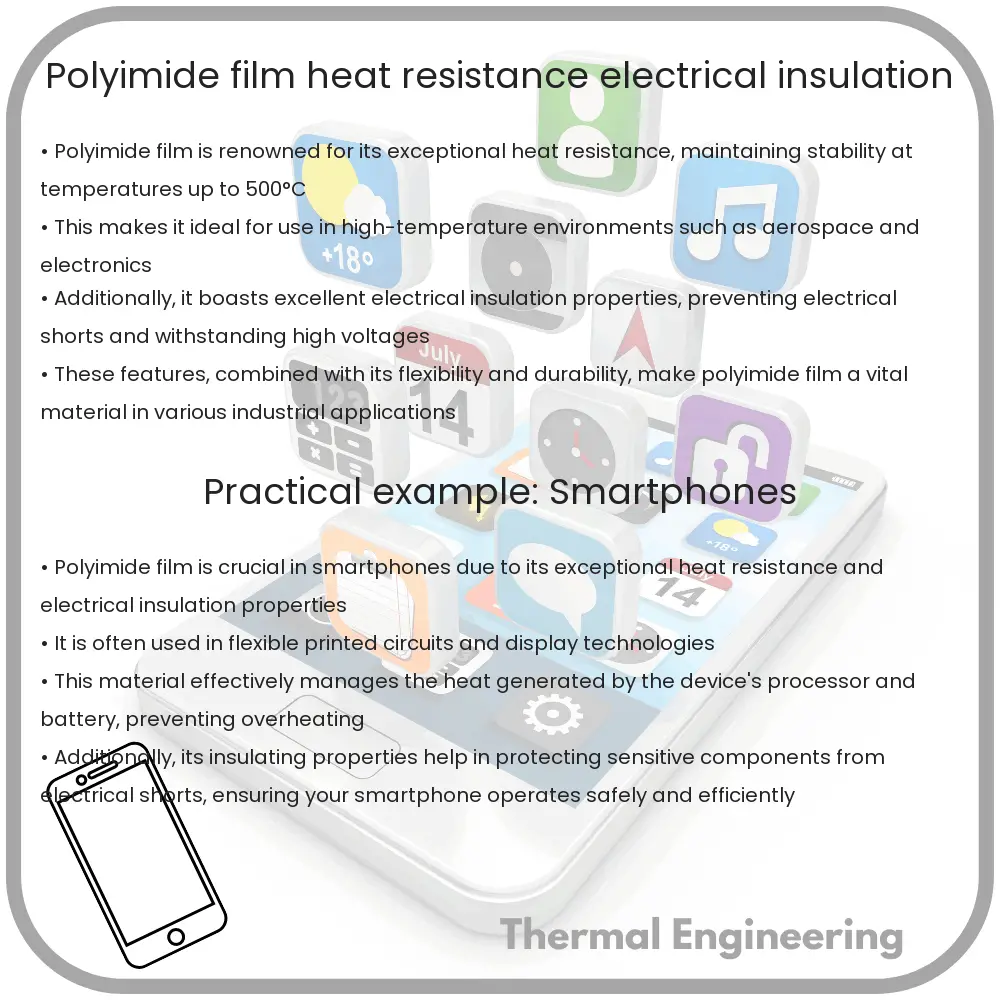
Polyimide film is a high-performance polymer material known for its impressive heat resistance and electrical insulation properties. This material plays a crucial role in various industrial and consumer applications, making it a vital component in fields ranging from electronics to aerospace engineering.

Key Properties of Polyimide Film

Polyimide films are derived from polymers characterized by imide monomers. The typical structure of polyimide allows for a range of mechanical and physical properties that are highly valued in complex engineering applications. Two of the most significant properties are:

  • Heat Resistance: Polyimide films are capable of withstanding extreme temperatures, maintaining stability in both high heat and sub-zero conditions. These films typically operate effectively in temperatures ranging from -269°C to about 400°C. This wide temperature range makes polyimide an ideal choice for applications in harsh environments.
  • Electrical Insulation: Exceptional electrical insulation is another hallmark of polyimide film. This property is crucial in the manufacture of electronic devices, where it helps prevent electrical shocks and shorts between conductive parts. The dielectric constant of polyimide films generally ranges from 3.0 to 3.5 at 1 MHz, making them suitable for various electronic applications.

Applications of Polyimide Film

Thanks to their robust characteristics, polyimide films are utilized in a multitude of applications, including:

  • Electronics: In the electronics industry, polyimide films are widely used as an insulating layer in flexible printed circuits, cables, and other high-performance components. Their ability to maintain integrity under high temperatures contributes to the reliability and longevity of electronic devices.
  • Aerospace: The aerospace sector benefits from the lightweight and high thermal stability of polyimide films, using them in critical components such as insulation blankets, gaskets, and more.
  • Automotive: Within the automotive industry, polyimide films serve as heat barriers and insulators in sensors and electronic components, particularly in environments exposed to high thermal cycling.

Challenges and Future Outlook

Despite their outstanding properties, the application of polyimide films can be limited by factors like cost and processability. Moreover, their complete environmental impact, particularly in terms of disposal and recycling, is still under study.

Looking ahead, ongoing research and development are focused on enhancing the properties of polyimide films and expanding their applicability. Innovations aim to produce even more heat-resistant materials and to decrease costs, which could open up new markets for this versatile material.

Polyimide films, with their unparalleled thermal resistance and electrical insulation capabilities, continue to shape the future of multiple high-tech industries, proving that advanced materials hold the key to engineering solutions across a broad spectrum of applications.

Thermal Interface Materials | Heat Transfer, Device Cooling

Learn about thermal interface materials (TIMs), crucial for enhancing heat transfer in electronic devices to improve their efficiency and longevity.

Thermal Interface Materials | Heat Transfer, Device Cooling

Understanding Thermal Interface Materials: Essentials in Heat Transfer and Device Cooling

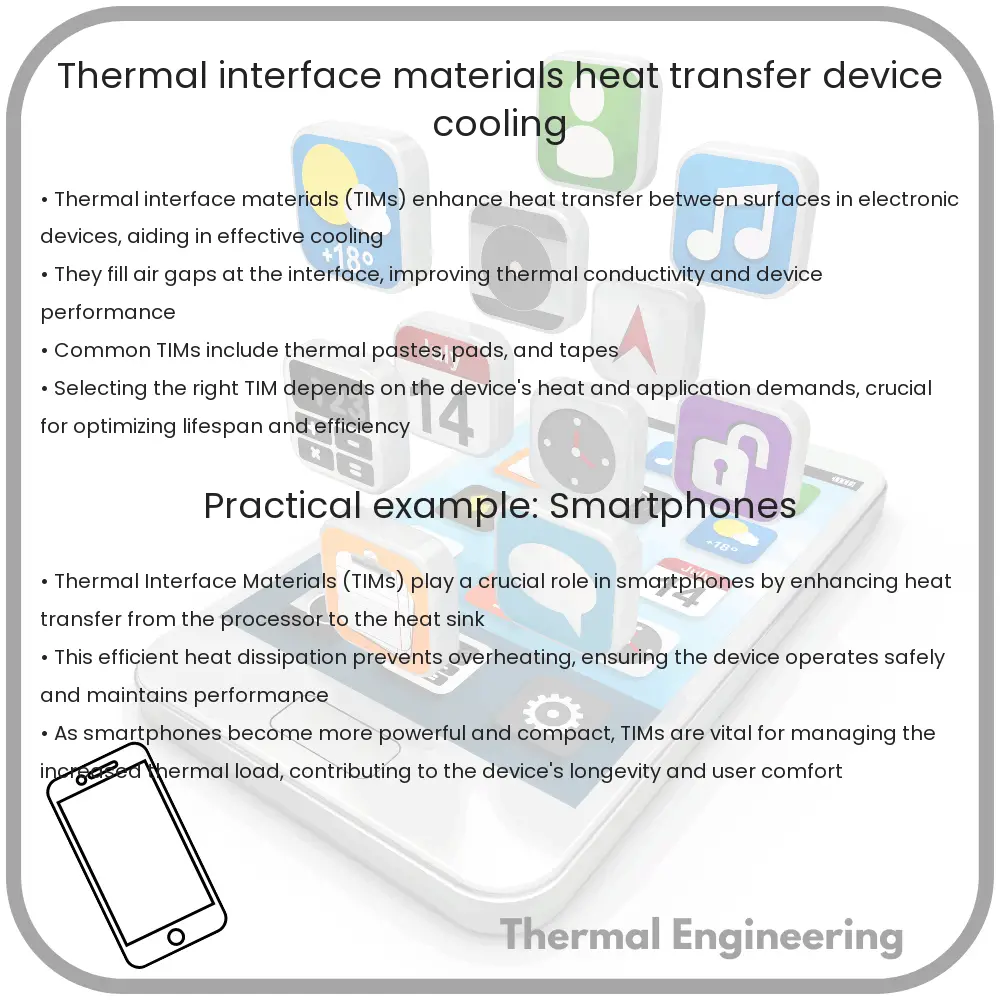
Thermal interface materials (TIMs) play a crucial role in the field of electronics and mechanical engineering, ensuring devices operate within safe temperature limits. These materials enhance the conductivity between heat-producing components and heat dissipation devices like heat sinks or cooling plates. Understanding the properties and applications of various TIMs helps in designing more efficient and longer-lasting electronic systems.

What are Thermal Interface Materials?

Thermal interface materials are substances inserted between two surfaces to enhance thermal conductivity. They serve to fill the air gaps caused by imperfect surface finishes, which can significantly reduce heat transfer efficiency. The primary purpose of TIMs is to provide a path with lower thermal resistance than the air, allowing for effective heat flow from the component (such as a CPU or a power transistor) to the heat sink.

Common Types of Thermal Interface Materials

  • Thermal Greases: Also known as thermal paste, these are viscous compounds that you can spread over the contact surface. They are primarily made from zinc oxide or silicon compounds and offer low thermal resistance.
  • Thermal Pads: These are solid sheets of material, pre-cut to fit and easier to handle than greases. They compensate for larger gaps due to their solid form but might have slightly higher thermal resistance.
  • Phase Change Materials: Initially solid at room temperature, these materials melt and conform to surface irregularities when heated up, offering low thermal resistance at operating temperatures.
  • Thermal Adhesives: These are either epoxy or silicone-based adhesives that not only help in thermal management but also mechanically fix components in place.
  • Thermal Tapes: Adhesive-backed tapes used for lighter, less heat-intensive components. They are easy to use but generally offer higher thermal resistance than greases or adhesives.

How Do Thermal Interface Materials Work?

The effectiveness of a TIM is measured by its ability to conduct heat, which is quantified by its thermal conductivity (typically in units of W/m*K). The thermal conductivity of a material indicates how readily it transfers heat. Here’s a simplified representation of the heat transfer equation:

\[ Q = \frac{{k \times A \times \Delta T}}{{d}} \]

  • Q is the heat transfer rate (Watts),
  • k is the thermal conductivity of the TIM,
  • A is the contact area (m2),
  • ΔT is the temperature difference across the TIM (K),
  • d is the thickness of the TIM (m).

In this context, a higher thermal conductivity and larger contact area (A), as well as a thinner layer (decreasing d), and a higher temperature difference (ΔT), all contribute to increasing the heat transfer rate, Q.

Applications of Thermal Interface Materials

Thermal interface materials find extensive use across various segments of electronics and mechanical design, particularly in:

  1. Computer Hardware: In CPU/GPU cooling to dissipate heat efficiently and prevent overheating.
  2. Power Electronics: In devices like voltage regulators, and inverters, especially in automotive and industrial applications.
  3. Telecommunications: Equipment where reliability and thermal management are critical under varying environmental conditions.
  4. Consumer Electronics: In LED lighting systems, where heat needs to be managed to maintain light efficacy and longevity of the LEDs.

By helping to maintain component temperatures within operational limits, TIMs contribute significantly to the reliability and performance of electronic devices.

Choosing the Right Thermal Interface Material

When selecting a thermal interface material, factors to consider include the thermal conductivity required, the assembly process (for example, whether reworkability is important), the operating temperature range, and the mechanical stresses involved. The compatibility of the TIM with both the heat generating component and the heat sink is also crucial.

Ultimately, the correct selection and application of TIMs can significantly influence the thermal management strategy of a device, impacting both its performance and longevity.

Understanding the basics of thermal interface materials allows engineers and designers to make informed decisions about the most appropriate cooling solutions for their specific applications.

Mica | Thermal Insulation, Electrical Appliances

Learn about mica, a mineral crucial for thermal insulation and electrical appliances, known for its high heat and electrical resistance.

Mica | Thermal Insulation, Electrical Appliances

Understanding Mica and Its Role in Thermal Insulation and Electrical Appliances

Mica is a naturally occurring mineral known for its unique physical properties, which make it highly valuable in various industrial applications, particularly in thermal insulation and electrical appliances. This article explores the characteristics of mica, its uses in thermal insulation, and its role in electrical appliances.

What is Mica?

Mica refers to a group of silicate minerals that can be peeled into thin, translucent sheets. These minerals are distinguished by their perfect basal cleavage, which allows them to split into flexible sheets with a high aspect ratio. Mica sheets are resistant to heat, electricity, and chemical attack, making them ideal for various applications. The most common types of mica used industrially are muscovite (potassium mica) and phlogopite (magnesium mica).

Properties of Mica

  • Electrical Insulation: Mica has excellent dielectric strength. Its ability to withstand electric fields without breaking down makes it a preferred material for electrical insulation.
  • Thermal Resistance: Mica is highly resistant to heat and can withstand temperatures up to 600°C, depending on the type of mica and its treatment. This property is crucial for applications involving high heat.
  • Chemical Stability: Being chemically inert, mica is stable when exposed to most acids, alkalis, and solvents. It maintains its form and functionality without reacting chemically.
  • Mechanical Strength: Despite its flaky appearance, mica is fairly tough, flexible, and elastic, allowing it to endure considerable bending and stretching.

Mica in Thermal Insulation

In the realm of thermal insulation, mica is a standout material used to manage heat in appliances like stoves, heaters, and hairdryers. It’s capable of acting as a barrier in high-temperature zones due to its excellent thermal resistance and insulating properties. For instance, mica sheets are often utilized as an insulating layer between the heat generating elements and the outer surfaces of an appliance, preventing the transfer of heat and protecting adjacent components from thermal damage. This application is crucial in enhancing both safety and energy efficiency in heat-generating devices.

Role of Mica in Electrical Appliances

In electrical applications, the primary use of mica is as an insulator and a dielectric in electrical and electronic equipment. Thanks to its high dielectric strength and resistance to electrical discharge, mica is widely used in capacitors, high-voltage electrical switches, and as an insulating film in motors and generators. It is especially beneficial in high-voltage applications and environments with high temperatures where organic insulators would fail. The insulation properties of mica help in increasing the longevity and safety of electrical components.

Conclusion

Mica plays a pivotal role in both thermal insulation and electrical engineering fields due to its myriad of impressive properties like thermal resistance, electrical insulation capability, and chemical stability. Its application in day-to-day devices and industrial equipment underscores its importance and reliability as a material. As technology evolves, the uses of mica are likely to expand, further entrenching its position in the engineering materials landscape.