Facebook Instagram Youtube Twitter

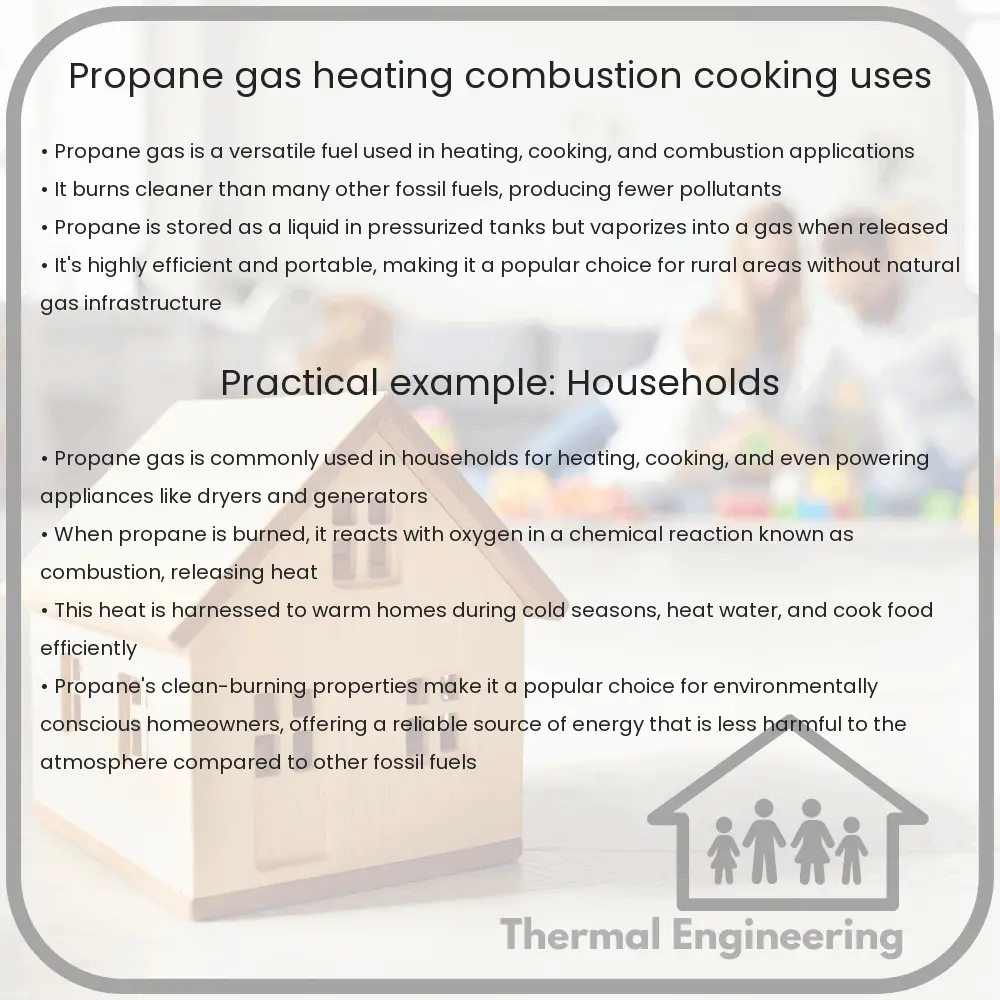
Propane Gas | Heating, Combustion & Cooking Uses

Learn about propane gas, its properties, uses in heating and cooking, safety tips, and environmental impacts.
Propane Gas | Heating, Combustion & Cooking Uses

Understanding Propane Gas and Its Applications

Propane gas, often simply called propane, is a versatile hydrocarbon used widely in heating, cooking, and beyond. Chemical formula C3H8, propane is a gaseous member of the alkane family, derived during natural gas processing and oil refining. Its convenient storage and transportation in liquid form under pressurized conditions make it a popular choice for a range of applications.

Properties and Combustion of Propane

Propane is a colorless and odorless gas; however, an odorant is typically added for safety reasons to help detect leaks. It is heavier than air, which means it tends to settle in low spaces, posing a risk of suffocation or explosion if not properly ventilated. Propane burns with a clean flame and under optimal conditions, it produces carbon dioxide and water:

C3H8 + 5O2 → 3CO2 + 4H2O

This reaction releases significant amounts of energy, making propane an efficient fuel source.

Heating Uses of Propane

One of the major uses of propane is in residential and industrial heating systems. Propane furnaces offer robust heating solutions, known for their reliability and capability to heat spaces efficiently, even in very cold environments. Compared to electric heaters, propane heating systems can be more economical depending on local utility costs. Additionally, propane is employed in outdoor heating systems like patio heaters and in temporary heating during construction activities.

Cooking with Propane

Propane is extensively used in cooking applications both in residential and professional settings. Its ability to provide instant, controllable heat makes it preferable over electricity for many chefs who demand precision in temperature control. Propane stoves are common in areas where natural gas is not readily available. Moreover, because they don’t rely on electrical power, propane cooking appliances are invaluable during power outages.

Safety Measures and Handling of Propane

While propane is generally safe when handled correctly, improper use can lead to dangerous situations. It is crucial to ensure proper installation of propane systems by qualified professionals and regular maintenance to avoid leaks. Properly functioning gas detectors and adequate ventilation are indispensable in spaces where propane is used. Awareness and adherence to safety guidelines can mitigate most risks associated with propane use.

Environmental Impact of Propane

Compared to other fossil fuels, propane is cleaner burning, emitting fewer pollutants and greenhouse gases when combusted. However, as a derivative of non-renewable oil and natural gas, its use still impacts the environment. Research and development continue into more sustainable alternatives, but propane remains a relatively environmentally friendly option among its peers in many applications today.

Conclusion

Propane’s versatility as a fuel for heating and cooking, combined with its relatively eco-friendly profile, ensures its ongoing popularity. By understanding the proper handling, safety measures, and potential environmental impacts, users can effectively integrate propane into various applications responsibly and safely.

Acetylene Gas | Welding, High Flame Temperature & Uses

Learn about acetylene gas (C2H2), its production, properties, uses, and critical safety measures for handling this highly reactive and combustible gas.

Acetylene Gas | Welding, High Flame Temperature & Uses

Introduction to Acetylene Gas

Acetylene, chemically represented as C2H2, is a colorless, combustible gas with a distinctive odor. It is one of the simplest alkyne hydrocarbons and is synthesized commercially by a chemical reaction between calcium carbide and water. Acetylene is particularly notable for its high flame temperature when burned with oxygen, making it a critical component in various industrial processes, especially in welding.

Production of Acetylene

The primary method for producing acetylene is the calcium carbide method where calcium carbide (CaC2) reacts with water (H2O) to produce acetylene (C2H2) and calcium hydroxide (Ca(OH)2). The reaction can be summarized as:

CaC2 + 2H2O → C2H2 + Ca(OH)2

Properties of Acetylene

Acetylene is particularly reactive due to its triple bond structure, contributing to its utility in welding applications. The key properties include:

  • High Flame Temperature: Acetylene burns in oxygen to yield a flame up to 3,150 degrees Celsius (5,700 degrees Fahrenheit), the highest among common hydrocarbon gases.
  • Sensitivity: It is a sensitive compound that requires careful handling, particularly as it becomes unstable and explosive when compressed to high pressures.
  • Solubility: Acetylene is highly soluble in acetone, which helps in safe storage and handling as it can be dissolved in acetone and stored in pressurized gas cylinders.

Uses of Acetylene

Due to its unique characteristics, acetylene is utilized in a variety of applications:

  1. Oxyacetylene Welding and Cutting: This is the most prominent application of acetylene where its high flame temperature allows for efficient melting and joining of metals. It is widely used in the repair of vehicles, fabrication of metal structures, and in the construction industry for cutting metals.
  2. Chemical Synthesis: Acetylene is a key building block in the synthesis of several important chemicals and solvents such as vinyl chloride (used to make PVC), acetaldehyde, and acetic acid.
  3. Lighting: Historically, acetylene was used for lighting, including lighthouses and miners’ lamps, due to its bright flame when burnt in air.
  4. Portable Lighting: Because it can be easily stored in liquid form, it finds use in portable lamps used in camping and underwater diving.

Precautions and Safety Handling

Handling acetylene requires strict safety precautions due to its reactive and explosive nature. Some key safety measures include:

  • Always storing acetylene cylinders upright and in a well-ventilated area to prevent gas accumulation.
  • Using acetylene at pressures not exceeding 15 psi to minimize the risk of decompositions or explosions.
  • Regularly checking and maintaining equipment used with acetylene to prevent leaks and ensure efficient and safe operation.

Conclusion

Acetylene gas plays a crucial role in various industrial applications, most notably in welding and metal cutting due to its high flaming temperature. However, its use comes with the responsibility of careful handling and adherence to safety protocols to mitigate its inherent risks. Whether in engineering workshops or chemical synthesis labs, understanding and respect for the properties of acetylene are essential for its effective and safe utilization.

Ammonia Gas | Refrigeration, Thermal Conductivity

Learn about ammonia gas (NH3), its use as a refrigerant in industrial systems, and its thermal conductivity properties.

Ammonia Gas | Refrigeration, Thermal Conductivity

Understanding Ammonia Gas in Engineering: Refrigeration and Thermal Conductivity

Ammonia gas, often simply known as ammonia, plays a crucial role in industrial refrigeration. Its chemical formula is NH3, and it is known for its sharp, pungent odor. This colorless gas is used in a variety of industrial applications thanks to its outstanding thermal properties. In this article, we explore the use of ammonia in refrigeration systems and delve into its thermal conductivity properties.

Ammonia as a Refrigerant in Industrial Systems

Ammonia has been a popular refrigerant in industrial applications for over a century. One of the main reasons for its widespread use is its high energy efficiency, which significantly reduces operating costs. Here are several key attributes that make ammonia suitable for use in refrigeration:

  • Efficiency: Ammonia has a high latent heat of vaporization. This means that a small amount of ammonia can absorb a large amount of heat when it vaporizes. As a result, ammonia refrigeration systems require less ammonia to achieve the same cooling effect as systems using other refrigerants.
  • Eco-friendliness: Ammonia does not deplete the ozone layer and has zero global warming potential, making it one of the most environmentally friendly refrigerants available.
  • Cost-effectiveness: Ammonia is relatively inexpensive to produce and is abundantly available, which keeps the operational costs of refrigeration systems low.

However, there are safety concerns associated with the use of ammonia due to its toxicity and flammability. Proper safety protocols and system designs are crucial to safely utilize ammonia in refrigeration systems.

Thermal Conductivity of Ammonia

The ability of a substance to conduct heat is quantified by its thermal conductivity. Ammonia’s thermal conductivity plays a significant role in its effectiveness as a refrigerant. At atmospheric pressure and 0°C, the thermal conductivity of ammonia is approximately 0.0223 W/m∙K, which is higher than that of many other refrigerants. This property allows ammonia to transfer heat more efficiently, enhancing the effectiveness of the refrigeration systems in which it is used.

Applications of Ammonia in Refrigeration

Ammonia is primarily used in large commercial and industrial refrigeration systems. Here are some of its common applications:

  • Food industry: Ammonia is extensively used in the food industry for freezing and storing meat, dairy products, and frozen goods. Its excellent refrigeration properties help in maintaining the quality and freshness of perishable goods.
  • Ice plants: Ammonia-based systems are commonly used in ice making, especially in large scale and industrial settings.
  • Chemical industry: Large chemical manufacturing plants utilize ammonia refrigeration to maintain low temperatures required in various chemical processes.

In conclusion, ammonia’s favorable thermal conductivity and high efficiency make it a vital component in industrial refrigeration despite its potential hazards. With appropriate safety measures, it remains a highly effective and economical refrigerant for various applications.

Sulfur Hexafluoride | Insulating Gas, Electrical Uses

Learn about sulfur hexafluoride (SF6), a key insulating gas in electrical engineering with high dielectric strength and thermal stability.

Sulfur Hexafluoride | Insulating Gas, Electrical Uses

Sulfur Hexafluoride: The Insulating Powerhouse in Electrical Applications

Sulfur hexafluoride (SF6) is a colorless, odorless, non-toxic, and non-flammable gas that has gained prominence in the field of electrical engineering. This gas is known for its remarkably high dielectric strength and thermal stability, which make it an ideal insulant in high voltage applications.

Properties of Sulfur Hexafluoride

One of the most notable properties of SF6 is its ability to inhibit electrical discharges, which can cause failures or breakdowns in electrical equipment. The dielectric strength of SF6 is approximately three times higher than that of air, making it an efficient and effective insulator. This property is essential for reducing the size of electrical equipment, as it allows for higher voltages to be used in smaller spaces without risk of breakdown.

Uses of Sulfur Hexafluoride in Electrical Engineering

  • Gas Insulated Switchgear (GIS): SF6 is often used in high voltage switchgear because it enables a compact design. GIS are crucial in areas where space is limited, such as in urban areas.
  • Circuit Breakers: SF6 gas is used in circuit breakers to extinguish electrical arcs quickly and effectively when interruptions occur in the flow of electric current.
  • Gas Insulated Lines (GIL): These are used to transmit electricity over long distances at high voltages, and SF6 is used to insulate these lines.

Environmental and Safety Impact

Despite its effectiveness as an insulating gas, SF6 has come under scrutiny for environmental reasons. It is a potent greenhouse gas with a global warming potential that is 23,500 times greater than that of CO2 over a 100-year period. As a result, there are increased efforts to manage and reduce SF6 emissions during production and recycling.

In terms of safety, while SF6 is non-toxic, it can displace oxygen in poorly ventilated areas, which poses a suffocation hazard. Proper handling procedures and effective monitoring are essential to prevent accidental releases during manufacturing, servicing, or disposal of SF6-filled equipment.

Conclusion

Sulfur hexafluoride continues to serve a pivotal role in electrical engineering due to its exceptional insulating and arc-quenching properties. However, the environmental impact of this potent greenhouse gas necessitates careful management of its use, with ongoing research into sustainable alternatives that may one day provide similar benefits without the associated environmental risks.

Carbon Dioxide | Thermal Properties & Refrigeration

Explore carbon dioxide’s unique thermal properties and its applications in refrigeration technology, focusing on its role in efficient and sustainable cooling systems.

Carbon Dioxide | Thermal Properties & Refrigeration

Understanding Carbon Dioxide: Thermal Properties and Its Use in Refrigeration

Carbon dioxide (CO2) is commonly known as a greenhouse gas playing a significant role in climate change. However, beyond its environmental impact, CO2 possesses unique thermal properties that make it useful in various engineering applications, particularly in refrigeration systems. Here, we explore the thermal properties of carbon dioxide and its application in refrigeration technologies.

Thermal Properties of Carbon Dioxide

Carbon dioxide is a colorless gas at room temperature. When discussing the thermal properties of CO2, several key aspects should be considered:

  • Triple Point: CO2 has a triple point at 5.2 °C (41.4 °F) and 5.1 atm where it can coexist as a solid, liquid, and gas. This is a crucial feature for its use in refrigeration.
  • Critical Point: CO2‘s critical temperature is about 31°C (87.8°F), and the critical pressure is about 73.8 atm. Above this temperature and pressure, CO2 cannot be liquefied, defining its behavior in heat exchange systems.
  • Specific Heat: The specific heat of CO2 varies depending on its state — either as gas or supercritical fluid. This property is important for evaluating its efficiency in transferring heat.

These thermal properties notably influence how CO2 is managed and utilized in engineering, particularly its phase transitions which are leveraged in refrigeration cycles.

Carbon Dioxide in Refrigeration

The use of carbon dioxide as a refrigerant, denoted as R-744, has gained attention for being environmentally friendly compared to traditional hydrofluorocarbon (HFC) refrigerants. The transition to CO2 in refrigeration systems has been driven by several factors:

  • Low Environmental Impact: CO2 has a global warming potential (GWP) of 1, which is considerably lower than that of many HFCs. It also has no ozone depletion potential (ODP).
  • Thermal Efficiency: CO2 operates at higher pressures than many standard refrigerants, which can lead to greater efficiency in system operation, particularly in colder climates.
  • Safety: It is non-flammable and non-toxic, characteristics that are highly desirable in commercial and industrial settings.

In refrigeration, CO2 cycles can be operated in different modes, notably as:

  • Transcritical Cycle: Where the refrigeration cycle operates above the critical point of CO2. This process is predominant because CO2 often operates above its critical temperature in many climates.
  • Subcritical Cycle: Typically used in colder environments, operating below the critical temperature and pressure, allowing CO2 to condense as it releases heat.

Furthermore, modern advancements include the development of enhanced gas coolers, compressors and electronic expansion valves which improve the efficiency and operability of CO2 systems.

Conclusion

While carbon dioxide has been traditionally viewed through the lens of environmental science as a potent greenhouse gas, its physical and thermal properties provide significant benefits in refrigeration engineering. The evolution towards using CO2 in refrigeration not only helps reduce the environmental impact but also enhances the efficiency of refrigeration systems worldwide. As such, understanding CO2‘s thermal properties and monitoring ongoing technological advancements are essential for engineers and designers focusing on sustainable and efficient refrigeration solutions.

Thermal insulation performance of window systems

Explore the factors affecting the thermal insulation performance of window systems, including materials, design, and advanced technologies.

Thermal insulation performance of window systems

Understanding the Thermal Insulation Performance of Window Systems

Windows are vital components of a building’s envelope, not only letting in light and offering views of the outside, but also playing a significant role in the thermal comfort and energy efficiency of a space. Evaluating the thermal insulation performance of window systems involves understanding how effectively a window can resist the unwanted transfer of heat.

Key Factors Influencing Thermal Performance

Several factors contribute to the thermal performance of windows:

  • Window Frame Material: Materials such as vinyl, wood, fiberglass, and aluminum impact the thermal resistance of window frames. Materials like wood and fiberglass offer better insulation compared to metal frames unless they incorporate a thermal break.
  • Glass Type: The type of glass, including double or triple pane, low-e coatings, and gas fills between panes (like argon or krypton), significantly affects a window’s ability to insulate.
  • Design and Construction: The overall design and how the window is constructed, including the quality of seals and the installation process, also impact performance.

Measuring Thermal Insulation

The effectiveness of window insulation is quantitatively measured using two primary metrics:

  1. U-Value (Thermal Transmittance): This measures the rate of heat transfer through the window. The lower the U-value, the better the window’s insulation capabilities. U-values are typically expressed in watts per square meter Kelvin (W/m2K).
  2. R-Value (Thermal Resistance): This is the inverse of the U-value and measures how well a window resists the conductive flow of heat. Higher R-values indicate better insulating properties.

Both U-value and R-value are critical for assessing a window’s performance under the thermal criteria set by building codes and energy efficiency standards.

Role of Window Insulation in Energy Efficiency

Effective thermal insulation in windows reduces the energy required for heating and cooling, leading to significant energy savings and comfort improvements:

  • Economic Savings: Reducing heat loss in winter and heat gain in summer can significantly cut down on heating and cooling bills.
  • Enhanced Comfort: Improved window insulation helps maintain a consistent indoor temperature, eliminating cold drafts and hot spots.
  • Environmental Impact: By lowering the energy demand for climate control, well-insulated windows contribute to reduced greenhouse gas emissions.

Advancements in Technology

Recent advancements in window technology aim to improve thermal insulation:

  • Smart Windows: These can change their thermal properties based on external environmental conditions, either automatically or at the touch of a button.
  • Improved Low-E Coatings: Technological improvements in low-e coatings enhance their ability to reflect infrared light, thus improving their insulative properties.
  • Spacer Technology: The materials and designs of spacers between double-glazed and triple-glazed windows are continuously evolving to reduce heat transfer at the edge of the glass.

By understanding and effectively utilizing the thermal insulation properties of windows, engineers and architects can significantly improve the energy efficiency, comfort, and sustainability of buildings.

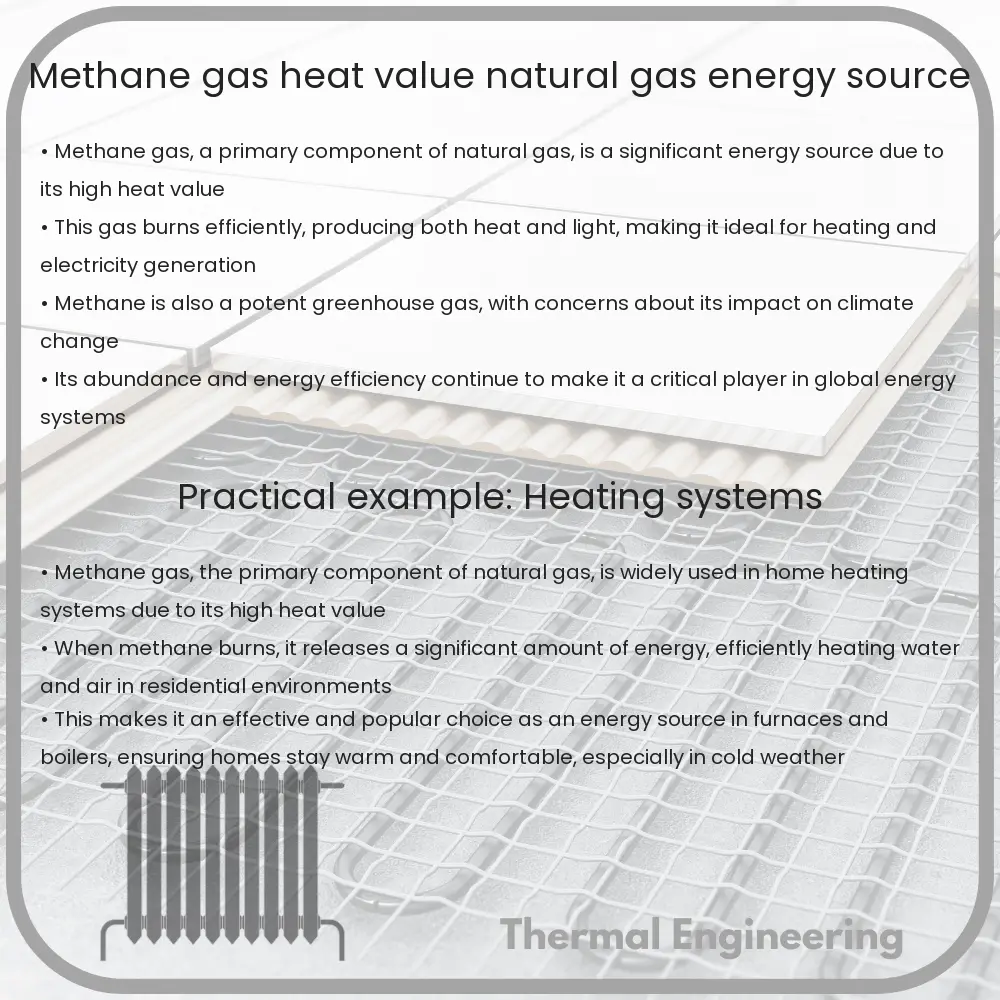
Methane Gas | Heat Value, Natural Gas & Energy Source

Comprehensive analysis of methane’s heat value, role in natural gas, and utilization as an efficient energy source.

Methane Gas | Heat Value, Natural Gas & Energy Source

Understanding Methane: Heat Value, Role in Natural Gas, and as an Energy Source

Methane gas, chemically represented as CH4, is a colorless, odorless gas that plays a crucial role in both our environment and the energy sector. Its significance stems from its energy content and its widespread use as a primary component of natural gas. This article delves into the heat value of methane, its place in natural gas, and its utility as a potent energy source.

Heat Value of Methane

The heat value of a fuel is a measure of the amount of energy released when a certain amount of the fuel is burned. This property is crucial for assessing the efficiency and suitability of fuel for various applications. For methane, there are two primary numbers to consider:

  • Higher Heating Value (HHV): Also known as the gross calorific value, HHV of methane is about 55.5 MJ/kg (MegaJoules per kilogram). This value represents the total amount of heat released when methane is completely combusted and the water vapor in the exhaust is condensed, thus capturing its latent heat.
  • Lower Heating Value (LHV): LHV is around 50 MJ/kg for methane. This number accounts for the energy released when the water remains as vapor and the latent heat of vaporization is not utilized.

The difference between HHV and LHV is significant in industrial applications where the recovery of latent heat can lead to enhanced efficiency.

Methane as a Major Component of Natural Gas

Methane is the primary component of natural gas, typically comprising 70-90% of its composition. The rest of the gas is made up of other hydrocarbons (like ethane, propane, and butane), nitrogen, carbon dioxide, and trace amounts of other gases. The high methane content is what gives natural gas its high calorific value, making it an efficient fuel choice for heating, electricity generation, and as a feedstock in various chemical processes.

Utilization of Methane as an Energy Source

Methane’s potent energy characteristics make it a cornerstone of the global energy supply. It is used in several key ways:

  1. Electricity Generation: Methane is burned in gas turbines or steam boilers to generate electricity, often in combined-cycle systems that boast high efficiency by utilizing both gas and steam turbines.
  2. Heating: In residential and commercial settings, methane is used for space heating, water heating, and cooking. It is preferred for its cleanliness and efficiency compared to other fossil fuels.
  3. Industrial Fuel: Methane is a critical source of heat and power for various industries, including metals, cement, and glass manufacturing.
  4. Transportation Fuel: Compressed natural gas (CNG), predominantly methane, is used as a cleaner alternative to gasoline and diesel in vehicles.

In addition to these applications, methane plays a significant role in hydrogen production, particularly steam methane reforming (SMR), which accounts for a substantial part of global hydrogen production primarily used in refining and chemical synthesis.

The Environmental Impact

While methane is a cleaner-burning fossil fuel compared to coal and oil, it has significant environmental implications. Methane is a potent greenhouse gas, with a global warming potential approximately 25 times greater than that of carbon dioxide over a 100-year period. Leaks during extraction and transportation of natural gas contribute to its release into the atmosphere, highlighting the need for stringent leak detection and mitigation technologies.

As the world seeks to balance energy needs with environmental sustainability, the role of methane will continue to evolve. Technological advancements in methane leakage reduction and enhanced recovery of natural gas can mitigate its environmental impact while harnessing its energy potential effectively.

Understanding the properties, uses, and impacts of methane is fundamental for making informed decisions regarding both energy policy and individual energy use.

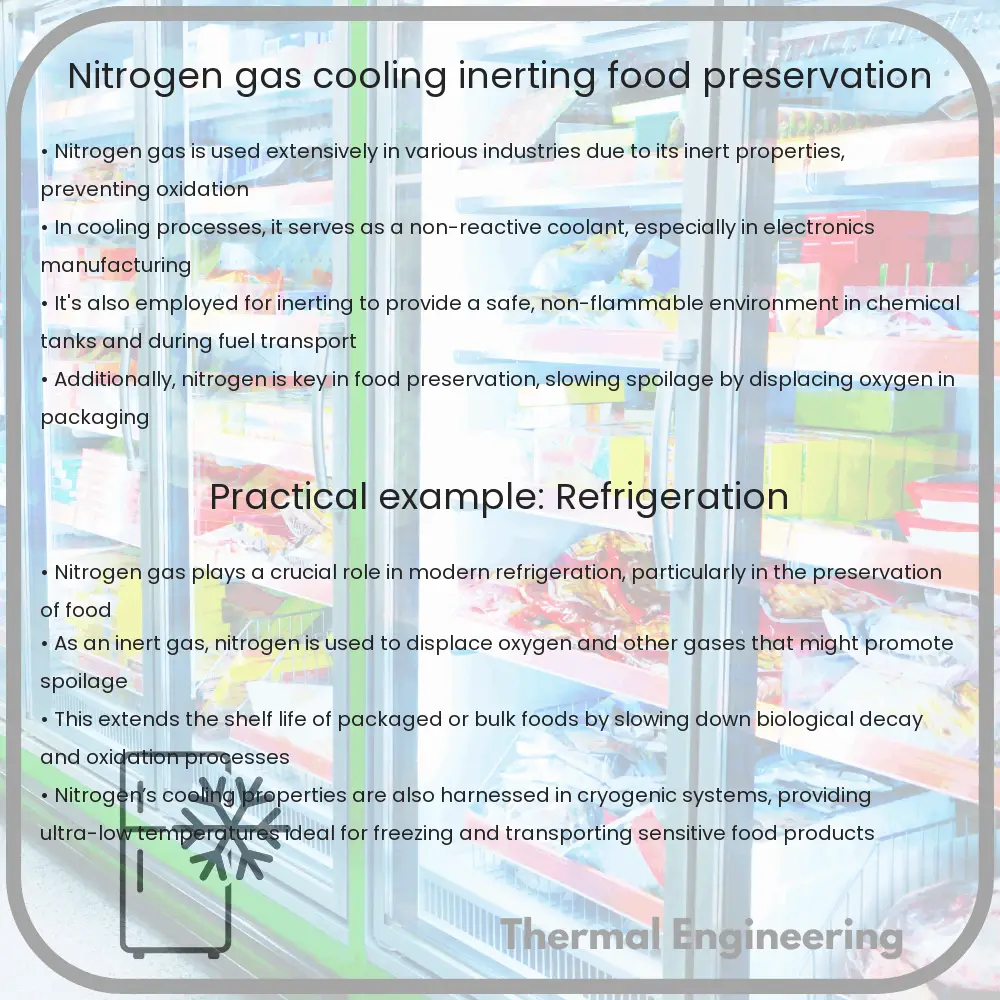
Nitrogen Gas | Cooling, Inerting & Food Preservation

Learn about the diverse applications of nitrogen gas in industries such as electronics, cryogenics, chemical manufacturing, and food preservation.

Nitrogen Gas | Cooling, Inerting & Food Preservation

Understanding the Versatile Uses of Nitrogen Gas

Nitrogen gas, a colorless, odorless and tasteless element, constitutes about 78% of the Earth’s atmosphere. It is chemically inert, making it useful in a wide range of applications, including cooling, inerting, and food preservation. Let’s delve into each of these uses and understand how nitrogen gas plays a significant role in various industries.

Cooling Applications

Nitrogen gas is often used as a cooling agent in several industrial processes. Due to its inert nature, it helps in minimizing oxidation and other chemical reactions that might occur at high temperatures. Here are key areas where nitrogen cooling is critical:

  • Electronics Manufacturing: Nitrogen is used to cool parts and materials quickly without leaving any residue, which could potentially damage delicate electronic components.
  • Cryogenics: In its liquid form, nitrogen can reach temperatures as low as -196°C (-321°F). This extreme cold makes liquid nitrogen ideal for freezing and preserving biological samples, as well as in cryogenic grinding of plastics and rubbers to recycle them more efficiently.

Inerting Applications

Being an inert gas, nitrogen is superbly suited to create safe, non-reactive environments required in various manufacturing processes:

  • Chemical Industries: Nitrogen gas is utilized to create an inert atmosphere during the production and handling of highly reactive chemicals. This prevents any explosive reactions when these chemicals are exposed to air.
  • Oil and Gas: In the petroleum industry, nitrogen is injected into oil wells to help maintain pressure in reservoirs and push crude oil to the surface. Additionally, it is used to provide an inert environment during the maintenance of industrial equipment.

Food Preservation

Nitrogen’s non-reactivity also extends its use to the food preservation sector. Here’s how nitrogen plays a key role:

  • Modified Atmosphere Packaging (MAP): Replacing oxygen with nitrogen in food packaging delays oxidative spoilage and microbial growth, thereby extending the shelf life of perishable items such as snacks, cheeses, and fresh meats.
  • Beverage Industry: In beer and wine production, nitrogen is used to prevent oxidation which can alter the flavor and reduce quality. It is also used in place of carbon dioxide to provide a smoother draught beer finish.

The utilization of nitrogen gas in these fields not only enhances efficiency and safety but also contributes to quality retention and reduction of spoilage in food products. Be it in engineering tasks or culinary delicacies, nitrogen demonstrates a remarkable ability to preserve and protect. Understanding these applications helps consumers and industry professionals make informed decisions about the resources they depend on.

As we continue to explore and innovate within these areas, the role of nitrogen gas is likely to grow, finding new applications in technology and industry. The advantages of nitrogen – its availability, inertness, and versatility – are invaluable across multiple sectors, underpinning its continued importance and ubiquitous presence in modern industrial practices.

Oxygen Gas | Combustion, Medical Use & Metal Cutting

Learn how oxygen (O2) is fundamental in combustion, medical uses, and metal cutting, emphasizing its critical role in diverse processes.

Oxygen Gas | Combustion, Medical Use & Metal Cutting

Oxygen Gas: A Versatile Element in Combustion, Medical Use, and Metal Cutting

Oxygen, symbolized as O2, is a crucial element in various processes including combustion, medical applications, and metal cutting. Understanding the role of oxygen in these sectors highlights its importance in everyday technology, healthcare, and industrial processes.

Combustion

At its core, combustion is a chemical reaction involving oxygen. When oxygen reacts with a fuel, such as hydrogen or carbon, it results in combustion, producing heat, light, and combustion products. For instance, the combustion of methane (CH4) in oxygen is a well-known reaction represented by the equation:

CH4 + 2O2 → CO2 + 2H2O + Energy

This reaction not only generates water and carbon dioxide but also releases a significant amount of energy in the form of heat and light. Oxygen’s role is critical because it supports the burning process by being the electron acceptor, thereby sustaining the reaction until the fuel is depleted.

Oxygen-enriched environments can alter the combustion characteristics, increasing the rate and efficiency of the burning process. This enhancement is utilized in various industrial applications where higher temperatures and faster reactions are beneficial.

Medical Use

In the medical field, oxygen gas plays a vital role in saving lives and treating patients. It is used to manage hypoxemia and maintain adequate oxygen saturation in the body. This is critical in conditions where patients are unable to absorb or ingest sufficient oxygen due to respiratory diseases or during surgical operations.

Oxygen therapy is employed in various scenarios like:

  • Chronic obstructive pulmonary disease (COPD)
  • Acute asthma attacks
  • Pneumonia
  • COVID-19-related respiratory distress

Furthermore, hyperbaric oxygen therapy, which involves breathing pure oxygen in a pressurized chamber, is used for treating decompression sickness, a hazard of scuba diving.

Metal Cutting

Oxygen is also utilized extensively in the metal cutting industry, specifically in processes like oxy-fuel cutting and welding. Here, a stream of oxygen is directed onto the metal, heating it to ignition temperature. Once the metal is ignited, a high-pressure stream of oxygen is focused on the metal, rapidly oxidizing it and driving the reaction forward to cut through the metal.

The basic reaction involved in the cutting of a typical metal like steel (primarily iron, Fe) can be represented as:

3Fe + 2O2 → Fe3O4

This exothermic reaction releases enough heat to continue melting the metal around the cut, facilitating the separation of the metal parts.

In summary, oxygen’s role across various fields—from energy production and healthcare to industrial applications—underscores its indispensable nature. It not only fuels essential processes like combustion but also aids in life-saving medical treatments and enables precise industrial operations. Understanding these uses deepens our appreciation of how fundamental oxygen is to modern technology and health solutions.

Hydrogen Gas | High Thermal Conductivity & Fuel Cells

Explore the properties and applications of hydrogen gas, focusing on its high thermal conductivity and potential as a clean fuel in fuel cells.

Hydrogen Gas | High Thermal Conductivity & Fuel Cells

Understanding Hydrogen Gas and Its Properties

Hydrogen gas, often symbolized as H2, is the simplest and most abundant chemical substance in the universe. It consists of two hydrogen atoms bonded together. Despite its simplicity, hydrogen has unique properties that have significant implications for its use in various applications, particularly in the field of energy.

High Thermal Conductivity of Hydrogen

One of the notable physical properties of hydrogen is its high thermal conductivity. Thermal conductivity is a measure of a substance’s ability to conduct heat. Compared to other gases, hydrogen has a much higher thermal conductivity. This property is crucial in situations where rapid heat dissipation is required, such as in cooling systems for electrical devices and in aerospace applications.

Hydrogen’s thermal conductivity is approximately 0.1805 W/m*K at 273 K (0 degrees Celsius). This value is higher than that of other common gases like helium, nitrogen, or oxygen, making hydrogen an excellent medium for heat transfer.

Hydrogen as a Fuel in Fuel Cells

Perhaps one of the most promising applications of hydrogen is in fuel cells. Fuel cells are devices that convert the chemical energy from a fuel into electricity through a chemical reaction with oxygen or another oxidizing agent. Hydrogen is especially advantageous in this application for several reasons:

  • High Energy Density: Hydrogen has a very high energy density by weight, which makes it an efficient fuel choice. It can store as much as three times the energy of gasoline, making it a powerful energy carrier.
  • Environmentally Friendly: When hydrogen is used as a fuel in fuel cells, the only by-product is water, making it a clean energy source that can significantly reduce pollution and greenhouse gas emissions.
  • Versatility: Hydrogen fuel cells can be used in a variety of applications, from powering electric vehicles to providing electricity for residential and commercial buildings.

Fuel cells that utilize hydrogen are often called Proton Exchange Membrane Fuel Cells (PEMFCs). These cells work by passing hydrogen through the anode of a fuel cell and oxygen through the cathode. At the anode, hydrogen molecules are split into electrons and protons. The electrons travel through an external circuit, creating an electric current, while the protons move through the electrolyte to the cathode. At the cathode, protons, electrons, and oxygen combine to produce water and heat, completing the process.

Future of Hydrogen in Energy

While hydrogen holds great promise as a clean and efficient energy carrier, several challenges need to be addressed before it can be widely adopted. These include issues related to the storage and transportation of hydrogen, as well as the cost and efficiency of hydrogen production methods. However, ongoing research and technological advancements are continually improving the viability of hydrogen as a key component of a sustainable energy future.

In conclusion, the high thermal conductivity of hydrogen makes it a valuable gas for heat transfer applications, while its potential in fuel cells offers a pathway towards a clean and sustainable energy system. The future of hydrogen in energy and other fields looks promising as engineers and scientists work to overcome the existing challenges.