Facebook Instagram Youtube Twitter

Cavitation Fluids | Ultrasonic Cleaning & Medical Use

Exploring how cavitation in fluids creates vapor-filled cavities that implode to generate shock waves, used in cleaning and medical treatments.

Cavitation Fluids | Ultrasonic Cleaning & Medical Use

Understanding Cavitation in Fluids

Cavitation is a phenomenon that occurs when the pressure in a liquid suddenly drops below its vapor pressure leading to the formation of small vapor-filled cavities in the fluid. These cavities, known as bubbles or voids, can collapse violently and generate shock waves once the local pressure rises and the bubbles implode. This general concept finds practical applications ranging from engineering to medicine, notably in ultrasonic cleaning and certain medical procedures.

Ultrasonic Cleaning Exploiting Cavitation

Ultrasonic cleaning utilizes cavitation induced by high-frequency sound waves to remove contaminants from various surfaces. Here’s how it works:

  • Generating Ultrasonic Waves: An ultrasonic cleaner contains a transducer that converts electrical energy into mechanical vibrations. These vibrations create sound waves in the cleaning liquid at frequencies typically between 20 kHz and 40 kHz.
  • Cavitation Process: As the ultrasonic waves pass through the liquid, they induce rapid pressure changes that lead to the formation and collapse of microscopic bubbles. The implosion of these bubbles produces powerful shock waves.
  • Cleaning Action: The shock waves generated by these imploding bubbles effectively dislodge and disintegrate contaminants from the object’s surface submerged in the cleaning bath.

This technique is especially beneficial for delicate or intricate items, as the cleaning process does not require harsh chemicals or rigorous scrubbing that might damage sensitive components.

Cavitation in Medical Applications

Medical applications of cavitation include treatments and diagnostic procedures, such as lithotripsy and targeted drug delivery systems:

  • Lithotripsy: In this treatment, focused ultrasonic waves are used to shatter kidney stones or gallstones. The waves create cavitation near the stones, the resulting shock waves break them into smaller, passable pieces.
  • Drug Delivery: Researchers are exploring cavitation’s potential to enhance the delivery of chemotherapy drugs in cancer treatment. This involves generating cavitation bubbles near the cancerous site to improve the permeability of cancer cells to drugs.

Challenges and Considerations

While cavitation can be beneficial, it also poses challenges and requires careful handling:

  • Erosion: The repeated cavitation process can lead to erosion of materials. In ultrasonic cleaning, equipment components must be designed to withstand repeated exposure to cavitation effects.
  • Control: In medical applications, the control over cavitation is crucial. The focus and intensity of ultrasonic waves must be finely tuned to avoid unwanted damage to healthy tissues.

In conclusion, while cavitation involves complex physical principles, its practical applications in fields like ultrasonic cleaning and medicine highlight its importance. Engineers and medical practitioners alike must understand and manipulate the conditions that lead to cavitation to harness its benefits while mitigating its potential adverse effects.

Ferrofluidic Seals | Vacuum, Electronics & Machinery

Explore the role of ferrofluidic seals in enhancing sealing performance in vacuum systems, electronics, and machinery while highlighting their unique magnetic fluid properties.

Ferrofluidic Seals | Vacuum, Electronics & Machinery

Understanding Ferrofluidic Seals: Applications in Vacuum, Electronics, and Machinery

Ferrofluidic seals represent a fascinating intersection of physics and engineering, utilizing magnetic fluids to create seals that are effective in a variety of challenging environments. These seals play a crucial role in maintaining the integrity of systems by preventing the leakage of gases or fluids while ensuring smooth mechanical operation.

What are Ferrofluidic Seals?

Ferrofluidic seals, commonly known as ferrofluid seals, comprise a magnetic fluid stabilized in a carrier liquid. The fluid contains nanoparticles of magnetic material like iron, which is suspended in a liquid base. When exposed to a magnetic field, these particles form a structure that can change shape but retains its fluidity. This unique property allows ferrofluidic seals to provide an effective barrier against leaks in vacuum and precision machinery applications.

Key Properties and Benefits

The functionality of ferrofluidic seals is primarily driven by their distinctive properties, which include:

  • Magnetic Response: The ability to respond to magnetic fields allows the seal to create a dynamic barrier that can adjust based on the magnetic field strength.
  • Low Friction: Ferrofluids can reduce friction between moving parts, contributing to less wear and prolonged equipment life.
  • Temperature Stability: These seals can operate effectively across a broad range of temperatures.
  • Hermetic Sealing: They provide excellent hermetic sealing capabilities, preventing the entry or escape of particles, even at the microscopic level.

Applications in Vacuum, Electronics, and Machinery

Ferrofluidic seals are utilized across various sectors. Here are some of the key applications:

  1. Vacuum Systems: In vacuum applications, like semiconductor manufacturing and scientific research instruments, ferrofluidic seals prevent air from entering the vacuum chamber, maintaining a stable and controlled environment.
  2. Electronics: Used in the manufacturing of hard drives and other sensitive electronic components, ferrofluidic seals help in isolating and protecting the components from environmental contaminants.
  3. Rotary Machinery: Ferrofluidic seals are employed in rotary applications such as turbines and pumps to prevent the leakage of fluids and ensure efficient operation.

Challenges and Considerations

While ferrofluidic seals offer numerous advantages, there are also several challenges and considerations in their use:

  • Magnetic Field Interference: The magnetic fields required to maintain the seal can interfere with nearby electronic devices or other sensitive components.
  • Particle Migration: Over time, the nanoparticles within the ferrofluid can migrate away from the fluid, potentially reducing the effectiveness of the seal.
  • Chemical Stability: Ensuring the chemical stability of the ferrofluid against the carrier liquid and external environment is crucial for the longevity and effectiveness of the seal.

Conclusion

Ferrofluidic seals blend the intriguing properties of magnetic fluids with practical engineering to solve complex sealing problems in environments where traditional seals would fail. Their ability to adapt to varying magnetic fields, coupled with their robustness over a range of temperatures and environments, makes them invaluable in high-tech industries like vacuum systems, electronics manufacturing, and rotary machinery. Understanding these seals helps in appreciating how advanced materials can be engineered to meet specific industrial needs.

As technology progresses, the development and refinement of ferrofluidic seals will continue to evolve, further enhancing their applications and efficiency in protecting and improving machineries’ operational integrity.

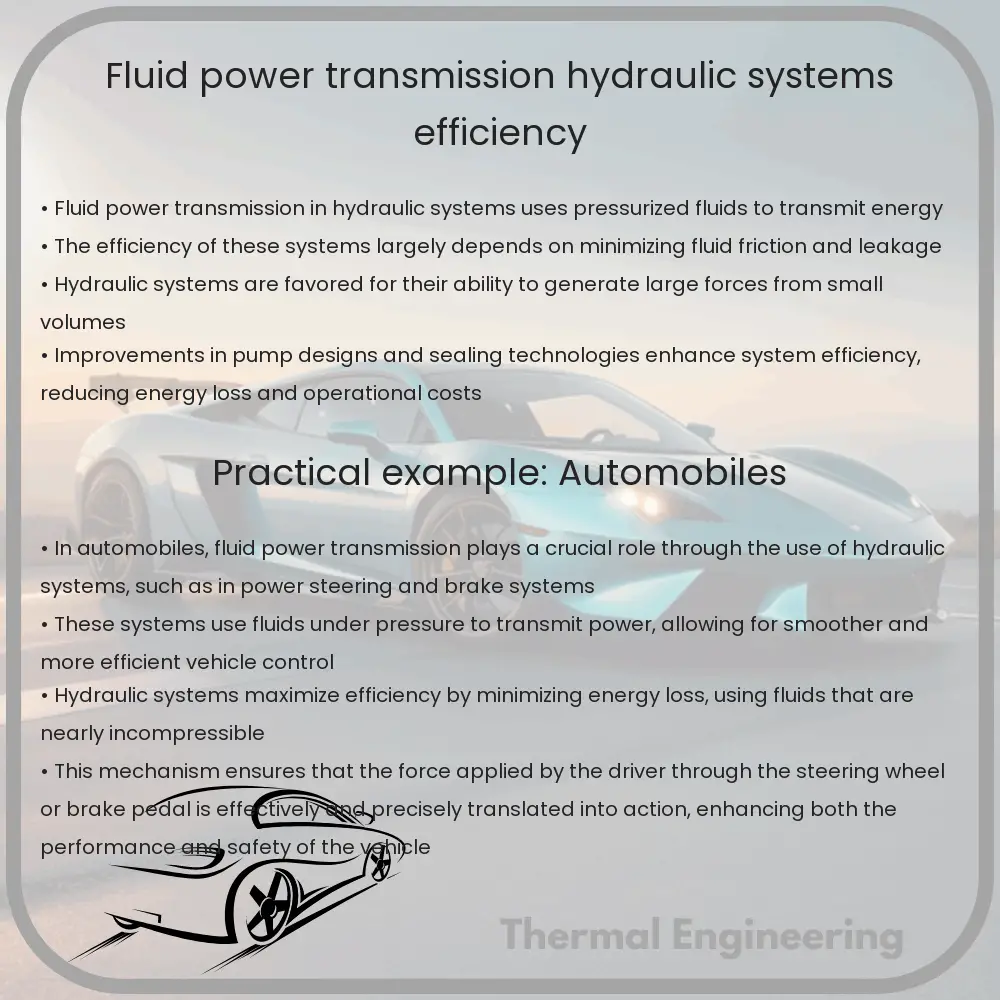
Fluid Power Transmission | Hydraulic Systems & Efficiency

Learn about hydraulic systems, their efficiency, components, and applications in various industries through a comprehensive exploration of fluid power transmission.

Fluid Power Transmission | Hydraulic Systems & Efficiency

Understanding Fluid Power Transmission: Hydraulic Systems & Efficiency

Fluid power transmission plays a crucial role in modern engineering by using fluids under pressure to transmit energy. Among the most impactful applications of this principle are hydraulic systems, which can be found in everything from automotive brakes to industrial machinery. This article explores the basics of hydraulic systems, their efficiency, and their applications.

How Hydraulic Systems Work

Hydraulic systems operate on the principle of Pascal’s Law, which states that pressure applied to a fluid in a closed system is transmitted equally in all directions. The system typically consists of several key components:

  • Reservoir: Stores the hydraulic fluid.
  • Pump: Moves the fluid from the reservoir to other parts of the system, converting mechanical energy into fluid energy.
  • Valves: Control the flow and direction of the fluid.
  • Actuators (Cylinders or Motors): Convert the fluid energy back into mechanical energy to perform work.
  • Pipes and Hoses: Channels through which the fluid travels.

When a hydraulic fluid is pumped into an actuator, it creates pressure that leads to mechanical force or motion, enabling devices and machinery to perform various tasks with high power output relative to their size.

Efficiency in Hydraulic Systems

Efficiency in hydraulic systems is generally evaluated based on how well they convert input energy (from the pump) to output energy (at the actuator). However, there are inevitably some losses, primarily due to:

  • Fluid Friction: Resistance created by the movement of fluid through pipes and components.
  • Leakage: Loss of fluid from the system, which decreases the overall system pressure and efficiency.
  • Heat Generation: Caused by fluid friction and inefficiencies in the pump and actuators. This heat needs to be managed because excessive heat can reduce system performance and damage components.

The overall efficiency of a hydraulic system can typically be improved by using high-quality components, maintaining optimal fluid cleanliness, and using properly sized hoses and pipes to minimize resistance and leakage.

Applications of Hydraulic Systems

Due to their ability to generate large amounts of force from relatively small inputs, hydraulic systems are extensively used in various fields:

  • Automotive: Brake systems and hydraulic power steering.
  • Construction: Heavy equipment such as excavators, forklifts, and bulldozers.
  • Manufacturing: Industrial presses and machinery where precision and power are crucial.
  • Aerospace: Control surfaces and landing gear operation.
  • Maritime: Steering mechanisms and load handling systems.

The adaptability and power of hydraulic systems make them indispensable in situations where substantial force and precise movement are required.

Conclusion

Hydraulic systems exemplify an essential application of fluid power transmission in engineering, characterized by their efficiency and the powerful output they can produce. Ongoing innovations and improvements in hydraulic technology continue to expand their applications and efficiency, making them even more integral to modern machinery and device operations. Understanding the basic principles behind these systems provides a valuable insight into how much of our mechanized world functions.

Smart Fluids in Robotics | Actuation & Control Mechanisms

Learn about smart fluids used in robotics for advanced actuation and control systems, focusing on their underlying mechanisms and applications.

Smart Fluids in Robotics | Actuation & Control Mechanisms

Understanding Smart Fluids in Robotics: Actuation & Control Mechanisms

In the ever-evolving field of robotics, smart fluids play a crucial role in the development of innovative actuation and control systems. Smart fluids, such as electrorheological (ER) fluids and magnetorheological (MR) fluids, change their viscosity or flow properties under the influence of an external electric or magnetic field, respectively. This unique characteristic makes them highly beneficial for precise control systems in robotics. Here, we explore how smart fluids are utilized in robotics and the mechanics behind their function.

What are Smart Fluids?

Smart fluids are substances that can alter their physical properties when exposed to specific environmental stimuli. The two main types of smart fluids used in robotics are:

  • Electrorheological (ER) Fluids: These fluids consist of suspended polymer or silicone oil particles that align themselves when exposed to an electric field, resulting in increased viscosity.
  • Magnetorheological (MR) Fluids: Similar to ER fluids, MR fluids contain ferrous particles suspended in oil or water. The application of a magnetic field causes the particles to align in structures, dramatically increasing the fluid’s viscosity.

Mechanisms of Actuation and Control

Robotics commonly employs smart fluids in actuators — devices used to move and control mechanisms or systems. Smart fluid actuators offer exceptional versatility, as their operational characteristics can be easily controlled by adjusting the strength of the external field. Here’s how they work:

  • Electric or Magnetic Field Application: The application of an electric or magnetic field to a smart fluid induces a rapid change in its viscosity. This change can be finely tuned by varying the field’s intensity.
  • Variable Viscosity: The variable viscosity properties of smart fluids enable controlled fluid movement, assisting in the precise actuation of robotic components.

Applications in Robotics

Smart fluids are primarily utilized for their rapid response time and reversible state change, which are ideal for applications requiring precise control. Some of the applications include:

  • Vibration Damping: Smart fluid actuators effectively absorb and dampen vibrations in robotic systems, enhancing stability and performance.
  • Adaptive Clutches: MR fluid-based clutches adjust their operational characteristics automatically, depending on the load conditions in robotic systems.
  • Precision Positioning Systems: The high level of control over fluid viscosity allows for highly accurate positioning, critical in surgical robots and other precision-required operations.

Challenges and Future Prospects

Despite the promising advantages, the implementation of smart fluids in robotics also faces several challenges. These include the sedimentation of particles in the fluids, high energy consumption for maintaining fields, and the need for robust materials capable of withstanding strong electric and magnetic fields. Nevertheless, ongoing research focuses on overcoming these challenges and extending the applications of smart fluids in not just robotics, but also in broader areas such as automotive systems, aerospace engineering, and more.

As technologies advance, the integration of smart fluids in robotics continues to open new pathways for innovation, unlocking more responsive, flexible, and efficient robotic systems. This vividly demonstrates how the fusion of materials science and robotic technology can lead to substantial practical breakthroughs in engineering.

Hydrogel Fluids | Biomedical, Agriculture & Hydration

Learn about hydrogel fluids, versatile polymer-water networks used in biomedical engineering, agriculture, and hydration technologies.

Hydrogel Fluids | Biomedical, Agriculture & Hydration

Exploring Hydrogel Fluids: Applications in Biomedical Science, Agriculture, and Hydration Technologies

Hydrogel fluids, often simply referred to as hydrogels, are a fascinating class of materials that consist primarily of water trapped within a network of polymer chains. These materials are unique due to their ability to absorb and retain significant amounts of water while maintaining their structure. This property makes hydrogels highly useful in various fields such as biomedical engineering, agriculture, and hydration technology.

Hydrogel Fluids in Biomedical Applications

In the realm of biomedical engineering, hydrogels are prized for their biocompatibility and versatility. Here are some of the primary ways in which hydrogels are utilized:

  • Drug Delivery Systems: Hydrogels can be engineered to release therapeutic drugs at controlled rates. The hydrophilic (water-attracting) nature of these materials allows them to respond to changes in the environment such as pH or temperature, which triggers the release of the encapsulated drugs.
  • Tissue Engineering: Hydrogels provide a scaffold that mimics the natural environment of extracellular matrices, making them ideal for supporting the growth and regeneration of cells. They are used in the development of artificial skin, cartilage, and other tissue replacements.
  • Wound Care: Due to their high water content and soothing properties, hydrogels are effective in wound dressings. They help maintain a moist environment, which is beneficial for wound healing and assists in pain reduction and skin protection.

Hydrogel Use in Agriculture

Hydrogels are also making a significant impact in the agricultural sector, particularly in water conservation and soil management:

  • Moisture Retention: In arid climates or during times of drought, hydrogels can be added to soil to improve its water retention capabilities. The hydrogel absorbs water during wetter periods and then slowly releases moisture in drier times, reducing the need for frequent irrigation.
  • Soil Structure Improvement: The introduction of hydrogels can enhance the physical properties of soil, increasing its porosity and aeration. This improvement helps promote the growth of healthy plants and increases crop yield.

Enhancing Hydration Through Hydrogel Technology

Hydrogel technology has also found innovative uses in hydration applications, particularly in consumer goods:

  • Sports Hydration: Edible hydrogel beads have been developed to encapsulate high concentrations of electrolytes and carbohydrates, providing sustained energy and hydration. These beads release their contents gradually, aiding athletes in maintaining peak performance without the discomfort of a full stomach.
  • Portable Hydration: Hydrogels can be synthesized to form portable and lightweight hydration packets that are easier to transport and use compared to traditional bottled water. These packets release water upon consumption, offering a convenient hydration solution during activities like hiking or camping.

In all these applications, the capability of hydrogels to contain and manage water efficiently stands out as their most remarkable attribute. As technology advances, the scope of hydrogel applications continues to expand, promising innovative solutions to some of the most pressing challenges in medical, agricultural, and environmental fields.

The ongoing research and development in hydrogel technology highlight its potential in improving not only individual health and wellbeing but also the global environment and food security. As we gain more insight into the material properties and new synthesis methods of hydrogels, their role in science and engineering will undoubtedly increase, offering new avenues for problem-solving and product development.

Flow Batteries | Liquid Electrolytes & Energy Storage

Learn how flow batteries use liquid electrolytes for large-scale energy storage and support renewable energy integration.

Flow Batteries | Liquid Electrolytes & Energy Storage

Understanding Flow Batteries: The Mechanism Behind Liquid Electrolytes and Energy Storage

Flow batteries represent a fascinating subset of electrochemical cells that are designed to handle large-scale energy storage, a critical component in modern energy grids, especially those incorporating intermittent renewable energy sources like wind and solar power. Unlike conventional batteries that store energy in solid electrode materials, flow batteries store energy in liquid electrolytes.

Components of Flow Batteries

The basic components of a flow battery include two tanks filled with electrolytes, which are liquids infused with materials that undergo reduction and oxidation (redox) reactions. These tanks are connected to a cell stack, where the actual energy conversion processes occur, separated by an ion-exchange membrane. This membrane only allows specific ions to pass through, facilitating the charge and discharge cycle while physically separating the two liquids.

How Does a Flow Battery Work?

In a flow battery, electrolytes are pumped from external tanks into a cell stack. Here’s a simple breakdown of the operational process:

  1. Charging: During this phase, an external power source drives an electric current that forces the electrolytes to undergo chemical changes, storing energy chemically in the liquid’s molecules.
  2. Energy storage: Once charged, the energy is stored statically in the tanks, with the electrolytes held until needed. The energy capacity of the battery is primarily dictated by the volume of the electrolytes.
  3. Discharging: When energy is needed, the process reverses, with the charged electrolytes being pumped back into the cell stack, where they undergo opposite redox reactions that release electrons, thus providing electrical energy.

The unique aspect of flow batteries lies in their decoupling of energy storage capacity from power rating. The amount of energy stored is dependent on the volume of electrolytes in the tanks, while the power is determined by the size of the cell stack. This scalability makes flow batteries particularly advantageous for grid applications where large amounts of energy are required over varying time periods.

Types of Flow Batteries

Several types of flow batteries exist, each using different chemistries for the electrolytes, which define their performance characteristics, such as energy density, efficiency, and lifecycle:

  • Vanadium Redox Flow Batteries (VRFB): These batteries use vanadium ions in different oxidation states to store and release energy, which inherently avoids cross-contamination of electrolytes because the electrolyte on both sides of the cell involves the same element.
  • Zinc-Bromine Flow Batteries: This type uses zinc and bromine as electrolytes, offering high energy density compared to other flow batteries.
  • Iron-Chromium Flow Batteries: Known for their low-cost materials, these batteries are being investigated for large, cost-sensitive storage applications.

Advantages and Challenges of Flow Batteries

Flow batteries offer several distinct advantages:

  • Scalability: Their capacity can easily be increased by simply enlarging the storage tanks.
  • Flexibility: Separate power and energy scaling allows for a wide range of applications.
  • Long Cycle Life: They can typically withstand thousands of charge-discharge cycles with minimal degradation.
  • Safety: The risk of thermal runaway is significantly less compared to standard solid-state batteries.

However, they also face some challenges:

  • Energy Density: Flow batteries generally have lower energy density compared to traditional lithium-ion batteries, making them less suitable for applications like electric vehicles.
  • Complexity: Their design includes pumps and tanks, which adds mechanical complexity and maintenance issues.
  • Cost: The materials and infrastructure required can be costly, impacting the economic feasibility for some applications.

In conclusion, while the technology still faces hurdles, the development of flow batteries is seen as promising, especially for enhancing the reliability and stability of renewable energy systems. By continuing to address the challenges, flow batteries could play a pivotal role in the future of large-scale energy storage solutions.

Thermal performance of phase change material wallboards

Learn about Phase Change Material (PCM) wallboards and their role in enhancing building thermal performance for energy-efficient environments.

Thermal performance of phase change material wallboards

Understanding the Thermal Performance of Phase Change Material Wallboards

The concept of thermal management in buildings is pivotal for creating energy-efficient and comfortable living environments. One innovative approach to enhance thermal performance is through the integration of Phase Change Materials (PCMs) in wallboards. PCM wallboards play a crucial role in stabilizing indoor temperatures, reducing the need for external heating and cooling, and thus offering both environmental and economic benefits.

What are Phase Change Materials?

Phase Change Materials are substances that absorb and release thermal energy during the process of melting and freezing. Common PCMs include paraffin waxes, fatty acids, and salt hydrates. These materials change phase at a specific temperature and in doing so, maintain an almost constant temperature environment.

How do PCM Wallboards Work?

PCM wallboards incorporate these materials into the building’s walls, enabling them to absorb excess heat during warm periods and release heat during cooler times. The phase change usually occurs at temperatures typical for indoor environments, around 18°C to 25°C, making them ideal for use in buildings. This process can be described by the equation for heat absorption and release:

  • Q = m * L

where:

  • Q is the heat absorbed or released,
  • m is the mass of the PCM,
  • L is the latent heat of fusion.

The effectiveness of a PCM in thermal management is primarily dependent on its latent heat of fusion, the higher the latent heat, the more thermal energy it can store or release.

Benefits of PCM Wallboards

  1. Energy Efficiency: By moderating indoor temperatures, PCM wallboards reduce the reliance on air conditioning and heating systems, leading to significant energy savings and reduced greenhouse gas emissions.
  2. Comfort: Maintaining a stable indoor temperature enhances comfort levels for occupants, reducing the fluctuations that typically occur through the day.
  3. Sustainability: Using renewable and bio-based phase change materials can further increase the environmental benefits by reducing the use of fossil-based PCMs.

Challenges in Implementation

Despite their benefits, there are several challenges associated with PCM wallboards. These include:

  • Cost: The initial cost of PCM wallboards can be higher compared to traditional building materials, although this can be offset by the energy savings over time.
  • Integration: Integrating PCMs with existing building materials and ensuring consistent performance can sometimes be complex.
  • Durability: Ensuring the long-term stability and effectiveness of PCMs in building materials requires further research and engineering solutions.

Future Outlook

As the building industry moves towards more sustainable practices, the role of technologies like PCM wallboards is expected to grow. Ongoing research and development are improving the cost-effectiveness and performance of these materials, promising better thermal management solutions for future constructions. Continued innovation and testing are necessary to overcome current challenges and realize the full potential of PCM wallboards in buildings globally.

Understanding and implementing advanced materials like PCMs in construction not only benefits the environment but also provides economic benefits by reducing energy costs. As we continue to explore these materials’ properties and applications, the construction industry stands on the brink of a thermal management revolution.

Shear Thinning Fluids | Applications & Material Science

Learn about shear thinning fluids, their viscosity behavior, applications across industries, and the science behind their unique properties.

Shear Thinning Fluids | Applications & Material Science

Understanding Shear Thinning Fluids

Shear thinning fluids, also known as pseudoplastic fluids, exhibit a decrease in viscosity with an increase in shear rate. This characteristic behavior makes them fundamentally different from Newtonian fluids, whose viscosity remains constant regardless of the shear rate. Understanding the rheological behavior of shear thinning fluids is crucial for a wide range of applications in material science and engineering.

How Shear Thinning Works

The viscosity of a fluid describes its resistance to gradual deformation by shear stress. In shear thinning fluids, this viscosity decreases under shear strain. This occurs because the internal structure or alignment of molecules within the fluid changes when a force is applied. For example, certain polymer solutions, which may have tangled molecular structures under normal conditions, can align in the direction of flow when a force is applied, thereby reducing resistance and consequently lowering viscosity.

Applications of Shear Thinning Fluids

  • Paints and Coatings: The application of paint with a brush or roller is a practical example of how shear thinning can be beneficial. As the paint is applied and sheared, it becomes less viscous and spreads more easily. Once applied, the shear force is removed, and the paint returns to its higher viscosity state, allowing it to stay in place without dripping.
  • Food Industry: Many sauces and dressings are formulated to be shear thinning, which improves their pouring properties out of a bottle (decreasing viscosity under shear) and prevents dripping once served (increasing viscosity when at rest).
  • Pharmaceuticals: Shear thinning gels and creams are easier to apply and spread over the skin or other surfaces due to their changing viscosity properties under stress.

Material Science Behind Shear Thinning Fluids

At the molecular level, the behavior of shear thinning fluids involves complex interactions among their components. In polymeric solutions, the length, flexibility, and concentration of polymer chains play significant roles. Shear thinning occurs as these chains disentangle and align along the flow direction under stress, which reduces internal friction and thus lowers viscosity.

Clay suspensions and other colloidal dispersions exhibit shear thinning due to the orientation and distribution of particulate matter when subjected to flow. As the particles align themselves, they allow smoother flow, thereby reducing resistance.

Innovative Developments

Research in material science continues to expand the potential of shear thinning fluids. Innovations include smart materials like shear thinning building composites that can be easily applied and then harden, becoming strong, durable materials. Another area of focus is medical applications such as injectable hydrogels that can change viscosity to pass through needles easily and then solidify once in place, proving useful in therapeutic treatments or tissue engineering.

Shear thinning fluids represent a remarkable blending of complex fluid dynamics with practical applications. Their study not only advances scientific knowledge in material science but also opens up myriad possibilities for creative and efficient solutions across numerous industries.

Shear Thickening Fluids | Protective Gear & Applications

Shear thickening fluids (STFs), or dilatant fluids, increase in viscosity under stress, used in protective gear and other applications.

Shear Thickening Fluids | Protective Gear & Applications

Introduction to Shear Thickening Fluids

Shear thickening fluids (STFs), often referred to as dilatant fluids, are a fascinating class of materials that behave in a counterintuitive way: they become harder or more viscous when subjected to impact or high shear rates. This unusual behavior makes them incredibly useful in various applications, especially in the field of protective gear.

Understanding the Mechanics of Shear Thickening

Shear thickening occurs when particles suspended in the fluid rearrange themselves to form a structure that resists flow under stress. The mechanism is primarily associated with the hydrodynamic interactions and contact forces among the particles. When a shear force is applied, these particles form temporary chains or clusters, increasing the fluid’s viscosity. This transformation happens within milliseconds, making STFs highly effective in dynamic environments.

Applications in Protective Gear

One of the most impactful applications of STFs is in the development of protective gear, where their unique properties can enhance safety and performance:

  • Body Armor: Incorporating STFs into body armor allows for gear that is lightweight and flexible under normal conditions but becomes rigid upon impact, such as from a bullet or shrapnel. This helps in absorbing and dissipating the energy from impacts, offering superior protection compared to traditional materials.
  • Sports Equipment: Sports gears, such as shin guards, helmets, and protective vests, utilize STF technology to provide athletes with protection that does not compromise mobility. In contact sports, this can drastically reduce the risk of injuries.
  • Gloves and Footwear: In industrial settings, gloves and footwear enhanced with shear thickening fluids can offer better protection against punctures and cuts, safeguarding workers from workplace hazards.

Beyond Protective Gear: Other Innovative Applications

While protective gear is a significant application, the versatility of shear thickening fluids extends into various other sectors:

  • Vibration Damping: STFs can be used in the automotive and aerospace industries to improve the damping properties of materials, leading to enhanced stability and noise reduction in vehicles and aircraft.
  • Robotics: In robotic systems, STFs can be used to create joints that have variable flexibility, which can adapt dynamically to different tasks or environmental conditions.
  • Medical Devices: Certain medical devices can benefit from STFs, particularly in prosthetics, where adaptable rigidity can enhance comfort and functionality for the user.

Challenges and Future Directions

Despite their promising applications, several challenges remain in the widespread adoption of shear thickening fluids. These include the scalability of production, long-term reliability, and the need for precise control over their rheological properties. Further research is also required to fully understand the detailed mechanisms behind shear thickening and to explore new materials that exhibit this property.

As research continues to advance, the potential applications for shear thickening fluids are vast. From improving the safety features of cars to enhancing the effectiveness of protective clothing, STFs are poised to be a significant material in the future landscape of engineering and technology.

Conclusion

Shear thickening fluids represent a unique area of materials science with pivotal implications for protective gear and beyond. By harnessing the properties of these materials, designers and engineers can develop products that combine flexibility with extraordinary protective capabilities, making substantial improvements in user safety and product performance across a myriad of applications.

Pneumatic Fluids | Air Power, Systems & Tools

Learn about pneumatic systems, their components, and applications in industries such as manufacturing and construction.

Pneumatic Fluids | Air Power, Systems & Tools

Understanding Pneumatic Fluids: Air Power, Systems, and Tools

Pneumatics is a branch of engineering that deals with the use of pressurized air to affect mechanical motion. Pneumatic systems are commonly used in various industries, including manufacturing, robotics, and automotive, because of their efficiency, cleanliness, and safety.

The Basics of Pneumatic Systems

Pneumatic systems operate by compressing air which is then used to power machinery or tools. The basic components of a pneumatic system include:

  • Air Compressor: The air compressor is the heart of any pneumatic system. It draws in atmospheric air, which is then compressed to a desired pressure and delivered to the system for use.
  • Air Receiver: Also known as a tank, the air receiver stores the compressed air to balance the supply and demand of the system and stabilize pressure fluctuations.
  • Distribution System: Pipes and hoses that transport the compressed air to the machinery or tools.
  • Valves and Actuators: Valves control the flow and pressure of the air, while actuators convert the air pressure into mechanical motion.

Principles of Air Power

The effectiveness of a pneumatic system relies on Boyle’s Law, which is expressed mathematically as:

P1V1 = P2V2

where P1 and V1 are the initial pressure and volume, and P2 and V2 are the pressure and volume of the gas after compression. According to this principle, when the volume of a gas is decreased, its pressure increases proportionally.

Advantages of Using Air Powered Systems

  • Safety: Pneumatic tools do not use flammable fuel, emit hazardous exhaust or induce electric shocks, making them safer for use in hazardous environments.
  • Simplicity and Reliability: Pneumatic systems have fewer moving parts and are less susceptible to failure compared to other systems.
  • Cost-Effectiveness: Air is freely available and simple to store, which makes pneumatic systems relatively inexpensive to operate and maintain.

Common Pneumatic Tools and Their Applications

Pneumatic systems power a wide variety of tools which are broadly used across different fields:

  • Jackhammers: Used in construction and demolition to break up concrete.
  • Nail Guns: Used in building construction for driving nails faster than manual hammers.
  • Spray Guns: Used for painting in the automotive and manufacturing industries for a fine, uniform coat.
  • Air Drills: Used for drilling holes in wood and metals, especially in environments where spark risks must be minimized.

Conclusion

Pneumatic systems are essential to modern industry and engineering. Their reliance on air—a clean, abundant, and flexible power source—makes them indispensable in situations where safety and efficiency are critical. By understanding how these systems operate, we can utilize them more effectively and continue to innovate in their application across various sectors.

The versatility and safety of pneumatic systems make them an exceptional choice for powering tools and machinery across a multitude of industries, highlighting their integral role in engineering and technology development.