Facebook Instagram Youtube Twitter

Plasma Fluid | High Energy States & Industrial Processes

Learn about plasma fluid, its formation, unique properties, and diverse industrial applications in material processing, energy, and more.

Plasma Fluid | High Energy States & Industrial Processes

Understanding Plasma Fluid: High Energy States and Industrial Applications

Plasma is often referred to as the fourth state of matter, alongside solids, liquids, and gases. It consists of a gas in which a sufficient number of atoms are ionized to affect the electrical characteristics and behavior of the environment. This ionization is achieved by heating a gas or subjecting it to a strong electromagnetic field, leading to high energy states that are utilized in various industrial processes.

Formation of Plasma

Plasma is created by adding energy to a gas so that some of its electrons escape from the atoms they orbit. This can be achieved either thermally (by heating the gas) or non-thermally (through electromagnetic fields or radiation). The free electrons and the ions create a fluid-like state with unique electrical properties. The condition for plasma formation can generally be described using the equation:

ne * λD3 > 1

where ne is the electron density and λD is the Debye length. The Debye length is the scale over which mobile charge carriers (electrons) screen out electric fields in plasma.

Properties of Plasma

  • Conductivity: Plasma can conduct electricity, which is a stark contrast from the other non-ionized states.
  • Reactivity: The free electrons and ions mean plasma is highly reactive with other substances.
  • Temperature: Plasmas used in industrial applications often exist in extreme temperatures—either very hot (thermal plasmas) or relatively cool (non-thermal plasmas).

Industrial Applications of Plasma

Due to its unique properties, plasma finds applications in a wide range of industries:

  1. Material Processing: Plasma is employed in the etching and deposition of materials in microelectronics, such as semiconductor manufacturing. Plasma-enhanced chemical vapor deposition (PECVD) is a common technique used in these processes.
  2. Energy: Fusion research heavily relies on plasma physics. Plasma is used to achieve the high-energy state necessary for nuclear fusion reactions, potentially offering a near-limitless source of clean energy.
  3. Medicine: In the medical field, plasma technology is used for sterilization and in plasma medicine for the treatment of certain diseases and wound healing due to its antibacterial properties.
  4. Environmental Applications: Plasma arc waste recycling converts waste into usable byproducts through a process that breaks down waste material using electrically generated plasmas. This method significantly reduces the volume of waste and recovers useful gases like hydrogen and carbon monoxide.

Challenges and Future Prospects

While plasma technology holds significant potential, its application faces several challenges such as high energy consumption, need for precise control during processing, and scalability issues in industrial scenarios. Ongoing research aims to resolve these issues, enhancing efficiency and broadening the scope of applications. The progressive advancements in plasma research continue to open new frontiers in science and technology, promising revolutionary changes in materials science, energy, and environmental management.

Understanding and harnessing the properties of plasma fluid not only showcases the incredible versatility of this state of matter but also represents a critical step forward in sustainable and innovative technological development.

Ionic Liquids | Green Solvents & Electrochemical Applications

Ionic liquids are revolutionary green solvents with tunable properties, used in electrochemical applications and as eco-friendly alternatives in various industries.

Ionic Liquids | Green Solvents & Electrochemical Applications

Ionic Liquids: Revolutionary Green Solvents and Their Electrochemical Applications

Ionic liquids, often termed “designer solvents,” are organic salts that are liquid at temperatures below 100°C. They consist solely of ions, making them unique from traditional molecular liquids like water or alcohol. What sets ionic liquids apart in the field of green chemistry and engineering is their negligible vapor pressure, which minimizes environmental pollution through evaporation. This characteristic, along with their impressive chemical and thermal stability, makes them excellent candidates for sustainable and environmentally-friendly applications.

Characteristics and Benefits of Ionic Liquids

These salts boast several key characteristics that make them appealing for various applications in science and industry:

  • Low Volatility: Ionic liquids have low to no vapor pressure, which significantly reduces the risk of air contamination and health hazards associated with traditional organic solvents.
  • Thermal Stability: They can operate under a wide temperature range without decomposing, which is advantageous in processes requiring high temperatures.
  • Tunable Properties: The physical and chemical properties of ionic liquids can be customized by altering the combination of anions and cations, allowing scientists to “design” the liquid specific to the application’s needs.
  • Good Solvating Abilities: Ionic liquids can dissolve a wide variety of compounds, including challenging polar and non-polar substances.

Green Solvent Applications

As green solvents, ionic liquids are used to replace volatile organic compounds (VOCs) in many applications:

  • Chemical Synthesis: Their inert nature and ability to dissolve numerous materials make them ideal for use in chemical reactions and syntheses that are sensitive to contamination.
  • Biomass Processing: Ionic liquids are effective in processing biomass into biofuels and other chemicals, offering a more environmentally-friendly method than traditional solvents.
  • Waste Recycling: They can extract valuable metals from waste streams, promoting recycling and reducing landfill waste.

Electrochemical Applications

In the realm of electrochemistry, ionic liquids are utilized for their excellent ionic conductivity and wide electrochemical windows. Some of the key applications include:

  • Batteries: Ionic liquids are used as electrolytes in battery technologies, particularly lithium-ion batteries, to enhance performance and safety. Their non-flammable nature and ability to operate over a broad temperature range improve battery stability and longevity.
  • Supercapacitors: They serve as electrolytes in supercapacitors, devices that store energy through electrostatic charges rather than chemical reactions, offering faster charging and discharging than conventional batteries.
  • Sensors: Ionic liquids are employed in sensor technologies to increase sensitivity and stability in the detection of various substances.
  • Electroplating: Their application in electroplating includes providing a non-toxic alternative to conventional solvents, leading to safer and cleaner production methods.

Future Perspective

The versatility and environmental benefits of ionic liquids position them as front-runners in the quest for sustainable technology solutions across various fields. Continuing advances in chemistry and materials science will likely expand their applications and enhance their effectiveness, solidifying their role in the industries of the future. As research and development in ionic liquids continue, we can anticipate more innovative and eco-friendly solutions, making significant contributions to green chemistry, electrochemistry, and beyond.

Water Retention Agents | Agriculture, Hydration & Soil

Learn about water retention agents, their types, how they work, benefits, challenges, and environmental impacts in agriculture.

Water Retention Agents | Agriculture, Hydration & Soil

Understanding Water Retention Agents in Agriculture

Water retention agents, also known as soil conditioners or hydrogels, are materials added to soil to improve its water holding capacity. This technology is crucial in agriculture, especially in areas susceptible to drought or where water conservation is a priority. These agents can significantly influence hydration levels in soil, optimizing water usage and enhancing plant growth.

Types of Water Retention Agents

  • Polymers: Synthetic or natural polymers that can absorb and retain significant amounts of water relative to their mass. Polyacrylamides and polysaccharides are common examples.
  • Organic Matter: Composts, peat, and coir are organic materials that enhance water retention by improving soil structure.
  • Mineral Based Agents: Materials like vermiculite and perlite that can hold water due to their porous nature and help improve soil aeration and water retention.

How Water Retention Agents Work

Water retention agents improve soil’s physical properties. By increasing the soil’s porosity, they enhance the infiltration and distribution of water, making it more available to plant roots. These agents work by absorbing water during wet conditions and gradually releasing it back into the soil when it starts to dry out. This ability not only ensures a steadier supply of water to plants but also reduces water stress during periods of low rainfall.

Benefits of Using Water Retention Agents

  1. Better Water Conservation: These agents reduce the need for frequent watering, thus saving water which is particularly beneficial in dry regions.
  2. Enhanced Plant Growth: With more consistent moisture levels, plants can grow more robustly and yield better crops.
  3. Improved Soil Health: By promoting better structure and reducing soil erosion, these agents help maintain soil health over time.
  4. Efficiency in Fertilizer Use: Retaining more water in the soil helps dissolve fertilizers more effectively, thereby increasing their uptake by plants and reducing run-off.

Challenges and Considerations

Despite their benefits, the application of water retention agents must be carefully managed. Overuse can lead to waterlogging, which negatively impacts plant health and soil aeration. Furthermore, not all agents are suitable for every soil type or plant species. It is crucial for farmers and gardeners to choose the appropriate product based on specific soil conditions and hydration needs.

Environmental Impact

The environmental impact of synthetic polymeric water retention agents has raised concerns. These non-biodegradable polymers can accumulate in the environment, potentially affecting soil health and microorganism activity. As a result, there is a growing emphasis on using natural and biodegradable alternatives that offer similar benefits without the environmental cost.

Conclusion

Water retention agents play a significant role in sustainable agriculture. By enhancing the efficiency of water use in soil, they not only support agricultural productivity but also contribute to broader environmental conservation efforts. However, careful selection and application are crucial to maximize their benefits and minimize potential negative impacts.

Temperature monitoring in smart grids

A comprehensive guide to the vital role and methods of temperature monitoring in smart grids, enhancing safety and efficiency.

Temperature monitoring in smart grids

Understanding Temperature Monitoring in Smart Grids

Smart grids represent a significant evolution in the management and distribution of energy. By integrating advanced communication technologies with traditional energy networks, smart grids enhance the efficiency, reliability, and sustainability of electricity services. A critical component of modern smart grids is the extensive use of sensors for various monitoring purposes, among which temperature monitoring plays a pivotal role.

Why Monitor Temperature in Smart Grids?

Temperature is a key factor affecting the efficiency and longevity of electrical components. High temperatures can indicate excessive electrical load, inefficiencies, or potential failures in the system. Here’s why monitoring temperature is crucial:

  • Safety: Prevents overheating and reduces the risk of fires and other hazardous situations.
  • Efficiency: Helps maintain optimal operating conditions for equipment, thus saving energy.
  • Preventive Maintenance: Early detection of abnormal temperature variations can signal the need for maintenance or replacement before more costly breakdowns occur.
  • Lifespan: Extends the service life of components by ensuring they operate within safe temperature ranges.

How is Temperature Monitored in Smart Grids?

Temperature monitoring in smart grids utilizes a network of sensors along various points of the grid. These sensors collect data in real-time and transmit it to a central control system for analysis. The key technologies and methods include:

  1. Fiber Optic Sensors: Utilize light signals within fiber cables to detect temperature changes. Known for their accuracy and the ability to work in harsh environments.
  2. Thermal Imaging: Uses infrared cameras to visualize and measure temperature variations from a distance, helpful in monitoring substations and other inaccessible areas.
  3. Wireless Sensor Networks (WSN): Deployed across the grid, these sensors provide flexibility and real-time data reporting, crucial for dynamic grid management.

Challenges in Temperature Monitoring

While temperature monitoring is beneficial, it faces several challenges in the context of smart grids:

  • Data Overload: The vast amount of data generated by continuous monitoring can be overwhelming. Adequate data analysis systems are necessary to filter and prioritize information.
  • Integration: Seamlessly integrating new sensor technologies with existing grid infrastructures without disrupting service is a significant challenge.
  • Cost: Installing and maintaining a comprehensive temperature monitoring system involves initial and ongoing costs that must be justified by the benefits.

Future of Temperature Monitoring in Smart Grids

As smart grid technology evolves, so too do the methods for temperature monitoring. Future developments are likely to include more advanced sensors with higher accuracy and the integration of machine learning algorithms to predict potential failures before they occur. These advancements will improve the responsiveness and adaptability of smart grids, making them even smarter and more reliable.

Temperature monitoring is a vital aspect of smart grid management, ensuring that the grid not only operates efficiently but also safely and sustainably. As technology advances, the scope and effectiveness of these monitoring systems are expected to enhance, leading to smarter management of electricity distribution networks around the world.

Fluidic Oscillators | Flow Control & Measurement Devices

Learn how fluidic oscillators work, their design features, and their varied applications in flow control and measurement.

Fluidic Oscillators | Flow Control & Measurement Devices

Exploring Fluidic Oscillators: A Key Tool in Flow Control and Measurement

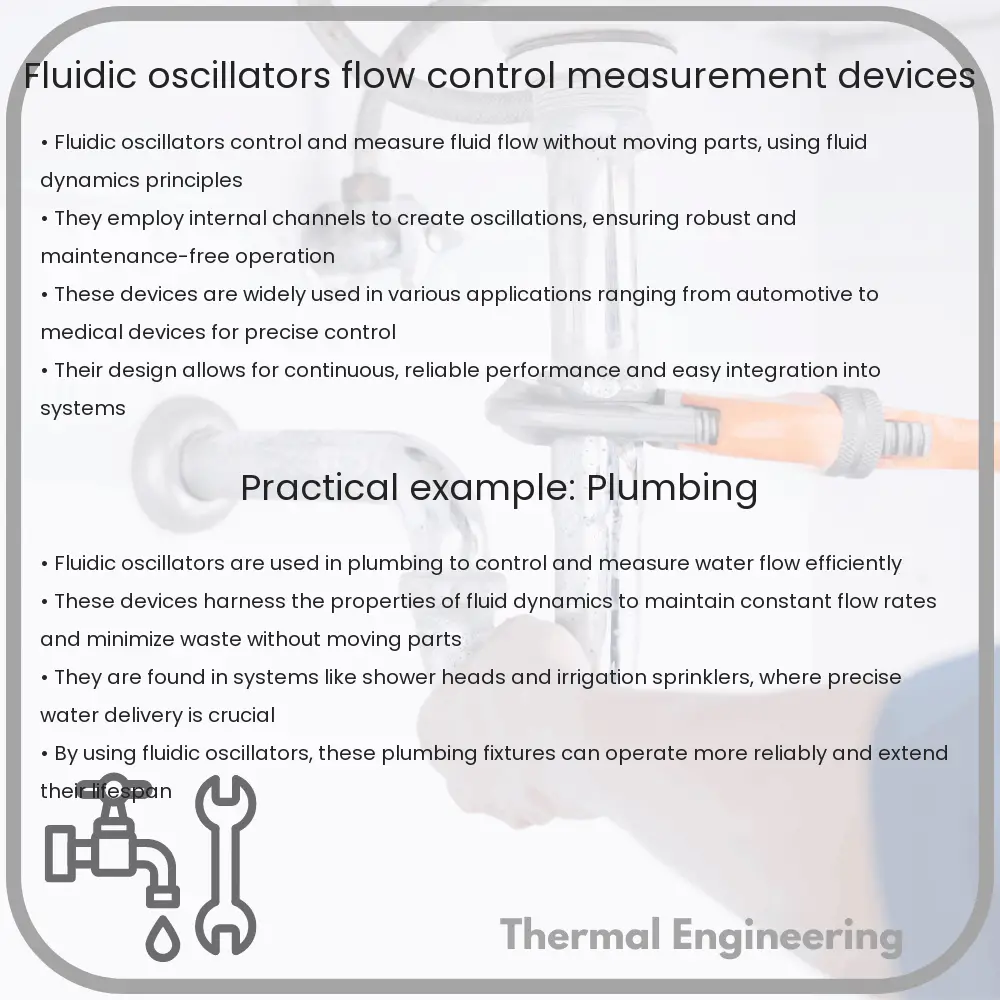
Fluidic oscillators are intriguing devices widely used for controlling and measuring the flow of fluids (liquids and gases). Unlike mechanical flow meters, fluidic oscillators have no moving parts, making them highly reliable and low-maintenance tools in various engineering applications. In this article, we delve into how fluidic oscillators function, their design principles, and the diverse applications where they prove invaluable.

Understanding the Working Principle of Fluidic Oscillators

At the core of a fluidic oscillator’s operation is the principle of fluid dynamics. A fluidic oscillator uses the inherent properties of fluids—viscosity, density, and flow rate—to generate a repetitive oscillation or sweeping motion. This is achieved by channeling the fluid through a specially designed internal pathway that causes the fluid to switch back and forth, creating an oscillating output.

The process begins when fluid enters the oscillator through an inlet. It is then directed towards a feedback loop mechanism consisting of a splitter and two feedback channels. Here, the flow is alternately directed between these channels, driven by pressure fluctuations and instabilities in the fluid stream itself. This switching creates a self-sustaining oscillation, which can be harnessed for various purposes such as flow metering or spray pattern generation.

Key Design Features

Fluidic oscillators are distinguished by several design elements:

  • Feedback Loops: Essential for sustaining the oscillations by continuously redirecting the flow path.
  • Splitter: A carefully positioned obstruction that bifurcates the incoming flow, leading to alternating jets.
  • Nozzles or Exit Ports: Depending on the application, the oscillating flow is directed through specific output ports which further shape and control the flow pattern.

The particular geometry and scale of these elements are crucial and must be tailored to specific fluid characteristics and desired oscillation frequencies.

Applications of Fluidic Oscillators

Fluidic oscillators find utility in a broad array of applications:

  1. Flow Metering: In the absence of moving parts, fluidic oscillators offer a robust alternative for flow measurement, especially in harsh environments where traditional meters may fail.
  2. Spray Dispersion: Widely used in agricultural sprayers and fire suppression systems, the oscillators ensure even distribution of liquids over a wide area.
  3. Cooling Systems: The oscillating output can enhance the coverage and efficiency of cooling sprays in electronic cooling and HVAC applications.
  4. Medical Devices: Due to their precise control and reliability, they are used in applications requiring fine mist generation, such as inhalers and respiratory treatments.

Conclusion

Fluidic oscillators are a testament to the sophistication achievable with the principles of fluid dynamics. Their ability to provide reliable and repetitive oscillating motions without mechanical components makes them a preferred choice in various fields ranging from industrial applications to medical devices. The ongoing advancements in materials and computational fluid dynamics (CFD) are poised to further enhance the capabilities and applications of these versatile flow control and measurement devices.

By understanding the basic principles and applications of fluidic oscillators, engineers and designers can better harness these devices for efficient and effective fluid flow management in myriad real-world scenarios.

Nanofluids | Enhanced Thermal Conductivity & Uses

Learn about nanofluids, fluids enhanced with nanoparticles for improved thermal conductivity and diverse engineering applications.

Nanofluids | Enhanced Thermal Conductivity & Uses

Understanding Nanofluids: Enhanced Thermal Conductivity & Uses

Nanofluids are a class of fluids engineered by dispersing nanometer-sized particles, typically metals or metal oxides, into a base fluid such as water, ethylene glycol, or oil. This innovative enhancement significantly boosts the thermal conductivity of the fluids, enabling better heat transfer compared to conventional fluids. The concept of nanofluids brings together elements of nanotechnology and fluid mechanics to offer solutions to various engineering challenges, particularly in the area of heat transfer.

Mechanisms Behind Enhanced Thermal Conductivity

The thermal conductivity enhancement in nanofluids is primarily attributed to the increased surface area and the superior thermal properties of the nanoparticles when compared to the base fluid. Several mechanisms have been proposed to explain this phenomenon, including:

  • Brownian Motion: The random movement of nanoparticles in the fluid increases the energy dispersion rate.
  • Nano-layering: A layer of fluid molecules forms around each nanoparticle, exhibiting different thermal properties than the bulk fluid.
  • Clustering of Nanoparticles: Nanoparticles may cluster together forming micro-conduits that improve thermal conduction pathways.
  • Increased Surface Area: Nanoparticles have a high surface-to-volume ratio, increasing the area over which heat transfer can occur.

The overall effect of these mechanisms typically results in nanofluids having thermal conductivity enhancements ranging from 20% to 40% over the base fluids, although even higher improvements have been reported under optimal conditions.

Mathematical Representation of Thermal Conductivity in Nanofluids

Thermal conductivity of nanofluids can be modeled and calculated using various equations. One basic approach is the classical model that modifies the effective medium theory. The equation is often given as:

knf = kf + φ(kp – kf) / (φ + (kf / 2kp))

Where:

  • knf is the thermal conductivity of the nanofluid,
  • kf is the thermal conductivity of the base fluid,
  • kp is the thermal conductivity of the nanoparticles,
  • φ is the volume fraction of the nanoparticles.

Applications of Nanofluids

Nanofluids are finding use in a wide range of applications due to their enhanced heat transfer properties. Some typical applications include:

  • Cooling Systems: Used in radiators and automotive cooling systems to improve heat dissipation.
  • Electronics: Employed in heat sinks and cooling mechanisms for high-performance electronic devices like CPUs and GPUs.
  • Renewable Energy: Used in solar water heating systems and geothermal energy extraction to enhance energy efficiency.
  • Industrial Processes: Applied in chemical processing and manufacturing processes where precise temperature control is crucial.

Overall, the exploration of nanofluids continues to grow, driven by the demand for more efficient heat transfer fluids in various technological and industrial fields. Their development represents a significant step forward in the management of thermal processes, potentially contributing to more energy-efficient systems across multiple applications.

Magnetorheological Fluids | Smart Materials & Controls

Learn about Magnetorheological Fluids, smart materials that change properties under a magnetic field, used in engineering and robotics.

Magnetorheological Fluids | Smart Materials & Controls

What are Magnetorheological Fluids?

Magnetorheological fluids (MRFs) are a type of smart material that significantly change their rheological (flow-related) properties in the presence of a magnetic field. Composed of micron-sized ferromagnetic particles suspended in a carrier fluid such as oil, water, or glycol, MRFs can transition from a fluid to a semi-solid state upon the application of a magnetic field, altering their viscosity and enabling them to sustain or transmit force.

Composition and Mechanism of Action

The primary constituents of MRFs are ferromagnetic particles, usually made from iron, and a carrier fluid which keeps these particles in suspension. To avoid sedimentation of the suspended particles, thickeners or surfactants are sometimes added. When a magnetic field is applied, the iron particles align along the lines of magnetic flux, creating chain-like structures within the fluid. This alignment drastically increases the fluid’s apparent viscosity, enabling it to resist flow and behave more like a solid.

Controllability and Applications

The unique feature of MRFs is their reversibility and rapid response to the magnetic field. By adjusting the strength of the magnetic field, it’s possible to control the stiffness and damping characteristics of MRFs. This property makes them highly effective for use in variable-resistance applications such as:

  • Automotive dampers for shock absorbers and engine mounts
  • Actuators in robotics
  • Prosthetic limbs
  • Adaptive bridges and building supports that can be stiffened in response to wind or seismic activity

Advantages of Using Magnetorheological Fluids

MRFs offer several benefits in applications where changeable resistance is required:

  • Quick responsiveness: The change in viscosity occurs within milliseconds of applying or removing the magnetic field.
  • Energy efficiency: Energy is only required to generate the magnetic field, rather than to continuously control the mechanical properties of the device.
  • Reversible and repeatable: Properties of MRFs can be controlled precisely without long-term degradation in performance.
  • Versatility: Suitable for a wide range of applications from delicate medical instruments to robust construction solutions.

In conclusion, magnetorheological fluids are a remarkable example of smart materials with potent applications in various fields of engineering. Their ability to adapt rapidly and reversibly offers an attractive alternative for systems requiring modifiable properties to efficiently respond to changing conditions.

Electrorheological Fluids | Electrical Fields & Applications

Electrorheological fluids are materials whose viscosity changes when exposed to an electric field, useful in various applications.

Electrorheological Fluids | Electrical Fields & Applications

Understanding Electrorheological Fluids

Electrorheological (ER) fluids are fascinating materials that change their viscosity in response to an electric field. They consist of a suspension of tiny polarizable particles within an insulating fluid. When an electric field is applied, these particles form structured chains along the direction of the electric field, significantly altering the fluid’s characteristics. This unique property allows ER fluids to transition from a liquid-like state to a solid-like state and vice versa, making them highly useful in various applications.

How Electrorheological Fluids Work

The behavior of ER fluids is primarily governed by the interactions between the suspended particles and the external electric field. In the absence of an electric field, the particles are randomly distributed throughout the fluid, allowing it to flow freely. Upon application of the electric field, the particles align themselves into chain-like structures due to the polarization forces. This alignment increases the fluid’s apparent viscosity and can make it behave more like a gel.

Mathematical Description

The change in viscosity can be quantitatively described by the equation:

τ = η * γ + φ(E2)

Where:

  • τ represents the shear stress,
  • η is the dynamic viscosity without the electric field,
  • γ is the shear rate, and
  • φ(E2) is a function representing the effect of the electric field E, squared on the stress.

Applications of Electrorheological Fluids

Electrorheological fluids have a wide range of practical applications thanks to their ability to rapidly change their mechanical properties:

  1. Automotive Industry: ER fluids are used in the development of adjustable shock absorbers in vehicles, allowing for enhanced control and comfort under varying load and road conditions.
  2. Robotics: ER fluids aid in the creation of clutches and other components in robots, offering precise control over limb and joint movements.
  3. Aerospace: Their use in damping systems helps in stabilizing and reducing vibrations in spacecraft components.
  4. Military Technology: ER fluids are explored for use in tunable armor and other adaptive systems, which can potentially provide better protection based on the threat level.

Challenges and Future Prospects

Despite their extensive potential, ER fluids face challenges such as particle sedimentation, wear and tear due to repeated use, and the requirement for high voltages for activation. Ongoing research is focused on improving the durability, efficiency, and practicality of ER fluids, including the development of new particle materials and formulations to enhance their response to electric fields while reducing activation thresholds.

The study and improvement of electrorheological fluids continue to evolve, promising new innovative applications across various fields. With advancements in nanotechnology and materials science, the next generation of ER fluids could offer even greater capabilities and disrupt traditional mechanical systems with electrically controllable solutions.

Biofluids | Medical Research, Types & Applications

Learn about biofluids, their types, roles in medical research, technological advances, and their future in diagnostics and treatment.

Biofluids | Medical Research, Types & Applications

Understanding Biofluids: Significance in Medical Research and Their Applications

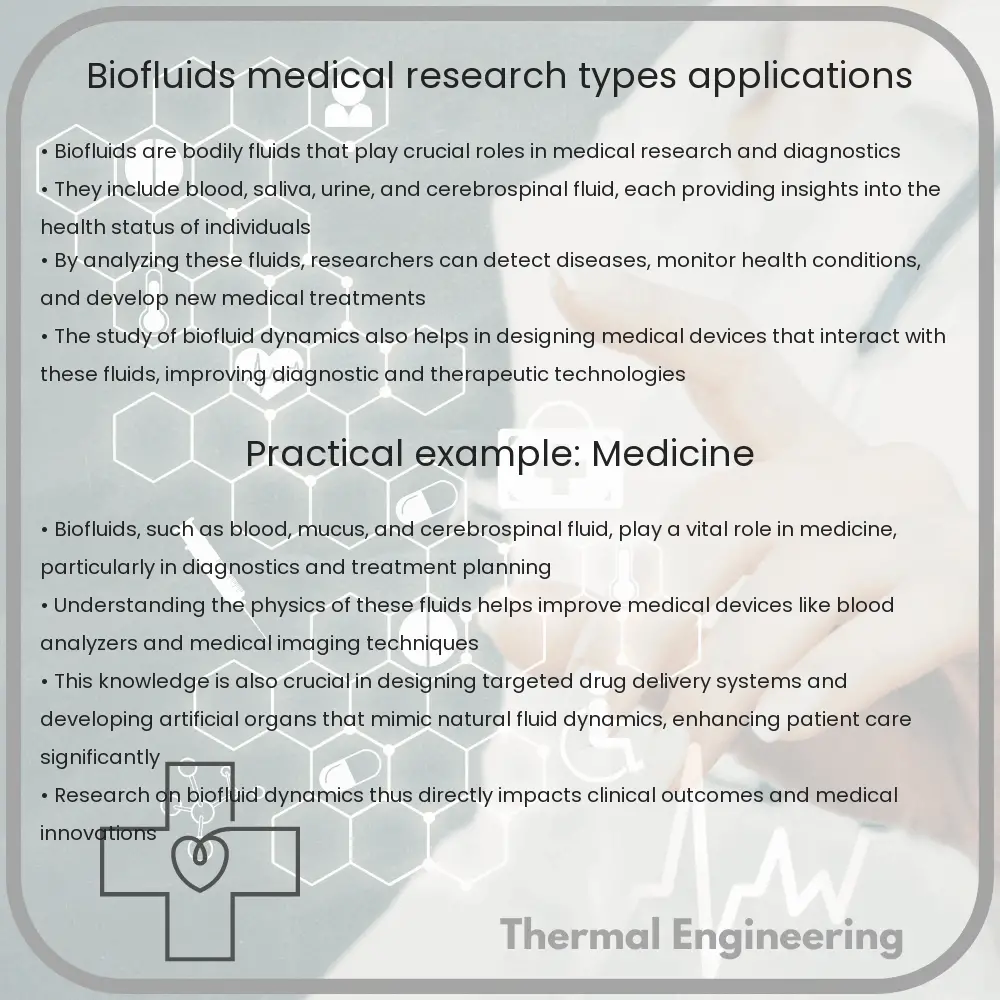
Biofluids are any and all liquids within the bodies of living organisms, playing integral roles in biological functions across various systems. Widely utilized in medical research, the study of biofluids helps in diagnosing diseases, understanding human physiology, and developing therapeutic strategies. This article will explore the types of biofluids, their research implications, and real-world applications.

Types of Biofluids

  • Blood: Perhaps the most extensively studied biofluid, blood is a complex mixture of cells, electrolytes, nutrients, and proteins that transports oxygen and removes waste from cells.
  • Urine: Urine analysis can provide significant insights into kidney function, metabolic processes, and the excretory system, reflecting the body’s overall state of health.
  • Cerebrospinal Fluid (CSF): This fluid envelops the brain and spinal cord, protecting them from injury while serving as a channel for delivering nutrients and removing waste.
  • Sweat: While primarily involved in thermoregulation, sweat analysis can reveal metabolic and disease states, particular in electrolyte balance and dehydration studies.
  • Saliva: Easy to collect and test, saliva is increasingly used for biomarker research, offering non-invasive insights into hormonal, immunological, and metabolic conditions.
  • Synovial Fluid: Found in joint cavities, it’s crucial for diagnosing arthritic conditions by analyzing its viscosity and cellular composition.

Applications in Medical Research

Study and analysis of biofluids are fundamental in medical research, enabling the discovery of biomarkers, disease mechanisms, and treatment efficacy assessments:

  • Disease Diagnosis: Various conditions can be diagnosed by detecting specific biomarkers in biofluids. For instance, elevated levels of certain proteins in CSF can indicate neurological disorders like Alzheimer’s disease.
  • Treatment Monitoring: The response to a treatment regimen can often be monitored through changes in biofluid composition. Regular monitoring of blood or urine can inform adjustments in therapy, particularly in chronic illnesses like diabetes.
  • Pharmacokinetics: Blood analysis is crucial in understanding how drugs are absorbed, distributed, metabolized, and excreted in the body, influencing drug dosing and administration strategies.

Technological Advances and Future Outlook

Advancements in biofluid research utilize cutting-edge technologies including microfluidics, nanotechnology, and molecular genetics tools. These technologies allow for more precise, rapid, and cost-effective analyses of biofluids, enhancing our abilities to diagnose, monitor, and treat diseases:

  • Microfluidic Devices: These devices require only minute volumes of fluids and can perform complex analytical functions, useful particularly in point-of-care diagnostics.
  • Wearable Biosensors: These sensors continuously monitor biofluids like sweat, providing real-time health status and detecting potential health events before they become critical.

In conclusion, biofluids are vital to the fields of medical research and clinical diagnostics. They offer profound insights into the physiological processes and states of disease in the body. The continuous advancements in technology will likely further enhance our capability to utilize biofluids, potentially transforming how conditions are diagnosed, monitored, and treated in the future.

Phase Change Materials | Thermal Management & Applications

Learn about Phase Change Materials (PCMs), substances that manage thermal energy by melting and freezing at specific temperatures.

Phase Change Materials | Thermal Management & Applications

Understanding Phase Change Materials and Their Role in Thermal Management

Phase Change Materials (PCMs) are substances that absorb and release thermal energy during the process of melting and freezing. As they transition between solid and liquid states at a specific temperature, they are able to store and release large amounts of energy, making them ideal for use in thermal management systems across various applications.

How Phase Change Materials Work

The functionality of PCMs is based on their inherent property of latent heat. When a PCM reaches its melting point, it absorbs a significant amount of heat from the environment (latent heat of fusion). This heat is stored within the material without raising its temperature. Conversely, when the PCM solidifies, it releases this stored heat back into the environment. The chemical formula for the latent heat is given by Q = m*L, where:

  • m is the mass of the material,
  • L is the latent heat capacity.

This characteristic makes PCMs highly effective for thermal buffering and insulation purposes.

Types of Phase Change Materials

PCMs are categorized primarily into three types based on their chemical composition:

  1. Organic PCMs: These include paraffin waxes and fatty acids, known for their reliability and congruent melting properties. They do not exhibit supercooling and have relatively stable melt/freeze cycles.
  2. Inorganic PCMs: Examples are salt hydrates. They have higher latent heat per unit volume than organics but can suffer from phase separation and supercooling.
  3. Biobased PCMs: These are derived from natural sources and are increasingly gaining attention due to their environmental benefits and renewable origins.

Applications of Phase Change Materials

PCMs have a wide range of applications, notably in:

  • Building and Construction: Integrating PCMs in building materials like wallboards or ceiling tiles to help regulate indoor temperatures, reducing the need for air conditioning and heating.
  • Energy Storage: PCMs can be used to store excess heat generated by solar panels during the day and release it during cooler periods, enhancing energy efficiency.
  • Textiles: Incorporation of microencapsulated PCMs in fabrics for protective clothing or in bedding for regulating body temperature.
  • Electronics: PCMs are used in devices to manage heat generated by electronics, thereby improving performance and extending the lifespan of components.

Challenges and Future Directions

While PCMs offer significant advantages for thermal management, several challenges remain in their widespread adoption:

  • Cost Efficiency: High-quality PCMs can be expensive, which limits their use in cost-sensitive applications.
  • Stability Over Time: Some PCMs can degrade after many cycles of melting and freezing, which affects their effectiveness and lifespan.
  • Integration Issues: There are technical challenges related to integrating PCMs into existing systems and materials.

Despite these challenges, ongoing research and technological advancements are improving the performance and viability of PCMs. Innovations such as nano-enhanced PCMs and hybrid materials that combine both organic and inorganic PCMs are being explored to overcome existing limitations.

In conclusion, Phase Change Materials present a promising solution for improving thermal management in various sectors. As research continues to enhance their efficiency and cost-effectiveness, we can expect to see greater integration of PCMs in everyday applications, driving forward sustainable and energy-efficient technologies.