Facebook Instagram Youtube Twitter

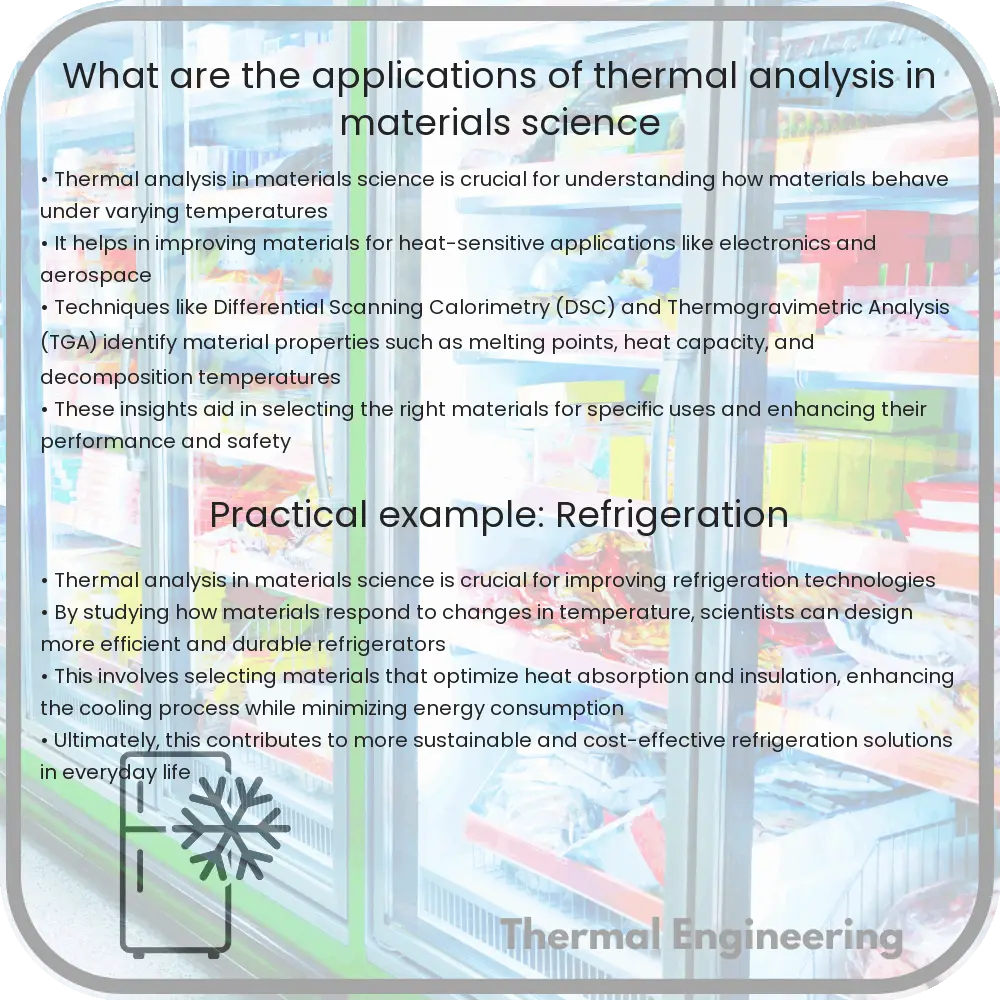
What are the applications of thermal analysis in materials science

Thermal analysis in materials science explores how material properties change with temperature, essential for material design and innovation.
What are the applications of thermal analysis in materials science

Understanding the Facets of Thermal Analysis in Materials Science

Thermal analysis is a branch of materials science where the properties of materials are studied as they change with temperature. This technique provides essential data for material design, characterization, and processing. It is vital in multiple sectors, including aerospace, automotive, electronics, and construction, helping to innovate and improve material performance in different environmental conditions.

Key Techniques in Thermal Analysis

There are a few primary techniques used in thermal analysis:

  • Differential Scanning Calorimetry (DSC): This technique measures the amount of heat required to increase the temperature of a sample relative to a reference. It’s useful for studying phenomena such as melting, crystallization, and phase transitions.
  • Thermogravimetric Analysis (TGA): TGA measures the amount and rate of change in the weight of a material as a function of temperature or time. It is critical for evaluating compositional properties, including thermal stability and moisture content.
  • Dynamic Mechanical Analysis (DMA): DMA determines a material’s mechanical properties as they deform under periodic stress. It’s particularly useful for studying the viscoelastic behavior of polymers.
  • Thermomechanical Analysis (TMA): TMA measures the dimensional changes of a material as a function of temperature. It can assess expansion coefficients and softening points.

Applications of Thermal Analysis

Thermal analysis impacts various applications crucial for advancing material properties and applications:

  • Evaluation of Composite Materials: Essential for aerospace and automotive industries, thermal analysis helps in optimizing composites for lightness and strength under high thermal stresses.
  • Polymers and Plastics: Analyzing the thermal properties of polymers can determine their usability in different environmental conditions, improving products from packaging to high-performance parts in automotive applications.
  • Metals and Alloys: For the metallurgical industry, thermal analysis is crucial in understanding melting, alloying, phase transformation, and crystallization behaviors, helping to refine mechanical properties like toughness and tensile strength.
  • Ceramics and Glass: The thermal stability and thermal expansion coefficients are critical for applications such as electronics and construction materials where temperature changes are frequent.
  • Pharmaceuticals: Stability and purity of pharmaceuticals are paramount and can be assessed using thermal analysis, thus ensuring the safety and efficacy of drugs.

Conclusion

Thermal analysis serves as a gateway to deeper understanding and enhancement of materials, which play a pivotal role in the performance and durability of final products. By studying how materials behave under different temperatures, scientists and engineers can tailor materials to meet specific requirements, thus driving innovation across various fields. As such, thermal analysis remains a fundamental part of materials science research and application.

Can thermal gradients be used to generate electricity

This article examines the use of thermal gradients to generate electricity through the thermoelectric effect, focusing on principles, materials, and applications.

Can thermal gradients be used to generate electricity

Generating Electricity Using Thermal Gradients

Thermal gradients—the differences in temperature within a system—are not merely a subject of academic discussion but a practical source for generating electricity. This process, known as the thermoelectric effect, primarily involves converting temperature differences directly into electric voltage. Here, we will explore the fundamental principles and real-world applications of using thermal gradients to generate electricity.

Understanding the Thermoelectric Effect

The thermoelectric effect is essentially the direct conversion of temperature differences to electric voltage and vice versa. It comprises three separately identified phenomena: the Seebeck effect, the Peltier effect, and the Thomson effect. For the purpose of electricity generation, the Seebeck effect is most relevant.

  • Seebeck Effect: Discovered in 1821 by Thomas Johann Seebeck, this phenomenon involves generating an electric current in a circuit composed of two different conductors when their junctions are maintained at varying temperatures. The voltage created between these two points can be described by the equation \( V = S \Delta T \), where \( S \) is the Seebeck coefficient, and \( \Delta T \) is the temperature difference between the junctions.

Materials and Efficiency

The effectiveness of thermoelectric generators (TEGs) heavily relies on the materials used. Materials with a high Seebeck coefficient, low thermal conductivity, and good electrical conductivity are ideal, as they maximize electrical output while minimizing heat conduction. Bismuth telluride (Bi2Te3) is one of the most commonly used materials in thermoelectric devices designed for room temperature applications.

However, the efficiency of converting heat to electricity with TEGs is generally low, often around 5-8% under typical conditions. This efficiency can increase significantly at higher temperature gradients, but the challenge of finding materials that can withstand high temperatures and maintain performance limits practical applications.

Applications of Thermoelectric Generators

  • Spacecraft Power Systems: NASA has utilized TEGs for powering spacecrafts in missions where solar power is ineffective. The famous Voyager probes, for instance, use radioisotope thermoelectric generators (RTGs) that convert heat from decaying plutonium-238 into electricity.
  • Waste Heat Recovery: In industrial settings, significant amounts of heat are lost during processes. Thermoelectric generators can be employed to convert some of this waste heat back into usable electricity, potentially improving energy efficiency.
  • Remote Power Sources: For locations where conventional power sources are impractical, TEGs offer a reliable alternative for providing electricity in remote areas, powering lighthouses, or in off-grid telecommunications.

Challenges and Future Directions

Despite their potential, the deployment of thermoelectric generators on a larger scale faces several challenges. The primary issues include the cost of high-performance thermoelectric materials and the overall efficiency of the devices. Ongoing research aims to discover new materials and enhance the thermoelectric properties, which could lead to better, more efficient TEGs. Additionally, improvement in nanotechnology and material science could unlock new applications and enhancements for thermoelectric generators.

In conclusion, while currently limited by material and efficiency constraints, the use of thermal gradients to generate electricity holds promise for a variety of applications, from space exploration to sustainable energy solutions. Continued exploration and technological innovation may significantly expand the scope and effectiveness of these fascinating devices.

How do thermal barriers improve engine efficiency in racing cars

Learn how thermal barriers enhance racing car efficiency by managing engine heat, improving performance, and reducing fuel consumption.

How do thermal barriers improve engine efficiency in racing cars

Understanding the Role of Thermal Barriers in Racing Car Efficiency

Racing cars are engineered to deliver maximum performance under extreme conditions. One key aspect of achieving high efficiency and performance is managing the intense heat generated by the engine. This is where thermal barriers come into play. In this article, we will explore how thermal barriers improve engine efficiency in racing cars.

What are Thermal Barriers?

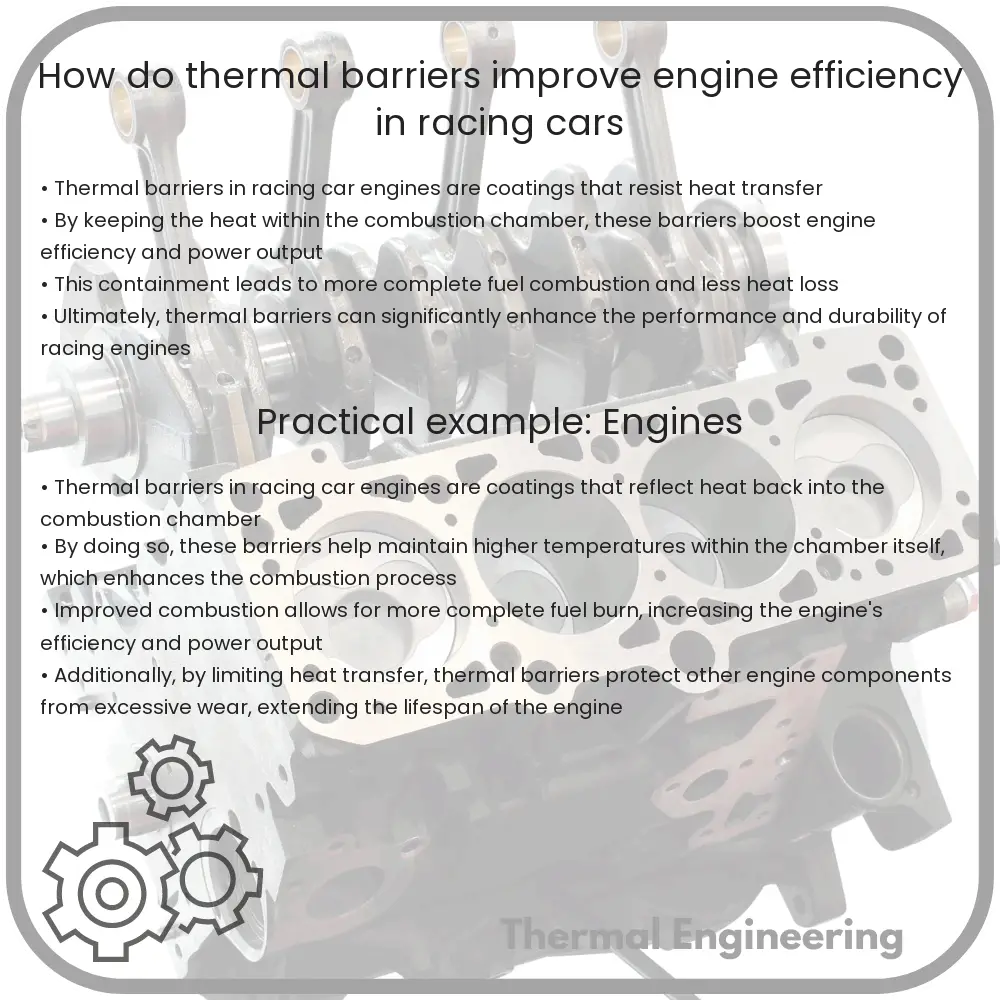
Thermal barriers are materials or coatings applied to various parts of an engine and exhaust system to prevent heat loss and manage thermal energy more effectively. These barriers are designed to withstand high temperatures and provide insulation, keeping the heat within the components where it can do the most work.

Function and Benefits of Thermal Barriers

  • Increased Thermal Efficiency: By maintaining higher temperatures within the combustion chamber, thermal barriers improve the thermodynamic efficiency of the engine. According to the ideal gas law (PV = nRT), higher temperatures can increase the pressure exerted by the gases on the pistons, thus enhancing the power output.
  • Protection of Engine Components: Thermal barriers protect sensitive components from the detrimental effects of high temperatures, thereby extending the life of these parts and reducing maintenance costs.
  • Reduced Heat Soak: These barriers limit the amount of heat transferred from the engine and exhaust system to other parts of the car, such as the oil and fuel systems, which can degrade in performance if overheated.

Types of Thermal Barrier Coatings (TBCs)

There are several types of thermal barrier coatings used in racing engines, each with unique properties and applications:

  1. Ceramic Coatings: Applied to combustion chambers, pistons, and valve faces, ceramic coatings are popular due to their ability to reflect heat back into the combustion process and reduce thermal gradients.
  2. Exhaust Coatings: Special coatings used on exhaust systems help in maintaining high temperatures within the exhaust gases. This is critical for the efficiency of turbocharged engines, where hotter exhaust gases can help drive the turbocharger more effectively.

Impact on Engine Performance

The incorporation of thermal barriers in racing engines can lead to several performance improvements:

  • Increased Horsepower: Enhanced management of thermal energy helps in maintaining optimal combustion temperatures, leading to more complete burning of fuel and higher power output.
  • Fuel Efficiency: With improved combustion efficiency, the engine can extract more energy from the same amount of fuel. This not only boosts performance but also reduces fuel consumption relative to the distance raced.
  • Faster Engine Response: By reducing thermal mass (the ability of a material to absorb and retain heat), these coatings can allow engine components to heat up and cool down more quickly, improving engine responsiveness.

Conclusion

Thermal barriers play a crucial role in the performance and efficiency of racing cars. By effectively managing the extreme heat produced by racing engines, these barriers contribute significantly to enhanced engine performance, durability, and fuel efficiency. The science of thermodynamics and materials engineering behind thermal barriers is a prime example of how advanced engineering techniques are applied in high-performance sports to gain a competitive edge.

The continuous development and refinement of thermal barrier technologies will undoubtedly keep playing a key role in the evolution of racing car performance in the future.

Thermal management of quantum computing systems

Explore challenges and innovations in maintaining ultra-low temperatures in quantum computing to ensure optimal performance and qubit stability.

Thermal management of quantum computing systems

Thermal Management in Quantum Computing Systems

Quantum computing represents a significant leap forward from traditional computing, harnessing the principles of quantum mechanics to perform complex calculations at unprecedented speeds. However, as quantum computers grow in capability, managing the heat they generate becomes an increasingly challenging problem. Proper thermal management is crucial to maintain the quantum bits, or qubits, in their desired quantum states without error due to thermal fluctuations.

Understanding the Challenge

Qubits, the building blocks of quantum computers, are extremely sensitive to their environment. Any slight change in temperature can cause qubits to lose their quantum mechanical properties through a process called decoherence, drastically reducing the computer’s performance. This sensitivity necessitates an operating environment that can be as cold as mere millikelvins (mK).

At such low temperatures, traditional cooling methods used in conventional computers are inadequate. Instead, quantum computers use sophisticated refrigeration techniques, such as dilution refrigerators, to achieve and maintain these extreme conditions.

Key Techniques in Thermal Management

  • Dilution Refrigerators: These specialized refrigerators are capable of cooling quantum processors down to temperatures close to absolute zero (approximately 10 to 100 mK). They operate using a mixture of helium-3 and helium-4 isotopes, exploiting the properties of these isotopes at low temperatures to absorb heat from the environment.
  • Micro Kelvin Cooling: For quantum systems requiring even lower temperatures, micro Kelvin coolers can be used. These systems rely on demagnetization cooling, a process where the magnetic entropy of a paramagnetic material is decreased to further lower the temperature beyond what dilution refrigerators can achieve.
  • Vibration Isolation: Reducing mechanical vibrations is crucial as they can introduce heat into the system. Vibration isolation platforms and techniques are employed to shield sensitive components from both internal and external vibrations.
  • Thermal Shielding: Efficient thermal shielding is necessary to minimize the heat transfer from warmer parts of the device or from the environment. This is often achieved through multi-layer insulation that reflects radiative heat and reduces heat conduction.

Future Directions in Thermal Management for Quantum Computers

As quantum computing advances, the development of more efficient and compact cooling technologies is essential. Research is ongoing in areas such as on-chip cooling, where cooling mechanisms are integrated directly onto the quantum chips, potentially reducing the thermal load and improving the qubit coherence times.

Further, materials science plays a pivotal role in the evolution of thermal management technologies. Discovering and utilizing materials with better thermal characteristics can lead to more effective dissipation of heat and improved isolation of qubits from thermal noise.

In conclusion, the thermal management in quantum computing systems is a critical area that requires ongoing innovation and refinement. As quantum computing continues to develop, thermal solutions will not only need to maintain extremely low temperatures but also adapt to increasingly complex and densely packed quantum architectures. This will ensure that the potential of quantum computing can be fully realized, ushering in a new era of computational capabilities.

Can thermal imaging enhance the detection of architectural heritage

Learn how thermal imaging, or infrared thermography, aids in detecting and preserving architectural heritage by identifying structural issues and assessing restoration efforts.

Can thermal imaging enhance the detection of architectural heritage

Exploring the Role of Thermal Imaging in Detecting Architectural Heritage

Thermal imaging, also known as infrared thermography, is a technology that has been increasingly used in various fields for diagnostics and monitoring. In the context of preserving and discovering architectural heritage, this technology offers a non-invasive and effective way to analyze buildings and structures. This article will explore how thermal imaging can enhance the detection of architectural heritage and help in its preservation.

Understanding Thermal Imaging

Thermal imaging cameras detect radiation in the infrared range of the electromagnetic spectrum (roughly 9000-14,000 nanometers or 9-14 µm) and produce images of that radiation, known as thermograms. Since infrared radiation is emitted by all objects based on their temperatures, according to the black body radiation law, thermal imaging makes it possible to see one’s environment with or without visible illumination.

Applications in Architectural Heritage

  • Identifying Structural Anomalies: Thermal imaging can reveal inconsistencies in temperature that signal various structural problems in historic buildings, including moisture ingress, insulation defects, and thermal bridging. Early detection of these issues can prevent more significant damage to the heritage structures.
  • Material Differentiation: Different materials have distinct thermal properties which can be distinguished in a thermal image. This feature is particularly useful in analyzing buildings where the construction documentation may be missing or incomplete.
  • Assessment of Restoration Works: Post-restoration assessments can be simplified using thermal imaging. It can help verify the material homogeneity and quality of restoration work by highlighting areas of thermal inconsistency.

Case Studies Demonstrating the Effectiveness of Thermal Imaging

  1. Historic Buildings in Europe: In various projects across Europe, thermal imaging has been used to analyze historic buildings, revealing heat loss due to poor insulation and hidden structural defects like voids in masonry.
  2. Detection of Moisture in Ancient Structures: Thermal cameras have been employed to detect moisture distribution in ancient ruins, which helps in the precise planning of conservation efforts that can effectively target and resolve moisture-related issues.

Limitations and Considerations

While thermal imaging is a powerful tool for the detection and analysis of architectural heritage, there are several limitations and considerations that must be acknowledged:

  • Environmental Conditions: Thermal imaging can be affected by environmental factors such as ambient temperature, humidity, and sunlight which might affect the accuracy of the readings.
  • Surface Emissivity: Different materials have different emissivities, which can influence how thermal cameras interpret their temperatures. Accurate knowledge and adjustment for these variations are crucial for precise analysis.
  • Training and Expertise: Effective use of thermal imaging technology requires substantial training and expertise to interpret the thermograms accurately. Misinterpretations can lead to incorrect analysis and subsequent actions.

Conclusion

Thermal imaging presents a significant potential in the field of architectural heritage conservation. By allowing experts to see beyond what is visible to the naked eye, it helps in the early detection of potential problems and contributes efficiently to the maintenance and restoration of historic structures. However, its effectiveness is contingent upon the correct application and interpretation of the thermal images, a task requiring specialized skills and knowledge. As such, while thermal imaging is not a standalone solution, it is an invaluable part of the toolkit for heritage conservation professionals.

What are the thermal considerations in data center management

A detailed guide to thermal management strategies and technologies critical for efficient data center operation, including cooling systems and heat dissipation methods.

What are the thermal considerations in data center management

Understanding Thermal Considerations in Data Center Management

Managing a data center involves several challenges, with thermal management being one of the primary concerns. Proper thermal considerations ensure the optimal performance of computing equipment, extend hardware life expectancy, and reduce energy consumption. Below, we’ll explore the key aspects of thermal management in data centers and why it is crucial for efficient data center operation.

Importance of Thermal Management

Excessive heat is one of the major threats to data center operations. It can lead to hardware malfunction, reduced efficiency, and increased operation costs. Efficient cooling systems help maintain an ideal operating environment which, in turn, enhances system reliability and saves energy.

Heat Generation and Dissipation in Data Centers

Data centers consume a large amount of energy, most of which is converted into heat. This heat must be effectively managed to prevent the data center from becoming overheated. The key to effective cooling lies understanding two main factors:

  • Heat Load: This is the amount of heat produced by the data center. It depends on the type and quantity of equipment operating within the facility.
  • Heat Dissipation: The capability of a cooling system to dissipate heat from the data center into the environment efficiently.

The effectiveness of heat dissipation largely depends on the design and implementation of cooling systems tailored to the data center’s specific needs.

Cooling Systems in Data Centers

There are several methods of cooling used in data centers, each with its own benefits and applications. The choice of cooling system depends on various factors including the climate of the data center location, energy costs, and the specific heat load of the equipment. Common cooling methods include:

  • Air Conditioning: Traditional air conditioning units are often used in smaller data centers or individual server rooms.
  • In-Row Cooling: This involves placing cooling units directly in line with server racks, providing localized cooling that can be more efficient than traditional methods.
  • Liquid Cooling: By using a fluid to transport heat away from equipment, liquid cooling can offer a more efficient heat transfer compared to air cooling and is beneficial for high-density setups.

The efficiency of these systems can be measured using the Power Usage Effectiveness (PUE), which is the ratio of total facility energy to IT equipment energy.

Advanced Strategies for Thermal Optimization

Beyond the basic cooling techniques, there are several advanced strategies that can be utilized to manage heat in data centers:

  • Hot/Cold Aisle Containment: Keeps hot exhaust air separate from cold intake air, which improves cooling efficiency and reduces mixing of different air temperatures.
  • Thermal Storage: Involves the use of phase change materials or ice tanks that absorb heat during peak times and thus, help manage cooling demands more effectively.
  • Use of Renewable Energy: Incorporating renewable energy sources, like solar panels, in data center designs can reduce reliance on non-renewable power, thereby managing operational costs and environmental impacts.

Proper thermal management in data centers not only ensures the longevity and reliability of the equipment but also contributes to significant energy savings and operational cost reductions. Innovations continue to evolve in this field, focusing on sustainable, efficient, and cost-effective cooling solutions.

Conclusion

In summary, thermal management is crucial for the efficient and reliable operation of data centers. By implementing appropriate thermal management strategies, data center operators can ensure their facilities run at optimal levels, support sustainable practices, and minimize costs associated with energy consumption and equipment maintenance.

Can thermal imaging assist in diagnosing plant diseases

Learn how thermal imaging, or thermography, can revolutionize plant disease detection in agriculture by visualizing temperature variations.

Can thermal imaging assist in diagnosing plant diseases

Can Thermal Imaging Assist in Diagnosing Plant Diseases?

Plant disease detection is a crucial aspect of agriculture, significantly influencing crop yield and quality. Traditional methods of diagnosing plant diseases require visual inspection, which is labor-intensive and not always accurate. Enter thermal imaging – a technology that has shown potential in transforming this area of plant health assessment.

What is Thermal Imaging?

Thermal imaging, also known as thermography, is a technique that uses infrared cameras to capture the heat emitted from an object or scene. This technology allows detection of infrared radiation, which is perceptible as heat, enabling users to see variations in temperature. Every object emits some level of infrared radiation; thus, thermal cameras can visualize temperature differences with precision, often without direct contact with the objects being inspected.

How Does Thermal Imaging Work in Plant Diagnosis?

Plants affected by diseases or pests often exhibit a change in their physiological processes. One such change is the alteration in transpiration rates. Healthy plants generally have consistent transpiration patterns that help maintain a certain temperature range. When a disease affects a plant, these patterns can be disrupted, leading to abnormal temperature variations.

Thermal cameras can detect these minute differences in temperature, allowing for the early detection of plant diseases even before they become visible to the naked eye. The key here is the precision and sensitivity of modern thermal imaging cameras, which can detect temperature differences as small as 0.01°C.

Advantages of Thermal Imaging in Agriculture

  • Non-contact and Non-destructive: Thermal cameras can scan crops from a distance, avoiding any direct contact that might further stress already diseased plants.
  • Efficient Large Area Monitoring: Unlike manual inspection, thermal imaging can be used to survey large fields in a relatively short amount of time, making it feasible for regular monitoring.
  • Early Disease Detection: By identifying temperature anomalies, thermal imaging can pinpoint affected areas before the disease spreads extensively or becomes more challenging to manage.
  • Precision Agriculture: Thermal imaging can be integrated into precision agriculture practices, where data collected can help in making informed decisions regarding the watering, harvesting, and application of treatments.

Limitations and Considerations

While thermal imaging is a powerful tool, its effectiveness can be influenced by environmental factors such as ambient temperature and sunlight exposure. For instance, the accuracy of thermal readings can vary with weather conditions, and direct sunlight can mask or distort thermal signatures. Furthermore, interpreting thermal images requires expertise to distinguish between heat signatures caused by diseases and those triggered by other stress factors like water deprivation or nutrient deficiency.

Conclusion

Thermal imaging offers a promising alternative to conventional methods of diagnosing plant diseases, providing a fast, efficient, and non-invasive means of monitoring the health of plants. As technology advances and becomes more accessible, it could play an increasingly vital role in sustainable agriculture practices and crop management.

However, it is important to consider the integration of thermal imaging with other technologies and agronomic knowledge for a comprehensive approach to plant health management. This holistic strategy ensures that the benefits of thermal imaging can be fully realized while minimizing the impact of its limitations.

How does heat treatment affect the wear resistance of alloys

Learn how heat treatment processes like annealing, quenching, and tempering enhance the wear resistance of alloys by modifying their microstructure.

How does heat treatment affect the wear resistance of alloys

Understanding the Impact of Heat Treatment on the Wear Resistance of Alloys

Heat treatment is a crucial process in the modification of material properties, particularly for alloys used in engineering applications. By altering the microstructure of an alloy through various heating and cooling techniques, it is possible to enhance its wear resistance. This article explores how heat treatment influences the wear resistance of alloys, delving into the underlying principles and practical outcomes.

What is Heat Treatment?

Heat treatment involves heating an alloy to a specific temperature, holding it at that temperature for a duration, and then cooling it down, often in a controlled manner. This process is designed to change the physical and sometimes chemical properties of the material to achieve desired mechanical properties such as increased hardness, strength, toughness, and wear resistance. Common methods of heat treatment include annealing, quenching, and tempering.

Why Focus on Wear Resistance?

Wear resistance is a critical property for materials that operate under conditions of friction and wear, especially in industrial applications such as gears, bearings, and cutting tools. Enhancing wear resistance can significantly extend the service life of components, reduce maintenance costs, and improve the overall efficiency of mechanical systems.

The Role of Microstructure in Wear Resistance

The wear resistance of an alloy largely depends on its microstructure, which can be finely tuned by heat treatment. The microstructure refers to the arrangement and distribution of phases and grain boundaries within the alloy, which directly influence its mechanical properties. Various heat treatment techniques affect these microstructural components, thereby impacting the alloy’s wear resistance:

  • Annealing: This process softens the metal, relieving stresses and resulting in a coarse and soft microstructure. Though not directly increasing wear resistance, annealing is typically used to prepare alloys for further heat treatment.
  • Quenching: Quenching involves rapidly cooling the metal after it is heated to a high temperature. This sudden cooling can form harder microstructural phases like martensite, significantly enhancing wear resistance.
  • Tempering: After quenching, tempering is often conducted by heating the alloy to a temperature below the eutectoid temperature and then allowing it to cool. This process reduces brittleness and increases toughness while maintaining the hardness achieved through quenching.

Case Studies and Practical Evidence

Research and industrial applications have shown that optimal heat treatment processes can lead to substantial improvements in the wear resistance of alloys. For example, in high carbon steels, proper quenching and tempering can result in a fine balance between hardness (for wear resistance) and toughness (to prevent brittle failure), making them ideal for high-stress applications like cutting tools and bearings.

Conclusion

Heat treatment is a powerful tool in material engineering, allowing for the precise control of the microstructural properties of alloys. By understanding and manipulating these properties, engineers can enhance the wear resistance of alloys, significantly affecting their performance and durability in various applications. Continued research and development in this field hold the potential to further improve the capabilities of materials, catering to the ever-increasing demands of modern engineering and technology.

What is the thermodynamics of jet propulsion

Delve into the thermodynamics of jet propulsion, exploring the Brayton cycle, energy transformations, and efficiency in jet engines.

What is the thermodynamics of jet propulsion

The Thermodynamics of Jet Propulsion

Understanding the thermodynamics of jet propulsion begins with the fundamental principles of thermodynamics and the mechanics of fluid motion. Jet engines, widely used in aircraft for generating thrust, leverage these principles to convert fuel into mechanical energy in the form of high-speed jet exhaust.

Basic Principles of Jet Engine Operation

Jet propulsion typically involves several key stages: intake of air, compression, combustion, expansion, and exhaust. Each stage plays a critical role in transforming chemical energy from the fuel into kinetic energy that propels the vehicle forward.

  • Intake: Air is drawn into the engine.
  • Compression: Compressors raise the pressure of the air.
  • Combustion: Fuel is injected and ignited in the high-pressure air, releasing a large amount of heat.
  • Expansion: High-temperature, high-pressure gases expand and escape through the turbine and nozzle, producing thrust.
  • Exhaust: Exhaust gases are expelled, contributing to the thrust generated by the engine.

Thermodynamic Cycle: The Brayton Cycle

The operation of a jet engine is typically described by the Brayton cycle, which is a thermodynamic cycle consisting of isobaric (constant pressure) and isentropic (constant entropy) processes:

  1. Isentropic compression: Incoming air is compressed isentropically in the compressor, increasing its pressure and temperature.
  2. Isobaric combustion: Fuel combustion occurs at constant pressure, significantly raising the temperature and volume of the air.
  3. Isentropic expansion: The high-pressure, high-temperature gas expands isentropically through the turbine, where some of its energy is extracted to power the compressor.
  4. Isobaric exhaust: Finally, gases are expelled isobarically through the exhaust nozzle, producing thrust as they leave the engine.

Energy Transformations and Efficiency

The efficiency of a jet engine (thermal efficiency) can be quantified by how well it converts the energy from the fuel into useful work (thrust). The key factors influencing engine efficiency include:

  • Compressor and Turbine Efficiency: How effectively these components can compress and expand the air without significant energy losses.
  • Combustion Efficiency: How completely the fuel burns in the combustion chamber.
  • Exhaust Losses: Energy lost through exhaust gases that are not converted into thrust.

Thermal efficiency is significantly affected by the temperature and pressure ratios achieved in the compression and combustion stages. Higher temperatures typically allow greater efficiency but are limited by material constraints due to potential damage from excessive heat.

Conclusion

The thermodynamics of jet propulsion is complex, involving careful management of air and fuel under extreme conditions of temperature and pressure. The Brayton cycle provides a framework for understanding how jet engines capitalize on thermodynamic principles to produce thrust. Engineers consistently work towards enhancing the efficiency of these processes through advances in material science and technology, aiming for engines that are not only more powerful but also more environmentally friendly.

In summary, jet propulsion beautifully illustrates how principles of physics and engineering coalesce to achieve remarkable feats, such as high-speed air travel, propelling not just planes but also human ingenuity forward.

Can thermal blankets improve the survival rates of preterm infants

Exploring the use of thermal blankets to combat hypothermia and improve survival rates in preterm infants.

Can thermal blankets improve the survival rates of preterm infants

Can Thermal Blankets Improve the Survival Rates of Preterm Infants?

Preterm births, defined as babies born before the completion of 37 weeks of gestation, are a significant concern worldwide due to the higher risks of complications such as hypothermia, which can lead to severe health issues and even mortality. One innovative solution to combat hypothermia in preterm infants is the use of thermal blankets. This article explores how thermal blankets work and their potential effectiveness in improving the survival rates of preterm infants.

Understanding Hypothermia in Preterm Infants

Preterm infants are particularly susceptible to hypothermia, where their body temperature drops below the normal range required to maintain metabolic processes. This risk is due to their higher body surface area to weight ratio and a lack of sufficient body fat to provide insulation and energy reserves. Hypothermia can lead to respiratory distress, decreased oxygen to the brain, and even severe infections, each posing a threat to the infant’s survival.

The Role of Thermal Blankets

Thermal blankets, also known as thermal wraps or hypothermia blankets, are designed to help maintain an infant’s body temperature by providing external warmth and insulation. Typically made from biocompatible materials that are safe for use in neonatal care, these blankets work by either:

  • Reflecting the infant’s own body heat back towards them,
  • Acting as an insulating barrier against the cooler environment, or
  • Being actively warmed by an external source to provide consistent heat.

Effectiveness of Thermal Blankets

Studies have shown that using thermal blankets can be effective in reducing the incidence of hypothermia among preterm infants. Thermal regulation is crucial not only for survival but also for promoting appropriate physiological development and growth. For instance, a study published in the Journal of Perinatology demonstrated that the application of a polyethylene wrap immediately post-birth can significantly retain body heat in preterm infants leading to stabilized temperatures.

Further research indicates that these thermal solutions can indeed be associated with lower mortality rates. The consistent use of thermal blankets in preterm infants, especially in low-resource settings where incubators are not readily available, has been linked to improved thermal stability and subsequent survival rates.

Challenges and Considerations

While thermal blankets are beneficial, they must be used correctly to avoid overheating or interference with other medical treatments. Caregivers need to continuously monitor the infant’s temperature and overall health status to adjust the thermal support accordingly. Additionally, these tools should not replace other essential care aspects, such as proper nutrition, hydration, and medical monitoring.

Conclusion

Thermal blankets represent a potentially life-saving intervention for preterm infants at risk of hypothermia. By providing necessary warmth and aiding in thermal regulation, these blankets can contribute to improved survival rates. However, their use should be considered as part of a broader strategy of neonatal care, especially tailored to the needs of preterm infants. Continued research and clinical trials help refine the use of thermal blankets, optimizing their efficacy and safety for the most vulnerable newborns.

In conclusion, when used appropriately, thermal blankets are a simple yet effective tool that can help address the challenges of hypothermia in preterm infants, potentially leading to better health outcomes and higher survival rates.