Facebook Instagram Youtube Twitter

How does thermal effusivity impact fabric comfort

Learn about thermal effusivity, a material property defining its ability to exchange heat, impacting fabric comfort and functionality.

How does thermal effusivity impact fabric comfort

Understanding Thermal Effusivity and Its Impact on Fabric Comfort

Thermal effusivity is a critical property of materials that influences how they interact with heat and by extension, how comfortable they feel when used in apparel. This concept is particularly significant in textiles engineering, where the comfort and thermal regulation properties of fabrics are paramount. Here, we would explore what thermal effusivity means, how it is measured, and its effects on the comfort of different fabrics.

What is Thermal Effusivity?

Thermal effusivity (e) is a material property that describes its ability to exchange heat with its surroundings. It is defined by the formula:

\[ e = \sqrt{k \cdot \rho \cdot c_p} \]

Where:

  • k is the thermal conductivity of the material (measured in W/m*K), representing the material’s ability to conduct heat.
  • ρ (rho) is the density of the material (measured in kg/m3).
  • cp is the specific heat capacity (measured in J/kg*K), which is the amount of heat per unit mass required to raise the temperature of the material by one degree Celsius.

Therefore, thermal effusivity is a measure of a material’s ability to release or absorb heat when it comes into contact with another object or the skin, impacting how ‘hot’ or ‘cold’ it feels upon touch.

Measuring Thermal Effusivity

Thermal effusivity is measured using a device called a C-Therm Trident Thermal Conductivity Instrument. This instrument uses sensors to evaluate the rate of heat transfer from the material to a reference sensor, providing a direct measurement of the fabric’s thermal effusivity.

Impact on Fabric Comfort

The level of thermal effusivity in fabrics directly affects how comfortable the fabric feels in varying environmental conditions. Fabrics with high thermal effusivity feel cooler to the touch as they can rapidly absorb heat from the skin. Conversely, fabrics with low effusivity feel warmer since they absorb heat more slowly. This property is highly significant in the following scenarios:

  • Cooling Effect: In hot climates, fabrics with higher thermal effusivity (such as linen or cotton) can provide a cooling effect, making them more comfortable to wear.
  • Insulating Effect: In colder environments, lower-effusivity materials (such as wool or fleece) are preferable as they do not draw heat away from the skin as rapidly, maintaining a warmer feel.

Applications in Textile Engineering

In the field of textile engineering, understanding and manipulating thermal effusivity is crucial for designing fabrics that suit specific climatic conditions and activity levels. For example, athletic wear often incorporates materials with varying effusivity levels to help manage body temperature and moisture, enhancing comfort and performance.

Moreover, advancements in materials science have led to the development of fabrics that can dynamically adjust their effusivity. These smart textiles change their thermal properties in response to environmental conditions, providing optimal thermal comfort regardless of external temperatures.

Conclusion

Thermal effusivity plays a fundamental role in the comfort, feel, and functionality of fabrics. By understanding and applying principles of thermal effusivity, textile engineers can create advanced fabrics that enhance wearer comfort and suit specific environmental needs. Whether for everyday wear or specialized applications, the right understanding of thermal effusivity can lead to textiles that significantly improve the quality of our interactions with our surroundings.

What is the role of thermal mass in passive design

Learn about thermal mass, a key element in passive design, crucial for energy efficiency and comfort by regulating indoor temperatures naturally.

What is the role of thermal mass in passive design

Understanding the Role of Thermal Mass in Passive Design

Passive design is an approach to building design that leverages natural resources such as sunlight, air movement, and heat conduction to regulate indoor temperature and reduce energy usage. One crucial component of passive design is thermal mass, a concept that refers to the capacity of materials to absorb, store, and later release significant amounts of heat.

How Thermal Mass Works

Materials with high thermal mass, such as concrete, brick, stone, and water, are effective at absorbing and storing heat energy from the sun during the day. This stored heat is gradually released as temperatures cool, helping to maintain a comfortable indoor environment without the need for mechanical heating or cooling systems.

The effectiveness of thermal mass depends on its placement, the climate, and how it interacts with other elements of passive design like insulation and window placement. Properly utilized, thermal mass can mitigate temperature fluctuations, leading to a more stable and comfortable indoor climate.

The Benefits of Thermal Mass in Building Design

  • Energy Efficiency: By reducing the need for mechanical heating and cooling, buildings with well-designed thermal mass can reduce energy consumption, leading to lower utility bills and a smaller carbon footprint.
  • Environmental Impact: Utilizing natural resources to maintain building temperatures helps reduce reliance on fossil fuels and other non-renewable energy sources.
  • Comfort: Thermal mass can help keep indoor temperatures within a more comfortable range by absorbing excess heat in the summer and releasing stored heat in the winter.

Examples of Thermal Mass Application

There are several practical applications of thermal mass in residential and commercial buildings:

  1. Trombe Walls: Thick, south-facing walls painted black and covered with single or double layers of glass. They absorb heat during the day and release it into the building at night.
  2. Concrete Flooring: Exposed concrete floors can absorb heat from sunlight during the day and release it as temperatures cool.
  3. Water Walls: Containers of water placed in areas that receive significant sunlight can serve as thermal batteries, absorbing and releasing thermal energy.

Challenges and Considerations

While thermal mass can significantly enhance energy efficiency, several factors need careful consideration:

  • Climate Suitability: Thermal mass is most effective in regions with significant daily temperature swings.
  • Insulation Integration: Thermal mass must be correctly integrated with insulation to prevent unnecessary heat gain or loss.
  • Placement and Sizing: The placement and amount of thermal mass must be optimized based on building orientation, climate, and other design elements.

Conclusion

Thermal mass plays a pivotal role in passive design by harnessing natural heat transfers to maintain building temperature in an energy-efficient manner. When implemented effectively, it can make significant contributions to the sustainability and comfort of buildings. However, successful integration of thermal mass requires a careful balance of material properties, design considerations, and climatic conditions.

How do thermal wells enhance geothermal systems

Learn about thermal wells and their role in optimizing geothermal energy systems for efficient heat and electricity production.

How do thermal wells enhance geothermal systems

Understanding Thermal Wells in Enhancing Geothermal Systems

Geothermal energy is a sustainable source of heat and electricity that harnesses the Earth’s internal heat. Key to tapping this energy efficiently are thermal wells, which play a crucial role in enhancing the performance of geothermal systems. This article discusses how thermal wells work and their importance in geothermal energy extraction.

What are Thermal Wells?

A thermal well is a type of borehole drilled into the Earth’s crust. Its primary purpose is to access subterranean heat for use in geothermal heating and power generation. Depending on their construction and the technology used, these wells are critical components in both deep and shallow geothermal systems.

Role of Thermal Wells in Geothermal Systems

Thermal wells are integral to the operation of geothermal systems. They serve several key functions:

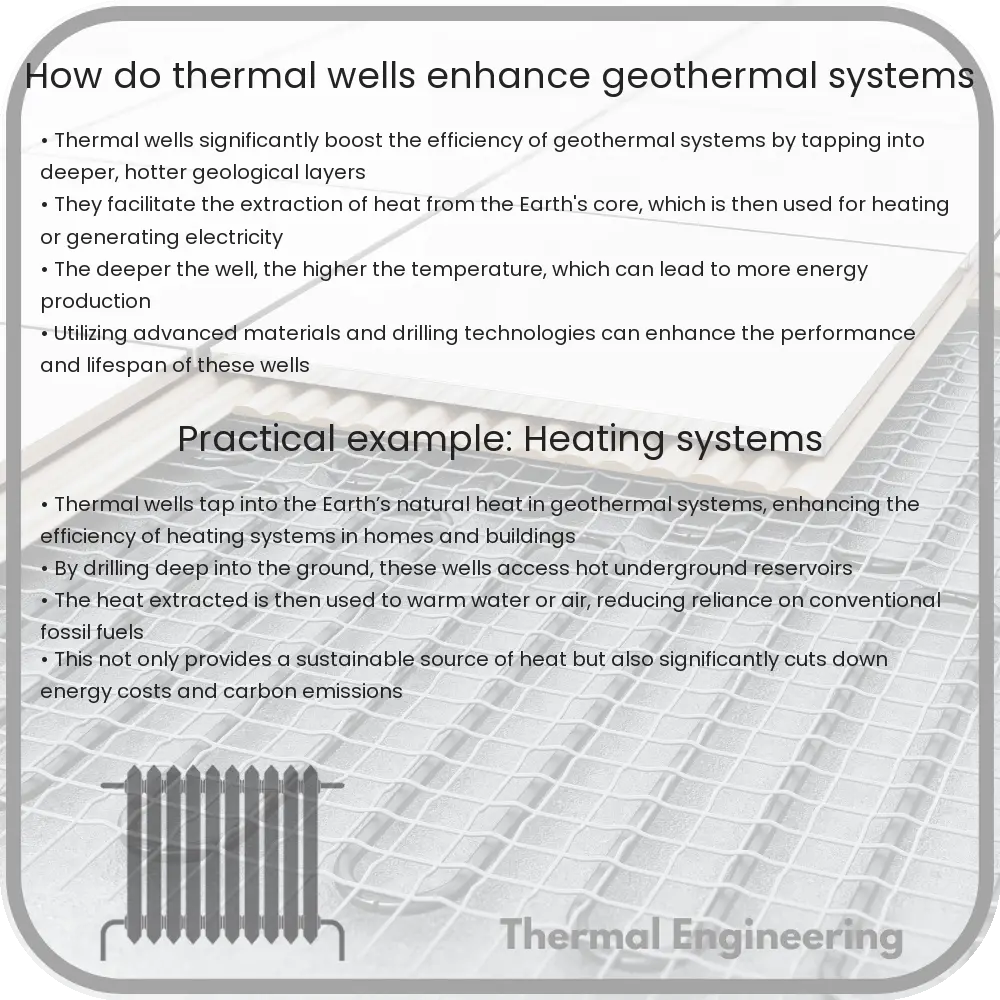
  • Heat Extraction: These wells allow for the extraction of hot water and steam from heat reservoirs buried deep within the Earth. The extracted fluid is then used to generate electricity or provide direct heating.
  • Fluid Reinjection: After the heat energy is utilized, the cooled fluid (water or steam) is often reinjected into the reservoir through the well, helping maintain pressure and sustain the reservoir’s longevity.
  • Enhanced Geothermal Systems (EGS): In engineered or enhanced geothermal systems, thermal wells are used to inject water into dry hot rock formations, fracturing the rock and enhancing its permeability for improved heat exchange.

Enhancement Techniques Involving Thermal Wells

Several techniques involving thermal wells are employed to increase the efficiency and output of geothermal systems:

  • Hydraulic Fracturing: This method increases the permeability of rock formations, allowing more fluid to circulate through the system, thus enhancing heat extraction.
  • Reservoir Stimulation: By utilizing chemical, thermal, or mechanical means, the rock’s permeability around a thermal well can be enhanced, improving the system’s overall heat output.
  • Horizontal and Multilateral Drilling: Advanced drilling techniques that increase the contact area with the geothermal reservoir, thereby accessing more heat from the Earth.

Impact of Thermal Wells on Geothermal Efficiency

Thermal wells significantly impact the efficiency of geothermal systems. Their design, depth, and the technologies applied directly influence the amount of heat that can be extracted. Properly designed and positioned thermal wells can drastically improve the feasibility and sustainability of geothermal projects. By enhancing the natural geothermal resources, these wells make it possible to exploit geothermal energy in locations that were previously considered unviable.

Conclusion

Thermal wells are foundational to the success of geothermal energy projects. By effectively enhancing the natural heat exchange processes within the Earth’s crust, these wells enable the practical and efficient use of geothermal energy, contributing to the diverse mix of renewable energy sources needed to meet global energy demands sustainably. The continuous improvement of thermal well technologies and techniques is likely to play a pivotal role in the future expansion of geothermal energy utilization worldwide.

Understanding the workings and benefits of thermal wells not only provides insight into geothermal energy production but also underscores the importance of innovation and engineering in advancing sustainable energy solutions.

How do thermal phase change inks work

Learn about thermal phase change inks, their operation, materials, advantages, and the challenges they present in modern printing technology.

How do thermal phase change inks work

Understanding Thermal Phase Change Inks

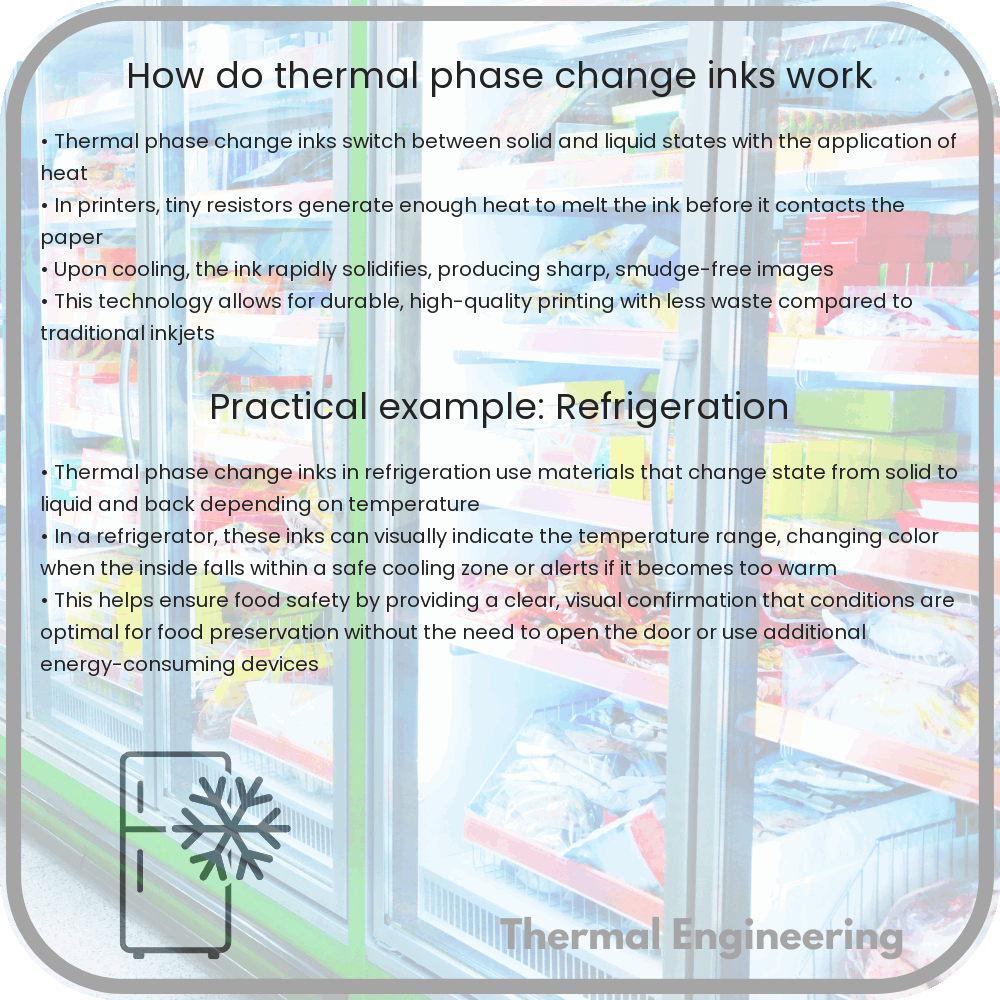
Thermal phase change inks represent a fascinating application of materials science and thermal engineering in the field of printing technology. Often used in wax-based printers, these inks undergo a significant physical transformation from solid to liquid and back to solid as they’re applied to the printing substrate. This technology not only enhances print quality but also increases the efficiency of the printing process.

How Thermal Phase Change Inks Operate

Thermal phase change inks primarily operate through the process of melting and solidification, governed by controlled heating elements within the printer. Here’s a breakdown of the steps involved:

  • Melting: The ink, initially in a solid state, is loaded into a heating chamber inside the printer. Here, the temperature is raised to a specific point sufficient to melt the ink. The exact melting point of the ink depends on its composite materials but typically ranges between 60°C and 140°C.
  • Jetting: Once the ink turns into a liquid, it is jetted onto the substrate through tiny nozzles by applying pressure. This stage demands precise control over temperature and viscosity to ensure the ink is fluid enough to be sprayed but not so liquid that it spreads beyond the intended area on the substrate.
  • Cooling and Solidification: After deposition on the substrate, the ink cools rapidly, reverting to its solid state. This change occurs quickly, solidifying the ink almost immediately upon contact with the cooler substrate, thus fixing the image in place. The rapid transition enhances the resolution and reduces the risk of smudging.

Materials Used in Thermal Phase Change Inks

The inks consist of a wax-based carrier, which holds the colorant and other additives. The choice of materials affects not only the melting and solidifying temperatures but also aspects like color vibrancy and durability of the print. Common components of phase change inks include:

  1. Wax: Paraffin or carnauba wax is used for their properties of quick solidification.
  2. Resin: Added for adhesion; helps the ink stick to various substrates.
  3. Colorant: Dyes or pigments provide the desired print color.
  4. Performance Additives: These can include agents to enhance print durability, gloss, and UV resistance.

Advantages of Using Thermal Phase Change Inks

This technology provides several benefits over traditional liquid ink systems:

  • High-Quality Prints: The quick transition from liquid to solid allows for sharp, vibrant prints with reduced risk of bleeding or feathering.
  • Increased Efficiency: Since the ink solidifies immediately upon contact, it reduces drying time, leading to faster print speeds and throughput.
  • Eco-Friendly: These inks are solid at room temperature, which minimizes the risk of spills and waste associated with liquid inks.
  • Versatility: Capable of printing on a variety of substrates, including papers, plastics, and even metals, thanks to the robust nature of the wax/resin colorant system.

Challenges and Considerations

Despite their advantages, thermal phase change inks also face some challenges:

  • Energy Consumption: The need to melt the inks requires significant energy, thus potentially increasing operational costs.
  • Printer Design: Printers must be specifically designed to handle these inks, incorporating components capable of quick heating and detailed temperature control.
  • Limited Repairability: Due to the complex nature of these printers, maintenance and repairs can be more challenging and costly compared to standard inkjet printers.

In conclusion, thermal phase change inks showcase an impressive blend of chemistry and engineering to provide efficient, high-quality printing solutions. As technology continues to evolve, the potential applications and improvements in this area could further expand, offering even more effective printing solutions for various industries.

Thermal performance of insulated concrete forms

Learn about the thermal performance of insulated concrete forms (ICFs), their composition, and impact on energy efficiency in construction.

Thermal performance of insulated concrete forms

Understanding the Thermal Performance of Insulated Concrete Forms

Insulated concrete forms (ICFs) are construction materials used primarily for building walls that offer superior insulation compared to traditional building methods. Consisting of a formwork for concrete that is made with a rigid thermal insulation, ICFs are a pivotal technology in modern construction with wide-ranging benefits, particularly in energy efficiency. Here, we explore how the thermal performance of ICFs contributes to their popularity in energy-efficient building practices.

Composition of Insulated Concrete Forms

ICFs typically consist of blocks or panels made from expanded polystyrene foam (EPS), polyurethane foam, or other materials. These blocks or panels serve as a mold for the concrete and remain in place as a permanent part of the walls. The combination of the thermal insulation properties of the foam and the thermal mass of the concrete creates a notably efficient thermal envelope.

Key Factors Affecting Thermal Performance

The thermal performance of ICF walls is influenced by several key factors:

  • Thermal Resistance (R-value): The R-value measures the capacity of an insulating material to resist heat flow. The higher the R-value, the greater the insulation performance. ICF walls commonly have R-values ranging from R-17 to R-26, significantly higher than those of traditional wood-framed walls.
  • Thermal Mass: Concrete has a high thermal mass, meaning it can absorb and store heat energy. This ability helps in moderating indoor temperature fluctuations by reducing the peak heating and cooling loads.
  • Airtightness: ICF walls offer superior airtightness compared to traditional construction methods. This airtightness drastically reduces air leakage, which in turn improves overall energy efficiency and reduces the workload on heating and cooling systems.
  • Continuity of Insulation: Unlike traditional building methods where insulation is interrupted by structural elements like studs or joists, ICF provides a continuous layer of insulation. This minimization of thermal bridges substantially reduces heat loss.

Comparative Thermal Performance

Studies comparing ICFs to traditional construction methods show that homes built with ICF walls require an estimated 44% less energy to heat and 32% less energy to cool. This notable increase in efficiency stems from the discussed factors such as higher R-values, improved airtightness, and continuous insulation. Consequently, the heating, ventilation, and air conditioning (HVAC) systems are less strained, contributing to longer operational lifespans and reduced maintenance costs.

Environmental Impact

The superior thermal performance of ICFs also contributes to a lower environmental footprint. The reduction in energy required for heating and cooling translates to less fossil fuel consumption and lower greenhouse gas emissions. Moreover, the longevity and durability of ICF construction contribute to reduced waste and resource consumption over the building’s life cycle.

Conclusion

The thermal performance of insulated concrete forms makes them an excellent choice for modern construction projects that prioritize energy efficiency and sustainability. By understanding the properties that contribute to their effectiveness, such as high R-values, thermal mass, and airtightness, builders and homeowners can make informed decisions that lead to more comfortable, cost-effective, and eco-friendly buildings.

As the construction industry continues to evolve, the adoption of ICFs is likely to grow, spurred on by increasing energy costs and a stronger emphasis on environmental impact. The use of ICFs in construction is more than just a trend; it is a forward-thinking approach that meets the demands of modern building standards.

Can thermal cloaking materials revolutionize insulation

Impact of thermal cloaking materials on advancing insulation technology across various industries.

Can thermal cloaking materials revolutionize insulation

Exploring the Impact of Thermal Cloaking Materials on Insulation Technology

In recent years, the concept of thermal cloaking has emerged as a groundbreaking advancement in the field of material science and engineering. This technology, based on the principles of transformation optics, involves manipulating materials to control heat flow around an object, effectively making it invisible to thermal detection. The potential applications of thermal cloaking materials are vast, particularly in the area of thermal insulation. This article explores how these innovative materials could revolutionize insulation in various industries.

Understanding Thermal Cloaking

Thermal cloaking is inspired by the concept of optical cloaking, which typically involves bending light around an object. Similarly, thermal cloaking bends or redirects heat waves around an object without altering the object’s temperature. This effect is achieved using metamaterials—engineered composites with properties not typically found in nature. These materials are designed to have a specific thermal conductivity that varies spatially, allowing precise control over heat flow.

Potential Applications in Insulation

The unique ability of thermal cloaking materials to manage heat transfer promises to transform insulation technology. Below are several potential applications:

  • Building and Construction: In the building sector, effective insulation is crucial for energy efficiency. Thermal cloaking materials can be used to create zones of differing thermal conductivity, improving the effectiveness of insulation without increasing the thickness of the walls.
  • Electronics: Thermal management is critical in electronics to ensure functionality and longevity. Thermal cloaking can help protect sensitive components from heat without the need for bulky heat sinks.
  • Pipeline Insulation: For pipelines carrying hot or cold fluids, thermal cloaking materials may be used to prevent unwanted heat loss or gain, improving energy efficiency and safety.
  • Automotive: Using thermal cloaking materials in automotive manufacturing could lead to more effective heat shields that are thinner and lighter, contributing to overall vehicle efficiency.

Challenges in Implementation

While the prospects of thermal cloaking materials are exciting, there are several challenges to overcome before these materials can be widely used. These challenges include:

  1. Cost: The development and production of tailored metamaterials can be expensive, limiting their practical application in everyday products and structures.
  2. Material Durability: Ensuring that these materials can withstand various environmental conditions over extended periods is crucial for applications like building construction and automotive.
  3. Scaling Production: Scaling the production of bespoke metamaterials to meet large-scale demands while maintaining precise control over their thermal properties is a technical challenge.

Future Outlook

The development of thermal cloaking materials continues to advance as researchers overcome existing hurdles and find more efficient methods for material design and production. In addition to the theoretical and experimental progress, collaborations between research institutions and industry are crucial to propel this technology from the laboratory to real-world applications. As the manufacturing processes improve and become more cost-effective, it is likely that thermal cloaking materials will play a significant role in future insulation technologies, potentially leading to more energy-efficient homes, safer pipelines, and lighter, more efficient vehicles.

The integration of thermal cloaking materials into insulation solutions marks an exciting frontier in engineering and materials science, promising substantial improvements in how we manage heat transfer in many aspects of technology and daily life. As this field continues to evolve, it may offer sustainable, innovative solutions essential for facing global energy challenges.

What are the benefits of thermal ground drilling

Explore the advantages of thermal ground drilling for sustainable and efficient geothermal energy use, highlighting environmental, economic, and social benefits.

What are the benefits of thermal ground drilling

Understanding the Benefits of Thermal Ground Drilling

Thermal ground drilling, commonly referred to as geothermal drilling, is a technique used to access the Earth’s heat for various applications, including geothermal heating and cooling systems. This method of harnessing geothermal energy offers a plethora of benefits ranging from environmental to economic. Here, we’ll explore the significant advantages of thermal ground drilling and why it’s considered a sustainable choice for energy needs.

1. Environmental Benefits

  • Reduction in Greenhouse Gas Emissions: Geothermal systems produce significantly lower levels of greenhouse gases compared to fossil fuel-based systems. This is due to their ability to harness the natural heat of the earth, which does not produce carbon dioxide, methane, or other harmful emissions.
  • Sustainability: The heat source for geothermal energy is virtually limitless, at least on the human timescale. The Earth will continue to produce heat for billions of years, making geothermal a highly sustainable energy option.
  • Small Footprint: Geothermal energy systems typically require less land area than other power-generating systems. This minimal footprint reduces environmental disruption and allows the land around geothermal drilling sites to be used for other purposes.

2. Economic Benefits

  • Lower Operating Costs: Once installed, geothermal systems have low operational costs compared to traditional heating and cooling systems. This is largely because they utilize the stable ground temperature to heat and cool buildings, reducing the need for expensive fuel sources.
  • Increased Energy Efficiency: Geothermal heat pumps are up to four times more efficient than traditional HVAC systems. This high efficiency translates into lower energy use and cost savings over time.
  • Longevity and Reliability: Geothermal systems have a long lifespan, generally lasting around 25 years for the indoor components and more than 50 years for the underground loop system. Their reliability and consistency provide long-term, cost-effective heating and cooling solutions.

3. Social Benefits

  • Job Creation: The design, construction, and maintenance of geothermal systems provide jobs in engineering, installation, and more. This contributes to the local and national economy by creating new job opportunities.
  • Energy Security: By using geothermal energy, communities reduce their dependence on imported fuels, promoting energy independence and security.
  • Quiet Operation: Unlike wind turbines and other mechanical systems, geothermal heating and cooling systems operate quietly, causing minimal disturbance to nearby residents and wildlife.

Conclusion

Thermal ground drilling for geothermal energy exploitation offers a multitude of benefits that extend well beyond simple heating and cooling solutions. These systems not only provide a sustainable and efficient alternative to traditional energy resources but also contribute significantly to economic development and environmental conservation. With the ongoing advancements in geothermal technology, thermal ground drilling will likely play a pivotal role in the future of global energy consumption.

Whether it’s a residential installation or large-scale industrial use, the implementation of geothermal energy via thermal ground drilling presents an exciting opportunity to forward-thinking communities and businesses around the world. Embracing this technology can lead to substantial benefits, aligning with a move towards more sustainable, reliable, and economic energy solutions.

How does thermal inertia affect climate modeling

Thermal inertia is a measure of how quickly materials, like those on Earth’s surface, adjust their temperatures to environmental changes.

How does thermal inertia affect climate modeling

Understanding Thermal Inertia in Climate Modeling

Climate modeling is a complex process that relies on various physical concepts to predict weather patterns, temperature shifts, and overall climate change. One critical factor in these models is thermal inertia, which plays a significant role in how different parts of the Earth absorb and release heat. In this article, we’ll explore what thermal inertia is, how it affects climate modeling, and why it’s important for predicting future climate scenarios.

What is Thermal Inertia?

Thermal inertia is a measure of how quickly a material can adjust its temperature to changes in its environment. In the context of climate science, it refers to the ability of Earth’s various surfaces—like oceans, forests, urban areas, and deserts—to absorb heat during the day and release it at night. A high thermal inertia means the surface warms up and cools down slowly, whereas a low thermal inertia means it warms up and cools down quickly.

Factors Affecting Thermal Inertia

Several factors contribute to the thermal inertia of a surface, including:

  • Specific Heat: This is the amount of heat required to raise the temperature of a unit mass of a substance by one degree Celsius. Materials with a higher specific heat have a higher thermal inertia.
  • Density: Denser materials can store more heat, which contributes to higher thermal inertia.
  • Thermal Conductivity: Materials with high thermal conductivity can transfer heat more efficiently, influencing how quickly they can change temperature.
  • Moisture Content: Water has a high specific heat compared to most other substances, so moisture-laden materials tend to have higher thermal inertia.

Role of Thermal Inertia in Climate Modeling

Thermal inertia is crucial for accurate climate modeling for several reasons:

  1. Diurnal Temperature Variation: Areas with high thermal inertia, such as oceans, have smaller fluctuations in day and night temperatures. This stability needs to be accurately modeled to understand climate patterns, especially in coastal regions.
  2. Seasonal Temperature Lag: The seasonal lag in temperature, where the warmest and coldest days occur after the summer and winter solstice, respectively, is directly influenced by thermal inertia. This affects the timing and intensity of seasons, which are critical components of global climate models.
  3. Climate Feedback Mechanisms: Thermal inertia affects how quickly a surface can respond to increased atmospheric greenhouse gases, influencing feedback mechanisms like ice-albedo feedback or cloud cover changes.

Incorrect assumptions about thermal inertia can lead to substantial errors in climate predictions, particularly in how quickly temperature and weather patterns might change.

Importance in Future Climate Scenarios

As we look towards future climate scenarios, understanding and accurately modeling thermal inertia is more crucial than ever. With ongoing changes in land use, deforestation, urbanization, and increasing ocean temperatures, the thermal inertia of various regions is changing. This can lead to unexpected shifts in climate behavior, such as altered storm paths, changing precipitation patterns, and more intense heatwaves or cold spells.

In summary, thermal inertia is a fundamental concept in climate modeling, affecting how quickly environments respond to temperature changes. Accurately modeling this physical property helps scientists predict not only day-to-day weather fluctuations but also long-term climate shifts. As such, enhancing our understanding of thermal inertia and its variables remains a priority in the field of climate research.

Can thermal plumes predict volcanic activity

Learn how thermal plumes, hot gas emissions from volcanoes, help predict volcanic activity through temperature, gas composition, and plume density analysis.

Can thermal plumes predict volcanic activity

Understanding the Role of Thermal Plumes in Predicting Volcanic Activity

Volcanic monitoring and prediction remain crucial for safeguarding lives and property in regions prone to volcanic eruptions. Among the various indicators of volcanic activity, thermal plumes offer significant insights. These naturally occurring, hot gas emissions from a volcano’s crater are not just spectacular geological phenomena but also potential predictors of volcanic activity.

What are Thermal Plumes?

Thermal plumes are columns of hot gases that rise above areas of geothermal activity, such as volcanoes or geothermal vents. These plumes are formed when heat from the Earth’s interior warms up surrounding air or gases, causing them to expand and rise due to their lower density compared to the cooler air outside the plume.

How Do Thermal Plumes Signal Volcanic Activity?

Thermal plumes can help predict volcanic activity through the analysis of several of their characteristics:

  • Temperature Changes: A significant increase in the temperature of a thermal plume can indicate rising magma levels, which may imply that an eruption is likely.
  • Gas Composition: Changes in the composition of the gases within the plume, particularly an increase in sulfur dioxide or carbon dioxide, can signal that magma is degassing as it rises through the Earth’s crust.
  • Plume Density and Height: Variations in the density and height of the plume can reflect changes in the volcanic activity’s intensity.

Monitoring Techniques

To monitor thermal plumes effectively, several techniques are employed:

  • Infrared Cameras: These devices can detect heat changes from a distance, allowing for continuous observation of a volcano’s thermal output.
  • Satellite Imaging: Satellites equipped with thermal sensors monitor the Earth’s surface and atmosphere, providing data on the temperature and extent of thermal plumes.
  • Gas Sampling: Specialists often collect and analyze gas samples directly from plumes to measure and track changes in their composition over time.

Challenges and Limitations

While thermal plumes are valuable in predicting volcanic activity, there are several challenges and limitations to their use:

  • Weather Dependence: Weather conditions can significantly affect the ability to detect or accurately measure thermal plumes. For instance, cloud cover can obscure satellite and camera views.
  • Plume Accessibility: It can be dangerous or impossible to approach certain volcanoes closely enough to gather gas samples or conduct other direct measurements.
  • Interpretation of Data: The data obtained from monitoring thermal plumes can sometimes be ambiguous and must be carefully analyzed in the context of other geological indicators and historical data.

Conclusion

While not infallible, monitoring thermal plumes is a vital part of the array of tools used by volcanologists to predict and understand volcanic activity. By keeping a vigilant eye on the signs revealed by these plumes, scientists can often forecast potentially dangerous eruptions before they occur, thereby saving lives and minimizing damage. As technology advances, the precision of these predictions will continue to improve, further enhancing our ability to harness the predictive power of thermal plumes.

How do greenhouse materials optimize thermal gain

Learn how greenhouse materials like glass, polycarbonate, and polyethylene optimize thermal gain for better plant growth.

How do greenhouse materials optimize thermal gain

Understanding How Greenhouse Materials Optimize Thermal Gain

The role of greenhouse materials is crucial in creating an ideal growing environment for plants by optimizing thermal gain. Thermal gain is essentially the process of maximizing the sunlight’s heat within the structure to create a warm, stable environment that encourages plant growth, even in cooler temperatures.

Key Factors in Material Selection

Several factors are considered when selecting materials for greenhouses, each influencing the overall thermal efficiency:

  • Transparency: The material must allow sufficient sunlight to penetrate, as light is a primary energy source for heat in a greenhouse.
  • Thermal Insulation: Effective insulation properties are necessary to minimize heat loss, especially during the night or in cooler seasons.
  • Durability: Materials should also withstand environmental factors such as wind, UV exposure, and temperature variations without degrading.

Common Materials Used in Greenhouses

The most popular materials used in greenhouses to optimize thermal gain include glass, polycarbonate, and polyethylene film. Each material has its own set of benefits and drawbacks when it comes to thermal efficiency:

  • Glass: Glass is highly transparent, allowing maximum sunlight entry. It has a long lifespan and high durability against physical and UV damage. However, glass is a poor insulator and can lead to significant heat losses unless double glazing or other insulating techniques are used.
  • Polycarbonate: Polycarbonate sheets are almost as transparent as glass but provide better thermal insulation. The structured layers within some polycarbonate materials create air pockets, enhancing their insulating properties.
  • Polyethylene Film: Although less durable and offering lower insulation than glass or polycarbonate, polyethylene films are inexpensive and easy to replace. They are often used for seasonal or supplementary greenhouses where temporary or cost-effective solutions are preferred.

Maximizing Thermal Gain

Enhancing a greenhouse’s capability to gain and retain heat involves not just selecting the right material but also integrating several design strategies:

  • Orientation: The orientation of the greenhouse should be such that it captures the maximum amount of sunlight, especially during the winter months. In the northern hemisphere, a south-facing orientation is typically most effective.
  • Thermal Mass: Using materials that have high thermal mass, such as water containers or stone, can help store heat during the day and release it slowly at night, maintaining a consistent temperature.
  • Sealing and Ventilation: Proper sealing is crucial to prevent heat escape. Simultaneously, appropriate ventilation systems ensure that the temperature within the greenhouse does not get too high on sunny days.

Technological Advancements

Technological advances have also played a significant role in improving the thermal gains of modern greenhouses. Some of these include:

  • Double-layered materials: Using double-layered polyethylene or inflatable polycarbonate can drastically improve insulation while still allowing light transmission.
  • Low-emissivity (Low-E) coatings: Applied to glazing, these coatings can help retain infrared radiation (heat) within the greenhouse while allowing visible light to pass through.
  • Energy-efficient design: Contemporary greenhouse designs often incorporate automated shade systems and dynamic ventilation to moderate internal temperatures without compromising on light intake or insulation.

In conclusion, the selection and application of materials in greenhouse construction are central to optimizing thermal gain. By understanding these elements, growers can effectively enhance growth conditions, extending the growing season and increasing the efficiency of their plant production systems.