Facebook Instagram Youtube Twitter

How does thermal pollution affect aquatic life

Learn about thermal pollution, its sources, and the devastating effects it has on aquatic ecosystems and life cycles.

How does thermal pollution affect aquatic life

Understanding Thermal Pollution and Its Effects on Aquatic Life

Thermal pollution refers to the process of degrading water quality by altering its natural temperature. Mostly linked with human activities, particularly those associated with power generation and industrial processes, thermal pollution has become a significant environmental concern. This article delves into the mechanisms through which thermal pollution affects aquatic life and the broader implications for ecosystems.

Sources of Thermal Pollution

Thermal pollution primarily occurs when water used as a coolant in industrial processes or power plants is returned to the natural environment at a higher temperature. The major sources include:

  • Power plants, particularly nuclear and coal-fired facilities, which use water to cool machinery, discharging the heated water back into nearby bodies of water.
  • Industrial factories that require coolant for various processes give off excess heat to adjoining water sources.
  • Deforestation and urbanization, which reduce land cover leading to higher temperatures in nearby streams and lakes.

Impact on Aquatic Life

Increased water temperature can have diverse and profound effects on aquatic ecosystems:

  • Disruption of Life Cycles: Many aquatic species have evolved to thrive at specific temperature ranges. Sudden changes can affect their breeding patterns, migration routines, and development stages.
  • Decreased Oxygen Levels: Warmer water holds less dissolved oxygen, essential for the survival of fish and other aquatic organisms. Lower oxygen levels can lead to hypoxia, a condition that can be fatal for aquatic life.
  • Altered Species Distribution: Some species may move to cooler areas, changing the ecological community structure and potentially leading to the decline of certain species that cannot move or adapt quickly enough.

Additionally, thermal shocks, which occur when there is a sudden change in water temperature, can lead to mass kills of fish and other aquatic organisms.

Ecosystem-Wide Impacts

The effects of thermal pollution extend beyond individual species, potentially leading to broader changes in ecosystem structure and function:

  • Algae Blooms: Higher temperatures can promote the growth of certain types of algae which, in large amounts, can prevent light from reaching other aquatic plants and use up oxygen needed by marine life.
  • Loss of Biodiversity: As the distribution of species changes and sensitive species decline, biodiversity in aquatic ecosystems can decrease, leading to less resilient ecosystems.
  • Changes in Nutrient Cycles: The decomposition rates of organic materials can increase with temperature, altering the availability of nutrients in the water.

Conclusion

Thermal pollution poses a significant threat to aquatic ecosystems, affecting individual species and the overall health of marine environments. Mitigation strategies, such as improving the efficiency of cooling processes in industrial activities and using alternative, less harmful methods of temperature regulation, can help lessen these impacts. Ongoing research and regulation are crucial to better understanding and managing the effects of thermal pollution, ensuring the protection and sustainability of aquatic life.


Active thermal insulation systems

Learn about active thermal insulation systems, which enhance building energy efficiency by dynamically regulating heat transfer.

Active thermal insulation systems

Understanding Active Thermal Insulation Systems

Active thermal insulation systems represent an advanced approach in the engineering of building envelopes, where the aim is not only to insulate but also to dynamically regulate the transfer of heat through walls or other structural components. Unlike traditional passive insulation that only resists heat flow, active thermal insulation systems actively manage heat transfer based on external and internal conditions, enhancing energy efficiency and indoor comfort in buildings.

How Active Thermal Insulation Systems Work

The core functionality of active thermal insulation systems lies in their ability to adjust insulation properties dynamically. This is typically achieved through the integration of materials that change their thermal properties in response to external stimuli such as temperature, humidity, or electrical input.

  • Phase Change Materials (PCMs): PCMs are substances that absorb or release heat as they change phases (e.g., from solid to liquid or vice versa). By incorporating PCMs into building materials, walls can absorb excess heat during the day and release it at night, thus stabilizing indoor temperatures.
  • Thermochromic Materials: These materials change their color and hence their solar absorption properties based on temperature. A thermochromic coating on a building’s exterior can reduce the need for air conditioning by reflecting more sunlight as it gets hotter.
  • Active Insulation Panels: These panels have adjustable insulative properties. For example, panels might incorporate ventilated cavities that can be opened or closed in response to thermal sensors, modulating the insulation level.

Benefits of Active Thermal Insulation Systems

Active thermal insulation systems offer several significant benefits:

  1. Energy Efficiency: By optimizing heat transfer, these systems reduce the need for mechanical heating and cooling, thus lowering energy consumption and utility costs.
  2. Enhanced Comfort: The dynamic regulation of temperature ensures a more consistent indoor climate, enhancing comfort for occupants.
  3. Reduced Environmental Impact: Lower energy consumption translates to reduced carbon emissions, contributing to environmental sustainability.
  4. Adaptability: These systems can adapt to various climatic conditions and user preferences, making them versatile for different geographic locations and building types.

Challenges and Considerations

Despite their benefits, the implementation of active thermal insulation systems comes with challenges:

  • Cost: The initial cost of materials and installation for active systems is generally higher than for traditional insulation.
  • Complexity: These systems can be more complex to design, install, and maintain, requiring advanced control systems and sensors.
  • Reliability: Greater complexity might impact the long-term reliability of the building envelope. Regular maintenance and monitoring are crucial to ensure system efficiency.

In conclusion, active thermal insulation systems are an innovative step forward in building technology, promising enhanced energy efficiency and occupant comfort. While they present certain challenges, the benefits they offer could make them a key component of future sustainable building practices. As technology advances and costs decrease, these dynamic systems may become more commonplace, reshaping our approach to architectural design and energy management.

How do thermal expansion joints in bridges work

Learn about thermal expansion joints in bridges, key in maintaining structural integrity by managing material expansion and contraction due to temperature changes.

How do thermal expansion joints in bridges work

Understanding Thermal Expansion Joints in Bridges

Thermal expansion joints are a critical component in the construction and maintenance of bridges. They accommodate the natural expansion and contraction of materials caused by temperature changes, ensuring that the structural integrity of the bridge is maintained under varying climatic conditions.

Why Are Thermal Expansion Joints Needed?

Bridges are typically built from materials like steel and concrete, which expand and contract as temperatures rise and fall. Without a way to manage this movement, significant stress can be placed on the components of the bridge, potentially leading to failure. Thermal expansion joints allow the bridge to breathe—moving freely without causing damage.

How Do Thermal Expansion Joints Work?

Thermal expansion joints work by providing a gap in the structure of the bridge, which can vary in size as the materials expand and contract. This gap is often filled with a flexible, durable material that can withstand the elements while providing a seamless transition between sections of the bridge. Here’s a closer look at the process:

  • Gap Creation: Joints are strategically placed between sections of the bridge to allow for expansion and contraction. The actual size of the gap can vary depending on the design requirements and the materials used.
  • Material Selection: The material used to fill the gap must be flexible yet durable. Common materials include rubber, foam, and special expansion joint covers designed to move with the bridge while maintaining a solid driving surface.
  • Contraction: During colder temperatures, the materials in the bridge contract, leading the joint gap to widen. The flexible material in the joint compresses to accommodate this movement.
  • Expansion: When temperatures rise, the construction materials expand. The joint material then stretches or expands, filling the decreasing gap in the joint to prevent structural damage.

Calculation of Expansion Joint Size

The size of the expansion joint is crucial and is calculated based on the thermal expansion coefficient of the bridge materials, the expected range of temperature changes, and the length of the bridge span. The basic formula used to determine the change in length (ΔL) of a material is:

ΔL = α * L0 * ΔT

Where:

  • ΔL is the change in length.
  • α is the coefficient of thermal expansion of the material (in 1/°C).
  • L0 is the original length of the material.
  • ΔT is the change in temperature (in °C).

By using this equation, engineers can predict how much a particular section of the bridge will expand or contract and design the joints accordingly. This ensures that gaps are neither too large (creating safety hazards) nor too small (which would prevent the necessary movement and could lead to damage).

Types of Expansion Joints

There are several types of expansion joints used in bridges, each designed to accommodate different movements and load requirements:

  • Sliding joints: Allow horizontal movements above a certain minimum.
  • Rotational joints: Accommodate angular and rotational movements.
  • Modular joints: Designed for larger movements, and typically used in large bridge spans.

Conclusion

Thermal expansion joints play a crucial role in the long-term durability and safety of bridges. By understanding and properly implementing these joints, engineers can ensure that infrastructure withstands the test of time against the natural expansion and contraction caused by temperature variations. This not only helps in maintaining the bridge’s structural integrity but also ensures the safety of the users.

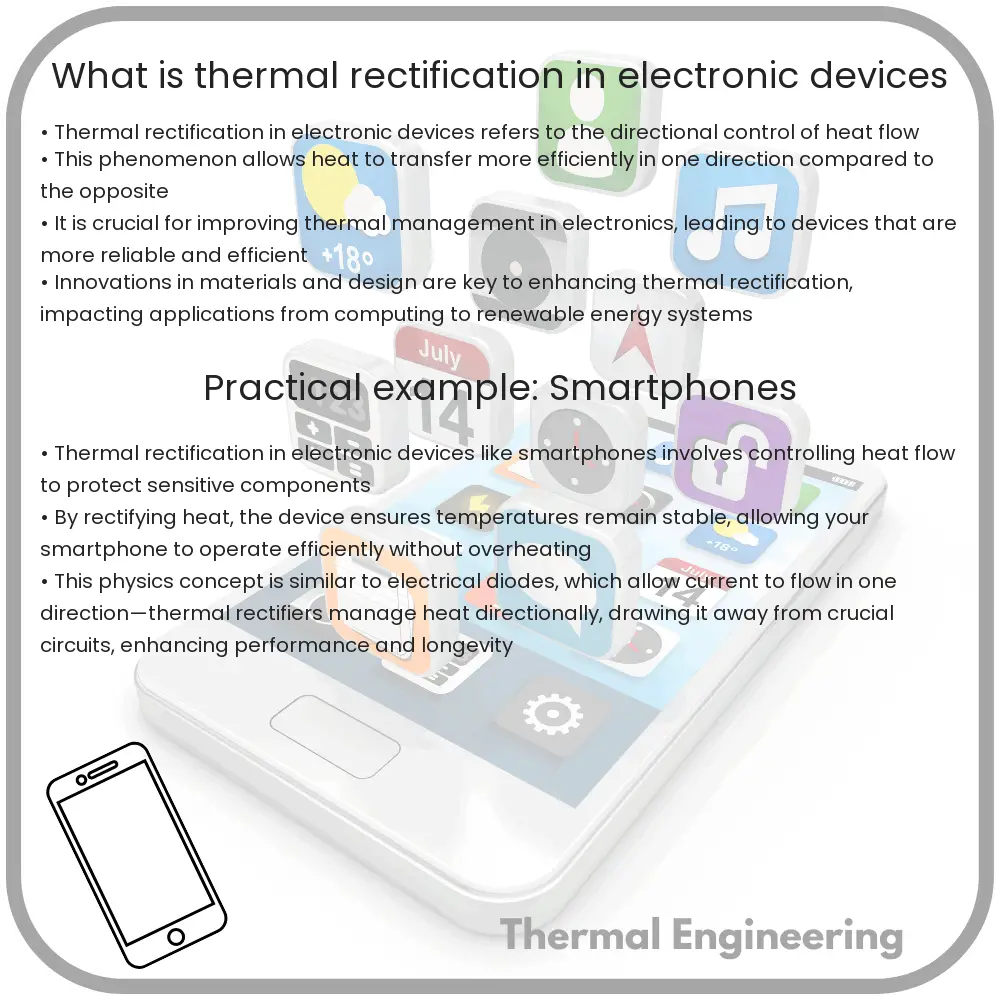
What is thermal rectification in electronic devices

Explore the concept of thermal rectification, its principles, applications, and future potential in enhancing electronic device efficiency and safety.

What is thermal rectification in electronic devices

Understanding Thermal Rectification in Electronic Devices

Thermal rectification is a phenomenon observed in electronic devices wherein heat flows more efficiently in one direction than the opposite. This concept is analogous to electrical rectification, which only allows electrical current to flow in one direction. The practical implications of thermal rectification are significant, as it can lead to more effective heat management in electronic systems, influencing their performance, efficiency, and longevity.

Principles of Thermal Rectification

At the core of thermal rectification is the asymmetrical conduction of heat. This can be achieved through various means, including the use of materials with directional dependent thermal properties or the geometric structuring of materials. The rectification effect occurs due to the difference in heat transfer characteristics under different conditions or directions, influenced by:

  • Material Composition: Different materials and composites exhibit varying thermal conductivities when arranged in specific configurations or when exposed to different temperatures.
  • Structural Design: Asymmetrical shapes or structures within a device can create paths that facilitate easier heat flow in one direction over another.
  • Temperature Gradients: Varying thermal resistances at different temperatures can contribute to non-linear heat flow dynamics.

Applications of Thermal Rectification

One of the most promising applications of thermal rectification is in the development of thermal diodes and other components that can protect sensitive electronic parts from overheating, while effectively managing the thermal loads. Examples include:

  • Thermal Diodes: Devices that allow heat to flow freely in one direction while blocking it in the opposite, helping prevent damage due to overheating.
  • Heat Sinks: Enhanced heat sinks might incorporate rectification to channel heat more effectively away from critical components.
  • Computing Systems: High-performance computers and data centers could benefit from thermal rectification to manage localized heat production efficiently.

Challenges in Thermal Rectification

Despite its potential, implementing thermal rectification in practical applications faces several challenges, such as:

  • Material Limits: Finding materials with the right thermal properties that can also withstand other operational demands like mechanical stress and environmental exposure is complex.
  • Design Complexity: Crafting devices that integrate thermal rectification without compromising other functionalities can be intricate and cost-prohibitive.
  • Scalability: Scaling the technology from experimental setups to widely applicable systems is still a major hurdle.

Future Prospects

The ongoing research into thermal rectification is opening new avenues for advancing electronic device design and thermal management systems. Innovations in materials science, nanotechnology, and engineering design continue to push the boundaries of what’s possible, aiming to integrate thermal rectification into more commonplace electronics and systems. As these technologies mature, the efficiency and safety of electronic devices are expected to improve markedly, leading to more robust and sustainable systems.

Indeed, thermal rectification stands as a fascinating intersection of physics and engineering, offering a glimpse into future technologies that could transform our approach to managing heat in electronic devices and systems.

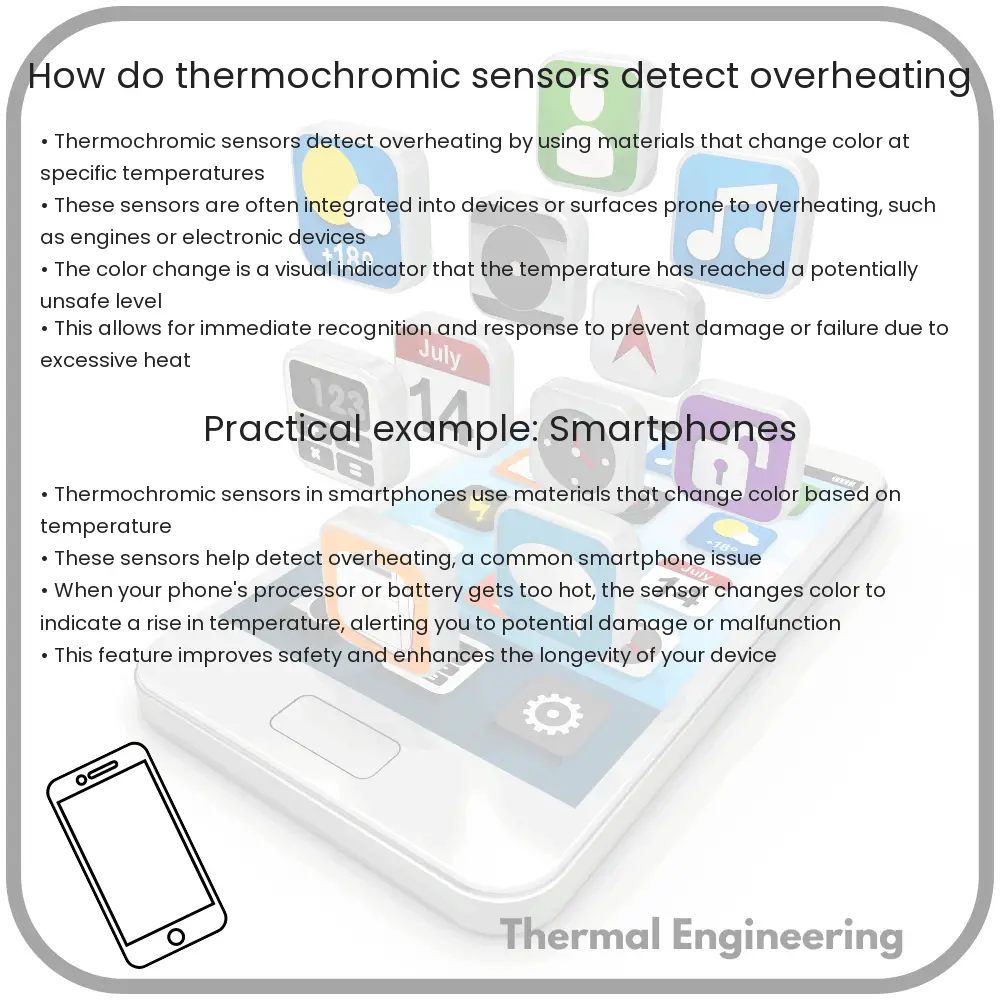
How do thermochromic sensors detect overheating

Learn how thermochromic sensors detect overheating through color change, ensuring safety in various applications.

How do thermochromic sensors detect overheating

Understanding Thermochromic Sensors and Overheating Detection

Thermochromic sensors play a crucial role in various applications by providing a visual response to temperature changes. These sensors are particularly vital in scenarios where overheating is a risk, as they can provide immediate visual cues to prevent damage or ensure safety. This article explores how thermochromic sensors work and their applications in detecting overheating.

What are Thermochromic Materials?

Thermochromic materials are substances that change color in response to a change in temperature. This fascinating property can be observed in two main types of thermochromic materials: liquid crystals and leuco dyes. Liquid crystals are sensitive to a specific temperature range and are known for their precise color change, making them ideal for applications requiring accurate temperature readings. On the other hand, leuco dyes are more robust and can be incorporated into a broader range of materials but offer a less precise temperature change indication.

How Do Thermochromic Sensors Detect Overheating?

The operation of thermochromic sensors in detecting overheating can be outlined in several key steps:

  1. Sensitivity to Temperature: Thermochromic materials embedded in the sensor are formulated to respond at a threshold temperature. This temperature is carefully selected based on the specific safety and operational requirements of the equipment or process being monitored.
  2. Color Change Mechanism: When the ambient temperature reaches the material’s threshold level, the molecular structure of the thermochromic substance changes. This structural alteration affects the way light is absorbed and reflected by the material, resulting in a visible color change.
  3. Visual Feedback: The distinct color change which can be perceived visually or through a color-sensitive device, immediately signals that the temperature has exceeded normal operating conditions. This cue prompts for a necessary action to be taken, such as equipment shutdown, to prevent potential hazards or damage.

Applications of Thermochromic Sensors in Overheating Detection

  • Electrical Safety: In electrical circuit boards, thermochromic sensors can indicate overheating components or tracks, thus preventing short circuits or electrical fires.
  • Industrial Equipment: These sensors are used in motors, bearings, and other machinery prone to overheating due to friction or overuse, ensuring timely maintenance and avoiding operational disruptions.
  • Consumer Products: Thermochromic materials are found in household items like kettles and irons, where they provide external visual cues to prevent user contact with hot surfaces, thus ensuring safety.

Conclusion

Thermochromic sensors are an essential tool in safety and maintenance protocols across various industries. By providing a simple yet effective means to detect overheating, they help in averting serious mechanical failures and ensuring safe operational environments. As advancements in material science continue, the sensitivity and applications of thermochromic sensors are expected to expand, further enhancing their utility in temperature monitoring.

How does thermal acupuncture stimulate healing

Explore the benefits and methods of thermal acupuncture, a modern approach combining traditional acupuncture with heat therapy for enhanced healing.

How does thermal acupuncture stimulate healing

Understanding Thermal Acupuncture and its Role in Stimulating Healing

Thermal acupuncture, a modern adaptation of traditional acupuncture, combines the principles of heat therapy with those of acupuncture to enhance healing effects in the body. This treatment method has garnered attention for its potential to alleviate pain, promote relaxation, and improve overall health. Let’s explore the mechanics behind thermal acupuncture and how it influences the healing processes.

Basics of Traditional Acupuncture

Traditional acupuncture involves the insertion of very thin needles into specific points on the body, known as acupuncture points. These points are believed to be located on channels, or meridians, through which the body’s vital energy, chi or qi, flows. The practice is based on the traditional Chinese medicine theory that health is governed by the balance of these energy flows within the body. By stimulating these points, acupuncture aims to restore balance and, thereby, health.

Introduction of Heat: Merging Thermotherapy with Acupuncture

Thermal acupuncture, often referred to as thermopuncture, enhances the effects of traditional acupuncture by adding a heat component. The most common method involves heating the acupuncture needles once they are inserted into the body’s acupuncture points. This can be accomplished using various techniques such as wrapping the needles with heat coils or by employing moxibustion, which involves burning a small, tightly bound bundle of herbs, usually moxa or mugwort, either directly on the skin or close to it.

How Thermal Acupuncture Stimulates Healing

  • Enhanced Blood Flow: The application of heat helps to expand blood vessels, which improves blood circulation to the targeted areas. Increased blood flow not only transports more nutrients and oxygen but also facilitates the removal of waste products from tissue repair activities, thereby enhancing the healing process.
  • Stimulation of Body’s Natural Painkillers: Both needle insertion and heat help stimulate the body to release endorphins and other natural pain-killing substances. This dual stimulation can be more effective in reducing pain and discomfort than traditional acupuncture alone.
  • Reduction in Muscle Stiffness: Heat is well known for its effectiveness in relaxing and loosening stiff muscles. When combined with acupuncture, this can lead to faster relief from muscle spasms and joint discomfort, contributing to better mobility and pain alleviation.
  • Improved Cellular Health: Heat has been shown to enhance cellular repair activities. By increasing the temperature at the site of injury, thermal acupuncture may boost cell function and accelerate the repair processes.

Clinical Applications and Benefits

Thermal acupuncture has been applied to a variety of conditions including chronic pain, arthritis, muscle spasm, and even some symptoms of chronic stress and anxiety. Due to its dual action of needling and heat, it provides a unique and effective approach to pain management and recovery. Additionally, the soothing heat can offer a deeply relaxing experience, adding a psychological benefit to its physical therapeutic effects.

Conclusion

Thermal acupuncture represents a fascinating intersection of traditional healing practices and modern therapeutic techniques. By harnessing the combined powers of needle therapy and heat, this approach offers a promising alternative for those seeking relief from various physical ailments. It’s an example of how ancient practices can evolve with the inclusion of contemporary scientific understanding, broadening the scope and efficacy of traditional treatments.

As with any medical treatment, individuals interested in thermal acupuncture should consult with qualified professionals to explore how this therapy might best serve their specific health needs. The growing acknowledgment of such integrative therapies within the mainstream medical community points towards a holistic approach to health and wellness, recognizing the importance of combining different therapeutic modalities for optimal outcomes.

Can thermal wave imaging detect subsurface defects

Learn about thermal wave imaging, a non-destructive method used to detect subsurface defects in various materials across multiple industries.

Can thermal wave imaging detect subsurface defects

Understanding Thermal Wave Imaging in Detecting Subsurface Defects

Thermal wave imaging, often referred to as thermal imaging or infrared imaging, is a non-destructive testing technique used to detect subsurface defects in materials. The method leverages heat propagation through a material to reveal anomalies that might indicate the presence of flaws such as cracks, delaminations, or voids. Understanding how thermal wave imaging works and its effectiveness in detecting subsurface defects is crucial for applications in industries such as aerospace, automotive, and civil engineering.

How Thermal Wave Imaging Works

Thermal wave imaging involves applying a transient heat source to the surface of the material and monitoring the temperature response over time with an infrared camera. This process generates thermal waves that propagate through the material. When these waves encounter subsurface defects, they are altered, distorting the thermal patterns observed on the surface. By analyzing these patterns, experts can identify and characterize underlying defects.

Types of Thermal Wave Imaging Techniques

  1. Flash Thermography: In this method, a short and intense flash of light heats the surface uniformly. The subsurface features are identified by observing the cooling patterns on the material’s surface.
  2. Lock-in Thermography: This approach involves heating the surface with a sinusoidally modulated source and recording the thermal response. Phase lag and amplitude changes in the thermal wave are analyzed to detect defects.
  3. Pulse Thermography: Similar to flash thermography, but utilizes a series of heat pulses instead of a single, intense flash. This permits a deeper penetration and can be useful for thicker materials.

The Effectiveness of Thermal Wave Imaging

Thermal wave imaging is effective in detecting various types of defects that affect different materials, including composites, metals, and ceramics. The method is particularly useful for:

  • Detecting delaminations and disbonding in composite materials.
  • Identifying voids and inclusions in metals and plastics.
  • Finding cracks, especially those hidden below the surface that are difficult to detect with other non-destructive techniques.

However, the accuracy and resolution of thermal wave imaging can be influenced by several factors, such as the thermal properties of the material, the size and depth of the defects, and the quality of the thermal imaging system. Advanced analysis techniques and calibration are often necessary to interpret the thermal images accurately.

Advancements and Future Prospects

Recent advancements in thermal imaging technology have focused on enhancing sensitivity and resolution, allowing for the detection of smaller defects deeper within materials. The integration of computer algorithms and artificial intelligence for image analysis is also improving the identification and characterization of defects automatically, reducing the potential for human error and increasing inspection efficiency.

As materials and structures become more complex, the demand for sophisticated and reliable non-destructive testing techniques like thermal wave imaging is expected to grow. Further research and development in this field are anticipated to expand its applicability and efficiency, making it an even more valuable tool in engineering and quality control processes.

In conclusion, thermal wave imaging is a powerful technique for detecting subsurface defects, and its continued development will enhance its capabilities, helping industries ensure the integrity and safety of their materials and structures.

Can thermal labels reduce packaging waste

Explore how thermal labels can help reduce packaging waste and increase environmental sustainability in supply chains.

Can thermal labels reduce packaging waste

Can Thermal Labels Reduce Packaging Waste?

In our increasingly eco-conscious world, businesses and consumers are constantly looking for ways to reduce their environmental impact. One area of focus is packaging waste, which contributes significantly to landfill and environmental degradation. A lesser-known but impactful way to address this issue is through the adoption of thermal labels in packaging.

Understanding Thermal Labels

Thermal labels are an innovative labeling technology that utilizes heat-sensitive materials for printing. These labels require a thermal printer that generates heat to create images or text on the label. There are two main types of thermal labels:

  • Direct Thermal Labels: These labels require no ink, toner, or ribbon. They have a heat-sensitive coating that turns black when exposed to the thermal print head. They are often used for short-term applications like receipts or shipping labels.
  • Thermal Transfer Labels: For these labels, a ribbon is used between the print head and the label material. The heat from the print head melts the ribbon’s wax or resin-based ink, which is then transferred to the label surface. This method is more durable and is used for labels needing to withstand longer periods or harsh environments.

Impact on Packaging Waste

The potential for thermal labels to reduce packaging waste lies in several key areas:

  1. Reduction of Ancillary Packaging Material: Traditional labeling often involves adhesives and additional layers of material which can complicate recycling processes. Thermal labels, especially direct thermal labels, often peel off easily or degrade, simplifying recycling or reuse of the packaging.
  2. Durability and Legibility: Thermal labels tend to be more durable against environmental factors such as water, oil, and UV light. This ensures the integrity of the information on the label (like barcode or ingredients), reducing the likelihood of mismanaged resources due to unreadable labels.
  3. Reduced Need for Ink and Toner: Since direct thermal labels do not require ink, toner, or ribbons, they eliminate the need for these consumables, which themselves generate waste through cartridges and containers. Additionally, thermal transfer labels use precisely the amount of ribbon needed per label, minimizing waste.

Broader Environmental Benefits

Beyond direct reductions in packaging waste, thermal labels also offer broader environmental benefits:

  • Energy Efficiency: Thermal printers are generally more energy-efficient compared to traditional inkjet or laser printers, partly because they do not require the time or energy to heat up large print heads or fusers.
  • Supply Chain Simplification: The durability and long shelf-life of thermal labels can improve the overall efficiency of supply chains, reducing waste and energy usage associated with re-labelling or package damage.

Conclusion

While they are not a panacea, thermal labels represent a valuable tool in the battle against packaging waste. By simplifying components, enhancing durability, and eliminating the need for consumables, thermal labels can help to significantly reduce the environmental impact of modern packaging. Adopting such technologies, in conjunction with broader waste reduction strategies, can lead to substantial ecological benefits and contribute to a more sustainable future.

How do thermal fins improve heat sinks

Learn how thermal fins in heat sinks enhance device performance by increasing heat dissipation through improved surface area and thermal conductivity.

How do thermal fins improve heat sinks

Understanding the Role of Thermal Fins in Heat Sinks

Heat sinks are essential components used to manage heat in electronic devices, from computers to power amplifiers. A critical feature of many heat sinks is the inclusion of thermal fins. These fins play a vital role in improving the heat dissipation from the device into the surrounding environment, thus preventing overheating and enhancing performance. This article explores how thermal fins work and why they are so effective.

What are Thermal Fins?

Thermal fins are extended surfaces that protrude from the main body of a heat sink. Made typically from metals like aluminum or copper due to their high thermal conductivity, fins increase the surface area of a heat sink. The larger surface area improves the heat sink’s ability to dissipate heat into the surrounding air.

How Do Thermal Fins Improve Heat Dissipation?

The effectiveness of thermal fins in heat sinks boils down to three key factors:

  • Increased Surface Area: By increasing the surface area, thermal fins allow more heat to be transferred from the heat sink to the air. This is because the heat transfer rate is directly proportional to the surface area exposed to the cooling medium, which in most cases is air.
  • Improved Heat Transfer by Convection: As the surface area increases, so does the ability to transfer heat via convection. Convection occurs when cooler air moves across the surface of the fins, absorbs heat, and then moves away, replaced by cooler air. This continual flow of air effectively cools the device.
  • Enhanced Thermal Conductivity: The material of the fins plays a significant role. Metals like copper and aluminum are often used because they have high thermal conductivity, meaning they transfer heat very efficiently from the base of the heat sink to the tips of the fins.

Design Considerations for Thermal Fins

While fins are beneficial, their design and layout need careful consideration:

  • Fin Density: The number of fins must be optimized. Too many fins can restrict air flow between them due to the reduced space, thereby reducing the system’s overall ability to cool efficiently. Conversely, too few fins might not adequately increase the surface area for the necessary heat transfer.
  • Fin Thickness: Thicker fins can conduct more heat away from the base but might also reduce the efficiency of heat transfer to the air if the fin is too thick, as the thermal resistance from the base to the tip of the fin increases.
  • Fin Height: Taller fins increase the surface area but could also cause greater air resistance, potentially limiting airflow effectiveness across the fins. The height must be balanced against the airflow dynamics within the device enclosure.

Mathematics Behind Heat Transfer in Fins

The efficiency of a fin is calculated using the following formula, where m stands for the fin parameter and L is the length of the fin:

m = √(hP/kAc)

Efficiency = tanh(mL) / mL

Here, h represents the heat transfer coefficient, P is the perimeter of the fin, k is the thermal conductivity of the fin material, and Ac is the cross-sectional area of the fin. The tanh represents the hyperbolic tangent function, reflecting how the temperature varies along the fin’s length.

This formula helps engineers predict how effective a fin design will be before actually manufacturing the heat sink. By adjusting the variables—material, dimensions, shape—they can optimize the fin configuration for maximum efficiency.

Conclusion

Thermal fins are a crucial component in the design of efficient heat sinks. By understanding and optimizing the various parameters and design aspects of these fins, engineers can significantly improve the thermal management systems in electronic devices. As technology advances and devices shrink in size but grow in power, the role of thermally efficient designs becomes ever more critical.

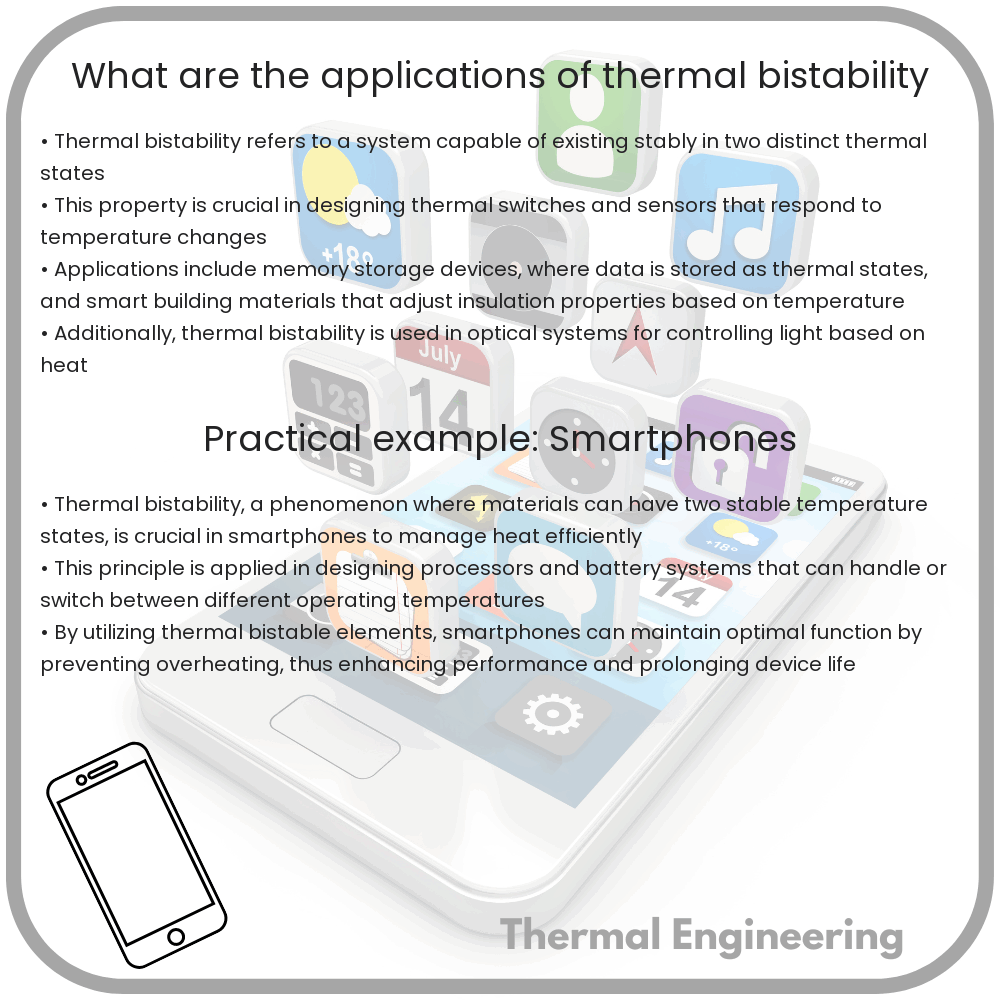
What are the applications of thermal bistability

Explore the diverse applications of thermal bistability in electronics, energy management, and memory storage for enhanced efficiency and control.

What are the applications of thermal bistability

Understanding the Applications of Thermal Bistability

Thermal bistability is a phenomenon observed in certain materials where they can exist stably in two different temperature states under a fixed set of external conditions. This behavior is harnessed in various engineering applications, ranging from electronic circuits to thermal management systems. The applications of thermal bistability are predominant in domains that require precise control of temperature and energy efficiency.

Applications in Switching Devices

One of the most common applications of thermal bistability is in the creation of thermal switches. These devices can automatically switch between conductive and non-conductive thermal states. Thermal bistability allows these switches to operate without the need for additional sensors or external controls, making them ideal for use in environments where minimal electronic interference is necessary or in regions that are inaccessible.

  • Electronic Circuits: Thermal bistable switches are used to protect circuits from overheating. When a certain temperature threshold is reached, the switch changes state to disrupt the circuit, preventing damage due to excessive heat.
  • Aerospace Applications: In satellites and spacecraft, thermal switches regulate the temperature of critical components, ensuring that sensitive equipment operates within safe thermal bounds without the burden of complex electronic controls.

Energy Management Systems

Thermal bistability is also pivotal in developing energy-efficient systems for heating and cooling, particularly in buildings and automotive industries. Systems that exploit thermal bistable materials can use ambient temperature fluctuations to maintain comfortable temperature ranges with lower energy consumption.

  • Smart Building Materials: Materials that exhibit thermal bistability are used in the construction of smart windows and insulation. These materials can help maintain the internal temperature of a building by becoming more or less insulating based on the outside temperature.
  • Vehicular Temperature Control: In vehicles, bistable materials can help in maintaining a comfortable cabin environment by automatically adjusting insulation properties based on external and internal temperatures, thus enhancing fuel efficiency by reducing the load on air conditioning systems.

Memory Storage Devices

Another advanced application of thermal bistability is in the domain of memory storage technology. Phase change memory (PCM) devices use materials that can switch between amorphous and crystalline states – each having a different thermal conductivity – to represent binary data states.

  • Data Stability: The bistable nature of phase change materials contributes to the stability of data stored, as the material will remain in either of its states until heated past a transition temperature.
  • Energy Efficiency: Since bistable materials hold their state without power, PCM devices can offer significant energy savings over traditional dynamic RAM that requires continuous power.

Conclusion

Thermal bistability presents a unique set of properties leveraged across different engineering fields to achieve goals such as energy efficiency, safety, and environmental sustainability. Its ability to operate without external controls while providing stable switching characteristics or memory states underlines its importance in modern technological applications. As research continues, the scope of applications is likely to expand, embedding thermal bistability more deeply in future engineering solutions.