Facebook Instagram Youtube Twitter

How exothermic reactions release heat

Learn about exothermic reactions, where chemical processes emit heat, playing key roles in power generation, heating, and safety applications.

How exothermic reactions release heat

Understanding Exothermic Reactions and Heat Release

An exothermic reaction is a type of chemical reaction that releases energy in the form of heat. This release of heat is fundamental to many processes in both daily life and industrial applications, including combustion in engines, metabolic processes in biology, and chemical manufacturing. Understanding how these reactions work can provide insights into a range of scientific and engineering disciplines.

What Defines an Exothermic Reaction?

At the heart of every chemical reaction is the making and breaking of bonds between atoms. In an exothermic reaction, the energy required to break the bonds in the reactants is less than the energy released when new bonds form in the products. This surplus energy is released as heat.

  • The general form of an exothermic reaction can be represented as:

    Reactants → Products + Energy

  • One of the most familiar examples of an exothermic reaction is the burning of natural gas (methane), which can be represented by the chemical equation:

    CH4 + 2O2 → CO2 + 2H2O + Heat

Thermodynamic Perspective

The concept of enthalpy (H), a measurement of total energy in a thermodynamic system, is crucial in understanding exothermic reactions. A reaction is exothermic if the change in enthalpy (∆H) is negative, indicating that the products have less energy than the reactants, thereby releasing excess energy as heat. The equation for this change is:

∆H = H(products) – H(reactants)
If ∆H is negative, the reaction is exothermic.

The Role of Activation Energy

Even though exothermic reactions release energy, they often require a small amount of energy to get started. This initial energy input is called the activation energy (Ea). It represents the minimum energy barrier that must be overcome for reactants to transform into products.

Once the reaction has begun, the exothermic energy released can sustain the reaction by providing the necessary activation energy for subsequent reactions, creating a self-sustaining process until the reactants are depleted.

Applications of Exothermic Reactions

  • Power Generation: Combustion of fossil fuels in power plants releases heat which, in turn, is used to generate steam and drive turbines to produce electricity.
  • Heating: Many heaters and residential heating systems burn natural gas in an exothermic reaction to produce heat.
  • Safety Applications: Certain exothermic chemical reactions, such as those in hand warmers and self-heating food packaging, provide controlled heat in safety and survival equipment.

Conclusion

Exothermic reactions are integral to numerous aspects of modern life and technology. By understanding how and why these reactions release heat, scientists and engineers can better harness, control, and utilize these reactions for a range of applications. These insights not only deepen our understanding of fundamental chemistry but also enhance our ability to innovate and solve practical problems through engineering.

How thermal grease improves heat conduction

Learn about thermal grease, a key player in heat dissipation for electronics, enhancing the connection between CPUs and heat sinks for better heat transfer.

How thermal grease improves heat conduction

Understanding Thermal Grease and Its Role in Heat Conduction

Thermal grease, also known as thermal paste, is a substance commonly used in electronics and computer engineering to enhance heat conduction between surfaces, particularly between central processing units (CPUs) and heat sinks. This article explores how thermal grease works, its importance, and its practical applications in engineering and electronics.

What is Thermal Grease?

Thermal grease is a thermally conductive but typically electrically insulating compound. Its primary components may include silicone, synthetic oils, and various types of metal oxides such as zinc oxide or aluminum oxide. These materials help in improving the thermal interface between two surfaces, thereby facilitating more efficient heat transfer.

How Thermal Grease Improves Heat Conduction

At the microscopic level, even seemingly smooth surfaces have irregularities and gaps when they come into contact. These air gaps are poor conductors of heat, reducing the overall efficiency of heat transfer from a hot component (like a CPU) to a cooler component (like a heat sink).

  • Filling Gaps: Thermal grease fills these microscopic gaps and displaces the air, which has high thermal resistance, thus providing a path for heat flow with higher thermal conductivity.
  • Increasing Contact Area: By filling surface irregularities, thermal grease increases the actual contact area between the two surfaces, which enhances heat dissipation capability.

Application and Usage

The application of thermal grease is a critical step in assembling electronic components where heat generation is significant. Here’s how it is typically applied:

  1. The surfaces of both the CPU (or another heat-generating component) and the heat sink are cleaned to remove any old thermal paste and debris.
  2. A small amount of thermal grease is applied to the center of the CPU. The quantity – often just about the size of a pea – is sufficient to cover the core area once the components are pressed together.
  3. The heat sink is firmly placed on top of the CPU, spreading the thermal grease thinly and evenly across the contact surface by the pressure applied.
  4. Excessive thermal grease can cause insulating effects and should be avoided; only enough to cover the immediate heat transfer area is necessary.

Importance of Thermal Management in Electronics

Effective thermal management is vital for the reliability and performance of electronic components. High temperatures can lead to decreased efficiency, physical damage to components, and shortened device lifespans. Thermal grease plays a crucial role in preventing these issues by enhancing the effectiveness of heat sinks, thereby maintaining optimal operating temperatures under varying loads.

Conclusion

Thermal grease is a simple yet crucial component in the thermal management systems of electronic devices. By improving the interface between heat-generating components and their coolers, thermal grease helps maintain operational efficiency and prolongs the lifespan of electronic systems. Its application, while seemingly minor, plays a vital role in the overall performance and stability of modern electronic devices and computing systems.

Understanding and properly applying thermal grease are essential skills for anyone involved in the assembly, maintenance, or design of electronic components, highlighting its importance in modern engineering and technology.

How thermodynamic tables are used in design

Learn how thermodynamic tables are used in engineering design for accurate energy analysis, material selection, and system optimization.

How thermodynamic tables are used in design

Understanding the Role of Thermodynamic Tables in Engineering Design

Thermodynamics is a fundamental branch of engineering that deals with the principles of energy conversion involving heat and other forms of energy. In engineering disciplines, particularly mechanical and chemical engineering, the design and analysis of systems require precise thermodynamic data. This data is essential for the optimization of performance and efficiency in various engineering applications, from power generation to refrigeration systems. One crucial tool used by engineers to obtain this necessary data is thermodynamic tables.

What Are Thermodynamic Tables?

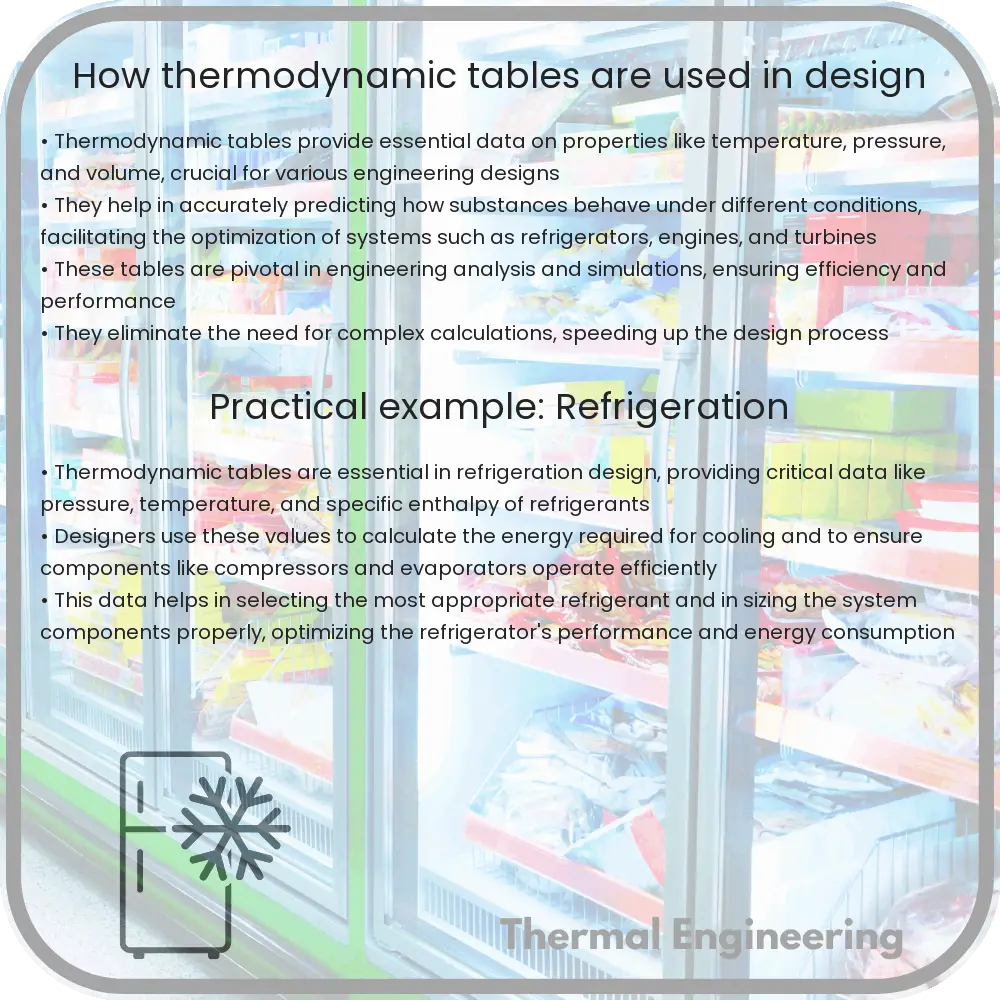
Thermodynamic tables contain compiled values of properties for substances, often presented at various temperatures and pressures. These properties include temperature (T), pressure (P), enthalpy (H), internal energy (U), entropy (S), and specific volume (V), among others. The data in these tables eliminates the need for engineers to calculate these values from scratch, thus saving time and reducing errors in design and analysis.

Key Uses of Thermodynamic Tables in Design

  • Energy Analysis: Engineers use thermodynamic tables to perform energy balance calculations in systems like boilers, turbines, and compressors. Knowing the properties of the working fluid at different states allows engineers to calculate energy transfers and efficiencies.
  • Material Selection: Different applications require materials that can withstand particular temperatures and pressures. Thermodynamic tables help engineers choose appropriate materials based on the operating conditions listed.
  • Optimization of Operating Conditions: By referencing the different states presented in thermodynamic tables, engineers can optimize the operating conditions for machinery to improve efficiency and output.

Examples of Calculations Using Thermodynamic Tables

An essential function of thermodynamic tables in design is to support calculations involving various thermodynamic cycles. For instance, consider the Rankine cycle, typically used in power plants:

  1. Determine the State Properties: Using the steam tables (a type of thermodynamic table for water/steam), locate the properties of steam (such as enthalpy and entropy) at different points in the cycle, typically at the turbine inlet and outlet.
  2. Energy Transfers: With the properties known from the tables, calculate work done and heat transferred in various components of the cycle. For instance, the work output from the turbine can be approximated using:

    \[ W_{turbine} = h_1 – h_2 \]

    where \( h_1 \) and \( h_2 \) are the enthalpies at the turbine inlet and outlet, respectively.

  3. Efficiency Calculation: Determine the efficiency of the cycle by comparing the net work output to the heat input. This step is crucial for evaluating the performance and economic viability of the system.

Conclusion

Thermodynamic tables are invaluable tools in the field of engineering design, providing detailed and precise data essential for the analysis, design, and optimization of various systems. By offering a quick reference to the thermodynamic properties of fluids under different conditions, these tables enhance the accuracy, efficiency, and reliability of engineering projects. As such, proficiency in using thermodynamic tables is a key skill for any engineer working in fields reliant on energy conversion and material science.

High-temperature heat pumps

Explore the efficiency and applications of high-temperature heat pumps, which provide sustainable heating solutions for industrial processes by utilizing advanced refrigeration cycles.

High-temperature heat pumps

Understanding High-Temperature Heat Pumps

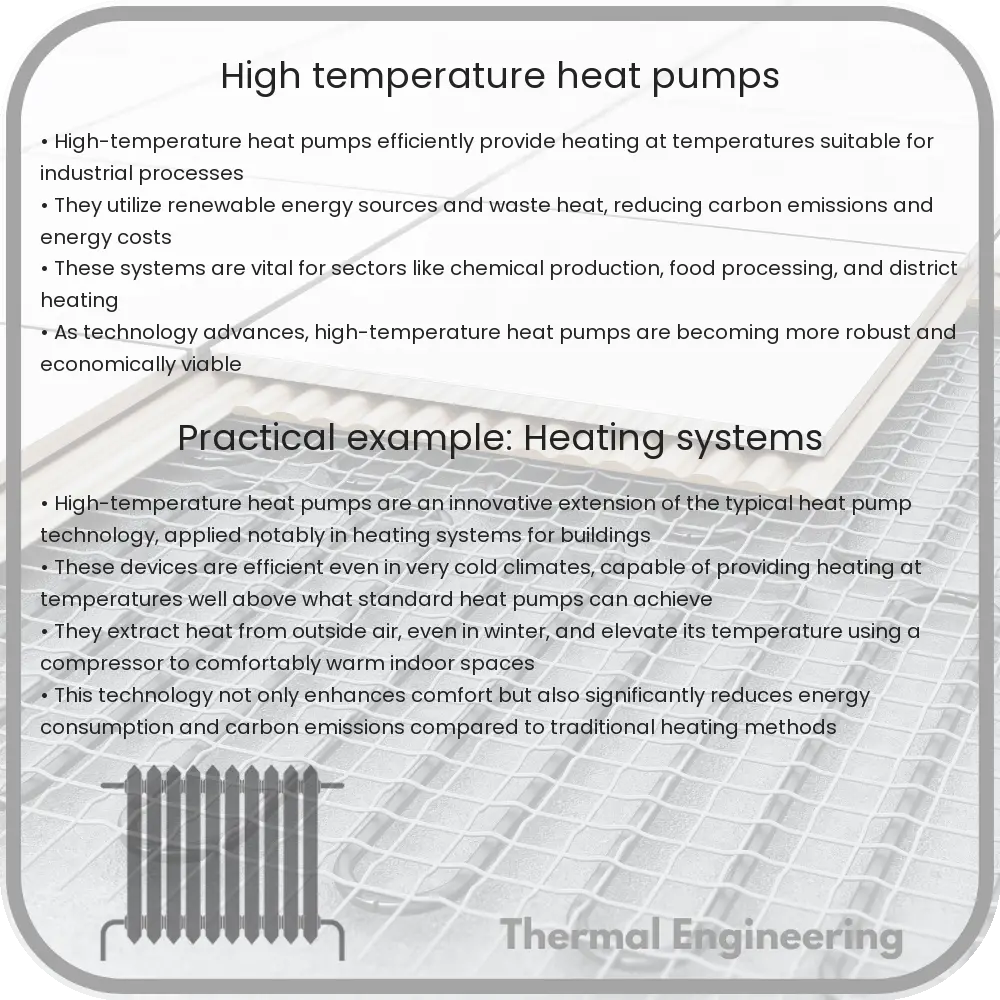
High-temperature heat pumps are an innovative evolution in the field of thermal systems that facilitate heating at temperatures typically ranging from 70°C to 160°C. They are used in a variety of industrial applications where high-temperature heat is essential, such as in chemical processing, food production, and district heating. This article explains the basics of how high-temperature heat pumps work, their benefits, and the challenges associated with their design and implementation.

Principle of Operation

Heat pumps are devices that transfer heat from one place to another by using a refrigerant cycle. This cycle involves evaporation, compression, condensation, and expansion of a refrigerant. In conventional heat pumps, the condensation temperature is usually around 55°C. However, high-temperature heat pumps utilize advanced refrigerants and enhanced compressor technology to achieve much higher temperatures.

The basic operation involves the following steps:

  • Evaporation: The refrigerant absorbs heat at a low temperature and low pressure, and evaporates.
  • Compression: The gaseous refrigerant is compressed by a compressor, which increases its pressure and temperature.
  • Condensation: The high-pressure, high-temperature gas then releases the previously absorbed heat through condensation when it comes into contact with a heat sink.
  • Expansion: Afterward, the refrigerant passes through an expansion valve where its pressure and temperature drop, and it is ready to absorb heat again.

The ability of a heat pump to raise the temperature to one suitable for industrial applications is mostly credited to the specific properties of the refrigerant used and the efficiency of the compressor.

Benefits of High-Temperature Heat Pumps

Implementing high-temperature heat pumps can offer numerous advantages:

  1. Energy Efficiency: Heat pumps typically produce three to four times more heat energy than the electrical energy they consume. This makes them highly energy-efficient and can significantly reduce operational costs compared to conventional heating systems.
  2. Environmental Impact: By utilizing electricity, heat pumps can operate on renewable energy sources, thereby reducing the dependency on fossil fuels and lowering greenhouse gas emissions.
  3. Versatility: These systems can be designed for a variety of industrial applications, providing precise temperature control which is crucial in many production processes.

Challenges and Considerations

Despite their benefits, the deployment of high-temperature heat pumps does face several challenges:

  • High Initial Investment: The cost of advanced compressors and suitable high-performance refrigerants can be significantly higher than those for conventional heating systems.
  • Refrigerant Issues: The selection of refrigerants with the capability to operate at high temperatures often involves a trade-off between efficiency, environmental impact, and safety.
  • Technical Complexity: Designing systems that can handle high pressures and temperatures necessitates robust engineering solutions and poses additional maintenance demands.

Despite these challenges, the potential of high-temperature heat pumps in reducing energy costs and carbon footprints is immense, particularly with ongoing advancements in compressor technology and refrigerant formulations.

Conclusion

High-temperature heat pumps represent a critical advancement in thermal technology, offering sustainable and efficient solutions particularly suitable for industrial applications. While they present some challenges, their potential in driving forward an energy-efficient and environmentally friendly industrial landscape makes them a valuable focus for future research and implementation.

As technologies improve and the cost of components decreases, high-temperature heat pumps are likely to become more accessible and widely used, contributing to global energy sustainability efforts.

How heat affects metal fatigue

Learn how temperature impacts metal fatigue and its significance for engineering structures, detailing the interplay between heat and material strength.

How heat affects metal fatigue

Understanding How Heat Affects Metal Fatigue

Metal fatigue refers to the weakening or structural deterioration of metal under repeated stress. It is a critical factor in the safety and performance of many engineering structures, such as bridges, aircraft, and automobiles. Notably, temperature plays a significant role in how metal behaves under stress. This article delves into the effects of heat on metal fatigue, providing a concise yet comprehensive explanation of the phenomenon.

Basics of Metal Fatigue

Metal fatigue occurs because of cyclic loading, where the repeated application of load leads to the initiation and growth of cracks until the metal ultimately fails. Each load application causes microscopic changes in the metal’s structure, which accumulates over time. The factors that influence metal fatigue include the magnitude and frequency of the applied load, the material’s properties, environmental conditions, and temperature.

Role of Temperature in Metal Fatigue

Temperature can affect metal fatigue in three primary ways: by altering the material’s microstructure, affecting its strength, and changing the rate of crack growth. Here’s how varying temperatures can influence these factors:

  • Microstructural Changes: At higher temperatures, the microstructure of metals can change. This phenomenon, known as creep, involves the slow, permanent deformation of the material under a constant load. This deformation can lead to new or accelerated fatigue processes.
  • Effect on Material Strength: Generally, increasing the temperature leads to a decrease in material strength. Elevated temperatures can reduce the yield strength and tensile strength of metals, making them more susceptible to fatigue as they are less able to resist applied stresses.
  • Crack Growth Rate: The rate at which cracks grow within a metal can increase with temperature. At higher temperatures, the mobility of atoms in the metal’s crystal lattice increases, facilitating faster crack propagation.

It is important to note that the effect of temperature on metal fatigue is not uniform across all metals. Different materials respond to heat in different ways based on their composition and mechanical properties. For instance, aluminum alloys and titanium may exhibit significantly different behaviors under thermal stress compared to steel.

Calculating Thermal Effects on Fatigue Life

To predict how heat will affect the fatigue life of a metal, engineers use various fatigue life prediction models, which are often based on the Coffin-Manson relationship:

\[ \Delta \epsilon / 2 = \epsilon_{f’} (2N)b + \epsilon_{p} (2N)c \]

Where:

  • \(\Delta \epsilon / 2\) is the strain range,
  • \(\epsilon_{f’}\) is the fatigue ductility coefficient,
  • \(N\) is the number of cycles to failure,
  • \(b\) and \(c\) are the fatigue strength exponent and fatigue ductility exponent, respectively,
  • \(\epsilon_{p}\) represents the plastic strain.

This model helps estimate the cyclic strain range, accounting for both elastic and plastic components of strain, which define how metals can endure varying thermal conditions over many cycles.

Conclusion

In conclusion, understanding how heat affects metal fatigue is crucial for designing safer, more reliable engineering structures. By taking into account the role of temperature in altering material properties and behavior under stress, engineers can better predict the longevity and safety of metal components and structures exposed to cyclic loading in high-temperature environments.

Whether it’s in aerospace engineering, automotive industries, or civil construction, accounting for thermal effects in metal fatigue ensures enhanced safety and performance across a multitude of applications.

How thermal cycler facilitates PCR

Learn about the vital role of a thermal cycler in PCR, a device essential for DNA amplification used in genetic and medical research.

How thermal cycler facilitates PCR

Understanding the Role of a Thermal Cycler in PCR

Polymerase Chain Reaction (PCR) is a revolutionary scientific technique used to amplify specific DNA sequences, making it easier to study genetic material in detail. A crucial instrument in this process is the thermal cycler, also known as a PCR machine. This device plays a pivotal role in the manipulation and amplification of DNA segments, greatly enhancing the efficiency and effectiveness of genetic analysis.

What is a Thermal Cycler?

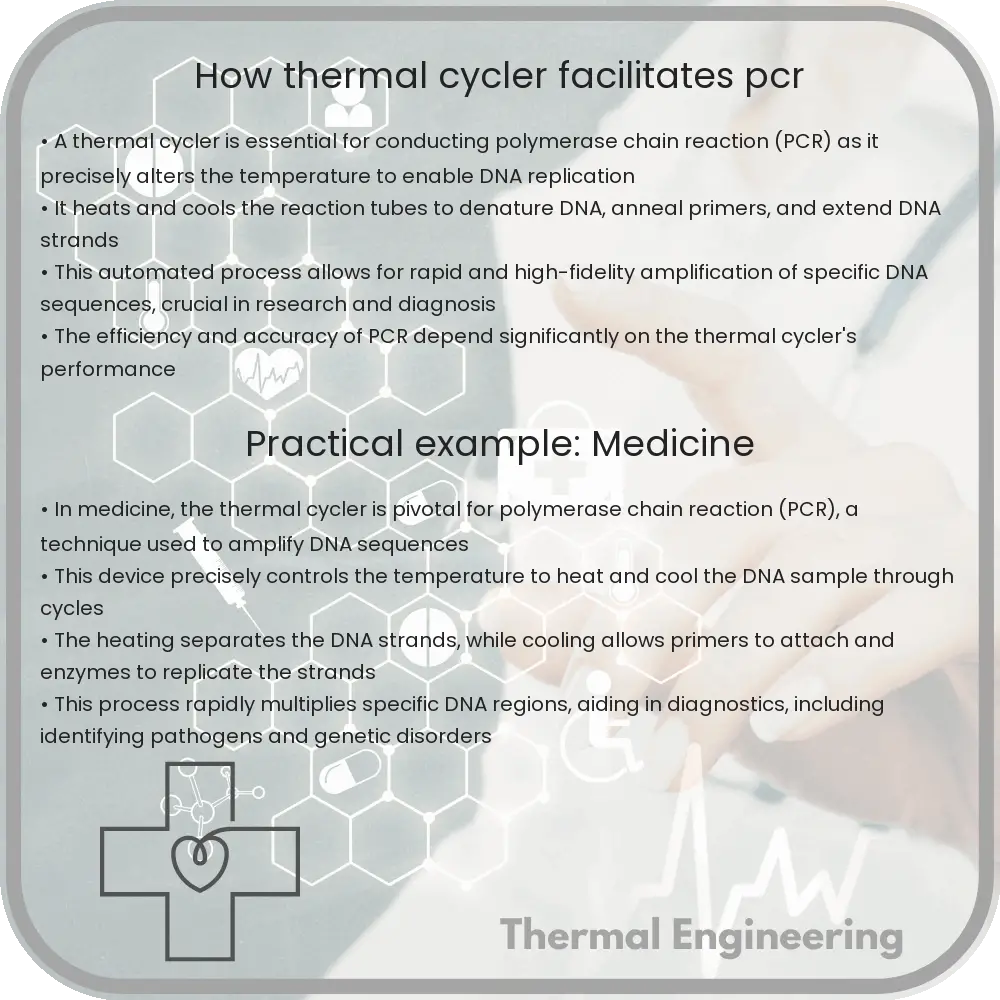
A thermal cycler is a laboratory apparatus used for amplifying DNA and RNA samples by running repeated cycles of temperature changes. These changes are essential for the different stages of the PCR process which include denaturation, annealing, and extension. Each stage requires a specific temperature range to enable the precise replication of the DNA segment being targeted.

How the Thermal Cycler Works

The thermal cycler carries out its function through several key stages:

  1. Denaturation: At around 94°C to 98°C, the thermal cycler heats the DNA sample to cause the double-stranded DNA to denature, separating into two single strands by breaking the hydrogen bonds between complementary bases.
  2. Annealing: The temperature is lowered to between 50°C and 65°C depending on the primers used. During this stage, primers bind to their complementary DNA sequence on the single-stranded DNA.
  3. Extension: The temperature is raised to about 72°C. At this temperature, the DNA polymerase enzyme is activated to add nucleotides to the primer, thus synthesizing new strands of DNA.

The thermal cycler automates this entire process, running the necessary cycles, which can range from 20 to 40 cycles, depending on the quantity of DNA copies needed. Each cycle doubles the number of DNA molecules, exponentially increasing the quantity of DNA segments being amplified.

Features of Modern Thermal Cyclers

  • Block Temperature Control: Ensures that the unit can rapidly reach and maintain the precise temperature required for each step of the PCR cycle.
  • Gradient Function: Allows the user to test different temperatures in one PCR run to optimize the annealing temperature for new primers.
  • Programmable Profiles: Enables storage and retrieval of specific PCR protocols, thereby increasing reproducibility and efficiency.
  • Heated Lid: Prevents condensation of the sample in the cover of the tube, which could alter the reaction volume and affect the PCR results.

Importance of the Thermal Cycler in Research and Medicine

The development and refinement of the thermal cycler have greatly impacted both basic biological research and practical applications in medicine. It is fundamental in gene cloning, sequencing, and analysis, facilitating advancements in areas such as genetic disease research, forensic science, and the development of pharmaceuticals. In medicine, PCR and thermal cyclers are used extensively for diagnosing diseases, identifying bacteria and viruses, and even in genetic fingerprinting and paternity testing.

In conclusion, the thermal cycler is an indispensable tool in the landscape of modern genetics and molecular biology. By automating the PCR process, thermal cyclers not only save time and reduce the potential for error, but they also enable precise control over the conditions necessary for DNA manipulation. As science advances, the capabilities of these machines continue to expand, further enhancing their utility in scientific research and medical diagnostics.

How does a heat spreader enhance cooling

Learn how heat spreaders work to effectively manage thermal performance in electronic devices, ensuring optimal cooling and system longevity.

How does a heat spreader enhance cooling

Understanding Heat Spreaders and Their Role in Enhancing Cooling

Heat spreaders play a critical role in thermal management systems, particularly in electronic devices where managing heat is essential for optimal performance and longevity. A heat spreader is a component that helps distribute heat evenly over a larger area, facilitating more efficient heat dissipation. Let’s dive into how heat spreaders work and their benefits in cooling systems.

What is a Heat Spreader?

A heat spreader is a material or device that sits between a heat source (like a CPU or GPU) and a heat dissipating component (such as a heatsink or cooling fins). The primary purpose of a heat spreader is to enhance the thermal conductivity between the heat source and the cooler. This component is typically made from materials with high thermal conductivity, such as copper or aluminum, to efficiently spread heat across a larger surface area.

How Heat Spreaders Enhance Cooling

The effectiveness of a heat spreader is derived from several key functions:

  • Increasing Surface Area: By spreading heat over a larger surface area, heat spreaders reduce the thermal resistance between the heat source and the ambient environment. This increased area allows more efficient thermal exchange with the surroundings.
  • Improving Contact Quality: Heat spreaders help improve the interface between the heat source and the cooling device. Imperfections at the microscopic level can trap air, an insulator, which can significantly hinder heat transfer. A heat spreader with a smoother, flatter surface minimizes these air gaps, enhancing the overall effectiveness of heat conduction.
  • Thermal Conductivity Enhancement: The material of the heat spreader itself plays a crucial role. Materials like copper and aluminum are favored for their high thermal conductivities, measured in W/(m*K), which stands for watts per meter-kelvin. These materials effectively “spread out” the heat, lowering the peak temperature at the heat source.

Practical Applications of Heat Spreaders

Heat spreaders are utilized in various applications, where controlling temperature is crucial. Below are a few examples:

  • Computers and Electronics: In devices such as laptops and smartphones, heat spreaders prevent overheating, ensuring that components operate within safe temperature ranges.
  • LED Lighting: Heat spreaders are essential in LED lighting systems to prevent early failure due to high temperatures, thus enhancing durability and performance.
  • Automotive: In electric vehicles, heat spreaders facilitate effective heat dissipation from batteries and electronic control units, which is vital for efficiency and safety.

The Science Behind Heat Spreaders

The effectiveness of a heat spreader can be analyzed through Fourier’s law of heat conduction:

\[ q = -k \cdot A \cdot \frac{dT}{dx} \]

where:

  • q is the heat transfer rate (W)
  • k is the thermal conductivity of the material (W/m*K)
  • A is the cross-sectional area perpendicular to heat flow (m2)
  • dt/dx is the temperature gradient (K/m)

As illustrated by this equation, increasing the cross-sectional area (A) through which heat is transferred, or using a material with higher thermal conductivity (k), significantly enhances the rate of heat transfer. This principle underscores the fundamental operation of a heat spreader.

Conclusion

Heat spreaders are an essential tool in the arsenal of thermal management. By efficiently distributing heat over a larger area and improving thermal interface characteristics, they play a pivotal role in enhancing the cooling performance of various systems. Whether in consumer electronics, automotive, or industrial applications, heat spreaders contribute to reliability and efficiency, making them indispensable in our increasingly electronic world.

How cooling vests regulate body temperature

Learn about the effectiveness of cooling vests in regulating body temperature using heat exchange and evaporation, suitable for athletes, medical patients, and workers in warm environments.

How cooling vests regulate body temperature

Understanding How Cooling Vests Regulate Body Temperature

Cooling vests are an innovative technology designed to manage body temperature, particularly in environments that are excessively warm or during intense physical activity. This article explores the science behind cooling vests, the various types in use, and their applications in different fields.

How Cooling Vests Work

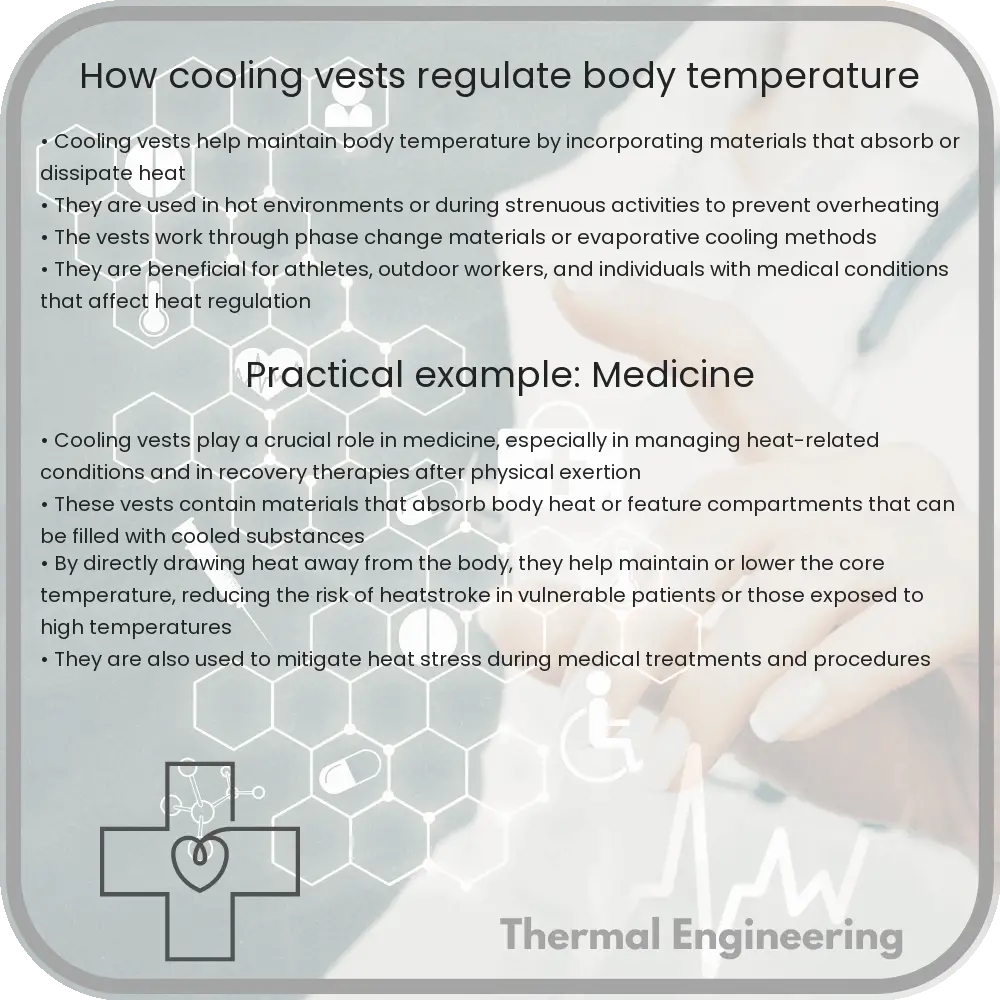
Cooling vests operate based on the principles of heat exchange and evaporation to extract heat from the body, thus reducing the wearer’s body temperature and preventing heat-related illnesses. There are primarily two types of cooling vests: evaporative and phase change material (PCM) vests.

Evaporative Cooling Vests

Evaporative cooling vests function by utilizing the heat from the body to evaporate water that is contained within the vest. This process requires heat, which is taken from the body, resulting in a cooling effect. The steps involved in this method include:

  • Wearer soaks the vest in water, allowing the fabric of the vest to absorb moisture.
  • Once the wearer puts on the vest, the body heat begins to evaporate the absorbed water.
  • As evaporation occurs, the surface temperature of the vest drops, pulling heat away from the body and lowering the body’s core temperature.

These vests are most effective in hot, dry climates where evaporation can occur readily, but their effectiveness diminishes in humid conditions where evaporation rates are lower.

Phase Change Material Vests

Phase change material (PCM) vests contain substances that melt and solidify at certain temperatures, typically around the comfortable body temperature of 29°C to 32°C (84°F to 90°F). These materials absorb heat from the body when changing from a solid to a liquid, thereby cooling the body. The process works as follows:

  • The PCM is initially in a solid state at a typical temperature below the body’s natural temperature.
  • As the body emits heat, the PCM absorbs this heat and begins to change from solid to liquid, a process that requires a great deal of energy and therefore has a cooling effect.
  • Once the heat source is removed, the PCM material releases the stored heat as it resolidifies, ready to be re-activated.

PCM vests are advantageous because they can maintain a consistent temperature despite ambient conditions and are often used in situations where temperature control is crucial, such as in medical conditions or hazardous work environments.

Applications of Cooling Vests

Cooling vests have a wide range of applications across various sectors:

  • Sports: Athletes use cooling vests to prevent overheating during competitions, particularly in warm weather. This helps in maintaining optimal performance levels and reducing recovery times.
  • Medical: Individuals with medical conditions that affect body heat regulation, such as multiple sclerosis (MS), utilize cooling vests to manage their symptoms effectively.
  • Industrial: Workers in industries like construction and welding, where high heat environments are common, wear cooling vests to safeguard against heat stress and fatigue.
  • Military: Military personnel deployed in hot climates use cooling vests to maintain core body temperature, thereby improving endurance and focus.

Conclusion

Cooling vests represent a critical advancement in personal temperature management technology, providing both comfort and safety benefits. By leveraging the principles of heat transfer and material science, these vests are essential tools in sports, medicine, industrial settings, and military operations. As technologies advance, we can expect these devices to become more effective and widely used in managing heat stress and enhancing performance in challenging environments.

How thermophotovoltaic cells generate electricity

Understand the workings of Thermophotovoltaic Cells (TPVs), which convert heat into electricity using a photovoltaic process for efficient energy solutions.

How thermophotovoltaic cells generate electricity

Introduction to Thermophotovoltaic Cells

Thermophotovoltaic (TPV) cells are devices that convert heat energy directly into electrical energy through a photovoltaic process, similar to how traditional solar cells work using sunlight. However, instead of relying on sunlight, TPV cells harness heat from different heat sources, converting it into electricity. This makes them valuable in applications where heat is abundantly available or as a method of improving the efficiency of systems that generate waste heat.

Basic Principle of TPV Cells

The fundamental mechanism behind thermophotovoltaic cells revolves around the concept of heat-induced photon emission. When any material is heated to high temperatures, it starts to emit light—this phenomenon is known as thermal radiation. TPV cells use this radiated light to generate electricity using materials that are sensitive to particular wavelengths of light.

Components of a TPV System

  • Heat Source: Provides thermal energy to the system which can be natural (like geothermal) or waste heat from industrial processes.
  • Emitter: A component that absorbs thermal energy from the heat source and re-radiates it in the form of light suitable for the photovoltaic cell.
  • Photovoltaic Cells: These cells are specially designed to convert the light emitted from the emitter into electricity. They are typically made from materials like gallium antimonide (GaSb) which are efficient at absorbing the infrared light emitted by hot emitters.
  • Filter: In some setups, a filter is used to reflect unusable wavelengths back to the emitter, thus enhancing the overall efficiency by ensuring only useful wavelengths reach the photovoltaic cell.

How TPV Cells Generate Electricity

The process begins when the heat source provides energy to the emitter. Consequently, the emitter heats up and starts radiating photons. These photons are directed towards the photovoltaic cells. When these photons strike the photovoltaic cells, they are absorbed, causing electron-hole pairs to form within the cell’s semiconductor material. Similar to traditional solar panels, these electron-hole pairs create an electric current as they move towards different charges in the cell.

Efficiency and Applications

One of the critical challenges for TPV systems is efficiency. Factors such as the temperature of the emitter and the spectral match between emitter radiation and cell absorption significantly affect the system’s performance. Enhancements in materials science, especially the development of better emitters and PV cells that can operate efficiently at various wavelengths, are integral to improving TPV efficiency.

Applications of thermophotovoltaic cells span across various fields. In space exploration, they can provide power by converting heat from radioisotope thermoelectric generators. In industrial settings, TPV systems can convert waste heat from furnaces, engines, or even incinerators into additional electrical power. This not only helps in energy recovery but also in reducing overall carbon emissions.

Conclusion

Thermophotovoltaic cells offer a promising technology for converting heat to electricity, especially in scenarios where capturing waste heat is feasible. While the technology is still under development and facing efficiency challenges, ongoing research in materials and system designs holds the promise of making TPV an essential component of future sustainable energy solutions.

How does a vapor barrier prevent moisture damage

Learn about vapor barriers’ importance in preventing moisture damage, how they work, their types, installation considerations, and benefits.

How does a vapor barrier prevent moisture damage

Understanding Vapor Barriers and Their Role in Preventing Moisture Damage

Moisture control is a critical aspect of building construction and maintenance, as excessive moisture can lead to mold growth, structural damage, and reduced energy efficiency. Vapor barriers, also known as moisture barriers, play a pivotal role in managing moisture levels and protecting building materials from water vapor-related issues. Let’s explore how vapor barriers work and why they are vital in construction.

What is a Vapor Barrier?

A vapor barrier is a material specifically designed to resist the diffusion of moisture through wall, ceiling, and floor assemblies of a building. The primary purpose of a vapor barrier is to prevent moisture from moving from one space to another, particularly to prevent it from entering sensitive areas where it can condense and cause damage.

How Does a Vapor Barrier Work?

The effectiveness of a vapor barrier depends on its permeability, which is measured in perms (a unit that measures the rate of diffusion of water vapor through a material). Materials with a perm rating of less than 1.0 are typically considered suitable as vapor barriers. These materials are often used in areas where high humidity levels are common, preventing moist air from passing through walls, ceilings, and floors and condensing into liquid water.

Types of Vapor Barriers

  • Sheet-based barriers: These barriers include plastic sheets, typically polyethylene, used in walls, floors, and ceilings to block moisture transmission.
  • Coatings: Various paints and primer-based barriers can be applied like paint to existing surfaces to act as a moisture block.
  • Foil-backed paper: Used in insulation materials, foil backing provides an excellent vapor barrier and is often installed in attics and walls.

Installation and Considerations

Installing a vapor barrier requires a strategic approach to ensure that it effectively blocks moisture transmission without causing issues elsewhere in the building structure. It is typically installed on the warm side of the thermal envelope of a building — generally on the inside in colder climates and on the outside in warmer climates. This placement helps prevent the warm, moist air from inside the building or from the external environment from reaching cooler interior spaces where it would condense.

However, incorrect installation or choosing the wrong type of vapor barrier can lead to increased risks of moisture-related problems rather than preventing them. For instance, installing a vapor barrier on both sides of a wall assembly can trap moisture within the wall, causing mold growth and degradation of building materials.

Benefits of Using a Vapor Barrier

  • Moisture Control: Effective moisture control helps prevent mold growth and the deterioration of building materials.
  • Improved Comfort: Proper usage of vapor barriers can aid in managing indoor humidity levels, enhancing overall comfort.
  • Energy Efficiency: By restricting moisture and aiding in thermal control, vapor barriers can contribute to better energy efficiency in buildings.

Vapor barriers are an essential element of modern construction, particularly in climates experiencing high levels of humidity. By understanding how vapor barriers work and ensuring they are correctly included in building designs, constructors and homeowners can significantly enhance building durability and indoor air quality.