Facebook Instagram Youtube Twitter

How thermal actuators convert heat to motion

Explore the mechanics of thermal actuators, their application in engineering, and how they utilize thermal expansion to produce precise mechanical motion.

How thermal actuators convert heat to motion

Understanding Thermal Actuators: Converting Heat to Motion

Thermal actuators, a critical component in various engineering applications, leverage the principle of thermal expansion to convert heat energy into mechanical motion. This mechanism is widely used in fields such as aerospace, automotive, HVAC (Heating, Ventilation, and Air Conditioning), and robotics. The understanding of how thermal actuators work is essential for designing systems that require precise control of movement initiated by changes in temperature.

Principle of Operation

The fundamental operation of a thermal actuator is based on the material’s response to heat. When materials are heated, they expand; this basic property is harnessed in a controlled way to produce motion. Different materials expand at different rates, and this differential expansion can be engineered to create useful movement.

Types of Thermal Actuators

  • Bimetallic Strips – These consist of two metals with different coefficients of thermal expansion bonded together. As the temperature changes, the difference in expansion rates causes the strip to bend. This bending movement can be used to open or close valves, switch electrical circuits, or activate other mechanical systems.
  • Shape Memory Alloys (SMAs) – SMAs are metals that “remember” their original shape and can return to it when heated. At low temperatures, they can be deformed, but upon heating, they revert to their initial shape, creating movement. This property is exploited in applications requiring precise and repeatable movements.

Mathematical Explanation

To understand the movement in a bimetallic strip, consider the metals Metal A and Metal B, having coefficients of thermal expansion denoted by αA and αB respectively, with αA > αB. When uniformly heated, the strip bends towards Metal B. The curvature (κ) of the strip can be approximated by the following relationship:

\[
\kappa \approx \frac{(α_A – α_B) \Delta T}{t}
\]

where ΔT is the change in temperature and t is the thickness of the materials. This expression assumes that the metals are perfectly bonded with no slippage and the dimensions other than thickness are much larger than t.

Applications of Thermal Actuators

  • Automotive – Used in thermostats for controlling engine temperature, ensuring the engine runs efficiently.
  • Aerospace – Used in actuators for adjusting control surfaces in response to thermal loads.
  • Consumer Electronics – Employed in circuit breakers where they act to break the circuit and prevent overheating or fires.
  • Medical Devices – Utilized in drug delivery systems where a controlled response to body temperature can trigger the release of a drug.

Advantages and Limitations

One of the major advantages of thermal actuators is their simplicity and reliability. They do not require external power sources or complex electronics, making them ideal for applications requiring minimal maintenance and high durability. However, their response times and motion ranges can be limited, and they might require calibration to handle varying environmental conditions effectively.

In conclusion, thermal actuators are a fascinating example of how a simple physical property, like thermal expansion, can be engineered to perform complex tasks. By understanding and applying the principles of thermal expansion, engineers can design devices that are both ingenious and functional, tapping into the natural behavior of materials to meet technological needs.
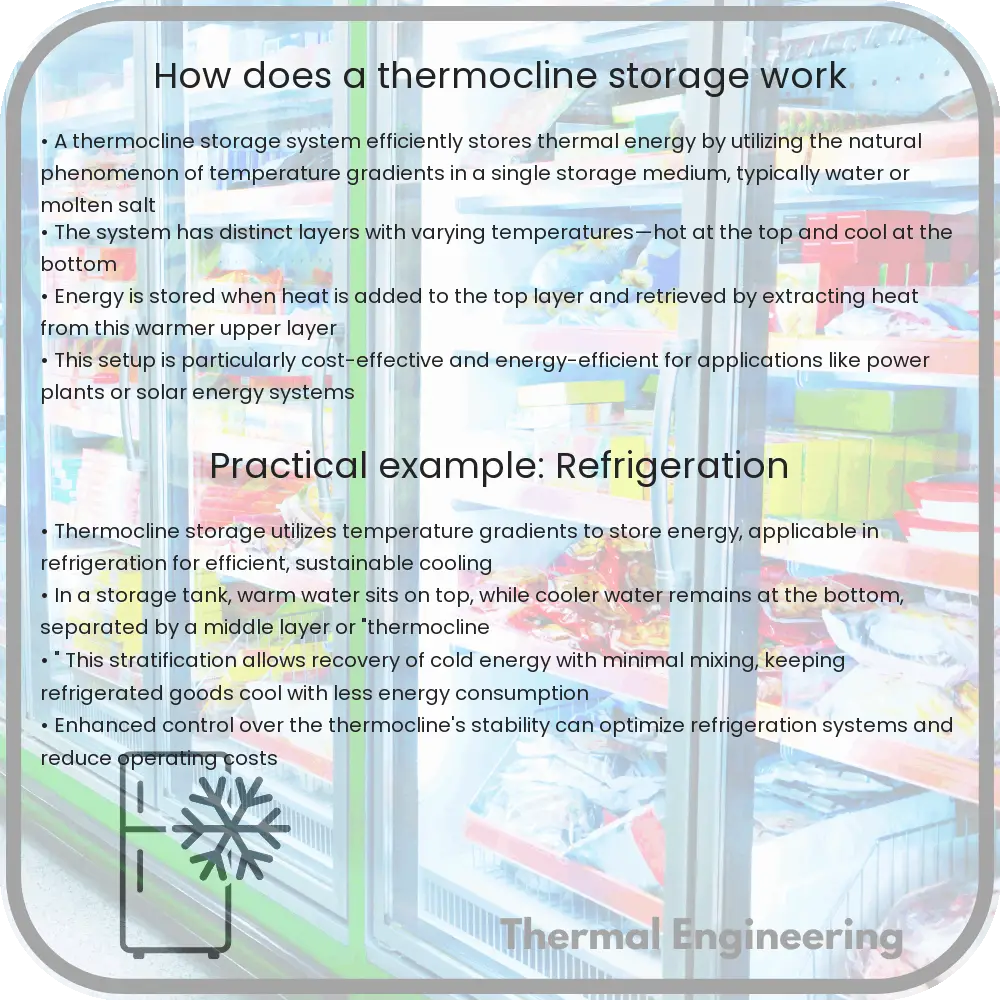
How does a thermocline storage work

Learn about thermocline storage systems, their role in renewable energy, and how they utilize thermal stratification for efficient thermal energy storage.

How does a thermocline storage work

Understanding Thermocline Storage Systems

Thermocline storage systems are an innovative approach to storing thermal energy, particularly useful in the context of concentrated solar power plants and other applications requiring energy storage over time. This system efficiently stores heat by exploiting the natural phenomenon of thermal stratification. By understanding the basic principles of thermocline storage, we can appreciate its role in enhancing renewable energy technologies.

What is a Thermocline?

A thermocline refers to a layer in a body of fluid (liquid or gas) where the temperature changes more drastically with depth than it does in the layers above or below. In the context of energy storage, a thermocline can be formed within a single storage tank that contains a fluid medium, usually water or molten salt, which acts as the thermal storage substance. This thermocline effectively separates the hotter fluid above from the cooler fluid below.

How Thermocline Storage Works

The basic operation of a thermocline storage system involves three key phases: charging, storing, and discharging:

  • Charging: During this phase, hot fluid (such as molten salt or oil heated by solar energy) is introduced at the top of the storage tank. As it enters, it stays on top of the cooler fluid due to its lower density, thereby heating the upper layer.
  • Storing: Once the charging phase is complete, the stratified tank now contains a gradient of temperatures from hot at the top to cool at the bottom. The distinct thermocline region in the middle acts as a barrier that minimizes mixing between the layers.
  • Discharging: When the stored energy is needed, the hot fluid is drawn from the top of the tank for use in generating power. As hot fluid is removed, cooler fluid from the bottom of the tank is gradually moved upwards to be reheated, thereby maintaining the system’s efficiency.

Advantages of Thermocline Storage

Thermocline storage systems offer several significant advantages:

  • Cost-effectiveness: Using a single tank reduces the cost compared to systems requiring separate hot and cold storage tanks.
  • Efficiency: The natural stratification reduces heat loss and helps in maintaining a high temperature difference across the storage medium.
  • Simplicity: The design and operation of a thermocline system are relatively straightforward, which can lead to lower maintenance and operational costs.

Applications of Thermocline Storage Systems

While widely recognized for use in concentrated solar power plants, thermocline storage systems are also being explored for other applications such as:

  • Industrial waste heat recovery
  • Desalination plants
  • Enhanced geothermal systems

Conclusion

Thermocline storage systems represent a vital engineering solution that leverages the principles of thermodynamics to improve the feasibility and efficiency of renewable energy sources. By understanding these systems, we can continue to innovate and expand their applications, ensuring that sustainable energy solutions become more prevalent globally. Thermocline storage not only promotes the use of solar energy but also helps in making renewable energy sources more reliable and accessible.

How thermal phase transitions are harnessed

Dive into the science of thermal phase transitions, exploring their types, practical applications across industries, and principles underlying these state changes.

How thermal phase transitions are harnessed

Understanding Thermal Phase Transitions and Their Practical Applications

Thermal phase transitions are changes in the state of matter of a substance, which occur in response to changes in temperature or pressure. These transitions include the well-known processes of melting, freezing, boiling, and condensing. By harnessing these transitions, engineers and scientists can develop various technologies and materials that play crucial roles in industries ranging from manufacturing to renewable energy.

Types of Thermal Phase Transitions

Typically, there are three primary types of phase transitions:

  • Melting (solid to liquid): When a solid heats up, its molecules vibrate more vigorously until the forces holding them in a solid structure are overcome, resulting in a liquid state.
  • Vaporization (liquid to gas): Upon further heating, the liquid molecules gain enough energy to overcome intermolecular forces completely and transition into a gaseous state.
  • Sublimation (solid to gas): Some materials, under certain conditions, can change directly from solid to gas without going through a liquid phase, such as dry ice (solid carbon dioxide).

These transitions are not only limited to heating but can also occur in reverse when a substance cools down—freezing, condensation, and deposition (gas to solid).

Applications of Thermal Phase Transitions

Engineering applications of thermal phase transitions are diverse and impact various fields. Here are some key examples:

  1. Refrigeration and HVAC Systems: These systems rely on the phase transitions of refrigerants, typically involving vaporization and condensation, to transfer heat from one environment to another, thereby achieving cooling effects.
  2. Thermal Energy Storage: Materials that melt and solidify at specific temperatures can be used for storing and releasing thermal energy. Phase Change Materials (PCMs), like paraffin wax or salt hydrates, absorb heat during melting and release it upon freezing, which is particularly useful in balancing energy loads and enhancing building efficiency.
  3. Material Processing: The manufacturing of alloys, glass, and polymers often involves controlled melting and cooling processes to achieve desired material properties like toughness, transparency, or flexibility.
  4. Food Industry: Thermal transitions are critical in processes like pasteurization, freezing, and chocolate tempering, influencing texture, preservation, and taste of food products.

Scientific Principles Behind Thermal Phase Transitions

Thermal phase transitions involve the input or release of energy, known in thermodynamics as latent heat. For a transition at constant pressure, the amount of energy involved in the phase change can be described by the equation:

Q = mL

Where Q is the heat added or removed, m is the mass of the substance, and L is the latent heat coefficient, specific to each substance and transition type.

Understanding these transitions also requires the study of the substance’s state diagram or phase diagram, which maps pressure versus temperature and shows the conditions under which one phase changes to another. Such diagrams are crucial for designing processes that involve precise control over material states.

Challenges and Innovations

Despite their utility, efficiently integrating phase transition systems poses challenges, primarily related to energy efficiency, control, and material stability. Innovations in materials science, such as the development of bio-based or nanocomposite PCMs, aim to address these challenges by improving the thermal conductivity and reducing the supercooling effect of phase change materials.

In conclusion, thermal phase transitions are not only fascinating from a scientific standpoint but also highly beneficial in engineering applications. As technology progresses, the continued research and development in this area are essential for optimizing existing applications and pioneering new ones.

How solar thermal collectors capture energy

Learn how solar thermal collectors capture and convert solar energy into heat for a variety of uses, including heating, electricity, and more.

How solar thermal collectors capture energy

How Solar Thermal Collectors Capture Energy

Solar thermal collectors are devices designed to collect and convert solar energy into heat. This technology plays a crucial role in harnessing the sun’s power for practical applications like heating water, space heating, and even generating electricity. Understanding how these collectors work is essential for appreciating their efficiency and versatility.

Types of Solar Thermal Collectors

There are generally three main types of solar thermal collectors: flat-plate collectors, evacuated tube collectors, and concentrating collectors. Each type is suited to different applications and operating conditions.

  • Flat-Plate Collectors: These are the most commonly used type of solar thermal collectors. They consist of a dark flat-plate absorber, a transparent cover, a heat-insulating backing, and a fluid passage way to remove the heat from the absorber.
  • Evacuated Tube Collectors: These collectors feature several glass tubes, each containing an absorber strip to which a heat transfer fluid is circulated. The vacuum within the tubes minimally reduces heat loss, enhancing their efficiency.
  • Concentrating Collectors: These collectors use mirrors or lenses to concentrate sunlight onto a small, highly absorptive area. This allows them to reach higher temperatures but requires direct sunlight to function effectively.

Principle of Operation

The basic principle behind solar thermal collectors is the greenhouse effect. Solar radiation passes through a transparent cover and strikes the absorber plate, which is typically painted black to maximize heat absorption. The absorber converts solar radiation into heat, which is then transferred to a fluid passing through tubes attached to the absorber plate.

The heat transfer fluid, often water or an anti-freeze liquid, absorbs the heat and transports it away from the collector for immediate use or storage. In systems designed for higher temperatures, synthetic oils or molten salts can be used as the heat transfer fluid.

Energy Capture and Conversion

The efficiency of solar thermal collectors is significantly affected by several factors:

  • Absorption: The effectiveness of the absorber material in converting incident solar radiation into heat.
  • Insulation: The quality of the thermal insulation at the back and sides of the collector, which minimizes heat loss.
  • Transmission: The transmission capacity of the collector’s cover that allows solar energy to pass while also minimizing heat loss.

Typically, the absorbed solar radiation is converted into heat with an efficiency of 50-70%, depending on the collector design and environmental conditions.

Applications of Solar Thermal Energy

Solar thermal collectors have a wide array of applications, ranging from domestic to industrial uses:

  • Domestic Water Heating: Used in residential settings to provide hot water.
  • Space Heating: Integrated into a building’s heating system to provide supplemental heat.
  • Industrial Process Heat: Used in industries requiring thermal energy at lower temperatures.
  • Concentrated Solar Power (CSP): Utilized in generating electricity at a larger scale by using concentrated solar heat to produce steam, driving turbines connected to generators.

Understanding the mechanism of energy capture by solar thermal collectors shows us the potential of solar power as a sustainable energy source. With ongoing advancements in thermal storage and collector efficiency, solar thermal technology holds a promising place in the future energy landscape.

How thermal runaway occurs in batteries

Learn about thermal runaway in batteries, a serious issue that can cause overheating and fires, particularly in lithium-ion cells, and how to prevent it.

How thermal runaway occurs in batteries

Understanding Thermal Runaway in Batteries

Thermal runaway is a critical issue in battery technology, particularly in lithium-ion batteries, which are widely used in everything from mobile devices to electric vehicles. This phenomenon refers to a self-sustaining exothermic reaction within the battery, which can lead to overheating, fire, or even an explosion. Understanding the mechanics behind thermal runaway is essential for the development of safer battery systems.

What Causes Thermal Runaway?

Thermal runaway in batteries arises from a combination of chemical and physical processes that lead to uncontrollable temperature increases. Several factors can trigger these processes, including:

  • Overcharging: Exceeding the voltage threshold of the battery.
  • Internal short circuit: Often caused by physical damage or manufacturing defects.
  • External short circuit: Causing a rapid release of the battery’s stored energy.
  • Elevated temperatures: External heat sources can exacerbate or initiate the condition.

The Mechanics of Thermal Runaway

Once initiated, thermal runaway progresses through several stages:

  1. Heat Generation: This can be initiated by an internal short circuit, chemical reactions within the battery, or external heat. The heat increases the battery’s internal temperature.
  2. Breakdown of Internal Components: Heat can cause the separator between the anode and cathode to break down, leading to further short circuits and more heat generation.
  3. Chemical Reactions: Increased temperature accelerates chemical reactions inside the battery. One significant reaction is the breakdown of the electrolyte, which can produce combustible gases.
  4. Pressure Buildup and Release: As gases form inside the battery casing, pressure builds up. If the casing ruptures or if safety vents fail, the sudden release of gases and energy can be explosive.

Preventing Thermal Runaway

Manufacturers and engineers focus on several strategies to prevent or mitigate the effects of thermal runaway:

  • Improved Battery Design: Using more stable materials and incorporating better internal supports and separators can help prevent short circuits.
  • Protective Circuitry: Battery Management Systems (BMS) monitor voltage, current, and temperature to prevent conditions that could lead to thermal runaway.
  • Temperature Management: Thermal management systems in devices and vehicles help dissipate heat more effectively to maintain batteries within safe operating temperatures.
  • Rapid Response Safety Features: Features like venting mechanisms and shutdown separators activate in response to detected dangers to help control potential damage.

Conclusion

Thermal runaway presents a significant challenge to the safety and efficacy of battery technologies, particularly for lithium-ion cells. Understanding and addressing the underlying causes of thermal runaway is vital for improving battery safety and performance. Through better material choices, protective technologies, and design improvements, the risks associated with thermal runaway can be substantially minimized, enhancing the reliability of battery-powered devices and systems.

The endeavor to understand and mitigate thermal runaway continues as battery technology evolves, highlighting the importance of research and development in achieving safer energy storage solutions.

How cryopreservation maintains cell viability

Learn how cryopreservation techniques preserve cell viability by utilizing ultra-low temperatures and cryoprotectants in medical and research applications.

How cryopreservation maintains cell viability

Understanding Cryopreservation and Cell Viability

Cryopreservation is a process used extensively in biological engineering and medical fields to preserve the structural integrity and functionality of cells, tissues, and organs at extremely low temperatures. This article delves into the basic principles of cryopreservation and explores how it helps maintain cell viability, which is crucial for various applications including medical treatments, research, and conservation of genetic material.

What is Cryopreservation?

Cryopreservation involves cooling biological samples to sub-zero temperatures to halt all biological activity and metabolic processes that could lead to cellular damage and death. The most commonly used temperature standard in cryopreservation is that of liquid nitrogen, which is around -196 degrees Celsius (-321 degrees Fahrenheit).

Key Methods in Cryopreservation

  • Vitrification: Vitrification is a method where cells are cooled at an extremely fast rate to prevent the formation of ice crystals, which can damage cell membranes and intracellular structures. This is typically achieved by using high concentrations of cryoprotectants.
  • Slow Freezing: This traditional method involves slowly lowering the temperature of the biological sample, allowing time for intracellular water to be expelled and reducing the formation of harmful ice crystals inside the cells.

Role of Cryoprotectants

Cryoprotectants are substances used in cryopreservation to protect biological samples against damage caused by freezing and thawing. These compounds work by lowering the freezing point of water inside the organism and reducing ice formation during the cooling process. Common cryoprotectants include dimethyl sulfoxide (DMSO), glycerol, and ethylene glycol. The efficacy and concentration of cryoprotectants are crucial as they need to be optimized to balance between cryoprotection and potential cytotoxicity.

The Physics Behind Cryopreservation

The success of cryopreservation depends heavily on the physical phenomena related to thermal dynamics and phase transitions of cellular water to ice. When cooling, the water inside cells forms ice crystals, which can puncture and irreversibly damage cellular membranes, a process that is particularly detrimental during thawing. By controlling the rate of freezing and the use of cryoprotectants, ice formation is minimized, and the water in the cells transitions into a glass-like state (vitrification), thus preserving cellular integrity and function.

Applications of Cryopreservation

  • Medical Treatments: Cryopreservation is critical in organ transplantation, as organs can be preserved until they can be matched with a recipient. It is also used in the preservation of blood, stem cells, and reproductive cells.
  • Biological Research: Researchers store biological samples like DNA, enzymes, and other cellular compositions for extended periods without degradation, facilitating long-term experiments and studies.
  • Conservation: Cryopreservation techniques are utilized in biodiversity conservation efforts, preserving endangered species by storing genetic and reproductive materials.

Challenges and Future Perspectives

While cryopreservation is a powerful tool for maintaining cell viability, challenges such as optimizing cryoprotectant concentrations and minimizing physical stress on cells during freezing and thawing still persist. Advances in technology and deeper understanding of cellular responses to cryogenic temperatures could improve viability rates and widen the application of cryopreservation in medicine and biotechnology.

In conclusion, cryopreservation is a critical engineering tool in the field of biomedicine and research, enabling the preservation of cellular and tissue integrity at ultra-low temperatures. By manipulating physical conditions and chemical environments, scientists and engineers can maximize cell survival, extending the frontiers of medical treatments, biological research, and conservation efforts.

Thermal management of LED systems

Learn about the importance of thermal management in LED systems, including heat generation, dissipation techniques, and strategies for improving system efficiency.

Thermal management of LED systems

Understanding Thermal Management in LED Systems

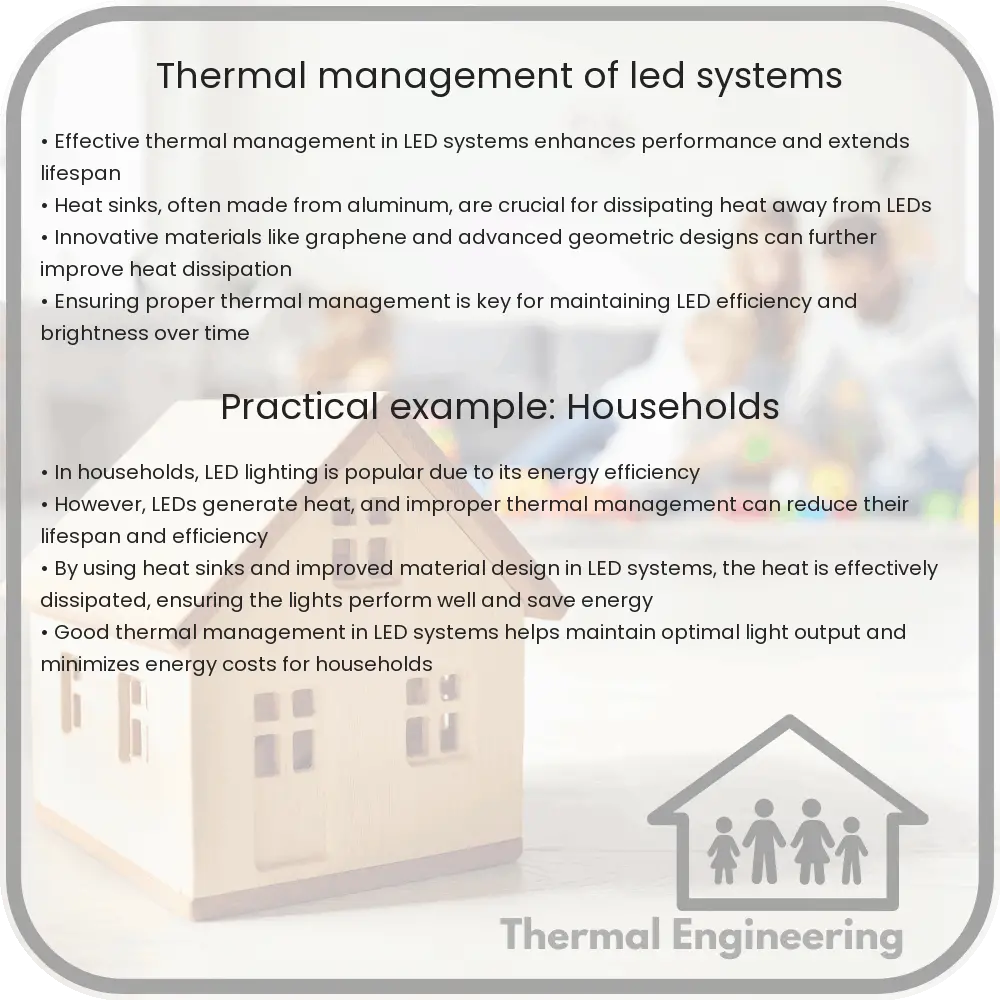
Light Emitting Diodes (LEDs) are widely used in various applications due to their efficiency and longevity. However, these advantages can be compromised by inadequate thermal management. The operating temperature of an LED significantly affects its performance, lifespan, and color stability. This article explores the fundamental concepts of thermal management in LED systems and why it is crucial.

The Basics of Heat Generation in LEDs

Despite their high efficiency, LEDs still generate heat. The efficiency of an LED is not 100%, meaning not all electrical energy is converted into light; a significant part is converted into heat. Heat generation in LEDs primarily occurs at the p-n junction—the core component within the semiconductor where light is generated. The thermal energy needs to be managed effectively to maintain the LED’s performance and extend its life.

Key Challenges in LED Thermal Management

  • Junction Temperature: The temperature at the p-n junction, also known as junction temperature, is crucial. High junction temperatures can lead to reduced light output and shifts in color spectrum.
  • Thermal Resistance: Thermal resistance is a measure of the LED’s ability to dissipate heat from the junction to the ambient environment. A lower thermal resistance signifies a more efficient heat dissipation path.
  • Ambient Temperature: The surrounding temperature can also impact LED performance. In high ambient temperatures, dissipating heat becomes more challenging, further stressing the importance of effective thermal management solutions.

Methods of Heat Dissipation in LED Systems

The main methods for dissipating heat in LED systems involve conduction, convection, and radiation, with conduction being the most significant.

  • Heat Sinks: These are perhaps the most common thermal management components used in LED systems. Heat sinks absorb heat and then dissipate it into the surrounding environment through convection. Materials like aluminum are typically used due to their high thermal conductivity.
  • Thermal Pads: These are used to interface between the LED and heat sink, enhancing the thermal conductivity at the junction. They alleviate any gaps that may contain air, which is a poor conductor of heat.
  • PCB Design: The design of the Printed Circuit Board (PCB) can also affect thermal management. Using materials with high thermal conductivity for the PCB, such as metal-core PCBs, can help in spreading heat away from the LED.

Enhancing the Efficiency of Thermal Management Systems

Simulation and Modelling: Advanced simulation and modelling can predict thermal behavior and help in designing more effective cooling systems before physical prototypes are built. This approach saves time and costs in the design phase.

Material Advances: The development of new materials with higher thermal conductivities and improved thermal interface materials continues to enhance LED thermal management. Innovations such as phase change materials and nano-enhanced compounds are promising.

Active Cooling Solutions: While passive cooling solutions like heat sinks are common, active cooling solutions such as fans or liquid cooling might be required for high-power LED applications. These systems can effectively manage larger amounts of heat but at the cost of increased system complexity and power consumption.

Conclusion

The effectiveness of an LED’s thermal management system plays a critical role in determining the overall performance and lifespan of the system. As technology advances, continuous improvements in thermal management methods are essential to leverage the full benefits of LED lighting. Understanding these basic principles and challenges helps in designing more robust and reliable LED systems suitable for a variety of applications.

Whether you’re a designer, engineer, or enthusiast, appreciating the nuances of thermal management in LED systems is fundamental to enhancing the technology’s application and effectiveness in the real world.

How thermodynamic equilibrium is achieved

Dive into the concept of thermodynamic equilibrium, a crucial principle for stable and efficient system design in physics and engineering.

How thermodynamic equilibrium is achieved

Understanding Thermodynamic Equilibrium

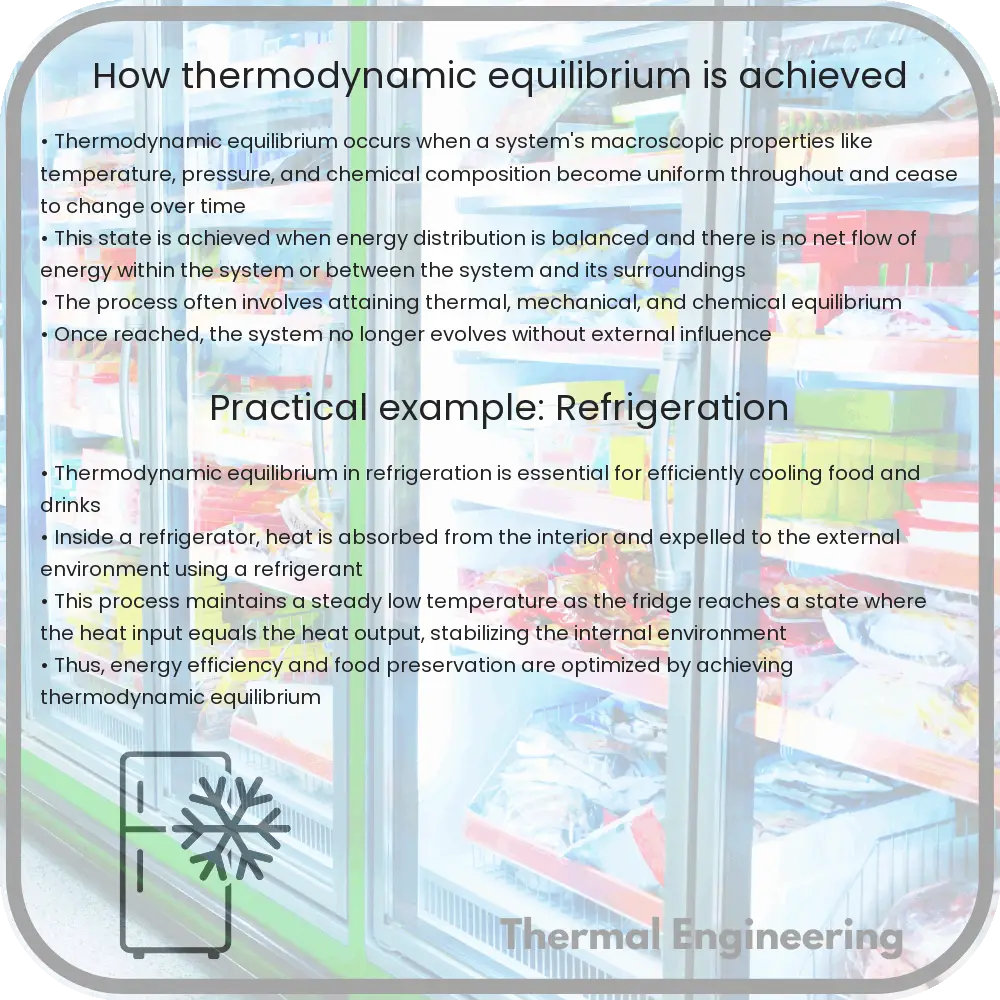
Thermodynamic equilibrium is a fundamental concept in both physics and engineering, describing a state in which a system’s macroscopic properties do not change over time. This concept is crucial for the analysis of engines, refrigerators, and even ecological systems. Here, we’ll explore what thermodynamic equilibrium entails, how it is achieved, and why it matters.

Key Components of Thermodynamic Equilibrium

  • Thermal Equilibrium: This occurs when temperature is uniform across a system, meaning there is no heat transfer between subsystems or between the system and its environment.
  • Mechanical Equilibrium: There are no unbalanced forces within the system, and no changes in pressure at any point of the system with time.
  • Chemical Equilibrium: The chemical composition of the system does not change over time, indicating balanced chemical reactions where the rate of the forward reaction equals the rate of the reverse reaction.
  • Phase Equilibrium: This form of equilibrium is reached when the mass proportions of different phases in a system (solid, liquid, gas) remain steady.

How is Thermodynamic Equilibrium Achieved?

Achieving thermodynamic equilibrium typically involves allowing a system to undergo physical interactions and chemical reactions internally until the rates of these processes balance out. Importantly, the system must be closed, meaning no energy or matter enters or leaves the system.

Let’s break down the process:

  1. Isolation: The system is isolated from external influences, which prevents external energy transfers that could affect the equilibrium.
  2. Energy Exchange: Within the system, energy and particles may redistribute through processes like conduction, convection, radiation (for energy) or diffusion (for particles). These processes continue until uniformity is achieved.
  3. Time Factor: Achieving equilibrium can be instantaneous or may take a significant amount of time, depending on the nature of the system and the types of interactions involved.

Why is Thermodynamic Equilibrium Important?

Understanding and utilizing the principle of thermodynamic equilibrium is crucial for designing efficient systems in engineering applications. Here are a few reasons why:

  • Predictive Power: Thermodynamic principles allow engineers and scientists to predict the behavior of a system under different conditions, which is essential for designing stable systems and understanding natural processes.
  • Energy Efficiency: In industries, achieving equilibrium can mean optimizing processes to minimize energy loss, leading to more efficient operations and reduced environmental impact.
  • Safety: Systems in equilibrium are typically more stable and predictable, which reduces the risk of accidents and enhances operational safety.

In conclusion, thermodynamic equilibrium provides a key insight into the factors that contribute to system stability and efficiency. By understanding how equilibrium is reached and what factors contribute to it, engineers can design more efficient, safe, and predictable systems in a variety of fields.

How boiling and condensation influence heat transfer

Learn how boiling and condensation play vital roles in engineering for efficient heat transfer in systems like HVAC and power generation.

How boiling and condensation influence heat transfer

Understanding Heat Transfer: The Roles of Boiling and Condensation

Heat transfer is a fundamental concept in engineering that describes the movement of heat energy from one place to another. This can happen in various ways, including conduction, convection, and radiation. However, two less discussed but critically important mechanisms are boiling and condensation. These processes play essential roles in a myriad of engineering systems, from power plants to refrigeration and HVAC systems.

Boiling and Its Effect on Heat Transfer

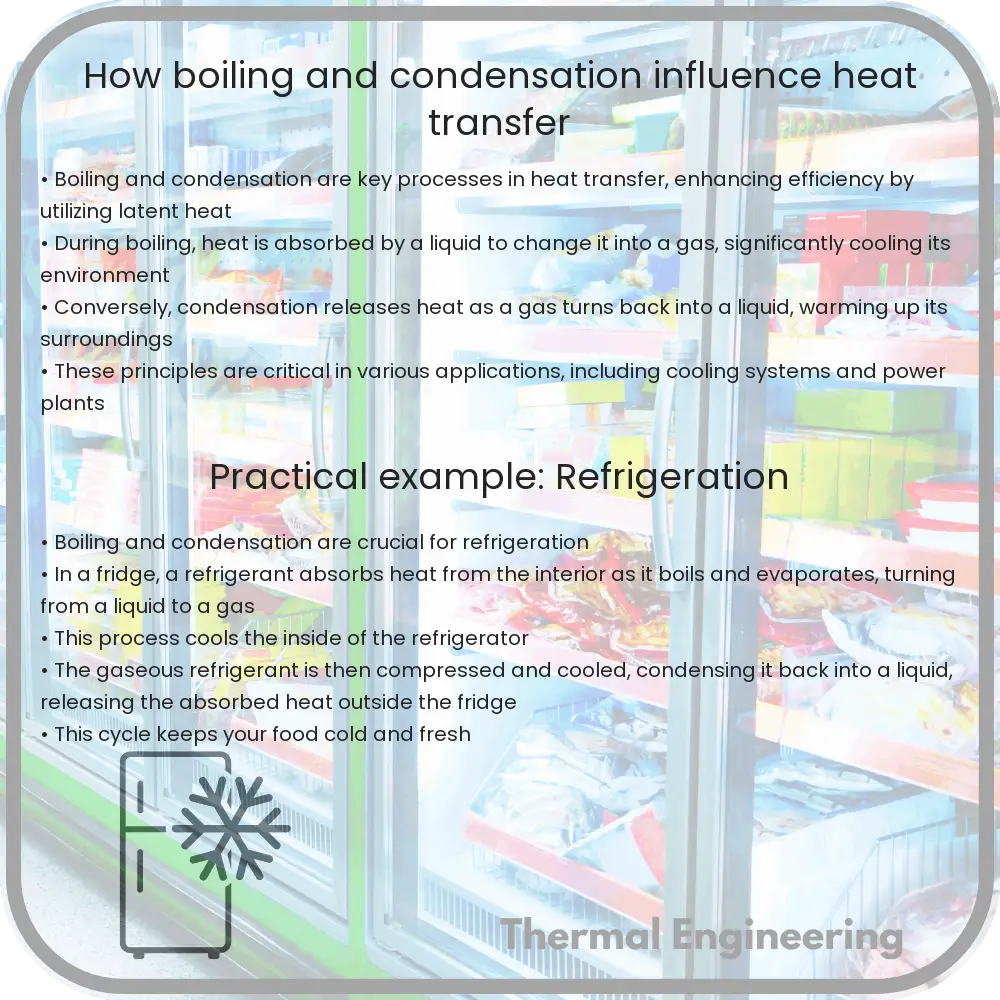
Boiling occurs when a liquid reaches a temperature at which it turns into a vapor. This process usually happens at the liquid’s boiling point, which varies depending on the pressure of the environment. Boiling can be seen as a vigorous form of evaporation where heat energy is absorbed by the liquid to change its phase to gas.

  • During boiling, the heat transfer is particularly effective because of the latent heat of vaporization. The latent heat is the energy required to change the phase of a substance from liquid to gas without changing its temperature.
  • This energy absorption is mostly used to break the molecular bonds within the liquid, resulting in a phase transition to gas.
  • In engineering applications, such as in boilers and cooling systems, boiling is used to quickly move large quantities of heat energy.

The classic equation for heat transfer during boiling is given by:

Q = m * Lv

where Q is the heat absorbed, m is the mass of the substance, and Lv is the latent heat of vaporization.

Condensation and Its Impact on Heat Transfer

Condensation is the inverse process of boiling. It occurs when a vapor loses enough heat energy to change into a liquid. This process usually happens at or below the boiling point, depending on the surrounding pressure. In the world of engineering, condensation is utilized to enhance heat transfer mechanisms, particularly in heating, ventilation, and air conditioning (HVAC) systems, as well as in power generation.

  • In condensation, the latent heat released as the vapor changes back to liquid can be substantial, making it an efficient way of transferring heat from one fluid to another or to a condensing surface.
  • The efficiency of condensation is especially pivotal in condensers used in thermal power plants, where steam condensed back into water can be reheated and recycled into the system, dramatically improving the system’s overall energy efficiency.
  • Furthermore, proper management of condensation is crucial in preventing hardware damage due to moisture in industrial and electronic devices.

The basic equation for heat transfer during condensation is similar to boiling:

Q = m * Lc

where Q is the heat released, m is the mass of the substance, and Lc is the latent heat of condensation, typically similar in magnitude to the latent heat of vaporization.

Conclusion

Both boiling and condensation are pivotal in engineering applications for effective heat transfer. By harnessing these processes, engineers can design systems that not only maximize energy efficiency but also optimize performance in industrial operations. Understanding these mechanisms helps in the designing of more efficient thermal management systems that are crucial for energy conservation and management in various engineering fields.

By mastering the concepts of boiling and condensation, students and professionals can better design, operate, and improve systems in which these heat transfer processes are integral.

How heat affects enzyme kinetics

Learn how temperature alters enzyme kinetics, optimizing biological processes and industrial applications while balancing the risk of enzyme denaturation.

How heat affects enzyme kinetics

Understanding the Impact of Heat on Enzyme Kinetics

Enzymes are biological catalysts that play a crucial role in facilitating various chemical reactions within living organisms. The rate at which these enzymes catalyze reactions, known as enzyme kinetics, is influenced by several factors, including temperature. This article explores how heat affects enzyme kinetics and its implications in biological systems and industrial applications.

The Relationship Between Temperature and Enzyme Activity

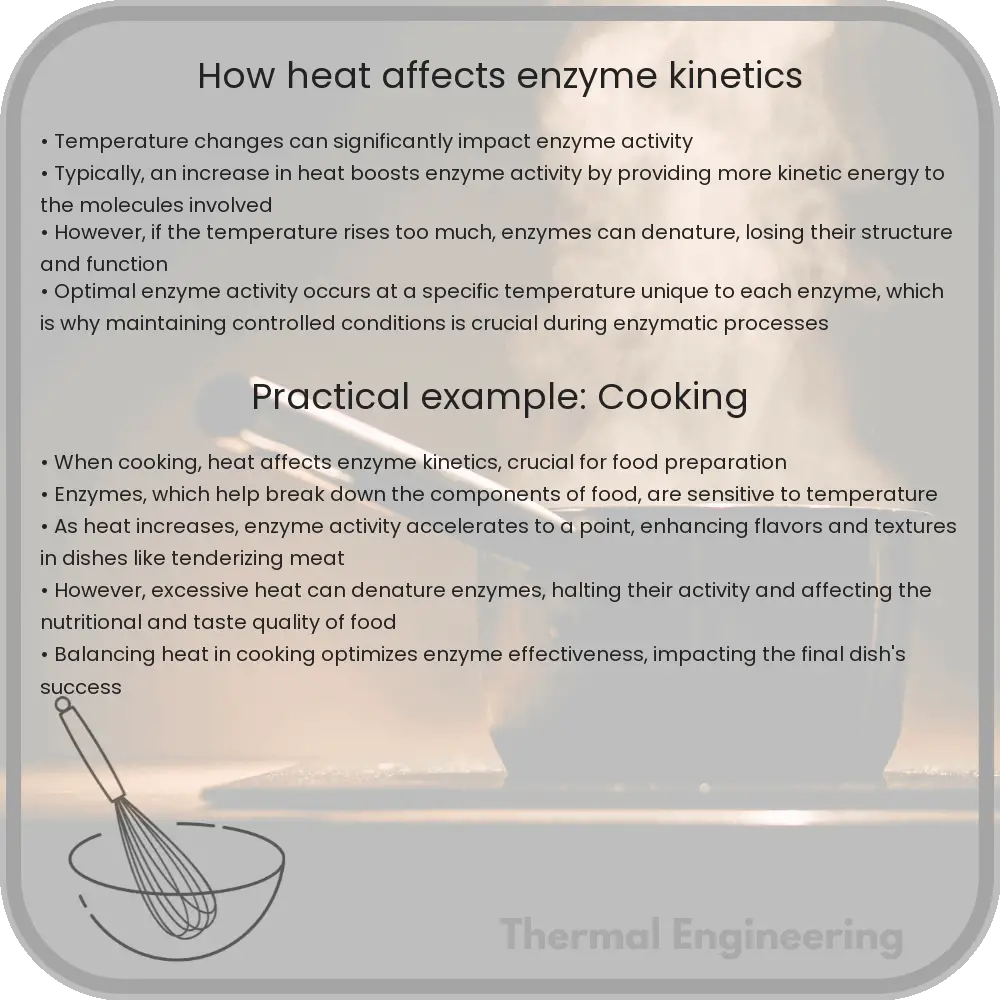
Temperature is a key factor that can significantly influence the activity of enzymes. Generally, increasing the temperature increases the rate of an enzyme-catalyzed reaction, up to a certain point. This is due to the fact that higher temperatures provide more kinetic energy to the enzyme and substrate molecules, leading to more frequent collisions and, consequently, an increased likelihood of successful reactions.

  • Temperature Optimum: Each enzyme has an optimal temperature at which its activity is maximized. This optimal temperature is typically near the average temperature of the organism’s natural environment.
  • Activation Energy: Heat can help molecules reach the necessary activation energy – the minimum energy needed to initiate a reaction. This can significantly speed up the reaction rate.

Denaturation: The Limiting Effect of Heat

While moderate increases in temperature can enhance enzyme activity, excessively high temperatures can lead to negative effects. One of the most critical of these effects is enzyme denaturation – a structural change in the enzyme molecule that results in a loss of its biological function. Denaturation involves the breaking of weak bonds, such as hydrogen bonds, which hold the enzyme in its specific active shape.

  • Irreversible Changes: Once an enzyme is denatured beyond a certain point, it cannot return to its original structure or function. This irreversible change permanently impairs the enzyme’s ability to catalyze reactions.
  • Temperature Threshold: The temperature at which an enzyme begins to denature varies depending on the enzyme and its environment. Organisms adapted to extreme environments, like hot springs, may possess enzymes with higher thresholds for denaturation.

Quantifying the Effects of Temperature on Enzyme Kinetics

The relationship between temperature and enzyme activity can typically be described using two important constants: the activation energy (Ea) and the temperature coefficient (Q10). The temperature coefficient is defined as the increase in reaction rate with a 10°C increase in temperature.

  • Arrhenius Equation: The rate of an enzymatic reaction can be modeled using the Arrhenius equation:

k = A * e-(Ea/RT)

  • where k is the rate constant, A is the frequency factor, reflecting the number of times reactants collide in the correct orientation, Ea is the activation energy, R is the gas constant, and T is the absolute temperature (in Kelvin).

Practical Implications

Understanding how heat affects enzyme kinetics is vital in various fields, including biotechnology, medicine, and food science. For instance, in the food industry, controlling the temperature during processing can optimize enzyme activity to enhance flavors, preserve nutrients, and extend shelf life. Similarly, in biotechnology, engineers design processes around the optimal temperatures for enzyme reactions to maximize yield and efficiency in drug manufacturing and biofuels production.

In conclusion, the precise control and understanding of temperature effects on enzyme kinetics are essential for optimizing the use of enzymes in various industrial and medical applications. By exploring the dual influence of temperature—both enhancing enzyme activity and risking denaturation—scientists and engineers can design more effective and sustainable biochemical processes.