Facebook Instagram Youtube Twitter

How does a calorimeter measure heat

Learn the fundamentals of calorimetry, the science of measuring heat transfer during chemical and physical changes using calorimeters.

How does a calorimeter measure heat

Understanding Calorimetry: How a Calorimeter Measures Heat

Calorimetry is a process used in the field of physical science to determine the amount of heat transferred in a chemical or physical process. This is accomplished using a device known as a calorimeter. The primary principle behind calorimetry is the measurement of heat based on temperature changes under controlled conditions. In this article, we will explore how calorimeters work and their applications in various scientific disciplines.

Basic Principle of a Calorimeter

The calorimeter is designed to be an isolated system, not allowing heat to escape or enter. When a chemical reaction or physical change occurs within this isolated container, it either absorbs or releases heat. This change in heat affects the temperature of the surroundings within the calorimeter. By measuring the temperature change, the amount of heat transfer can be deduced.

Types of Calorimeters

There are several types of calorimeters, with the most common being the differential scanning calorimeter, the bomb calorimeter, and the coffee cup calorimeter. Each type serves different experimental needs:

  • Differential Scanning Calorimeter (DSC): Useful in studying transitions such as melting or crystallization, it measures how much heat a sample absorbs or releases as it is heated or cooled.
  • Bomb Calorimeter: Used primarily for measuring the heat of combustion of a particular reaction. Here, the sample is burned in a high-pressure container (the bomb), and the heat released is transferred to a surrounding water bath, altering its temperature.
  • Coffee Cup Calorimeter: A simple type of calorimeter, often used in classrooms for educational purposes. It typically consists of two Styrofoam cups acting as an adiabatic system, wherein the reaction occurs in water at atmospheric pressure.

Calorimetry Equation

The basic principle of calorimetry is quantified using the calorimetry equation:

q = m * c * ΔT

  • q represents the amount of heat absorbed or released.
  • m is the mass of the substance undergoing the temperature change.
  • c stands for the specific heat capacity of the substance.
  • ΔT is the change in temperature (final temperature – initial temperature).

This equation helps in calculating the heat change during a process by considering the mass of the sample, its specific heat capacity, and the observed change in temperature.

Applications of Calorimetry

Calorimetry has a broad range of applications across various fields:

  • In biochemistry, to measure metabolic changes and energy content of foods.
  • In materials science, to analyze phase transitions, such as melting or vaporization.
  • In environmental science, to examine the heat of decomposition of substances, which can help in understanding pollutant behavior.
  • In engineering, to assess the heat capacity of materials used in building and manufacturing processes.

Conclusion

Calorimetry is a fundamental technique in thermodynamics, allowing scientists and engineers to measure heat based on the principle of energy conservation. By understanding how a calorimeter functions, we can gain insights into the energetic changes during various chemical and physical processes, paving the way for advancements in scientific research and industrial applications.

How heat pumps achieve high efficiency

Learn how heat pumps provide efficient heating and cooling by using the refrigeration cycle, with insights on their high Coefficient of Performance (COP) and eco-friendly impact.

How heat pumps achieve high efficiency

Understanding the High Efficiency of Heat Pumps

Heat pumps are remarkable devices widely used in heating, ventilation, and air conditioning (HVAC) systems for their ability to transfer heat efficiently from one place to another. They play a crucial role not only in household heating and cooling but also in various industrial processes. The secret behind the high efficiency of heat pumps lies in their operating principles and the use of the refrigeration cycle to maximize energy usage.

How Do Heat Pumps Work?

At the core of a heat pump’s operation is the refrigeration cycle, which typically involves four main components: an evaporator, a compressor, a condenser, and an expansion valve. The cycle starts with the evaporator, where the refrigerant absorbs heat from its surroundings, causing it to evaporate. The gas form of the refrigerant is then compressed by the compressor, which increases its temperature and pressure. The hot, high-pressure gas moves to the condenser where it releases the absorbed heat into the heating system or outside environment, depending on the mode of operation. Finally, the refrigerant passes through the expansion valve where its pressure and temperature decrease, and it returns to the evaporator to repeat the cycle.

Key Factors Contributing to High Efficiency

  • Co-efficient of Performance (COP): The efficiency of a heat pump is often expressed through its Coefficient of Performance (COP), which is the ratio of heat output to the electrical energy input. The higher the COP, the more efficient the heat pump. Typically, heat pumps have COP values ranging from 3 to 6, meaning they can transfer 3 to 6 times more energy than they consume.
  • Reverse Cycle: Heat pumps can operate in reverse cycle, meaning they can provide both heating and cooling. This reversible functionality allows them to be used efficiently year-round, providing more value and efficiency in energy use.
  • Temperature Differential: The efficiency of a heat pump also depends on the temperature difference between the heat source and destination. Smaller temperature differentials generally result in higher efficiencies, which is why heat pumps are especially efficient in moderate climates.
  • Advanced Technologies: Modern heat pumps integrate advanced technologies like variable-speed compressors and brushless DC motors which enhance their efficiency and operational flexibility.

Environmental Impact and Sustainability

Heat pumps are considered environmentally friendly compared to traditional fossil fuel-based heating systems. Since they move heat rather than generate it by burning fuel, they produce fewer greenhouse gases. When powered by renewable energy sources such as solar or wind power, the environmental benefits of heat pumps increase significantly, making them a key technology in efforts to reduce global greenhouse gas emissions.

Conclusion

Heat pumps represent a highly efficient and environmentally friendly solution for heating and cooling needs across residential, commercial, and industrial settings. Their ability to move heat rather than generate it from scratch allows them to operate with high efficiency and low energy consumption. Understanding the principle behind their operation and the factors affecting their efficiency can help consumers and professionals alike to make informed decisions about their heating and cooling solutions.

How cryogenic cooling systems work

Dive into the world of cryogenic cooling systems, their operation, and wide-ranging applications in science and industry.

How cryogenic cooling systems work

Understanding Cryogenic Cooling Systems

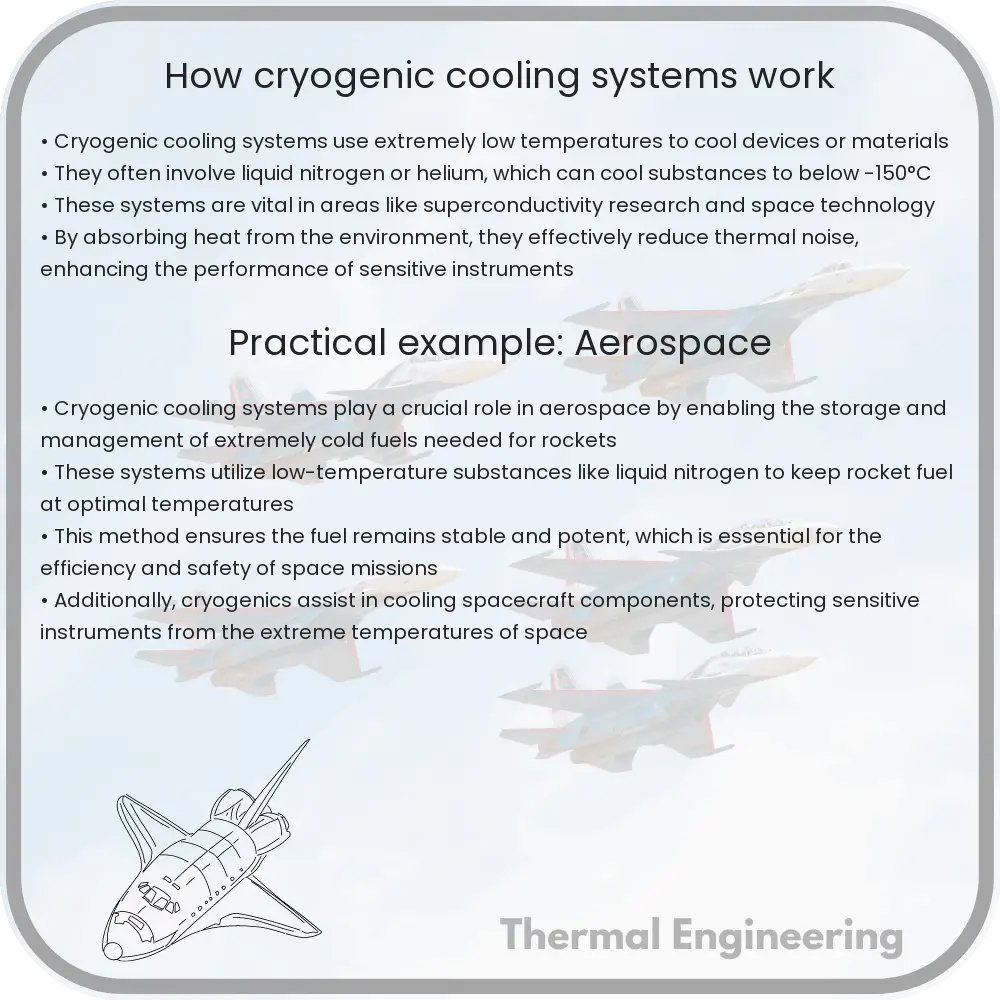
Cryogenic cooling systems are fascinating and essential components in various scientific and industrial fields. These systems play a pivotal role in achieving and maintaining extremely low temperatures that are typically below -150°C (-238°F). Such temperatures are critical in fields like medical technology, space exploration, and superconductivity. Here, we explore how cryogenic cooling operates and its applications.

Basic Principles

Cryogenic cooling systems work by removing heat from a system to lower its temperature. This process often involves the use of cryogenic fluids, such as liquid nitrogen or helium, which have boiling points well below those achievable by conventional refrigerants.

Components of a Cryogenic Cooling System

  • Cryogen: This is typically a liquid gas that serves as the cooling medium. Liquid nitrogen and liquid helium are the most common, chosen for their extremely low boiling points (-196°C and -269°C, respectively).
  • Heat Exchanger: A crucial component where heat transfer between the cryogen and the substance to be cooled occurs. Effective heat exchangers are vital for the efficiency of cryogenic systems.
  • Expansion Valves: These control the flow of the cryogen, allowing it to expand and cool before entering the heat exchanger.
  • Compressors: Used in some cryogenic systems to repressurize the gas for circulation or storage.

How It Works

The functioning of cryogenic cooling systems can be primarily understood through the processes of evaporation and compression, fundamental concepts in thermodynamics:

  • Step 1: Compression – If the system uses a closed cycle, a compressor increases the pressure of the gaseous cryogen, raising its temperature due to the heat generated from compression.
  • Step 2: Pre-cooling Stage – Heat is then removed from the compressed gas using a heat exchanger, cooling it back down.
  • Step 3: Expansion – The compressed and cooled gas passes through an expansion valve where it expands, drops in pressure, and adiabatically cools further. This drop in temperature occurs according to the Joule-Thomson effect, where the temperature of a real gas decreases or increases as it expands, depending on conditions such as temperature and pressure.
  • Step 4: Heat Absorption – This now-cold gas absorbs heat from the environment or object to be cooled, effectively lowering its temperature.
  • Step 5: Recirculation – The cycle repeats itself, continuously removing heat from the system.

Applications of Cryogenic Cooling

  • Medical Applications: Used in the preservation of biological samples, organs, and the execution of certain medical procedures.
  • Industrial Applications: Employed in the gas industry to liquify natural gases and in the food industry for flash freezing products.
  • Scientific Research: Essential in experimental physics for achieving ultra-low temperatures required to study quantum mechanics and superconductors.
  • Electronics: Utilized in cooling superconducting magnets used in devices such as MRI machines.

Cryogenic cooling systems hold key importance across multiple disciplines, offering unique solutions to challenges that require ultra-low temperatures. Through continuous innovation and development, these systems provide critical support in advancing scientific research and improving industrial processes.

How thermal batteries store and release energy

Learn about thermal batteries, their energy storage methods, including sensible and latent heat, and their wide-ranging applications in power plants, solar systems, and HVAC.

How thermal batteries store and release energy

Understanding Thermal Batteries: Energy Storage and Release

Thermal batteries, or thermal energy storage (TES) systems, are crucial in managing heat production and consumption. They store energy in the form of heat, which can be later converted back to electricity or used directly for heating purposes. This process enables more efficient energy usage, especially in applications where there is a mismatch between energy availability and demand.

How Thermal Batteries Store Energy

Thermal batteries store energy using materials that exhibit high heat capacity or through phase change materials. Heat capacity is a property of a material that determines the amount of energy required to raise the temperature of a unit of mass by one degree Celsius. The two main methods of storing thermal energy are:

  • Sensible Heat Storage: This method uses materials with high specific heat capacities to store energy by increasing the temperature of the solid or liquid. Water is a common fluid used in this method due to its high specific heat capacity, approximately 4.2 joules per gram per degree Celsius. Other materials like sand, concrete, and some oils are also used.
  • Latent Heat Storage: This technique uses phase change materials (PCMs), which absorb or release energy at constant temperature when changing between solid and liquid phases. Common PCMs include paraffin wax and various salts. This method is highly efficient at storing large amounts of energy within a relatively small volume and a narrow temperature range.

Aside from these, there is another method called Thermochemical Storage, which involves chemical reactions that store and release heat, but it is less common due to its complexity and cost.

How Thermal Batteries Release Energy

Releasing stored energy from a thermal battery typically involves reversing the process used during storage. For example:

  • In sensible heat storage systems, the stored hot fluid (like water or oil) can be circulated through heat exchangers to transfer the heat to an end-use application or to generate electricity through steam turbines.
  • In latent heat systems, the PCM reverts from its liquid form to its solid form, releasing the stored heat energy in the process. The heat can then be used directly for heating or converted into electricity.

Applications of Thermal Batteries

Thermal batteries find applications in various fields:

  1. Power Plants: They can balance the supply and demand by storing excess heat generated during off-peak hours and releasing it during peak hours.
  2. Solar Energy Systems: They can store heat generated by solar thermal panels during the day and use it at night or during cloudy periods.
  3. Building Heating and Cooling: Thermal batteries can help in shifting energy use from peak to off-peak hours, enhancing the efficiency and reducing the operational costs of heating, ventilation, and air conditioning (HVAC) systems.

Thermal batteries are not just a theoretical concept but a practical solution that is increasingly being integrated into modern engineering projects. Their ability to manage energy efficiently makes them a key technology in the transition towards more sustainable energy systems.

Understanding the fundamentals of how thermal batteries function helps in appreciating the intricacies involved in energy management and the role of engineering in optimizing the use of resources. As the world moves towards greener alternatives, the relevance of thermal battery technology is expected to grow, impacting various sectors like manufacturing, residential heating, and beyond.

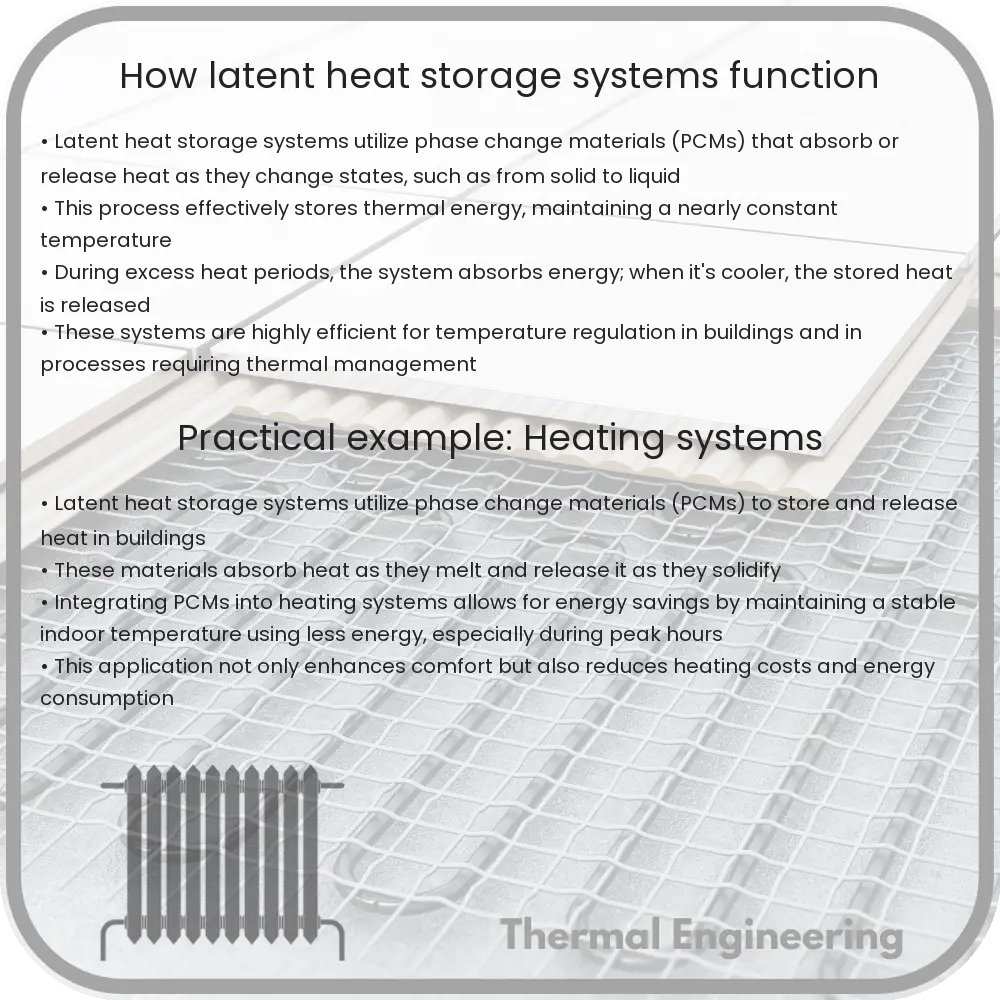
How latent heat storage systems function

Explore latent heat storage systems, a technology harnessing phase change materials (PCMs) to efficiently absorb, store, and release thermal energy, beneficial for energy management and sustainability.

How latent heat storage systems function

Understanding Latent Heat Storage Systems

Latent heat storage systems are an innovative approach to energy storage using materials that absorb or release heat during phase changes, typically between solid and liquid phases. This technology plays a crucial role in improving energy efficiency and managing heat for later use in various applications, from buildings to industrial processes.

Basic Principles

The core concept of latent heat storage is rooted in the physics of phase change materials (PCMs). When a PCM changes its state, for example from solid to liquid, it absorbs energy in the form of heat; conversely, it releases energy when it returns to its original state. This heat is referred to as ‘latent’ because it does not cause a temperature change in the material, instead facilitating the phase change.

Key Components

  • Phase Change Material (PCM): The choice of PCM is vital and depends on its melting point, which should be within the operational temperature range of the application. Common PCMs include paraffin wax and salt hydrates.
  • Containment Unit: The PCM is enclosed in this unit to manage the thermal exchange efficiently and maintain the structural integrity of the system.
  • Heat Exchange System: Essential for transferring heat to and from the PCM, this system can be integrated with existing heating and cooling systems.

Functioning of a Latent Heat Storage System

The operation of a latent heat storage system can be described in the following steps:

  1. Energy Absorption: When the surrounding temperature exceeds the melting point of the PCM, the material absorbs heat and transitions from a solid to a liquid, storing thermal energy in the process.
  2. Energy Storage: Once the PCM reaches its liquid state, the energy is stored until it is needed. The containment unit ensures that the PCM stays isolated and does not lose heat to the external environment.
  3. Energy Release: When the temperature around the PCM drops, the PCM begins to solidify, releasing the stored heat. This heat can then be used to warm spaces, generate hot water, or drive industrial processes.

The efficiency of a latent heat storage system is largely dependent on the thermal conductivity of the PCM, the surface area of the heat exchanger, and the insulation properties of the containment unit. Enhancements in these areas can significantly improve the overall performance of the storage system.

Applications and Advantages

Latent heat storage systems find applications in numerous fields, including renewable energy systems, building heating and cooling, and industrial heat recovery. These systems offer the following benefits:

  • High Energy Density: PCMs can store and release a large amount of heat per unit volume, making latent heat storage systems very efficient.
  • Stability: Most PCMs are chemically stable and can withstand numerous phase change cycles without significant degradation.
  • Controlled Temperature Operations: Since the system operates around the phase change temperature of the PCM, it can maintain near-constant temperature conditions, which is advantageous for thermal management.

Challenges and Future Prospects

While latent heat storage offers compelling benefits, several challenges remain, such as improving the thermal conductivity of PCMs and minimizing the volume changes during phase transitions. Research is ongoing to develop advanced PCMs and innovative containment methods that address these challenges. The future of latent heat storage in contributing to energy sustainability looks promising as it provides a critical solution for managing and utilizing thermal energy more efficiently.

In conclusion, latent heat storage systems stand out as a pivotal technology in energy management strategies, offering a blend of high efficiency, reliability, and the potential to leverage renewable energy sources more effectively.

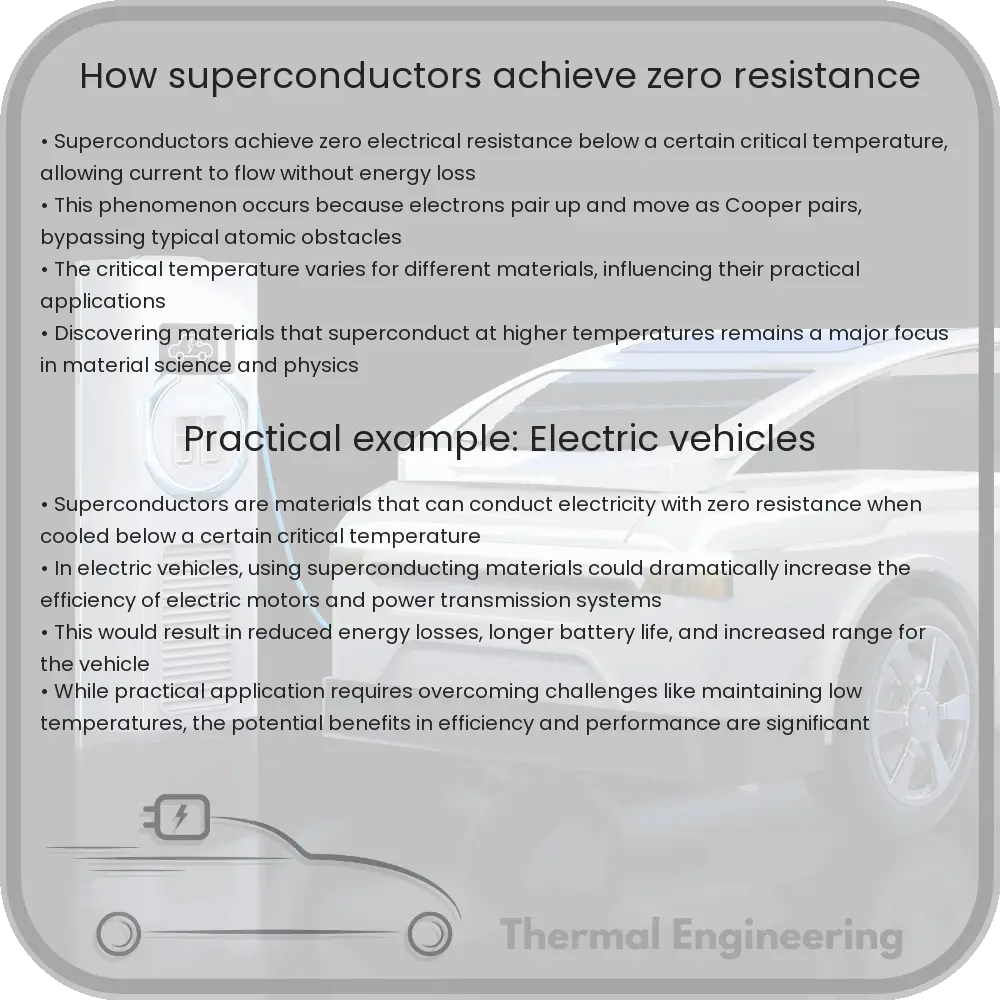
How superconductors achieve zero resistance

Dive into the physics of superconductors and their ability to conduct electricity without resistance, exploring Cooper pairs, the Meissner effect, and applications.

How superconductors achieve zero resistance

Understanding How Superconductors Achieve Zero Resistance

Superconductivity is a fascinating phenomenon in physics and engineering whereby certain materials can conduct electric current with zero electrical resistance. This occurs under specific conditions, primarily low temperatures. The transition into a superconductive state not only epitomizes a perfect conductor scenario but also provides profound implications for energy efficiency and technological advancement. Let’s delve into how superconductors achieve this remarkable state.

Discovery and Basics of Superconductivity

Superconductivity was first discovered in 1911 by Dutch physicist Heike Kamerlingh Onnes, who observed that mercury, when cooled below a temperature of approximately 4.2 Kelvin (-268.95 degrees Celsius), conducted electricity without resistance. Since then, many other superconducting materials have been discovered, each characterized by a critical temperature below which they must be cooled to exhibit superconductivity.

How Superconductivity Works: The Zero Resistance Effect

The underlying principle of how superconductors achieve zero resistance lies in the behavior of electrons within the material. Under normal conditions, electrons move through a conductor in a somewhat scattered manner, frequently colliding with atoms and other electrons. This interaction causes resistance and subsequently generates heat.

However, in a superconducting state, electrons behave differently. They pair up in what is known as Cooper pairs. A Cooper pair consists of two electrons that are bound together at a very low temperature through lattice vibrations in the material’s structure, or phonons. This pairing occurs because the overall system can lower its energy through this unique bond.

The Role of Cooper Pairs

These Cooper pairs follow Bose-Einstein condensation statistics, unlike the Fermi-Dirac statistics obeyed by normal unpaired electrons. As a result, these electron pairs act as a single quantum mechanical entity and can move through the lattice structure of the superconductor without scattering off of atoms. Essentially, the Cooper pairs can navigate the atomic lattice freely because they are not hindered by the energy barriers that affect normal single electrons.

The coherence length, typically much larger than the atomic spacing, ensures that the movement of these pairs is coherent over large distances, further supporting the zero-resistance state. This coherence protects the pairs from the typical electron-phonon interactions that cause resistance in ordinary conductors.

The Meissner Effect: Magnetic Field Exclusion

Another hallmark of superconductivity is the Meissner effect, discovered in 1933 by Walther Meissner and Robert Ochsenfeld. This phenomenon is characterized by the complete expulsion of a magnetic field from a superconductor. When a material transitions into its superconducting state, it actively excludes magnetic fields from its interior; this is distinct from merely being a perfect conductor, as a perfect conductor would allow existing magnetic fields to remain locked within.

The Meissner effect is explained by the London brothers, Fritz and Heinz, in 1935. They showed that the magnetic field’s exclusion is due to supercurrents induced in the superconductor, which cancel the applied magnetic field within. These surface currents flow without resistance, further supporting the zero resistance phenomenon.

Applications and Future Outlook

  • Magnetic Levitation Trains: Utilize the repulsive force from the Meissner effect for near-frictionless movement.
  • Medical Imaging (MRI): Superconductors help create strong and stable magnetic fields necessary for high-resolution imaging.
  • Large Hadron Collider (LHC): Uses superconducting magnets to steer particles along their paths during high-energy collisions.

Understanding and improving superconductors continues to be a robust field of research, particularly in searching for materials that can achieve superconductivity at higher temperatures. These advancements promise to revolutionize industries by making electrical systems more efficient, thus reducing global energy usage and pushing the boundaries of technological innovation.

Superconductivity not only showcases the depth of quantum mechanics but also offers practical applications that could significantly alter the technological landscape. By achieving zero resistance, superconductors open up new possibilities in energy efficiency and high-power applications, marking one of the most significant discoveries in the field of condensed matter physics.

How does thermal insulation reduce energy loss

Learn how thermal insulation enhances energy efficiency by limiting heat transfer in buildings, using materials like fiberglass and polystyrene to reduce energy loss.

How does thermal insulation reduce energy loss

Understanding Thermal Insulation and Its Role in Reducing Energy Loss

Thermal insulation is a critical component in the engineering of buildings and various industrial applications. Its primary role is to limit heat transfer between objects in thermal contact or within range of radiative influence. By doing so, thermal insulation helps in enhancing energy efficiency and sustainability in heating and cooling systems.

How Does Thermal Insulation Work?

Thermal insulation materials work by reducing the rate of heat transfer, which can occur through three principal mechanisms: conduction, convection, and radiation. Each of these mechanisms is targeted specifically by different types of insulation materials.

  • Conduction: Heat transfer through materials by direct contact. Insulators with low thermal conductivity impede this process, usually through trapping air or other gases within their structure, as gases are poor conductors of heat.
  • Convection: Heat transfer through fluids (liquids or gases) that are caused by molecular motion within the substance. Insulation prevents or reduces convection currents within its structure by being composed of cells or fibres that limit the movement of air.
  • Radiation: Heat transfer through electromagnetic waves that can travel through a vacuum. Reflective insulators, such as those with a metallic surface, can reflect radiant heat, reducing the amount of heat that is absorbed.

Materials Used in Thermal Insulation

Common materials used for thermal insulation include the following:

  • Fiberglass: Consisting of fine strands of glass woven together, this material traps many small pockets of air, reducing heat conduction.
  • Polystyrene: Available in solid or foam form, it is an excellent insulator with a structure that inhibits heat transfer.
  • Cellulose: Made mainly from recycled paper that has been treated with a fire retardant. It is packed tightly in building cavities, hampering airflow.
  • Mineral wool: Includes rock wool and slag wool, made from rock or ceramics. It is dense and thus highly effective at reducing convection and trapping air.
  • Reflective insulation: Utilizing aluminum foils to reflect radiant heat, which prevents heat gain particularly in hot climates.

Energy Efficiency and Cost Effectiveness of Thermal Insulation

By reducing the amount of heat transfer, thermal insulation makes heating and cooling systems much more energy-efficient. This efficiency translates into reduced energy use, which not only lowers utility bills but also decreases the environmental impact associated with energy production and consumption.

The effectiveness of thermal insulation is measured in terms of its R-value, which indicates the material’s resistance to heat flow. Higher R-values mean greater insulating power and more significant energy savings over time.

Moreover, the initial cost of installing insulation is often offset by the subsequent savings on energy bills. In many cases, insulation projects can pay for themselves through these savings within a few years.

Conclusion

Thermal insulation plays a crucial role in boosting energy efficiency in both residential and industrial settings. By understanding the basic principles of how insulation works and the materials used, one can appreciate the science behind energy savings and the environmental benefits it brings. Investing in good-quality insulation not only helps in reducing energy costs but also contributes to a more sustainable future.

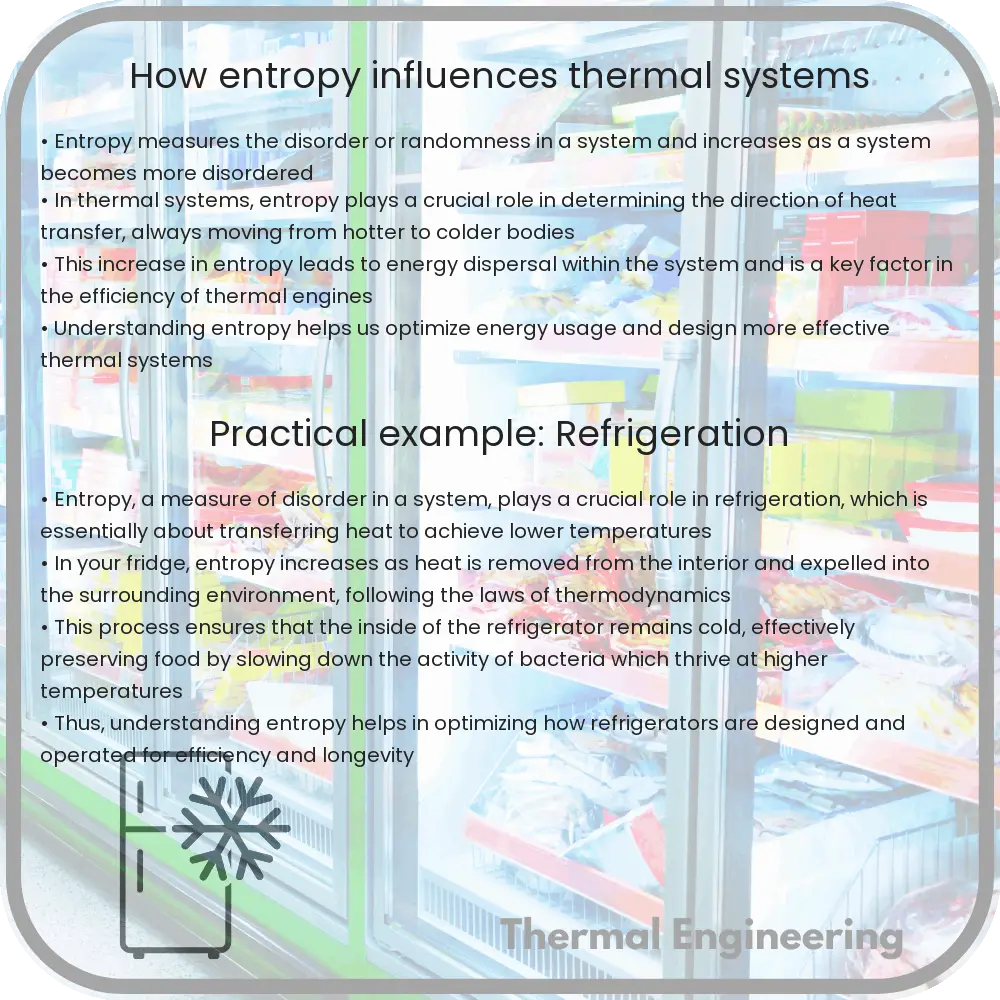
How entropy influences thermal systems

Learn how entropy, a key thermodynamics concept, impacts the efficiency of thermal systems like heat engines and refrigerators.

How entropy influences thermal systems

Understanding the Role of Entropy in Thermal Systems

Entropy is a fundamental concept in thermodynamics, often associated with the level of disorder or randomness in a system. In the context of thermal systems, which include engines, refrigerators, and other heat-transfer devices, entropy plays a crucial role in determining system efficiency and directionality of heat flow. This article explores how entropy influences these systems and underscores its importance in engineering design and analysis.

What is Entropy?

Entropy, denoted by the symbol S, is a measure of the disorder or randomness in a system. The second law of thermodynamics states that in an isolated system, entropy can never decrease over time. This law implies that natural processes are irreversible and tend to lead to an increase in entropy. In practical terms, this increase dictates how energy is transferred and transformed within thermal systems.

Entropy in Heat Engines

Heat engines are devices that convert thermal energy into mechanical work. Examples include steam turbines and internal combustion engines. The efficiency of these systems is heavily influenced by entropy changes. During operation, a heat engine absorbs heat from a high-temperature source, converts part of it to work, and expels the remaining heat to a lower-temperature sink.

The change in entropy associated with heat transfer from the hot source to the engine and then from the engine to the cold sink explains the inherent inefficiencies in these systems. According to the increase of entropy principle, the total entropy of the universe increases with the operation of a heat engine, leading to less energy available for work as more energy is dispersed in the form of heat.

  • The efficiency of a heat engine, defined as the ratio of the work done by the engine to the heat absorbed from the source, is constrained by the increase in entropy. Mathematically, it can be expressed as:
    \[ \text{Efficiency (η)} = 1 – \frac{T_{cold}}{T_{hot}} \] where \(T_{cold}\) and \(T_{hot}\) are the absolute temperatures of the cold sink and hot source, respectively.
  • Design improvements in heat engines often focus on minimizing entropy generation to enhance efficiency.

Entropy in Refrigeration and Air Conditioning Systems

Refrigeration and air conditioning systems are essentially heat engines operating in reverse. These systems extract heat from a cooler place and expel it to a warmer place, with the aim of cooling the environment. The role of entropy in these systems is similarly crucial in determining their efficiency and effectiveness.

In refrigerators and air conditioners, the refrigerant absorbs heat from the interior, resulting in reduced entropy locally, but the compressor expends work to expel heat to the outside environment, thereby increasing the overall entropy of the universe. This also illustrates why these machines require external energy (electricity) to perform their functions.

  • The Coefficient of Performance (COP) of these systems, a measure of their efficiency, is influenced by the entropy changes during the heat transfer and compression processes. The COP can be defined as:
    \[ \text{COP} = \frac{Q_{cold}}{W} \] where \(Q_{cold}\) is the heat removed from the cold reservoir and \(W\) is the work input to the refrigerator.

Conclusion

Entropy is more than just a theoretical concept; it has real-world implications in the way thermal systems operate and the limits to their efficiency. By deepening our understanding of entropy and its changes within these systems, engineers can design more efficient and effective devices, thus saving energy and reducing the environmental impact associated with energy use. In the wider context, understanding entropy allows a greater insight into the fundamental laws that govern all types of energy transformations in nature.

As we continue to develop and refine thermal systems, entropy will remain a cornerstone of thermodynamic analysis, guiding innovation towards more sustainable and economically feasible solutions.

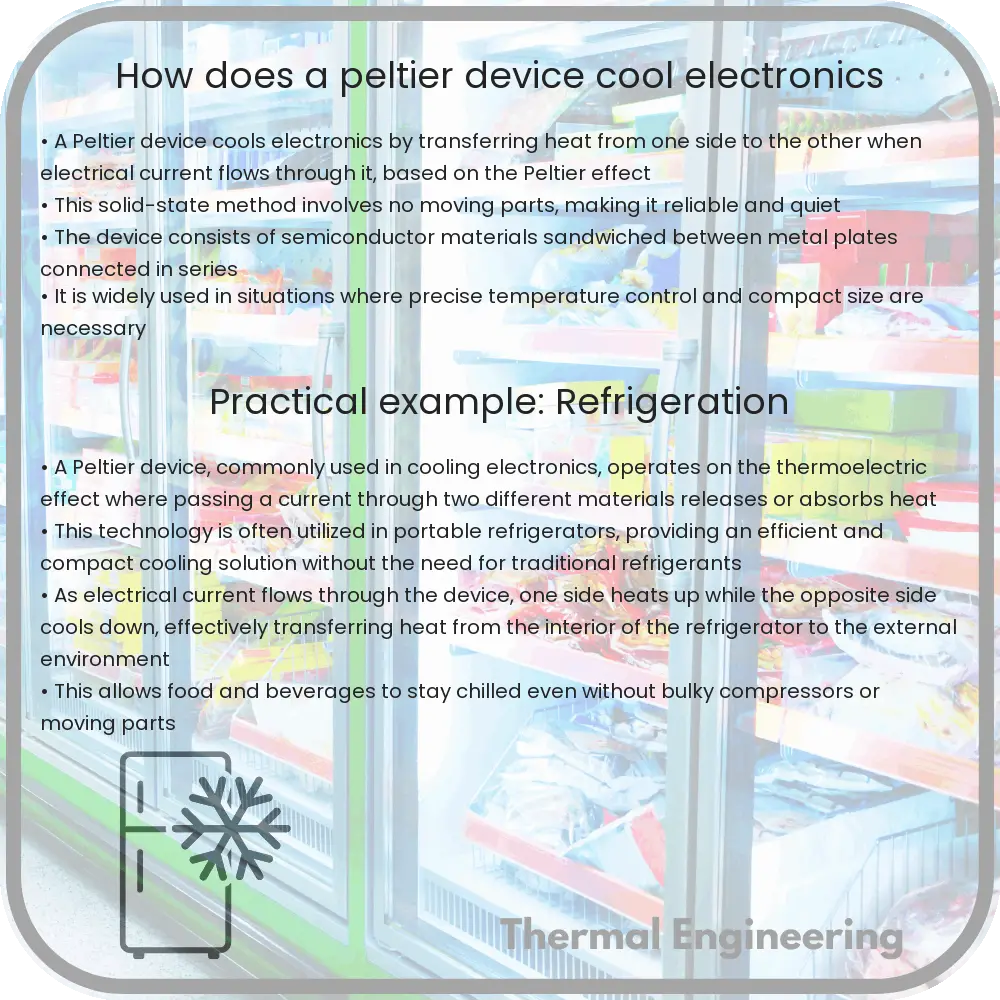
How does a Peltier device cool electronics

Learn about Peltier devices, their cooling function in electronics, and the thermoelectric effect behind their operation.

How does a Peltier device cool electronics

Understanding How a Peltier Device Cools Electronics

A Peltier device, also known as a thermoelectric cooler (TEC), is a remarkable component used in electronics to manage heat. It operates on the Peltier effect, named after French physicist Jean Charles Athanase Peltier, who discovered the phenomenon in 1834. This device is widely used in applications where traditional cooling methods like fans are not suitable due to noise, size, or environmental concerns.

The Peltier Effect Explained

The core principle behind the Peltier effect involves the movement of heat from one side of a device to another when an electric current is applied across the junction of two different metals or semiconductors. This creates a temperature difference, causing one side of the device to absorb heat and become cold while the other side dissipates heat and becomes hot.

Components of a Peltier Device

  • Semiconductor Materials: Most modern Peltier devices use Bismuth Telluride (Bi2Te3) as the semiconductor material. These are typically doped to create a pair of n-type and p-type semiconductors, which are essential for the creation of electron and hole junctions required for the device’s function.
  • Ceramic Plates: These act as insulators and help in maintaining the structural integrity of the device. They also ensure that the heat is absorbed and released efficiently at the interfaces.
  • Electrical Current: This is the trigger that initiates the Peltier effect. The way the current is directed through the device determines which side will be cooled and which side will be heated.

How Peltier Devices Cool Electronics

When a Peltier device is integrated into an electronic system, it is typically placed such that the cool side contacts the component that needs cooling, like a CPU or a laser diode. Here’s a step-by-step look at the cooling process:

  1. Current Application: When a voltage is applied across the Peltier device, DC current flows through it, moving from the n-type to the p-type semiconductor.
  2. Heat Absorption and Release: As the electrons move from a high energy level in the n-type material to a lower energy level in the p-type material, heat is absorbed at the junction. Conversely, the opposite happens on the other side of the device where the current exits; heat is expelled.
  3. Heat Transfer: The heat absorbed by the cold side needs to be efficiently removed to maintain cooling efficiency. This is often managed by attaching a heat sink or another heat-extraction component to the hot side of the Peltier device.
  4. Continuous Cooling: As long as current continues to flow through the device in the same direction, the cooling effect remains constant, making Peltier devices extremely useful for continuous cooling requirements without moving parts or fluids.

Advantages and Limitations

Peltier devices offer several benefits including their compact size, lack of moving parts (which reduces maintenance and noise), and the ability to precisely control the temperature. However, they are also known for being less energy efficient compared to conventional cooling methods and can generate significant amounts of heat on the hot side, which needs to be effectively managed to prevent overheating of the system.

Understanding how Peltier devices work and their applications in cooling electronics provides a glimpse into the practical applications of thermoelectric effects in modern technology. These devices exemplify how principles of physics can be harnessed to solve real-world engineering challenges, continuously pushing the boundaries of what’s possible in electronics design and cooling solutions.

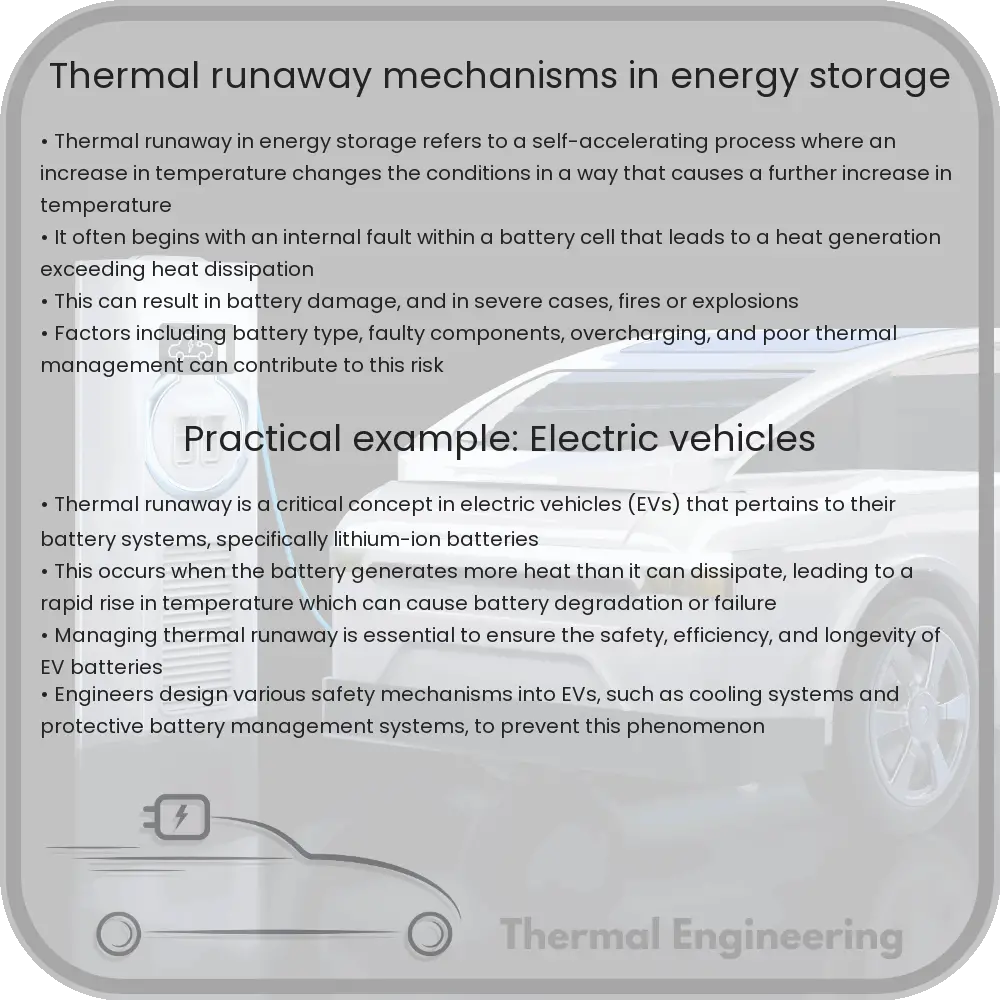
Thermal runaway mechanisms in energy storage

Learn about thermal runaway in batteries, its causes, prevention, and impact on safety in energy storage systems.

Thermal runaway mechanisms in energy storage

Understanding Thermal Runaway in Energy Storage Systems

Thermal runaway is a critical safety concern in the field of energy storage, particularly in batteries used in a wide range of applications from consumer electronics to electric vehicles. This phenomenon occurs when an increase in temperature within the battery triggers a chain reaction that leads to further temperature increases, potentially resulting in explosive fires or battery failure. Understanding the mechanisms behind thermal runaway is crucial for designing safer energy storage systems.

Causes of Thermal Runaway

Several factors contribute to the onset of thermal runaway:

  • Internal short-circuiting: Damage or defects in the battery can cause internal short circuits, leading to localized heating that initiates thermal runaway.
  • Overcharging: Charging a battery beyond its capacity can cause excessive heat generation due to higher voltages and chemical instability.
  • Mechanical abuse: Physical impacts or punctures can compromise internal structures leading to short circuits and heat build-up.
  • Electrical abuse: Exposing the battery to conditions outside its operational limits, such as extremely high discharge rates or voltage spikes, can induce excessive heat generation.

Mechanism of Thermal Runaway

Thermal runaway in batteries involves interconnected electrochemical and thermal processes:

  1. Initiation: Any form of abuse or defect triggers heat generation inside the battery.
  2. Heat Accumulation: If the generated heat is not dissipated effectively, it leads to an increase in battery temperature.
  3. Breakdown of Separator: High temperatures can melt the separator between the anode and cathode, leading to internal shorts and more heat generation.
  4. Thermal Decomposition: At elevated temperatures, the electrolyte and other internal materials can decompose, releasing gases and further increasing the pressure inside the battery.
  5. Exothermic Reactions: Chemical reactions between the electrodes and the electrolyte, facilitated by the heat, release additional energy, further increasing the temperature.
  6. Runaway Condition: Once a critical temperature is reached, the reactions become uncontrollable, rapidly escalating into thermal runaway.

Preventing Thermal Runaway

Prevention and mitigation of thermal runaway are vital for safe energy storage system operation. Some strategies include:

  • Thermal Management: Using cooling systems to dissipate heat effectively can help maintain safe operational temperatures.
  • Battery Management Systems (BMS): Advanced BMS can monitor and control battery conditions, such as voltage and current, to prevent unsafe operating conditions.
  • Use of Safer Materials: Developing batteries with chemistries less prone to thermal runaway, such as those with phosphate-based cathodes, can reduce risk.
  • Design Considerations: Robust battery design including reinforced separators and pressure relief mechanisms can mitigate the effects of thermal runaway.

Impact of Thermal Runaway

The consequences of thermal runaway extend beyond immediate risk of explosion or fire. It can lead to:

  • Economic Losses: Damage to property and loss of valuable equipment can have significant financial implications.
  • Environmental Impact: Burning batteries release toxic substances into the environment, posing health and ecological risks.
  • Reputational Damage: High-profile battery failures can harm the reputation of companies and slow the adoption of new technologies.

In conclusion, thermal runaway represents a significant hazard in energy storage systems, necessitating comprehensive understanding and rigorous preventive measures. As energy storage technologies evolve, continual improvement in design standards and safety protocols is essential to manage the risks of thermal runaway effectively.