Facebook Instagram Youtube Twitter

Air Cooled Condenser | Efficiency, Types

Learn about the types and efficiency factors of air cooled condensers, crucial components in HVAC and industrial cooling systems.
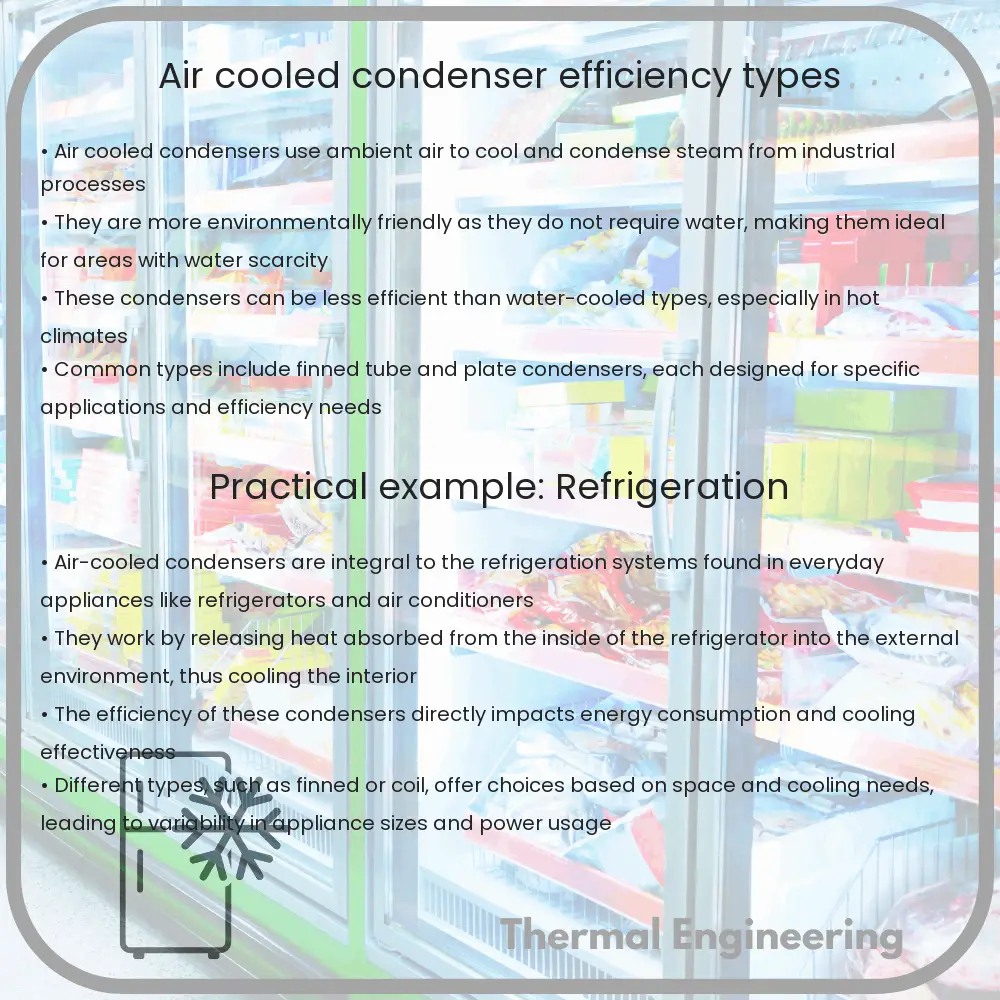
Air Cooled Condenser | Efficiency, Types

Air Cooled Condensers: Understanding Efficiency and Types

Air cooled condensers are a pivotal component in various cooling systems, including HVAC (Heating, Ventilating, and Air Conditioning) units and industrial cooling processes. These devices are engineered to condense exhaust steam from a turbine and are often used in environments where water is scarce. The efficiency and type of an air cooled condenser can significantly influence overall system performance. This article discusses the different types of air cooled condensers and delves into the factors affecting their efficiency.

Types of Air Cooled Condensers

There are several types of air cooled condensers, differentiated by their design and airflow mechanisms. The choice of condenser type depends on factors such as available space, cost, ambient temperature, and specific system requirements.

  • Flatbed Condenser: This type consists of tubes arranged in layers, with fans mounted below or above to drive air over the tubes horizontally.
  • V-Shaped Condenser: Here, the tubes are arranged in a V configuration which increases the surface area for heat exchange and can significantly improve the cooling efficiency compared to flatbed designs.
  • A-Frame Condenser: Similar to the V-shaped, the A-frame condenser arranges the tubes in an ‘A’ shape, facilitating even greater air contact with the tubes. This is particularly advantageous in settings requiring high-efficiency cooling.
  • Vertical Condenser: In this type, tubes are aligned vertically, allowing air to pass upwards through the condenser. This design helps in reducing the footprint of the equipment and can be beneficial in limited space scenarios.

Factors Affecting the Efficiency of Air Cooled Condensers

The efficiency of air cooled condensers is influenced by several factors:

  • Ambient Temperature: Higher external temperatures can reduce the condenser’s ability to reject heat, impairing its efficiency. This is because the temperature difference (ΔT) between the ambient air and the steam inside the tubes decreases.
  • Airflow Rate: Adequate airflow over the condenser coils is crucial. Lower airflow can cause higher condenser temperatures and reduce operational efficiency.
  • Condenser Design: The design of the condenser affects how well air can move through the unit and contact the tubes, impacting heat rejection capabilities.
  • Maintenance: Regular cleaning and maintenance of condenser tubes are essential to maintain heat transfer efficiency. Fouling, which is the accumulation of dirt and debris on condenser surfaces, can significantly impede performance.

Improving Efficiency in Air Cooled Condensers

To enhance the performance of air cooled condensers, it’s crucial to optimize airflow, maintain proper cleaning schedules, and consider innovative designs that maximize heat rejection, such as hybrid designs that combine air-cooled and evaporative cooling elements. Additionally, advanced fan designs can help to reduce energy consumption while maintaining high efficiency levels.

Conclusion

Air cooled condensers play a critical role in the efficiency of cooling systems across various industries. By choosing the appropriate condenser type and maintaining it correctly, it is possible to achieve considerable improvements in system performance. Understanding the factors that affect condenser efficiency is key in optimizing operations and ensuring that equipment functions at optimal levels.
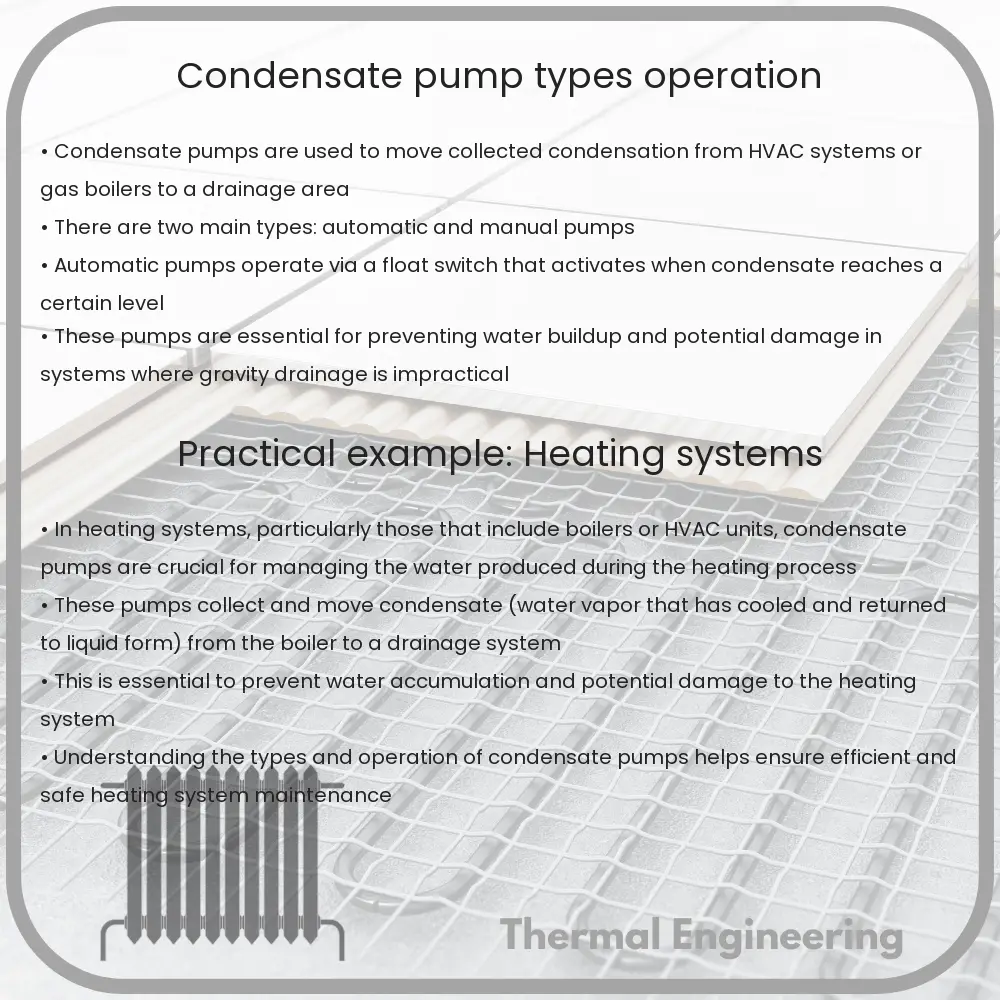
Condensate Pump | Types, Operation

Learn about condensate pumps, their types like centrifugal and positive displacement, and their role in efficient system operations in HVAC and more.

Condensate Pump | Types, Operation

Understanding Condensate Pumps: Types and Operation

Condensate pumps are a vital component in HVAC (Heating, Ventilating, and Air Conditioning) systems and other engineering applications where the removal of water vapor that has condensed into liquid form is necessary. They play a crucial role in maintaining the efficiency and safety of systems by handling and disposing of condensate, which can be detrimental if not properly managed.

Types of Condensate Pumps

There are primarily two types of condensate pumps: centrifugal and positive displacement pumps. Each has its own suitable applications based on operational requirements such as flow rate, pressure, and installation environment.

  • Centrifugal Condensate Pumps: These are the most commonly used type. They operate by utilizing a rotating impeller to create centrifugal force, propelling liquid outwards from the center and allowing more liquid to enter the impeller. This type is favored for its smooth flow and ability to handle high flow rates.
  • Positive Displacement Pumps: These pumps move a fixed amount of fluid against a resistance. They are particularly effective where high pressures are needed at low flow rates. Within this category, gear pumps, piston pumps, and diaphragm pumps are included depending on the specific application requirements.

How Condensate Pumps Work

Condensate pumps are generally situated at the lowest point where the condensate collects in the condensation pan or receiver. The basic operation involves several key components and steps:

  1. Collection: Condensate drains into a collection tank from the condenser, HVAC system, or other sources.
  2. Activation: A float switch within the tank activates the pump when the condensate reaches a certain level.
  3. Pumping: On activation, the pump transfers the condensate from the collection tank to a drain line. In centrifugal pumps, this is achieved through the action of the impeller. In positive displacement pumps, it involves trapping a fixed amount of liquid and forcing it against the discharge outlet.
  4. Disposal: The condensate is pumped to a drain line or sewer, or in some cases, it is reused or recycled within the system itself.

The operation of the pump is automatic, with the float switch ensuring that the pump operates only when necessary, thus saving energy and reducing wear.

Applications of Condensate Pumps

Condensate pumps find applications in various fields including:

  • HVAC Systems: To remove the condensate from air conditioners, refrigerators, and freezers where it accumulates as a by-product of their cooling processes.
  • Steam Systems: In boiler feedwater systems, condensate pumps recycle the condensate for reuse as boiler feedwater, helping to save on water and energy costs.
  • Industrial Applications: In chemical and process industries where condensate from steam and other processes must be removed reliably and efficiently.

Understanding the type and operation of condensate pumps enhances the ability to design more efficient and reliable systems for collecting and removing condensation, crucial for protecting and optimizing various mechanical and industrial processes.

Gas Turbine Heat Recovery | Advantages, Techniques

Learn about gas turbine heat recovery techniques, their benefits, and various methods for enhancing system efficiency and sustainability.

Gas Turbine Heat Recovery | Advantages, Techniques

Understanding Gas Turbine Heat Recovery

Gas turbines are widely used in various industries, including power generation and aviation, due to their high efficiency and reliability. However, a significant portion of the energy in the fuel remains unutilized and is lost as waste heat in the exhaust. Gas turbine heat recovery techniques are crucial for improving the efficiency of these systems by capturing and reusing this waste heat. In this article, we will explore the advantages of heat recovery in gas turbines and discuss various techniques employed.

Advantages of Heat Recovery in Gas Turbines

  • Increased Efficiency: Heat recovery systems significantly enhance the overall efficiency of gas turbine systems. By converting exhaust heat into additional power or steam, these systems can achieve energy efficiency increases of up to 30-40%.
  • Reduced Carbon Footprint: By maximizing the energy extracted from fuel, heat recovery systems reduce the amount of fuel needed to produce the same amount of energy, thus decreasing greenhouse gas emissions notably.
  • Cost Savings: Improved efficiency translates into lower operational costs over time, which is crucial for energy-intensive industries where fuel costs represent a significant proportion of operational expenses.
  • Versatility: The recovered heat can be used for various purposes, including heating, cooling (through absorption chillers), and generating additional electricity, which provides flexibility in application across different sectors.
  • Enhanced Lifecycle: By operating at a more efficient level, gas turbines with heat recovery systems can have a longer operational lifespan, reducing replacement and maintenance costs.

Techniques for Heat Recovery in Gas Turbines

Several technologies are utilized to recover heat from gas turbines. Here are the most common:

  1. Heat Recovery Steam Generators (HRSG): In this technique, the waste heat from the gas turbine exhaust is used to generate steam in a boiler. This steam can then be used in steam turbines to generate additional electricity. HRSGs are commonly used in combined cycle power plants, where they help achieve higher power outputs and efficiencies.
  2. Recuperators: A recuperator is a heat exchanger that is used to recover heat from the exhaust gases to preheat the air entering the combustion chamber. This process reduces the amount of fuel needed to reach the desired turbine inlet temperature, thus increasing the system’s efficiency.
  3. Thermal Storage: Heat can be stored during periods of low demand and then used when the demand is higher. This technique is particularly useful in applications with fluctuating energy requirements and can help in stabilizing grid operations.
  4. Organic Rankine Cycle (ORC): This method utilizes organic fluids with a lower boiling point than water to convert turbine exhaust heat into useful work. The ORC can be used in lower temperature applications where traditional steam cycles might be inefficient or economically unfeasible.

In conclusion, heat recovery techniques in gas turbines not only improve the efficiency of the systems but also contribute to more sustainable and cost-effective energy production. Whether through direct generation of additional electricity or by providing heat for other industrial processes, the advantages of implementing these systems are profound, making them a vital component in modern energy strategies.

Hydraulic Turbine | Renewable Energy, Designs

Explore the versatile world of hydraulic turbines, key in converting water flow into renewable energy.

Hydraulic Turbine | Renewable Energy, Designs

Understanding Hydraulic Turbines: Harnessing Renewable Energy

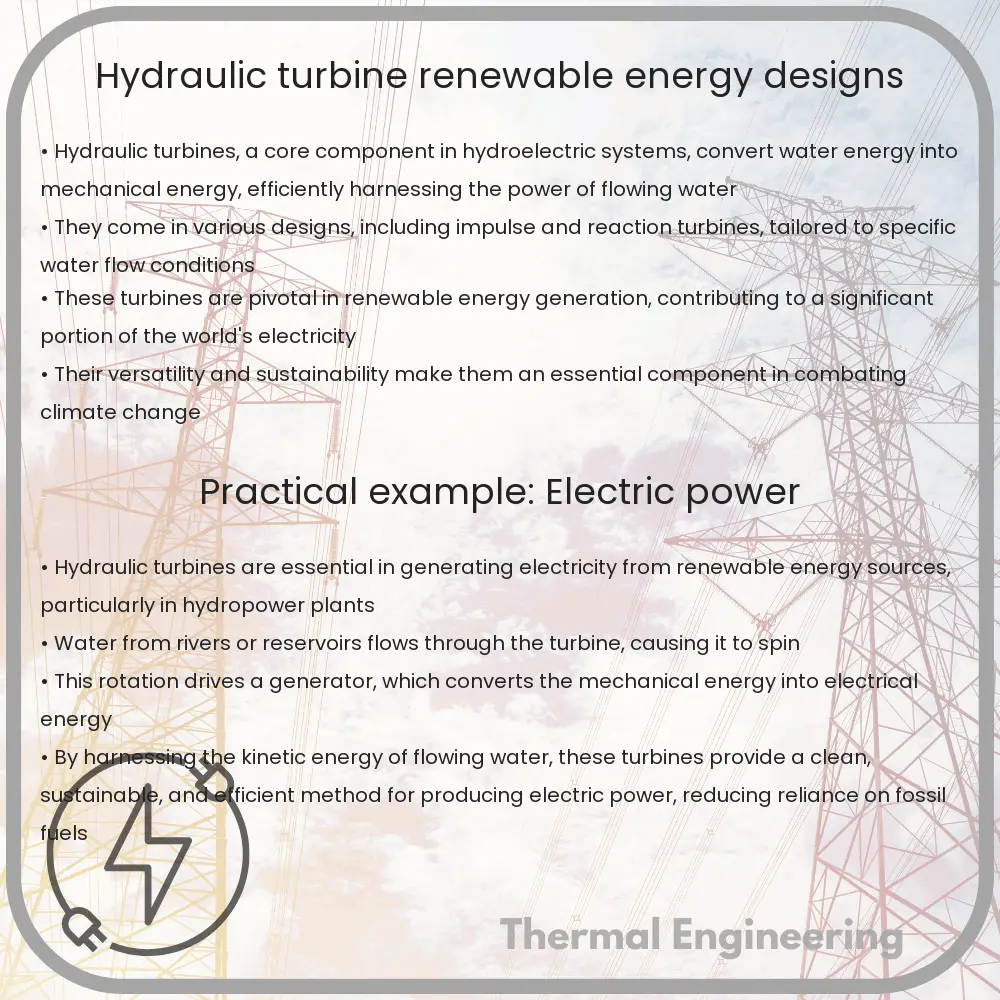
Hydraulic turbines are at the heart of hydroelectric power plants, converting the kinetic energy of flowing water into mechanical energy, which is then transformed into electricity through a generator. This technology is a cornerstone of renewable energy generation, playing a crucial role in the global energy mix by providing a clean, sustainable, and reliable source of power.

Types of Hydraulic Turbines

There are several types of hydraulic turbines, each designed to operate efficiently at specific water flow conditions and head heights (the height from which water falls). The key types include:

  • Pelton Turbine: Best suited for high-head, low-flow applications, the Pelton turbine features a series of spoon-shaped buckets mounted around a wheel. Water jets strike the buckets, transforming the momentum of water into rotational motion.
  • Francis Turbine: A reaction turbine that operates in medium to high-head and medium to high-flow conditions. It features a runner with fixed blades to guide water through a circular path, efficiently extracting energy.
  • Kaplan Turbine: Ideal for low-head and high-flow situations, the Kaplan turbine boasts adjustable blades, allowing it to maintain efficiency across varying flow rates. The turbine’s design enables it to extract energy as water passes axially through the blades.

Design Considerations for Hydraulic Turbines

Designing a hydraulic turbine involves multiple considerations to ensure efficiency, reliability, and longevity. Some of the primary factors include:

  • Material Selection: Turbines must be constructed from materials that can withstand the harsh conditions of water flow, including corrosion and erosion, while also supporting the mechanical stresses of rotation.
  • Hydraulic Efficiency: The design should maximize the conversion of water kinetic energy to mechanical energy. This involves optimizing the shape and configuration of the turbine blades and the water flow channels.
  • Environmental Impact: The design and placement of turbines must minimize impact on local ecosystems, especially aquatic life. This includes implementing fish-friendly turbine designs when necessary.

Environmental Impact and Future of Hydraulic Turbines

Hydraulic turbines offer a significantly lower carbon footprint compared to fossil fuels, making them a pivotal technology in the transition to sustainable energy. Their role extends beyond energy generation, including flood management, water supply, and irrigation services.

Advancements in turbine technology continue to improve their efficiency and environmental compatibility. Innovations like variable-speed turbines and improved materials contribute to enhancing the performance and extend the operational life of these machines. Furthermore, research into minimizing environmental disruption ensures that the hydraulic turbines of the future will be even more eco-friendly.

In conclusion, hydraulic turbines represent a critical technology in renewable energy. By understanding their operation, types, design considerations, and environmental impact, we can appreciate the sophistication and importance of these engineering marvels in our quest for sustainable energy solutions.

Economizer | Efficiency Impact, Types

Learn how economizers improve boiler efficiency by recovering waste heat, reducing fuel use and emissions in energy systems.

Economizer | Efficiency Impact, Types

Understanding Economizers: Boosting Efficiency in Energy Systems

Economizers are critical components in the energy conversion process, used commonly in boiler systems and other applications where waste heat can be recovered. Essentially, an economizer captures the waste heat from exhaust gases and uses it to preheat the fluid (often water) going into a boiler, thereby reducing the energy required to raise its temperature up to the operational level.

Efficiency Impact of Economizers

The primary benefit of using an economizer is its impact on efficiency. By recovering waste heat, the economizer reduces the amount of primary energy required for heating. This leads to significant fuel savings and, consequently, lower energy costs. It also results in reduced emissions of greenhouse gases and other pollutants because the boiler needs less fuel to reach its required output.

The efficiency improvement depends on several factors including the temperature of the exhaust gases and the amount of recoverable heat they contain. Generally, economizers can improve boiler efficiency by 1% to 3% for every 40°F (4.4°C) reduction in flue gas temperature.

Types of Economizers

  • Condensing Economizer: Suitable for cooling flue gases below their dew point, condensing economizers recover both latent and sensible heat, making them highly efficient. They are best used in systems where the fuel contains a substantial amount of moisture, like natural gas.
  • Non-condensing Economizer: These are used when flue gases are above the dew point; hence, they only capture sensible heat. Ideal for oil-fired and gas-fired boilers, non-condensing economizers are a comparatively cost-effective option for efficiency improvement.
  • Stack Economizer: A form traditionally used with boilers, stack economizers recover waste heat from the flue gases just as they exit the boiler and before they are released into the atmosphere.
  • Fluid Economizers: These are specialized economizers designed to preheat a secondary fluid instead of water, such as oil or chemicals, which are used in different industrial processes.

Conclusion

Integrating economizers into heating systems is a proven and effective method to enhance energy efficiency and reduce operational costs. With various types available, selecting the right economizer depends on numerous factors including the type of boiler, fuel characteristics, and desired efficiency gains. By understanding and utilizing these systems, industries can significantly boost their operational efficiency, contributing to economic savings and environmental sustainability.

Steam Drum | Material, Features

Learn about steam drums, essential for steam-water separation in boilers, including their materials, features, and design considerations.

Steam Drum | Material, Features

Understanding the Steam Drum

A steam drum is a critical component in both water-tube boilers and certain types of steam generators. Its primary role is to separate steam from water. This separation process is crucial for the steam generation cycle, ensuring that only dry steam exits the drum for use in various applications, such as turning turbines for power generation.

Materials Used in Steam Drums

The choice of material for constructing a steam drum is vital as it must withstand high temperatures and pressures, corrosion, and fatigue. Common materials used include:

  • Carbon Steel: Most commonly used due to its good tensile strength and thermal conductivity. Carbon steel can endure the high-temperature environment inside the boiler.
  • Alloy Steel: For higher temperatures and pressures, alloy steels are preferred because of their enhanced high-temperature strength and resistance to corrosion.
  • Stainless Steel: In extremely corrosive environments or in boilers where very pure steam is necessary, stainless steel is used despite its higher cost and generally lower thermal conductivity compared to carbon and alloy steels.

Features of Steam Drums

Steam drums serve multiple functions that go beyond just separating steam from water. These features include:

  1. Water Storage: Steam drums also act as reservoirs of water to feed the boiler.
  2. Steam-Water Separation: They contain internal parts like baffles and cyclone separators to help separate saturated steam from water droplets.
  3. Provision for Mounting Instruments: Various measurement tools such as pressure gauges, water level gauges, and chemical injection ports are mounted on the drum.
  4. Purification: It helps in the purification of the steam by eliminating impurities that are carried with water vapors.

Steam drums also provide a location for adding water chemicals to control scaling and corrosion. Furthermore, the consistent presence of water helps control the boiler’s system pressure, aiding in the maintenance of stable operating conditions.

Design Principles and Considerations

The design of a steam drum must ensure efficient separation of water and steam, high-pressure resistance, and corrosion resistance. Key factors considered in its design include:

  • Size and Proportion: The size and shape of the drum affect both the steam quality and the drum’s capacity to accommodate changes in steam demand.
  • Pressure Ratings: Drums must be designed to withstand the maximum pressure expected in the boiler. Calculations for thickness and material grade are crucial to ensure safety.
  • Internals: Internals such as demisters, cyclone separators, and chevron separators help in enhancing the separation process of steam from water.
  • Temperature Considerations: Material choice and thickness are affected by the highest steam temperatures expected in operation.

In conclusion, steam drums are indispensable in many industrial boilers, playing a key role in the overall efficiency and safety of steam generation and usage. The material and design of a steam drum are critical to its performance, sustainability, and functionality in high-pressure, high-temperature environments.

Vapor Compression Chiller | Performance, Models

Learn about vapor compression chillers, their working, components, performance factors, and various compressor models for efficient cooling solutions.

Vapor Compression Chiller | Performance, Models

Understanding Vapor Compression Chillers

Vapor compression chillers are a fundamental type of refrigeration system which uses vapor-compression technology to achieve cooling. These systems are widely used in various applications from small office buildings to large industrial facilities. The basic components of a vapor compression chiller include an evaporator, compressor, condenser, and an expansion valve.

How Vapor Compression Chillers Work

The process begins in the evaporator where the refrigerant absorbs heat and evaporates, changing from a liquid to a gas at low pressure. This cold refrigerant gas is then compressed to a higher pressure by the compressor. As the pressure increases, so does the temperature. Next, the high-pressure hot gas moves to the condenser where it releases the absorbed heat to the surroundings and condenses into a high-pressure liquid. Finally, this liquid passes through the expansion valve where its pressure and temperature drop before it returns to the evaporator, restarting the cycle.

Performance Factors of Vapor Compression Chillers

The performance of vapor compression chillers is typically evaluated based on their coefficient of performance (COP), energy efficiency ratio (EER), and the cooling capacity:

  • Coefficient of Performance (COP): COP is the ratio of the cooling capacity in watts to the power input in watts. It is expressed as:
  • COP = Cooling Capacity (Watts) / Power Input (Watts)

  • Energy Efficiency Ratio (EER): EER is similar to COP but measures the cooling capacity in British thermal units (BTUs) per hour per watt of electrical power input.
  • EER = Cooling Capacity (BTU/hr) / Power Input (Watts)

  • Cooling Capacity: This is the amount of heat the chiller can remove from the chilled water or brine per unit time, typically measured in tons of refrigeration, where one ton equals approximately 12,000 BTU/hr.

Models of Vapor Compression Chillers

There are several different models of vapor compression chillers, which differ mainly in the type of compressor used:

  1. Reciprocating Compressors: These are generally used for small to medium applications and can handle varied loads well.
  2. Screw Compressors: These are suitable for medium to large applications and offer high reliability and efficiency.
  3. Centrifugal Compressors: These are usually used in large cooling applications. They have few moving parts and excel in constant-load conditions. Their performance increases with size, making them ideal for very large cooling systems.
  4. Scroll Compressors: These are known for quiet operation and high efficiency and are commonly used in commercial and residential applications.

Each type of compressor brings its advantages in efficiency, suitability for load size, and operational noise levels, affecting the overall performance and application of the chiller.

Conclusion

Vapor compression chillers are critical in various cooling applications across industries and commercial establishments. Understanding their different models, performance metrics, and operational principles helps in selecting the right chiller for specific applications, ensuring efficient and effective cooling solutions.

Regenerative Turbine | Advantages, Power Gen

Learn how regenerative turbines enhance efficiency in low flow, high head applications with their unique energy recycling process.

Regenerative Turbine | Advantages, Power Gen

Understanding Regenerative Turbines

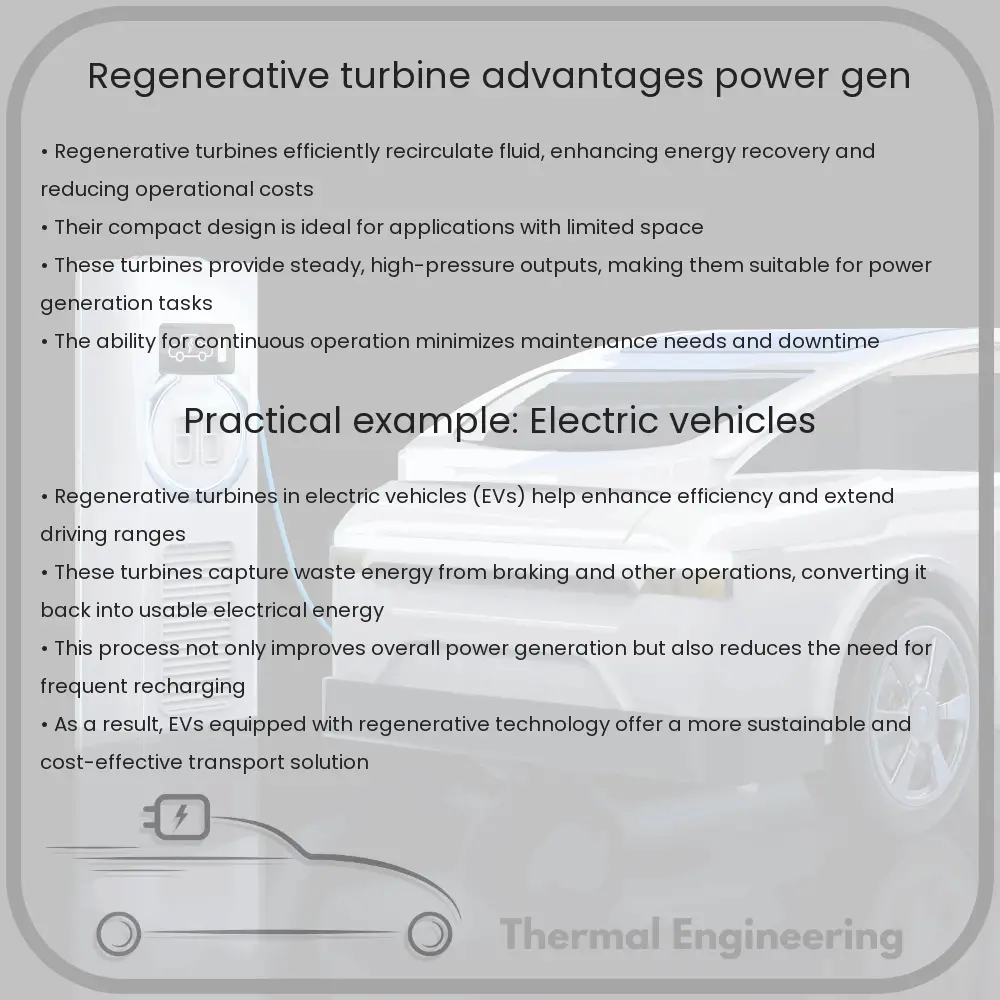
Regenerative turbines, also known as peripheral or vortex turbines, are a type of dynamic turbine machinery that are distinguished by a unique method of energy transfer. Unlike traditional turbines, where fluid flow directly exits after transferring its energy, regenerative turbines recirculate the working fluid. This regenerative action increases the fluid’s energy with each pass through the turbine’s periphery, improving efficiency particularly in low flow and high head applications.

How Regenerative Turbines Work

Regenerative turbines feature an impeller with radial vanes, wrapped around a ring-shaped channel. As the fluid enters the turbine at the center, it is accelerated by the spinning impeller and moves outward through a circular path. The key element of these turbines is their ability to channel the fluid back into the same flow path, continuously recirculating and increasing its pressure and velocity with each pass through the impeller.

Advantages of Regenerative Turbines

  • High Efficiency at Low Flow Rates: These turbines are particularly effective in applications where low flow rates are coupled with high head conditions, where traditional centrifugal pumps might fail to operate efficiently.
  • Compact Design: Their unique design allows for a more compact build compared to other turbines, saving space while delivering similar or superior performance.
  • Constant Pressure: Regenerative turbines can maintain a more constant pressure and smoother flow without the pulsations typically seen in other turbine types.
  • Self-priming: These turbines have the ability to self-prime, drawing fluid into the impeller without the need for an external priming system.
  • Minimal Wear: Due to the minimal fluctuations in pressure and the closed loop of fluid motion, regenerative turbines exhibit lower rates of wear and tear, leading to longer operational life and reduced maintenance requirements.

Power Generation with Regenerative Turbines

While regenerative turbines are commonly used in industrial applications such as pumping of volatile or liquefied gases, their high efficiency and steady output make them suitable for small-scale power generation purposes. In renewable energy sectors, particularly in geothermal and co-generation plants, the ability to handle low flow rates with high thermal energy efficiently can significantly enhance overall system performance.

In geothermal power systems, for example, the turbines help in extracting power from low-pressure steam sourced from underground reservoirs. This steam, which might not be fully utilized by conventional turbines, can be effectively used in a regenerative turbine to generate power, thereby increasing energy recovery.

Conclusion

Regenerative turbines offer a versatile and efficient solution in scenarios requiring high head and low flow conditions, delivering consistent performance and reliability. Their use in power generation, while still evolving, shows potential for significant contributions to the sustainable energy landscape. With their compact design, low maintenance, and operationally versatile nature, regenerative turbines represent a valuable tool in modern engineering applications.

Air Preheater | Effectiveness, Types

Learn about air preheaters, devices that heat air before processes like combustion to enhance thermal efficiency in industrial applications.

Air Preheater | Effectiveness, Types

Understanding Air Preheaters: Their Effectiveness and Types

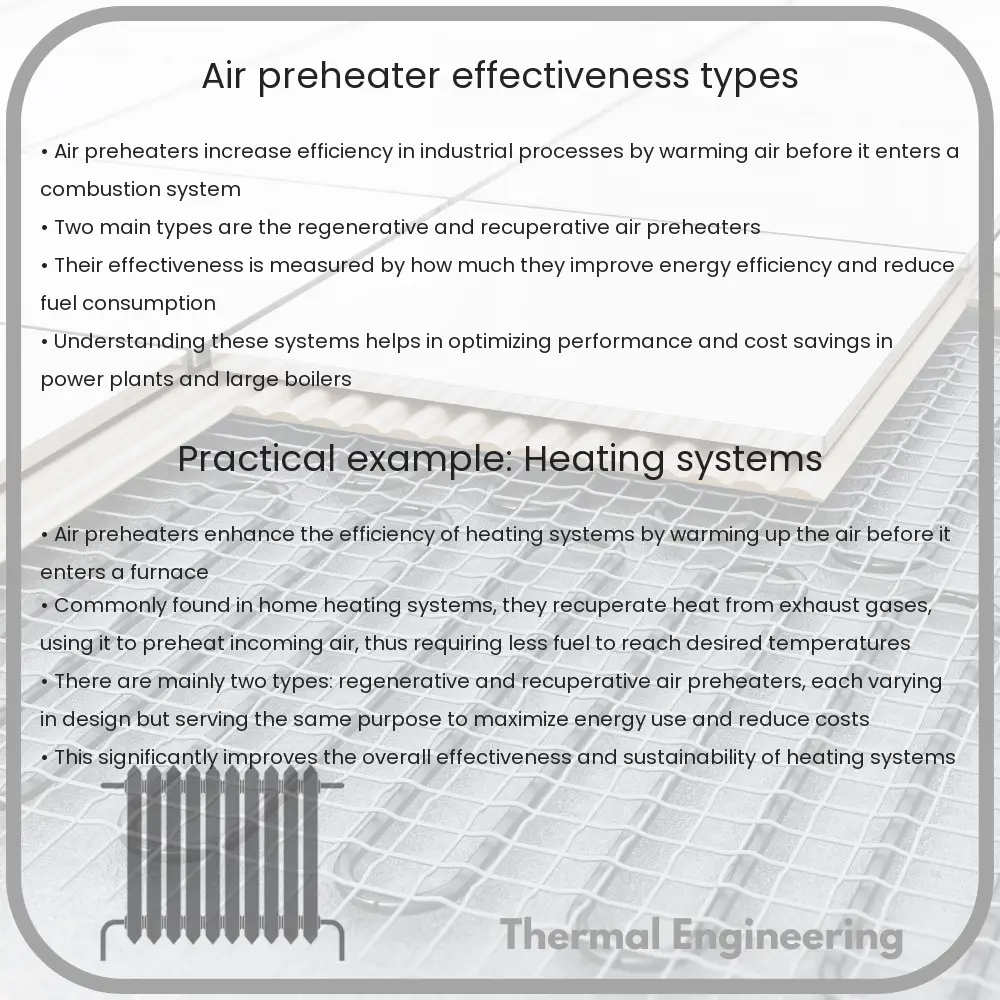
An air preheater is a device designed to heat air before another process (for example, combustion in a boiler) with the primary objective of increasing the thermal efficiency of the process. They can be used in a variety of devices including power plants, steam generators, and heating furnaces. This article explores the effectiveness and various types of air preheaters.

Effectiveness of Air Preheaters

The effectiveness of an air preheater is measured by its ability to increase the temperature of the air before it enters the next processing unit. The efficiency gain contributes significantly to energy conservation and cost reduction in industrial processes. Effectiveness is influenced by several factors such as the heat transfer area, airflow rate, and temperature gradient between the exhaust gases and the incoming air. A key formula often used to describe the effectiveness of a heat exchanger, which includes air preheaters, is given by:

\[ \text{Effectiveness} (\epsilon) = \frac{\text{Actual Heat Transfer}}{\text{Maximum Possible Heat Transfer}} \]

This can also be expressed as a function of the heat capacity rates and the heat exchanger geometry.

Types of Air Preheaters

There are primarily three types of air preheaters used in industrial applications: regenerative, recuperative, and hybrid. Each type has its own advantages and suitability depending on the requirements of the operation.

  • Regenerative Air Preheaters: Also known as rotary heat exchangers, this type of air preheater features a rotating cylinder filled with a matrix of materials that absorb heat. As the cylinder rotates through the hot gas stream, it absorbs heat and then transfers it to the cold air stream. This type is commonly used in power plants because of its ability to handle large volumes of air and gas.
  • Recuperative Air Preheaters: These operate by having a fixed barrier (like tubes or plates) through which heat is transferred from the hot gases to the cold air by conduction. Recuperative air preheaters are more compact and typically used in smaller, less variable systems.
  • Hybrid Air Preheaters: Hybrid systems combine elements of both regenerative and recuperative air preheaters to maximize efficiency and performance. These are less common but are used when specific conditions require the benefits of both types.

Conclusion

Air preheaters play a critical role in enhancing the efficiency of thermal systems by recovering heat from exhaust gases. Understanding their effectiveness and the different types enables industries to choose the most suitable type for their specific needs, leading to better energy conservation and cost-effectiveness. As technology advances, the performance of air preheaters will continue to improve, contributing further to sustainable industrial practices.

Desuperheater | Utility, Design Choices

Learn what a desuperheater is, its utility, design choices, and importance in enhancing efficiency in steam systems across various industries.

Desuperheater | Utility, Design Choices

What is a Desuperheater?

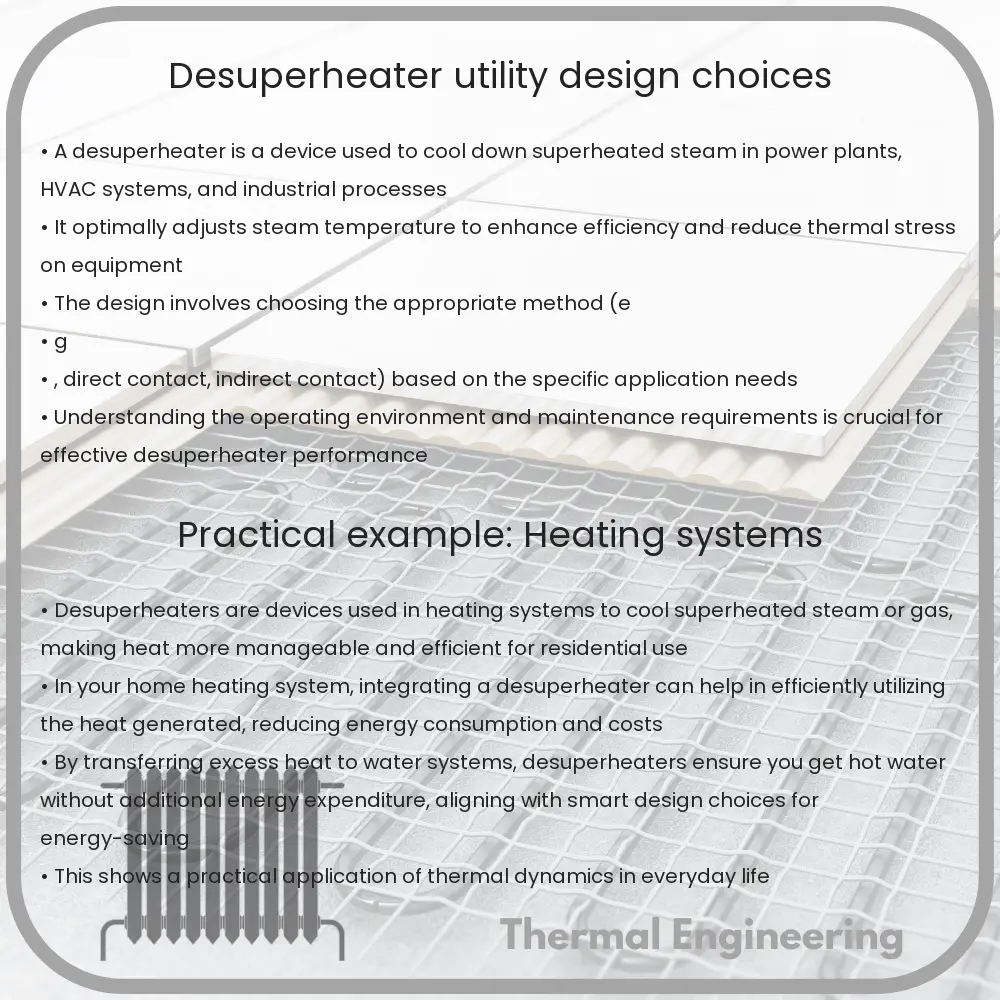
A desuperheater is a device used in the engineering field to reduce the temperature of superheated steam to closer to its saturation temperature. This process increases the efficiency of steam as it is used in heating or power generation processes. Desuperheaters are widely used in various industries, including power generation, air conditioning, and manufacturing, to enhance system performance and energy efficiency.

Utility of Desuperheaters

Desuperheaters serve a critical role in steam management systems by controlling steam temperature and reducing thermal stress in pipes, thereby extending their lifespan. This reduction in temperature is vital in processes where excess heat can damage equipment or reduce the efficiency of thermodynamic cycles. The core utilities of desuperheaters are:

  • Enhancing operational efficiency by optimizing steam quality.
  • Preventing damage to equipment due to high temperatures.
  • Improving the overall thermal efficiency of the power generation cycle.
  • Reducing costs associated with energy consumption and maintenance.

Design Choices for Desuperheaters

Choosing the right desuperheater design is crucial for achieving desired temperature control and efficiency. The common types of desuperheaters include:

  1. Venturi Type Desuperheater: Uses the venturi effect to inject water into the steam flow, efficiently cooling the steam by evaporation. Ideal for applications requiring precise temperature control.
  2. Attemperator: Located directly in the steam line, this type of desuperheater offers fine control over steam temperature by adjusting the spray flow to match the steam flow.
  3. Annular Vent Desuperheater: Features a ring-shaped nozzle that disperses water evenly around the circumference of the steam pipe, suitable for larger pipes and higher flow rates.

Design considerations for desuperheaters typically include:

  • The range of temperature reduction required based on process needs.
  • The pressure and temperature of the steam and cooling water.
  • Compatibility of materials with the operational environment to prevent corrosion.
  • Installation space and accessibility for maintenance and inspections.

Conclusion

Desuperheaters are essential components in steam systems for maintaining efficiency and prolonging equipment life. The choice of a desuperheater depends on specific operational requirements and constraints, including desired temperature range, steam characteristics, and installation environment. By understanding and implementing the most suitable desuperheater type, industries can optimize their steam processes, achieving considerable energy savings and operational efficiency.