Facebook Instagram Youtube Twitter

Brazed Plate Exchanger | Efficiency, Structure

Learn about brazed plate heat exchangers, their efficient and compact design, and broad industrial applications, including HVAC and refrigeration.
Brazed Plate Exchanger | Efficiency, Structure

Understanding the Brazed Plate Heat Exchanger: Efficiency and Structure

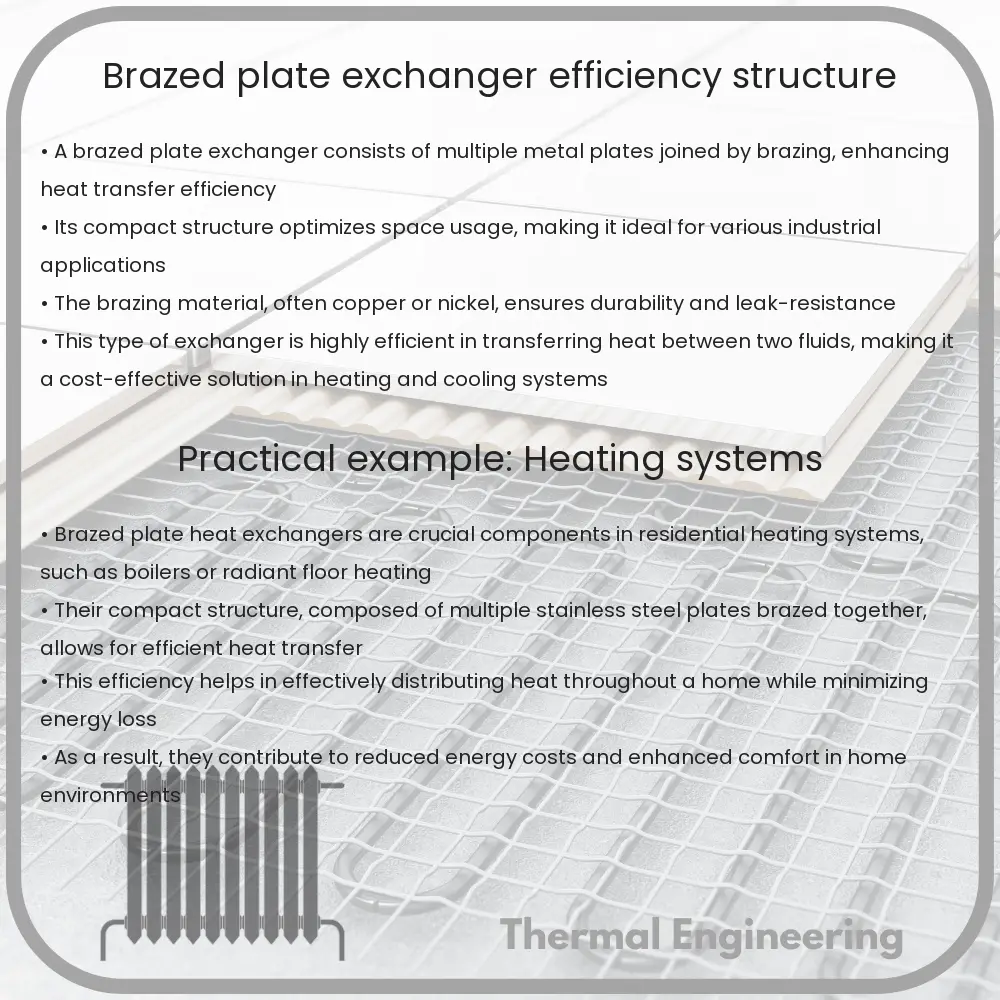
A brazed plate heat exchanger (BPHE) is a type of heat exchanger that utilizes metal plates to transfer heat between two fluids. Widely known for its high efficiency and compact structure, the BPHE has become a popular choice in various industries including refrigeration, HVAC, and heat recovery systems.

Structure of a Brazed Plate Heat Exchanger

The basic structure of a BPHE consists of multiple thin, corrugated plates made of stainless steel or a similar durable metal. Each plate is fitted with a brazed seal around the edges and at the plate intersections. The plates are stacked and then brazed together in a vacuum furnace. During the brazing process, a copper or nickel-based filler material is used to join the plates permanently.

The design of these plates creates tortuous paths for the fluids, maximizing the surface area over which the heat can be transferred. This design allows for extremely efficient thermal transfer, with the hot and cold fluids typically flowing in alternate directions (counterflow) which increases heat transfer efficiency.

Efficiency of the Brazed Plate Heat Exchanger

The efficiency of BPHEs can be attributed to several key factors:

  • High Surface Area: The corrugated design of the plates provides a large surface area in a compact space, facilitating efficient heat exchange even with small temperature differences between the fluids.
  • Turbulent Flow: The design of the passageways promotes turbulent flow, which enhances the transfer of heat by disrupting the boundary layers that form on the surface of the plates.
  • Counterflow Configuration: Most BPHEs operate on a counterflow principle, where the fluids move in opposite directions. This setup can achieve a higher temperature change than parallel flow configurations.

The thermal efficiency of BPHEs can be quantified using the effectiveness \( \epsilon \) formula:

\[ \epsilon = \frac{T_{out,hot} – T_{in,hot}}{T_{in,cold} – T_{in,hot}} \]

where \( T_{in,hot} \) and \( T_{out,hot} \) are the inlet and outlet temperatures of the hot fluid, respectively, and \( T_{in,cold} \) is the inlet temperature of the cold fluid.

Applications and Advantages

Brazed plate heat exchangers are versatile and find applications in many fields. Some common uses include:

  • Cooling systems for engines and industrial machinery
  • Refrigeration and air conditioning systems
  • Heat recovery and cogeneration systems
  • Underfloor heating systems

The advantages of BPHEs include:

  • Compactness: Their small footprint makes them ideal for applications where space is limited.
  • High Efficiency: They can operate effectively under a wide range of temperatures and pressures.
  • Cost-effectiveness: Lower operational costs due to high thermal efficiency and minimal maintenance requirements.

In conclusion, brazed plate heat exchangers are a crucial component in modern thermal management solutions. Their superior efficiency, robust construction, and flexibility in application make them an ideal choice for efficient heat transfer in various industrial and commercial environments.
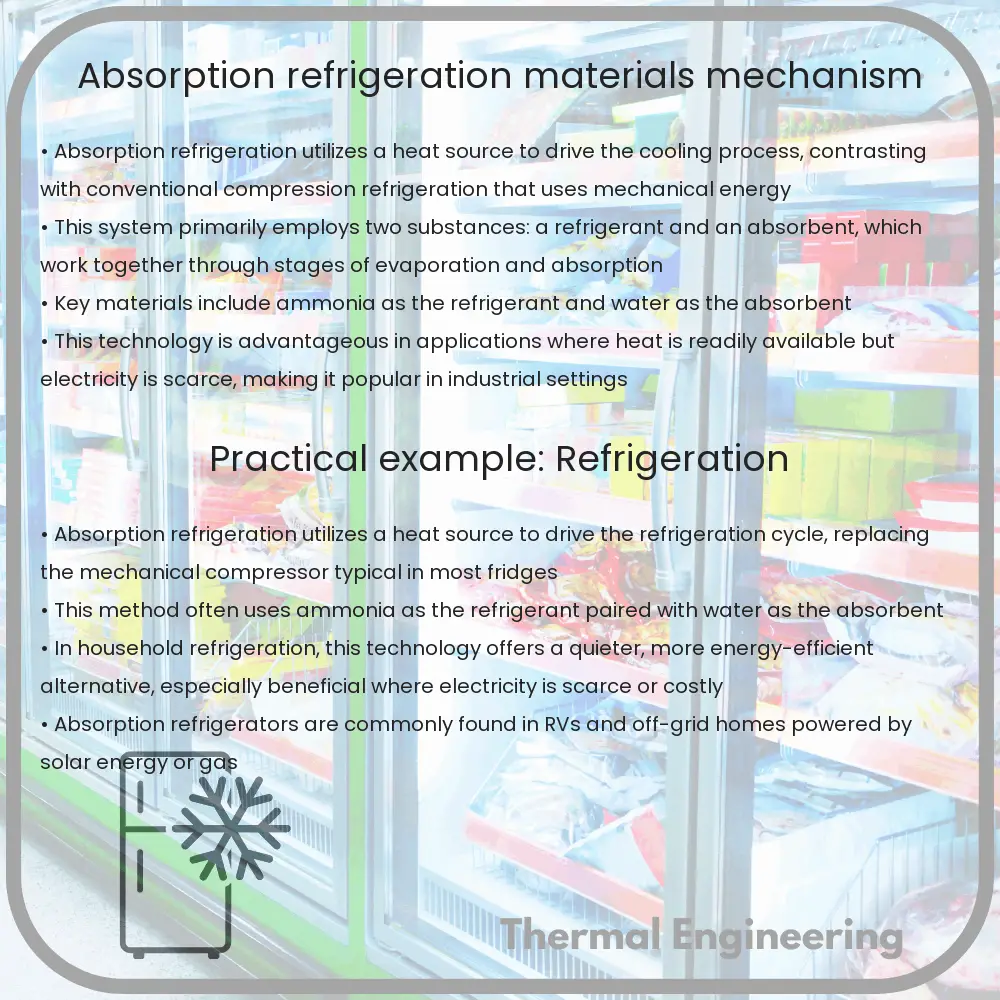
Absorption Refrigeration | Materials, Mechanism

Learn about absorption refrigeration, an eco-friendly cooling technology that uses heat sources and materials like water and lithium bromide to drive the refrigeration cycle without mechanical compressors.

Absorption Refrigeration | Materials, Mechanism

Understanding Absorption Refrigeration: Materials & Mechanism

Absorption refrigeration is a fascinating alternative cooling technology that doesn’t rely on conventional mechanical compression but instead uses a heat source to drive the refrigeration cycle. This method offers unique advantages, particularly in using heat from renewable sources or waste heat from industrial processes, making it an intriguing option for sustainable cooling solutions.

Key Materials Used in Absorption Refrigeration Systems

The absorption refrigeration process fundamentally relies on two key substances: the refrigerant and the absorbent. These materials are critical as they interact to facilitate the cooling effect.

  • Refrigerant: The most commonly used refrigerant in absorption refrigeration systems is water. Its role is to evaporate and condense, thereby absorbing and releasing heat, which is essential for the cooling process.
  • Absorbent: The absorbent is typically a salt solution, such as lithium bromide, which has a high affinity for the refrigerant. The most common pair in absorption refrigeration is water as the refrigerant and lithium bromide as the absorbent.

These materials are chosen based on their thermodynamic properties which must be compatible for efficient heat exchange and for their environmental impact, ensuring that they minimize harm to the ecosystem.

Mechanism of Absorption Refrigeration

The basic cycle of an absorption refrigerator involves several critical steps that utilize thermodynamic principles to achieve cooling:

  1. Evaporation: The refrigerant, typically water, is kept in a low-pressure environment within the evaporator where it absorbs heat from its surroundings (like the inside of a refrigerator) and evaporates.
  2. Absorption: The vaporized refrigerant is then absorbed by the absorbent (e.g., lithium bromide solution) in the absorber unit. This absorption process releases heat but the solution’s affinity to the refrigerant ensures that the refrigerant stays in vapor form.
  3. Pumping: The absorbent-refrigerant solution is then pumped to higher pressure in preparation for the next stage.
  4. Regeneration (Desorption): The solution then moves to the generator where heat is applied (from an external source). The heat causes the refrigerant to desorb (i.e., separate) from the absorbent and revert to its gaseous form.
  5. Condensation: The refrigerant vapors, now at a higher pressure, are cooled and condensed back into liquid form in the condenser unit, releasing the heat absorbed earlier.
  6. Recycling: The condensed refrigerant flows back into the evaporator to repeat the cycle, while the weakened absorbent solution returns to the absorber to absorb more refrigerant vapor.

This closed-loop cycle allows absorption refrigeration systems to efficiently use heat to create a cooling effect without the need for mechanical compressors, making it particularly advantageous in areas where electricity is scarce or in applications where waste heat is readily available.

Applications and Benefits

Absorption refrigeration is ideal in industrial contexts where large amounts of waste heat are produced (such as power plants or large commercial facilities) that would otherwise be wasted. It’s also found useful in situations where noise reduction is critical, as these systems operate much more quietly compared to traditional compressor-based refrigerators.

Moreover, as concerns about environmental sustainability grow, the absorption cooling system stands out for its ability to integrate with solar thermal systems, significantly reducing reliance on fossil fuels and minimizing environmental impact.

This technology exemplifies how traditional cooling methods can be reimagined for greater efficiency and environmental friendliness, showcasing a significant shift towards sustainable engineering solutions.

Thermally activated building systems

Learn about Thermally Activated Building Systems (TABS), a technology enhancing energy efficiency through the structural integration of heating and cooling.

Thermally activated building systems

Understanding Thermally Activated Building Systems (TABS)

Thermally Activated Building Systems (TABS) are an innovative heating and cooling technology designed to improve energy efficiency in buildings. By integrating the thermal activation of building mass into the structural components of a building, TABS take advantage of the thermal storage capacity of the building itself to moderate indoor temperatures, reducing the need for traditional HVAC systems.

How TABS Work

TABS function by circulating water through embedded piping systems within the structural components of a building such as floors, walls, or ceilings. Depending on the need for heating or cooling, the water temperature is adjusted and then circulated through these pipes. When heating is required, warm water circulates through the pipes, transferring heat to the building structure, which then radiates it into the interior space. Conversely, for cooling, cold water is circulated to absorb the indoor heat.

Components of TABS

  • Embedded Piping: A network of pipes embedded within the concrete slabs or walls where water is circulated.
  • Water Supply System: Includes boilers and chillers which adjust the temperature of the circulating water.
  • Control System: Regulates the flow and temperature of the water to meet the thermal requirements efficiently.

Advantages of Thermally Activated Building Systems

  • Energy Efficiency: By using the thermal mass of building components, TABS can reduce peaks in heating and cooling demand, leading to lower energy consumption.
  • Reduced HVAC Load: TABS provide a significant part of the heating and cooling needs of a building, which can lead to downsizing of conventional HVAC systems and thus savings in capital and operational costs.
  • Comfort: The system delivers heating and cooling in a more uniform manner compared to conventional systems, which helps in maintaining a consistent indoor climate.
  • Lower Operational Noise: Since the main mode of heat transfer in TABS is thermal radiation and conduction, there is less reliance on air movement; this significantly reduces noise levels compared to traditional HVAC systems.

Challenges and Considerations

While TABS offer numerous benefits, there are some considerations to keep in mind:

  • Initial Installation Cost: The integration of piping systems within structural components can add to the initial construction costs.
  • Design Limitations: The effectiveness of TABS depends heavily on the building design and local climate. It’s best suited for buildings where the load profile is well-understood and relatively stable.
  • Thermal Responsiveness: Due to the high thermal mass, TABS have a slower response time compared to traditional systems which might not be suitable for all building types.

Despite these challenges, the potential of Thermally Activated Building Systems to enhance energy efficiency in building design makes them an appealing option for new constructions and major renovations. As building standards evolve towards more sustainable and energy-efficient practices, TABS stands out as a promising technology in modern engineering.

By integrating architectural design with advanced engineering solutions like TABS, modern buildings can achieve higher energy efficiencies, and better thermal comfort levels, thus highlighting the importance of interdisciplinary approaches in building design and construction.

Radiant Floor Heating | Pros & Cons, Install

Learn about radiant floor heating, its types, benefits, and installation considerations for efficient, comfortable home heating.

Radiant Floor Heating | Pros & Cons, Install

Introduction to Radiant Floor Heating

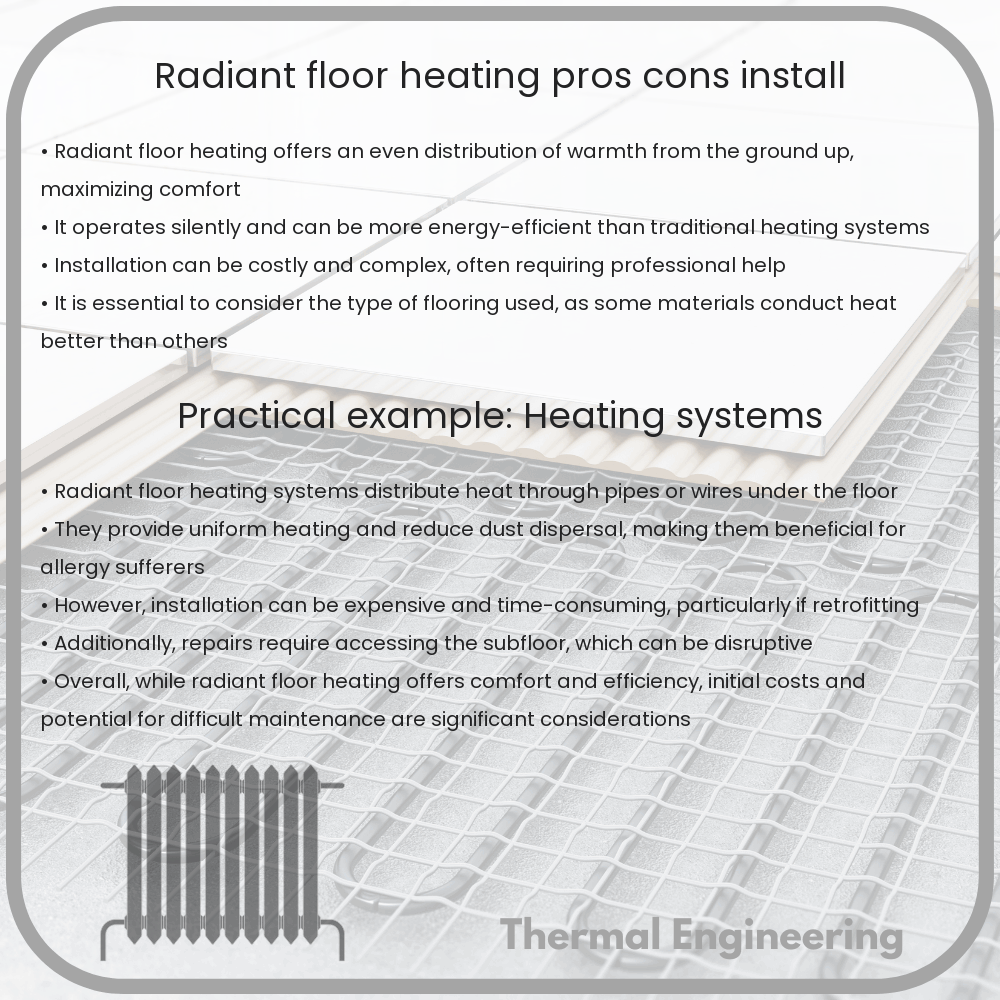
Radiant floor heating is a system that provides heat directly to the floor of a home. This form of heating, which can be either electric or hydronic (water-based), is considered to be more efficient and comfortable compared to traditional heating methods like forced air systems. The principle behind radiant floor heating is simple: it turns the entire floor into a radiant heat source, warming the room from the ground up.

How Radiant Floor Heating Works

There are two main types of radiant floor heating systems: electric and hydronic. Electric systems use electric cables or heat mats installed beneath the floor surface, while hydronic systems pump heated water from a boiler through a series of pipes laid beneath the floor. Both systems utilize the basic principle of heat rising to naturally and evenly heat a space.

Pros of Radiant Floor Heating

  • Comfort: Radiant heating eliminates the cold spots common in forced air systems, providing consistent heat distribution across the room.
  • Energy Efficiency: Since radiant floors target heating directly to the living space, they often use less energy than traditional heating systems, contributing to lower utility bills.
  • Health and Air Quality: Radiant systems do not circulate air internally, reducing the movement of dust and allergens.
  • Silent Operation: Radiant heating offers a quiet alternative to other systems that produce noise during operation.
  • Design Freedom: Without the need for radiators or air ducts, room layout and furniture placement are more flexible.

Cons of Radiant Floor Heating

  • High Initial Cost: Installing radiant floor heating can be more expensive upfront than other heating systems, especially in retrofit projects.
  • Installation Time: Integration of these systems, particularly hydronic ones, can be complex and may require significant construction time.
  • Floor Height Issue: Installation can raise the height of the floor, which might be problematic in some renovations or require adjustments to doorways and fixtures.
  • Incompatibility with Certain Floor Coverings: Not all flooring materials are suitable for radiant heating, potentially limiting your choices.

Installation of Radiant Floor Heating

Installing a radiant floor heating system typically involves several key steps, regardless of whether it is electric or hydronic:

  1. Planning and Design: The first step involves determining the type of system best suited for your home and designing the layout according to the rooms’ dimensions and flooring type.
  2. Subfloor Preparation: This may include cleaning, leveling, or even replacing parts of the existing subfloor to ensure optimal function of the heating system.
  3. Installation of Heating Elements: For electric systems, this means installing heating cables or mats, whereas for hydronic systems, it involves laying out the network of pipes.
  4. Connection to Power Source: Electric systems require connection to the home’s electrical grid, while hydronic systems need to be integrated with a boiler.
  5. Installing Flooring: Once the heating elements are in place, the final flooring material can be installed on top. Special considerations may be necessary for flooring materials sensitive to heat.
  6. Testing and Commissioning: The system is tested to ensure it operates correctly across all zones and that the temperature controls function properly.

Conclusion

Radiant floor heating offers a high degree of comfort and efficiency, making it a desirable option for many homeowners. However, the costs and installation considerations should be carefully weighed against the benefits. With proper installation and maintenance, radiant floor heating can provide a reliable and satisfying heating solution for a wide range of homes.

Thermal Oil Heater | Safety, Types

Learn about thermal oil heaters, their types, safety features, and their importance in industrial heating.

Thermal Oil Heater | Safety, Types

Introduction to Thermal Oil Heaters

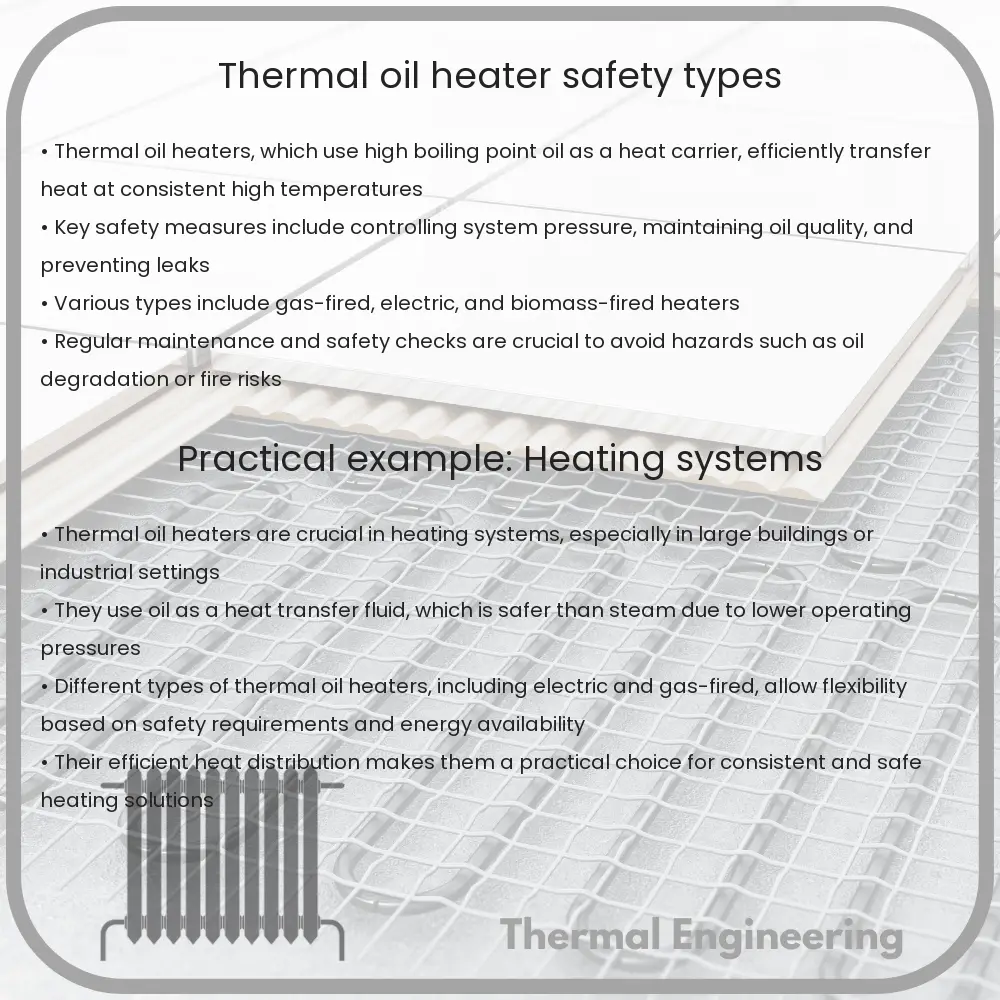
Thermal oil heaters, also known as thermal fluid heaters or hot oil heaters, are industrial heating equipment used to maintain high temperatures in various production processes. They use thermal oil as a heat-carrying medium, which allows for consistent, high-efficiency heat transfer without the need for high-pressure equipment. Thermal oil heaters are commonly used in industries such as chemical processing, oil and gas, and manufacturing.

Types of Thermal Oil Heaters

  • Gas-fired Thermal Oil Heaters: These heaters use natural gas as the fuel source. They are known for their high efficiency and quick response to changes in heat demand.
  • Electric Thermal Oil Heaters: Electric heaters use electric resistances to heat the oil, suitable for smaller applications or where emissions must be restricted. They are appreciated for their precise temperature control.
  • Oil- or Coal-fired Thermal Oil Heaters: These types use liquid fuel or solid fuels like coal. They are generally used in locations where these fuels are readily available and economical.
  • Biomass Thermal Oil Heaters: Biomass heaters utilize organic materials such as wood chips or pellets. They are environmentally friendly options but depend on the availability of biomass resources.

Safety Considerations in Thermal Oil Heaters

Safety is a paramount concern when dealing with high-temperature oil systems. Improper handling or lack of maintenance can lead to dangerous situations, such as hot oil leaks or fires. Below are essential safety features and practices associated with thermal oil heaters:

  1. Temperature Control: Overheating is one of the main risks in thermal oil heaters. It’s crucial to have precise temperature control systems to prevent surpassing the oil’s maximum safe working temperature.
  2. Pressure Relief Devices: Even though thermal oil systems operate at low pressure, it is vital to include pressure relief devices to protect against overpressure, which could occur due to thermal expansion of the oil.
  3. Regular Maintenance: Scheduling regular inspections and maintenance checks helps to identify potential issues like corrosion or oil degradation, which can significantly impact the system’s safety and efficiency.
  4. Fire Safety Measures: Installation of fire safety systems is essential, especially in areas susceptible to leaks. Fire-safe design features, automatic shut-offs, and adequate fire suppression systems are critical.
  5. Training of Personnel: Proper training of operational personnel is essential to ensure they understand the system’s operation and can identify and react promptly to any signs of malfunction or deterioration.

Conclusion

Thermal oil heaters are integral components of many industrial processes, providing high-efficiency heat transfer in a relatively safe and controllable way. Understanding the different types of thermal oil heaters and the essential safety precautions can help facilities ensure safe and efficient operation. With the correct maintenance and safety practices in place, thermal oil heaters can be a valuable tool for achieving necessary heat levels while minimizing risk.

Steam Injector | Efficiency, Principles

Learn about the steam injector, a key device in steam engineering, used for its simplicity and efficiency in feeding water into steam boilers.

Steam Injector | Efficiency, Principles

Understanding the Steam Injector: Principles and Efficiency

The steam injector is a fascinating device used primarily in steam boilers to feed water, leveraging the high-pressure steam from the boiler itself. The beauty of a steam injector lies in its simplicity and efficiency, making it an essential component in steam engineering. In this article, we explore the operating principles of a steam injector and examine its efficiency.

How Does a Steam Injector Work?

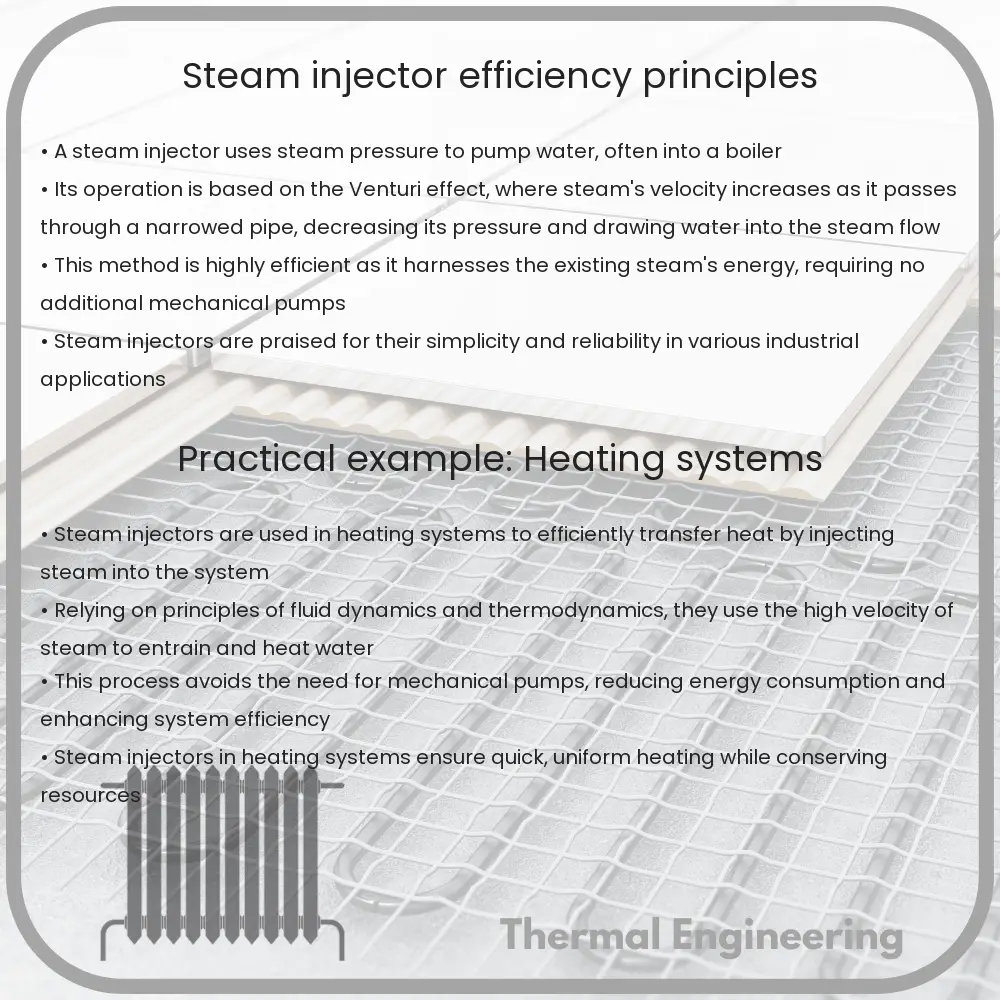
The core principle behind a steam injector is based on the Bernoulli’s Principle and the Venturi effect. The operation of a steam injector can be divided into three key stages: initial induction, compression, and delivery. Here’s a step-by-step breakdown:

  • Initial Induction: The injector uses steam from the boiler and passes it through a converging nozzle. The steam exits the nozzle at high velocity, creating a low-pressure area that sucks in the surrounding water.
  • Compression: The high-speed steam then mixes with the feed water in the combining tube. The mixture of water and steam condenses the steam into water, dramatically increasing the mixture’s pressure due to the conservation of momentum and mass continuity.
  • Delivery: Finally, the compressed mixture passes through a diverging section, slowing down the mixture but increasing pressure further, allowing it to overcome the boiler pressure and flow into the boiler.

The injector not only uses the energy of the steam efficiently but also recycles the steam’s thermal energy by using it to heat the boiler water, which increases the overall efficiency of the system.

Efficiency of Steam Injectors

Steam injectors are known for their substantial efficiency and simplicity. The efficiency of a steam injector primarily depends on three factors:

  • Steam Pressure: Higher boiler steam pressures generally improve the operational efficiency of the injector, as higher pressure steam possesses more kinetic energy that can be transferred to the water.
  • Water Temperature: The temperature of the feed water also affects efficiency. Colder water can reduce the overall efficiency since more steam is required to heat and mix with the colder water, which might lead to higher condensation and less efficient momentum transfer.
  • Nozzle Design: The design and condition of the nozzles (the converging and the diverging parts) play a crucial role. Properly designed nozzles ensure optimal conversion of steam’s kinetic energy into pressure energy.

The overall efficiency of a steam injector can be as high as 60% under optimal conditions. However, it is crucial to maintain and operate the injector within recommended parameters to achieve such efficiency levels.

Applications and Importance

Steam injectors are not only used in steam boilers but also find applications in various industries, including chemical processing, thermocompression, and in locomotives, particularly in heritage and steam-powered vehicles. Their ability to transfer heat and mass without moving parts or the need for external power makes them an enduring solution for efficient steam management.

In conclusion, the steam injector exemplifies an elegant engineering solution that combines the principles of fluid dynamics and thermodynamics to achieve high efficiency. Its straightforward design belies its sophisticated operation, making it a standout example of effective mechanical engineering.

Reaction Steam Turbine | Advantages, Design

Learn about reaction steam turbines, their design, efficiency, and applications in energy and maritime industries.

Reaction Steam Turbine | Advantages, Design

Introduction to Reaction Steam Turbine

Reaction steam turbines are a pivotal technology in modern power generation and mechanical drive applications, playing a crucial role in energy and maritime industries, among others. Unlike the impulse steam turbines that convert the kinetic energy of steam jets to mechanical energy, reaction turbines utilize both the static and kinetic energy of steam. This article discusses the advantages and design features of reaction steam turbines, providing insights into why and how these machines operate effectively.

Advantages of Reaction Steam Turbines

  • High Efficiency: Reaction turbines are known for their high efficiency, especially at partial loads. They adjust better to varying loads, making them suitable for applications where load demands fluctuate.
  • Smooth Operation: The design of reaction turbines allows for a smoother flow of steam through the blades, resulting in less vibration and quieter operation compared to impulse turbines.
  • Compact Design: Due to the continuous and more uniform pressure drop across the stages, reaction turbines can be built more compactly, which is beneficial in applications where space is a constraint.
  • Increased Thermal Efficiency: By utilizing the heat drop within both the fixed and moving blades, reaction turbines achieve higher thermal efficiencies.
  • Capability to Handle High Pressure and Temperature: Reaction turbines are well-suited for high-pressure and high-temperature steam conditions, which are typical in power generation applications.

Design Features of Reaction Steam Turbines

Reaction steam turbines feature a distinctive design that allows the extraction of energy from steam in a nuanced manner. Key design aspects include:

  • Blade Design: In reaction turbines, the blades are designed as airfoil sections. Both fixed and moving blades act as nozzles. This design helps in extracting energy both from the decrease in steam pressure and velocity as it passes through the turbine.
  • Staging: Reaction turbines typically employ multiple stages to gradually convert the energy in steam into mechanical work. This staging helps in managing the expansion of steam efficiently and increases overall machine efficiency.
  • Sealing: To prevent steam leakage from the high-pressure areas to lower pressure zones, sophisticated sealing systems are used in reaction turbines. This feature is critical in maintaining efficiency and operational reliability.
  • Material Choice: Due to the high-pressure and high-temperature environment within the turbine, materials that can withstand these conditions are selected. Advanced alloys and composites are often used for construction to ensure durability and reliability.
  • Bearing and Support Systems: Accurate and durable bearing systems are crucial for the operation of reaction turbines, as they must ensure precise rotor positioning and withstand thermal expansions and mechanical stresses.

Conclusion

Reaction steam turbines are an essential component in various sectors, notably in power generation where their high efficiency and capability to handle fluctuating loads play a vital role. The innovation in their design, materials, and technology continues to advance, pushing the boundaries of what these turbines can achieve in terms of efficiency and performance. Understanding these machines’ design and advantages is crucial for those involved in engineering and energy industries, ensuring optimal selection and use in relevant applications.

Heat Recovery Generator | Types, Benefits

Learn about heat recovery generators (HRSGs), their types, and benefits for enhancing energy efficiency and reducing emissions in various industries.

Heat Recovery Generator | Types, Benefits

Understanding Heat Recovery Generators: Types and Benefits

Heat recovery generators, also known as heat recovery steam generators (HRSGs), play a crucial role in the energy efficiency processes of various industrial applications. These systems recover heat from hot gas streams produced by gas turbines or other combustion processes, and use this heat to generate steam for power production or other industrial uses. This method not only conserves energy but also aids in reducing overall emissions. In this article, we explore the different types of heat recovery generators and their benefits.

Types of Heat Recovery Generators

Heat recovery systems vary mainly based on their construction and the specific end-use applications. Here are the most common types:

  • Horizontal Drum Units: These HRSGs feature a drum positioned horizontally, suitable for smaller power plants. They are widely appreciated for their simpler design and relatively lower capital cost.
  • Vertical Drum Units: In these systems, the drum is positioned vertically. This configuration is beneficial for operations where space is limited and often finds use in larger power stations.
  • Multiple Pressure Levels: Some HRSGs are designed to operate at multiple pressure levels, enhancing the efficiency of steam generation and allowing for better control of the steam production process depending on demand.
  • Once-Through Units: This design allows water to pass through the system a single time instead of recirculating. Once-through units are particularly effective under varying load demands since they can adjust more naturally to changes in the heat input.

Benefits of Heat Recovery Generators

The adoption of HRSGs brings several advantages, both environmentally and economically:

  • Energy Efficiency: By capturing and reusing heat that would otherwise be lost, HRSGs significantly enhance the overall efficiency of energy use. This is critical in industries that consume large amounts of energy.
  • Cost Reduction: Using heat recovery systems helps in reducing operational costs by lowering the need for additional fuel to generate process steam or heat. Consequently, this lessens the overall energy bills.
  • Reduction in Emissions: As less fuel is burned, there is a notable reduction in the emission of greenhouse gases and other pollutants, helping facilities meet environmental compliance and improve their public image.
  • Versatility: Heat recovery generators can be used in a diverse range of industries, including power generation, manufacturing, and even in residential applications where waste heat from air conditioners and boilers can be reused.
  • Increased Lifespan of Equipment: By utilizing otherwise wasted heat, the operational load on machines can be reduced, which in turn can extend the life of equipment such as boilers and turbines.

Clearly, heat recovery generators are a powerful tool in enhancing energy efficiency across many segments. By understanding the different types and advantages of HRSGs, industries can better commit to sustainable and cost-effective energy use practices.

Whether you’re involved in industrial design, engineering management, or simply interested in energy conservation, integrating heat recovery generators into your systems might provide substantive benefits. Building awareness about these technologies could also spur innovations that further enhance their efficiency and applicability.

Condensing Boiler | Energy Savings, Tech

Learn how condensing boilers enhance heating efficiency by recovering heat from exhaust gases, leading to energy savings and reduced emissions.

Condensing Boiler | Energy Savings, Tech

Understanding Condensing Boilers: A Path to Energy Savings

In an era focused on sustainability and energy efficiency, residential and commercial heating systems are undergoing significant improvements. One of the most notable advancements in this field is the development of condensing boilers. As opposed to traditional heating systems, condensing boilers are designed to recover heat that would otherwise be lost through the exhaust flue gases.

How Condensing Boilers Work

Condensing boilers capture heat from the exhaust gases and use it to preheat water entering the boiler, significantly enhancing the efficiency of the system. Traditional boilers typically operate at 70% to 80% efficiency, meaning that 20% to 30% of the heat generated is lost through the flue. In contrast, condensing boilers can achieve efficiencies of 90% or higher.

The key component that allows condensing boilers to achieve this level of efficiency is the heat exchanger. This unit is designed to cool the flue gases below their dew point, resulting in the condensation of water vapour contained in the gases. This process releases latent heat, which is then used to further heat the water in the system.

Energy Savings

The transition from traditional to condensing boilers can lead to significant energy savings. By recycling the heat that would commonly be expelled into the atmosphere, condensing boilers reduce the amount of fuel needed to achieve the same level of heating. This not only leads to reduced energy bills but also lowers carbon emissions, contributing to environmental conservation efforts.

For instance, replacing an older boiler with a modern condensing boiler can save a typical household hundreds of dollars per year in heating costs. The exact savings depend on various factors including the size of the household, the efficiency of the old boiler, and local climate conditions.

Additional Benefits of Condensing Boilers

  • Lower Carbon Footprint: By maximizing the heat extracted from the burned gas, condensing boilers significantly reduce the carbon dioxide emitted into the atmosphere.
  • Compatibility with Renewable Energy: Condensing boilers can be effectively integrated with solar thermal systems, further enhancing their efficiency and reducing reliance on fossil fuels.
  • Long-term Cost Effectiveness: Although the initial installation cost of a condensing boiler can be higher than that of a traditional boiler, the long-term savings on energy bills and maintenance can make it a more economical choice over time.

Conclusion

As the need for more sustainable and cost-effective heating solutions grows, condensing boilers represent a significant step forward in heating technology. They not only offer substantial energy savings and environmental benefits but also align with global trends towards energy efficiency and reduced carbon emissions. For homeowners and businesses looking to upgrade or replace their heating systems, condensing boilers are worth considering.

In conclusion, whether you’re building a new property or seeking to upgrade your existing heating system, the addition of a condensing boiler can provide both immediate and long-term benefits in terms of efficiency, cost savings, and environmental impact. Embracing this technology is a smart investment towards a more sustainable future.

Thermal performance of green roofs

Learn how green roofs enhance building energy efficiency and combat urban heat island effects by improving thermal performance.

Thermal performance of green roofs

Understanding the Thermal Performance of Green Roofs

The concept of green roofs, also known as living roofs, isn’t just a trend in modern architecture and sustainable design; it’s a practical solution aimed at enhancing building energy efficiency and mitigating urban heat island effects. In this article, we delve into the thermal performance of green roofs, exploring how they contribute to energy conservation and comfort in buildings.

What is a Green Roof?

A green roof is a roofing system that is partially or completely covered with vegetation planted over a waterproofing membrane. It may also include layers such as a root barrier and drainage and irrigation systems. Green roofs are categorized into two main types: extensive and intensive. Extensive green roofs are lightweight and feature a shallow growing medium, primarily suited for low maintenance plants such as sedums. On the other hand, intensive green roofs are heavier, require deeper soil, and can support a wider variety of plants, including small trees and shrubs.

Thermal Benefits of Green Roofs

The thermal performance of green roofs can be primarily attributed to their insulation properties and their ability to reduce heat through evapotranspiration. Let’s explore these aspects:

  • Insulation: The substrate and plants on green roofs provide natural insulation, reducing the heat flow into a building. This results in a lower demand for air conditioning in the warmer months and less heating in cooler times. The overall insulation effect depends on the type and thickness of the growing medium and the plant choices.
  • Evapotranspiration: Plants absorb water through their roots and release it back into the atmosphere from their leaves, a process known as evapotranspiration. This not only cools the plants but also the surrounding environment, including the building’s surface they cover.

Quantitatively, various studies have shown that green roofs can reduce the surface temperature of a roof by up to 30°C during peak summer, significantly reducing the heat transferred to the building below.

Energy Savings and Efficiency Improvements

The energy saving potential of green roofs translates into tangible benefits for building owners. By enhancing thermal performance, green roofs can reduce the overall energy consumption of a building. Estimates from research indicate that green roofs can reduce summer cooling needs by over 75% in some cases. This, of course, is highly dependent on the local climate, building construction, and the type and depth of the green roof system installed.

Furthermore, green roofs can improve the efficiency of rooftop HVAC (Heating, Ventilation, and Air Conditioning) units by lowering the ambient air temperatures around these systems, thus reducing their workload and potentially extending their lifespan.

Environmental Impact

Beyond individual building benefits, green roofs have a broader positive impact on the urban environment. They help in reducing the urban heat island effect, a condition where urban areas experience higher temperatures than their rural surroundings due to human activities and concentration of buildings and infrastructure which absorb and retain heat.

Additionally, green roofs improve air quality by capturing airborne pollutants and sequestering carbon dioxide, contributing to reduced greenhouse gas concentrations in the atmosphere.

Conclusion

The implementation of green roofs provides significant thermal benefits and can be an effective part of a building’s energy management strategy. With ongoing advancements in materials and plant sciences, the functionality and efficiency of green roofs are continually improving, making them an increasingly viable solution in modern urban development. By adopting green roofs, cities and individual buildings can make strides toward sustainability, reducing both energy costs and environmental impacts.

As green roofing technology advances and becomes more widespread, its role in efficient, sustainable building practices is likely to grow, paving the way for cooler, greener urban spaces in the future.