Facebook Instagram Youtube Twitter

Thermal Conductivity Meter | Principle, Material Testing

Learn about thermal conductivity meters, devices used to measure a material’s ability to conduct heat, critical in industries like electronics and construction.
Thermal Conductivity Meter | Principle, Material Testing

Understanding Thermal Conductivity Meters

Thermal conductivity meters are essential instruments used in material science to measure the ability of a material to conduct heat. This property, known as thermal conductivity, is critical in fields ranging from construction to electronics, where materials need to manage heat effectively to ensure stability and efficiency.

Principle of Operation

The basic principle behind thermal conductivity meters is relatively straightforward. They operate by applying heat to one side of a material sample and measuring the temperature response at another point. By analyzing the rate at which heat travels through the material, the thermal conductivity can be determined. There are several methods used to perform these measurements, including steady-state, transient, and comparative techniques.

  1. Steady-State Techniques: These methods involve applying a constant heat source to the material until a steady temperature is reached across the sample. Instruments like guarded hot plates or heat flow meters are common in this category.
  2. Transient Techniques: In these methods, heat is applied in a short burst, and the response of the material is tracked over time. Tools like the laser flash apparatus and the hot disk thermal constants analyzer are typical transient devices.
  3. Comparative Techniques: These involve comparing the unknown material’s heat transfer rate to that of a reference material with known thermal properties. Cylindrical and flat-plate comparative apparatuses are typical examples.

Key Materials Tested and Their Importance

  • Metals: Metals are commonly tested for thermal conductivity due to their widespread use in thermal management and electronic applications. High conductivity metals, like copper and aluminum, are essential for dissipating heat in electronic components.
  • Insulators: Materials like fiberglass, rubber, and polystyrene are tested to ensure their effectiveness in preventing heat flow, crucial in construction for energy conservation.
  • Building Materials: Concrete, brick, and wood testing help in evaluating their thermal insulation properties, affecting building energy efficiencies.
  • Polymers and Composites: These materials are tested to assess their thermal characteristics for applications in automotive, aerospace, and electronics industries.

Common Equations Used in Thermal Conductivity Measurements

The general thermal conductivity equation used is:

\[ \lambda = \frac{Q}{A \Delta T / d} \]

where:

  • \(\lambda\) (lambda) represents the thermal conductivity of the material (W/m*K),
  • \(Q\) is the heat transfer rate (Watts or W),
  • \(A\) is the cross-sectional area through which heat is transferred (sq. meters or m2),
  • \(\Delta T\) is the temperature difference across the material (Kelvin or K),
  • \(d\) is the thickness of the material (meters or m).

This equation is crucial for understanding how effectively a material can transfer heat. It helps in designing materials for specific industrial applications where thermal properties are a significant concern.

The Impact of Thermal Conductivity Meters

By measuring thermal conductivity, engineers and scientists can optimize materials for various applications, enhancing energy efficiency and performance across different fields, including aerospace, automotive, electronics, and construction. Thermal conductivity meters thus play a pivotal role in material development and application, making them invaluable tools in both research and industry.

Overall, thermal conductivity meters help bridge the gap between theoretical material science and practical application, ensuring materials perform as expected in real-world scenarios.

Oil Heating System | Types, Efficiency, Residential Use

Learn about oil heating systems, their types, efficiency, and residential use for informed home heating decisions.

Oil Heating System | Types, Efficiency, Residential Use

Understanding Oil Heating Systems

Oil heating systems are a common method of warming homes, particularly in areas where natural gas is not readily available. These systems use oil as a fuel source to generate heat. Understanding the various types of systems, their efficiency, and how they are used in residential settings can help homeowners make informed decisions about their heating solutions.

Types of Oil Heating Systems

Oil heating systems come in different types, each with unique features and mechanisms. The most common types include:

  • Furnaces: Oil furnaces heat air by burning oil, then use a blower to push the warm air through ductwork and into the rooms of a house. This type of system is popular due to its ability to distribute warm air evenly throughout the home.
  • Boilers: Oil boilers heat water, which is then circulated through pipes or radiators to provide heating. This system is known for its efficiency and the comfortable heat it produces, often preferred in colder climates.

Efficiency of Oil Heating Systems

The efficiency of oil heating systems is commonly evaluated using the Annual Fuel Utilization Efficiency (AFUE) rating. This measure calculates the percentage of fuel converted to heat in relation to the total amount of fuel consumed. Modern oil heating systems typically have AFUE ratings ranging from 80% to 90%. For example, a system with an 85% AFUE rating converts 85% of the oil into heat, losing only 15% through exhaust and other inefficiencies.

Technological advances have led to the development of more efficient oil heating systems that include features like flame retention burners and high-efficiency heat exchangers which improve the overall energy usage and reduce heating costs.

Residential Use

In residential applications, oil heating systems provide a reliable source of warmth and comfort. They are particularly advantageous in areas lacking connections to natural gas pipelines. Here are key considerations for residential use:

  • Storage: Oil must be stored in a tank. Homeowners can choose either aboveground or underground storage tanks, though aboveground tanks are easier to maintain and inspect.
  • Safety: Modern oil heating systems are very safe. Features like automatic shutoff mechanisms in the event of a malfunction contribute greatly to their safety record.
  • Cost: While oil prices can fluctify, oil heating often competes favorably with other fuels, especially when considering the long lifespan and efficiency of modern oil-heating systems.
  • Maintenance: Regular maintenance is vital for efficient operation and includes tasks such as cleaning the burner nozzle, checking filters, and inspecting the heat exchanger for soot buildup.

Conclusion

Oil heating systems remain a viable and efficient solution for residential heating, particularly in areas not served by natural gas. With advances in technology, these systems are becoming more efficient and cost-effective, making them a compelling choice for those looking for reliable heating solutions. Homeowners interested in oil heating systems should consider the type, efficiency, cost, and maintenance needs to make the best choice for their specific circumstances.

Heat flux sensors for thermal measurements

Learn about heat flux sensors, devices crucial for measuring the rate of heat transfer across various scientific and engineering applications.

Heat flux sensors for thermal measurements

Understanding Heat Flux Sensors for Thermal Measurements

Heat flux sensors are critical components in various engineering and scientific applications where measuring the rate of heat transfer is essential. These devices enable precise monitoring of thermal properties in a wide range of environments, from industrial processes to environmental studies. Understanding how these sensors work, their types, and their applications can provide valuable insights into their practical utility.

What is Heat Flux?

Heat flux is a term used to describe the rate of heat energy transfer through a given surface area. It is commonly measured in watts per square meter (W/m2). The basic formula for calculating heat flux, \(\Phi\), is provided by Fourier’s Law of heat conduction:

\[ \Phi = -k \cdot \frac{\Delta T}{d} \]

where:

  • \( k \) is the thermal conductivity of the material,
  • \(\Delta T\) is the temperature difference across the material, and
  • \( d \) is the thickness of the material.

Types of Heat Flux Sensors

There are several types of heat flux sensors, each suited to specific applications based on their sensitivity, range, and environmental compatibility:

  1. Gardner Fluxmeters: These use thermopile sensors to measure the heat absorbed or released in building materials.
  2. Calorimetric Sensors: Often used in calorimetry to measure the total amount of heat released or absorbed during a chemical reaction or physical process.
  3. Thermopile Sensors: These convert thermal energy into electrical energy and are typically used for non-contact temperature measurements in environments unsuitable for direct contact sensors.

Applications of Heat Flux Sensors

Heat flux sensors have diverse applications, reflecting their utility in monitoring and managing thermal processes:

  • Environmental Studies: They monitor soil heat fluxes or study the effects of sunlight on surfaces, aiding climate research and agricultural planning.
  • Building Analysis: Used in monitoring the energy efficiency of buildings, including heat loss and gain through walls, roofs, and foundations.
  • Industrial Processes: Critical in processes such as steel making or glass production where temperature control is vital for product quality.

Advantages of Using Heat Flux Sensors

The primary benefits of using heat flux sensors include:

  • Accuracy: They provide precise measurements, which are crucial for effective thermal management.
  • Durability: Many heat flux sensors are designed to withstand harsh environments, making them ideal for industrial applications.
  • Versatility: With various types available, they can be adapted for numerous applications across different industries.

Conclusion

Heat flux sensors are vital tools for understanding and managing heat transfer in both natural and industrial environments. Their ability to provide accurate, reliable measurements makes them indispensable in many fields, from environmental science to building management and industrial manufacturing. Whether you are a researcher, engineer, or industry specialist, understanding the function and applications of heat flux sensors can enhance your ability to manage complex thermal processes effectively.

Cooling Vest | Tech, Extreme Temp Use, Safety

Learn about cooling vests, their technology, applications in extreme temperatures, and key safety considerations.

Cooling Vest | Tech, Extreme Temp Use, Safety

Understanding Cooling Vests: Technology, Applications in Extreme Temperatures, and Safety Considerations

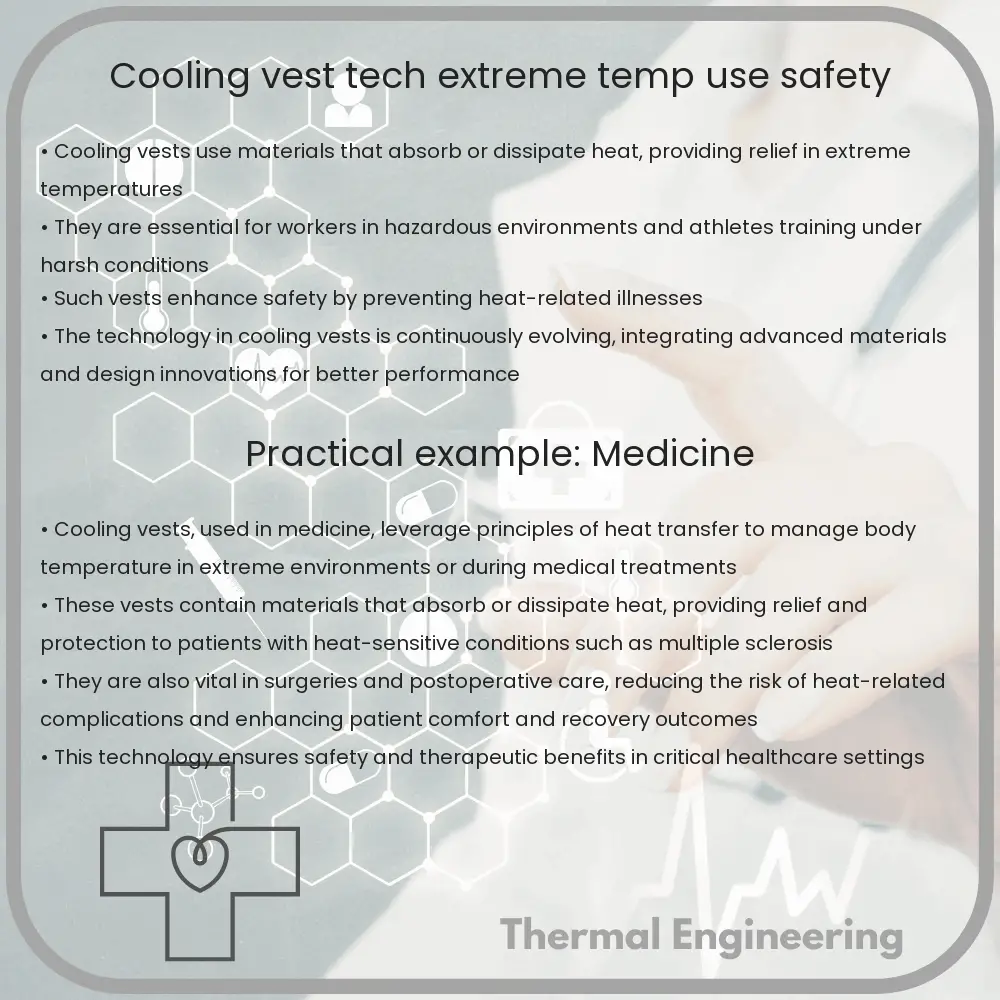
Cooling vests are innovative devices designed to help regulate body temperature in various environments, ranging from hot climates to controlled industrial settings. These vests are increasingly being used by athletes, outdoor workers, individuals with medical conditions, and others to combat heat stress and maintain optimal performance.

How Do Cooling Vests Work?

The technology behind cooling vests varies, but most operate on a few basic principles. The most common types include:

  • Phase Change Material (PCM) Vests: These vests contain substances that melt and solidify at certain temperatures, absorbing and releasing heat. PCM vests are activated by chilling them in a freezer or a refrigerator before use.
  • Evaporative Cooling Vests: These are soaked in water and utilize the principle of evaporative cooling as the water evaporates from the fabric of the vest, taking heat away from the body.
  • Circulating Cold Water Vests: Using a system of tubes and a pump, cold water circulates throughout the vest, drawing heat away from the body.

Each type of cooling vest has its own set of benefits and limitations, influencing their suitability for different situations and environments.

Applications in Extreme Temperatures

Cooling vests are particularly valuable in environments where extreme temperatures can lead to serious health risks such as heat exhaustion or heat stroke. Key applications include:

  1. Industrial and Construction Settings: Workers in these settings often face long hours in hot conditions. Cooling vests can help maintain a safe body temperature, reducing the risk of heat-related illnesses.
  2. Sports and Fitness: Athletes use cooling vests to improve comfort and performance in training and competitive environments, particularly in hot weather.
  3. Healthcare Applications: Patients with medical conditions that affect body heat regulation, such as Multiple Sclerosis, often wear cooling vests to help manage symptoms.
  4. Military Use: Military personnel deployed in hot climates use cooling vests to reduce heat stress during rigorous physical activity.

Safety Considerations

While cooling vests offer significant benefits, proper usage is essential to ensure safety:

  • Hydration: Cooling vests are an aid in heat management but do not replace the need for regular hydration. Users should continue to drink water regularly.
  • Monitoring Duration of Use: Depending on the technology, some cooling vests may need regular reactivation (re-wetting, re-freezing, or recharging) to continue providing effective cooling.
  • Skin Protection: Direct contact with cold sources, particularly in circulating cold water and PCM vests, could risk skin damage without proper barriers or adjustments in cooling intensity.

In conclusion, cooling vests are a vital tool in enhancing comfort and safety in extreme temperatures. By choosing the correct type of cooling vest and adhering to safety guidelines, users can effectively mitigate the risks associated with heat exposure. As technology advances, the effectiveness and applications of cooling vests are expected to expand, offering even greater support in combating heat-related challenges.

Hot Wire Anemometer | Technique, Airflow Analysis

Learn how the hot wire anemometer accurately measures airflow velocity and direction, essential for various engineering applications.

Hot Wire Anemometer | Technique, Airflow Analysis

Understanding the Hot Wire Anemometer and Its Application in Airflow Analysis

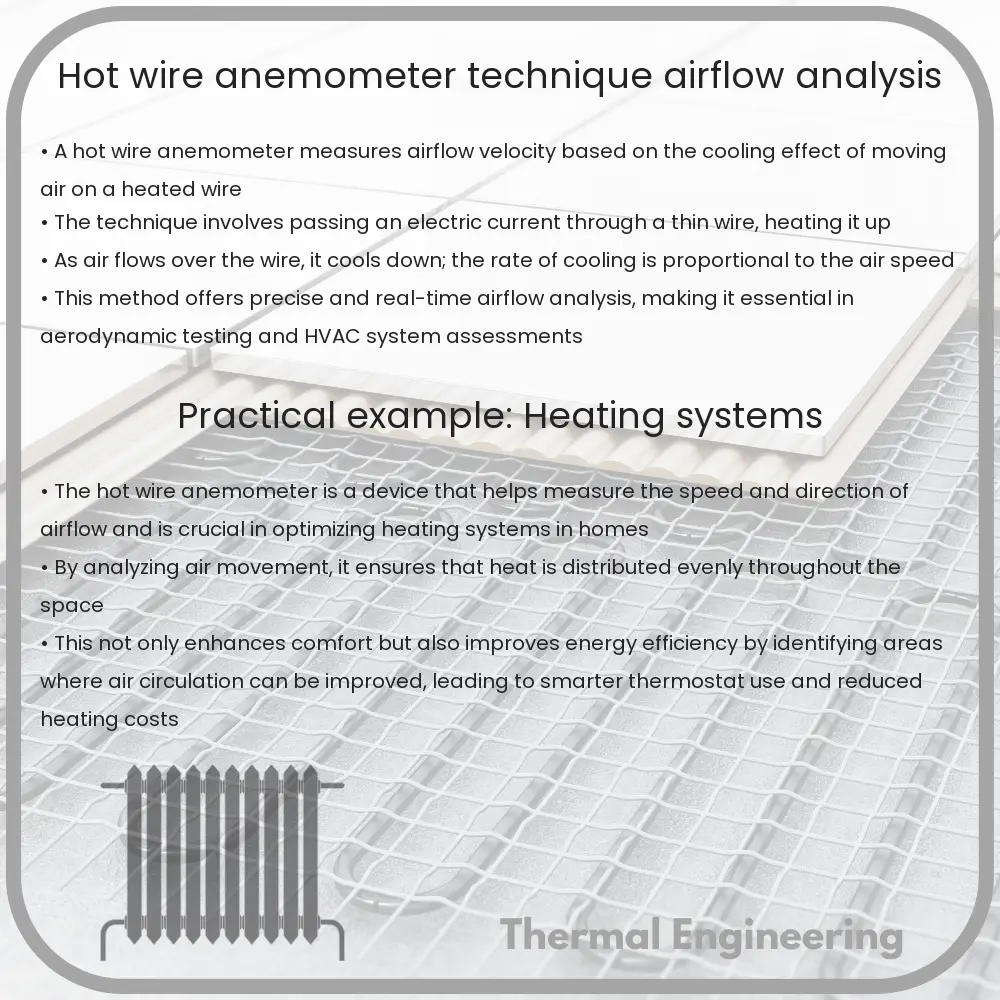
A hot wire anemometer is a precise and effective tool used in engineering to measure the velocity and direction of air flow. The device operates on the principle of heat transfer from a thin wire to the surrounding air. Understanding how the hot wire anemometer works and how it’s used in airflow analysis can greatly aid in fields like HVAC (heating, ventilating, and air conditioning) systems, aerodynamics studies, and environmental monitoring.

Working Principle of Hot Wire Anemometers

The core component of a hot wire anemometer is a thin wire, which is typically made of tungsten or platinum, and measures about 1 to 100 micrometers in diameter. This wire is electrically heated to a temperature that is higher than the ambient temperature. As air passes over the wire, it cools down, and this cooling effect is dependent on the speed of the air flow. The primary principle that governs this cooling process can be explained through King’s Law, which relates the heat loss from the wire to the air velocity:

V = A + B * sqrt(I2 – I02)

where:

  • V is the air speed
  • A and B are calibration constants
  • I is the current maintaining the wire temperature in moving air
  • I0 is the current needed to maintain the same temperature in still air

This equation shows that the velocity of the airflow can be determined by measuring the electrical current that maintains the wire’s temperature.

Techniques Used in Airflow Analysis

Hot wire anemometers can be deployed in various techniques depending on what aspect of airflow is being analyzed:

  • Constant Temperature Anemometry (CTA): Maintains the wire at a constant temperature. This technique uses a feedback system that adjusts the electrical current as necessary to compensate for cooling effects due to air velocity changes.
  • Constant Current Anemometry (CCA): Maintains constant current flowing through the wire. Here, any temperature change due to airflow is observed through changes in the electrical resistance of the wire.

Applications of Hot Wire Anemometry

Hot wire anemometers are versatile in their applications. Some of the common uses include:

  • Aerodynamic Testing: Used to measure air velocity in wind tunnels as well as around cars, aircraft, and other objects.
  • HVAC Systems: Helps in assessing the performance and efficiency of heating, ventilating, and air conditioning systems by measuring airflow rates and directions.
  • Environmental Monitoring: Used to study the patterns of air pollutants dissemination or to analyze wind patterns in meteorological studies.

This versatility makes hot wire anemometers a reliable choice for professionals in various fields of engineering, offering detailed information about air movement which is crucial in many contexts.

Benefits and Limitations

Hot wire anemometers offer numerous benefits including high accuracy, responsiveness, and the ability to measure very low air velocities. However, they are sensitive to dirt and contaminants which can adhere to the wire, potentially altering the accuracy of measurements. Regular calibration and maintenance are required to ensure precision in long-term use.

In conclusion, the hot wire anemometer is an invaluable tool in engineering for airflow analysis. By understanding the physics behind its operation and its application in real-world scenarios, engineers can continue to deploy this tool effectively across a range of disciplines.

Infrared Thermometer | Non-contact, Types, Industrial Use

Learn how infrared thermometers work, their types, and industrial applications for accurate, non-contact temperature measurements.

Infrared Thermometer | Non-contact, Types, Industrial Use

Understanding Infrared Thermometers

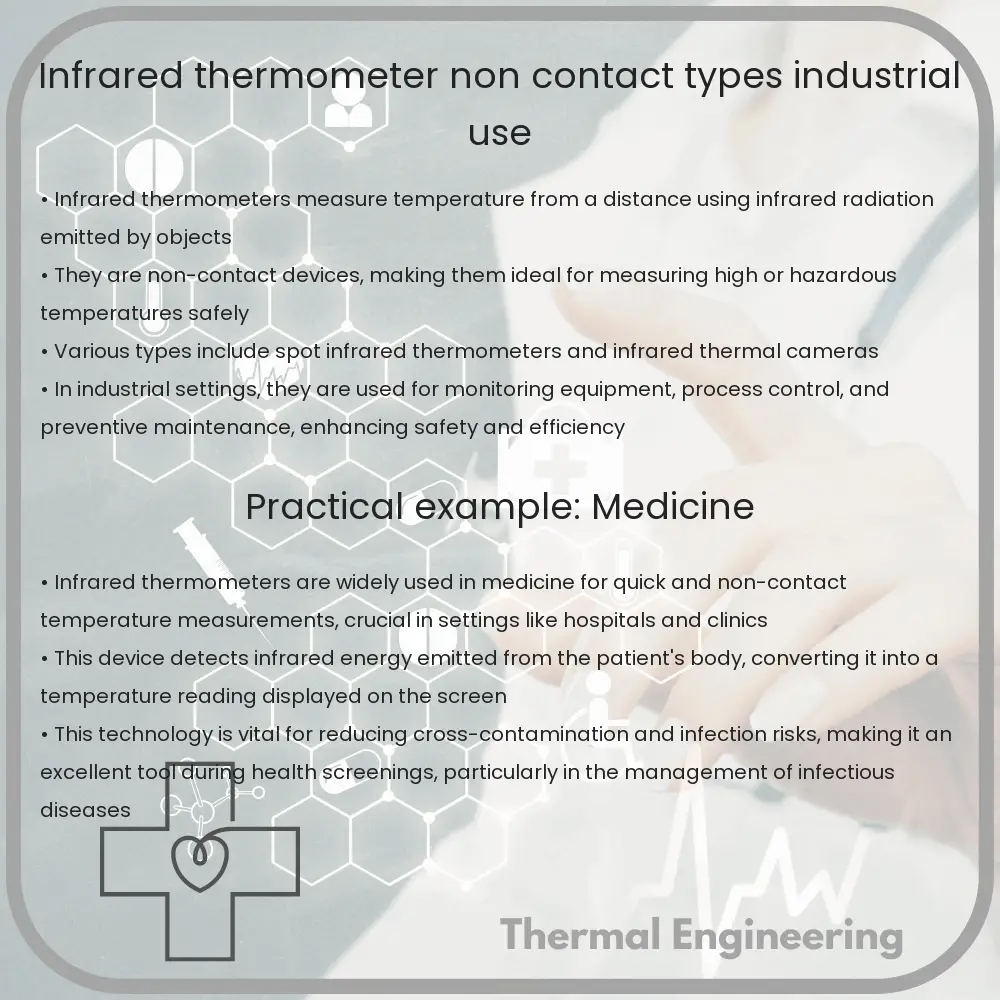
Infrared thermometers are a type of non-contact temperature sensing device that can measure the temperature of a surface from a distance by detecting its infrared radiation. These versatile tools are essential in various industries, offering rapid temperature readings without needing physical contact with the objects being measured.

How Infrared Thermometers Work

The fundamental principle behind infrared thermometers is the detection of infrared energy, which all objects emit based on their temperature. The device captures this energy and converts it to a temperature reading displayed on the thermometer’s screen. The primary components of an infrared thermometer include:

  • Lens: Focuses the infrared light emitted from the object onto a detector.
  • Detector: Converts the infrared energy into an electrical signal that can be displayed as a temperature.
  • Display: Shows the temperature reading in units of Fahrenheit (°F) or Celsius (°C).

Types of Infrared Thermometers

Infrared thermometers come in various types suitable for different applications. Some common types include:

  • Spot Infrared Thermometer: Measures the temperature at a single point on a surface.
  • Infrared Scanning Systems: Designed to scan larger areas to provide a more comprehensive thermal image.
  • Infrared Thermal Imaging Cameras: Create a full thermal image of an area, providing detailed information about the thermal distribution across it.

Industrial Use of Infrared Thermometers

The rapid, non-invasive, and precise nature of infrared thermometers makes them highly valuable in multiple industrial settings:

  • Manufacturing: Used to monitor the temperatures of machinery and engines, helping to prevent overheating without disrupting the machinery’s operation.
  • Electrical Engineering: Helps in detecting overheating joints and parts in electrical panels and equipment to prevent premature failure or fire hazards.
  • Food Industry: Ensures that foods are stored and cooked at proper temperatures, vital for food safety standards.
  • Building and Construction: Can detect areas of heat loss in buildings to improve energy efficiency.

Advantages of Infrared Thermometers in Industrial Settings

Infrared thermometers offer several benefits in industrial applications, including:

  • Speed: Almost instantaneous temperature readings allow for continuous process monitoring.
  • Safety: By allowing measurements from a distance, they ensure worker safety around potentially dangerous machinery or substances.
  • Hygiene: Their non-contact nature makes them ideal for use in situations where contamination is a concern, such as in the food and pharmaceutical industries.
  • Accessibility: Able to measure surface temperatures in hard-to-reach or hazardous areas without the need for physical access.

Choosing the Right Infrared Thermometer

When selecting an infrared thermometer for industrial use, consider the following factors:

  • Temperature Range: The device must be capable of measuring the temperatures typical of the application.
  • Field of View: Ensure the thermometer’s field of view can accommodate the size of the area or equipment being measured from the intended distance.
  • Emissivity: This refers to the effectiveness of a surface at emitting infrared energy and affects the accuracy of a thermometer. Adjustable emissivity settings can improve accuracy on different surfaces.
  • Response Time: Important in applications where temperature changes rapidly, such as in manufacturing processes.

Infrared thermometers are essential tools in modern industrial operations, ensuring that processes are safe, efficient, and compliant with relevant standards. Understanding their function, types, and appropriate selection criteria can help industries make the best use of this innovative technology.

Ground Source Heat Pump | Heating/Cooling, Environmental

Learn how Ground Source Heat Pumps (GSHPs), known for efficient heating and cooling, harness earth’s consistent temperatures for energy savings.

Ground Source Heat Pump | Heating/Cooling, Environmental

Understanding Ground Source Heat Pumps

Ground Source Heat Pumps (GSHPs), also known as geothermal heat pumps, offer an efficient way to heat and cool buildings by harnessing the relatively constant temperature of the earth. This technology represents a sustainable solution in the field of heating and cooling systems, utilizing the thermal energy found underground to provide heating, cooling, and even hot water at remarkably high efficiencies.

How Ground Source Heat Pumps Work

GSHP systems operate by circulating a fluid, typically a mixture of water and antifreeze, through a loop of pipes buried underground. These pipe loops can be installed horizontally a few feet beneath the surface, or vertically, sometimes several hundred feet deep. As the fluid travels through the loop, it absorbs heat from the warmer earth in the winter for heating and dissipates heat to the cooler earth in the summer for cooling.

  • Heating Mode: During colder months, the fluid absorbs earth’s natural heat and carries it back to the surface. The heat pump extracts this energy, elevates its temperature using a refrigeration process involving a compressor, and transfers it into the indoor air through a heat exchanger.
  • Cooling Mode: Conversely, in warmer months, the system reverses. The indoor heat is absorbed and transferred to the fluid in the loops, which then dumps the heat into the ground. This process not only cools the building but also removes humidity.

Components of a Ground Source Heat Pump

  1. Heat Pump Unit: The central piece that drives the heating and cooling process, containing the compressor, heat exchanger, and the controls.
  2. Ground Loop: A system of pipes buried in the ground, through which the heat exchange fluid circulates.
  3. Distribution System: Consisting of ductwork or radiant heating pipes, this component distributes conditioned air or radiant heat throughout the building.

Benefits of Ground Source Heat Pumps

GSHP systems offer several environmental and economic benefits:

  • Energy Efficiency: GSHPs are capable of achieving 300% to 600% efficiency on the coldest of nights; in contrast, air-source heat pumps can only provide 175% to 250% efficiency.
  • Cost Effectiveness: Although the initial installation cost of a GSHP system can be high, the remarkable energy efficiency leads to significantly lower operating costs, often resulting in savings over the life of the system.
  • Environmental Impact: GSHPs reduce greenhouse gas emissions and are more environmentally friendly compared to conventional fossil fuel-based heating systems.
  • Longevity and Reliability: These systems have relatively low maintenance costs and long lifespans, typically 25 years for the indoor unit and 50+ years for the ground loop.

Considerations Before Installation

While GSHPs offer immense benefits, several factors should be considered before installation:

  • Land Availability: Adequate land is required for the installation of the ground loop. The type of soil and its thermal properties also influence the effectiveness of the system.
  • Upfront Costs: Installation costs for GSHPs are higher than those for conventional systems. These costs can be offset by long-term savings and potential government incentives.
  • Building Requirements: The existing heating/cooling infrastructure of a building may need significant modification to accommodate a GSHP.

In conclusion, Ground Source Heat Pumps present an efficient and environmentally friendly solution for heating and cooling needs. While the initial setup requires careful consideration and investment, the benefits of lower operational costs and minimal environmental impact make GSHPs a compelling choice for sustainable building management.

Thermal Overpressure Protector | Safety, Pressure Systems

Learn about thermal overpressure protectors, crucial for safety in pressure systems by controlling high temperatures and pressures.

Thermal Overpressure Protector | Safety, Pressure Systems

Introduction to Thermal Overpressure Protectors in Pressure Systems

Thermal overpressure protectors are critical safety devices in many industrial and commercial pressure systems. These components are designed to prevent accidents and equipment damage by controlling and limiting the pressure within a system. Their role is particularly vital in scenarios where excessive pressure could lead to catastrophic failures.

How Thermal Overpressure Protectors Work

Thermal overpressure protectors operate based on temperature and pressure control principles. These devices typically involve a temperature-sensitive element that triggers a mechanical response when a certain temperature threshold is exceeded. This response could be the opening of a relief valve or the activation of a shutdown mechanism in the system. The basic operation can be summarized in three steps:

  1. Detection: The protector senses the temperature within the system.
  2. Activation: Upon reaching the critical temperature, the device activates. This temperature is preset based on the maximum safe operating conditions of the system.
  3. Response: The activated device either opens a valve to release excess pressure or shuts down the system to mitigate the risk of overpressure.

Components of Thermal Overpressure Protectors

The typical thermal overpressure protector consists of several key components:

  • Sensor: This is the part of the device that detects the temperature and, in some designs, the pressure. It is usually made from materials that exhibit significant changes in physical properties at certain temperatures.
  • Actuator: Once the sensor detects a critical condition, the actuator mechanically responds to change the state of the system (e.g., opening a valve or triggering an alarm).
  • Valve/Relief Mechanism: In many protectors, a valve forms part of the actuation process, opening to relieve pressure or close to isolate parts of the system.

Importance of Thermal Overpressure Protectors in Engineering Systems

Thermal overpressure protectors are essential for several reasons:

  • Safety: They prevent potential explosions or failures that could result from high pressure and temperature, safeguarding human lives and nearby equipment.
  • Equipment Protection: By controlling pressure, these devices extend the lifespan of an entire system and reduce maintenance costs by preventing stress and damage to components.
  • Regulatory Compliance: Many industries are governed by strict regulations regarding system safety, and having proper overpressure protection is often a legal requirement.

Applications of Thermal Overpressure Protectors

Thermal overpressure protectors find applications across a broad range of fields:

  • Boilers and Steam Systems: These devices are crucial in managing the pressures in steam production and heating systems.
  • Compressed Gas Systems: In systems where gases are stored under high pressure, these protectors ensure safety by preventing pressures from reaching explosive levels.
  • Hydraulic Systems: They help in managing the fluid pressure within hydraulic circuits used in various machinery and vehicles.

Conclusion

In conclusion, thermal overpressure protectors are indispensable components in any pressure system requiring strict temperature and pressure management. By integrating these safety devices, system designers can ensure operational safety and compliance with applicable standards, thereby protecting both equipment and personnel. Understanding and properly implementing these protectors is fundamental in the field of engineering, particularly for those working with high-pressure systems.

Solar Thermal Desalination | Process, Water Purification

Learn about solar thermal desalination, a sustainable method using solar energy to convert saltwater into freshwater.

Solar Thermal Desalination | Process, Water Purification

Understanding Solar Thermal Desalination

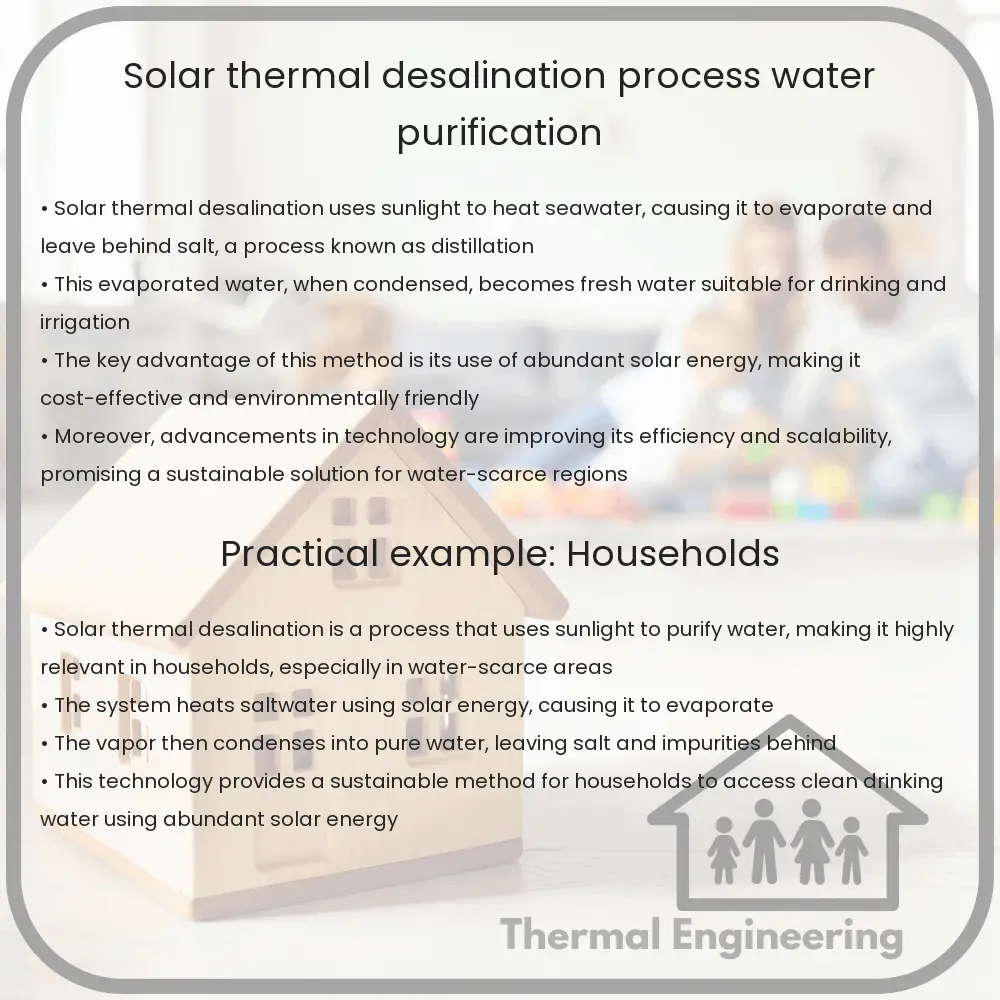
Solar thermal desalination is an innovative method that employs solar energy to convert saltwater into freshwater, making it a vital technology in areas facing freshwater scarcity. This process not only helps in obtaining potable water but does so in an environmentally friendly manner, utilizing the abundant energy of the sun.

The Process of Solar Thermal Desalination

Solar thermal desalination combines solar energy and thermal processes to remove salts and other impurities from seawater. The process typically involves several key steps:

  1. Collection of Solar Energy: Solar collectors, such as parabolic troughs or solar panels, are used to gather and concentrate solar energy. This energy is used to heat the saltwater.
  2. Heating of Saltwater: The collected solar energy heats the saltwater, typically in a solar still or through a more complex setup involving heat exchangers and evaporation chambers.
  3. Evaporation: Under the influence of heat, the temperature of the saltwater rises until it reaches its boiling point and starts to evaporate. This phase change separates the pure water from most of its salts and minerals.
  4. Condensation: The water vapor produced during evaporation is then cooled in a condenser. Upon cooling, it changes back into a liquid state but without the salts and minerals.
  5. Collection of Freshwater: The condensed freshwater is collected in a separate tank, while the remaining brine (highly concentrated saltwater) is often discarded or processed further to extract minerals.

Applications and Benefits

Solar thermal desalination is particularly useful in remote areas where traditional energy sources are scarce or expensive. Its applications include providing clean drinking water, agricultural irrigation, and supporting sustainable development in arid regions.

  • Environmental Impact: One of the biggest advantages of solar thermal desalination is its minimal environmental impact compared to fossil-fuel-based desalination methods. It produces no greenhouse gases and uses a renewable energy source.
  • Cost-Effectiveness: After the initial setup, the operational and maintenance costs are relatively low since the process primarily uses free solar energy.
  • Scalability: The technology can be scaled from small, portable systems for individual use to large, fixed installations that can serve entire communities.

Challenges in Solar Thermal Desalination

Despite its advantages, solar thermal desalination faces several challenges:

  • Dependence on Weather: Since the efficiency of solar thermal desalination depends on sunlight, its reliability may be compromised during cloudy or rainy days.
  • Energy Storage: Storing solar energy for nighttime use or during unfavorable weather conditions requires additional investment in batteries or other energy storage systems.
  • High Initial Costs: The upfront cost for setting up solar collectors and storage systems can be prohibitively high, particularly for large-scale implementations.
  • Management of Brine: Disposal of the leftover brine needs to be managed carefully to avoid environmental damage, such as soil salinization and harm to aquatic life.

Conclusion

Solar thermal desalination presents a promising solution to the global water crisis by providing an eco-friendly, renewable method of converting seawater into fresh water. While there are challenges, ongoing research and technological advancements continue to improve its efficiency and feasibility. This makes solar thermal desalination a key player in the future of sustainable resource management.

Waste Heat Boiler | Recovery, Energy Efficiency

Learn about waste heat boilers, devices that capture and reuse excess heat in industrial processes, enhancing energy efficiency and reducing costs.

Waste Heat Boiler | Recovery, Energy Efficiency

Introduction to Waste Heat Boilers

Waste heat boilers are an integral part of industries aiming to improve energy efficiency by utilizing the heat generated as a by-product in various processes or combustion systems. This innovative solution not only reduces the environmental impact but also enhances the overall energy productivity of the plant.

What is a Waste Heat Boiler?

A waste heat boiler captures excess heat from thermal processes that would otherwise be lost to the environment. This captured heat is used to produce steam or hot water, which can be utilized for industrial heating or power generation. Thus, these boilers play a crucial role in waste heat recovery systems.

Key Components of a Waste Heat Boiler

  • Exhaust Heat Source: The primary source of waste heat which can vary widely from gas turbines, diesel engines, to kilns and furnaces.
  • Heat Exchanger: A device that transfers heat from the exhaust to a fluid—usually water or steam—without mixing the two fluids together.
  • Boiler Shell: The housing for the water or steam, fabricated from high-grade steel to handle high pressure and temperatures.
  • Expansion Tank: Part of the system designed to accommodate the thermal expansion of the fluid.
  • Controls and Pumps: These ensure the proper operation of the system by regulating temperature, pressure, and flow rates.

Types of Waste Heat Boiler

  1. Fire Tube Boiler: This type allows the exhaust gases to pass through tubes that are surrounded by water, typically used when steam demand and pressure are low.
  2. Water Tube Boiler: In these boilers, water flows through tubes that are heated by surrounding hot exhaust gases. Suitable for high steam requirements and pressures.

Benefits of Using Waste Heat Boilers

  • Energy Efficiency: By reusing the heat, the efficiency of the overall system can be significantly increased, leading to lower energy consumption and costs.
  • Environmental Impact: Utilizing waste heat reduces the need for fossil fuels, cutting down on greenhouse gas emissions and other pollutants.
  • Economic Savings: Lower energy costs and increased system efficiency directly translate into savings, potentially justifying the initial investment over time.

Challenges in Implementing Waste Heat Boilers

Despite their benefits, there are several challenges associated with waste heat boilers:

  • High Initial Cost: The upfront cost for purchasing and installing waste heat boilers can be significant.
  • Maintenance: They require regular maintenance to ensure optimal functioning and to prevent failures due to heat stress, corrosion, or fouling of tubes.
  • Design Complexity: Each application requires a customized system design, which can complicate installation and integration with existing systems.

Case Studies: Real-World Applications

Many industries benefit from the application of waste heat boilers. For instance, cement plants and steel mills, which typically have high temperatures in their processes, use waste heat boilers to capture and reuse large amounts of heat that would otherwise be wasted. In cogeneration plants, these boilers are essential in providing both electrical and thermal energy, enhancing the overall energy utilization.

Conclusion

Waste heat boilers represent a critical component in modern industrial applications where energy conservation and efficiency are paramount. Through the recovery of waste heat, these boilers help to minimize cost and environmental impact. However, careful consideration of design, operation, and maintenance is essential to reap the full benefits of these systems.