Facebook Instagram Youtube Twitter

Thermal Energy Storage | Grid Materials & Mechanisms

Thermal Energy Storage (TES) is a technology that stores excess heat for use when demand arises, enhancing energy system efficiency.

Thermal Energy Storage | Grid Materials & Mechanisms

Introduction to Thermal Energy Storage

Thermal Energy Storage (TES) is a technology that allows excess thermal energy to be stored and used at a later time. It plays a crucial role in energy management, particularly in balancing supply and demand over time, enhancing energy efficiency, and increasing the reliability of energy systems. TES is particularly beneficial in applications such as heating, ventilation, and air conditioning (HVAC) systems, power plants, and renewable energy systems where there is a mismatch between the supply and demand of energy.

Types of Thermal Energy Storage

There are three main types of thermal energy storage systems, which are classified based on how the energy is stored:

  • Sensible Heat Storage: This type involves storing energy by heating or cooling a storage medium such as water, sand, or molten salts. The energy is later recovered when the demand arises.
  • Latent Heat Storage: In these systems, energy is stored and released through the phase change of materials, such as melting and solidifying a phase change material (PCM).
  • Thermochemical Storage: This type involves using chemical reactions to store and release energy. Energy is absorbed or released when the reactions occur.

Materials Used in Thermal Energy Storage

The choice of material for thermal energy storage is critical based on its ability to absorb, store, and release thermal energy. Suitable materials can significantly enhance the efficiency and cost-effectiveness of a TES system. Common materials used include:

  • Water: Most commonly used in sensible heat storage systems because of its high specific heat capacity.
  • Molten Salts: Used in both sensible and latent heat applications, molten salts can operate at high temperatures which is beneficial for power generation.
  • Phase Change Materials (PCMs): These materials absorb and release heat during phase changes, typically from solid to liquid and vice versa. Common PCMs include paraffin wax and certain salt hydrates.

Mechanisms of Action

In a thermal energy storage system, the basic mechanism involves either absorbing heat (charging) or releasing heat (discharging). For instance:

  • Sensible Heat Storage Systems: These systems store thermal energy by heating up a liquid or solid storage medium. The energy is then extracted by cooling down the same medium. The main equation governing the amount of energy stored is Q = m * cp * ΔT, where Q is the thermal energy, m is the mass, cp is the specific heat capacity of the material, and ΔT is the temperature change.
  • Latent Heat Storage Systems: In these systems, thermal energy is stored and released through a phase change process in the PCM. The main equation here is Q = m * L, where L is the latent heat of the phase change.
  • Thermochemical Storage Systems: These systems involve endothermic (absorb heat) and exothermic (release heat) reactions, with the storing and releasing of energy driven by reversible chemical reactions.

Applications of Thermal Energy Storage

TES finds applications in various industries, particularly where thermal loads and energy demand fluctuate throughout the day. Key applications include:

  • Enhancing Energy Efficiency: TES systems can be integrated with renewable energy sources like solar and wind, which tend to be intermittent, to provide a continuous energy supply.
  • Peak Shaving: TES can help in managing energy demand peaks, thereby reducing the need for costly and oftentimes less efficient peaking power plants.
  • District Heating and Cooling: Large scale TES systems can provide district heating or cooling, which is especially effective in urban areas with large buildings and industrial processes.

Conclusion

Thermal Energy Storage enhances the efficiency and sustainability of energy systems by bridging the gap between supply and demand. As energy grids increasingly incorporate variable renewable energy sources, the importance of efficient and scalable TES systems will continue to grow. Through innovations in materials science and engineering mechanisms, the capabilities and applications of TES are expanding, promising a more energy-efficient future.
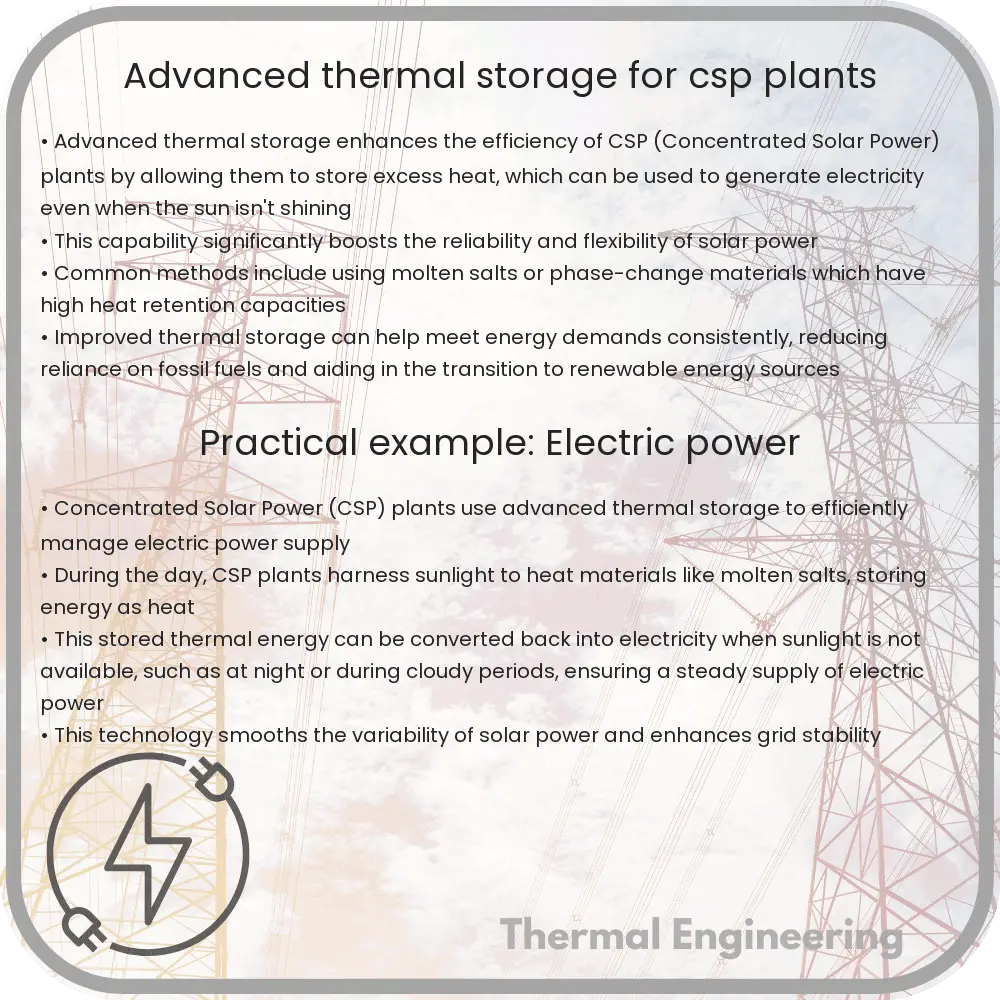
Advanced thermal storage for CSP plants

Explore advanced thermal storage technologies enhancing the efficiency and reliability of Concentrated Solar Power (CSP) plants.

Advanced thermal storage for CSP plants

Understanding Advanced Thermal Storage for CSP Plants

Concentrated Solar Power (CSP) plants utilize the sun’s energy more efficiently than traditional solar systems by concentrating sunlight to a high temperature to generate thermal energy. One key component that enhances the efficiency and viability of CSP systems is advanced thermal storage technology. This technology allows CSP plants to provide power even when the sun isn’t shining, thereby overcoming one of the main limitations of solar energy.

Basics of Thermal Storage Systems

Thermal energy storage in CSP plants involves capturing and storing the heat energy produced during peak sunlight hours so it can be used to generate electricity at a later time. This is typically accomplished using materials that store thermal energy either in the form of sensible heat, latent heat, or through thermochemical means.

  • Sensible Heat Storage: This method utilizes materials like molten salts, synthetic oil, or sand, which absorb heat as their temperature increases. The most common medium used is molten salts due to their high specific heat capacity and thermal conductivity.
  • Latent Heat Storage: Latent heat storage involves materials that absorb or release heat as they change phases. Common phase change materials (PCMs) include salts, paraffin, and metals, which melt and solidify at high temperatures.
  • Thermochemical Storage: Thermochemical energy storage systems use reversible chemical reactions to store and release heat. These systems can achieve higher energy storage densities and negligible thermal losses over time.

Components and Functioning of Thermal Storage in CSP

The primary components of a thermal storage system in a CSP plant include a heat collection system, a storage medium, and a heat exchanger. The process typically follows several key steps:

  1. Solar Energy Collection: Mirrors or lenses concentrate solar energy to heat a transfer fluid, typically oil or molten salt, to high temperatures.
  2. Heat Transfer: The heated fluid transfers its thermal energy to a storage medium through a heat exchanger.
  3. Energy Storage: Energy is stored in the thermal storage medium as sensible, latent, or thermochemical heat until needed.
  4. Electricity Generation: During off-sunshine hours or cloudy periods, the stored heat is used to produce steam, which drives turbines connected to electricity generators.

Benefits and Challenges

Advanced thermal storage technologies drastically improve the efficiency of CSP plants by decoupling the timing of electricity generation from sunlight availability. This not only ensures a stable and predictable power supply but also helps in balancing the grid during demand peaks. However, challenges remain such as high initial costs, the need for large-scale infrastructure, and the complexity of integrating with existing power systems.

The Future of CSP with Advanced Thermal Storage

Recent advancements in material science and thermal engineering are paving the way for more efficient and cost-effective thermal storage solutions. Innovations such as enhanced heat transfer fluids, scalable latent heat storage systems, and new thermochemical storage processes could significantly boost the efficiency and decrease the cost per kilowatt-hour of CSP-generated power. These advances make CSP a more viable and competitive option in the renewable energy landscape, potentially leading to broader adoption globally.

As research continues and technology progresses, the possibilities for advanced thermal storage in CSP plants only grow, promising a future where solar energy is not just sustainable, but also fundamentally reliable and robust, addressing one of the major hurdles facing renewable energy today.

Thermal performance of phase change textiles

Learn about the thermal performance of phase change textiles, materials designed to regulate body temperature in various climates.

Thermal performance of phase change textiles

Understanding Thermal Performance of Phase Change Textiles

Phase change materials (PCMs) have captivated the interest of researchers and industries alike due to their remarkable ability to store and release heat while maintaining a relatively constant temperature. When integrated into textiles, these materials open new vistas for creating garments that can significantly enhance human comfort by regulating body temperature in varying climatic conditions. This article delves into the thermal performance of phase change textiles, exploring their mechanisms, benefits, and applications.

How Phase Change Textiles Work

Phase change textiles utilize PCMs that absorb, store, and release heat during transitions between solid and liquid states. Commonly used PCMs include paraffin waxes and fatty acids, which are microencapsulated to prevent leakage and enhance the durability of the textiles. The primary mechanism at work here is the latent heat transfer during the phase transition of these materials.

When the surrounding temperature increases, the PCM absorbs heat and transitions from a solid to a liquid, effectively absorbing excess heat and providing a cooling effect. Conversely, when the temperature drops, the PCM solidifies and releases the stored heat, thereby warming up the wearer. This process helps in maintaining a stable microclimate close to the body, enhancing thermal comfort.

Key Factors Influencing Thermal Performance

  • Phase Change Temperature: The selection of PCMs with transition temperatures close to the human skin temperature (around 28°C to 32°C) is critical for effective performance.
  • Heat Capacity: The heat capacity of a PCM determines the amount of heat it can store during the phase change. A higher heat capacity results in better thermal regulation.
  • Thermal Conductivity: Good thermal conductivity is essential for the quick transfer of heat between the body and the PCM, enhancing the response time and effectiveness of the textile.
  • Encapsulation Method: The durability and integration of PCMs into textiles depend significantly on the encapsulation technique. Microencapsulation is preferred for its ability to integrate seamlessly into fabrics without altering their properties significantly.

Benefits and Applications of Phase Change Textiles

Phase change textiles offer several advantages, primarily in enhancing comfort and reducing energy consumption in heating or cooling systems. These textiles are increasingly used in:

  1. Protective clothing for extreme environments, such as space suits and firefighting gear, where they help regulate body temperature under extreme thermal conditions.
  2. Sportswear and activewear, where they improve comfort and performance by maintaining optimal body temperature during physical activities.
  3. Bedding and upholstery applications, helping in creating a comfortable sleeping environment regardless of external temperature fluctuations.
  4. Medical textiles, particularly in products designed to manage the body temperature of patients in clinical settings or during recovery.

The development and usage of phase change textiles are a testament to the innovative application of materials science in everyday life and specialized environments. By leveraging the unique properties of PCMs, these textiles are set to redefine the approach towards thermal comfort and energy efficiency in clothing and other fabric-based applications.

Conclusion

The exploration of phase change textiles represents a significant step forward in textile engineering, blending the principles of thermodynamics and material science to produce fabrics that not only enhance comfort but also contribute to sustainable living practices. As research progresses, we can expect even more advanced applications and efficiencies in the thermal performance of these innovative textiles.

Solar Thermal Collector | Residential Design & Efficiency

Learn about solar thermal collectors, their types, and efficiency-enhancing design tips for residential heating systems.

Solar Thermal Collector | Residential Design & Efficiency

Understanding Solar Thermal Collectors in Residential Design

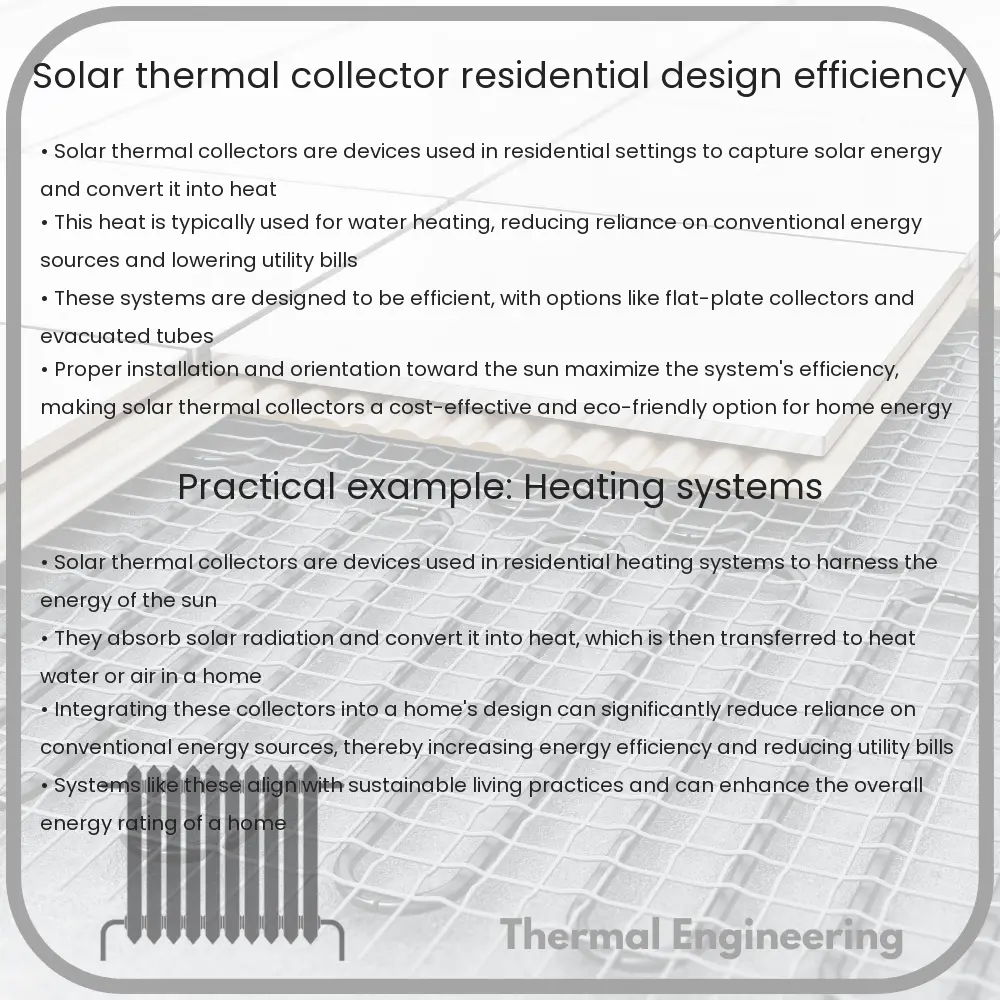
Solar thermal collectors are a highly efficient technology used to convert solar energy into thermal energy (heat), which can be utilized in residential settings for water heating, space heating, and even space cooling via solar thermal-driven cooling systems. Choosing the right type of solar thermal collector and designing a system effectively are crucial for maximizing efficiency and energy savings. This article explores the basics of solar thermal collectors, their types, and tips for enhancing efficiency in residential applications.

Types of Solar Thermal Collectors

There are primarily three types of solar thermal collectors commonly used in residential settings:

  • Flat Plate Collectors: Comprise a flat plate absorber, transparent cover(s), insulation, and a heat-transport fluid. They are simple in design and efficient for domestic water and space heating.
  • Evacuated Tube Collectors: Consist of rows of parallel transparent tubes, each containing an absorber tube. This type is more efficient than flat plate collectors, particularly in colder climates, due to its effective insulation.
  • Integrated Collector Storage Systems (ICS or batch systems): Combine collector and storage in a single unit. Water in the collector is heated by sunlight, and this heated water is thermostatically drawn into the home. They are particularly suitable for areas that do not experience frequent freezing temperatures.

Design Considerations for Optimal Efficiency

When installing a solar thermal collector for residential use, several factors should be considered to ensure optimal performance:

  • Orientation and Tilt: Solar collectors should be oriented geographically to face true south in the northern hemisphere (or true north in the southern hemisphere). The tilt angle should be equal to the latitude of the location to maximize solar absorption.
  • Shading: Avoid shading of the collectors by nearby trees, buildings, or architectural features to maximize the amount of solar radiation received.
  • Thermal Insulation: Adequate insulation of all components, including pipes and storage tanks, is crucial to minimize heat loss, especially in cooler climates.
  • System Sizing: Proper sizing of the solar thermal collection system according to the household’s hot water and space heating demand is essential to maximize efficiency and meet energy needs without wastage.

Improving Efficiency with Advanced Technologies

Modern advancements in technology and materials can significantly improve the efficiency of solar thermal collectors:

  • Glazing: Using double glazing on flat plate collectors can reduce heat loss while maintaining high levels of sunlight absorption.
  • Selective Coatings: Absorber plates with selective coatings can enhance heat absorption and minimize radiation heat losses. These coatings are designed to have high absorbance in solar wavelengths and low emittance in the thermal infrared spectrum.
  • Automated Controls: Incorporating automated systems for control of pumps and valves can optimize the operation of the solar thermal system, adjusting flow rate and operation time according to solar availability and heat demand.

Conclusion

Solar thermal collectors offer a sustainable solution to meet residential heating needs, reducing reliance on non-renewable energy sources and cutting down on utility bills. By understanding the different types of collectors and incorporating proper design practices and advanced technologies, homeowners can significantly enhance the efficiency of their solar thermal systems, making them a more attractive and practical option for eco-friendly and efficient home heating.

Thermal management in virtual reality systems

Explore the essential role of thermal management in enhancing the performance and comfort of Virtual Reality systems.

Thermal management in virtual reality systems

Understanding Thermal Management in Virtual Reality Systems

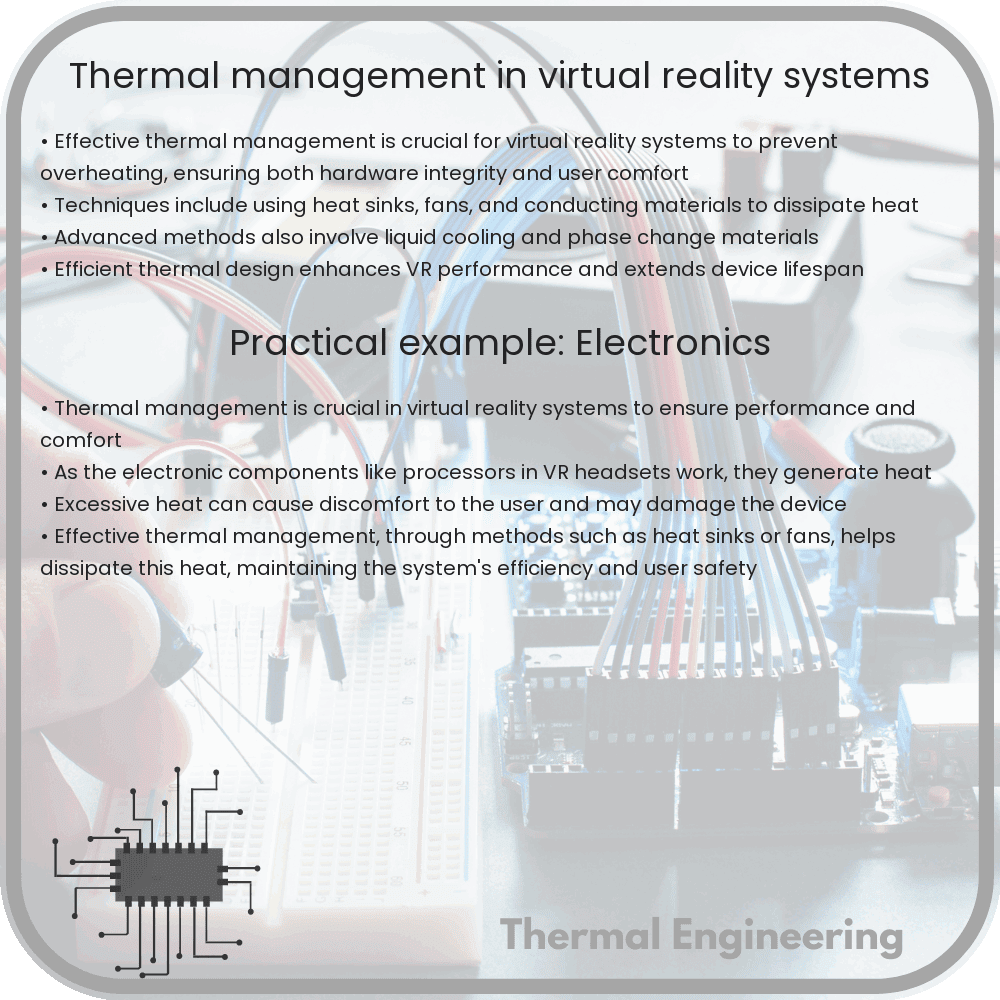
Virtual Reality (VR) technology has progressed significantly, immersing users in realistic digital environments. However, as the complexity and computational requirements of VR systems increase, so does the generation of heat, which can affect performance and user comfort. Effective thermal management in VR devices is crucial for maintaining functionality and enhancing the user experience.

Why is Thermal Management Important in VR?

Excess heat in VR devices can lead to several issues:

  • Performance degradation: Overheating can cause the processor to throttle down its speed to avoid damage, leading to reduced performance and frame rates.
  • User discomfort: High temperatures can make the headset uncomfortable for users, potentially causing skin irritation or more severe heat-induced discomfort.
  • Device lifespan: Consistent overheating can shorten the lifespan of electronic components within the VR headset.

Thus, managing thermal output is essential not only for the usability of VR systems but also for their longevity and safety.

Strategies for Managing Heat in VR Systems

Engineers use multiple strategies to manage heat effectively in VR devices:

  1. Heat Sinks: These are typically made of materials with high thermal conductivity, such as copper or aluminum, and are designed to dissipate heat away from the processor and other critical components.
  2. Cooling Vents: Incorporating vents into the VR headset design allows for natural air flow, which helps in cooling down the internal components. The placement and size of these vents are critical for optimal airflow.
  3. Fans: Small fans may be included within the headset to enhance air circulation. Although effective, they can add to the noise and weight of the device.
  4. Materials: The choice of materials for the headset’s casing can also influence thermal management. Materials with lower thermal resistance can help dissipate heat more efficiently.
  5. Software Solutions: Software can be optimized to reduce workload on the processor by adjusting the resolution or frame rate based on the content being rendered or the headset’s temperature.

Future of Thermal Management in VR

As VR technology continues to evolve, so will the methods for managing heat. Future innovations might include more advanced phase change materials (PCMs) that absorb heat when it reaches a certain temperature, or even liquid cooling systems adapted for compact devices. Furthermore, continued advancements in semiconductor technology can lead to more efficient processors that generate less heat.

Effective thermal management remains a key area of focus for engineers and designers of VR systems, ensuring that as these systems become more immersive and complex, they remain comfortable and safe for users. Through a combination of materials science, mechanical engineering, and software optimization, the future of VR promises to overcome current limitations posed by thermal challenges.

Heat transfer in CO2 capture processes

Explore the critical role of heat transfer in enhancing CO2 capture efficiencies and reducing emissions in various industrial processes.

Heat transfer in CO2 capture processes

Understanding Heat Transfer in CO2 Capture Processes

Carbon dioxide (CO2) capture and storage (CCS) is a crucial technology to combat climate change by reducing the amount of CO2 released into the atmosphere from industrial processes and fossil fuel combustion. An integral aspect of CO2 capture technology is the management of heat transfer, which significantly influences the efficiency and economic viability of these systems.

Key Methods of CO2 Capture and the Role of Heat Transfer

There are three primary methods of CO2 capture:

  • Pre-combustion capture
  • Post-combustion capture
  • Oxy-fuel combustion

Each method involves distinct processes where heat transfer plays a critical role:

  1. Pre-combustion Capture: In this method, fuel is processed to produce a hydrogen-rich gas and CO2. The CO2 is then separated before combustion occurs. Heat transfer is crucial in the gasification process where high temperatures are required to convert solid fuel into gas, and in the subsequent cooling and condensation stages needed for efficient separation and capture of CO2.
  2. Post-combustion Capture: This technique involves capturing CO2 from flue gases after combustion. It primarily uses amine-based solvents to absorb CO2. Heat is critical in the desorption phase where it is used to regenerate the solvent by stripping it from absorbed CO2, which is later condensed and collected.
  3. Oxy-fuel Combustion: Oxy-fuel combustion burns fuel in pure oxygen, resulting in a flue gas composed mainly of CO2 and water vapor. Heat transfer is vital in cooling and condensing the water vapor to isolate pure CO2 for storage or usage.

Challenges in Heat Management

The efficiency of heat transfer processes directly affects the energy requirements and operational costs of CO2 capture systems. Managing these heat flows poses several challenges:

  • Energy Intensity: Significant amounts of heat are required, particularly in the regeneration of solvents in post-combustion methods. This heat typically comes from the power plant itself, reducing the overall efficiency of the plant.
  • Heat Integration: Efficiently integrating heat transfer within the capture system and the broader power plant can mitigate some energy losses. Techniques such as heat recovery and the use of advanced materials for better heat exchangers are critical.
  • Operational Stability: Fluctuations in temperature affect not just the capture efficiency but also the chemical integrity of solvents and other materials. Maintaining a stable thermal environment is crucial for the longevity and reliability of the capture systems.

Technological Innovations and Future Directions

Research into advanced materials like high-performance heat exchangers, and development of new solvents that require less energy for regeneration, are pivotal. Innovations such as using waste heat from other industrial processes or integrating renewable energy sources can further enhance the sustainability and efficiency of CO2 capture systems.

In conclusion, understanding and optimizing heat transfer in CO2 capture processes are fundamental to advancing CCS technologies. Efficient heat management not only reduces the energy consumption of these systems but also enhances their economic feasibility and environmental benefits.

Thermal barrier coatings

An in-depth exploration of thermal barrier coatings (TBCs), covering their composition, functions, application methods, and future developments in engineering.

Thermal barrier coatings

Understanding Thermal Barrier Coatings in Engineering

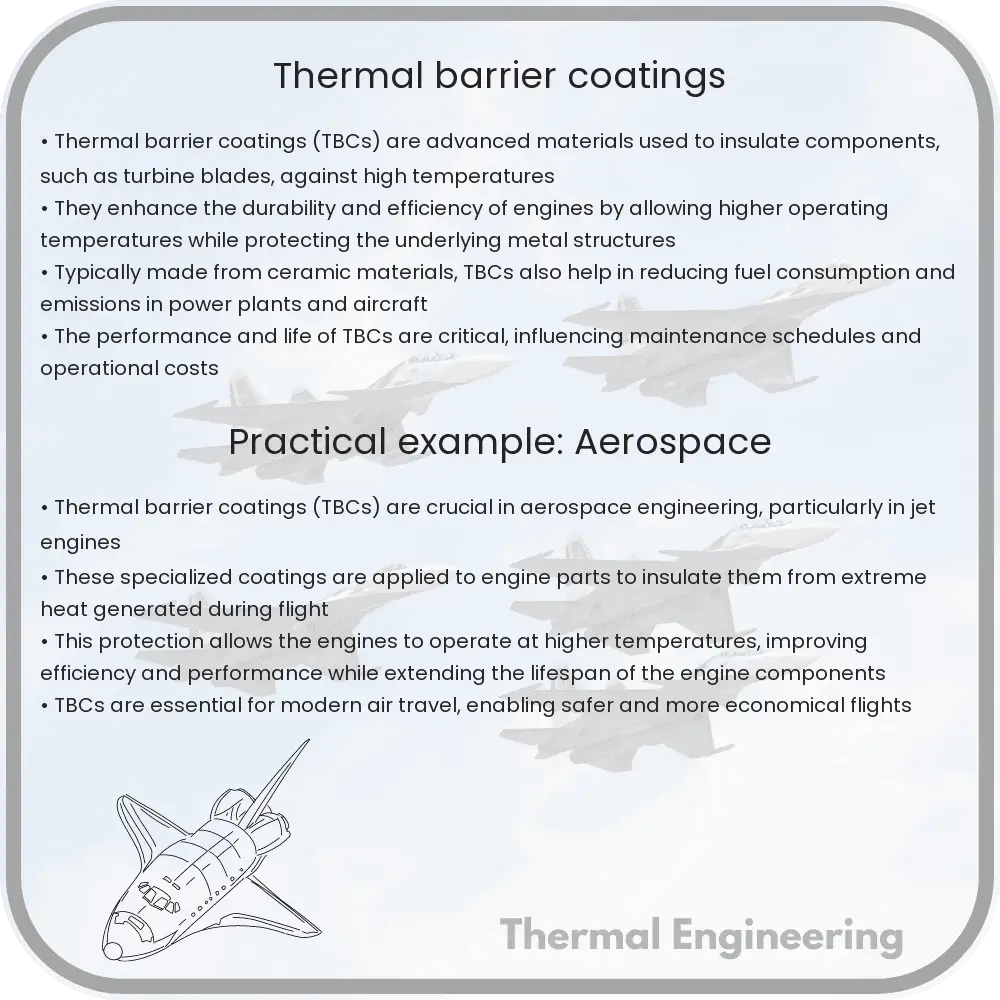
Thermal barrier coatings (TBCs) represent a crucial technology within the field of materials engineering, particularly known for their role in enhancing the durability and efficiency of gas turbines. These coatings are used to protect metallic parts from extreme temperatures, thereby extending their life and optimizing their performance in high-temperature environments.

The Composition and Function of Thermal Barrier Coatings

TBCs typically consist of a ceramic material that is deposited on a substrate, usually made of a superalloy. The most commonly used ceramic material is yttria-stabilized zirconia (YSZ), which is favored due to its low thermal conductivity, high stability at elevated temperatures, and good compatibility with underlying metallic substrates.

The main function of thermal barrier coatings is to insulate components, such as turbine blades and combustion chambers, from the hot gases produced during operation. By doing so, TBCs allow gas turbines to operate at higher temperatures, significantly improving their efficiency according to the Brayton cycle, which describes the relationship between temperature and efficiency in heat engines.

Application Methods

  • Electron Beam Physical Vapor Deposition (EB-PVD): This technique is commonly used for depositing high-performance thermal barrier coatings. It involves vaporizing the ceramic material using an electron beam in a vacuum. The vapor then condenses on the substrate, forming a coherent layer.
  • Air Plasma Spraying (APS): In APS, ceramic particles are heated to a molten state and then sprayed onto the substrate using a plasma torch. This method is faster and more cost-effective than EB-PVD, though it might result in coatings with higher porosity and lower thermal conductivity.

Thermal Expansion and Durability Challenges

One of the critical challenges in designing TBCs is the mismatch in thermal expansion coefficients between the ceramic coating and the metallic substrate. This differential can lead to thermal stresses that may cause the coating to spall or delaminate. Engineers must carefully choose materials and optimize coating thicknesses to mitigate these issues.

Durability of TBCs is also influenced by their resistance to oxidation and corrosion, particularly under cyclic temperature conditions, which mimic the start-up and shut-down phases of turbines. Continuous research and development are directed towards enhancing the toughness and adherence of these coatings to withstand such harsh operating conditions.

Future Outlook and Innovations

The future of thermal barrier coatings is focusing on finding alternative materials to YSZ due to its susceptibility to sintering at very high temperatures (above 1200°C). Research is ongoing into developing new ceramics with even lower thermal conductivities and higher phase stability. Materials such as gadolinium zirconates and multi-layered composite coatings are being studied, which could redefine the performance limits of high-temperature turbines.

Moreover, advancements in application techniques like Laser Engineered Net Shaping (LENS) and Chemical Vapor Deposition (CVD) are expected to further enhance the uniformity and adherence of TBCs, contributing to the overall efficiency and lifespan of turbine components.

In conclusion, thermal barrier coatings continue to play a pivotal role in the engineering of high-performance turbine engines, pushing the boundaries of temperature and efficiency to meet modern technological demands. The ongoing evolution of TBC materials and application techniques promises even greater improvements in the realms of energy production and aerospace propulsion.

Heat transfer in ice storage systems

Learn how heat transfer in ice storage systems optimizes energy use and enhances cooling efficiency in various buildings.

Heat transfer in ice storage systems

Understanding Heat Transfer in Ice Storage Systems

Ice storage systems are an innovative approach to managing energy usage, particularly for cooling purposes in commercial and industrial buildings. They work by making ice during off-peak hours, when electricity rates are lower, and then using the ice to cool the environment during peak hours, thereby reducing costs and evening out the load on the power grid. Understanding how heat transfer plays a role in these systems is key to optimizing their efficiency and effectiveness.

Basics of Heat Transfer in Ice Storage Systems

Heat transfer in ice storage systems primarily involves two processes: the removal of heat during the ice-making phase and the release of cooled air during the melting phase. These processes depend on the principles of thermodynamics, particularly the concepts of conduction, convection, and latent heat transfer.

  • Conduction: This is the heat transfer that occurs through materials without the movement of the material itself. In ice storage systems, conduction occurs through the materials of the storage tank.
  • Convection: Convection is the transfer of heat by the physical movement of a fluid (which can be liquid or gas). In these systems, when the ice melts, the cold water (melted ice) circulates and absorbs heat from the surrounding area.
  • Latent Heat Transfer: This involves heat energy absorbed or released during a phase change material (PCM) without changing temperature. For ice, this occurs when water changes phase from solid to liquid or vice versa.

Thermodynamic Principles of Ice Formation and Melting

Detailed thermodynamic calculations are necessary to design and operate ice storage systems efficiently. The key is managing the phase change of water, as the latent heat of fusion—the energy required to change water from ice to liquid at 0°C—is significant (about 334 kJ/kg). The energy equation for the process, when simplifying and assuming constant properties, is:

E = m * Lf

Where:

  • E denotes the energy required in joules,
  • m is the mass in kilograms,
  • Lf is the latent heat of fusion of ice in KJ/kg.

During the recharging phase (ice formation), the system needs to efficiently remove this amount of energy from the water to freeze it, and inversely during discharging (melting), the system uses this stored energy to absorb heat, thus cooling the surroundings.

Design Considerations for Optimizing Heat Transfer

Several design factors must be considered for efficient heat transfer in ice storage systems:

  • Storage Material: The choice of containment material impacts the speed and efficiency of heat transfer. Materials with high thermal conductivity are preferred.
  • System Layout: The physical arrangement of the ice, water, and air flow channels influences how effectively heat can be transferred throughout the system. Ensuring good physical contact between the ice and the water tank can improve the efficiency.
  • Insulation: Proper insulation is crucial to minimize unwanted heat gains or losses during both the freezing and melting phases. This helps in maintaining the desired thermal conditions for longer periods.

Real-world Applications and Energy Efficiency

Ice storage systems are particularly useful in areas with significant day-night temperature variances or where electricity pricing varies significantly with time of day. They are also ideal in scenarios requiring large-scale cooling such as in data centers, large commercial buildings, or in industrial processes. By shifting energy use to off-peak hours, these systems not only reduce operational costs but also help in reducing the environmental impact of peak power production.

In conclusion, heat transfer in ice storage systems represents a fascinating application of thermodynamic principles, offering both economic and environmental benefits. Properly understanding and optimizing this heat transfer is crucial for enhancing the performance and efficiency of these systems.

Conclusion

Exploring the principles and design optimizations of heat transfer in ice storage systems demonstrates how engineering and thermodynamics can intersect to produce significant real-world benefits. This technology, maximizing phases of matter and energy transfer insights, underscores the potential of intelligent engineering to solve pressing issues in energy efficiency and management.

Thermal control in underwater vehicles

Understanding the critical role and technologies of thermal control systems in underwater vehicles, ensuring operational safety and efficiency in extreme environments.

Thermal control in underwater vehicles

Thermal Control in Underwater Vehicles

Thermal control is a crucial aspect of underwater vehicle design and operation, ensuring the proper functioning of onboard systems in the challenging underwater environment. The thermal management systems are designed to handle the internal heat loads generated by electronic equipment and the external heat transfer conditions imposed by the surrounding water.

Challenges of Thermal Management in Underwater Environments

Underwater vehicles face unique thermal management challenges compared to their terrestrial counterparts. These include:

  • High thermal conductivity and specific heat of water: Water can efficiently remove heat due to its properties, which can lead to rapid cooling of components if not properly managed.
  • Limited space for thermal management systems: The compact nature of underwater vehicles restricts the size of cooling systems, such as heat exchangers and cooling loops.
  • Variable external temperature and pressure conditions: As the vehicle dives deeper, the ambient water temperature and pressure change, affecting thermal transfer rates.

Thermal Management Techniques

To address these challenges, several thermal management techniques are employed:

  1. Active Cooling Systems: These systems use mechanisms like pumps and heat exchangers to actively regulate the temperature within the vehicle.
  2. Passive Cooling Techniques: This involves designing the vehicle’s structure to naturally dissipate heat through conduction, convection, and radiation without moving parts.
  3. Phase Change Materials (PCMs): PCMs can absorb or release heat at a constant temperature, helping to buffer temperature fluctuations inside the vehicle.

Thermal Modeling and Simulation

Advanced thermal modeling and simulation play a pivotal role in the design and optimization of thermal control systems in underwater vehicles. These models help predict thermal behavior under various operational conditions and are crucial for:

  • Ensuring that components operate within their temperature limits.
  • Preventing condensation and ensuring the structural integrity of the vehicle’s hull.
  • Optimizing the placement and sizing of thermal management components.

Recent Advances and Technologies

Recent technological advances have led to more sophisticated thermal control solutions for underwater vehicles. These include:

  • Miniaturized Cooling Systems: Advances in microfluidics and compact heat exchangers have enabled the development of smaller, more efficient cooling systems.
  • Smart Thermal Management: Integration of sensors and control systems that can adaptively adjust cooling based on real-time temperature data and operational status of the vehicle.
  • Enhanced Materials: The use of materials with higher thermal conductivity or specialized thermal interface materials to improve heat transfer rates.

In conclusion, thermal control in underwater vehicles is a complex but essential field that combines elements of engineering, materials science, and environmental science to ensure the safe and effective operation of these sophisticated machines in some of the most challenging environments on Earth.

Heat transfer in hydrogen fuel cells

Learn how heat transfer impacts the efficiency and longevity of hydrogen fuel cells, highlighting generation, management, and effects on performance.

Heat transfer in hydrogen fuel cells

Understanding Heat Transfer in Hydrogen Fuel Cells

Hydrogen fuel cells are an emerging source of clean energy, transforming chemical energy from hydrogen into electrical energy. However, an often overlooked aspect of their operation is heat transfer, a critical factor affecting efficiency and longevity. This article explores how heat is generated and managed in hydrogen fuel cells.

Basics of Hydrogen Fuel Cells

Hydrogen fuel cells generate electricity through the electrochemical reaction of hydrogen and oxygen. The basic reaction can be expressed as:

2H2 + O2 → 2H2O + Energy

This process occurs in two parts at the two electrodes of the fuel cell: the anode and the cathode. Hydrogen gas (H2) is supplied to the anode where it is split into protons and electrons. The protons move through a membrane to the cathode, while the electrons travel through an external circuit, generating an electric current. At the cathode, the protons, electrons, and oxygen (from air) combine to form water, which is the only emission from the cell.

Heat Generation in Fuel Cells

Heat generation in hydrogen fuel cells typically occurs via three primary mechanisms:

  1. Joule Heating: As electrons flow through the external circuit, electrical resistance causes heat generation, known as Joule heating.
  2. Reaction Heat: The exothermic nature of the hydrogen-oxygen reaction also releases heat.
  3. Ohmic Heating: Resistance to ion flow through the electrolyte leads to additional heat generation, referred to as ohmic heating.

Efficient heat management is crucial as excessive heat can degrade the components of the fuel cell, reducing its efficiency and lifespan.

Methods of Heat Management

  • Heat Exchangers: Heat exchangers are often incorporated into fuel cell systems to transfer excess heat away from the cell. They operate by carrying heat to a fluid (like air or water), which is then removed from the system.
  • Material Choice: Using materials that possess both good electrical conductivity and thermal conductivity helps in managing the heat efficiently. Materials such as graphene have emerged as potential candidates for enhancing the thermal management of fuel cells.
  • Coolant Systems: Just like in internal combustion engines, coolant systems can be utilized to maintain optimal operating temperature in hydrogen fuel cells. Coolants absorb heat from the fuel cell and dissipate it either to the air or to a heat sink.

Impact of Heat on Fuel Cell Efficiency

The efficiency of hydrogen fuel cells can be significantly affected by the operating temperature. Higher temperatures can improve the kinetics of the chemical reactions at the electrodes and reduce the ohmic resistance of the electrolyte. However, very high temperatures may lead to material degradation and loss of efficiency over time. Advanced thermal management systems are thus integral to optimizing performance and ensuring the longevity of fuel cells.

Ultimately, understanding and controlling heat transfer is essential for the development of reliable and efficient hydrogen fuel cells. By focusing on innovative solutions for heat management, engineers can enhance the performance and durability of these clean energy systems, making them more viable for widespread use.