Facebook Instagram Youtube Twitter

Conjugate heat transfer modeling

Conjugate heat transfer modeling is a key engineering concept for simulating heat transfer across various media, essential in mechanical and aerospace systems design.

Conjugate heat transfer modeling

Understanding Conjugate Heat Transfer Modeling

Conjugate heat transfer (CHT) modeling is a fundamental concept in the field of engineering that describes the simulation of heat transfer across different media with varying properties. This method is vital in the design process of various mechanical and aerospace systems, where thermal analysis is required to ensure safety, efficiency, and performance. CHT provides a comprehensive evaluation by combining the effects of conductive, convective, and sometimes radiative heat transfer phenomena.

Components of Conjugate Heat Transfer

The core idea behind conjugate heat transfer is the interaction between:

  • Conductive Transfer: This occurs within a solid where heat flows from a region of higher temperature to a region of lower temperature internally, following Fourier’s law of heat conduction.
  • Convective Transfer: This is observed at the interface of a solid and a fluid, where heat is transferred between the solid surface and the adjacent fluid. This process is governed by Newton’s law of cooling and depends significantly on the properties of the fluid and the flow characteristics.
  • Radiative Transfer: Although not always included in CHT analyses, radiative transfer involves heat energy transfer through electromagnetic waves and can be important in high-temperature environments.

Effectively, CHT modeling takes into account both the solid and fluid domains and their interactions, allowing for a more detailed understanding of how heat is exchanged in real-world applications.

Mathematical Formulation

To simulate conjugate heat transfer, engineers use the following set of equations to describe the physics involved:

  1. Conservation of Energy: For solid regions, it can be expressed as:

    \[\frac{\partial}{\partial t}(\rho * c_p * T) = \nabla \cdot (k \nabla T) + Q\]

    where ρ is the density, cp is the specific heat, T is the temperature, k is the thermal conductivity, and Q represents the internal heat generation.

  2. Fluid Dynamics and Heat Transfer: In fluid regions, the Navier-Stokes and energy equations are resolved to determine the velocity field and temperature distribution:

    \[\rho \left(\frac{\partial \vec{v}}{\partial t} + (\vec{v} \cdot \nabla) \vec{v}\right) = -\nabla p + \mu \nabla^2 \vec{v} + \rho \vec{g}\]

    \[\frac{\partial}{\partial t} (\rho c_p T) + \nabla \cdot (\rho c_p \vec{v} T) = \nabla \cdot (k \nabla T) + Q\]

    where μ is the dynamic viscosity, \(\vec{v}\) the velocity vector, and p the pressure.

Applications of Conjugate Heat Transfer Modeling

Conjugate heat transfer modeling is essential in several practical applications, including the following:

  • Electronics Cooling: In electronic components, CHT is used to predict thermal management solutions, including heat sink efficiency and fan placement.
  • Turbomachinery: In turbines and compressors, CHT assists in understanding the heat transfer in both the blade and the working fluid, which is critical for performance and durability.
  • Automotive Engineering: CHT analysis helps in designing automotive components such as engine blocks, brakes, and heat exchangers to handle thermal loads effectively.
  • Aerospace: The thermal protection systems of spacecraft and high-speed aircraft are analyzed using CHT to ensure they can withstand extreme heat during operation.

Conjugate heat transfer modeling is a powerful tool in engineering, providing critical insights into the thermal interactions between solids and fluids. By accurately simulating these interactions, engineers can design safer, more efficient systems that stand up to the demanding conditions of their intended environments.
Heat sink optimization techniques

Guide to optimizing heat sink efficiency in electronics through material selection, design improvements, and airflow management.

Heat sink optimization techniques

Understanding Heat Sink Optimization Techniques

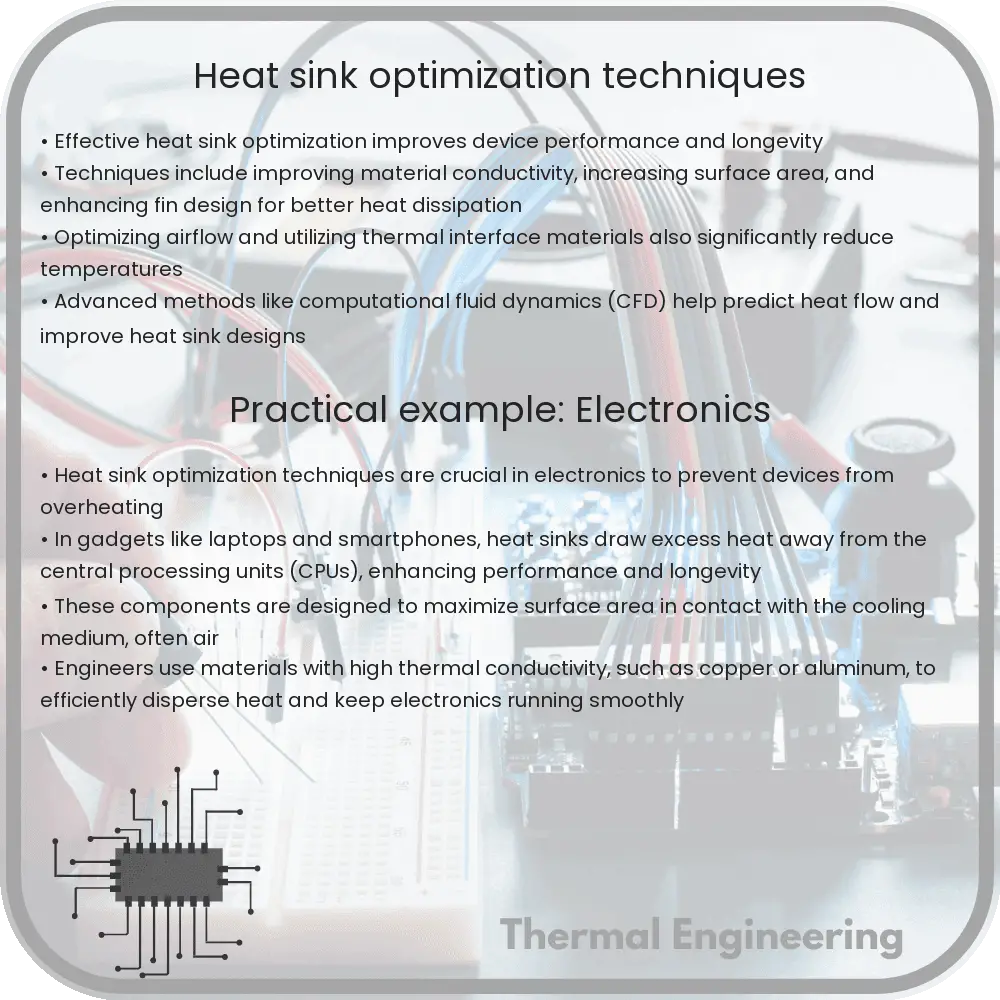
Heat sinks are critical components in electronic devices, designed to dissipate unwanted heat and maintain optimal operating temperatures. As electronic devices become more powerful and compact, optimizing heat sink efficiency is crucial for enhancing performance and reliability. This article explores several effective techniques used in the optimization of heat sinks.

Material Selection

The choice of material significantly impacts the performance of a heat sink. The material’s thermal conductivity is a primary factor, with copper and aluminum being the most commonly used materials due to their high thermal conductivities. Copper has a thermal conductivity of about 400 W/m*K, whereas aluminum has about 237 W/m*K. Although copper is more effective at heat transfer, aluminum is lighter and less expensive, making it more suitable for larger designs.

Design Optimization

Improving the design of a heat sink can significantly enhance its heat dissipation ability. Important design aspects include:

  • Fin Design: The shape, size, number, and spacing of fins play a crucial role. Increasing the surface area with more fins or larger fins enhances heat transfer. However, there must be an optimal balance since too many fins or very closely spaced fins can restrict air flow, reducing overall efficiency.
  • Fin Arrangement: The arrangement of fins affects the flow of air. Fins arranged in a staggered pattern can sometimes provide better airflow and enhance heat dissipation compared to a straight pattern.
  • Geometry Optimization: Advanced techniques like Computational Fluid Dynamics (CFD) simulations help in optimizing the geometry of heat sinks for maximum efficiency.

Surface Treatment

Surface treatments can improve the thermal performance of heat sinks. Common treatments include:

  • Anodizing: Mainly used for aluminum heat sinks, anodizing improves emissivity and corrosion resistance.
  • Coatings: Thermal interface materials (TIMs) or coatings can enhance the heat sink’s efficiency by improving the thermal contact between the heat source and the heat sink.

Manufacturing Techniques

The manufacturing process of heat sinks also affects their performance. Techniques include:

  • Extrusion: Common for aluminum heat sinks, extrusion is cost-effective and suitable for high-volume production.
  • Skiving: This method involves slicing the base material into fins, having good thermal contact between the base and the fins.
  • CNC Machining: Ideal for complex or precision designs but can be more expensive.

Airflow Optimization

Optimizing airflow is crucial for the effective operation of heat sinks. The use of fans or blowers can significantly enhance heat dissipation. The key is to ensure unobstructed air movement and good channeling of air to the areas of highest heat. Positions and types of fans (axial vs. centrifugal), along with the layout of the components, are determinants in maximizing airflow efficiency.

In conclusion, heat sink optimization is a multidisciplinary approach that involves careful consideration of material, design, surface treatment, manufacturing process, and airflow management. By leveraging these techniques, engineers can design more efficient heat sinks that meet the demands of modern electronic devices, ensuring better performance and longevity.

Thermal shock resistance of materials

Learn how thermal shock resistance allows materials to endure rapid temperature changes without damage, crucial for various industrial applications.

Thermal shock resistance of materials

Understanding Thermal Shock Resistance in Materials

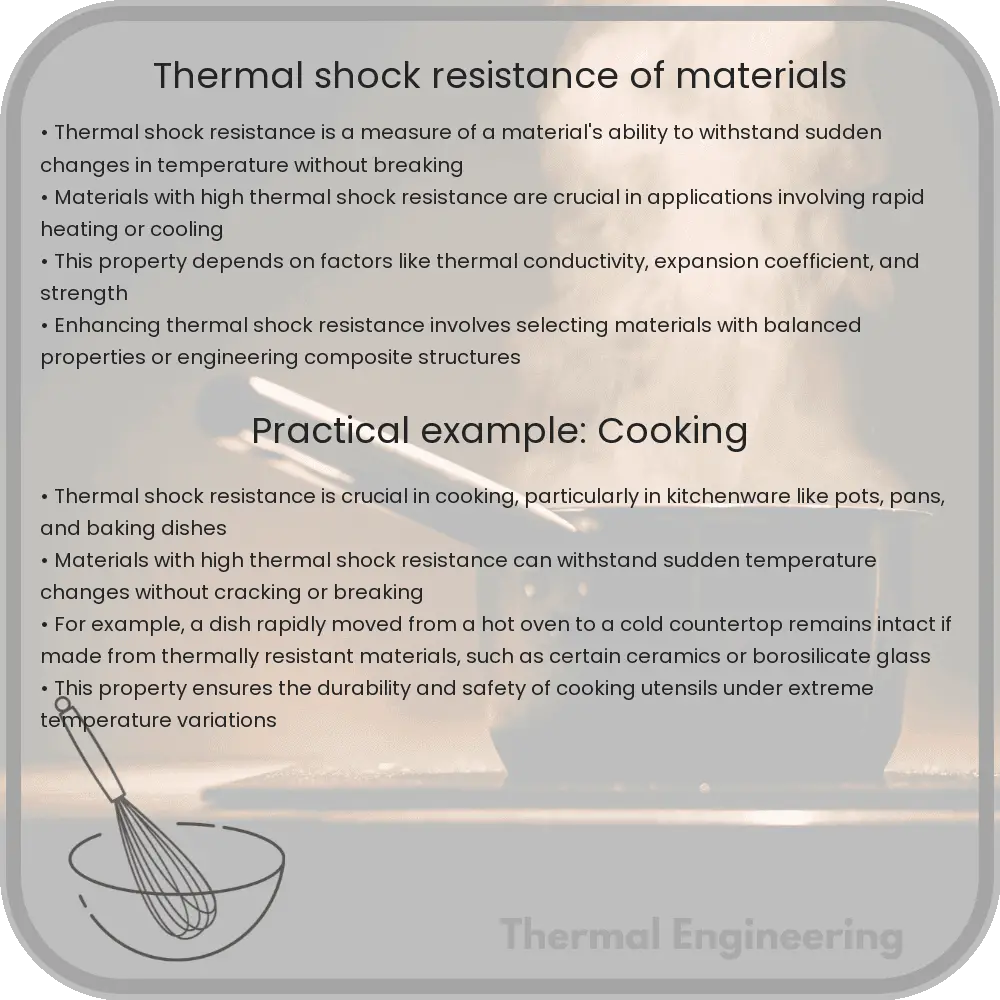
Thermal shock resistance is a crucial property for materials that are exposed to rapid temperature changes. This characteristic determines a material’s ability to withstand sudden changes in temperature without suffering damage. Important in a range of applications—from aerospace components to kitchenware—thermal shock resistance informs decisions about material selection in environments where thermal stress is a concern.

What Causes Thermal Shock?

Thermal shock occurs when a material undergoes a rapid temperature change, leading to the development of stress within the material due to thermal expansion or contraction. When the material is heated, it expands; when cooled, it contracts. If different parts of a material change temperature at different rates (for example, the outside cools or heats up faster than the inside), this creates internal stresses. When these stresses exceed the material’s strength, cracking, spalling, or other types of failures may occur.

Understanding the Factors Influencing Thermal Shock Resistance

The resistance of a material to thermal shock is largely influenced by its:

  • Thermal Conductivity: Materials with high thermal conductivity can quickly transfer heat throughout their structure, reducing temperature gradients and associated stresses.
  • Thermal Expansion Coefficient: Materials with lower coefficients of thermal expansion experience less expansion or contraction for a given temperature change, resulting in lower induced stresses.
  • Mechanical Strength: Higher mechanical strength materials can withstand greater stress before failing, improving thermal shock resistance.
  • Elastic Modulus: The stiffer the material, the less it can deform under stress, potentially leading to increased susceptibility to cracking under thermal shock.
  • Specific Heat Capacity: A higher specific heat capacity means that more heat energy is required to change the material’s temperature, which can mitigate rapid temperature changes.

Quantifying Thermal Shock Resistance

The thermal shock resistance of a material can be quantitatively assessed using the following formula:

R = (K * σt) / (α * E * ΔT)

Where:

  • R is the thermal shock resistance,
  • K represents thermal conductivity,
  • σt is the tensile strength,
  • α is the thermal expansion coefficient,
  • E stands for the elastic modulus, and
  • ΔT is the temperature change.

This equation highlights that the better a material’s ability to conduct heat and withstand mechanical stress, and the lower its expansion with temperature changes, the higher its resistance to thermal shock will be.

Applications Across Industries

Materials with high thermal shock resistance are essential in many industries:

  • Aerospace: Components like turbine blades that experience rapid temperature changes.
  • Electronics: Devices that heat up and cool down rapidly, requiring materials that can handle such cycles without degradation.
  • Cookware: Utensils and containers that are subjected to sudden temperature changes when used on stoves or ovens.
  • Building Materials: Elements like firebricks used in high-temperature industrial processes.

Understanding and selecting materials based on their thermal shock resistance is essential for ensuring longevity and performance in environments subject to frequent or dramatic temperature fluctuations. Through continued research and development, materials engineers are continually enhancing the thermal shock resistances of materials to meet the ever-growing demands of modern technology and manufacturing processes.

Heat transfer in fermentation

Learn about the mechanisms and challenges of heat transfer in fermentation, essential for process efficiency in bioengineering.

Heat transfer in fermentation

Understanding Heat Transfer in Fermentation Processes

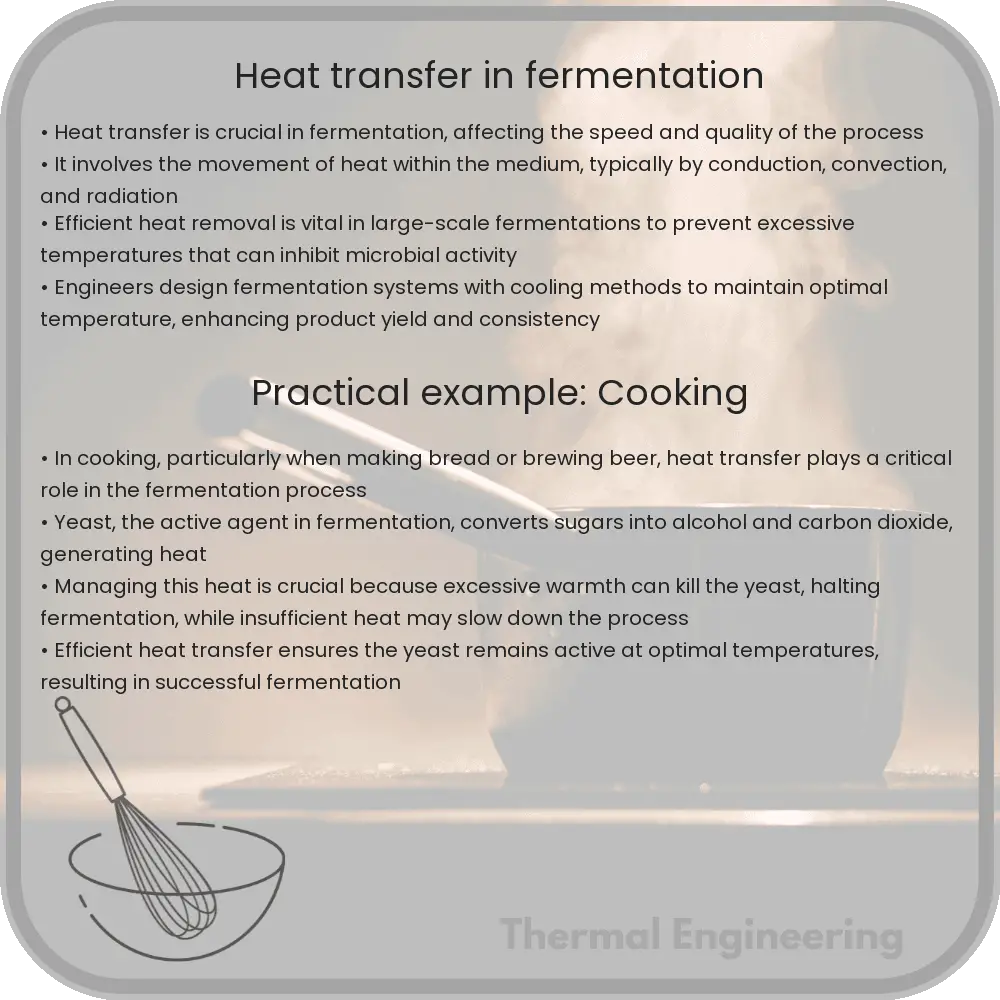
Fermentation is a biochemical process used extensively in industries such as food, beverage, and pharmaceuticals. During fermentation, microorganisms such as bacteria and yeast convert organic compounds—typically sugars—into alcohol, gases, or acids. This process is exothermic, meaning it releases heat. Managing this heat is crucial because excessive heat can inhibit or even kill the microorganisms responsible for fermentation, leading to suboptimal product yields. This article explores the principles of heat transfer in fermentation processes and why it’s essential for efficient operation.

Mechanisms of Heat Transfer in Fermentation

Heat transfer in fermentation systems occurs through three primary mechanisms: conduction, convection, and radiation. However, in the context of bioreactors, conduction and convection are the most relevant.

  • Conduction: This is the transfer of heat through a solid or between two solids in contact without the movement of the material. In fermentation tanks, heat conduction occurs through the walls of the bioreactor.
  • Convection: This mechanism involves the transfer of heat through a fluid (liquid or gas) that moves due to density differences driven by temperature gradients. In fermentation, convection can help distribute heat within the medium in which the microorganisms are suspended.

Radiation heat transfer is often negligible in the context of fermentation unless the bioreactors are exposed to significant external heat sources, which is typically not the case.

Heat Generation in Fermentation

The metabolic activity of microorganisms in fermentation generates heat. The rate of heat production can be estimated by the metabolic heat coefficient (Q), which is influenced by the type of organism, its metabolic rate, and the nature of the substrate. The heat generated during fermentation can be expressed by:

Q = μXV

  • μ (Greek letter mu) is the specific growth rate of the microorganism (1/h).
  • X is the biomass concentration (kg/m3).
  • V is the volume of the fermentation broth (m3).

This equation offers a simplified view; actual conditions can complicate calculations considerably due to factors like substrate consumption rate and byproduct formation.

Challenges of Heat Removal in Fermentation

Efficient removal of the excess heat produced during fermentation is critical. Poor heat management can lead to temperature spikes that inhibit microbial activity or even lead to denaturation of proteins, harming the fermentation process. Heat is usually removed through cooling jackets, coiled tubes, or external heat exchangers. The effectiveness of these cooling systems depends on:

  • The surface area available for heat transfer.
  • The temperature difference between the fermentation medium and the cooling fluid.
  • The thermal conductivity of the materials involved.
  • The design configuration of the fermentation vessel.

Importance of Temperature Control in Fermentation

Maintaining an optimal temperature range is essential for maximizing the efficiency and yield of fermentation processes. Each microorganism has a specific temperature range within which it performs optimally. Deviations from this range can lead to reduced efficiency or total process failure, making effective heat transfer not just beneficial but necessary.

Recent advances in bioreactor design emphasize improvements in heat transfer efficiency through better agitation systems, optimized vessel geometry, and more effective cooling systems. These advancements help ensure that the fermentation process remains within the desired thermal operating window, thus enhancing both productivity and product quality.

Understanding and managing heat transfer in fermentation is complex but crucial in bioprocessing industries. It ensures high product quality and efficiency, making it an essential area of focus in bioengineering and industrial microbiology.

Heat transfer in solar cells

Explore the fundamentals and effects of heat transfer in solar cells, with strategies to enhance efficiency and longevity through effective thermal management.

Heat transfer in solar cells

Understanding Heat Transfer in Solar Cells

Solar cells, also known as photovoltaic cells, convert sunlight directly into electricity. While the primary function of a solar cell is to generate electricity by absorbing photons, they also encounter an inevitable challenge: heat. Understanding heat transfer in solar cells is crucial for enhancing their efficiency and longevity. This article will explore the fundamentals of heat transfer in solar cells, its effects, and some strategies used to mitigate thermal issues.

Basics of Heat Transfer in Solar Cells

When solar cells convert sunlight into electricity, not all the absorbed energy is converted into electrical energy. A significant amount of this energy is converted into heat, which can adversely affect the performance and durability of the cells. There are three primary modes of heat transfer that play a role in solar cells:

  • Conduction: Heat is transferred through materials from higher temperature regions to lower temperature regions. In solar cells, heat conduction occurs within the cell and towards the mounting surface or heat sink.
  • Convection: Heat is transferred to the surrounding air. This process helps in cooling down the solar cell, especially in well-ventilated installations.
  • Radiation: Solar cells emit infrared radiation, which helps in losing some of the absorbed heat to the environment.

Thermal Effects on Solar Cell Performance

The performance of solar cells is significantly influenced by their operating temperature. The efficiency of a solar cell typically decreases as the temperature increases. This is primarily due to the following reasons:

  • Decrease in Open-Circuit Voltage (VOC): As temperature rises, there is a drop in the open-circuit voltage, which reduces the power output.
  • Reduction in Bandgap: Increased temperatures reduce the semiconductor bandgap, leading to lower energy conversion efficiency.
  • Increased Carrier Recombination: Heat enhances the recombination processes within the cell, further reducing the efficiency.

The typical rate at which efficiency decreases is around 0.3% to 0.5% per degree Celsius increase in temperature.

Cooling Strategies for Enhanced Performance

To mitigate the negative effects of heat on solar cells, several cooling strategies can be employed:

  • Passive Cooling: Involves design choices that enhance natural heat dissipation, such as using heat spreaders, improving airflow around the panels, and selecting materials with high thermal conductivity.
  • Active Cooling: Involves the use of external energy sources to remove heat, such as water cooling or forced air systems. These systems are more effective but consume additional energy and increase the complexity of the solar panel system.
  • Thermal Radiation Coatings: Applying coatings that emit infrared radiation can help in cooling the solar cells more efficiently.

Conclusion

Heat transfer plays a critical role in the performance of solar cells. By understanding and managing heat through effective cooling strategies, it is possible to significantly enhance the efficiency and longevity of solar cells. Advances in materials science and thermal management technologies continue to provide new pathways for optimizing solar cell installations.

This basic understanding of heat transfer in solar cells highlights the interplay between electrical efficiency and thermal management, a crucial aspect for anyone working with or studying solar energy systems.

Thermal management of batteries

Learn about the importance of thermal management in batteries, techniques used, and advancements in technology for optimal performance and safety.

Thermal management of batteries

Understanding Thermal Management of Batteries

Thermal management of batteries is crucial for enhancing their efficiency, safety, and longevity. Batteries, particularly lithium-ion types used in electric vehicles (EVs) and various electronic devices, generate heat during charging and discharging. Managing this heat is essential to maintain battery performance and prevent failures.

Why is Thermal Management Important?

Excessive heat can lead to several issues in batteries:

  • Capacity Loss: High temperatures can permanently reduce the battery’s ability to hold charge.
  • Accelerated Aging: Heat can accelerate the degradation of battery materials, shortening the battery’s overall lifespan.
  • Safety Risks: Overheating can trigger thermal runaway, a dangerous condition where increasing temperatures can lead to fires or explosions.

Thus, effective thermal management systems (TMS) are designed to keep batteries within their optimal temperature range, usually between 20°C and 40°C, to maximize performance and safety.

Thermal Management Techniques

There are several methods to manage the thermal conditions of batteries:

  1. Active Cooling: This method involves using external devices such as fans or liquid cooling systems. Liquid cooling, involving coolants that absorb and dissipate heat, is particularly effective for high-power applications like EVs.
  2. Passive Cooling: This simpler method uses heat sinks or phase change materials that naturally absorb and release heat without additional energy consumption. It’s commonly used in smaller devices.
  3. Thermal Insulation: While not a cooling method, insulation can help maintain optimal temperatures by reducing the impact of external temperature variations.
  4. Battery Management Systems (BMS): These electronic systems monitor and regulate the battery’s temperature, voltage, and current. By controlling the charging rate and state of charge, a BMS can indirectly influence thermal conditions.

Materials and Advanced Technologies

Research continues into new materials and technologies to improve thermal management:

  • Graphene and Carbon-based Materials: Known for their excellent thermal conductivity, these materials are explored for use in battery components to enhance heat dissipation.
  • Advanced Geometries: Designing batteries with specific shapes or incorporating internal cooling channels can improve thermal distribution.
  • Phase Change Materials (PCMs): PCMs absorb heat when transitioning between solid and liquid states, thus maintaining a stable battery temperature.

Advancements in computational simulation also play a critical role. Engineers use sophisticated models to predict heat generation and distribution within a battery pack, allowing for more precise and efficient TMS designs.

Conclusion

As the demand for batteries grows, spurred by the increase in EVs and renewable energy systems, so does the importance of effective thermal management. By continuing to innovate in this field, engineers can ensure safer, more efficient, and longer-lasting batteries, thereby contributing to more sustainable energy systems worldwide.

Cryogenic heat transfer research

Learn about cryogenic heat transfer, a key field in thermal engineering focusing on heat movement at temperatures below -150°C.

Cryogenic heat transfer research

Understanding Cryogenic Heat Transfer Research

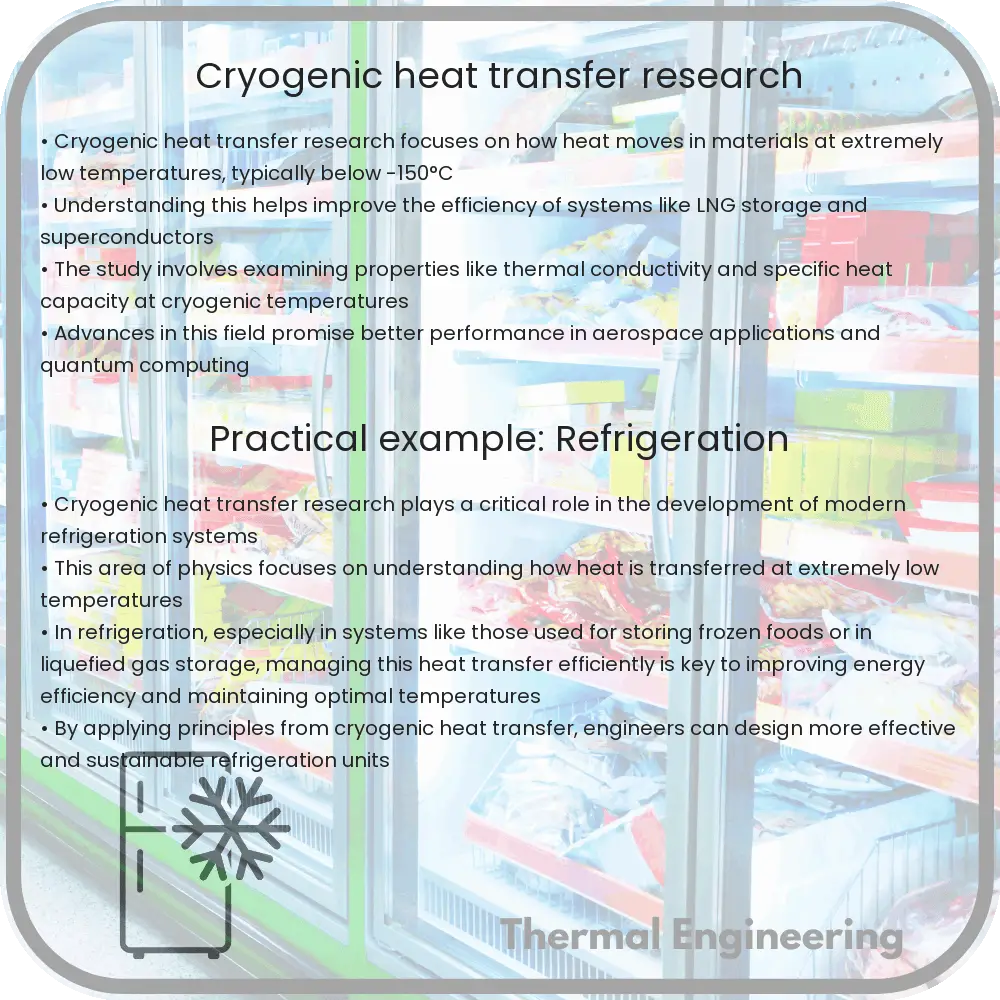
Cryogenic heat transfer is a critical area of research in the field of thermal engineering that deals with how heat energy moves at very low temperatures, typically below -150°C (-238°F). This temperature range is significant in various industries such as aerospace, energy storage, and medical applications. The primary focus of cryogenic heat transfer research is to enhance the efficiency and safety of systems that operate under these extreme conditions.

Basics of Heat Transfer at Cryogenic Temperatures

Heat transfer at cryogenic temperatures is not vastly different in principle from heat transfer at higher temperatures, but it does pose unique challenges due to the physical properties of materials and fluids that drastically change at low temperatures. The three main mechanisms of heat transfer — conduction, convection, and radiation — all behave differently at cryogenic temperatures.

  • Conduction: Materials generally have lower thermal conductivities at lower temperatures, which can hinder the effective transfer of heat.
  • Convection: Fluids used in cryogenic systems (such as liquid nitrogen or helium) have different viscosities and thermal properties at low temperatures, affecting how heat is carried through the fluid.
  • Radiation: Despite being the least affected by temperature changes, radiation heat transfer can still play a significant role, especially in vacuum environments.

Experimental and Theoretical Approaches

Research in cryogenic heat transfer combines both experimental and theoretical methods to understand and enhance heat transfer processes:

  • Experimental Research: Involves physical testing in cryogenic environments using wind tunnels, cryostats, and specialized low-temperature measurement technologies to gather data on thermal properties and heat transfer behavior.
  • Theoretical Research: Uses mathematical models and simulations to predict heat transfer characteristics and to develop new equations that describe thermal behavior at cryogenic conditions. This can involve complex differential equations like the heat equation, $\frac{\partial T}{\partial t} = \alpha \frac{\partial^{2} T}{\partial x^{2}}$, where T is temperature, t is time, x is position, and α is the thermal diffusivity.

Applications and Implications

Cryogenic heat transfer research has profound implications across several fields:

  • Aerospace: In space exploration, equipment and fuels must operate at cryogenic temperatures in the vacuum of space, requiring reliable thermal management systems.
  • Superconductivity: Superconducting materials, which eliminate resistance below certain temperatures, are crucial in magnetic resonance imaging (MRI) and particle accelerators, necessitating efficient cooling methods.
  • Energy Storage: Cryogenic energy storage systems, like those using liquid air, depend on efficient thermal management to effectively store and release energy.

Challenges and Future Directions

Despite significant advancements, cryogenic heat transfer research faces several challenges:

  • Material Behavior: At low temperatures, materials can exhibit brittle behavior or altered thermal properties, which can affect the design and durability of cryogenic systems.
  • Efficiency Improvement: Increasing the efficiency of cryogenic systems, including reducing heat leakage and enhancing cooling methods, remains a critical area of development.
  • Integration with Renewable Energy: As the world moves towards renewable energies, integrating cryogenic storage solutions with renewable energy sources presents both a challenge and an opportunity for innovation.

In conclusion, cryogenic heat transfer research plays a crucial role in the development of technologies operating at low temperatures. Advancements in this field will continue to drive innovations across various high-tech industries, making it an exciting area of engineering research and development.

Thermoelectric cooling advancements

Learn about thermoelectric cooling, a technology utilizing the Peltier effect for efficient heat transfer in various applications without moving parts.

Thermoelectric cooling advancements

Understanding Thermoelectric Cooling

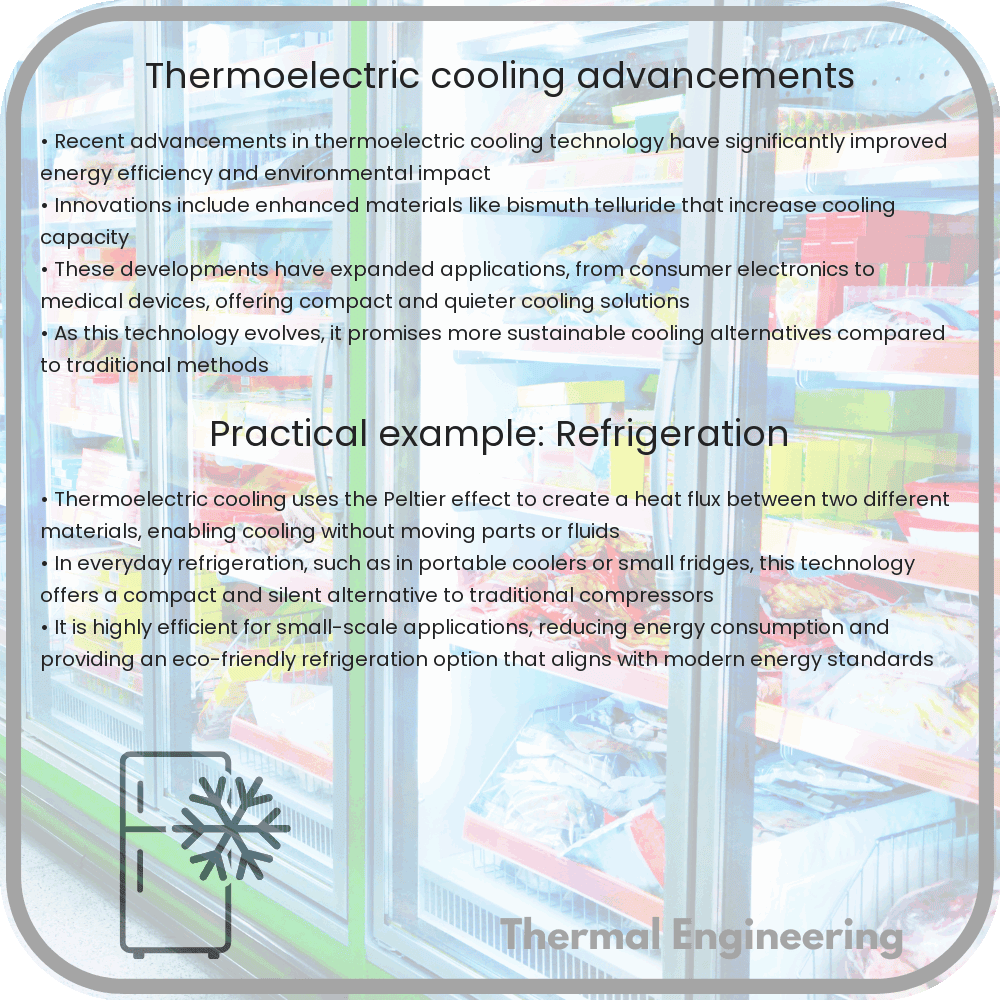
Thermoelectric cooling is a technology that harnesses the Peltier effect to create a heat flux between the junctions of two different types of materials. This method is highly valued for its ability to operate without moving parts or fluids, relying instead on semiconductor materials to manage heat. Its use spans from small cooling systems in electronics to more robust applications in refrigeration.

The Peltier Effect

The fundamental working principle of thermoelectric cooling is the Peltier effect. It occurs when an electric current passes through two different conductors or semiconductors; heat is absorbed at one junction (the cold side) and released at the other junction (the hot side). The operation can be reversed as well, providing both heating and cooling capabilities from the same device.

Materials and Efficiency

The efficiency of thermoelectric coolers (TECs) depends on the materials used. Traditionally, bismuth telluride has been the primary material used in most applications at room temperature. The dimensionless figure of merit (ZT) is used to measure the efficiency of these materials, where a higher ZT value indicates better performance. Recent advancements often focus on improving ZT through material science innovations.

Recent Advancements in Thermoelectric Cooling

  • Nanostructured Materials: Recent developments in nanostructuring materials have shown significant potential in enhancing the efficiency of thermoelectric devices. Smaller particle sizes and interface engineering can decrease phonon transport while maintaining or increasing electron transport.
  • Complex Thermoelectric Materials: Researchers are exploring beyond bismuth telluride to materials like skutterudites, clathrates, and quantum dots. These materials can potentially offer higher ZT values and better efficiency at different temperature ranges.
  • Hybrid Approaches: Some advancements involve combining thermoelectric technology with other types of cooling technology, like compression cooling, to create hybrid systems. These systems aim to harness the benefits of both technologies, providing improved overall energy efficiency and cooling capacity.

Applications of Thermoelectric Cooling

Thermoelectric coolers are used in a variety of applications:

  1. Consumer Electronics: Portable coolers, refrigerated medicine cabinets, and precision temperature control devices in electronics, such as in computer CPUs or lasers.
  2. Automotive: Increasingly used in cars for seat cooling/heating and in wine coolers.
  3. Aerospace and Military: Used to maintain temperature-sensitive components in satellites and other high-performance platforms.

Challenges and Future Prospects

Despite its numerous applications, thermoelectric cooling faces challenges such as relatively low energy efficiency compared to traditional cooling methods like vapor compression. The potential for improvement exists, particularly through material innovations and system design optimizations. With ongoing research and development, the future of thermoelectric cooling looks promising, particularly for applications requiring compact and noiseless solutions with precise temperature control.

As thermoelectric technology continues to evolve, it promises to open new possibilities in cooling systems across commercial, industrial, and consumer applications, ensuring a significant role in the future of advanced thermal management solutions.

Phase change material applications

Learn about Phase Change Materials (PCMs), substances that store and release energy by shifting between solid and liquid states.

Phase change material applications

Understanding Phase Change Materials and Their Applications

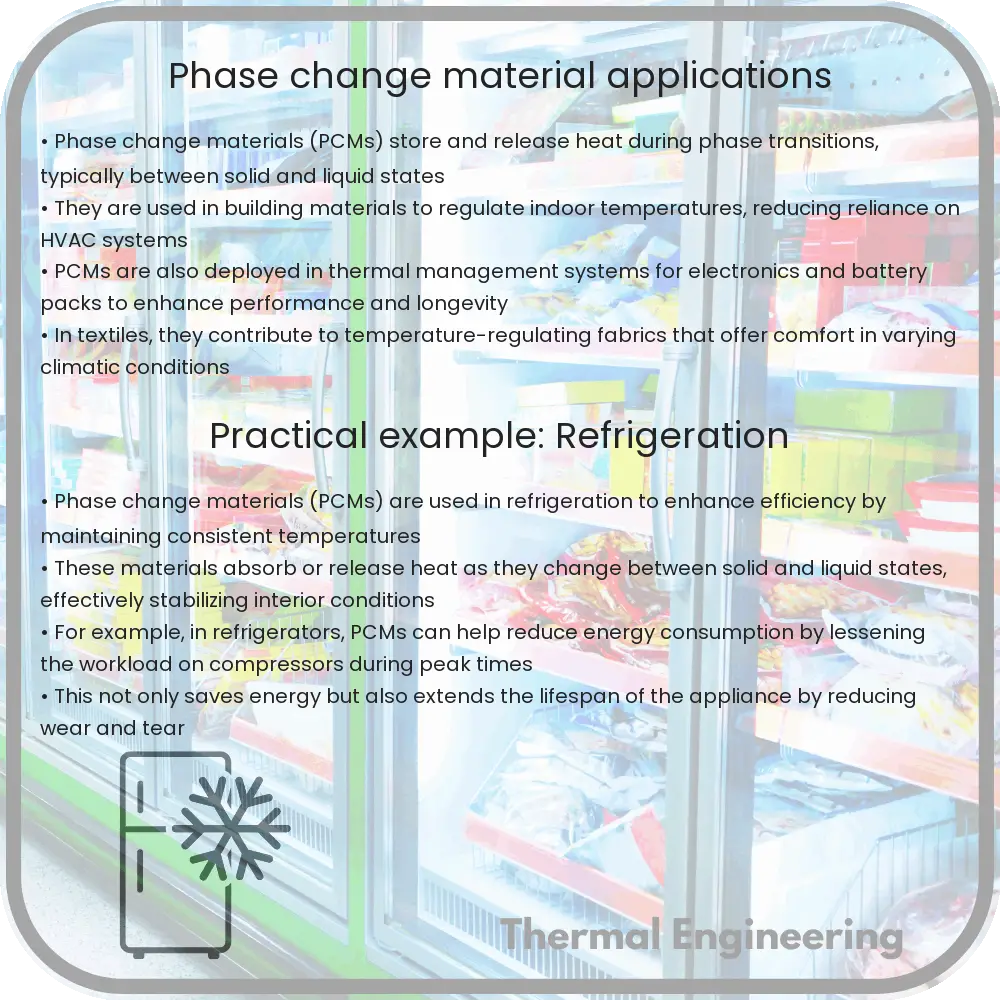
Phase change materials (PCMs) are substances with a high heat of fusion which, melting and solidifying at a certain temperature, are capable of storing and releasing large amounts of energy. Heat is absorbed or released when the material changes from solid to liquid and vice versa; this property of PCMs is utilized in various engineering applications, ranging from improving building energy efficiency to enhancing the performance of electronic devices.

How Phase Change Materials Work

At the most basic level, the effectiveness of a phase change material comes from its ability to absorb and release heat during phase transitions. In the solid phase, the material absorbs heat and transitions to a liquid phase at a relatively constant temperature. Once the material has melted, it can store a significant amount of heat in the liquid phase. Conversely, when the temperature drops, the material releases this stored heat as it solidifies, again at a nearly constant temperature. This thermal property of PCMs can be measured in terms of latent heat capacity, which is usually much higher than sensible heat capacity.

Applications of Phase Change Materials

  • Building and Construction: In building applications, PCMs are integrated into materials like wallboard, concrete, and floor tiles to help moderate indoor temperatures. By melting and solidifying at predetermined temperatures, PCMs can absorb excess heat from the indoor environment during the day and release it at night, reducing the need for traditional heating and cooling systems.
  • Energy Storage: PCMs can be used in thermal energy storage systems to improve the efficiency of solar power plants and heat pumps. The high energy storage density of PCMs allows them to store thermal energy during peak sunlight hours and release it during periods of low solar radiation.
  • Textiles: Incorporating PCMs into textiles can enhance wearer comfort by regulating body temperature in varying climatic conditions. This is particularly beneficial in outdoor and sports apparel, where temperature fluctuations are common.
  • Electronics Cooling: In electronic devices, thermal management is crucial for maintaining performance and extending lifespan. PCMs can absorb and distribute the heat generated by electronic components efficiently, thus maintaining optimal operating temperatures and preventing overheating.

Future Prospects

The application of phase change materials is seen as a promising strategy in various fields that require efficient thermal management solutions. As the demand for energy-efficient products and sustainable practices continues to grow, the development of advanced PCM technologies and their applications appears increasingly lucrative. Innovations in PCM encapsulation and composite materials are making these systems more effective and practical, promising broader future applications in industries like aerospace, automotive, and buildings, contributing to energy conservation and efficiency.

By harnessing the unique properties of PCMs, engineers and scientists continue to develop solutions that address some of the most pressing challenges of our time, including energy conservation, climate control, and electronic device optimization. As research progresses, the versatility of phase change materials is likely to expand, opening new pathways for both economic and environmental advancements.

Infrared thermography leak detection

In-depth exploration of infrared thermography for leak detection, its workings, applications, benefits, and limitations in various industries.

Infrared thermography leak detection

Understanding Infrared Thermography Leak Detection

Infrared thermography leak detection is a powerful, non-contact diagnostic technique used extensively in building inspections, mechanical systems, and electrical systems. This method utilizes infrared cameras to visualize and measure the thermal energy emitted from an object or scene. The primary advantage of using infrared thermography is its ability to detect issues without needing to disrupt the operation of the equipment being inspected.

How It Works

Infrared radiation is a form of electromagnetic radiation that exists just beyond the visible spectrum of light. Every object emits infrared radiation based on its temperature, with hotter objects emitting more radiation than cooler ones. Infrared thermographic cameras capture this radiation in the form of images. These images—known as thermograms—are then analyzed to detect anomalies that might indicate problems like leaks, overheating, or structural defects.

For leck detection, infrared thermography is especially useful because it can help identify areas where thermal insulation has degraded. For instance, in a piping system, the area around a leak will often be cooler than the adjacent sections due to the evaporative cooling effect of the escaping fluid. Similarly, leaks in building envelopes can be detected by observing anomalously cooler or warmer areas compared to the expected thermal profile under specific weather conditions.

Applications and Benefits

  • Energy Efficiency: Infrared thermography can identify areas where heat is escaping from a building envelope. This is crucial for improving energy efficiency and reducing heating costs.
  • Preventive Maintenance: Regular thermographic inspections can help detect and address mechanical and electrical failures before they lead to serious issues, helping to extend the lifespan of equipment and reduce downtime.
  • Safety: By identifying potential problems early, such as overheating electrical components or failing mechanical systems, thermography can prevent accidents and improve workplace safety.

Limitations of Infrared Thermography

While infrared thermography is a valuable tool, it comes with limitations that must be considered:

  • Surface Emissivity: Different materials emit infrared radiation differently. Surfaces with low emissivity (like polished metal) can reflect surrounding radiation and give misleading temperature readings.
  • Line of Sight: Thermographic cameras can only capture the surface temperature of visible areas. Therefore, hidden leaks or components obscured by other structures may go undetected.
  • Environmental Factors: Wind, sunlight, humidity, and ambient temperature can all affect thermal readings, potentially making it difficult to identify subtle temperature differences.

Advancing Technology

Recent advancements in infrared technology have significantly enhanced its capabilities. Higher resolution cameras and better sensitivity have made it possible to detect finer temperature differences and smaller leaks. Additionally, integration with other technologies like drones for aerial inspections and artificial intelligence for automatic anomaly detection is expanding the applications of infrared thermography in many industries.

Conclusion

Infrared thermography for leak detection is a vital tool in the engineering and maintenance toolkit. By allowing for early detection of potential problems, it helps in saving costs, ensuring safety, and improving the efficiency of mechanical and electrical systems. However, successful application of this technology requires understanding its potential and limitations, as well as skilled interpretation of the thermograms produced.

As technology continues to evolve, the precision and uses of infrared thermography will expand, offering even greater benefits to industries committed to maintaining high standards of safety and efficiency.