Facebook Instagram Youtube Twitter

Heat pipe efficiency improvements

Learn how heat pipe efficiency improvements enhance thermal management systems, utilizing advanced materials and innovative design strategies.

Heat pipe efficiency improvements

Understanding Heat Pipe Efficiency Improvements

Heat pipes are devices that exploit the principles of heat transfer and thermodynamics to efficiently manage the transfer of heat between two interfaces. They are widely used in applications ranging from electronics cooling to renewable energy systems. Improving the efficiency of heat pipes is crucial for enhancing the performance and sustainability of such systems. This article explores the various strategies and technologies that have been developed to improve the efficiency of heat pipes.

Key Factors Influencing Heat Pipe Efficiency

Several parameters influence the operational efficiency of heat pipes, including:

  • Working Fluid: The choice of fluid significantly affects heat transfer rates. Common fluids include water, ammonia, and acetone, each suitable for different temperature ranges and heat flux conditions.
  • Material of Construction: The thermal conductivity of the material from which the heat pipe is made also plays an essential role. Copper, for instance, is frequently used due to its high thermal conductivity.
  • Surface Tension: The wicking material and its structure inside the pipe affect the capillary pressure, which helps in driving the fluid back from the condenser to the evaporator.
  • Operational Temperature: The efficiency of a heat pipe is also dependent on the operational temperature, which should ideally be within the range where the working fluid has the best phase change characteristics.

Technological Advances in Heat Pipe Efficiency

Recent advancements in materials science and engineering have led to several innovative approaches to increase heat pipe efficiency:

  1. Nano-fluids: Utilizing fluids with suspended nanoparticles (nano-fluids) has been shown to enhance thermal conductivity and heat transfer capability, improving the overall effectiveness of heat pipes.
  2. Composite Wick Structures: Developing complex wick structures with layers of different fibrous materials can optimize the capillary pumping effect, thereby enhancing the internal cycle efficiency of heat pipes.
  3. Vapor Chamber Technology: Integrating the traditional heat pipe design into a broader vapor chamber allows a more uniform distribution of heat over larger surfaces, ideal for cooling in high-performance computing and electronics.
  4. Flexible Heat Pipes: The use of bendable materials permits the deployment of heat pipes in scenarios where space and form factor are constraints, allowing better integration into compact systems.

Quantitative Measures of Improvement

Improvements in heat pipe efficiency can be quantitatively assessed by parameters such as:

  • Thermal Resistance: A lower thermal resistance indicates higher efficiency, given by the equation R = L / (k * A), where L is the length of the heat pipe, k is the thermal conductivity of the material, and A is the cross-sectional area.
  • Heat Transfer Coefficient: An increased heat transfer coefficient suggests improved performance in heat exchange capabilities.
  • Heat Flux: The capability to operate at higher heat flux while maintaining temperature stability is a critical factor for the performance improvement in heat pipes.

In conclusion, by leveraging advanced materials, innovative designs, and enhanced fluid dynamics, the efficiency of heat pipes can be substantially improved, leading to more effective heat management solutions in various applications. These improvements not only contribute to more sustainable technologies but also pave the way for new applications and developments in thermal management systems.

Future Outlook and Research Directions

Continued research and development in heat pipe technology focus on exploiting new materials such as graphene and further advancements in nano-fluids. Moreover, the integration of artificial intelligence to optimize the design and operational parameters of heat pipes presents a promising avenue for future exploration. Such innovations could lead to even more significant leaps in heat pipe efficiency, expanding their applications in energy-sensitive and high-tech environments.

Thermal imaging for heat loss

Learn about thermal imaging, a technology used to detect heat loss in buildings and systems by visualizing temperature variations with infrared cameras.

Thermal imaging for heat loss

Understanding Thermal Imaging for Heat Loss Detection

Thermal imaging is a powerful technology used in various engineering fields for detecting heat loss in buildings, mechanical systems, and electrical systems. This technology uses infrared cameras to visualize heat emitted from objects, making it possible to see temperature variations which are otherwise invisible to the naked eye. This article explores the basics of thermal imaging and its application in identifying heat loss.

How Thermal Imaging Works

Thermal imaging cameras detect the infrared energy (heat) that is emitted by all objects. This energy is then converted into an electronic signal, which is processed to produce a thermal image on a video monitor and perform temperature calculations. Heat sensed by an infrared camera can be very precisely quantified or measured, allowing you to not only monitor thermal performance but also identify and evaluate the relative severity of heat-related problems.

Applications of Thermal Imaging in Detecting Heat Loss

  • Building Inspection: In buildings, thermal imaging is used to identify heat leaks and improve the energy efficiency of heating and cooling systems. It can detect poor insulation, thermal bridging, and hidden moisture accumulation, all of which contribute to heat loss.
  • Electrical Systems: Thermal cameras can spot overheating joints and parts in electrical systems, which can prevent potential failures and fire hazards caused by faulty wires or overloaded circuits.
  • Mechanical Systems: Thermal imaging can be used in mechanical equipment to detect overheated components or friction caused by wear and tear, helping in preventive maintenance and energy efficiency.

The Science Behind Thermal Imaging

The science of thermal imaging revolves around thermography, which is based on the principles of black body radiation. Every object emits infrared energy as a function of its temperature. According to Planck’s Law, the radiation emitted by a black body is proportional to the fourth power of its absolute temperature, mathematically expressed as:

B(T) = σT4

where B(T) is the emitted radiative power, T is the absolute temperature, and σ (sigma) is the Stefan-Boltzmann constant.

Thermal imaging cameras calculate these radiation values, converting the emitted infrared data from objects into an array of temperature readings which can be mapped to different colors representing different temperatures on a display.

Advantages of Thermal Imaging for Heat Loss Analysis

  • Non-contact Method: Thermal imaging is a non-invasive, non-contact method allowing inspectors to measure temperatures from a distance.
  • Quick Identification: It enables quick identification of regions of concern, speeding up the diagnostic process and helping prioritize necessary repairs.
  • Comprehensive Visualization: It provides a more complete view of a situation than single temperature data or a contact method could, showing temperature distributions and gradients clearly.
  • Preventive Maintenance: Regular thermal imaging can help catch heat anomalies that indicate potential future failures in systems, allowing for preemptive action.

Challenges in Thermal Imaging

Despite its usefulness, thermal imaging does face some challenges. Accuracy may be affected by external conditions such as ambient temperature, humidity, and outside heat sources. Reflections from shiny surfaces can also produce inaccurate readings. Specialized training for operators is crucial to interpret thermal images correctly and diagnose issues accurately.

In conclusion, thermal imaging is an invaluable tool for engineers and inspectors, making it easier to understand and analyze heat loss in various systems. By effectively detecting areas of potential concern, thermal imaging plays a crucial role in enhancing system performance, energy efficiency, and safety in an array of industries. With advancements in infrared technology, its applications and capabilities will continue to expand, playing a pivotal role in the engineering world.

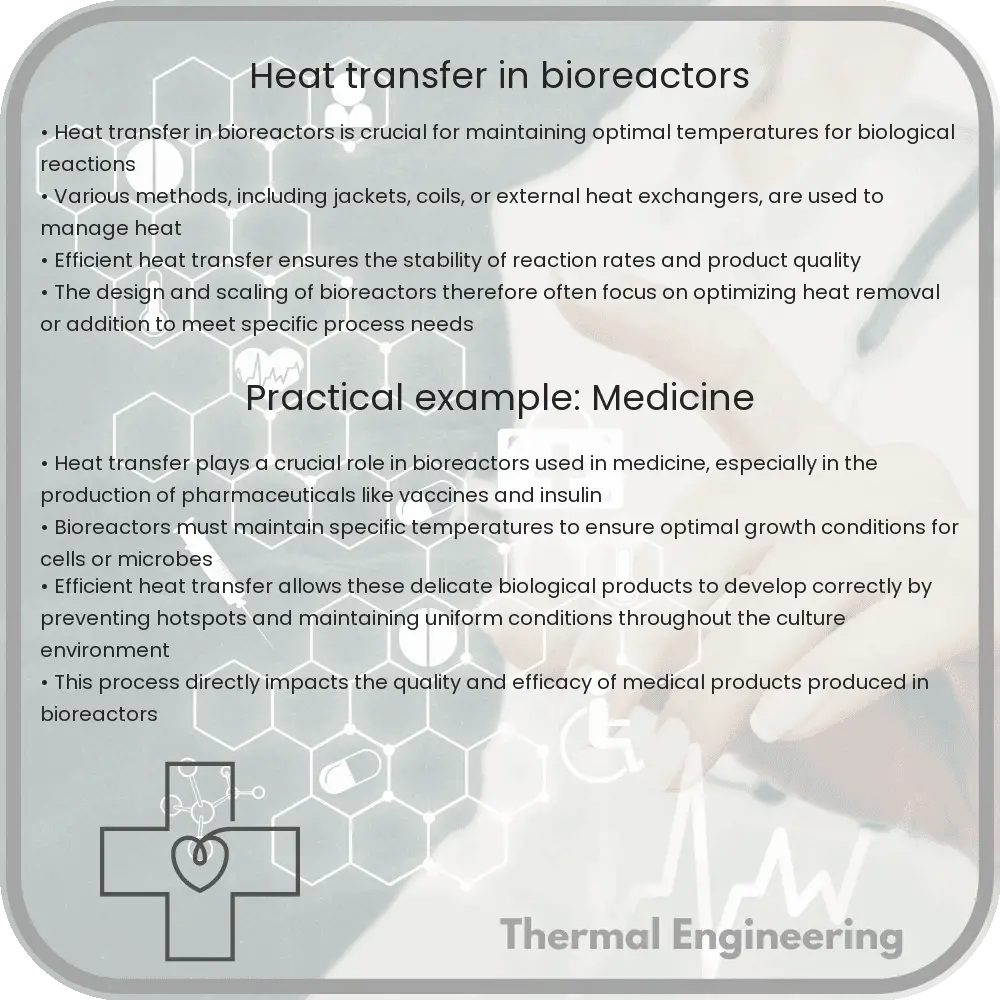
Heat transfer in bioreactors

Explore the critical role of heat transfer in bioreactors, focusing on mechanisms like conduction, convection, and radiation, and the use of heat exchangers to maintain optimal bioprocess temperatures.

Heat transfer in bioreactors

Understanding Heat Transfer in Bioreactors

Bioreactors are crucial equipment in the biotechnological industry, used for cultivating microorganisms, cells, or tissues in a controlled environment. A key aspect of a bioreactor’s design and operation involves managing heat transfer. This is vital because biological processes are highly temperature-sensitive. Efficient heat transfer ensures optimal conditions for growth and production while avoiding harmful temperature extremes.

Types of Heat Transfer in Bioreactors

Heat transfer in bioreactors can occur through three primary mechanisms:

  • Conduction: This is the transfer of heat through materials by direct contact. In bioreactors, conduction occurs through the walls of the container or through any inserts such as baffles or spargers.
  • Convection: Convection involves the movement of heat by the physical movement of the fluid within the reactor. Forced convection is generally used, enabled by mechanical agitation with impellers, to actively distribute heat throughout the culture medium.
  • Radiation: While generally less significant in liquid-phase bioreactors, radiation can contribute to heat loss or gain through the reactor’s surface.

The Role of Heat Exchangers

Heat exchangers are critical components in maintaining appropriate temperatures within bioreactors. They can be configured as external or internal parts of the system:

  • External heat exchangers: These are separate units where the culture medium is circulated outside the reactor to control temperature through either heating or cooling.
  • Internal heat exchangers: These are built into the reactor, often as coils, jackets, or plates that directly interface with the culture medium.

Mathematical Considerations for Heat Transfer

The basic equation used to calculate the rate of heat transfer (Q) in a bioreactor is derived from Fourier’s law of heat conduction:

Q = k * A * ΔT / d

  • k represents the thermal conductivity of the material.
  • A is the area through which the heat passes.
  • ΔT is the temperature difference across the material.
  • d is the thickness of the material.

For convective heat transfer, the heat transfer coefficient (h) and surface area exposed to the fluid (A) play significant roles:

Q = h * A * ΔT

Where:

  • h is the convective heat transfer coefficient, which can depend on the type of fluid, flow properties, and the nature of the surface.
  • ΔT is again the temperature difference, this time between the bulk fluid and the heat exchanger’s surface.

Challenges in Heat Transfer in Bioreactors

Designing bioreactors requires careful consideration of heat transfer dynamics to prevent local overheating and ensure homogenous temperature distribution. Some challenges include:

  • Scale-up issues: Heat transfer becomes increasingly complex as bioreactors scale up in size due to the difficulty of maintaining uniform conditions throughout a larger volume.
  • Sensitivity of biological systems: Excessive or uneven heat can denature proteins and impact cell viability, affecting the overall productivity of the system.

Conclusion

In conclusion, proper management of heat transfer is essential for the efficient operation of bioreactors in biotechnology. Understanding the mechanisms of heat transfer and implementing effective heat exchangers are fundamental to designing reactors that maximize productivity while ensuring the viability and health of biological cultures. As technology advances, innovations in bioreactor design continue to enhance the precision of temperature control, critical for the success of biotechnological applications.

CFD simulation heat transfer

Explore the principles and applications of CFD simulation in heat transfer across various engineering domains, enhancing system optimization and performance.

CFD simulation heat transfer

Understanding CFD Simulation for Heat Transfer

Computational Fluid Dynamics (CFD) is a branch of fluid mechanics that uses numerical analysis and algorithms to solve problems involving fluid flows. Engineers and scientists use CFD simulations to analyze and predict the heat transfer processes in various applications, from aerospace to environmental engineering and beyond. This article dives into the basics of CFD simulation in heat transfer, its importance, and real-world applications.

Basic Principles of Heat Transfer

Heat transfer is the movement of thermal energy due to a temperature difference. There are three basic modes of heat transfer: conduction, convection, and radiation. Understanding these modes is crucial for effective CFD simulation:

  • Conduction: Heat transfer through a solid material or between materials in direct contact.
  • Convection: Heat transfer between a surface and a moving fluid when they are at different temperatures.
  • Radiation: Heat transfer that occurs through electromagnetic waves and does not require a medium.

How CFD Simulation Works

CFD simulation involves several steps that are iteratively performed until a solution converges:

  1. Problem Definition: Defining the physical boundaries, initial conditions, physical models, and properties of the fluid.
  2. Meshing: Dividing the computational domain into discrete cells or elements, known as the mesh.
  3. Setup: Setting up boundary conditions, material properties, and the models governing the fluid flow and heat transfer (e.g., turbulence models).
  4. Solution: Solving the governing equations numerically to simulate the flow of fluid and transfer of heat.
  5. Visualization and Analysis: Analyzing and visualizing the results to understand the behavior of the fluid and effectiveness of heat transfer.

The governing equations for fluid flow and heat transfer typically include the Navier-Stokes equations along with energy conservation equations. The general form of these equations, considering a steady state, can be expressed as follows:

Navier-Stokes Equation: ρ(\(\frac{∂\vec{v}}{∂t} + \vec{v} \cdot \nabla \vec{v}\)) = -∇p + μ∇2\(\vec{v}\) + ρ\(\vec{g}\)

Energy Equation: \(\frac{∂ρT}{∂t} + \nabla \cdot (ρT\vec{v}) = \nabla \cdot (k\nabla T) + \dot{E}\)

Where:

  • \(ρ\) is the fluid density,
  • \(\vec{v}\) is the velocity field,
  • \(p\) is the pressure,
  • \(μ\) is the dynamic viscosity,
  • \(T\) is temperature,
  • \(k\) is the thermal conductivity of the fluid,
  • \(\dot{E}\) represents the rate of energy addition per unit volume, and
  • \(\vec{g}\) is the acceleration due to gravity.

Applications of CFD in Heat Transfer

CFD simulations of heat transfer are applied in various engineering fields:

  • Aerospace: To optimize the thermal management of aircraft components.
  • Automotive: To design more efficient cooling systems and improve internal combustion processes.
  • Electronics: For thermal analysis of components like microchips and batteries.
  • Environmental Engineering: To study the environmental impact of heat emissions and develop sustainable technologies.
  • Energy Sector: In the design of heat exchangers, boilers, and other equipment in power plants.

CFD is a powerful tool for engineers and researchers, helping to optimize systems, enhance performance, and improve safety by providing a deeper understanding of the complex dynamics of fluid flows and heat transfer.

Thermal barrier coatings performance

Learn about Thermal Barrier Coatings (TBCs), advanced materials used to protect engine components from extreme heat and improve efficiency.

Thermal barrier coatings performance

Understanding Thermal Barrier Coatings and Their Performance

Thermal barrier coatings (TBCs) are advanced materials systems usually applied to metallic surfaces, such as on gas turbine or aero-engine parts, to insulate them from extensive heat environments. Developed primarily to increase the efficiency of gas turbines, TBCs allow higher operating temperatures while reducing cooling requirements and protecting the structural components from fast degradation.

Composition and Function

TBCs are typically composed of a ceramic material. The most commonly used ceramic material is yttria-stabilized zirconia (YSZ) because of its low thermal conductivity, high coefficient of thermal expansion, and phase stability at elevated temperatures. A TBC system generally includes several layers:

  1. Bond Coat – Often made of an oxidation-resistant metallic alloy. Its main role is to anchor the ceramic layer to the metallic substrate and provide oxidation resistance.
  2. Ceramic Top Coat – This top layer acts as the thermal insulator and is predominantly made from YSZ. Its thickness can vary depending on the application but typically ranges from 0.1 mm to 2 mm.
  3. Thermally Grown Oxide (TGO) – This layer forms between the ceramic top coat and the bond coat during operation. It is mainly composed of alumina (Al2O3) and arises from the oxidation of the bond coat.

Key Performance Factors

The effectiveness and durability of TBCs depend on several factors:

  • Thermal Conductivity: A lower thermal conductivity is preferable for effective heat insulation. YSZ has been predominant because of its relatively low thermal conductivity in comparison to other ceramics, which allows for better thermal protection of the underlying metallic parts.
  • Thermal Expansion Coefficient (TEC): Matching the TEC of the substrate and the coating materials is crucial to reduce thermal mismatch stresses during heating and cooling cycles, which can lead to spallation and premature failure of the coating.
  • Stability and Toughness: The high-temperature stability and phase stability of the ceramic material ensure that the coating remains effective under sustained heat exposure. Additionally, the toughness of the coating helps resist cracking due to stress or strain.

Advancements and Challenges

Recent advancements in TBC technology include the development of new materials such as gadolinium zirconate and double-ceramic-layer TBCs which offer lower thermal conductivity and better sintering resistance than YSZ. However, challenges such as bond coat oxidation, ceramic topcoat sintering, and thermal-cycle fatigue still limit the lifetime and performance of these coatings.

Understanding the complex behavior of TBCs under operational stresses is crucial for further advancements. Continuous research and development are focused on optimizing coating materials and methods, expanding the temperature capability of TBCs, and ultimately enhancing the efficiency and lifespan of thermal machinery.

Conclusion

Thermal barrier coatings represent a critical technological advancement in the protection of engineering components operating under extreme heat conditions. By improving the thermal efficiency and longevity of components, TBCs play a fundamental role in enabling higher-temperature operations in turbines, leading to more efficient and cleaner energy production. As engineering challenges get addressed with emerging materials and innovative coating technologies, the scope and application of TBCs are likely to expand, offering significant benefits across various high-temperature industries.

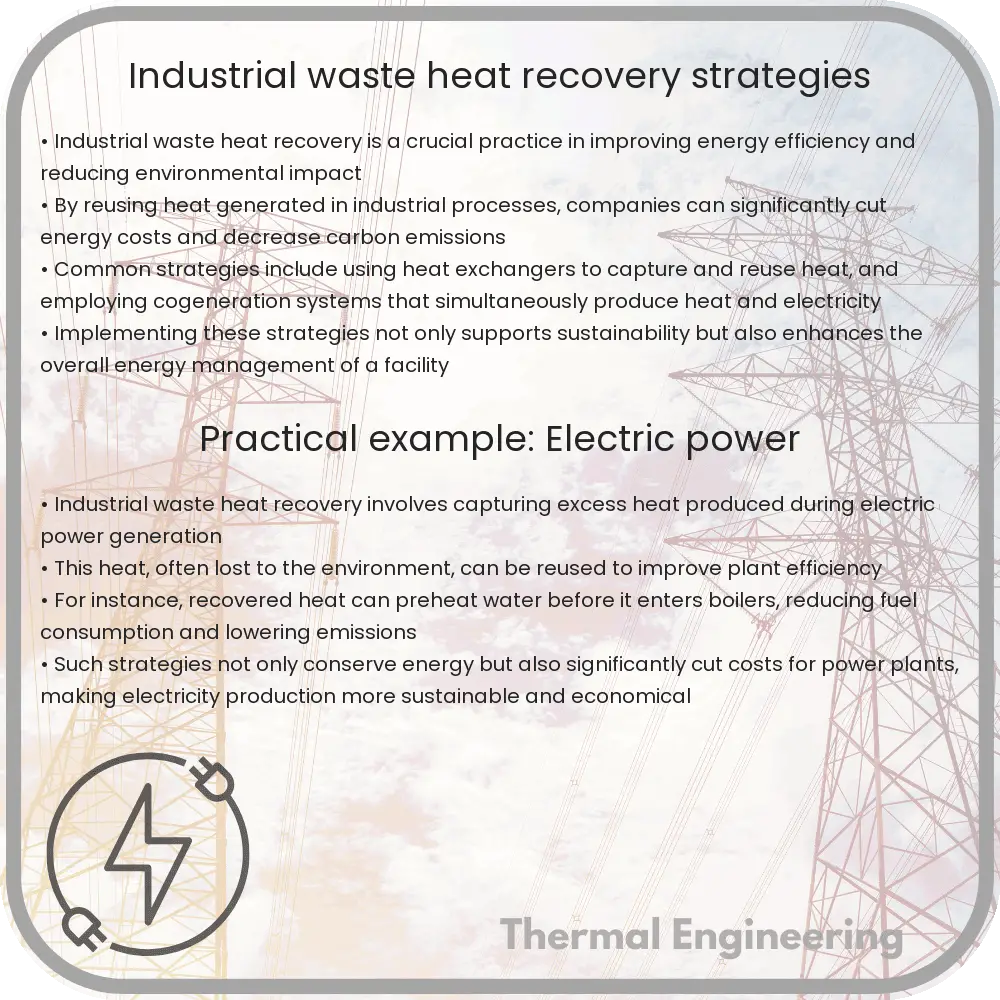
Industrial waste heat recovery strategies

Learn about the methods and benefits of industrial waste heat recovery, a process that captures and reuses excess heat from industrial activities.

Industrial waste heat recovery strategies

Understanding Industrial Waste Heat Recovery

Industrial waste heat recovery refers to the process of capturing and reusing heat generated during industrial operations that would otherwise be lost to the environment. This recovered heat can be utilized to provide useful energy saving costs, and reducing environmental impacts. Here we will explore some of the most effective strategies used in industrial waste heat recovery.

Types of Waste Heat Recovery Systems

There are several technologies and processes designed to recover and utilize waste heat. The choice of a particular technology largely depends on the temperature of the waste heat and the desired use for the recovered energy.

  • Heat Exchangers: One of the most common ways to recover waste heat involves using heat exchangers. These devices transfer heat from one fluid (gas or liquid) to another without mixing them. They are particularly effective for heat recovery in industries like chemical, petroleum, and food processing where high-grade heat is abundant.
  • Waste Heat Boilers: These are used to convert water into steam by utilizing the heat from waste gases in industrial furnaces or engines. The generated steam can then be used for process heating, power generation, or both.
  • Recuperators: A recuperator captures waste heat from exhaust gases to preheat incoming air to a furnace, boiler, or kiln. This significantly increases the system’s thermal efficiency by reducing the fuel requirement to achieve the desired heat output.
  • Regenerative Thermal Oxidizers: These are used to destroy volatile organic compounds (VOCs) in exhaust gases by incineration and recover the resulting thermal energy for heating or generating electricity.
  • Organic Rankine Cycle (ORC) Systems: ORC systems generate electricity from lower-temperature sources of waste heat (typically below 400°C). The system uses an organic working fluid with a boiling point lower than water, allowing energy extraction from low-grade heat sources.

Benefits of Waste Heat Recovery

Implementing waste heat recovery strategies in industrial settings offers numerous benefits:

  • Energy Cost Savings: Recycling waste heat for other purposes reduces the overall energy consumption and the costs associated with it.
  • Reduction in Emissions: By using recovered heat, the fossil fuel consumption decreases, thereby reducing greenhouse gas emissions and other pollutants.
  • Enhanced Process Efficiency: Recovery and reuse of waste heat can improve the overall efficiency of the industrial process, leading to enhanced productivity.
  • Competitive Advantage: Lower energy costs and a smaller carbon footprint can provide industrial entities a competitive edge in the market.

Challenges in Waste Heat Recovery

Despite its benefits, there are several challenges associated with the adoption of waste heat recovery systems:

  • High Initial Investment: Setting up efficient waste heat recovery systems involves significant initial costs, which can be a barrier for many companies.
  • Maintenance: Maintaining heat recovery systems can require skilled personnel and additional operational costs.
  • Technical Limitations: Not all industrial waste heat is recoverable. The feasibility of recovery depends highly on the temperature and quality of the waste heat.
  • Regulatory and Market Conditions: In some regions, the lack of stringent environmental regulations or incentives for energy conservation might diminish the attraction of investing in waste heat recovery technologies.

Conclusion

Industrial waste heat recovery presents a promising opportunity to enhance energy efficiency, reduce costs, and minimize environmental impact. Although challenges exist, the strategic implementation of recovery systems, driven by advancing technologies and a favorable regulatory landscape, can yield substantial benefits for industries worldwide. As businesses and economies increasingly focus on sustainability, the role of waste heat recovery is set to become more crucial than ever.

Graphene-based thermal interfaces

Learn how graphene-based thermal interfaces enhance heat management in electronics, offering superior thermal conductivity and stability.

Graphene-based thermal interfaces

Understanding Graphene-Based Thermal Interfaces

Graphene, a single layer of carbon atoms arranged in a two-dimensional honeycomb lattice, has captivated researchers and engineers alike due to its remarkable properties. Among its many applications, graphene-based thermal interfaces have emerged as a highly efficient solution for thermal management in electronic devices. Here, we explore what graphene-based thermal interfaces are, how they work, and their potential applications in various fields.

What Are Graphene-Based Thermal Interfaces?

Thermal interfaces are materials that sit between two surfaces to enhance thermal conduction between them. They are critical in electronics where they are used to dissipate heat away from components such as CPUs, GPUs, and power electronics to prevent overheating. Graphene-based thermal interfaces leverage the inherent superior thermal conductivity of graphene to perform this function more effectively than traditional materials like thermal grease or pads.

How Do Graphene-Based Thermal Interfaces Work?

The effectiveness of graphene in thermal interfaces can be attributed to its exceptional thermal conductivity, which is one of the highest recorded at room temperature, approximately 5000 W/m*K. This property allows graphene to conduct heat efficiently across its surface, which helps in spreading and dissipating heat rapidly from hot spots on electronic devices to cooler areas or heat sinks.

  • Layered Structure: Graphene sheets can be stacked or blended with other materials to form composites that suit specific thermal and mechanical requirements.
  • High Surface-to-Volume Ratio: Graphene’s thinness and large surface area enable intimate contact with both the heat source and the sink, minimizing thermal resistance at the interface.
  • Chemical Stability: Graphene does not degrade under high temperatures, making it reliable for long-term applications in harsh environments.

Applications of Graphene-Based Thermal Interfaces

Given their superior performance, graphene-based thermal interfaces find applications in a variety of fields:

  1. Electronics Cooling: In smartphones, laptops, and other consumer electronics, graphene interfaces can prevent overheating, thus improving the efficiency and lifespan of the devices.
  2. LEDs: High-brightness LEDs, which generate considerable amounts of heat, benefit greatly from graphene’s thermal management capabilities to maintain efficiency and color stability.
  3. Power Electronics: Devices that handle high currents such as inverters and converters can use graphene to effectively manage heat, thus enhancing performance and durability.
  4. Automotive: With the increasing electrification of vehicles, managing heat in batteries and electronic systems is crucial, and graphene interfaces can help achieve this efficiently.

Graphene-based thermal interfaces are set to play a crucial role in advancing thermal management technologies across various sectors. With ongoing research dedicated to improving the scalability and integration of graphene into commercial products, the future looks promising for this groundbreaking material. As technology evolves and demands increased power and miniaturization, the role of innovative materials like graphene in thermal management will become more critical than ever.

Conclusion

The unique thermal properties of graphene make it an excellent material for thermal interface applications, providing efficient heat dissipation, chemical stability, and potentially easier integration with existing manufacturing processes. As research continues to progress, the practical applications of graphene-based thermal interfaces are expected to expand, offering more reliable and effective solutions for heat management in high-tech industries and beyond.

PCM thermal energy storage

Learn about Phase Change Material (PCM) thermal energy storage, a method using materials that store and release energy during phase changes.

PCM thermal energy storage

Introduction to PCM Thermal Energy Storage

Phase Change Material (PCM) thermal energy storage is an innovative approach to storing and managing thermal energy efficiently. This technology exploits the heat absorbed or released during the phase change of a material, typically between solid and liquid phases. PCM thermal energy storage offers significant benefits in various applications, ranging from heating and cooling in buildings to maintaining temperature control in electronic devices and renewable energy systems.

Understanding Phase Change Materials

Phase Change Materials are substances with a high heat of fusion which, during melting and solidifying at a particular temperature, are capable of storing and releasing large amounts of energy. Common PCM materials include paraffin waxes, fatty acids, and salt hydrates. Each type of PCM is chosen based on its melting point, thermal conductivity, density, and chemical stability, matching the specific requirements of the application.

How PCM Thermal Energy Storage Works

The basic principle behind PCM thermal energy storage lies in the material’s ability to absorb and release heat during phase transitions. When a PCM reaches its melting point, it absorbs a significant amount of heat from its environment. This process is called “latent heat storage”. The PCM absorbs heat without increasing in temperature. Conversely, when the ambient temperature drops, the PCM releases the stored heat as it solidifies, thereby maintaining a constant temperature in its vicinity.

Advantages of PCM Thermal Energy Storage

  • Energy Efficiency: PCM thermal energy storage can enhance energy efficiency by levelling the load on heating and cooling systems, reducing the peak demand and smoothing out the demand spikes.
  • Temperature Stability: The ability of PCMs to maintain a consistent temperature during the phase change process makes them ideal for applications requiring precise temperature control.
  • Flexibility: PCMs can be incorporated into various materials and systems, including wallboards, flooring, and even textiles, offering versatile solutions for managing thermal energy.
  • Cost-Effectiveness: By potentially reducing the need for mechanical cooling and heating systems, PCMs can help lower energy costs.

Applications of PCM Thermal Energy Storage

PCM thermal energy storage finds applications in numerous fields:

  1. Building Temperature Control: In building construction, PCMs are used in walls, floors, and roof systems to reduce indoor temperature fluctuations and decrease the heating and cooling costs.
  2. Renewable Energy Systems: In solar power plants, for example, PCMs can store excess heat generated during the day and release it at night, thus extending the hours of operation.
  3. Thermal Management in Electronics: PCMs help maintain operational temperatures of electronics, thereby protecting sensitive components and extending their lifespan.
  4. Temperature-controlled Transportation: PCMs are also used in containers and packaging to stabilize product temperatures during shipping and handling, ideal for perishable goods or pharmaceuticals.

Challenges in PCM Thermal Energy Storage

Despite its advantages, PCM thermal energy storage also faces several challenges that need to be addressed to enhance its widespread adoption:

  • Cost of Materials: High-quality PCMs can be expensive, impacting the cost-effectiveness of PCM deployment in large-scale systems.
  • Integration with Existing Systems: Integrating PCMs into existing infrastructures like buildings and vehicles may require significant modifications, which can be a barrier for retrofit projects.
  • Sustainability Concerns: Some phase change materials can be hazardous or have environmental impacts, making material choice critical from a sustainability perspective.

Conclusion

PCM thermal energy storage represents a promising technology that leverages the unique properties of phase change materials to improve energy efficiency and stability in various applications. As research continues and solutions to current challenges are developed, the role of PCMs in energy systems is likely to grow, offering significant benefits in terms of sustainability and efficiency in thermal management solutions.

Heat transfer in porous media

Explore the complexities of heat transfer in porous media, including conduction, convection, and radiation, and their applications in engineering.

Heat transfer in porous media

Understanding Heat Transfer in Porous Media

Heat transfer in porous media is a crucial concept in various fields of engineering and science such as geothermal engineering, insulation technology, and chemical processing. Porous media, characterized by the presence of void spaces within a solid material, encompass a wide range of materials, from rocks and soil to synthetic foams and biological tissues. Understanding how heat moves through these materials involves intricate physics, and it is vital for designing efficient systems in civil, environmental, and energy engineering applications.

Basics of Heat Transfer Mechanisms

Heat transfer in porous media is generally governed by three primary mechanisms: conduction, convection, and radiation:

  • Conduction is the transfer of heat through a solid material by the vibration and movement of molecules and electrons. Within porous media, this occurs both through the solid matrix and the fluid (if present) in the pores.
  • Convection involves heat transfer facilitated by the movement of fluid within the pores of the media. This mechanism can be natural, driven by buoyancy forces due to temperature differences, or forced, induced by external mechanical forces.
  • Radiation refers to heat transfer through electromagnetic waves. In porous media, this can occur as radiation travels through void spaces and is absorbed, transmitted, or reflected by the solid matrix.

Typically, the dominant heat transfer mechanism depends on the properties of the porous medium, such as the porosity, permeability, thermal conductivity, and the fluid properties such as viscosity and thermal capacity.

Mathematical Description of Heat Transfer in Porous Media

The mathematical modeling of heat transfer within porous media often involves Darcy’s Law for fluid flow combined with Fourier’s Law of heat conduction and the energy equation. A simplified version of the governing equation, ignoring radiation, can be generally described as:

\( \rho C_p \frac{\partial T}{\partial t} = \nabla \cdot (k \nabla T) + \rho_f C_{p,f} \mathbf{u} \cdot \nabla T + S \)

  • \( \rho \) and \( C_p \) are the density and specific heat capacity of the porous medium, respectively.
  • \( T \) represents the temperature field which varies with time \( t \).
  • \( k \) is the effective thermal conductivity of the medium.
  • \( \rho_f \) and \( C_{p,f} \) are the density and specific heat capacity of the fluid, respectively.
  • \( \mathbf{u} \) is the velocity field of the fluid within the pores.
  • \( S \) includes sources or sinks of heat within the medium such as metabolic heat generation in biological tissues or chemical reactions in a reactor.

Practical Applications and Examples

Heat transfer in porous media is essential in numerous practical applications:

  • Geothermal Energy: Understanding heat transfer in the earth’s porous layers is vital for the design of geothermal energy extraction systems.
  • Building Insulation: Efficient insulation materials are often porous to limit heat transfer by conduction and convection, reducing energy costs in buildings.
  • Water Purification: In filtration systems, porous materials are used to trap contaminants while allowing water to pass through, with heat treatments often used to cleanse or regenerate the filtering media.

Each application requires tailored properties of the porous medium for optimal heat management, showcasing the critical role of engineering principles in designing these systems.

Conclusion

The study of heat transfer in porous media combines complex physics and practical application in engineering. As research advances and new materials are developed, understanding the principles discussed here will continue to be indispensable in designing efficient and sustainable systems. Whether improving the efficiency of geothermal systems or developing better insulation materials, the principles of heat transfer in porous media are fundamental to the advancement of technology and energy management.

Radiative cooling materials

Learn how radiative cooling materials use natural thermal radiation properties for sustainable, energy-efficient cooling.

Radiative cooling materials

Understanding Radiative Cooling Materials

Radiative cooling is a passive cooling technology that involves the natural thermal radiative properties of materials to lower temperatures without consuming energy. This concept is increasingly relevant as it offers a sustainable alternative to conventional air conditioning systems, potentially reducing reliance on electrical cooling systems and associated greenhouse gas emissions.

How Radiative Cooling Works

The basic principle behind radiative cooling is that all bodies spontaneously emit heat in the form of infrared radiation. During the night, surfaces facing the sky can shed heat as infrared radiation escaping into the cold universe through the atmospheric transparency window (8–13 micrometers wavelength band). Intriguingly, recent advancements in material science have enabled this cooling effect even under direct sunlight during daytime.

Materials Used in Radiative Cooling

Multilayer Photonic Structures

These engineered structures are designed to reflect sunlight while simultaneously allowing thermal radiation in the infrared spectrum. They typically consist of alternating layers of different materials, each with specific optical properties, optimized to reflect over 97% of sunlight and radiate infrared energy effectively.

Photonic Crystals

Photonic crystals are materials with a periodic optical nanostructure affecting the motion of photons in the same way that ionic lattices affect electrons in solids. They can be engineered to have high reflectance in the visible spectrum and high emittance in the infrared range, making them ideal for radiative cooling applications.

Metamaterials

A metamaterial refers to materials engineered to have properties not found in naturally occurring materials and are often used to manipulate electromagnetic waves. For radiative cooling, metamaterials are tailored to offer high thermal emittance and minimized solar absorbance.

Application of Radiative Cooling Materials

  • Building Cooling: Incorporating radiative cooling materials in building rooftops can significantly reduce indoor temperatures, thereby cutting down on air conditioning costs and energy consumption.
  • Solar Panels: Solar panel efficiency drops as temperature increases. Covering solar panels with a thin layer of radiative cooling material can help maintain their efficiency on hot days.
  • Agriculture: Radiative cooling materials can be used to cool water used for irrigation or as a coating for greenhouses to moderate temperatures for optimal plant growth.

Challenges and Future Directions

Despite their potential, there are several challenges to the widespread adoption of radiative cooling materials. Cost of materials and scaling production for large-scale applications are significant hurdles. Additionally, integrating these materials into existing infrastructure requires innovative architectural and engineering solutions.

Future research is directed towards enhancing the performance and durability of radiative cooling materials under various atmospheric conditions. Scientists are also exploring ways to incorporate these materials into portable devices and vehicles, broadening their applicability.

Radiative cooling represents a promising frontier in materials science with the potential to contribute significantly to sustainable living and energy conservation. As research progresses, we may find even more innovative applications that could transform our approach to cooling and energy use.