Facebook Instagram Youtube Twitter

Heat transfer in textile engineering

Learn how heat transfer is essential in textile engineering, influencing fabric performance from manufacturing to final product applications.

Heat transfer in textile engineering

Understanding Heat Transfer in Textile Engineering

Heat transfer plays a crucial role in the field of textile engineering, influencing everything from the manufacturing processes to the performance characteristics of the finished textiles. This process is key to developing fabrics that maintain comfort and protection under varying environmental conditions. Here, we’ll explore the basics of heat transfer in textile engineering and its practical applications.

Types of Heat Transfer

There are three primary modes of heat transfer: conduction, convection, and radiation, each of which operates differently in the context of textiles:

  • Conduction is the transfer of heat through a material by direct contact. In textiles, heat moves between fibers, yarns, and fabrics that are in physical contact with each other. The thermal conductivity of the material dictates the rate of heat flow.
  • Convection involves the transfer of heat by the movement of fluids (liquids or gases). This is often observed in textiles through the interaction between the fabric and the air surrounding it. The thermal insulation properties of a fabric can affect how convective heat loss or gain occurs.
  • Radiation refers to the transfer of heat in the form of infrared radiation. All objects emit some degree of thermal radiation, and how textiles absorb, reflect, or emit infrared radiation can significantly affect comfort levels, especially in outdoor clothing.

Mathematical Representation of Heat Transfer in Textiles

The rate of heat transfer (Q) can be quantitatively described by the equation:

Q = k * A * (T1 – T2) / d

  • k is the thermal conductivity of the fabric,
  • A is the area through which heat is being transferred,
  • T1 and T2 are the temperatures on either side of the fabric, and
  • d is the thickness of the fabric.

This equation primarily illustrates conductive heat transfer but can be adapted or expanded to factor in convective and radiative heat transfer mechanisms as required.

Applications in Textile Products

Understanding and controlling heat transfer is vital for designing textiles that suit specific environments and needs:

  • Thermal Insulation: In colder climates, textiles with low thermal conductivity that minimize heat loss are preferred. Materials like wool and fleece are popular because of their excellent insulation properties.
  • Breathable Fabrics: For athletic wear, it is essential to manage heat and moisture effectively. Fabrics that allow for convective heat loss while wicking moisture away from the body help in maintaining comfort during physical activities.
  • Protective Clothing: In industrial settings, specially designed textiles can protect workers from extreme heat. These materials often reflect radiative heat and reduce heat conduction to the wearer’s body.

Technological Innovations and Future Directions

Advances in textile engineering continue to focus on enhancing the functional properties of fabrics. Technologies such as phase change materials (PCMs) and shape memory polymers (SMPs) are being integrated into textiles to actively regulate temperature by absorbing, storing, and releasing heat according to the environment.

Moreover, research into nanotechnology and micro-encapsulation techniques offers promising avenues for developing fabrics with superior heat management capabilities, potentially revolutionizing clothing for both everyday use and extreme conditions.

In conclusion, heat transfer in textiles is a complex but fascinating subject, combining principles of physics with creative engineering solutions to meet diverse human needs. As materials technology advances, the integration of innovative heat transfer mechanisms is likely to become an increasingly important aspect of textile engineering.
Thermal radiation shielding

Learn about thermal radiation shielding, its function, effectiveness, materials used, and applications across various engineering sectors.

Thermal radiation shielding

Understanding Thermal Radiation Shielding in Engineering

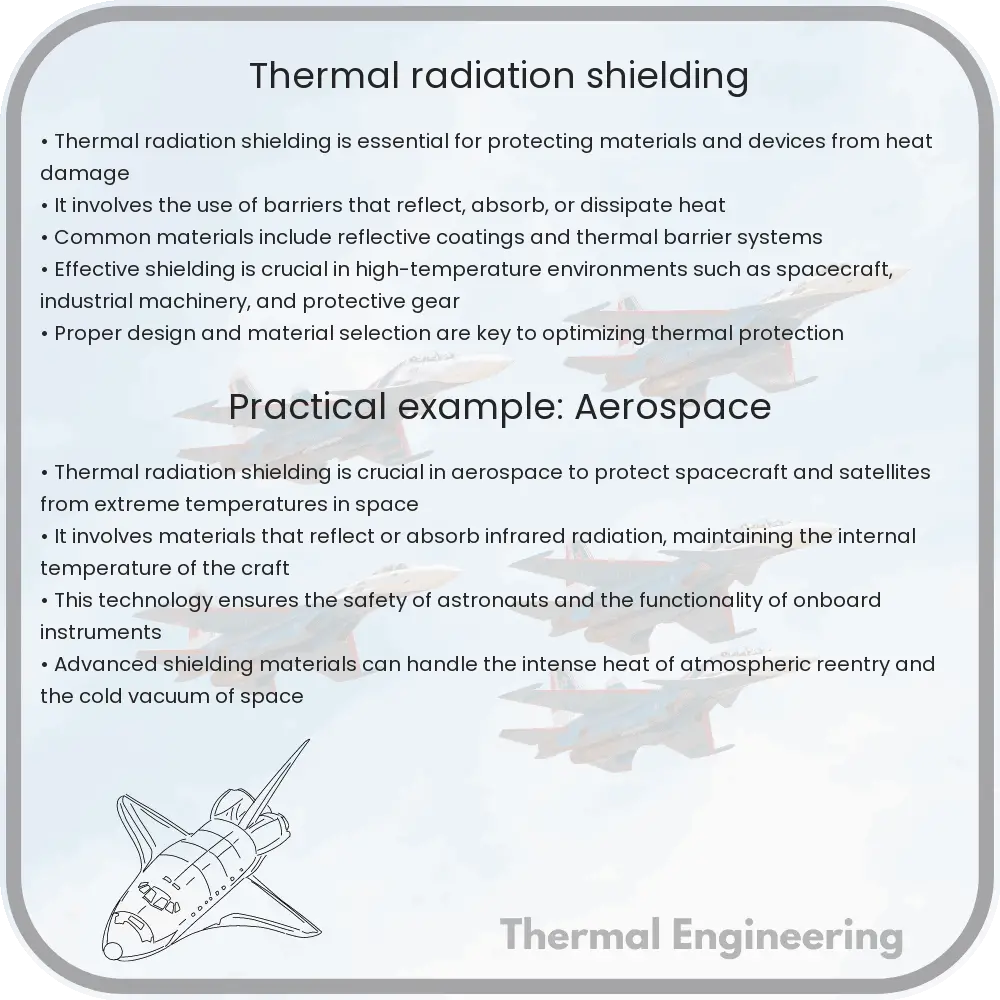
Thermal radiation shielding is a critical aspect of engineering, specifically used to protect systems and structures from excessive heat, particularly in extreme environments such as aerospace, nuclear reactors, and industrial processes. This article will explain the basics of thermal radiation, how thermal radiation shields work, and their applications in various engineering fields.

What is Thermal Radiation?

Thermal radiation is a form of heat transfer that occurs through the emission of electromagnetic waves, primarily in the infrared spectrum. All bodies at a temperature above absolute zero emit thermal radiation. The rate of this emission, and thus the intensity of the radiation, increases with the temperature of the body. The Stefan-Boltzmann law quantifies this relationship:

E = σT4

where E is the energy radiated per unit area, T is the absolute temperature in kelvins, and σ (the Stefan-Boltzmann constant) is approximately 5.67 x 10⁻⁸ W/m2K4.

How Do Thermal Radiation Shields Work?

Thermal radiation shields function primarily by reflecting radiant heat away from the protected area or object. The effectiveness of a thermal shield depends on factors such as the shield’s material properties, including its emissivity and reflectivity, and its configuration in the insulation system.

Materials with low emissivity and high reflectivity are ideal for thermal shielding. These materials can reflect a significant portion of the incoming radiation while emitting very little of the radiation they absorb. Common materials used include aluminum foil, which has high thermal reflectivity, and special coatings designed to minimize emissivity.

Applications of Thermal Radiation Shielding

  • Aerospace: In spacecraft, thermal radiation shields protect sensitive components from the extreme temperatures of space, which can vary drastically when the spacecraft is exposed to the sun versus when it is in the Earth’s shadow.
  • Automotive: Thermal barriers are used in cars to protect components and passengers from heat generated by the engine and exhaust systems.
  • Building Construction: Radiant barriers are installed in buildings, typically in attics, to reduce cooling costs by reflecting heat away from the living spaces.
  • Protective Clothing: Firefighters and industrial workers wear suits with thermal radiation shielding to protect against high temperatures during their operations.

Challenges and Innovations

One of the main challenges in thermal radiation shielding is maintaining performance under extreme conditions for prolonged periods. Materials can degrade due to high temperatures, mechanical stress, or environmental factors. Innovation in material science, including the development of new composites and nanomaterials, is key to improving the durability and effectiveness of thermal shields.

In conclusion, thermal radiation shielding is a crucial technology in many sectors of engineering, providing safety and efficiency in environments exposed to high temperatures. Continued advances in materials science and engineering will further enhance the capabilities and applications of thermal radiation shielding in the future.

Natural convection in enclosures

Learn about natural convection in enclosures, a key heat transfer mechanism in engineering, influenced by factors like geometry and temperature differences.

Natural convection in enclosures

Understanding Natural Convection in Enclosures

Natural convection in enclosures is a fundamental heat transfer mechanism occurring in various engineering applications, from building insulation and solar panels to electronic devices. This process involves the transfer of heat through a fluid (such as air or water), which is not caused by an external source like a pump or a fan but through the natural movement of the fluid itself due to temperature differences within the enclosure.

Principles of Natural Convection

Heat transfer by natural convection occurs when warmer, less dense fluid rises, and cooler, denser fluid descends due to gravity. This creates a convective current within the enclosure. The efficiency and rate of heat transfer by natural convection depend on numerous factors, including the geometry of the enclosure, the properties of the fluid, and the temperature difference within the fluid.

Key Factors Affecting Natural Convection

  • Geometry of the Enclosure: The size, shape, and orientation of the enclosure significantly influence convection currents. Tall enclosures with a vertical orientation enhance natural convection as they promote a larger gradient between the top and bottom of the enclosure.
  • Temperature Difference: The greater the temperature difference between the heated surfaces and the bulk of the fluid, the stronger the convection currents. This is quantified by a dimensionless number known as the Rayleigh number (Ra).
  • Properties of the Fluid: Thermal conductivity, viscosity, density, and specific heat capacity are fluid properties that determine how effectively it can transfer heat. Air and water are common fluids in natural convection applications, each with distinct properties that affect performance.

Mathematical Background

The behavior of natural convection can be predicted and analyzed using the principles of fluid dynamics and heat transfer. The Rayleigh number (Ra) is a crucial dimensionless quantity in understanding natural convection:

\[ Ra = \frac{g \beta (T_{s} – T_{\infty}) L^{3}}{\nu \alpha} \]

where:

  • \( g \) is the acceleration due to gravity,
  • \( \beta \) is the thermal expansion coefficient of the fluid,
  • \( T_{s} \) is the surface temperature,
  • \( T_{\infty} \) is the ambient fluid temperature,
  • \( L \) is the characteristic length (height of the enclosure),
  • \( \nu \) is the kinematic viscosity of the fluid,
  • \( \alpha \) is the thermal diffusivity of the fluid.

For natural convection to occur, the Rayleigh number must exceed a critical value, typically around 1708, beyond which flow transitions from laminar to turbulent, significantly enhancing the heat transfer rate.

Applications

Natural convection is utilized in many engineering systems to improve energy efficiency and system reliability by eliminating the need for mechanical cooling systems. Examples include:

  • Passive Solar Heating: Designing buildings to maximize natural convection can lead to significant energy savings in heating.
  • Thermal Management in Electronics: Enclosures for electronic components are often designed to promote natural air convection, thereby preventing overheating without additional energy input.
  • Cooling of Photovoltaic Panels: Natural convection helps improve the efficiency of solar panels by reducing their operating temperature through airflow in specially designed enclosures.

Conclusion

Natural convection in enclosures offers a quiet, reliable, and energy-efficient method for managing heat transfer in numerous engineering applications. Understanding the dynamics of natural convection can lead to better design and operation of systems ranging from household appliances to large-scale industrial installations, enhancing their performance while reducing their environmental impact.

Heat transfer in food processing

Learn about heat transfer in food processing, including its types, mathematical principles, applications, and challenges in the industry.

Heat transfer in food processing

Understanding Heat Transfer in Food Processing

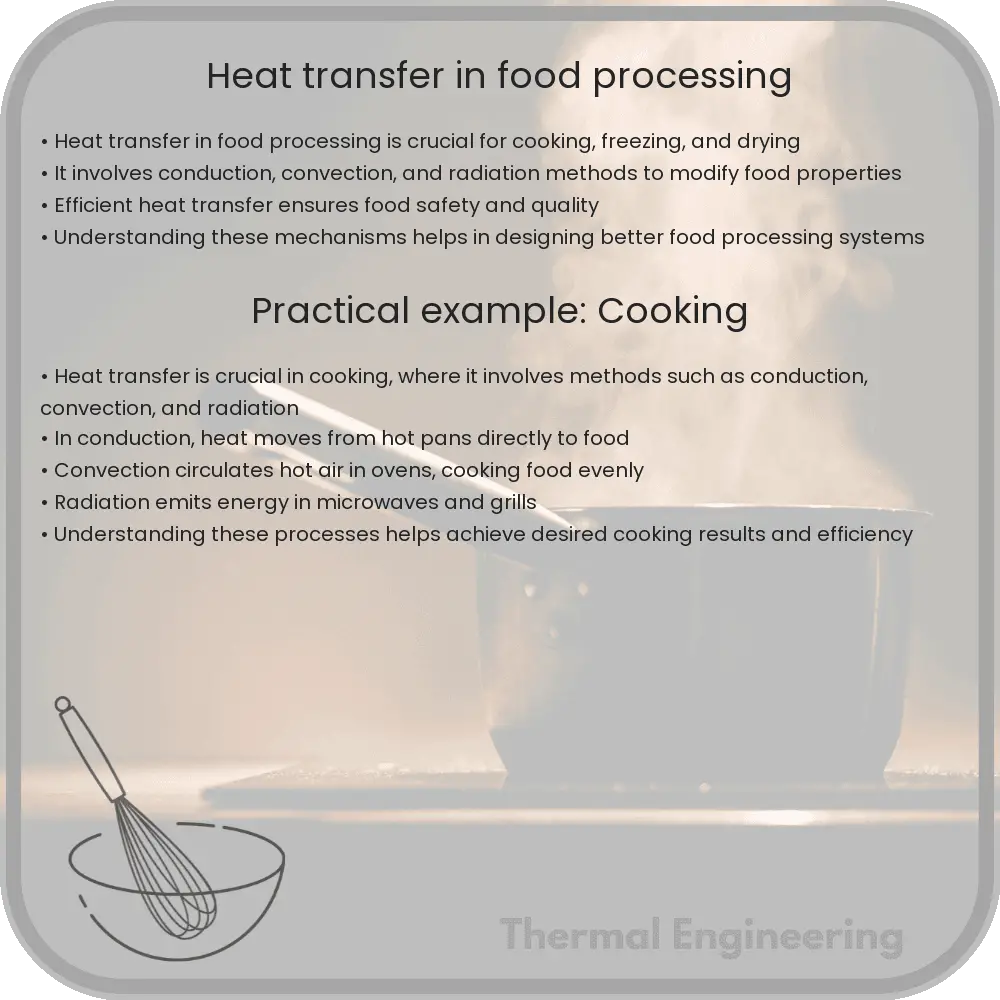
Heat transfer is a fundamental aspect of food processing that affects everything from the safety and quality of food to its shelf-life and sensory attributes. Food engineers harness the principles of heat transfer to design processes that efficiently produce high-quality food products. This article will explore these principles and their practical applications in food processing.

Types of Heat Transfer

There are three primary modes of heat transfer utilized in the food processing industry: conduction, convection, and radiation.

  • Conduction is the transfer of heat through a solid material. In food processing, conduction occurs when heat moves from a hot pan to its cooler contents, like when cooking a steak on a grill.
  • Convection involves the transfer of heat by the physical movement of a fluid (either liquid or gas). This can be natural, as with the rising heat in a roasting oven, or forced, as in a convection oven where fans circulate the air.
  • Radiation refers to heat transfer through electromagnetic waves. It doesn’t require a medium; for example, infrared heat lamps used to keep food warm operate via radiant heat transfer.

Mathematical Representation of Heat Transfer

In the engineering of food processing systems, understanding the mathematical description of how heat transfer occurs is crucial for designing efficient processes. The basic equation governing heat transfer is expressed as:

Q = k * A * (T1 – T2) / d

Where:

  1. Q is the rate of heat transfer (in watts, W)
  2. k represents the thermal conductivity of the material (in watts per meter-kelvin, W/m*K)
  3. A is the cross-sectional area through which heat is being transferred (in square meters, m2)
  4. T1 – T2 is the temperature difference between the hot and cold sides (in Kelvin, K)
  5. d is the thickness of the material (in meters, m)

These principles enable engineers to calculate how quickly heat needs to be transferred in a process to achieve desired food safety and quality objectives.

Applications of Heat Transfer in Food Processing

Heat transfer plays a role in numerous food processing applications:

  • Pasteurization and Sterilization: These processes use heat to destroy pathogens and spoilage organisms in foods like milk, canned goods, and ready-to-eat meals. Engineers must understand heat transfer to ensure products are safe without compromising quality.
  • Baking and Drying: Efficiently removing moisture from products such as bread, cookies, and dried fruits involves understanding how heat is transferred within an oven or dryer.
  • Cooling and Freezing: Quickly reducing the temperature of food products to preserve quality and extend shelf life requires the removal of heat, which is a reverse application of heat transfer principles.

Each application uses specific machinery designed with an understanding of heat transfer dynamics, optimizing the balance between energy use, processing time, and product quality.

Challenges in Heat Transfer

Despite its importance, optimizing heat transfer in food processing presents several challenges:

  • Scale-Up: Processes developed at a small scale do not always perform the same way when scaled up to industrial volumes, requiring careful recalibration of heat transfer parameters.
  • Uneven Heating: Achieving uniform heat distribution can be difficult, especially in products of irregular shape and size, potentially leading to quality issues.
  • Energy Efficiency: The cost and environmental impact of energy consumption in food processing drives the need for more efficient heat transfer processes.

Understanding and optimizing heat transfer in food processing technology is key to improving food safety, quality, and sustainability. Advances in this field continue to enhance the capabilities and efficiency of food processing operations worldwide.

Electronic cooling solutions

Learn about electronic cooling solutions, key for performance and longevity in devices from smartphones to data centers.

Electronic cooling solutions

Understanding Electronic Cooling Solutions

Electronic devices, from consumer electronics like smartphones and laptops to large-scale data centers, all generate heat during operation. Effective management of this heat is crucial for maintaining performance, reliability, and longevity of the devices. In this article, we explore various electronic cooling solutions used in engineering to dissipate heat and ensure electronics continue to function efficiently.

Basics of Heat Transfer in Electronics

Heat in electronic devices is primarily produced by electrical resistance and switching losses in semiconductors. The efficiency of a cooling system depends on its ability to transfer this heat from the electronic components to the surrounding environment. This process involves three basic modes of heat transfer:

  • Conduction: Heat transfer through materials (e.g., from a processor chip to a heat sink).
  • Convection: Heat transfer through a fluid medium, such as air or liquid, surrounding the component.
  • Radiation: Heat transfer through electromagnetic waves, which is generally less significant in electronics compared to conduction and convection.

Types of Cooling Systems

Electronic cooling solutions can be broadly categorized into passive and active systems:

  • Passive Cooling: Relies on natural processes such as heat diffusion through materials and natural air circulation. Examples include heat sinks, heat spreaders, and thermal pads. These systems do not have moving parts, making them more reliable and silent but generally less effective at cooling than active systems.
  • Active Cooling: Uses external energy to enhance heat transfer. This category includes solutions such as fans, liquid cooling systems, and thermoelectric coolers. Active systems are typically used in situations where passive cooling is insufficient.

Popular Cooling Techniques

  1. Heat Sinks and Fans: Heat sinks are one of the most common cooling mechanisms, often made of aluminum or copper, which are excellent heat conductors. They are designed with fins to increase the surface area in contact with the air, enhancing heat dissipation. Fans are used to augment airflow over the heat sink, dramatically improving the convection process.
  2. Liquid Cooling Systems: In scenarios where air cooling is inadequate, liquid cooling can be employed. This method uses a coolant fluid that absorbs heat from components and transports it to a radiator where it is dissipated into the environment.
  3. Thermoelectric Cooling (Peltier Coolers): These devices use the Peltier effect to create a heat flux between the junction of two different types of materials. A voltage is applied across the materials, causing heat to be absorbed on one side (cooling it) and expelled on the other (heating it).
  4. Phase Change Materials (PCMs): PCMs absorb heat as they transform from solid to liquid, keeping the component temperature stable. They are useful in maintaining low temperatures in electronics without continuous energy consumption.

Selection Criteria for Cooling Solutions

Choosing the right cooling solution involves several factors:

  • Heat Load: The total amount of heat generated by the device. Higher heat loads may require more sophisticated cooling methods.
  • Ambient Temperature: The temperature of the environment in which the device operates. Devices in hotter environments need more efficient cooling solutions.
  • Space and Weight Constraints: Available space and weight limitations can greatly influence the choice of cooling technique, especially in compact electronics like smartphones or aerospace applications.
  • Cost: The overall budget for cooling can also determine whether a passive or active system is feasible.
  • Reliability and Noise: In many applications, the reliability of the cooling system and the noise generated by fans or pumps are critical considerations.

Understanding these various cooling strategies can help designers and engineers develop more efficient and reliable electronic devices. With the ongoing advancement in electronic technologies, the development of innovative and effective cooling solutions continues to be a vital area of research in engineering.

Heat transfer in additive manufacturing

Explore the critical role of heat transfer in additive manufacturing, including its mechanisms and challenges, to optimize 3D printing processes.

Heat transfer in additive manufacturing

Understanding Heat Transfer in Additive Manufacturing

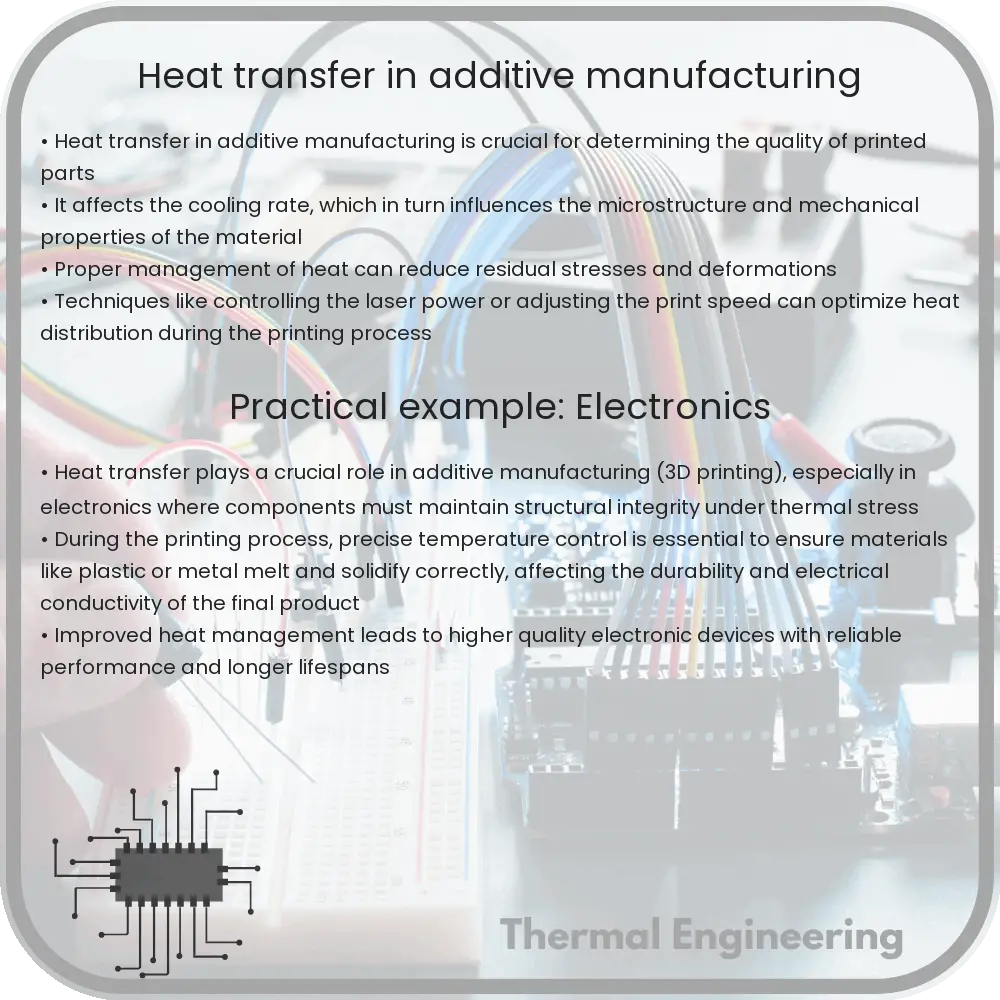
Additive manufacturing (AM), commonly known as 3D printing, is a revolutionary manufacturing process that builds parts layer by layer from digital models. While additive manufacturing offers substantial design flexibility and material efficiency, managing heat transfer during the printing process is critical for ensuring product quality and structural integrity. This article explores the basics of heat transfer in additive manufacturing and its implications on the process and final product.

Types of Heat Transfer in Additive Manufacturing

Heat transfer in additive manufacturing primarily involves three mechanisms:

  • Conduction: This is the transfer of heat through materials. In AM, heat is conducted from the heat source (like a laser or electron beam) through the deposited material to the underlying layers and the build platform.
  • Convection: Heat transfer occurs through the movement of fluids (air or inert gas in the build environment) over the surface of the part being printed. This can help in cooling the material as well as in removing by-product gases or particles.
  • Radiation: Thermal radiation is the emission of heat in the form of infrared radiation from the surface. High temperatures typically used in AM make radiation a notable mechanism for heat transfer, particularly in processes involving metals.

Challenges Posed by Heat Transfer in Additive Manufacturing

Managing heat transfer in AM is crucial due to the following challenges:

  • Thermal Stresses: Rapid heating and cooling rates can lead to significant temperature gradients within the material, generating thermal stresses. These stresses can cause warping, distortion, and even cracking of the material.
  • Microstructural Changes: The thermal history of the material affects its microstructure, which in turn influences the mechanical properties such as strength, hardness, and ductility. Uneven cooling can lead to anisotropic properties, where the material behaves differently depending on the direction of the load.
  • Residual Stresses: The accumulation of thermal stresses during the layer-by-layer construction can introduce residual stresses, which might lead to failures upon removal from the build plate or during post-processing stages.

Techniques for Managing Heat Transfer

To mitigate the issues associated with heat transfer in additive manufacturing, several techniques are applied:

  • Optimized Process Parameters: Adjusting laser power, scanning speed, and hatch spacing are common ways to control the input heat and its distribution during the process.
  • Preheating the Build Platform: Preheating can help in reducing thermal gradients between the build platform and the deposited layers, thereby decreasing the likelihood of part warping and delamination.
  • Layer Time Control: By controlling the time interval between the deposition of successive layers, sufficient cooling can be ensured, allowing for the dissipation of excess heat and reducing thermal stresses.
  • Use of Thermal Barriers: Incorporating thermal barrier coatings or materials can aid in managing heat conduction rates, particularly in parts with complex geometries or varying cross-sectional areas.

In summary, effective heat management in additive manufacturing is vital for achieving high-quality, dimensionally accurate parts with desirable material properties. Developers and engineers continue to innovate in process control and material science to better control and predict heat transfer dynamics in various AM technologies. This ongoing work expands the capabilities of additive manufacturing, pushing it towards broader industrial applications.

Heat transfer in aerospace materials

Understanding the mechanisms and management of heat transfer in aerospace materials, which impacts spacecraft design and safety.

Heat transfer in aerospace materials

Understanding Heat Transfer in Aerospace Materials

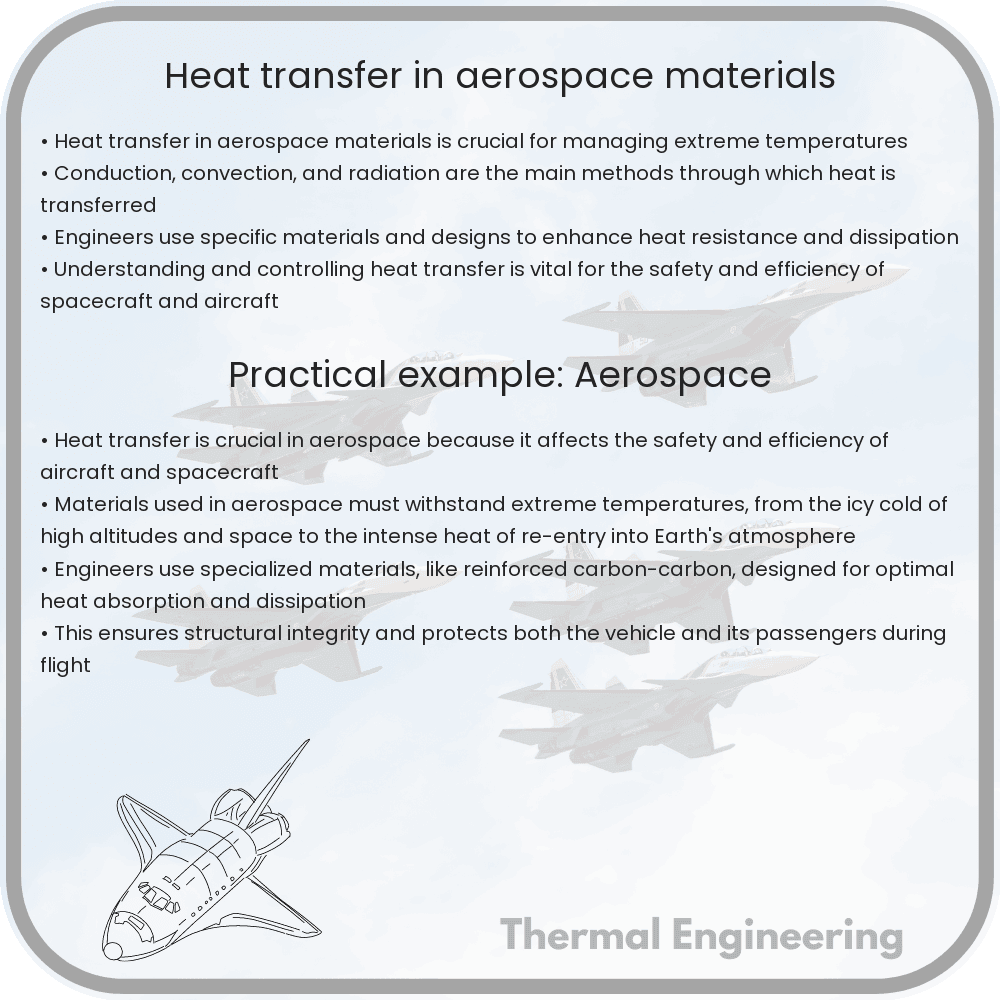
Heat transfer is a fundamental aspect of aerospace engineering, affecting everything from the design of spacecraft to their operational efficiency and safety. Aerospace materials are specifically developed or chosen based on their ability to withstand extreme temperatures and heat transfer processes inherent in aerospace environments. This article explores the basic mechanisms of heat transfer in aerospace materials and their implications in aerospace technology.

Types of Heat Transfer

There are three primary modes of heat transfer: conduction, convection, and radiation. Each mode plays a critical role in aerospace engineering:

  • Conduction occurs when heat is transferred through a material without the material itself moving. In aerospace, conduction is crucial in materials that form the structural components of spacecraft and jets, as these materials must efficiently conduct heat away from critical areas to prevent damage.
  • Convection involves the transfer of heat by the physical movement of a fluid (which can be a liquid or gas). In aerospace, this is particularly relevant for cooling systems that utilize airflow over surfaces to remove heat from the aircraft or spacecraft structures.
  • Radiation refers to the transfer of heat through electromagnetic waves. Spacecraft are exposed to intense radiation from the sun, and must have materials capable of reflecting this radiation or dissipating its energy effectively.

Thermal Properties of Aerospace Materials

Choosing the right materials for aerospace applications involves understanding their thermal properties. These include:

  • Thermal Conductivity: This property measures how well a material can conduct heat. Materials with high thermal conductivity are essential for areas that require quick heat dissipation.
  • Specific Heat Capacity: This refers to the amount of heat per unit mass required to raise the temperature of the material by one degree Celsius. High specific heat capacities are favorable in thermal protection systems to absorb and retain heat during high-temperature exposure.
  • Thermal Expansion: Materials expand when heated and contract when cooled. Aerospace materials must be selected with compatible thermal expansion properties to avoid stress and structural damage under different temperatures.

Challenges in Heat Transfer Management

Aerospace engineers face various challenges in managing heat transfer:

  • Extreme Temperature Variations: Aerospace vehicles undergo severe temperature fluctuations, from very cold conditions in upper atmosphere or space to extremely hot temperatures during re-entry or propulsion phases.
  • Material Degradation: Over time, exposure to high temperatures and thermal cycles can degrade materials, affecting their strength and functionality.
  • Efficiency: Efficient heat management systems are crucial for the operational effectiveness of spacecraft and aircraft, requiring advanced materials and design strategies to optimize performance while minimizing weight and energy consumption.

Examples of Aerospace Materials

Several materials are commonly used in aerospace for their excellent thermal properties:

  • Aluminum Alloys: Lightweight and with reasonable thermal conductivity, used extensively in aircraft structures.
  • Titanium Alloys: Known for their strength and resistance to high temperatures, ideal for critical high-heat zones.
  • Ceramic Composites: Excellent for thermal insulation, used in space shuttles and re-entry vehicles to protect against extreme heat.
  • Ablative Materials: These materials slowly erode at high temperatures, absorbing heat in the process, and are used in areas exposed to the highest temperatures during re-entry.

Conclusion

Heat transfer in aerospace materials is a complex but fascinating area of study that plays a vital role in the safety and functionality of aircraft and spacecraft. By understanding and leveraging the properties of different materials to manage heat effectively, aerospace engineers can achieve remarkable advancements in aerospace technology, pushing the boundaries of what is possible in air and space travel.

Thermal analysis of composites

Thermal analysis of composites examines how materials with varied properties respond to temperature changes, vital for engineering applications.

Thermal analysis of composites

Understanding Thermal Analysis of Composites

Thermal analysis of composites is a crucial study in the field of materials engineering, focusing on how composite materials respond to changes in temperature. Composites, which are materials made from two or more constituent materials with significantly different physical or chemical properties, are widely used in automotive, aerospace, and construction industries due to their excellent strength-to-weight ratios and adaptability.

Why is Thermal Analysis Important?

Thermal analysis helps engineers and researchers predict the behavior of composite materials under various temperature conditions. This analysis is vital because composite materials can experience dimensional changes, degradation, or failure when exposed to temperature variations. Understanding these thermal responses ensures safety, durability, and functionality of materials applied in critical structures like aircrafts, vehicles, and buildings.

Key Methods in Thermal Analysis of Composites

  • Differential Scanning Calorimetry (DSC): This technique measures the heat flow associated with material transitions as a function of temperature and time. DSC is particularly useful for identifying phase transitions, such as melting or crystallization, which can affect the mechanical properties of composites.
  • Thermogravimetric Analysis (TGA): TGA measures the amount and rate of change in a composite’s weight in relation to temperature change. It is essential for evaluating the thermal stability and composition of composites, particularly the content of fibrous reinforcements and matrix.
  • Dynamic Mechanical Analysis (DMA): DMA measures the mechanical properties of materials as they are deformed under periodic stress. It is used to assess the stiffness and damping properties of composites and how they vary with temperature, frequency, and other environmental factors.

Theoretical Background of Thermal Analysis

The thermal behavior of composite materials can be understood through the heat capacity, coefficient of thermal expansion (CTE), and thermal conductivity:

  • Heat Capacity (Cp): This is defined as the amount of heat required to change the temperature of a unit mass of the material by one degree Celsius. The equation for heat capacity is given by the relation Q = m*Cp*ΔT, where Q is the heat added, m is mass, and ΔT is the change in temperature.
  • Coefficient of Thermal Expansion (CTE): CTE describes how the size of a material changes with a change in temperature. Composite materials can have varying CTEs in different directions, which must be managed to avoid structural failures due to thermal stresses.
  • Thermal Conductivity (k): This property indicates the ability of a material to conduct heat. It is crucial for understanding how heat travels through composites, which can influence their thermal stability and the effectiveness of thermal barriers.

Applications of Thermal Analysis

Thermal analysis of composites has broad applications across various industries:

  1. Aerospace: Prediction of thermal behavior during high-speed flight or when exposed to extreme environmental conditions.
  2. Automotive: Evaluation of engine components, insulation materials, and overall vehicle thermal management systems.
  3. Construction: Ensuring the durability and thermal efficiency of building materials.
  4. Electronics: Heat management in circuit boards and other components.

In conclusion, thermal analysis of composites is indispensable in the design and application of composite materials. By understanding how composites respond to different thermal conditions, engineers and manufacturers can create safer, more efficient, and durable products suitable for varying environmental conditions and operational demands.

Thermal comfort in buildings

Explore how thermal comfort in buildings influences architectural design and engineering for optimal indoor environments.

Thermal comfort in buildings

Understanding Thermal Comfort in Buildings

Thermal comfort in buildings is an essential aspect of architectural design and engineering that deals with creating an indoor environment where occupants feel thermally comfortable. This means maintaining an atmosphere inside buildings where the majority of the occupants feel neither too hot nor too cold. Achieving this balance is crucial for both the health and productivity of individuals, influencing various design decisions in HVAC (Heating, Ventilation, and Air Conditioning) systems, building materials, and layout.

Factors Influencing Thermal Comfort

Thermal comfort is influenced by multiple factors, both environmental and personal. The environmental factors include:

  • Air temperature: The measure of how hot or cold the air is in the environment.
  • Radiant temperature: The heat emitted by surrounding surfaces that may influence an individual’s thermal sensations.
  • Air velocity: The speed at which air moves around; higher velocities can enhance heat loss from the body, making the environment feel cooler.
  • Humidity: The amount of moisture in the air. High humidity levels can impede the evaporation of sweat, leading to discomfort.

Personal factors that affect thermal comfort include:

  • Metabolic rate: The rate at which a person generates heat from bodily functions and physical activities.
  • Clothing insulation: The type and amount of clothing worn, significantly affecting heat exchange between the body and its environment.

The Role of HVAC Systems in Achieving Thermal Comfort

The HVAC systems play a pivotal role in modulating the indoor environment to meet thermal comfort criteria. These systems are designed based on the principles of thermodynamics, fluid mechanics, and heat transfer. They must be properly sized and adjusted according to:

  • The characteristics of the building (size, orientation, insulation).
  • The climatic conditions of the area.
  • The building’s occupancy and usage.

One essential concept in this aspect is the control of air flow and the strategic distribution of conditioned air, ensuring uniform temperature throughout the occupied spaces.

Measurement and Standards

Assessing thermal comfort is not just about individual sensation but adheres to specific standards and models. The American Society of Heating, Refrigerating and Air-Conditioning Engineers (ASHRAE) Standard 55 is one such benchmark, which provides guidelines for acceptable thermal environmental conditions for human occupancy. It employs the PMV (Predicted Mean Vote) and PPD (Predicted Percentage of Dissatisfied) indices calculated using Fanger’s thermal comfort equation:

PMV = (0.303 * e-0.036M + 0.028) * (M – W – 3.05 * (5.73 – 3.96 * 10-3 * M – Pa) – 0.42 * (M – 58.15) – 1.7 * 10-5 * M * (5867 – Pa) – 0.0014 * M * (34 – Ta) – 3.96 * 10-8 * fcl * (Tcl + 273)4 – (Tr + 273)4)

Where:

  • M is the metabolic rate,
  • W is the mechanical power,
  • Pa is the water vapor partial pressure,
  • cl is the clothing insulation,
  • Ta is the air temperature,
  • Tr is the mean radiant temperature, and
  • Tcl is the clothing surface temperature.

Future Trends

As the focus on sustainability in building design continues to grow, thermal comfort has also started incorporating energy efficiency. Innovations such as adaptive thermal comfort models allow for greater variability in indoor temperatures considering outdoor conditions, potentially reducing energy usage from HVAC systems. Furthermore, smart building technologies leveraging IoT devices and AI for dynamic environmental control are becoming increasingly prevalent, making indoor climates not only comfortable but also energy efficient and adaptable to each occupant’s personal preferences.

Ultimately, understanding and enhancing thermal comfort in buildings not only involves complex engineering but also a balanced consideration of human interaction with their environments. Through intelligent design and technology, modern day buildings can provide a harmonious balance between comfort and efficiency.

Heat transfer enhancement techniques

Comprehensive guide to heat transfer enhancement techniques, detailing passive, active, and compound methods to optimize thermal efficiency in engineering.

Heat transfer enhancement techniques

Introduction to Heat Transfer Enhancement Techniques

Heat transfer plays a critical role in various engineering applications, from HVAC systems and automotive design to chemical processing and power generation. Enhancing heat transfer can improve efficiency, reduce energy consumption, and enable more compact designs. This article explores several techniques used to enhance heat transfer in both industrial and everyday applications.

Basic Mechanisms of Heat Transfer

Heat transfer occurs through three primary mechanisms: conduction, convection, and radiation. Conduction is the transfer of heat through a solid material, convection involves the movement of heat by the flow of fluids (liquids or gases), and radiation transfers heat through electromagnetic waves. Enhancement techniques often focus on optimizing these mechanisms.

1. Passive Techniques

Passive heat transfer enhancement techniques do not require external power or input but rely on modifying physical properties or configurations of the system. Some common methods include:

  • Surface Area Increase: Adding fins or extended surfaces to a heat exchanger increases the overall surface area, enhancing the heat transfer rate through convection.
  • Roughened Surfaces: Creating roughness or irregularities on the heat transfer surface disrupts the boundary layer, enhancing turbulent flow and improving convective heat transfer.
  • Treated Surfaces: Coatings or special surface treatments can alter thermal conductivity and emissivity, enhancing both conduction and radiation heat transfer.
  • Geometry Optimization: Designing channels, ducts, or containers with optimal geometric shapes can improve flow dynamics, maximizing heat transfer efficiency through better fluid dynamics.

2. Active Techniques

Active techniques involve external energy input to enhance heat transfer. These methods are often used when passive techniques are insufficient. Some examples include:

  • Fluid Injection: Injecting fluid at strategic points can increase turbulence or modify flow patterns, thus enhancing convective heat transfer.
  • Vibration: Applying vibration to a heat exchanger can disrupt the boundary layer and improve heat transfer efficiency by promoting turbulence.
  • Electromagnetic Fields: Using electric or magnetic fields can influence the movement of charged particles in fluids, which can enhance convective heat transfer in processes involving ionized fluids.

3. Compound Techniques

Compound techniques combine two or more methods to synergistically enhance heat transfer. These may combine passive and active techniques or multiple methods of either type. For example:

  • Finned Tubes with Fluid Injection: Using finned tubes along with strategic fluid injection can maximize surface area while also increasing turbulence, significantly enhancing heat transfer rates.
  • Surface Treatments with Vibration: Applying surface treatments to alter thermal conductivity, combined with mechanical vibration, can enhance both conduction and convection simultaneously.

Conclusion

Enhancing heat transfer is essential for improving performance and efficiency in thermal systems. By utilizing a variety of techniques, engineers can tailor heat transfer processes to meet specific needs, optimizing systems for better performance and lower energy consumption. With ongoing advancements in materials science and fluid dynamics, the potential for further innovations in heat transfer enhancement continues to grow.

Understanding these techniques provides a foundation for exploring more advanced topics in thermal engineering and can lead to more effective and innovative engineering solutions in a range of applications.