Facebook Instagram Youtube Twitter

Computational methods in fluid dynamics

Learn how computational methods, primarily Computational Fluid Dynamics (CFD), are revolutionizing fluid dynamics by enabling the simulation and analysis of fluid behavior in engineering and science.

Computational methods in fluid dynamics

Understanding Computational Methods in Fluid Dynamics

Fluid dynamics is a crucial branch of physics and engineering that deals with the behavior of fluids (liquids and gases) in motion. It encompasses a range of applications, from designing aerodynamic vehicles to predicting weather patterns. Computational methods in fluid dynamics, often referred to as Computational Fluid Dynamics (CFD), are essential tools employed to simulate fluid motion using numerical approaches. This expands our capacity to analyze complex problems in fluid dynamics that are difficult to solve analytically.

The Basics of Computational Fluid Dynamics

At its core, CFD involves the numerical solution of the Navier-Stokes equations, which are the fundamental equations of fluid flow. These equations describe how the velocity field, pressure, temperature, and density of a fluid evolve over time, subject to the influences of external forces.

  • The Continuity Equation: This equation conserves mass in the flow. It is generally expressed as:

    \(\frac{\partial \rho}{\partial t} + \nabla \cdot (\rho \vec{v}) = 0\)

    where \(\rho\) represents the fluid density, \(\vec{v}\) the velocity vector, and \(t\) the time.

  • Momentum Equations: These are a set of equations derived from Newton’s second law of motion. They are used to calculate changes in velocity due to pressure and viscous forces, shown as:

    \(\rho \left(\frac{\partial \vec{v}}{\partial t} + \vec{v} \cdot \nabla \vec{v}\right) = -\nabla p + \mu \nabla^2 \vec{v} + \vec{F}\)

    where \(p\) is the pressure field, \(\mu\) the dynamic viscosity, and \(\vec{F}\) represents external forces.

CFD solves these equations on a discretized domain after implementing boundary and initial conditions. The computational domain is usually divided into a finite number of small control volumes or cells—a method known as meshing. The quality, scale, and type of mesh significantly affect the accuracy and speed of the CFD simulation.

Numerical Methods Used in CFD

Numerical techniques in CFD are designed to convert the partial differential equations into algebraic equations that can be solved using computers. Common methods include:

  • Finite Difference Method (FDM): It approximates derivatives by using difference equations that relate function values at nearby points.
  • Finite Volume Method (FVM): It integrates the Navier-Stokes equations over discrete volume elements to conserve fluxes through a control volume boundary.
  • Finite Element Method (FEM): It transforms the equations into an equivalent integral form and then approximates the solution by a linear combination of basis functions.

The choice of method often depends on the specific requirements of a problem, including the complexity of the geometry and the desired accuracy.

Applications of CFD

Computational fluid dynamics has a wide array of practical applications in a multitude of engineering fields:

  • Aerospace Engineering: Design and analysis of aircraft and spacecraft components, focusing on improving aerodynamic performance and reducing drag.
  • Automotive Engineering: Simulation of air flows around vehicles to optimize fuel efficiency and enhance vehicular safety.
  • Environmental Engineering: Modeling of pollutant dispersion in air and water, helping in the design of effective control strategies.
  • Biomedical Engineering: Simulating blood flow in arteries and veins to design medical devices or new therapeutic techniques.

CFD provides engineers and scientists with the ability to test scenarios virtually, predict outcomes, and thereby optimize designs and processes without the high costs and risks associated with physical testing.

In conclusion, computational methods in fluid dynamics are indispensable in the modern world, enabling the detailed analysis and optimization of systems in which fluid flow plays a crucial role. As computing power increases and algorithms become more sophisticated, the scope and accuracy of CFD applications are likely to expand, opening new doors in engineering and science.
Thermal Energy Storage Systems | Efficiency, Load Shifting

Learn about Thermal Energy Storage systems, their types, working, efficiency, and applications in energy management and sustainability.

Thermal Energy Storage Systems | Efficiency, Load Shifting

Understanding Thermal Energy Storage Systems

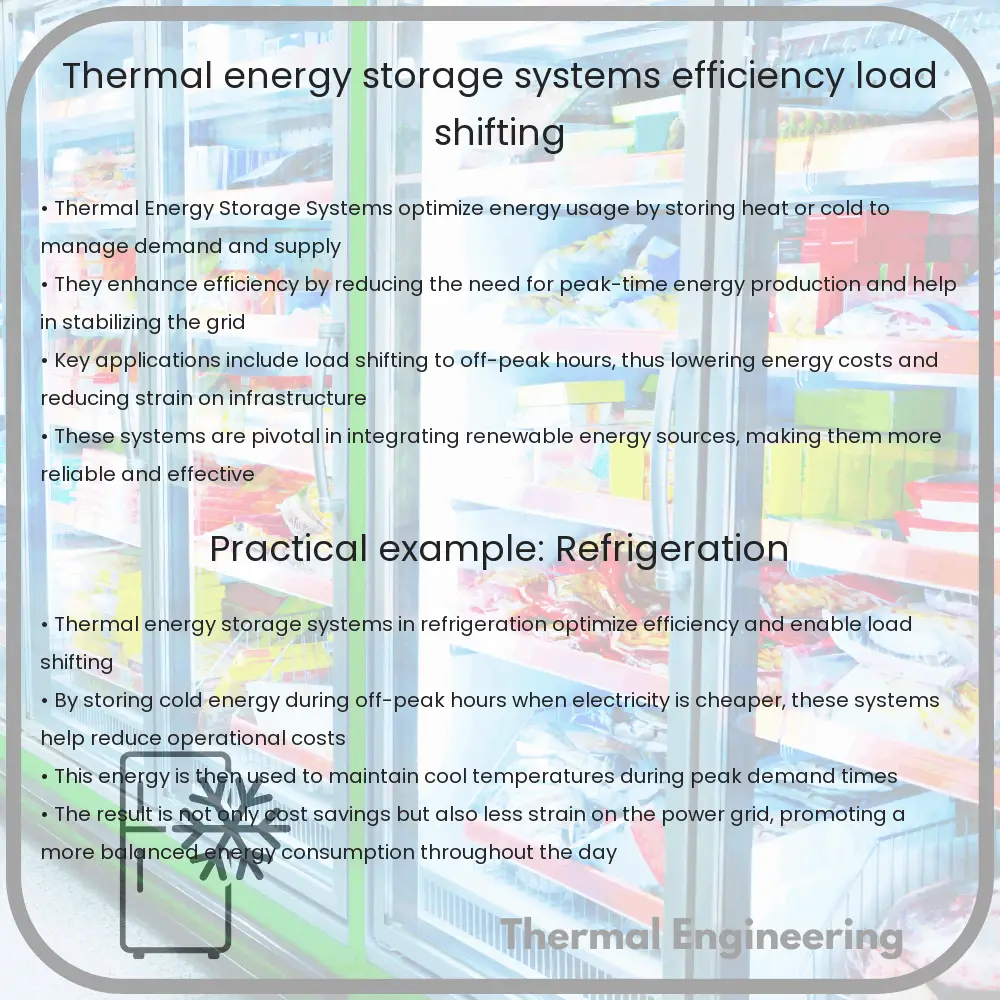
Thermal Energy Storage (TES) systems are pivotal in enhancing energy efficiency and managing energy supply, by storing thermal energy for later use. These systems play a key role in load shifting, reducing energy costs, and mitigating environmental impacts. In this article, we’ll delve into how TES systems work, the types used, and their advantages in terms of efficiency and load shifting.

How Thermal Energy Storage Works

TES systems store thermal energy during periods of low energy demand or when surplus renewable energy is available, and release it during periods of high energy demand. The core principle involves absorbing, storing, and later releasing energy in the form of heat. This process helps in managing the energy output of heating and cooling systems more efficiently.

Types of Thermal Energy Storage Systems

  • Sensible Heat Storage: This is the most common type of TES, which involves storing energy by heating or cooling a storage medium like water or sand. The temperature of the medium changes, but its phase does not.
  • Latent Heat Storage: Utilizes phase-change materials (PCMs) which absorb and release heat at a constant temperature during the process of melting and solidifying.
  • Thermochemical Storage: Involves chemical reactions that store and release heat. Although complex, these systems can potentially store more energy per unit mass than sensible or latent systems.

Efficiency of Thermal Energy Storage

The efficiency of TES systems largely depends on the specific technology and the materials used. Sensible heat systems, for instance, often exhibit efficiencies between 70% to 90%. Latent heat systems, utilizing PCM, can reach efficiencies of up to 80-90%, depending on the materials employed and the encapsulation technologies used. Thermochemical storage, due to its ability to store heat at high densities and for long durations without significant losses, shows promise for even higher efficiencies.

Load Shifting and TES

Load shifting is one of the most beneficial features of TES systems in energy management. By allowing energy to be stored when demand is low and released when demand is high, TES systems help in:

  • Reducing the need for peak energy production, hence decreasing the reliance on less efficient, more expensive, and often more polluting energy sources.
  • Improving the overall reliability and stability of electrical grids, especially those with significant inputs from renewable energy sources, such as solar and wind, which can be intermittent.
  • Decreasing electricity costs by utilizing lower-cost off-peak electricity to meet peak demands.

Real-World Applications of TES Systems

TES systems are widely applied in various sectors, including residential, commercial, and industrial. In commercial buildings, TES systems are often used in conjunction with HVAC (Heating, Ventilation, and Air Conditioning) systems to manage indoor climate cost-effectively. Industrial applications may include process heating and cooling, where TES can help in managing energy use more predictably and sustainably. Furthermore, in power generation, TES is utilized to stabilize grid operation and integrate renewable energy sources efficiently.

Conclusion

Thermal Energy Storage systems present a robust solution for enhancing energy efficiency and managing load in various settings. By understanding the types of TES systems and their applications, industries and utilities can make informed decisions that not only save costs but also foster environmental sustainability. As technology progresses, the efficiency and applications of TES will continue to evolve, playing a crucial role in the transition towards a more sustainable energy future.

Smart Thermochromic Materials | Temperature Sensing, Indicating

Learn about smart thermochromic materials and their revolutionary applications in various industries, from mood rings to medical devices.

Smart Thermochromic Materials | Temperature Sensing, Indicating

Understanding Smart Thermochromic Materials

Thermochromic materials are materials that change color in response to temperature changes. This fascinating property is harnessed in various applications, ranging from mood rings and novelty items to more practical uses such as temperature sensors and safety indicators. In recent years, advancements in material science have led to the development of ‘smart’ thermochromic materials, which are engineered to respond at precise temperatures, making them incredibly useful in a wide range of industries.

How Thermochromic Materials Work

Thermochromic materials typically contain compounds that undergo chemical changes at specific temperatures. One of the most common mechanisms involves the reversible transformation between two different molecular forms, which absorb light differently, thus changing the material’s color. There are primarily two types of thermochromic materials:

  • Liquid Crystals: Often used in digital thermometers and mood rings, liquid crystal thermochromics change color in response to temperature changes within a very narrow range. Their colors can cycle through the spectrum – red, green, and blue – as the temperature increases or decreases.
  • Leuco Dyes: These are more common and have broader applications. Leuco dyes are often combined with other chemicals that melt at specific temperatures, causing a temporary color change. These are found in battery test strips and other visual indicators of temperature change.

Applications of Smart Thermochromic Materials

With precision engineering, smart thermochromic materials are used in an array of practical and critical applications:

  1. Temperature Sensing: Smart thermochromic materials are used in environments where precise monitoring of temperature is crucial, such as in electronic equipment, manufacturing processes, and food storage facilities.
  2. Medical Field: Used in products such as forehead thermometers or packaging that indicates exposure to temperatures that could damage medications or vaccines.
  3. Safety Indicating: These materials can indicate overheating or failure risks in thermal-sensitive systems like electrical circuits or motors.
  4. Consumer Goods: Used in color-changing mugs, baby spoons (to indicate when food is too hot), and even in textiles to inform users about sun exposure or body temperature.

Challenges and Future Prospects

Despite their significant benefits, thermochromic materials also face challenges, primarily related to durability and long-term stability. Continuous exposure to UV light, extreme temperatures, and environmental factors can degrade these materials, causing them to lose their sensitivity and effectiveness. Ongoing research is focused on enhancing the stability, responsiveness, and cost-effectiveness of these materials for broader applications.

The future of smart thermochromic materials looks promising, with potential innovations that could lead to more advanced uses such as in smart windows that adjust transparency based on temperature to save energy, or in automotive applications where they could provide real-time thermal status of critical components.

In conclusion, smart thermochromic materials stand at the confluence of chemistry, material science, and practical engineering, offering intriguing possibilities for the future. As the technology matures, we can expect these materials to play an increasingly vital role in improving safety, efficiency, and comfort in our everyday lives.

Microfluidics device design

Understanding the design and application of microfluidic devices in manipulating small fluid volumes.

Microfluidics device design

Introduction to Microfluidics Device Design

Microfluidics is the science and technology of systems that process or manipulate small (<1 microliter) amounts of fluids, using channels with dimensions of tens to hundreds of micrometers. It is a multidisciplinary field intersecting engineering, physics, chemistry, and biotechnology. Microfluidic devices are used in a wide range of applications, including medical diagnostics, drug delivery, and chemical analysis.

The Basics of Microfluidic Device Design

Designing a microfluidic device involves understanding the fundamentals of fluid mechanics at the microscale, where the behavior of fluids can be significantly different from macroscopic systems. One crucial factor at this scale is that the flow is typically laminar, meaning that the fluid flows in parallel layers with minimal mixing. This is quantified by the Reynolds number, which is calculated by:

Re = ρ*u*L/μ

  • ρ (rho) represents the density of the fluid,
  • u is the flow velocity,
  • L denotes a characteristic length (typically the channel dimension), and
  • μ (mu) is the dynamic viscosity of the fluid.

In microfluidic applications, the Reynolds number is often less than 2000, ensuring laminar flow. This has implications for device design, including predictability of fluid flow and enhanced control over fluid mixing using diffusion.

Materials and Fabrication Techniques

Microfluidic devices are typically made from silicon, glass, or polymers like PDMS (polydimethylsiloxane). The choice of material can depend on factors such as chemical compatibility, optical transparency, and mechanical properties. Fabrication techniques include:

  • Soft lithography: Often used for PDMS devices, involving a process of creating molds which are then used to cast the microfluidic channels.
  • Photolithography: This technique is similar to that used in microelectronics. A light-sensitive polymer is exposed to UV light through a mask, defining microscale features.
  • Injection molding: Suitable for mass production, used primarily with thermoplastics.

Integration and Control

Integrating different functionalities into a microfluidic device often includes incorporating sensors, mixers, pumps, and valves. Each component must be designed to operate effectively at the microscale. Controlling fluid flow can be achieved using various actuation methods such as:

  • Electrokinetic methods: Involving electro-osmosis or electrophoresis.
  • Pneumatic control: Using air pressure to manipulate fluids, especially in PDMS devices.
  • Capillary forces: Utilized for passive fluid control without the need for external power sources.

Challenges and Future Directions

Despite the many advantages of microfluidic devices, there are challenges that need to be addressed, such as minimizing the effects of surface tension, which can be dominant at small scales, and dealing with issues of clogging. Furthermore, the integration of these devices with electronics and data processing systems for automated analysis remains an area of active development.

Looking forward, advancements in 3D printing and nanofabrication hold promise for the future of microfluidics by allowing more complex geometries and multi-material devices. These developments could further expand the applications of microfluidics in various fields, pushing the boundaries of what can be tested and processed on a microscale.

Microfluidics is a vibrant field of study that combines engineering, chemistry, and biology to create innovative solutions for complex problems. Its continued evolution will undoubtedly contribute significantly to science and technology.

Turbulence modeling in CFD

Explore the complexities of turbulence modeling within Computational Fluid Dynamics to predict fluid behavior in engineering designs.

Turbulence modeling in CFD

Understanding Turbulence Modeling in Computational Fluid Dynamics

Computational Fluid Dynamics (CFD) is a branch of fluid mechanics that uses numerical methods and algorithms to solve and analyze problems involving fluid flows. One of the most challenging aspects of CFD is the accurate modeling of turbulence, a complex, chaotic flow phenomenon that greatly impacts engineering processes.

What is Turbulence?

Turbulence is characterized by erratic fluctuations and mixing, differing significantly from smooth (laminar) flow. It plays a crucial role in various applications, influencing everything from aerodynamic drag on vehicles to the rate of chemical reactions in industrial processes.

Why Model Turbulence?

In engineering, predicting the effects of turbulent flows can be essential for the design of equipment in numerous fields, including aerospace, automotive, and energy generation. Turbulence modeling allows engineers to simulate and study the performance of designs under realistic, often extreme conditions without resorting to costly and time-consuming experiments.

Types of Turbulence Models

Turbulence models vary greatly in complexity and fidelity. Different models are used depending on the trade-off between computational cost and the level of accuracy required. Below are the primary types of turbulence models used in CFD:

  • Reynolds-Averaged Navier-Stokes (RANS) Models: These models, including Spalart-Allmaras, k-ε (k-epsilon), and k-ω (k-omega), use ensemble-averaged equations to represent turbulent flows. RANS models are typically less computationally intensive but might not capture flow details with high accuracy.
  • Large Eddy Simulation (LES) Models: LES resolves large-scale eddies while modeling smaller scales. This type of modeling provides more accuracy than RANS in capturing the transient and dynamic features of turbulence but requires greater computational resources.
  • Direct Numerical Simulation (DNS): DNS resolves all scales of turbulence and provides a highly detailed and accurate numerical solution. However, it is only practical for very simple geometries or low Reynolds number flows due to its intense computational demands.

Common Challenges in Turbulence Modeling

Turbulence modeling in CFD is not without its challenges. These include:

  • Computational Expense: Higher fidelity models like DNS and LES are computationally expensive and often impractical for routine design and analysis.
  • Model Reliability: There can be significant uncertainties in turbulence model predictions, especially for complex flows involving separation, strong curvatures, and anisotropy.
  • Parameter Sensitivity: The accuracy of RANS models often depends heavily on correct calibration of empirical coefficients, which can vary with flow conditions.

Future Directions in Turbulence Modeling

Advances in computing power, along with innovative algorithms and hybrid modeling approaches, are helping to address some of the traditional challenges faced in turbulence modeling. For example, machine learning techniques are increasingly being integrated to improve the accuracy and efficiency of turbulence models.

Progress in GPU technology and parallel computing also promises to make high-fidelity models like DNS and LES more accessible, paving the way for their use in solving more complex and realistic problems in engineering.

Understanding and accurately predicting the effects of turbulent flows remain a critical part of designing modern engineering systems. Through ongoing research and developments in computational techniques, turbulence modeling continues to evolve, offering better tools and insights for engineers worldwide.

Nanocomposite Materials | Enhanced Thermal Properties

Explore the role of nanocomposite materials in enhancing thermal properties for various industrial applications.

Nanocomposite Materials | Enhanced Thermal Properties

Understanding Nanocomposite Materials: Enhanced Thermal Properties

Nanocomposite materials are engineered materials made by combining nanoparticles with bulk materials, often resulting in enhanced physical properties including thermal resistance, mechanical strength, and electrical conductivity. In the realm of engineering and materials science, the thermal properties of nanocomposites are particularly significant due to their implications for device performance, safety, and energy efficiency.

What are Nanocomposite Materials?

Nanocomposite materials consist of a matrix, which is the base material, and a nanoscale reinforcer. This reinforcer could be particles, fibers, or tubes, typically measuring between 1 and 100 nanometers in at least one dimension. Common matrices are polymers, metals, or ceramics, while reinforcements are often carbon-based materials, metal oxides, or nanoclays. The interaction between the matrix and the nanoparticles results in unique properties that are not observed in the base materials alone.

Enhancement of Thermal Properties

The incorporation of nanoparticles into a conventional material matrix can significantly improve its thermal properties. This includes increased thermal stability, enhanced thermal conductivity, and a higher resistance to degradation at elevated temperatures. Several factors contribute to these enhancements:

  • Nanoscale Size: The very small size of nanoparticles increases the surface area to volume ratio, which enhances the heat transfer characteristics of the material.
  • Interface Structure: The interfaces between the nanoparticles and the matrix are crucial in heat transfer. They often create pathways that facilitate improved thermal conductivity.
  • Dispersion: Well-dispersed nanoparticles within the matrix can form a network that efficiently transfers thermal energy.

Applications of Nanocomposites with Enhanced Thermal Properties

The improved thermal properties of nanocomposites have wide-ranging applications across various industries:

  • Aerospace: In aerospace, components need to withstand high temperatures and thermal shocks. Nanocomposites can be used in engines and shields protecting against extreme heat.
  • Automotive: Lightweight nanocomposite materials with high thermal resistance can lead to more efficient automotive parts, contributing to better fuel efficiency and reduced emissions.
  • Electronics: In electronics, thermal management is crucial for reliability and performance. Nanocomposites used in electronic packaging help dissipate heat more effectively, enhancing device longevity and performance.
  • Energy: Enhanced thermal stability of materials used in energy storage devices, like batteries, can improve safety and efficiency in energy systems.

Future Prospects

As research continues, the understanding and capabilities of nanocomposite materials are expanding. Innovations in nanoengineering and high-precision manufacturing techniques promise even greater enhancements in the thermal properties of these materials. Thus, nanocomposites are expected to play a pivotal role in future advancements of thermal management solutions across technology and industry sectors.

The development of nanocomposites with superior thermal properties not only paves the way for more efficient thermal management systems but also heralds new engineering applications that were previously constrained by material limitations. With ongoing advancements, the full potential of these materials is just beginning to be unlocked.

Thermally Conductive Inks | Printed Electronics, Heat Management

Learn about thermally conductive inks, their compositions, functionalities, and applications in the field of printed electronics.

Thermally Conductive Inks | Printed Electronics, Heat Management

Understanding Thermally Conductive Inks in Printed Electronics

In the evolving field of printed electronics, thermally conductive inks are gaining significant attention. These specialized inks play a critical role in heat management, which is vital for the reliability and performance of electronic devices. With advancements in technology, thermally conductive inks are now used in a variety of applications, including flexible circuits, heat sinks, and electronic sensors.

Composition and Functionality

Thermally conductive inks are composed of a base material—typically a polymer like silicone or epoxy—infused with thermally conductive fillers. Common fillers include metallic particles (such as silver or aluminum), carbon derivatives (graphene or carbon nanotubes), and ceramic particles (boron nitride or aluminum nitride). The specific composition of the ink can be adjusted to tailor its thermal conductivity and physical properties depending on the application.

The primary function of these inks is to efficiently transfer heat away from sensitive components within electronic devices, thereby enhancing performance and extending lifespan. By applying these inks onto substrates, they form pathways that facilitate heat dispersal from hotspots to cooler areas.

Key Applications

  • Flexible Electronics: As devices become smaller and more flexible, managing heat in constrained spaces is critical. Thermally conductive inks can be printed directly onto flexible substrates, allowing for compact and efficient heat management solutions.
  • LED Lighting: LEDs are highly susceptible to heat-induced efficiency loss and damage. Thermally conductive inks can be used in the manufacturing of LED lighting systems to improve heat dissipation, thereby maintaining efficiency and prolonging the life of the LEDs.
  • Wearable Technology: Wearables require materials that can conform to varied shapes while managing the heat generated by electronic components. Thermally conductive inks are ideal for this purpose, offering flexibility and effective heat dispersion in wearable applications.

Advantages of Thermally Conductive Inks

Thermally conductive inks offer several benefits over traditional heat management solutions:

  1. Versatility: These inks can be applied to a wide range of substrates including plastics, ceramics, and metals, making them suitable for various electronic applications.
  2. Design Flexibility: The ability to print these inks using standard screen printing or inkjet techniques allows for intricate designs and shapes, facilitating integration into complex electronic assemblies.
  3. Weight Reduction: By eliminating the need for bulky heat sinks and metal cladding, these inks contribute to a reduction in the overall weight of electronic devices.
  4. Cost Efficiency: Efficient production processes associated with printing these inks can lead to cost savings in manufacturing of electronic components.

Challenges and Future Directions

Despite their advantages, there are challenges that need to be addressed for widespread adoption of thermally conductive inks. Ensuring consistent thermal conductivity across different batches, improving durability under environmental stressors, and reducing costs while maintaining performance are ongoing areas of research.

As technology progresses, the role of thermally conductive inks in thermal management solutions will likely expand. Ongoing research aims to develop materials with higher thermal conductivity and structural integrity, potentially opening new pathways for innovative heat management solutions in electronics.

Conclusion

Thermally conductive inks represent a significant advance in the field of printed electronics, offering efficient heat management solutions that are integral to the reliability and functionality of modern electronic devices. By understanding their composition, functionality, and applications, engineers and designers are better equipped to exploit these materials in creating the next generation of electronic devices.

High-Temperature Superconductors | Energy Transmission, Cooling

Explore the properties, applications, and challenges of high-temperature superconductors, efficient materials for electrical conductivity at higher practical temperatures.

High-Temperature Superconductors | Energy Transmission, Cooling

Introduction to High-Temperature Superconductors

Superconductors are materials that can conduct electricity without any resistance when cooled below a certain critical temperature. This remarkable property allows electrical energy to flow with zero energy loss, making superconductors highly desirable for a variety of applications, including energy transmission and magnetically levitated transport systems. Traditionally, superconductors required extremely low temperatures, close to absolute zero (-273.15°C), to operate. However, the discovery of high-temperature superconductors (HTS) has changed the landscape by allowing superconductivity at more practical temperatures.

Understanding High-Temperature Superconductors

High-temperature superconductors refer to materials that exhibit superconducting properties at temperatures above 77 K (-196°C). This is significant because 77 K is the boiling point of liquid nitrogen, which is more affordable and easier to handle compared to liquid helium used for cooling many conventional superconductors. Most high-temperature superconductors are ceramic materials based on copper oxide, or “cuprates,” which contain layers of copper and oxygen atoms sandwiched between other elements.

Applications in Energy Transmission

One of the most promising applications of HTS technology is in the field of electrical power transmission. Superconducting wires can carry much higher currents than ordinary copper or aluminum wires, allowing for more compact and less expensive power infrastructure. This capability is particularly attractive for densely populated urban areas or for upgrading existing power grids without requiring additional space.

  • Increased Efficiency: Superconductors eliminate nearly all energy loss that occurs due to electrical resistance in conventional conductors, leading to significantly more efficient power transmission over long distances.
  • Reduced Size and Weight: HTS cables are significantly lighter and thinner than conventional cables, which simplifies installation and reduces the physical and visual impact on the environment.
  • Enhanced Power Capacity: HTS materials can transport up to 100 times the electrical current of traditional copper or aluminum conductors, potentially transforming grid capacity and stability.

Challenges in Cooling

Despite their name, high-temperature superconductors still require cooling to maintain their superconducting properties, which presents technical challenges. Although easier than cooling to near absolute zero, maintaining a temperature of around 77 K is still energy-intensive and requires sophisticated cryogenic systems.

  1. Cryogenics: The technology used to achieve and maintain low temperatures for HTS involves the use of cryogenic fluids like liquid nitrogen. Infrastructure for cryogenic cooling adds complexity and cost to HTS systems.
  2. Cooling Systems: Development of economically viable and efficient cooling systems is crucial. Current research focuses on enhancing the cooling efficiency while reducing operational costs.
  3. Thermal Stability: HTS materials must be protected from thermal fluctuations that could lead to a loss of superconductivity. This requires careful design of the superconducting system and its thermal insulation.

Conclusion

High-temperature superconductors hold immense potential for revolutionizing energy transmission systems due to their efficiency and capacity advantages. However, the challenges related to cooling and maintaining stable low temperatures still need to be addressed to fully exploit the benefits of this technology. Ongoing research aims to resolve these issues, paving the way for more sustainable and efficient use of electrical power in the future.

Cryogenic Insulation Materials | Low Temperature Storage, Efficiency

Learn about cryogenic insulation materials, essential for maintaining extremely low temperatures in various industrial applications.

Cryogenic Insulation Materials | Low Temperature Storage, Efficiency

Understanding Cryogenic Insulation Materials

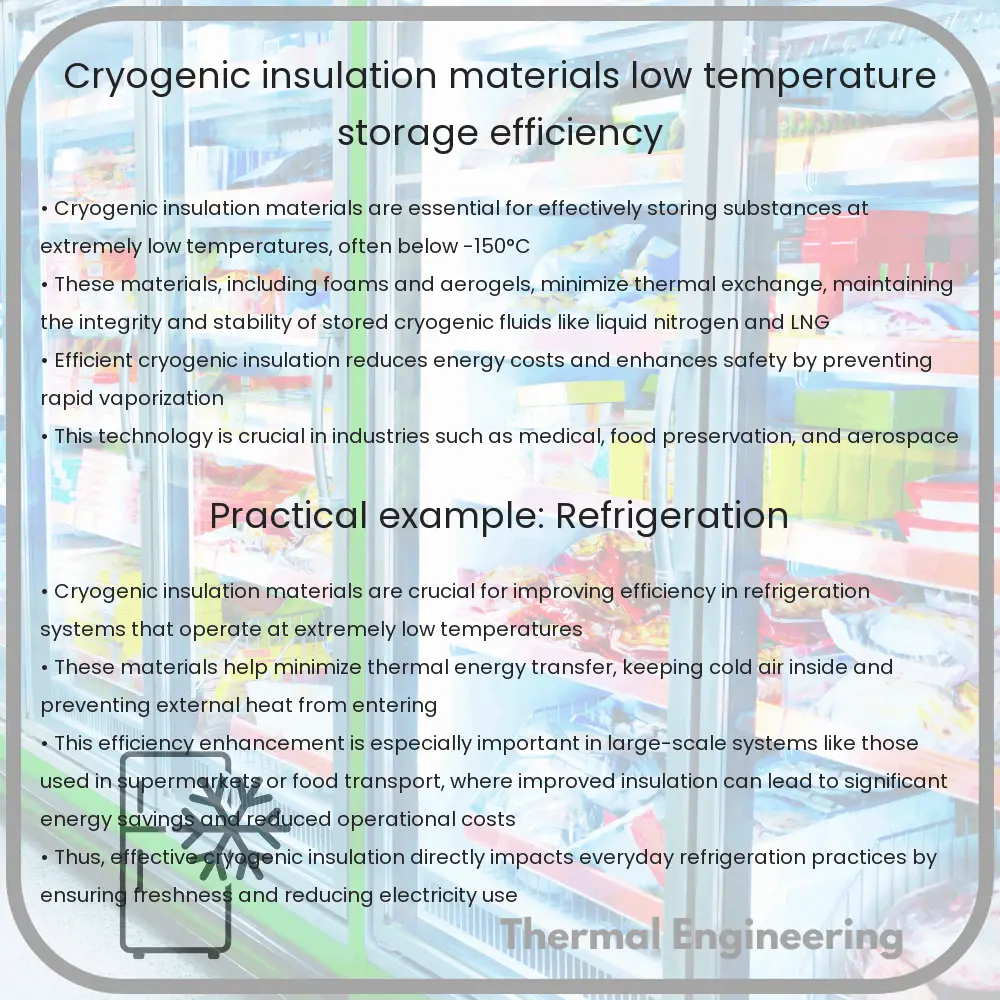
Cryogenic insulation materials are specialized substances designed to withstand extremely low temperatures, often required in the handling and storage of liquids like liquid nitrogen, oxygen, or helium, which have boiling points well below the freezing point of water. These materials play a crucial role in areas such as aerospace, medical, energy, and liquefied natural gas (LNG) industries, helping to maintain the efficacy and safety of low-temperature operations.

Importance of Efficient Cryogenic Insulation

Effective insulation in cryogenic systems is vital for several reasons. It helps in reducing the evaporation rate of cryogenic liquids, improving the efficiency of storage and transportation vessels. Insulation also plays a safety role by minimizing the risk of external elements coming in direct contact with the extremely cold surfaces, potentially causing materials to become brittle and leading to structural failures.

Types of Cryogenic Insulation Materials

  • Cellular Glass: One of the most commonly used cryogenic insulation materials, cellular glass is known for its compressive strength, moisture resistance, and thermal performance. It operates effectively in temperatures down to -268 degrees Celsius (-450 degrees Fahrenheit).
  • Polyurethane and Polyisocyanurate Foams: These foams are used due to their excellent insulation properties and low thermal conductivity, which is particularly effective in the range of -210 degrees Celsius (-346 degrees Fahrenheit) to -150 degrees Celsius (-238 degrees Fahrenheit).
  • Aerogel: Known for its high surface area and low density, aerogel offers superior thermal insulation and is effective up to -200 degrees Celsius (-328 degrees Fahrenheit). Although more expensive, its performance in thin layers makes it attractive for space-constrained applications.
  • Fiberglass: Fiberglass is widely utilized for its adaptability and thermal insulation properties, effective down to -190 degrees Celsius (-310 degrees Fahrenheit). It is commonly used in industrial applications like LNG storage and transport.

Choosing the Right Cryogenic Insulation

Selection of the appropriate cryogenic insulation material depends on various factors, including thermal conductivity, mechanical strength, moisture resistance, and environmental impact. Operational temperature range and thermal expansion coefficients must also be accounted for to ensure system integrity over the life of the application.

Applications and Real-World Uses

  • LNG storage: Efficient insulation of storage tanks is crucial for maintaining the structural integrity of LNG, which is stored at -162 degrees Celsius (-260 degrees Fahrenheit). Materials like cellular glass and polyurethane play a key role.
  • Medical applications: In the healthcare sector, cryogens are used for the preservation of biological samples. Reliable insulation ensures long-term viability of stored materials.
  • Aerospace: Aerogels and other advanced materials are utilized to protect equipment and payloads from extreme temperatures encountered in outer space.

Conclusion

Cryogenic insulation materials are fundamental in a myriad of high-tech applications where maintaining low temperatures is crucial. As industries continue to push the boundaries of technology, innovation in insulation materials remains critical to achieving higher efficiency and safety in cryogenic environments.

Thermal Insulating Coatings | Passive Cooling, Energy Saving

Learn about Thermal Insulating Coatings (TICs), materials designed to enhance energy efficiency by limiting heat flow on surfaces.

Thermal Insulating Coatings | Passive Cooling, Energy Saving

Understanding Thermal Insulating Coatings: A Path to Passive Cooling and Energy Saving

Thermal insulating coatings (TICs) are specialized materials designed to restrict heat flow across surfaces where they are applied. These coatings, by reflecting sunlight and radiating heat back into the atmosphere, can help buildings maintain comfortable indoor temperatures using less energy. Let’s explore how thermal insulating coatings work, their benefits, and common applications.

How Thermal Insulating Coatings Work

Thermal insulating coatings typically consist of microscopic hollow ceramic spheres, reflective pigments, and a resin base. When these coatings are applied to rooftops or exterior walls, they exhibit unique properties:

  • Low Thermal Conductivity: The microspheres in TICs are poor conductors of heat, which minimizes the amount of heat transferred through the coating.
  • High Reflectivity: Reflective pigments bounce back a significant portion of solar radiation, preventing it from penetrating buildings and heating the interiors.
  • Emittance: TICs are highly emissive, which means they can efficiently radiate infrared energy (heat) away from the surface on which they are applied.

The combination of these properties makes TICs effective in reducing heating and cooling loads, leading to decreased energy usage for air conditioning and heating systems.

Benefits of Thermal Insulating Coatings

The application of thermal insulating coatings offers several advantages, prominently in the realms of environmental impact and financial savings:

  • Energy Efficiency: By reducing the need for mechanical cooling and heating, TICs lower energy consumption and utility bills.
  • Improved Indoor Comfort: TICs help maintain a more consistent indoor temperature, adding to the comfort levels inside the building.
  • Environmental Impact: Lower energy usage results in reduced greenhouse gas emissions, contributing to environmental sustainability.
  • Longevity of Structures: By protecting exteriors against extreme temperatures and UV degradation, TICs can extend the life of building materials.

Applications of Thermal Insulating Coatings

TICs have a wide range of applications in both residential and commercial settings:

  • Residential Buildings: Homeowners apply TICs to roofs and walls to keep homes cooler in summer and warmer in winter.
  • Commercial and Industrial Facilities: TICs are used on the exterior surfaces of factories and storage facilities to maintain temperature-sensitive processes and products.
  • Transportation: In the automotive industry, TICs are applied in vehicles’ engine compartments to protect components from overheating.
  • Storage Containers: Shipping containers and portable storage units often use TICs to minimize temperature fluctuations and protect sensitive goods.

Indeed, the flexibility and efficacy of thermal insulating coatings make them an innovative solution in the quest for energy efficiency and sustainability. By harnessing the properties of these coatings, industries and individuals alike can advance towards more energy-efficient and environmentally friendly practices.

Conclusion

Thermal insulating coatings represent a significant step forward in passive cooling technologies. Their ability to reflect heat and lower thermal conductivity underpins their effectiveness in reducing energy consumption across a multitude of environments. As global emphasis on energy efficiency and sustainable practices intensifies, the role of TICs in modern engineering continues to grow, promising a cooler, more sustainable future for all.