Facebook Instagram Youtube Twitter

Intumescent Paints | Fire Protection, Thermal Barrier

Learn how intumescent paints boost fire resistance in buildings by expanding and forming a thermal barrier when exposed to high heat.

Intumescent Paints | Fire Protection, Thermal Barrier

Understanding Intumescent Paints: A Key to Fire Protection and Thermal Barrier

Intumescent paints, often overlooked, play a crucial role in enhancing the fire resistance of buildings and structures. These specially formulated coatings swell up when exposed to high heat, forming a charred layer that acts as an effective thermal barrier. This protective barrier can significantly delay the structural damage caused by fire, providing crucial extra minutes for evacuation and emergency response.

How Intumescent Paints Work

The science behind intumescent paints involves a reaction to intense heat leading to a controlled expansion. The paint’s composition includes a mix of chemicals that, when exposed to flames or extreme temperatures, begin to react. This reaction typically involves three main components:

  1. Acid Source: Generates acid when heated.
  2. Carbonific: Carbon-rich substances that char under high heat.
  3. Blowing Agent: Produces gases when heated, contributing to the expansion.

The chemical reaction causes the paint to expand up to 50 times its original thickness, forming an insulating, porous layer of char. This layer effectively blocks heat transfer and reduces the underlying material’s temperature, thus slowing down the fire’s progression.

Applications of Intumescent Paints

Intumescent paints are used in a variety of settings, from residential homes to industrial buildings, due to their compatibility with numerous substrates including steel, wood, and plaster. The areas of application include:

  • Structural steel elements, to maintain their integrity longer during a fire.
  • Walls and ceilings, to prevent the quick spread of fire.
  • Wooden parts of buildings, to increase their fire-resistance rating.
  • Electrical and transmission boxes, to protect contents from fire damage.

Advantages of Using Intumescent Paints

Intumescent paints are favored in modern construction for several reasons:

  • Esthetic Flexibility: They can be painted or covered with decorative finishes, allowing for integration into various architectural styles without compromising aesthetics.
  • Space-Saving: Unlike bulky traditional fireproofing methods such as concrete encasements, intumescent paints are applied similarly to regular paints, thus not requiring additional space.
  • Easy Application: Application does not typically require special tools and can be conducted alongside regular building painting jobs.
  • Efficiency: They offer a high level of fire resistance which could be critical in the delay of fire spread, ultimately contributing to life safety and property protection.

Conclusion

Intumescent paints represent a remarkable engineering application that brings together chemistry and safety design to protect lives and properties. By expanding under heat to form a protective barrier, these paints delay structural damage and provide valuable time for occupants to evacuate and for firefighters to control the blaze. Thus, as building standards continue to evolve towards greater safety, intumescent coatings are becoming an essential component of modern fire safety strategy.

The ongoing development and improved formulations of intumescent paints will likely enhance their effectiveness and range of applications, making them an even more indispensable part of fire protection in engineering and construction.
Silicon Photonics | Heat Dissipation, Optical Transceivers

Learn about silicon photonics: a merging of photonic and electronic components for high-speed data transmission using light, enhancing communication efficiency and system performance.

Silicon Photonics | Heat Dissipation, Optical Transceivers

Introduction to Silicon Photonics

Silicon photonics is an innovative field that merges photonic and electronic components to transmit data at high speeds using light waves instead of electrical signals. This technology leverages the well-established manufacturing processes of the silicon semiconductor industry, aiming to create faster, more efficient communication systems.

Heat Dissipation in Silicon Photonics

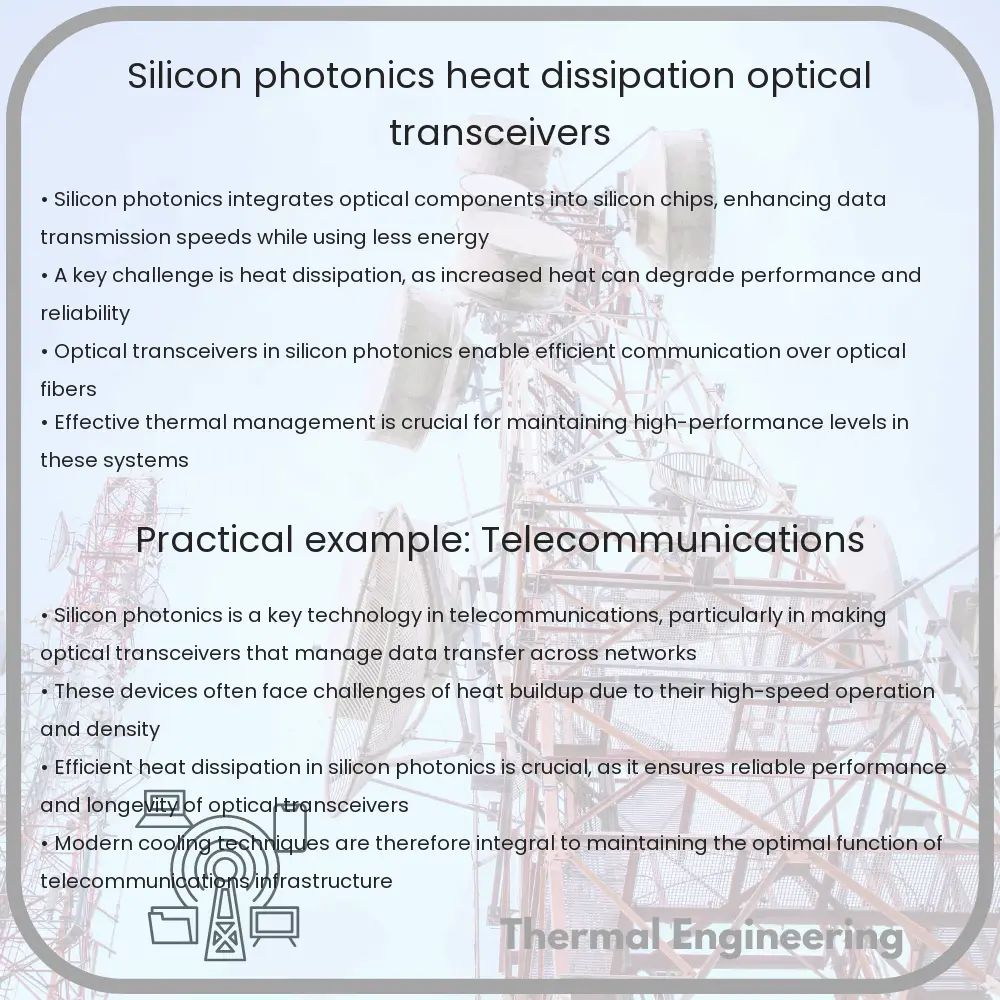
One of the critical challenges in the development of silicon photonic devices is managing heat dissipation. As photonic devices operate, they generate heat, which can lead to performance degradation, reliability issues, and reduced device lifespan. Efficient heat management is thus essential for maintaining the functionality and efficiency of photonic circuits.

  • Thermal Effects: The performance of photonic components, such as lasers and modulators, can be significantly affected by temperature changes. For instance, a temperature increase can shift the wavelength of lasers, disrupting the communication system.
  • Cooling Techniques: Various strategies are employed to manage heat in silicon photonic devices, including the use of heat sinks, thermoelectric coolers, and integrated cooling channels within the silicon substrate.

Optical Transceivers in Silicon Photonics

Optical transceivers are essential components in silicon photonics, serving as the interface between the optical and electrical domains. They convert electrical signals into optical signals and vice versa, enabling high-speed data transmission over optical fibers.

  • Components: A typical silicon photonic transceiver includes a laser for generating light, modulators for encoding data onto the light, photodetectors for converting light back into electrical signals, and waveguides for directing the light through the chip.
  • Integration: Silicon photonics allows for the integration of these components onto a single silicon chip, which can lead to reduced manufacturing costs, lower power consumption, and increased data bandwidth.

Advantages of Silicon Photonics

Silicon photonics offers several advantages over traditional electronic data transmission technologies. Some of these benefits include:

  • Higher Bandwidth: Photonic devices can transmit data at significantly higher speeds and over longer distances than traditional electronic devices.
  • Reduced Energy Consumption: Optical data transmission can be more energy-efficient, reducing the thermal load and lowering energy costs.
  • Scalability: The use of mature silicon manufacturing technologies enables the mass production of photonic components, facilitating scalability at a lower cost.

Future Prospects

The ongoing development of silicon photonics promises to revolutionize data communication systems, particularly in applications requiring high bandwidth and energy efficiency, such as data centers, telecommunications, and supercomputing. Continued research and development are directed towards overcoming existing challenges like coupling efficiency and integration density, which will further enhance the capabilities and applications of silicon photonics.

In conclusion, silicon photonics combines the merits of optical communication with silicon-based technology, presenting a robust platform for advancing communication infrastructure. Through continued innovation and refinement, this technology stands to become a cornerstone of future communication systems.

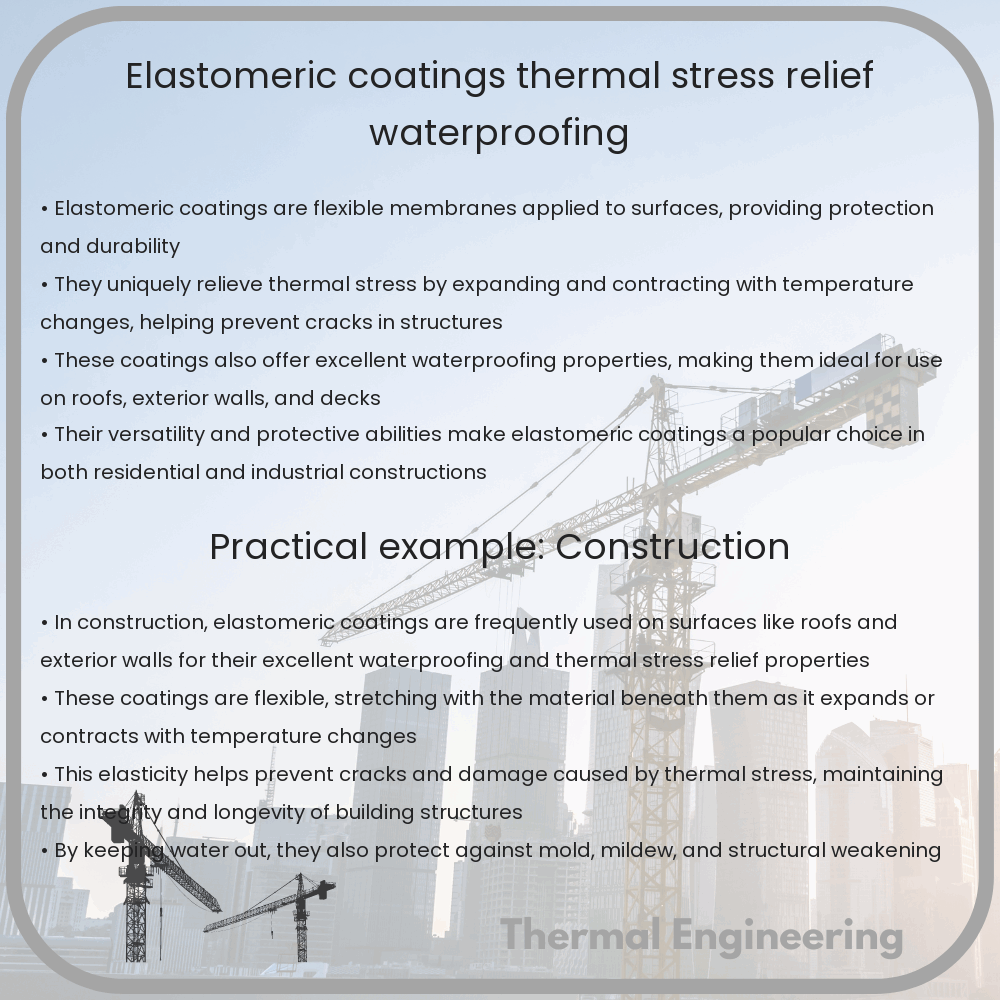
Elastomeric Coatings | Thermal Stress Relief, Waterproofing

Learn about elastomeric coatings, protective finishes that offer elasticity, durability, and waterproofing for various structures.

Elastomeric Coatings | Thermal Stress Relief, Waterproofing

Understanding Elastomeric Coatings

Elastomeric coatings are a type of protective finish commonly applied to exterior surfaces on buildings. They are primarily used for waterproofing, protecting structures from water damage, and providing thermal stress relief. Made from elastomeric materials, which can stretch and recover with ease, these coatings are distinguished by their exceptional elasticity and durability.

Key Properties of Elastomeric Coatings

Elastomeric coatings are known for several key properties:

  • Elasticity: They can stretch to many times their original length and return to their initial shape. This high elasticity helps accommodate movement or structural shifts within a building, preventing cracks and other damage.
  • Durability: These coatings are highly resistant to weathering due to sunlight, rain, and temperature changes. They also provide excellent protection against UV radiation, which can degrade many materials over time.
  • Waterproofing: As a barrier to moisture, elastomeric coatings prevent water intrusion, significantly reducing the risk of water damage such as rot, mold, and mildew.
  • Energy Efficiency: By reflecting sunlight and reducing building heating due to solar gain, some elastomeric coatings contribute to lower energy costs in buildings.

Composition and Types

Elastomeric coatings are primarily composed of polymeric materials such as acrylics, polyurethanes, or silicone. Each type has distinct characteristics that suit different needs:

  • Acrylic: Known for excellent weatherability and color retention, suitable for varying climates and widely used due to its cost-effectiveness.
  • Polyurethane: Offers enhanced abrasion resistance and toughness, making it ideal for areas subject to heavy wear.
  • Silicone: Provides superior flexibility and temperature resistance, perfect for extreme weather conditions.

Thermal Stress Relief

Thermal stress occurs when materials expand or contract due to temperature changes. In buildings, this can lead to cracks and other structural damage. Elastomeric coatings help alleviate such stresses by adapting to the expansion and contraction of the substrate material. Their inherent flexibility allows them to maintain integrity and cohesion, providing a continuous protective layer over the surface.

Application Fields and Benefits

Elastomeric coatings are particularly beneficial in the following applications:

  • Roofs: Applied on rooftops to prevent leaks and extend the life of the roofing material.
  • Exterior Walls: Used on outer walls to prevent crack formation and exterior damage, helping maintain a building’s aesthetic appearance.
  • Decks and Balconies: Protects from water penetration, weather effects, and mechanical damage.
  • Concrete Structures: Helps to protect concrete from moisture ingress, freeze-thaw cycles, and corrosive chemicals.

The benefits of using elastomeric coatings extend beyond simple protection. They can significantly enhance the longevity and durability of structures, reduce maintenance costs, and improve the overall aesthetic appeal through various textures and colors.

Conclusion

Elastomeric coatings represent a versatile and efficient solution for protecting a wide range of structures from environmental factors and thermal stress. With their remarkable elasticity, durability, and waterproofing capabilities, these coatings provide an essential safeguard, contributing to the sustainability and resilience of built environments.

Thermal Conductive Silicone | Electronics Cooling, Gaskets

Learn about thermal conductive silicone, its roles in electronics cooling, and uses as gaskets in engineering applications.

Thermal Conductive Silicone | Electronics Cooling, Gaskets

Understanding Thermal Conductive Silicone in Electronics Cooling and Gaskets

Thermal conductive silicone plays a crucial role in the field of electronics and engineering, serving as a primary material for managing heat in electronic devices and as gaskets in various applications. This article delves into how thermal conductive silicone functions, its importance, and its applications in electronics cooling and gasket manufacturing.

What is Thermal Conductive Silicone?

Thermal conductive silicone is a type of silicone rubber which has been infused with thermal conductive fillers to enhance its heat conductivity. This material is known for its flexibility, high temperature resistance, and excellent thermal conductivity. These properties make it particularly useful in applications where heat dissipation is critical to the functionality and longevity of a product, like in electronics.

Applications in Electronics Cooling

In the realm of electronics, heat management is crucial for ensuring reliable performance and preventing overheating. Thermal conductive silicone is widely used in:

  • Heat sinks – It acts as an interface material between heat sink surfaces and heat sources, such as a semiconductor device, enhancing the thermal transfer.
  • Thermal pads – Thermal silicone pads are used where gaps need to be filled between heat-generating components and heat sinks or metal casings. These pads conform better to uneven surfaces than solid heat conductors, thus allowing for more effective heat dissipation.
  • Thermal adhesive – Silicone-based thermal adhesives are used for bonding heat sinks directly to the components such as CPU, GPU etc., providing both mechanical attachment and thermal conductivity.

Thermal conductive silicone helps maintain an optimal operating temperature range, which is crucial in sensitive electronic applications such as in computers, telecommunication devices, and LED lights.

Thermal Conductive Silicone in Gasket Manufacturing

Aside from electronics cooling, thermal conductive silicone is extensively used in creating gaskets for a variety of industrial applications. These gaskets function to seal and protect electronic encasements and assemblies from environmental factors, while also conducting away unwanted heat. Applications include:

  • Automotive electronics – where both heat management and sealing from harsh environmental conditions are crucial,
  • Industrial machinery – providing thermal stability and resistance to industrial chemicals and fluids,
  • Consumer electronics – ensuring durability and long operational life by managing heat within compact forms like smartphones.

Advantages of Using Thermal Conductive Silicone

Thermal conductive silicone offers several advantages that make it an indispensable material in both electronic cooling applications and as gaskets:

  • High Thermal Conductivity: Improves the efficiency of heat transfer from the heat source to the heat sink.
  • Flexibility: Can conform to rough and uneven surfaces, ensuring a more effective thermal interface than rigid materials.
  • Chemical Resistance: Resistant to many chemicals, making it suitable for harsh environments.
  • Temperature Resistance: Capable of withstanding high temperatures, it maintains performance without degrading under thermal stress.
  • Durability: Offers long-term durability and resistance to physical and thermal shock.

In conclusion, thermal conductive silicone is a versatile, efficient, and essential material in the context of electronics cooling systems and gasket applications. Its ability to conduct heat, while simultaneously providing mechanical cushioning and chemical resistance, makes it vital in the maintenance of system stability and efficiency in various engineering applications.

Silica Tiles | Space Shuttle, Extreme Temperature Resistance

Silica tiles are critical components designed for thermal protection on NASA Space Shuttles, ensuring safe re-entry by managing extreme temperatures.

Silica Tiles | Space Shuttle, Extreme Temperature Resistance

Understanding Silica Tiles on the Space Shuttle

One of the most critical components that enabled NASA Space Shuttles to endure the harsh environment of space and the intense heat of re-entry into Earth’s atmosphere were its silica tiles. These silica tiles served as a key element in the Thermal Protection System (TPS) that protected the shuttle from extreme temperatures.

Composition and Design

The silica tiles used on the Space Shuttle were primarily composed of high-purity amorphous silica fibers. These fibers were 99.9% pure and capable of withstanding temperatures up to 1260°C. The tiles themselves were made by sintering these silica fibers at high temperatures, which bonded them without the need for any additional fillers or binders.

Remarkably, the tiles were extremely light, weighing only about 9 kg/m3 (0.56 lb/ft3). This lightweight characteristic was crucial, as it helped to maintain the overall weight of the spacecraft within manageable limits, enhancing its performance and efficiency.

Thermal Protection and Heat Resistance

The primary function of silica tiles was to protect the Space Shuttle from the extreme temperatures generated during re-entry into Earth’s atmosphere, which could reach as high as 1650°C. The tiles achieved this through two primary properties:

  1. Low Thermal Conductivity: The structure of the silica tiles provided excellent insulating properties, preventing the transfer of heat to the underlying spacecraft structures. This was crucial for ensuring the integrity and safety of the shuttle throughout its mission.
  2. High Heat Capacity: Silica tiles could absorb a considerable amount of heat without experiencing a significant rise in temperature. This thermal capacity helped in managing and dissipating the immense heat generated during re-entry.

Application and Installation

Each silica tile was uniquely shaped and fitted to cover specific areas of the Space Shuttle’s outer surface. No two tiles were exactly alike, and each one was assigned a specific location on the shuttle. The precise fitting was necessary to ensure complete coverage, leaving no gaps that could expose the shuttle’s skin to extreme temperatures.

The tiles were attached to the shuttle’s aluminum frame using a silicone adhesive that also contributed to the thermal isolation. Any damage or loss of tiles was a serious concern, as evidenced in the 2003 Space Shuttle Columbia disaster, where the loss of some tiles led to catastrophic failure upon re-entry.

Legacy and Future Use

The technology and lessons learned from the use of silica tiles in the Space Shuttle program have implications beyond their original application. Today, similar materials and design principles are being considered and adapted for use in various high-temperature environments, from aerospace to commercial applications like fire protection and industrial heat management systems.

In summary, the development and implementation of silica tiles were pivotal in the success and longevity of the Space Shuttle program. Their ability to protect against extreme temperatures through unique material properties and design remains a significant achievement in materials engineering and thermal protection systems.

Cold Castable Refractory | Heat Resistance, Furnace Repair

Learn about cold castable refractory, its composition, properties, and how it compares to traditional refractory bricks in thermal applications.

Cold Castable Refractory | Heat Resistance, Furnace Repair

Understanding Cold Castable Refractory: Composition and Applications

Cold castable refractory materials, also called castables, are heat-resistant engineered products designed to withstand high temperatures, typically in industrial environments such as furnaces, boilers, and other thermal processing units. Unlike traditional refractory bricks, castables are much more versatile in terms of application and are able to provide effective heat resistance and insulation without the need for high-temperature curing methods.

Composition of Cold Castable Refractory

Castable refractories are composed mainly of fine refractory grains and a bonding compound. The refractory materials commonly used include alumina, silica, zircon, among others, depending on the targeted properties and operating temperatures. A binder, typically high-alumina cement, is used to hold the structure together. When mixed with water, these materials form a paste that can be cast into complex shapes or used to repair existing refractory linings.

Key Characteristics

  • Heat Resistance: Cold castable refractories can withstand temperatures typically up to 1800°C, although some specialized formulations can endure even higher temperatures.
  • Installation Ease: Unlike traditional refractory materials which require brick-laying skills, castables can be poured into molds or applied by troweling, making them conducive to quick and versatile applications.
  • Physical Properties: Castables exhibit low shrinkage upon drying and are mechanically strong once cured, maintaining structural integrity under thermal stress.

Heat Resistance Mechanism

The ability of cold castable refractories to resist high temperatures lies in their mineral composition and bonding matrix. Upon curing and drying, a strong ceramic bond is formed within the material, greatly enhancing its thermal and mechanical stability. The refractory’s performance at elevated temperatures depends on its composition and the quality of the bond, with factors such as particle size distribution and the purity of the bonding cement playing critical roles.

Applications in Furnace Repair

The versatility of cold castable refractories makes them ideal for furnace repair and maintenance. They can be easily applied to damaged areas in a furnace to restore its structural integrity and thermal efficiency. Their ability to adhere to existing refractory linings without the need for extensive surface preparation allows for quicker turnaround times during maintenance operations.

  1. Furnace Walls and Floors: Castables can be used to repair cracks and damages on the walls and floors of furnaces, improving thermal insulation and operational efficiency.
  2. Lining Overlays: In situations where the existing lining is degraded, a layer of castable material can be applied over the existing structure to extend its service life.
  3. Sealing Joints: Castables are also ideal for sealing joints and gaps within the furnace to prevent heat losses and structural weaknesses.

Considerations for Selection and Application

Choosing the right refractory material requires considering the specific thermal and mechanical demands of the application. The operating temperature, thermal shock resistance, and load-bearing capacity are crucial factors. Additionally, the mix consistency and curing process need to be carefully controlled to ensure optimal performance of the refractory. Proper application techniques are vital to achieve the desired outcome and longevity of the repair or construction.

In conclusion, cold castable refractories offer a flexible and durable solution for high-temperature applications and furnace repair. Their ease of use, combined with excellent heat resistance and mechanical properties, make them a valuable choice for maintaining the efficiency and durability of thermal processing equipment.

Electrical Insulating Materials | Prevent Heat Buildup, Safety

Learn about electrical insulating materials, their types, properties, and critical role in enhancing safety and preventing heat buildup in electrical systems.

Electrical Insulating Materials | Prevent Heat Buildup, Safety

Understanding Electrical Insulating Materials: The Guardians Against Heat Buildup and Enhancers of Safety

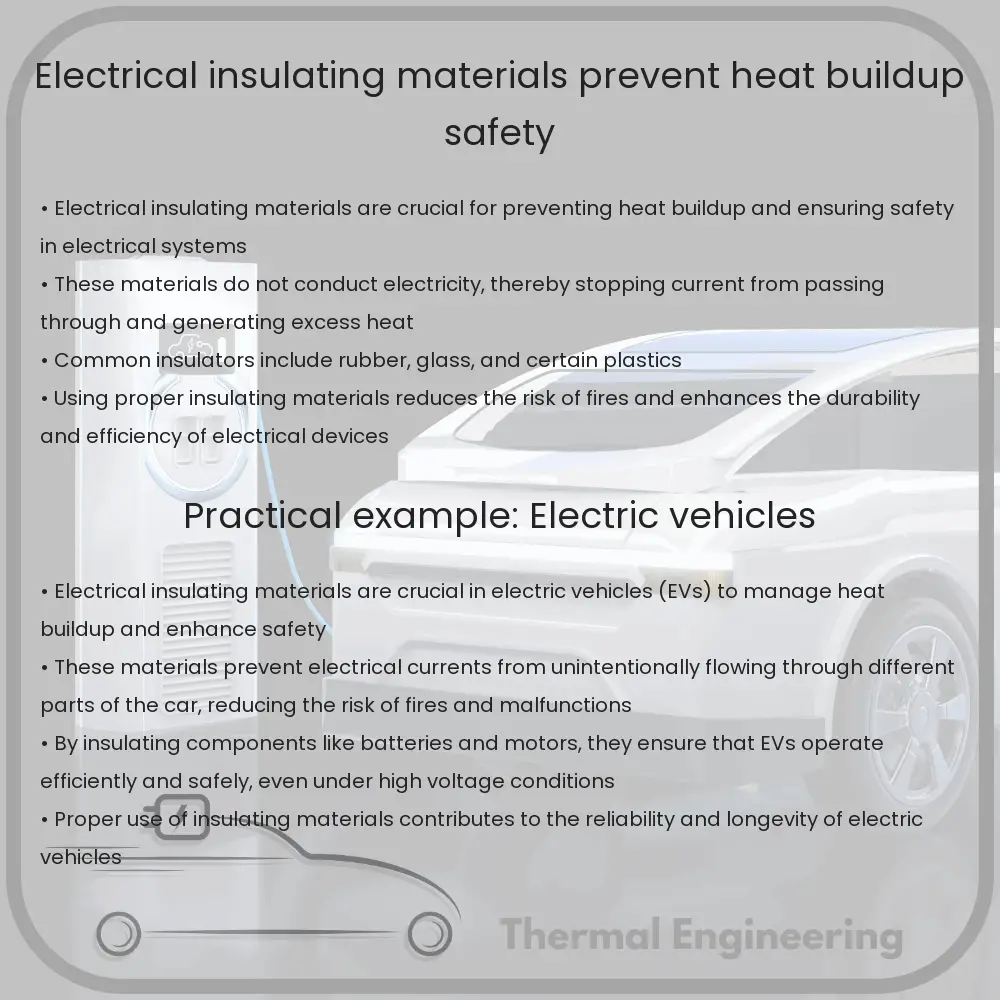
Electrical insulating materials play a critical role in the safe and efficient function of electrical systems. These materials prevent the unwanted flow of electricity, thereby avoiding hazards such as short circuits and fires, which can be caused by heat buildup. This article aims to explore the various types of electrical insulating materials, their properties, and how they contribute to overall electrical safety.

What are Electrical Insulating Materials?

Electrical insulating materials are substances that inhibit the flow of electric current. An ideal insulating material is characterized by a high resistivity, usually in the order of 1012 ohms per meter or higher. These materials are essential in any electrical system to separate conductors and to keep electricity flowing where it is supposed to go.

Common Types of Electrical Insulating Materials

  • Plastics: Widely used due to their excellent insulating properties, flexibility, and durability. Examples include PVC (Polyvinyl Chloride) and PE (Polyethylene).
  • Ceramics: Known for high heat and wear resistance, ceramics are often used in applications involving high temperatures. Porcelain and steatite are common examples.
  • Rubber: Natural and synthetic rubbers are used where flexibility and elasticity are needed, such as in insulating gloves and gaskets.
  • Glass: Although brittle, glass is an excellent insulator at high temperatures and is often used in bulb manufacturing and other high-heat environments.
  • Mica: Known for its thermal resistance, mica is common in applications where heat buildup is a significant concern, such as in heating appliances.

Role of Insulating Materials in Preventing Heat Buildup

Heat buildup in electrical systems is primarily due to resistance within conductors, which converts electrical energy into thermal energy. Insulating materials surround these conductors, reducing the amount of heat that is transferred to surrounding components and thus preserving the integrity of the entire system. By containing and managing the heat generated, these materials help in maintaining the efficiency of the electrical systems and prolonging their lifespan.

Safety Enhancement Through Insulation

One of the paramount reasons for using electrical insulation materials is enhancing safety by preventing electrical shocks and fires. Insulation acts as a barrier between electrical currents and users, preventing any accidental contact with live electrical parts. Moreover, it helps in preventing short circuits which might occur if conductive parts were accidentally to come into contact with one another. Hence, proper insulation directly contributes to operational safety in residential, commercial, and industrial settings.

Advancements in Insulation Technology

In recent years, advancements in materials science have led to the development of insulating materials that are not only more effective but also more environmentally friendly. For instance, thermoplastic materials, which soften when heated and harden upon cooling, allow for easier recycling compared to traditional materials. Innovations such as nano-enhanced insulators, which incorporate nanotechnology to improve performance characteristics, are also on the rise.

Furthermore, ongoing research into better materials ensures that future electrical systems will continue to become safer and more efficient, minimizing energy loss and hazards related to electricity usage.

Conclusion

Electrical insulating materials are indispensable in any electrical system, entrusted with the dual roles of enhancing both efficiency and safety. By effectively managing heat and preventing the flow of electricity where it isn’t needed, these materials prevent many of the hazards associated with electricity. As technology progresses, the continued development and refinement of insulating materials will play a crucial role in shaping a safer and more efficient electrical future.

Laminar flow control techniques

Learn about Laminar Flow Control Techniques, crucial for enhancing efficiency and reducing drag in aerospace and marine vehicles.

Laminar flow control techniques

Laminar Flow Control Techniques

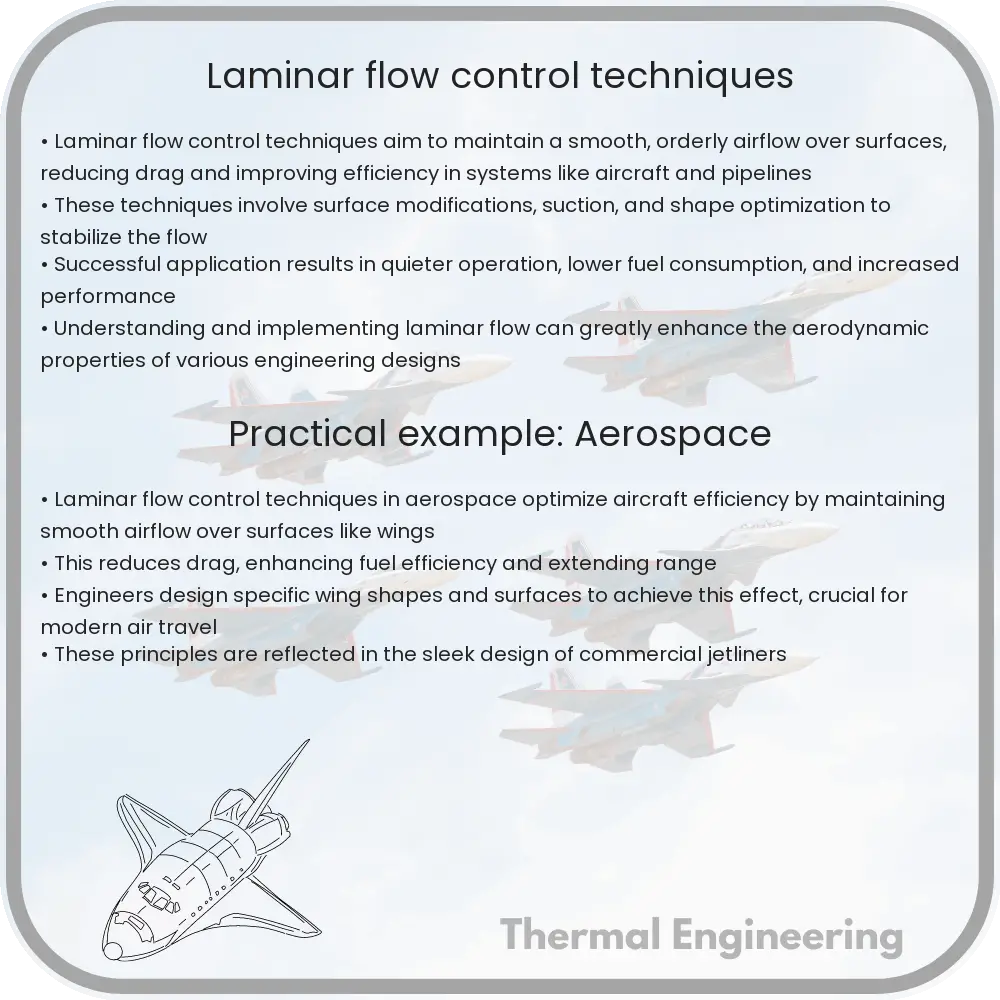
Laminar flow control techniques are essential for reducing skin friction drag on aircraft and marine vehicles, improving their efficiency and performance. By maintaining the flow of air or water close to the surface of a vehicle in a smooth and orderly layer, these techniques can significantly reduce the energy expenditures and increase operational efficiency.

Understanding Laminar Flow

Laminar flow occurs when a fluid flows in parallel layers, with no disruption between the layers. This type of flow is characterized by smooth streamlines and minimal mixing. The opposite of laminar flow is turbulent flow, which involves chaotic changes in pressure and flow velocity.

Techniques for Laminar Flow Control

  • Surface Shape and Smoothness: The shape and smoothness of a surface significantly influence whether the flow over it remains laminar. Aircraft and ships often feature carefully designed, smooth shapes to maintain laminar flow across key areas.
  • Suction: One effective method for controlling laminar flow is to use suction through the surface. Small perforations or slots are created in the surface through which air is sucked out, helping to stabilize the boundary layer and delay the transition to turbulence.
  • Blowing: Similarly to suction, blowing involves introducing a small amount of air at specific points along the surface to influence the boundary layer’s stability and maintain laminar flow.
  • Vortex Generators: Small, blade-like devices called vortex generators can be installed on surfaces to create tiny vortices in the airstream. This helps in managing the boundary layer and prolonging the region of laminar flow.
  • Compliance: Making the surface partially compliant can also help in maintaining laminar flow. The surface can adapt to oncoming flow variations, which helps in delaying the onset of turbulence.

Mathematical Representation of Laminar Flow

The behavior of laminar flow can be described using the Navier-Stokes equations, which are a set of equations that describe the motion of viscous fluid substances. The simplified form of the Navier-Stokes equation for incompressible flow, assuming steady state and ignoring external forces, is:

\[ \nabla \cdot \vec{u} = 0 \]

And,

\[ \rho (\vec{u} \cdot \nabla) \vec{u} = -\nabla p + \mu \nabla^2 \vec{u} \]

where \( \vec{u} \) is the velocity field, \( p \) denotes the pressure, \( \rho \) is the fluid density, and \( \mu \) represents the dynamic viscosity of the fluid.

Applications and Benefits

The application of laminar flow control techniques extends across various fields. In aerospace, maintaining laminar flow over wings and fuselage surfaces can significantly reduce drag, leading to fuel savings and increased range. In the maritime industry, such techniques can reduce resistance experienced by ships, translating to higher speeds and lower fuel consumption. Furthermore, laminar flow is also pivotal in various industrial processes that require precise control of fluid dynamics, such as in coating and the manufacture of composite materials.

By understanding and applying laminar flow control techniques, engineers can design more efficient, cost-effective, and environmentally friendly vehicles and systems, which are crucial attributes in our increasingly energy-conscious world.

Thermal Insulating Bricks | Energy Efficiency, Building

Learn about thermal insulating bricks, innovative building materials that enhance energy efficiency and sustainability in construction.

Thermal Insulating Bricks | Energy Efficiency, Building

Thermal Insulating Bricks: Enhancing Energy Efficiency in Buildings

Thermal insulating bricks play a crucial role in the construction industry by reducing the energy consumption of buildings. This innovative building material significantly contributes to environmental sustainability and cost-saving for homeowners and businesses alike. Let’s explore how these bricks work and why they are beneficial.

What are Thermal Insulating Bricks?

Thermal insulating bricks, also known as insulating firebricks or lightweight insulating bricks, are a type of building brick designed to provide high levels of thermal insulation. These bricks are typically made from materials that have a low thermal conductivity, such as expanded clay, perlite, or vermiculite, mixed with traditional clay or cement. The key characteristic of these bricks is their ability to minimize the rate at which heat passes through walls, thereby maintaining a building’s temperature more effectively.

How Do Thermal Insulating Bricks Work?

The effectiveness of thermal insulating bricks is primarily based on their composition and structure. These bricks are usually porous, containing trapped air within their structure, which is an excellent insulator. Air has a very low thermal conductivity, meaning it resists the flow of heat. By trapping air within the brick, the heat transfer through the brick – and subsequently through the wall of the building – is greatly reduced.

Benefits of Thermal Insulating Bricks

  • Energy Efficiency: By slowing the rate of heat transfer, these bricks help maintain a building’s internal temperature, reducing the need for heating in winter and cooling in summer. This can significantly lower energy bills and the building’s carbon footprint.
  • Cost Effectiveness: Although the initial cost might be higher than conventional bricks, the savings on energy bills can quickly offset this initial investment, making them a cost-effective solution in the long term.
  • Comfort: Buildings constructed with thermal insulating bricks typically have a more consistent indoor climate, enhancing comfort for occupants.
  • Sound Insulation: The porous nature of these bricks not only insulates against heat but also against sound, providing a quieter indoor environment.
  • Fire Resistance: Many thermal insulating bricks offer improved fire resistance due to their composition and structure.
  • Eco-Friendliness: By reducing the energy required for heating and cooling, these bricks help lower greenhouse gas emissions, contributing to a more sustainable construction model.

Applications of Thermal Insulating Bricks

Due to their insulating properties, these bricks are particularly useful in climates with extreme temperatures – both hot and cold. They are applicable in various building types, including residential, commercial, and industrial structures. Moreover, their fire resistance and sound insulation properties make them suitable for special projects like sound barriers and firewalls in hazardous environments.

Conclusion

Thermal insulating bricks represent a significant advancement in building materials, providing multiple benefits ranging from improved energy efficiency to enhanced living comfort. By incorporating these bricks into new buildings or renovations, property owners can enjoy lower energy costs, increased comfort, and a smaller environmental footprint. As we continue to push for more sustainable construction practices, the role of thermal insulating bricks is likely to expand, making them a key component of energy-efficient building design.

Polypropylene | Chemical Resistance, Low Thermal Conductivity

Explore the features of polypropylene (PP), focusing on its chemical resistance and low thermal conductivity, as well as its diverse industrial applications.

Polypropylene | Chemical Resistance, Low Thermal Conductivity

Understanding Polypropylene: Chemical Resistance and Low Thermal Conductivity

Polypropylene, often abbreviated as PP, is a type of plastic that is extensively used in various industries due to its strong chemical resistance and low thermal conductivity. This thermoplastic polymer is notable for its versatility and effectiveness in applications ranging from packaging and labeling to automotive components and consumer goods.

Chemical Resistance of Polypropylene

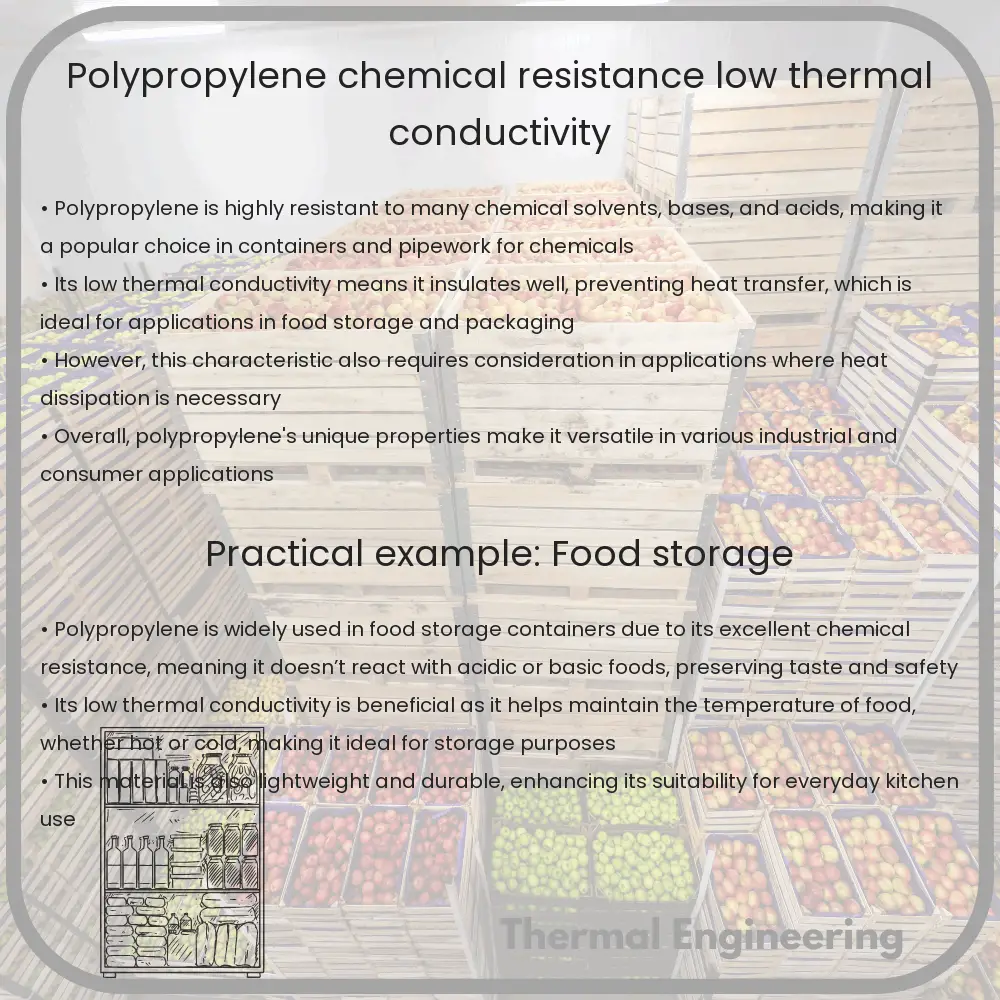
Polypropylene is highly resistant to many chemical solvents, bases, and acids. This durability in diverse chemical environments makes it extremely useful in containers and pipework for chemicals. The polymer structure of polypropylene does not react with water, detergents, acids, and bases, which helps it maintain its form and integrity even when exposed to harsh substances over extended periods.

  • Acids: Polypropylene is generally resistant to most acids, making it ideal for use in the manufacturing of containers that store vinegar, citric acid, and even some industrial cleaning agents.
  • Bases: High resistance to basic substances such as sodium hydroxide (lye) or potassium hydroxide makes polypropylene a preferred choice for containers and pipes in these environments.
  • Solvents: Although polypropylene is resistant to many solvents, it does have limited resistance to chlorinated hydrocarbons and aromatic compounds, which can sometimes lead to swelling or dissolution.

This chemical resistance also contributes to the polymer’s longevity and its ability to be reused and recycled, thereby reducing waste and environmental impact.

Low Thermal Conductivity of Polypropylene

With a thermal conductivity as low as 0.1-0.22 W/m*K (watts per meter Kelvin), polypropylene is characterized by its poor ability to conduct heat. This property is particularly valuable in applications requiring insulation or the protection of contents from external temperature changes.

  • Insulation: The low thermal conductivity makes polypropylene a good insulator, widely used in containers that store hot or cold substances. This includes everything from hot food packaging to ice cream tubs.
  • Energy efficiency: Polypropylene’s insulating properties significantly contribute to energy savings, making it a popular choice in industrial and residential insulation systems.

Applications of Polypropylene

Due to its unique properties, polypropylene has a wide range of applications:

  1. Packaging: Used in containers and labels for its barrier properties and chemical resistance.
  2. Textiles: In the form of fibers and nonwoven fabrics for bags, apparel, and upholstery.
  3. Automotive: Used in the manufacturing of battery cases and bumpers due to its resilience and resistance to chemical corrosion.
  4. Consumer Products: Popular in the manufacture of dishwasher safe containers, toys, and garden tools.

Polypropylene remains a favorite choice among engineers and designers due to its balance of properties, cost-effectiveness, and recyclability. Its ability to resist chemical degradation while insulating against heat makes it indispensable in modern manufacturing and industry.