Facebook Instagram Youtube Twitter

Non-Newtonian fluid flow applications

Learn how non-Newtonian fluids are used in engineering applications like protective gear, automotive advancements, medical devices, and culinary arts.

Non-Newtonian fluid flow applications

Exploring Non-Newtonian Fluid Flow Applications in Engineering

Non-Newtonian fluids are substances that exhibit a flow behavior different from that of Newtonian fluids, which have a constant viscosity regardless of the stress applied. The viscosity of non-Newtonian fluids changes when under force and returns to its original state when the force is removed. This unique property broadens their applicability in various engineering fields, leading to innovative solutions and products. In this article, we will discuss some of the key applications of non-Newtonian fluid flow in engineering.

Protective Gear and Equipment

One of the most notable applications of non-Newtonian fluids is in the development of protective gear. Materials like d3o and shear-thickening fluids (STFs) are examples of non-Newtonian fluids that harden upon impact and are used in products ranging from shoe insoles to military body armor. These materials provide flexibility during normal wear but become rigid and absorbent under sudden stress, offering enhanced protection against impacts and collisions.

  • Sports Equipment: Incorporation in helmets, padding, and gloves to protect athletes from high-impact forces during sports such as football, rugby, and skiing.
  • Military and Law Enforcement: Use in bulletproof vests and protective suits to absorb the energy of projectiles and reduce trauma.

Automotive Industry

In the automotive sector, non-Newtonian fluids contribute to safety and comfort advancements. Electrorheological (ER) fluids and magnetorheological (MR) fluids are two types that can change their viscosity or elasticity when exposed to magnetic or electric fields. This feature is utilized in adaptive shock absorbers, improving vehicle handling and ride quality over varying terrain.

  • Shock Absorbers: MR fluids in shock absorbers adapt the damping properties based on road conditions, enhancing comfort and stability.
  • Vibration Damping: Components filled with non-Newtonian fluids can damp vibrations effectively, reducing noise and wear in the engine and other parts.

Medical and Biomedical Applications

Non-Newtonian fluids find significant applications in the medical field, particularly in drug delivery systems and prosthetics. For instance, hydrogels, which are non-Newtonian polymer-based fluids, can respond to changes in pH or temperature to deliver medication at controlled rates.

  • Controlled Drug Release: Hydrogels in drug delivery systems can alter their behavior in response to the body’s environment, enabling targeted and sustained release of medications.
  • Prosthetic Devices: Incorporation in prosthetics to mimic the mechanical properties of biological tissues, improving comfort and functionality for the user.

Culinary Innovation

Even in culinary arts, non-Newtonian fluids influence modern cooking techniques. Chefs use substances like xanthan gum (a shear-thinning fluid) to create sauces that can change texture under different conditions of stirring or resting, enhancing the dining experience with novel presentations and textures.

  • Molecular Gastronomy: Utilization of non-Newtonian properties to invent new textures and improve the stability of culinary foams and emulsions.

In conclusion, the unique properties of non-Newtonian fluids have allowed for creative and practical applications across various engineering disciplines. From improving safety gear to enhancing culinary experiences, these fluids continue to inspire innovation, enhancing both function and form in everyday products and applications.

Phenolic Foam | Fire Resistance, Thermal Insulation

Phenolic foam is a fire-resistant, thermally insulating rigid polymeric foam used in construction, known for safety and energy efficiency.

Phenolic Foam | Fire Resistance, Thermal Insulation

Introduction to Phenolic Foam

Phenolic foam is a type of rigid polymeric foam that comprises phenolic resin and a foaming agent. Known for its excellent fire resistance and thermal insulation properties, it is widely used in the building and construction industry. This material not only offers safety benefits but also contributes to energy efficiency in various applications.

Fire Resistance Properties

One of the standout features of phenolic foam is its inherent fire resistance. Unlike many other insulation materials, phenolic foam does not contribute significantly to the spread of flames or the development of smoke. When exposed to fire, the foam carbonizes and expands, forming a charred layer that helps to protect the core of the foam and slow down the spread of fire. This characteristic makes it an ideal choice for applications where fire safety is a paramount concern.

  • Low Smoke Emissions: Phenolic foam generates very little smoke when burned.
  • Low Toxicity: The smoke produced is typically less toxic compared to other insulation materials.
  • High Ignition Temperature: It has a higher ignition temperature than many other foams, reducing the risk of accidental fires.

Thermal Insulation Capabilities

The thermal insulation performance of phenolic foam is superior to many commonly used insulation materials. It has a low thermal conductivity (usually around 0.020 W/mK), which means it is more effective in preventing heat transfer. This property is particularly important in the design of energy-efficient buildings, as it helps to reduce heating and cooling demands, thereby lowering energy costs.

  • Energy Efficiency: Helps in maintaining consistent indoor temperatures and reducing energy costs.
  • Moisture Resistance: Phenolic foam is also resistant to moisture absorption, which helps to maintain its insulating effectiveness over time.
  • Longevity: It is durable and maintains its performance characteristics for a long period.

Applications of Phenolic Foam

Due to its impressive properties, phenolic foam is used in a wide range of applications:

  1. Building insulation for walls, roofs, and floors in residential, commercial, and industrial buildings.
  2. Fire doors and fire protective panels, where additional fire resistance is required.
  3. HVAC systems to insulate ducts and prevent heat loss or gain, improving energy efficiency.
  4. Pipework, particularly in industries where maintaining the temperature of fluids is crucial.
  5. Transportation, for insulating carriages in trains and other vehicle components where fire safety and thermal management are important.

Environmental Considerations

Phenolic foam, while beneficial in many ways, must also be considered in terms of environmental impact. It is generally more environmentally friendly compared to some traditional insulation materials due to its longevity and energy-saving potential. However, the production of phenolic resin involves formaldehyde, a volatile organic compound (VOC), which raises concerns regarding environmental and health safety. Advances in manufacturing technologies are aiming to reduce these emissions and increase the material’s eco-friendliness.

Conclusion

In summary, phenolic foam is an advanced insulation material that offers remarkable fire resistance and superior thermal insulation properties. Its use across various sectors demonstrates not only its effectiveness in enhancing safety and reducing energy consumption but also its adaptability to different environments and requirements. As technology advances, further improvements in phenolic foam will likely enhance its performance and environmental profile, solidifying its role in the future of insulation materials.

Polyethylene Terephthalate (PET) | Thermal Insulation, Packaging

Learn about Polyethylene Terephthalate (PET), its uses in thermal insulation and packaging, and its environmental benefits.

Polyethylene Terephthalate (PET) | Thermal Insulation, Packaging

Understanding Polyethylene Terephthalate (PET): Applications in Thermal Insulation and Packaging

Polyethylene Terephthalate, commonly abbreviated as PET, is a type of polyester that is molded into plastic bottles and containers for packaging foods and beverages, especially convenience-sized soft drinks, juices, and water. Virtually all single-serving and 2-liter bottles of carbonated soft drinks and water sold in the U.S. are made from PET. Its lightweight, high performance, and recyclable properties make it an ideal material in a variety of applications, including thermal insulation and packaging.

Properties of PET

PET is renowned for its strong barrier properties against water vapor, dilute acids, gases, oils, and alcohols. It is also shatter-resistant and provides a high strength-to-weight ratio. The thermal stability and resistance to impact of PET make it suitable for both hot-filled and cold-filled beverages. PET’s ability to contain carbon dioxide (CO2) gas makes it particularly useful for sodas and beer. Its thermal insulation properties also make it an effective material for other applications like building insulation.

Applications in Packaging

PET is widely used in the packaging industry for various reasons:

  • Durability: PET containers are resistant to breakage and can be sealed with tamper-evident caps, enhancing product safety.
  • Clarity: PET’s clarity allows consumers to see the product inside, which is an important feature for many food and beverage products.
  • Lightweight: Being lightweight, PET reduces shipping costs compared to glass, which is heavier.
  • Recyclability: PET is completely recyclable, and recycling systems are widely established across many countries, making it an environmentally friendly option.

Applications in Thermal Insulation

PET’s applications extend beyond packaging into building energy efficiency. PET can be engineered into foam or fibers that are suitable for thermal insulation in buildings. Here are some ways PET is used in thermal insulation:

  • Building Insulation: PET fibers can be used to produce insulation products that are installed in roofs, walls, and floors to help reduce energy consumption by maintaining indoor temperature levels.
  • Acoustic Insulation: Beyond thermal insulation, PET is effective in noise reduction and is used in acoustic insulation for residential and commercial buildings.
  • HVAC Systems: Insulative components made from PET are used in HVAC (Heating, Ventilation, and Air Conditioning) systems to enhance their efficiency and reduce energy loss.

Environmental Aspect of PET

About recycling, PET is one of the most sustainable types of plastic. The ability to recycle PET and convert it into various consumer and industrial products not only helps in waste reduction but also promotes the use of recycled materials in new forms. The process of recycling PET involves collecting, sorting, shredding, cleaning, and melting the plastic, which can then be formed into new PET products.

Conclusion

Polyethylene Terephthalate (PET) is a versatile and sustainable material widely used in the packaging and building industries. Its strong barrier properties, safety in handling, and recyclability make it a preferred choice in a wide range of applications, from soft drink bottles to building insulation. By understanding and leveraging the properties of PET, industries can meet consumer needs while also contributing to environmental sustainability.

Aramid Fiber | Heat Resistance, Protective Clothing

Learn about aramid fibers, synthetic materials known for durability and resistance to extreme heat, used widely in protective clothing.

Aramid Fiber | Heat Resistance, Protective Clothing

Aramid Fiber: A Marvel in Engineering for Heat Resistance and Protective Clothing

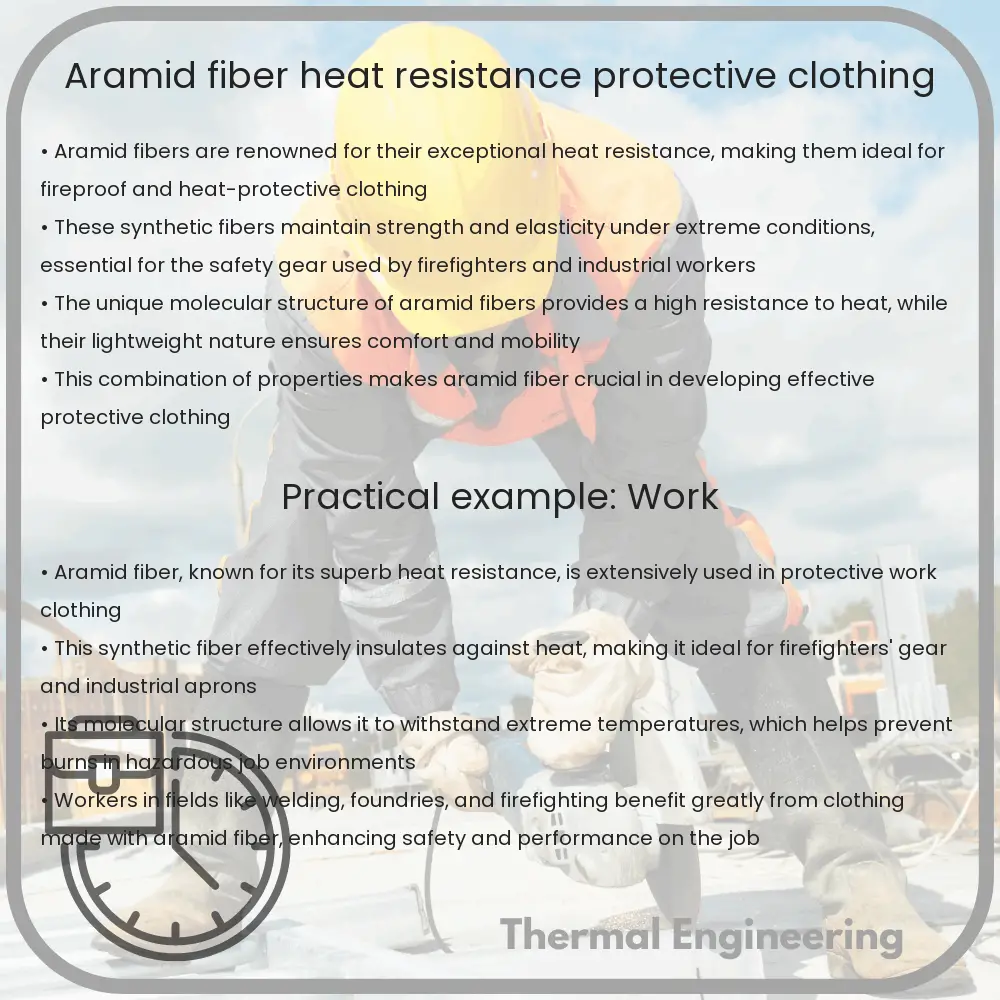
Aramid fibers are high-performance synthetic fibers renowned for their exceptional heat resistance and strength. These fibers, first commercially developed in the early 1960s, have since become pivotal in various applications requiring durability, resistance to heat, and lightweight properties. Aramid fibers are particularly notable for their use in protective clothing, where they provide essential protection against extreme thermal exposures, mechanical impacts, and other hazardous conditions.

Understanding Aramid Fiber

Aramid fibers are primarily made of long molecular chains of aromatic polyamide. They are created through a process called ‘spinning’, where the liquid crystalline solution of polyamide is extruded through a spinneret to form fibers. Once solidified, these fibers exhibit a highly oriented structure, granting them exceptional strength and thermal stability. The term “aramid” is a portmanteau derived from ‘aromatic polyamide’.

Heat Resistance Properties

The molecular structure of aramid fibers gives them remarkable thermal stability. These fibers can maintain their integrity and mechanical properties at temperatures up to 500 degrees Celsius. The unique aspect of aramid fibers in terms of heat resistance can be attributed to their strong covalent bonds and aromatic rings within the molecular chain, which provide a high melting point and limit heat transfer along the fiber.

Applications in Protective Clothing

Aramid fibers are extensively used in protective clothing, catering to industries like firefighting, military, aerospace, and automotive sectors. In these applications, protective gear made from aramid fibers can significantly reduce the risk of burns and injuries from heat and flames. The fibers are not only resistant to heat but also to many chemicals, ensuring additional safety in hazardous environments. Here are some critical applications:

  • Firefighter suits: Provide thermal protection while remaining lightweight.
  • Military uniforms: Offer bulletproof and fire-resistant properties.
  • Heat-resistant gloves and aprons: Used in industrial settings where heat and flame are risks.
  • Aerospace clothing: Protects from potential aircraft fires and extreme conditions.

Advantages of Using Aramid Fiber in Protective Clothing

The deployment of aramid fibers in protective wear offers multiple advantages:

  1. Thermal Stability: Aramid fibers do not melt or ignite in air, providing reliable protection against high temperatures.
  2. Durability: The fibers are incredibly durable, resistant to abrasion, and possess a high breaking strength, ensuring long-lasting wear.
  3. Flexibility: Despite their strength, aramid fibers are surprisingly flexible, which is crucial for the mobility needed in many protective clothing applications.
  4. Chemical Resistance: Being resistant to many chemicals, aramid fibers provide an added layer of protection in environments exposed to hazardous substances.

Challenges and Considerations

While aramid fibers offer significant advantages, they are not without challenges. The cost of production can be relatively high due to complex manufacturing processes, limiting their accessibility and increasing the end cost of protective clothing. Furthermore, while excellent in thermal and mechanical resistance, aramid fibers can degrade under ultraviolet light and may have limited compressive strength, which are important considerations for specific applications.

In conclusion, aramid fibers stand as a testament to the advances in chemical and textile engineering, providing essential safety features in many high-risk professions. Through ongoing research and development, the functionality and efficiency of aramid-based protective clothing continue to improve, broadening their applications and enhancing safety standards in numerous industries.

Thermal Prismatic Films | Light Management, Heat Reduction

Thermal prismatic films: Engineered materials designed to optimize light and heat management for enhanced energy efficiency and comfort in various applications.

Thermal Prismatic Films | Light Management, Heat Reduction

Introduction to Thermal Prismatic Films

Thermal prismatic films are engineered materials designed to manage light and heat in various applications, from improving energy efficiency in buildings to enhancing the performance of solar panels. These films utilize microstructured surfaces to manipulate light paths, thus optimizing the balance between light entry and thermal gain.

How Thermal Prismatic Films Work

These films incorporate tiny prisms or microstructures on their surfaces that redirect incoming sunlight. The specific angles and shapes of these prisms are critical as they determine how light is refracted and reflected. By controlling the angle at which light enters a space, these films can minimize direct solar radiation, which in turn reduces heat accumulation.

Applications of Thermal Prismatic Films

  • Building Windows: Applied to window glass, thermal prismatic films can reduce the cooling load on a building by deflecting a significant portion of the sun’s heat while allowing for ample natural light. This not only enhances comfort but also reduces energy costs associated with air conditioning.
  • Automotive Industry: In automobiles, these films help in maintaining lower interior temperatures and reducing the reliance on air conditioning, which can improve fuel efficiency.
  • Solar Panels: When used with solar panels, thermal prismatic films can improve the efficiency of photovoltaic cells by redirecting sunlight to optimize the angle of incidence, maximizing energy absorption.

Benefits of Thermal Prismatic Films

  1. Energy Efficiency: By reducing the amount of heat entering a space, these films decrease the need for artificial cooling, significantly lowering energy consumption and associated costs.
  2. Enhanced Comfort: Improved control of heat and light entry leads to better-regulated indoor temperatures, contributing to enhanced occupant comfort.
  3. UV Protection: Most thermal prismatic films block harmful UV rays, protecting interiors and occupants from potential damage and health risks.
  4. Eco-friendly: Reduced energy usage contributes to lower carbon emissions, aligning with sustainability goals.

Challenges and Considerations

While thermal prismatic films offer significant advantages, there are also challenges to consider. The effectiveness of these films can vary based on the orientation of the building and geographical location. Additionally, the initial cost and installation of these films should be balanced against the potential energy savings. Visual clarity and color distortion can also be concerns, as the microstructures might affect the transparency and appearance of the glass they are applied to.

Future Outlook

Advancements in materials science and microfabrication techniques continue to enhance the capabilities and applications of thermal prismatic films. Future developments may lead to even more efficient designs that offer greater reductions in heat gain and enhanced light control, potentially opening new avenues for their use in energy-sensitive environments.

In conclusion, thermal prismatic films represent a fascinating intersection of engineering and environmental design. By manipulating light and heat, these films play a crucial role in reducing energy consumption, promoting sustainability, and enhancing occupant comfort across various sectors.

Microporous Insulation | High Performance, Thermal Efficiency

Learn about microporous insulation, an advanced material that blocks heat transfer through its unique structure and offers exceptional thermal efficiency in high-temperature settings.

Microporous Insulation | High Performance, Thermal Efficiency

Introduction to Microporous Insulation

Microporous insulation refers to a type of insulating material that is crafted using a blend of powdered minerals (including silica and alumina) and fibers. These materials are engineered to maintain a structure filled with tiny pores that block heat transfer through three primary mechanisms: conduction, convection, and radiation. This combination results in an insulation material that offers exceptional thermal efficiency even in high-temperature applications and constrained spaces.

How Does Microporous Insulation Work?

The effectiveness of microporous insulation hinges on its tiny, open pore structure. These pores are smaller than the mean free path of air molecules, significantly reducing the ability of air to circulate and hence minimizing convection. Additionally, the composition of microporous insulators generally includes opacifiers which help in reducing radiative heat transfer. Since heat is transmitted much less effectively through microporous materials, they are highly effective at insulating while maintaining a low thickness.

Key Features and Benefits

  • High Thermal Performance: Microporous insulation offers superior thermal resistance, often up to four times better than traditional fibrous or foam insulation materials.
  • Low Thermal Conductivity: These materials typically have thermal conductivities lower than 0.020 W/m*K at moderate temperatures, which ensures excellent insulation in a thinner profile.
  • Temperature Resistance: Microporous insulation is capable of withstanding temperatures up to as high as 1000°C, making it ideal for use in extreme temperature environments.
  • Space Efficiency: Due to its high insulating capacity, microporous material can reduce space requirements, allowing for more compact designs in engineering applications.
  • Energy Efficiency: By effectively reducing heat transfer, microporous insulation helps in saving energy which would otherwise be used to combat thermal losses.

Applications in Engineering

Microporous insulation is used across a diverse range of engineering fields:

  1. Aerospace: Used in space shuttles and aircrafts, where effective insulation is critical and space and weight are at a premium.
  2. Industrial: Applies in high-temperature processes such as in furnaces, foundries, and kilns.
  3. Automotive: Utilized in the automotive industry to insulate exhaust systems and enhance energy efficiency while protecting sensitive components from heat.
  4. Building and Construction: Used for fireproofing and thermal insulation in buildings, particularly in fire doors and wall insulating panels.

Considerations for Implementation

While microporous insulation offers significant advantages, there are considerations one must take into account during its implementation:

  • Cost: The initial cost of microporous insulation can be higher than traditional materials, though this is often offset by its performance benefits and longevity.
  • Machinability: Special care should be taken during the installation of microporous materials as they can be brittle and difficult to cut or shape.
  • Environmental Factors: It is essential to ensure that microporous insulation is protected from moisture as water ingress can lessen its insulating properties.

Conclusion

Microporous insulation is a modern solution that meets the rigorous demands of various high-stakes engineering applications by providing enhanced thermal protection, space efficiency, and energy savings. Despite its higher upfront cost and some handling sensitivities, its deployment can lead to substantial long-term benefits in safety, performance, and cost-efficiency, solidifying its role as a critical material in innovative engineering solutions.

Sodium Silicate | Fireproofing, Thermal Insulation

Explore the uses of sodium silicate in fireproofing and thermal insulation, highlighting its chemical properties and benefits in safety applications.

Sodium Silicate | Fireproofing, Thermal Insulation

Understanding Sodium Silicate: Applications in Fireproofing and Thermal Insulation

Sodium silicate, commonly known as waterglass or liquid glass, is a versatile compound used in a wide array of industrial applications, from detergents to ceramics. One of its notable uses is in fireproofing and thermal insulation. This article explores how sodium silicate is applied in these areas, detailing the underlying principles that make it an effective choice.

Chemical Composition and Properties

Sodium silicate is primarily composed of sodium oxide (Na2O) and silicon dioxide (SiO2) dissolved in water. The substance is produced in various ratios of SiO2 to Na2O, impacting its properties and suitability for different applications, including its melting point, viscosity, and chemical stability. In fireproofing and insulation, the properties exploited are its heat resistance and ability to form a hard, protective layer when exposed to heat.

Sodium Silicate in Fireproofing

In the realm of fireproofing, sodium silicate is prized for its ability to enhance the fire resistance of materials. When applied to substrates like fabric, paper, or wood, sodium silicate can significantly increase the materials’ ability to resist ignition and slow down the spread of flames. This is due to the formation of a thermal barrier as the sodium silicate cures to form a rigid, heat-resistant layer upon exposure to heat.

  • Improves structural integrity under high temperatures, preventing collapse.
  • Helps in protecting delicate structures and historical artifacts from fire damage.
  • Acts quickly to form a protective layer, thus providing immediate protection.

Thermal Insulation Applications

Beyond fireproofing, sodium silicate also finds use in thermal insulation. It is involved in the production of mineral wool or stone wool, an insulating material used in building construction and industrial applications. The process typically follows these steps:

  1. Basalt and other raw materials are melted at a high temperature.
  2. Sodium silicate is added to the molten mixture to promote fiber formation.
  3. The fiber is spun and cured into a wool-like material that provides excellent thermal insulation.

Sodium silicate’s role in this process is crucial as it enhances the fiber’s properties, increasing its thermal resistance and stability, which makes the material particularly effective for high-temperature insulation, soundproofing, and fire protection.

Advantages of Using Sodium Silicate in Fireproofing and Insulation

The use of sodium silicate in fireproofing and thermal insulation offers several advantages:

  • Economic Efficiency: It is cost-effective compared to other fireproofing materials.
  • Eco-Friendliness: Sodium silicate is non-toxic and biodegradable, making it an environmentally friendly choice.
  • Durability: It imparts enhanced durability and longevity to structures, making them more resilient to environmental stressors and degradation over time.

Conclusion

Sodium silicate’s unique properties make it an indispensable material in the spheres of fireproofing and thermal insulation. Its ability to form a protective barrier against heat and flames while simultaneously offering cost-efficiency and environmental benefits positions it as a preferred choice in safeguarding buildings and structures around the globe. As technology advances, the potential applications of sodium silicate continue to expand, further cementing its role in industrial and safety engineering.

Advanced thermal control in greenhouse cultivation

Learn about advanced thermal control systems for optimizing greenhouse cultivation through effective temperature management and energy-saving technologies.

Advanced thermal control in greenhouse cultivation

Advanced Thermal Control in Greenhouse Cultivation

Effective thermal management is crucial for optimal greenhouse cultivation, which depends heavily on maintaining specific temperature ranges for plant growth. Advanced thermal control systems not only enhance plant growth but also improve energy efficiency, leading to significant cost savings and reduced environmental impact.

1. Understanding Greenhouse Climate Control

The primary goal of greenhouse climate control is to create an ideal environment for plant growth, regardless of external weather conditions. This involves the manipulation of temperature, humidity, and sometimes the levels of carbon dioxide. Temperature is particularly critical as it affects photosynthesis, respiration, and transpiration rates of plants.

2. Heating Systems

  • Hot Water Heating: Water is heated by boilers and circulated through pipes located under the greenhouse benches or in the flooring. This method is known for its even distribution of heat and lower operating costs.
  • Forced Air Heaters: These heaters distribute warmth through the use of fans, which circulate the air around the greenhouse. The heat source can be natural gas, propane, or electric heaters.
  • Infrared Heaters: Infrared heaters use radiation to heat the surface of plants directly, rather than heating the air, promoting quicker growth during colder spells.

3. Cooling Systems

  • Fan and Pad Evaporative Cooling Systems: This system works by drawing air through wet pads, which cools and humidifies the air before it enters the greenhouse.
  • Shade Curtains: Used to reduce solar radiation and thus control the temperature inside the greenhouse during the hotter months.
  • Fogging Systems: These systems spray fine water droplets into the air, which evaporate and reduce the temperature inside the greenhouse.

4. Automation in Thermal Control

Advancements in technology have led to sophisticated automation systems for managing greenhouse climates. These systems use sensors to monitor air temperature, humidity, light levels, and other environmental factors, adjusting the climate controls automatically to maintain the desired conditions:

  • Thermostats: Used for basic temperature control, switching heating or cooling devices on and off as needed.
  • Computerized Controllers: More advanced controllers can handle multiple inputs and outputs, managing everything from ventilation to fogging based on algorithms tailored to plant-specific needs.

5. Energy Efficiency and Sustainability

Integrating energy-efficient practices is crucial for reducing the ecological footprint of greenhouse cultivation. Some strategies include:

  1. Utilizing solar energy through the use of semi-transparent solar panels that provide necessary shade while also generating electricity.
  2. Implementing heat recovery ventilators (HRVs) that capture and reuse the heat from exhausted air.
  3. Deploying thermal screens that can help retain heat during colder periods and reflect excess sunlight during warmer periods.

Conclusion

Advanced thermal control systems in greenhouse cultivation are paramount for optimizing plant growth and ensuring energy efficiency. By utilizing a combination of heating, cooling, and automated technologies, growers can maintain ideal growing conditions year-round, leading to increased yields and reduced energy costs. Continuous innovation and adoption of sustainability practices are expected to further enhance the efficiency and productivity of greenhouses in the future.

Conductive Polymers | Electrical Heating, Thermal Stability

Explore the unique properties and applications of conductive polymers, materials merging polymer flexibility with electrical conductivity for use in electronics, heating, and more.

Conductive Polymers | Electrical Heating, Thermal Stability

Introduction to Conductive Polymers

Conductive polymers are a unique class of materials that combine the electrical properties of metals or semiconductors with the flexible, lightweight attributes of polymers. These materials are increasingly significant in various applications, including sensors, batteries, solar cells, and flexible electronic devices.

Electrical Heating in Conductive Polymers

One of the remarkable applications of conductive polymers is in electrical heating systems. These polymers can conduct electricity when a voltage is applied, leading to resistive heating due to the flow of electrical current. This characteristic makes conductive polymers suitable for creating flexible heating elements that can be embedded in textiles or used in devices that require uniform heating over complex shapes.

  • The heating effect is primarily governed by Joule’s Law, which states that the heat generated in a conductor is proportional to the square of the current times the resistance (P = I2R).
  • Conductive polymers can be engineered to have specific electrical resistances, allowing precise control over the heating level.
  • The flexibility of these materials enables integration into wearable technologies, such as heated garments or medical therapeutic devices.

Thermal Stability of Conductive Polymers

Thermal stability is a critical factor in the performance of conductive polymers, especially when used in high-temperature applications or environments. Thermal stability refers to the ability of a material to maintain its physical and chemical properties at elevated temperatures.

Conductive polymers typically have a range of thermal stability, influenced by their molecular structure and the nature of the doping agents used to enhance conductivity:

  • Polypyrrole, for example, exhibits good thermal stability up to about 150-180 degrees Celsius, beyond which it starts to degrade.
  • Polyaniline and polythiophene also show variable thermal stabilities dependent on their specific formulations and usage conditions.

Improving the thermal stability of conductive polymers is an area of ongoing research, focusing on the synthesis of new materials and the modification of existing ones with better thermal properties.

Challenges and Future Outlook

While conductive polymers offer significant advantages and opportunities, they come with challenges that need to be addressed to enhance their applicability. These include improving their long-term environmental stability, processing techniques, mechanical properties, and cost-effectiveness. As research progresses, the future of conductive polymers looks promising with potential breakthroughs that could revolutionize multiple industries, including flexible electronics, smart textiles, and advanced biomedical devices.

Conclusion

Conductive polymers bridge the gap between electrical conductors and traditional polymers, offering a versatile platform for developing new technologies. Their ability to undergo electrical heating and their intrinsic thermal properties make them suitable for a wide range of applications, albeit with challenges that need to be surmounted. Understanding and improving these materials are crucial for harnessing their full potential in innovative engineering applications.

Bismuth Telluride | Thermoelectric Cooling, Power Generation

Bismuth telluride (Bi2Te3) is a compound extensively used in thermoelectric applications for cooling and power generation due to its unique semiconductor properties.

Bismuth Telluride | Thermoelectric Cooling, Power Generation

Understanding Bismuth Telluride in Thermoelectric Cooling and Power Generation

Bismuth telluride (Bi2Te3) is a compound that is widely used in thermoelectric applications owing to its exceptional properties. This semi-metallic material plays a crucial role in the fields of thermoelectric cooling and power generation. Let’s delve into how this compound works and its applications in engineering.

Properties of Bismuth Telluride

Bismuth telluride is a narrow-gap layered semiconductor with a trigonal crystal structure. It has high electrical conductivity and low thermal conductivity, which make it an ideal material for thermoelectric applications. One of the key features of Bi2Te3 is its ability to convert temperature differences directly into electrical voltage and vice versa.

Thermoelectric Cooling with Bismuth Telluride

Thermoelectric cooling is based on the Peltier effect, which occurs when a current is passed through two dissimilar materials, causing heat absorption at one junction and heat release at the other. In this domain, bismuth telluride acts as the integral material for the junctions in Peltier devices. This application is prevalent in refrigerators and CPU coolers where compact and silent operation is desired.

  • Efficiency: While not as efficient as conventional refrigeration methods, thermoelectric coolers using Bi2Te3 are highly valued for their reliability and the absence of moving parts or refrigerants.
  • Size and Scalability: Devices can be made very small, which allows for intricate cooling solutions in electronics and other applications where space is limited.
  • Control: Allows for precise temperature control, which is crucial in scientific laboratories and electronic manufacturing.

Power Generation Using Bismuth Telluride

In addition to cooling, bismuth telluride is also used for thermoelectric power generation, which operates on the Seebeck effect. This phenomenon involves converting a temperature gradient into electric power. Here’s how Bi2Te3 is effectively applied:

  • Waste Heat Recovery: Bismuth telluride can be used to generate electricity from waste heat produced by factories, vehicles, and power plants.
  • Remote Power Supply: It offers a solid solution for powering sensors or communication devices in remote or inaccessible locations, leveraging environmental heat differences.

Advantages and Challenges

The use of bismuth telluride in thermoelectric devices offers several advantages, including reduced mechanical complexity, longevity due to fewer moving parts, and environmentally friendly characteristics, as it does not require harmful chemicals or gases. However, there are challenges:

  • Cost: High-quality bismuth telluride is relatively expensive to produce, which can limit its applicability in large-scale operations.
  • Temperature Range: Its performance is optimized for a relatively narrow temperature range, which might not suit all industrial applications.
  • Material Efficiency: While Bi2Te3 is one of the best-performing thermoelectric materials at room temperature, researchers are attempting to synthesize new materials that could operate more efficiently at higher temperatures.

Despite these challenges, the potential of bismuth telluride in thermoelectric applications continues to drive research and development. Improved synthesis techniques and composite materials may soon enhance the performance and reduce the cost of these thermoelectric technologies.

Conclusion

Bismuth telluride stands as a cornerstone material in the field of thermoelectric technology, playing crucial roles in both cooling and power generation. Its unique properties enable the development of compact, efficient, and environmentally friendly devices. Ongoing research into enhancing its efficiency and cost-effectiveness promises to expand its range of applications, making it a material of great importance in the sustainable technologies landscape.