Facebook Instagram Youtube Twitter

Indium Tin Oxide | Transparent, Thermal Conductivity

Learn about Indium Tin Oxide (ITO), a crucial material in technology for its transparency and electrical conductivity, used in various electronic devices.

Indium Tin Oxide | Transparent, Thermal Conductivity

Understanding Indium Tin Oxide: A Material of Modern Technology

Indium Tin Oxide (ITO) is a compound made of indium, tin, and oxygen. It is usually formulated as a thin film and used on glass or plastic substrates. ITO is noted for its unique combination of properties – it is transparent and yet a very effective conductor of electricity. These characteristics make it highly valuable in the fields of electronics and optics, where it is deployed in the production of devices like touchscreens, LCDs, solar panels, and organic light-emitting diodes (OLEDs).

Properties of Indium Tin Oxide

The effectiveness of ITO comes from its structure and the elements it contains. Indium and tin are both metals, which generally exhibit good electrical conductivity. When combined with oxygen to form indium tin oxide, these elements produce a transparent material that also conducts electricity. The structural properties of ITO include:

  • Transparency: ITO is capable of transmitting over 90% of visible light, making it ideal for applications such as touchscreens and display panels.
  • Electrical Conductivity: The electrical resistivity of typical ITO films is between 150-500 microohm-centimeters. This conductivity is crucial for applications that require quick electrical response times.
  • Thermal Conductivity: ITO has a thermal conductivity of about 20 W/(m*K), which is relatively higher than that of typical glass. This property is important in applications where heat needs to be dissipated efficiently, such as in LEDs and high-power electronics.

Applications of Indium Tin Oxide

The unique properties of ITO have made it a staple in various technology applications. Some of the most common uses include:

  • Displays: In flat-panel and touch screen displays, ITO films are used as the transparent conductive layer that detects touch and displays images clearly.
  • Photovoltaic Cells: ITO is used in thin-film solar panels as a transparent conducting electrode, helping improve the efficiency of photovoltaic devices.
  • LEDs: In light-emitting diodes, ITO is used as a transparent contact layer, allowing the light to pass through while still providing electrical connectivity.
  • Electrochromic Devices: ITO films are utilized in electrochromic devices, which change color or opacity when an electrical charge is applied. This technology is used in “smart windows” that reduce lighting and heating costs in buildings.

Challenges and Developments

While ITO offers a range of indispensable properties, it is not without its challenges. The primary issue is the limited availability and high cost of indium, which lead to considerable expenses in the production of ITO-coated products. In addition, the brittleness of ITO films can pose durability issues in flexible devices.

To address these challenges, research is ongoing to find alternative materials and methods. Alternatives such as aluminum-doped zinc oxide (AZO) and graphene are being studied, as they potentially offer similar properties at a lower cost and with better durability. Despite these advancements, ITO remains a critical material, extensively used in consumer electronics and renewable energy devices due to its unmatched combination of transparency and conductivity.

In conclusion, Indium Tin Oxide is a remarkable engineered material that bridges the gap between optical transparency and electrical conductivity. Its role in modern technology underscores the importance of materials science in achieving high performance in consumer electronics and energy-efficient solutions.
Phase change material applications

Learn about Phase Change Materials (PCMs) and their role in energy efficiency and temperature regulation across various applications.

Phase change material applications

Understanding Phase Change Materials and Their Applications

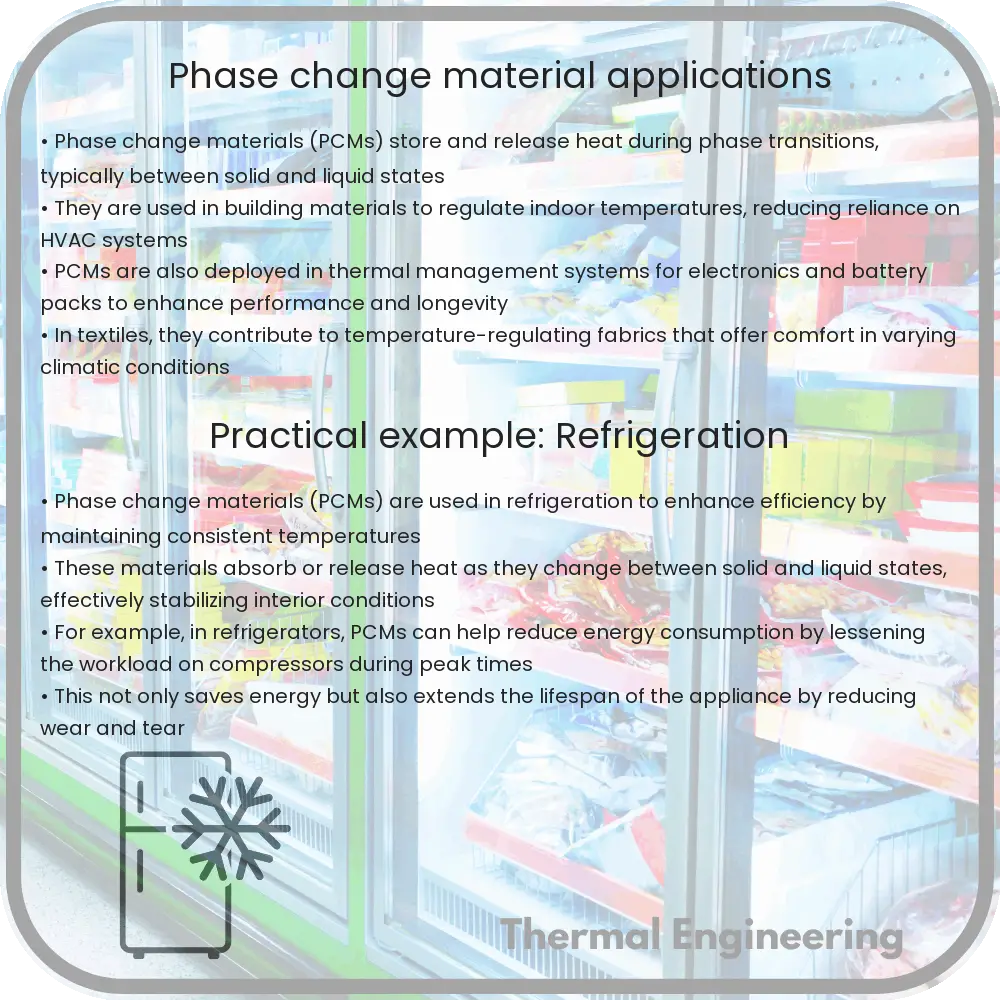
Phase change materials (PCMs) are substances that absorb and release thermal energy during the process of melting and solidifying. This unique property allows them to maintain a nearly constant temperature despite changes in the surrounding environment. PCMs are integral to various applications, exploiting their latent heat storage property to enhance energy efficiency and temperature regulation.

Basic Principles of Phase Change Materials

At a fundamental level, phase change materials operate by switching between different states of matter—typically from solid to liquid and vice versa. This transition allows them to store and release energy in the form of heat. The amount of energy involved in these transitions is expressed by the formula Q = m * L, where:

  • Q is the heat absorbed or released,
  • m is the mass of the PCM,
  • L stands for the latent heat of fusion or solidification.

The effectiveness of a PCM is largely determined by its melting point and latent heat capacity, which should align closely with the temperature stabilization goals of the intended application.

Applications of Phase Change Materials

  1. Building and Construction: In modern green building designs, PCMs are incorporated into materials such as drywall, flooring, and ceiling tiles to reduce the load on heating, ventilation, and air conditioning systems (HVAC). By absorbing excess heat from the surroundings during the day and releasing it at night, PCMs help maintain a comfortable indoor climate, significantly reducing energy costs.
  2. Thermal Energy Storage: Large-scale energy storage systems often leverage PCMs to store thermal energy generated by solar power or other renewable sources during peak hours, releasing it when the demand rises or the generation drops. This application is crucial in stabilizing grid energy by managing supply and demand effectively.
  3. Textiles: High-performance fabrics integrate PCMs for managing body temperature in demanding environments. These include sportswear that keeps athletes cool and comfortable, or protective clothing designed for extreme weather conditions, enhancing wearer comfort and safety.
  4. Electronic Cooling: In densely packed electronic components, PCMs are used to absorb and dissipate heat, thus protecting sensitive parts from overheating. This application is particularly beneficial in enhancing the longevity and reliability of integrated circuits and other electronic devices.
  5. Temperature Controlled Transportation: PCMs are used in packaging for temperature-sensitive goods such as pharmaceuticals, food, and other perishables. By maintaining a consistent temperature, PCMs help in preserving the integrity and extending the shelf life of these products during transit.

As research and technology continue to evolve, the range of applications for phase change materials is expected to expand. Innovations in material science and thermal management are poised to broaden the use of PCMs in industrial, commercial, and environmental applications. Their role in contributing to energy efficiency and sustainability is becoming increasingly indispensable in our advancing world.

Conclusion

Phase change materials represent a fascinating sector of material science with potent applications in energy efficiency and thermal regulation. By harnessing the latent heat of materials during phase transition, they offer an adaptable solution to the complex challenges of heat management across various sectors. With ongoing developments, the future of PCMs looks promising, set to play a crucial role in achieving more sustainable and efficient energy use in numerous fields.

Heat pump optimization strategies

Learn strategies for optimizing heat pump performance in HVAC systems to enhance efficiency and reduce costs.

Heat pump optimization strategies

Understanding Heat Pump Optimization Strategies

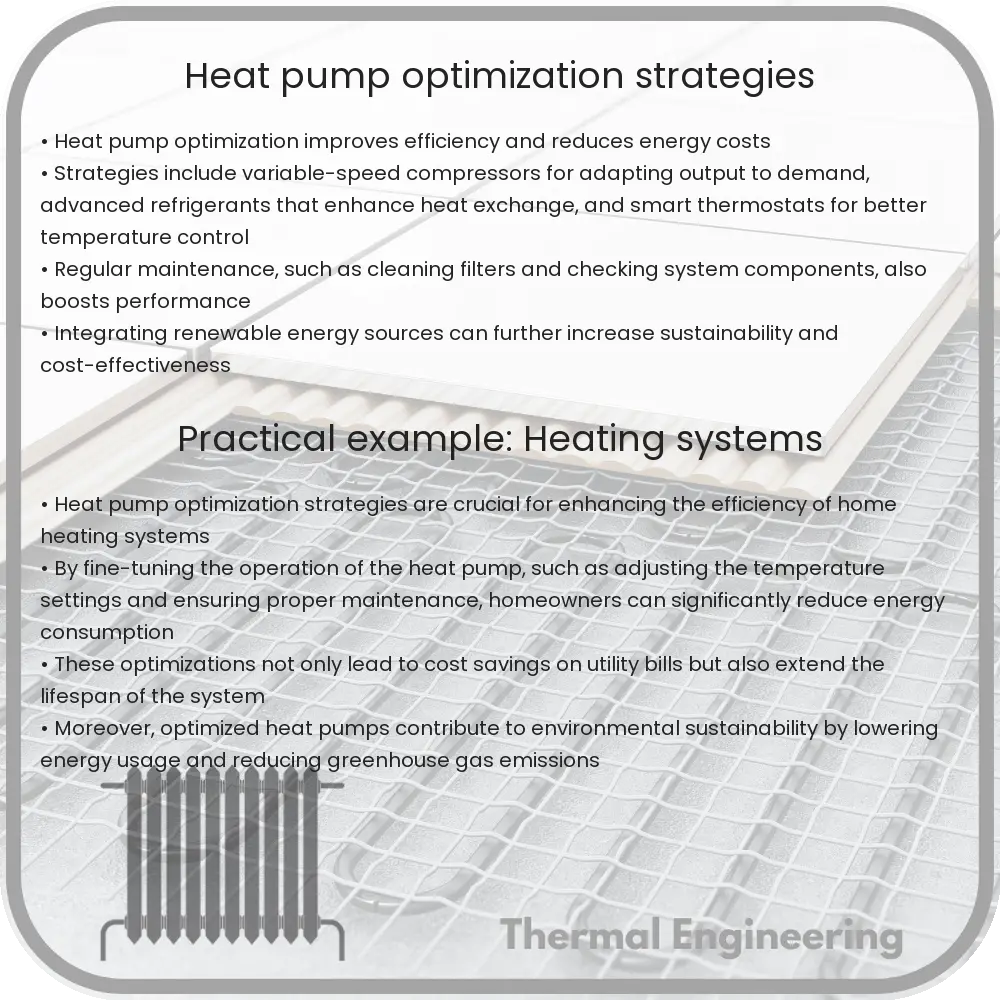
Heat pumps are a fundamental component of modern heating, ventilation, and air conditioning (HVAC) systems, utilized to transfer heat from one environment to another efficiently. Effective optimization of heat pump operations not only enhances energy efficiency but also extends the lifespan of the equipment and reduces operational costs. This article will explore key strategies for optimizing heat pump performance.

Improvement of System Design

One primary method for optimizing heat pump efficiency begins with system design. This includes the accurate sizing of the heat pump, which is crucial for ensuring that the system operates optimally to meet the thermal load demands without excessive cycling or energy waste.

  • Choosing the right size of the heat pump is vital; too large a unit can lead to frequent on-off cycling, reducing efficiency and component lifespan.
  • Integrating advanced components such as variable frequency drives (VFDs) can enhance control over the compressor speed, leading to better energy management and reduced wear and tear from less frequent cycling.

Thermal Load Management

Managing the thermal load is another effective strategy for optimizing heat pump performance. By reducing the overall load, the heat pump can operate more efficiently:

  • Improving building insulation and sealing leaks to maintain the desired temperatures with less energy.
  • Utilizing smart thermostats can help in maintaining optimal temperature settings based on occupancy and weather conditions, thereby reducing unnecessary heating or cooling.

Regular Maintenance

Regular maintenance is critical to the efficient operation of heat pumps. A well-maintained system operates more efficiently than one that is neglected:

  • Cleaning or replacing air filters regularly to ensure maximum airflow and heat exchange efficiency.
  • Checking and sealing ductwork to prevent loss of heated or cooled air.
  • Ensuring that the refrigerant charge and the flow rates are at their optimal levels as per manufacturer specifications.

Advanced Control Strategies

Utilizing advanced control systems can significantly improve the efficiency of heat pump operations. Such systems optimize the performance based on real-time data:

  • Intelligent controls that adjust the operation based on external weather conditions and internal temperature demands.
  • Integration of IoT (Internet of Things) technology to monitor performance and predict maintenance needs before failures occur.

Exploring Renewable Integration

Integrating renewable energy sources with heat pump systems can further enhance efficiency and sustainability. Solar and geothermal energies are excellent complements to heat pump technology:

  • Solar thermal panels can be used to increase the temperature of the heat source, which makes the heat pump operation more efficient.
  • Geothermal heat sources provide a stable temperature for heat pump operation, optimizing performance regardless of external weather conditions.

Conclusion

Optimizing the performance of heat pumps involves a multifaceted approach that includes improved design, load management, regular maintenance, advanced controls, and potential integration with renewable energy sources. By applying these strategies, users can significantly enhance the efficiency, effectiveness, and longevity of their heat pump systems, leading to reduced environmental impact and lower energy costs.

Polytetrafluoroethylene (PTFE) | Low Friction, Heat Resistant

Explore the unique properties and versatile applications of Polytetrafluoroethylene (PTFE), known for its low friction and high heat resistance.

Polytetrafluoroethylene (PTFE) | Low Friction, Heat Resistant

Understanding Polytetrafluoroethylene (PTFE): Low Friction and Heat Resistant Material

Polytetrafluoroethylene, commonly known by its original brand name Teflon® created by DuPont, is a synthetic fluoropolymer of tetrafluoroethylene. This polymer is noted for its remarkable properties which include high resistance to heat, being chemically inert, and having extremely low coefficients of friction. Such characteristics make PTFE a preferable material for a broad range of applications across various industries, including aerospace, home cooking, electronics, and more.

Properties of PTFE

  • Low Friction: PTFE is best known for its slippery surface. It has one of the lowest coefficients of friction of any solid, which means it creates very little resistance when sliding against another surface. This property makes it an ideal material for non-stick cookware coatings, gear plates, and other applications where surfaces must slide against each other smoothly.
  • Heat Resistance: PTFE can withstand temperatures up to approximately 260 degrees Celsius (500 degrees Fahrenheit). It also maintains its high-performance properties over a wide temperature range, making it suitable for use in environments subject to extreme heat.
  • Chemical Resistance: This material is almost completely inert, meaning it does not react with most chemicals. This resistance to chemical attack allows it to perform well in harsh chemical environments, making it useful for industrial applications like lining chemical processing tanks and equipment.
  • Electrical Insulation: PTFE is also an excellent insulator. Its high dielectric strength and low dielectric constant make it an effective insulator in the electronics industry, particularly in cable and connector assemblies.

Applications of PTFE

Given its unique characteristics, PTFE finds versatility in numerous applications:

  1. Cookware: The low friction of PTFE is utilized in the coating of non-stick pans and other cookware, making it easy to cook food without sticking and simple to clean.
  2. Aerospace: Its ability to withstand high temperatures and its chemical stability make PTFE an ideal choice for components in the aerospace industry, where materials must endure harsh operational conditions.
  3. Electronics: In electronics, PTFE is used in wire and cable coatings to protect them from corrosion and environmental exposure, maintaining performance and extending lifecycle.
  4. Medical Applications: Owing to its biocompatibility and its resistance to UV radiation and gamma sterilization, PTFE is used in various medical device applications, including catheters and graft materials.

The widespread use of PTFE showcases its critical role in modern engineering and technology, providing solutions for design challenges where friction, heat, and chemical resistance are crucial. This high-performance material continues to find new applications as technologies evolve and demand for advanced materials increases.

Conclusion

Polytetrafluoroethylene, through its distinctive blend of thermal stability, chemical resistance, and exceptionally low friction, represents a pinnacle in material science development, enabling its use in critical and everyday applications alike. As engineering challenges grow more complex, materials like PTFE will be pivotal in designing solutions that meet the strict requirements of modern applications.

Carbon Fiber Reinforced Polymer | Lightweight, Thermal Stability

Learn about Carbon Fiber Reinforced Polymer (CFRP), a strong, lightweight composite used in aerospace, automotive, and more.

Carbon Fiber Reinforced Polymer | Lightweight, Thermal Stability

Introduction to Carbon Fiber Reinforced Polymer (CFRP)

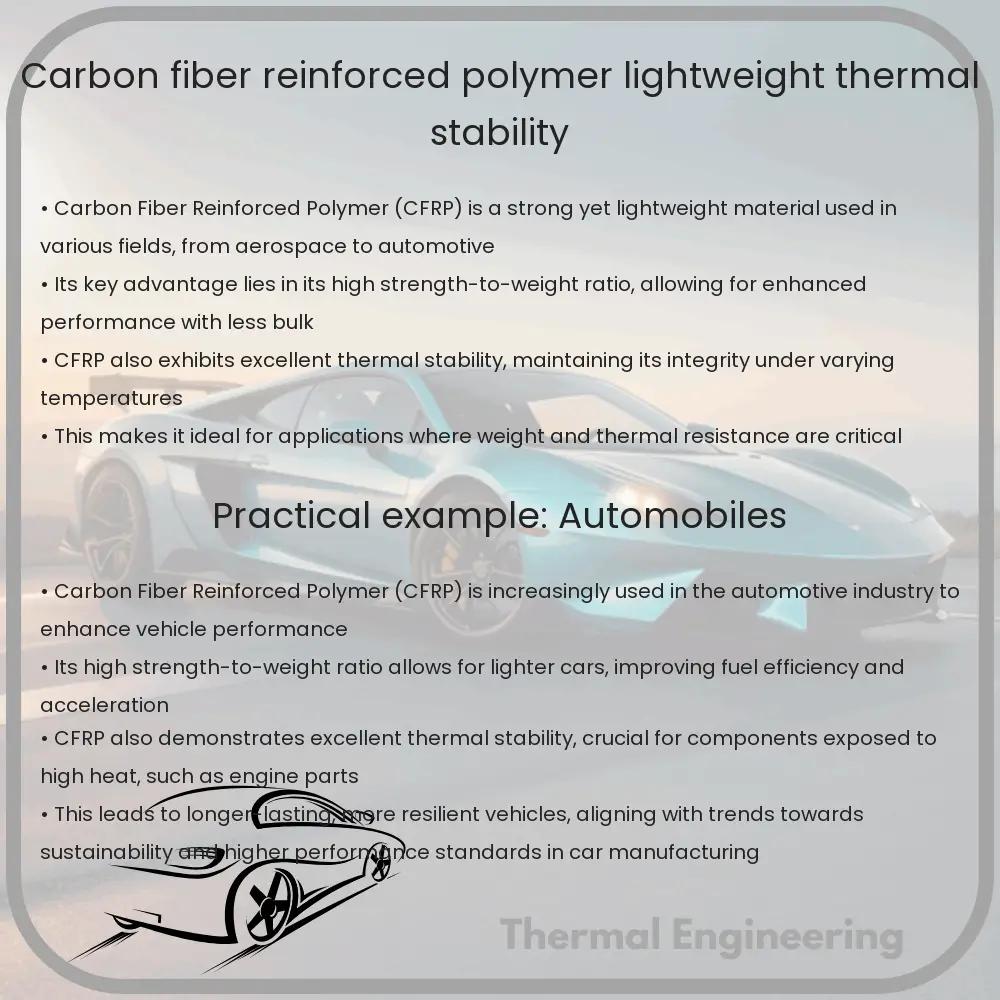
Carbon Fiber Reinforced Polymer (CFRP) is a composite material consisting of a polymer matrix reinforced with carbon fibers. It is known for its high strength-to-weight ratio, making it a popular choice in industries where lightweight and strength are critical, such as aerospace, automotive, and sports equipment manufacturing.

Composition and Manufacturing

CFRP is primarily composed of a polymer resin — typically epoxy — which binds carbon fibers together. The carbon fibers, derived from polyacrylonitrile (PAN), pitch, or rayon, are strong and stiff. They are produced through a series of processes that include oxidation, carbonization, and graphitization, converting the fibers to nearly pure carbon. These fibers are then embedded into the resin matrix, either in woven sheets or as a tangled mass, and cured under heat and pressure to form CFRP.

Lightweight Nature of CFRP

One of the primary advantages of CFRP is its low density. Carbon fibers have a density approximately 1.75 g/cm3, significantly lighter than metals like steel (~7.85 g/cm3) or aluminum (~2.7 g/cm3). When these fibers are integrated into a composite, the overall density of the material remains remarkably low while delivering superior strength and stiffness. This unique property allows for the construction of structures that are both lighter and robust, improving energy efficiency and performance — particularly crucial in transportation and sport performance gear.

Thermal Stability of CFRP

CFRP also exhibits excellent thermal stability and low thermal expansion. The coefficient of thermal expansion (CTE) of carbon fibers is much lower than that of most metallic materials and even many polymers. This characteristic ensures that the dimensions of CFRP materials remain relatively stable when subjected to temperature changes, which is critical in applications where dimensional accuracy and stability under fluctuating thermal conditions are required. This makes CFRP an ideal choice for applications in aerospace and electronic industries where performance under extreme temperatures is a necessity.

Applications of CFRP

  • Aerospace Industry: Used in the manufacturing of aircraft components, such as wings, tails, and fuselages, where its lightweight nature helps in reducing fuel consumption.
  • Automotive Industry: Employed in high-performance vehicles for making body panels, frames, and other components where weight reduction is crucial for enhanced performance and efficiency.
  • Sports Equipment: Utilized in the production of bicycles, golf clubs, and tennis rackets, offering improvements in speed and endurance due to its lightness and strength.
  • Construction: Applied in building modern structures, including bridges and roof structures, providing enhanced load-bearing capacity without increasing structural weight.

Challenges and Future Prospects

Despite its numerous advantages, the use of CFRP is not without challenges. The high cost of carbon fiber production, issues related to recyclability, and susceptibility to damage from impact or UV exposure are significant concerns. However, ongoing research focusing on lowering production costs, enhancing the recyclability of composites, and improving the durability of CFRP materials promises to broaden its applications further.

In conclusion, Carbon Fiber Reinforced Polymer continues to be a material of choice in various industries due to its unique properties such as lightweight, high strength, and thermal stability. As technology advances, its applicability is expected to expand, driving innovations across multiple fields.

Nanostructured Materials | Enhanced Thermal Conductivity

Explore the role of nanostructured materials in improving thermal conductivity for various advanced applications.

Nanostructured Materials | Enhanced Thermal Conductivity

Nanostructured Materials and Their Role in Enhanced Thermal Conductivity

Nanostructured materials represent a fascinating area of research and technology due to their unique properties, which differ significantly from their bulk counterparts. One of their standout attributes is their ability to conduct heat. This enhanced thermal conductivity makes them ideal for a variety of applications, from electronics cooling to thermal energy storage devices. In this article, we’ll delve into what nanostructured materials are, why their thermal conductivity is superior, and some practical examples of their use.

Understanding Nanostructured Materials

Nanostructured materials are materials whose structural elements — particles, fibers, or grains — are in the nanometer scale, typically less than 100 nanometers. These can include nanotubes, nanowires, nanoplates, and nanoporous materials. At this scale, the physical, chemical, and biological properties of materials can be quite different from those seen in larger forms.

How Nanostructured Materials Enhance Thermal Conductivity

The thermal conductivity of a material determines how well it can conduct heat. In nanostructured materials, this property can be significantly enhanced through the manipulation of size, shape, and structural composition, which influence phonon transport mechanisms. Phonons are quasiparticles representing the quantum mechanical description of vibrations within a rigid crystal lattice. Here are a few ways nanostructuring can enhance thermal conductivity:

  • Reduced Phonon Scattering: At the nanoscale, the boundaries and interfaces of materials can be engineered to reduce phonon scattering, which normally impedes thermal flow in bulk materials.
  • Interface Engineering: By optimizing the interfaces between different nanoscale components (e.g., in a composite material), thermal resistance can be minimized, enhancing overall thermal conductivity.
  • Material Purity: Nanostructuring techniques often involve high levels of material purity and reduced defects, which further facilitate efficient thermal transport.

Applications of Enhanced Thermal Conductivity

The improved thermal conductivity of nanostructured materials finds applications in several critical sectors:

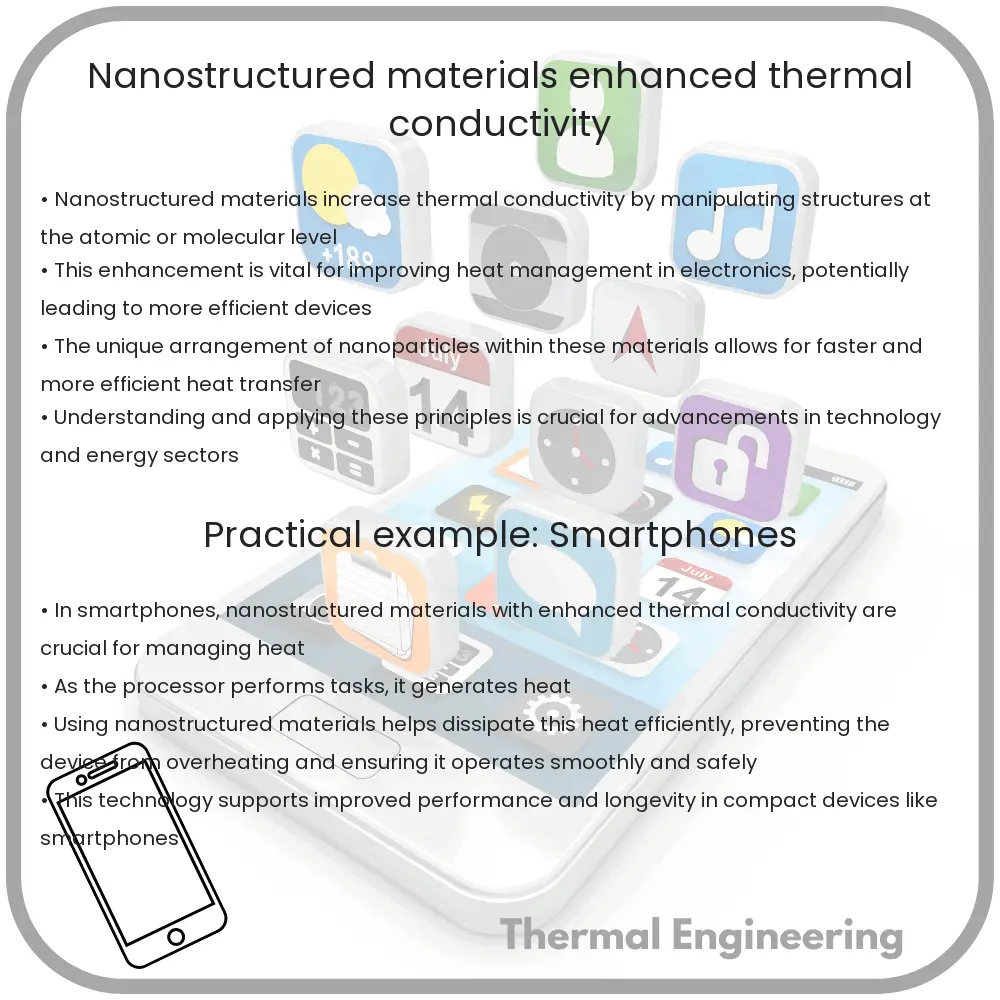
  • Electronics: Efficient heat dissipation is crucial in electronic devices to improve performance and extend lifespan. Nanostructured materials are used in thermal interface materials (TIMs) that sit between heat sources (e.g., a CPU) and heat sinks to enhance heat transfer.
  • Energy Storage: In systems like phase change materials (PCMs) used for thermal energy storage, nanostructured materials help achieve faster thermal response and better thermal stability.
  • Aerospace: The high thermal conductivity and low density of certain nanostructured materials (like carbon nanotubes) are ideal for aerospace applications where weight is critical, and thermal management is vital.

Challenges and Future Prospects

Despite their promising potential, nanostructured materials face challenges, particularly in manufacturing scale-up and integration into existing systems. Consistency in production quality, cost-effectiveness, and robustness of the final product are critical issues that need addressing. However, ongoing research continues to push the boundaries, promising even greater efficiencies and novel applications. As technology advances, the role of nanostructured materials in enhancing thermal conductivity is expected to grow, influencing more innovations in various fields.

In conclusion, nanostructured materials with enhanced thermal conductivity offer a gateway to solving many of the heat management challenges faced in modern technological applications. Their unique properties and the ongoing advancements in nanoengineering hold great potential for the future across multiple industries.

Biopolymers | Renewable, Thermal Insulation, Packaging

Explore the world of biopolymers, sustainable and versatile materials derived from living organisms, ideal for applications in packaging and insulation.

Biopolymers | Renewable, Thermal Insulation, Packaging

Understanding Biopolymers: Renewable Resources with Versatile Applications

Biopolymers are a type of material derived from living organisms, which include proteins, nucleic acids, and polysaccharides. These materials are gaining attention in various industries due to their sustainability and biodegradability. Biopolymers are particularly significant in the contexts of thermal insulation and packaging, where their renewable nature makes them an attractive alternative to conventional, petroleum-based polymers.

Renewable Nature of Biopolymers

Biopolymers are produced from renewable sources, primarily plant biomass such as corn, sugarcane, and cellulose. Unlike traditional plastics, which rely on finite fossil resources, biopolymers utilize materials that can be regrown annually. This sustainable aspect is critical in reducing carbon footprint and dependence on non-renewable resources.

  • Starch-based Biopolymers: One of the most common types of biopolymer, derived from agricultural products like potatoes and corn.
  • Cellulose Derivatives: Extracted from wood and plant fibers, these are used extensively in food packaging due to their renewable nature and robustness.

Thermal Insulation Properties of Biopolymers

Biopolymers can provide excellent thermal insulation, leading to their increasing use in building and construction sectors. Materials like polylactic acid (PLA) and cellulose have inherent properties that help maintain temperature consistency and reduce energy consumption.

  • Polylactic Acid (PLA): Known for its insulation properties, it’s often used in creating disposable coffee cups and food containers which require maintaining specific temperature ranges.
  • Cellulose Insulation: Made from recycled paper products, these materials are treated for flame and pest resistance, providing effective insulation in buildings.

Biopolymers in Packaging

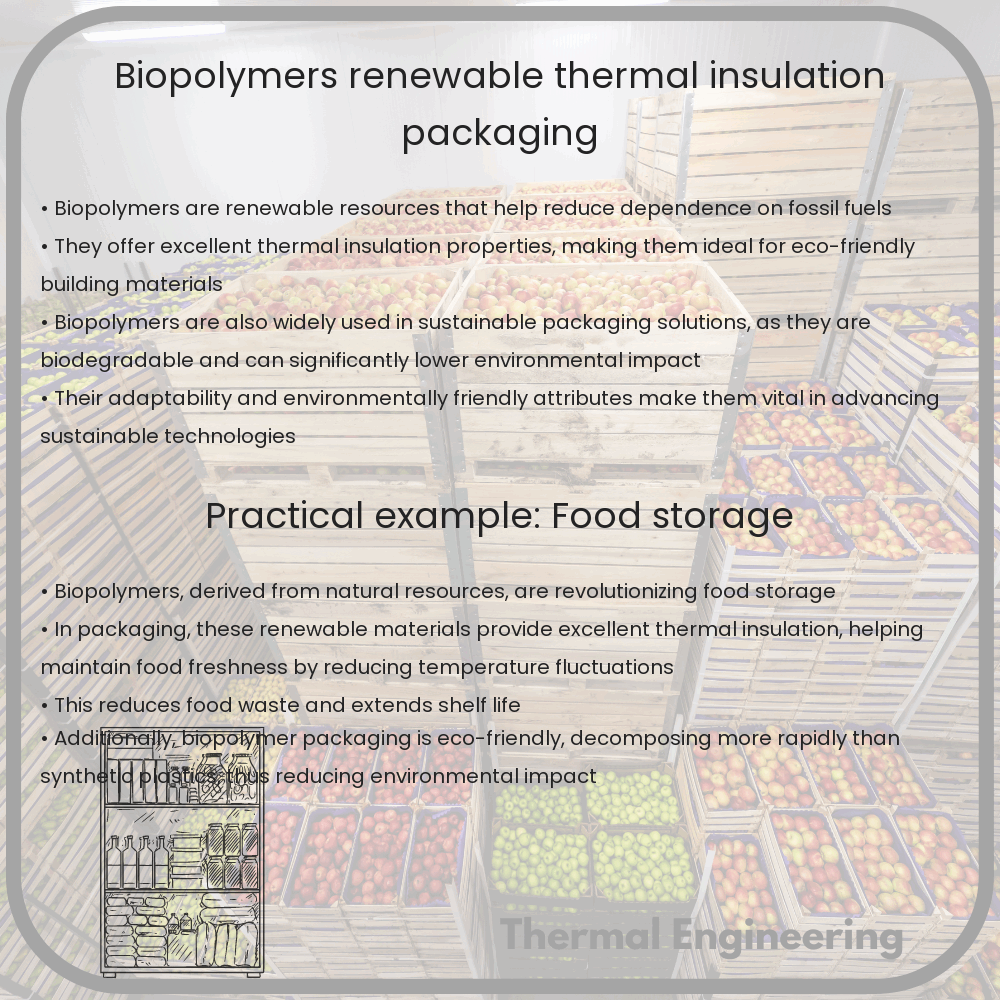
Packaging is one of the most significant applications of biopolymers. The drive towards sustainable packaging solutions has prompted companies to switch from conventional plastics to biopolymers. These materials are not only renewable but also generally offer better disposal options like biodegradability and compostability.

Biopolymer packaging often includes:

  1. Biodegradable Plastic Bags: Made from starch blends or polycaprolactone (PCL), these bags degrade naturally within a few months under appropriate conditions.
  2. Protective Foam: Starch-based foam is used as a protective packing material, replacing Styrofoam. It decomposes easily and offers comparable shock absorbency.
  3. Edible Food Wraps: Derived from alginate or gelatin, these wraps are safe for consumption and offer an innovative solution to reduce packaging waste.

The Future of Biopolymers

The versatile applications and sustainable benefits of biopolymers herald a promising future in their increased use across various sectors. Research continues to enhance their properties and reduce production costs, making biopolymers a viable and eco-friendly alternative to conventional materials.

As industries continue to prioritize sustainability, the adoption of biopolymers is expected to grow, potentially leading to significant environmental improvements and innovations in material science.

In conclusion, biopolymers stand at the forefront of the movement towards renewable and eco-friendly material alternatives, offering a range of applications that can help mitigate the environmental impacts of traditional plastic use in our society.

Porous Silicon | Thermal Insulation, Sensor Applications

Explore the versatile applications and manufacturing method of Porous Silicon, a highly efficient material in thermal insulation and sensor technology.

Porous Silicon | Thermal Insulation, Sensor Applications

Introduction to Porous Silicon

Porous silicon (p-Si) is a form of the chemical element silicon, which has been fabricated to contain tiny holes or pores in its structure. This results in a material that possesses a host of interesting properties, making it highly useful in various technological applications, particularly in thermal insulation and sensor technology.

Manufacturing Porous Silicon

The most common method for creating porous silicon is by an electrochemical etching process. This involves the application of an electrical current to a silicon wafer that is submerged in a hydrofluoric acid-based electrolyte. The current leads to localized removal of silicon, producing a highly porous structure. The size and distribution of the pores can be controlled through adjustment of the current density and etching time.

Thermal Insulation Properties

One of the remarkable properties of porous silicon is its thermal insulation capability. The micrometer-sized pores within the silicon can drastically reduce the material’s thermal conductivity. This occurs because the air trapped within the pores has a much lower thermal conductivity than the solid silicon matrix, thereby hindering the transfer of heat.

  • Comparison with Conventional Insulators: Traditional thermal insulating materials such as fiberglass or foam can be bulky and more prone to degradation under certain conditions. Porous silicon, on the other hand, offers similar or even superior insulation effectiveness in a more compact and potentially more durable form.
  • Applications: This property has led to its use in applications requiring high-performance thermal management, including in electronics and aerospace industries.

Application in Sensor Technology

Another vital application of porous silicon is in the field of sensors. The large internal surface area of porous silicon, coupled with its ability to host functional chemical groups, makes it an ideal candidate for sensor development.

  • Biosensors: Porous silicon can be used to create biosensors that are sensitive to various biological molecules. The molecule-specific sensors operate based on changes in electrical properties or light reflectivity when the target molecule binds to the silicon surface.
  • Gas and Chemical Sensors: Similarly, it can be exploited for detecting environmental pollutants or hazardous chemicals, showcasing changes in resistance or capacitance when exposed to different gases or vapors.

Conclusion

In essence, porous silicon stands out as a versatile and highly functional material in the realms of engineering and technology. Its exceptional properties, particularly in terms of thermal insulation and sensitivity as a sensor material, not only enhance its applicability across various industries but also hold promise for future innovations and advancements. As research and development in this material continue, the potential for discovering even more applications is vast, promising more efficient, compact, and environmentally friendly technological solutions.

Metamaterials | Tailored Thermal Properties, Energy Applications

Metamaterials: engineered materials with unique properties for advanced thermal management and energy efficiency applications.

Metamaterials | Tailored Thermal Properties, Energy Applications

Introduction to Metamaterials

Metamaterials are materials engineered to have properties that are not found in naturally occurring materials. They are assembled from multiple elements derived from metals or plastics and are arranged in patterns that affect the waves of electromagnetic fields and sound. One of the most intriguing properties of metamaterials is their ability to control thermal properties, which has significant applications in energy efficiency and management.

Tailoring Thermal Properties Using Metamaterials

The thermal properties of a material, including thermal conductivity and emissivity, dictate how heat is absorbed, conducted, and radiated. Metamaterials can be tailored to manage these thermal processes in innovative ways, primarily through their structural design at the microscopic or even nanoscopic scale. By manipulating the geometries, sizes, and orientations of the structures within the material, engineers can create devices that effectively control heat flow, leading to more efficient systems.

Applications in Energy Systems

Metamaterials have a wide array of applications in the energy sector, especially where thermal management is crucial:

  • Thermal Insulators: Metamaterials can be designed to have exceptionally low thermal conductivity, making them perfect for applications requiring high insulation performance without the bulk and thickness of traditional insulation materials.
  • Thermophotovoltaic Systems: These systems convert thermal energy into electrical energy using photovoltaic cells. Metamaterials can be used to tailor the spectral properties of the emitted radiation, improving the efficiency of energy conversion.
  • Solar Power: Controlling the absorption and emission properties of solar absorbers can significantly enhance the efficiency of solar panels. Metamaterials can be designed to trap more sunlight and convert it to electricity more efficiently than traditional materials.
  • Thermal Energy Storage: Metamaterials can improve the performance of thermal energy storage systems by enhancing the rate of heat transfer, enabling quicker charge and discharge cycles, and reducing energy losses.

Challenges and Future Perspectives

Despite their promising applications, the development and implementation of metamaterials in thermal and energy systems face several challenges. The complexity of designing and manufacturing metamaterials, especially those operating at high temperatures or in harsh environments, requires advanced technologies that are not yet widely available. Additionally, the cost of production and scalability are significant barriers to widespread adoption.

Looking forward, the potential for metamaterials in transforming energy systems remains significant. Ongoing research is focused on overcoming current limitations and exploring new ways to leverage the unique properties of these materials. Innovations in nanotechnology and the improvement of computational tools for material design are likely to play critical roles in advancing the use of metamaterials in energy applications.

Conclusion

Metamaterials represent a frontier in engineering and materials science, offering unprecedented control over thermal properties and opening new avenues for energy efficiency. As the technology matures and overcoming the existing hurdles, it could play a pivotal role in addressing global energy challenges, contributing to more sustainable and efficient energy systems worldwide.

Aluminum Nitride | High Thermal Conductivity, Electronics

Learn about Aluminum Nitride (AlN), a ceramic crucial for its high thermal conductivity and insulation in electronics.

Aluminum Nitride | High Thermal Conductivity, Electronics

Understanding Aluminum Nitride: A Key Material in Electronics

Aluminum nitride (AlN) is a ceramic material noted for its exceptional thermal conductivity and electrical insulating properties. This combination makes it a crucial material in the field of electronics, particularly in high power applications or where heat dissipation is essential. In this article, we will explore the properties, applications, and benefits of using aluminum nitride in electronic components.

Properties of Aluminum Nitride

Aluminum nitride is a compound made up of aluminum and nitrogen. It is characterized by several important properties:

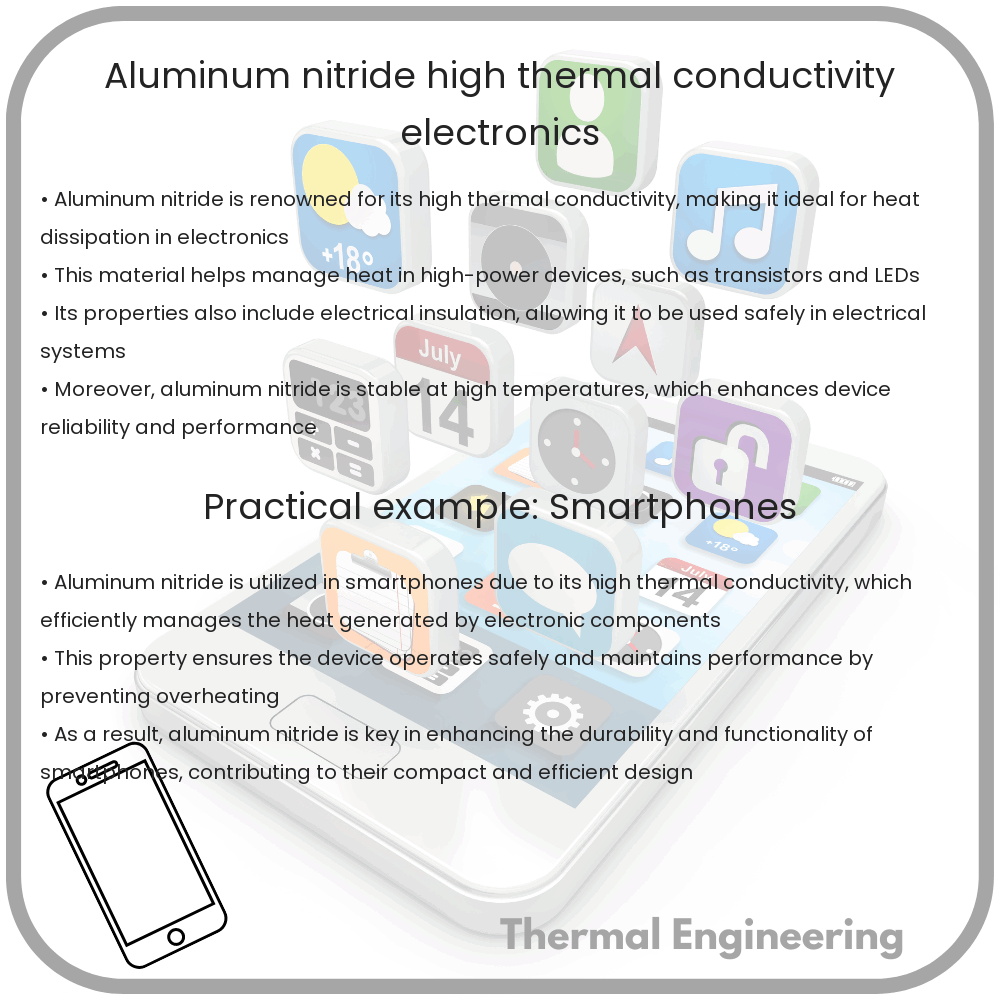
  • High thermal conductivity: With a thermal conductivity value of up to 200 W/(m*K), aluminum nitride is an excellent heat conductor. This is significantly higher than other common ceramic materials such as alumina (Al2O3), which typically has thermal conductivity values around 20-30 W/(m*K).
  • High electrical resistivity: AlN provides great electrical insulation, which is crucial for its use in electronics to prevent short circuits and other electrical issues.
  • High melting point: With a melting point of approximately 2200 degrees Celsius, aluminum nitride can withstand extreme temperatures, making it suitable for high-temperature applications.
  • Low thermal expansion coefficient: This property ensures that the material does not change dimensions dramatically with temperature fluctuations, which is crucial for maintaining structural integrity under varying thermal conditions.
  • Chemical stability: AlN is resistant to oxidation and degradation in harsh environments, ensuring a longer lifespan for components made from this material.

Applications in Electronics

Due to its remarkable properties, aluminum nitride finds several applications in the electronics industry, such as:

  • Heat sinks: The high thermal conductivity makes AlN an ideal material for heat sinks which are used to dissipate heat generated by electronic components, helping to maintain optimal operational temperatures.
  • Substrates for electric circuits: AlN substrates can be used in the construction of electronic circuits. These substrates help to effectively manage heat while providing excellent electrical insulation between components.
  • Optoelectronic devices: Due to its ability to operate at high temperatures and resist harsh chemicals, AlN is used in optoelectronic devices such as LEDs and laser diodes.
  • Power electronics: High-power electronic devices benefit from using AlN, particularly in applications requiring efficient heat removal, like power amplifiers and high-voltage diodes.

Benefits of Using Aluminum Nitride

Integrating aluminum nitride into electronic systems provides several advantages:

  • Improved performance: Efficient heat dissipation ensures that electronic devices operate within safe temperature ranges, which enhances performance and extends device longevity.
  • Reliability: The mechanical and chemical stability of AlN contributes to the overall reliability of the electronic systems where it is used, reducing maintenance costs and downtime.
  • Miniaturization: Due to its high thermal and electrical performance, components made from AlN can be smaller, aiding in the ongoing trend towards miniaturization in electronics.

Aluminum nitride’s unique combination of thermal conductivity and electrical insulation properties make it invaluable in advanced electronic and optoelectronic applications. As technology continues to demand materials that can withstand harsher operating conditions and provide superior performance, the role of AlN is likely to expand, supporting innovations in various fields of electronic engineering.