Facebook Instagram Youtube Twitter

9 Types of Thermal Insulation Materials for Energy Efficiency

Learn about the nine common types of thermal insulation materials used in construction for enhanced energy efficiency.
9 Types of Thermal Insulation Materials for Energy Efficiency

9 Types of Thermal Insulation Materials for Energy Efficiency

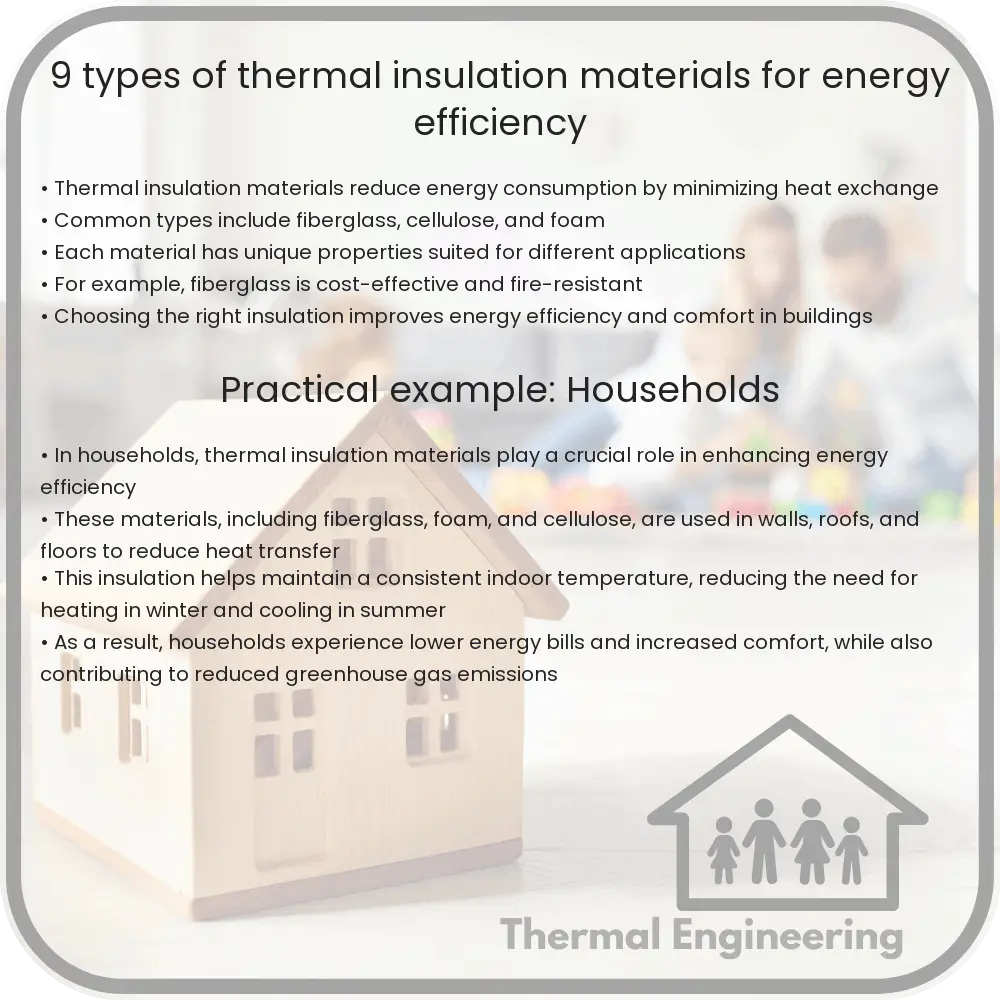
Thermal insulation is crucial for energy efficiency in buildings and various engineering applications. It reduces unwanted heat loss or gain, thereby decreasing the energy demands of heating and air conditioning systems. Here are nine common types of thermal insulation materials used in construction and manufacturing.

Fiberglass

Fiberglass is made from fine fibers of glass and is one of the most ubiquitous insulation materials. Its major advantages include its low cost, non-flammability, and effective thermal insulation properties. Fiberglass is commonly used in both residential and commercial constructions in the form of batts or rolls, loose-fill, and rigid boards.

Mineral Wool

Mineral wool refers to several different types of insulation, including rock wool and slag wool. Rock wool is created from natural basalt or diabase, while slag wool is produced from blast furnace slag. Mineral wool is known for its fire resistance and sound insulation properties as well as its thermal insulation capabilities.

Cellulose

Cellulose insulation is made from recycled paper products, primarily newsprint, and treated with fire retardants. It is an eco-friendly option that provides good thermal performance. Cellulose can be installed using wet-spray or dense-pack techniques, ideal for filling cavities in walls.

Polyurethane Foam

Polyurethane foam is a versatile insulation material that comes in spray and rigid foam board forms. It has a high R-value per inch, making it one of the most effective insulators. Spray foam polyurethane can be used to seal gaps and crevices, improving both the thermal and air barrier of a building.

Polystyrene

Polystyrene is a plastic material available in two types: expanded polystyrene (EPS) and extruded polystyrene (XPS). EPS is the less expensive option and is commonly known as “Styrofoam”. XPS tends to be denser and more water-resistant than EPS. Both types offer good thermal resistance and are used in a variety of building applications.

Reflective Insulation

Reflective insulation, also known as radiant barrier insulation, is made from aluminum foil laminated onto paper or plastic. It is effective at reducing cooling costs by reflecting radiant heat rather than absorbing it. This type of insulation is particularly useful in hot climates.

Cellular Glass

Cellular glass insulation is composed of crushed glass and a foaming agent. It forms a rigid material with a closed-cell structure, providing excellent compressive strength, moisture resistance, and fire protection. Cellular glass is often used in industrial applications and on flat roofs.

Aerogel

Aerogel has remarkable thermal insulating properties, primarily due to its high porosity and low thermal conductivity. It is, however, more expensive than other forms of insulation. Aerogel is often used in specialized applications such as aerospace, oil and gas pipelines, and high-performance clothing.

Natural Fibers

Natural fibers such as wool, cotton, and straw can be used as insulation materials. Sheep’s wool insulation, for instance, is natural, renewable, and able to manage moisture effectively. Cotton insulation, often made from recycled denim, is treated with boric acid to make it fire and pest resistant. These options are appealing for those seeking sustainable building materials.

In conclusion, choosing the right type of thermal insulation material can lead to significant energy savings and enhanced comfort. Each material offers unique benefits and is suited to different applications, depending on factors such as climate, space, and budget constraints.
Thermal management of underwater vehicles

Learn about the essential role of thermal management in underwater vehicles, focusing on strategies to combat the unique challenges of the marine environment.

Thermal management of underwater vehicles

Understanding Thermal Management in Underwater Vehicles

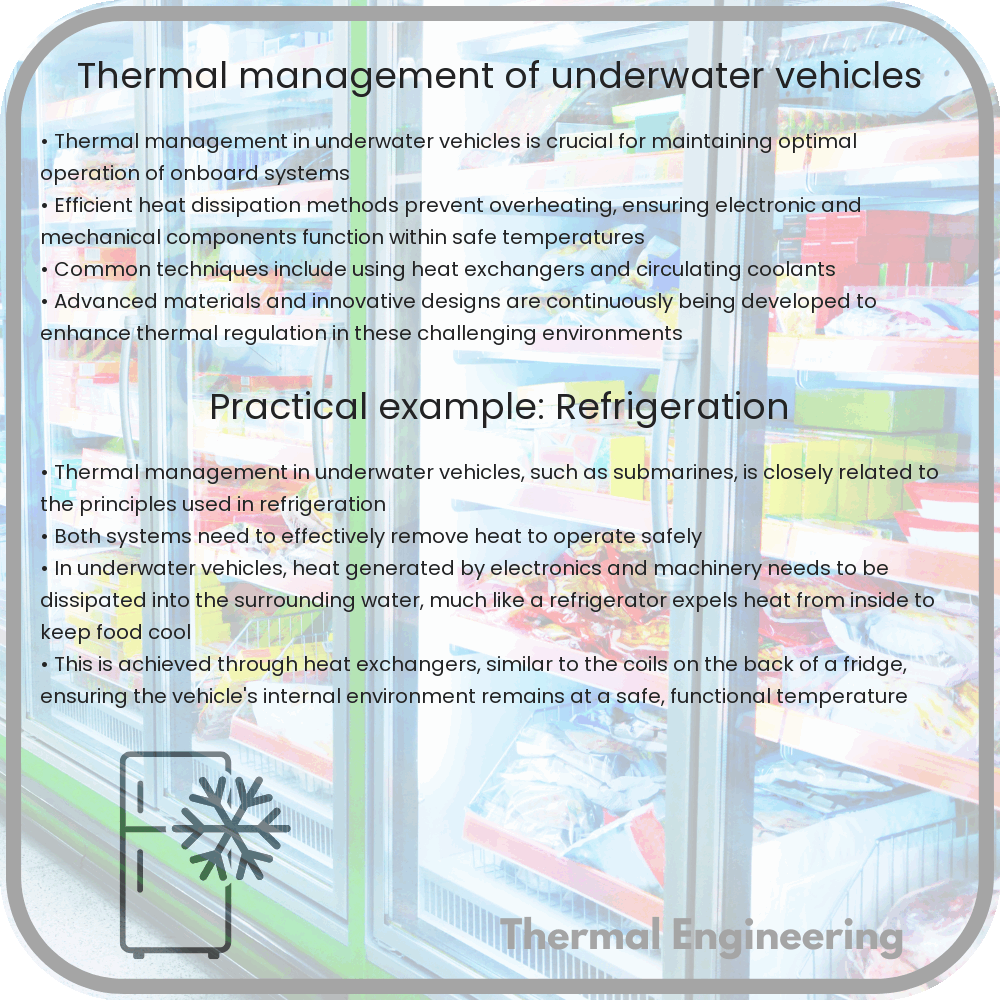
Thermal management is a critical aspect of underwater vehicle design, impacting everything from vehicle performance to sensor operation and the longevity of onboard electronics. Ensuring appropriate thermal control in such vehicles involves combating unique challenges posed by the underwater environment.

Why is Thermal Management Important?

Underwater vehicles, such as submarines or autonomous underwater vehicles (AUVs), operate in a vast and challenging environment where temperatures can vary dramatically, from tropical surface conditions to near-freezing temperatures at depth. Moreover, the high thermal conductivity of water intensifies cooling and heating effects, making thermal management not just about maintaining operational integrity, but also about ensuring survival of sensitive electronic components and battery systems.

Key Challenges in Thermal Management

  • Heat Dissipation: Water’s high thermal conductivity means that any heat generated by the vehicle’s components is rapidly absorbed by the surrounding environment. This can lead to rapid cooling if not managed properly.
  • External Temperature Variation: The vast differences in temperature at various depths require adaptable thermal management systems that can function effectively under variable conditions.
  • Condensation and Corrosion: Variations in internal and external temperatures can lead to condensation, which in turn may cause corrosion or electrical failures unless properly managed.

Strategies for Effective Thermal Management

Designing underwater vehicles requires innovative approaches to manage these thermal challenges effectively. Some key strategies include:

  1. Active Heating and Cooling Systems: These systems regulate the temperature by actively heating or cooling the vehicle’s internal environment. Using elements like heat exchangers and active refrigeration cycles can help maintain a stable temperature conducive to the vehicle’s operation and its sensitive components.
  2. Thermal Insulation: Insulating materials can protect the internal components of an underwater vehicle from the chilling effects of deep-water temperatures and also prevent heat loss from warmer components.
  3. Thermal Interface Materials (TIMs): TIMs enhance heat transfer efficiency between surfaces and are critical in areas where heat dissipation or absorption is necessary to protect onboard electronics and battery packs.
  4. Environmental Sealing: Proper seals and encapsulations prevent water ingress, which can lead to short-circuits and corrosion, further stabilizing the internal environment of an underwater vehicle.

Examples of Thermal Management in Practice

In practice, the thermal management systems in underwater vehicles might integrate several of these strategies to achieve efficient heat control. For instance, AUVs typically use a combination of active cooling systems and thermal insulation to manage the heat produced by batteries and propulsion units. Similarly, military submarines may utilize sophisticated climate control systems that adjust settings based on depth and water temperature to maintain an optimal internal environment.

The Future of Thermal Management in Underwater Vehicles

As technology advances, the development of more efficient thermal management systems continues to be an area of active research. Innovations such as phase change materials (PCMs) for passive thermal management and more advanced active refrigeration techniques are being explored. These future technologies promise to enhance the capability, range, and safety of underwater vehicles, making them more adaptable to the diverse and demanding conditions present in underwater environments.

Understanding and implementing effective thermal management strategies is essential for the success of underwater vehicles, ensuring they perform their designated functions while withstanding the harsh marine environment.

10 Types of HVAC Systems for Climate Control in Buildings

Learn about HVAC systems: Heating, Ventilation, and Air Conditioning technology for maintaining indoor climate and air quality.

10 Types of HVAC Systems for Climate Control in Buildings

Introduction to HVAC Systems

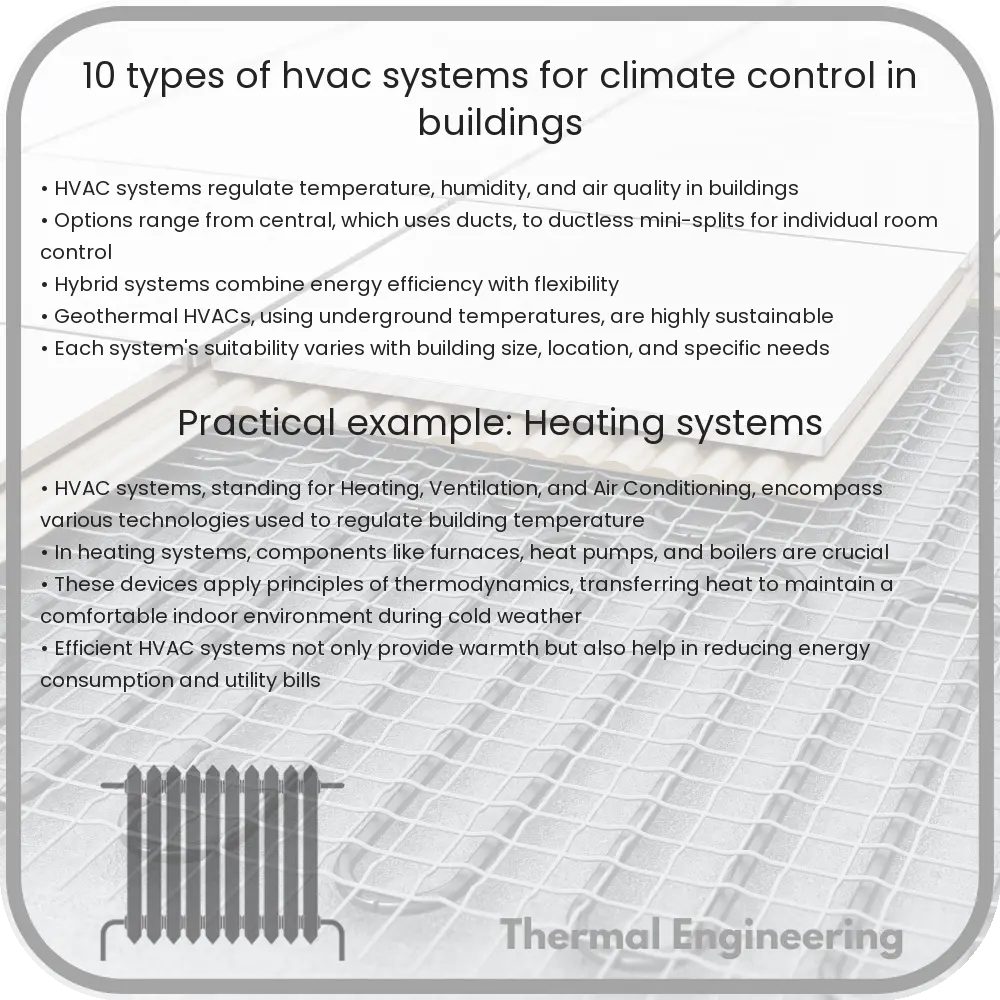
HVAC stands for Heating, Ventilation, and Air Conditioning. It is a technology used for maintaining a comfortable indoor climate and proper air quality in buildings. Different types of HVAC systems cater to various building sizes, environmental conditions, and energy requirements. Here we will explore ten common types of HVAC systems used in residential, commercial, and industrial buildings.

1. Single Split System

The single split system is one of the most popular types of HVAC systems due to its affordability and simplicity. This system is ideal for small commercial buildings, offices, and residential areas. It consists of one indoor unit (air handler) and one outdoor unit (condenser), and it allows for individual room control, which provides a cost-effective and efficient way to regulate temperature.

2. Multi-Split System

Similar to the single split system, the multi-split system connects multiple indoor units to a single outdoor unit. This setup helps in reducing outdoor space usage and is effective in environments where limited outdoor space is available. It’s a common choice for restaurants, offices, and multi-family homes, allowing different rooms to be conditioned independently.

3. Variable Refrigerant Flow (VRF) or Variable Refrigerant Volume (VRV)

Often used in medium to large spaces like commercial buildings, hotels, and retail spaces, VRF or VRV systems offer highly efficient energy use and control. These systems use refrigerant as the cooling and heating medium, and the volume of refrigerant can be varied precisely to meet the specific demand of different areas.

4. Heat Pump Systems

Heat pumps are known for their dual functionality. During colder months, they function like a typical heater, extracting heat from the outside and moving it indoors. In warm months, the process reverses. Heat pumps are particularly energy-efficient and environmentally friendly, especially those utilizing ground sources.

5. Geothermal Heat Pump Systems

Geothermal heat pumps are a type of heat pump system that leverages the stable underground temperature to provide heating and cooling. By circulating water through underground pipes, they are extremely efficient and have low operating costs, although the initial installation cost can be higher due to the need for drilling.

6. Ductless Mini-Split Systems

Ideal for spaces where conventional ducted systems are not feasible, ductless mini-split systems provide an effective and scalable way to add air conditioning or heating to specific rooms or areas. These are great for home additions, new constructions, or buildings where ductwork installation is restrictive or impossible.

7. Packaged Heating & Air Conditioning System

Packaged systems contain the evaporator, condenser, and compressor in a single unit, typically placed on a roof or a concrete slab near the foundation. These are particularly common in small commercial buildings with limited space for indoor HVAC components.

8. Hybrid Systems

Hybrid systems use a combination of a heat pump system capable of using electric resistance and gas-fired heating. This adaptability allows the hybrid system to switch between energy sources, optimizing energy use and operational costs based on external temperatures and energy prices.

9. Central Air Conditioning Systems

Used primarily in larger homes or sizable commercial buildings, central air conditioning systems distribute cooled air through a system of ducts and registers. This system can be paired with a furnace or heat pump and includes components housed both outside and inside the building.

10. Evaporative Coolers

Also known as swamp coolers, evaporative coolers are suitable for hot, dry climates. They cool the air by evaporating water, which naturally cools the air and increases humidity. These systems are more energy-efficient than conventional air conditioning systems in appropriate environments.

Conclusion

Understanding the different types of HVAC systems is crucial in selecting the right system for a building’s specific needs while balancing factors such as climate, building size, and energy efficiency. Choosing the appropriate HVAC system can lead to enhanced comfort, reduced energy costs, and better air quality.

6 Types of Thermal Cyclers for PCR in Biotechnology

Explore the various types of thermal cyclers used in PCR applications within biotechnology, including block, gradient, qPCR, dPCR, high-throughput, and portable models.

6 Types of Thermal Cyclers for PCR in Biotechnology

Understanding the Different Types of Thermal Cyclers for PCR in Biotechnology

Polymerase Chain Reaction (PCR) is a fundamental technique used in molecular biology and biotechnology to amplify DNA sequences exponentially. It is instrumental in diagnostics, cloning, genetic analysis, and more. At the heart of this technique is the thermal cycler, a device designed to regulate temperature cycles precisely and efficiently. Over the years, several types of thermal cyclers have been developed, each catering to specific requirements and scales of operation. Here, we explore six common types of thermal cyclers used in biotechnology.

1. Conventional (Block) Thermal Cyclers

Conventional thermal cyclers, also known as block cyclers, use a metal block to heat and cool the samples. These cyclers are equipped with interchangeable blocks to handle different tube formats, typically ranging from 0.2 mL to 0.5 mL. They are known for their reliability and uniformity in temperature control across samples, making them suitable for most standard PCR applications.

2. Gradient Thermal Cyclers

Gradient thermal cyclers allow users to run experiments with varying temperatures across the block. This feature is essential for optimizing the annealing temperature during the PCR setup phase. By enabling researchers to test different temperatures simultaneously, gradient cyclers significantly reduce the time and resource consumption typically associated with PCR optimization.

3. Real-Time PCR Machines (qPCR)

Real-Time PCR machines, or quantitative PCR (qPCR) cyclers, go beyond amplification to monitor the PCR reaction in real time. They use fluorescent markers to measure the quantity of DNA as it is amplified. qPCR is especially valuable in diagnostic processes and quantitative gene expression analysis because it provides quantitative data rather than just presence or absence of the target DNA.

4. Digital PCR (dPCR) Systems

Similar to qPCR, Digital PCR (dPCR) pushes quantification a step further by partitioning the DNA sample into many small, individual reactions before amplification. This allows for absolute quantification of nucleic acids without the need for reference standards or calibration curves. DPCR is increasingly important for high-precision applications like rare genetic sequence detection or precise data measurement in complex mixtures.

5. High-Throughput PCR Systems

High-throughput PCR systems are designed to accommodate a large number of samples simultaneously, making them ideal for screening applications, genotyping, and massive parallel processing. These systems typically feature automation capabilities and advanced software to manage the intricacies of multiple simultaneous reactions.

6. Portable PCR Cyclers

Portable PCR cyclers have revolutionized field-based molecular biology by enabling DNA amplification and analysis in remote locations. These devices are compact, lightweight, and often powered by batteries, making them suitable for field diagnostics, environmental biological testing, or even educational purposes.

Each type of thermal cycler offers unique advantages that make it suitable for specific applications in research, clinical, and industrial settings. Understanding these differences helps users choose the right thermal cycler for their particular requirements, thus enhancing experimental outcomes and efficiency in DNA analysis.

8 Types of Cryogenic Storage Tanks for LNG and Other Gases

Learn about cryogenic storage tanks, essential for storing LNG and other gases at ultra-low temperatures in various industries.

8 Types of Cryogenic Storage Tanks for LNG and Other Gases

Understanding Cryogenic Storage Tanks

Cryogenic storage tanks are essential components in various industries, including space, medical, and energy sectors, particularly for storing liquefied natural gas (LNG) and other gases like nitrogen, oxygen, and argon at extremely low temperatures. These types of tanks are designed to safely store gas in liquid form at temperatures typically below -150°C (-238°F). Here’s a look at eight primary types of cryogenic storage tanks, each serving specific storage needs and operational conditions.

1. Flat Bottom Tanks (FBT)

Flat bottom tanks are the most common type of cryogenic storage tanks used for large volume storage. They are typically cylindrical in shape with a flat bottom and can hold up to several million gallons of liquid. These tanks are mainly used for storing LNG and other liquids like liquid nitrogen and liquid oxygen.

2. Horizontal Tanks

Horizontal tanks are another type of cryogenic vessel designed for smaller storage requirements. Compared to vertical tanks, they occupy more ground space and are easier to maintain at lower pressures, making them suitable for mobile applications or smaller facilities.

3. Vacuum Insulated Tanks

Vacuum insulated tanks are designed with a vacuum space between two walls to significantly reduce heat transfer into the stored liquid, thereby minimizing evaporation. These are typically used for medium-volume storage and are common in hospitals and laboratories for storing liquid nitrogen and oxygen.

4. Spherical Storage Tanks

Spherical storage tanks are known for their high-pressure resistance and are generally used when the storage capacity ranges from a few hundred cubic meters to thousands. Their shape allows for uniform distribution of stress and pressure, making them highly efficient for storing highly pressurized liquids.

5. Perlite Insulated Tanks

These tanks use perlite, a form of naturally occurring volcanic glass, as an insulating material between the inner and outer tank walls. Perlite insulated tanks are suitable for large scale storage needs, offering good thermal resistance and reduced evaporation rates.

6. Composite Insulated Tanks

Composite insulated tanks utilize a combination of materials, usually including a rigid foam core between inner and outer metal walls. This type of insulation provides superior thermal performance and mechanical strength, suitable for both ground and transportable storage needs.

7. Double Wall Tanks

Double wall tanks consist of an inner and outer tank with an insulated space in between. These are often vacuum insulated and are designed to offer additional safety by preventing leaks and protecting the liquid from external elements.

8. High-Pressure Cryogenic Tanks

Designed to withstand extremely high pressures, these tanks are typically used to store gases that remain gaseous at cryogenic temperatures, such as hydrogen and helium. The robust design allows for safe storage at pressures significantly higher than atmospheric pressure.

Conclusion

Cryogenic storage tanks play a pivotal role in various applications and industries, providing efficient solutions for the storage of LNG and other gases necessary for daily operations and critical endeavors. Each type of tank is designed to meet specific conditions and regulatory requirements, ensuring the safe and efficient storage of cryogenic liquids and gases. Understanding the functionalities and applications of these tanks helps in selecting the right storage solution based on needs and scale of operation.

12 Types of Furnaces for Metal Melting and Processing

Learn about the various furnaces used for metal melting and processing, including their uses and benefits.

12 Types of Furnaces for Metal Melting and Processing

Introduction to Furnaces for Metal Melting and Processing

Metal melting and processing is a fundamental aspect of materials engineering that involves the conversion of solid metal into a liquid form. The process requires high temperatures that are achieved through various types of furnaces. Each type of furnace is designed to meet specific industrial needs, considering factors such as the type of metal, melting temperature, production volume, and energy efficiency. Below, we explore 12 common types of furnaces used in metal melting and processing.

Types of Furnaces

1. Cupola Furnace

A traditional furnace used primarily for casting iron. It operates on the principle of counter-current heat exchange, using coke as the fuel. Metal and coke are added in batches to the top, and air is blown into the base to stimulate combustion.

2. Electric Arc Furnace (EAF)

Popular in steel-making, an EAF uses high-voltage electric arcs between charged electrodes to melt the metal. This type is known for its ability to recycle scrap steel by melting it down repeatedly.

3. Induction Furnace

Utilizes electromagnetic induction to heat metal, leading to rapid melting with high energy efficiency. Induction furnaces are ideal for melting high-quality steel and non-ferrous metals because they minimize contamination.

4. Blast Furnace

Largely used for iron production, this massive structure extracts iron from iron ore. The furnace operates with a continuous infusion of iron ore, coke, and limestone. The hot air blast is directed into the bottom to facilitate the chemical reactions needed to separate the iron.

5. Reverberatory Furnace

In this furnace, the fuel is burnt in one part of the furnace, with the flames directed over the metal (usually aluminum or copper), thus avoiding direct contact with the fuel. This method helps in preventing contamination of the metal.

6. Rotary Furnace

As the name suggests, these furnaces rotate during operation, improving the mix and exposure of scrap metals to heat. Rotary furnaces can be designed to work with various fuel types and are commonly used in the recovery of non-ferrous metals.

7. Crucible Furnace

This is one of the most basic forms of a melting furnace, using an insulated crucible to hold and melt the metal. Heat is applied from an external source and can be controlled quite accurately.

8. Vacuum Furnace

Used predominantly for high-quality metal alloys and ceramic materials, the vacuum furnace removes the presence of air and any potential contaminants during processing, providing exceptional product purity.

9. Submerged Arc Furnace

This furnace is used primarily for the production of ferroalloy, silico manganese, and calcium carbide. It operates with electrodes that are submerged into the raw materials, creating arcs that facilitate melting.

10. Pusher Furnace

Typically used for continuous processing, a pusher furnace systematically pushes metal through the furnace on wheeled racks, ensuring consistent treatment over long production periods.

11. Walking Beam Furnace

Primarily seen in steel mills, the walking beam furnace heats metal stock continuously. Its unique design allows the heated metal to ‘walk’ through the furnace on mechanically operated beams, achieving uniform heating necessary for further processing.

12. Solar Furnace

Making use of solar energy, this furnace focuses the sun’s rays to a single point to generate extremely high temperatures. While not widely used in industrial metal processing, solar furnaces represent a growing interest in sustainable manufacturing technologies.

Conclusion

Understanding the different types of furnaces used in metal melting and processing is crucial for selecting the right furnace for the job. Each type offers specific benefits and is suited for particular metals and production scales. By choosing the appropriate furnace, manufacturers can optimize their production efficiency, reduce costs, and maintain product quality.

5 Types of Evaporators in Refrigeration Systems

Learn about the different types of evaporators used in refrigeration systems, their design, efficiency, and applications.

5 Types of Evaporators in Refrigeration Systems

Introduction to Evaporators in Refrigeration Systems

Evaporators are an essential component of refrigeration systems, playing a critical role in absorbing heat from the environment or specific products to lower their temperature. The design and type of evaporator used can significantly affect the efficiency and suitability of a refrigeration system for specific applications. This article explores five common types of evaporators used in refrigeration systems, detailing their design, operation, and typical uses.

1. Bare Tube Evaporators

Bare tube evaporators are one of the simplest forms of evaporators, consisting of coils made from metals like copper or aluminum that have direct contact with the refrigerant. These evaporators are commonly used in systems where frost accumulation is not a critical issue, such as in industrial applications. The simplicity of bare tube designs allows for easy maintenance and low-cost manufacturing.

2. Plate Surface Evaporators

Plate surface evaporators are known for their efficiency in transferring heat. These evaporators use flat plates on which the refrigerant flows, and they are commonly employed in compact systems such as domestic refrigerators and freezers. Their construction allows for efficient absorption of heat from the contents of the refrigerator and quick defrosting capabilities.

3. Finned Evaporators

Finned evaporators are an advancement over bare tube evaporators, featuring attached fins that increase the external surface area, thus improving the heat exchange rate. These types of evaporators are widely used in air conditioning systems and commercial refrigeration. The fins enhance air contact with the tubes, significantly improving the evaporator’s thermal efficiency.

4. Flooded Evaporators

Flooded evaporators operate with the refrigerant completely flooding the tubes or plates, contrasting with the other types where refrigerant typically flows inside the tubes or over the plates. This design is well-suited for larger scale and industrial applications where constant and intensive cooling is needed. Flooded evaporators also tend to have a longer lifespan due to reduced wear on the refrigerant pump.

5. Shell and Tube Evaporators

Shell and tube evaporators consist of a large number of tubes enclosed in a shell, with one fluid flowing through the tubes and another fluid flowing outside the tubes but inside the shell. This design allows for efficient thermal transfer and is particularly useful in larger refrigeration systems such as those used in chemical processing, oil refineries, and power plants. The structure supports handling high pressures and offers high durability and ease of maintenance.

Conclusion

The choice of evaporator type plays a pivotal role in determining the efficiency, cost, and reliability of a refrigeration system. Each type of evaporator has its unique benefits and applications, making it crucial for engineers and designers to select the most appropriate one based on the specific needs of the system. Understanding these differences helps in optimizing the performance and economic aspects of refrigeration systems across various industries.

7 Types of Thermal Radiators for Space Applications

Comprehensive overview of thermal radiators used in spacecraft for effective heat management in space environments.

7 Types of Thermal Radiators for Space Applications

Introduction to Thermal Radiators for Space Applications

Thermal management is a critical element of spacecraft design, ensuring that the temperatures remain within safe operational limits despite the harsh environment of space. Thermal radiators are specialized devices used for dissipating heat from spacecraft systems into space. There are several types of thermal radiators, each distinct in design and functionality suited for specific applications. This article explores seven types of thermal radiators used in space applications.

1. Panel Radiators

Panel radiators are among the most common types of radiators used in spacecraft. They consist of flat or slightly curved panels that emit heat through thermal radiation. These panels are typically made of materials with high emissivity, such as aluminum or silver-coated Teflon. The simplicity of their design makes them lightweight and easy to integrate into various sections of a spacecraft, including service modules and instrument bays.

2. Deployable Radiators

Deployable radiators are designed to unfold or extend once a spacecraft is in orbit. This capability is particularly useful for missions requiring a compact size during launch but needing increased radiative area in space. These radiators often utilize hinged panels or roll-out mats that increase surface area without a significant mass penalty.

3. Loop Heat Pipes (LHP)

Loop Heat Pipes are passive two-phase cooling devices that transport heat from a source to a thermal radiator. Using capillary action in a porous wick structure, LHPs manage heat effectively across long distances, allowing for flexible thermal control architecture on board spacecraft. The radiative portion of an LHP typically features fins or extended surfaces to maximize heat rejection.

4. Microchannel Radiators

Microchannel radiators use narrow, serpentine channels through which a heat transfer fluid circulates. The channels increase the surface area in contact with the fluid, enhancing the heat transfer efficiency. These radiators are often used in conjunction with other thermal management systems to handle high-density heat loads, especially in power electronic components.

5. Capillary Pumped Loops (CPL)

Similar to Loop Heat Pipes, Capillary Pumped Loops (CPL) utilize capillary action to transport heat but differ in their use of mechanical pumps to enhance circulation within the loop. This addition allows for more control over heat transfer rates and can be advantageous in larger systems where passive methods are insufficient.

6. V-Grooved Radiators

V-Grooved radiators use a series of angled grooves in the radiator surface to enhance radioactive properties. The V-shaped channels can be coated with different emissivity materials to optimize heat rejection capabilities. Their design helps in controlling the directional properties of thermal radiation, which is beneficial in maintaining the thermal balance of the spacecraft.

7. Heat Pipe Radiators

Heat pipe radiators incorporate heat pipes, which are highly efficient heat-transfer devices, within the radiator structure. These heat pipes efficiently transfer heat from the heat source to the radiator panel with minimal temperature drop. They can be arranged in arrays to form large, complex radiator systems capable of handling extremely high heat loads.

Conclusion

The choice of radiator type in space applications depends on various factors, including mission duration, environmental conditions, spacecraft design, and heat load characteristics. Engineers must carefully consider these factors to select the appropriate radiator type that ensures optimal performance and reliability of the spacecraft thermal management system. With advances in materials and thermal management technologies, the efficiency and functionality of space radiators continue to improve, pushing the boundaries of what is possible in spacecraft design.

Thermal analysis of lithium-sulfur batteries

Explore the essential role of thermal analysis in enhancing the performance and safety of lithium-sulfur batteries.

Thermal analysis of lithium-sulfur batteries

Understanding Thermal Analysis of Lithium-Sulfur Batteries

The field of battery technology is crucial for the development of energy storage solutions, particularly in applications such as electric vehicles and portable electronic devices. Among various battery types, lithium-sulfur (Li-S) batteries are gaining attention due to their high energy density and cost-effectiveness. However, their commercial application is hindered by several challenges, including thermal stability issues. Thermal analysis plays a key role in addressing these challenges by helping to understand and improve the thermal behavior of Li-S batteries.

Why Thermal Analysis is Important for Li-S Batteries

Thermal analysis involves studying the response of materials and systems to changes in temperature. In the case of Li-S batteries, thermal analysis is critical because these batteries can experience significant heat generation during charge and discharge cycles. Excessive heat can lead to accelerated degradation of the battery components, reduced efficiency, and even safety hazards such as thermal runaway.

Effective thermal management and analysis can lead to:

  • Improved battery performance and lifespan by mitigating overheating and ensuring operation within a safe temperature range.
  • Enhanced safety through the prevention of thermal runaway, which is a critical concern for all battery technologies.
  • Better understanding of material behavior under thermal stress, which is essential for the development of more robust battery systems.

Key Methods in Thermal Analysis of Li-S Batteries

The main methods used in the thermal analysis of Li-S batteries include Differential Scanning Calorimetry (DSC), Thermogravimetric Analysis (TGA), and Accelerating Rate Calorimetry (ARC). Each technique offers insights into different aspects of thermal behavior:

  1. Differential Scanning Calorimetry (DSC): DSC measures the heat flow into or out of a battery as a function of temperature and time. It is used to identify specific heat-related events such as melting or crystallization temperatures, as well as heat capacities of the battery materials.
  2. Thermogravimetric Analysis (TGA): TGA measures the amount of weight change that a battery material undergoes as it is heated or cooled. This method is useful for studying thermal stability and decomposition characteristics of the battery components.
  3. Accelerating Rate Calorimetry (ARC): ARC is used to assess the rate of heat release under adiabatic conditions. It is particularly valuable for studying the risk of thermal runaway in battery systems.

Challenges and Solutions in Thermal Management

One of the primary challenges in the thermal management of Li-S batteries is the control of heat generation and dissipation during high-rate discharge and charge cycles. The following strategies are commonly utilized to address this issue:

  • Design of battery packs with effective thermal interfaces and heat dissipation paths.
  • Incorporation of phase change materials that absorb and release heat to moderate temperature fluctuations.
  • Optimization of battery geometry and cell arrangement to enhance thermal uniformity across the battery pack.

Advancements in thermal management technologies not only enhance the safety and performance of Li-S batteries but also contribute to their broader adoption in various applications.

Future Perspectives

With ongoing research and development, the thermal analysis and management of Li-S batteries continue to evolve. Future work is likely to focus on integrating real-time thermal monitoring systems into battery management systems (BMS), developing novel materials with improved thermal properties, and enhancing predictive models for better safety and efficiency. As these technologies mature, the role of thermal analysis in optimizing and validating battery designs becomes increasingly critical, paving the way for more reliable and powerful lithium-sulfur battery systems.

9 Types of Cooling Towers and Their Cooling Methods

Learn about cooling towers, their types based on airflow, heat transfer methods, construction, and specific functions in industrial and HVAC systems.

9 Types of Cooling Towers and Their Cooling Methods

Introduction to Cooling Towers

Cooling towers are a specialized heat exchanger system that allows water and air to come into contact with each other to lower the temperature of the water. As the water cools, it absorbs heat from the air and evaporates. This technology is widely used in various industrial applications and HVAC (Heating, Ventilating, and Air Conditioning) systems to expel heat into the atmosphere. Broadly speaking, cooling towers are categorized based on their airflow generation methods, heat transfer methods, and construction or installation type.

Types of Cooling Towers Based on Airflow Generation

  • Natural Draft Cooling Towers: These towers utilize the natural upward flow of air to cool the water. They are typically very large and depend heavily on the ambient weather conditions.
  • Mechanical Draft Cooling Towers: Equipped with fans or other mechanical systems to force or draw air through the tower, these are more effective than natural draft towers and can be controlled more precisely.

Types of Cooling Towers Based on Heat Transfer Methods

  • Open Circuit Cooling Towers: Water is directly exposed to the air and part of the water evaporates; hot water from the system is cooled and sent back to cool the system again.
  • Closed Circuit Cooling Towers: Also known as Fluid Coolers, these have a heat exchanger that separates the process cooling fluid from the outside air, keeping the circulated fluid clean and uncontaminated.
  • Dry Cooling Towers: Unlike the wet types, dry cooling towers use only air to cool the working fluid, mostly in power plants where water is scarce.
  • Hybrid Cooling Towers: These combine both dry and wet cooling processes, optimizing both water usage and cooling efficiency, especially useful in varying climatic conditions.

Types of Cooling Towers Based on Construction Type

  • Field Erected Towers: As the name suggests, these towers are built on-site and are ideal for industries requiring large-scale cooling.
  • Factory Assembled Towers: Often used in light industries and HVAC applications, these are preassembled and easily transported to the installation site.

Specialized Cooling Towers Based on Specific Functions

  • Counterflow Cooling Towers: In these towers, the air flow is directed opposite the water flow (air moves upward while water falls down). This method allows for a smaller footprint and more effective cooling.
  • Crossflow Cooling Towers: With air flowing perpendicular to the water flow, these towers are easier to maintain because of their accessibility to internal parts of the tower.
  • Induced Draft Cooling Towers: These towers have fans at the top to suck air through the tower, increasing efficiency and reducing the impact of the outside wind on the performance of the tower.
  • Forced Draft Cooling Towers: These have fans at the base of the cooling tower which push air through the system, typically smaller and also more susceptible to recirculation issues.

Conclusion

Cooling towers are an essential component in many industrial processes and air conditioning systems where large scale heat rejection is needed. Understanding the different types of cooling towers and their operational principles helps in selecting the right tower for specific cooling needs. Whether it’s a massive natural draft tower or a compact factory assembled unit, the basic principle of heat removal through water evaporation remains the same, albeit optimized to meet different industrial and environmental demands.