Facebook Instagram Youtube Twitter

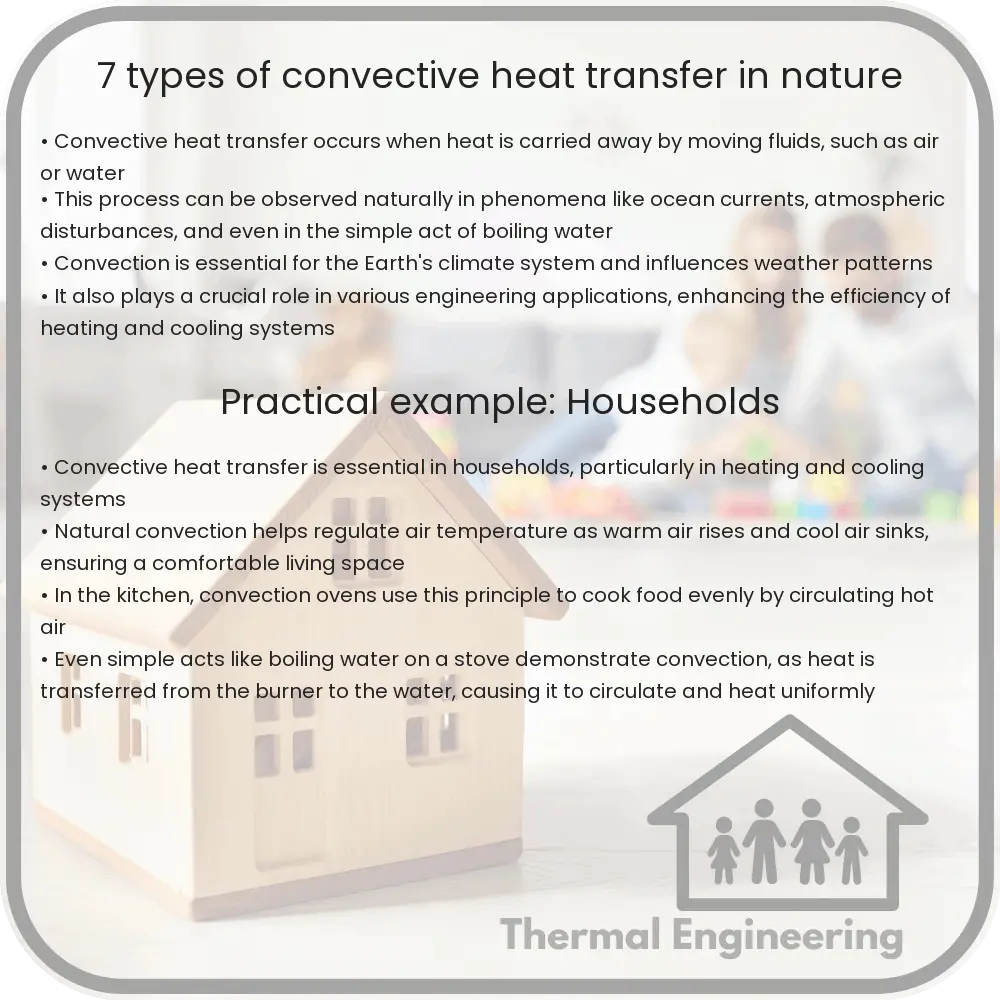
7 Types of Convective Heat Transfer in Nature

Learn about convective heat transfer, the movement of heat via fluids in natural processes and technology.
7 Types of Convective Heat Transfer in Nature

Understanding Convective Heat Transfer

Convective heat transfer is one of the primary mechanisms of heat transfer and plays a crucial role in various natural processes. It involves the transfer of heat by the physical movement of a fluid, which can be a liquid or a gas. This movement transfers energy from one place to another, often influenced by temperature differences within the fluid. Below, we explore seven types of convective heat transfer that occur in nature.

1. Natural Convection

Natural convection occurs when fluid motion is caused by buoyancy forces that are induced by density differences due to variations in temperature. A common example of natural convection is the heating of air in a room: warmer air rises because it is less dense, while cooler air descends.

2. Forced Convection

In forced convection, the fluid movement is generated by external means, such as a pump, fan, or wind. This type of convection can be observed when wind moves heat away from the surface of the Earth or when water is circulated in a heating system to distribute thermal energy.

3. Mantle Convection

Mantle convection is a slow but powerful form of heat transfer in the Earth’s mantle. Hot material rises towards the Earth’s surface, cools, and then sinks back down. This process is responsible for tectonic plate movements and various geological phenomena such as earthquakes and volcanic activities.

4. Oceanic Convection

Oceanic convection involves the movement of ocean water driven by temperature and salinity gradients. Warmer, less salty water rises, while cooler, saltier water sinks, creating a complex pattern of ocean currents that play a key role in regulating the Earth’s climate.

5. Atmospheric Convection

Atmospheric convection is driven by the heating of the Earth’s surface by the sun. Warm air expands and rises, while cooler air descends. This form of convection is critical for the formation of clouds and weather patterns, including thunderstorms and cyclones.

6. Solar Convection

In the sun, convection occurs in the outer layers, where heat generated by nuclear fusion in the core is transported outward. This process creates solar convection cells that contribute to the distribution of heat and light energy from the sun.

7. Boiling and Condensation

Boiling and condensation are special cases of convective heat transfer. During boiling, heat transfers to a liquid causing it to become gaseous (steam) which then rises due to its lower density. Conversely, condensation involves vapor cooling and turning back into liquid, releasing heat in the process, which often rises due to convection currents.

In conclusion, convective heat transfer is a versatile and vital process that influences various natural phenomena. From the boiling of water to complex atmospheric and oceanic currents, understanding the principles of convection helps us appreciate the dynamics of the world around us.

Thermal buffering in energy-efficient homes

Learn about thermal buffering, a key factor in designing energy-efficient homes to moderate indoor temperature changes and reduce energy needs.

Thermal buffering in energy-efficient homes

Understanding Thermal Buffering in Energy-Efficient Homes

Thermal buffering is a crucial concept in the design and operation of energy-efficient homes. It refers to the ability of a building to moderate changes in indoor temperature, contributing to lower heating and cooling demands and enhancing overall energy efficiency. This process helps in maintaining a comfortable indoor climate while minimizing the energy required for heating and cooling systems.

How Does Thermal Buffering Work?

Thermal buffering primarily relies on the thermal mass of a building – materials that can absorb and store heat energy. When used effectively, these materials serve as a ‘buffer’ against temperature fluctuations by absorbing excess heat when the surroundings are hotter than the desired indoor temperature and releasing stored heat when the surroundings are cooler.

Common materials used for thermal mass include concrete, bricks, stone, and water. These materials differ in their specific heat capacity and density, which determine their effectiveness in storing and releasing heat.

Key Elements Influencing Thermal Buffering

  • Material Selection: The choice of building material is fundamental in thermal buffering. Dense materials with high specific heat capacities, like concrete and brick, are typically more effective at absorbing and retaining heat.
  • Placement: Strategic placement of these materials within a home can enhance thermal buffering. Incorporating thermal mass in floors, walls, and sometimes ceilings, particularly in areas that receive significant sunlight, can improve energy efficiency.
  • Insulation: While thermal mass helps in storing and releasing heat, insulation is critical to ensuring that the heat does not escape too quickly. Proper insulation helps maintain a stable indoor temperature by minimizing heat loss in winter and heat gains in summer.
  • Passive Solar Design: Homes designed with passive solar principles can maximize the benefits of thermal buffering. By orienting the home to utilize natural heat from the sun and employing architectural features like thermal windows and shaded overhangs, passive solar design enhances thermal comfort and reduces reliance on mechanical heating and cooling systems.

Benefits of Thermal Buffering in Homes

  1. Reduced Energy Consumption: By moderating indoor temperature fluctuations, thermal buffering can significantly reduce the energy required for heating and cooling, leading to lower utility bills.
  2. Increased Comfort: Homes with effective thermal buffering maintain more consistent indoor temperatures, avoiding the peaks and troughs that can occur in less efficient buildings.
  3. Environmental Impact: Lower energy consumption directly correlates with reduced greenhouse gas emissions, contributing to a smaller carbon footprint for energy-efficient homes.
  4. Long-term Cost Savings: Although the initial cost of incorporating high thermal mass materials and effective insulation might be higher, the long-term savings on energy costs and the increased durability of the building can make up for the initial investment over time.

Challenges and Considerations

While thermal buffering has clear advantages, there are also challenges to consider. The effectiveness of thermal buffering depends heavily on climate conditions – different strategies might be required for hot and dry versus cold and wet climates. Additionally, over-reliance on thermal mass without sufficient ventilation can lead to issues such as dampness and mold. As such, it is important for homeowners and designers to consider local environmental conditions and integrate systems that ensure adequate ventilation and humidity control.

In conclusion, thermal buffering represents a powerful technique in the design of energy-efficient homes. By understanding its principles and applying strategic architectural and material decisions, homeowners can enjoy both enhanced comfort and a reduction in energy consumption.

12 Types of Heat Flow Analysis in Thermal Management

Learn about heat flow analysis, vital for designing systems to manage and dissipate heat efficiently across various engineering applications.

12 Types of Heat Flow Analysis in Thermal Management

Introduction to Heat Flow Analysis in Thermal Management

Heat flow analysis is crucial in the field of thermal management to ensure that devices and systems operate efficiently and safely within their thermal limits. This analysis helps engineers design systems that can effectively manage and dissipate heat, which is vital in many applications ranging from electronics to large-scale industrial processes. Here, we explore 12 types of heat flow analysis commonly used in engineering to address thermal management challenges.

Types of Heat Flow Analysis

1. Conduction Analysis

Conduction is the transfer of heat through a solid material from one molecule to another without overall displacement of the molecules. The analysis of heat conduction involves solving the heat equation in mediums that might include solids or stationary fluids. Common equations used include Fourier’s Law:

q = -k∇T

where q is the heat flux, k is the thermal conductivity, and ∇T is the temperature gradient.

2. Convection Analysis

Convection involves the transfer of heat between a surface and a fluid that is moving over the surface. Engineers use the Newton’s Law of Cooling to model convection:

q = hA(Ts – T∞)

where h is the convective heat transfer coefficient, A is the area, Ts is the surface temperature, and T∞ is the fluid temperature.

3. Radiation Analysis

Radiation heat transfer occurs through electromagnetic waves and doesn’t require a medium. It is governed by the Stefan-Boltzmann Law:

q = εσA(Ts4 – Tsur4)

where ε is the emissivity, σ is the Stefan-Boltzmann constant, and Tsur is the surrounding temperature.

4. Heat Exchanger Analysis

Heat exchangers are devices designed to transfer heat between two or more fluids. The analysis typically involves calculating the overall heat transfer coefficient and the log mean temperature difference (LMTD).

5. Transient Heat Transfer Analysis

This analysis deals with heat transfer over time, important in applications with changing thermal loads. It uses time-dependent versions of the heat transfer equations, often requiring numerical methods to solve.

6. Phase Change Analysis

This type of analysis is essential when materials change phases (e.g., from solid to liquid) and involves latent heat, which can dominate the heat transfer process. The latent heat is a critical factor in the design of systems like heat pumps and refrigerators.

7. Thermal Stress Analysis

Thermal stress occurs when temperature changes lead to deformation in materials. Analysts must consider both the thermal expansion coefficient and mechanical properties of the material to prevent failure.

8. Computational Fluid Dynamics (CFD)

CFD involves numerically solving the fluid flow and heat transfer equations to simulate the complex interactions in fluid-soaked materials or fluid flows.

9. Microscale Heat Transfer Analysis

At micro scales, classical heat transfer theories can fail, and effects like electron and phonon transport become significant, especially in microelectronic devices.

10. Multimode Heat Transfer Analysis

This comprehensive analysis combines conduction, convection, and radiation to solve complex problems where all three modes of heat transfer are significant.

11. Porous Media Heat Transfer Analysis

Porous media, such as foams and rocks, have complicated thermal characteristics that require specialized models to understand how heat transfers through voids and solid matrix combinations.

12. Inverse Heat Transfer Analysis

In inverse heat transfer problems, some of the initial or boundary conditions are unknown and need to be estimated based on measured data. This approach is often used in non-destructive testing and monitoring of systems.

Conclusion

These types of heat flow analysis provide engineers and scientists with powerful tools to design, analyze, and improve thermal management systems across various applications. By understanding and applying these methods, effective temperature control and heat dissipation can be achieved, enhancing the performance and longevity of equipment and processes.

6 Types of Temperature Measurement Devices

Guide to common temperature measurement devices used in scientific and industrial applications.

6 Types of Temperature Measurement Devices

Understanding Temperature Measurement Devices

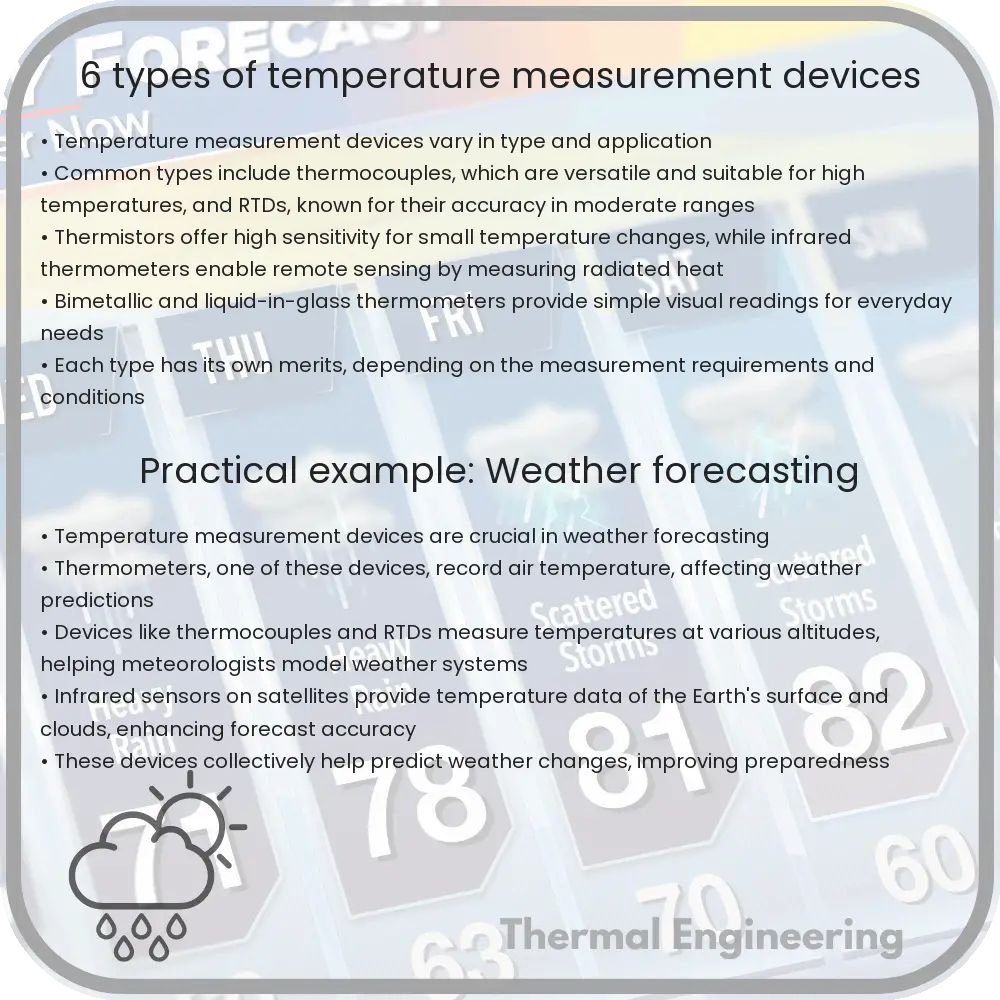
Temperature measurement is crucial in numerous scientific and industrial processes. The accuracy of temperature data can significantly affect the performance and safety of equipment. Engineers utilize various types of temperature measurement devices, each suited to specific applications and ranges of temperature. Here’s a guide to six common types of these devices:

1. Thermocouples

Thermocouples are widely used because of their broad range, simplicity, and rapid response. They operate based on the Seebeck effect, where a voltage is generated at the junction of two different metals that varies with temperature. Thermocouples can measure temperatures from -200°C up to +2500°C. They are inexpensive but less accurate than some other types.

2. Resistance Temperature Detectors (RTDs)

RTDs are more precise than thermocouples and are used when measurement accuracy is critical. They function by measuring the change in electrical resistance of a metal, typically platinum, as its temperature changes. RTDs are suited for measurements between -270°C to +850°C. They often require a current to be passed through the element, making them slightly more complex to implement.

3. Thermistors

Thermistors are similar to RTDs, as they also measure temperature based on the resistance of a material. However, thermistors are made of ceramic or polymer materials rather than metals. They offer high sensitivity and accuracy over a smaller temperature range (about -100°C to +300°C) and are generally used in consumer electronics and environmental controls.

4. Infrared Thermometers

These devices measure the infrared radiation emitted by an object to determine its temperature, allowing for non-contact temperature assessment. Infrared thermometers are ideal for situations where the object being measured is moving, or contained in a vacuum or other hostile environment. They can vary widely in terms of accuracy and capability, depending on the specific design and application.

5. Bimetallic Thermometers

Bimetallic thermometers consist of two metals with different rates of expansion bonded together. As temperature changes, the bimetal strip bends due to the different expansion rates, and this mechanical movement translates to a temperature reading, typically displayed on a dial. These thermometers are durable and inexpensive but have slower response times and moderate accuracy.

6. Liquid-in-Glass Thermometers

These traditional thermometers use the expansion and contraction of a liquid (commonly mercury or alcohol) in a glass tube to measure temperature. The physical rise or fall of the liquid column is directly related to temperature changes. They are simple and do not require any power source, but are fragile and not suitable for all applications.

Conclusion

Choosing the right temperature measurement device is dependent on several factors including the temperature range, accuracy requirements, response time, and environmental conditions. Each device type has its strengths and ideal use cases, ensuring that engineers can select the most appropriate technology for their specific needs.

7 Types of Heat Transfer Enhancement Techniques

Learn about seven effective techniques used to enhance heat transfer in various engineering applications.

7 Types of Heat Transfer Enhancement Techniques

7 Types of Heat Transfer Enhancement Techniques

Heat transfer plays a critical role in various engineering applications, from HVAC systems in buildings to cooling systems in electronic devices. Enhancing heat transfer can improve the efficiency and performance of equipment while potentially reducing energy use and costs. Below are seven effective techniques used to enhance heat transfer in different engineering scenarios:

1. Surface Area Increase

Increasing the surface area that is exposed to a heat source or sink can significantly enhance heat transfer. This is because the rate of heat transfer by conduction or convection is directly proportional to the surface area through which heat can be transferred. Techniques include:

  • Adding fins or extended surfaces on heat exchangers
  • Using microchannels in electronic cooling
  • Incorporating porous media in regenerative heat exchangers

2. Improved Heat Transfer Fluids

The properties of the fluid used in the heat transfer process can greatly affect the system’s efficiency. Some enhancements include:

  • Using nanofluids, which contain nanoparticles that improve thermal conductivity
  • Switching to fluids with higher thermal conductivity or better heat capacity

3. Agitation and Stirring

In liquid heating or cooling systems, stirring or agitating the fluid can disrupt the thermal boundary layer that forms at the heat transfer surface, thereby enhancing heat transfer. Methods include:

  • Mechanical agitators in a reactor vessel
  • Induced flow using impellers or pumps

4. Phase Change Materials

Materials that change phase (e.g., from solid to liquid) can absorb or release large amounts of heat at constant temperature. Integrating phase change materials (PCMs) can enhance heat transfer during thermal cycling by:

  • Stabilizing temperature fluctuations in solar energy systems
  • Enhancing thermal management in electronics with high heat fluxes

5. Baffles Installation

Installing baffles in a heat exchanger can redirect the flow path of the fluid, increasing the fluid’s velocity and enhancing heat transfer by convection. This method is particularly useful in shell and tube heat exchangers where:

  • Baffles help prevent the formation of stagnant zones
  • They can increase the turbulence level of the fluid flow, improving the heat transfer coefficient

6. Finishing Techniques

Surface finishing processes such as polishing or coating surfaces involved in heat transfer can also be used to enhance heat conductivity. Techniques include:

  • Polishing to reduce surface roughness, thus improving contact with heat transfer fluids
  • Applying thermally conductive coatings that enhance thermal contact resistance

7. Radiation Enhancers

For heat transfer involving radiation, using materials with higher emissivity can increase the rate of heat loss or gain through thermal radiation. Enhancements might involve:

  • Selecting materials with naturally high emissivity for surfaces exposed to radiative heat sources
  • Coating surfaces with materials that increase emissivity

Each technique has specific applications and advantages, making it essential to choose the most suitable one based on the particular requirements of the system in question. Incorporating these techniques can lead to more efficient thermal systems, reduced energy consumption, and superior overall performance.

9 Types of Boiling Heat Transfer Mechanisms

Explore the various mechanisms of boiling heat transfer, crucial for applications from industrial boilers to electronic cooling.

9 Types of Boiling Heat Transfer Mechanisms

Understanding Boiling Heat Transfer Mechanisms

Boiling heat transfer plays a crucial role in various engineering applications, ranging from industrial boilers to cooling of electronic components. It involves the transfer of heat from a hotter surface to a boiling liquid, often resulting in the formation and release of bubbles. Boiling can be categorized into different mechanisms, each relevant to the conditions and characteristics of the system involved. Here, we discuss nine key types of boiling heat transfer mechanisms.

1. Pool Boiling

Pool boiling occurs when a liquid in a container is heated from below. This type of boiling includes several regimes based on the heat flux:

  • Natural Convection Boiling: Occurs at low heat flux where heat is transferred mainly via free convection currents.
  • Nucleate Boiling: At higher heat flux, bubbles begin to form at nucleation sites on the heated surface and detach when buoyancy overcomes surface tension.
  • Transition Boiling: As heat flux increases, the stable bubble formation seen in nucleate boiling becomes unstable.
  • Film Boiling: At very high heat flux, a continuous film of vapor forms at the surface, greatly reducing heat transfer efficiency due to the low thermal conductivity of vapor compared to liquid.

2. Convective Boiling

When a fluid flow is involved, boiling can enhance heat transfer due to increased fluid motion. This is known as convective boiling, which effectively removes heat from the surface via forced convection influenced by fluid velocity.

3. Subcooled Boiling

This occurs when the liquid temperature is below its saturation temperature at the given pressure. Bubbles may collapse before reaching the surface due to the surrounding cooler liquid.

4. Saturated Boiling

In saturated boiling, the liquid temperature is at or near its saturation temperature. This results in vigorous boiling and intense heat transfer.

5. Critical Heat Flux (CHF)

At a certain point, known as the Critical Heat Flux, boiling heat transfer reaches its maximum. Further increase in heat flux leads to a dramatic rise in surface temperature as the heating surface becomes covered by a stable vapor layer that inhibits efficient heat transfer.

6. Minimum Heat Flux (MHF)

During the cooling process, this is the point where a continuous vapor film begins to reintegrate into discrete bubbles, marking a transition from film boiling back to nucleate boiling.

7. Transient Boiling

Transient boiling occurs when the heat flux or surface temperature changes abruptly. This can lead to temporarily enhanced heat transfer rates as the system adjusts to the new conditions.

8. Leidenfrost Effect

A phenomenon observed when a liquid encounters a surface much hotter than its boiling point, causing an insulating vapor layer to form instantly that significantly slows down the heat transfer. This is often seen when drops of water are skittered across a hot skillet.

9. Surface Roughness and Wettability Effects

The nature of the surface—its roughness and wettability—affects boiling significantly. Rough surfaces typically promote nucleation, and hydrophilic surfaces enhance the wettability, potentially improving the heat transfer during boiling.

Each type of boiling heat transfer mechanism exhibits distinct characteristics and operates under specific thermophysical conditions. Understanding these mechanisms allows engineers to design systems that optimize heat transfer efficiency, ensuring safe and effective operation of thermal systems.

3 Types of Thermal Insulators in Building Construction

Learn about thermal insulators like fiberglass, foam, and reflective materials used in building construction to enhance energy efficiency.

3 Types of Thermal Insulators in Building Construction

Understanding Thermal Insulators in Building Construction

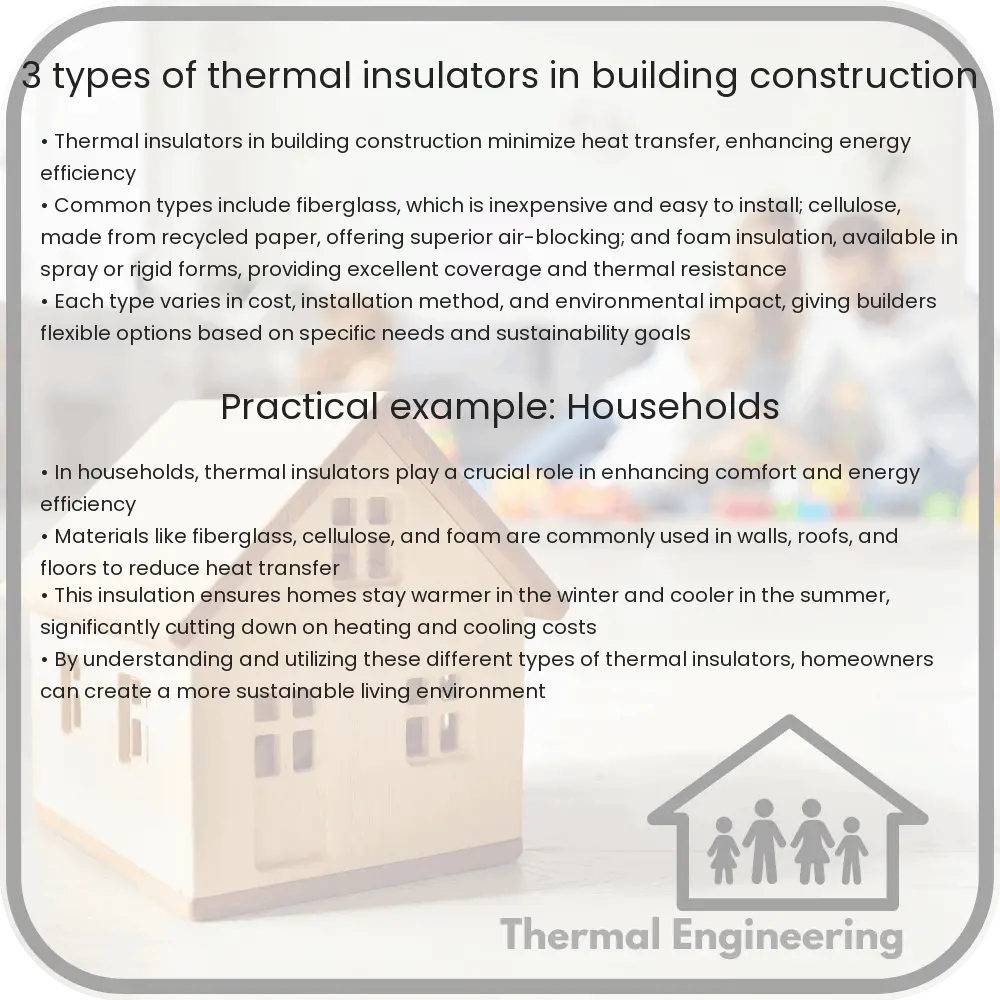
Thermal insulation is a critical component in building construction, aimed at reducing the heat transfer between outside and inside of a building. Effective thermal insulation not only makes buildings more comfortable but also dramatically reduces energy consumption and lowers heating and cooling costs. This article explores three common types of thermal insulators used in building construction – fiberglass, foam, and reflective insulators.

1. Fiberglass Insulation

Fiberglass is one of the most commonly used insulation materials. It is made from fine strands of glass fibers and is available in blanket (batts and rolls), loose-fill, and rigid board forms. Here are some key advantages of fiberglass insulation:

  • Cost-Effective: Fiberglass is generally cheaper than other forms of insulation, making it a popular choice for those on a budget.
  • Thermal Performance: It has a high thermal resistance (R-value), typically ranging from R-2.9 to R-3.8 per inch of thickness.
  • Fire Resistant: Fiberglass is naturally fire resistant, a crucial advantage in building construction.

However, installing fiberglass requires careful handling to avoid irritation of the skin, eyes, and respiratory system. Additionally, it must be properly installed to avoid gaps, which can significantly diminish its insulating effectiveness.

2. Foam Insulation

Foam insulation includes materials like polystyrene, polyisocyanurate (polyiso), and polyurethane. Foam insulation can be sprayed, fitted as rigid boards, or molded to fit specific applications. Its versatility makes it suitable for a range of applications, from walls and roofs to around windows and doors. Benefits of foam insulation include:

  • High R-value: Foam typically offers a higher R-value per inch than fiberglass, translating to better thermal resistance.
  • Air Sealing: When applied as spray foam, it expands to fill up cracks and voids, helping to seal leaks and reduce air infiltration.
  • Moisture Barrier: Certain types of foam insulation also act as moisture barriers, thereby reducing the risks of mold and water damage.

However, foam insulation is generally more expensive than fiberglass and may require professional installation, particularly when sprayed.

3. Reflective Insulation

Reflective insulation (or radiant barrier insulation) is designed to reflect heat away from the building, making it particularly effective in hot climates. It is typically made from aluminum foil laminated onto paper or plastic and is particularly effective for attics, roofs, and walls facing the sun. Here are several advantages:

  • Reflect Heat: Highly effective at reflecting radiant heat, reducing cooling costs in warm climates.
  • Lightweight: This type of insulation is light and easy to install, often requiring no more than staples, tape, or glue.
  • Durable: Moisture does not affect the performance of reflective insulation, which contributes to its durability.

Reflective insulation is less effective in colder climates and typically needs to be combined with other forms of insulation that provide effective thermal resistance.

Conclusion

The choice of thermal insulation depends greatly on the climate, the specific requirements of the building, and budget constraints. Fiberglass, foam, and reflective insulations all offer unique benefits and can be effective in different scenarios. Proper installation and consideration of environmental factors are crucial to maximize the effectiveness of any insulation material. By understanding the properties and appropriate uses of these materials, builders can make informed choices that enhance the energy efficiency and comfort of buildings.

4 Types of Thermoelectric Materials for Energy Harvesting

Learn about thermoelectric materials like Bismuth Telluride and Silicon-Germanium alloys used for energy-efficient power generation.

4 Types of Thermoelectric Materials for Energy Harvesting

Introduction to Thermoelectric Materials for Energy Harvesting

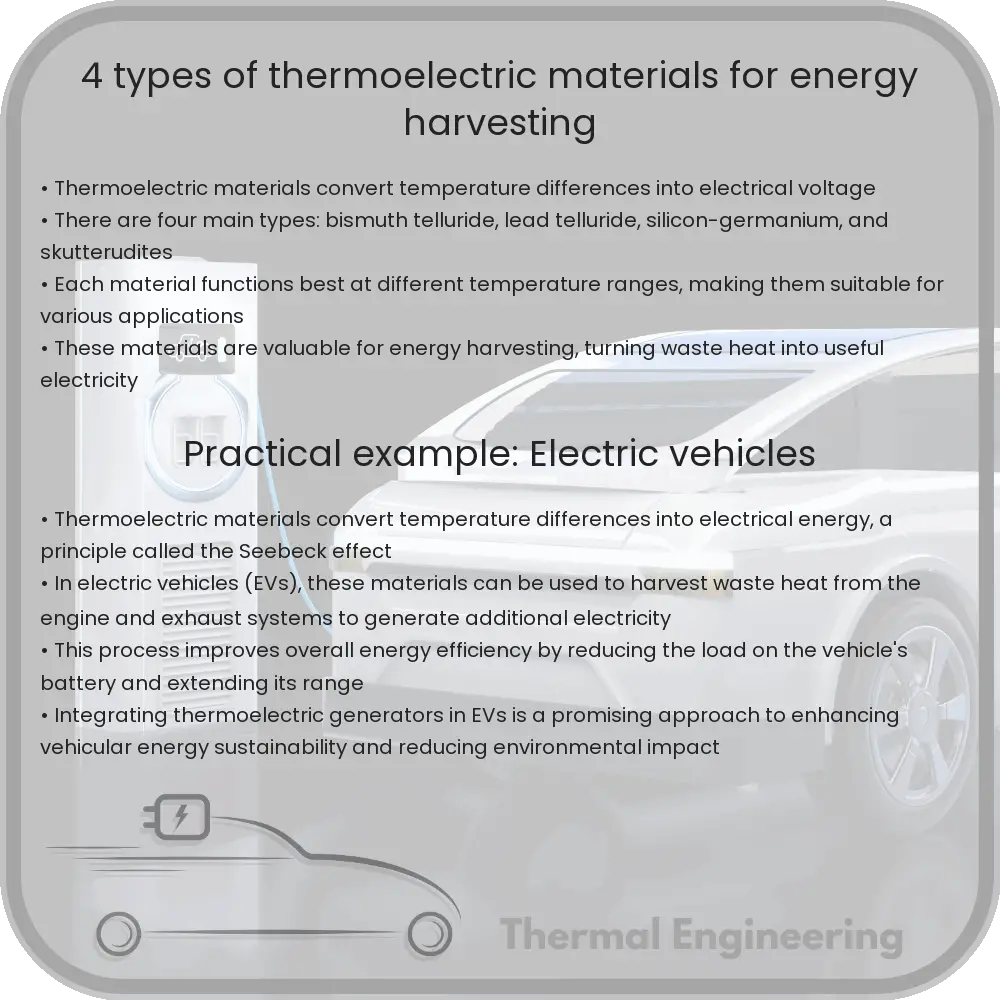
Energy harvesting through thermoelectric materials is becoming an increasingly popular method for converting thermal energy into electrical energy, directly. This technology exploits the Seebeck effect where a temperature difference between two different materials can generate an electric current. Thermoelectric materials offer a promising way to utilize waste heat from industrial processes or natural sources to generate power without moving parts, contributing to their durability and minimal maintenance requirements. Here, we explore four types of thermoelectric materials commonly used in energy harvesting.

1. Bismuth Telluride (Bi2Te3)

Bismuth telluride is perhaps the most widely used thermoelectric material in moderate temperature ranges (approximately between 250-450 K). It exhibits excellent thermoelectric properties near room temperature, making it ideal for applications like portable refrigerators or power generation from body heat in wearable technology. Bi2Te3 is primarily used in the form of n-type and p-type semiconductors, creating a pair necessary for constructing a functional thermoelectric device.

2. Lead Telluride (PbTe)

Lead telluride operates effectively at higher temperatures (up to 700 K). This material is particularly attractive for power generation applications because of its excellent thermoelectric performance at elevated temperatures. PbTe’s ability to convert waste heat from car exhausts or industrial processes into electric power can significantly increase the energy efficiency of these systems. Additionally, its performance can be further enhanced with doping or nanostructuring, which modifies its electronic and thermal properties to boost its efficiency.

3. Skutterudites

Skutterudites are a class of thermoelectric materials that include some very effective cobalt arsenides, often doped with rare earth elements. These compounds are known for their low thermal conductivity and excellent electron transport properties, which make them suitable for applications at both medium and high temperatures. The unique structure of skutterudites allows for the inclusion of heavy atoms in the voids of their crystal lattice, reducing lattice thermal conductivity without deteriorating the electrical properties—an essential factor for achieving high thermoelectric efficiency.

4. Silicon-Germanium (SiGe) Alloys

Silicon-Germanium alloys are especially prevalent in aerospace applications where extreme temperatures (up to about 1300 K) are common. While SiGe has a lower thermoelectric conversion efficiency compared to other materials mentioned, its robustness at high temperatures and good mechanical properties make it a valuable choice for thermoelectric generators in space exploration vehicles. Moreover, being made from elements that are abundant and less environmentally toxic than tellurium or lead, SiGe alloys are a more sustainable option for long-term thermoelectric applications.

Conclusion

Whether it’s for greener energy alternatives or advanced technological applications, thermoelectric materials like Bismuth Telluride, Lead Telluride, Skutterudites, and Silicon-Germanium alloys are integral to progressing energy harvesting technologies. By converting waste heat into usable electricity, these materials help pave the way for more energy-efficient systems across various industries.

8 Types of Specific Heat Capacity Measurements

Learn about specific heat capacity, the vital physical property indicating the heat amount needed to change a substance’s temperature by one degree Celsius.

8 Types of Specific Heat Capacity Measurements

Understanding Specific Heat Capacity: 8 Measurement Techniques

Specific heat capacity is a fundamental physical property that quantifies the amount of heat required to change the temperature of a unit mass of a substance by one degree Celsius. The measurement of specific heat capacity can be crucial in fields such as materials science, thermodynamics, and engineering. This article explores eight different methods used to determine the specific heat capacity of various materials.

Differential Scanning Calorimetry (DSC)

Differential Scanning Calorimetry (DSC) is a thermoanalytical technique in which the difference in the amount of heat required to increase the temperature of a sample and reference is measured as a function of temperature. Both the sample and reference are subjected to the same temperature regime. This method is widely used due to its accuracy and the small amount of sample required.

Drop Calorimetry

Drop calorimetry involves heating a sample to a known temperature, then dropping it into a calorimeter containing water at a different temperature. The change in water temperature is measured to calculate the heat transfer from the sample, from which the specific heat can be calculated using the formula:

c = Q / (m * ΔT)

where c is the specific heat capacity, Q is the heat added, m is the mass of the sample, and ΔT is the change in temperature.

Adiabatic Calorimetry

In adiabatic calorimetry, the sample is isolated from the external environment to prevent heat loss or gain. The heat capacity is then measured by carefully controlling the amount of heat supplied to the sample and monitoring the resultant temperature change. This method is especially useful for precise measurements at very low temperatures.

Modulated Temperature Differential Scanning Calorimetry (MTDSC)

MTDSC is an enhancement of the basic DSC technique that applies a modulated temperature profile to the sample and reference. This allows the separation of reversible and irreversible heat flows and can provide more detailed information about transitions within the sample.

Laser Flash Analysis

Laser Flash Analysis (LFA) measures the thermal diffusivity of materials, from which specific heat capacity can be inferred. A pulse of laser light heats one side of a thin sample, and the time taken for the heat to reach the opposite surface is recorded. This technique is useful for thin films and high-temperature applications.

Calvet Calorimetry

Calvet calorimetry surrounds the sample with a high-density thermopile to measure all the heat given off or absorbed during a reaction or temperature change. It is particularly effective for studying phase changes and reactions that absorb or release heat over a wide temperature range.

3ω (Three Omega) Method

The 3ω method is a technique used to measure the thermal conductivity of thin films and low-dimensional systems. By calculating thermal conductivity, specific heat capacity can also be determined. This method involves applying an alternating current to a metallic pattern on the sample and measuring the third harmonic voltage response.

Mixing Calorimetry

Mixing calorimetry involves determining the specific heat capacity by mixing two materials at different temperatures and measuring the equilibrium temperature. The heat lost by the hotter material and gained by the cooler material helps calculate the specific heat capacities involved.

Each of these methods offers distinct advantages and is suitable for different types of materials and conditions. By understanding and applying these techniques, scientists and engineers can obtain detailed insights into the thermal properties of substances, ultimately aiding in the development of new materials and technologies.

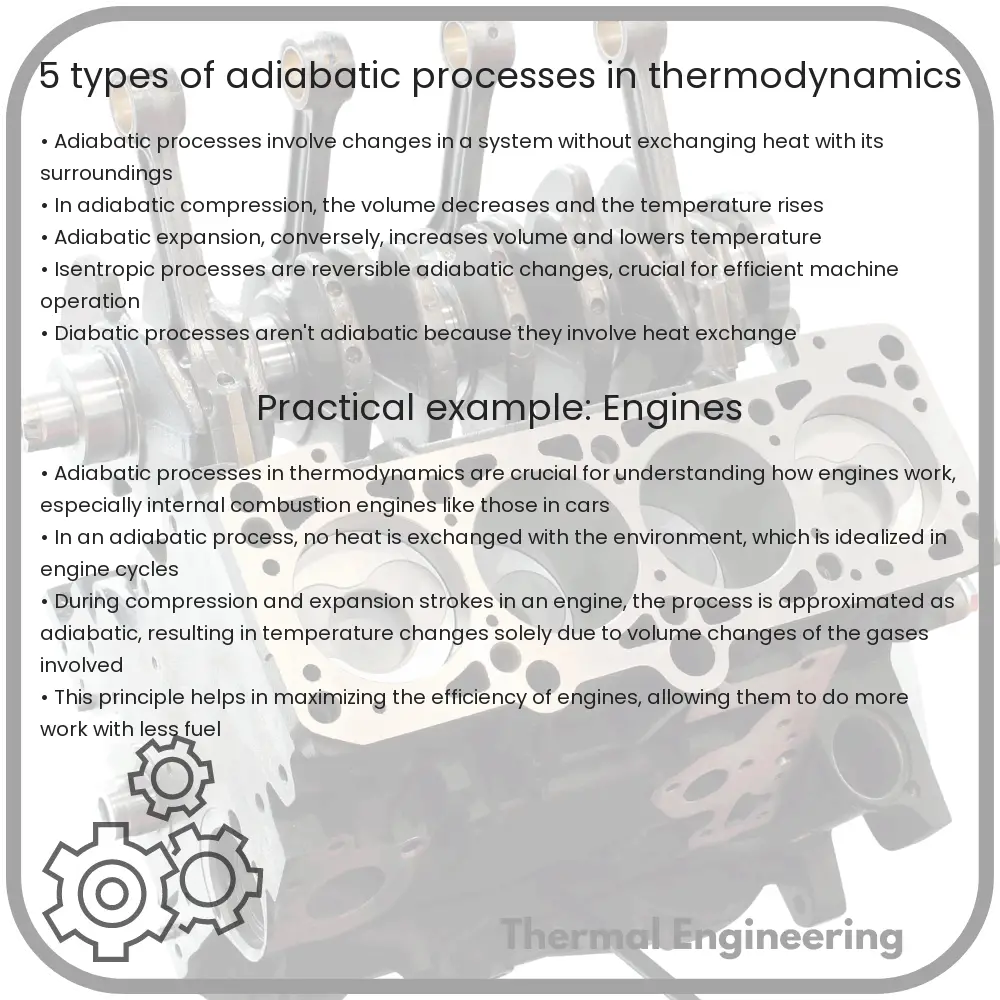
5 Types of Adiabatic Processes in Thermodynamics

Explore the key aspects of adiabatic processes in thermodynamics, highlighting their role in engineering and physics without heat exchange.

5 Types of Adiabatic Processes in Thermodynamics

Understanding Adiabatic Processes in Thermodynamics

Adiabatic processes are a fundamental concept in thermodynamics, describing situations where no heat is transferred into or out of a system. In these processes, changes in pressure, volume, and temperature occur without any exchange of heat with the surroundings. This can lead to various interesting and useful effects, especially in engineering and physics. Here we explore five types of adiabatic processes that highlight the versatility and applications of this thermodynamic principle.

1. Isentropic Process

An isentropic process is an idealized adiabatic process that is both adiabatic and reversible. This means there is no heat exchange with the surroundings (Q = 0), and there is also no increase in entropy (dS = 0). The isentropic process is significant in applications like the operation of turbines, compressors, and nozzles where efficiency is critical.

  • Equation: \( PV^\gamma = \text{constant} \) where \(\gamma = \frac{C_p}{C_v}\) is the ratio of the specific heats.

2. Adiabatic Free Expansion

Adiabatic free expansion is a type of adiabatic process that occurs when a gas expands into a vacuum. Since there is no external pressure exerted on the gas during expansion, the work done by the gas is zero (W = 0). Although the internal energy of the system remains constant, the temperature does not necessarily stay the same, depending on the specific gas nature.

  • Characteristic: For ideal gases, the temperature remains constant during free expansion though this isn’t generally true for real gases.

3. Polytropic Process

A polytropic process is a more generalized form of an adiabatic process where the heat transfer does not necessarily equal zero, but the relationship between pressure and volume during the compression or expansion follows a specific polytropic relation defined as \( PV^n = \text{constant} \).

  • Polytropic Index \(n\): If \( n = 1 \), the process is isothermal; if \( n = \gamma \), the process is isentropic (adiabatic and reversible).

4. Adiabatic Throttling

Adiabatic throttling is a process where a fluid flows through a valve or a porous plug while maintaining a constant enthalpy. This process is adiabatic because there is no heat transfer, but it is also irreversible due to the creation of entropy.

  • Application: Common in refrigeration cycles, where it helps control the refrigerant’s pressure and temperature without energy exchange.

5. Isochoric Adiabatic Process

While most adiabatic processes involve changes in volume, an isochoric process occurs at a constant volume. This means that there is no work done by the system (W = 0). For an adiabatic isochoric process, the change in internal energy results only from changes in temperature.

  • Relevance: Important in understanding the behavior of an ideal gas held at a constant volume but allowed to exchange heat.

In summary, adiabatic processes play a crucial role in thermodynamics, particularly in engineering applications involving fluid dynamics and energy systems. By understanding these processes, engineers can design more efficient and effective machines and systems, from power plants to refrigerators.