Facebook Instagram Youtube Twitter

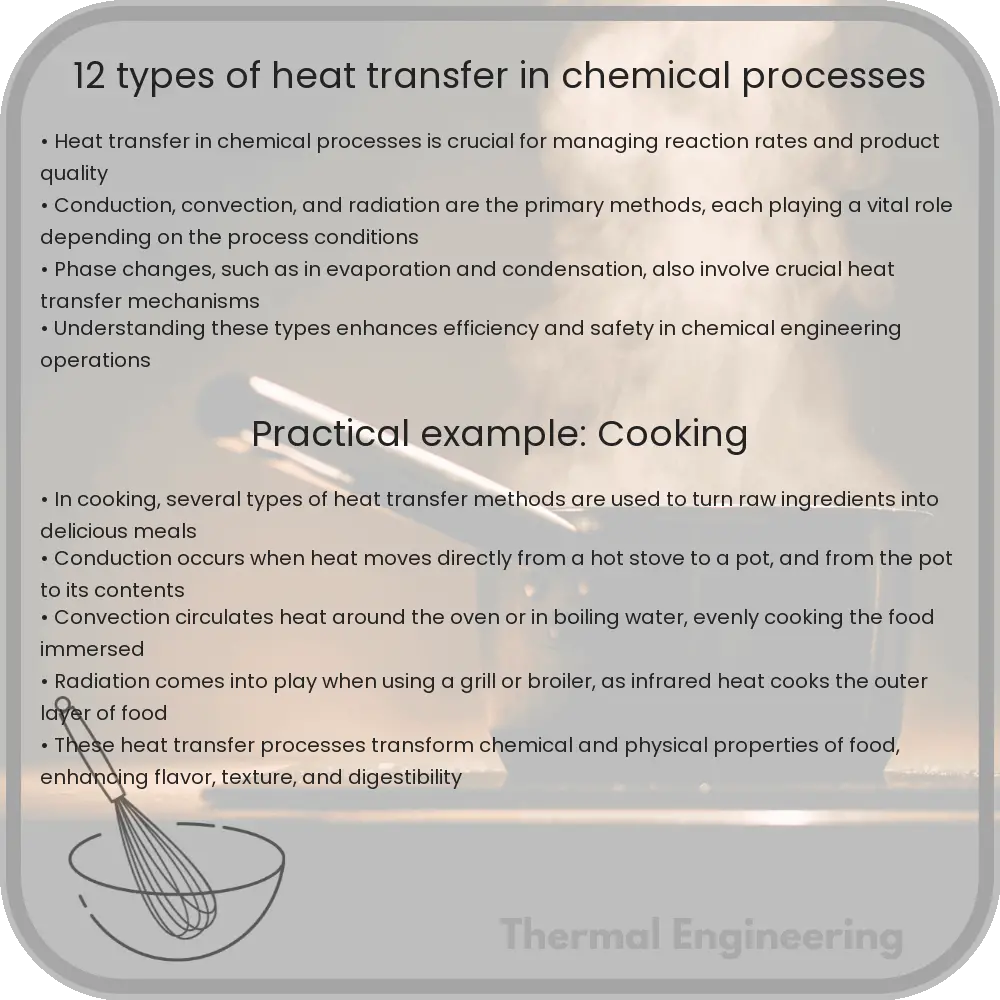
12 Types of Heat Transfer in Chemical Processes

Learn about the various mechanisms of heat transfer essential in chemical engineering, such as conduction, convection, and radiation.
12 Types of Heat Transfer in Chemical Processes

Understanding Heat Transfer in Chemical Processes

Heat transfer is a fundamental aspect of chemical engineering that involves the movement of thermal energy from one point to another. It plays a critical role in various chemical processes, affecting reaction rates, equipment design, energy efficiency, and safety. Here, we explore twelve types of heat transfer mechanisms commonly found in chemical engineering processes.

Conduction

Conduction refers to the transfer of heat through a solid or stationary fluid (liquid or gas) via the vibrations and movements of molecules and electrons. It is described by Fourier’s law:
\[ q = -k \nabla T \] where \(q\) is the heat flux, \(k\) is the thermal conductivity, and \(\nabla T\) is the temperature gradient.

Convection

Convection is the transfer of heat by the physical movement of a fluid (which may include mixtures of gases and liquids). It can be natural, driven by buoyancy forces (due to density variations from temperature differences), or forced by external means (like pumps or fans).

Radiation

Radiation is the transfer of energy by electromagnetic waves. Every body emits radiation whose intensity depends on its temperature, according to the Stefan-Boltzmann law:
\[ E = \sigma T^4 \] where \(E\) is the emissive power, \(\sigma\) is the Stefan-Boltzmann constant, and \(T\) is the absolute temperature.

Conductive Heat Transfer in Solids

  • Direct Transmission: Heat moves through a solid directly from atom to atom or molecule to molecule.
  • Heat Pipes: Utilize phase change and capillary action to transfer heat efficiently across distances within a device.

Convective Heat Transfer in Fluids

  • Single-phase Convection: Involves heat being carried by a fluid in a single phase (either liquid or gas).
  • Two-phase Convection: Occurs during boiling or condensation, where heat transfers include both the latent and sensible heat.

Radiative Heat Transfer

  • Gaseous Radiation: Gas molecules emit and absorb electromagnetic radiation due to temperature differences.
  • Surface Radiation: Surfaces emit radiation depending on their material properties and finish.

Heat Transfer in Combustion Processes

Heat is generated through chemical reactions, typically involving fossil fuels or biomass. This process releases thermal energy, which is then transferred by conduction, convection, and radiation.

Heat Transfer in Heat Exchangers

Heat exchangers are devices designed to transfer heat between two or more fluids at different temperatures. They play a crucial role in optimizing energy use in chemical processes.

Heat Transfer in Reactive Systems

Reactive systems, such as reactors, involve simultaneous reaction and heat transfer, making the dynamics complex but critical for controlling product quality and process stability.

Phase Change Heat Transfer

This involves heat transfer during phase changes (e.g., melting, freezing, vaporization, condensation), which includes the absorption or release of large amounts of latent heat.

Heat Transfer with Change of Pressure

Changes in pressure within a system can affect heat transfer rates, particularly in gas-mediated processes where compressibility is significant.

Heat Transfer in Distillation Columns

Heat management is essential in distillation processes to achieve efficient separation of compounds based on their volatilities via staged vaporization and condensation.

Each type of heat transfer plays its role in chemical engineering applications, and understanding these mechanisms is vital for designing efficient and safe processes. Mastery of heat transfer principles enables engineers to optimize the energy consumption and improve the overall effectiveness of chemical plants and processes.
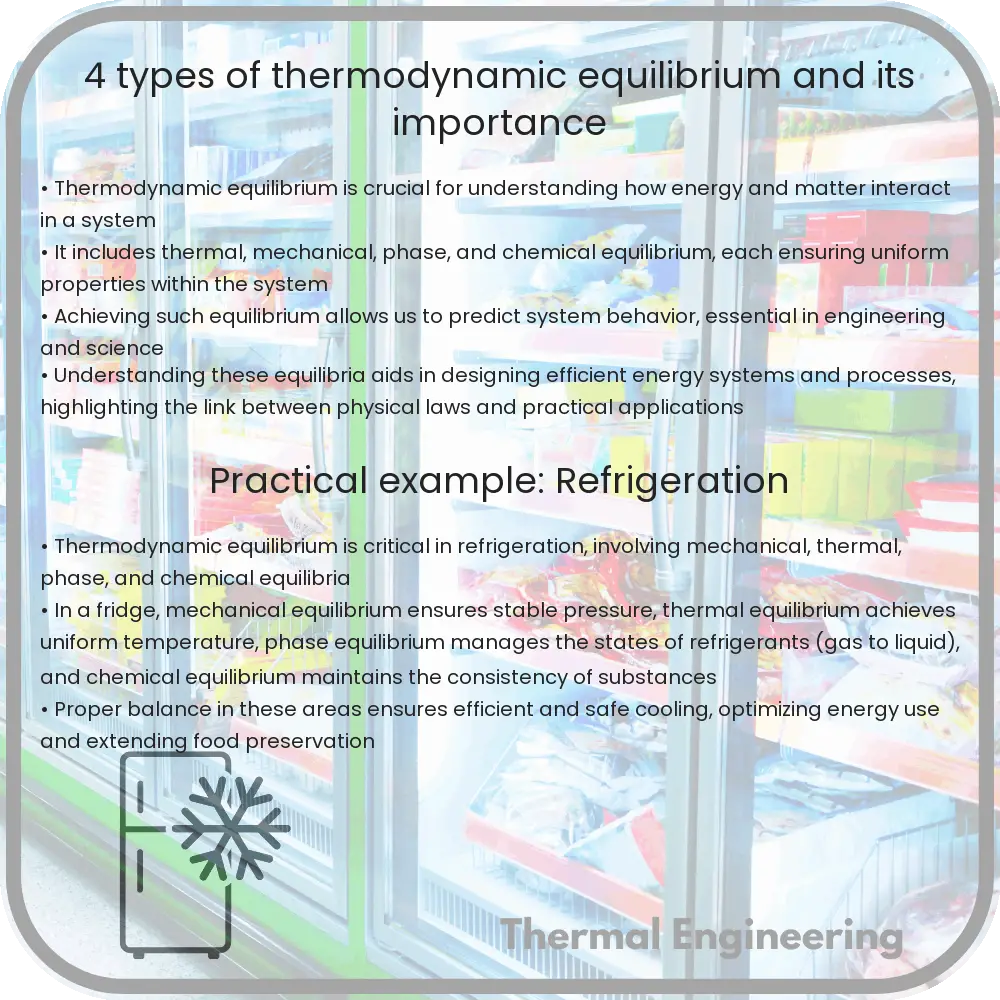
4 Types of Thermodynamic Equilibrium and Its Importance

Learn about the four types of thermodynamic equilibrium: thermal, mechanical, chemical, and phase, essential in various scientific and engineering applications.

4 Types of Thermodynamic Equilibrium and Its Importance

Understanding the 4 Types of Thermodynamic Equilibrium

Thermodynamic equilibrium is a fundamental concept in both physics and engineering, referring to a state where a system is in balance across its various properties. This equilibrium ensures that macroscopic variables (like temperature and pressure) responsible for defining the system’s state are uniform throughout and do not change over time unless disturbed by external actions. Comprehending the types of thermodynamic equilibrium is crucial for applications ranging from designing engines and refrigerators to understanding climatic conditions. Here, we will explore the four main types of thermodynamic equilibrium: thermal, mechanical, chemical, and phase equilibrium.

1. Thermal Equilibrium

In thermal equilibrium, there is no net heat transfer between objects within the system because they are at the same temperature. According to the zeroth law of thermodynamics, if two systems are each in thermal equilibrium with a third system, they are also in thermal equilibrium with each other. This principle is foundational in temperature measurement and is vital in designing thermal insulations and managing heat in mechanical systems.

2. Mechanical Equilibrium

A system reaches mechanical equilibrium when there is no net force acting on any part of it, leading to a static or unchanging mechanical state. In this state, the pressure throughout the system must be uniform and not changing with time. Mechanical equilibrium is essential for structural integrity in engineering designs, ensuring that constructions like bridges or skyscrapers can withstand various forces without collapsing.

3. Chemical Equilibrium

In chemical equilibrium, the rates at which reactants turn into products and products revert to reactants are equal, leading to no net change in chemical composition over time. This type of equilibrium is described by the law of mass action and the equilibrium constant, K, which is expressed as:

\[
K = \frac{[C]^c[D]^d}{[A]^a[B]^b}
\]

where [A], [B], [C], and [D] are the molar concentrations of the chemicals, and a, b, c, and d are their respective coefficients in the balanced chemical equation. Understanding chemical equilibrium helps in optimizing chemical reactions in industrial processes like ammonia production or pharmaceuticals synthesis.

4. Phase Equilibrium

Phase equilibrium occurs when different phases (e.g., solid, liquid, gas) coexist at equilibrium. During phase transitions, such as melting or vaporization, the system’s temperature and pressure conditions align with the boiling or melting points, ensuing stability in phase presence. Phase diagrams, which plot pressure against temperature, describe these equilibrium conditions and are crucial in materials science and meteorology.

Importance of Thermodynamic Equilibrium

Grasping the different types of thermodynamic equilibrium is crucial for several practical applications:

  • Engineering Design: Engineers use principles of thermodynamic equilibrium to design more efficient systems, from power plants to automotive engines, by ensuring optimal energy distribution.
  • Environmental Control: Understanding thermodynamic principles helps in designing HVAC systems that maintain comfort levels in buildings while minimizing energy use.
  • Material Science: Knowledge of phase and chemical equilibria enables scientists to develop better materials with desired properties for specific applications.
  • Biological Systems: Many biological processes, such as enzyme reactions and cellular metabolism, rely on chemical equilibrium, making its study essential in bioengineering and medicine.

In conclusion, thermodynamic equilibrium is a keystone concept in science and engineering, pivotal for understanding and designing systems that are stable, efficient, and functional under varying conditions. Whether it’s preserving the longevity of a mechanical structure or optimizing a chemical reaction, equilibrium principles provide the groundwork for innovation and operational success across diverse disciplines.

8 Types of Entropy Generation in Thermodynamics

This article details the eight key types of entropy generation in thermodynamics, highlighting how energy disperses in various systems and processes.

8 Types of Entropy Generation in Thermodynamics

Understanding the 8 Types of Entropy Generation in Thermodynamics

Entropy, a fundamental concept in thermodynamics, measures the degree of disorder or randomness in a system. The generation of entropy can be approached from various angles, especially considering different thermodynamic processes and interactions. In this article, we’ll delve into the eight key types of entropy generation, which help in understanding how systems evolve and how energy is dissipated in various forms.

1. Heat Transfer

Entropy generation through heat transfer occurs when there is a temperature difference within a system or between systems. According to the second law of thermodynamics, heat flows from a higher to a lower temperature, leading to an increase in entropy. The mathematical representation of entropy change due to heat transfer is given by:

\[\Delta S = \int \frac{Q}{T} \, dT\]

where \( Q \) is the heat transfer and \( T \) is the absolute temperature.

2. Fluid Flow

In fluid mechanics, entropy generation occurs due to viscous dissipation and frictional effects in the flow. As fluids move, molecules at different velocities interact, causing microscopic eddies and a diffusion of momentum, which generates entropy.

3. Chemical Reactions

Chemical reactions can either increase or decrease the entropy of a system, depending on the state of reactants and products. Typically, reactions that result in a greater number of gas molecules generate more entropy due to the increased molecular randomness and spatial distribution.

4. Mixing of Substances

When two or more substances mix, their individual molecules intersperse, leading to a state of higher randomness or higher entropy. This is particularly significant in cases like mixing two different gases or dissolving a solid in a liquid.

5. Phase Changes

Phase changes (e.g., melting, evaporation, or sublimation) involve a change in the state of matter which typically accompanies a change in entropy. For instance, when ice (solid water) melts to form liquid water, entropy increases due to the higher freedom of motion among the liquid water molecules compared to the solid ice structure.

6. Unrestrained Expansion

Unrestrained or free expansion of a gas into a vacuum is another process where entropy increases. Since the gas molecules expand into a larger volume without performing work or transferring heat, the randomness of the system increases.

7. Electrical Resistance

In electrical circuits, the resistance encountered by electrons results in the generation of heat (Joule heating), which leads to entropy production. This thermal energy dispersal reflects increased molecular activity and, consequently, increased entropy.

8. Radiation

Entropy is generated when bodies emit or absorb radiation. The energy carried by radiation can be absorbed by objects, raising their temperature and thus their entropy. Similarly, when objects emit radiation, they lose energy, but the overall entropy of the universe still increases due to the dispersal of energy into a larger space.

Each of these entropy generation mechanisms underlines fundamental principles of energy dispersion in the universe, governing everything from industrial processes to natural phenomena. Understanding these principles helps engineers and scientists optimize systems for efficiency, sustainability, and performance.

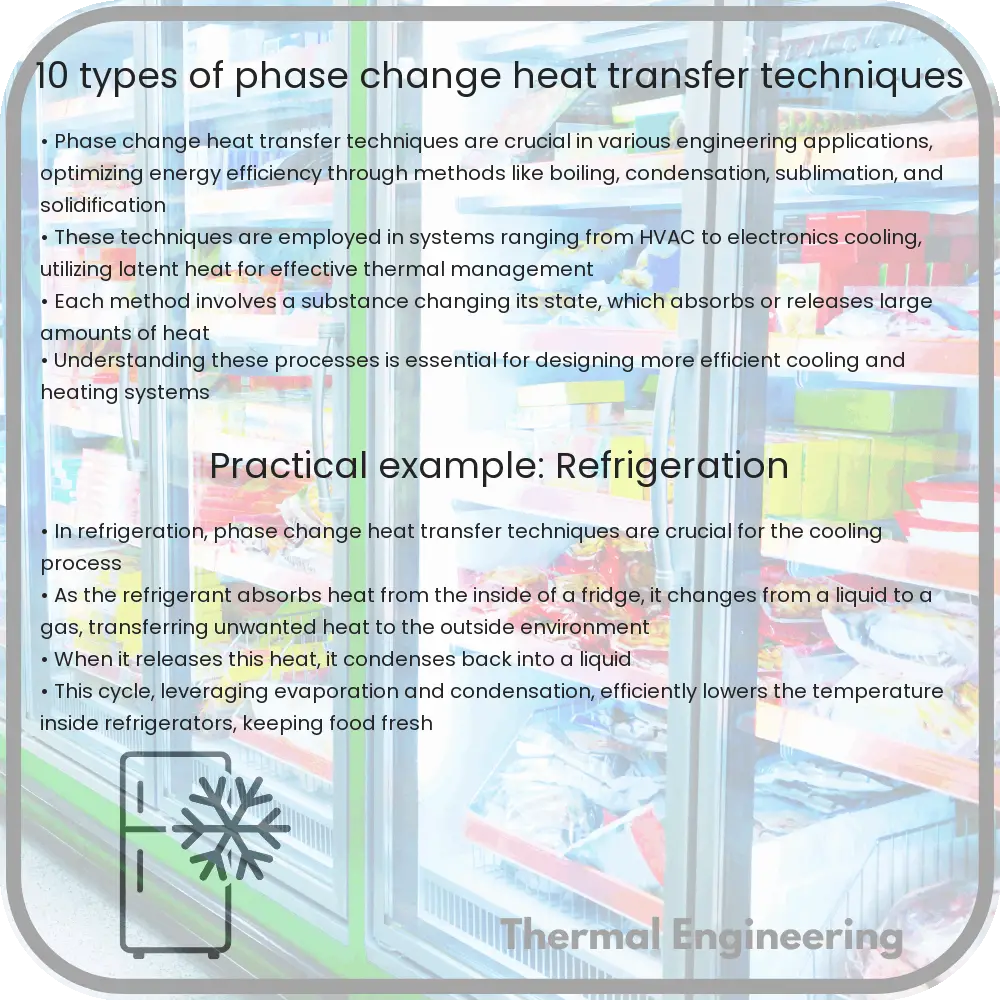
10 Types of Phase Change Heat Transfer Techniques

Learn about 10 key phase change heat transfer techniques and their applications in engineering fields, from industrial manufacturing to HVAC systems.

10 Types of Phase Change Heat Transfer Techniques

10 Types of Phase Change Heat Transfer Techniques

Phase change heat transfer plays a pivotal role in various engineering processes, where heat is absorbed or released by a substance as it changes its phase. This mechanism is crucial in many applications, from industrial manufacturing to refrigeration and climate control systems. Here we explore ten common types of phase change heat transfer techniques, each serving distinct purposes across different engineering fields.

1. Boiling

Boiling occurs when a liquid becomes gas upon reaching its boiling point. In engineering, boiling is utilized to transfer large amounts of heat efficiently, for instance in steam generators and power plants.

2. Condensation

Condensation is the reverse process of boiling, where a vapor loses energy and converts back into a liquid. It is essential in technologies such as condensers in steam power plants, and in the HVAC systems where latent heat is important for humidity control and thermal management.

3. Melting

Melting involves a solid changing into a liquid after absorbing sufficient heat. This phase transition is exploited in metallurgical processes such as casting and soldering, enabling the shaping of metal components.

4. Solidification

Solidification, or freezing, is the process of a liquid turning into a solid. This technique is crucial in making alloys, freezing of biological samples, and in the production of ice in refrigeration systems.

5. Sublimation

Sublimation occurs when a solid transforms directly into a gas without passing through the liquid phase. This type of heat transfer is used in freeze-drying processes, which are essential in food preservation and pharmaceuticals.

6. Deposition

Deposition is the reverse process of sublimation, where a gas converts directly into a solid. Deposition techniques are significant in the manufacture of thin films and coatings in the semiconductor industry.

7. Evaporation

Evaporation involves the transformation of a liquid into vapor at temperatures below the boiling point. This process is fundamental in cooling technologies, such as in cooling towers and evaporative coolers used in HVAC systems and industrial processes.

8. Adsorption

Adsorption-based heat transfer involves the adhesion of atoms, ions, or molecules from a gas, liquid, or dissolved solid to a surface. This process is critical in refrigeration systems that operate with adsorbent materials like silica gel or zeolites to adsorb refrigerant vapors, generating a cooling effect.

9. Absorption

In absorption, one substance is taken into the bulk of another substance, typically a liquid absorbing a gas. Absorption chillers, for example, use this process to provide air conditioning with the aid of a thermochemical sorption process.

10. Desorption

Desorption is the reverse process of absorption and involves the release of an adsorbed substance from a surface. This heat transfer method is used in regeneration steps in chemical processes to recover adsorbed substances and regenerate adsorbents.

Understanding these ten types of phase change heat transfer techniques provides a comprehensive insight into the practical applications and essential operations in various fields of engineering. Each technique harnesses the unique properties of phase transitions to maximize efficiency in thermal management and energy conservation.

5 Types of Thermal Energy Storage Systems

Learn about thermal energy storage systems, their types, materials used, and their applications in improving energy efficiency.

5 Types of Thermal Energy Storage Systems

Introduction to Thermal Energy Storage Systems

Thermal energy storage (TES) systems are crucial in the field of energy management, providing the ability to store thermal energy for later use. This can enhance energy savings, improve grid stability, and reduce the carbon footprint associated with heating and cooling in residential, industrial, and commercial sectors. There are several types of TES systems that vary based on the storage medium and technology used.

1. Sensible Heat Storage

Sensible heat storage systems operate by absorbing and releasing heat through changes in temperature of a storage medium. Common materials used include water, sand, and molten salts. These are popular due to their simplicity, cost-effectiveness, and the ability to work within a wide range of temperatures.

  • Water: Most commonly used due to its high heat capacity and availability. Ideal for domestic hot water storage.
  • Molten Salts: Typically used in solar power plants, where they store heat collected during the day to generate electricity at night.
  • Rock and Sand: Cheaper materials that can store heat at higher temperatures, useful in industrial applications.

2. Latent Heat Storage

Latent heat storage utilizes phase change materials (PCMs) to store and release heat energy during the transition between phases, such as solid to liquid or liquid to gas. PCM can store more heat per unit volume than sensible heat storage materials, making them highly efficient for space-saving settings.

  • Paraffin Waxes: Common in residential and commercial heating and cooling applications due to their moderate temperature range and high latent heat capacity.
  • Salt Hydrates: Effective for higher temperature storage, used in industrial processes.

3. Thermochemical Storage

Thermochemical storage systems involve chemical reactions that absorb or release heat. This type of storage can achieve higher energy storage densities and is not dependent on the external environment, providing very stable long-term storage.

  • The reactions are often reversible, allowing them to be charged and discharged repeatedly.
  • Common materials include metal hydrides and zeolites.

4. Ice Storage

Ice storage technology is a practical application of the latent heat principle specifically for air conditioning systems. By freezing water at night (when the demand for electricity is lower) and melting it during the day, the system can significantly reduce the cost and energy required for cooling during peak hours.

  • It helps in shifting energy use from peak to off-peak hours.
  • Can be integrated with standard HVAC systems in commercial buildings.

5. Eutectic Systems

Eutectic systems are another type of phase change system, but they use solutions that solidify at a constant temperature. These systems are often used for temperature-controlled transport and solar air conditioning systems. The eutectic salts have fixed points of solidification, making them ideal for maintaining precise temperature conditions.

  • Eutectic salts: Used in applications demanding constant temperature regulation.
  • Can be engineered to melt or freeze at different temperatures suitable for specific requirements.

Conclusion

Thermal energy storage systems play an essential role in enhancing energy efficiency and helping to balance supply and demand in various engineering applications. Each type of TES system provides unique benefits and is chosen based on specific needs related to temperature range, storage capacity, and cost-effectiveness. As technology progresses, the use of these systems is expected to increase, driving further innovations in this field.

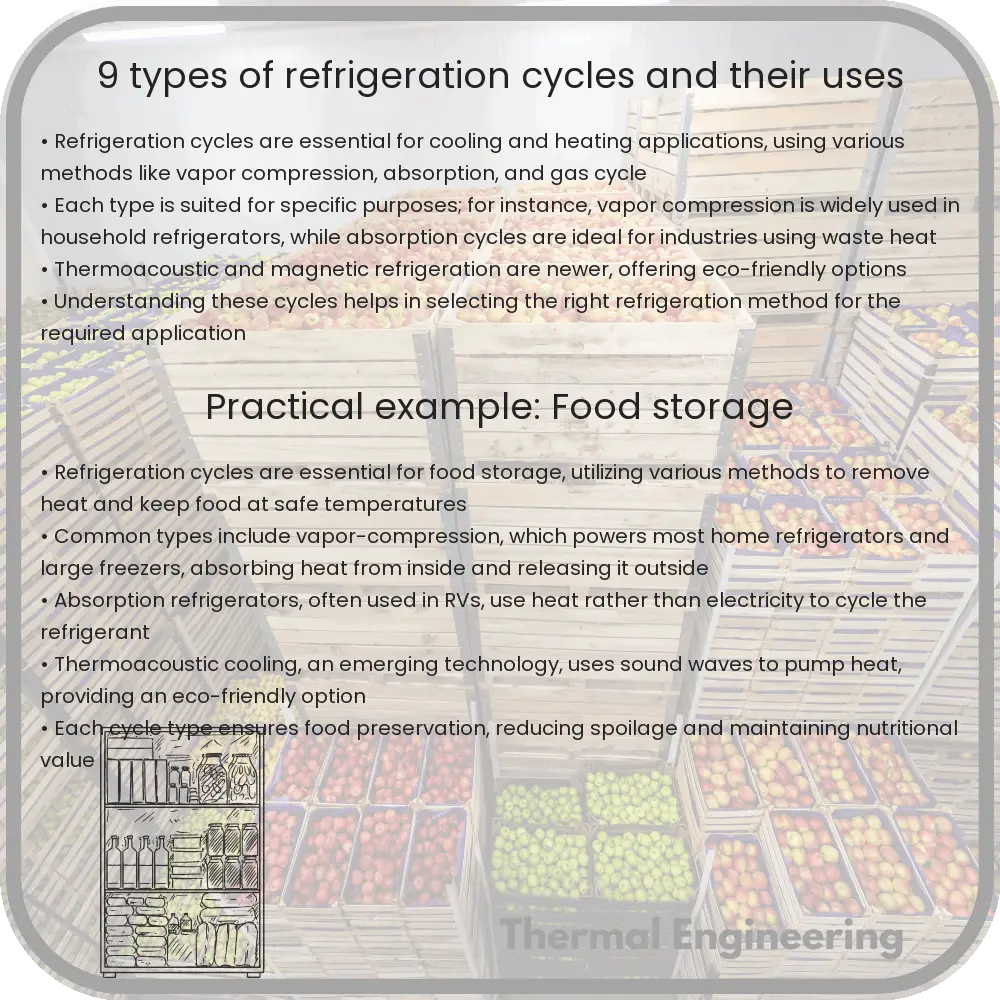
9 Types of Refrigeration Cycles and Their Uses

Learn about various refrigeration cycles, their processes, and applications in cooling systems, from household units to industrial plants.

9 Types of Refrigeration Cycles and Their Uses

Introduction to Refrigeration Cycles

Refrigeration cycles are the backbone of cooling systems found in everything from household refrigerators to industrial cooling plants. These systems employ a sequence of thermodynamic processes to remove heat from an area and dispel it elsewhere. Understanding the different types of refrigeration cycles can help in choosing the appropriate system for specific cooling needs.

Types of Refrigeration Cycles and Their Uses

There are several types of refrigeration cycles, each with unique characteristics and applications. Here are nine of the most common cycles:

  1. Vapor Compression Cycle

    The most widely used method for air conditioning of buildings and automobiles is the vapor compression cycle. It involves four key processes: compression, condensation, expansion, and evaporation. The cycle works by compressing a refrigerant, then condensing it from a gas to a liquid by removing heat through a heat exchanger, expanding it to reduce pressure, and finally evaporating it to absorb heat from the enclosed area.

  2. Absorption Refrigeration Cycle

    Unlike vapor compression, the absorption refrigeration cycle uses a heat source, such as natural gas or solar energy, to operate. The cycle absorbs heat into a liquid refrigerant, which is then evaporated to produce cooling. This cycle is particularly useful for industrial applications where waste heat is readily available.

  3. Vapor Absorption Cycle

    This cycle is similar to the absorption refrigeration cycle but typically uses water as the refrigerant and a lithium bromide solution as the absorbent. It is very effective in air-conditioning systems where electrical power is limited or expensive.

  4. Gas Cycle

    Used mainly in cryogenic applications, such as air liquefaction, the gas cycle uses helium or hydrogen as a refrigerant. The process involves compressing the gas, cooling it through expansion, and then repeating the cycle.

  5. Stirling Cycle

    The Stirling cycle is known for its high efficiency in comparison to other cycles. It is used in both cooling and heating applications and works by cyclically compressing and expanding a fixed mass of gas at different temperature levels.

  6. Ejector Cycle

    This cycle uses a jet of steam or gas to carry the refrigerant. The ejector cycle is often used in systems where reliability and simplicity are more critical than efficiency, such as in some types of air conditioning and refrigeration systems on ships.

  7. Rotary Vane Cycle

    A rotary vane compressor is at the heart of this cycle, which is commonly used in automotive air conditioning systems. The compressor pressurizes the refrigerant, which then circulates through the system to absorb and remove heat from the cabin.

  8. Screw Compression Cycle

    Similar to the rotary vane cycle, the screw compression cycle uses a screw compressor for the compression of the refrigerant. This type of cycle is typically used in larger industrial air conditioning and refrigeration systems due to its capability to handle large volumes of refrigerant.

  9. Centrifugal Compression Cycle

    Centrifugal compressors are used in this cycle, making it most suitable for very large applications such as industrial chilling plants and large commercial air conditioning systems. The refrigerant is compressed by the centrifugal force exerted by a spinning impeller.

Conclusion

Refrigeration cycles are fundamental to a wide range of cooling applications, from simple household devices to large-scale industrial systems. Each type of cycle offers distinct advantages and is suited to particular applications. By understanding these differences, engineers can design more efficient and appropriate cooling systems tailored to specific needs.

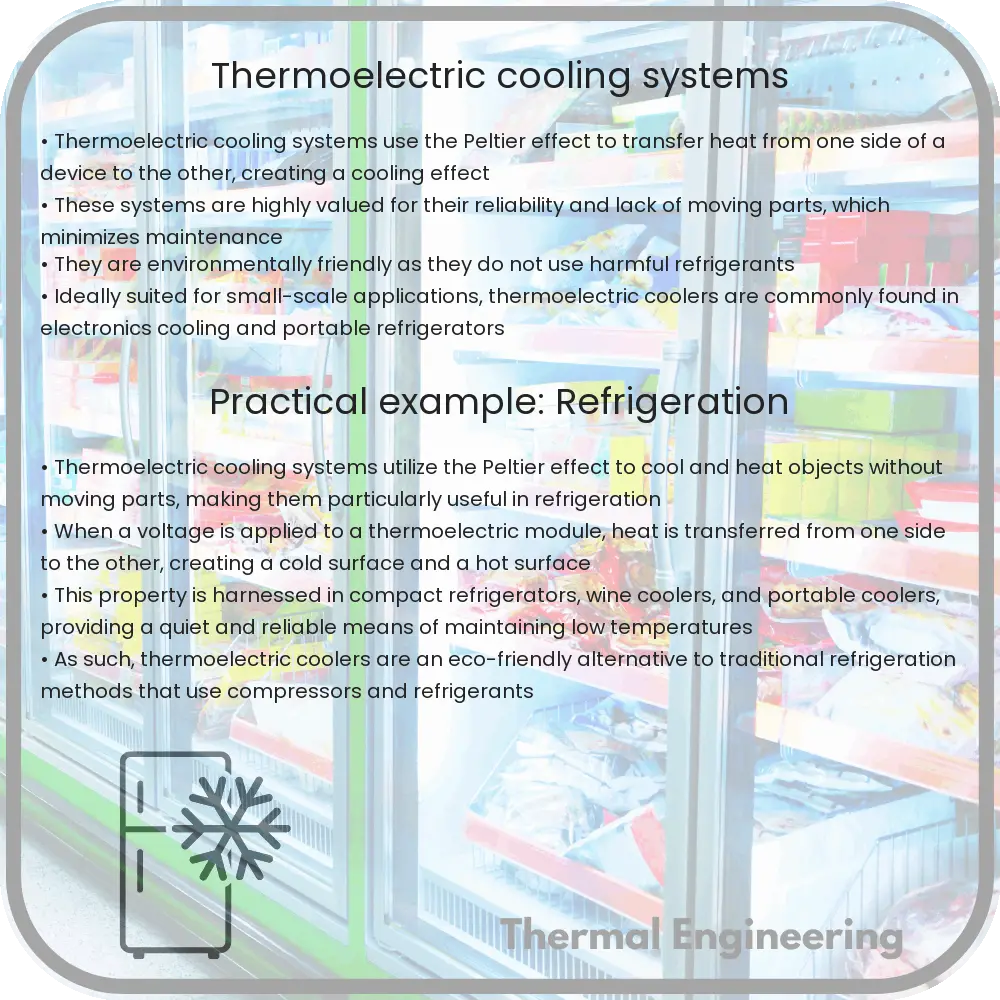
Thermoelectric cooling systems

Learn about thermoelectric cooling systems, including how they work, applications, and their advantages and disadvantages.

Thermoelectric cooling systems

Understanding Thermoelectric Cooling Systems

Thermoelectric cooling systems, also known as thermoelectric coolers (TEC) or Peltier coolers, operate on the Peltier effect, which is the occurrence of heating or cooling at an electrified junction of two different conductors. These systems are popularly used in electronic devices, wine coolers, and even some precision scientific instruments, providing a compact and reliable method of temperature control.

How Does a Thermoelectric Cooler Work?

At the heart of a thermoelectric cooling system is the Peltier module, which consists of several Peltier cells sandwiched between two ceramic plates. Each cell contains a junction of two different types of semiconductors, typically bismuth telluride or antimony bismuth telluride, connected electrically in series and thermally in parallel.

When a direct current (DC) is applied across the module, the Peltier effect kicks in, causing heat to be absorbed at one junction (the cold side) and released at the opposite junction (the hot side). This occurs because the current forces heat to transfer from one semiconductor to another, across the junction. As a result, one side of the Peltier module becomes cold, while the other side heats up rapidly.

The Role of Heat Sinks

The efficiency of a thermoelectric cooler greatly depends on how effectively the heat is removed from the hot side of the module. This is typically achieved using heat sinks, which are required to dissipate the heat away from the device. Without effective heat sinks, the Peltier module itself would quickly become saturated with heat, severely diminishing its cooling capability or even reversing its effect.

Applications of Thermoelectric Coolers

  • Electronic Components: Thermoelectric coolers help maintain optimal operating temperatures in processors and laser diodes, enhancing performance and longevity.
  • Medical Applications: TECs are used in medical devices requiring precise temperature control, such as temperature-controlled seats and beds.
  • Portable Coolers: These systems are ideal for small, portable coolers, being more compact and having fewer moving parts than traditional refrigeration units.
  • Automotive: Increasingly used in car seats to provide cooling or heating, improving comfort for passengers.

Advantages and Disadvantages of Thermoelectric Coolers

Thermoelectric coolers offer several benefits:

  • Compact and Lightweight: TECs are smaller and lighter compared to traditional cooling methods which makes them ideal for applications where space and weight are critical constraints.
  • Reliability and Longevity: With no moving parts or fluids, TECs are more reliable and require less maintenance over their operational lifetime.
  • Precise Temperature Control: They can achieve very precise temperature control, which is crucial in many scientific and industrial applications.

However, there are some drawbacks:

  • Energy Efficiency: TECs generally have lower energy efficiency compared to conventional refrigeration methods, especially at larger scales.
  • Heat Dissipation Challenges: Effective dissipation of heat from the hot side is crucial and may require additional components or systems, increasing complexity.

Conclusion

Thermoelectric cooling systems offer a unique set of capabilities that make them suitable for niche applications where space, weight, and precise temperature control are paramount. While they may not replace traditional cooling methods in all applications due to their energy efficiency and heat dissipation challenges, they continue to be invaluable in many small-scale cooling applications across various industries.

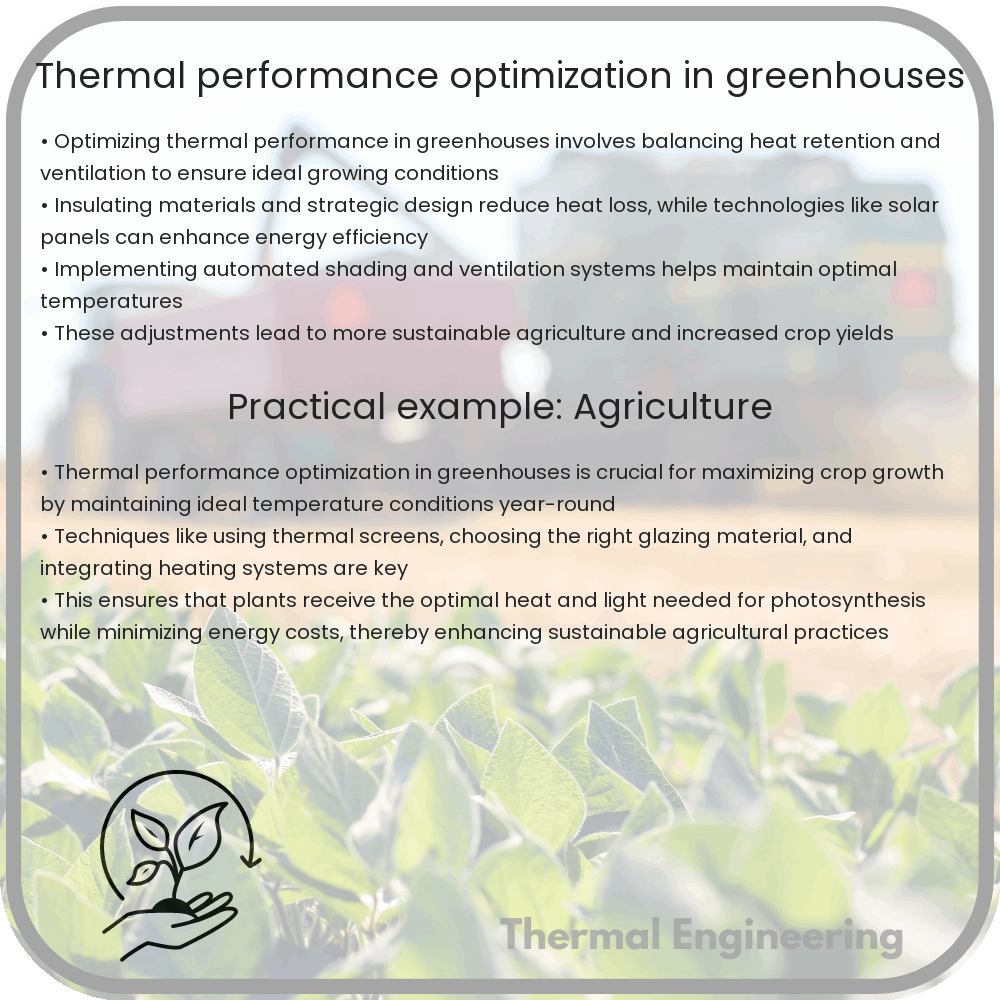
Thermal performance optimization in greenhouses

Learn how to enhance thermal performance in greenhouses for healthier plants and improved energy efficiency.

Thermal performance optimization in greenhouses

Understanding Thermal Performance Optimization in Greenhouses

Greenhouses are structures designed to optimize plant growth by creating a controlled environment. A key aspect of such control is the regulation of temperature—termed as ‘thermal performance’. Optimizing this thermal environment is crucial not only for plant health and yield but also for energy efficiency. In this article, we delve into several strategies and technologies that enhance thermal performance in greenhouses.

Fundamental Principles of Thermal Control

Thermal performance in a greenhouse is primarily influenced by the balance between heat gain and loss. This balance is affected by factors such as sunlight, external temperatures, and greenhouse construction materials. Effective thermal management seeks to maximize sunlight absorption during colder months while minimizing heat loss, and vice versa during warmer months.

Strategies for Optimizing Thermal Performance

  • Insulation: Proper insulation is crucial. Materials like polycarbonate panels or multi-layered polyethylene films are commonly used. They help in minimizing heat loss during cold periods and maintaining cooler temperatures inside during the heat of the day.
  • Thermal Mass: Using materials that absorb and store heat during warm periods and release it slowly when cooler can help stabilize temperature fluctuations. Water tanks or concrete foundations serve as effective thermal mass.
  • Shading and Cooling Systems: During hot months, the use of shades, reflective coatings, or evaporative cooling systems can reduce the internal temperature significantly.
  • Heating Systems: For colder regions, supplemental heating might be necessary. Options include radiant floor heating, hot water heaters, or biofuel systems.
  • Ventilation: Adequate ventilation is essential to control and maintain the desired temperature and humidity levels. Roof vents, side vents, or automated climate control systems can be implemented to optimize airflow.

Role of Technology in Thermal Optimization

Advancements in technology have significantly enhanced our ability to control and optimize the climate within greenhouses. These include:

  • Automated Climate Control Systems: These systems use sensors and actuators to precisely control temperature, humidity, and CO2 levels based on real-time data.
  • Smart Greenhouses: IoT (Internet of Things) technology allows for remote monitoring and management of greenhouse conditions, leading to more precise control over thermal conditions.
  • Energy-efficient Design: Modern greenhouse designs incorporate features like double-glazing and low-emissivity (low-e) glass to reduce heat loss.

Optimization Techniques and Performance Measurement

Implementing these strategies requires a thorough understanding of both plant needs and local climate conditions. It’s also essential to measure and analyze the performance to ensure that the implemented strategies are effective. Tools like thermal cameras, heat flux sensors, and energy consumption analytics are commonly used for this purpose.

By integrating these tools and strategies, greenhouse operators can significantly improve the thermal performance of their facilities, leading to better plant health and reduced energy expenditures. Continuous monitoring and adjustment based on performance data are key to maintaining optimal conditions in the dynamic environment of a greenhouse.

Ultimately, whether for small-scale gardeners or large agricultural producers, understanding and optimizing thermal performance in greenhouses can lead to more sustainable and profitable cultivation practices.

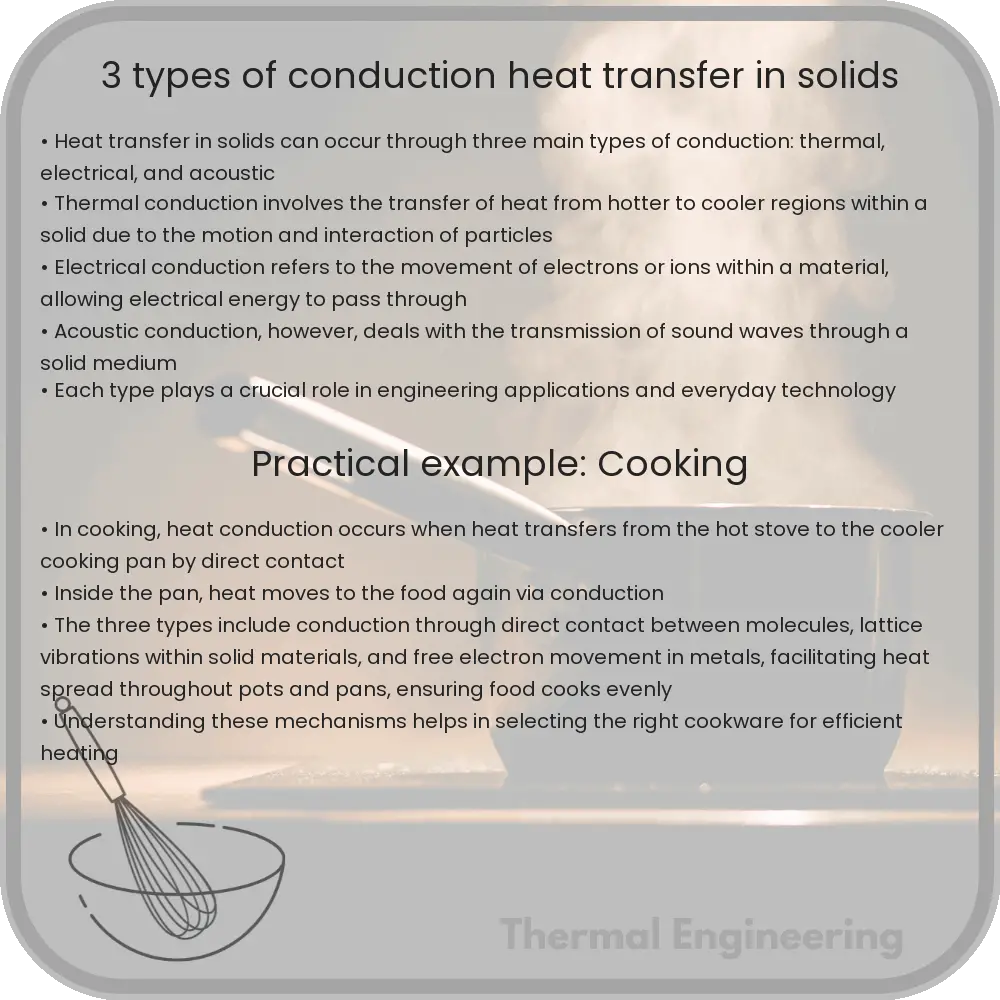
3 Types of Conduction Heat Transfer in Solids

Learn about the three types of heat conduction in solids: Fourier’s Law, heat conduction in composites, and thermal contact conductance.

3 Types of Conduction Heat Transfer in Solids

Understanding the 3 Types of Heat Conduction in Solids

Heat transfer is a fundamental concept in engineering and physics, describing how heat moves from one body or substance to another. In solids, heat transfer primarily occurs through conduction, which can be seen in various materials, including metals, ceramics, and polymers. This article delves into the three types of conduction heat transfer in solids: Fourier’s Law of Heat Conduction, Heat Conduction in Composites, and Thermal Contact Conductance.

Fourier’s Law of Heat Conduction

Fourier’s law is the most fundamental and widely used concept in heat conduction. Named after the French physicist Joseph Fourier, it describes how thermal energy is transferred across a material due to temperature differences. The law is mathematically expressed as:

q = -k * A * (dT/dx)

Where:

  • q is the heat transfer rate (in Watts, W)
  • k is the thermal conductivity of the material (in Watts per meter-Kelvin, W/m*K)
  • A is the cross-sectional area through which heat is being transferred (in square meters, m2)
  • dT/dx is the temperature gradient in the direction of the heat flow (in Kelvin per meter, K/m)

Fourier’s Law indicates that heat flows from regions of higher temperature to regions of lower temperature, and this flow rate is proportional to the temperature gradient and the material’s thermal conductivity.

Heat Conduction in Composites

Composite materials, which are made from two or more constituent materials with different physical properties, exhibit unique conduction behaviors. The overall heat conduction in composites depends on the arrangement and properties of the individual materials. Typically, engineers use effective thermal conductivity to describe the heat conduction in composites, calculated using various models such as:

  • Series Model
  • Parallel Model

The choice of model depends on the physical arrangement of the different materials in the composite. For example, the series model applies to composites with materials layered one after another, while the parallel model applies to composites with materials arranged side by side.

Thermal Contact Conductance

When two materials come into contact, the interface between them can significantly affect heat transfer. This phenomenon is described by thermal contact conductance, which depends on factors such as the surface roughness, material properties, and any interstitial materials (like thermal grease). Thermal contact resistance is especially important in electronics cooling, where components must efficiently transfer heat to heat sinks or other cooling devices.

The conductance at the interface is usually less than that of the bulk materials involved due to microscopic gaps and surface roughness, which inhibit efficient heat transfer. Enhancing thermal contact conductance is a critical aspect of design in thermal management systems to ensure adequate heat dissipation.

Conclusion

Understanding the various types of heat conduction in solids—from Fourier’s basic law to more complex behaviors in composites and at material interfaces—provides a crucial foundation for tackling thermal management challenges in engineering. Whether improving electronic device cooling or designing more efficient building materials, knowledge of heat conduction mechanisms plays an essential role in engineering better products and systems.

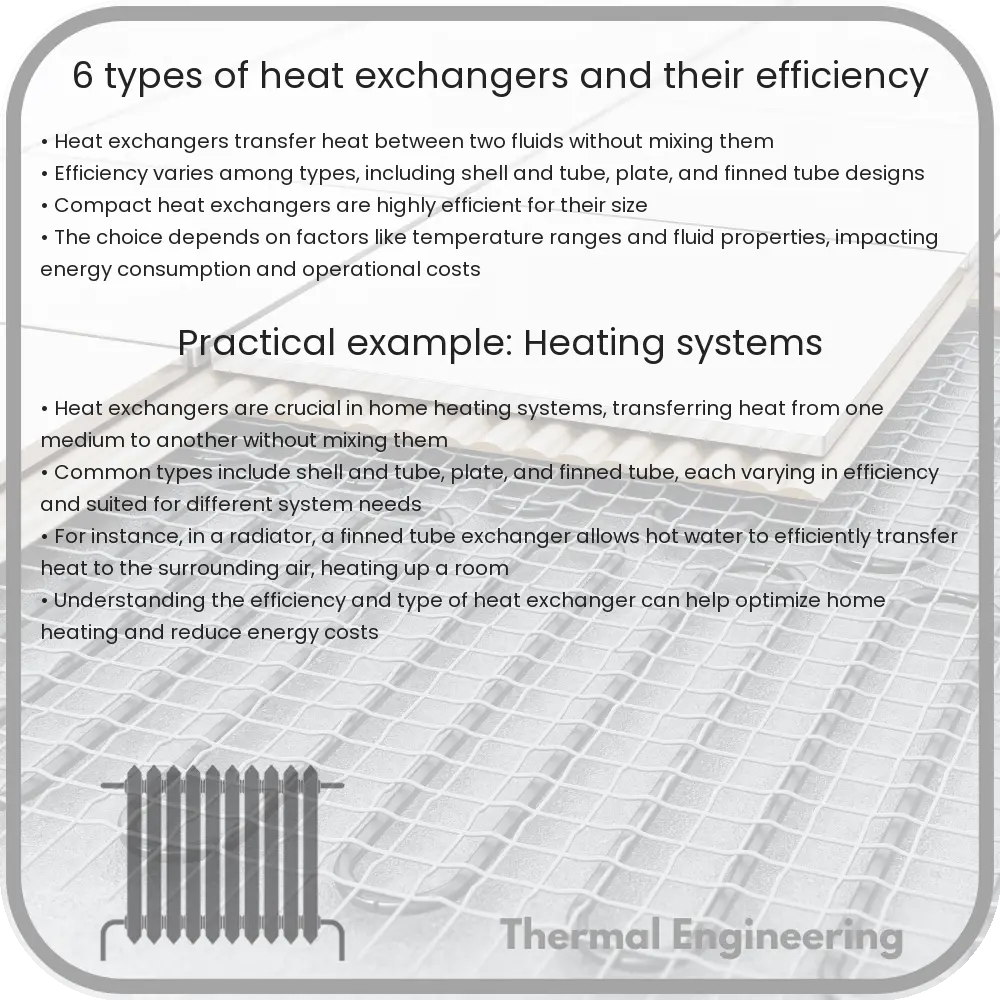
6 Types of Heat Exchangers and Their Efficiency

Learn about heat exchangers, devices essential for transferring heat between fluids in various industrial applications.

6 Types of Heat Exchangers and Their Efficiency

Introduction to Heat Exchangers

Heat exchangers are devices designed to transfer heat between two or more fluids—liquids, vapors, or gases—of different temperatures. Depending on the type of heat exchanger employed, the heat transferring process can be gas-to-gas, liquid-to-gas, or liquid-to-liquid and may occur in a direct or indirect contact manner. The efficiency of heat exchangers is a critical aspect in industrial applications, including power plants, chemical processing, HVAC (Heating, Ventilation, and Air Conditioning), and refrigeration systems. Understanding the different types of heat exchangers and their efficiency helps in selecting the right type for the right application, ensuring optimal performance.

Types of Heat Exchangers

Heat exchangers are classified into several types based on their design and operating principles. Here, we discuss six common types:

  1. Shell and Tube Heat Exchanger

    This is one of the most common types used in various industries. It consists of a series of tubes, one set carrying the hot fluid while the other carries the cold fluid. The tubes are enclosed in a shell, and heat is exchanged as one fluid flows inside the tubes and the other flows outside the tubes but inside the shell. Shell and tube exchangers are popular due to their robust design and ability to withstand high pressures.

  2. Plate Heat Exchanger

    Plate heat exchangers feature thin, corrugated plates stacked together, forming channels through which the fluids flow. The ridges of the plates create turbulent flow, promoting efficient heat transfer. These exchangers are known for their high heat transfer efficiency, compact size, and lower setup costs. They are ideal for applications with smaller volumes and lower temperature variances.

  3. Fin Tube Heat Exchanger

    Also known as finned coil heat exchangers, these devices use tubes with external fins to increase the surface area for heat exchange. Typically used in applications involving the transfer of heat from a liquid to a gas or vice versa, fin tube exchangers are commonly found in automotive radiators, air conditioning systems, and heat recovery units.

  4. Air Cooled Heat Exchanger

    Also known as air coolers, these use fins or fans to cool the fluid by passing ambient air over the heat exchange surface. They are particularly useful in situations where water for cooling is scarce. These heat exchangers are typically employed in process, power plants, and gas compression systems.

  5. Regenerative Heat Exchanger

    This type allows the same fluid to be used both as the heating and cooling medium by storing heat temporarily before transferring it back to the fluid. Common in industrial applications involving gas heating and cooling systems, regenerative heat exchangers are highly efficient in energy recovery processes as they can capture and reuse energy.

  6. Condensers and Evaporators

    Commonly categorized as specialized types of heat exchangers, condensers and evaporators play key roles in HVAC and refrigeration. Condensers release heat from the refrigerant gas to convert it back to a liquid, while evaporators absorb heat from the environment to convert the refrigerant from a liquid to a gas.

Evaluating Efficiency of Heat Exchangers

The efficiency of heat exchangers is often gauged by their ability to transfer heat without significant energy losses. Factors influencing the efficiency include the surface area, flow arrangement, and temperature gradients. Engineers use a dimensionless number, known as the effectiveness (\(\epsilon\)), to describe the performance of a heat exchanger. It is defined as the ratio of the actual heat transfer to the maximum possible heat transfer:

\[ \epsilon = \frac{Q_{actual}}{Q_{max}} \]

where \( Q_{actual} \) is the actual heat transferred and \( Q_{max} \) is the maximum possible heat transfer under ideal conditions. Higher values of \(\epsilon\) indicate more efficient heat exchanger operations.

Choosing the right type of heat exchanger and considering factors like fluid properties, pressure drops, and operational environments is essential for maximizing efficiency and meeting specific application requirements. With advancements in technology, materials, and design, the efficiency of heat exchangers is continually improving, contributing to more sustainable and cost-effective thermal management systems in various industries.