Facebook Instagram Youtube Twitter

4 Types of Thermal Radiation in Everyday Life

Learn about thermal radiation, a key form of electromagnetic radiation, its everyday implications and applications in fields like solar energy, heating systems, and more.

4 Types of Thermal Radiation in Everyday Life

Introduction to Thermal Radiation

Thermal radiation, often simply referred to as heat radiation, is a form of electromagnetic radiation that all objects emit based on their temperatures. Unlike conduction and convection, thermal radiation does not require any medium to transfer energy. It plays a crucial role in various everyday phenomena and engineering applications. Here, we explore four common types of thermal radiation that play a significant role in our daily lives.

1. Solar Radiation

Solar radiation is perhaps the most well-known form of thermal radiation interacting with the Earth. It originates from the sun and travels through space to reach our planet. This radiation is responsible for providing the light and heat necessary for life to thrive on Earth. It’s composed of a range of electromagnetic wavelengths, including infrared (IR), visible light, and ultraviolet (UV) rays. The absorption, reflection, and dispersion of these rays have critical implications for climate and weather patterns, as well as for various forms of solar energy technologies.

2. Radiant Heating Systems

Radiant heating systems are a practical application of thermal radiation in residential and commercial buildings. Unlike traditional heating systems that heat air (convection), radiant systems emit infrared radiation which directly heats objects and people in the room. Common forms of radiant heating include underfloor heating systems and infrared heaters. These systems are appreciated for their efficiency and the even, comfortable warmth they provide without stirring up allergens and dust.

3. Thermal Imaging

Thermal imaging cameras are devices that detect and translate thermal energy (infrared radiation) emitted by objects into visible light to analyze a particular scene or environment. These cameras are invaluable in several fields, from security and surveillance to diagnostic procedures in healthcare. They allow for the visualization of heat differences even in complete darkness, making them essential in firefighting, building inspections, and wildlife research.

4. Heat Emission from Appliances

Everyday appliances like refrigerators, ovens, and computers emit heat as they operate. This heat is a form of thermal radiation and results from energy being converted from one form to another, typically from electrical energy into thermal energy. This type of radiation is subtly present in our daily environment, influencing the ambient temperature within our living spaces and potentially impacting the effectiveness and efficiency of these devices.

Conclusion

Understanding the various types of thermal radiation can help us better appreciate how heat interacts with our environment and how it affects both natural processes and human-designed systems. From the warmth of the sun to the heat emitted by a computer, thermal radiation is a fundamental aspect of our daily experiences and the technologies we rely on.
4 Types of Heat Flux Sensors for Thermal Analysis

Learn about heat flux sensors, essential tools in thermal analysis used to measure heat transfer rates across surfaces in various applications.

4 Types of Heat Flux Sensors for Thermal Analysis

Understanding Heat Flux Sensors: Types and Applications

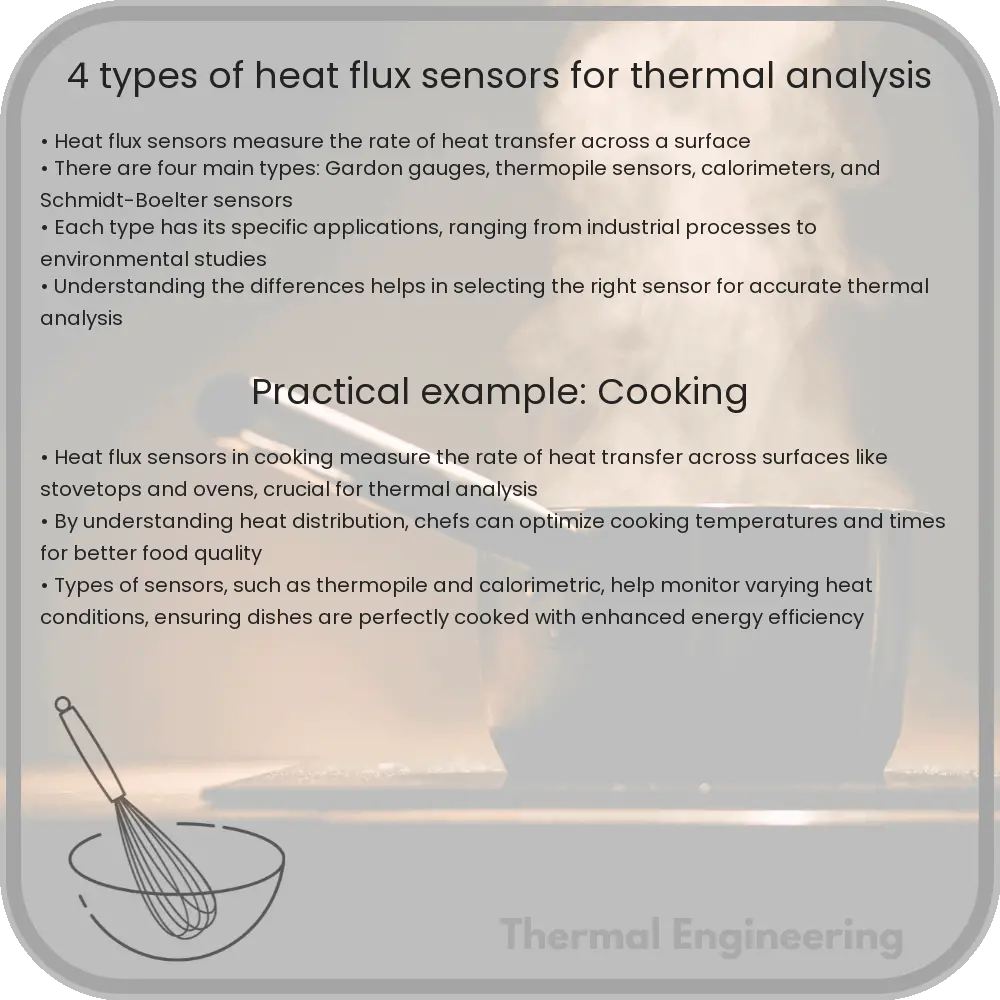
Heat flux sensors are essential devices used in thermal analysis to measure the rate of heat transfer through a surface per unit area. These sensors are crucial in various fields, including engineering, environmental studies, and material sciences, providing data needed to analyze thermal properties and behaviors. This article explores four primary types of heat flux sensors commonly used for different thermal analysis applications.

1. Gardon Gauge Sensors

Gardon gauges, also known as circular foil gauges, consist of a thin metallic circular foil attached to an insulating material. Heat flux is deduced by measuring the temperature difference across the foil. The sensor is calibrated so that the heat flux (\(q\), measured in W/m2) is proportional to the measured temperature difference (\(\Delta T\)) as given by the equation:

\[ q = K \times \Delta T \]

where \( K \) is the calibration constant specific to the sensor. Gardon gauges are especially useful in applications with high heat fluxes, such as in combustion research or heat transfer studies in engines.

2. Schmidt-Boelter Sensors

Schmidt-Boelter sensors are widely recognized for their accuracy and dynamic response. Similar to Gardon gauges, they measure the heat flux based on the temperature difference across a thermally conductive foil. However, their design, typically a water-cooled body with thermocouple junctions, allows for more precise measurements under varying environmental conditions. These sensors are particularly effective in environments where the heat flux is moderate to high, such as in fire safety testing and meteorological research.

3. Thermopile Heat Flux Sensors

Thermopile sensors use several thermocouple junctions connected in series or parallel to convert a temperature difference across the sensor into an electrical voltage. This voltage output is then used to calculate the heat flux. Thermopile sensors are known for their sensitivity and are suitable for a wide range of applications, from studying human skin’s response to heat to solar panel evaluations. The general principle of operation is shown below:

\[ V = S \times \Delta T \]

where \( V \) is the voltage generated, \( \Delta T \) is the temperature difference, and \( S \) is the Seebeck coefficient of the material used.

4. Heat Flux Microsensors (HFM)

Heat Flux Microsensors are miniaturized devices that offer high resolution and quick response times. HFMs often employ a thin-film thermopile that absorbs heat and generates a voltage proportional to the heat flux. These sensors are extremely useful in microscale heat transfer applications, such as in integrated circuits or small-scale energy systems studies, where precise measurement of localized heat flux is critical.

Conclusion

Choosing the correct type of heat flux sensor depends on several factors including the expected range of heat fluxes, environmental conditions, and required sensitivity. By understanding the functional principles and applications of these sensors, engineers and researchers can better design experiments and systems to accurately measure and analyze heat transfer, ultimately improving performance and efficiency across various applications.

5 Types of Heat Transfer Applications in Industry

Learn how heat transfer is essential in various industrial processes, enhancing efficiency and safety across sectors.

5 Types of Heat Transfer Applications in Industry

Understanding Heat Transfer in Industrial Applications

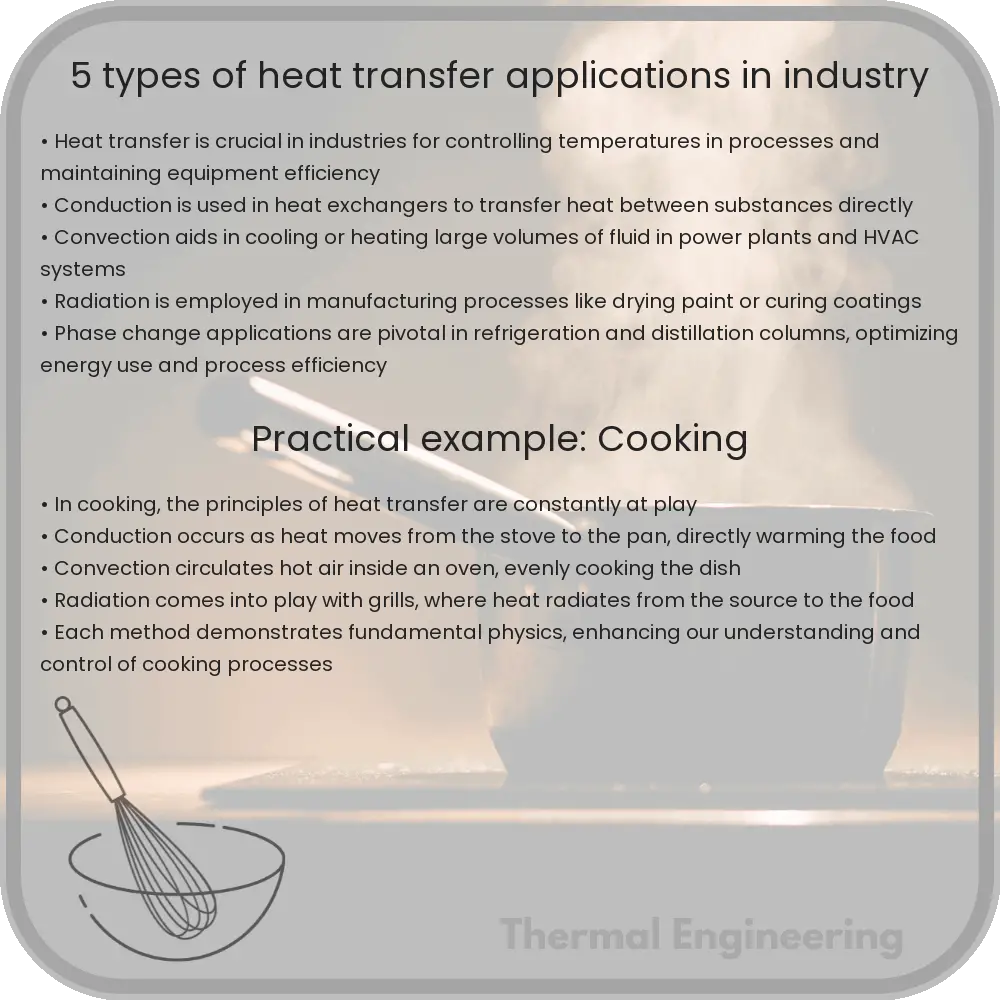
Heat transfer is a fundamental concept in physics and engineering that describes the movement of heat energy from one place to another. It plays a crucial role in various industrial processes where heating or cooling is necessary. Understanding how heat transfer works and its practical applications can enhance efficiency and safety in industrial operations. Here are five types of heat transfer applications commonly seen in industries.

1. Cooling Systems in Power Plants

Power plants, especially those using nuclear or thermal energy sources, rely heavily on cooling systems to maintain optimal operating temperatures and ensure safety. Heat exchangers are pivotal in transferring heat away from the reactor core or steam generators to a cooling medium (often water), which is then cooled in large cooling towers. This process involves both convection (transfer of heat through a fluid moving due to a temperature difference) and conduction (heat movement through direct contact between materials).

2. Heat Exchangers in Chemical Processing

Chemical industries use heat exchangers extensively to control the temperatures of reactions or to recover heat from exhaust gases for energy efficiency. Types of heat exchangers like shell and tube, plate, or air cooled are utilized depending on the process requirements. These setups allow transfer of heat between two fluids without them coming into direct contact, predominantly through convection and conduction mechanisms.

3. Refrigeration and Air Conditioning

Refrigeration and air conditioning are prime examples of heat transfer applications using evaporation and condensation processes. These systems absorb heat through the evaporation of a refrigerant at low pressure and release it by condensing the refrigerant at high pressure in another location. This cycle is essential in various industries for product storage (like food and pharmaceuticals) and providing comfortable indoor environments in commercial buildings and residential areas.

4. Food Industry Applications

Heat transfer is vital in the food industry for processes such as pasteurization, baking, frying, and freezing. Efficient transfer of heat helps in ensuring food safety, enhancing taste, and prolonging shelf life. Different heat transfer methods including conduction (e.g., grilling), convection (e.g., baking), and radiation (e.g., broiling) are strategically used to achieve desired food qualities.

5. Thermal Power Generation

In thermal power stations, heat from combustion or other sources is used to heat water in boilers, creating steam that drives turbines connected to electric generators. The concept of radiation (transfer of energy by electromagnetic waves) comes into play along with convection and conduction, as the heat source (often burning coal, gas, or oil) emits energy that converts water into steam, subsequently used to generate power.

Each of these applications showcases the principles of heat transfer in action, highlighting their importance across different sectors. By efficiently managing heat transfer, industries can improve safety, enhance performance, and reduce operational costs, making it a vital area of study in both physics and engineering.

7 Types of Thermodynamic Processes for Energy Systems

Explore the role of thermodynamic processes in optimizing energy systems, covering isobaric, isochoric, and more.

7 Types of Thermodynamic Processes for Energy Systems

Understanding Thermodynamic Processes in Energy Systems

In the world of engineering and physics, thermodynamics plays a crucial role, particularly when it comes to designing and optimizing energy systems. Thermodynamics is the study of heat, work, and the forms of energy transformation. These transformations are governed by different types of processes, each with unique characteristics and laws. Understanding these processes is essential for engineers and scientists working to innovate and improve energy systems. Here, we explore seven fundamental types of thermodynamic processes that are foundational to energy systems.

Isobaric Process (Constant Pressure)

An isobaric process is one in which the pressure remains constant while the volume and temperature of the system can change. In practical terms, this kind of process is typical in systems where the environment constrains pressure, such as gas contained in a piston that is allowed to expand or compress at a constant external pressure. The work done by the system can be expressed as:

Work \( W = P \Delta V \)

where \( P \) is the constant pressure, and \( \Delta V \) is the change in volume.

Isochoric Process (Constant Volume)

An isochoric process, also known as an isometric or volumetric process, occurs when the system’s volume remains unchanged, and hence no work is done (since \( \Delta V = 0 \)). The change in the system mainly involves variations in pressure and temperature. This process is often visualized in the context of a sealed, rigid container where heat can be added or removed, affecting the temperature and pressure inside the container.

Isentropic Process (Adiabatic and Reversible)

An isentropic process is both adiabatic and reversible, implying that no heat is transferred to or from the system, and the process can be reversed without changing the entropy of the universe. In practical terms, this idealized process is significant in designing highly efficient systems, such as reversible engines or compressors. The relation often used in calculations is:

\( PV^\gamma = \text{constant} \)

where \( P \) is the pressure, \( V \) the volume, and \( \gamma \) (gamma) the specific heat ratio of the gas involved.

Isothermal Process (Constant Temperature)

In an isothermal process, the system’s temperature remains constant. Changes in other state variables such as volume and pressure occur in such a way that the internal energy of the system remains unchanged. This process is typical when the system is kept at a constant temperature by a heat reservoir. The work done during an isothermal process for an ideal gas can be described by:

\( W = nRT \log(\frac{V_2}{V_1}) \)

where \( n \) is the number of moles, \( R \) the ideal gas constant, and \( V_1 \) and \( V_2 \) the initial and final volumes, respectively.

Adiabatic Process (No Heat Transfer)

During an adiabatic process, no heat is exchanged with the surroundings. This implies that all the work done by or on the system results exclusively from changes in the system’s internal energy. These processes can occur rapidly or in systems that are effectively insulated from their environment. The relationship between pressure and volume during an adiabetic process can be characterized by:

\( PV^\gamma = \text{constant} \)

Throttling Process (Enthalpy Constant)

A throttling process, or Joule-Thomson expansion, results in a drop in pressure of a fluid flowing through a valve or other restriction while maintaining a constant enthalpy. This process is crucial in air conditioning and refrigeration cycles. There is no work done, and changes occur mainly in temperature and pressure without a change in the system’s total energy (enthalpy).

Polytropic Process

A polytropic process is a thermodynamic process that follows the law:

\( PV^n = \text{constant} \)

where \( n \) is the polytropic index, which depends on the specific properties of the process. It generalizes several other processes, as different values of \( n \) represent different processes (e.g., isothermal, adiabatic). This type of process is adaptable and frequently used in calculations involving heat engines, compressors, and expansion of gases in various engineering applications.

Each of these processes offers essential insights into the behavior of energy systems under different conditions. Understanding these processes allows engineers to design more efficient and effective energy solutions, reflecting the profound influence that thermodynamics has on everyday life and technological advancement.

8 Types of Condensation in Fluid Dynamics

Learn about the eight key types of condensation crucial for applications in fluid dynamics and engineering, from homogeneous to frost condensation.

8 Types of Condensation in Fluid Dynamics

Understanding the 8 Types of Condensation in Fluid Dynamics

Condensation is a fundamental concept in fluid dynamics and thermodynamics, involving the change of the physical state of matter from a gas phase into a liquid phase. This process is crucial in various engineering applications, including industrial refrigeration, climate control systems, and the design of energy-efficient buildings. Here we explore eight distinct types of condensation that have significant practical and theoretical importance.

1. Homogeneous Condensation

Homogeneous condensation occurs throughout the volume of the vapor without any surfaces or particles acting as a catalyst. This type of condensation typically happens in supersaturated vapors when the temperature of the entire vapor mass is uniformly reduced below its dew point.

2. Heterogeneous Condensation

Heterogeneous condensation occurs on surfaces or particles within the vapor. It is more common than homogeneous condensation because impurities, surfaces, and airborne particles typically exist in natural and industrial environments, serving as nucleation sites for condensation.

3. Dropwise Condensation

In dropwise condensation, vapor condenses into tiny droplets on a surface. This type of condensation is highly efficient in transferring heat due to the smaller contact area between the droplets and the surface, which accelerates heat transfer compared to filmwise condensation.

4. Filmwise Condensation

Filmwise condensation occurs when a continuous film of liquid is formed on the surface. This type is often seen on smooth and non-wetting surfaces. Although less efficient in heat transfer than dropwise condensation, it is more predictable and easier to model analytically.

5. Marangoni Condensation

Marangoni condensation is influenced by variations in surface tension, which can be induced by temperature gradients along the interface where condensation occurs. This type of condensation leads to an enhanced mass transfer rate due to the motion induced by surface tension gradients.

6. Steam Condensation

Steam condensation is particularly vital in power generation and refrigeration systems. It typically occurs within boilers and steam turbines, where the condensation process is crucial for efficient steam cycle operation.

7. Deliquescence

Deliquescence describes the process by which a substance absorbs moisture from the atmosphere until it dissolves into a solution. Common in salts like calcium chloride, this phenomenon is crucial in chemical industries and in controlling humidity.

8. Frost Condensation

Frost condensation happens when the dew point of air is below the freezing point of water, leading to the direct deposition of ice crystals on colder surfaces instead of forming liquid water. This type has implications for cold climates and refrigeration technologies.

The understanding of these different types of condensation is essential in engineering because it helps in the design of more efficient systems for heat transfer, energy conservation, and environmental control. Each type of condensation has unique characteristics that need specific strategies for optimization and application in real-world scenarios.

9 Types of Thermal Power Conversion Systems

Learn about thermal power conversion systems, their types, and how they transform heat into electricity for various applications.

9 Types of Thermal Power Conversion Systems

Introduction to Thermal Power Conversion Systems

Thermal power conversion systems are the cornerstone of energy production, utilizing heat to produce electricity that powers our cities, industries, and homes. These systems primarily convert thermal energy into mechanical power, which is then turned into electrical power through generators. This article introduces nine common types of thermal power conversion systems, each with unique mechanisms and applications.

1. Steam Turbine Systems

Steam turbine systems are among the most common and widely used methods of power generation. They operate by boiling water to create steam, which then expands and moves through a turbine to produce electricity. The key components include boilers, steam turbines, and generators.

2. Gas Turbine Systems

Gas turbines function similarly to steam turbines, but they use high-pressure gas instead of steam as the working fluid. These are particularly used in plants where quick startup is required and commonly found in combined cycle plants and jet engines.

3. Combined Cycle Power Plants

Combined cycle systems enhance natural gas usage through improved efficiency. They combine gas turbines with steam turbines, where the waste heat from the gas turbine heats water, creating steam to generate additional electricity.

4. Cogeneration (CHP) Systems

Cogeneration, or combined heat and power (CHP), integrates the production of usable heat and power (electricity) in one single, highly efficient process. These systems use excess thermal energy, which would otherwise go to waste in electricity-only generation.

5. Organic Rankine Cycle (ORC) Systems

Using an organic fluid with a low boiling point instead of water, ORC systems can effectively convert low-grade waste heat into electricity, popular in biomass, geothermal power, and waste heat recovery applications.

6. Molten Salt Power Plants

Molten salt power plants specialize in storing solar power. They use molten salts to capture and store heat during the day, which can be used to generate steam and power turbines when direct sunlight isn’t available.

7. Nuclear Power Plants

Nuclear power plants use the heat from nuclear fission to boil water into steam, which then drives steam turbines to produce electricity. Despite concerns over radioactive waste and safety, it remains a significant source of low-carbon electricity.

8. Geothermal Power Plants

Geothermal power plants harness natural thermal energy found beneath the Earth’s surface. The steam or hot water from underground reservoirs is used to operate turbines that generate electricity.

9. Biomass Power Plants

Biomass power plants burn organic materials such as wood, agricultural waste, and biogas to generate heat, which produces steam for electricity production. These plants are considered renewable energy sources as they use plant-based materials.

Conclusion

Thermal power conversion systems are integral to modern power generation, each with specialized mechanisms tailored to different energy sources and requirements. From utilizing renewable resources like biomass and geothermal to harnessing advanced technologies in nuclear and combined cycle plants, these systems provide a diverse suite of options for the efficient production of electricity.

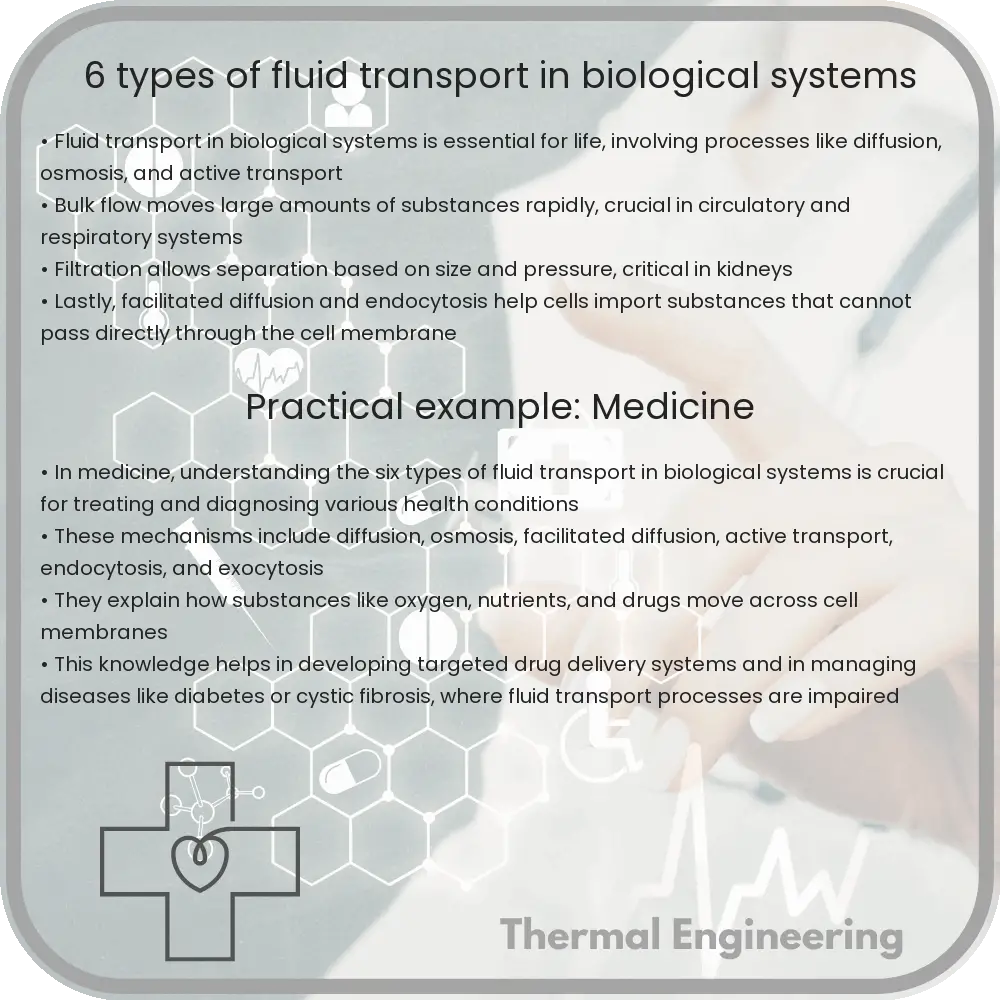
6 Types of Fluid Transport in Biological Systems

Understanding fluid transport mechanisms in biological systems for nutrient uptake, waste removal, and cellular function.

6 Types of Fluid Transport in Biological Systems

Introduction to Fluid Transport in Biological Systems

Fluid transport in biological systems is essential for the maintenance of life. These systems utilize a variety of mechanisms to move fluids, which include water, nutrients, gases, and waste products, to and from cells and tissues. This process supports a range of functions from nutrient uptake to waste removal, and understanding these mechanisms offers insights into basic biological processes and potential medical innovations.

1. Diffusion

Diffusion is the passive movement of molecules from an area of high concentration to an area of low concentration until equilibrium is reached. In biological systems, diffusion is crucial for the exchange of gases (like oxygen and carbon dioxide) and small molecules across cell membranes.

2. Osmosis

Osmosis is a specific type of diffusion that involves the movement of water across a semi-permeable membrane from an area of low solute concentration to an area of high solute concentration. This process is vital for maintaining proper hydration and nutrient balance within cells and tissues.

3. Facilitated Diffusion

Unlike simple diffusion, facilitated diffusion requires the help of protein channels or carriers embedded in cellular membranes. This mechanism allows the passive transport of substances (such as glucose and ions) that cannot diffuse freely across the membrane due to their size or polarity.

4. Active Transport

Active transport is the energy-consuming process of moving molecules across a cell membrane against their concentration gradient. This is achieved through transport proteins like pumps, consuming ATP as an energy source. Active transport is crucial for maintaining cellular concentrations of ions like sodium, potassium, and calcium.

5. Bulk Transport

Bulk transport involves the movement of large particles or large volumes of fluids into and out of cells without crossing the plasma membrane directly. This type of transport is categorized into two processes: endocytosis (intake of external substances by enclosing them in a membrane vesicle) and exocytosis (expelling materials from the cell into the extracellular space).

6. Transpiration

In plants, transpiration is a crucial process where water is transported from roots to aerial parts of the plant and eventually evaporated into the atmosphere from leaf surfaces. This not only helps in nutrient uptake and cooling of the plant but also creates a pull that aids in the upward movement of water from the roots.

Conclusion

Understanding these fluid transport mechanisms in biological systems unveils the complex and dynamic nature of living organisms. It highlights how various transport methods are tailored to specific needs, ensuring survival in diverse environments. Studying these systems gives valuable insights into biological functions and potential applications in medicine, agriculture, and biotechnology.

5 Types of Heat Absorbing Glass for Buildings

Learn about heat absorbing glass and its role in enhancing building energy efficiency and occupant comfort.

5 Types of Heat Absorbing Glass for Buildings

Introduction to Heat Absorbing Glass

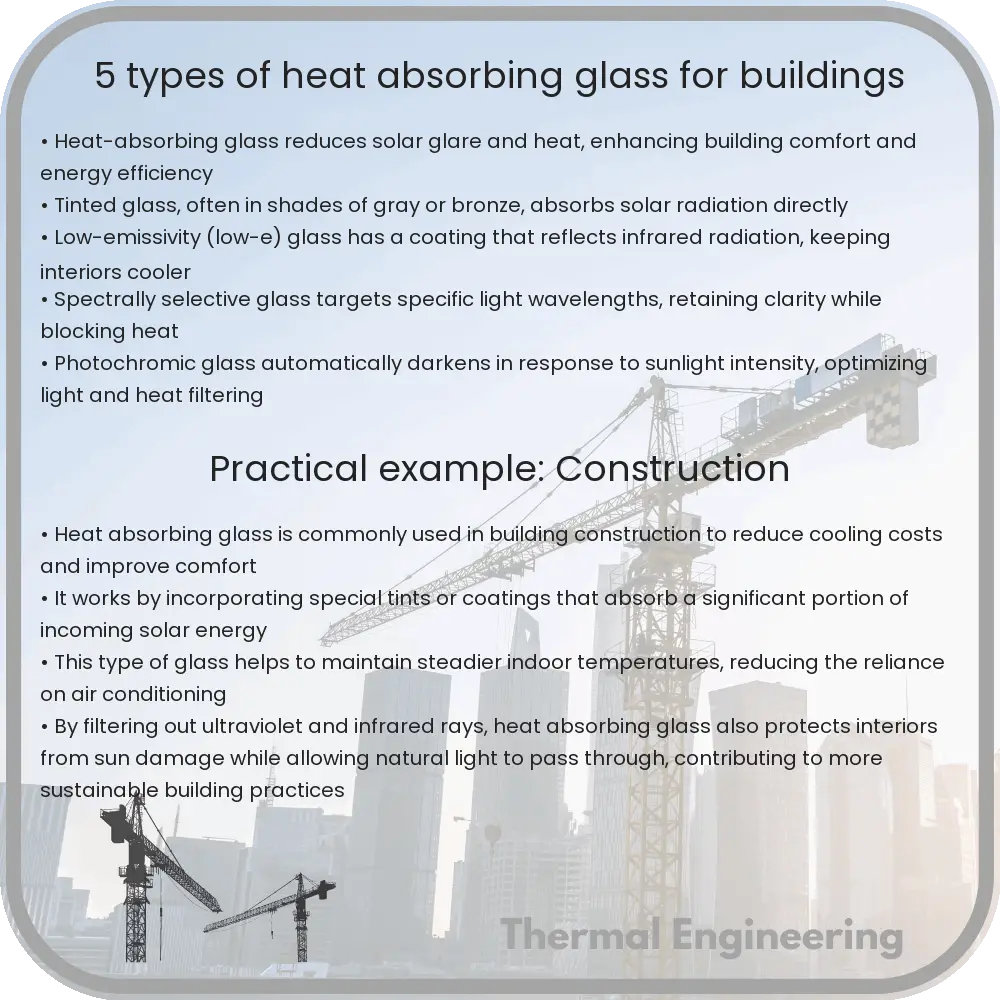
Heat absorbing glass is a crucial component in modern building design, particularly in regions experiencing high temperatures and intense sunlight exposure. These specialized types of glass help in managing indoor temperatures, reducing cooling costs, and enhancing occupant comfort. By absorbing and reflecting solar heat, this glass plays a vital role in energy efficiency and environmental sustainability of buildings.

1. Tinted Glass

Tinted glass achieves its heat-absorbing properties through the addition of colorants during the glass manufacturing process. Common colors include bronze, grey, green, and blue. These additives help the glass absorb a significant amount of the incoming solar radiation, thereby reducing the heat transmitted into the building. Tinted glass not only lowers energy costs by reducing air conditioning needs but also minimizes glare for improved indoor comfort.

2. Coated Glass

Coated glass, particularly solar control coated glass, is coated with a thin layer of metallic or non-metallic materials on one side. These coatings are designed to reflect and absorb solar radiation. There are two main types of coated glass: passive coatings, designed to maximize solar heat absorption, and solar control coatings, which reflect solar radiation. This type of glass is effective not only in heat reduction but also in blocking harmful UV rays while maintaining adequate light transmittance.

3. Low-Emissive (Low-E) Glass

Low-emissivity glass has a microscopically thin, transparent coating that reflects thermal radiation or heat. The low-E coatings help in keeping the heat inside during the winter and outside during the summer, making this type of glass ideal for climate-controlled buildings. The effectiveness of low-E glass in blocking solar heat gain is measured by its solar heat gain coefficient (SHGC), which is typically lower than that of standard glass.

4. Insulated Glass Units (IGUs)

Insulated Glass Units consist of two or more glass panes spaced apart and hermetically sealed, creating an insulated air space between the panes. This configuration helps in reducing the heat transfer due to conduction and convection. IGUs can be combined with other heat-absorbing and low-E coatings to enhance their performance, making them highly effective in energy conservation and noise reduction.

5. Smart Glass or Electrochromic Glass

Smart glass, also known as electrochromic glass, represents the cutting edge of heat absorbing glass technology. This glass can change its light transmission properties based on the electrical voltage applied, allowing control over the amount of heat and light passing through. This characteristic makes smart glass extremely useful in optimizing indoor environments, achieving significant energy efficiencies by reducing reliance on air conditioning and artificial lighting.

Conclusion

The development of specialized heat absorbing glass types offers significant benefits in terms of energy efficiency, comfort, and environmental impact. From tinted and coated glass to innovative solutions like smart glass, these technologies continue to evolve, playing a critical role in modern architectural design. Choosing the right type of heat absorbing glass can dramatically enhance the performance and sustainability of any building project.

3 Types of Turbine Blade Cooling Techniques

Explore turbine blade cooling techniques like convective, transpiration, and film cooling to enhance the efficiency of gas turbines.

3 Types of Turbine Blade Cooling Techniques

Understanding Turbine Blade Cooling Techniques

Turbine blades play a critical role in the operation of gas turbines, which are widely used in power generation and aircraft engines. These blades are subjected to extreme temperatures and pressures, which can lead to thermal stress and ultimately failure. To enhance the efficiency and lifespan of turbine blades, various cooling techniques have been developed. Here, we explore three primary methods used to cool turbine blades: convective cooling, transpiration cooling, and film cooling.

1. Convective Cooling

Convective cooling is one of the simplest and most commonly used methods for reducing blade temperatures. This technique involves passing a coolant, usually air, through internal channels within the blade. The coolant absorbs heat from the blade material as it flows through these channels and is then expelled.

  • Internal Cooling Channels: These are specifically designed to maximize the surface area in contact with the coolant, enhancing heat transfer.
  • Turbulators: Often added inside the channels, turbulators disturb the coolant flow, which increases turbulence and improves the efficiency of heat transfer.

2. Transpiration Cooling

Transpiration cooling, also known as effusion cooling, involves multiple tiny holes in the turbine blades through which coolant is forced. This method provides a more uniform cooling effect compared to convective cooling.

  • Porous Surface: The blade is made with a porous material or is machined to include numerous micro-holes, allowing coolant to seep through them.
  • Continuous Cooling Layer: As the coolant escapes through these small holes, it forms a thin, continuous layer over the blade surface that protects the blade from the high temperatures of the gases passing over it.

3. Film Cooling

Film cooling is a sophisticated technique where coolant is ejected through strategically placed holes on the surface of the turbine blade. The coolant exits these holes and forms a thin film between the blade surface and the hot gases, thereby reducing the temperature of the blade.

  • Injection Holes: These are typically placed in rows and can be aligned in various patterns, depending on the specific requirements of the blade and turbine operation.
  • Protective Film: The coolant forms a protective barrier that drastically reduces heat transfer from the hot gases to the blade surface.
  • Coolant Effectiveness: The effectiveness of film cooling depends largely on the temperature and velocity of the coolant relative to the external hot gases, as well as the positioning and size of the injection holes.

All three cooling techniques aim to lower the temperature of turbine blades, allowing them to withstand prolonged exposure to high temperatures without compromising their structural integrity or performance. By adopting these methods, engineers can significantly increase the efficiency and lifespan of turbines, contributing to more reliable and cost-effective energy production and propulsion systems.

Temperature-dependent behavior of smart materials

Learn how temperature influences the properties and applications of smart materials in various industries.

Temperature-dependent behavior of smart materials

Understanding the Temperature-Dependent Behavior of Smart Materials

Smart materials are known for their ability to respond to changes in their environment in a predictable and useful manner. One of the most significant external factors that influence the behavior of smart materials is temperature. This sensitivity makes them valuable in a variety of applications, ranging from aerospace engineering to consumer electronics. In this article, we explore how temperatures impact the properties of smart materials and the underlying mechanisms driving these changes.

Introduction to Smart Materials

Before diving into the temperature dependencies, it is useful to define what smart materials are. Smart materials are a class of materials characterized by their ability to respond to external stimuli like heat, light, moisture, or a magnetic field in a particularly useful way. These materials can revert back to their original state once the stimulus is removed, showcasing what is referred to as “memory” behavior.

Types of Smart Materials

  • Shape Memory Alloys (SMAs): These alloys, such as Nitinol (nickel-titanium), remember their original shape and can return to it when heated above a certain temperature.
  • Piezoelectric materials: Materials that generate an electric charge in response to mechanical stress. Temperature changes can affect their piezoelectric properties.
  • Thermochromic materials: These materials change color based on temperature, commonly used in mood rings and thermal sensors.
  • Photochromic materials: Change their optical properties in response to light intensity, but can also demonstrate sensitivity to temperature changes that affect their light absorption properties.

Temperature Effects on Smart Materials

Temperature changes can influence the physical structure and bonding in smart materials, which alters their properties:

  1. Phase Transitions: In shape memory alloys, temperature increases can result in a phase change from martensite (a more malleable form) to austenite (a strong, durable form). This change is critical for applications requiring shape recovery after deformation.
  2. Electrical Resistivity: For piezoelectric materials, temperature can influence their electrical resistivity, impacting their effectiveness in sensor and actuator applications.
  3. Elasticity and Stiffness: Temperature variations can alter the elasticity and stiffness of materials, affecting their load-bearing capabilities and durability.
  4. Optical Properties: For thermochromic and photochromic materials, temperature can directly affect their color changes by altering the electronic states of the molecules involved.

Mechanisms of Temperature Dependence

The interaction between temperature and material properties typically involves several complex mechanisms:

  • Thermal Expansion: Most materials expand when heated. This dimensional change can impact the microstructure and in turn the material properties.
  • Change in Bonding: Higher temperatures can lead to a rearrangement of the molecular bonds within a material, affecting its physical and chemical properties.
  • Phase Transformation: As seen with shape memory alloys, temperature-induced phase transitions can manifest in macroscopic changes in shape or other physical properties.

Applications of Temperature-Sensitive Smart Materials

The unique properties of temperature-sensitive smart materials have opened up new possibilities across diverse fields. Some notable applications include:

  • Aerospace: Smart materials are used in the design of components that can adapt to changing temperatures, reducing the need for auxiliary temperature control systems.
  • Biomedical: Shape memory alloys are employed in stents and orthodontic wires that adapt to body temperature.
  • Consumer Products: Thermochromic inks are used in products that change color with temperature changes, offering aesthetic value or safety indicators.

In conclusion, the temperature-dependent properties of smart materials not only extend their potential uses but also highlight the need for precise control and understanding of their behavior in response to temperature changes. Ongoing research and development are expected to enhance their functionalities and introduce new applications.