Facebook Instagram Youtube Twitter

9 Types of Cooling Pads for Thermal Regulation

This article provides a detailed overview of the various types of cooling pads used in electronics and industrial applications, highlighting their functions, advantages, and suitability for different thermal management needs.

9 Types of Cooling Pads for Thermal Regulation

Introduction to Cooling Pads

Cooling pads are essential components in various engineering applications, from computers and electronics to large-scale industrial systems. Their primary function is to dissipate heat, ensuring devices operate within safe thermal limits. We explore nine common types of cooling pads, each suited for specific applications, offering unique advantages in terms of cooling efficiency, cost-effectiveness, and spatial requirements.

1. Basic Foam Pads

Foam cooling pads are lightweight and inexpensive, commonly used in personal cooling applications and smaller electronics. Despite their low cost, they are less effective at conducting heat compared to more advanced materials.

2. Metal-Filled Composite Pads

Metal-filled composite pads combine the flexibility of foam with the high thermal conductivity of metals like aluminum or copper. These pads are particularly effective in applications requiring moderate thermal conductivity and good compressibility.

3. Phase Change Material (PCM) Pads

PCM pads utilize materials that absorb and release heat through phase transitions (e.g., from solid to liquid). These pads are highly effective at managing heat spikes in electronics, as they maintain a consistent temperature while the material changes phase.

4. Graphite Pads

Graphite cooling pads offer exceptional thermal conductivity and are ideal for applications requiring efficient heat spreading over large surface areas, such as in LED lighting systems and power modules.

5. Gel Cooling Pads

Gel pads are often used in medical and consumer electronics due to their soft texture and good thermal properties. These pads can conform to irregular surfaces, providing effective heat transfer and cushioning simultaneously.

6. Air-Cooled Heat Sinks

Though not a pad in the traditional sense, air-cooled heat sinks are critical in PC cooling, avionics, and other systems where forced air is used to dissipate heat. They typically consist of a metal block with fins that increase the surface area for cooling.

7. Water Cooling Pads

Water cooling pads are part of more complex cooling systems involving the circulation of water to remove heat. These are common in high-performance computing and gaming systems where superior thermal management is necessary.

8. Thermoelectric Cooling Pads

Using the Peltier effect, thermoelectric pads create a temperature differential that transfers heat from one side of the device to the other. They are uniquely suited for applications where precise temperature control is required, such as in scientific instruments.

9. Carbon Nanotube Pads

At the cutting edge of technology, carbon nanotube (CNT) cooling pads offer top-tier thermal conductivity and mechanical stability. Due to their nano-scale structure, these pads can effectively manage heat in microelectronics where space and thermal resistance are critical factors.

Conclusion

The selection of the appropriate cooling pad type depends on several factors including thermal requirements, space constraints, budget, and specific application needs. Engineers must evaluate all these variables to choose the most effective thermal management solution. As technology advances, the development of more efficient and adaptable cooling pads is expected to continue, further enhancing device performance and longevity across various industries.

6 Types of Heat Generation in Electrical Components

Explore six common types of heat generation in electrical components, including Joule heating, dielectric losses, and more.

6 Types of Heat Generation in Electrical Components

6 Types of Heat Generation in Electrical Components

Heat generation in electrical components is an inevitable byproduct of electrical current flow. Understanding the sources and mechanisms of heat production can help in the design of more efficient and longer-lasting devices. Here are six primary types of heat generation commonly observed in electrical components:

1. Joule Heating

Joule heating, also known as resistive heating or Ohmic heating, is the most common type of heat generation in electrical circuits. It occurs when electric current flows through a resistor, converting electrical energy into thermal energy. The amount of heat generated can be calculated using the equation:

Q = I2 * R * t

  • Q is the heat energy (in Joules),
  • I is the current (in Amperes),
  • R is the electrical resistance (in ohms),
  • t is the time for which the current flows (in seconds).

2. Dielectric Losses

In materials with a dielectric nature, heat is generated due to dielectric losses. These occur because of the internal friction within the material’s molecules, which respond to an alternating electric field. Dielectric losses are frequency dependent and are especially significant in high-frequency applications like radio frequency (RF) or microwave systems.

3. Eddy Current Losses

Eddy currents are loops of electric current induced within conductors by a changing magnetic field. These currents can produce significant heat in materials that are not good electrical conductors. This form of heating is common in transformers and inductive coils. Reducing the thickness of the materials involved or using laminated cores are typical methods to minimize eddy current losses.

4. Hysteresis Losses

In ferromagnetic materials, hysteresis losses occur during the process of magnetization and demagnetization of the material in an alternating magnetic field. Each cycle of magnetization generates heat due to the energy dissipated in overcoming the magnetic domains’ resistance to change.

5. Switching Losses

Switching losses are prevalent in semiconductor devices like transistors and diodes. These losses occur during the transition between the on-state and off-state in these components. Rapid switching leads to significant power dissipation in the form of heat, particularly at high frequencies.

6. Conductor Loss

Although similar to Joule heating, conductor loss specifically refers to the heat generated in the conductors of electric power transmission lines. Resistance in these lines causes heat generation, leading to energy losses during the transmission of power over long distances. Effective grid management and the use of high-efficiency conductors are vital to minimize these losses.

Managing and mitigating heat in electrical systems is critical to maintaining efficiency and extending the lifespan of components. Engineers use various cooling techniques and heat sinks to manage the thermal load in electronic devices and systems. Understanding these heat generation mechanisms is a fundamental part of electrical design and helps to optimize the performance and reliability of electrical and electronic systems.

Temperature control in aquaponics systems

Learn how temperature control is crucial for optimizing fish health, plant growth, and bacterial activity in aquaponic systems.

Temperature control in aquaponics systems

Understanding Temperature Control in Aquaponics Systems

Aquaponics combines aquaculture (raising fish) and hydroponics (the soil-less growing of plants) to create a more efficient and sustainable agricultural method. Temperature control in aquaponics systems is critical because it affects the health and growth of both fish and plants. The right temperature ensures optimal metabolic rates for fish and ideal conditions for plant growth.

Importance of Temperature in Aquaponics

In aquaponics, temperature impacts several system components:

  • Fish Health: Each fish species has an optimal temperature range. Deviations can lead to stress, reduced immunity, and even death.
  • Plant Growth: Similar to fish, each plant species thrives at certain temperature ranges. Extreme temperatures can impair photosynthesis and nutrient uptake.
  • Bacterial Activity: Nitrifying bacteria, which convert ammonia from fish waste into nitrates for plants, have specific temperature preferences. Effective bacterial activity is crucial for maintaining water quality.

Optimal Temperature Ranges

The perfect temperature range varies based on the types of fish and plants being cultivated. However, a general guideline for many common aquaponic setups involves maintaining water temperature between 18°C (64°F) and 30°C (86°F). For instance:

  • Tilapia: Prefers temperatures between 24°C and 29°C.
  • Lettuce: Grows best around 20°C to 24°C.

Methods for Controlling Temperature

Temperature regulation in aquaponics can be achieved through several methods:

  • Insulation: Proper insulation helps to maintain a consistent temperature by reducing heat loss in colder climates and keeping the system cool under hot conditions.
  • Water Heaters and Chillers: Electric or gas heaters are used to warm the water during cold months, while water chillers can help cool the water in extreme heat.
  • Aeration: Increasing oxygen levels in the water through aeration helps stabilize the temperature and improve the overall health of the system.
  • Shade Covers: In hot climates, shade covers can prevent water from overheating due to excessive sun exposure.

Monitoring and Automation

Consistent monitoring and adjusting of water temperature are essential for the success of an aquaponics system. Modern aquaponics often utilize automated systems equipped with sensors and thermostats to continuously monitor the temperature. These systems can automatically adjust heaters and chillers to maintain the desired temperature range, ensuring optimal conditions with minimal manual intervention.

Conclusion

Effective temperature control plays a crucial role in the successful operation of aquaponics systems. By understanding the thermal needs of the fish and plants in the ecosystem and employing appropriate temperature regulation technologies, practitioners can ensure healthy growth and efficient production. Whether through low-tech solutions like insulation and shade or high-tech automation systems, maintaining the right temperature is an essential aspect of aquaponic farming.

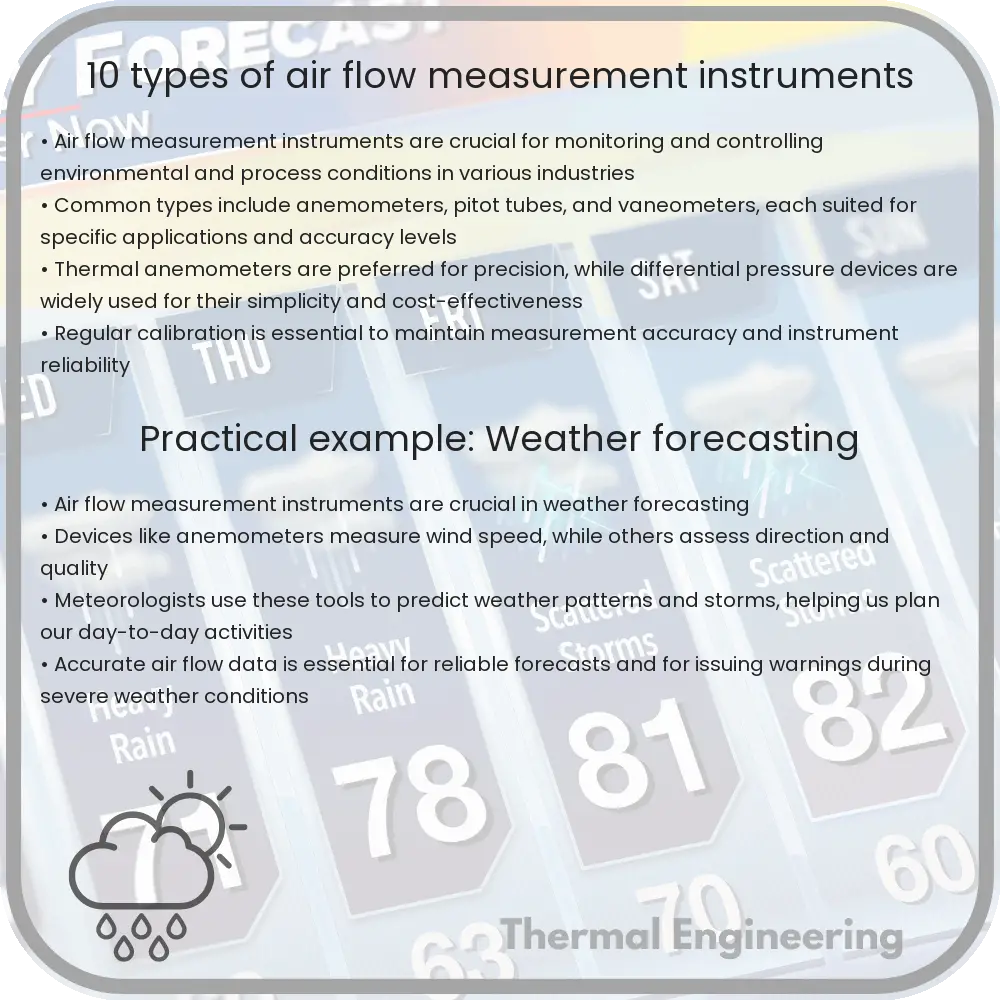
10 Types of Air Flow Measurement Instruments

Learn about the key types of air flow measurement instruments used in engineering and meteorology.

10 Types of Air Flow Measurement Instruments

10 Types of Air Flow Measurement Instruments

The measurement of air flow is essential in various applications ranging from HVAC systems in buildings to industrial processes. The accurate measurement of air flow can ensure efficiency, safety, and compliance with environmental regulations. Here are ten common types of air flow measurement instruments used in different engineering fields:

1. Pitot Tube

A Pitot tube measures the velocity of the airflow at a point in a fluid. It works on the principle of differential pressure. The device measures the difference between the static pressure and the dynamic pressure of the fluid flow. This can be converted into flow velocity if the fluid’s density is known.

2. Hot Wire Anemometers

Hot wire anemometers use a thin wire heated up to a constant temperature. The flow of air cools the wire, and the amount of electrical current required to maintain the wire’s temperature is proportional to the air velocity. They are useful for small-scale and precise measurements.

3. Vane Anemometers

Also known as wind meters, vane anemometers have a rotating vane that measures air velocity. The speed of the vane rotation correlates to the air flow speed. They are commonly used for HVAC inspections and environmental assessments.

4. Cup Anemometers

Primarily used to measure wind speed, cup anemometers have cups that capture the wind, spinning a rotor proportionally to the wind speed. These are fundamental instruments in meteorological studies.

5. Thermal Mass Flow Meters

Thermal mass flow meters calculate air flow based on the heat absorbed by the air flow from a heated element. They are highly accurate and are commonly used in industrial applications where precise gas measurements are necessary.

6. Differential Pressure Flow Meters

Differential pressure flow meters measure the pressure differential across a constriction in the pipe, which correlates to the rate of flow. Devices such as venturi tubes, flow nozzles, and orifices are often used to create the constriction.

7. Turbine Flow Meters

In turbine flow meters, the air flow causes a turbine to rotate. The rotational speed of the turbine is proportional to the velocity of the air flow. It’s widely used in both water and air flow measurements.

8. Laminar Flow Elements

Laminar flow elements measure air flow by forcing the air through a laminar flow regime. The pressure drop across the element is measured and used to calculate the air flow rate based on the known characteristics of the element.

9. Sonic Anemometers

Sonic anemometers measure the speed of sound in the environment to determine air velocity. These are highly accurate and can measure wind speed in multiple directions. They are frequently used in weather stations and research applications dealing with turbulent airflow.

10. Ori­fice Plates

Orifice plates are used within pipes and work by creating a pressure drop across an orifice. This drop is measured and used to infer the flow rate using Bernoulli’s principles. Often used in combination with diaphragm or rotary meters, they are effective in large-scale industrial applications.

Each of these instruments has its specific domain of application, influenced by cost, required accuracy, environmental conditions, and ease of installation. Understanding the working principle and appropriate context for the use of these tools is crucial for attaining reliable measurements and optimizing performance in any flow measurement setup.

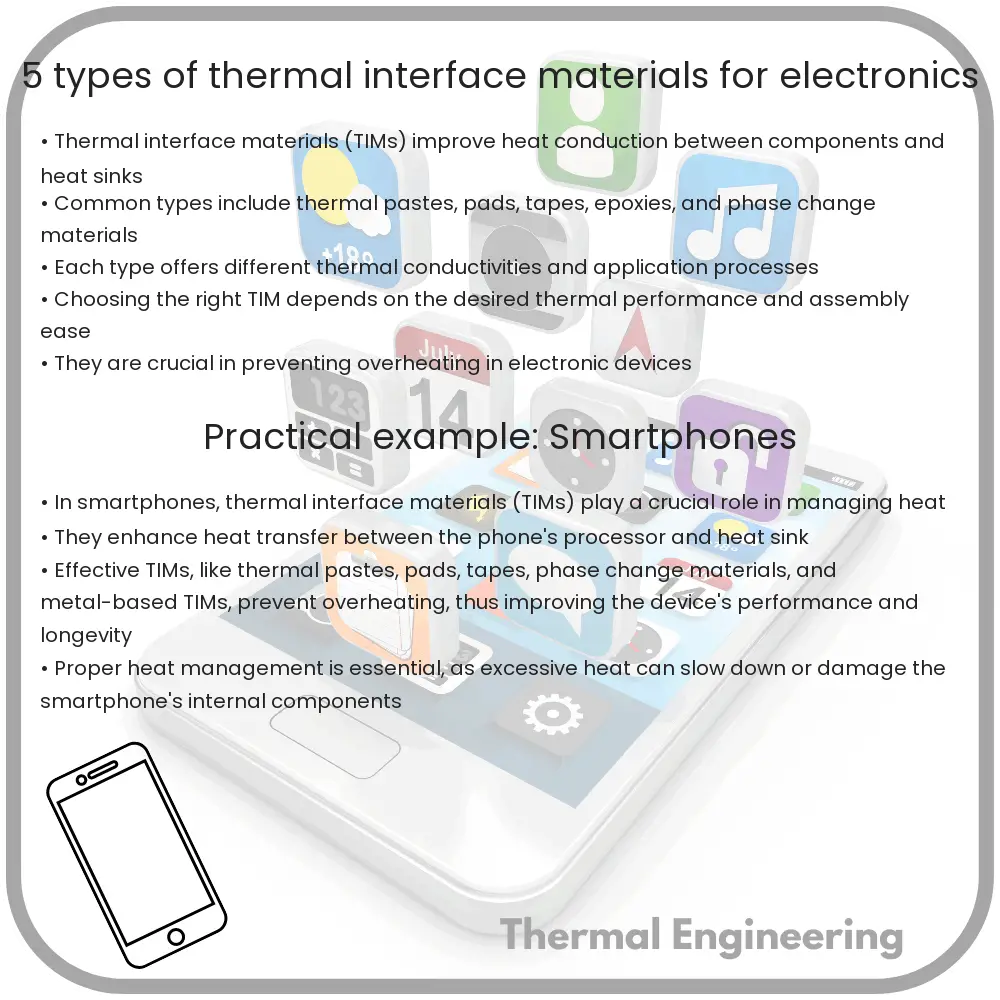
5 Types of Thermal Interface Materials for Electronics

Understanding five key types of thermal interface materials (TIMs) used to improve heat management in electronics.

5 Types of Thermal Interface Materials for Electronics

5 Types of Thermal Interface Materials for Electronics

Thermal interface materials (TIMs) are crucial in electronics to enhance the thermal performance of electronic packages. They serve to improve the heat conduction between components, such as between a heat source (like a CPU) and a heat sink. Efficient heat management is essential for maintaining the reliability and performance of electronic devices. This article explores five common types of thermal interface materials used in electronics.

1. Thermal Greases

Thermal greases, also known as thermal pastes, are commonly used due to their ease of application and effective thermal conductivity. These greases are composed of a suspension of thermal conductive particles, such as zinc oxide or aluminum, in a silicone or synthetic oil base. The key advantage of thermal greases is their ability to fill even the smallest air gaps between surfaces, reducing thermal impedance significantly. However, their long-term stability and tendency to pump out under temperature cycling are potential drawbacks.

2. Thermal Pads

Thermal pads are pre-cut pieces of soft material that can conform to surface irregularities under pressure. Made typically from silicone or polyimide materials embedded with conductive fillers, these pads are easier and cleaner to install compared to greases. While they may not achieve the same level of conductivity as greases, their consistent application and lack of mess make them a popular choice, especially in mass production environments.

3. Phase Change Materials

Phase change materials (PCMs) are designed to remain solid at room temperature, becoming soft and better filling the gaps at higher temperatures, around the operational temperatures of most electronic devices. This characteristic allows PCMs to combine the ease of handling seen in pads with thermal performance approaching that of greases. They are typically made from a mixture of waxes and thermally conductive fillers.

4. Metal-Based TIMs

Metal-based TIMs include soft metals such as indium, silver, or aluminum that can deform to fill surface irregularities. These materials offer outstanding thermal conductivity. For instance, indium, despite its higher cost, is particularly favored for its compliance, high conductivity (approximately 86 W/(m*K)), and low thermal resistance. Metal TIMs are especially useful in high-power applications where minimal thermal resistance is critical.

5. Liquid Metal TIMs

Liquid metal TIMs consist of metallic alloys that are liquid at room temperature. Gallium-based alloys, for example, are popular due to their excellent thermal conductivity and low viscosity, allowing them to spread thinly and effectively between surfaces. However, their reactive nature with aluminum and other metals can be a limitation in certain applications. Despite this, their superior performance makes them ideal for high heat flux situations, such as in high-performance CPUs and GPUs.

Each type of TIM has its specific advantages and application considerations. The choice of material largely depends on factors such as desired thermal conductivity, application process, durability, and cost-effectiveness. By understanding these materials better, engineers can make more informed decisions to enhance the thermal management of electronic devices, ultimately improving their performance and longevity.

8 Types of Laminar Flow in Fluid Mechanics

Learn about laminar flow, a fluid mechanics concept describing smooth, orderly fluid movement where particles follow parallel paths, contrasting turbulent flow.

8 Types of Laminar Flow in Fluid Mechanics

Understanding Laminar Flow: 8 Types in Fluid Mechanics

Laminar flow, a term used in fluid mechanics, describes the smooth, orderly movement of a fluid where the particles follow specific, parallel paths. This type is contrasted with turbulent flow, which is characterized by chaotic and erratic fluid motion. Laminar flow is crucial in a range of applications, from medical equipment to aerodynamic design in engineering. This article explores eight types of laminar flow to highlight their applications and significance in various engineering contexts.

1. Plane Couette Flow

Plane Couette flow occurs between two horizontal plates moving in opposite directions, with fluid in between. The shear force generated by the relative motion of the plates causes a linear velocity profile across the fluid layer. This type is used in studies involving viscosity and fluid shear stress.

2. Hagen-Poiseuille Flow

Also known as Poiseuille’s law, Hagen-Poiseuille flow describes the movement of a viscous fluid through a circular pipe under constant pressure. The flow velocity is maximum at the center and decreases toward the walls of the pipe, useful in various piping systems in chemical and mechanical engineering.

3. Stokes’ First Problem (or The Rayleigh Problem)

This type involves a sudden application of a constant force to a fluid over an infinite flat plate, leading to a flow influenced by the fluid’s viscosity. It’s often used in the study of startup flows and in problems involving suddenly started or stopped surfaces.

4. Hele-Shaw Flow

Hele-Shaw flow occurs in a narrow space between two parallel plates that are very close together, creating a flow dominated by viscous forces. This model is instrumental in studying patterns similar to those found in geological formations and in the enhanced oil recovery processes.

5. Lubrication Theory

Lubrication theory simplifies the study of thin layer flows and is crucial in machine elements like bearings, gears, and seals. This type helps in predicting the life span of these components and in enhancing their performance by reducing wear and friction.

6. Film Boiling

In film boiling, the liquid does not actually touch the hot surface; instead, it forms a thin layer of vapor that separates the liquid from the surface. This scenario is often analyzed with laminar flow assumptions to better understand heat transfer and fluid dynamics in nuclear reactors and other heat exchangers.

7. Flow over an Airfoil

Laminar flow over an airfoil at lower speeds or higher viscosities demonstrates the fluid dynamic principles applied in aerodynamics, significantly affecting lift and drag characteristics. This type of flow is critical in the design and operation of aircraft.

8. Gravity-Driven Flow

Seen in applications like thin film coating and the draining of liquids, gravity-driven flow involves fluid moving along an inclined surface under gravity’s influence. This scenario is pertinent to chemical and civil engineers dealing with wastewater treatment and coating processes.

Each type of laminar flow offers unique insights into the behavior and properties of fluids under various conditions — crucial knowledge for engineers and scientists working to optimize systems and solve complex fluid dynamics problems.

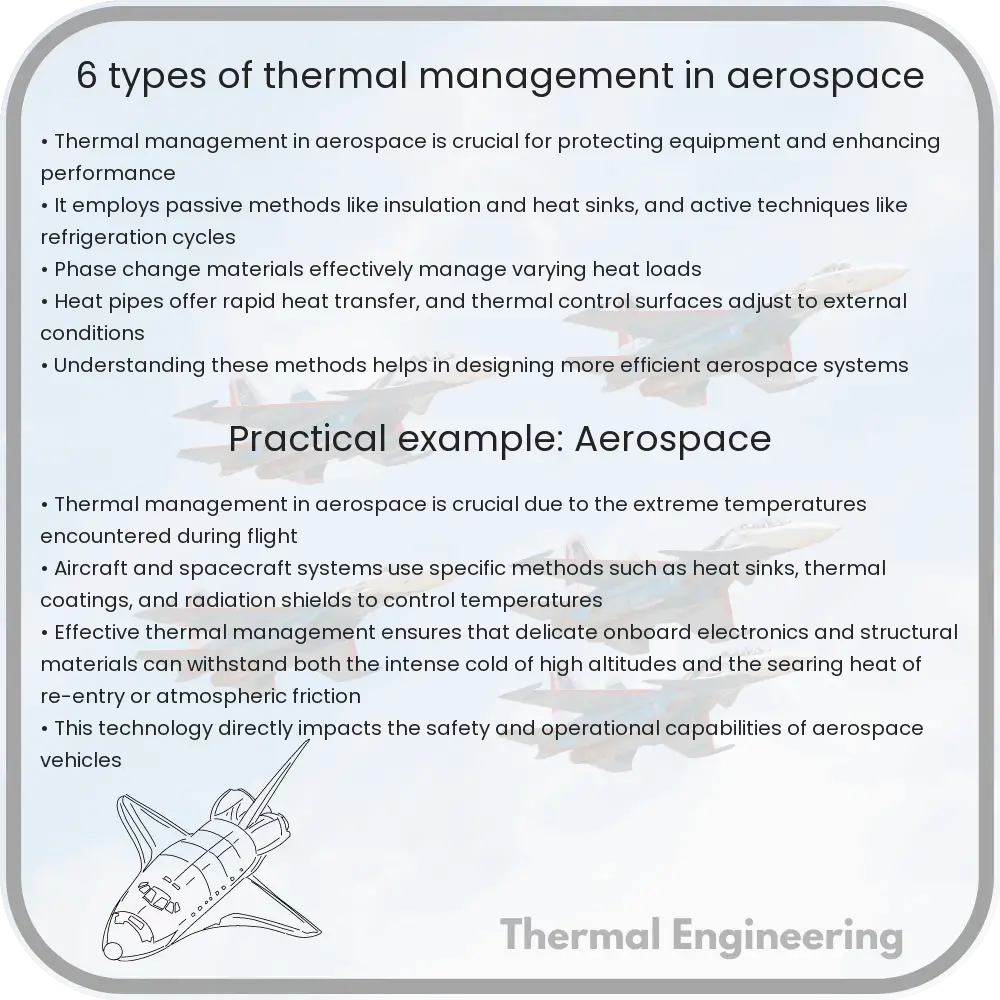
6 Types of Thermal Management in Aerospace

Learn about the crucial role of thermal management in aerospace engineering and its various methods ensuring spacecraft functionality.

6 Types of Thermal Management in Aerospace

Introduction to Thermal Management in Aerospace

Thermal management is a critical aspect of aerospace engineering. It involves controlling the temperatures of aerospace vehicles, whether they are orbiting the Earth, traversing the atmosphere, or exploring other planets. Effective thermal management ensures the functionality and longevity of onboard systems and structures while facing extreme temperatures and rapid changes in environmental conditions. Here we explore six key types of thermal management used in the aerospace industry.

1. Heat Sinks

Heat sinks are components that facilitate heat transfer from a hotter object to a cooler fluid, typically air or liquid. In aerospace applications, they are used to dissipate heat from electronics and other critical components. Heat sinks are designed to maximize surface area in contact with the cooling medium. They are often made of materials with high thermal conductivity, such as aluminum or copper.

2. Heat Pipes

A heat pipe is a sealed system that uses the principles of phase change and conduction to transfer heat efficiently. A working fluid inside the heat pipe absorbs heat at the source, evaporates, travels to a cooler region of the pipe, condenses, and then returns as a liquid to repeat the cycle. Heat pipes are particularly useful in aerospace for their ability to transfer heat over significant distances with minimal temperature loss.

3. Thermal Insulation

Thermal insulation is used to reduce the rate of heat transfer between objects in thermal contact or in range of radiative influence. In aerospace, insulation can protect sensitive equipment from the extreme cold of space or the searing heat of atmospheric entry. Materials such as aerogel, Mylar, and reinforced carbon-carbon are commonly used based on their low thermal conductivity and high temperature resistance.

4. Radiators

Radiators in aerospace are used to expel heat into space, a crucial function especially in satellites and spacecraft, where internal heat must be continuously removed to maintain operational temperatures. These systems typically utilize large surface areas to radiate heat and are often coupled with heat pipes or fluid loops to maximize efficiency.

5. Phase Change Materials (PCMs)

PCMs absorb and release heat at a relatively constant temperature as they undergo changes in state (from solid to liquid and vice versa). In aerospace applications, PCMs can be used to regulate the temperature of batteries in satellites or electronics in spacecraft by absorbing excess heat generated during operation and releasing it when the temperature drops.

6. Active Refrigeration and Heat Pumps

Active refrigeration systems and heat pumps use work to move heat from a cooler area to a warmer one, contrary to natural heat flow. This approach is essential for applications where passive systems like radiators or heat pipes are insufficient. In aerospace, these systems can be critical for maintaining optimal temperature conditions for crew members and sensitive electronic components across varying mission phases.

Conclusion

The various methods of thermal management in aerospace underscore the complexity and importance of temperature control in harsh environments. Through the use of advanced materials and innovative technologies, engineers are able to protect equipment and enhance performance in spacecraft, satellites, and other aerospace vehicles, ensuring mission success under extreme conditions.

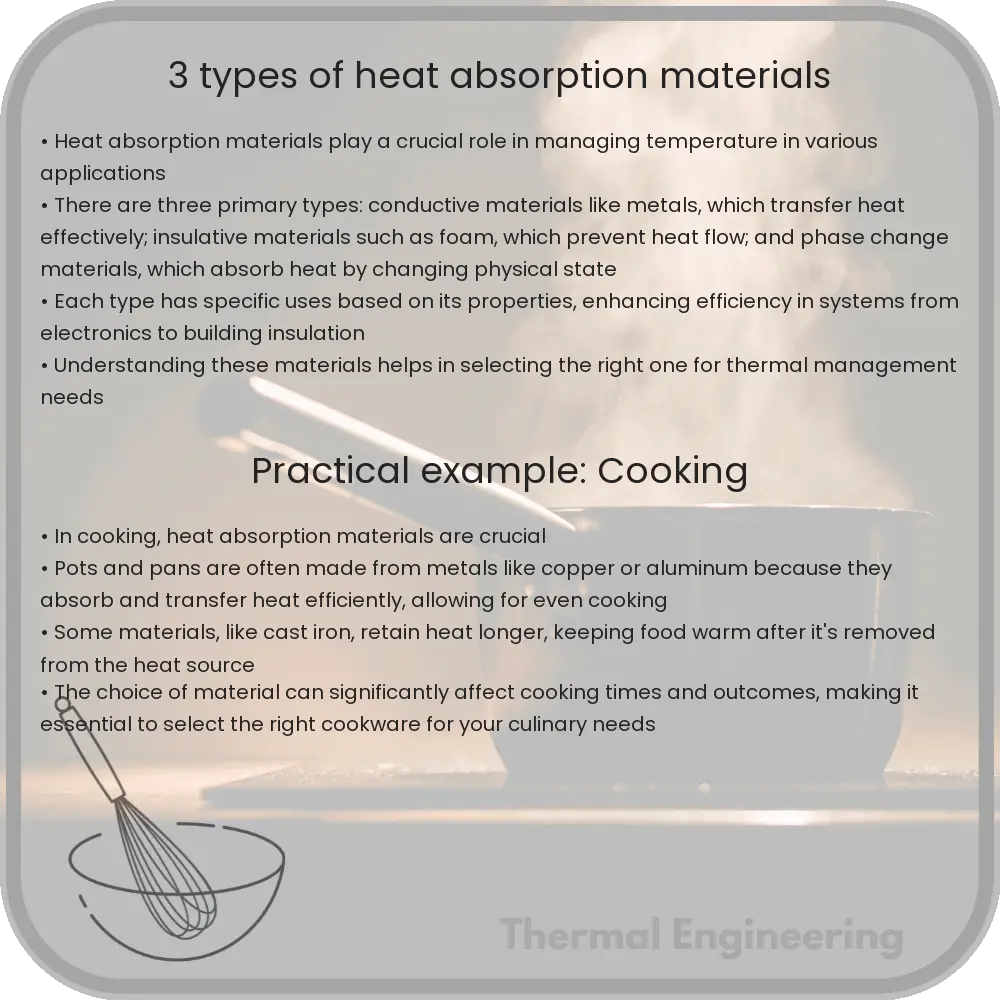
3 Types of Heat Absorption Materials

Learn about heat absorption materials used in engineering, including phase change materials, heat-absorbing gels, and thermal barrier coatings.

3 Types of Heat Absorption Materials

Understanding Heat Absorption Materials

Heat absorption materials play a crucial role in various engineering and technological fields, influencing everything from building design to the development of energy-efficient systems. These materials are designed to absorb heat from their surroundings, which can then be stored or dissipated depending on the application. Here, we explore three common types of heat absorption materials used in engineering: phase change materials, heat-absorbing gels, and thermal barrier coatings.

1. Phase Change Materials (PCMs)

Phase Change Materials are substances with a high heat of fusion which, upon melting and solidifying at a certain temperature, are capable of storing or releasing significant amounts of energy. The most common types of PCMs are organic compounds, inorganic compounds, or eutectic combinations. These materials are highly effective in thermal management systems such as in building construction where they help in maintaining a stable indoor environment or in electronic devices to regulate temperature.

  • Applications: Building temperature regulation, electronic devices cooling
  • Example Materials: Paraffin wax, salt hydrates

2. Heat Absorbing Gels

Heat absorbing gels, commonly referred to as “hydrogels,” are polymer-based materials that can absorb and retain substantial amounts of water or other fluids. Their temperature regulation properties stem from the process of endothermic reactions when water is absorbed. This characteristic makes them suitable for use in products where heat mitigation is required, such as in heat packs or even within protective clothing.

  • Applications: Heat packs, protective clothing, and wound care
  • Example Materials: Polyacrylate, Polyvinyl alcohol-based gels

3. Thermal Barrier Coatings (TBCs)

Thermal barrier coatings are advanced materials used primarily to insulate components from excessive heat, often in environments like gas turbines and aero-engine parts. These coatings usually consist of ceramic materials such as yttria-stabilized zirconia (YSZ). They work by reflecting and insulating against heat thereby protecting underlying materials from thermal stresses and degradation.

  • Applications: Aerospace engines, gas turbines
  • Example Materials: Yttria-stabilized zirconia (YSZ), mullite

Each of these heat absorption materials offers unique properties and capabilities, providing essential solutions to challenges in temperature regulation and management across various industrial sectors. Continued research and development in this area are expanding their applications and efficiency, allowing for even greater advancements in thermal management technology.

7 Types of Vapor Absorption Refrigeration Systems

Learn about the seven primary types of vapor absorption refrigeration systems, their mechanisms, and applications.

7 Types of Vapor Absorption Refrigeration Systems

Understanding the 7 Types of Vapor Absorption Refrigeration Systems

Vapor absorption refrigeration systems (VARS) are a class of refrigeration systems that operate by absorbing the refrigerant in a liquid to facilitate cooling. Unlike vapor-compression refrigerators which use mechanical compressors to maintain refrigerant flow, absorption systems employ a heat source such as natural gas, solar power, or waste heat for operation. They are particularly favored for their low noise and low energy consumption compared to traditional systems. Here, we explore the seven primary types of vapor absorption refrigeration systems.

1. Water-Ammonia Systems

One of the most common types, the water-ammonia system, utilizes ammonia as the refrigerant and water as the absorbent. These systems are preferred due to ammonia’s excellent thermodynamic properties, which allow for efficient heat exchange and absorption processes. Water-ammonia systems are widely used in industrial and commercial applications because of their robustness and effectiveness.

2. Lithium Bromide-Water Systems

In this type, water acts as the refrigerant, and lithium bromide serves as the absorbent. The primary advantage of lithium bromide-water systems is their non-toxic and non-flammable characteristics, making them particularly suitable for air conditioning applications in building environments. They operate under a vacuum to allow water to evaporate at lower temperatures and pressures.

3. Ammonia-Water Systems with Rectifier

Similar to standard ammonia-water systems, these are equipped with an additional component called a rectifier, which purifies ammonia vapor before it enters the condenser. This results in improved efficiency and performance of the refrigeration cycle by minimizing the carryover of water vapor with ammonia, thereby enhancing the system’s overall operational effectiveness.

4. GAX (Generator-Absorber Heat Exchange) Cycle Systems

GAX cycles introduce a novel approach by integrating a heat exchanger within the generator and absorber components. This configuration recovers heat from the absorber, utilizing it to boost the generator’s performance, thereby conserving energy and enhancing the system’s coefficient of performance (COP).

5. Diffusion-Absorption Refrigeration Systems

These systems represent a unique class without moving parts, using a ternary fluid mixture typically composed of ammonia, water, and hydrogen. They differ significantly in operation as hydrogen gas helps to balance the pressures and create an equilibrium necessary for efficient refrigerant circulation. Diffusion-absorption units are particularly quieter and are commonly employed in hospitality sectors like hotel minibars.

6. Electrochemically Driven Absorption Refrigeration Systems

This innovative adaptation uses an electrochemical compressor to manage refrigerant circulation instead of a thermal or mechanical process. The electrochemical compressor modifies an electrolyte’s chemical potential to drive the refrigerant without moving parts, resulting in highly efficient low-noise operations.

7. Solar-Powered Absorption Systems

Tapping into renewable energy sources, solar-powered absorption refrigerators use solar heat to drive the refrigeration cycle. They are particularly beneficial in remote areas where conventional energy sources are scarce or for applications aiming to reduce carbon footprints. These systems often use ammonia-water or lithium bromide-water as working pairs.

Each type of vapor absorption refrigeration system offers unique advantages tailored for different applications, emphasizing efficiency, environmental friendliness, and sustainability. Understanding the nuances of each system can help in selecting the right fit for specific cooling needs, ultimately leading to better energy management and operational efficiency.

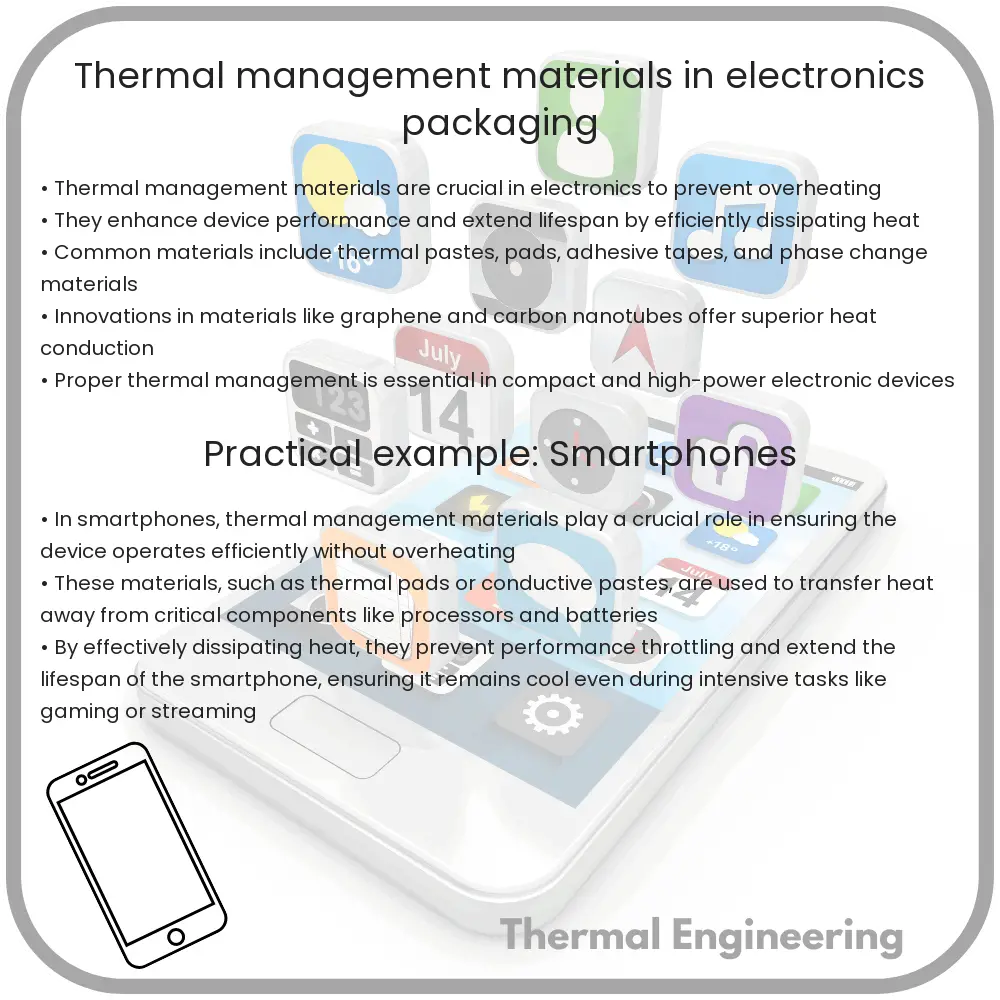
Thermal management materials in electronics packaging

Explore essential strategies and materials for effective thermal management in electronics packaging to enhance device reliability and performance.

Thermal management materials in electronics packaging

Introduction to Thermal Management in Electronics Packaging

Thermal management is a critical aspect of electronics design, especially as devices become smaller and more powerful. As components generate heat during operation, effective dissipation of this heat is essential to maintain reliability and performance. This article explores the various materials and strategies used in thermal management for electronics packaging.

Why Is Thermal Management Important?

Managing heat in electronic devices is crucial for several reasons. Firstly, high temperatures can lead to electronic failure or malfunctions. Secondly, temperature fluctuations can stress materials, leading to premature aging and reduced lifespan. Effective thermal management ensures stability, performance, and longevity in electronic devices.

Types of Thermal Management Materials

  • Thermal Conductive Pastes: These are greases or pastes applied between the heat source (e.g., processor) and the heat sink. They fill air gaps, thus improving heat transfer from the component to the cooler.
  • Thermal Pads: These pads are easier to apply compared to pastes and are used where a fixed thickness gap filler is needed. They compensate for surface irregularities and provide good thermal conductivity.
  • Phase Change Materials (PCMs): PCMs melt and solidify at specific temperatures, absorbing and releasing heat in the process. They are used to maintain consistent device temperatures.
  • Thermal Adhesives: These are used to bond heat sinks directly to components, facilitating heat transfer. Thermal adhesives harden upon curing, creating a strong bond that also conducts heat.
  • Metallic Heat Spreaders: Typically made from copper or aluminum, these spreaders conduct heat away from the heat-generating component to a larger area where it can be dissipated more effectively.

Choosing the Right Thermal Management Material

The choice of thermal management material depends on several factors:

  1. Thermal Conductivity: Materials with higher thermal conductivity are generally more effective in transferring heat away from components. Copper and aluminum are popular choices due to their high conductivity.
  2. Compliance and Durability: Materials should withstand thermal cycling without degrading. Permanent solutions like adhesives are chosen for their long-term reliability, while solutions like thermal pads can be selected for their flexibility and reusability.
  3. Application Process: The complexity of application and reworkability also influence material choice. Pastes and pads offer easier application and adjustments compared to adhesives.

Advanced Thermal Management Technologies

Research and development continue to advance thermal management solutions. Innovations such as microchannel heat sinks and vapor chambers offer enhanced cooling capabilities. These technologies utilize the flow of liquid or vapor to significantly improve heat dissipation in compact spaces. Additionally, developments in materials science, such as graphene and carbon nanotubes, are opening up new possibilities for ultra-high conductivity materials.

Conclusion

As electronics continue to evolve, becoming faster and more compact, the importance of effective thermal management escalates. The choice of materials and technologies must adapt to the increasing heat flux and the need for efficient thermal dissipation. By understanding the fundamental materials and methods available today, designers can navigate the challenges posed by heat in electronic packaging, ensuring device performance and durability.