Facebook Instagram Youtube Twitter

Hot Water Recirculating Pump | Water Conservation

Learn about hot water recirculating pumps, their function in minimizing water waste, enhancing energy efficiency, and ensuring instant hot water access.

Hot Water Recirculating Pump | Water Conservation

Understanding Hot Water Recirculating Pumps and Their Role in Water Conservation

Hot water recirculating pumps are an intriguing piece of engineering designed to reduce water waste and enhance the convenience of hot water delivery in residential and commercial buildings. These systems provide immediate hot water when a faucet is turned on, which not only saves water but can also reduce energy consumption. Let’s explore how these pumps work, their benefits, and the considerations one should keep in mind when using them.

How Do Hot Water Recirculating Pumps Work?

Typically, without a recirculating system, unused water in the hot water pipeline cools down and must be purged out and wasted to get hot water. A hot water recirculating pump solves this problem by continuously circulating hot water through the pipes. This ensures that hot water is instantly available at all outlets, minimizing the waiting time for hot water to reach the tap and thus conserving the water that would have been wasted.

The operation of these pumps can be controlled by timers or thermostats. Timed pumps work on a schedule, running at times when hot water demand is expected to be high. Thermostatically controlled pumps, on the other hand, kick in when the water temperature drops below a set threshold, ensuring energy is not wasted by maintaining hot water in the pipes when it isn’t necessary.

Benefits of Hot Water Recirculating Pumps

  • Water Conservation: By providing immediate hot water, these systems can significantly reduce the amount of water wasted while waiting for water to heat up.
  • Energy Efficiency: Recirculating pumps can also contribute to reduced energy consumption by minimizing the need to heat water repeatedly. This can lead to lower utility bills and a smaller carbon footprint.
  • Convenience: Immediate access to hot water enhances comfort and convenience at all points of use within the building.
  • Extended Pipe Lifespan: By maintaining consistent water temperatures in the pipes, these systems can reduce pipe stress caused by thermal expansion and contraction, potentially extending the lifespan of the plumbing system.

Considerations When Using Hot Water Recirculating Pumps

While hot water recirculating systems offer several benefits, there are also a few considerations to bear in mind:

  • Installation Costs: The initial setup for these systems may be more complex and costly than a traditional water heating setup. Installation usually requires a pump, additional piping, and sometimes modifications to existing plumbing.
  • Energy Use: Although these systems can reduce the overall energy consumption for heating water, the pump itself does require electricity to operate. The cost and environmental impact of this energy use should be considered.
  • Maintenance: Like any mechanical system, recirculating pumps require periodic maintenance to operate efficiently and reliably over time.

Conclusion

Hot water recirculating pumps are a powerful tool in the battle against water waste, promoting both conservation and convenience. They exemplify how engineering solutions can be applied to everyday issues, improving system efficiency and user experience. Whether upgrading an existing system or designing a new construction project, considering a hot water recirculating pump can be a valuable step towards more sustainable living and energy management.
Temperature Controlled Soldering Iron | Precision Types

Learn about temperature controlled soldering irons, their operation, advantages, and how to choose the right one for precise electronic projects.

Temperature Controlled Soldering Iron | Precision Types

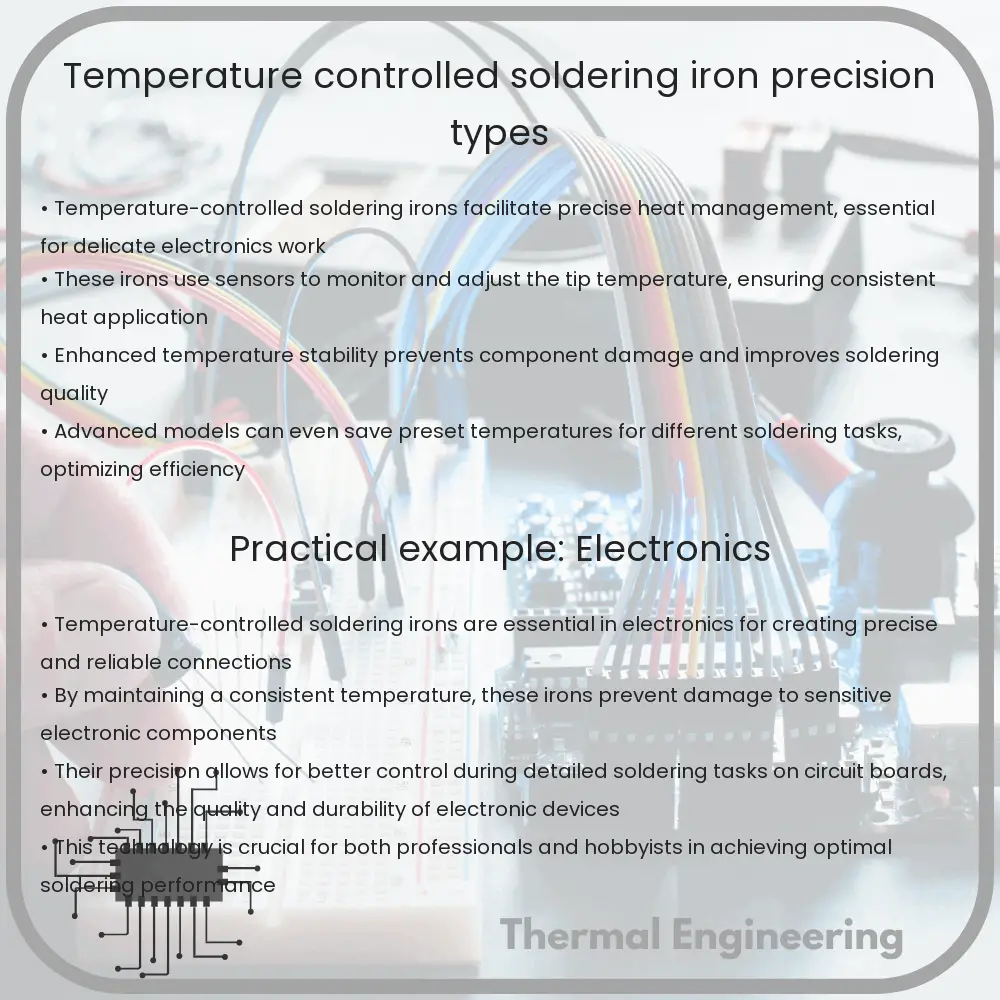
Understanding Temperature Controlled Soldering Irons and Their Precision Types

Temperature controlled soldering irons are essential tools in both DIY electronics and professional engineering. They allow for the adjustment of the iron’s tip temperature, providing the user with the capability to work on a variety of soldering projects with precision and safety.

How Does a Temperature Controlled Soldering Iron Work?

The basic principle behind a temperature controlled soldering iron is the use of a feedback loop system which includes a sensor, a control unit, and a heating element. The sensor, typically a thermocouple or a thermistor, detects the temperature of the soldering iron’s tip. This information is sent to the control unit, which then adjusts the power to the heating element based on the target temperature set by the user.

Advantages of Temperature Control

  • Precision: By allowing the user to set and maintain an exact temperature, these irons ensure that the solder melts properly without damaging sensitive components due to excessive heat.
  • Consistency: Stable temperature improves the consistency of solder joints, which is crucial for reliable electronic circuits.
  • Versatility: Adjustable temperatures mean the same soldering iron can be used for different types of solder, projects, or materials.
  • Safety: Reducing the risk of overheating protects both the user and the components being soldered.

Types of Temperature Sensors Used in Soldering Irons

  1. Thermocouples: These sensors are known for their rapid response time and wide range of temperatures. They work based on the Seebeck effect, where a voltage is generated proportional to the temperature difference between two different metals.
  2. Thermistors: Typically more accurate than thermocouples within a limited temperature range, thermistors vary their resistance with temperature changes.

Choosing the Right Temperature Controlled Soldering Iron

When selecting a temperature controlled soldering iron, consider the following factors:

  • Temperature range and stability: Make sure the iron can reach and maintain the temperatures required for your specific soldering needs.
  • Recovery speed: This refers to how quickly the soldering iron can return to the desired temperature after each solder joint.
  • Ergonomics: An ergonomically designed handle will reduce fatigue in prolonged soldering sessions.
  • Tip options: Availability of different tips can greatly enhance the versatility of the soldering iron.

Temperature controlled soldering irons are invaluable tools in electronics for ensuring high-quality results. With the right soldering iron, you can increase the precision and reliability of your electronic projects, while also ensuring the safety and longevity of your electrical components.

Conclusion

Understanding the mechanics of temperature controlled soldering irons and the precision provided by different types can significantly impact the quality of your soldering projects. Whether you’re a hobbyist or a professional, investing in a good quality temperature controlled soldering iron is a step towards achieving perfect solder joints every time.

Infrared Heater | Space Heating Applications

Learn how infrared heaters work, their components, types, and applications in effective space heating.

Infrared Heater | Space Heating Applications

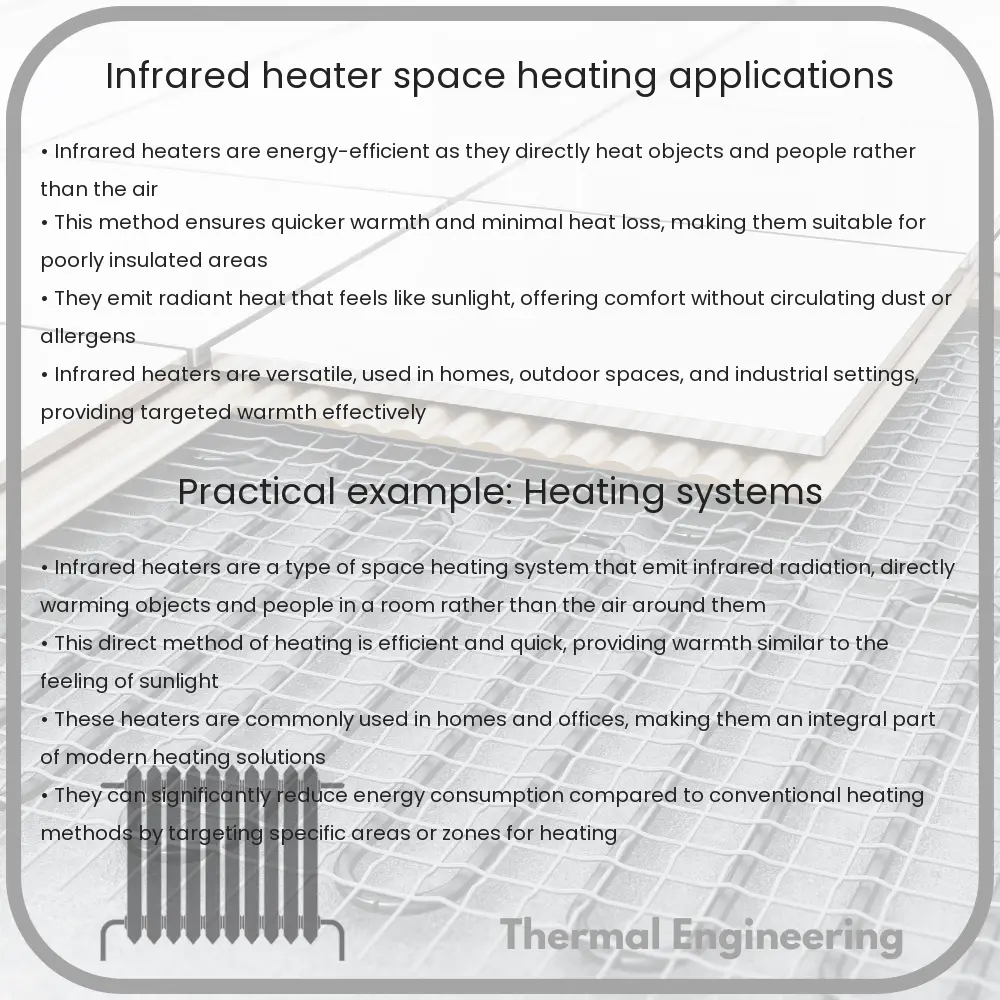
Understanding Infrared Heaters and Their Use in Space Heating

Infrared heaters are a type of space heater that operate on the principle of infrared radiation. This technology offers an efficient method for heating indoors and semi-outdoor spaces like patios and workspaces. Understanding how these devices work and their applications can help in selecting the right heating solution for different environments.

How Infrared Heaters Work

Infrared heaters produce heat similar to the way the sun heats the earth. These heaters emit infrared radiation, which is absorbed directly by objects, people, and surfaces without needing to heat the air in-between. This method of direct heating is what makes infrared heaters particularly energy-efficient.

Components of Infrared Heaters

  • Heating Element: The core component of an infrared heater is its heating element. Materials commonly used include tungsten, carbon, or ceramic. These materials are chosen for their ability to emit high levels of infrared radiation efficiently when heated.
  • Reflector: To maximize efficiency, a reflector directs the emitted infrared radiation towards the area to be heated. This component is crucial in focusing the heating effect and preventing energy loss.
  • Housing: The housing of an infrared heater serves as both protection for its internal elements and as an aesthetic cover. Materials used usually have high durability and resistance to high temperatures.

Types of Infrared Heaters

  • Near Infrared Heaters (Short Wave): Emit high-intensity infrared radiation that can heat objects quickly. Because of their intensity, these are commonly used in industrial settings.
  • Far Infrared Heaters (Long Wave): Provide a more moderate heating effect, making them suitable for public and residential areas where gentler heat is necessary.

Applications in Space Heating

Due to their efficient heating capabilities, infrared heaters are ideal for various applications:

  1. Residential Use: For home applications, particularly in areas like living rooms, bedrooms, or patios, far infrared heaters are popular for their ability to provide comfortable, non-drying heat and energy efficiency.
  2. Commercial Spaces: Infrared heaters are used in commercial venues such as restaurants and outdoor cafes, where focused heat can enhance customer comfort without the need to extensively heat the surrounding air.
  3. Industrial Applications: In warehouses and assembly lines, near infrared heaters efficiently provide intense heat, crucial for processes like drying or heating large spaces quickly.
  4. Outdoor Areas: Infrared heaters are an excellent option for outdoor heating, such as in terraces and smoking areas, where they can provide direct warmth to people despite ambient air movement.

Benefits of Infrared Heaters

  • Energy Efficiency: By heating objects and people directly instead of the air, infrared heaters are able to use energy more efficiently compared to conventional convective heaters.
  • Improved Air Quality: Unlike conventional heaters that operate by circulating heated air, infrared heaters do not disturb dust or allergens, thus maintaining better indoor air quality.
  • Instant Heat: Infrared heaters provide immediate warmth, reaching operating temperature more quickly than traditional heating methods.
  • Quiet Operation: With minimal moving parts, infrared heaters operate quietly, making them suitable for both noise-sensitive environments like bedrooms and active spaces like patios.

Infrared heating technology represents a mix of efficiency, convenience, and versatility, making it an attractive option for space heating across various applications. Whether it’s for warming a home or an outdoor area, infrared heaters offer significant benefits that traditional heating methods cannot match.

Flame Detector | Fire Safety Technology

Learn about flame detectors, critical devices in fire safety that detect flames using UV and IR technology for rapid response and protection.

Flame Detector | Fire Safety Technology

Understanding Flame Detectors in Fire Safety Technology

Flame detectors are specialized devices used to detect and respond to the presence of a flame, offering a critical component in the safety systems of industrial, commercial, and residential environments. Their primary purpose is to enable rapid fire detection to minimize damage and ensure the safety of occupants and property.

How Do Flame Detectors Work?

Flame detectors operate by identifying the unique optical signatures of flames, such as ultraviolet (UV) and infrared (IR) light wavelengths. Different types of flame detectors are designed to detect these signals through various methods:

  • Ultraviolet (UV) Detectors: These devices detect the UV radiation produced when a flame burns. UV detectors can respond typically in 3-4 milliseconds, as UV radiation is present immediately after ignition. However, they are susceptible to false alarms due to UV sources like sunlight and arc welding.
  • Infrared (IR) Detectors: IR detectors work by sensing the infrared radiation emitted by flames. These systems can be designed to detect specific wavelength bands to distinguish between flames and other heat sources, reducing false alarms. Some advanced IR detectors use flicker detection to recognize the specific flickering pattern of fire.
  • Multi-Spectrum Detectors: Combining UV and IR detection technology, multi-spectrum detectors are highly effective in recognizing fire with greater accuracy and fewer false alarms. These detectors are robust in various environmental conditions, making them suitable for high-risk areas.

Applications of Flame Detectors

Flame detectors are essential across numerous sectors, providing vital protection in environments that are susceptible to fires. Some common applications include:

  • Petrochemical Plants: These facilities are highly flammable and require constant monitoring to prevent fire-related disasters.
  • Airports: Protecting fueling areas and hangars, flame detectors help in maintaining safety against highly flammable jet fuel fires.
  • Power Plants: Given the high-risk processes involved in power generation, especially in nuclear plants, flame detection is critical for safety and operational efficiency.
  • Commercial Kitchens: These detectors help in preventing grease fires, often exacerbated in commercial cooking environments.

Advantages of Flame Detection Technology

Integrating flame detectors into fire safety systems offers several benefits:

  • Speed and Early Detection: Flame detectors react within seconds to the presence of a fire, allowing for quicker activation of suppression systems and evacuation protocols.
  • High Accuracy: Advanced detection technologies minimize false alarms, which can lead to unnecessary disruptions and expenses.
  • Wide Coverage: Certain models of flame detectors are capable of covering large areas, reducing the number of detectors required and thus the overall system cost.
  • Harsh Environment Suitability: Many flame detectors are designed to operate effectively in extreme environmental conditions, including high heat, dust, and moisture.

In conclusion, flame detectors are a key component of modern fire safety and emergency response systems. With advances in technology, these detectors have significantly improved in terms of accuracy and reliability, becoming indispensable in hazardous and high-risk industries. Choosing the right type of flame detector, based on the specific needs and environmental conditions of the intended application, is crucial for optimizing safety and protection.

Heat Reflective Coating | Building Cooling Benefits

Learn how heat reflective coatings enhance building energy efficiency by reflecting sunlight and reducing cooling needs.

Heat Reflective Coating | Building Cooling Benefits

Understanding Heat Reflective Coatings

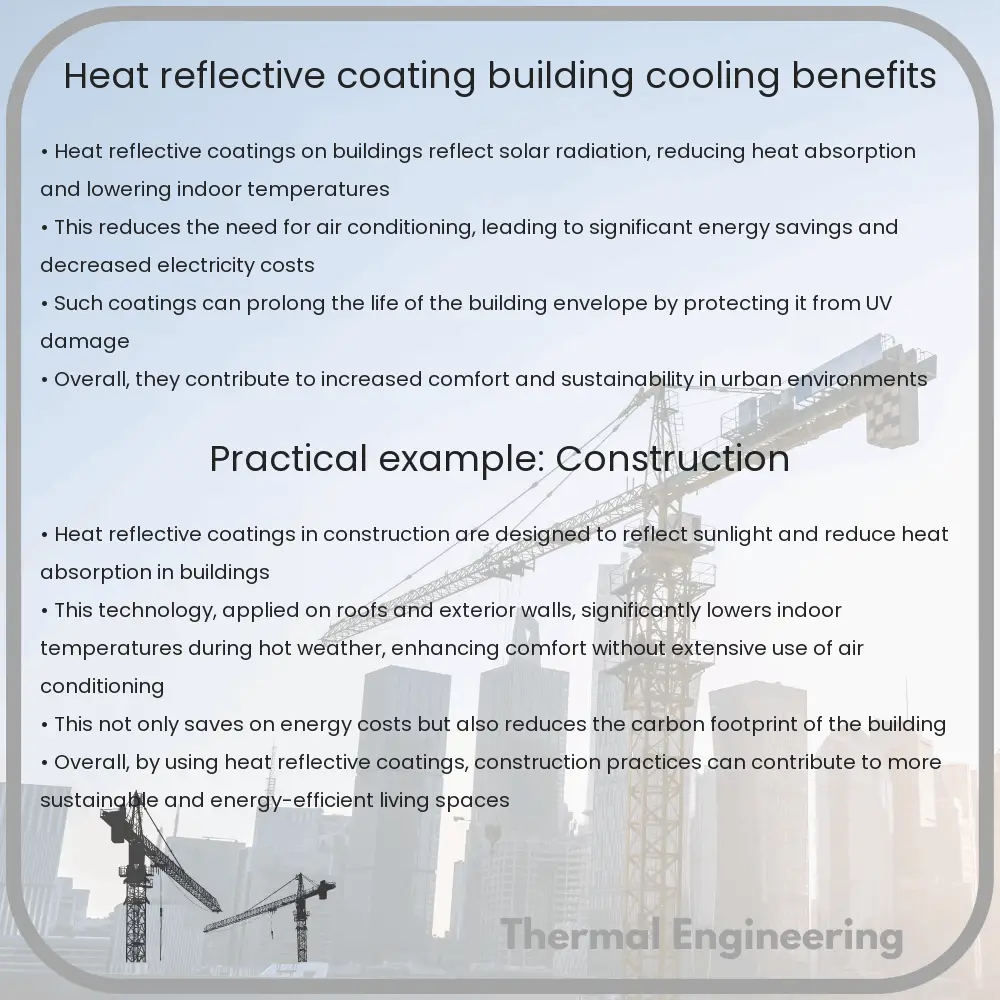
Heat reflective coatings are specialized materials applied to the exterior surfaces of buildings—primarily roofs and walls—to reflect sunlight and heat. These coatings are highly effective in enhancing building energy efficiency and improving interior comfort.

How Heat Reflective Coatings Work

The primary function of heat reflective coatings is to reflect the solar radiation that hits building surfaces. These coatings possess high solar reflectance and thermal emittance properties. Solar reflectance refers to the ability of the coating to reflect sunlight (including visible, infrared, and ultraviolet rays) away from the surface. Thermal emittance, meanwhile, is the ability to release absorbed heat. Together, these properties prevent heat accumulation within the building, thus reducing cooling loads.

Components of Heat Reflective Coatings

  • Pigments: These are often titanium dioxide or other specialized reflective pigments that promote high solar reflectance.
  • Resins: The binder in the coating that determines its adhesive characteristics and durability.
  • Additives: These can enhance properties such as moisture resistance, microbial resistance, and overall longevity of the coating.

Benefits of Applying Heat Reflective Coating

  1. Reduced Energy Costs: By reflecting solar radiation, these coatings minimize the need for air conditioning, leading to significant energy savings, especially in warm climates.
  2. Increased Comfort: Lower internal temperatures result in a more comfortable living and working environment.
  3. Extended Roof Life: Heat reflective coatings protect the roof material from the deleterious effects of constant thermal cycling, extending its lifespan.
  4. Environmental Impact: Reduced usage of air conditioning helps lower carbon dioxide emissions, contributing to a reduction in the overall carbon footprint of the building.

Applications in Engineering

Heat reflective coatings are used extensively in civil engineering, particularly in the design and renovation of both residential and commercial buildings. Engineers consider these coatings a vital component in sustainable building practices. They are an essential tool in urban areas where the reduction of “heat islands” (urban areas significantly warmer than their rural surroundings) is a primary concern.

Real-World Examples and Case Studies

A number of cities worldwide have implemented heat reflective coatings as a part of their building codes to combat heat and to promote energy efficiency. For example, in hot climates like those found in the Middle East and parts of the United States such as Arizona and Florida, the use of these coatings is widespread. Their implementation not only proves to be cost-effective in managing heat but also environmentally beneficial.

Conclusion

Heat reflective coatings represent a simple yet profound application of engineering principles aimed at sustainability and energy efficiency. By incorporating materials science and climatic considerations into building designs, these coatings offer a proactive approach to reducing energy consumption and improving the thermal comfort of indoor environments. As global attention increasingly turns towards sustainable living practices, the role of heat reflective coatings in modern construction continues to grow both in importance and application.

Thermal Overload Relay | Motor Safety Types

Learn about thermal overload relays, critical devices that protect electric motors from overheating and ensure operational safety and efficiency.

Thermal Overload Relay | Motor Safety Types

Understanding Thermal Overload Relays and Motor Safety

In the world of engineering, ensuring the longevity and safety of electric motors is critical. One of the key components used for motor protection is the thermal overload relay. This device is designed to protect motors from overheating, which can lead to failure and dangerous operating conditions. In this article, we will explore what thermal overload relays are, how they work, and the different types of motor safety mechanisms available.

What is a Thermal Overload Relay?

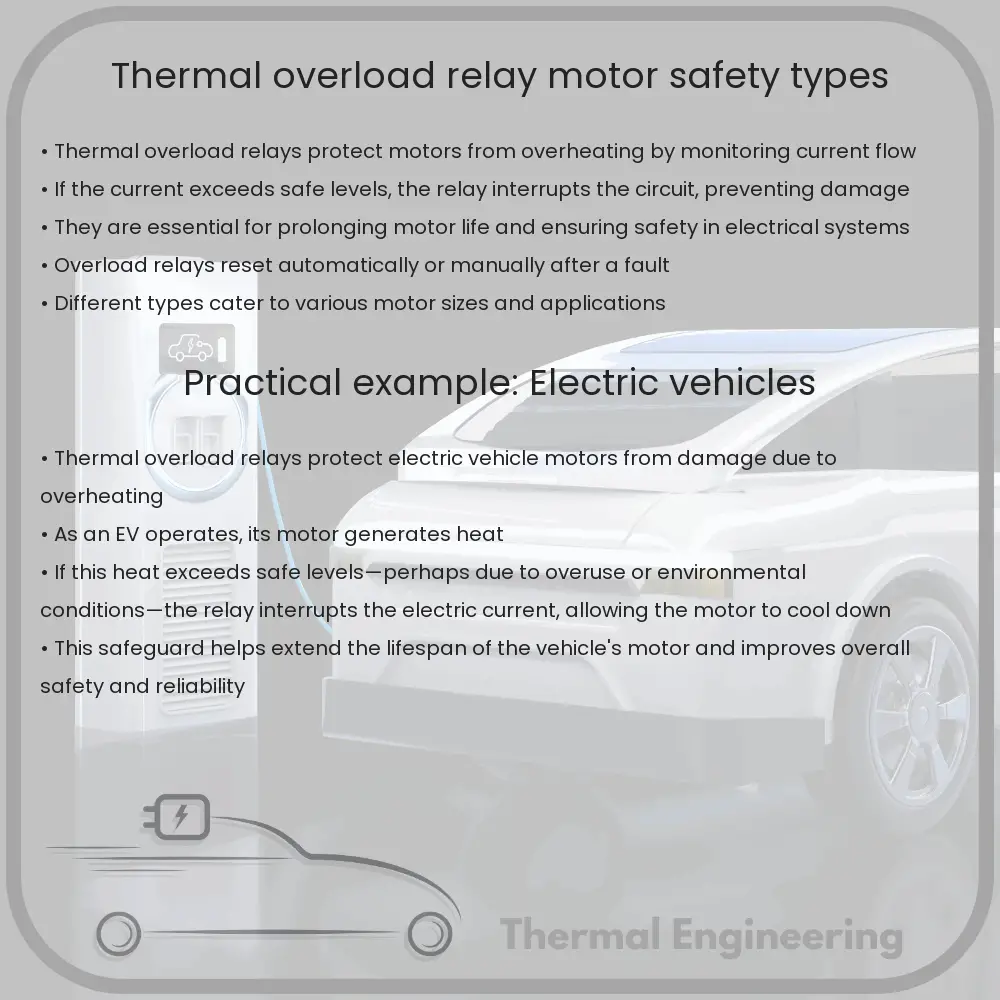
A thermal overload relay is an electrical device that protects motors from overheating by sensing abnormal temperature rises and interrupting the current flow. These relays are essential in preventing damage to the motor windings and associated equipment. Overheating can be caused by several issues, including excessive load, insufficient cooling, high ambient temperature, or a failure in the driven machinery.

How Does a Thermal Overload Relay Work?

Thermal overload relays operate on the principle of heat expansion. The device typically consists of a bimetallic strip made from two different types of metal, each with a different rate of expansion when heated. This strip is connected to the motor’s current. When the current exceeds a safe level, the heat generated causes one metal to expand more than the other, bending the strip. This bending movement activates a mechanism that breaks the circuit and cuts the electrical power to the motor, thus preventing further heat increase.

Some advanced thermal relays use thermistors or resistance temperature detectors (RTDs) for more accurate temperature measurements. These sensors offer a faster and more reliable response to temperature changes, improving the protection of the motor.

Types of Motor Safety Mechanisms

  • Thermal Overload Relays: As discussed, these protect motors from overheating. They are suitable for applications where motor overload protection is crucial for safety and operational efficiency.
  • Magnetic Overload Relays: These relays use electromagnetic forces to detect overcurrent conditions. They react faster than thermal relays but are generally used where precise current measurement is more critical than temperature-based detection.
  • Ground Fault Circuit Interrupters (GFCIs): GFCIs are used to protect against electrical shock by breaking the circuit when a ground fault is detected. This is particularly important in wet or damp environments.
  • Motor Circuit Protectors (MCPs): These devices provide a comprehensive solution by combining a disconnect switch, overload relay, and circuit breaker. They are typically used in industrial applications where motors require robust protection.

Choosing the Right Protection

The selection of a motor protection mechanism depends on several factors including the type of motor, its application, environmental conditions, and specific operational requirements. While thermal overload relays are adequate for general use, more demanding environments or precise applications might necessitate the use of magnetic relays or MCPs. Consulting with an electrical engineer can help in making the appropriate choice, ensuring both safety and efficiency in motor operation.

Conclusion

Thermal overload relays play a crucial role in motor safety, protecting valuable machinery from damage due to overheating. Understanding how these devices function and selecting the correct type of motor protection mechanism is essential for maintaining operational integrity and safety in various industrial and commercial settings. With the right protection in place, the longevity and reliability of electric motors can be significantly enhanced.

Exploring different types of safety mechanisms and staying informed about motor protection technologies is beneficial not only for engineers but also for anyone involved in the maintenance and operation of motor-driven systems.

Steam Turbine | Electricity Generation Types

Learn about steam turbines and their essential role in electricity generation, from basic workings and types to efficiency and future trends.

Steam Turbine | Electricity Generation Types

Understanding Steam Turbines in Electricity Generation

Steam turbines are a pivotal component in the production of electricity in power plants across the globe. From generating base-load power in nuclear stations to providing critical backup in renewable energy setups, steam turbines play a crucial role in the efficient and reliable production of electricity.

How Steam Turbines Work

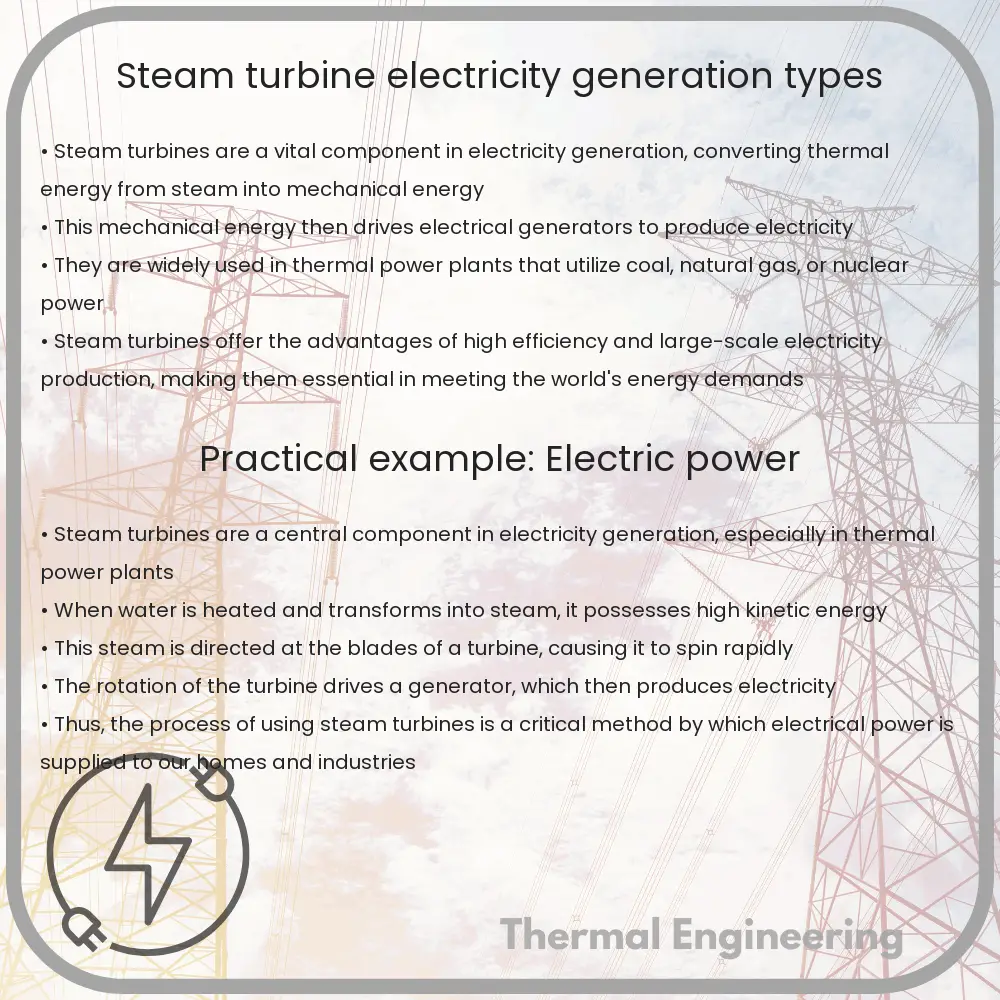
A steam turbine converts thermal energy from steam into mechanical energy, which in turn generates electrical energy through a generator. The steam turbine operates on the basic principles of high-pressure steam directed onto blades mounted on a shaft. This steam causes the shaft to spin at high speeds. A generator connected to this shaft converts mechanical energy into electrical energy through electromagnetic induction.

  • Process: High-pressure steam is produced in a boiler where water is heated to its boiling point and beyond under controlled conditions. This steam is then directed to the turbine’s blades.
  • Energy Conversion: As the steam hits the turbine blades, it expands and cools, causing the turbine to spin. The kinetic energy from this spinning is what is ultimately used to power the generator.
  • Output: The generator converts the mechanical spinning motion of the turbine into electrical energy using magnetic fields. This electricity is then transported through power lines for various uses.

Types of Electricity Generation Involving Steam Turbines

Steam turbines are versatile and can be employed within various types of power plants, each using different fuel sources to produce steam:

  1. Coal-Fired Power Plants: Coal is burned to heat water in a boiler, producing steam.
  2. Nuclear Power Stations: Nuclear fission generates heat to produce steam from water, without combustion.
  3. Combined-Cycle Gas Turbine Plants: In these plants, gas turbines generate electricity and the waste heat from this process is used to generate additional steam and electricity via a steam turbine.
  4. Concentrated Solar Power Plants: These use the sun’s heat (not its light) to produce steam, which then drives a steam turbine. They are distinct from photovoltaic cells which convert sunlight directly into electricity.
  5. Biomass Power Plants: Organic materials are burned to boil water and produce steam, similar to coal-fired power plants.

Efficiency and Future Trends

The efficiency of steam turbines has improved significantly over the years through technological advancements. Modern high-performance steam turbines can convert up to around 35% to 48% of the thermal energy into electrical energy. Continuous improvements are expected as technologies evolve towards higher temperatures and pressures, furthering their thermodynamic efficiency.

Looking ahead, the integration of steam turbines with renewable energy sources and the advancement of materials to withstand higher temperatures and pressures are key areas of development. This aligns with global efforts to reduce carbon emissions and shift towards more sustainable energy systems.

Steam turbines will continue to be a major part of global electricity generation, serving as a reliable and efficient technology in both conventional and emerging renewable energy power plants. Their capability to handle large-scale electricity demands makes them indispensable in our ongoing energy transition.

Insulating Fire Brick | Furnace Lining Uses

Learn about Insulating Fire Bricks (IFBs), their properties, and uses in furnace lining for high-temperature applications.

Insulating Fire Brick | Furnace Lining Uses

Understanding Insulating Fire Bricks and Their Role in Furnace Lining

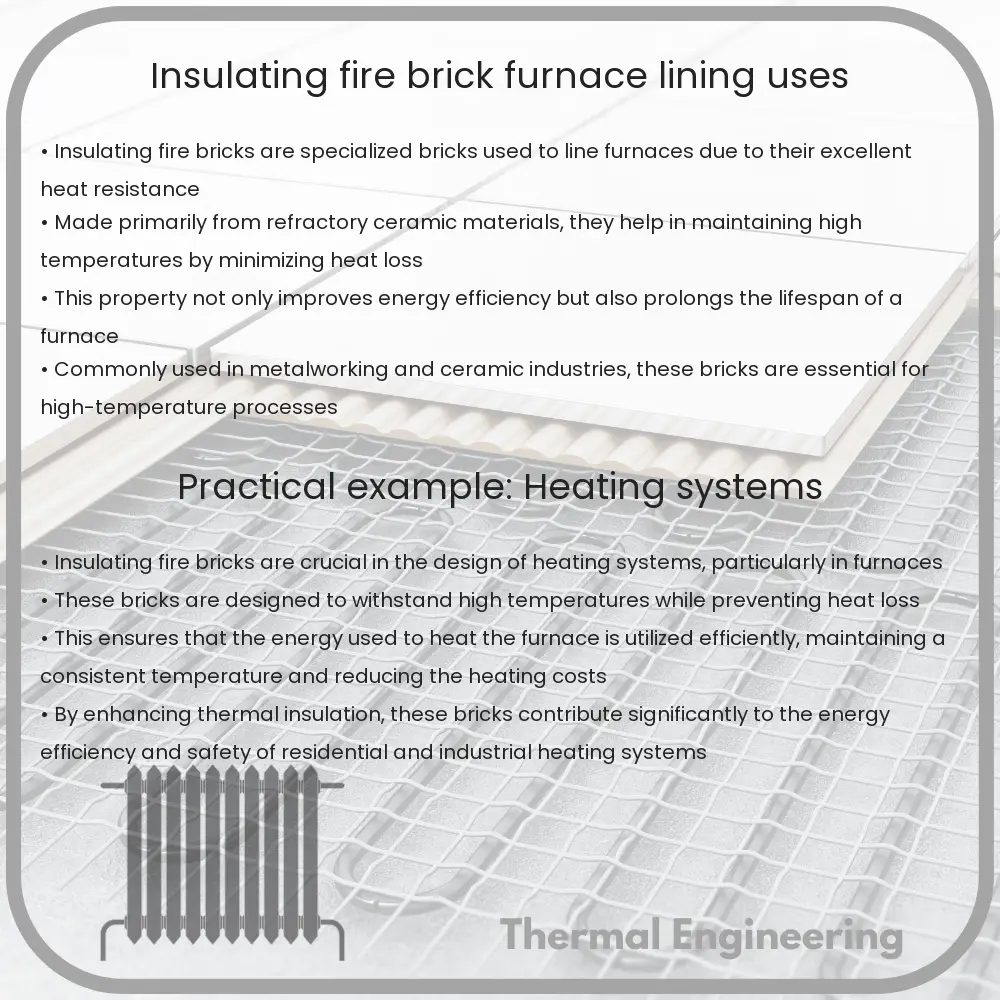
Insulating fire bricks (IFBs) are a type of refractory brick that are used extensively in high-temperature industrial applications, primarily for their insulation properties. These bricks are designed to withstand extreme heat while providing excellent thermal resistance, which helps in energy conservation and improved efficiency in heating processes. The primary application of insulating fire bricks is in the construction of furnace linings, where they play a critical role in maintaining desired temperatures and protecting the furnace’s structural integrity.

Composition and Properties of Insulating Fire Bricks

Insulating fire bricks are typically made from refractory ceramic materials, including kaolin, alumina, silicon carbide, and refractory clay. They are mixed with insulating materials like vermiculite and perlite. The distinctive feature of IFBs compared to traditional fire bricks is their low thermal conductivity. This is achieved by incorporating air spaces within the brick during manufacturing, which reduces heat transfer and helps maintain a high internal furnace temperature efficiently.

The key properties that set insulating fire bricks apart include:

  • Low thermal conductivity
  • High porosity
  • Low heat storage
  • Excellent thermal shock resistance

Applications in Furnace Lining

The primary use of insulating fire bricks is in the lining of furnaces, kilns, and other high-temperature processing equipment. The insulation properties of IFBs are critical in these applications for several reasons:

  • Heat Containment: IFBs help to retain heat within the furnace, which is essential for processes that require high temperatures.
  • Energy Efficiency: By reducing heat loss, IFBs contribute to energy efficiency, lowering operational costs in industrial heating processes.
  • Protection: The use of IFBs helps to protect the structural parts of a furnace from extreme temperatures, thereby prolonging the life of the furnace.
  • Uniform Temperature Distribution: They contribute to more uniform temperature distribution within the furnace, which is crucial for consistent product quality in material processing.

Selection Criteria for Furnace Lining

Choosing the right type of insulating fire brick for a specific furnace application involves several factors:

  • Maximum Operating Temperature: Different types of IFBs can withstand various maximum temperatures. It is essential to select a brick that can handle the furnace’s operating temperature.
  • Thermal Conductivity: Depending on the required efficiency of the furnace, the thermal conductivity of the brick must be considered to minimize heat loss.
  • Mechanical Strength: Although IFBs are generally weaker than dense firebricks, their mechanical strength must still be adequate to withstand structural and operational stresses.
  • Compatibility with Furnace Atmosphere: The chemical properties of the brick should be compatible with the furnace atmosphere to prevent reactions that might degrade the lining.

Conclusion

Insulating fire bricks play a crucial role in the efficiency and longevity of high-temperature furnaces and kilns. By understanding the properties and appropriate applications of IFBs, engineers and technicians can optimize the design and operation of these critical facilities. Proper selection and maintenance of furnace lining not only ensure operational efficiency but also significant cost savings and improved safety in industrial heating environments.

Radiative Cooling Paint | Passive Application

Learn about radiative cooling paint, a technology that promotes sustainable cooling by reflecting sunlight and emitting infrared heat passively.

Radiative Cooling Paint | Passive Application

Understanding Radiative Cooling Paint and Its Passive Applications

Radiative cooling paint represents a groundbreaking technological advancement in the field of thermal engineering. This innovative material is designed to reflect sunlight and efficiently emit infrared heat, providing a passive cooling solution without the need for energy consumption. The application of this paint can significantly reduce the need for air conditioning, contributing to energy conservation and sustainability efforts.

How Does Radiative Cooling Paint Work?

The functionality of radiative cooling paint is based on its unique ability to reflect solar radiation and simultaneously emit infrared radiation. This dual action is achieved through the use of engineered materials that have specific radiative properties. Typically, the paint consists of a polymer or acrylic base mixed with pigments or additives that are highly reflective in the visible and near-infrared spectrum. The key is in its ability to emit heat in the form of infrared radiation at a wavelength where the atmosphere has a “window” that allows radiation to pass through and dissipate into space.

Components of Radiative Cooling Paint

  • Polymer Base: Serves as the primary binder and forms the bulk of the paint mixture.
  • Reflective Pigments: Commonly titanium dioxide or similar compounds that reflect sunlight effectively.
  • IR Emissive Additives: These additives are crucial for enhancing the paint’s ability to emit infrared radiation. Examples include particles of barium sulfate or others that have been micro-structured to radiate at optimal wavelengths.

Passive Applications of Radiative Cooling Paint

Radiative cooling paint can be passively applied to a variety of surfaces where reducing heat intake or dissipating heat is beneficial. Here are some key applications:

  1. Building Roofs and Walls: Applying radiative cooling paint on the roofs and exterior walls of buildings can significantly lower indoor temperatures, reducing the energy required for air conditioning.
  2. Vehicles: Use on the roofs and bodies of vehicles to keep interiors cooler under sun exposure, potentially enhancing fuel efficiency due to reduced air conditioning use.
  3. Storage Tanks: Coating large storage tanks to maintain the temperature of the stored liquids, especially important for chemicals sensitive to temperature fluctuations.
  4. Telecommunications Equipment: Applying it to housings of telecommunications equipment to prevent overheating and maintain performance reliability.

Benefits of Radiative Cooling Paint

The implementation of radiative cooling paint offers several significant advantages:

  • Energy Savings: By reducing the reliance on air conditioning, significant energy savings can be achieved, particularly in hot climates.
  • Environmental Impact: Lower energy consumption translates to reduced greenhouse gas emissions, supporting sustainability goals.
  • Cost-Effective: As a passive cooling method, once applied, the paint requires no additional energy or maintenance, making it a cost-effective alternative to traditional cooling methods.
  • Ease of Application: Similar to conventional paint, it can be easily applied to a variety of surfaces, making it accessible for widespread use.

In conclusion, radiative cooling paint is an innovative and environmentally friendly technology that offers a practical solution to heat management challenges in various applications. By harnessing the principles of radiative cooling, this paint can play a crucial role in reducing energy consumption and promoting sustainable practices across numerous industries.

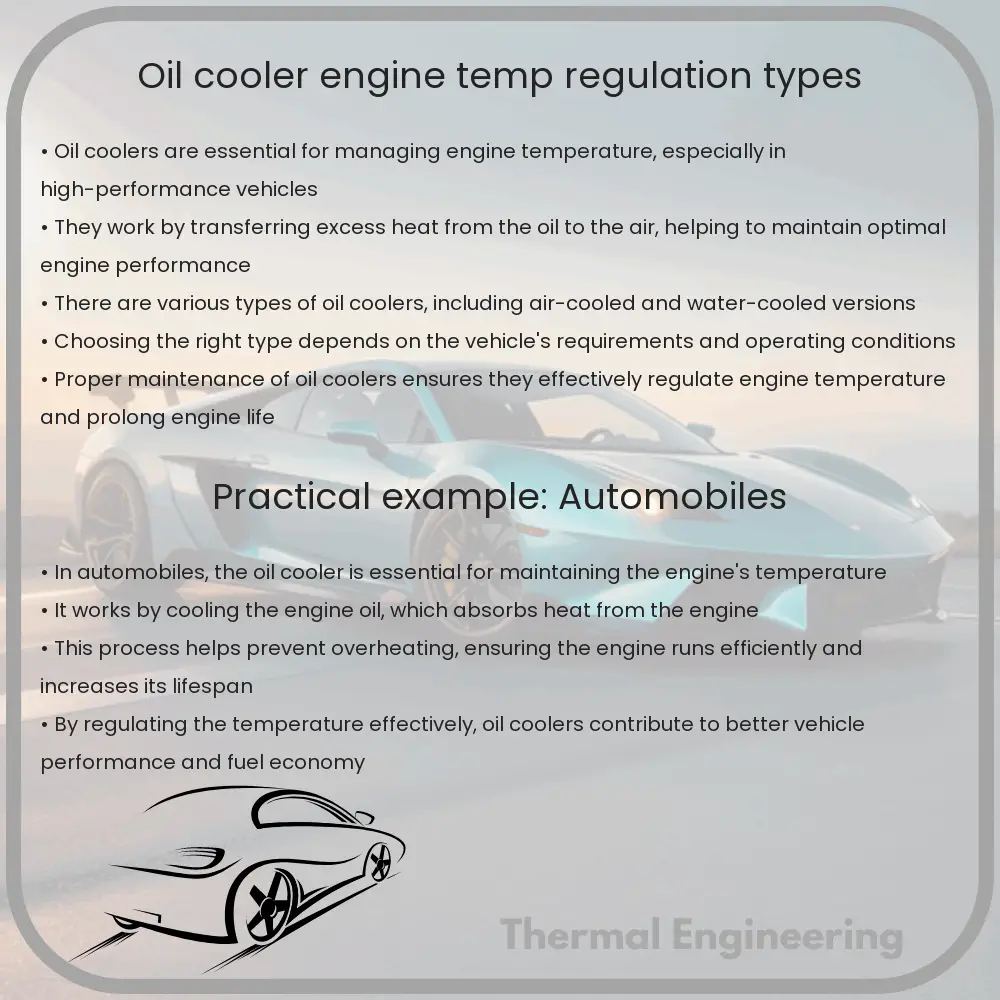
Oil Cooler | Engine Temp Regulation Types

Learn about oil coolers and their crucial role in engine temperature regulation for vehicle safety and efficiency.

Oil Cooler | Engine Temp Regulation Types

Understanding Oil Coolers in Engine Temperature Regulation

Engine temperature regulation is pivotal for the efficient and safe operation of a vehicle. Oil coolers play a critical role in this process, particularly in high-performance vehicles or those operating under strenuous conditions. This article will explore how oil coolers work, their significance, and compare them with other engine temperature regulation methods.

What is an Oil Cooler?

An oil cooler is a device that helps in regulating the oil temperature circulating through an engine. The primary purpose of an oil cooler is to prevent the oil from overheating and to maintain optimal operating temperatures of an engine. Overheated oil can lead to various engine problems, including reduced efficiency, increased wear, and potential engine failure.

How Does an Oil Cooler Work?

Oil coolers function similarly to radiators but specifically for engine oil. A typical oil cooler uses either air or liquid to remove excess heat from the oil. The process involves:

  • Circulation of hot oil from the engine into the cooler
  • Transfer of heat from the oil to the cooling medium (air or coolant)
  • Return of the cooled oil back to the engine

In air-cooled oil coolers, the hot oil flows through small tubes or channels where it is exposed to air flow. This can be either ambient air or blasted by a fan. Liquid-cooled oil coolers, on the other hand, involve the use of engine coolant to cool the oil. It passes the oil through a heat exchanger where it comes into contact with the coolant, transferring the heat.

Types of Engine Temperature Regulation

Besides oil coolers, there are several other methods used to regulate engine temperature:

  • Radiator cooling systems
  • Thermostats
  • Water pumps

The radiator is the most familiar part of an engine’s cooling system. It works by dissipating heat from the engine coolant. The coolant absorbs heat from the engine and is then cooled down in the radiator before recirculating back to the engine.

Thermostats are another crucial component. They control the flow of coolant based on temperature, ensuring the engine heats up rapidly and maintains its temperature at an optimal level.

Water pumps help in circulating coolant throughout the engine and the radiator, playing a significant role in maintaining the engine at a safe operating temperature.

Comparison and Conclusion

While radiators primarily handle coolant and are generally effective for most passenger vehicles, oil coolers are particularly useful for performance vehicles or those under heavy loads where oil temperature can reach critical levels. They are an additional measure to handle excessive thermal load beyond what the primary radiator can manage.

Understanding these engine temperature regulation systems helps in maintaining vehicle performance and longevity. Incorporating an oil cooler, especially in scenarios demanding robust engine performance, can be a wise choice to enhance engine safety and efficacy. By maintaining optimal temperature, oil coolers help ensure that the engine and its components operate within safe thermal boundaries, thereby reducing wear and extending the life of the engine.

As engineering designs evolve, the integration and optimization of such cooling systems continue to advance, providing more efficient and tailored solutions to engine cooling and overall vehicle performance.