Facebook Instagram Youtube Twitter

Heat transfer in thermal desalination

Exploring heat transfer in thermal desalination, focusing on conduction, convection, and radiation, and strategies to enhance efficiency.

Heat transfer in thermal desalination

Understanding Heat Transfer in Thermal Desalination

Thermal desalination is a critical process used to produce potable water from seawater or brackish water by removing salts and other impurities. This process relies heavily on the principles of heat transfer, which involve the movement of heat energy from one place to another. Understanding how heat transfer works in thermal desalination can illuminate why this technology is vital in water-scarce regions and how it can be optimized for efficiency and sustainability.

Basics of Heat Transfer

Heat transfer in thermal desalination occurs primarily through three mechanisms: conduction, convection, and radiation. However, in the context of desalination, conduction and convection play more significant roles:

  • Conduction: This is the transfer of heat through a solid material from one molecule to another. In desalination, heat conduction occurs within the walls of heat exchangers or condenser coils.
  • Convection: This method involves the transfer of heat by the physical movement of a fluid (which can be water or steam in desalination processes). Convection aids in transferring the heat from a heat source to the saline water to vaporize it.

Radiation, the transfer of heat through electromagnetic waves, has a minimal direct role in thermal desalination processes.

Key Processes in Thermal Desalination

Two of the primary methods of thermal desalination are Multi-Stage Flash (MSF) and Multi-Effect Distillation (MED), both of which efficiently utilize heat transfer principles:

  • Multi-Stage Flash (MSF): In MSF, seawater is heated in a series of stages. Each stage is at a lower pressure than the last, causing the heated water to flash evaporate—a rapid form of boiling without significant temperature increase. This utilizes latent heat transfer, a form of convection, where heat energy is transferred during the phase change from liquid to vapor.
  • Multi-Effect Distillation (MED): Here, seawater is passed through multiple chambers (effects) under increasingly lower pressures. In each effect, the boiling point of the water is lower than in the previous one. Steam generated from one effect is used to heat and vaporize the water in the next, capitalizing on the maximum heat transfer with minimal energy input.

Thermodynamic Principles

The efficiency of thermal desalination processes heavily depends on thermodynamic principles, particularly the conservation of energy and the increase in entropy. The first law of thermodynamics, which is a version of the law of conservation of energy, states that energy can neither be created nor destroyed; it only changes form. In desalination, this principle ensures that all heat transfer leads to water vaporization without loss of energy in other forms.

However, efficiency in heat transfer also hinges on entropy considerations, adhering to the second law of thermodynamics. This law dictates that all natural processes increase the entropy of the universe, and in engineering terms, this translates to an inevitable production of some waste heat in all energy conversions.

Improving Heat Transfer Efficiency

Improving the efficiency of heat transfer in thermal desalination can reduce energy consumption and operational costs. Several strategies can be employed:

  • Enhanced heat exchanger designs: Increasing the heat transfer surface area or improving the conductivity of materials used in heat exchangers can significantly boost efficiency.
  • Optimized operating conditions: Adjusting pressures and temperatures to ideal values can maximize heat transfer while minimizing energy use.
  • Heat recovery systems: Implementing systems that capture and reuse waste heat can considerably cut down the energy requirements of the desalination process.

Heat transfer in thermal desalination is a complex yet fascinating subject that merges principles of thermodynamics and fluid mechanics. By improving our understanding and application of these principles, we can enhance the sustainability and efficacy of water purification processes worldwide, thereby addressing one of the most pressing issues of our time—water scarcity.
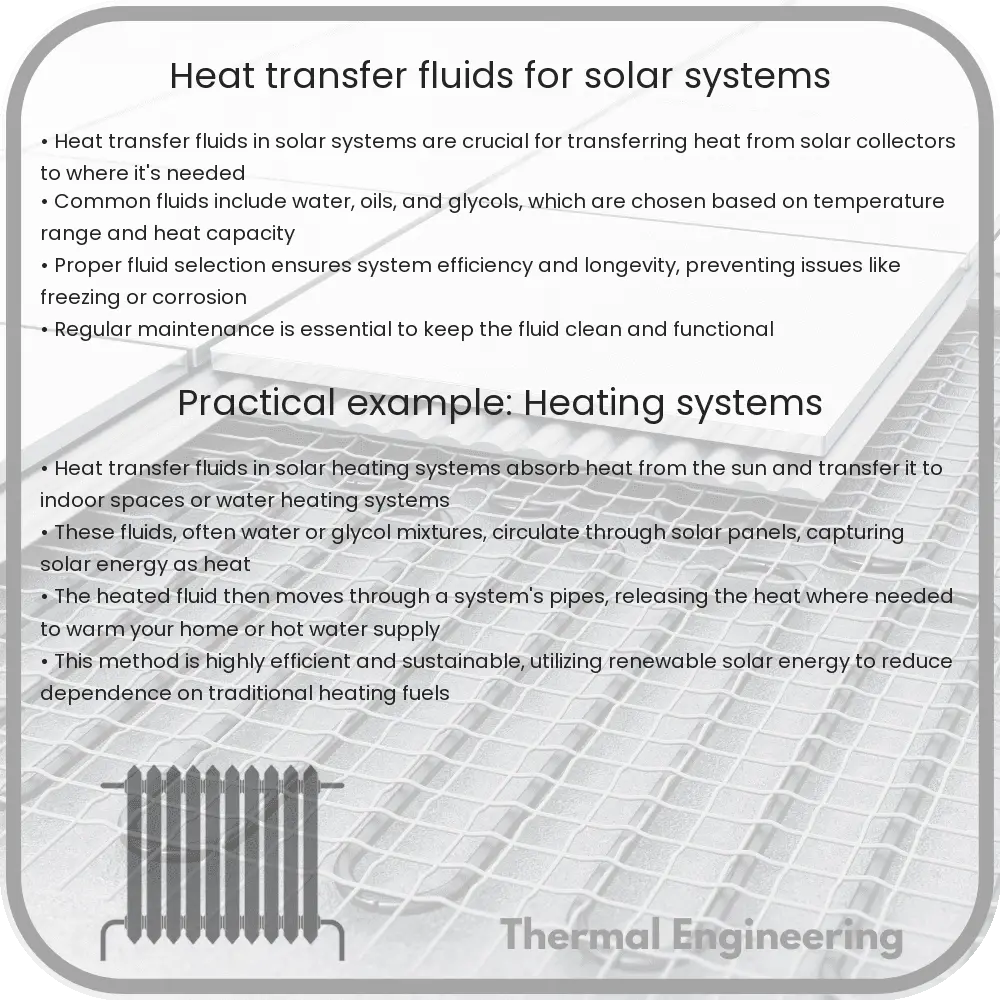
Heat transfer fluids for solar systems

Explore the role, types, and properties of heat transfer fluids in solar thermal systems, crucial for system efficiency and effectiveness.

Heat transfer fluids for solar systems

Understanding Heat Transfer Fluids in Solar Systems

Heat transfer fluids (HTFs) play a crucial role in the efficiency and effectiveness of solar thermal systems. These fluids are used to absorb, transport, and store heat energy from the sun. This article explores the types of heat transfer fluids used in solar systems, their properties, and the factors affecting their performance.

Types of Heat Transfer Fluids

There are several types of heat transfer fluids used in solar thermal systems, each with its own unique properties and applications. The most commonly used fluids include:

  • Water: Often used in domestic solar water heating systems due to its high heat capacity and availability. However, water’s freezing and boiling points require additives to prevent freezing in cold climates and to raise the boiling point in very hot conditions.
  • Antifreeze Solutions: These are typically water-based solutions containing glycols (like ethylene glycol or propylene glycol) to lower the freezing point of the fluid. They are widely used in colder regions where temperatures can drop below the freezing point of water.
  • Synthetic Oils: High-performance synthetic oils are used in high-temperature solar thermal applications. They can operate at higher temperatures without degrading, which is crucial for systems like concentrated solar power (CSP) plants.
  • Molten Salts: Used primarily in CSP plants, molten salts can operate at very high temperatures (up to 600 degrees Celsius). They have excellent thermal storage properties, which make them ideal for storing heat during non-sunny hours.

Key Properties of Heat Transfer Fluids

The effectiveness of a heat transfer fluid in solar thermal systems is determined by several key properties:

  • Thermal capacity: Indicates how much heat the fluid can absorb and transport. A higher thermal capacity means more efficient heat transfer.
  • Viscosity: Affects the fluid’s flow rate through the pipes. Lower viscosity fluids require less energy to pump through the system.
  • Thermal stability: A measure of how well the fluid can withstand prolonged exposure to high temperatures without degrading.
  • Freezing and boiling points: Important for determining the operational environment of the solar system. Fluids must maintain a liquid state within the operating temperature ranges of the system.
  • Corrosivity: Fluids should be chemically inert to avoid damaging the components of the solar thermal system.

Performance Factors

Several factors affect the performance and choice of heat transfer fluids in solar thermal systems:

  • Climatic conditions: In colder climates, fluids with lower freezing points are preferred, while in hotter areas, fluids with higher boiling points are necessary.
  • System design: The type of solar thermal system (e.g., low, medium, or high temperature) will dictate the type of fluid needed based on the operating temperature and thermal stability requirements.
  • Economic considerations: Cost-effectiveness is also an important factor. While molten salts provide excellent thermal storage, they are more expensive than standard glycol solutions.
  • Environmental impact: The ecological safety of the fluid used is crucial. Biodegradable, non-toxic fluids are increasingly favored to minimize environmental risks.

Heat transfer fluids are integral to the performance of solar thermal systems. By understanding the different types of fluids available and the properties that affect their performance, system designers can tailor solutions that maximize efficiency, cost-effectiveness, and environmental sustainability.

Whether you’re a budding engineer, a student, or simply curious about solar energy systems, grasping the basics of heat transfer fluids enhances your understanding of renewable energy technologies and their applications.

Thermal analysis of braking systems

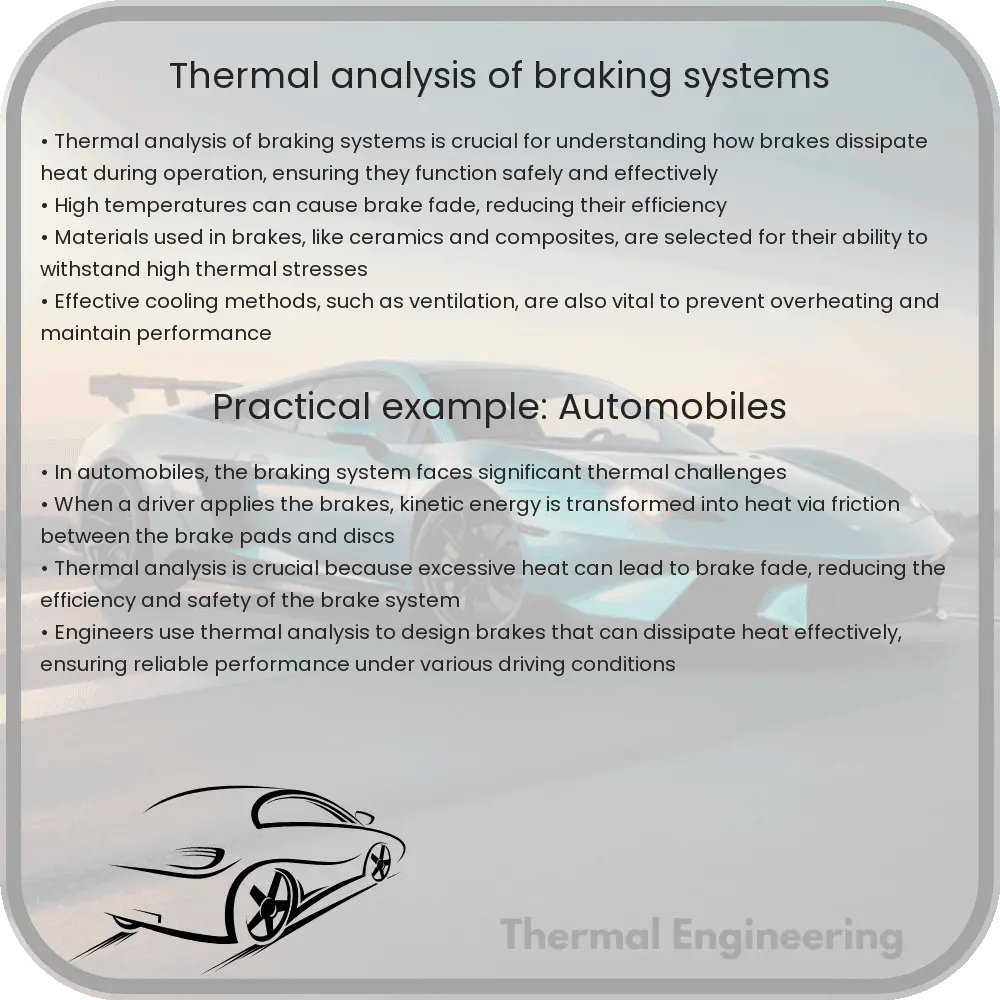
This article examines thermal analysis in braking systems, focusing on heat generation, dissipation, and the impact on safety and performance in vehicles.

Thermal analysis of braking systems

Thermal Analysis of Braking Systems

Understanding the thermal performance of braking systems is crucial in the design and safety of automotive and aeronautical engineering. As a vehicle brakes, kinetic energy – due to the vehicle’s motion – is transferred into thermal energy due to friction, significantly increasing the temperature of the braking system. This article explores the basics of thermal analysis applied to braking systems, explaining how heat generation and dissipation impact system performance and safety.

Heat Generation in Brakes

The primary source of heat generation in braking systems is the friction between the brake pad and the rotating disc. When the brake pedal is pressed, hydraulic or mechanical force clamps these brake pads onto spinning rotors (or drums in some vehicles), generating friction. This friction converts kinetic energy from the vehicle’s motion into heat. The amount of heat generated is directly proportional to the vehicle’s mass and the square of its velocity, making high-speed or heavy vehicles particularly susceptible to high brake temperatures.

The basic equation governing this conversion is:

\[ Q = μ * N * v * d \]

Where:

  • Q is the heat generated
  • μ is the coefficient of friction between the pad and the rotor
  • N is the normal force
  • v is the relative velocity between the braking surfaces
  • d is the distance over which the force is applied

Heat Transfer and Dissipation

Once heat is generated, the braking system must transfer and dissipate it effectively into the surrounding environment to prevent overheating, which could lead to brake fade or failure. There are three main modes of heat transfer: conduction, convection, and radiation.

  • Conduction occurs between materials that are in direct contact. Within the braking system, heat is conducted from the pads into the rotors and then to the surrounding air.
  • Convection is the transfer of heat by the motion of fluids. The air flowing over the surface of the brakes as the vehicle moves helps to remove heat from the surface of the rotors.
  • Radiation is the transfer of heat through electromagnetic waves. Hotter components of the braking system, like rotors, can radiate heat to cooler parts such as calipers and nearby suspension components.

Effective thermal management in braking systems can involve the use of materials with high thermal conductivity for brake components, such as certain ceramics or composites, and/or the design of the components to maximize surface area for better heat dissipation.

Modeling and Simulation in Thermal Analysis

The development of reliable braking systems often involves sophisticated modeling and simulation. Engineers use computational fluid dynamics (CFD) and finite element analysis (FEA) to predict how different designs will perform under thermal stress and to optimize brake systems for heat dissipation. These simulations help in understanding how changes in design variables, like the thickness of the brake disc or the type of materials used, influence the system’s thermal performance.

Safety Considerations

Keeping the temperatures within safe limits prevents brake fade, where higher temperatures cause a reduction in friction between the pad and the rotor, and as a result, reduced braking effectiveness. This scenario highlights why thermal analysis is fundamental to the design and safety assurance of braking systems.

Moreover, sustained high temperatures can lead to the premature wear and failure of braking components, raising maintenance costs and safety risks. Hence, engineers strive to design brakes not only to withstand the mechanical pressures of stopping a vehicle but also to manage and dissipate heat efficiently under varying operating conditions.

Conclusion

The thermal analysis of braking systems encapsulates a critical aspect of vehicle safety and performance engineering. Through careful consideration of materials, design and thermal properties, engineers can ensure that the brakes perform reliably in all conditions, protecting vehicle integrity and occupant safety. Sustained research and innovation are imperative to meet the evolving demands of modern transportation and to handle the high-performance expectations from braking systems.

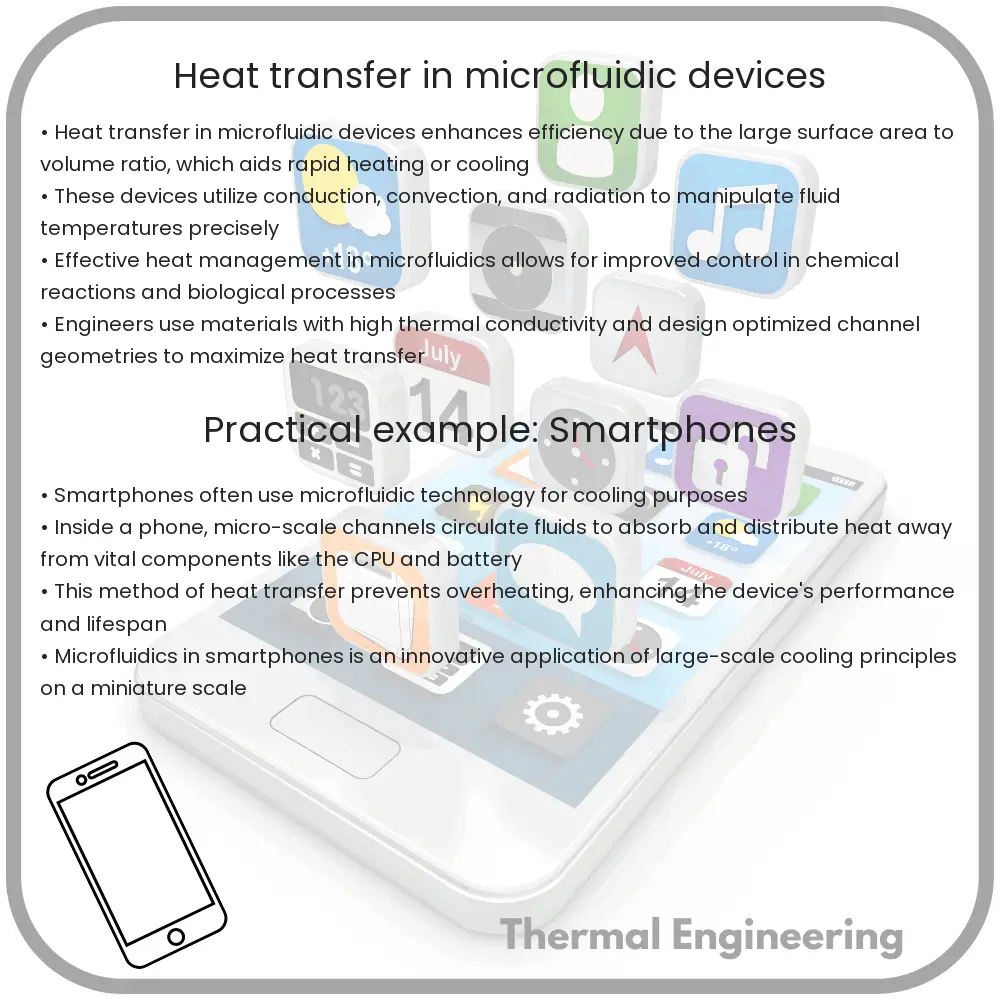
Heat transfer in microfluidic devices

Explore how heat transfer operates within microfluidic devices, impacting chemical reactions and biological processes.

Heat transfer in microfluidic devices

Understanding Heat Transfer in Microfluidic Devices

Microfluidic devices, often described as labs-on-a-chip, are increasingly vital in biochemical and medical fields for their ability to manipulate small volumes of fluids. One crucial aspect of their operation is understanding heat transfer, which affects everything from chemical reaction rates to biological cell viability. In this article, we will explore the types of heat transfer in microfluidic devices and consider some engineering solutions to manage heat effectively.

Types of Heat Transfer in Microfluidic Devices

Heat transfer in microfluidic devices can occur in three primary ways:

  • Conduction: This is the transfer of heat through a solid material or between fluids in contact. In microfluidics, heat conduction is significant between different layers of the device materials and between the fluid and the device walls.
  • Convection: Convection occurs when heat is carried along with the movement of fluids. In most microfluidic applications, fluid motion is laminar (i.e., flows in parallel layers with no disruption between them), which profoundly influences convection mechanisms.
  • Radiation: Although less common in microfluidic devices due to their small scale and the types of materials used, radiation can transfer heat between surfaces that are separated by a transparent medium without needing direct contact.

Of these, conduction and convection are most relevant in microfluidic applications, with conduction often dominating due to the small dimensions and close contact between different components of the devices.

Fundamental Principles

The fundamental equation governing heat transfer in microfluidic devices is the heat equation, derived from the law of conservation of energy. For a homogeneous and isotropic material, it is given in its simplest form by:

\( \frac{\partial T}{\partial t} = \alpha \left(\frac{\partial^2 T}{\partial x^2} + \frac{\partial^2 T}{\partial y^2} + \frac{\partial^2 T}{\partial z^2}\right) \)

where \( T \) is the temperature, \( t \) is time, \( \alpha \) is the thermal diffusivity of the material, and \( x, y, z \) are the spatial coordinates.

Engineering Solutions for Managing Heat

Effective management of heat in microfluidic devices is critical for the accuracy and reliability of the processes they are intended to carry out. Engineers employ several strategies:

  • Material Selection: Choosing materials with appropriate thermal conductivity can help manage heat transfer efficiently. For example, silicon, commonly used in microfabrication, has high thermal conductivity, assisting in the rapid spread of heat and preventing local hotspots.
  • Device Design: The geometric design of the device can also influence heat transfer. Thin layers and high surface-area-to-volume ratios typical in microfluidics enhance heat dissipation.
  • Active Cooling Systems: In devices where heat might affect the system’s function (e.g., in PCR amplification), integrating active cooling systems such as Peltier coolers can be effective.
  • Flow Control: Adjusting the flow rate of fluids can influence convective heat transfer; faster flow rates generally enhance heat removal.

Conclusion

Heat transfer in microfluidic devices is a dynamic field that combines elements of physics, chemistry, biology, and engineering. Understanding and controlling thermal effects are crucial for the successful operation of these devices, especially when scaling down lab procedures to the microscale. As technology advances, the ongoing research and innovation in heat management within microfluidics promise to drive new applications and improvements.

This intriguing intersection of heat transfer and microscale fluid dynamics not only underscores the complexities of microfluidic device design but also highlights how pivotal thermal management is in the advancement of modern biochemical and medical technologies.

Thermal performance of green roofs

Learn how green roofs enhance building insulation and contribute to energy conservation through their remarkable thermal performance.

Thermal performance of green roofs

Understanding the Thermal Performance of Green Roofs

Green roofs, also known as living roofs, are increasingly recognized not only for their beauty and role in promoting urban biodiversity but also for their significant environmental benefits. One of the key advantages of green roofs is their thermal performance. This article explores how green roofs enhance building insulation and contribute to energy conservation.

What is a Green Roof?

A green roof involves the growth of vegetation over a waterproofing membrane installed on top of a building. Green roofs can be extensive, with a shallow layer of soil supporting low-growing drought-resistant plants, or intensive with deeper soil layers that can host a wide range of plants, including shrubs and small trees.

Thermal Regulation Mechanisms

Green roofs provide thermal benefits through several mechanisms:

  • Insulation: The layers of a green roof, including soil, plants, and retained water, add insulation to a building. This reduces the heat flow into or out of the building, leading to lower heating and cooling costs.
  • Evapotranspiration: As plants on green roofs transpire, they release moisture into the air. This process helps cool the surrounding environment, akin to the cooling effect of sweating in humans.
  • Reflectivity: Light-colored and densely vegetated green roofs reflect more solar radiation than traditional dark-colored roofs, further reducing heat absorption.

Measuring Thermal Performance

The effectiveness of a green roof in terms of thermal insulation can be quantified in several ways:

  • Thermal Resistance (R-value): This measures the ability of the green roof layers to resist heat flow. Higher R-values indicate better insulation properties.
  • Heat Flux: Measuring the rate of heat transfer through the green roof can help quantify its insulating effectiveness. Reduced heat flux means better thermal regulation.
  • Surface Temperature: By comparing the surface temperature of a green roof with that of a conventional roof, the cooling effect of the green roof can be assessed. Generally, green roofs exhibit lower surface temperatures.

Real-world Impact

Studies have shown that green roofs can reduce the demand for air conditioning in the summer and heating in winter, leading to significant energy savings. For instance, a study in Toronto reported that replacing conventional roofs with green roofs resulted in a reduction of up to 75% in summer cooling needs. Winter heat demand was also reduced, though the impact was less pronounced than in summer.

Challenges and Considerations

While the benefits of green roofs are substantial, there are also challenges that need to be addressed:

  • Weight: The additional weight of soil, plants, and retained water requires a robust structural support, especially for intensive green roofs.
  • Maintenance: Unlike conventional roofs, green roofs require regular maintenance such as irrigation, feeding, and weeding.
  • Cost: The initial installation cost of a green roof is typically higher than that of a traditional roof. However, the long-term energy savings can offset these initial costs.

In conclusion, the thermal performance of green roofs makes them a compelling choice for sustainable building design. By integrating green roofs into urban infrastructure, cities can not only enhance building efficiency but also contribute to a healthier urban environment.

Convective heat transfer in porous media

Learn about convective heat transfer in porous media, a key concept in engineering applications like geothermal energy, insulation, and chemical processing.

Convective heat transfer in porous media

Understanding Convective Heat Transfer in Porous Media

Convective heat transfer in porous media plays a critical role in various engineering applications such as geothermal energy extraction, insulation technology, and chemical processing equipment design. Grasping the basics of this phenomenon is essential for engineers and scientists working to optimize systems for both efficiency and safety.

What is Porous Media?

Porous media refers to a material containing pores (voids). The pores can vary in size and shape, and the structure of the medium can range from random and disorganized to highly ordered. Common examples of porous media include soils, rocks, biological tissues, and manufactured materials like foams and ceramics.

Fundamentals of Convective Heat Transfer

Heat transfer in porous media can occur through conduction, convection, and radiation. However, convection refers to the transfer of heat by the movement of fluids (liquids or gases) through the pores of the material. In engineering, understanding convective heat transfer through porous media is crucial because it directly affects the performance and stability of many systems.

Types of Convective Heat Transfer

There are two primary types of convective heat transfer:

  • Natural convection: This occurs due to buoyancy-driven flow, which happens when fluid motion is prompted by density differences in the fluid due to temperature gradients. The fluid movement is entirely induced by the thermal condition without any mechanical aid.
  • Forced convection: This type of convection happens when an external force, such as a pump or fan, propels the fluid through the porous medium. The fluid movement is not solely dependent on the thermal conditions but also on the external force applied.

Mathematical Modeling of Convective Heat Transfer

To analyze and predict convective heat transfer in porous media, engineers use various mathematical models that often involve simplifying assumptions. The most common approach involves using the Darcy-Brinkman-Forchheimer (DBF) model. This model combines Darcy’s law for low velocity flow through porous media with the Brinkman extension accounting for viscous shear and the Forchheimer terms for flow inertial effects.

The general form of the energy equation used to model heat transfer in fluid-saturated porous media under the DBF model is:

Tt = α(Txx + Tyy + Tzz) + v·∂T – ρW

Where:

  • T is the temperature,
  • α is the thermal diffusivity,
  • v is the fluid velocity,
  • ∂T represents the temperature gradient, and
  • ρW represents the volumetric heat sources or sinks.

Applications

Understanding how convective heat transfer works in porous media allows for designing more effective systems across different fields:

  • Geothermal systems: Enhances the efficiency of heat extraction from underground formations.
  • Building insulation: Improves the thermal resistance of building materials to enhance energy efficiency.
  • Chemical reactors: Optimizes reactor design to ensure uniform temperature distribution for improved reaction rates.

Conclusion

Convective heat transfer in porous media is a complex but fascinating area of engineering that blends principles of fluid dynamics and thermal energy management. By understanding and applying models of convective heat transfer, engineers can innovate and improve numerous technological and industrial processes, effectively tackling both traditional challenges and new demands in sustainable technology development.

Thermal runaway prevention in batteries

Learn about thermal runaway in batteries, its causes, and the effective prevention techniques to enhance safety in devices using lithium-ion batteries.

Thermal runaway prevention in batteries

Understanding Thermal Runaway in Batteries and Prevention Techniques

Thermal runaway in batteries is a critical issue that can lead to overheating, fires, or even explosions. It is particularly prevalent in lithium-ion batteries, which are commonly used in a wide range of devices from smartphones to electric vehicles. By understanding the causes of thermal runaway and implementing prevention strategies, engineers can enhance the safety and reliability of battery technologies.

What is Thermal Runaway?

Thermal runaway is a chain reaction within a battery that results in a rapid rise in temperature and pressure. It occurs when the heat generated inside the battery exceeds its ability to dissipate that heat. This condition can be triggered by several factors, including overcharging, physical damage, electrical malfunction, or external heating.

Key Factors Contributing to Thermal Runaway

  • Overcharging: Exceeding the voltage limit of the battery can result in excessive current, which generates additional heat.
  • Short Circuiting: It can occur if the separator between electrodes breaks, allowing direct contact and creating a significant amount of heat swiftly.
  • Mechanical Damage: Punctures or crushing of the battery can disrupt internal structures leading to internal short circuits.
  • External Heat Sources: Exposure to high temperatures can reduce the efficiency of heat dissipation mechanisms in a battery.

Prevention Strategies for Thermal Runaway

Preventing thermal runaway involves multiple engineering approaches aimed at enhancing the design of the battery and incorporating safety mechanisms. Here are some effective strategies:

  1. Battery Management Systems (BMS): A BMS monitors the state of charge and temperature of the battery cells, applying corrective measures like reducing current or disconnecting the battery when dangerous conditions are detected.
  2. Thermal Barriers: Using thermal insulation materials can help contain and delay the spread of heat between cells within a battery pack.
  3. Improved Electrode and Separator Materials: Developing materials that can withstand higher temperatures and reduce the likelihood of short circuits can significantly improve battery safety.
  4. Temperature Controls: Active cooling systems such as air or liquid cooling can be integrated to manage the internal temperature of the battery pack.
  5. Vent Mechanisms: These allow gases produced during thermal runaway to escape, thereby preventing pressure buildup and potential explosion.

Future Directions in Battery Safety

Research continues to advance in the field of battery technology to find even more robust solutions to prevent thermal runaway. Innovations such as solid-state batteries replace the liquid electrolyte with a solid, which could significantly reduce the risk of short-circuiting and thermal runaway. Moreover, the use of artificial intelligence in battery management systems could lead to smarter, adaptive controls that anticipate and mitigate risks in real-time.

Ultimately, enhancing battery safety involves a combination of rigorous testing, precise engineering, and continuous monitoring. As the demand for batteries grows with the rise of technologies like electric vehicles and renewable energy systems, the importance of effective thermal runaway prevention measures becomes ever more critical.

Heat transfer in distillation columns

Explore the principles of heat transfer in distillation columns critical for optimizing industrial separation processes in chemical and petroleum sectors.

Heat transfer in distillation columns

Understanding Heat Transfer in Distillation Columns

Distillation is a critical process used in industries such as chemicals, petroleum, and beverages to separate components of a mixture based on differences in their boiling points. The efficiency and effectiveness of this separation predominantly depend on the heat transfer within the distillation column. Understanding how heat transfer works in these systems is key to optimizing processes and enhancing productivity.

Basics of Heat Transfer in Distillation

Heat transfer in distillation columns primarily occurs through convection and conduction. As a mixture is heated, the more volatile component vaporizes, and this vapor is then cooled and condensed back into a liquid in a different part of the column. This cycle involves the transfer of heat from hotter to cooler areas within the column.

  • Convection: This is the transfer of heat by the physical movement of a fluid (which can be liquid or gas). In distillation, convection occurs when hot vapors rise and cooler liquids descend.
  • Conduction: Heat is also transferred through conduction, where heat is passed along from molecule to molecule. In a distillation column, this occurs in the column’s walls and internal structures, affecting the temperature gradients essential for distillation.

Key Elements Influencing Heat Transfer

Several factors influence the effectiveness of heat transfer within a distillation column:

  1. Material of Construction: The type of material used for building the column impacts the rate of heat transfer, as different materials have different thermal conductivities.
  2. Column Design: The efficiency of a distillation column also depends on its design, particularly the arrangement and type of trays or packing used. These structures must allow for effective contact between rising vapors and descending liquids, facilitating heat exchange.
  3. Operating Conditions: Variables such as pressure and temperature play vital roles in determining how effectively heat is transferred. Pressure affects the boiling point of components, while temperature gradients drive the thermodynamic processes necessary for distillation.

Mathematical Representation of Heat Transfer

Heat transfer within distillation columns can be quantified using basic heat transfer equations. The general heat transfer equation is given by:

Q = U * A * ΔT

  • Q: Total heat transfer rate (in watts or kilowatts)
  • U: Overall heat transfer coefficient (in watts per square meter per Kelvin)
  • A: Area through which heat is being transferred (in square meters)
  • ΔT: Temperature difference across the heat transfer surface (in Kelvin)

In distillation columns, these parameters can be complex due to the variations in mixture compositions, phase changes, and column internals.

Enhancing Heat Transfer in Distillation Columns

To improve the efficiency of heat transfer, engineers can optimize several aspects:

  • Increasing Surface Area: By installing more trays or using structured packings with large surface areas, the interaction between vapor and liquid phases is enhanced.
  • Improving Material Thermal Conductivity: Using materials with higher thermal conductivity for constructing the column can help in faster heat transfer.
  • Optimizing Operation Conditions: Adjusting the pressure and temperature to optimal levels can significantly impact the efficiency of the distillation process.

Effective heat management in distillation columns not only improves the separation efficiency but also reduces energy consumption, leading to cost-effective and environmentally friendly operations. Understanding the principles and mechanics of heat transfer within these units is essential for any engineer looking to design or improve distillation processes.

Radiative heat transfer in thin films

Understanding radiative heat transfer in thin films, key for managing thermal properties in advanced engineering applications.

Radiative heat transfer in thin films

Radiative Heat Transfer in Thin Films

Radiative heat transfer is a fundamental mechanism by which energy, in the form of electromagnetic radiation, is emitted, absorbed, transmitted, or scattered across matter. In the context of thin films—layers of material ranging from a few nanometers to several micrometers in thickness—understanding radiative heat transfer is key to effectively managing thermal properties in various engineering applications such as solar cells, insulation technologies, and microelectronic devices.

Basic Principles of Radiative Heat Transfer

Radiative heat transfer involves the emission and absorption of photons and is described by the Planck’s Law, which quantifies the spectral intensity of radiation emitted by a black body as a function of temperature. The Stefan-Boltzmann Law, expressed as \( M = \sigma T^4 \) (where \( M \) is the total emitted power, \( \sigma \) the Stefan-Boltzmann constant, and \( T \) the absolute temperature of the black body), also plays a crucial role by stating the total energy radiated per unit area of a black body per unit time.

In thin films, additional complexities such as interference effects, thin film interference, and the influence of material properties at small scales impact radiative heat transfer. Films of this size can exhibit different radiative properties compared to bulk materials, often requiring a detailed analysis involving both electromagnetic theory and statistical mechanics.

Key Factors Influencing Radiative Heat Transfer in Thin Films

  • Material Properties: The refractive index and the extinction coefficient of the thin film material dictate how radiation interacts with the film. These optical properties determine the absorption, reflection, and transmission characteristics of the film.
  • Film Thickness: The thickness of the film relative to the wavelength of the incident radiation is crucial. If the film thickness is comparable to or smaller than the wavelength, quantum mechanical effects and electromagnetic wave interference patterns significantly affect heat transfer.
  • Surface Roughness: Microscopic irregularities on the surface of thin films can enhance scattering processes, affecting the way heat is radiated and absorbed.
  • Temperature: Higher temperatures generally increase the rate of radiative heat transfer, influenced by the T4 relationship in the Stefan-Boltzmann law.

Applications of Radiative Heat Transfer in Thin Films

The understanding and control of radiative heat transfer in thin films have profound implications in several technological fields:

  • Photovoltaic Cells: Optimizing the absorption of solar radiation and minimizing thermal losses are crucial in the design of efficient photovoltaic cells.
  • Thermal Insulation: In spacecraft, ultra-thin multilayer insulation (MLI) films are used to protect against the harsh thermal environment of space.
  • Wearable Technology: Thin-film materials in wearable devices require effective management of heat transfer to ensure comfort and functionality.

Conclusion

Radiative heat transfer in thin films is a nuanced and vital subject in the field of thermal engineering and materials science. Advances in computational and experimental methodologies continue to elucidate the complex interactions of photons with thin materials, driving innovations across a range of applications. Whether enhancing the efficiency of solar panels or improving thermal management in electronic devices, the role of radiative heat transfer at the microscale is an essential aspect of modern engineering solutions.

Thermal management in data centers

Learn about the essential strategies and technologies for effective thermal management in data centers to optimize performance and energy efficiency.

Thermal management in data centers

Understanding Thermal Management in Data Centers

Data centers are vital facilities that store, process, and disseminate large amounts of data. As these centers operate, they generate significant amounts of heat which, if not properly managed, can lead to increased costs and reduced equipment reliability and lifespan. Effective thermal management in data centers is crucial for maintaining optimal performance and energy efficiency. This article explores the basic concepts, challenges, and solutions associated with thermal management in these high-tech environments.

Why is Thermal Management Important in Data Centers?

Electronic equipment such as servers, storage systems, and networking devices generate heat during operation. Excessive heat can impair the performance and reliability of these devices, leading to hardware malfunctions or failures. Furthermore, without effective thermal management, the energy required for cooling these systems can result in high operational costs and a larger carbon footprint.

Basic Concepts of Thermal Management

Thermal management in data centers involves controlling the ambient temperature around the computing hardware and the temperature within the devices themselves. This is accomplished through various cooling methods and the strategic layout of equipment. The goal is to achieve efficient heat removal and optimal environmental conditions for the hardware’s operation.

  • Air Conditioning: Traditional air conditioning systems are commonly used to cool data centers. These systems must be carefully designed to ensure consistent temperatures and humidity levels are maintained.
  • Ventilation: Good ventilation is essential to dispel heat effectively. This can be facilitated through the strategic placement of vents, fans, and the layout of equipment to promote airflow.
  • Liquid Cooling: Some data centers adopt liquid cooling systems where coolants are circulated near or directly through the hardware. Liquid cooling can be more efficient than air cooling, particularly in densely packed data centers.
  • Hot/Cold Aisle Containment: This method involves the configuration of server racks in alternating rows with cold air intakes facing one way and hot air exhausts facing the opposite way. This setup helps to manage the air flow efficiently, minimizing mixing of hot and cold air streams.

Challenges in Thermal Management

  • Scaling: As data centers grow, scaling the cooling infrastructure without sacrificing performance or energy efficiency becomes a significant challenge.
  • Energy Consumption: Cooling systems, particularly in large data centers, can consume as much energy as the computing equipment itself, leading to high operational costs.
  • Maintenance: Regular maintenance of cooling equipment and thermal interfaces is required to ensure ongoing thermal efficiency and to prevent downtime.

Innovative Solutions for Improved Thermal Management

In response to these challenges, several innovative approaches have been developed to improve the efficiency of thermal management in data centers:

  • Advanced Computational Fluid Dynamics (CFD): Using CFD simulations, engineers can optimize the data center layout and cooling architecture before physical setup, predicting airflow and temperature distributions efficiently.
  • Smart Cooling Systems: These systems use sensors and machine learning algorithms to dynamically adjust cooling based on the heat load and operational conditions, optimizing energy consumption.
  • Use of Renewable Energy: Integrating renewable energy sources, such as solar or wind power, to run cooling systems can significantly reduce a data center’s carbon footprint.
  • Phase Change Materials (PCM): PCMs absorb and store excess heat during peak times and release it when the demand for cooling is lower, helping to manage temperature fluctuations.

Conclusion

Effective thermal management is crucial for the operational efficiency of data centers. By implementing state-of-the-art cooling solutions and continuing to innovate in the field of thermal management, data centers can achieve greater energy efficiency, reduced operating costs, and enhanced reliability of the computing equipment. This field continues to evolve as technology advances, promising further improvements in the ways data centers handle the heat generated by our ever-increasing data processing demands.